
Orchids fail in the wrong pot more often than from any watering mistake. Most cultivated orchids — Phalaenopsis, Cattleya, Dendrobium, Oncidium — are epiphytes: in the wild their roots cling to bark in open air, not buried in soil. That means an orchid pot’s real job is drainage and airflow, not just holding mix. This guide covers the main pot types, when each suits your orchid, and how to get size and drainage right — whether you grow a supermarket Phalaenopsis on a windowsill or a vanda that needs almost no medium at all.
As an Amazon Associate GrowPlants earns from qualifying purchases. We only recommend product types that suit the plant; prices and availability are set by Amazon.
Quick recommendations
- Best all-rounder (most houseplant orchids): clear slotted plastic orchid pot
- Best for beginners / Phalaenopsis: clear plastic pot inside a decorative cache-pot
- Best airflow (Cattleya, Dendrobium): net pot or wood-slat basket
- Best for vandas / bare-root types: open wooden slat basket
- Best decorative option: ceramic orchid pot with side slots and drainage holes
- Best for terrestrial orchids (e.g. Paphiopedilum): solid pot with generous drainage holes
How we chose
We evaluated pot types on the factors that actually affect orchid health: drainage, airflow to the roots, root visibility, light to the roots (Phalaenopsis roots photosynthesise), stability, ease of repotting, and material longevity and cost. We do not claim hands-on lab testing; recommendations are based on orchid horticulture and each pot type’s design tradeoffs.
Recommended options by type
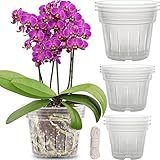
Clear slotted plastic orchid pots
- Best for: most Phalaenopsis and other epiphytes; beginners.
- Advantages: side slots give airflow and drainage; transparent walls show root colour and moisture; light, inexpensive and flexible for gentle repotting; roots get light.
- Limitations: lightweight (use a cache-pot for stability); plain looking on their own.


Net pots
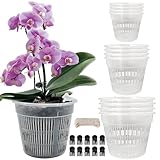
- Best for: Cattleya, Dendrobium, and growers using semi-hydro or bark who want maximum air.
- Advantages: near-total airflow; excellent drainage; roots grip the mesh.
- Limitations: dry out fast (more frequent watering); usually need a cache-pot.

Terracotta / clay orchid pots
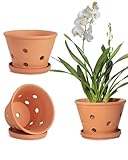
- Best for: growers who over-water, or hot/humid rooms where the mix stays too wet.
- Advantages: porous walls wick moisture and cool roots; heavy and stable.
- Limitations: roots can fuse to clay (harder repotting); opaque; dries unevenly.


Wooden slat baskets
- Best for: vandas and other orchids grown nearly bare-root; hanging displays.
- Advantages: maximum airflow; ideal for species that resent enclosed medium; attractive hung.
- Limitations: dries very fast (often daily watering); wood eventually degrades.


Ceramic orchid pots (slotted, with drainage holes)
- Best for: display on shelves and tables where looks matter and you still want airflow.
- Advantages: decorative; heavier and more stable; slotted designs keep airflow.
- Limitations: must have real drainage holes/slots — decorative “orchid pots” with no holes are a common trap.


Orchid pot types at a glance
| Pot type | Drainage | Airflow | Moisture held | See roots? | Stability | Best for |
|---|---|---|---|---|---|---|
| Clear slotted plastic | High | High | Medium | Yes | Low | Phalaenopsis, beginners |
| Net pot | Very high | Very high | Low | Partial | Low | Cattleya, Dendrobium, semi-hydro |
| Terracotta / clay | High | Medium–high | Low (wicks, dries fast) | No | High | Over-waterers, warm/humid rooms |
| Wood slat basket | Very high | Very high | Very low | Yes | Medium | Vandas, near bare-root |
| Ceramic (slotted) | Medium–high | Medium | Medium | No | High | Display + real drainage |
How to choose
- Identify your orchid’s habit — epiphyte (Phalaenopsis, Cattleya, Dendrobium, Vanda) vs terrestrial (Paphiopedilum, some Cymbidium). Epiphytes want maximum air and drainage; terrestrials want a solid but well-drained pot.
- Match to your watering habits — over-waterer: terracotta or net for faster drying; forgetful: plastic or ceramic that holds moisture longer.
- Decide if you want to see the roots — yes: clear plastic; no: any type, but you lose the easiest watering cue.
- Plan for stability — light pots with tall orchids: drop into a heavier cache-pot.
Sizing and technical guidance
- Right size = snug, not spacious. Orchid roots like to be somewhat crowded; an oversized pot holds excess wet medium and invites rot.
- Typical windowsill Phalaenopsis: roughly a 12–15 cm (5–6 in) diameter pot.
- Repot every 1–2 years, or when the mix breaks down or roots climb well over the rim — not just because the plant looks big.
- Drainage is non-negotiable: side slots/holes beat a single base hole for epiphytes.
Common mistakes
- Decorative pots with no drainage holes — the number-one orchid killer; if you love the look, use it as an outer cache-pot only.
- Potting up too big — “room to grow” logic that works for houseplants rots orchid roots.
- Reusing old pots without sterilising — can carry pathogens between plants.
- Ignoring the medium–pot pairing — fast-draining pots with a moisture-holding mix (or vice versa) fight each other.
- Leaving an orchid sitting in the cache-pot’s collected water.
FAQ
Do orchids need special pots? Not always, but they need pots that drain and breathe far better than standard plant pots. Epiphytes especially benefit from slotted or clear pots.
Are clear pots actually necessary? No — but they make watering far easier for beginners and suit Phalaenopsis roots, which use light.
Can I use a normal plant pot? Only if it drains very freely; add extra side holes for epiphytes, or use it as a cache-pot around a proper orchid pot.
What size pot for a Phalaenopsis? Usually about 12–15 cm (5–6 in) — snug to the roots. Pot up one size only when roots outgrow it and the mix has broken down.
Terracotta vs plastic for orchids? Terracotta dries faster and adds stability (good for over-waterers); plastic retains moisture, is lighter, and comes in clear versions for root viewing.
Final recommendation
For most people starting out, a clear slotted plastic orchid pot inside a decorative cache-pot is the best default: airflow, drainage, root visibility and stability with almost no downside. Move to net pots or wood-slat baskets for airflow-loving orchids like cattleyas and vandas, and reach for terracotta if your growing area runs warm and wet. Match the pot to the orchid’s habit and your watering habits, keep it snug, and make sure water can always escape.
As an Amazon Associate GrowPlants earns from qualifying purchases. Prices and availability are set by Amazon and can change. GrowPlants does not sell these products.
See also: all orchid supplies.