Plant Profile & Key Characteristics
Overview: Fast-growing annual or biennial herb reaching 1-3 m, grown as an edible, medicinal and ornamental plant. Both the lobed leaves and the round cheese-like fruits are edible.
Quick Specifications
| Specification | Attribute |
|---|---|
| Plant Type / Life Cycle | Annual or biennial |
| Mature Size | 1-3 m (3-10 ft) |
| Growth Rate | Fast |
| Root System | Taproot |
| Toxicity | Non-toxic – leaves and fruit edible |
| Hardiness | USDA zones 5-10 |
Growth Form & Structure
- Height & Spread: 1-3 m; can be grown in containers.
- Growth Habit & Form: Upright, branching herbaceous plant.
- Lifespan & Maturity: Annual or biennial; fruits in about 5-8 months and self-seeds.
Anatomy & Physical Features
- Leaves & Foliage: Green, five-lobed edible leaves 5-20 cm.
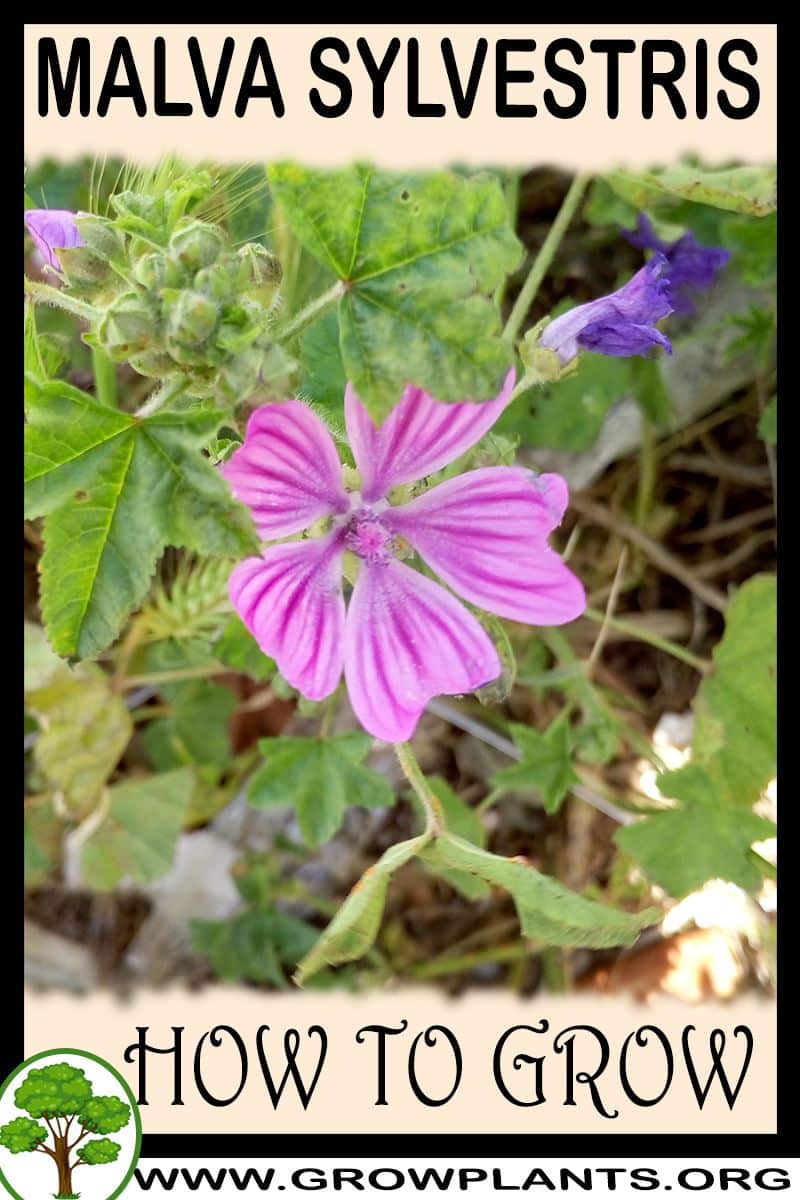
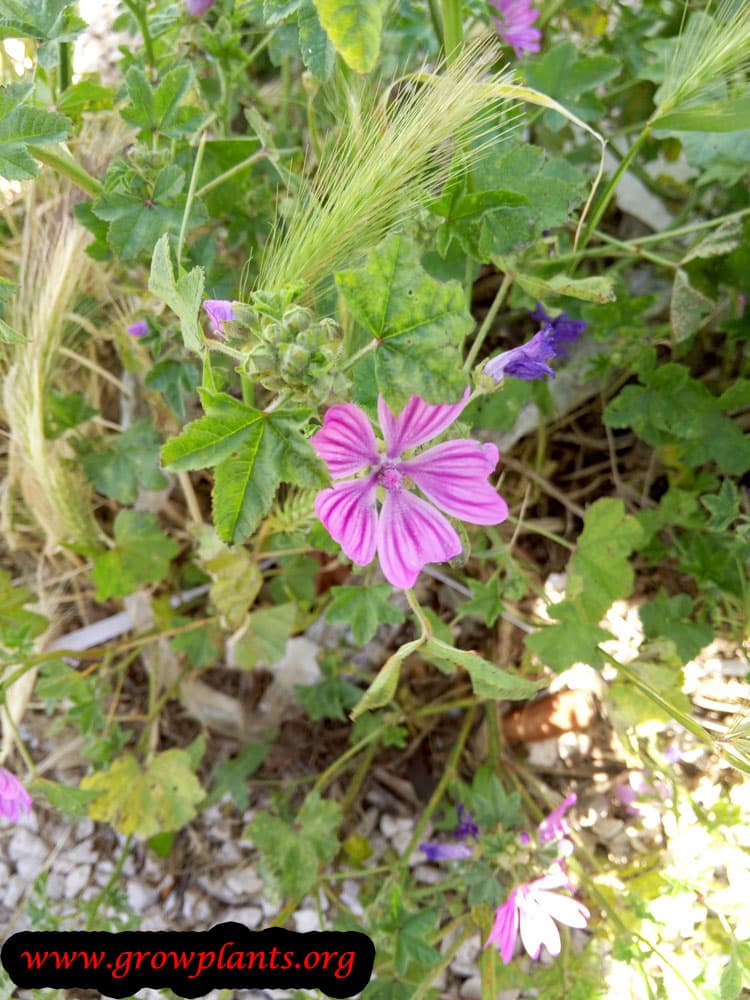
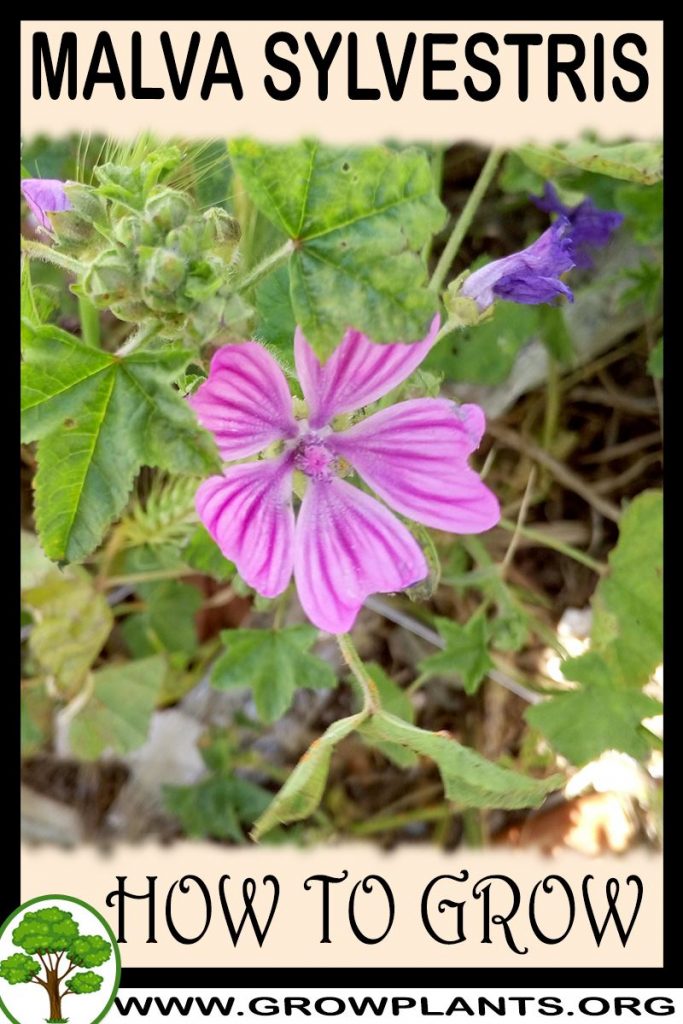
- Flower Characteristics: Showy pink to purple flowers borne at the nodes.
- Fruit Profile: Round, lobed green cheese-like fruit, sweet to bitter, edible when young.
Primary Uses & Landscape Value
- Edible Uses: Young leaves eaten raw, cooked, in salads or stuffed; immature fruits eaten raw or cooked.
- Functional & Ornamental Roles: Edible and medicinal herb (mucilaginous), also grown ornamentally for its flowers; can be invasive.
Care Guide: Planting, Soil & Watering
Overview: High mallow (Malva sylvestris) is a fast-growing annual or biennial for full sun to part shade (zones 5–10) that favours cool growing weather. It is adaptable but grows best in a well-drained soil with moderate watering.
Quick Care Requirements
| Requirement | Ideal Condition |
|---|---|
| Planting Season | Autumn (mild areas) or spring (cold areas) |
| Growth Rate | Fast |
| Soil Type | Well-drained; adaptable |
| Water Need | Moderate |
Planting & Establishment
- Best Planting Season: In autumn where winters are mild, or in spring in colder areas — it prefers to grow through cool weather.
- How to Plant:
- Hole Preparation: Sow seed or set young plants into loosened, free-draining soil; it establishes readily.
- Soil Amendments: A little compost helps on poorer soil, but this mallow is undemanding and thrives without heavy feeding.
- Planting Depth: Set the root collar level with the surface; do not bury the stem.
- Growth Speed & Expectations: A fast grower reaching flowering and cropping size within a single cool season.
Soil, Watering & Drainage Care
- Soil Mix & Drainage Needs: Grows in most free-draining soils; only waterlogging is a problem. It also grows well in a container with a free-draining mix and drainage holes.
- Watering Schedule & Technique:
- Young / Newly Planted: Water every few days for the first weeks so the root zone never dries out completely.
- Established: Water moderately, letting the top few centimetres dry between waterings; it tolerates some dryness once established.
- Seasonal Adjustments: Water more in dry spells; it slows and sets seed as heat arrives.
Climate, Light & Hardiness
High mallow is a cool-season-leaning annual or biennial suited to Mediterranean, subtropical, desert, and temperate climates, listed for USDA zone 5–10. It grows in full sun to half shade and, like its French mallow relative, prefers cool weather over summer heat.
Quick Climate Specifications
| Climate Zones | Mediterranean, subtropical, desert, temperate |
|---|---|
| USDA Hardiness Zones | 5–10 |
| Frost Tolerance | Low to Moderate |
| Light Conditions | Full sun to half shade |
Sunlight & Light Exposure
Optimal Light Setup
Full sun to half shade both work well.
Temperature Extremes & Hardiness
USDA Hardiness & Regional Limits
Prefers cool weather; in frost-free climates it is sown in autumn to grow over winter, while in colder climates it is planted in spring after frost risk passes.
Extreme Heat Tolerance
Summer heat, more than winter cold, tends to limit it in warm climates.
Growing in Pots, Balconies & Indoors
Common mallow is a tall, easy sun-to-part-shade plant grown for its flowers and edible leaves – fine in a large pot or planter outdoors, but not a houseplant.
Quick Details
- Container Size: A generous pot or planter with free drainage – the grower confirms container growing but gives no set size, so match the pot volume to the plant’s size (1-3 m / 3-10 ft)
- Indoor Suitability: Not a true houseplant; it needs strong direct sun
- Best Spot: Full sun to half shade
- Soil & Drainage: Aerated, organic-rich mix that drains freely
- Watering in Pots: Keep the mix evenly moist; pots dry fast, so check often in warm weather.
Indoors & On the Windowsill
- Houseplant limits: The grower marks it as not suited to indoor life – it wants full sun to grow well, which an ordinary room rarely provides.
- Windowsill option: Only the brightest, sunniest sill comes close, and even then growth may be thin and drawn. It is happier outdoors.
On a Balcony or Patio
- Light and wind: Give it the sunniest, warmest spot. Walls and paving reflect heat so containers dry quickly – check moisture daily in hot spells, and shelter tall or exposed stems from strong wind.
- Practicalities: A full, watered pot is heavy – make sure the balcony can take the weight, and set a tray or feet to manage drainage runoff.
Choosing the Pot, Soil & Long-Term Care
- Pot and drainage: Choose a pot with strong drainage holes; if you stand it on a saucer, empty the saucer promptly so the roots never sit in water. Terracotta breathes and dries faster, while glazed or plastic pots hold moisture longer.
- Potting mix: Use a well-aerated, organic-rich mix – a good potting soil, or peat/coir blended with perlite or vermiculite for drainage and air.
- Watering: Water regularly to keep the mix evenly moist – pots dry out far faster than open ground, so check often in heat – but never leave it standing wet.
- Feeding: Potted plants run through their soil faster because nutrients leach out with every watering, so feed a little more often than you would in open ground.
Fertilizing & Feeding
High mallow grows tall and fast from ordinary garden soil; keeping feeding light and balanced supports sturdy stems and edible leaves without encouraging the lanky, weak growth this vigorous, self-sowing plant is prone to.
Quick Fertilizing Specs
| Feeding Level | Light feeder |
|---|---|
| Main Nutrient Priority | Balanced feeding that supports sturdy stems and steady leaf growth rather than soft, overreaching growth |
| Best Feeding Period | Through the cool growing season while the plant is actively putting on leaf and stem growth |
| Organic Options | Compost or well-rotted organic matter worked into the bed at planting |
| Soil pH | Adaptable to a wide range of garden soils without special pH adjustment |
| Reduce/Stop Feeding | Taper off feeding as fruiting finishes and the plant begins to decline at the end of its life cycle |
| Micronutrients | Rarely an issue in average garden soil; address only if a specific deficiency appears |
Feeding by Growth Stage
Getting established from seed or seedling
Help newly sown or transplanted high mallow root in and begin building the sturdy stems this taller mallow needs.
| Nutrient direction | A light, balanced feeding at planting encourages steady root and stem development without producing weak, floppy growth. |
|---|---|
| Timing | At planting or transplanting, during the cool part of the growing season. |
| Frequency | A single modest feeding is usually enough to help the planting settle in before its next feeding. |
| Fertilizer types | A balanced complete fertilizer applied lightly, Compost or well-rotted organic matter mixed into the planting area |
| Precautions | Avoid rich, heavily fertilized soil at planting; this fast-growing mallow can become invasive and top-heavy if pushed too hard. |
Active leaf, stem, and fruit development
Sustain steady leaf and edible fruit production while keeping this taller mallow’s stems sturdy rather than lanky.
| Nutrient direction | Light, infrequent balanced feeding supports productive growth without pushing the soft, overextended growth that tends to flop or break. |
|---|---|
| Timing | Through the plant’s main growth, flowering, and fruiting period. |
| Frequency | Feed sparingly; an occasional light feeding through the growing season is typically enough for this vigorous self-seeder. |
| Fertilizer types | A balanced complete fertilizer used sparingly, A light top-dressing of compost during active growth |
| Precautions | Overfeeding encourages tall, weak stems that flop over and can worsen this plant’s tendency to self-sow aggressively. |
Natural decline at the end of the life cycle
Let the plant finish fruiting and complete its annual or biennial life cycle without pushing new growth.
| Nutrient direction | None – withhold fertilizer as the plant matures its fruit and begins to decline. |
|---|---|
| Timing | Once fruiting is well underway and the plant begins to fade toward the end of its life cycle. |
| Frequency | No feeding is needed at this stage; the plant is winding down rather than building new growth. |
| Fertilizer types | No feeding at this stage; allow the plant to complete its life cycle without fertilizer. |
| Precautions | Do not fertilize a plant that is finishing its life cycle; unused nutrients simply go to waste or feed nearby self-sown seedlings. |
Nutrient Deficiency Signs & Corrections
Older leaves turn pale green to yellow while stem and leaf growth slows.
| Possible causes | low available soil nitrogen, thin or depleted garden soil low in organic matter, nitrogen leaching after heavy rain or frequent watering |
|---|---|
| Appears first on | older, lower leaves |
| What to check | recent feeding history, soil organic matter level, watering and drainage pattern |
| Possible correction | Work in compost or apply a balanced fertilizer at a light rate, then watch new growth for improvement. |
Leaf margins on older leaves turn yellow to brown and look scorched.
| Possible causes | low soil potassium, sandy soil that drains and leaches nutrients quickly, uneven or insufficient watering that limits nutrient uptake |
|---|---|
| Appears first on | margins of older, lower leaves |
| What to check | soil texture and drainage, watering consistency, recent feeding history |
| Possible correction | Work organic matter into the soil and apply a balanced fertilizer that includes potassium; reassess new leaves after the next flush of growth. |
New leaves emerge pale yellow while the veins stay green.
| Possible causes | high soil pH limiting iron availability, waterlogged or compacted soil restricting root uptake, container growing in an alkaline potting mix |
|---|---|
| Appears first on | newest growth at the shoot tips |
| What to check | soil pH, drainage around the roots, whether the plant is container-grown in an alkaline mix |
| Possible correction | Improve drainage, work toward a more neutral soil pH, and apply a chelated iron product per its label if the pattern continues. |
Pruning, Training & Seasonal Maintenance
High mallow is a fast-growing herbaceous annual or biennial that, at 1-3 m, grows noticeably taller and more sprawling than many garden mallows. Besides the light leaf-and-tip maintenance typical of the genus, an established plant benefits from an occasional cutback to stop it flopping and to keep it productive rather than becoming a single leggy stem. There is no persistent woody structure and no formal structural pruning.
Quick Pruning & Maintenance Specs
| Pruning Tolerance | Low to Moderate (light, ongoing, plus an occasional cutback for size) |
| Primary Pruning Window | All season, as needed |
| Typical Frequency | Ongoing light maintenance, with an optional mid-season cutback on tall or leggy plants |
| Main Objective | Remove damaged leaves, manage height and flopping, limit self-seeding |
| Young Plant Priority | Pinch growing tips to build a bushier base before the plant runs up to its mature height |
| Mature Plant Priority | Cut back leggy stems to keep the plant self-supporting; remove injured leaves; deadhead to limit self-seeding |
| Best Tool Type | Precision snips for leaf/tip work; bypass secateurs for the sturdier stems this taller species can produce |
Pruning by Plant Age & Size
Newly Established
No pruning beyond removing damaged seedling growth; pinch the tip once several leaf sets are present to build a bushier base before the plant runs up to its mature 1-3 m height.
Young / Formative
No structural training system applies; tip-pinching is the only shaping needed while the plant is small.
Mature / Established
Because this species grows taller and more robust than compact garden mallows, established plants that begin to flop or grow leggy can be cut back partway to encourage sturdier, more compact regrowth and a fresh round of flowering; otherwise, ongoing removal of injured leaves and harvest of young leaves and fruit is the main maintenance.
Seasonal Pruning Schedule
Ongoing Sanitary
Remove injured or damaged leaves whenever seen, across the growing season, matching the source guidance that pruning here is essentially "injured leaves" with no fixed seasonal window.
Special Growth to Remove
Spent flower stems, removed before the round fruit hardens and drops seed, curb the self-seeding this species is noted for (invasive).
Container & Small-Space Pruning
Because of its larger potential size, up to 3 m, this species is less suited to small containers than more compact mallows. Where grown in a pot, regular tip-pinching from an early stage and a firmer mid-season cutback keep it manageable, and staking may still be needed after cutting back given the taller habit.
Tools
Precision snips for leaf and tip work; bypass secateurs for the sturdier basal stems on a mature plant that needs a cutback, given this species’ larger size than more compact mallows.
Tool Hygiene & Disease Risk
Routine – clean, sharp tools; no elevated disease-transmission risk is documented for this species.
Cut Placement & Technique
Pinch or snip above a leaf node for routine tip work. When cutting back a leggy plant, cut above a lower set of leaves or side shoots so it can resprout from that point.
Heavy Pruning & Rejuvenation
Not a woody rejuvenation, but this taller species specifically tolerates being cut back by up to half when leggy or sprawling, resprouting from the cut and often reflowering within the same season – a genuinely useful technique for this species given its height, more so than for shorter, naturally compact mallows.
Post-Pruning Care
Water normally; watch for the moth larvae and Spodoptera litura noted as pests for this species on fresh regrowth.
Common Pruning Mistakes
Letting the tall stems flop and become woody-based without ever cutting back, resulting in a sparse, leggy plant; letting spent flowers seed freely, leading to unwanted volunteers.
When NOT to Prune
Avoid removing most of the foliage at once, since the plant is grown for its leaves; avoid cutting back hard right after transplanting, before the seedling is established.
Recommended Tools (by task)
- precision_snips – leaf harvest, tip-pinching, and removal of damaged leaves.
- bypass_secateurs – cutting back the sturdier basal stems of a mature, leggy plant, given this species’ larger size.
Propagation Guide
Like other mallows, Malva sylvestris is propagated almost entirely from seed, sown directly outdoors or raised as seedlings; grafting or vegetative propagation is unnecessary. Seed is true to type and germinates easily, and this fast-growing, self-seeding plant (which can become invasive) is an Easy subject to start.
Quick Propagation Specs
| Best Propagation Method | Seed (direct sow or seedling) |
| Propagation Difficulty | Easy |
| Seed True-to-Type | Yes |
| Best Propagation Season | Autumn in frost-free areas; spring in colder areas |
| Seed Germination Time | Typically 1–3 weeks, can be irregular |
| Germination Temperature | Roughly 15–21°C (59–70°F) |
| Seed Sowing Depth | Shallow, about 0.5 cm (0.2 in), lightly covered |
Growing from Seed
Seed Handling & Viability
Seed keeps reasonably well in cool, dry storage and does not need to be sown fresh.
Dormancy & Pre-Sowing Treatment
No treatment is usually required; soaking the seed briefly before sowing can help soften its coat and even out germination.
Sowing Season
Autumn in frost-free areas, spring in colder areas.
Sowing Depth & Orientation
Sow shallowly, lightly covered.
Germination Conditions
Keep evenly moist at mild temperatures in full sun to half shade.
Germination Time
Generally a couple of weeks, sometimes longer and uneven.
Seedling Care
Thin crowded seedlings; because this plant self-seeds freely and is flagged as invasive in some areas, remove unwanted volunteers and spent flower stalks where spread is a concern. Given its eventual size of 1–3 m, allow adequate room when transplanting seedlings.
Bloom & Edible Flower Guide
Quick Details
- Bloom Season: Late winter to spring, continuing into summer
- Time to First Bloom: In its first or second season
- Flower Appearance: Showy pink-purple flowers with darker veins and five notched petals, in the leaf axils
- Edibility: The flowers are edible and are traditionally dried for a mild herbal tea
Detailed Blooming Overview
Common mallow is the showiest of the wild mallows, carrying bright pink-purple flowers boldly striped with darker veins from late winter through spring and into summer. The five petals are distinctly notched, and the flowers cluster where the leaves meet the stems. Both fresh in salads and dried for a gentle, color-changing herbal tea, the flowers are a well-loved edible – and a favorite of bees.
Flower Characteristics
- Showy pink-purple flowers with darker veins and five notched petals.
- Clustered in the leaf axils along the stems.
- Edible; used fresh in salads and dried for a mild herbal (mallow) tea.
Bloom Care & Thinning
- Managing the bloom: Little is needed; the plant self-seeds readily, so leave some flowers if you want it to return.
- Pollination: The open flowers attract bees and other pollinators.
Fruit & Uses
High mallow is valued for its edible leaves and its small, round, unripe fruit; both can be eaten raw or cooked. Young leaves are used fresh or as a mild cooked green, while the fruit is harvested while still green and tender.
Quick Edible Specs
| Edible Parts | Leaves; immature fruit (the small round mallow seed-cluster) |
|---|---|
| Main Use(s) | Culinary – salad, cooked green, stuffed leaves; fruit eaten raw, cooked or in salad |
| Eaten Raw or Cooked | Both |
| Preparation Required | None for young leaves; fruit must be picked while still green and tender |
| Harvest Season | Leaves – once plant is established, pick young fully-grown leaves; Fruit – winter/spring into early summer in colder climates |
| Time to First Harvest | Within the same growing season, several months after flowering (see Propagation for bearing details) |
| Storage | Best used fresh; not suited to long storage |
| Safety/Toxicity Caveat | No toxicity noted; over-mature fruit becomes fibrous and hard rather than unsafe |
Leaves & Greens
This is a larger, shrubbier mallow (1-3 m) than French mallow, but the leaves are used the same way: green, five-lobed leaves (5-20 cm) are picked once established, taking young, fully-grown leaves. Eaten raw in salads, cooked as a potherb, or used as a stuffing wrap.
Fruit
The fruit is a small, round, green cluster of triangular segments around a central pin, with flavor ranging from sweet to bitter. Pick it while still fresh and green – once it turns fibrous and hard it is no longer worth eating. Eaten raw, cooked, or in salads.
Preparation, Uses & Safety
No special processing is needed beyond timely picking of young leaves and green, tender fruit. The leaves have a mild mucilaginous quality useful for lightly thickening soups. No safety concerns are noted for this species; as with any wild-harvested green, pick away from roadsides or sprayed areas and try a small amount first.
Pests, Diseases & Troubleshooting
Overview: Mallows are Malvaceae whose signature disease is mallow (hollyhock) rust, which badly spots and defoliates the leaves, alongside aphids and leaf-eating caterpillars such as painted-lady and Spodoptera larvae, plus whitefly and spider mites. Rust management by sanitation and airflow, and staying ahead of aphids, keeps these easy plants looking good.
Quick Troubleshooting Overview
| Issue / Pest | Main Symptom | Primary Solution |
|---|---|---|
| Mallow rust | Orange-brown pustules under leaves; yellow spots above | Remove infected leaves; airflow; sulfur/fungicide |
| Aphids | Curled tips, honeydew, sooty mould | Hose off; predators; insecticidal soap |
| Caterpillars | Chewed, holed and skeletonised leaves | Handpick; Bt if heavy |
| Whitefly | Clouds of white flies; sticky leaves | Sticky traps; insecticidal soap |
| Spider mites | Stippling and webbing in hot dry weather | Hose foliage; horticultural oil |
| Leaf spot | Brown spots on leaves in wet weather | Airflow; remove leaves; copper if severe |
Common Pests & Management
- Aphids (Aphis / Myzus spp.):
- Symptoms: Colonies on soft new shoots and flower buds cause curling, stunting and sticky honeydew with sooty mould, and can spread viruses.
- Prevention & Control: Hose off, encourage ladybirds, lacewings and hoverflies, and use insecticidal soap for heavy colonies; avoid excess nitrogen that flushes soft growth.
- Caterpillars (mallow/painted-lady, cutworms, armyworm) (Vanessa cardui / Spodoptera / Noctuidae larvae):
- Symptoms: Chewed, holed and skeletonised leaves with droppings; the painted-lady butterfly and Spodoptera armyworms use mallows as favoured larval hosts, and larvae can strip foliage.
- Prevention & Control: Handpick caterpillars and rub off egg clusters, encourage birds and parasitic wasps, and use Bacillus thuringiensis (Bt) for heavy infestations; light feeding is cosmetic on vigorous plants.
- Whitefly (Bemisia tabaci / Trialeurodes vaporariorum):
- Symptoms: Tiny white flies rise from leaf undersides when disturbed, sucking sap and leaving honeydew and sooty mould, and vectoring viruses.
- Prevention & Control: Use yellow sticky traps and insecticidal soap or neem on leaf undersides, and remove heavily infested lower leaves.
- Spider mites (Tetranychus urticae):
- Symptoms: Fine stippling, bronzing and webbing on leaves in hot, dry conditions, causing early leaf drop.
- Prevention & Control: Hose foliage undersides, keep plants watered, and use horticultural oil or insecticidal soap; conserve predatory mites.
- Flea beetles / weevils (Podagrica / Curculionidae spp.):
- Symptoms: Small beetles pepper the leaves with shot-holes (mallow flea beetles are common on Malva), checking growth.
- Prevention & Control: Keep plants vigorous and watered, use sticky traps, and treat only if damage is heavy; tolerate light feeding.
Diseases & Fungal Issues
- Mallow / hollyhock rust (Puccinia malvacearum):
- Symptoms: The defining mallow disease: bright orange-brown raised pustules on the leaf undersides with corresponding yellow-orange spots above, spreading fast to disfigure and defoliate the plant in damp weather.
- Treatment & Management: Remove and destroy infected leaves at the first sign and clear all debris in the off-season, water at the base to keep foliage dry, space and thin for airflow, remove the lowest leaves, and apply sulfur or a suitable fungicide preventively where rust is a recurring problem; grow more resistant species where possible.
- Leaf spot & anthracnose (Cercospora / Colletotrichum):
- Symptoms: Brown or greyish spots on leaves, sometimes with darker margins, merging in wet weather and causing yellowing and leaf drop.
- Treatment & Management: Rake up fallen leaves, avoid overhead watering, improve airflow, and use a copper fungicide only for severe spread.
- Powdery mildew (Erysiphe / Podosphaera):
- Symptoms: White powdery coating on leaves in warm, humid, crowded conditions, causing yellowing and distortion.
- Treatment & Management: Space plants, water at the base, remove affected leaves, and apply sulfur or potassium-bicarbonate if it spreads.
Growing Difficulties & Abiotic Problems
- Short-lived / self-seeding habit:
- Cause & Symptoms: Plants decline after flowering (many mallows are annual or short-lived) and self-seed prolifically, with old rust-laden foliage looking tatty by late season.
- Correction Strategy: Treat as short-lived, remove spent rust-infected plants to reduce next year’s spores, and thin the abundant self-sown seedlings for airflow and to control spread.
- Drought & heat stress:
- Cause & Symptoms: Wilting, browned margins and increased mite attack in hot, dry, exposed sites.
- Correction Strategy: Water in dry spells, mulch to retain moisture, and site in full sun with room for air movement to balance drought and disease pressure.
- Overcrowding & poor airflow:
- Cause & Symptoms: Dense stands trap humidity and dramatically worsen rust and mildew.
- Correction Strategy: Space and thin plants, weed around them, and remove lower leaves to open the base; airflow is the single biggest cultural control for rust.
What Helps – Products & Tools
Mallow rust rules the strategy: strip infected leaves, keep foliage dry, open up airflow, and use sulfur or a suitable fungicide preventively. Insecticidal soap or neem handles aphids and whitefly, Bt deals with caterpillars, and horticultural oil clears mites. Sanitation of old foliage each season breaks the rust cycle.