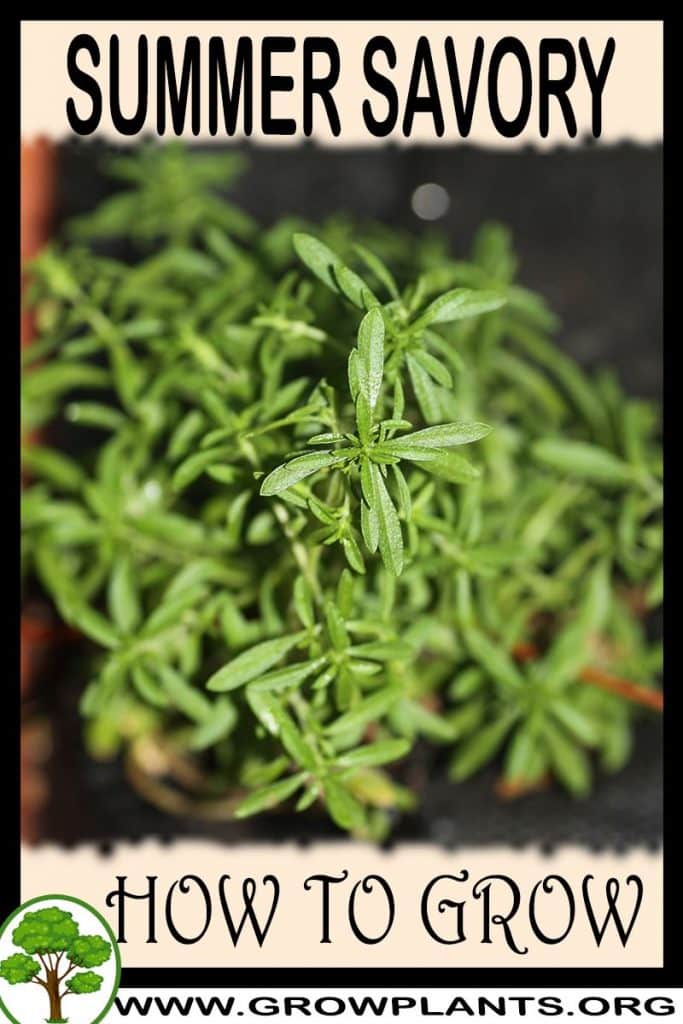
Plant Profile & Key Characteristics
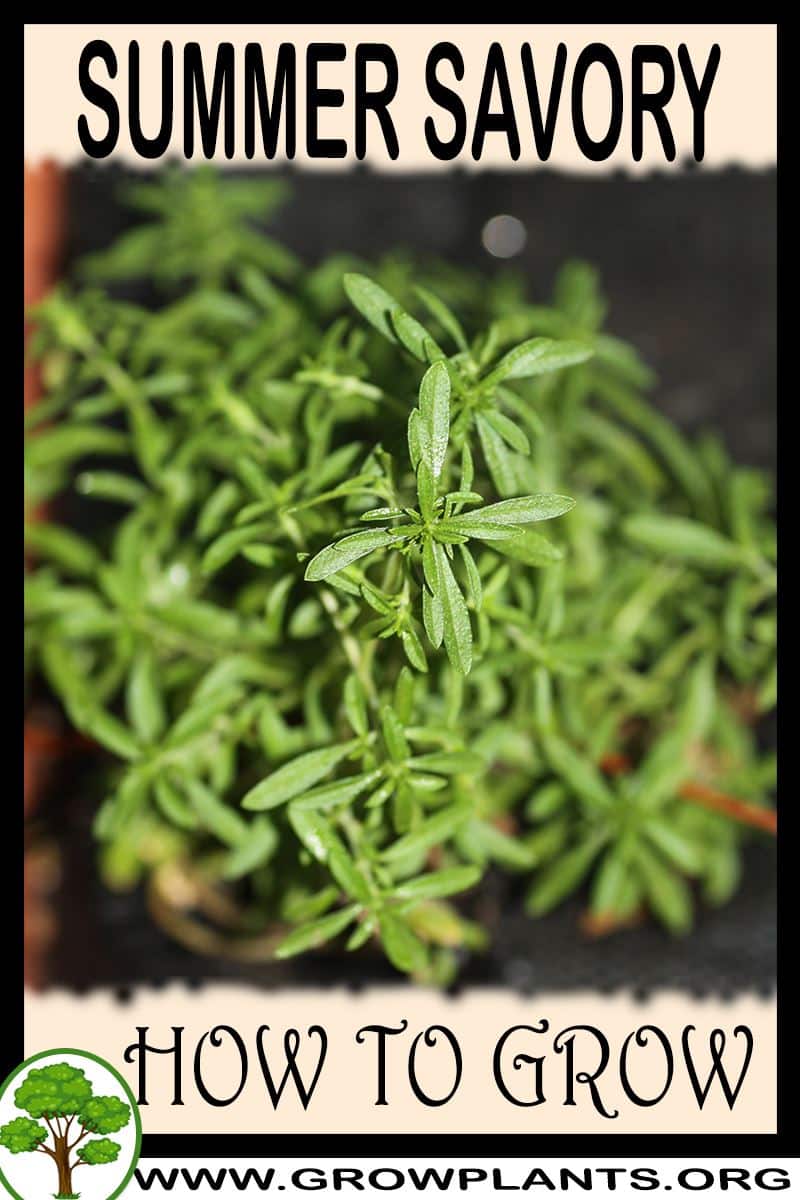
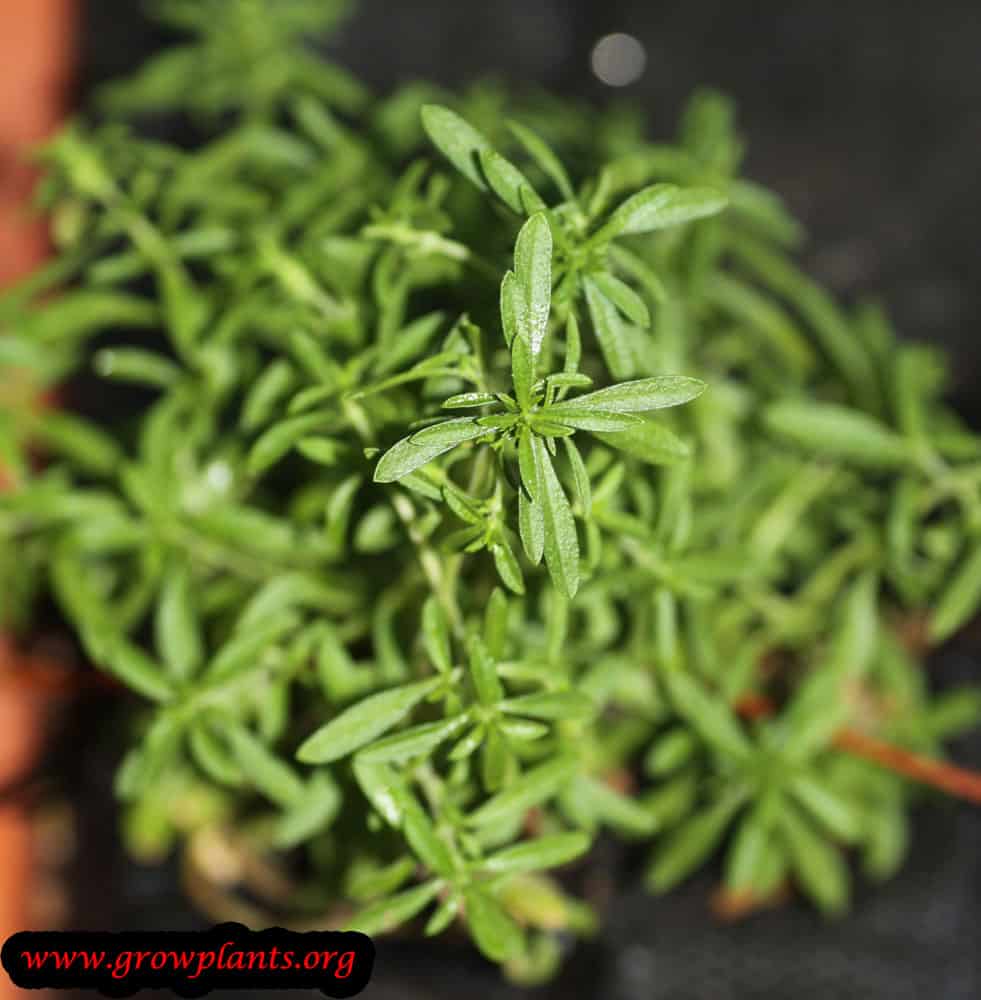
Overview: Summer savory – a fast-growing annual culinary herb 10-50 cm (4-20 in) tall, grown for its milder, aromatic edible leaves. It completes its life cycle in a single season.
Quick Specifications
| Specification | Attribute |
|---|---|
| Plant Type / Life Cycle | Annual |
| Foliage Type | Herbaceous (aromatic, annual) |
| Mature Size | 10-50 cm (4-20 in) tall |
| Growth Rate | Moderate to fast |
| Toxicity | Non-toxic / edible – a well-known culinary herb |
| Hardiness | USDA zones 3-11 (grown as a warm-season annual) |
Growth Form & Structure
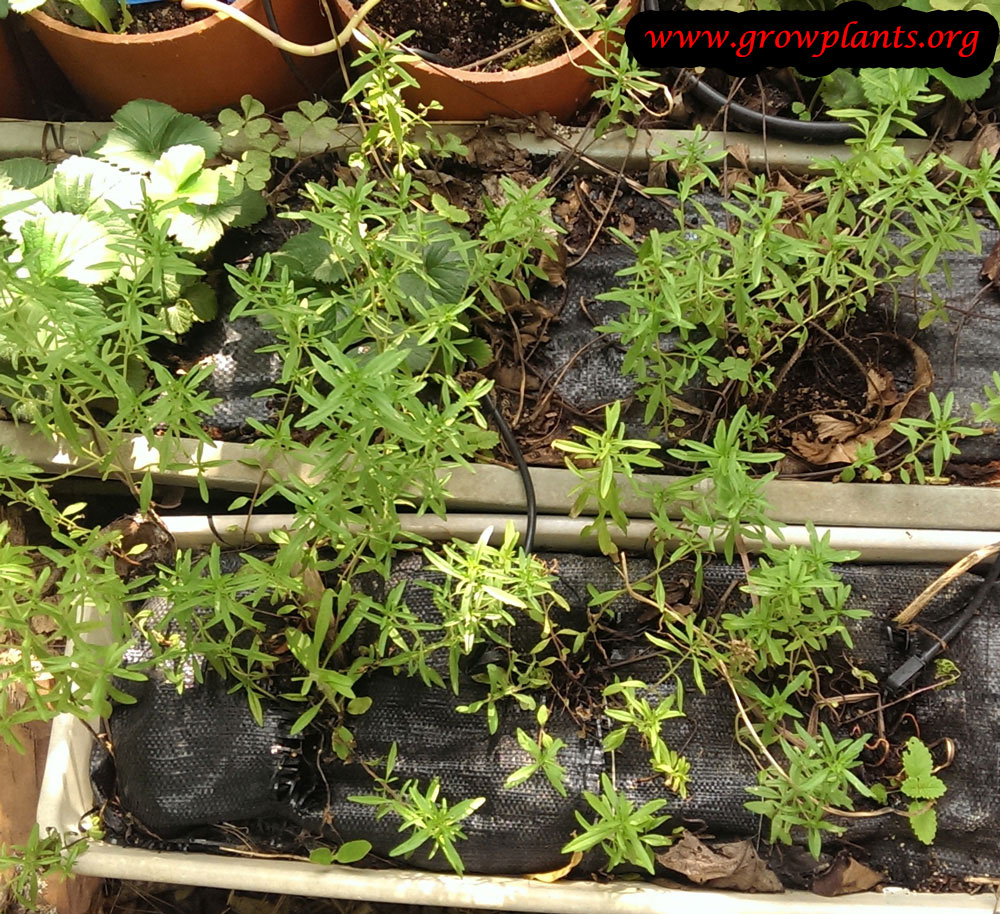
- Height & Spread: In the ground a slender bushy herb 10-50 cm (4-20 in) tall; grows well in a container or herb pot.
- Growth Habit & Form: Upright, branching annual herb forming a loose leafy bush of aromatic stems.
- Lifespan & Maturity: A single-season annual that reaches harvestable size quickly, then flowers and sets seed.
Anatomy & Physical Features
- Leaves & Foliage: Small (about 0.5-3 cm) aromatic green elliptic leaves, edible and used as a spice.
- Flower Characteristics: Small edible purple flowers borne toward the tops of the stems, attractive to bees.
Primary Uses & Landscape Value
- Edible Uses: Leaves (with edible buds and flowers) are used fresh or dried as a mild peppery herb, classically with beans.
- Functional & Ornamental Roles: Herb-garden and container plant, also a useful pollinator plant while in flower.
Care Guide: Planting, Soil & Watering
Overview: Summer savory (Satureja hortensis) is an aromatic annual culinary herb for Mediterranean, desert, subtropical and temperate gardens (hardiness zones 3-10a). It thrives in full sun to light shade in light, well-draining soil and appreciates a mulch to keep its roots cool and moist.
Quick Care Requirements
| Requirement | Ideal Condition |
|---|---|
| Planting Season | Cool to warm season – winter to spring |
| Growth Rate | Moderate to Fast |
| Soil Type | Light, well-draining; mulched |
| Water Need | Low to moderate; let the top dry between waterings |
Planting & Establishment
- Best Planting Season: Plant from winter to spring (into the milder mid-winter window in the warmest zones), in a sunny, open position.
- How to Plant:
- Hole Preparation: Dig a hole a little wider than the root ball and settle the young plant in gently.
- Soil Amendments: Keep the soil light and free-draining, mulching around the plant to conserve moisture; in hot spots this also helps slow premature bolting.
- Planting Depth: Set the plant at the depth it grew previously, keeping the crown level with the surface.
- Growth Speed & Expectations: A moderate-to-fast grower reaching about 10-50 cm (4-20 inches) in a single season before flowering.
Soil, Watering & Drainage Care
- Soil Mix & Drainage Needs: Give light, well-draining soil so roots never sit soggy. It grows well in a container with open drainage holes.
- Watering Schedule & Technique:
- Young / Newly Planted: Keep the soil lightly moist while seedlings and young plants establish.
- Established: Water moderately once established, letting the top of the soil dry before watering again.
- Seasonal Adjustments: Water a little more in summer heat, which also helps delay bolting, and keep it on the drier side otherwise.
Climate, Light & Hardiness
Summer savory is a frost-tender annual herb that grows best in full sun to half shade with a Mediterranean-to-temperate warm season. It has no meaningful winter hardiness of its own - the USDA zone range in the site data marks where it can be sown and grown during the frost-free part of the year, and hot weather tends to push it into bloom earlier than gardeners may want.
Quick Climate Specifications
| Climate Zones | Mediterranean, desert/subtropical, temperate |
|---|---|
| USDA Hardiness Zones | 3–10a as a warm-season annual; site data also notes suitability through zone 10a–11 for winter-season growing in mild climates |
| Frost Tolerance | None - killed by frost |
| Light Conditions | Full Sun / Half Shade |
| Wind Tolerance | Moderate |
| Salt / Coastal Tolerance | Moderate |
Sunlight & Light Exposure
Optimal Light Setup
Full sun to half shade both work per the site data; full sun generally gives the most compact, flavorful growth.
Shade & Heat Management
In hot areas the plant is noted to bloom (bolt) quickly, so light shade during the hottest part of summer can help extend the leaf-harvest window.
Best Exposure / Orientation
A sunny bed is best; part-day shade is a reasonable option in very hot climates.
Temperature Extremes & Hardiness
USDA Hardiness & Regional Limits
Site data lists hardiness zone 3–10a for spring/summer growth, with zone 10a–11 suitable for winter-season sowing where winters stay mild. Because it is grown fresh from seed each year, its practical range for gardeners is set by the length and warmth of the frost-free season rather than winter cold survival.
Cold Damage & Winter Protection
Frost kills the plant outright; there is no meaningful winter protection strategy beyond growing it as a warm-season crop or, in mild-winter zones, timing sowing for the cooler season as the site data suggests.
Frost Sensitivity
Fully frost-tender at any growth stage.
Extreme Heat Tolerance
Good in terms of survival, but heat also speeds it toward flowering, which the site data flags as a common difficulty in hot areas.
Frost-Free Growing Season
Needs a warm, frost-free stretch of the growing season to establish, produce leaves, and (if desired) set seed before cold weather returns; site it and plan sowing dates around the local last and first frost dates.
Wind, Humidity & Microclimate
Humidity Preferences
Prefers moderate humidity with good air movement; like most Mediterranean-type herbs it is prone to problems in consistently damp, humid conditions.
Dry-Air Tolerance
Moderate to High once established.
Wind Tolerance
Moderate; a low, soft-stemmed annual herb that benefits from some shelter from strong wind.
Coastal / Salt Tolerance
Moderate - generally manages reasonably well in coastal gardens.
Rainfall & Seasonal Moisture
Prefers a dry-summer climate pattern with light, well-drained soil; not adapted to prolonged wet conditions.
Microclimate Recommendations
A sunny, free-draining bed with some protection from harsh wind and, in hot climates, light afternoon shade helps prolong the useful harvest period.
Growing in Pots, Balconies & Indoors
Summer savory is a first-rate container herb for a balcony, patio or sunny windowsill rather than a deep-indoor houseplant – it needs strong, direct light to stay compact and full of flavour, which a room’s interior rarely supplies.
Quick Details
- Container Size: A small pot (a few litres) suits this compact herb; the grower confirms pot growing but gives no set size
- Indoor Suitability: Not a deep-indoor houseplant; thrives on a bright, sunny windowsill with direct light
- Best Spot: Full sun to half shade – a sunny balcony, patio or windowsill
- Soil & Drainage: Well-aerated, organic-rich mix (potting mix or peat/coir with perlite or vermiculite); must drain freely
- Watering in Pots: Water moderately – let the surface dry slightly between waterings; pots dry faster than open ground
Indoors & On the Windowsill
- Houseplant limits: The grower does not rate it as a deep-indoor houseplant – away from a window the light is too weak and growth turns leggy and less flavourful.
- Windowsill growing: On a bright, sunny sill with direct light it does well – pick a compact plant, turn the pot now and then for even growth, and pinch out the tips.
- Extending the season: Growing in a pot lets you move it under cover or onto a bright sill before hard frost, stretching the fresh-leaf season.
On a Balcony or Patio
- Light & warmth: Give it the sunniest, most sheltered corner. Walls and paving reflect heat, which basil enjoys, but that also dries pots quickly – check moisture daily in hot weather and water more on warm days. A drip irrigation kit with a timer can take over that watering check automatically.
- Wind & practicalities: Shelter it from strong wind, which shreds soft leaves and dries the mix; make sure the pot drains freely and sits where run-off will not stain the floor.
Choosing the Pot, Soil & Long-Term Care
- Pot & drainage: A modest pot (a few litres) with strong drainage holes is plenty for this compact herb. Skip a standing-water saucer to avoid root rot; terracotta breathes and dries faster, while glazed or plastic pots hold moisture longer.
- Potting mix: Use a well-aerated, organic-rich mix – potting compost, or peat/coir blended with perlite or vermiculite for drainage.
- Feeding: Potted herbs need feeding more often than those in the ground, as nutrients leach out with each watering – a light, regular feed through the growing season keeps the leaves coming.
- Repotting: Where it is kept as a perennial, the grower advises refreshing all or part of the mix about every two years; pot up if roots fill the container.
Fertilizing & Feeding
Summer savory is a fast-growing annual herb that needs very little feeding – a light start at planting plus an occasional light feeding through summer is enough to keep leaves flavorful without pushing floppy growth.
Quick Fertilizing Specs
| Feeding Level | Light feeder |
|---|---|
| Main Nutrient Priority | Balanced to nitrogen-light feeding that favors flavor over lush leaf growth |
| Best Feeding Period | From planting through the summer growing season |
| Organic Options | Compost worked into the bed or container mix |
| Soil pH | Tolerates a range of well-drained soils; does best near neutral |
| Reduce/Stop Feeding | Ease off feeding as plants move toward flowering and the season winds down |
| Micronutrients | Rarely needed beyond a complete fertilizer and organic matter; correct only a diagnosed issue |
Feeding by Growth Stage
Getting established from seed or transplant
Help summer savory’s seedlings or young transplants root in and begin steady leaf growth.
| Nutrient direction | A light, balanced feeding at planting gives young plants a gentle start without forcing soft growth. |
|---|---|
| Timing | At transplanting or once seedlings have their first true leaves. |
| Frequency | One light feeding at the start is generally enough before the plant settles into steady growth. |
| Fertilizer types | A balanced complete fertilizer at a light rate, Compost worked into the bed or container mix |
| Precautions | Go easy early on; overfeeding young summer savory produces soft, floppy stems that sprawl later in the season. |
Leafy growth through the summer
Keep this fast-growing annual producing tender, flavorful leaves for harvest all summer.
| Nutrient direction | Light, nitrogen-restrained feeding keeps leaf growth steady while preserving the concentrated aromatic flavor summer savory is grown for. |
|---|---|
| Timing | Through the summer growing season, tapering off as plants head toward flowering and the season’s end. |
| Frequency | An occasional light feeding is usually all this quick-growing annual needs; ease off as harvest continues into late summer. |
| Fertilizer types | A balanced or nitrogen-light complete fertilizer used sparingly, A light compost top-dressing |
| Precautions | Avoid heavy or frequent feeding – summer savory that grows too lush is prone to flopping and to the moth pests it can attract, and loses aroma. |
Nutrient Deficiency Signs & Corrections
Older leaves fade to pale green or yellow and overall growth slows.
| Possible causes | low available soil nitrogen, thin or depleted soil low in organic matter, nitrogen leaching after heavy rain or watering |
|---|---|
| Appears first on | older, lower leaves |
| What to check | recent feeding history, soil organic matter level, drainage and watering pattern |
| Possible correction | Work in compost or apply a balanced fertilizer at a light rate, then watch new growth for improvement. |
New leaves emerge pale yellow while the veins remain green.
| Possible causes | high soil pH limiting iron availability, waterlogged or compacted soil restricting root uptake, container growing in alkaline potting mix |
|---|---|
| Appears first on | newest growth at the shoot tips |
| What to check | soil or potting mix pH, drainage around the roots, whether irrigation water is notably alkaline |
| Possible correction | Improve drainage, correct pH toward neutral, and apply a chelated iron product per its label if the pattern persists. |
Interveinal yellowing appears on older leaves while the veins stay green.
| Possible causes | low soil magnesium, heavy potassium-rich feeding competing with magnesium uptake, leaching in light, sandy soil |
|---|---|
| Appears first on | older, lower leaves |
| What to check | soil magnesium levels, recent fertilizer composition, soil texture and drainage |
| Possible correction | Apply a labeled magnesium source such as Epsom salt or a dolomitic amendment and rebalance the feeding routine. |
Pruning, Training & Seasonal Maintenance
Summer savory is a fully herbaceous annual with no woody structure to protect, so it tolerates cutting anywhere on a stem throughout its life — there is no bare-wood risk the way there is on perennial subshrub herbs. The main objective is to pinch and harvest continuously to keep the plant leafy and vegetative, because in hot conditions this species is noted to run to bloom quickly; regular tip removal is the main way to slow that down. Pruning has no effect on any woody framework since the plant completes its life cycle in one season.
Quick Pruning & Maintenance Specs
| Pruning Tolerance | High — fully herbaceous, cut anywhere on soft growth |
| Primary Pruning Window | All season, from establishment until first frost |
| Typical Frequency | Ongoing, every harvest is effectively a pruning cut |
| Main Objective | Delay bolting in hot weather and keep leaf production high |
| Young Plant Priority | Pinch the growing tip once the plant has a few sets of leaves to force branching |
| Mature Plant Priority | Remove dead/weak stems and pinch out flower buds as soon as they appear |
| Best Tool Type | Precision snips |
| Avoid Heavy Pruning During | Not applicable — there is no dormant wood to protect; simply avoid stripping the plant bare in one pass |
Pruning by Plant Age & Size
Newly Established
Hold off on pinching until the seedling has several true leaf pairs and is rooted in.
Young / Formative
No structural training needed — simply pinch the growing tip to push side-branching and build a bushier plant before it starts flowering.
Mature / Established
Harvest stems regularly; this is the plant’s only ongoing "pruning" and it both feeds the kitchen and keeps the plant vegetative.
Seasonal Pruning Schedule
| Active Growth (Spring–Frost) | Objective: maximize leafy growth and delay bolting. Remove: growing tips (pinching), dead/weak stems, and flower buds as they form. Do not remove: so much foliage at once that little green growth remains — leave enough leaves for the plant to keep growing. Response: bushier regrowth from each pinch point. No flowering/fruiting impact to weigh — this is a leaf crop, and removing flower buds simply extends the useful leaf-harvest window. |
Special Growth to Remove
- Dead and weak branches
- Flower buds/spikes — pinch these out promptly, since in hot areas this plant "gives blossom very fast" and bolting ends good leaf production
Container & Small-Space Pruning
Grows well in pots; in a container, pinch a bit more frequently since the smaller root volume means the plant benefits from being kept compact rather than sprawling.
Tools
- Precision snips — the only tool needed; all growth is soft and herbaceous
Tool Hygiene & Disease Risk
Routine — keep tools clean and sharp. No significant pruning-transmissible disease is noted for this species (moth is the recorded pest, not a canker or blight).
Cut Placement & Technique
Pinch or snip just above a leaf node to trigger branching from that point.
Post-Pruning Care
A light watering after a harder harvest pass is helpful in hot weather; no extra feeding is needed just because the plant was pinched.
Common Pruning Mistakes
- Letting flower buds develop and open before pinching them out, which accelerates the plant running to seed
- Harvesting so heavily in one pass that too little leaf area is left to keep the plant growing
When NOT to Prune
- Immediately after transplanting, before the seedling has settled in
- During periods of drought or heat stress — hold off on heavy harvesting until the plant recovers
Recommended Tools (by task)
- precision_snips — all pinching and harvest cuts on this soft, herbaceous annual
Propagation Guide
Summer savory is a true annual and is grown from seed – grafting or vegetative propagation is not necessary or practical. It is easy to raise, though growers who save their own seed are advised to thin out most of the flowers and let only a small number set seed.
Quick Propagation Specs
| Best Propagation Method | Seed |
| Propagation Difficulty | Easy |
| Seed True-to-Type | Usually true-to-type for open-pollinated seed |
| Best Propagation Season | Winter to spring |
Growing from Seed
Seed Handling & Viability
To save your own seed, thin out most of the flower heads and let only a small number mature and set seed.
Sowing Season
Winter through spring.
Sowing Depth & Orientation
Sow shallowly; the seed is very small, so only a light covering is needed.
Germination Conditions
Keep the soil lightly moist in a warm, sunny spot; germination is typically fastest in the region of 18–24°C (64–75°F).
Seedling Care
In hot areas the plants can bolt to flower quickly, so sow in good time and keep seedlings growing steadily.
Bloom & Edible Flower Guide
Quick Details
- Bloom Season: Summer into autumn
- Time to First Bloom: An annual – it flowers in its first summer, a couple of months after sowing
- Flower Appearance: Small purple flowers carried toward the tops of the stems
- Edibility: Edible – the little flowers share the warm, peppery aroma of the leaves and can be used as a garnish
Detailed Blooming Overview
Summer savory sends up small purple flowers at the tops of its stems from midsummer into autumn, and bees work them steadily. As an annual grown for its leaf, it is best to thin most of the bloom to keep the plant productive, while leaving a few flowers to ripen seed for next year’s sowing.
Flower Characteristics
- Small purple flowers gathered toward the stem tips.
- Held above slender, aromatic leaves.
- Nectar-rich and much visited by bees and flies.
Bloom Care & Thinning
- Thinning the bloom: Thin most of the flowers so the plant keeps putting its strength into leaves.
- Saving seed: Leave a small amount of bloom to ripen seed for the next crop.
- Pollination: Pollinated by bees and flies.
Bloom Health & Protection
- Aphids: They can gather on soft, flowering shoot tips – a jet of water or a spray of insecticidal soap or neem oil usually keeps them in check.
Fruit & Uses
Summer savory is grown for its small, aromatic leaves, used fresh or cooked as a culinary herb and spice, and for its edible purple flower buds and flowers. Both are eaten raw or cooked with no preparation required beyond rinsing.
Quick Edible Specs
| Edible Parts | Leaves; flower buds; flowers |
| Main Use(s) | Culinary herb – spices, seasoning, cooking |
| Eaten Raw or Cooked | Raw or cooked |
| Preparation Required | None (rinse before use) |
| Harvest Season | Spring and summer (this is the annual savory) |
| Time to First Harvest | Once the plant is established |
| Storage | Use fresh, or dry for longer storage |
| Safety/Toxicity Caveat | None known – common culinary herb |
Leaves & Greens
Leaves are oval, green, roughly 0.5–3 cm. They are the main edible part, used as a spice and cooking herb. Once the plant is established, cut stems with the leaves attached to harvest.
Flowers & Flower Buds
Buds and open purple flowers, borne at the top of the stems, are also edible and can be used the same way as the leaves, usually as a milder garnish.
Harvesting
Because this savory is an annual, leaf harvest is limited to spring and summer rather than year-round; harvest by cutting stems once the plant is established.
Preparation, Uses & Safety
No special preparation is required beyond rinsing. Summer savory leaves, buds and flowers are used fresh or cooked as a spice and seasoning herb. No toxicity or safety caveats are noted.
Pests, Diseases & Troubleshooting
Overview: Summer savory is an easy, aromatic annual herb that is largely pest- and disease-free – its oily foliage deters most insects. Its only real vulnerabilities are at the seedling stage (damping-off in cold, wet compost) and root rot or mildew in heavy, over-wet soil. Sow into warm, free-draining ground, water modestly, and it romps away trouble-free.
Quick Troubleshooting Overview
| Issue / Pest | Main Symptom | Primary Solution |
|---|---|---|
| Root rot | Wilting, blackening base in wet soil | Sharp drainage, ease off water |
| Damping-off | Seedlings collapse at soil line | Clean mix, warmth, don’t overwater |
| Powdery mildew | White powder on leaves in crowding | Space, airflow, sulphur/bicarb spray |
| Aphids | Sticky, distorted soft tips | Water jet, insecticidal soap |
| Spider mite | Stippled, bronzed leaves in heat | Raise humidity, oil/soap spray |
Common Pests & Management
- Aphids (Aphis spp. / Myzus persicae):
- Symptoms: Small green or black colonies on soft tips and flower shoots; sticky honeydew and distorted new growth – usually light on this aromatic herb.
- Prevention & Control: Rinse off with water and encourage ladybirds and hoverflies; pinch affected tips. Use insecticidal soap only if needed, and rinse edible leaves before use.
- Two-spotted spider mite (Tetranychus urticae):
- Symptoms: Fine stippling, bronzing and faint webbing in hot, dry conditions, especially under cover.
- Prevention & Control: Raise humidity and hose foliage in heat; treat persistent mites with insecticidal soap or horticultural oil on leaf undersides.
- Whitefly (Trialeurodes vaporariorum):
- Symptoms: Tiny white flies rising from disturbed plants, mainly under glass or in still, warm air; light honeydew.
- Prevention & Control: Improve airflow, use yellow sticky traps, and spray insecticidal soap if needed; rarely troublesome on outdoor, lean-grown plants.
Diseases & Fungal Issues
- Root and stem rot (Pythium / Rhizoctonia / Phytophthora):
- Symptoms: Wilting despite moist soil, blackening at the stem base and dark, soft roots, in wet or heavy, poorly drained ground – the main killer of savory.
- Treatment & Management: Grow in lean, sharply drained soil in full sun, water modestly, and avoid winter wet; improve drainage with grit on heavy ground and never leave pots standing in water. Remove and destroy collapsed plants.
- Powdery mildew (Golovinomyces spp.):
- Symptoms: White powdery coating on leaves in crowded, humid, dry-root conditions; foliage may yellow.
- Treatment & Management: Space plants for airflow, keep roots evenly (but not excessively) moist, and remove affected growth; a sulphur or bicarbonate spray helps if needed, though harvesting and pruning usually keep it in check.
- Damping-off (Pythium / Rhizoctonia):
- Symptoms: Seedlings fail to emerge or collapse and rot at soil level in cold, wet, crowded seed trays.
- Treatment & Management: Sow thinly in clean, free-draining, warm compost, water from below with clean water, and provide airflow; avoid cold, sodden conditions.
- Grey mould / botrytis (Botrytis cinerea):
- Symptoms: Fuzzy grey mould on damaged or crowded growth in cool, damp, still air.
- Treatment & Management: Remove damaged and faded growth, improve ventilation, and avoid overhead watering; good airflow and drainage prevent it.
Growing Difficulties & Abiotic Problems
- Root rot from overwatering / heavy soil – the main problem:
- Cause & Symptoms: Savory resents wet feet: over-watered plants or those in heavy, poorly drained soil wilt, blacken at the base and die.
- Correction Strategy: Grow in lean, gritty, free-draining soil in full sun and water only when the surface has dried; add grit or grow in raised beds/pots on heavy ground, and keep plants on the dry side in winter.
- Damping-off of seedlings:
- Cause & Symptoms: Young seedlings topple and rot at the soil line in cold, wet, crowded conditions.
- Correction Strategy: Sow thinly into warm, clean, free-draining compost, avoid overwatering, and provide airflow and warmth; do not sow into cold, sodden ground.
- Poor flavour / soft growth in shade or rich soil:
- Cause & Symptoms: Lush but poorly flavoured, floppy growth in shade or over-fertile, over-fed soil.
- Correction Strategy: Grow in full sun on lean soil with little or no feeding; savory develops the best aroma and habit when grown hard and dry.
What Helps – Products & Tools
Savory is a clean, aromatic herb needing minimal intervention: insecticidal soap or a light horticultural/neem oil for the occasional aphid, whitefly or spider mite, and clean, free-draining seed compost to avoid damping-off. There is no substitute for sharp drainage and full sun, which prevent the root rot and mildew that are the herb’s only real threats. Harvest and use the aromatic leaves freely – regular cutting keeps plants healthy and bushy.