



Plant Profile & Key Characteristics
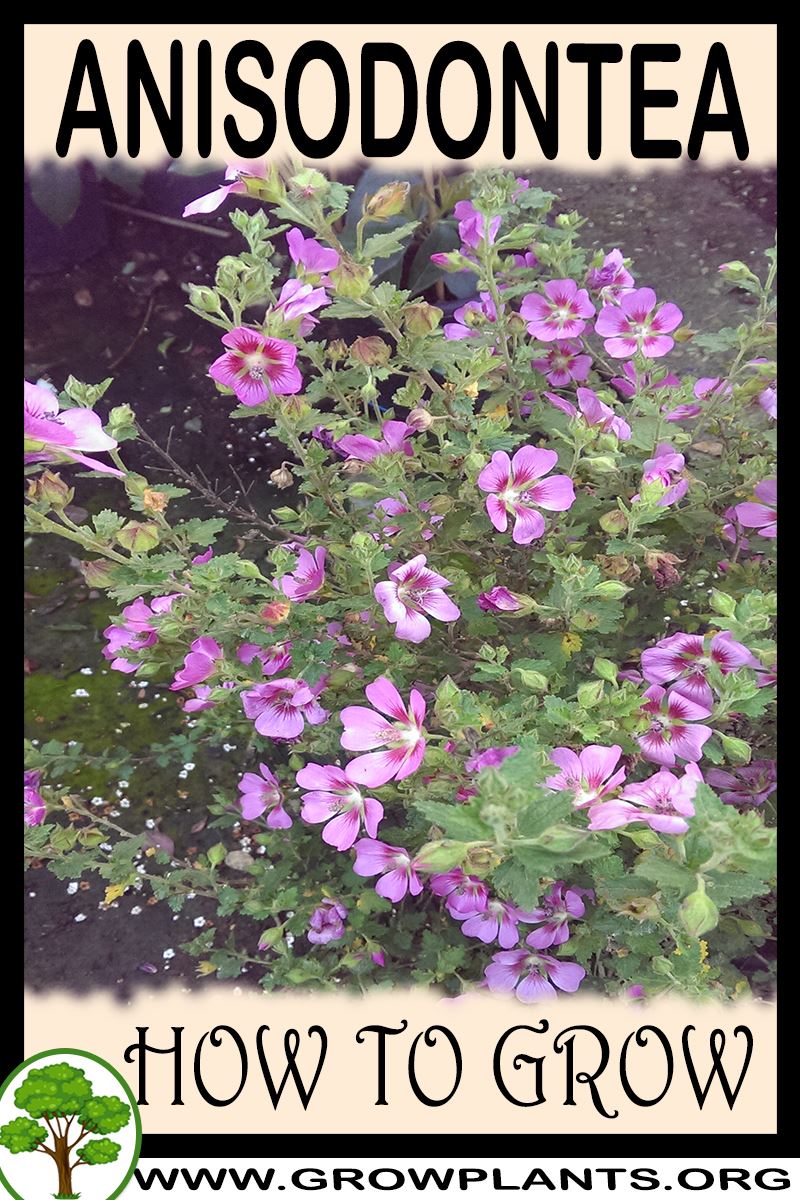
Overview: Anisodontea (Cape mallow) is a fast-growing evergreen subshrub to shrub about 50-70 cm tall, with lobed hairy leaves and small mallow flowers. It is a drought-tolerant ornamental that flowers over much of the year and attracts pollinators.
Quick Specifications
| Specification | Attribute |
|---|---|
| Plant Type / Life Cycle | Perennial (annual in cold climates) |
| Foliage Type | Evergreen |
| Mature Size | 50-70 cm (20-28 in) |
| Growth Rate | Fast |
| Toxicity | Non-toxic (mallow family) |
| Hardiness | USDA zones 10-12 as perennial; 5-10 as annual |
Growth Form & Structure
- Height & Spread: 50-70 cm (20-28 in); suits containers as well as open ground.
- Growth Habit & Form: Bushy, twiggy evergreen subshrub to small shrub.
- Lifespan & Maturity: Fast-growing perennial where frost-free; grown as an annual in cold climates.
Anatomy & Physical Features
- Leaves & Foliage: Green, slightly hairy leaves with three lobes and lobed margins.
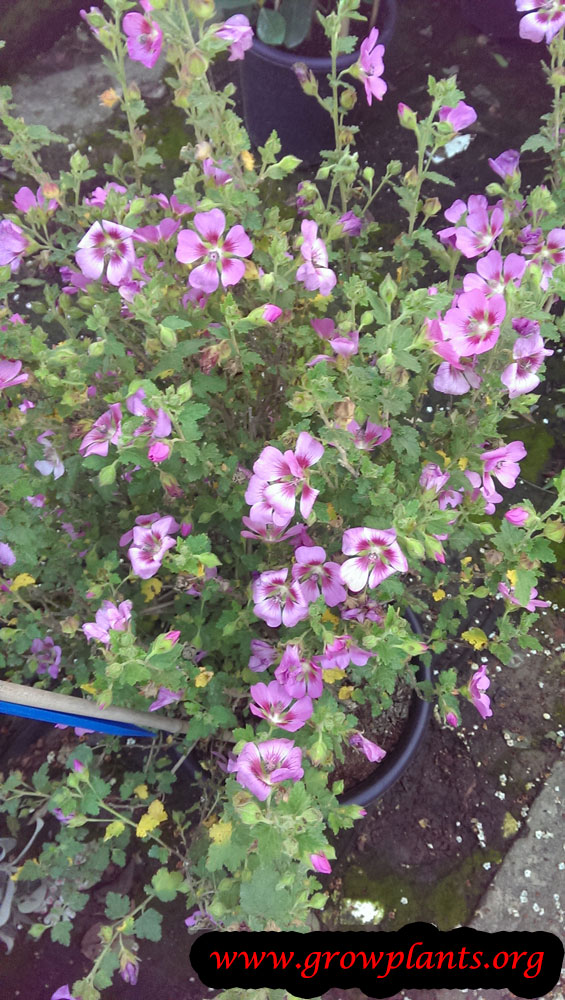
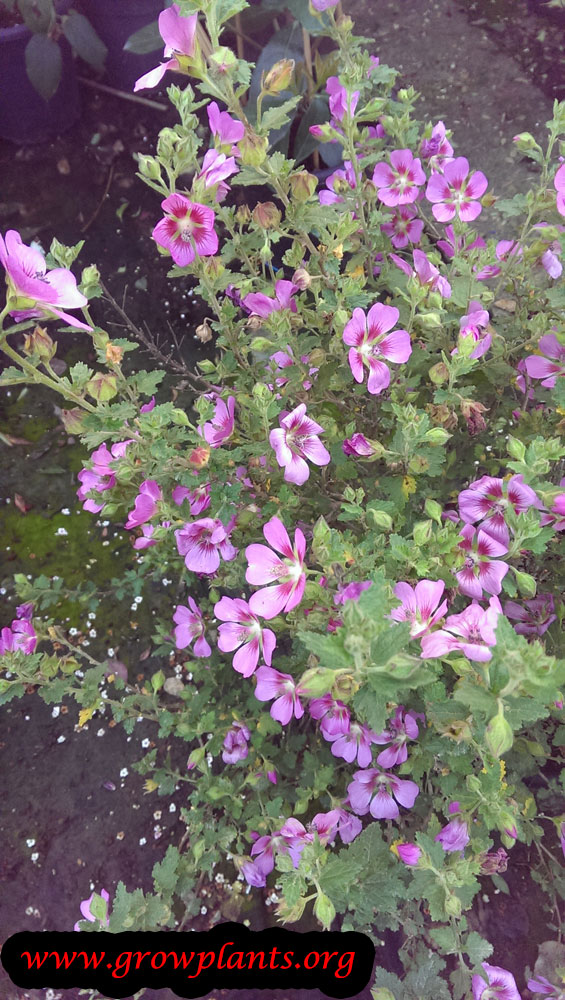
- Flower Characteristics: Small five-petalled mallow flowers with heart-shaped petals and a darker striped centre, in pink, red, purple or white (see the Bloom accordion).
Primary Uses & Landscape Value
- Functional & Ornamental Roles: Drought-tolerant flowering ornamental for beds, borders and pots; valued for attracting pollinators.
Care Guide: Planting, Soil & Watering
Overview: Anisodontea is a fast-growing, sun-loving evergreen shrub that grows best in well-drained soil. It is drought tolerant, needing only low to moderate water once established.
Quick Care Requirements
| Requirement | Ideal Condition |
|---|---|
| Planting Season | Spring in cold climates; spring through autumn where it is grown as a perennial |
| Growth Rate | Fast |
| Soil Type | Well-draining |
| Water Need | Low to Moderate (let the soil dry between waterings) |
Planting & Establishment
- Best Planting Season: Spring in cold climates; spring through autumn where it is grown as a perennial
- How to Plant:
- Hole Preparation: Dig a hole a little wider than the root ball in a sunny, freely draining spot.
- Soil Amendments: Work in a little compost plus grit or sand to sharpen drainage.
- Planting Depth: Set the root collar level with the soil surface.
- Growth Speed & Expectations: Fast, quickly filling out into a bushy, near-continuously flowering shrub.
Soil, Watering & Drainage Care
- Soil Mix & Drainage Needs: Any well-drained soil works; sharp drainage prevents root rot, and salty soils should be avoided.
- Watering Schedule & Technique:
- Young / Newly Planted: Water regularly through the first season to establish the roots.
- Established: Low to moderate once established – let the top of the soil dry between waterings.
- Seasonal Adjustments: Less water in cool or wet weather, a little more in prolonged summer heat.
Climate, Light & Hardiness
Cape mallow grows as a perennial in subtropical, Mediterranean, desert, and temperate climates (zone 10–12), or as a cold–climate annual (zone 5–10). It grows in full sun to half shade and is sensitive to salty conditions.
Quick Climate Specifications
| Climate Zones | Subtropics, Mediterranean, desert, temperate |
|---|---|
| USDA Hardiness Zones | 10–12 as a perennial; 5–10 grown as an annual |
| Frost Tolerance | Low |
| Light Conditions | Full Sun to Half Shade |
| Salt / Coastal Tolerance | Not suitable |
Sunlight & Light Exposure
Grows well in full sun to half shade; full sun supports the most continuous flowering.
Temperature Extremes & Hardiness
USDA Hardiness & Regional Limits
Hardy as a true perennial from about zone 10 through 12; in colder zones (roughly 5–10) it is grown as a fast–flowering warm–season annual instead.
Cold Damage & Winter Protection
Frost damages or kills top growth; where grown as a perennial in marginal areas, a sheltered site helps, while colder climates simply replant it each year as an annual.
Frost Sensitivity
Limited frost tolerance; hard freezes are generally fatal to the perennial form.
Wind, Humidity & Microclimate
Salt / Coastal Tolerance
Specifically noted as sensitive to salt, so it is not a good choice for direct coastal salt spray or saline soils.
Growing in Pots, Balconies & Indoors
Anisodontea (Cape mallow) is a compact, long-flowering shrub that the grower marks as not a houseplant but confirms grows well in containers. In a pot on a sunny patio or balcony it flowers for months; indoors it lacks the light to perform.
Quick Details
- Container Size: A small to medium pot (it stays around 50-70 cm)
- Indoor Suitability: Not a houseplant – needs full sun to flower well
- Best Spot: Full sun to part shade
- Soil & Drainage: Free-draining, light mix
- Watering in Pots: Moderate; drought-tolerant once established
Indoors & On the Windowsill
- Not a houseplant: Marked No – it flowers only in strong light, so it does not perform indoors.
- Windowsill: A very sunny sill can hold a compact plant, but expect fewer blooms than outdoors.
On a Balcony or Patio
- Light & shelter: Full sun brings the best flowering; shelter from harsh wind.
- Watering & heat: Water moderately; it tolerates some drought, but pots dry fast in summer heat.
- Overwintering: Frost-tender – move the pot under cover in cold climates.
Choosing the Pot, Soil & Long-Term Care
- Pot & drainage: A small-to-medium pot with strong drainage holes; skip a standing-water saucer to avoid root rot. Terracotta breathes and dries fast, while glazed or plastic holds moisture longer.
- Potting mix: A well-aerated, organic-rich mix – peat or coir blended with perlite or vermiculite for free drainage.
- Feeding: Potted plants run their soil down fast as nutrients leach out, so feed more often than plants in open ground during active growth.
- Repotting: Refresh the mix or pot up about every two years; on established plants, lightly prune the root ball and top growth to keep them balanced.
Fertilizing & Feeding
A fast-growing, drought-tolerant flowering shrub that blooms nearly year-round; because it is noted as sensitive to salt, a light, conservative feeding program serves it better than a heavy one, which raises the risk of soil salinity building up around the roots.
Quick Fertilizing Specs
| Feeding Level | Light |
|---|---|
| young_feeding | Keep feeding light while a newly planted or potted specimen establishes its roots |
| mature_feeding | Light, well-spaced feedings that continue loosely through most of the year given the extended bloom season |
| Main Nutrient Priority | A balanced, complete fertilizer applied conservatively, since this plant is salt-sensitive |
| Best Feeding Period | Spring through the main growing and flowering months, easing back in the coolest part of winter |
| Organic Options | Light applications of well-rotted compost suit this drought-tolerant plant better than concentrated synthetic feeds |
| Micronutrients | Iron is worth watching for on alkaline or heavy soils, where new growth can turn pale |
| Soil pH | Prefers well-drained soil; heavy or poorly drained ground raises the risk of both root stress and salt buildup |
| Reduce/Stop Feeding | Ease off during the coolest, slowest part of winter, and in cold climates where this plant is grown as an annual, stop feeding once the season ends |
Feeding by Growth Stage
Spring growth flush
Support fresh stem and leaf growth as the plant comes into its main growing season
| Nutrient direction | A balanced, complete fertilizer applied lightly to support new growth without overloading a salt-sensitive root system |
|---|---|
| Timing | As new growth resumes in spring |
| Frequency | Light feeding as new growth appears is generally enough |
| Fertilizer types | A balanced, complete liquid or granular fertilizer used at a conservative rate, Light compost applications worked into the surrounding soil |
| Routine trace nutrients | iron |
| Precautions | Keep applications light and well-diluted; this plant is noted as sensitive to salt, so err on the conservative side |
Main bloom period
Sustain the heavy, extended flowering this plant is known for
| Nutrient direction | A balanced, complete fertilizer; there is no need to shift toward a high-phosphorus ‘bloom booster’ product |
|---|---|
| Timing | Through the main flowering months as buds and blooms form continuously |
| Frequency | Light, evenly spaced feedings support continued flowering without pushing excess soft growth |
| Fertilizer types | A balanced, complete liquid or granular fertilizer used at a conservative rate, Diluted liquid feed for container-grown plants |
| Routine trace nutrients | iron |
| Precautions | Watch for leaf margin scorch, which can signal either salt buildup or nutrient imbalance in this salt-sensitive plant |
Extended repeat bloom
Keep supporting flower production through this plant’s unusually long, near-continuous bloom season
| Nutrient direction | Maintain the same light, balanced feeding approach used during the main bloom period |
|---|---|
| Timing | Through the extended bloom season beyond the initial spring-summer flush |
| Frequency | Light feeding on the same conservative schedule as the main bloom period |
| Fertilizer types | A balanced, complete liquid or granular fertilizer used at a conservative rate |
| Routine trace nutrients | iron |
| Precautions | Do not increase feeding strength just because bloom continues; this plant sustains long flowering on light, steady nutrition rather than heavy feeding |
Winter slowdown or seasonal die-back
Let the plant rest through its slowest period; in cold climates where it is grown as an annual, this marks the end of its life cycle
| Nutrient direction | None – withhold fertilizer while growth has stopped or the plant is dying back with cold |
|---|---|
| Timing | The coldest part of winter in mild climates, or the end of the growing season where grown as an annual |
| Frequency | No feeding is needed during this slowdown |
| Fertilizer types | No feeding is needed at this stage; resume light feeding only once vigorous spring growth returns |
| Precautions | Do not fertilize during winter slowdown or seasonal die-back; wait for clear new growth before feeding again |
Nutrient Deficiency Signs & Corrections
Overall pale, weak growth with smaller leaves and noticeably reduced flowering
| Possible causes | Nitrogen deficiency, Poor soil fertility or infrequent feeding, Root stress from waterlogged or compacted soil |
|---|---|
| Appears first on | General foliage, most noticeable on older leaves first |
| What to check | Feeding history, Soil fertility and organic matter content, Drainage around the root zone |
| Possible correction | Apply a balanced, complete fertilizer at a light, conservative rate and improve soil organic matter over time |
New growth emerges pale yellow with green veins while older leaves stay a normal green
| Possible causes | Iron deficiency, Alkaline soil limiting iron availability, Waterlogged or compacted soil restricting root uptake |
|---|---|
| Appears first on | Newest leaves |
| What to check | Soil pH, Drainage around the root zone, Recent watering practices |
| Possible correction | Correct pH where practical and apply a chelated iron product per its label if the pattern continues |
Leaf margins turn brown and crisp, sometimes with reduced bloom, without a clear pest cause
| Possible causes | Potassium deficiency, Soil salinity buildup from over-fertilizing, to which this plant is noted as sensitive, Underwatering or drought stress beyond what this plant normally tolerates |
|---|---|
| Appears first on | Leaf margins, often on older leaves first |
| What to check | Recent feeding frequency and fertilizer strength, Soil moisture consistency, Whether irrigation water is notably high in dissolved salts |
| Possible correction | Flush the soil with plain water to reduce salt buildup, reduce feeding strength going forward, and switch to a balanced, complete fertilizer applied conservatively |
Pruning, Training & Seasonal Maintenance
Anisodontea (Cape mallow) is a fast-growing, mounding subshrub that flowers for most of the year, and its pruning follows that rhythm: rather than one seasonal hard cut, maintenance is frequent, light shaping and deadheading carried out year-round. Because flowers form on new growth, regular tip pruning and deadheading actually encourage more of the growth that carries the next flush of blooms, rather than sacrificing a season’s flowers the way a single dormant-season cut would on a less continuously blooming shrub. Left unpruned, it tends to become sparse and woody at the base over time, flowering only at the branch tips.
Quick Pruning & Maintenance Specs
| Pruning Tolerance | Moderate to high – fast growth supports frequent light shaping and deadheading |
| Primary Pruning Window | All year – ongoing light shaping/deadheading rather than one seasonal event |
| Typical Frequency | Frequent and light, continuing through most of the bloom period |
| Main Objective | Maintain compact shape and deadhead spent flowers to keep driving new flowering growth |
| Young Plant Priority | Pinch tips early and often to build a dense, floriferous mound |
| Mature Plant Priority | Regular light shaping/deadheading; an occasional harder renewal cutback if the base becomes woody or sparse |
| Best Tool Type | Precision snips for soft, slender stems; bypass secateurs for occasional thicker renewal cuts |
| Avoid Heavy Pruning During | Periods of extreme heat or drought stress |
Pruning by Plant Age & Size
Newly Established
Remove only damaged growth while the plant establishes; avoid heavy shaping in the first weeks.
Young / Formative
Pinch tips regularly from early on to build a dense, well-branched mound – this small, fast-growing subshrub responds quickly to tip pruning with bushier growth.
Mature / Established
Continue light, ongoing shaping and deadheading. If the base becomes woody or growth thins out over time, an occasional harder cutback of up to about a third renews density and flowering.
Seasonal Pruning Schedule
Ongoing Sanitary
Objective: keep the plant compact and continuously flowering. Remove: spent flowers and lightly overgrown or crossing tip growth. Do not remove: developing flower buds. Expected response: denser branching and continued bloom. Flowering impact: positive – regular light pruning stimulates the new growth this plant flowers on.
Occasional Renewal
If the base becomes woody and sparse despite regular light pruning, a harder cutback of the oldest stems is warranted; time it outside the hottest, driest stretch of the year to avoid compounding heat/drought stress on a freshly cut plant.
Flowering & Fruiting Wood
Anisodontea flowers on current-season growth, and it blooms for most of the year rather than in one discrete flush. This means frequent light tip pruning and deadheading are not a trade-off against flowering – they generate the new growth the plant flowers on, so regular maintenance tends to increase bloom rather than delay it, unlike shrubs that flower only from a single seasonal wood cycle.
Structural Pruning & Training
Shape by pinching and light cutting to maintain a dense, mounding form rather than a sparse, sprawling one. Periodically renewal-prune the oldest, least productive woody stems at the base to keep the plant full rather than leggy.
Special Growth to Remove
- Spent flowers – deadhead on an ongoing basis to keep the continuous bloom going.
- Leggy or woody unproductive stems – renewal-prune periodically rather than letting them accumulate.
Container & Small-Space Pruning
This plant’s naturally compact size (50-70 cm) and fast response to pinching make it well suited to containers. Frequent light tip pruning is especially effective at keeping a container specimen dense and full, more so than relying on one larger seasonal cut.
Tools
Precision snips for deadheading and tip-pinching on this soft, slender-stemmed subshrub; bypass secateurs for the occasional thicker renewal cut at the base. No saw or heavy loppers are needed at this scale.
Tool Hygiene & Disease Risk
Routine – clean, sharp tools are sufficient. This species’ listed pests (spider mites, aphids) are not spread by pruning cuts, but they do tend to concentrate on tender new regrowth after a prune, so it is worth checking fresh growth for them after a shaping session.
Cut Placement & Technique
Deadhead just above a leaf node or the next developing bud. Pinch tips just above a leaf pair to encourage branching. For renewal cuts on woodier stems, cut back to a strong lower node or bud.
Heavy Pruning & Rejuvenation
Tolerated reasonably well given this plant’s fast growth: an old, leggy specimen can be cut back by up to about a third to renew density and flowering. Avoid doing this during peak heat or drought stress. Expect a brief pause in bloom while it regrows, followed by a fuller flush.
Post-Pruning Care
After a renewal cutback, keep watering consistent while the plant regrows; avoid heavy feeding tied to the prune. Watch fresh regrowth for aphids or spider mites, which often target tender new shoots.
Common Pruning Mistakes
- Assuming continuous bloom means no pruning is needed, then watching the plant get sparse and woody over time – light shaping is exactly what sustains the continuous flowering.
- Hard-pruning during peak summer heat or drought stress rather than a milder stretch.
- Deadheading so infrequently that flowering shifts to the branch tips only, leaving the interior bare.
When NOT to Prune
Avoid a hard renewal cutback during extreme heat or drought stress, even though this species is otherwise drought tolerant once established. Routine light deadheading and shaping, by contrast, can continue right through the bloom period without meaningfully reducing the flower display.
Recommended Tools (by task)
- precision_snips – deadheading and light tip-pinching on this soft-stemmed subshrub.
- bypass_secateurs – occasional thicker renewal cuts at the base.
Pruning Troubleshooting
| Problem | Possible Cause | What to Check | Corrective Action |
| Plant looks sparse and woody, flowering only at stem tips | Infrequent pruning/deadheading allowed the subshrub to get leggy over time | Time since the last renewal cut; density of interior growth | Renewal-prune the oldest woody stems by up to about a third, outside peak heat or drought stress |
| Reduced flowering after a hard cutback | Normal, temporary response – flowers form on new growth that takes a few weeks to regenerate | Timing of the cutback and presence of recent new growth | Be patient; light regular deadheading resumes once new growth flushes |
| Sticky residue or stippled leaves on new growth after pruning | Aphids or spider mites, both listed pests, often concentrate on tender post-prune regrowth | Undersides of new leaves and shoot tips | Treat per standard IPM; the pruning itself is not the cause, just where these pests happen to concentrate |
Propagation Guide
Anisodontea is most easily propagated by semi-hardwood stem cuttings, which root quickly and reproduce the parent plant’s flower color and habit; the site notes that vegetative propagation is not strictly required, so seed-raised plants of the species are also an acceptable, easy option. Overall propagation difficulty is easy.
Quick Propagation Specs
| Best Propagation Method | Semi-hardwood stem cuttings |
| Alternative Methods | Seed |
| Propagation Difficulty | Easy |
| Seed True-to-Type | Mostly true for the species; named color forms may vary |
| Vegetative True-to-Type | Yes |
| Best Propagation Season | Spring through autumn |
| Cutting Rooting Time | Typically a few weeks under warm, humid conditions |
Growing from Seed
Seed is an easy, viable way to start Anisodontea, though flower color – which ranges from pink, red and purple to white across the genus – can vary somewhat between seedlings. Sow in spring in a well-drained mix and keep lightly moist; germination is generally reliable at warm room temperature.
Stem Cuttings
Cutting Type
Semi-hardwood tip cuttings taken from non-flowering shoots.
Best Timing
Spring through autumn, matching the plant’s active growth and planting season.
Cutting Preparation
Take a short tip cutting a few nodes long, strip the lower leaves, and trim just below a node.
Rooting Setup
Insert into a free-draining cutting mix, consistent with this plant’s well-drained soil preference; keep evenly moist but not waterlogged, in full sun to half shade.
Rooting Hormone
Optional – not required for reliable rooting but can speed and even out results.
Rooting Time
Typically a few weeks under warm, humid conditions.
Bloom & Flower Guide
Quick Details
- Bloom Season: Through most of the year in mild climates
- Time to First Bloom: In its first year — it flowers young and almost continuously
- Flower Appearance: Small five-petalled mallow flowers in pink, red, purple or white, each heart-shaped petal with a darker centre and fine radiating stripes
- Edibility: Grown as an ornamental that attracts pollinators; not toxic, but the flowers are not a documented food
Detailed Blooming Overview
Cape mallow is one of the longest-flowering shrubs you can grow, carrying its small hollyhock-like blooms almost year-round in mild climates. Each flower is a soft pink, red, purple or white cup with a darker eye and delicate stripes, and the plant is a steady draw for bees and butterflies.
Flower Characteristics
- Five-petalled flowers with heart-shaped petals in pink, red, purple or white, marked by a darker, striped centre.
Bloom Care & Thinning
- Encouraging bloom: Full sun and a light trim keep the flowers coming; a clip after the main flushes tidies the plant and prompts more buds.
- Pollinators: The open flowers are readily worked by bees.
Bloom Health & Protection
- Aphids and spider mites on buds: These can gather on buds and soft growth; a rinse or insecticidal soap helps.
Pests, Diseases & Troubleshooting
Overview: Anisodontea (Cape mallow) is a tough, floriferous Malvaceae shrub that shares the mallow family’s typical pests — aphids, spider mites and whiteflies — and its signature disease, mallow rust (Puccinia malvacearum), which pustules the leaf undersides orange. It is otherwise robust and drought-tolerant, its worst abiotic enemy being wet, poorly drained soil. Full sun, airflow and sharp drainage keep it largely trouble-free, with sprays a secondary measure.
Quick Troubleshooting Overview
| Issue / Pest | Main Symptom | Primary Solution |
|---|---|---|
| Mallow rust | Orange pustules under leaves, yellow spots above | Remove leaves, airflow, sulphur/rust fungicide |
| Aphids | Sticky, curled new shoots | Water jet, beneficials, soap if needed |
| Spider mites | Stippled bronzed leaves, webbing | Humidity, hose down, oil on undersides |
| Whiteflies | White clouds, sooty mould | Yellow traps, oil on undersides |
| Root rot | Wilting in wet soil, yellow leaves | Improve drainage, water less |
Common Pests & Management
- Aphids (Aphidoidea):
- Symptoms: Soft green or black insects massing on soft new shoots and buds, with honeydew, sooty mould and curled, distorted young growth; ants often attend them.
- Prevention & Control: Blast off with water, encourage ladybirds and lacewings, and avoid over-feeding; insecticidal soap or light horticultural oil handles persistent colonies.
- Spider mites (Tetranychus urticae):
- Symptoms: Fine pale stippling and bronzing of leaves with delicate webbing on undersides, worst in hot, dry, sheltered spots; foliage looks dull and drops in bad cases.
- Prevention & Control: Raise humidity and hose down foliage, since mites love hot dry air; introduce predatory mites and apply horticultural oil or insecticidal soap to leaf undersides.
- Whiteflies (Trialeurodes / Bemisia spp.):
- Symptoms: Clouds of tiny white insects rising when the plant is brushed; nymphs on leaf undersides cause honeydew, sooty mould and yellow mottling.
- Prevention & Control: Use yellow sticky traps, encourage Encarsia parasitoids, and hose undersides; insecticidal soap or oil on the undersides controls outbreaks.
- Cotton / mealy bugs & scale (Pseudococcidae / Coccidae):
- Symptoms: White cottony masses or brown limpet bumps in leaf axils and stems, with honeydew and sooty mould, mainly on stressed or container plants.
- Prevention & Control: Wipe off with a damp cloth or alcohol-dipped bud, encourage natural enemies, and treat with horticultural oil if needed.
Diseases & Fungal Issues
- Mallow rust (Puccinia malvacearum):
- Symptoms: The classic mallow-family disease: bright yellow-orange spots on the upper leaf with matching raised orange-brown pustules on the underside; heavy infection yellows and drops foliage.
- Treatment & Management: Remove and destroy affected leaves at once, clear fallen litter, water at the base to keep foliage dry, and give full sun and good airflow. Space plants well; sulphur or a suitable rust fungicide protects new growth where the disease recurs.
- Fungal leaf spot (Cercospora / Alternaria spp.):
- Symptoms: Brown to purplish spots that enlarge and merge on the foliage in warm, wet, crowded conditions, causing yellowing and leaf drop.
- Treatment & Management: Improve airflow and spacing, remove affected leaves and debris, and avoid overhead watering; copper fungicide protects under sustained pressure.
- Root rot (Phytophthora / Pythium spp.):
- Symptoms: Wilting despite moist soil, yellowing lower leaves and browned, mushy roots in heavy or overwatered ground.
- Treatment & Management: Plant in free-draining soil, let the surface dry between waterings, and avoid waterlogging; container plants must drain freely.
Growing Difficulties & Abiotic Problems
- Overwatering / poor drainage:
- Cause & Symptoms: This drought-tolerant shrub resents wet feet; soggy soil yellows leaves and rots roots.
- Correction Strategy: Grow in well-drained soil, water deeply but infrequently once established, and ease off in cool, wet weather.
- Legginess & sparse bloom:
- Cause & Symptoms: Too little light or lack of pruning gives an open, floppy shrub with few flowers.
- Correction Strategy: Site in full sun and prune/pinch regularly; this fast grower responds to a hard trim with dense, floriferous regrowth.
- Frost damage:
- Cause & Symptoms: As a tender South African shrub it is damaged by hard frost, blackening shoot tips.
- Correction Strategy: In cold areas grow in a container to shelter over winter, or site in a warm, protected spot and mulch the base.
What Helps — Products & Tools
Cultural steps do most of the work: full sun, free-draining soil, good spacing and routine pruning. Useful product types are insecticidal soap or light horticultural oil for aphids, mites, whitefly and mealybugs, yellow sticky traps for monitoring whitefly, and sulphur or a rust-specific fungicide for mallow rust; copper fungicide covers other leaf spots, while improved drainage — not a spray — addresses root rot.
Frequently Asked Questions
What is Anisodontea (Cape mallow)?
Cape mallow (Anisodontea) is a fast-growing, drought-tolerant subshrub grown for its near year-round display of small pink mallow flowers that draw bees and other pollinators. It is a bushy, twiggy evergreen subshrub to small shrub about 50-70 cm tall, with lobed hairy leaves.
How do you care for Anisodontea?
Anisodontea is a fast-growing, sun-loving evergreen shrub that grows best in well-drained soil. It is drought tolerant, needing only low to moderate water once established, and it benefits from working a little compost plus grit or sand into the soil to sharpen drainage at planting time.
Can Anisodontea be grown in a pot?
Yes. Anisodontea is not considered a houseplant, but it grows well in containers and will flower for months in a pot on a sunny patio or balcony. Use a small to medium pot with strong drainage holes and a well-aerated, free-draining potting mix, and repot or refresh the mix about every two years.
How often should Anisodontea be pruned?
Rather than one seasonal hard cut, Anisodontea is best maintained with frequent, light shaping and deadheading carried out year-round, since it flowers on new growth almost continuously. Left unpruned it tends to become sparse and woody at the base, flowering only at the branch tips.
What pests and diseases affect Anisodontea?
Anisodontea shares the mallow family’s typical pests – aphids, spider mites and whiteflies – and its signature disease, mallow rust (Puccinia malvacearum), which pustules the leaf undersides orange. It is otherwise robust and drought-tolerant, with wet, poorly drained soil being its worst abiotic enemy; full sun, airflow and sharp drainage keep it largely trouble-free.