Plant Profile & Key Characteristics
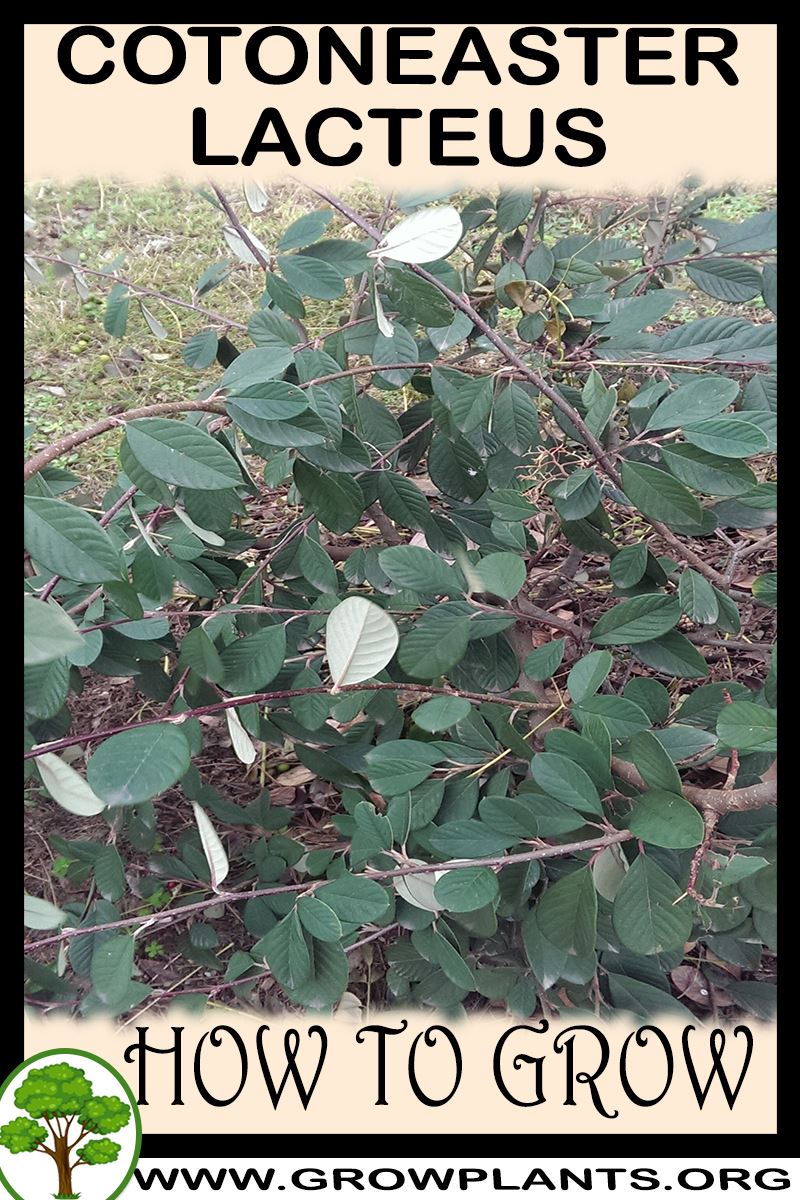
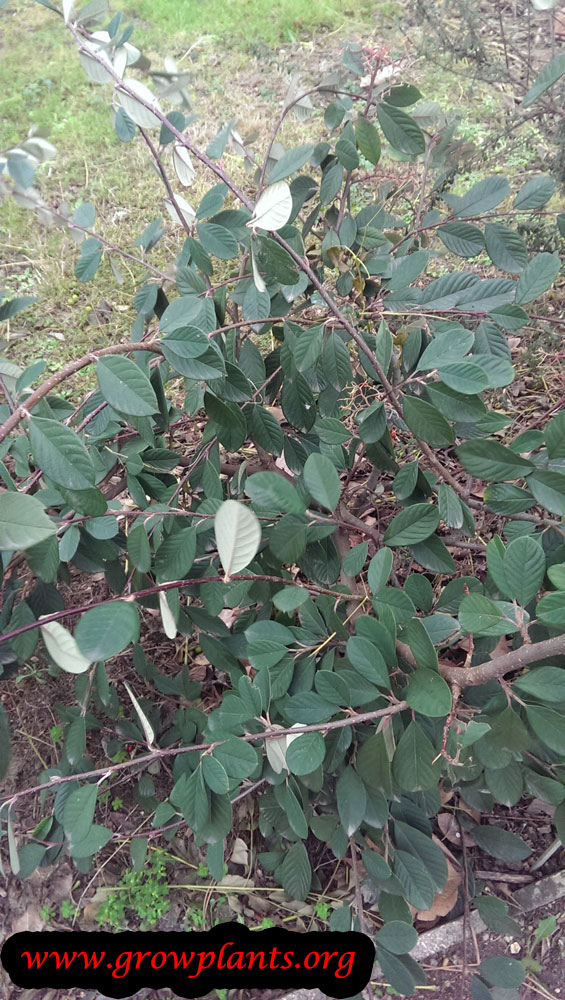
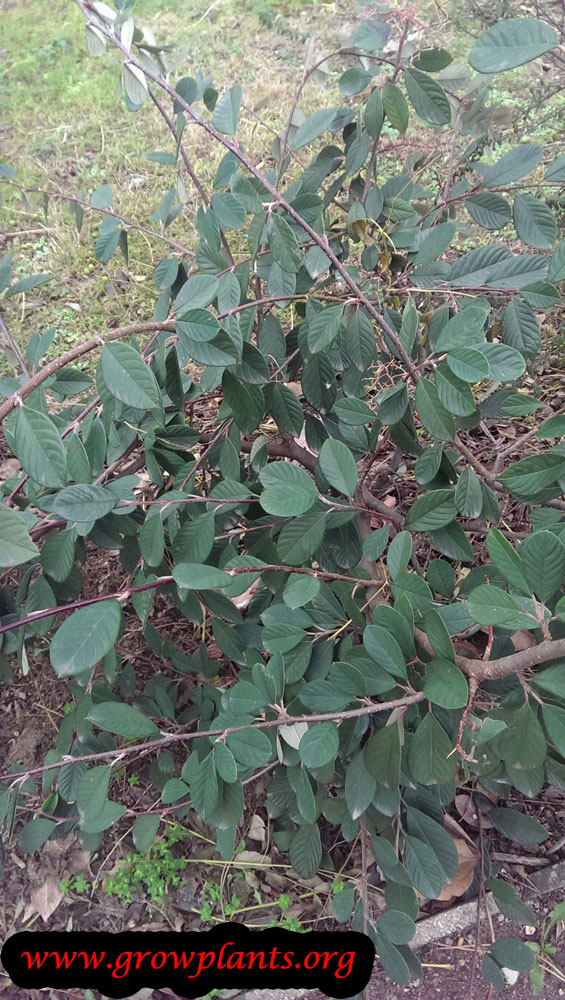
Overview: Cotoneaster lacteus (Late cotoneaster) is an evergreen shrub reaching 1-3 m (3-10 ft) tall, with leathery dark-green leaves, clusters of small white flowers and long-lasting red berries. It is grown as an ornamental hedge, screen or bonsai for temperate gardens.
Quick Specifications
| Specification | Attribute |
|---|---|
| Plant Type / Life Cycle | Perennial woody shrub |
| Foliage Type | Evergreen |
| Mature Size | 1-3 m (3-10 ft) tall |
| Growth Rate | Fast |
| Toxicity | Berries mildly toxic if eaten (cyanogenic) |
| Hardiness | USDA zone 7-9 |
Growth Form & Structure
- Height & Spread: 1-3 m (3-10 ft) tall in the ground; also suited to large containers and bonsai
- Growth Habit & Form: Dense, evergreen shrub with arching branches, easily kept as a hedge or screen
- Lifespan & Maturity: Long-lived, fast-establishing woody shrub
Anatomy & Physical Features
- Leaves & Foliage: Leathery, green to dark-green ovate leaves
- Flower Characteristics: Small white five-petalled flowers borne in clusters in spring
- Fruit Profile: Small red pomes ripening in autumn and persisting into winter — ornamental and valued by birds, but not edible for people
Primary Uses & Landscape Value
- Functional & Ornamental Roles: Evergreen hedge, screen or wildlife shrub with showy berries; also trained as bonsai
Care Guide: Planting, Soil & Watering
Overview: Cotoneaster lacteus is a fast-growing evergreen shrub that thrives in full sun to partial shade and well-draining soil. It is adaptable and drought tolerant once established, needing only moderate water, which makes it a tough, low-maintenance hedge or screening plant.
Quick Care Requirements
| Requirement | Ideal Condition |
|---|---|
| Planting Season | Warm season — spring through summer |
| Growth Rate | Fast |
| Soil Type | Well-draining; tolerant of most soils |
| Water Need | Moderate — water regularly while young, drought tolerant once established |
Planting & Establishment
- Best Planting Season: Plant in the warm season, through spring and summer, once frost has passed so roots establish before winter; it is hardy in roughly zones 7–9.
- How to Plant:
- Hole Preparation: Dig a hole as deep as the root ball and about twice as wide, loosening the surrounding soil.
- Soil Amendments: Mix a little compost into poor soil and add grit to improve drainage on heavy ground; the plant is not fussy about soil type.
- Planting Depth: Set the root collar level with the soil surface; do not bury the stem.
- Growth Speed & Expectations: Growth is fast — plants quickly fill in to a 1-3 m (3-10 ft) shrub, useful for hedging.
Soil, Watering & Drainage Care
- Soil Mix & Drainage Needs: Give it well-draining soil; it tolerates most soils but dislikes waterlogging. In containers use a free-draining potting mix.
- Watering Schedule & Technique:
- Young / Newly Planted: Water regularly to keep the soil evenly moist while roots establish.
- Established: Water moderately, letting the soil dry somewhat between waterings; mature plants tolerate dry spells well.
- Seasonal Adjustments: Water more in summer heat and reduce watering in cool, wet weather.
Climate, Light & Hardiness
Cotoneaster lacteus is an evergreen hedging shrub for temperate climates, growing best in full sun to half shade across USDA zone 7–9.
Quick Climate Specifications
| Climate Zones | Temperate |
|---|---|
| USDA Hardiness Zones | 7–9 |
| Frost Tolerance | Moderate |
| Light Conditions | Full Sun to Half Shade |
| Wind Tolerance | Moderate to High |
Sunlight & Light Exposure
Optimal Light Setup
Full sun gives the densest hedge growth and the best flowering and fruiting.
Temperature Extremes & Hardiness
USDA Hardiness & Regional Limits
Zone 7–9.
Cold Damage & Winter Protection
Moderately hardy as an evergreen shrub; reliable within its rated zones without special winter protection.
Extreme Heat Tolerance
Handles warm-temperate summers well.
Wind, Humidity & Microclimate
Wind Tolerance
Generally good; Cotoneaster species are commonly used as hedges and windbreaks, consistent with typical toughness for this genus.
Growing in Pots, Balconies & Indoors
This evergreen cotoneaster carries white flowers then long-lasting red berries loved by birds. The grower rates it for containers but not indoors – it is a large, light-hungry shrub best kept outside on a patio or balcony.
Quick Details
- Container Size: A large container, 30-50 L (8-13 gal), scaled to the shrub
- Indoor Suitability: Not a houseplant (grower); a hardy outdoor shrub for pots on a patio
- Best Spot: Full sun to partial shade; a bright spot with some direct sun is ideal.
- Soil & Drainage: Aerated, organic-rich mix (quality potting mix, or peat/coir with perlite or vermiculite); it must drain freely.
- Watering in Pots: Keep the mix evenly moist, letting the surface dry slightly between waterings; pots dry faster than open ground.
Indoors & On the Windowsill
- Not a houseplant: The grower marks it unsuitable indoors; it is a big, hardy shrub that needs full outdoor light and is far too vigorous for a room.
- No winter shelter needed: It is hardy and stays outdoors all year.
On a Balcony or Patio
- Light & exposure: Give it a bright, open spot; it tolerates wind and takes sun to part shade. Pots dry faster than borders, so water in hot spells.
- Vigour & spread: The grower flags it as invasive – keeping it in a pot actually helps contain it, but trim off berries if self-seeding is a concern.
Choosing the Pot, Soil & Long-Term Care
- Pot & drainage: A large tub with strong drainage holes; skip a standing-water saucer. Terracotta breathes and dries fast; glazed or plastic holds moisture longer.
- Potting mix: Use a well-aerated, organic-rich mix – quality potting mix, or peat/coir blended with perlite or vermiculite.
- Feeding: As nutrients wash out of pots faster than open ground, feed potted plants regularly through the growing season with a balanced fertiliser.
- Repotting: Refresh the top few centimetres of mix each year and pot up (or root-prune and return to the same pot) about every two years.
Fertilizing & Feeding
Cotoneaster lacteus is a tough, fast-growing evergreen hedge and bonsai shrub valued for its small white spring flowers and the ornamental red berries that follow in autumn. It is a light feeder – balanced feeding through the growing season supports steady growth and a good berry set, and it is easy to over-feed a plant that is already known for vigorous, sometimes invasive growth.
Quick Fertilizing Specs
| Feeding Level | Light |
|---|---|
| Main Nutrient Priority | Balanced feeding with adequate nitrogen supports healthy growth and flowering; there is no need for a special high-phosphorus formula to encourage bloom or berry set |
| Best Feeding Period | Spring as new growth begins, ahead of the flowering and fruiting season |
| Soil pH | Adapts to a wide range of well-drained garden soils without special pH adjustment |
| Reduce/Stop Feeding | Ease off after flowering and stop by autumn as berries ripen and the plant heads toward its winter rest |
| Organic Options | A mulch layer around the root zone conserves moisture and adds gentle background nutrition as it breaks down |
Feeding by Growth Stage
Spring growth ahead of flowering
Support healthy new growth heading into the flowering and fruiting season
| Nutrient direction | Balanced feeding with adequate nitrogen supports vigorous new growth and sets the plant up for good flowering and berry production; this is already a fast-growing shrub, so restrained feeding is usually enough |
|---|---|
| Timing | Early spring as new growth resumes, ahead of the spring bloom |
| Frequency | A single light feeding as growth resumes in spring is usually sufficient for an established plant |
| Fertilizer types | A balanced, complete fertilizer suited to flowering and berrying shrubs, A slow-release balanced fertilizer applied once as spring growth begins |
| Precautions | Avoid heavy nitrogen feeding, since this species already grows fast and can become invasive in some regions if conditions favor excess vigor and heavy seed or berry production |
Bloom and berry set
Support the plant through flowering and the development of its ornamental autumn berries without pushing excess soft growth
| Nutrient direction | Light, balanced feeding is enough through bloom; heavy feeding at this stage tends to push leafy growth rather than improving flowering or berry set |
|---|---|
| Timing | From spring bloom through berry development into autumn |
| Frequency | Feeding is minimal to none through this period for an established plant that was fed in spring |
| Fertilizer types | An optional light application of a balanced fertilizer only if growth looks weak; otherwise, the spring feeding is usually enough to carry the plant through bloom and fruiting |
| Precautions | Avoid feeding heavily during bloom, since pushing soft new growth at this stage does not improve flowering or berry set and can attract aphids and scale |
Winter rest
Let the plant rest through winter after its berries have been on display
| Nutrient direction | None – withhold fertilizer through winter rest |
|---|---|
| Timing | Late autumn through winter |
| Frequency | No feeding at this stage |
| Fertilizer types | No feeding at this stage; resume light feeding once new growth appears in spring |
| Precautions | Do not fertilize during winter rest, since feeding now offers no benefit and can delay hardening off ahead of cold weather |
Nutrient Deficiency Signs & Corrections
Flowering is sparse and new spring growth looks pale or weak
| Possible causes | Nitrogen deficiency limiting the vigor needed to support flowering and berry set, Root stress from poorly drained or compacted soil limiting nutrient uptake, Overcrowded or unpruned growth shading out flowering wood, Insufficient sun exposure at the planting site |
|---|---|
| Appears first on | New spring growth and the following bloom |
| What to check | Recent feeding history through the growing season, Soil drainage around the root zone, Pruning history and how open the canopy is to light, Light exposure at the site |
| Possible correction | Resume a light, balanced spring feeding if the plant has been underfed, and thin dense growth to improve light penetration, since crowded wood flowers poorly regardless of fertilizer |
New leaves yellow between the veins while the veins stay green
| Possible causes | Iron deficiency associated with alkaline or waterlogged soil that limits iron uptake, Poorly drained or compacted soil restricting root function generally, Cool spring soil temperatures temporarily slowing nutrient uptake |
|---|---|
| Appears first on | Newest leaves |
| What to check | Soil pH and drainage around the root zone, Whether yellowing is confined to new growth, which points toward iron, Recent watering pattern and soil temperature |
| Possible correction | Improve drainage and correct soil pH first; if chlorosis persists in an otherwise healthy, adequately fed plant, a chelated iron product applied per its label can help |
General weak or sparse growth accompanied by visible aphid or scale colonies
| Possible causes | Aphid or scale infestation weakening shoots and reducing vigor directly, Underlying nutrient deficiency making the plant more susceptible to pest buildup, Root stress from drought or poor drainage reducing overall plant vigor |
|---|---|
| Appears first on | New shoot tips and the undersides of leaves |
| What to check | Visible aphids or scale on new growth and stems, Recent feeding and watering history, Soil drainage around the root zone |
| Possible correction | Treat the pest issue directly; correct any underlying watering or drainage problem, and only add light balanced feeding if the plant remains weak once pests are under control |
Pruning, Training & Seasonal Maintenance
Cotoneaster lacteus is a dense evergreen shrub grown as an informal or formal hedge, screen, specimen, or trained as bonsai. It tolerates pruning well, including shearing, but flowers on the previous year’s wood and carries showy red autumn/winter berries valued for both display and wildlife, so pruning timing is a real trade-off between shaping the plant and preserving that berry show. Because the species self-sows readily from bird-dispersed berries and is flagged as invasive in some regions, pruning/deadheading timing can also double as a locally useful spread-control measure where that matters.
Quick Pruning & Maintenance Specs
| Pruning Tolerance | High |
| Primary Pruning Window | Late winter (structural, sacrifices berries) or right after spring flowering (preserves most of the berry crop) |
| Secondary Maintenance Window | Light summer trims for formal hedges |
| Typical Frequency | Formal hedge: 1–2x/summer; informal/specimen: 1x/year |
| Main Objective | Hedge density/shape, berry display, or (locally) invasive-spread control |
| Young Plant Priority | Formative shaping into a hedge line, an open specimen form, or a bonsai structure |
| Mature Plant Priority | Size/density maintenance; renewal of old bare wood |
| Best Tool Type | Hedge shears (formal hedge) or bypass secateurs (specimen/bonsai) |
| Avoid Heavy Pruning During | Bird nesting season in a wildlife hedge; peak summer heat for hard cuts |
Pruning by Plant Age & Size
Newly Established
Minimal – remove only damaged growth and let the framework establish for about a year.
Young / Formative
As a hedge: begin light tip-pruning early to encourage dense branching from the base and establish the hedge line. As a specimen or bonsai: select structure through selective branch choice, and for bonsai use wiring and pinching to build ramification – avoid shearing, which ruins the natural arching form and the berry display.
Mature / Established
Hedge: 1–2 shearings a year to hold the line. Specimen: selective thinning/renewal cuts to keep an open, arching habit that shows off the berries. Bonsai: ongoing fine pinching and pruning to keep the miniature scale, with occasional structural cuts during dormancy.
Seasonal Pruning Schedule
Post-Flowering: light shaping right after bloom preserves most of the berry set on informal specimens.
Dormant/Winter: structural framework pruning or hedge renovation, done when the berry display isn’t the priority, or after the berries have been enjoyed through winter and begun to drop.
Summer Canopy Management: formal hedge clipping, which sacrifices most flowers/berries for a crisp line – a normal, accepted trade-off for hedges but not for berry-display specimens.
Ongoing Sanitary: remove dead or aphid/scale-damaged wood as seen.
Flowering & Fruiting Wood
Flowers form on short spurs along one-year-old and older wood, followed by berries that persist into winter. Pruning in late winter before growth removes wood that would have flowered and fruited that year, while pruning right after spring flowering preserves the current season’s berry crop. Heavy hedge shearing sacrifices most flowering/fruiting wood for a tight formal line – an accepted trade-off for hedges, not appropriate for a berry-display specimen.
Structural Pruning & Training
Hedges: keep a slightly tapered profile, wider at the base, so lower growth still gets light. Specimens: thin crowded or crossing interior stems to show off the arching habit and berry clusters, and periodically renewal-prune old, unproductive wood at the base. Control height and spread as needed within its roughly 1–3m size range.
Special Growth to Remove
- Dead or aphid/scale-infested twigs.
- Crossing/rubbing interior branches on specimens (not a concern on a hedge, where density is the goal).
- In areas where this species is flagged as invasive, spent flower trusses can optionally be trimmed off before berries mature to reduce bird-dispersed seed spread – a locally relevant control measure, not a routine step everywhere.
Container & Small-Space Pruning
As a bonsai or container specimen, pruning is far more frequent and fine-scale: regular pinching of new shoot tips maintains ramification and small leaf/berry scale, with occasional structural (never shearing) cuts during dormancy to shape the trunk and branch framework.
Tools
Hedge shears only where genuinely maintained as a clipped formal hedge; bypass secateurs for informal/specimen shaping and berry-preserving selective cuts; a pruning saw is rarely needed except to remove old thick renewal wood from a mature specimen; precision snips for bonsai pinching.
Tool Hygiene & Disease Risk
Routine – aphids and scale (both noted pests) aren’t typically tool-transmitted, so clean, sharp tools are sufficient; wipe sticky honeydew residue off blades after working infested growth so it doesn’t attract more aphids at the next cut.
Cut Placement & Technique
Hedge: shear to a consistent, slightly tapered plane. Specimen: use thinning cuts back to a lateral branch or the base rather than heading cuts, to preserve the natural arching form. Bonsai: pinch just above a leaf node; structural cuts flush, without stubs.
Heavy Pruning & Rejuvenation
Tolerates hard renovation pruning well if a hedge or specimen becomes leggy or bare at the base – a hard cutback in late winter forces vigorous regrowth from old wood, though it sacrifices that year’s flowers and berries. Bonsai specimens are the exception: avoid hard structural rejuvenation cuts except as a deliberate, infrequent restyling done carefully during dormancy.
Post-Pruning Care
Monitor regrowth for aphid/scale flare-ups, since soft new shoots attract both; water newly hard-pruned plants through the following season to support recovery; no special feeding is needed.
Common Pruning Mistakes
- Shearing a berry-display specimen like a formal hedge, losing the arching form and fruit show.
- Pruning a wildlife hedge right before bird nesting season begins.
- Letting all berries mature and drop in sensitive natural areas where the species is known to spread.
- Structurally over-pruning a bonsai instead of maintaining it mainly through pinching.
When NOT to Prune
Avoid hard structural pruning during active bird nesting on a wildlife hedge; avoid pruning immediately before an expected hard frost; avoid heavy cuts during summer heat or drought stress.
Recommended Tools (by task)
- hedge_shears – formal hedge maintenance only.
- bypass_secateurs – specimen shaping, berry-preserving selective cuts, and renewal cuts.
- precision_snips – bonsai pinching and fine work.
Pruning Troubleshooting
| Problem | Possible Cause | What to Check | Corrective Action |
| Few or no berries this winter | Pruned in winter/before bloom, removing flowering wood | Timing of the last prune versus the spring bloom season | Shift major pruning to right after spring flowering next year |
| Bare, hollow lower hedge | Repeated shearing at the same height without renewal | Foliage density near the base of the hedge | Selectively hard-prune part of the hedge low to force fresh basal growth |
| Sticky leaves, sooty mold, weak new shoots | Aphid or scale infestation (a known pest pressure for this species) | Undersides of new growth for aphids/scale insects | Treat the pest issue alongside pruning; remove the worst-affected twigs |
Propagation Guide
Cotoneaster lacteus is most commonly propagated from semi-ripe stem cuttings, which is straightforward and keeps hedge or bonsai specimens consistent, while seed is also viable but slower and less predictable. Its abundant red autumn fruit is readily spread by birds, which is part of why this species can self-sow and behave as an invasive seedling source in some areas.
Quick Propagation Specs
| Best Propagation Method | Semi-ripe stem cuttings |
| Alternative Methods | Seed |
| Propagation Difficulty | Easy |
| Seed True-to-Type | Usually true-to-type for the species |
| Vegetative True-to-Type | Yes |
| Best Propagation Season | Summer (cuttings); spring for sowing cleaned seed |
| Cutting Rooting Time | Typically several weeks |
Growing from Seed
Seed Handling & Viability
Clean the pulp from the red fruit before sowing, as the flesh can inhibit germination.
Dormancy & Pre-Sowing Treatment
The hard seed coat typically benefits from a period of cold stratification to improve and even out germination.
Germination Conditions
Sow in well-drained soil; germination can be slow and staggered, sometimes not appearing until the following season.
Stem Cuttings
Cutting Type
Semi-ripe cuttings from the current season’s growth.
Best Timing
Summer.
Cutting Preparation
Take a cutting with several nodes, remove lower leaves, and trim just below a node.
Rooting Setup
Insert into free-draining cutting mix and keep humid until rooted.
Rooting Hormone
Optional; can improve rooting consistency.
Rooting Time
Generally several weeks under warm, humid conditions.
Bloom & Flower Guide
Quick Details
- Bloom Season: Spring
- Flower Appearance: Small white, five-petalled flowers in dense clusters
- Edibility: Ornamental only – grown as a flowering, berrying hedge, not for eating the flowers
Detailed Blooming Overview
In spring, late cotoneaster is covered in broad clusters of small white, five-petalled flowers – a strong draw for bees. They are modest individually but generous in mass, clothing the arching branches and giving the shrub a soft, foamy look at the height of spring.
Flower Characteristics
- Small white flowers with five petals.
- Borne in dense clusters along the branches.
- Rich in nectar and very attractive to bees.
Bloom Care & Thinning
- Managing the bloom: Prune in winter for shape; avoid a heavy cut just before spring, as that removes the coming flowers.
Pests, Diseases & Troubleshooting
Overview: Cotoneaster is a tough, adaptable shrub, but as a member of the rose family it is highly vulnerable to bacterial fire blight – its signature and most damaging disease – and is regularly troubled by cotoneaster webworm, aphids and scale. The management priority is vigilant sanitation: prune out blight strikes promptly with sterilised tools, avoid lush over-fed growth that invites both blight and aphids, and keep sap-suckers in check organically.
Quick Troubleshooting Overview
| Issue / Pest | Main Symptom | Primary Solution |
|---|---|---|
| Fire blight | Shoots suddenly blacken, wilt and hook like a shepherd’s crook | Prune 30 cm below symptoms with sterilised tools; destroy prunings |
| Cotoneaster webworm | Leaves webbed together and browning; caterpillars inside | Prune out and destroy webbed nests; Bt on young larvae |
| Woolly / hawthorn aphid | Sticky honeydew, curling shoots, white woolly masses | Water jet, insecticidal soap, encourage predators |
| Scale | Brown limpet bumps on stems; sooty mould | Horticultural/dormant oil in the cool season |
| Spider mites | Stippled, bronzed foliage in hot dry spells | Hose foliage, horticultural oil, predatory mites |
| Silver leaf / leaf spot | Silvery leaves or brown leaf spots and dieback | Prune out affected wood in dry weather; sanitise tools |
Common Pests & Management
- Cotoneaster webworm (Athrips rancidella):
- Symptoms: Small caterpillars bind leaves together with silk into untidy brown webbed nests and feed within, browning patches of the shrub; heavy attacks disfigure and defoliate whole sections.
- Prevention & Control: Prune out and destroy the webbed nests as soon as they appear, and rake up debris where larvae overwinter. Spray Bacillus thuringiensis (Bt) or spinosad onto young larvae before webbing thickens; encourage parasitic wasps and birds.
- Woolly & hawthorn aphids (Eriosoma / Prociphilus spp.; Aphis spp.):
- Symptoms: Clusters of soft aphids – some cloaked in white woolly wax – on shoots and leaf undersides, causing curling, stunting, heavy sticky honeydew and blackening sooty mould.
- Prevention & Control: Dislodge with a strong water jet and support ladybirds, lacewings and hoverflies. Use insecticidal soap or neem on the undersides for heavy colonies, and avoid excess nitrogen that drives the soft growth aphids favour.
- Scale insects (Diaspididae & Coccidae (San Jose, oystershell)):
- Symptoms: Small fixed brown, grey or mussel-shaped bumps encrusting stems and twigs; soft scale drips honeydew, and heavy infestations cause dieback and yellowing.
- Prevention & Control: Scrub off light infestations and apply horticultural or dormant oil in the cool season to smother scale and overwintering eggs. Prune out heavily encrusted wood; conserve natural parasitoids by avoiding broad-spectrum sprays.
- Spider mites (Tetranychus / Oligonychus spp.):
- Symptoms: Fine pale stippling and a dull bronzed look to the leaves in hot, dry, dusty conditions, with fine webbing when severe and premature leaf drop.
- Prevention & Control: Hose dust off the foliage and avoid drought stress. Horticultural oil or insecticidal soap manages outbreaks; predatory mites help under cover and in the landscape when broad-spectrum sprays are avoided.
- Lace bugs (Tingidae (hawthorn lace bug)):
- Symptoms: Pale yellow stippling on the upper leaf surface with tell-tale dark, tarry excrement specks and shed skins on the undersides; foliage looks bleached in summer.
- Prevention & Control: Tolerate light damage, hose undersides, and encourage predators. Insecticidal soap or neem to the leaf undersides checks heavy populations when applied to nymphs.
Diseases & Fungal Issues
- Fire blight (Erwinia amylovora):
- Symptoms: The signature and most serious disease: blossoms and shoot tips suddenly wilt, blacken and die as if scorched, with young shoots bending into a characteristic ‘shepherd’s crook’; a sticky bacterial ooze may appear, and sunken cankers form on branches. It spreads fast in warm, wet weather and through flowers and pruning wounds.
- Treatment & Management: Prune out strikes at least 30 cm (a foot) below the visible damage into healthy wood, disinfecting the blade between every cut, and burn or bin the prunings – never compost them. Prune in dry weather, avoid heavy nitrogen and over-vigorous soft growth, and remove badly affected plants. Copper sprays at bloom give only limited protective help.
- Silver leaf (Chondrostereum purpureum):
- Symptoms: A silvery sheen on the leaves of affected branches followed by dieback; cut wood shows a dark stain, and bracket fungi may later form on dead wood. It enters through wounds, mainly in the cool wet season.
- Treatment & Management: Prune only in dry weather in the warmer months when infection risk is low, and cut affected branches back to clean, unstained wood, sanitising tools. Remove and destroy dead wood that could produce spores.
- Leaf spot (Cercospora / Entomosporium spp.):
- Symptoms: Small brown to reddish spots on leaves that may merge and cause yellowing and early leaf drop in wet seasons; usually cosmetic.
- Treatment & Management: Rake up and destroy fallen leaves, improve air circulation, and water at the base. Fungicides are rarely justified; focus on sanitation and airflow.
- Powdery mildew (Podosphaera spp.):
- Symptoms: A white powdery film on leaves and shoots in crowded, humid conditions, sometimes distorting new growth.
- Treatment & Management: Improve spacing and airflow and prune out congested growth; remove affected shoots. Sulfur or potassium bicarbonate helps only if the shrub is significantly disfigured.
Growing Difficulties & Abiotic Problems
- Leaf scorch & drought stress:
- Cause & Symptoms: Hot drying wind, drought or salty soil browns leaf margins, especially on recent plantings and in containers.
- Correction Strategy: Mulch and water deeply during establishment and dry spells, and shelter from harsh wind. Established plants are notably drought-tolerant once settled.
- Chlorosis:
- Cause & Symptoms: Yellowing between green veins on very alkaline or waterlogged soil where iron/manganese uptake is limited.
- Correction Strategy: Improve drainage, mulch with organic matter, and apply chelated iron if needed. Correct overwatering, which is a common underlying cause.
- Waterlogging & root rot:
- Cause & Symptoms: Heavy, poorly drained soil rots the roots and causes general decline and dieback.
- Correction Strategy: Plant on well-drained ground, avoid low wet spots, and don’t overwater. Improve heavy soils with organic matter before planting.
What Helps – Products & Tools
Sanitation tools lead the kit for this rose-family shrub: sharp pruners plus a disinfectant (dilute bleach or alcohol) to cut out fire blight, silver leaf and webworm nests, and a bag to remove prunings. For sap-suckers use insecticidal soap or neem for aphids, mites and lace bugs, horticultural/dormant oil for scale, and Bt for webworm caterpillars; copper offers limited protective help against fire blight at bloom.