
Plant Profile & Key Characteristics
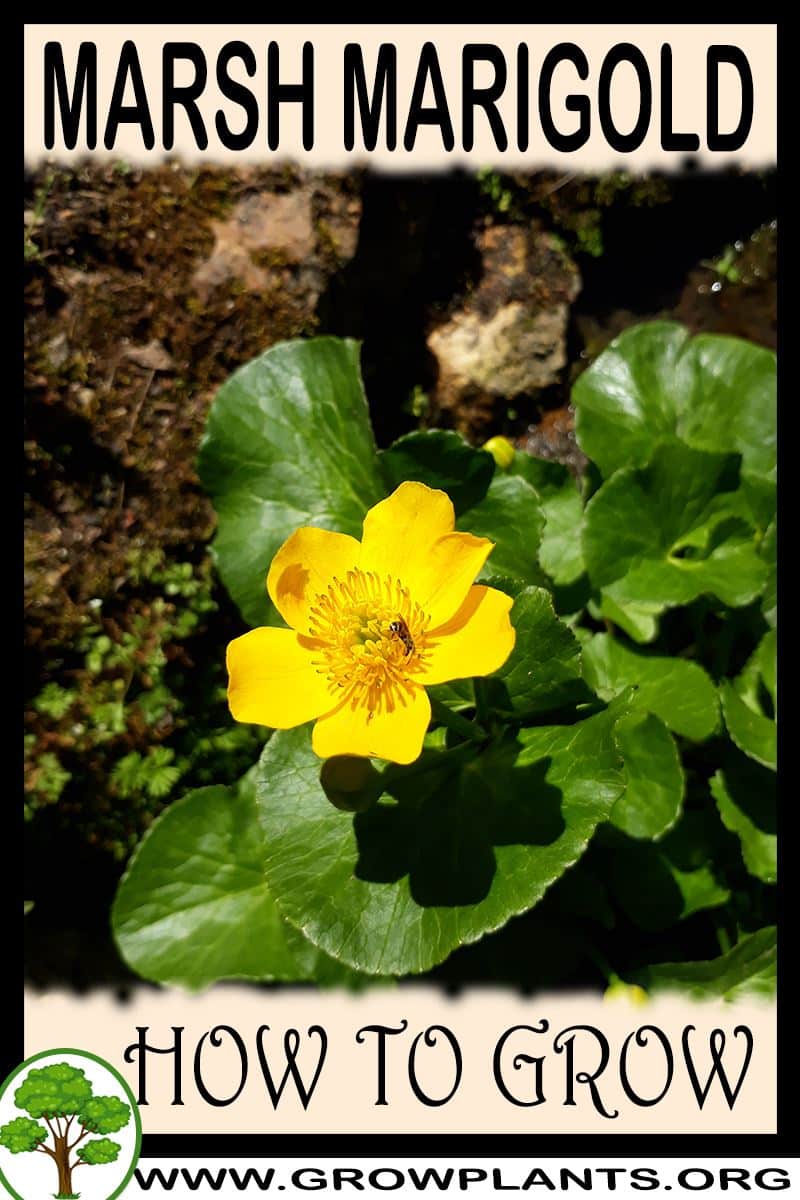
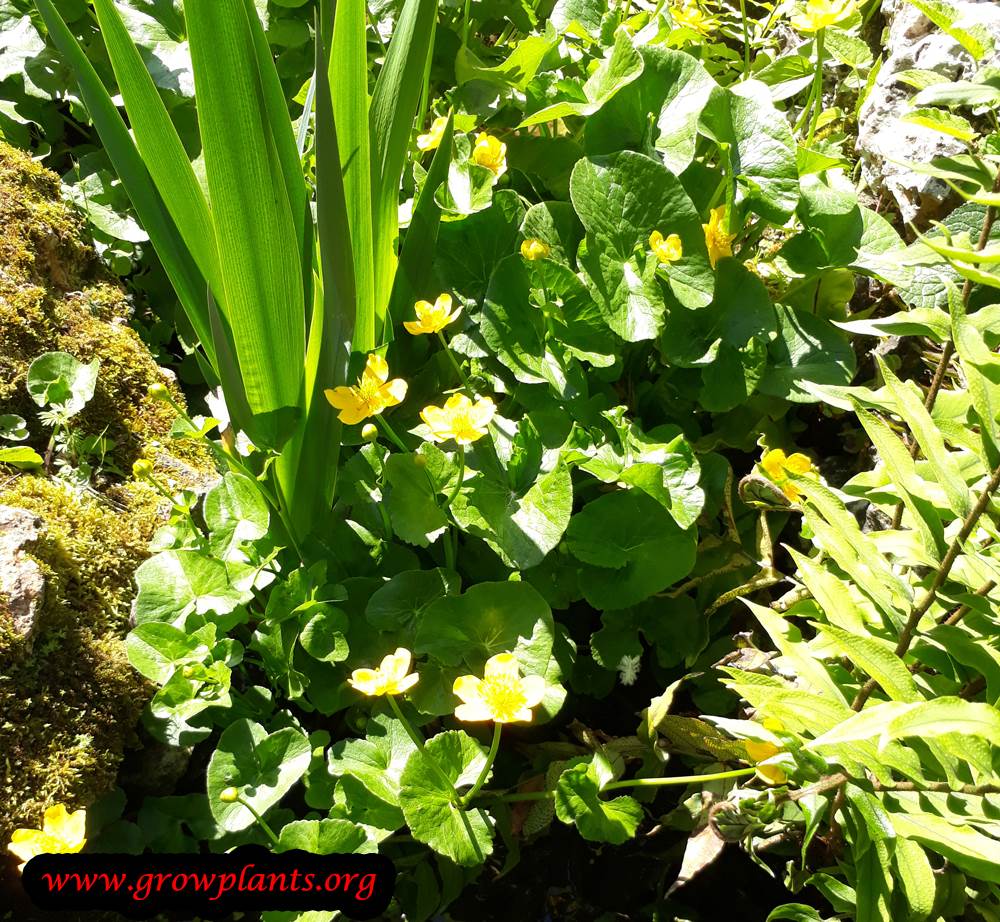
Overview: A clump-forming herbaceous perennial 30-50 cm (12-20 in) tall, grown as an ornamental marginal water plant. It bears glossy heart-shaped leaves and bright yellow buttercup-like flowers.
Quick Specifications
| Specification | Attribute |
|---|---|
| Plant Type / Life Cycle | Perennial |
| Foliage Type | Evergreen or deciduous |
| Mature Size | 30-50 cm (12-20 in) tall |
| Growth Rate | Fast to moderate |
| Root System | Fibrous, from a short rhizome |
| Toxicity | Toxic/irritant when raw (contains protoanemonin) |
| Hardiness | USDA zone 3-11 |
Growth Form & Structure
- Height & Spread: 30-50 cm (12-20 in) tall, forming a clump; grown at pond margins, in bog gardens or in containers standing in water.
- Growth Habit & Form: Mounded, clump-forming marginal aquatic herb with a mass of basal foliage.
- Lifespan & Maturity: Long-lived perennial that establishes quickly in wet ground.
Anatomy & Physical Features
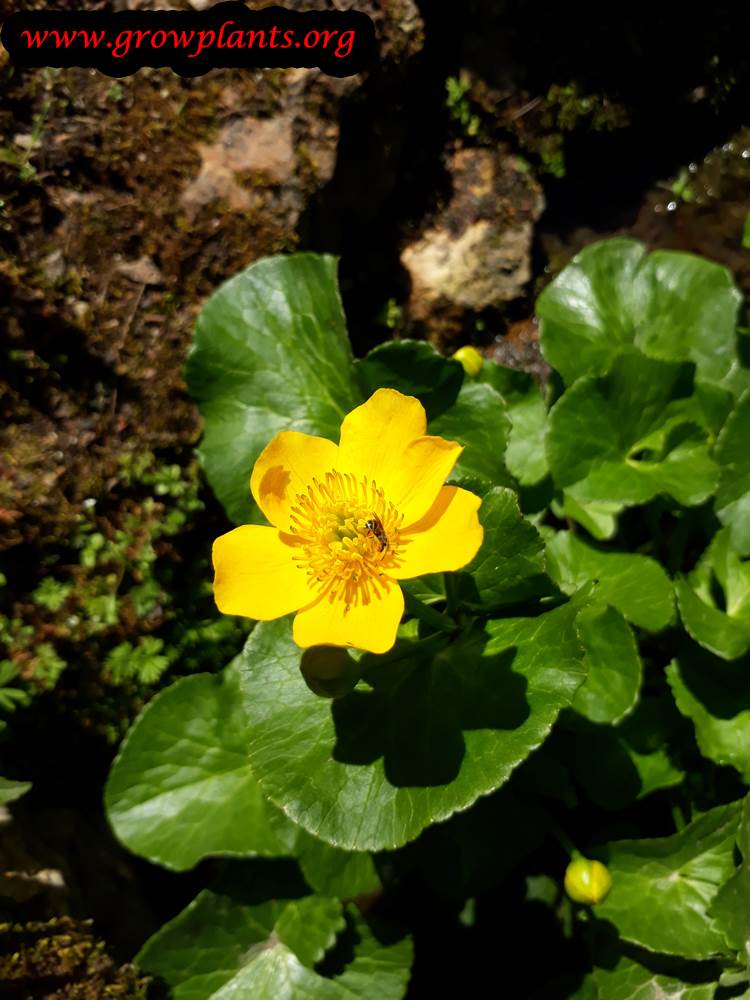
- Leaves & Foliage: Glossy, dark green, heart- to kidney-shaped leaves.
- Flower Characteristics: Waxy, bright yellow five-petalled buttercup-like flowers (full detail in the Bloom section).
Primary Uses & Landscape Value
- Functional & Ornamental Roles: Ornamental marginal and bog plant for pond edges and water gardens; can be vigorous, so give it room.
Care Guide: Planting, Soil & Watering
Overview: A moisture-loving marginal plant for bog gardens and pond edges, thriving in rich, permanently wet soil. It cannot dry out and does best with its roots in saturated ground or shallow water.
Quick Care Requirements
| Requirement | Ideal Condition |
|---|---|
| Planting Season | Spring to summer (autumn in warmer climates) |
| Growth Rate | Moderate to Fast |
| Soil Type | Rich, wet or boggy soil, or pond margins |
| Water Need | Very High – constantly wet soil or shallow water |
Planting & Establishment
- Best Planting Season: Plant in spring to summer, or in autumn in warmer climates.
- How to Plant:
- Hole Preparation: Dig a hole slightly wider than the root ball at a pond margin or in a bog bed.
- Soil Amendments: Work in organic matter to build a rich, water-retentive soil.
- Planting Depth: Keep the crown at or just below the waterline/soil surface.
- Growth Speed & Expectations: Moderate to fast, reaching 30-50 cm (12-20 in).
Soil, Watering & Drainage Care
- Soil Mix & Drainage Needs: Unlike most plants it wants waterlogged, rich soil – grow at pond edges or in a container standing in water; no free drainage needed.
- Watering Schedule & Technique:
- Young / Newly Planted: Keep newly planted roots constantly wet.
- Established: Maintain permanently wet or saturated soil; never let it dry out.
- Seasonal Adjustments: Keep saturated year-round, checking levels in summer heat.
Climate, Light & Hardiness
Marsh marigold is a cold-hardy aquatic-margin perennial, evergreen in mild climates and deciduous where winters are cold, suited to temperate, Mediterranean, and subtropical conditions. It grows best in full sun to half shade in consistently wet, rich soil.
Quick Climate Specifications
| Climate Zones | Temperate, Mediterranean, subtropical |
|---|---|
| USDA Hardiness Zones | 3–11 |
| Frost Tolerance | High |
| Light Conditions | Full Sun / Half Shade |
Sunlight & Light Exposure
Optimal Light Setup
Full sun to half shade both suit marsh marigold well, giving flexibility for pond-margin and bog-garden placement.
Shade & Heat Management
The plant's very wide climate range, zones 3 through 11, reflects strong tolerance of both cold winters and warm subtropical summers.
Temperature Extremes & Hardiness
USDA Hardiness & Regional Limits
Marsh marigold is hardy across an unusually broad USDA range of zones 3–11, making it one of the more climate-flexible water-margin perennials.
Cold Damage & Winter Protection
In cold-winter areas the plant dies back to its rootstock and re-emerges in spring; in milder zones it can remain evergreen through winter.
Frost Sensitivity
Overall frost tolerance is high given the plant's rootstock survival strategy in cold climates, though above-ground foliage is lost to hard frost where it behaves as deciduous.
Wind, Humidity & Microclimate
Humidity Preferences
Marsh marigold needs consistently wet, rich soil or shallow standing water and does not tolerate drying out.
Microclimate Recommendations
Because it spreads aggressively when happy, site it where its invasive, spreading habit in wet ground can be contained or managed.
Growing in Pots, Balconies & Indoors
Marsh marigold is an aquatic plant grown in a container of water rather than in soil. The grower does not grow it as a houseplant, but it is well suited to a water tub, half-barrel or mini-pond on a balcony or patio.
Quick Details
- Container Size: A watertight tub, bowl, half-barrel or mini-pond – grown in standing water, not soil
- Indoor Suitability: Not a houseplant; for an outdoor water container
- Best Spot: Full sun to half shade
- Soil & Drainage: No drainage – the container holds water; root it in aquatic soil topped with grit under the water
- Watering in Pots: Keep the container topped up; it needs a constant, generous body of water
Indoors & On the Windowsill
- Indoors: The grower does not grow it indoors; it is a hardy bog/marginal plant for an outdoor water container.
- Cold tolerance: It is hardy enough to overwinter outdoors in the tub in most temperate areas, dying back and returning in the warm season.
- Safety: All parts are toxic and irritant if eaten raw – keep it away from children and pets and never treat it as edible.
On a Balcony or Patio
- Light & water: Stand the water container where it gets the light levels above; top it up often, as an open tub of water evaporates fast in sun and wind.
- Weight & siting: A full water container is very heavy – make sure the balcony or shelf can take the load before filling it, and site it on a level, stable base.
- Planting depth: As a marginal, sit its pot on bricks so the crown is at the right depth – just at or below the water surface rather than deep under it.
Choosing the Pot, Soil & Long-Term Care
- The container: Any watertight vessel works – a glazed pot with no holes, a half-barrel with a liner, a bowl or a purpose-made mini-pond. No drainage holes here; the point is to hold water.
- Growing it: Plant it in a mesh aquatic basket of heavy loam or aquatic soil topped with grit to stop it clouding the water, then lower it to the right depth.
- Water & feeding: Keep the water topped up with rain or aged tap water; these plants feed from the water, so go easy on fertiliser and remove decaying leaves to keep it clear.
- Upkeep: Divide or thin crowded growth each year to keep it healthy and stop it swamping the container.
Fertilizing & Feeding
Marsh marigold grows rooted in consistently wet, naturally rich soil at a pond edge or bog, so it typically needs only light supplemental feeding beyond what the saturated, organic-rich wetland conditions it naturally favors already provide.
Quick Fertilizing Specs
| Feeding Level | Light – rooted in naturally rich, wet soil that already supplies most of what it needs |
|---|---|
| young_feeding | A light, balanced feeding at planting helps new divisions or seedlings establish roots in their new spot |
| mature_feeding | An established clump usually needs only an occasional light feeding as new growth begins in spring |
| Main Nutrient Priority | Balanced feeding that supports steady leaf and flower growth without pushing soft, weak stems |
| Best Feeding Period | As new growth emerges in spring, tapering off once the heart-shaped foliage is fully expanded and flowering begins |
| Reduce/Stop Feeding | Ease off feeding once flowering finishes and foliage begins its natural late-season decline |
| Organic Options | Well-rotted compost or an aquatic-safe organic feed worked into the wet soil at planting suits this bog-loving plant well |
Feeding by Growth Stage
Establishment in wet, rich soil
Help newly planted divisions or seedlings root into consistently wet, rich soil
| Nutrient direction | A light, balanced feeding worked into the soil at planting to support root establishment |
|---|---|
| Timing | At planting, in spring as the growing season begins |
| Frequency | A light feeding at planting is usually enough to carry new plantings into active growth |
| Fertilizer types | A balanced, aquatic-safe granular or tablet fertilizer worked into the wet planting soil |
| Precautions | Keep fertilizer worked into the soil rather than applied to open water, since this plant grows in saturated ground rather than free water |
Spring foliage growth and bloom
Support vigorous heart-shaped foliage and the flush of yellow, five-petaled blooms
| Nutrient direction | Balanced feeding that favors steady foliage and flower development over rapid, soft growth |
|---|---|
| Timing | Through spring as foliage expands and flowering begins |
| Frequency | Light, occasional feeding through the spring flush is usually sufficient |
| Fertilizer types | A balanced aquatic or bog-plant fertilizer, applied lightly to the wet soil around the roots |
| Precautions | Avoid heavy feeding, which can produce lush foliage at the expense of flowering and encourage this already vigorous, spreading plant to become more invasive |
Post-bloom decline and rest
Let the plant wind down naturally after flowering without pushing further growth
| Nutrient direction | None – withhold fertilizer as foliage begins its natural late-season decline |
|---|---|
| Timing | After flowering finishes, into the plant’s dormant or resting period |
| Frequency | No feeding at this stage; the plant is winding down rather than actively growing |
| Fertilizer types | No feeding at this stage – allow the plant to enter its natural rest period |
| Precautions | Do not fertilize during dieback or dormancy; feeding a resting plant offers no benefit and can encourage rot in saturated soil |
Nutrient Deficiency Signs & Corrections
Heart-shaped leaves turn pale yellow-green instead of deep green
| Possible causes | Nitrogen-poor soil despite generally rich wetland conditions, Waterlogged, oxygen-poor soil limiting root function, Too much shade for adequate photosynthesis, Natural aging of older leaves |
|---|---|
| Appears first on | Older, lower leaves first |
| What to check | Soil richness and organic matter content, Drainage and oxygen availability in the wet soil, Light exposure, Overall plant vigor and new growth |
| Possible correction | Improve light and confirm the soil isn’t stagnant or oxygen-starved; a light balanced feeding can help if the site is genuinely nutrient-poor |
Fewer of the yellow, five-petaled flowers appear than expected
| Possible causes | Excess nitrogen pushing leafy growth over blooms, Insufficient light during the spring flowering window, Overcrowded, congested clumps competing for resources, Late frost damage to developing flower buds |
|---|---|
| Appears first on | Whole clump rather than individual stems |
| What to check | Recent feeding history and fertilizer balance, Light levels during spring, Clump density and whether division is overdue, Frost timing relative to bud development |
| Possible correction | Favor balanced over nitrogen-heavy feeding, ensure adequate spring light, and divide crowded clumps rather than adding more fertilizer |
Stems become soft and flop instead of standing upright
| Possible causes | Excess nitrogen producing lush, weak growth, Too much shade encouraging stretched, leggy stems, Overly saturated or poorly aerated soil weakening roots, Overcrowding limiting stem support |
|---|---|
| Appears first on | New growth at the center of the clump |
| What to check | Recent feeding rate and balance, Light exposure, Soil drainage and aeration, Clump density |
| Possible correction | Reduce feeding to light and balanced, improve light, and divide crowded clumps |
Pruning, Training & Seasonal Maintenance
Marsh marigold (Caltha palustris) is a low, clump-forming herbaceous perennial of pond margins and bog gardens with no woody structure to train. It tolerates moderate cutting back – mainly removal of dead foliage and control of its spread – and the source places this work in autumn/winter, after the spring/summer bloom has finished and the foliage has begun to die back. Pruning here does not affect next year’s flowering, since new bloom comes from the crown each spring regardless of how the old foliage was tidied.
Quick Pruning & Maintenance Specs
| Pruning Tolerance | Moderate – foliage cutback and clump division, no woody cuts |
| Primary Pruning Window | Autumn / Winter, as growth dies back |
| Typical Frequency | Once yearly cutback; division as needed to contain spread |
| Main Objective | Remove dead/tatty foliage; keep the aggressive, spreading clump within its space |
| Young Plant Priority | Let the clump establish; no cutting back needed in the first season |
| Mature Plant Priority | Annual tidy-up plus division to control invasive spread |
| Best Tool Type | Hand pruning snips or bypass secateurs |
| Avoid Heavy Pruning During | Spring – summer bloom, if seed set or a full flower display is wanted |
Pruning by Plant Age & Size
Newly Established
Leave the new clump alone beyond removing any damaged leaves; it needs its full foliage to build the crown.
Young / Formative
No structural training applies – this is a basal, crown-forming perennial, not a plant that is trained to a framework.
Mature / Established
Once clumps are established, the main job shifts to containment: the source lists the plant as invasive/aggressive, so mature clumps benefit from periodic division to keep them within their intended space, alongside the routine autumn/winter foliage cutback.
Seasonal Pruning Schedule
Autumn / Winter
Objective: tidy the plant as it dies back. Remove: yellowing or collapsed foliage and spent flower stems. Do not remove: the crown itself, which carries next year’s growth. Expected response: a clean crown that resprouts in spring. Flowering impact: none – next season’s bloom comes from the crown, not from retained old growth.
Special Growth to Remove
Remove dead or collapsing leaves in autumn/winter and spent flower stems once bloom has finished. Because the source documents Marsh marigold as invasive/aggressive, divide and remove excess portions of the spreading clump as needed to stop it colonizing the rest of the pond margin.
Container & Small-Space Pruning
Source confirms it grows well in a planter/container. In a container, division to control spread becomes more important sooner, since a confined pot fills with crown growth faster than an open pond margin – lift and divide when the pot looks crowded rather than waiting for the annual cutback alone to control size.
Tools
- Hand pruning snips or bypass secateurs – soft foliage and flower-stem cuts
- Garden spade or hand fork – for lifting and dividing the clump
Tool Hygiene & Disease Risk
Routine – clean tools between plants. The source’s only pest/disease notes (aphids, fish) are not transmitted by pruning cuts, so no elevated disinfection is warranted.
Common Pruning Mistakes
- Cutting back hard during spring/summer bloom, losing the current flower display for no benefit
- Never dividing the clump, letting an already “invasive/aggressive” plant (per source) spread unchecked across a pond margin
When NOT to Prune
Avoid cutting during the spring/summer bloom if a full flower display or self-seeding is wanted; otherwise this plant has no strict closed season for its light autumn/winter tidy-up.
Recommended Tools (by task)
- precision_snips – removing individual dead leaves and spent flower stems without disturbing the crown
- garden_spade – lifting and dividing the clump to control its documented invasive spread
Propagation Guide
Marsh marigold grows readily from seed or by dividing an established clump, with division being the faster route to a flowering-size plant identical to the parent; the site notes vegetative propagation is not strictly necessary, since seed also establishes well. Overall difficulty is Easy.
Quick Propagation Specs
| Best Propagation Method | Division of the clump (fastest, true-to-type) or seed |
| Alternative Methods | Seed |
| Propagation Difficulty | Easy |
| Seed True-to-Type | Yes (species plant) |
| Vegetative True-to-Type | Yes |
| Best Propagation Season | Spring / summer (autumn possible in warmer climates) |
Growing from Seed
Seed Handling & Viability
Sow seed fresh where possible; like many moisture-loving Ranunculaceae, viability can decline with dry storage.
Dormancy & Pre-Sowing Treatment
A period of cold, moist stratification (for example an outdoor pot over winter) often improves and evens out germination.
Sowing Season
Sow as soon as seed is ripe, or in early spring after stratification; general planting season for the species runs spring to summer (autumn in warmer climates).
Germination Conditions
Keep the sowing medium constantly wet, or even just submerged, mirroring the plant’s boggy/pond-margin habitat.
Seedling Care
Keep young seedlings in consistently saturated soil or shallow water; move them to their permanent boggy or marginal-aquatic spot once established.
Division, Offsets, Pups & Suckers
Lift an established clump and split it into rooted sections, each with some of the fleshy rootstock and a growing point, then replant immediately in wet soil or shallow water. This is the quickest way to a flowering-size plant identical to the parent, though the site notes it isn’t strictly necessary since seed also works.
Bloom & Flower Guide
Quick Details
- Bloom Season: Spring to summer
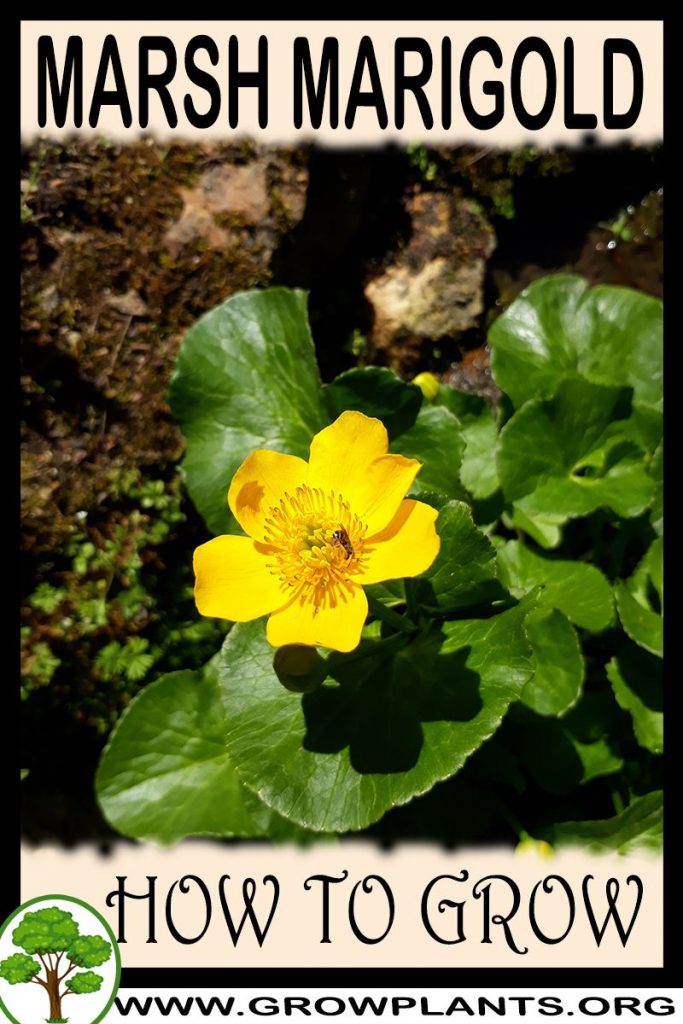
- Flower Appearance: Glossy, light-yellow buttercup-like flowers with five petal-like segments
- Edibility: Toxic – all parts are irritant and poisonous when raw (they contain protoanemonin); do not eat the flowers
Detailed Blooming Overview
Marsh marigold is a waterside perennial whose cheerful yellow flowers light up the margins in spring. The blooms have a glossy, almost lacquered look and a classic buttercup shape. As pretty as they are, the plant belongs to the buttercup family and is poisonous when raw, so it is grown for looks, not for the table.
Flower Characteristics
- Light-yellow flowers with five petal-like segments (technically colored sepals)
- Glossy, buttercup-like, on succulent stems
- Open from spring into summer at the water’s edge
Bloom Care & Thinning
- Placement: happiest in wet soil or shallow water at the pond edge, where it flowers freely.
- Tidying: removing spent flowers keeps the clump looking neat.
- Safety: the plant contains protoanemonin and is toxic and skin-irritant when handled or eaten raw – keep the flowers away from mouths and wash your hands after handling.
Fruit & Uses
Safety note first: the whole marsh marigold plant is toxic when raw, containing an irritant compound (protoanemonin) that can cause mouth and throat irritation, blistering, and stomach upset. This is a plant to grow and admire at the pond edge, not a general food crop. The only traditional edible use is the unopened flower bud, and only after thorough cooking.
Quick Edible Specs
| Edible Parts | Flower buds only (marginal, traditional use) |
|---|---|
| Main Use(s) | Historically pickled as a caper substitute; not a modern culinary staple |
| Eaten Raw or Cooked | Never raw; cooked (boiled) only |
| Preparation Required | Boil first with the water discarded; use only unopened flower buds, never leaves, stems or roots |
| Harvest Season | Spring, while flower buds are still closed (see Blooming) |
| Time to First Harvest | Not applicable; not grown as a food crop |
| Storage | If pickled, store as for any home-pickled vegetable |
| Safety/Toxicity Caveat | Whole plant toxic raw (irritant sap); do not eat leaves, stems or roots; buds unsafe unless thoroughly boiled first |
Flowers & Flower Buds
Only the still-closed flower buds have any traditional food use, gathered in spring before they open. They have historically been boiled, with the cooking water discarded to remove the irritant compound, then pickled in vinegar as a rustic substitute for capers. This is a minor, old folk use rather than an established culinary practice, and the raw or under-processed bud is still irritating.
Preparation, Uses & Safety
Because the whole fresh plant contains an irritant sap, no part should be eaten raw. If flower buds are used, they must be well boiled first with the water discarded, then treated as a pickled condiment rather than a vegetable eaten in quantity. Given the toxicity of the raw plant and how limited this traditional use is, most growers should treat marsh marigold purely as an ornamental pond-margin plant rather than a food source.
Pests, Diseases & Troubleshooting
Overview: Marsh marigold is a robust bog and pondside perennial that is largely trouble-free, with only a few minor pests and a couple of characteristic fungal problems such as rust. Grown in the wet, boggy conditions it demands, it stays healthy; most difficulties come from letting it dry out or from crowded, stagnant foliage. Its sap is an irritant, so handle with gloves.
Quick Troubleshooting Overview
| Issue / Pest | Main Symptom | Primary Solution |
|---|---|---|
| Aphids | Sticky curled shoots and flower stalks | Hose off, encourage predators, soap |
| Slugs & snails | Ragged holes in soft leaves | Hand-pick, barriers, iron-phosphate pellets |
| Caltha rust | Orange-brown pustules, distorted leaves | Remove affected leaves, improve airflow |
| Powdery mildew | White coating on late-season leaves | Airflow, remove leaves, tolerate dormancy |
| Smut | Dark blister-like spots on leaves | Remove and destroy affected foliage |
| Drying out | Scorched, collapsing leaves in summer | Keep soil wet; summer dormancy is normal |
Common Pests & Management
- Aphids (Aphis and Myzus species):
- Symptoms: Small green or dark soft insects clustered on flower stalks and soft new leaves, causing curling, stickiness and occasionally sooty mould in warm weather.
- Prevention & Control: Hose colonies off, encourage ladybirds, lacewings and hoverflies, and remove badly infested stalks. Treat persistent outbreaks with insecticidal soap; near open water avoid chemical sprays that could reach fish.
- Slugs and snails (Deroceras, Arion, Helix species):
- Symptoms: Ragged holes and grazed edges on the soft, lush leaves, worst on young growth in the damp conditions the plant loves; slime trails confirm them.
- Prevention & Control: Hand-pick at night, use barriers such as grit or copper around clumps, and set beer traps or iron-phosphate pellets (safe around wildlife). Encouraging frogs, birds and ground beetles around a pond helps naturally.
- Caterpillars (various moth larvae):
- Symptoms: Occasional chewing damage and holes in the foliage from passing caterpillars; usually minor on this vigorous plant.
- Prevention & Control: Hand-pick any caterpillars found and tolerate light damage, as the plant regrows readily. No routine control is needed.
Diseases & Fungal Issues
- Caltha rust (Puccinia calthae, Puccinia calthicola):
- Symptoms: The characteristic disease: orange to dark-brown powdery pustules on leaves and stalks, sometimes with thickened or distorted growth; worst in humid, crowded stands.
- Treatment & Management: Remove and destroy affected leaves promptly, thin congested clumps for airflow, and avoid wetting the foliage unnecessarily. It rarely kills the plant; good hygiene and spacing usually keep it in check without fungicide.
- Smut (Urocystis species):
- Symptoms: Dark, blister- or streak-like sooty spots and swellings on leaves and stems, releasing black spore masses.
- Treatment & Management: Cut off and destroy infected foliage (do not compost it), and improve airflow around the clump. Persistent smut on a valued plant may warrant lifting and replacing badly affected stock.
- Powdery mildew and leaf spot (Erysiphe / Ramularia species):
- Symptoms: White powdery coating or pale spots on ageing, late-season or stressed leaves, especially as the plant heads toward summer dormancy.
- Treatment & Management: Improve airflow and remove affected leaves; much late-season decline is simply the plant’s natural summer die-back and needs no treatment. Keep clumps un-crowded.
- Grey mould (Botrytis cinerea):
- Symptoms: Fuzzy grey mould on damaged, dying or congested wet foliage in cool damp spells.
- Treatment & Management: Remove dead and dying leaves, thin dense growth and avoid leaving decaying matter around the crown. Rarely serious in an open bog planting.
Growing Difficulties & Abiotic Problems
- Drying out:
- Cause & Symptoms: Marsh marigold must have constantly wet, boggy soil; if it dries the leaves scorch, brown and collapse and the plant can be lost.
- Correction Strategy: Grow it in permanently moist ground, bog gardens or the margins of a pond in shallow water, and never let the root zone dry out during the growing season. Mulch helps retain moisture inland.
- Natural summer dormancy:
- Cause & Symptoms: After flowering the foliage often yellows and dies back in summer heat – this is normal, not disease.
- Correction Strategy: Do not over-react to summer die-back: keep the soil moist, let the plant rest, and it will re-emerge. Simply remove the tattered old leaves.
- Irritant sap:
- Cause & Symptoms: The sap contains protoanemonin and can irritate and blister skin and eyes; all parts are toxic if eaten.
- Correction Strategy: Wear gloves when dividing or cutting the plant, wash hands afterwards, and keep it away from being eaten by children, pets or livestock. This is a handling caution rather than a treatment.
- Poor flowering in shade or dryness:
- Cause & Symptoms: In deep shade or dry soil the plant grows weakly and flowers poorly.
- Correction Strategy: Site in full sun to light shade in reliably wet ground; divide congested old clumps every few years to keep them vigorous and free-flowering.
What Helps – Products & Tools
Marsh marigold needs little intervention. Keep a slug barrier or wildlife-safe iron-phosphate pellets and beer traps on hand, insecticidal soap for the occasional aphid outbreak (kept away from open water), and good hygiene – removing rust- and smut-affected leaves – as the main disease tool. The real key is cultural: permanently wet soil and un-crowded clumps. Wear gloves because of the irritant sap.