Plant Profile & Key Characteristics
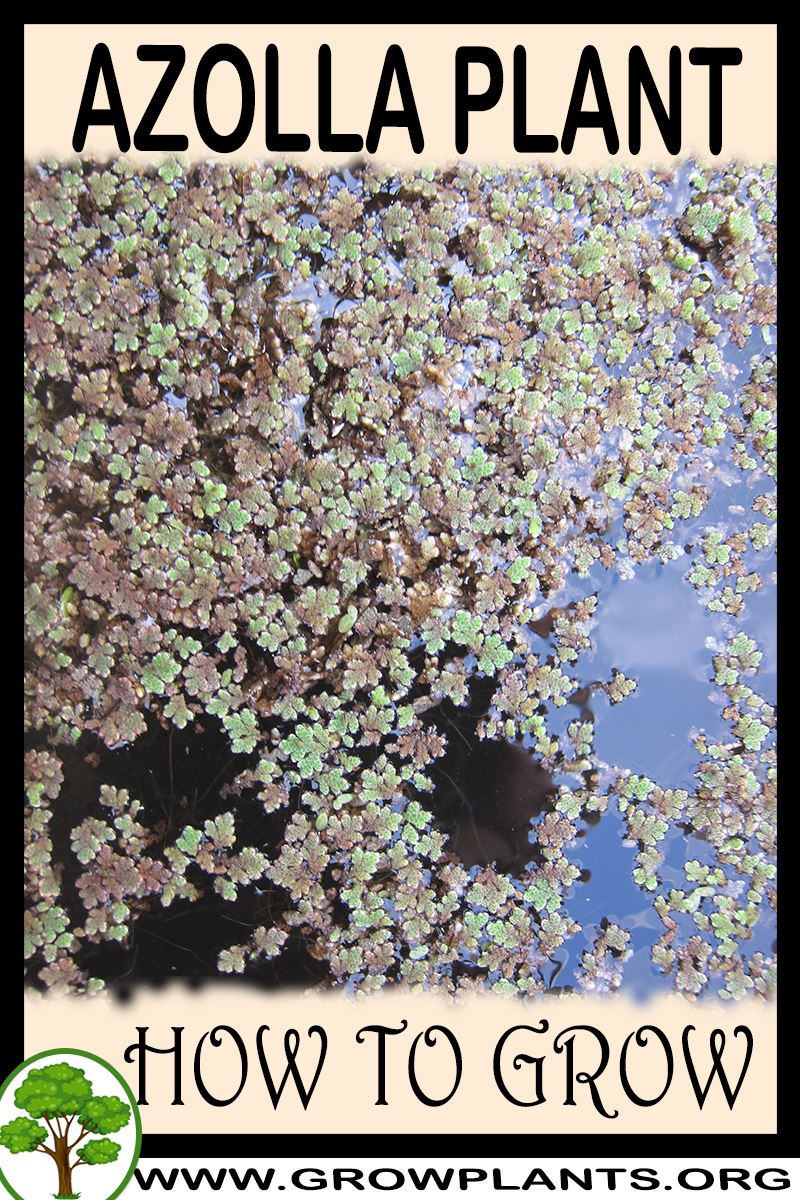
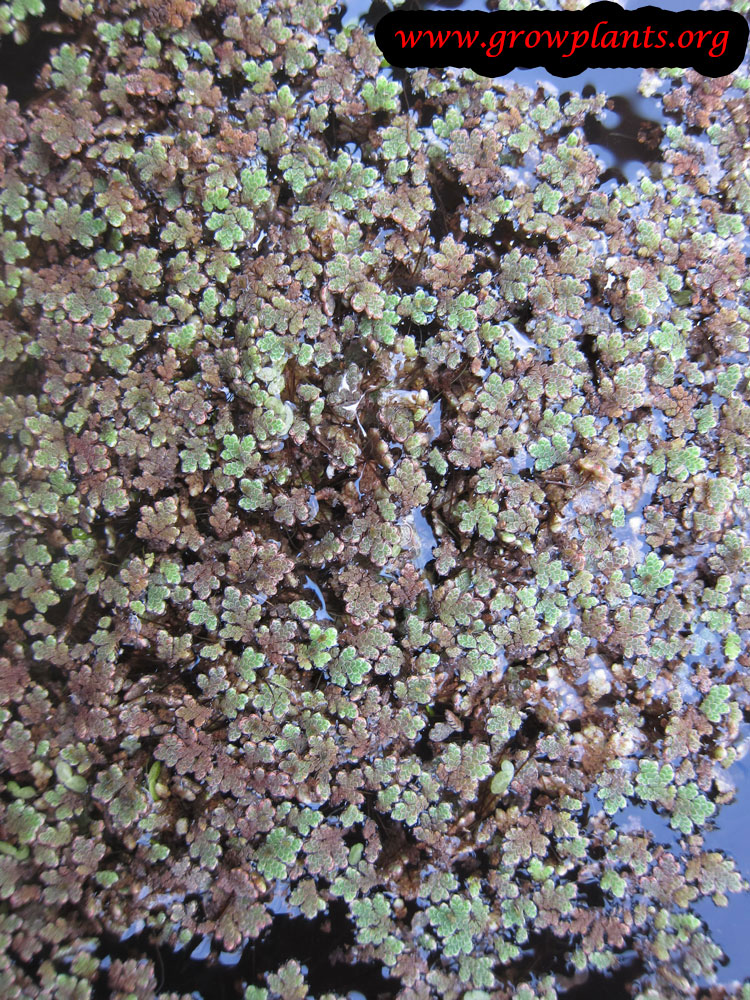
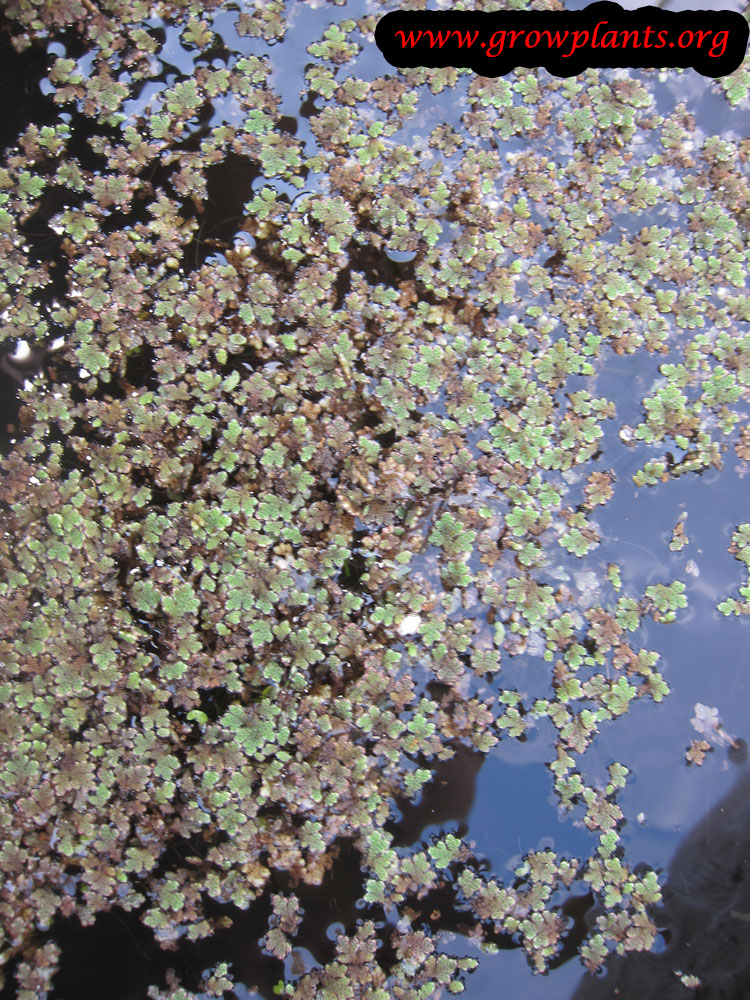
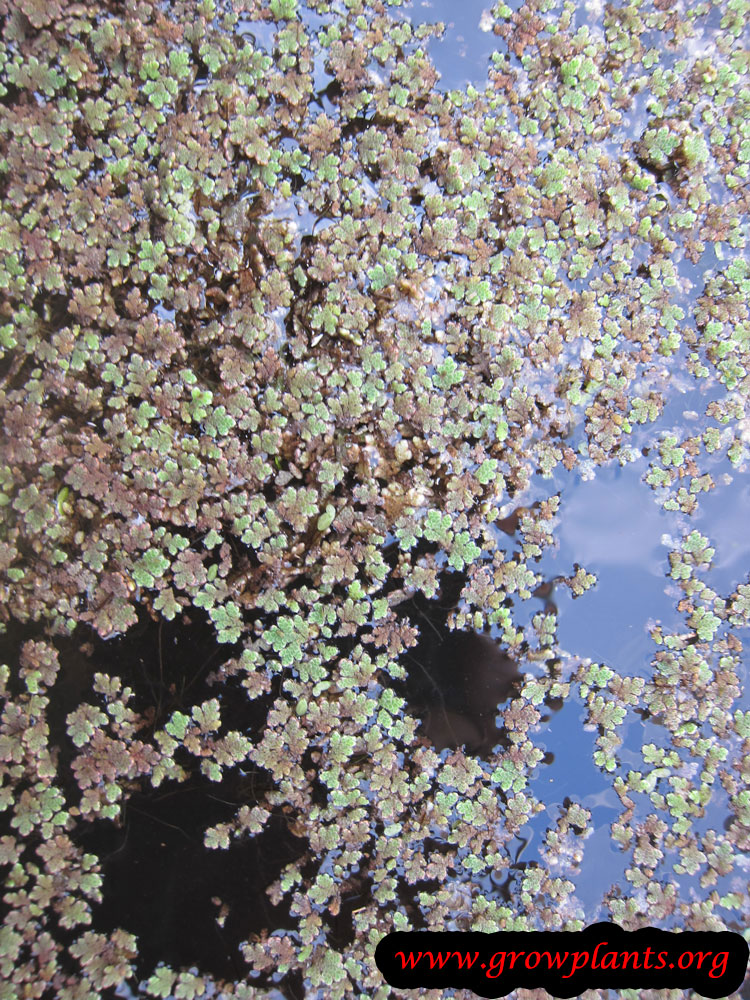
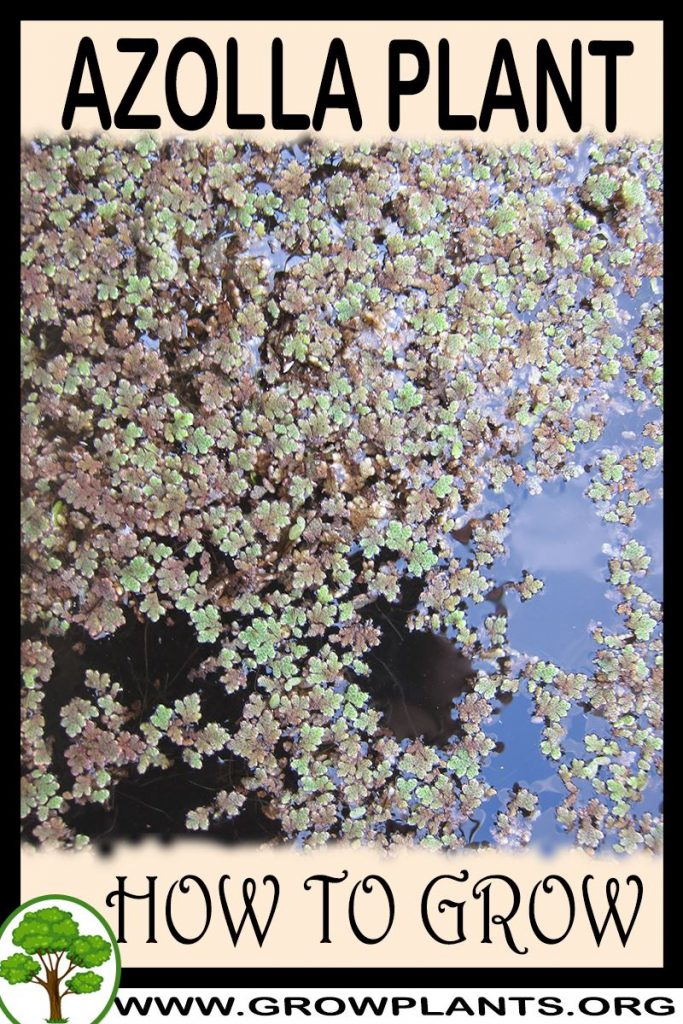
Overview: Azolla (water fern) is a tiny, fast-growing free-floating aquatic fern, each plant only 0.5-1 cm (0.15-0.5 in) across, that forms dense green-to-red mats on still water. It is grown as an ornamental pond and aquarium cover.
Quick Specifications
| Specification | Attribute |
|---|---|
| Plant Type / Life Cycle | Perennial (evergreen; behaves as an annual in cold climates) |
| Foliage Type | Evergreen (aquatic) |
| Mature Size | 0.5-1 cm (0.15-0.5 in) per plant, forming spreading mats |
| Growth Rate | Fast |
| Hardiness | USDA zone 7+ |
Growth Form & Structure
- Height & Spread: Individual plants are only 0.5-1 cm (0.15-0.5 in), but colonies spread rapidly to blanket the water surface; suited to ponds, containers and aquaria
- Growth Habit & Form: Free-floating aquatic fern that forms dense floating mats
- Lifespan & Maturity: Very fast to colonise; can become aggressive and invasive
Anatomy & Physical Features
- Leaves & Foliage: Tiny, overlapping green leaves 1-2 cm long that flush red in strong light; one lobe of each leaf hangs into the water and acts as a root
Primary Uses & Landscape Value
- Functional & Ornamental Roles: Ornamental floating pond and aquarium cover; also used as a green manure and fodder thanks to its nitrogen-fixing cyanobacteria
Care Guide: Planting, Soil & Watering
Overview: Azolla (water fern) is a tiny free-floating aquatic fern that grows on the surface of still or slow-moving water in full to partial shade – it has no need for soil. It requires standing water at all times and spreads very fast, so it is best grown in a contained pond, tub or aquarium.
Quick Care Requirements
| Requirement | Ideal Condition |
|---|---|
| Planting Season | In spring in cooler climates; year-round in frost-free and tropical areas |
| Growth Rate | Fast |
| Soil Type | None – free-floating on the surface of still or slow-moving water |
| Water Need | High – it is an aquatic plant and must always float on standing water |
Planting & Establishment
- Best Planting Season: Introduce in spring in cooler climates once water has warmed; year-round where frost-free.
- How to Establish:
- Water Body: Use a pond, water bowl, tub or aquarium of still or gently moving water in partial to full shade.
- Placement: Simply scatter the fronds on the water surface – no soil, hole or planting depth is involved; they root into the water itself.
- Containment: Grow it enclosed and thin it often, as it is aggressive and can quickly blanket a water surface.
- Growth Speed & Expectations: Very fast; individual plants are only 0.5–1 cm but rapidly form a dense floating carpet.
Soil, Watering & Drainage Care
- Water & Environment Needs: Instead of soil and drainage, it needs a permanent body of clean, still or slow water; keep the water topped up so the fern never dries out.
- Watering & Maintenance:
- Young / Newly Introduced: Keep it floating on stable, calm water while it multiplies.
- Established: Maintain the water level and skim off surplus growth to stop it from overrunning the surface.
- Seasonal Adjustments: Growth surges in warm weather and slows in cold; in cold climates it dies back and behaves as an annual.
Climate, Light & Hardiness
Azolla is a floating aquatic fern that behaves as an evergreen perennial in warm climates but dies back as a cold-hardy annual where winters freeze, and it can grow across an unusually wide range from desert to tropical zones. It grows best in half shade to full shade, and can also be kept indoors given enough light.
Quick Climate Specifications
| Climate Zones | Mediterranean, desert, subtropics, temperate, tropics |
|---|---|
| USDA Hardiness Zones | 7+ |
| Frost Tolerance | Low |
| Light Conditions | Half Shade / Full Shade |
Sunlight & Light Exposure
Optimal Light Setup
Azolla is best suited to half-shade to full-shade positions on the water surface, unlike many aquatics that demand full sun.
Shade & Heat Management
The species tolerates fairly shaded water surfaces well, making it useful for shadier pond areas where sun-loving floaters would struggle.
Temperature Extremes & Hardiness
USDA Hardiness & Regional Limits
Azolla is rated for USDA zone 7 and warmer as a persistent evergreen; in colder zones it behaves as a cold annual, dying back over winter and needing to re-establish or be reintroduced the following season.
Cold Damage & Winter Protection
Where winters are too cold for it to persist, the floating mat is killed off by freezing conditions; gardeners in marginal climates can overwinter a portion indoors to have stock for the following spring.
Frost Sensitivity
Frost tolerance is low – a hard freeze on the water surface will kill exposed plants, which is why the species is treated as an annual outside its zone 7+ evergreen range.
Wind, Humidity & Microclimate
Microclimate Recommendations
In colder gardens, keeping a reserve of plants indoors over winter, in a container with light, ensures the pond can be restocked once warm weather returns.
Growing in Pots, Balconies & Indoors
Azolla is an aquatic plant grown in water rather than soil, and the grower lists it as suitable indoors – in a bright bowl, aquarium or water container it makes an easy indoor water plant, and it also thrives outdoors in a patio water tub.
Quick Details
- Container Size: A watertight tub, bowl, half-barrel or mini-pond – grown in standing water, not soil
- Indoor Suitability: Suitable indoors in a water container with good light
- Best Spot: Half shade to full shade
- Soil & Drainage: No drainage – the container holds water; floats freely on the surface
- Watering in Pots: Keep the container topped up; it needs a constant, generous body of water
Indoors & On the Windowsill
- Indoors: The grower grows it indoors; a bright bowl or aquarium suits it well.
- Light: Even indoors it is happiest in bright light; near a window keeps growth compact and healthy.
- Important – invasive: This plant spreads aggressively and is a serious weed of natural waterways in many regions. Keep it contained and never release it or its water into ponds, streams or drains.
On a Balcony or Patio
- Light & water: Stand the water container where it gets the light levels above; top it up often, as an open tub of water evaporates fast in sun and wind.
- Weight & siting: A full water container is very heavy – make sure the balcony or shelf can take the load before filling it, and site it on a level, stable base.
Choosing the Pot, Soil & Long-Term Care
- The container: Any watertight vessel works – a glazed pot with no holes, a half-barrel with a liner, a bowl or a purpose-made mini-pond. No drainage holes here; the point is to hold water.
- Growing it: It simply floats on the surface – no soil needed; thin out and remove excess growth regularly so it does not cover the whole surface.
- Water & feeding: Keep the water topped up with rain or aged tap water; these plants feed from the water, so go easy on fertiliser and remove decaying leaves to keep it clear.
- Upkeep: Divide or thin crowded growth each year to keep it healthy and stop it swamping the container.
Fertilizing & Feeding
Azolla is a light feeder that largely fertilizes itself, fixing nitrogen through a natural partnership with cyanobacteria; added fertilizer is rarely needed and can fuel unwanted overgrowth.
Quick Fertilizing Specs
| Feeding Level | light |
|---|---|
| young_feeding | New colonies rarely need feeding and generally establish on the nutrients already in the water. |
| mature_feeding | Established mats are usually driven by light and existing water nutrients rather than added fertilizer. |
| Main Nutrient Priority | Minimal – azolla fixes much of its own nitrogen and typically needs no dedicated feeding program. |
| Best Feeding Period | Only during active warm-season growth, and only if the water is confirmed nutrient-poor. |
| Organic Options | None specifically needed; fish waste and natural organic matter already in the water are usually enough. |
| Soil pH | Not applicable – azolla is a floating aquatic plant with no soil contact. |
| Reduce/Stop Feeding | Stop any feeding as cold weather sets in and the colony naturally dies back. |
Feeding by Growth Stage
New Azolla Colony
Help a newly introduced patch of azolla establish and begin spreading across the water surface.
| Nutrient direction | Rely mainly on the nutrients already present in the water rather than adding fertilizer; azolla fixes much of its own nitrogen through a natural partnership with cyanobacteria. |
|---|---|
| Timing | Right after introducing azolla to a pond, tub, or aquarium. |
| Frequency | Minimal feeding is usually needed at this stage; let the plant settle into the water’s existing nutrient level. |
| Fertilizer types | Generally no dedicated fertilizer is needed; a light, water-safe aquatic plant feed can be used only if the water is unusually nutrient-poor and growth stalls |
| Precautions | Because azolla spreads aggressively and is considered invasive in many areas, avoid deliberately enriching the water to speed up establishment. |
Active Spread and Coverage
Support the fast-growing floating mat during warm-season active growth.
| Nutrient direction | Growth is usually driven more by light, temperature, and existing water nutrients than by added fertilizer; keep any feeding minimal and water-safe. |
|---|---|
| Timing | Through the warm growing season when the colony is actively spreading. |
| Frequency | Rarely needs feeding; check plant color and coverage before considering any water-safe aquatic feed. |
| Fertilizer types | A light, water-safe aquatic plant feed only if fronds pale noticeably and the water is confirmed nutrient-poor |
| Precautions | Avoid pond or garden fertilizers not labeled safe for water features; nutrient runoff into open water can fuel unwanted algae and weed growth alongside the azolla. |
Cold-Season Dieback
Recognize that azolla behaves as a cold annual in cooler climates and naturally declines with frost.
| Nutrient direction | None – withhold fertilizer once cold weather sets in and the mat begins to die back. |
|---|---|
| Timing | As temperatures drop and the colony naturally declines. |
| Frequency | No feeding at this stage; let the plant complete its natural seasonal cycle. |
| Fertilizer types | No feeding needed – do not fertilize a colony that is dying back with cold weather |
| Precautions | Do not fertilize in an attempt to revive a cold-stressed mat; if it needs to be preserved, focus on moving a portion indoors or into a heated container to overwinter instead. |
Nutrient Deficiency Signs & Corrections
Fronds turn pale green or yellowish instead of their normal healthy green
| Possible causes | Nutrient-poor water lacking enough dissolved nutrients to support rich color, Insufficient light reaching the floating mat, especially in heavily shaded water features, Iron shortfall in very clean, nutrient-poor water |
|---|---|
| Appears first on | New fronds at the edges of the floating mat |
| What to check | How much direct or filtered light the water feature receives, Whether the water is unusually clear and nutrient-poor, such as fresh water with no other plant or fish waste, Overall mat density and whether growth has slowed |
| Possible correction | Improve light exposure first, since that is the most common driver; only consider a light, water-safe aquatic feed with iron if the water is confirmed nutrient-poor. |
Fronds turn red instead of green
| Possible causes | A natural stress response to cool temperatures or strong sunlight rather than a nutrient problem, Nutrient-poor water pushing the plant into a stress coloration, Low water temperature slowing normal green pigment production |
|---|---|
| Appears first on | Across the floating mat rather than any single frond |
| What to check | Recent temperature swings in the water, Season and whether cooler weather has arrived, Whether the reddening is uniform, which is more likely environmental, or patchy, which is worth checking against water nutrients |
| Possible correction | Treat reddening from cold or bright light as a normal seasonal response rather than a deficiency; avoid fertilizing to try to correct it. |
Explosive, mat-forming growth that quickly covers the entire water surface
| Possible causes | Excess nutrients in the water from fertilizer runoff, fish waste, or decaying organic matter, Warm temperatures and strong light accelerating the plant’s naturally fast growth, Lack of any removal or thinning allowing the colony to compound unchecked |
|---|---|
| Appears first on | Whole-surface coverage rather than any individual plant symptom |
| What to check | Any recent fertilizer use nearby that could be running into the water, Fish or organic waste load in the water feature, How long it has been since the mat was last thinned |
| Possible correction | Reduce nutrient inputs to the water and physically remove excess plant material rather than adding any fertilizer, since overgrowth here reflects too many nutrients, not too few. |
Pruning, Training & Seasonal Maintenance
Azolla is a tiny free-floating aquatic fern with no stems, trunk or canopy to prune in the conventional sense. “Pruning” here means routine removal of dead or browning fronds and periodic thinning of the floating mat, which can be done at any time of year (source: pruning season “all year”). The main purpose is protecting water quality and keeping the mat – documented as aggressive/invasive – from covering the entire water surface.
Quick Pruning & Maintenance Specs
| Pruning Tolerance | Not applicable – no woody or structural growth |
| Primary Maintenance Window | Year-round, as needed |
| Typical Frequency | Whenever dead material accumulates or the mat overgrows its space |
| Main Objective | Water quality and surface-coverage control |
| Best Tool Type | Hand-skimming or a fine pond net – no cutting tool is involved |
Special Growth to Remove
Skim off browning or decaying fronds regularly – left to rot in place they degrade water quality. Because the source lists Azolla as aggressive/invasive and fast-growing, thin the mat back periodically to open water rather than letting it form a complete, unbroken cover.
Container & Small-Space Pruning
In a small pond, trough or aquarium, thin more frequently than in a large open pond – a limited water volume concentrates decay byproducts from dead fronds much faster.
Tools
No cutting tool is needed. Remove material by hand or with a fine pond/aquarium net.
Tool Hygiene & Disease Risk
Routine. There is no cutting tissue and no documented disease risk here; the real hygiene concern for this invasive species is biosecurity – rinse nets and hands and avoid moving removed material or drip water between separate ponds or water bodies, since a single viable fragment can start a new colony.
Post-Pruning Care
After removing a large mat, monitor water quality – a sudden drop in surface cover changes light and oxygen levels for anything living underneath.
Common Pruning Mistakes
- Stripping the entire surface mat at once, which shocks pond ecology and removes shelter for fish/wildlife in a single step
- Leaving no maintenance routine at all, letting the fast-growing, invasive mat fully seal the water surface and deplete oxygen underneath
When NOT to Prune
There is no closed season (source: all year). The only real caution is not to strip 100% of the surface cover in one pass on a pond with fish – thin gradually instead.
Propagation Guide
Azolla is a small floating aquatic fern and does not produce flowers or seeds. In cultivation it is most easily propagated vegetatively by separating healthy portions of an established colony.
Quick Propagation Specs
| Best Propagation Method | Vegetative division and fragmentation |
| Flowers or Seeds | None |
| Sexual Reproduction | Through spores produced in sporocarps |
| Propagation Difficulty | Easy by vegetative division |
Vegetative Propagation
Transfer a healthy portion of floating Azolla from an established colony to clean water with suitable growing conditions. Each portion can expand rapidly when light, temperature and nutrients are favourable.
Establishment
Spread the transferred plants loosely over the water surface rather than packing them into a dense layer. Maintain stable water conditions while the new colony begins to expand.
Spores & Sporocarps
Azolla can also reproduce sexually through spores formed in specialized structures called sporocarps. This method is biologically important but is less practical than simply dividing an established colony for routine cultivation.
Controlling Spread
Because Azolla can multiply quickly, remove excess growth regularly and prevent unwanted fragments from escaping into natural waterways.
Pests, Diseases & Troubleshooting
Overview: Azolla is a tiny free-floating aquatic fern that is remarkably pest-free; in practice its ‘problems’ are mostly abiotic and management issues – it turns red under stress, collapses in cold, and can overgrow and blanket a pond. Where it is deliberately grown (as green manure, fish/duck feed or pond cover) the main biological threats are the Azolla weevil and frond-feeding larvae, plus aphids and snails. Manage it by controlling light, temperature, nutrients and above all its own spread.
Quick Troubleshooting Overview
| Issue / Pest | Main Symptom | Primary Solution |
|---|---|---|
| Overgrowth / pond blanketing | Whole water surface covered, water deoxygenated beneath | Skim and thin regularly; shade or reduce nutrients |
| Turning red / brown | Mats redden then brown and die back | Reduce stress: moderate light, avoid cold and nutrient extremes |
| Azolla weevil | Fronds chewed and skeletonised, mat browns and sinks | Often a natural/biocontrol agent; reduce only if crop is wanted |
| Frond-feeding larvae | Fronds tied, mined or chewed, patches collapse | Skim affected mat; encourage fish that graze larvae |
| Cold / frost dieback | Mat blackens and rots after cold snap | Overwinter a starter batch frost-free |
| Sudden collapse | Thick mat suddenly rots and smells | Thin before it over-thickens; maintain water quality |
Common Pests & Management
- Azolla weevil (Stenopelmus rufinasus):
- Symptoms: Small weevils whose larvae and adults chew and skeletonise the fronds; heavy feeding browns the mat and causes it to break up and sink. Widely used as a biological control against invasive Azolla.
- Prevention & Control: If you are cultivating Azolla, remove affected patches and start fresh from a clean batch. If Azolla is a nuisance weed, this weevil is beneficial – leave it, or it is sometimes introduced deliberately to clear infestations.
- Frond-feeding midge and moth larvae (Nymphula / midge larvae):
- Symptoms: Larvae tie, mine or chew the small fronds, causing brown, collapsing patches within an otherwise green mat.
- Prevention & Control: Skim and remove damaged mat, keep the population turning over, and encourage surface-feeding fish (in stocked ponds) that graze the larvae. Chemical control is rarely appropriate on open water.
- Aphids (Rhopalosiphum spp.):
- Symptoms: Small colonies on the emergent fronds in warm, still, sheltered conditions, causing minor yellowing.
- Prevention & Control: Usually self-limiting; a strong hose or surface disturbance dislodges them, and pond insects and fish keep numbers down. Avoid insecticides on water bodies with fish or wildlife.
- Snails:
- Symptoms: Grazing thins the mat; usually minor and cosmetic.
- Prevention & Control: No action normally needed; manage snail numbers only if they damage other pond plants.
Diseases & Fungal Issues
- Rot / mat collapse (opportunistic fungi & bacteria):
- Symptoms: An over-thick or stressed mat suddenly browns, rots and smells, fouling the water as the lower layers die and decompose from lack of light and oxygen.
- Treatment & Management: Prevent by skimming and thinning before the mat gets too dense, and maintain good water quality. Remove rotting material promptly; there is no meaningful chemical treatment on open water.
Growing Difficulties & Abiotic Problems
- Reddening under stress:
- Cause & Symptoms: Azolla produces red anthocyanin pigments in response to stress – high light, cold, crowding, or nutrient (especially phosphorus) imbalance – so a red mat signals conditions are off, not disease.
- Correction Strategy: Moderate the light, avoid temperature and nutrient extremes, and thin overcrowded mats; healthy, well-fed Azolla in comfortable conditions stays green.
- Cold and frost dieback:
- Cause & Symptoms: Frost and prolonged cold blacken and kill the mat, which then rots.
- Correction Strategy: In cold climates overwinter a small starter batch in a frost-free tank or indoors and re-inoculate the pond in spring.
- Overgrowth and deoxygenation:
- Cause & Symptoms: In warm, nutrient-rich water Azolla doubles rapidly and can completely cover the surface, cutting light and oxygen to the water below and harming fish and submerged plants.
- Correction Strategy: Skim and remove excess regularly (it makes excellent compost/mulch), reduce nutrient inputs, and provide some shade or competition; never let it fully seal the surface.
- Nutrient deficiency / poor growth:
- Cause & Symptoms: In very low-nutrient or phosphorus-poor water the mat grows slowly, thins and reddens; iron is also needed for its nitrogen-fixing symbiont.
- Correction Strategy: Ensure adequate phosphorus and iron in the water; Azolla fixes its own nitrogen via its Anabaena symbiont, so nitrogen fertiliser is not required.
What Helps – Products & Tools
Azolla is managed physically, not chemically – a net or skimmer to thin and harvest it, and control of light, temperature and nutrients. Avoid insecticides and algaecides on ponds holding fish or wildlife. Harvested Azolla is a valuable nitrogen-rich compost, mulch and animal feed, so surplus is a resource rather than waste.