Plant Profile & Key Characteristics
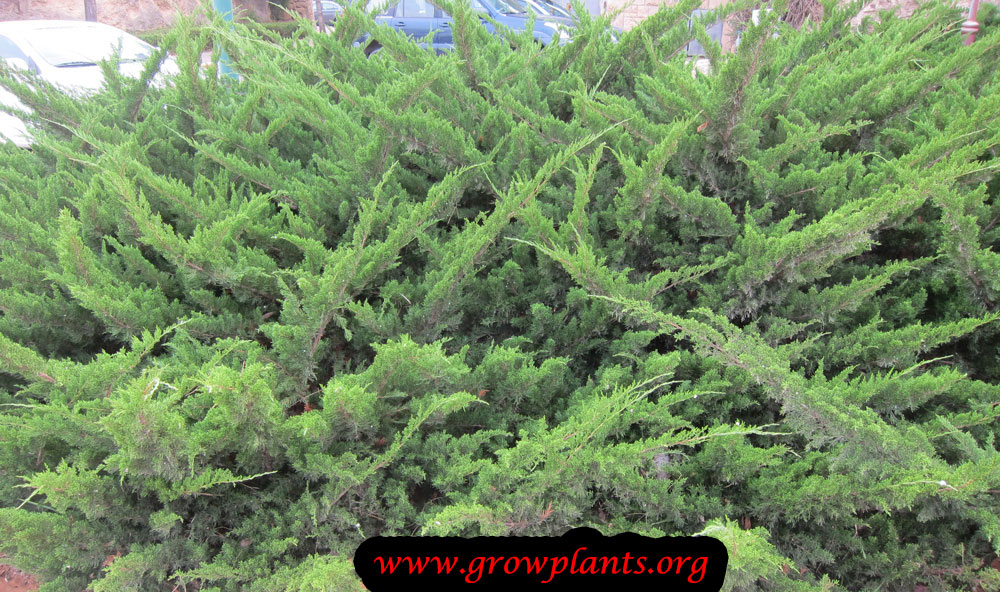
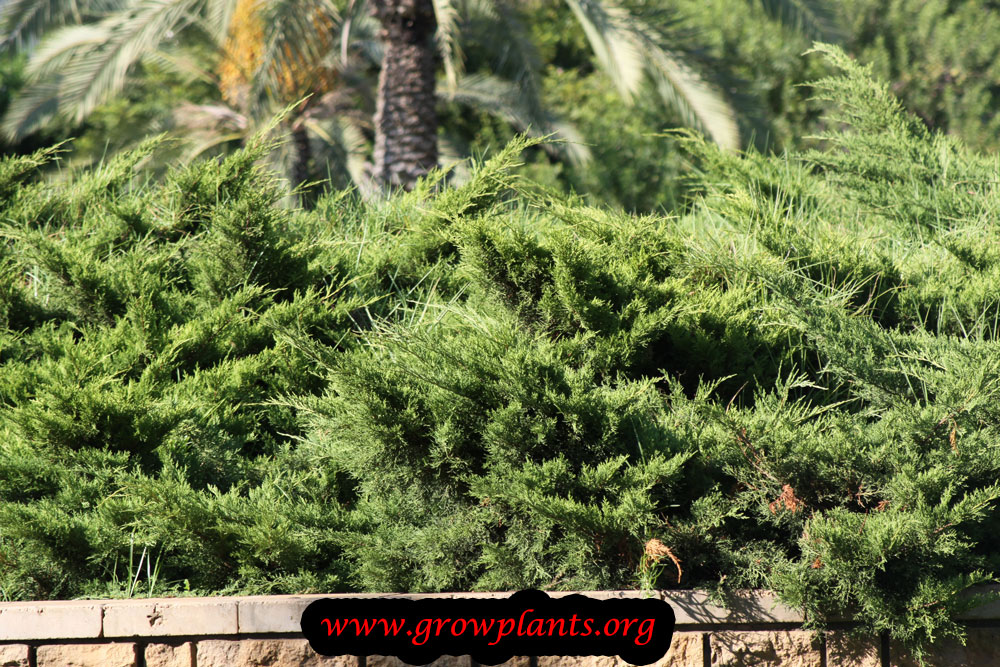
Overview: Juniperus sabina (savin juniper) is an evergreen coniferous shrub 0.7–3 m (2.3–10 ft) tall and spreading, widely used as ornamental groundcover and low hedging. All parts are poisonous, so it is grown strictly ornamentally, not for its berries.
Quick Specifications
| Specification | Attribute |
|---|---|
| Plant Type / Life Cycle | Perennial |
| Foliage Type | Evergreen (coniferous) |
| Mature Size | 0.7–3 m tall (2.3–10 ft), spreading 1–3 m (3–10 ft) |
| Growth Rate | Moderate |
| Toxicity | Toxic – savin juniper contains savin oil; the berry-like cones and foliage are poisonous (do not confuse with the edible berries of J. communis) |
| Hardiness | USDA zones 3–8 |
Growth Form & Structure
- Height & Spread: Low, wide-spreading shrub 0.7–3 m (2.3–10 ft) tall by 1–3 m (3–10 ft) across; also grown in containers.
- Growth Habit & Form: Evergreen conifer of low, spreading to semi-prostrate habit, forming dense mats or mounds.
- Lifespan & Maturity: Long-lived evergreen conifer of moderate growth.
Anatomy & Physical Features
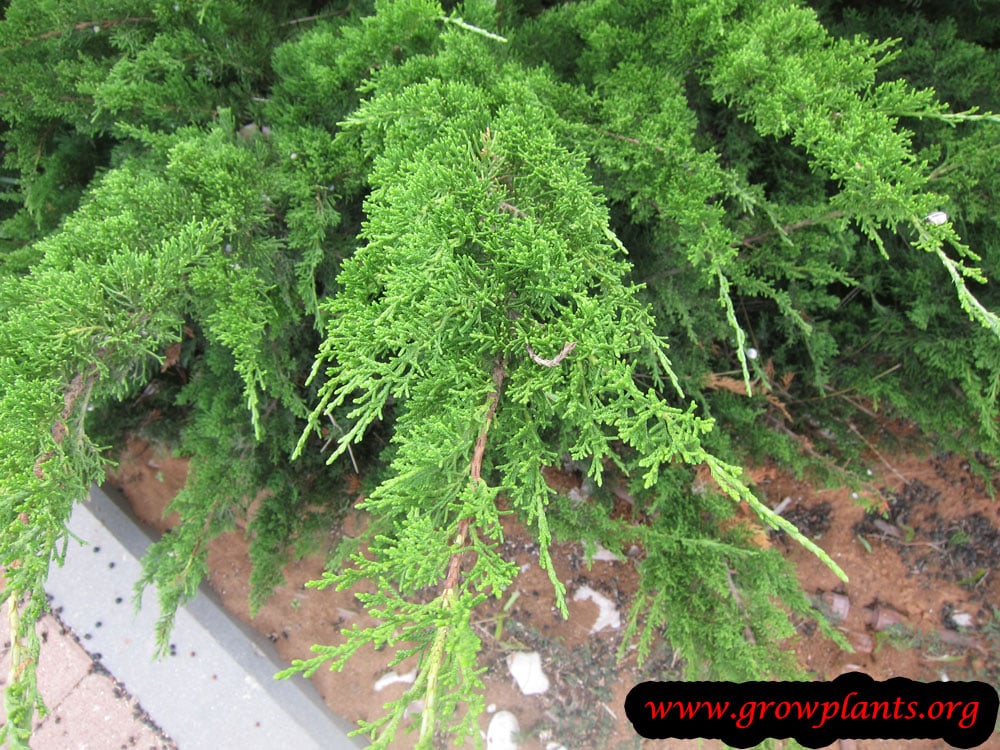
- Leaves & Foliage: Green, mostly needle- to scale-like foliage joined at the leaf base; pungently aromatic when crushed.
- Flower Characteristics: Dioecious – small yellow male and female cones borne on separate plants in spring.
Primary Uses & Landscape Value
- Functional & Ornamental Roles: Ornamental groundcover, low hedge and bank/erosion cover; note its aggressive, allelopathic spread. Not edible.
Care Guide: Planting, Soil & Watering
Overview: This juniper is a tough, cold-hardy evergreen conifer for temperate and mediterranean climates that thrives in dry, well-drained soil and full sun to light shade. Once established it is notably drought tolerant, asking only for moderate water and, above all, sharp drainage.
Quick Care Requirements
| Requirement | Ideal Condition |
|---|---|
| Planting Season | Spring, or autumn in warmer climates |
| Growth Rate | Moderate |
| Soil Type | Dry, well-draining soil; tolerant of poor and stony ground |
| Water Need | Moderate while establishing, low once established (drought tolerant) |
Planting & Establishment
- Best Planting Season: Plant in spring, or in autumn where climates are warmer, so roots establish in mild conditions.
- How to Plant:
- Hole Preparation: Dig a hole about twice the width of the root ball and no deeper than it, loosening the sides so roots spread into the surrounding soil.
- Soil Amendments: Junipers prefer lean, sharply drained soil; on heavy ground add grit or coarse sand rather than rich organic matter.
- Planting Depth: Set the root ball so its top is level with the surrounding soil, keeping the root collar at grade and never mounding soil against the stem.
- Growth Speed & Expectations: Moderate; it fills out steadily into a dense evergreen for hedging, ground cover or specimen use.
Soil, Watering & Drainage Care
- Soil Mix & Drainage Needs: It needs excellent drainage above all and copes with poor, dry, stony soils; avoid heavy, wet ground, which causes root rot. Can be aggressive and is allelopathic, so site it away from plants it may crowd or suppress.
- Watering Schedule & Technique:
- Young / Newly Planted: Water regularly through the first season to settle the roots in, letting the topsoil dry between waterings.
- Established: Once established it needs little water, relying largely on rainfall; water deeply only in extended drought.
- Seasonal Adjustments: Reduce or stop watering over a cool, wet winter, and water occasionally during long summer dry spells.
Climate, Light & Hardiness
Savin juniper is a cold-hardy, drought-tolerant evergreen suited to temperate, Mediterranean, and subtropical climates, growing well in full sun to half shade. It prefers cool weather, dry conditions, and sharply drained soil over heat and humidity.
Quick Climate Specifications
| Climate Zones | Temperate, Mediterranean, or subtropical climates |
|---|---|
| USDA Hardiness Zones | 3–8 |
| Frost Tolerance | High |
| Light Conditions | Full sun or half shade |
Sunlight & Light Exposure
Optimal Light Setup
Grows well in full sun to half shade, well suited to ground cover or hedge use.
Temperature Extremes & Hardiness
USDA Hardiness & Regional Limits
Reliably hardy across zone 3–8, extending from very cold continental winters to warm-temperate and Mediterranean conditions.
Cold Damage & Winter Protection
Very cold-hardy; site guidance specifically favors cold weather for this species, and established plants need no winter protection within their hardiness range.
Frost Sensitivity
Very frost tolerant.
Extreme Heat Tolerance
Tolerates dry heat well at the warmer end of its range, provided the soil stays well drained.
Wind, Humidity & Microclimate
Rainfall & Seasonal Moisture
Prefers dry conditions with well-drained soil; site guidance explicitly calls for dry, well-drained sites rather than consistently moist or humid conditions, and watering needs are only average.
Microclimate Recommendations
An open, sun-exposed, well-drained site best matches this juniper's preference for cool, dry conditions; avoid poorly drained or waterlogged spots.
Growing in Pots, Balconies & Indoors
Savin juniper (Juniperus sabina) is a tough, low, spreading evergreen shrub, 0.7-3 m (28-120 in) high and wide. The grower does not class it as a houseplant, but it grows well in containers, which makes it a good spreading shrub for a sunny balcony or a large trough. Important: savin juniper is toxic to people and pets – keep the foliage away from children and animals and wear gloves when pruning.
Quick Details
- Container Size: A broad, low tub or trough suits its spreading habit; pot up as it widens
- Indoor Suitability: Not a houseplant, per the grower; grow it as an outdoor container shrub
- Best Spot: Full sun to part shade on a balcony or patio
- Soil & Drainage: Free-draining, gritty, loam-based mix; strong drainage holes
- Watering in Pots: Water when the top of the mix dries; it is drought-tolerant and hates waterlogging
Indoors & On the Windowsill
- Not a houseplant (grower): The grower marks it as unsuitable indoors – grow it outdoors in a container instead.
- Cold-hardy: Being hardy, it needs no indoor overwintering and prefers to stay outside.
- Safety: Savin juniper is toxic – keep it away from children and pets and handle with gloves.
On a Balcony or Patio
- Light & wind: An excellent spreading container shrub for full sun to part shade; a broad, low trough shows off its habit and stays stable in wind. Site it where children and pets will not brush the toxic foliage.
- Practicalities: Very drought-tolerant, but pots warmed by walls still dry faster – check occasionally, and make sure runoff drains freely.
Choosing the Pot, Soil & Long-Term Care
- Pot & drainage: A broad, low tub with strong drainage holes; skip a standing saucer of water to avoid root rot – it hates wet feet.
- Potting mix: A gritty, free-draining loam-based mix suits this tough shrub.
- Feeding: Feed lightly through the growing season; pot nutrients leach faster, but it is not a hungry plant.
- Repotting: Refresh the mix and pot up every couple of years; lightly trim to shape (wearing gloves).
Fertilizing & Feeding
Savin juniper is often used as a fast-spreading hedge or groundcover, where steadier feeding while young helps it fill in; it is naturally adapted to dry, well-drained soil, so container plantings need closer attention than plants in open ground.
Quick Fertilizing Specs
| Feeding Level | Moderate |
|---|---|
| young_feeding | Balanced feeding to establish roots, shifting toward a nitrogen lean to encourage groundcover or hedge fill-in |
| mature_feeding | Established plantings generally need only occasional light feeding once they’ve filled in and spread |
| Main Nutrient Priority | Balanced nutrition with a nitrogen lean while active fill-in growth is wanted |
| Best Feeding Period | Spring through early summer, during the active growth flush |
| Soil pH | Tolerates a range of soil pH; prefers dry, well-drained soil over any specific pH target |
| Reduce/Stop Feeding | Taper off by late summer so growth can harden before cold weather |
Feeding by Growth Stage
Establishment After Planting
Support root recovery and settling-in after transplanting, whether in open ground or a container.
| Nutrient direction | Light, balanced nutrition favoring root development over top growth |
|---|---|
| Timing | The first couple of growing seasons after planting |
| Frequency | A few light feedings spread through the active growing season |
| Fertilizer types | A balanced, complete tree-and-shrub fertilizer, Compost or well-rotted organic matter worked lightly into well-drained planting soil |
| Precautions | Avoid overwatering or heavy feeding, since this species prefers dry, well-drained soil; it is also known to be aggressive and allelopathic, so give new plantings plenty of room. |
Active Growth and Groundcover Fill-In
Support the spreading, dense growth wanted for a groundcover or informal hedge while the plant is actively growing.
| Nutrient direction | Balanced feeding with a nitrogen lean to encourage denser spread and faster fill-in |
|---|---|
| Timing | Spring through summer, during the warm active growth period |
| Frequency | Regular light feedings through the growing season |
| Fertilizer types | A balanced, complete tree-and-shrub fertilizer, A nitrogen-forward hedge or evergreen fertilizer where faster fill-in is the goal |
| Routine trace nutrients | iron, manganese |
| Precautions | Keep feeding light on well-drained or sandy sites, where this drought-adapted species already performs well without a heavy nutrient push. |
Established Planting Maintenance
Keep a filled-in, mature groundcover or hedge planting healthy without over-feeding.
| Nutrient direction | Light, balanced feeding to sustain density and color |
|---|---|
| Timing | Spring, or after pruning to support recovery |
| Frequency | Feed sparingly, adjusted to how the planting is performing |
| Fertilizer types | A balanced, complete tree-and-shrub fertilizer applied lightly around the root zone |
| Precautions | Avoid heavy feeding right after pruning; let the planting recover before pushing new growth. |
Cold-Season Dormancy
Allow the planting to harden off before winter rather than pushing tender new growth.
| Nutrient direction | None – withhold fertilizer |
|---|---|
| Timing | Late summer through winter, once seasonal growth has slowed |
| Frequency | No feeding at this stage |
| Fertilizer types | No feeding – allow the planting to rest through the cold season |
| Precautions | Do not fertilize late in the season; new growth pushed too close to cold weather is prone to injury. |
Nutrient Deficiency Signs & Corrections
Yellowing of newest foliage while the rest of the planting stays green
| Possible causes | Iron unavailability in alkaline soil, Poor drainage or compacted soil, which this species does not tolerate well given its preference for dry conditions, Root stress from an overly wet container or planting site |
|---|---|
| Appears first on | Newest foliage at branch tips |
| What to check | Soil or potting mix drainage, Recent soil pH amendments, Whether the site or container holds excess moisture |
| Possible correction | Improve drainage and correct any pH imbalance; a chelated iron product applied per its label can help in a confirmed case. |
General thinning, browning, or dieback in patches, not tied to a clear leaf-color pattern
| Possible causes | Root rot from poorly drained or overly wet soil, which this drought-adapted species is particularly sensitive to, Soil compaction limiting root oxygen and nutrient uptake, Overwatering, especially in containers |
|---|---|
| Appears first on | Scattered branches or sections of the planting, without a clean pattern |
| What to check | Soil or container drainage and any standing water, Watering frequency compared to this species’ drought tolerance, Whether decline follows the wetter parts of the planting site |
| Possible correction | Improve drainage and reduce watering frequency first; fertilizing a planting with root stress from wet soil will not resolve the underlying issue. |
Overall pale, yellow-green foliage and slow, gappy groundcover spread
| Possible causes | Low soil nitrogen, Nutrients leaching away on very sandy, fast-draining sites, Root competition from nearby aggressive plantings |
|---|---|
| Appears first on | Older, interior foliage first, spreading outward |
| What to check | Density and color compared to prior seasons, Soil texture and drainage rate, Nearby root competition |
| Possible correction | Apply a light, balanced or nitrogen-forward feeding during active growth, keeping in mind this species’ preference for lean, well-drained soil. |
Pruning, Training & Seasonal Maintenance
Savin juniper is a naturally low, spreading, mat-forming shrub used as ground cover or a low hedge — not a plant that needs an early ‘tree vs shrub’ decision the way some more upright junipers do. Pruning tolerance is moderate on green growth, done mainly to control its documented aggressive lateral spread and remove any wayward upright shoots; as with all junipers, cuts must stay within actively growing foliage, since it will not resprout from bare interior wood.
Quick Pruning & Maintenance Specs
| Pruning Tolerance | Moderate, on green growth only |
| Primary Pruning Window | Spring–summer active growth, when cuts heal and fill in fastest |
| Secondary Maintenance Window | Any time for minor spread/edge control |
| Typical Frequency | 1–2x/year for spread control if used as a clipped groundcover or hedge; minimal otherwise |
| Main Objective | Control lateral spread; remove atypical upright shoots to preserve the low, mounding habit |
| Young Plant Priority | Let lateral spread establish; remove only damaged growth |
| Mature Plant Priority | Ongoing edge/spread control; remove reverted upright growth |
| Best Tool Type | Bypass secateurs for individual shoots; hedge shears if maintained as a clipped edge |
| Avoid Heavy Pruning During | Hot, dry spells and prolonged wet weather (blight risk) |
Pruning by Plant Age & Size
Newly Established
Minimal — let the plant spread into its space.
Young / Formative
No upright-leader training applies; this is not a tree-form plant. If used as bank or slope cover, lightly direct the strongest lateral runners rather than pruning for height.
Mature / Established
Routine edge and spread control where the plant meets paths, lawn, or neighboring beds — consistent with its own documented tendency to spread aggressively. Remove any shoot reverting to atypical upright growth to keep the habit true to type.
Seasonal Pruning Schedule
| Stage | Objective | Remove | Do Not Remove | Expected Response |
| Summer Canopy Management | Contain spread within its allotted space | Runners crossing bed edges, wayward upright shoots | The low spreading mat itself | Fills back in from the cut point within the growing season |
| Ongoing Sanitary | Maintain plant health | Dead or blighted twigs as soon as spotted | Interior bare wood — never cut back into it | Prevents blight spreading through the mat |
Structural Pruning & Training
No vertical framework applies. The real structural issue is controlling spread and mound height, not building a branch hierarchy; interior thinning is not needed given the naturally airy, spreading habit.
Container & Small-Space Pruning
Container growing is confirmed workable for this species. In a pot, expect to trim more frequently than in the ground to stop the trailing growth spilling over and overwhelming its neighbours; pinching tips maintains a fuller look better than shearing. Because this species is documented as spreading aggressively in the ground, check both top growth and roots regularly in confined beds or borders so it doesn’t smother nearby plants.
Tools
- Bypass secateurs for individual wayward shoots.
- Hedge shears if maintained as a clipped groundcover edge or low hedge.
Tool Hygiene & Disease Risk
Increased — juniper twig blight (Phomopsis/Kabatina) is a well-documented disease of this genus that spreads readily via pruning wounds, especially in humid or wet conditions. Disinfect tools between plants and avoid pruning wet foliage.
Cut Placement & Technique
Cut just above a healthy side shoot within green growth; never cut into the bare woody interior expecting regrowth.
Heavy Pruning & Rejuvenation
Not tolerated. Like other junipers, a hard cutback into old wood leaves permanent bare gaps in the mat; replacement is more reliable than rejuvenation for an overgrown or leggy specimen.
Post-Pruning Care
Minimal. Avoid overwatering after trimming, since this species prefers dry, well-drained conditions per its own overview fact; watch cut areas in humid weather for blight symptoms.
Common Pruning Mistakes
- Trying to train or stake it upright as if it were a tree-form juniper — this species is naturally a spreading groundcover.
- Shearing into bare wood expecting fill-in.
- Pruning during wet weather, spreading twig blight through the mat.
When NOT to Prune
Avoid cutting in wet, humid weather (blight spread) and during peak summer heat or drought stress.
Recommended Tools (by task)
- bypass_secateurs — individual wayward shoots and light shaping.
- hedge_shears — edge/spread control where grown as a clipped groundcover.
- blade_disinfectant — juniper twig blight is a documented, tool-spread risk in this genus.
Pruning Troubleshooting
| Problem | Possible Cause | What to Check | Corrective Action |
| Bare/brown patches within the mat | Cut into bare interior wood, or twig blight | Cut location relative to green growth; cankered twig bases | Prune blighted twigs back into healthy green wood, disinfect tools; accept over-cut gaps as permanent |
| One area growing upright/leggy | Reversion or reaching for light | Compare habit to the rest of the mat | Cut the upright shoot back into the spreading canopy at its base |
| Rapid spread beyond bed edges | Naturally aggressive spreading habit | Runner length at bed margins | Routine edge trimming 1–2x per growing season |
Propagation Guide
Savin juniper is most reliably propagated from semi-hardwood cuttings, since its seed has deep, complex dormancy and can take a year or more to germinate; cuttings root more predictably and are the standard nursery method, though seed remains a viable, true-to-type option for patient growers. As a low, spreading shrub it can also self-layer where trailing branches stay in contact with soil.
Quick Propagation Specs
| Best Propagation Method | Semi-hardwood stem cuttings |
| Alternative Methods | Seed (slow, erratic germination due to deep dormancy); ground layering of trailing branches |
| Propagation Difficulty | Moderate (cuttings/layering); seed is Difficult due to prolonged dormancy |
| Seed True-to-Type | Usually true-to-type |
| Vegetative True-to-Type | Yes |
| Best Propagation Season | Take cuttings in late autumn to winter; layer low branches in spring or autumn |
| Cutting Rooting Time | Several weeks to a few months |
| Seed Germination Time | Often delayed to the second spring after sowing without extended stratification |
Growing from Seed
Seed Handling & Viability
The fleshy cones (‘berries’) should have the pulp removed before sowing or storage, since the pulp can inhibit germination; cleaned seed can be stored cool and dry short-term.
Dormancy & Pre-Sowing Treatment
Seed typically has a hard seed coat combined with embryo dormancy; scarification followed by an extended period of cold, moist stratification improves germination, and seed may not sprout until the second spring after sowing.
Sowing Season
Sow cleaned seed outdoors in autumn for natural winter stratification, or sow pre-stratified seed in spring.
Sowing Depth & Orientation
Sow shallowly, lightly covered.
Germination Conditions
Cool, evenly moist conditions.
Germination Time
Slow and irregular, often spread over one to two growing seasons.
Seedling Care
Keep young seedlings lightly shaded and evenly moist; growth is slow in the first year or two.
Stem Cuttings
Cutting Type
Semi-hardwood cuttings from the current or previous season’s growth.
Best Timing
Late autumn through winter, while growth is firm.
Cutting Preparation
Take cuttings with a heel of older wood where possible, and strip the lower foliage.
Rooting Setup
Free-draining, gritty propagation mix; keep humidity up.
Rooting Hormone
Beneficial – junipers root slowly, and hormone treatment improves and speeds rooting.
Rooting Time
Slow, often taking several weeks to a few months.
Air & Ground Layering
As a spreading, prostrate-growing juniper, low branches that stay in contact with moist soil can root naturally. Pinning a low branch down and lightly covering the contact point with soil encourages rooting; once well rooted (check by gentle tugging), sever the new plant from the parent and move it.
Bloom & Flower Guide
Quick Details
- Bloom Season: Spring
- Flower Appearance: Not true flowers but small yellowish cones – male and female borne on separate plants
- Edibility: Not edible – savin juniper is toxic in all its parts, unlike the edible common juniper
Detailed Blooming Overview
As a conifer, savin juniper doesn’t flower in the true sense – what looks like the bloom in spring are its small cones. The plant is dioecious, so the yellowish pollen cones and the seed cones sit on separate male and female plants, and pollen simply drifts between them on the wind. It is a tough evergreen for hedging and ground cover, but every part of it is poisonous.
Flower Characteristics
- Yellowish cones rather than petalled flowers.
- Male and female cones on separate plants.
Bloom Care & Thinning
- Pollination: Wind-pollinated, so no insect visitors are needed for the female plants to set cones.
- Safety: Do not eat any part and take care when pruning – the foliage and cones are toxic and the sap can irritate skin.
Pests, Diseases & Troubleshooting
Overview: Junipers are tough, drought-hardy conifers, but in the wrong conditions they face chewing and sucking pests (bagworms, spider mites, scale, webworm) and a distinctive set of diseases – the Gymnosporangium rusts that shuttle between junipers and apples/hawthorns, plus Phomopsis and Kabatina tip blights. Good air movement, sun, sharp drainage and prompt removal of infected wood prevent most trouble.
Quick Troubleshooting Overview
| Issue / Pest | Main Symptom | Primary Solution |
|---|---|---|
| Bagworms | Spindle-shaped bags of foliage; branches stripped | Hand-pick bags in winter; Bt on young larvae |
| Spider mites | Fine stippling, bronzing, webbing in dry heat | Hose foliage; horticultural oil / miticide |
| Juniper scale | White then dark bumps on needles, yellowing | Dormant/horticultural oil at crawler stage |
| Juniper webworm | Webbed, browning shoot tips | Prune out webs; Bt or spinosad on larvae |
| Cedar-apple & related rusts | Orange gelatinous galls; on nearby apples too | Prune galls; separate from rosaceous hosts |
| Tip blights | Browning shoot tips dying back | Prune in dry weather; airflow; copper if severe |
Common Pests & Management
- Bagworms (Thyridopteryx ephemeraeformis):
- Symptoms: Small spindle-shaped bags covered in bits of foliage hang from the branches; larvae inside strip needles, and heavy infestations can defoliate and kill sections of an evergreen that does not readily re-leaf.
- Prevention & Control: Hand-pick and destroy the bags through autumn and winter to remove overwintering eggs, encourage birds and parasitic wasps, and spray Bacillus thuringiensis while larvae are young and still feeding outside the bag.
- Spruce spider mite (Oligonychus ununguis):
- Symptoms: Needles become finely stippled, dull and bronzed, with fine webbing; a cool-season mite that also flares in hot dry spells, causing interior browning and thinning.
- Prevention & Control: Rinse the foliage forcefully to dislodge mites, avoid dusty drought stress, and treat with horticultural oil or a miticide; check with a white-paper tap test to time sprays.
- Juniper scale (Carulaspis juniperi):
- Symptoms: Tiny round white-to-grey then darkening scales encrust the needles; foliage yellows, growth stalls, and the plant looks off-color and stunted.
- Prevention & Control: Apply horticultural or dormant oil timed to the crawler stage to smother them, prune out heavily encrusted wood, and keep trees vigorous; repeat as crawlers emerge.
- Juniper webworm (Dichomeris marginella):
- Symptoms: Shoot tips webbed together with browning, dead needles bound in silk; young larvae mine needles before webbing foliage, disfiguring especially upright junipers.
- Prevention & Control: Prune out and destroy the webbed tips, and spray Bacillus thuringiensis or spinosad on young larvae before they are protected inside dense webbing.
- Aphids & tip midge (Cinara / Oligotrophus spp.):
- Symptoms: Sticky honeydew and sooty mold from aphids, or swollen, distorted browning shoot tips from tip-midge larvae.
- Prevention & Control: Hose off aphids and conserve their predators; prune out and destroy midge-galled tips; treat with horticultural oil only where damage is significant.
Diseases & Fungal Issues
- Gymnosporangium rusts (cedar-apple & kin) (Gymnosporangium spp.):
- Symptoms: Brown woody galls on juniper twigs that, in wet spring weather, swell into bright orange gelatinous horns; the fungus needs an alternate rosaceous host (apple, crabapple, hawthorn, quince) to complete its cycle, spotting their leaves and fruit.
- Treatment & Management: Prune out and destroy the galls before they gelatinize, avoid planting susceptible junipers close to apples/hawthorns, choose resistant cultivars, and use preventive fungicide on high-value hosts rather than the juniper itself.
- Phomopsis tip blight (Phomopsis juniperovora):
- Symptoms: New shoot tips turn dull green then reddish-brown and die back; small black fruiting bodies form on dead tissue, worst on young, soft growth in wet weather.
- Treatment & Management: Prune out blighted tips well below the damage in dry weather, sterilize tools between cuts, improve airflow, avoid overhead watering, and apply copper or an appropriate fungicide to protect flushing growth in wet springs.
- Kabatina tip blight (Kabatina juniperi):
- Symptoms: Tips die back in a similar way to Phomopsis but typically on year-old wood in late winter/early spring, often entering through wounds; a grey band marks the junction of live and dead tissue.
- Treatment & Management: Prune out affected tips, avoid mechanical and winter injury, maintain vigor and drainage; fungicides are of limited help since it enters through wounds – sanitation is key.
- Phytophthora root rot (Phytophthora spp.):
- Symptoms: Overall yellowing, thinning and dieback with root and crown decay in heavy, wet, poorly drained soils.
- Treatment & Management: Plant on well-drained sites or mounds, do not overwater, keep mulch off the trunk, and remove plants killed by root rot; junipers demand sharp drainage.
Growing Difficulties & Abiotic Problems
- Winter burn / desiccation:
- Cause & Symptoms: Foliage browns, especially on the windward and sunny sides, when frozen soil prevents roots replacing water lost from the needles in cold, drying winds.
- Correction Strategy: Water well before the ground freezes, mulch the roots, shelter from harsh winter wind, and site plants out of exposed frost-and-wind funnels.
- Interior needle browning:
- Cause & Symptoms: Older inner needles naturally brown and shed, but excessive interior browning also signals shade, poor airflow or mite/blight stress.
- Correction Strategy: Some seasonal shedding is normal; improve light and airflow, shake or blow out dead needles, and rule out mites and tip blight if it is heavy.
- Root rot from wet soil:
- Cause & Symptoms: Yellowing and decline where junipers sit in heavy, poorly drained or over-irrigated ground.
- Correction Strategy: Give them the sharp drainage and full sun they need; raise beds, amend heavy soil with grit, and cut back watering.
What Helps – Products & Tools
Juniper management is cultural first: full sun, sharp drainage, airflow and prompt pruning of infected or webbed wood in dry weather. Horticultural or dormant oil handles scale and mites, Bacillus thuringiensis or spinosad targets bagworm and webworm larvae, and copper fungicide protects new growth from Phomopsis tip blight. For the Gymnosporangium rusts, separate junipers from apples and hawthorns and remove galls rather than spraying the juniper.