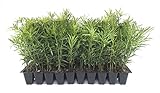

Plant Profile & Key Characteristics
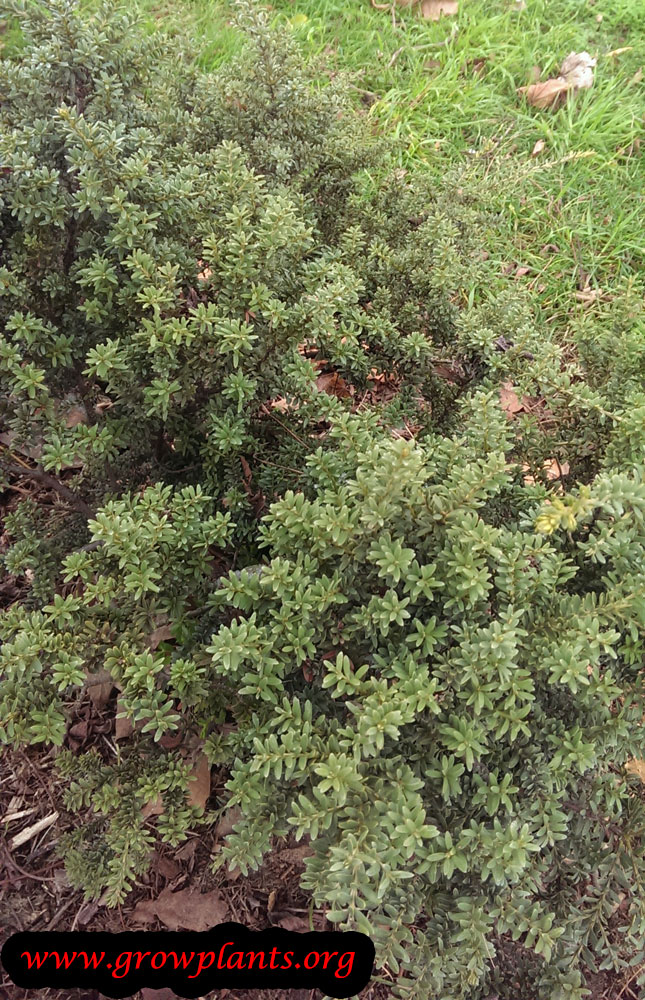
Overview: Podocarpus (plum pine) is an evergreen conifer grown as a shrub of 2-4 m or, left to mature, a tree of 4-20 m. This slow- to moderate-growing perennial is widely used as a clipped hedge, screen or bonsai subject.
Quick Specifications
| Specification | Attribute |
|---|---|
| Plant Type / Life Cycle | Perennial (evergreen conifer) |
| Foliage Type | Evergreen |
| Mature Size | Shrub 2-4 m (7-13 ft); tree 4-20 m (12-60 ft) |
| Growth Rate | Slow to moderate |
| Hardiness | USDA zone 8-10 |
Growth Form & Structure
- Height & Spread: Kept as a dense 2-4 m (7-13 ft) hedge or shrub, or allowed to grow into a 4-20 m (12-60 ft) upright tree; grows well in containers.
- Growth Habit & Form: Dense, upright evergreen conifer that clips readily into formal shapes.
- Lifespan & Maturity: Slow to moderate and long-lived, responding well to regular shearing.
Anatomy & Physical Features
- Leaves & Foliage: Green, linear leaves 2-3 cm or 4-10 cm long; the longer-leaved forms have a graceful weeping habit.
- Flower Characteristics: Green, white or pink; the plant is dioecious, with male cones shaped like small catkins and female cones on separate plants.
Primary Uses & Landscape Value
- Functional & Ornamental Roles: Formal hedge and screen, ornamental evergreen shrub or tree, container plant and popular bonsai subject.
Care Guide: Planting, Soil & Watering
Overview: Podocarpus grows well in full sun to partial shade in fertile, well-draining soil, and appreciates a humid, evenly moist environment. It takes moderate watering and, once established, is an easy, adaptable shrub, hedge or small tree.
Quick Care Requirements
| Requirement | Ideal Condition |
|---|---|
| Planting Season | Spring through autumn during the active growing season |
| Growth Rate | Slow to moderate |
| Soil Type | Fertile, well-draining soil kept evenly moist |
| Water Need | Moderate — keep the soil evenly moist but never waterlogged |
Planting & Establishment
- Best Planting Season: Plant during the growing season from spring through autumn, avoiding the coldest part of winter so the roots can establish in warm soil.
- How to Plant:
- Hole Preparation: Dig a hole about twice as wide as the root ball and just as deep, loosening the surrounding soil so the roots can spread.
- Soil Amendments: Work compost and organic matter into the backfill to enrich the soil and help it hold moisture while still draining freely.
- Planting Depth: Set the plant so the top of the root ball is level with the surrounding soil, keeping the root collar at grade and never burying the stem.
- Growth Speed & Expectations: A slow to moderate grower that forms a dense, upright shrub or small tree over time and responds well to shaping as a hedge or bonsai.
Soil, Watering & Drainage Care
- Soil Mix & Drainage Needs: Give it rich, well-draining soil that stays lightly moist; in containers use a good potting mix with free drainage, as it dislikes both drought and standing water.
- Watering Schedule & Technique:
- Young / Newly Planted: Water regularly after planting to keep the root zone consistently moist while the plant establishes.
- Established: Water deeply and regularly, allowing only the surface to dry between waterings — it prefers steady moisture over drying out completely.
- Seasonal Adjustments: Water more during hot, dry spells and reduce in cool weather, keeping the soil just moist through winter.
Climate, Light & Hardiness
Podocarpus (plum pine) is a broadleaf conifer suited to subtropical, temperate, and Mediterranean climates, growing well in full sun to half shade. It has moderate cold hardiness and does best with reliably humid growing conditions.
Quick Climate Specifications
| Climate Zones | Subtropical, temperate, or Mediterranean climates |
|---|---|
| USDA Hardiness Zones | 8–10 |
| Frost Tolerance | Moderate |
| Light Conditions | Full sun or half shade |
Sunlight & Light Exposure
Optimal Light Setup
Grows well in full sun to half shade, making it flexible as a hedge, screen, or bonsai subject in various garden positions.
Temperature Extremes & Hardiness
USDA Hardiness & Regional Limits
Reliably hardy across zone 8–10; it is best suited to mild, frost-light climates rather than harsh continental winters.
Cold Damage & Winter Protection
At the cooler edge of its range, a sheltered planting site helps protect against occasional hard frost.
Frost Sensitivity
Moderate frost tolerance; not reliably hardy much below its zone 8 limit.
Wind, Humidity & Microclimate
Humidity Preferences
Prefers humid growing conditions; site guidance specifically calls out humidity as a key care factor for this species.
Rainfall & Seasonal Moisture
Does best with consistent moisture through the growing season rather than prolonged dry spells; site guidance calls for average watering.
Microclimate Recommendations
A site with good ambient humidity and shelter from drying winds supports the healthiest foliage.
Growing in Pots, Balconies & Indoors
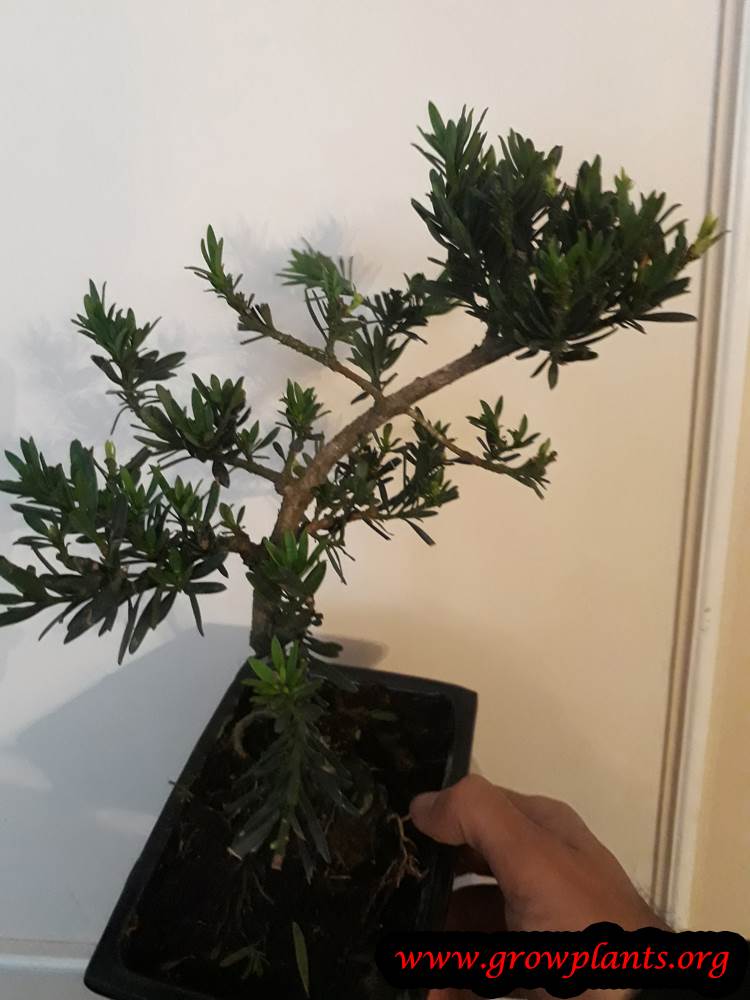
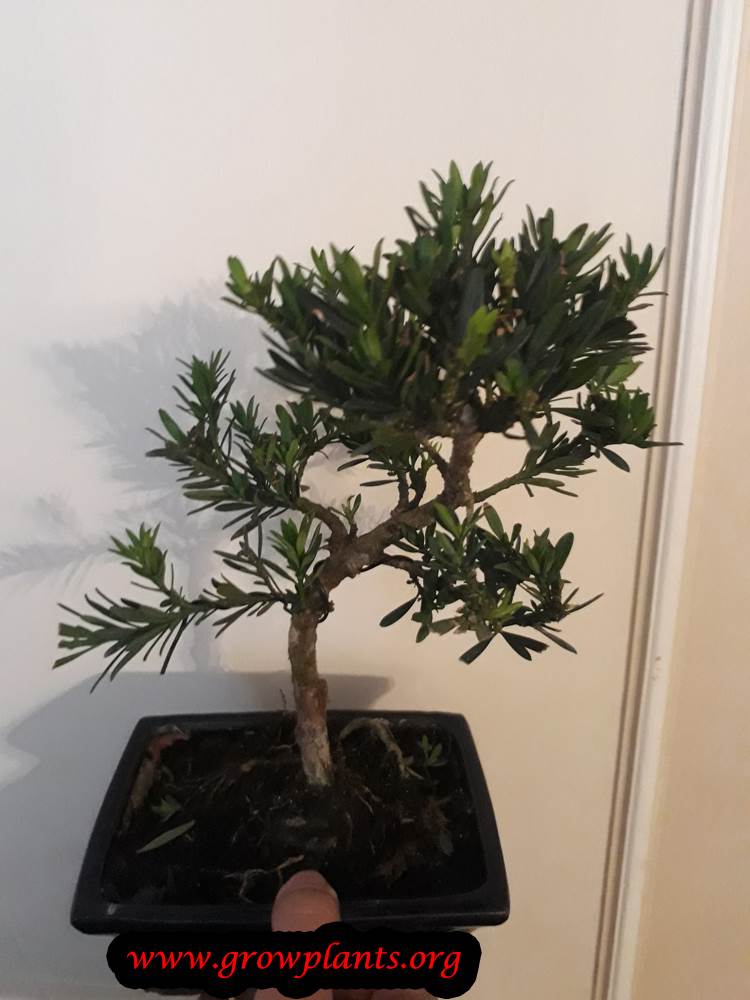
Podocarpus is a handsome evergreen that grows as a shrub (2-4 m / 80-160 in) or, in the open, a tree (4-20 m / 12-60 ft). The grower does not class it as a houseplant, but it grows well in containers, which makes it an excellent balcony or patio shrub. In a pot it stays shrubby and can be clipped to shape.
Quick Details
- Container Size: A roomy tub; pot up as it grows and clip to keep it shrubby
- Indoor Suitability: Not a houseplant, per the grower; grow it as an outdoor container shrub
- Best Spot: Full sun to part shade on a balcony or patio
- Soil & Drainage: Free-draining, loam-based mix; strong drainage holes
- Watering in Pots: Water when the top of the mix dries; pots dry faster than open ground, but avoid waterlogging
Indoors & On the Windowsill
- Not a houseplant (grower): The grower marks it as unsuitable for indoor life – grow it outdoors in a container instead.
- Bright shelter: If you must overwinter a young plant under cover in a cold climate, give it the brightest, coolest frost-free spot you have.
On a Balcony or Patio
- Light & wind: A good container shrub for full sun to part shade; keep the tub heavy and stable against wind, and clip it to keep a neat, shrubby shape.
- Practicalities: Pots warmed by walls and railings dry faster – check moisture regularly and make sure runoff drains freely.
Choosing the Pot, Soil & Long-Term Care
- Pot & drainage: A roomy tub with strong drainage holes; skip a standing saucer of water to avoid root rot.
- Potting mix: A free-draining, loam-based mix with some grit keeps it steady and healthy.
- Feeding: Feed through the growing season, as pot nutrients leach faster than in open ground.
- Repotting: Refresh the mix and pot up every couple of years; lightly prune roots and top to hold it at size.
Fertilizing & Feeding
Podocarpus is commonly trained as a hedge or screen, where steadier feeding helps it fill in and stay dense; specimens kept as bonsai or in containers should be fed more lightly than hedge plantings.
Quick Fertilizing Specs
| Feeding Level | Moderate |
|---|---|
| young_feeding | Balanced feeding to establish roots, shifting toward a nitrogen lean once hedge or screen fill-in is the goal |
| mature_feeding | Hedges and screens benefit from steady seasonal feeding; bonsai and container specimens should be fed lighter and less often |
| Main Nutrient Priority | Balanced nutrition with a nitrogen lean while active hedge growth or fill-in is wanted |
| Best Feeding Period | Throughout the warm growing season, tapering off as growth slows |
| Soil pH | Tolerates a range of soil pH; prefers evenly moist, humid conditions over any specific pH target |
| Reduce/Stop Feeding | Reduce feeding as the growing season winds down, especially for container and bonsai specimens |
Feeding by Growth Stage
Establishment After Planting
Support root recovery and settling-in after transplanting, whether in open ground or a container.
| Nutrient direction | Light, balanced nutrition favoring root development over top growth |
|---|---|
| Timing | The first couple of growing seasons after planting |
| Frequency | A few light feedings spread through the active growing season |
| Fertilizer types | A balanced, complete fertilizer for trees and shrubs, Compost or well-rotted organic matter worked lightly into the planting area |
| Precautions | Avoid feeding a stressed or newly transplanted root system too heavily; this species also shows allelopathic tendencies, so give new plantings room from other beds. |
Active Growth and Hedge Fill-In
Support the denser, bushier growth wanted for a hedge, screen, or shaped specimen while the plant is actively growing.
| Nutrient direction | Balanced feeding with a nitrogen lean to encourage denser foliage and faster fill-in |
|---|---|
| Timing | Spring through summer, during the warm active growth period |
| Frequency | Regular light feedings through the growing season |
| Fertilizer types | A balanced, complete fertilizer for trees and shrubs, A nitrogen-forward hedge or evergreen fertilizer where denser fill-in is the goal |
| Routine trace nutrients | iron, manganese |
| Precautions | Scale feeding back for bonsai or tightly containerized specimens, where the goal is restrained rather than vigorous growth. |
Established Hedge or Specimen Maintenance
Keep a settled hedge, screen, or specimen healthy and shapely without over-feeding.
| Nutrient direction | Light, balanced feeding to sustain density without pushing excess growth between prunings |
|---|---|
| Timing | Spring, or after a hard prune to support recovery |
| Frequency | Feed sparingly, adjusted to how the planting is performing |
| Fertilizer types | A balanced, complete fertilizer for trees and shrubs applied lightly around the root zone |
| Precautions | Avoid heavy feeding right after a hard prune; let the plant recover before pushing new growth. |
Cool-Season Slowdown
Let growth slow naturally through the cooler part of the year rather than forcing continued flushes.
| Nutrient direction | None – withhold fertilizer |
|---|---|
| Timing | Late autumn through the coolest part of winter |
| Frequency | No feeding at this stage |
| Fertilizer types | No feeding – allow growth to slow through the cool season |
| Precautions | Do not fertilize while growth is slow; feeding into the cool season can produce soft growth out of step with the plant’s natural rhythm. |
Nutrient Deficiency Signs & Corrections
Yellowing of newest leaves while the rest of the plant stays green
| Possible causes | Iron unavailability in alkaline soil, Poor drainage or compacted soil limiting root uptake, Root stress in an overly dry or overly wet container |
|---|---|
| Appears first on | Newest leaf growth at branch tips |
| What to check | Soil or potting mix drainage, Recent soil pH amendments, Whether a container has adequate drainage holes |
| Possible correction | Improve drainage and correct any pH imbalance; a chelated iron product applied per its label can help in a confirmed case. |
Overall pale, yellow-green foliage and thin, sparse hedge growth
| Possible causes | Low soil or potting-mix nitrogen, Nutrients leaching away from frequent watering, especially in containers, Root competition from nearby aggressive plantings |
|---|---|
| Appears first on | Older, interior foliage first, spreading outward |
| What to check | Watering and leaching frequency, especially in containers, Overall density compared to prior seasons, Nearby root competition |
| Possible correction | Apply a light, balanced or nitrogen-forward feeding during active growth and check watering practices for excessive leaching. |
General thinning, dieback, or poor color not clearly tied to a single leaf pattern
| Possible causes | Root stress from a waterlogged or overly dry root zone, Nutrient depletion in a long-unfed container or bonsai pot, Root competition or allelopathic effects from nearby plantings |
|---|---|
| Appears first on | Scattered branches or the whole canopy, without a clean older-to-newer pattern |
| What to check | Drainage and watering consistency, How long it has been since the last repotting or soil refresh, Proximity to aggressive-rooted or allelopathic neighbors |
| Possible correction | Address the underlying root or watering issue first, then resume a light, balanced feeding once the plant is stable. |
Pruning, Training & Seasonal Maintenance
Podocarpus is one of the few conifers, alongside yew, that tolerates frequent shearing and resprouts well from older wood – consistent with its common uses here as a clipped hedge and as bonsai material. Pruning tolerance is moderate-to-high, the main objective is shaping and density control, and because the species does not depend on flower or fruit display for its ornamental value, timing is flexible; light, regular trims through the growing season keep hedges dense, while any time in the cooler months suits harder structural work.
Quick Pruning & Maintenance Specs
| Pruning Tolerance | Moderate–High |
| Primary Pruning Window | Cooler months for structural/hard cuts |
| Secondary Maintenance Window | Light shearing through the growing season if kept as a hedge |
| Typical Frequency | Regular (hedge/topiary use) to occasional (specimen shrub/tree) |
| Main Objective | Density, shape and size control |
| Young Plant Priority | Establish the intended form early – hedge wall, screen, or bonsai structure |
| Mature Plant Priority | Maintain shape with regular shearing; thin occasionally for light penetration in dense hedges |
| Best Tool Type | Hedge shears for hedge/screen form; bypass secateurs for selective and bonsai work |
| Avoid Heavy Pruning During | No strong restriction given this species’ tolerance, though very hot dry spells are best avoided for major cuts |
Pruning by Plant Age & Size
Newly Established
Remove only damaged growth for the first season while roots establish; begin formative shaping once settled in.
Young / Formative
Whatever form is intended – dense hedge/screen, single or multi-leader specimen, or bonsai – can be trained from a young plant, since this species responds well to being shaped early.
Mature / Established
Regular shearing maintains a hedge or screen; a specimen shrub/tree needs only occasional thinning of crowded growth, since as a shrub it stays 2–4 m but as a tree form can reach 4–20 m.
Structural Pruning & Training
Because this species tolerates regular cutting, thinning dense growth genuinely helps light and air reach the interior of a hedge or screen and reduces disease risk in humid conditions; height and spread are both readily controllable by pruning, unlike most conifers.
Container & Small-Space Pruning
Well suited to container growing and bonsai training (noted as a bonsai use for this species); more frequent, harder shaping and some root pruning at repotting are appropriate to keep it in scale, which this species tolerates better than most conifers.
Tools
Hedge shears for maintaining a clipped hedge or screen; bypass secateurs for selective structural or bonsai-style cuts.
Tool Hygiene & Disease Risk
Increased risk: this species is noted as susceptible to aphids, which can spread between plants on tools; wipe blades between specimens when shearing multiple plants, especially if aphid activity is visible.
Cut Placement & Technique
Shear just outside the previous surface line to maintain hedge density; for selective or bonsai cuts, cut just above a healthy bud or side shoot.
Heavy Pruning & Rejuvenation
Well tolerated – an overgrown hedge or leggy specimen can be cut back hard and will resprout from older wood, ideally staged over a season or two if the plant is very overgrown.
Post-Pruning Care
No extra feeding needed beyond normal care; after a hard cutback, watch new growth for aphids given this species’ noted susceptibility.
Common Pruning Mistakes
Letting a hedge grow wider at the top and shade its own base; neglecting aphid checks on tender regrowth after a hard trim; under-pruning bonsai material and losing the intended miniature form.
When NOT to Prune
No strict seasonal restriction given this species’ tolerance; avoid major cuts during extreme heat stress.
Recommended Tools (by task)
- Hedge shears – for maintaining hedge or screen form, a primary use of this species.
- Bypass secateurs – for selective structural cuts and bonsai training on younger or container specimens.
Pruning Troubleshooting
| Problem | Possible Cause | What to Check | Corrective Action |
| Bare, thin lower hedge | Top sheared wider than the base, shading it out | Hedge cross-section shape | Taper the hedge narrower at the top; allow a season to fill in |
| Sticky residue/curled new growth after trimming | Aphids (a noted pest for this species) on tender regrowth | Undersides of new leaves near cut points | Treat for aphids; avoid over-fertilizing which encourages soft, attractive new growth |
Propagation Guide
Podocarpus is most practically propagated from semi-hardwood stem cuttings, which give uniform hedge or bonsai stock faster and more predictably than seed; seed is a workable alternative but, since the plant is dioecious with separate male and female plants, seed is only produced where both sexes are present nearby, and seedling sex cannot be predicted. Vegetative propagation is not strictly necessary but is generally the more practical choice, and difficulty overall is Moderate.
Quick Propagation Specs
| Best Propagation Method | Semi-hardwood stem cuttings |
| Alternative Methods | Seed |
| Propagation Difficulty | Moderate |
| Seed True-to-Type | Variable (seedling sex is unpredictable since the species is dioecious) |
| Vegetative True-to-Type | Yes |
| Best Propagation Season | Warmer months (spring to summer) for cuttings |
| Seed Germination Time | Typically several weeks to a few months |
| Cutting Rooting Time | Often several weeks to a couple of months |
| Germination Temperature | Roughly 18–24°C (64–75°F) |
| Seed Sowing Depth | Shallow, about 1 cm (0.4 inch) |
Growing from Seed
Seed Handling & Viability
Seed forms on a fleshy receptacle; removing the pulp before sowing is generally recommended, since fleshy pulp left on the seed can encourage rot rather than aid germination. Seed is best sown reasonably fresh.
Sowing Season
Spring, once temperatures are reliably warm.
Sowing Depth & Orientation
Sow shallowly in a well-drained mix.
Germination Conditions
Warm temperatures and evenly moist, well-drained soil; light shade over the seedbed can help.
Germination Time
Typically several weeks to a few months, and can be uneven.
Seedling Care
Young plants benefit from some shade while establishing and grow at a moderate to slow pace.
Stem Cuttings
Cutting Type
Semi-hardwood tip or side-shoot cuttings.
Best Timing
Warmer months, during active growth.
Cutting Preparation
Take cuttings from healthy, well-hardened shoots and remove lower foliage before inserting.
Rooting Setup
A well-drained, gritty rooting mix under warmth and moderate humidity; light shade during rooting.
Rooting Hormone
Beneficial – a rooting hormone typically improves both speed and consistency for conifer cuttings like this, though it is not strictly required.
Rooting Time
Often several weeks to a couple of months.
Bloom & Flower Guide
Quick Details
- Bloom Season: Spring to summer
- Flower Appearance: Male cones are slim and upright (the grower likens them to an “ice pop”); female structures form small cones. Colour ranges through green, white and pink
- Edibility: Ornamental / none – the cones are grown for interest, not eaten
Detailed Blooming Overview
Podocarpus is a conifer, so it does not carry true flowers. It is dioecious – male and female plants are separate. The male plants produce slender, upright pollen cones (the “ice pop” shape the grower describes), while the females form small cones. You need both a male and a female nearby for the female to develop its fleshy seed.
Flower Characteristics
- Male pollen cones are slim and upright, ranging in colour from green to whitish or pink.
- Female cones are small and borne on separate plants.
- Dioecious: a plant is either male or female.
Bloom Care & Thinning
- Nothing to deadhead: The cones need no thinning.
- Pollination: Wind carries pollen from male to female plants – plant both if you want the female to set seed.
- Placement: Podocarpus takes well to hedging and shaping; light pruning does not interfere with coning on mature plants.
Pests, Diseases & Troubleshooting
Overview: Podocarpus is a tough, slow-growing evergreen conifer that is largely trouble-free; when it does suffer, the cause is usually sap-sucking podocarpus aphid and scale, whose honeydew blackens the foliage with sooty mold, or root rot in soggy soil. Good drainage, airflow and occasional monitoring keep it healthy; treat organically first.
Quick Troubleshooting Overview
| Issue / Pest | Main Symptom | Primary Solution |
|---|---|---|
| Podocarpus aphid | Sticky honeydew, black sooty mold, curled new tips | Hose off, insecticidal soap, predators |
| Scale | Brown/white bumps on needles & stems, sooty mold | Horticultural oil, prune out |
| Sooty mold | Black soot coating foliage | Control aphid/scale, then wipe/rinse |
| Root rot | Yellowing, browning, dieback in wet soil | Improve drainage, reduce watering |
| Chlorosis | Pale yellow needles on alkaline/poor soil | Correct drainage, chelated iron |
Common Pests & Management
- Podocarpus aphid (Neophyllaphis podocarpi):
- Symptoms: Bluish-grey, waxy aphids clustering on soft new growth and needle bases, causing distorted tips, copious sticky honeydew and following black sooty mold; a pest specific to podocarpus.
- Prevention & Control: Dislodge with a firm water jet, encourage ladybirds, lacewings and hoverflies, and spray insecticidal soap or a light horticultural oil to soft growth; control the ants that farm and protect the aphids.
- Scale insects (Aspidiotus, Coccus and allied spp.):
- Symptoms: Brown, tan or white immobile bumps along needles, twigs and stems, with honeydew and sooty mold from soft scale and general loss of vigor.
- Prevention & Control: Prune out heavily encrusted growth and spray horticultural oil for thorough smothering coverage, timing to catch mobile crawlers; repeat and manage attendant ants.
- Mealybugs (Pseudococcus spp.):
- Symptoms: White cottony masses in branch crotches and on stems, mainly on stressed or container plants, with honeydew and sooty mold.
- Prevention & Control: Wipe with an alcohol swab, hose off, and spray horticultural oil or insecticidal soap; keep plants unstressed and well-spaced.
- Spider mites (Tetranychus / Oligonychus spp.):
- Symptoms: Fine stippling, bronzing and faint webbing on needles in hot, dry, dusty conditions.
- Prevention & Control: Rinse foliage, raise humidity and airflow, and apply insecticidal soap or a light oil; keep plants watered to reduce stress.
Diseases & Fungal Issues
- Root & crown rot (Phytophthora / Pythium spp.):
- Symptoms: Yellowing, thinning and branch dieback with a discolored root system in heavy, wet or poorly drained soil; can be fatal.
- Treatment & Management: Plant in free-draining soil, never overwater, avoid piling mulch against the trunk, and remove severely affected plants; a biofungicide or phosphonate can protect valued specimens.
- Sooty mold (Capnodium spp. (secondary)):
- Symptoms: A black superficial coating over needles and stems wherever aphids or scale have dripped honeydew, dulling the plant and blocking light.
- Treatment & Management: Control the sap-sucking pest first, then rinse or wipe the film away; it is cosmetic but persistent until the honeydew source is gone.
- Tip blight / needle blight (Dothiorella / Pestalotiopsis spp.):
- Symptoms: Browning and dieback of needle tips and small branches, usually on stressed or crowded plants in humid conditions.
- Treatment & Management: Prune out affected tips, improve airflow, avoid overhead watering, and keep the plant vigorous; copper can help if it spreads.
Growing Difficulties & Abiotic Problems
- Chlorosis:
- Cause & Symptoms: Pale yellow needles, worst on new growth, on alkaline, compacted or waterlogged soil where iron is unavailable.
- Correction Strategy: Improve drainage and organic matter, mulch, and correct with chelated iron plus an acidifying feed on very alkaline sites.
- Waterlogging / overwatering:
- Cause & Symptoms: Constantly wet roots yellow the foliage and invite rot; podocarpus dislikes wet feet.
- Correction Strategy: Plant high in free-draining soil, water deeply but infrequently once established, and fix any drainage problem at the root.
- Cold / wind tip burn:
- Cause & Symptoms: Cold snaps and drying winds brown needle tips, especially on exposed young plants.
- Correction Strategy: Shelter young plants, mulch the root zone, and prune scorched tips once growth resumes.
- Salt sensitivity:
- Cause & Symptoms: Salt spray or saline soil browns needle margins and tips in coastal or over-fertilized situations.
- Correction Strategy: Flush the soil with deep clean watering, avoid saline water, and screen from direct salt spray.
What Helps – Products & Tools
Good drainage and airflow prevent most problems. Useful products are insecticidal soap and horticultural/neem oil for podocarpus aphid, scale, mealybugs and mites, chelated iron for chlorosis, and a biofungicide or phosphonate to protect roots on wet-prone sites; sooty mold clears once the honeydew pest is controlled.