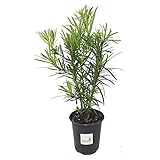


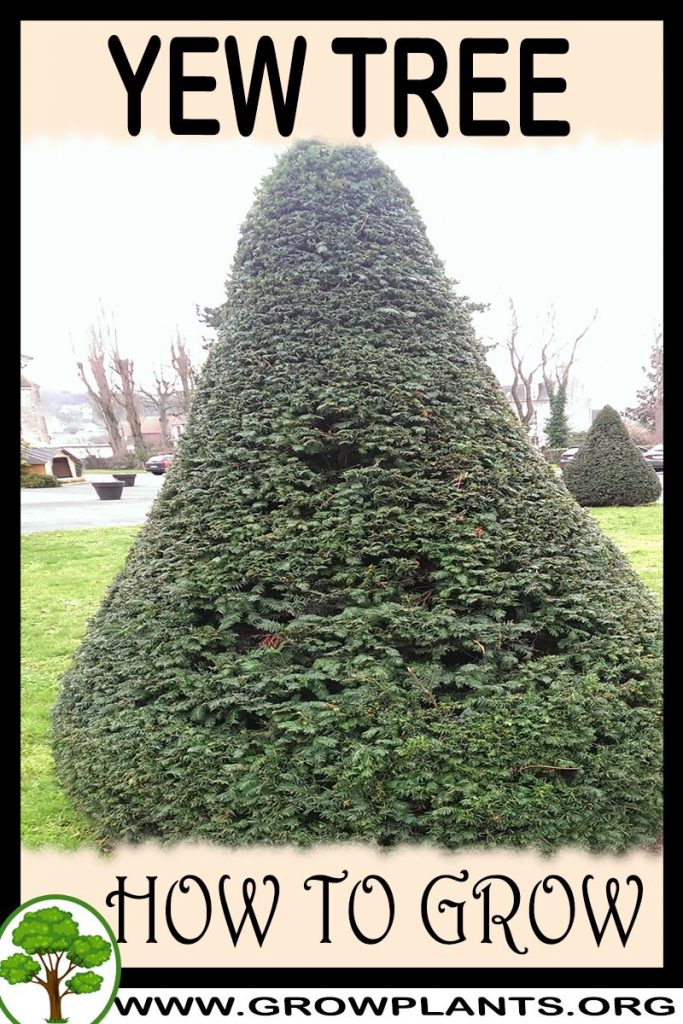
Plant Profile & Key Characteristics
Overview: A long-lived evergreen conifer, tree or shrub, reaching 8-20 m (26-66 ft) but very slow-growing and endlessly clippable. It is prized as a dense hedge, topiary and bonsai subject, though all parts except the red fleshy aril are highly poisonous.
Quick Specifications
| Specification | Attribute |
|---|---|
| Plant Type / Life Cycle | Evergreen coniferous perennial (tree or shrub) |
| Foliage Type | Evergreen |
| Mature Size | 8-20 m (26-66 ft) tall, but slow and readily kept far smaller |
| Growth Rate | Slow |
| Toxicity | Highly toxic — foliage, bark and seeds contain taxine alkaloids poisonous to people and animals; only the red fleshy aril is non-toxic (its seed is not) |
| Hardiness | USDA zones 5-9 (10a with care) |
Growth Form & Structure
- Height and Spread: In the ground a substantial 8-20 m (26-66 ft) tree over a long lifetime, but its slow growth and tolerance of hard clipping keep it easily controlled; also grown as a dwarf or bonsai in containers of 10 L (5 gal) upward.
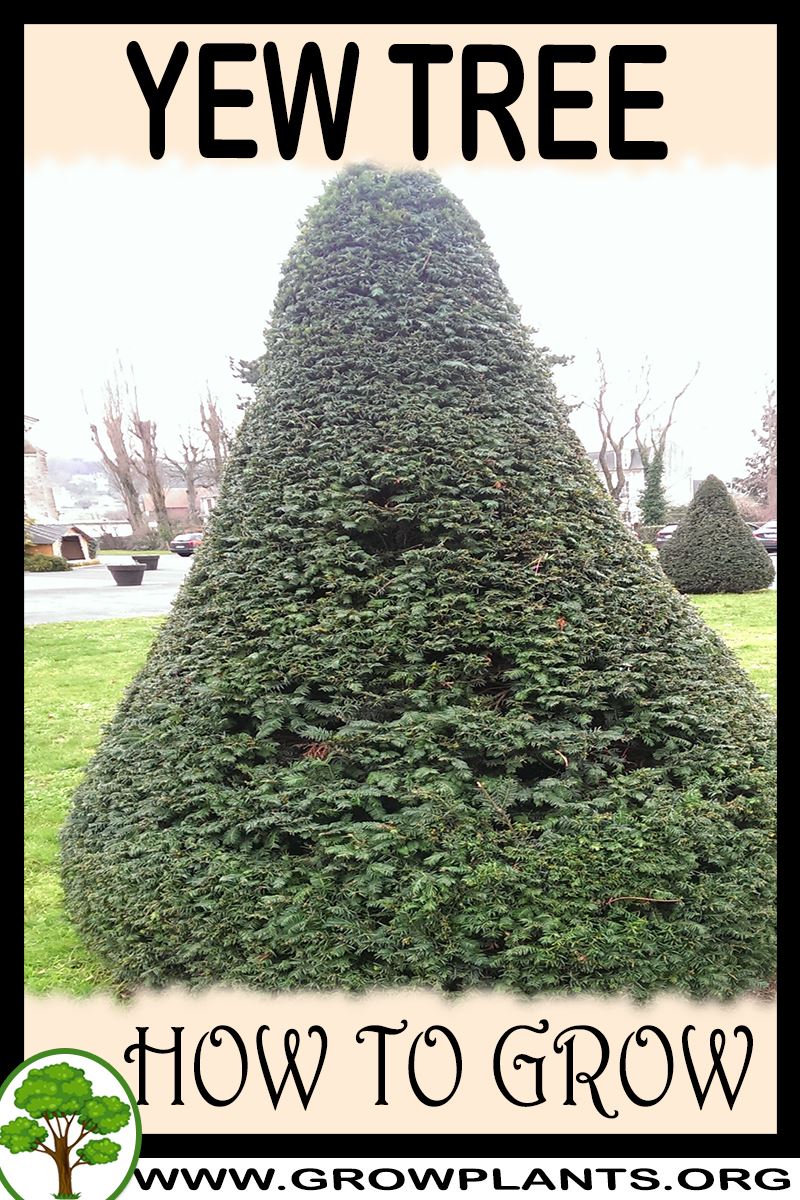
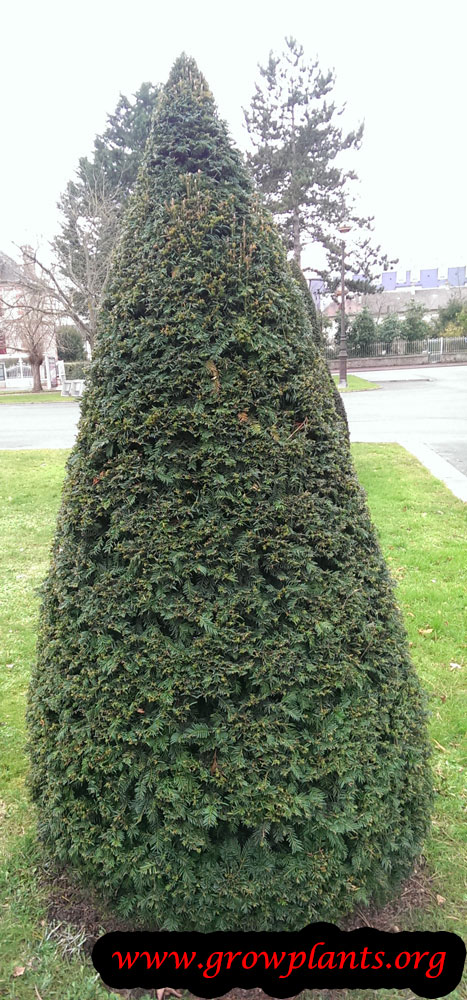
- Growth Habit and Form: Dense, dark, broadly conical to spreading habit with layered evergreen branches; takes shearing into hedges, topiary balls and formal shapes.
- Lifespan and Maturity: Exceptionally long-lived (yews can persist for centuries); slow to reach full size, which makes it ideal for tightly maintained formal work.
Anatomy & Physical Features
- Trunk and Bark: Reddish-brown, thin, flaking bark over a fluted trunk on older specimens.
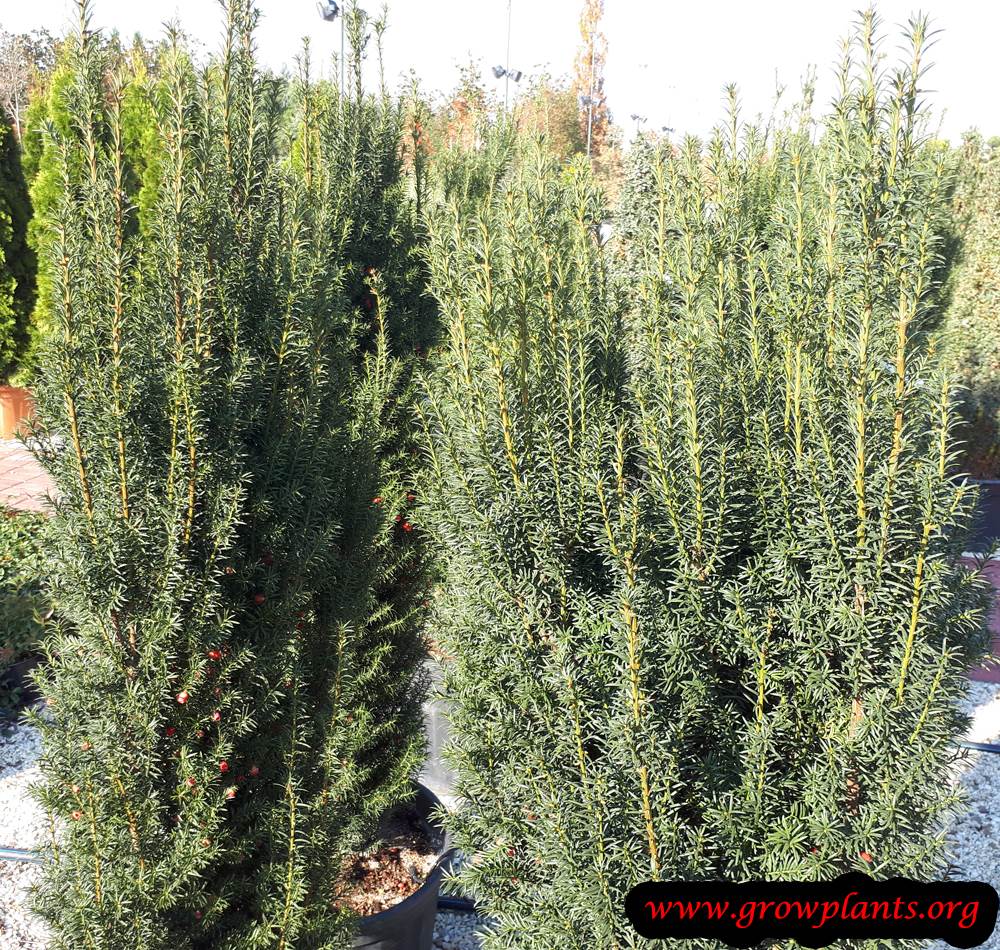
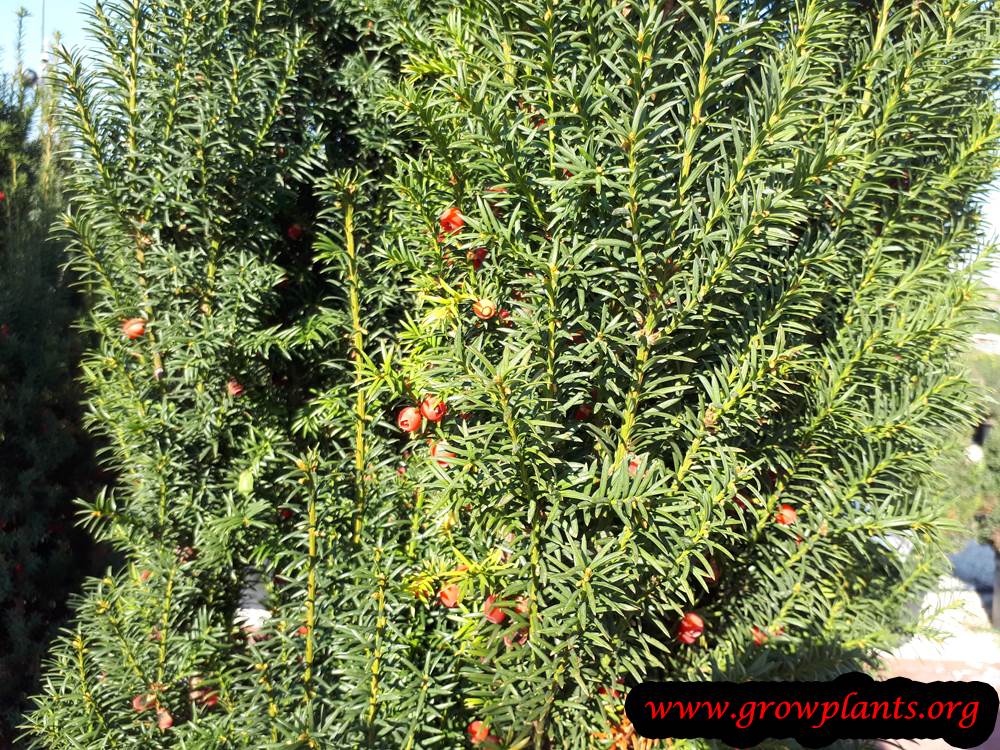
- Leaves and Foliage: Flat, dark-green needle-like leaves arranged in two ranks along the shoots; variegated forms carry white or yellow margins and tips.
- Flower Characteristics: Inconspicuous yellow-to-white cones at the shoot tips (plants are usually single-sexed).
- Fruit Profile: A single seed cupped in a fleshy, bright-red, shiny aril; the aril flesh is harmless but the seed within is poisonous.
Primary Uses & Landscape Value
- Functional and Ornamental Roles: A premier evergreen for clipped hedges, screens, topiary and bonsai; also a shade specimen and a source of medicinal taxanes. Keep away from grazing livestock and children because of its toxicity.
Care Guide: Planting, Soil & Watering
Overview: English yew (Taxus baccata) is a long-lived, cool-climate evergreen conifer for full sun to full shade (hardiness zones 5–9, 10a with care). It prefers cool temperatures and moist, well-drained soil kept mulched, with moderate to generous water.
Quick Care Requirements
| Requirement | Ideal Condition |
|---|---|
| Planting Season | Spring in zones 5–7; spring to summer in zones 8–9; spring or autumn in zone 10a |
| Growth Rate | Slow to Moderate |
| Soil Type | Cool, moist, well-drained soil, mulched |
| Water Need | Moderate to High — keep evenly moist and mulched, but never waterlogged |
Planting & Establishment
- Best Planting Season: Plant in spring in colder zones 5–7, spring to summer in zones 8–9, and either spring or autumn in zone 10a, so roots establish in cool, moist soil.
- How to Plant:
- Hole Preparation: Dig a hole as deep as the root ball and about 30–50% wider, loosening the sides for root spread.
- Soil Amendments: Mix organic matter — humus and dried leaves — into the backfill, then mulch the surface to keep the soil cool and moist.
- Planting Depth: Set the root collar level with the soil, firm gently (stable but not compacted) and water in; do not bury the stem. Keep mulched.
- Growth Speed & Expectations: Yews are famously slow to moderate growers but extremely long-lived — they build gradually into dense, shapeable specimens ideal for hedging and topiary.
Soil, Watering & Drainage Care
- Soil Mix & Drainage Needs: Cool, moist, well-drained soil is key — yew will not tolerate waterlogged ground, which quickly causes root rot. Mulch conserves moisture; container plants need free-draining mix and reliable drainage.
- Watering Schedule & Technique:
- Young / Newly Planted: Keep newly planted yews evenly moist and well mulched through the first seasons; do not let them dry out.
- Established: Water established plants deeply in dry spells to keep the soil moist, but ensure it drains freely between waterings.
- Seasonal Adjustments: Water more in summer heat; reduce in cool, wet weather — the danger is waterlogging, not drought.
Climate, Light & Hardiness
Yew tree (English yew) is a cool-climate evergreen conifer suited to temperate and cool subtropical regions, tolerating full sun through to full shade - an unusually wide light range for a conifer. It is a fully cold-hardy species with good winter cold tolerance, though it also needs some winter chill to grow and flower well.
Quick Climate Specifications
| Climate Zones | Temperate or cool subtropical climates; also grown indoors/as bonsai in containers |
|---|---|
| USDA Hardiness Zones | 5–9; possible in zone 10a with attentive care |
| Frost Tolerance | High |
| Light Conditions | Full sun, half shade, or full shade (deep shade may reduce flowering and fruiting) |
Sunlight & Light Exposure
Optimal Light Setup
Yew tolerates a very wide light range, from full sun to full shade, making it useful for shaded hedges and understorey plantings as well as open sun.
Shade & Heat Management
Full shade is tolerated well for foliage growth, though flowering and fruit set are reduced in low light.
Best Exposure / Orientation
Adapts to most orientations; it is commonly used as a shade-tolerant hedge or screening plant where many conifers would struggle.
Temperature Extremes & Hardiness
USDA Hardiness & Regional Limits
Reliably cold-hardy across zone 5–9, with zone 10a possible only with attentive care, reflecting its preference for cooler temperate climates over hot subtropical or tropical heat.
Cold Damage & Winter Protection
Well-established plants in zone 5 and warmer generally need no winter protection; young transplants benefit from mulch to buffer root-zone temperature swings through their first winters.
Frost Sensitivity
Very frost tolerant; this is one of its main garden strengths as a cool-climate evergreen.
Chilling Requirement
Benefits from a period of winter chill to support normal seasonal growth and flowering; site guidance on the exact chilling period was inconsistent, so no specific figure is given here, but gardeners in essentially chill-free warm climates should not expect the same vigor as in its core temperate range.
Wind, Humidity & Microclimate
Rainfall & Seasonal Moisture
Suited to climates with reasonably consistent moisture through the growing season rather than prolonged drought; site guidance calls for average to generous watering.
Microclimate Recommendations
Mulching helps keep the root zone cool and evenly moist, which supports better cold hardiness and overall vigor, especially in the warmer part of its climate range.
Growing in Pots, Balconies & Indoors
The yew (Taxus baccata) is a long-lived evergreen that grows into a large tree (8-20 m) in the ground, but the grower confirms it can be kept indoors in a very bright spot and, above all, grown in a container as a dwarf or bonsai. It tolerates sun through deep shade. Important: every part except the fleshy red aril is highly poisonous – keep it well away from children and pets and never let anyone eat the foliage or seeds.
Quick Details
- Container Size: Minimum 10 L (about 3 gal), better 100 L (about 20 gal) and up – a bigger pot grows a bigger tree
- Indoor Suitability: Possible with a lot of light; grown indoors mainly as a dwarf or bonsai, away from heaters
- Best Spot: Bright light; tolerates sun to shade, but needs good light indoors
- Soil & Drainage: Peat-based soil with perlite (or potting mix), with lava grit in the base for drainage
- Watering in Pots: Water so the saucer fills, then let it drain and dry the same day; never leave it standing wet
Indoors & On the Windowsill
- Indoors with a lot of light (grower): It can be grown indoors in a location with plenty of light; feed it once a year (unlike outdoors, a potted yew does not get natural organic matter) and keep it away from heaters.
- As a dwarf or bonsai (grower): Indoors it is really an ornamental container tree – started young and kept small by pruning, it makes a fine long-lived bonsai.
- Safety: Yew is highly toxic – site it out of reach of children and pets and never allow ingestion of the foliage or seeds.
On a Balcony or Patio
- Light & wind: Yew is hardy and does well outdoors in a pot on a balcony or patio in sun or shade; a heavier tub stays stable in wind. Keep pets and children away from the toxic foliage.
- Watering: Pots dry faster than open ground – water when the surface dries, filling the saucer, then let it drain the same day.
Choosing the Pot, Soil & Long-Term Care
- Grow-on method (grower): Start from a young tree, cutting or seed with a small root ball, and consider pruning the roots before planting. Begin in a pot 50-100% larger than the root ball, then move up a size each time the tree fills its pot, until it reaches the size you want – a bigger container grows a bigger tree. The minimum is about 10 L (3 gal), better 100 L (20 gal) or more. This staged method is efficient and keeps the soil fresh, as potting soil loses its structure over time.
- Root & top pruning (grower): Once the tree is large, replace part of the soil and cut back both the top and the roots; do this in the cold dormant season.
- Soil & feeding (grower): Use peat soil with perlite, or potting mix, with some lava grit in the base for drainage; in a container add more fertilizer and organic matter than you would outdoors. Set a saucer under the pot and, when you water, let it fill and then dry the same day.
Fertilizing & Feeding
A moderate feeder as a hedge, shade tree, or clipped topiary – established in-ground plantings need only modest feeding, while container-grown or bonsai specimens need more consistent feeding to make up for their limited soil volume.
Quick Fertilizing Specs
| Feeding Level | Moderate feeder |
|---|---|
| young_feeding | Light, balanced feeding to support root and foliage establishment after planting |
| mature_feeding | Modest, occasional feeding for established in-ground plantings; more frequent light feeding for container or bonsai specimens |
| Main Nutrient Priority | Balanced feeding with adequate nitrogen for dense, evenly colored evergreen foliage |
| Best Feeding Period | Spring through the active growing season |
| Organic Options | Mulch and compost worked around the root zone to retain moisture and add organic matter |
| Reduce/Stop Feeding | Withhold fertilizer going into and during winter dormancy |
| Micronutrients | Usually met by a complete fertilizer; correct iron-related yellowing only if diagnosed |
| Soil pH | Tolerates a range of soil conditions but prefers moist, well-drained soil |
Feeding by Growth Stage
Establishment after planting
Help a newly planted tree, shrub, or hedge specimen root in and begin producing new foliage.
| Nutrient direction | Light, balanced feeding paired with mulch supports root establishment without pushing top growth the roots can’t yet support. |
|---|---|
| Timing | The first growing season or two after planting. |
| Frequency | Light feeding started only once new growth confirms the root system is establishing. |
| Fertilizer types | A balanced complete fertilizer at a light rate, Mulch and organic matter worked around the root zone |
| Precautions | Avoid heavy feeding right after planting; a newly disturbed root system is easily stressed by strong fertilizer. |
Spring flush of new growth
Support fresh foliage growth as the tree breaks dormancy in spring.
| Nutrient direction | A balanced, nitrogen-forward feeding supports new needle growth on hedges, shade trees, and topiary alike. |
|---|---|
| Timing | As new growth begins in spring. |
| Frequency | A light feeding at the start of the growing season is usually enough for an established planting. |
| Fertilizer types | A balanced, nitrogen-forward fertilizer suited to trees and shrubs, Mulch renewed around the root zone |
| Precautions | Keep feeding light on established plants; excess nitrogen late in spring can push soft growth that struggles in summer heat. |
Container, dwarf, or bonsai culture
Compensate for the limited soil volume and lack of natural soil replenishment when grown as a potted, dwarf, or bonsai specimen rather than planted in the ground.
| Nutrient direction | More consistent, moderate feeding than an in-ground planting, since container soil doesn’t replenish nutrients on its own. |
|---|---|
| Timing | Through the active growing season for container-grown or bonsai specimens. |
| Frequency | More frequent light feedings than an in-ground planting, scaled to pot size and growth rate. |
| Fertilizer types | A balanced complete fertilizer formulated for container plants, Fresh, organic-matter-enriched potting mix at repotting |
| Precautions | Increase feeding gradually and watch for salt buildup in the confined root zone; flush the pot with water periodically to prevent it. |
Cool-season dormancy
Let the tree rest through winter dormancy without pushing new growth into cold weather.
| Nutrient direction | None – withhold fertilizer while the tree is dormant. |
|---|---|
| Timing | Autumn through winter dormancy within its hardiness range. |
| Frequency | No feeding at this stage. |
| Fertilizer types | No feeding at this stage; hold off fertilizing until spring growth resumes. |
| Precautions | Do not fertilize going into or during winter dormancy – late-season feeding can encourage tender growth that is vulnerable to cold damage. |
Nutrient Deficiency Signs & Corrections
Pale green or yellowish needles and reduced new growth, especially on older, in-ground plantings.
| Possible causes | low soil nitrogen, competition from nearby turf or other plants for available nutrients, compacted or poor soil limiting root uptake |
|---|---|
| Appears first on | older, lower foliage |
| What to check | recent feeding history, soil compaction and drainage, mulch and organic matter levels |
| Possible correction | Apply a balanced, nitrogen-forward fertilizer in spring and refresh mulch or organic matter around the root zone. |
Yellowing of new needle growth while older needles remain green.
| Possible causes | high soil pH limiting iron availability, poorly drained or waterlogged soil, root stress from recent transplanting or container culture |
|---|---|
| Appears first on | the newest needle growth |
| What to check | soil pH and drainage, recent transplanting or repotting, container root health, if applicable |
| Possible correction | Correct drainage and soil conditions first, then apply a chelated iron product per its label if the yellowing persists. |
Needle tip browning or scorch, most often seen on container-grown or bonsai specimens.
| Possible causes | fertilizer salt buildup in a confined container root zone, infrequent flushing of the potting mix, overfeeding relative to pot size |
|---|---|
| Appears first on | needle tips, especially on container or bonsai specimens |
| What to check | recent feeding rate and frequency, container drainage, how long it has been since the pot was last flushed with water |
| Possible correction | Ease off feeding and flush the container thoroughly with water; repot into fresh mix if buildup is heavy. |
Pruning, Training & Seasonal Maintenance
Yew tree (Taxus baccata) is one of the few conifers that tolerates hard, repeated pruning and reliably resprouts from old, bare wood – this is exactly why it is the classic choice for clipped hedges, topiary and bonsai. Pruning tolerance is high, the main objective is shaping and size control rather than plant health, and it can be cut at almost any time of year, though the plant responds best and cuts callus most cleanly when work is done in late winter before the spring flush. Pruning has essentially no bearing on flowering, since the plant is grown for foliage and form rather than for its fruit, which is poisonous and not harvested.
Quick Pruning & Maintenance Specs
| Pruning Tolerance | High |
| Primary Pruning Window | Late winter, before spring growth resumes |
| Secondary Maintenance Window | Mid-summer touch-up shear on hedges/topiary |
| Typical Frequency | Once yearly for form; more often (1–2x) if kept as a tight hedge or topiary |
| Main Objective | Shape, size control, topiary/hedge form |
| Young Plant Priority | Start topiary or hedge shaping while the plant is young and pliable, as noted for this species |
| Mature Plant Priority | Maintain established shape; rejuvenate if it has become overgrown or thin |
| Best Tool Type | Hedge shears for hedge/topiary form; bypass secateurs for selective structural cuts |
| Avoid Heavy Pruning During | Hard frost periods; otherwise flexible given this species’ tolerance |
Pruning by Plant Age & Size
Newly Established
Remove only damaged growth in the first year or two while the root system establishes; if topiary or a formal hedge shape is planned, begin light formative cuts once the plant is settled in, since starting the design young is specifically easier for this species.
Young / Formative
Multi-leader or hedge/topiary training as desired – yew readily takes to whatever form is imposed early, whether a single-leader tree, a dense hedge wall, or a shaped topiary ball.
Mature / Established
Maintain the established outline with regular shearing (hedge/topiary) or selective thinning (specimen tree); because the species resprouts from old wood, size can be reduced substantially if it has outgrown its space.
Seasonal Pruning Schedule
Dormant/Winter
Objective: main structural and size-control cut. Remove dead, damaged or misplaced growth and reshape hedges/topiary. Expected response: vigorous new growth from both green and older bare wood the following spring.
Summer Canopy Management
Objective: crisp up hedge and topiary lines with a light trim on the current season’s soft growth; not needed on informal specimen trees.
Ongoing Sanitary
Remove any dieback promptly; this species is noted as susceptible to gall, mites and molds, so removing affected growth limits spread.
Structural Pruning & Training
Topiary and formal hedge shapes are a defining use of this species; branch selection should support the intended outline, and crossing or inward growth can be removed freely since the plant regenerates reliably. Height and spread are fully controllable by pruning, unlike most conifers.
Container & Small-Space Pruning
Commonly grown as a dwarf or bonsai specimen in containers; root pruning is expected as part of repotting (done in winter, alongside a proportional reduction of top growth), and more frequent, harder shaping cuts are used to keep the plant in scale with the pot than would be used on an in-ground tree.
Tools
Hedge shears for maintaining hedge or topiary surfaces; bypass secateurs for selective structural or bonsai-style cuts; a pruning saw only for removing substantial old wood on a large overgrown specimen.
Tool Hygiene & Disease Risk
Increased risk: this species is noted as susceptible to gall, mites and molds, so disinfecting blades between plants (and between diseased and healthy material) reduces spread, though routine cleaning is sufficient for everyday shaping cuts.
Cut Placement & Technique
For structural cuts, cut just outside the branch collar and avoid flush cuts; for hedge/topiary shearing, cut just outside the previous surface line to maintain a dense outer face.
Heavy Pruning & Rejuvenation
Well tolerated – unlike most conifers, yew reliably resprouts from old, leafless wood. An overgrown or thin specimen can be cut back hard, ideally staged over one to two seasons, and will regenerate a full new surface of growth.
Post-Pruning Care
No extra feeding is needed beyond the plant’s normal annual fertilizing; after a hard rejuvenation cut, keep the root zone consistently moist (mulch is already recommended for this species) to support the flush of new growth, and watch for the pest and disease issues this species is prone to on fresh cut surfaces.
Common Pruning Mistakes
Shearing hedges into a wider-at-top shape that shades out the lower foliage; delaying rejuvenation of an overgrown specimen out of the mistaken belief conifers won’t recover (yew will); handling the poisonous fruit and clippings carelessly around children or livestock.
When NOT to Prune
Avoid pruning during hard frost; otherwise this species is flexible about timing compared to most conifers.
Recommended Tools (by task)
- Hedge shears – for maintaining formal hedge and topiary surfaces, a primary use of this species.
- Bypass secateurs – for selective structural and bonsai-style cuts on young or container specimens.
- Pruning saw – for removing substantial old wood when rejuvenating a large, overgrown specimen tree.
Pruning Troubleshooting
| Problem | Possible Cause | What to Check | Corrective Action |
| Thin, patchy foliage after shearing | Hedge sheared wider at the top, shading lower growth | Hedge cross-section shape | Reshape with a slight taper (narrower at top) and allow a season to fill back in |
| Dieback on cut ends | Gall, mites or mold (all noted issues for this species) | Cut surfaces and nearby foliage for pests/lesions | Remove affected growth, disinfect tools, improve airflow |
| No regrowth after hard cutback | Cut into wood that was already dead, or done during hard frost | Whether remaining wood shows any green cambium | Cut back further to living wood; retry rejuvenation in a milder season |
Propagation Guide
Yew can be propagated from seed and from cuttings. Seed propagation is slow and may be uneven; vegetative propagation is preferred for preserving a named cultivar.
Quick Propagation Specs
| Species Seed | Valid but slow |
| Cultivar Fidelity | Use vegetative propagation |
| Cuttings | Semi-ripe or semi-hardwood material |
| Grafting Required | No |
Growing from Seed
Use mature viable seed and expect dormancy to make germination slow and uneven. Breaking dormancy typically needs a warm stratification period of about 15-20C (59-68F) for several months, followed by cold stratification at around 5C (41F) or below.
Stem Cuttings
Take healthy vegetative material with viable nodes and root it in a clean, airy, free-draining medium under steady humidity. Rooting can be slow, so avoid promising a fixed rooting time.
Note: Sow seed about 1cm (0.5in) deep.
Bloom & Flower Guide
Quick Details
- Bloom Season: Spring
- Time to First Bloom: On mature plants; yew is slow-growing and cones only after several years
- Flower Appearance: Not true flowers – small rounded pollen cones (yellowish, releasing pollen in spring) on male plants; female plants bear tiny greenish seed cones
- Edibility: Not edible – yew is highly poisonous in nearly all parts
Detailed Blooming Overview
The yew is a conifer rather than a flowering plant, so what looks like “bloom” in spring is really its cones. Male trees carry small, pale, rounded pollen cones clustered along the shoots that puff out yellow pollen; female trees carry tiny, inconspicuous green seed cones that later ripen into the familiar red, berry-like aril. Trees are usually either male or female. Important: every part of the yew except the fleshy red aril is highly toxic, so it is grown as an ornamental, hedging or topiary plant and never for eating.
Flower Characteristics
- Reproductive structures are cones, not flowers.
- Male cones are small, yellowish and rounded, shedding pollen in spring.
- Female cones are tiny and green; plants are usually single-sex.
Bloom Care & Thinning
- Handling safely: Wear gloves when clipping and dispose of prunings carefully – foliage, bark and seeds are highly poisonous to people and livestock.
- Managing pollen: If spring pollen is a nuisance, female or non-coning clones can be chosen for hedging.
Pests, Diseases & Troubleshooting
Overview: Yew is a long-lived, shade-tolerant conifer that is generally trouble-free, but it is famously intolerant of wet feet – Phytophthora root rot is its number-one killer. Its main insect pests are vine weevil, scale and the taxus mealybug, and the whole plant is highly poisonous, so handle prunings with care.
Quick Troubleshooting Overview
| Issue / Pest | Main Symptom | Primary Solution |
|---|---|---|
| Phytophthora root rot | Browning, dieback in wet soil | Ensure sharp drainage |
| Black vine weevil | Notched leaves, wilting from root grubs | Nematode soil drench |
| Scale insects | Bumps on twigs, sooty mould | Horticultural oil on crawlers |
| Taxus mealybug | White fluff in bark crevices | Oil, alcohol dabs |
| Needle blight | Browning needles, thinning | Prune, improve airflow |
| Winter/wet scorch | Bronzed foliage | Shelter, improve drainage |
Common Pests & Management
- Black Vine Weevil (Otiorhynchus sulcatus):
- Symptoms: Adults notch the leaf edges into neat semicircular bites at night, while the far more damaging cream, legless grubs devour roots, causing sudden wilting and collapse of the whole plant.
- Prevention & Control: Hand-pick the flightless adults after dark and clear leaf litter where they hide. The most effective control is drenching moist soil with parasitic nematodes (Heterorhabditis/Steinernema) when the soil is warm, targeting the root-feeding grubs.
- Scale Insects (Coccoidea):
- Symptoms: Small immobile brown, tan or waxy white bumps clamped to stems, twigs and leaf undersides. They exude honeydew that blackens with sooty mould; heavy infestations cause yellowing, dieback and reduced vigour.
- Prevention & Control: Scrub off light infestations with a soft brush or a cotton bud dipped in dilute alcohol, and prune out badly encrusted twigs. Conserve predatory ladybirds and parasitic wasps. Smother the vulnerable crawler stage with horticultural oil, timing repeat sprays for when young scales are active.
- Mealybugs (Pseudococcidae):
- Symptoms: White cottony masses tucked in leaf axils, growing points and along veins; feeding weakens the plant and leaves sticky honeydew followed by sooty mould. Some species also attack roots.
- Prevention & Control: Dab visible colonies with a cotton bud dipped in dilute alcohol and isolate affected plants. Avoid over-feeding with nitrogen. Encourage predators such as the mealybug destroyer ladybird, and treat with insecticidal soap or horticultural/neem oil, repeating until clear.
- Spider Mites (Tetranychus urticae):
- Symptoms: Fine pale stippling or bronzing of leaves, with delicate silken webbing on undersides and between stems; worst in hot, dry, dusty conditions. Heavily fed leaves dry, curl and drop.
- Prevention & Control: Raise humidity and hose foliage regularly to break the dry microclimate mites favour. Remove and destroy the worst leaves, and conserve predatory mites and other natural enemies. Treat with insecticidal soap or horticultural/neem oil, thoroughly wetting leaf undersides and repeating every 5-7 days to catch new hatchlings.
Diseases & Fungal Issues
- Root & Crown Rot (Phytophthora / Pythium spp.):
- Symptoms: Wilting despite moist soil, yellowing lower leaves, and dark, soft, decayed roots or a rotted stem base; a slow decline or sudden collapse in heavy, wet ground follows.
- Treatment & Management: Prevention is decisive: plant in free-draining soil (or raised beds), never let the crown sit wet, and water only when the topsoil dries. Remove and destroy badly affected plants and improve drainage before replanting; biological drenches (Trichoderma) can help protect healthy roots.
- Needle & Tip Blight (Kabatina / Pestalotiopsis / Phyllosticta spp.):
- Symptoms: Browning that begins at the tips of needles or scale-leaves and progresses back along the shoot; scattered dead tips and thinning appear, worst on shaded, crowded or wet foliage.
- Treatment & Management: Prune out and destroy affected tips, thin for airflow, and avoid overhead watering and salt exposure. Keep plants vigorous. Where blight is chronic, a copper fungicide applied to protect new growth can reduce spread.
- Twig Blight / Dieback (Phomopsis / Diplodia spp.):
- Symptoms: Scattered browning of shoot tips and small twigs, often on stressed or waterlogged plants, spreading back into larger wood in bad cases.
- Treatment & Management: Prune out dead and dying twigs into healthy wood, disinfecting tools, and correct the underlying stress – almost always poor drainage. Keep plants vigorous; fungicides are rarely needed if drainage is fixed.
Growing Difficulties & Abiotic Problems
- Overwatering & Root Rot:
- Cause & Symptoms: Yellowing lower leaves, wilting despite wet soil, and a soft, foul-smelling root ball or stem base result from waterlogged, airless soil that suffocates and rots the roots.
- Correction Strategy: Let the soil dry appropriately between waterings, plant in free-draining media, and ensure pots have working drainage holes. Ease off water in cool or dormant periods and never leave the plant standing in a saucer of water.
- Winter Burn & Cold Injury:
- Cause & Symptoms: Foliage or needles turning brown or bronze on the windward, sun-exposed side during cold, dry, windy weather, when frozen roots cannot replace water lost from the leaves.
- Correction Strategy: Shelter plants from cold drying wind, keep them well watered going into the cold season, and mulch the root zone. Anti-desiccant sprays or temporary windbreaks protect vulnerable young or exposed plants; much scorched growth re-flushes once conditions ease.
- Nutrient Chlorosis:
- Cause & Symptoms: Yellowing leaves with green veins (interveinal chlorosis), often on new growth, signalling iron or manganese lock-out, commonly in alkaline, cold or waterlogged soils rather than a true shortage.
- Correction Strategy: Correct the underlying soil condition first: improve drainage, avoid overwatering, and acidify high-pH soil with organic matter or elemental sulphur. A foliar or soil application of chelated iron gives a quicker green-up while the soil is corrected.
What Helps – Products & Tools
Yew rewards prevention over cure: sharp drainage prevents the root rot that kills most specimens. For weevil, parasitic nematodes drenched into warm moist soil are the key tool; for scale and mealybug use horticultural oil. All parts are toxic, so bag prunings safely away from livestock.
Varieties & Cultivars
- Silver Spire: Leaves are green with white or yellow coloring on the sides and at the tips of the leaves.