

Plant Profile & Key Characteristics
Overview: An evergreen succulent subshrub reaching about 30-50 cm (12-20 in) of foliage, grown as an ornamental, drought-tolerant border and groundcover plant.
Quick Specifications
| Specification | Attribute |
|---|---|
| Plant Type / Life Cycle | Perennial |
| Foliage Type | Evergreen (succulent) |
| Mature Size | 30-50 cm tall (12-20 in) |
| Growth Rate | Slow to Moderate |
| Root System | Fibrous, clump-forming |
| Hardiness | USDA zones 9-12 |
Growth Form & Structure
- Height & Spread: Foliage 30-50 cm (12-20 in), with flower stems held well above; also grown in containers.
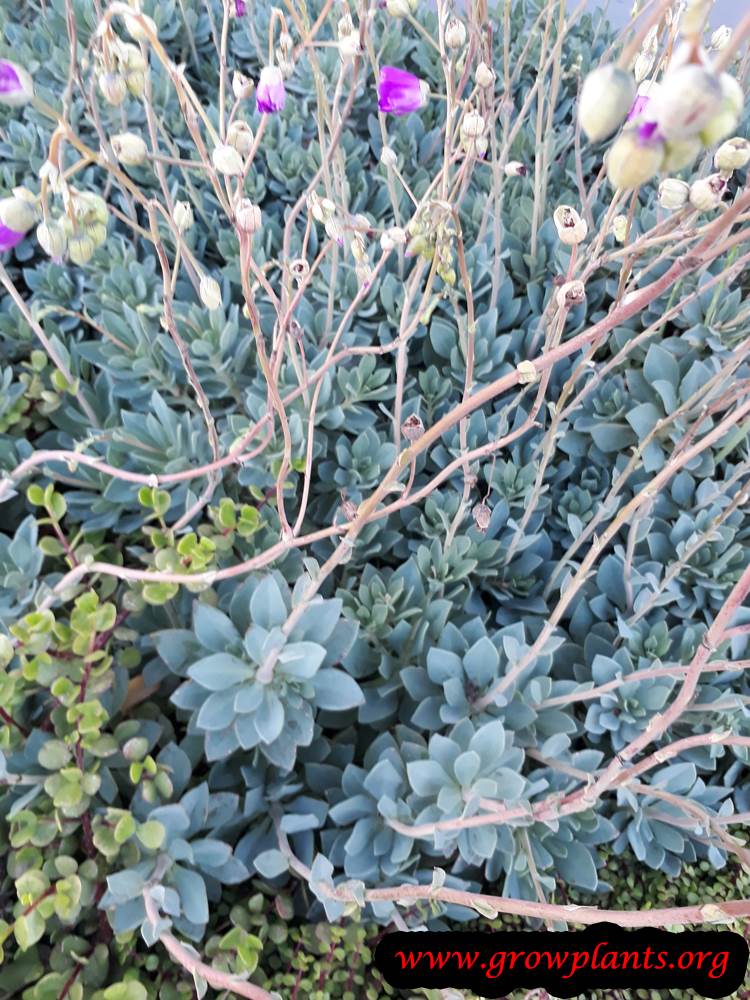
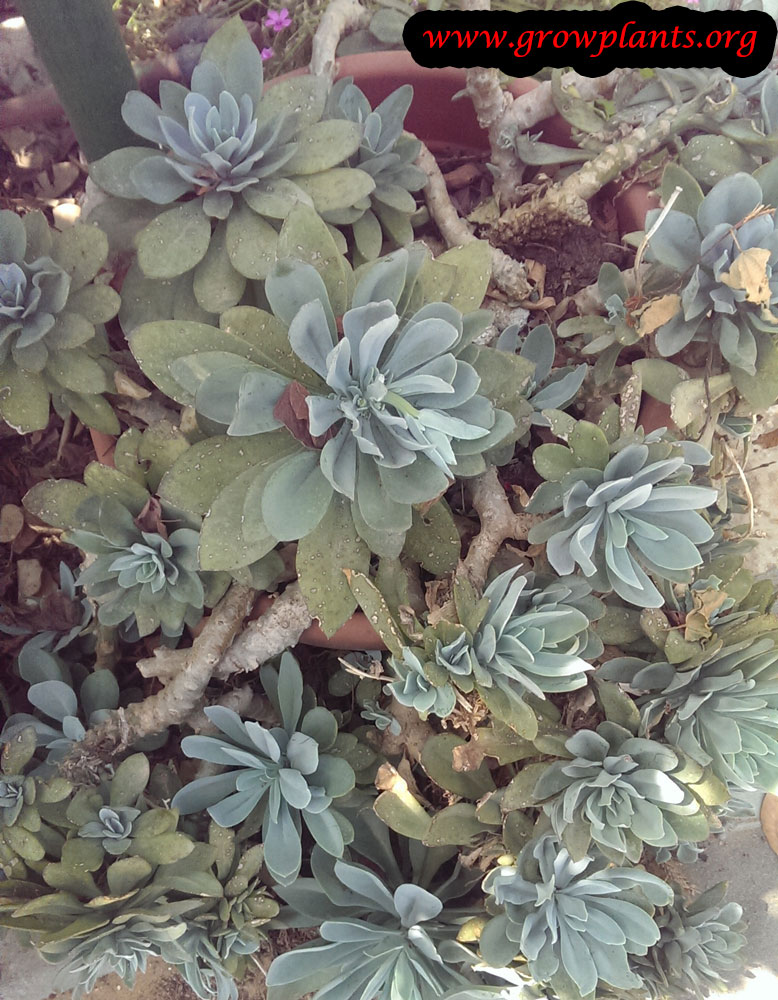
- Growth Habit & Form: Mounding succulent that forms rosette clumps, useful as a low groundcover.
- Lifespan & Maturity: Perennial that reaches flowering size within a season or two.
Anatomy & Physical Features
- Leaves & Foliage: Fleshy, blue-green, pointed-elliptic leaves arranged in rosettes.
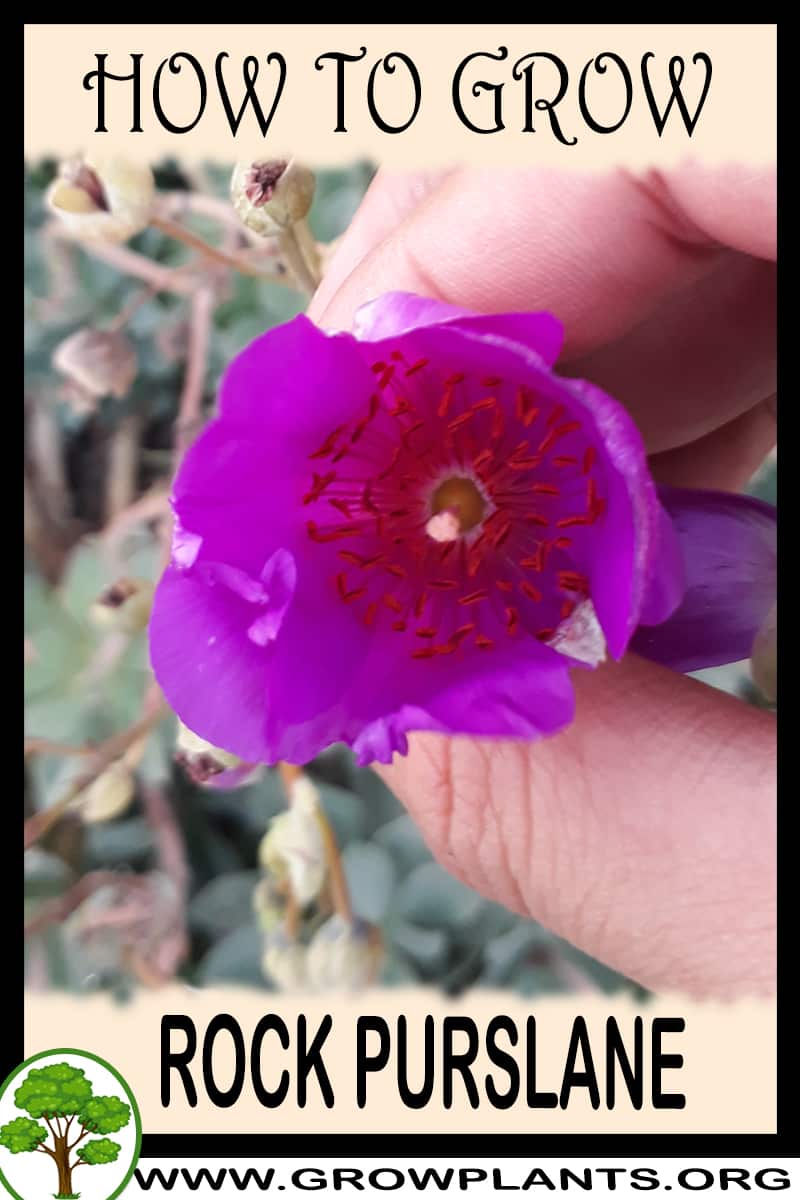
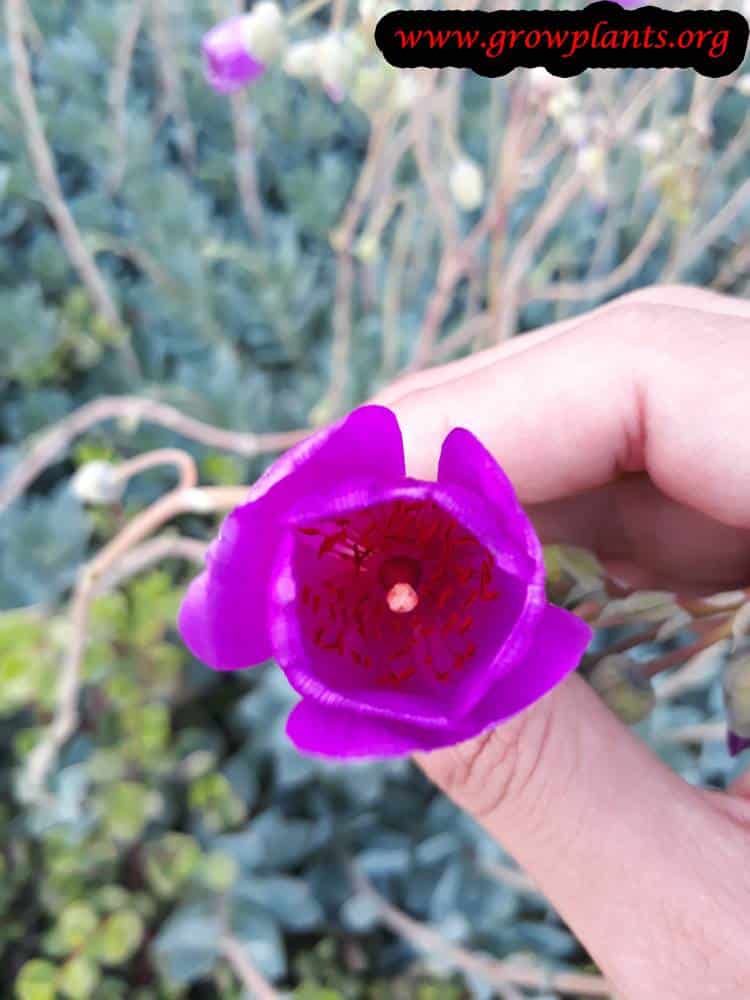
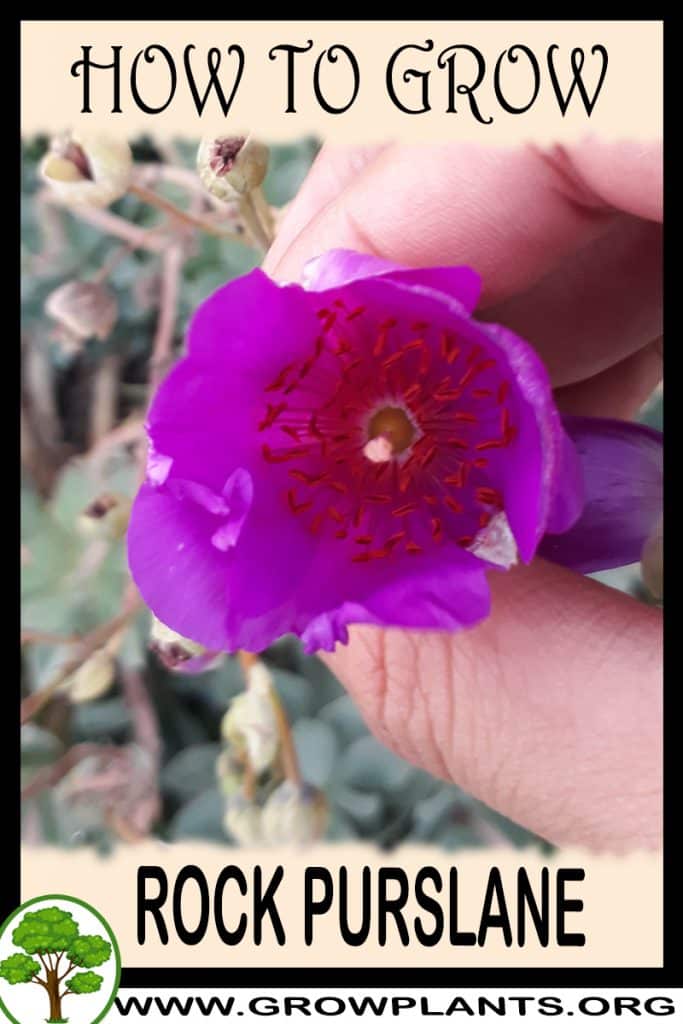
- Flower Characteristics: Bright magenta-purple, five-petalled, poppy-like flowers borne on tall stems over a long season.
Primary Uses & Landscape Value
- Functional & Ornamental Roles: Ornamental drought-tolerant groundcover, border and rock-garden plant.
Care Guide: Planting, Soil & Watering
Overview: A drought-loving evergreen perennial succulent for mediterranean, desert, subtropical and temperate gardens (hardiness zone 9-12) in full sun to light shade. It needs sharply drained soil and only light watering, storing moisture in its fleshy tissue.
Quick Care Requirements
| Requirement | Ideal Condition |
|---|---|
| Planting Season | Warm season (spring–autumn) |
| Growth Rate | Slow to Moderate |
| Soil Type | Well-drained, gritty |
| Water Need | Low – let the soil dry out between waterings |
Planting & Establishment
- Best Planting Season: Plant in the warm season, spring through autumn, so it establishes before cool weather.
- How to Plant:
- Hole Preparation: Dig a hole the width of the root ball; on heavy ground raise the bed or add grit so water drains fast.
- Soil Amendments: Skip rich compost – mix in coarse grit or sand to sharpen drainage instead.
- Planting Depth: Set the crown at soil level; planting too deep in damp soil invites rot.
- Growth Speed & Expectations: Slow to moderate growth into a low rosette-forming plant around 30-50 cm.
Soil, Watering & Drainage Care
- Soil Mix & Drainage Needs: Gritty, free-draining soil is essential; the main risk is waterlogging, which rots the fleshy roots.
- Watering Schedule & Technique:
- Young / Newly Planted: Water lightly to settle it in, keeping the soil just barely moist while roots form.
- Established: Once established water sparingly – a deep drink only when the soil has fully dried.
- Seasonal Adjustments: Give a little water in prolonged summer heat and none in wet winters.
Climate, Light & Hardiness
Rock Purslane is a drought-tolerant succulent subshrub suited to mediterranean, desert, subtropical, and temperate climates, thriving in full sun to half shade with minimal water. Its fleshy leaves give it strong heat and drought tolerance, though its cold tolerance is more moderate than its heat and dry-air tolerance.
Quick Climate Specifications
| Climate Zones | Mediterranean, desert, subtropical, temperate |
| USDA Hardiness Zones | 9–12 |
| Frost Tolerance | Low to Moderate |
| Light Conditions | Full Sun / Half Shade |
Sunlight & Light Exposure
Optimal Light Setup
Full sun to half shade, consistent with its drought-adapted, succulent nature.
Temperature Extremes & Hardiness
USDA Hardiness & Regional Limits
Zone 9–12 places it in warm-temperate to subtropical/desert territory; it is not a reliably cold-hardy plant outside this range.
Frost Sensitivity
As a fleshy-leaved succulent subshrub, frost tolerance is limited - typical of Calandrinia species, which favor heat and dry conditions over cold.
Extreme Heat Tolerance
Excellent - a genuinely drought-adapted plant suited to hot, dry mediterranean and desert summers.
Wind, Humidity & Microclimate
Dry-Air Tolerance
Very good; it is adapted to arid and semi-arid climates and needs only a small amount of water.
Rainfall & Seasonal Moisture
Needs well-drained soil and little supplemental moisture - excess winter wet, more than cold, is often the bigger risk for this succulent-type plant.
Microclimate Recommendations
Best in a well-drained, sunny spot typical of rock gardens or dry borders; avoid heavy, poorly-drained soils that stay wet.
Growing in Pots, Balconies & Indoors
Rock purslane (Calandrinia spectabilis) is a small sun-loving succulent (about 30-50 cm). It isn’t a true houseplant – the grower says no, because it needs far more direct sun than a room interior offers – but it grows very well in pots and is a natural for a hot, sunny windowsill, balcony or patio.
Quick Details
- Container Size: A small, wide pot suits its low, spreading habit; it likes to be a touch snug
- Indoor Suitability: Not a deep-room houseplant; needs a very sunny sill to do well
- Best Spot: Full sun (part shade at most) – the brightest position you have
- Soil & Drainage: Gritty, fast-draining cactus/succulent mix; sharp drainage is essential
- Watering in Pots: Little water – let the mix dry out between waterings; it rots if kept wet
Indoors & On the Windowsill
- Why not deep indoors: As a full-sun succulent it stretches and weakens in the low light of a room interior.
- Sunny sill works: On the brightest, sunniest windowsill it can be grown as a pot plant – the more direct sun, the better the form and flowering.
- Overwintering: Where winters are cold and wet, a pot lets you shelter it somewhere bright, dry and frost-free; keep it nearly dry while resting.
On a Balcony or Patio
- Light & heat: Ideal for a hot, sunny balcony; it revels in reflected warmth from walls and paving. Pots dry fast, which suits it – just don’t let it sit in trapped rainwater.
Choosing the Pot, Soil & Long-Term Care
- Pot & drainage: Plenty of drainage holes and no standing water in the saucer – the quickest cause of rot; terracotta is ideal as it breathes and dries fast.
- Potting mix: A gritty succulent mix – potting soil cut with plenty of perlite, pumice or coarse sand.
- Feeding: Feed only lightly in the growing season; these lean-soil plants need little.
- Repotting: Refresh the mix every couple of years; being short-lived, it is also easily renewed from seed or cuttings.
Fertilizing & Feeding
Rock purslane is a light feeder – this drought-adapted succulent needs only occasional, diluted, low-nitrogen feeding during active growth and none while resting.
Quick Fertilizing Specs
| Feeding Level | light |
|---|---|
| Main Nutrient Priority | Low-nitrogen feeding only during active growth |
| Best Feeding Period | Warm active growing months |
| Soil pH | Prefers well-drained soil and tolerates a wide pH range |
| Reduce/Stop Feeding | Stop feeding entirely once growth slows for the season |
Feeding by Growth Stage
Active Growing Season
Support steady growth and bloom without pushing soft, water-heavy growth on this drought-adapted succulent
| Nutrient direction | A light, low-nitrogen feeding is usually enough – this drought-adapted succulent does not need heavy nutrition |
|---|---|
| Timing | Warm active growing months, spring through summer |
| Frequency | An occasional light feeding through the growing season is usually enough |
| Fertilizer types | A diluted, low-nitrogen fertilizer formulated for succulents or cacti |
| Precautions | Avoid overfeeding, which can cause weak, leggy growth on this drought-adapted plant; always water well after feeding |
Dormant / Rest Period
Let the plant rest during its slow season without added nutrition
| Nutrient direction | None – withhold fertilizer while the plant is resting |
|---|---|
| Timing | Cooler months when growth slows |
| Frequency | No feeding at this stage |
| Fertilizer types | No feeding at this stage; resume light feeding when active growth returns |
| Precautions | Do not fertilize during this rest period; reduce watering instead |
Nutrient Deficiency Signs & Corrections
Weak, leggy stems with sparse flowering
| Possible causes | Excess nitrogen encouraging soft growth at the expense of flowering, Too little light causing stretching, Overwatering softening tissue |
|---|---|
| Appears first on | New stem growth |
| What to check | Recent feeding amount and frequency, Light exposure, Watering frequency and soil drainage |
| Possible correction | Reduce or pause feeding, move to fuller sun, and let soil dry between waterings |
Yellowing, mushy lower leaves and stem softening
| Possible causes | Root rot from waterlogged, poorly drained soil limiting nutrient uptake, Overwatering, Fertilizing on top of already wet soil |
|---|---|
| Appears first on | Lower leaves and stem base |
| What to check | Soil drainage and moisture level, Root firmness at the base, Recent watering and feeding timing |
| Possible correction | Improve drainage, let soil dry out, and resume only light feeding once healthy new growth appears |
Pale yellowing between veins on new leaves
| Possible causes | Iron deficiency linked to alkaline or waterlogged soil, High soil pH reducing micronutrient availability, Root stress limiting uptake |
|---|---|
| Appears first on | Newest leaves |
| What to check | Soil pH tendency and drainage, Whether yellowing is interveinal, Recent watering pattern |
| Possible correction | Improve drainage and correct soil pH; apply a chelated iron product per its label only if chlorosis persists |
Pruning, Training & Seasonal Maintenance
Rock Purslane is a succulent subshrub that tolerates light, frequent grooming year-round rather than a single seasonal overhaul. It flowers on new growth arising from the basal rosette, so cutting spent flower stems back does not sacrifice future bloom – it usually encourages more. The main long-term issue is legginess: the sprawling stems become bare and semi-woody at the base after a couple of seasons, so an occasional harder cutback is the tool for keeping the plant compact rather than any formal structural framework.
Quick Pruning & Maintenance Specs
| Pruning Tolerance | Moderate |
| Primary Pruning Window | Year-round light grooming; harder cutback in early spring before the Spring/Summer bloom flush |
| Typical Frequency | Deadhead through the bloom season; rejuvenation cutback every 1–2 years as it gets leggy |
| Main Objective | Compact habit and prolonged/renewed flowering |
| Young Plant Priority | Pinch growing tips lightly to build a bushier rosette; no hard cuts |
| Mature Plant Priority | Deadhead spent flower stalks; rejuvenate hard when stems sprawl and bare out at the base |
| Best Tool Type | Precision snips / bypass secateurs (soft, fleshy stems) |
| Avoid Heavy Pruning During | Peak summer heat/drought stress |
Pruning by Plant Age & Size
Newly Established
Remove only damaged or infected leaves; let the plant fill out before any shaping cuts.
Young / Formative
No structural training is needed – it is a low mounding rosette-former, not a plant with a trained framework. Pinch tips lightly to encourage a fuller, more floriferous mound.
Mature / Established
Deadhead continually through bloom; once the mound becomes sprawling, thin, and woody-based, cut it back hard to rejuvenate rather than trying to selectively tidy it.
Seasonal Pruning Schedule
Pre-Growth/Early-Spring
Objective: rejuvenation. Cut back leggy, bare-based growth from the previous season before the new Spring/Summer flower flush; this stimulates fresh basal growth and a fuller bloom display. Do not remove the entire rosette base – regrowth comes from remaining crown tissue.
Ongoing Sanitary
Remove spent flower stems and any infected/damaged leaves as they appear through the growing season; this is essentially continuous with normal deadheading.
Structural Pruning & Training
Renewal pruning is the only structural concern: as the subshrub ages its stems sprawl and become semi-woody and bare at the base, so periodically cutting the whole mound back hard renews it. There is no framework, leader, or trained form to maintain.
Special Growth to Remove
Spent flower stems (cut at the base once flowers fade, to tidy the plant and prompt new bloom stalks) and any infected or rotted leaves.
Container & Small-Space Pruning
Rock Purslane grows well in containers (it is not typically grown as an indoor houseplant, but does well in outdoor pots). In a container, deadhead more proactively and pinch tips to keep the mound compact, since a confined root run makes the plant more prone to looking sparse and leggy than one in open, well-drained ground.
Tools
Precision snips or bypass secateurs for deadheading and shaping – the stems are soft and fleshy, so no loppers or saw are ever needed.
Tool Hygiene & Disease Risk
Routine – clean, sharp snips are sufficient; no significant transmissible disease risk is documented for this species.
Cut Placement & Technique
Deadhead by cutting the flower stalk down to just above a leaf rosette or healthy side-shoot, not mid-stem, to avoid leaving a bare stub.
Heavy Pruning & Rejuvenation
Tolerated well: cut the whole plant back hard (to a few centimetres of live basal growth) in early spring when it becomes sprawling and woody. Expect a temporary gap in flowering while it regrows, followed by a fuller, more compact mound for the coming bloom season.
Post-Pruning Care
Water normally after a rejuvenation cut; avoid extra feeding, and keep the plant in full sun/half shade with well-drained soil as usual so regrowth doesn’t sit wet.
Common Pruning Mistakes
Letting the plant sprawl for years without ever cutting it back, which leads to a bare, woody, flower-poor centre; deadheading too high up the stem and leaving unsightly bare stalks; cutting back hard during peak summer heat or drought stress instead of early spring.
When NOT to Prune
Avoid a hard rejuvenation cut during summer heat/drought stress or immediately after transplanting; routine deadheading, however, can continue through the bloom season.
Recommended Tools (by task)
- Deadheading spent flower stalks (any age, thin stems) – precision_snips: clean small cuts on soft, fleshy stems without crushing them.
- Rejuvenation cutback of a leggy, mature mound – bypass_secateurs: enough cutting power for the slightly woody base stems without the bulk of loppers.
Propagation Guide
Rock Purslane is most commonly raised from seed, which reproduces the species reliably since this is not a named cultivar; stem cuttings are also easy and useful when a faster-flowering, identical clone is wanted. Overall propagation difficulty is Easy.
Quick Propagation Specs
| Best Propagation Method | Seed sowing |
| Alternative Methods | Stem/basal cuttings |
| Propagation Difficulty | Easy |
| Seed True-to-Type | Usually true-to-type |
| Vegetative True-to-Type | Yes |
| Best Propagation Season | Spring (seed); Spring–Summer (cuttings) |
| Seed Germination Time | Typically a few weeks under warm conditions |
| Cutting Rooting Time | Often roots within a few weeks |
| Germination Temperature | 18–24°C (64–75°F) |
| Seed Sowing Depth | Surface-sow or barely cover, as with many small-seeded succulents |
Growing from Seed
Seed Handling & Viability
Seed is small; no special drying or storage precautions are indicated beyond keeping it cool and dry until sowing.
Dormancy & Pre-Sowing Treatment
No pretreatment is typically needed.
Sowing Season
Spring.
Sowing Depth & Orientation
Surface-sow or just barely cover; no orientation needed.
Germination Conditions
Warm, bright conditions in a well-drained sowing mix kept lightly moist – avoid waterlogging, in keeping with this plant’s drought-tolerant nature.
Germination Time
Typically a few weeks.
Seedling Care
Let the surface dry slightly between waterings once seedlings are established, and pot on when several true leaves have formed.
Stem Cuttings
Cutting Type
Semi-succulent stem or basal tip cuttings.
Best Timing
Warmer months (spring through summer).
Cutting Preparation
As with many succulent-stemmed plants, letting the cut end callus briefly before inserting it can reduce the risk of rot.
Rooting Setup
A gritty, free-draining mix, watered sparingly until roots form.
Rooting Hormone
Optional – cuttings root readily without it.
Rooting Time
Often within a few weeks.
Bloom & Flower Guide
Quick Details
- Bloom Season: Spring through summer, and nearly year-round in mild, frost-free climates
- Flower Appearance: Vivid purple-magenta cup-shaped flowers with five satiny petals, held at the tips of tall, slender stems above the rosette
- Edibility: Ornamental — grown for its flowers, not eaten (the plant is not known to be toxic)
Detailed Blooming Overview
Rock Purslane is one of the most free-flowering succulents you can grow. The grower notes purple, five-petalled flowers carried at the ends of the stems through spring and summer. Each individual bloom is short-lived, but the plant produces them in long, generous succession, so a healthy clump can look as though it is in flower for months. The blooms open in bright sun and close again by late afternoon and on dull days.
Flower Characteristics
- Purple flowers borne at the end of the stem, with five petals (grower’s description).
- Petals are satiny and form a shallow, open cup around a boss of yellow stamens.
- The flower stems rise well clear of the blue-green rosette of foliage, waving above the plant.
Bloom Care & Thinning
- Light for flowering: Full sun brings the heaviest flush of bloom; in shade the plant makes leaves but few flowers.
- Deadheading: Snip away spent flower stems at the base to keep the plant tidy and to encourage a steady flow of fresh buds.
- Watering while in bloom: This is a drought-adapted succulent — keep it on the dry side even in flower, as soggy soil quickly leads to rot.
Bloom Health & Protection
- Aphids sometimes gather on the soft flower stems and buds — a firm jet of water or a little insecticidal soap usually clears them.
- In cool, damp spells grey mould (botrytis) can spot the open blooms — improving airflow and keeping water off the flowers is the best prevention.
Pests, Diseases & Troubleshooting
Overview: Rock purslane is a fleshy, sun-loving succulent (Montiaceae) with very few pests; its real enemies are molluscs that graze the soft foliage and rot from wet, cold soil. Grown lean, sunny and sharply drained it is easy and largely self-reliant.
Quick Troubleshooting Overview
| Issue / Pest | Main Symptom | Primary Solution |
|---|---|---|
| Slugs & snails | Ragged holes and slime on fleshy leaves | Iron-phosphate bait, grit, hand-pick |
| Aphids | Clusters on flower stalks, honeydew | Water jet, insecticidal soap |
| Mealybugs | White cottony tufts in crown and roots | Alcohol swab, soap/oil |
| Spider mites | Fine stippling in hot dry air | Hose off, oil/soap |
| Stem & root rot | Soft, mushy, collapsing base | Ease watering, sharp drainage, remove rot |
| Botrytis on flowers | Grey mould on blooms in damp weather | Remove spent flowers, airflow |
Common Pests & Management
- Slugs & snails (Deroceras, Helix spp.):
- Symptoms: The main pest: ragged holes, shredded fleshy leaves and grazed seedlings, with tell-tale slime trails, especially after rain or in damp shade.
- Prevention & Control: Hand-pick after dark, remove hiding places, and ring plants with grit, copper tape or iron-phosphate bait, which is safe around pets and wildlife.
- Aphids (Aphis spp.):
- Symptoms: Green, grey or black clusters on the tall flower stalks and buds, with honeydew and distortion.
- Prevention & Control: Rinse off with water, encourage ladybirds and lacewings, and use insecticidal soap for stubborn colonies, keeping open flowers clear for bees.
- Mealybugs (Pseudococcus / Planococcus spp.):
- Symptoms: White cottony tufts in the crown, leaf axils and around the roots, with honeydew and stalled growth.
- Prevention & Control: Dab with rubbing alcohol, rinse, and treat with insecticidal soap or light horticultural oil; inspect roots at repotting and isolate new plants.
- Spider mites (Tetranychus spp., occasional):
- Symptoms: Fine stippling and faint webbing in hot, dry, sheltered conditions, mainly on stressed or pot-grown plants.
- Prevention & Control: Hose down foliage and raise humidity slightly; horticultural oil or insecticidal soap controls outbreaks.
Diseases & Fungal Issues
- Stem, crown & root rot (Pythium, Botrytis, wet-soil fungi):
- Symptoms: Soft, brown or black mushy tissue at the base, collapsing stems and rosettes, and a plant that pulls away easily – almost always from overwatering, wet winters, or heavy soil.
- Treatment & Management: This is the main killer and is preventable: grow in gritty, sharply drained soil, water sparingly, and keep the crown dry, especially in cool weather. Cut out all rotted tissue back to firm growth and re-root healthy cuttings in dry mix.
- Botrytis grey mould (Botrytis cinerea):
- Symptoms: Fuzzy grey mould on spent flowers and soft tissue in cool, damp, still conditions, which can spread into healthy growth.
- Treatment & Management: Remove spent flowers and affected tissue promptly, improve air movement, and avoid overhead watering; the plant is prolific-flowering so regular deadheading also reduces mould.
Growing Difficulties & Abiotic Problems
- Overwatering / wet-cold rot:
- Cause & Symptoms: Yellowing, swollen translucent leaves and a soft, rotting base – the most common problem, since the plant stores its own water and resents wet feet.
- Correction Strategy: Let the soil dry well between waterings, grow in sandy, sharply drained or cactus-type mix, and keep it on the dry side through cool, wet periods.
- Etiolation / poor flowering in shade:
- Cause & Symptoms: Stretched, floppy, pale growth and few of its signature magenta flowers in too little light.
- Correction Strategy: Grow in full sun; strong light keeps it compact and flowering freely over a long season.
- Frost damage:
- Cause & Symptoms: Blackened, mushy foliage after hard frost, as it is only lightly frost-tolerant.
- Correction Strategy: Protect or grow in containers that can be moved in cold climates; plants often reshoot from the base or self-sown seedlings after mild frost.
What Helps – Products & Tools
Because rock purslane is nearly pest-free, the shortlist is small: iron-phosphate slug bait and grit barriers for molluscs, insecticidal soap for the occasional aphid, mite or mealybug, and – most importantly – a gritty, free-draining succulent mix with restrained watering to prevent the rot that is its chief risk.