Plant Profile & Key Characteristics
Overview: A bulbous, herbaceous perennial of the genus Pancratium (sea daffodil) growing 30-60 cm tall, with strappy grey-green leaves and fragrant white flowers. Evergreen or summer-deciduous, it is grown as an ornamental for sandy, coastal-style gardens.
Quick Specifications
| Specification | Attribute |
|---|---|
| Plant Type / Life Cycle | Perennial (bulbous geophyte) |
| Foliage Type | Evergreen or summer-deciduous |
| Mature Size | 30-60 cm (12-24 in) tall |
| Growth Rate | Moderate to slow |
| Root System | Bulbous geophyte |
| Toxicity | Toxic – bulbs contain poisonous alkaloids (Amaryllidaceae) |
| Hardiness | USDA zones 7-10 |
Growth Form & Structure
- Height & Spread: 30-60 cm (12-24 in); suits sandy borders and containers.
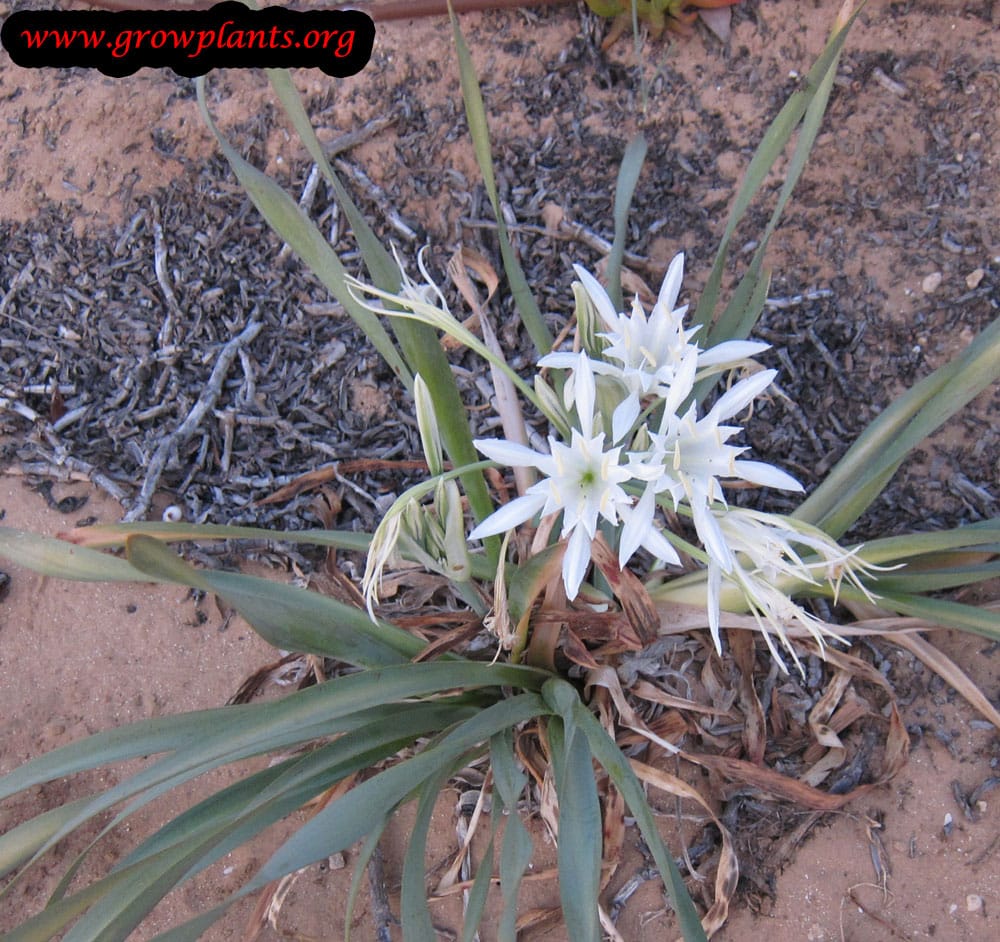
- Growth Habit & Form: Clump-forming bulbous geophyte.
- Lifespan & Maturity: Long-lived perennial that returns from its bulb each season.
Anatomy & Physical Features
- Leaves & Foliage: Grey-green, linear leaves that curl toward the tips.
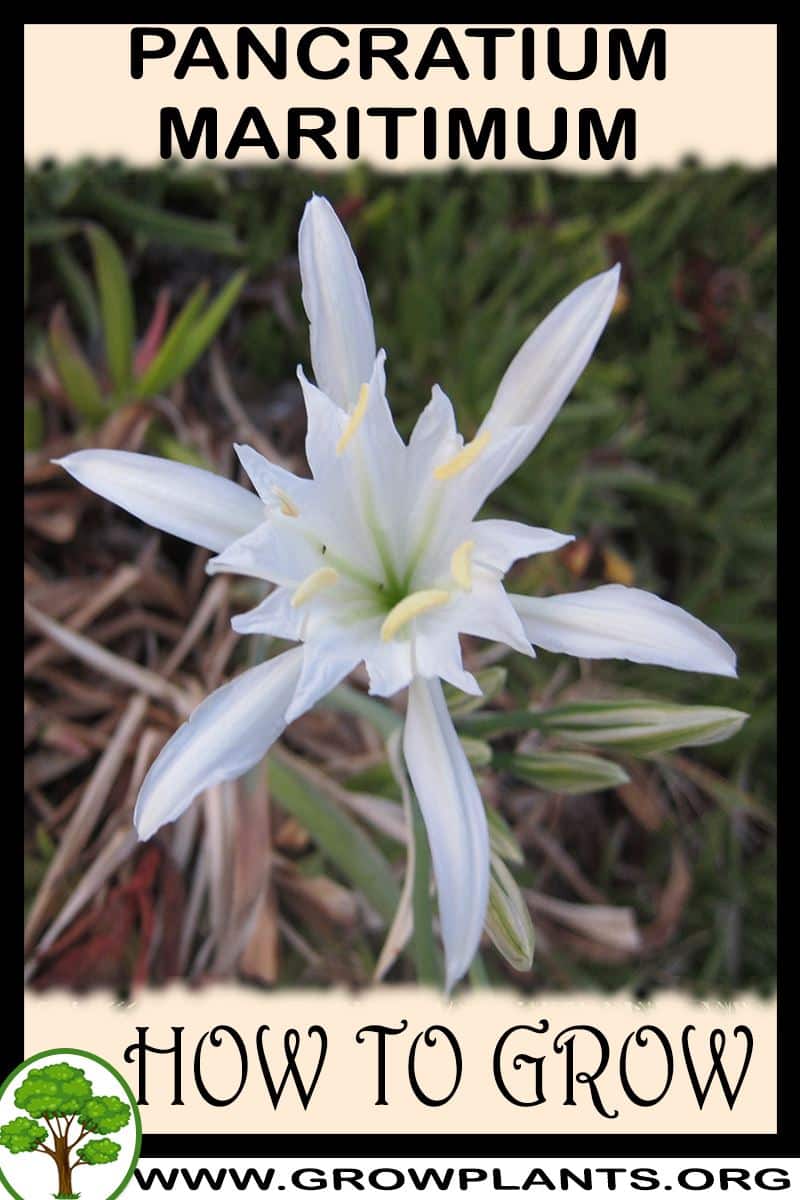
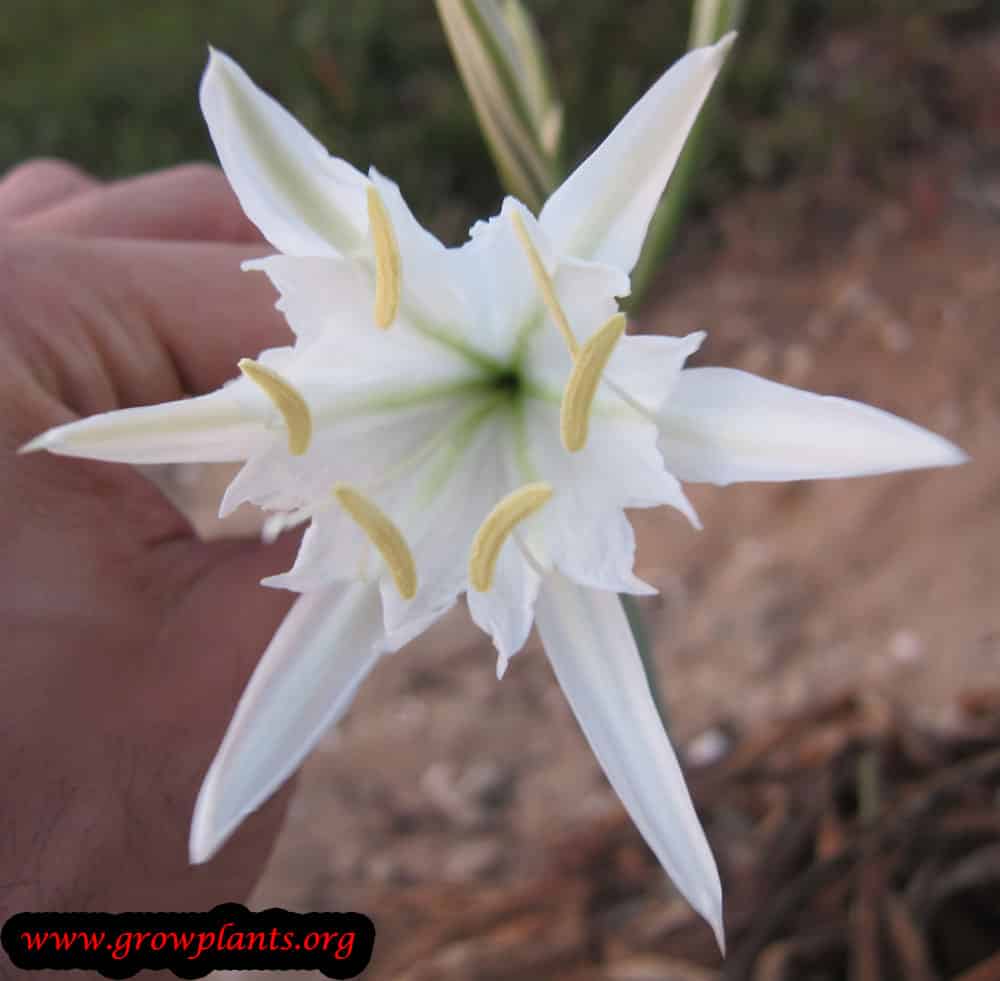
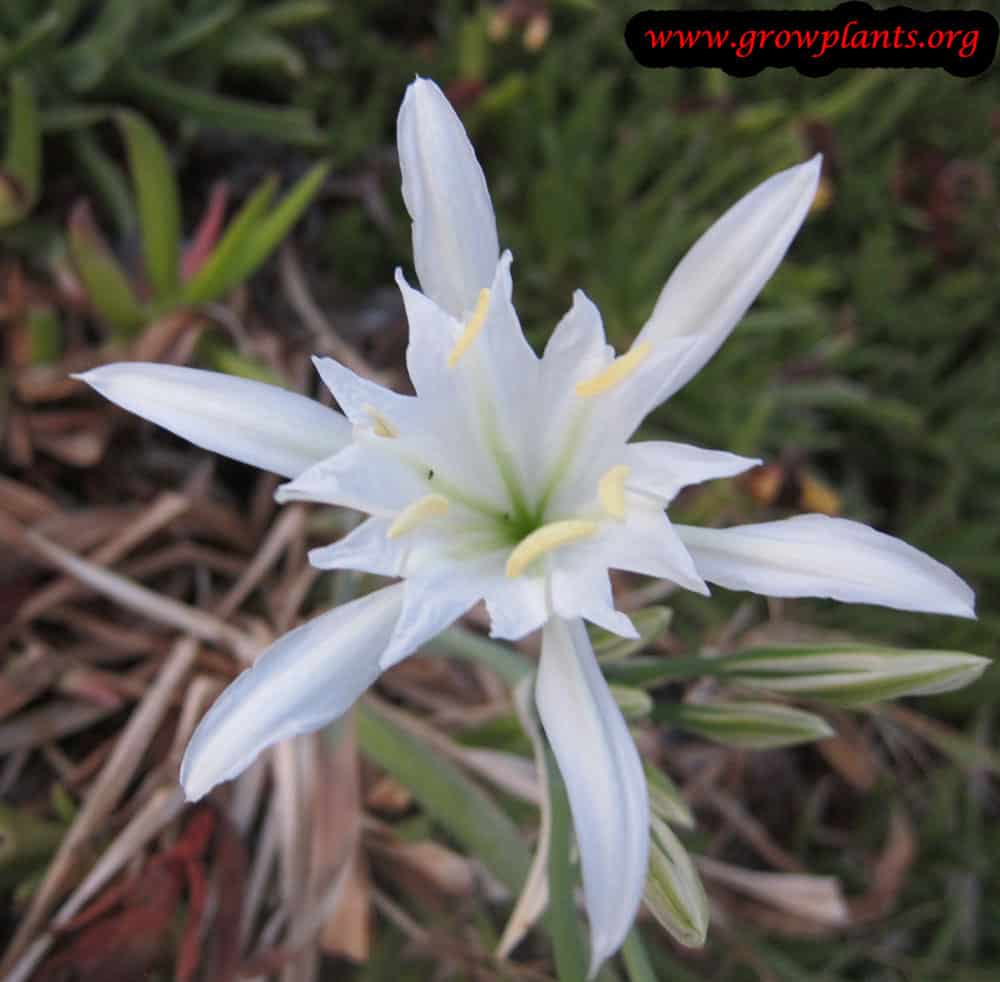
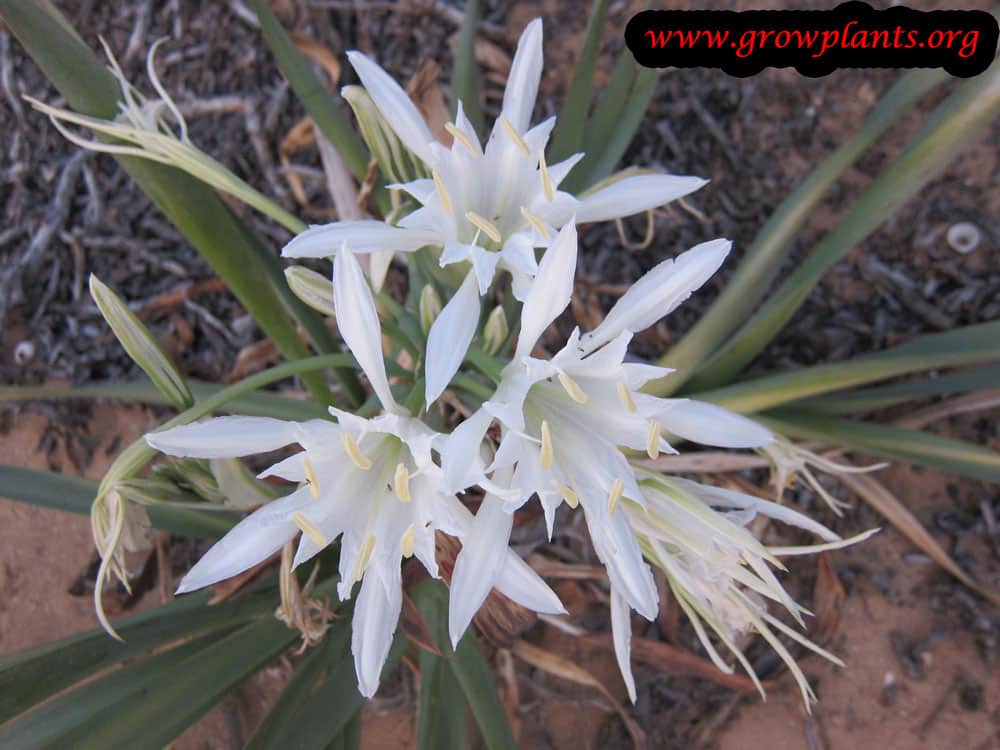
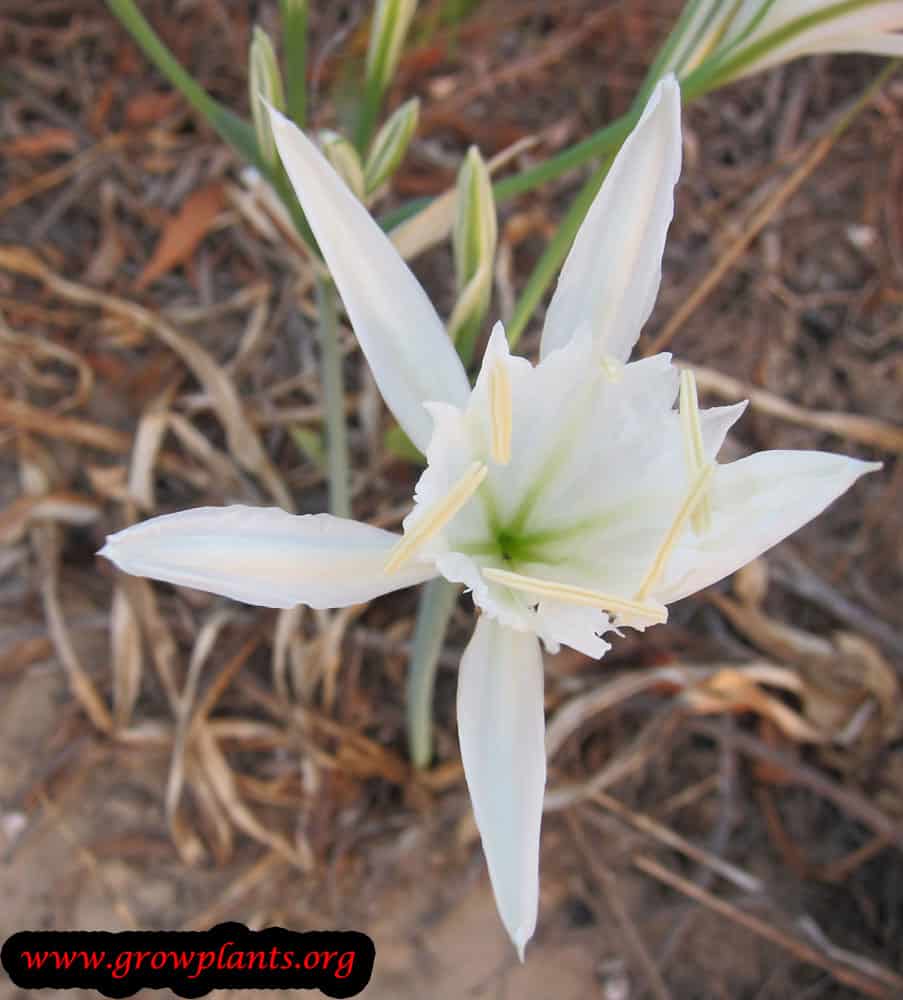
- Flower Characteristics: Fragrant white flowers with six outer petals and a bell-shaped central cup, clustered at the top of the stem.
Primary Uses & Landscape Value
- Functional & Ornamental Roles: Fragrant ornamental for sandy, coastal and container plantings; also has traditional medicinal uses.
Care Guide: Planting, Soil & Watering
Overview: Sea daffodil is a Mediterranean coastal bulb that thrives in full sun and sandy, sharply draining soil, tolerating drought and salt. It needs very little water and rots in heavy, wet ground.
Quick Care Requirements
| Requirement | Ideal Condition |
|---|---|
| Planting Season | In late summer to autumn, before winter growth |
| Growth Rate | Slow to moderate |
| Soil Type | Sandy, sharply draining |
| Water Need | Low; drought tolerant |
Planting & Establishment
- Best Planting Season: Plant the bulbs from summer into autumn so they root before the cool season. It naturalises readily in sandy soil and can be invasive, so site it where spread is welcome.
- How to Plant:
- Hole Preparation: Plant the bulbs in loose, sandy soil; no rich preparation is needed.
- Soil Amendments: Add coarse sand or grit if the soil is heavy; the key is fast drainage.
- Planting Depth: Plant the bulb deep in sandy soil, with the neck well below the surface as suits this coastal dune species.
- Growth Speed & Expectations: A slow-to-moderate bulb reaching about 30-60 cm and spreading over time.
Soil, Watering & Drainage Care
- Soil Mix & Drainage Needs: Needs gritty, free-draining, sandy soil; in pots use a sandy bulb mix with excellent drainage.
- Watering Schedule & Technique:
- Young / Newly Planted: Water lightly after planting to settle the bulb, then only sparingly.
- Established: Water sparingly during active growth; keep dry when dormant.
- Seasonal Adjustments: Little to no water in summer dormancy; natural rainfall usually suffices.
Climate, Light & Hardiness
Pancratium maritimum, the true sea daffodil, is a beach-dune specialist naturally adapted to sandy, salt-exposed coastal sites within Mediterranean and subtropical climates, roughly zone 7–10; it needs full sun, very well-drained sandy soil, and relatively little water.
Quick Climate Specifications
| Climate Zones | Mediterranean, subtropical (coastal) |
|---|---|
| USDA Hardiness Zones | Approximately 7–10 |
| Light Conditions | Full sun |
| Salt / Coastal Tolerance | High - a natural sand-dune species |
Temperature Extremes & Hardiness
USDA Hardiness & Regional Limits
Hardy roughly zone 7–10.
Wind, Humidity & Microclimate
Coastal / Salt Tolerance
As a species that grows naturally on coastal sand dunes, it copes with salt spray and sandy, wind-exposed sites better than most bulbs.
Dry-Air Tolerance
Low water need and a sandy-soil preference point to good tolerance of dry conditions.
Growing in Pots, Balconies & Indoors
Pancratium is a sun-loving coastal bulb, not a houseplant – the grower confirms it will not grow indoors as one. It does grow well in pots, though, so it makes a fine plant for a hot, sunny patio or balcony where its free-draining, gritty roots can bake.
Quick Details
- Container Size: A medium, free-draining pot of about 3-5 L (0.7-1.3 gal); plant several bulbs together with the necks near the surface
- Indoor Suitability: Not a houseplant – it needs full sun and a dry dormant rest that a room cannot give; at most a very bright, hot windowsill
- Best Spot: Full sun, sheltered and warm – a south-facing patio or balcony
- Soil & Drainage: Very sharp drainage – a sandy, gritty mix; never waterlogged
- Watering in Pots: Water sparingly in growth and keep almost dry during summer dormancy
Indoors & On the Windowsill
- Houseplant limits: The grower marks it as not suited to indoor life; without strong direct sun it will not flower and the bulb rots in damp, low-light air.
- Windowsill option: Only a very bright, hot windowsill comes close, and even then it needs a dry rest period – treat any indoor spell as temporary.
- Overwintering: In cold-winter climates lift and pot the bulbs and keep them frost-free and dry through dormancy – a good reason to grow it in a movable container.
On a Balcony or Patio
- Light & wind: Give it the sunniest spot you have. On an exposed balcony, walls and railings reflect heat and wind dries pots quickly, so check moisture often and shelter or stake taller growth.
- Coastal by nature: It thrives on heat and reflected warmth from walls and paving, so a bright, breezy balcony suits it – just keep the mix on the dry side.
Choosing the Pot, Soil & Long-Term Care
- Pot & drainage: A 3-5 L pot with excellent drainage. Use strong drainage holes and skip a standing water saucer, which invites root rot; terracotta breathes and dries fast, while glazed or plastic pots hold moisture longer.
- Potting mix: A gritty, sandy free-draining mix – add plenty of coarse sand or grit to potting compost.
- Feeding: Feed lightly only while in active leaf; stop as the bulb heads into its dry dormancy.
- Repotting: Repot every couple of years when dormant, refreshing the gritty mix and spacing crowded bulbs.
Fertilizing & Feeding
A light feeder adapted to lean coastal sand; a modest feeding program supports the fragrant flowers without pushing unnatural lushness.
Quick Fertilizing Specs
| Feeding Level | Light feeder |
|---|---|
| Main Nutrient Priority | Balanced feeding with adequate nitrogen for the gray-green foliage and fragrant white flowers |
| Best Feeding Period | From new leaf emergence through the end of flowering |
| Organic Options | Compost or well-rotted organic matter worked into sandy soil at planting |
| Reduce/Stop Feeding | Stop as the foliage yellows and dies back after flowering |
| Micronutrients | Usually adequate from a complete fertilizer; correct only a confirmed deficiency |
| Soil pH | Wide tolerance in well-drained sandy soil; drainage matters more than exact pH |
Feeding by Growth Stage
Leaf emergence through fragrant bloom
Support the curled gray-green leaves and clustered white fragrant flowers of this dune-adapted bulb.
| Nutrient direction | A balanced fertilizer with modest nitrogen; this sand-dune species is naturally suited to lean conditions and does not need rich feeding. |
|---|---|
| Timing | From when new leaves emerge through flowering, and while the foliage stays green afterward. |
| Frequency | A single light feeding at the start of growth is usually enough, with a light follow-up feeding as flower stalks form. |
| Fertilizer types | A balanced complete fertilizer used sparingly, Compost worked into sandy soil at planting |
| Precautions | Keep feeding light – this species spreads readily by seed and offset, and rich feeding may only encourage that invasive tendency. |
Post-bloom foliage dieback
Allow the bulb to store energy and enter dormancy undisturbed.
| Nutrient direction | None – withhold fertilizer once flowering ends and the foliage begins to yellow. |
|---|---|
| Timing | After flowering, once the strap-like leaves begin to yellow and collapse. |
| Frequency | No feeding at this stage. |
| Fertilizer types | No feeding at this stage; let the foliage die back naturally before dormancy. |
| Precautions | Do not fertilize during dieback; a bulb shutting down for dormancy cannot use the nutrients and salts may accumulate instead. |
Nutrient Deficiency Signs & Corrections
Foliage is pale and undersized and overall vigor lags behind neighboring clumps.
| Possible causes | low available soil nitrogen, very lean, fast-draining sandy soil, leaching after heavy rain or irrigation |
|---|---|
| Appears first on | older leaves first |
| What to check | recent feeding history, soil organic matter content, rainfall and drainage pattern |
| Possible correction | Work in a modest balanced fertilizer and add organic matter to improve nutrient retention in the sand. |
Interveinal yellowing shows on older leaves while the veins themselves stay green.
| Possible causes | low soil magnesium, rapid leaching in sandy, well-drained soil, heavy potassium feeding competing with magnesium uptake |
|---|---|
| Appears first on | older, lower leaves |
| What to check | soil magnesium status, how potassium-heavy recent feeding has been, soil texture and drainage |
| Possible correction | Apply a labeled magnesium source such as Epsom salt and rebalance the overall feeding program. |
Leaf tips and margins brown or scorch despite adequate watering.
| Possible causes | fertilizer salt buildup from over-feeding, under-watering that concentrates salts near the roots, poor flushing in container-grown plants |
|---|---|
| Appears first on | leaf tips and margins |
| What to check | recent feeding amounts, container drainage if potted, watering consistency |
| Possible correction | Ease off feeding, water thoroughly to flush accumulated salts, then return to light feeding only. |
Pruning, Training & Seasonal Maintenance
Pancratium maritimum, the sea daffodil, is a coastal-dune bulb that keeps leaves for much of the year and blooms across an unusually long spring–autumn window, so maintenance is ongoing light grooming rather than one fixed seasonal cutback. As with the genus generally, it is noted as an invasive spreader, so part of routine care is controlling its increase by thinning surplus bulb offsets alongside the usual removal of old leaves and spent flower stems.
Quick Pruning & Maintenance Specs
| Pruning Tolerance | Low – no structural cuts; ongoing old-leaf and spent-stem removal only |
| Primary Pruning Window | All year, as individual leaves/stems decline |
| Secondary Maintenance Window | Spring through autumn, as each flower stem finishes blooming |
| Typical Frequency | Light, as-needed grooming through the year |
| Main Objective | Tidy appearance and control spread, given its noted invasive habit |
| Young Plant Priority | None – let new plantings establish before cutting |
| Mature Plant Priority | Ongoing old-leaf/spent-stem removal, plus periodic offset thinning |
| Best Tool Type | Precision snips |
| Avoid Heavy Pruning During | Active flowering, given the extended spring–autumn bloom window |
Pruning by Plant Age & Size
Newly Established
Remove only damaged or broken planting stock; let the bulb settle into its typically sandy, well-drained site before any cutting.
Young / Formative
No structural training applies – herbaceous rosette growth from a bulb.
Mature / Established
Ongoing removal of old or damaged leaves and spent flower stems; periodic offset thinning to keep spread in check, especially in garden settings away from its natural dune habitat.
Structural Pruning & Training
As with the genus, the relevant task is spread control rather than shaping: thin surplus bulb offsets periodically given the species’ noted invasive tendency in cultivation.
Seasonal Pruning Schedule
Post-Flowering
Objective: limit self-seeding across its long spring–autumn bloom period. Remove each flower stem once it has individually finished blooming; leave stems still in bud or flower.
Ongoing Sanitary
Remove individual old, damaged, or fully dead leaves as they occur, since foliage persists for much of the year rather than dying back all at once.
Special Growth to Remove
- Spent flower stems, removed once each has finished blooming, to limit seed spread.
- Old, damaged, or fully dead leaves, removed as they occur.
- Surplus bulb offsets, thinned periodically to control spread.
Container & Small-Space Pruning
Suits a planter with sandy, free-draining mix mimicking its coastal habitat; a container also naturally limits its spread. Watch for offsets crowding the pot and divide out surplus bulbs as needed.
Tools
Precision snips for ongoing leaf and spent-stem removal; a garden spade only when lifting/dividing offsets. No loppers, saws, or hedge shears for this soft-leaved bulb.
Tool Hygiene & Disease Risk
Routine: the noted pest is snails rather than a tool-transmissible disease, so clean sharp tools are sufficient.
Cut Placement & Technique
Cut each spent flower stem at its base once fully finished blooming. Remove individual old leaves at the base with a clean cut rather than tearing.
Heavy Pruning & Rejuvenation
Not applicable in the woody sense; there is no framework to hard-prune. Where a planting has spread too far, lift and divide/remove surplus offsets rather than attempting any hard cutback.
Post-Pruning Care
No special watering change after light, ongoing grooming, beyond this species’ general preference for a dry, well-drained site; water in after any offset division to re-establish roots.
Common Pruning Mistakes
- Letting spent flower stems set seed across the long bloom season, accelerating unwanted spread.
- Never thinning offsets in garden settings, letting the clump overrun neighboring plantings.
- Removing leaves while still green instead of waiting for individual decline.
When NOT to Prune
Not while a stem is still in bud or flower, especially given the extended bloom period; avoid heavy offset division during active flowering.
Recommended Tools (by task)
- precision_snips – ongoing removal of old leaves and spent flower stems.
- garden_spade – lifting/dividing surplus bulb offsets to control this species’ noted invasive spread.
Propagation Guide
Sea daffodil grows readily from seed, matching its natural habit of self-seeding along sandy shorelines, so the site’s note that vegetative propagation is not required is well supported. Its seed has a corky, buoyant coat that lets it float and disperse in seawater, so seed can also be collected and floated in water briefly before sowing to check viability. Bulb offsets are a true-to-type alternative; overall propagation difficulty is Easy to Moderate.
Quick Propagation Specs
| Best Propagation Method | Seed |
| Alternative Methods | Division of bulb offsets |
| Propagation Difficulty | Easy to Moderate |
| Seed True-to-Type | Usually true-to-type |
| Vegetative True-to-Type | Yes |
| Best Propagation Season | Seed sown as it ripens or held cool and dry to sow the following season; bulb offsets separated at planting time (site notes summer / autumn / winter as the planting season) |
| Seed Germination Time | Several weeks to a few months, can be irregular |
| Germination Temperature | Around 18–24°C (64–75°F) |
| Seed Sowing Depth | Shallow, lightly covered, in sandy free-draining mix |
Growing from Seed
Seed Handling & Viability
Collect seed once capsules ripen; the seed coat is corky and light, an adaptation for floating dispersal along beaches, so sound seed can sometimes be sorted by whether it floats.
Sowing Season
Sow as seed becomes available, or hold cool and dry over winter and sow the following season.
Sowing Depth & Orientation
Sow shallowly in a sandy, sharply free-draining mix that mimics its native dune habitat.
Germination Conditions
Warm, free-draining conditions around 18–24°C (64–75°F); germination can be slow and uneven.
Seedling Care
Grow seedlings on in sandy, free-draining soil; expect several seasons before young bulbs reach flowering size.
Division, Offsets, Pups & Suckers
Established clumps form small daughter bulbs at the base of the mother bulb. Lift and separate these at planting time, keeping roots attached where possible, and replant promptly in sandy, free-draining soil.
Bloom & Flower Guide
Quick Details
- Bloom Season: Spring, summer and autumn
- Time to First Bloom: A year or two while the bulb establishes
- Flower Appearance: Large white fragrant flowers with six outer petals and a central bell-like cup, several to a stem
- Edibility: Not edible – the bulb and plant contain toxic alkaloids
Detailed Blooming Overview
This coastal sea daffodil produces beautiful white, fragrant flowers in clusters at the top of the stem, each with six spreading outer segments around a bell-shaped inner cup. The scent is strongest at night, when the blooms are visited by hawk moths.
Flower Characteristics
- White, fragrant flowers with six outer petals and a bell-shaped inner corona.
- Borne in groups at the top of the stem; night-scented.
Bloom Care & Thinning
- After flowering: Leave the foliage to die back to feed the bulb, and avoid disturbing established clumps.
- Handling: Treat the bulbs and sap with care, as the plant is toxic.
Pests, Diseases & Troubleshooting
Overview: Pancratium (sea daffodil / sea lily) is a bulbous amaryllid, and its pest profile is that of the daffodil clan: bulb-boring flies and mites below ground, and – most notably for this genus – the lily/amaryllis borer caterpillar (Brithys crini), which mines the strappy leaves. Snails and slugs graze seedlings and foliage. Diseases are the bulb rots (Fusarium basal rot) and Botrytis ‘smoulder’. As a true coastal dune plant, it demands sandy, sharply drained soil and is the textbook host of the lily borer caterpillar. Sharp drainage is the master key.
Quick Troubleshooting Overview
| Issue / Pest | Main Symptom | Primary Solution |
|---|---|---|
| Lily/amaryllis borer | Caterpillars tunnelling and mining leaves; leaves collapse | Handpick; Bt or spinosad; cut out mined tissue |
| Snails & slugs | Grazed, holed leaves and slime trails | Handpick at night; barriers; iron-phosphate bait |
| Narcissus bulb fly | Soft, rotting bulbs; grub inside; no growth | Discard soft bulbs; firm soil around necks; hot-water treat |
| Bulb mites | Soft, rotting bulbs; often follows other damage | Discard infested bulbs; keep bulbs dry & healthy |
| Basal rot | Bulb rots from base up; yellowing foliage | Discard rotted bulbs; free-draining soil; dry dormancy |
| Non-flowering | Leaves only, no blooms | Sun, sharp drainage, don’t disturb; feed after flowering |
Common Pests & Management
- Lily / amaryllis borer (Brithys crini):
- Symptoms: Boldly banded black-and-yellow caterpillars that mine inside the leaves then chew them from the outside, leaving translucent windows, tunnels, and collapsing, shredded foliage – a signature pest of sea daffodil and its amaryllid relatives.
- Prevention & Control: Inspect leaves regularly and handpick caterpillars and egg clusters; cut out and destroy mined leaf sections. Spray Bacillus thuringiensis (Bt) or spinosad on young larvae, and encourage birds and parasitic wasps. Repeated inspection through the growing season keeps them from destroying the clump.
- Snails and slugs (Gastropoda):
- Symptoms: Ragged holes, grazed margins, and slime trails on leaves and emerging shoots, worst in damp weather and on seedlings, which can be eaten to the ground.
- Prevention & Control: Handpick after dark, clear hiding places, and keep the surface dry. Use grit, copper barriers, or iron-phosphate bait around vulnerable plants; beer traps help in the open garden.
- Narcissus bulb fly (Merodon equestris):
- Symptoms: A single fat grub tunnels into the bulb, hollowing and rotting it; the plant fails to emerge or produces only thin, grassy leaves, and the bulb feels soft.
- Prevention & Control: Discard soft, infested bulbs, firm the soil around the necks after foliage dies down to deny egg-laying females access, and mound soil or use mesh over the necks. Hot-water treatment of dormant bulbs (as for narcissus) controls it in valued stock.
- Bulb and mites (Rhizoglyphus / Steneotarsonemus spp.):
- Symptoms: Tiny mites infesting soft, damaged, or already-rotting bulbs, hastening breakdown and often following bulb-fly or rot damage; scaly, crumbly, rotten bulb tissue.
- Prevention & Control: Plant only firm, clean bulbs, keep stored bulbs cool and dry, and discard any that are soft. Good drainage and healthy, unwounded bulbs are the best defence, as mites exploit tissue already compromised.
- Mealybugs (Pseudococcus spp.):
- Symptoms: White cottony tufts at the leaf bases and neck of the bulb, mostly on container or indoor plants, with sticky honeydew and weakened growth.
- Prevention & Control: Wipe off with a cotton bud of rubbing alcohol and treat with insecticidal soap or horticultural oil at the leaf bases; check the bulb neck at repotting.
Diseases & Fungal Issues
- Basal rot (Fusarium oxysporum):
- Symptoms: The bulb rots from the base plate upward, turning soft, brown, and chocolate-coloured inside; foliage yellows early and the plant collapses – worst in warm, wet, poorly drained soil.
- Treatment & Management: Plant only firm bulbs in sharply drained, sandy soil, avoid waterlogging and summer irrigation of dormant bulbs, and do not damage bulbs when lifting. Discard rotted bulbs and the surrounding soil; a fungicide bulb dip helps protect valued stock.
- Narcissus smoulder / Botrytis (Botrytis narcissicola / B. cinerea):
- Symptoms: Brown rotting patches and grey fuzzy mould on leaves and flowers in cool, damp, still weather, with spotting and collapse of foliage; sclerotia can carry over on old debris.
- Treatment & Management: Remove faded flowers and dead foliage, improve airflow, and avoid overhead watering. Clear debris where spores overwinter; a protective fungicide helps in persistently wet springs, but sanitation and drainage are primary.
- Leaf scorch / red blotch (Stagonospora / Peyronellaea spp.):
- Symptoms: Reddish-brown scorched tips and blotches on emerging leaves and flower stalks, most obvious in wet spring weather; disfiguring but rarely fatal.
- Treatment & Management: Cut off and destroy affected foliage, improve drainage and airflow, and avoid wetting leaves. Copper-based fungicides give some protection where the disease recurs on cherished plants.
Growing Difficulties & Abiotic Problems
- Wet-soil / drainage rot
- Cause & Symptoms: Soft, rotting bulbs and yellowing, collapsing foliage where this coastal, sharp-drainage plant sits in heavy or waterlogged soil, especially during summer dormancy.
- Correction Strategy: Grow in sandy, free-draining soil (it is at home on coastal dunes), plant on the deep side in the open ground, and keep dormant bulbs dry through their summer rest. Raised or gritty beds suit it best.
- Invasiveness / naturalising
- Cause & Symptoms: The plant self-sows and offsets to form spreading colonies (the source notes it as invasive), which can crowd a bed or escape into sensitive coastal habitat.
- Correction Strategy: Grow in contained beds or containers where spread is a concern, deadhead before seed disperses, and lift and thin crowded clumps. Never plant into protected native dune systems.
- Non-flowering
- Cause & Symptoms: Healthy strappy leaves but few or no of the fragrant white flowers, from too much shade, overcrowding, disturbance, or bulbs still building up.
- Correction Strategy: Give full sun and sharp drainage, avoid disturbing established clumps, and let foliage die down naturally to recharge the bulb. Feed lightly after flowering; congested clumps flower better once divided and reset.
- Cold sensitivity
- Cause & Symptoms: Leaf and bulb damage in hard frost, as this warm-coastal amaryllid is only moderately hardy.
- Correction Strategy: In cold areas grow in containers to move under cover, or mulch deeply over the bulbs in winter. Site in a warm, sheltered, sunny spot near a wall for reflected heat.
What Helps – Products & Tools
The priority tools are Bt or spinosad and hand-picking for the lily borer caterpillar, iron-phosphate bait or copper barriers for snails and slugs, and insecticidal soap / horticultural oil for mealybugs. Against bulb rots the real defences are sharply drained sandy soil, firm healthy bulbs, and a fungicide bulb dip for treasured stock; copper handles Botrytis and leaf scorch.