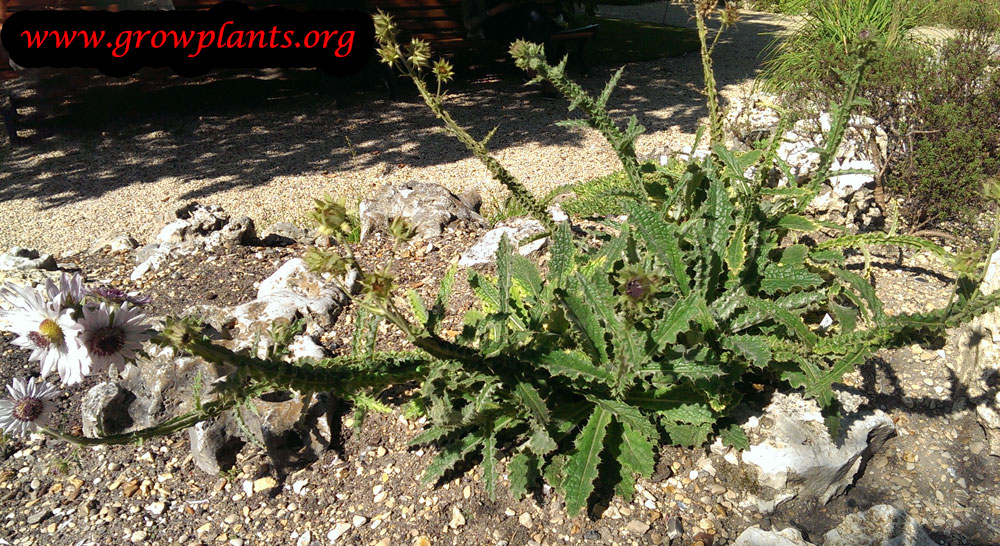


Plant Profile & Key Characteristics
Overview: A thistle-like evergreen perennial about 20-50 cm (8-20 in) tall, grown as a drought-tolerant ornamental. It is valued for its purple-to-white daisy flowers held above spiny, deeply lobed foliage.
Quick Specifications
| Specification | Attribute |
|---|---|
| Plant Type / Life Cycle | Perennial |
| Foliage Type | Evergreen |
| Mature Size | 20-50 cm (8-20 in) tall |
| Growth Rate | Fast to moderate |
| Hardiness | USDA zone 6-10 |
Growth Form & Structure
- Height & Spread: 20-50 cm (8-20 in) tall; suitable for containers.
- Growth Habit & Form: Upright herbaceous perennial with flowers on tall stems above a basal rosette; can self-seed and spread.
- Lifespan & Maturity: Fast to moderate to reach flowering size; drought tolerant once established.
Anatomy & Physical Features
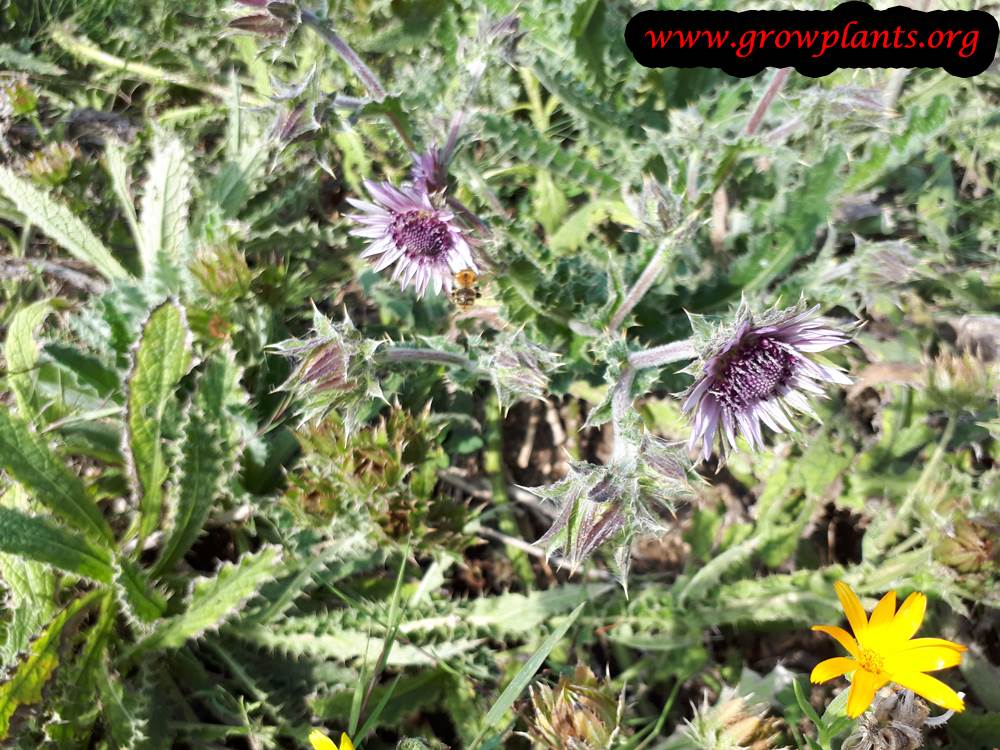
- Leaves & Foliage: Green, linear, deeply lobed and spiny (thistle-like) leaves.
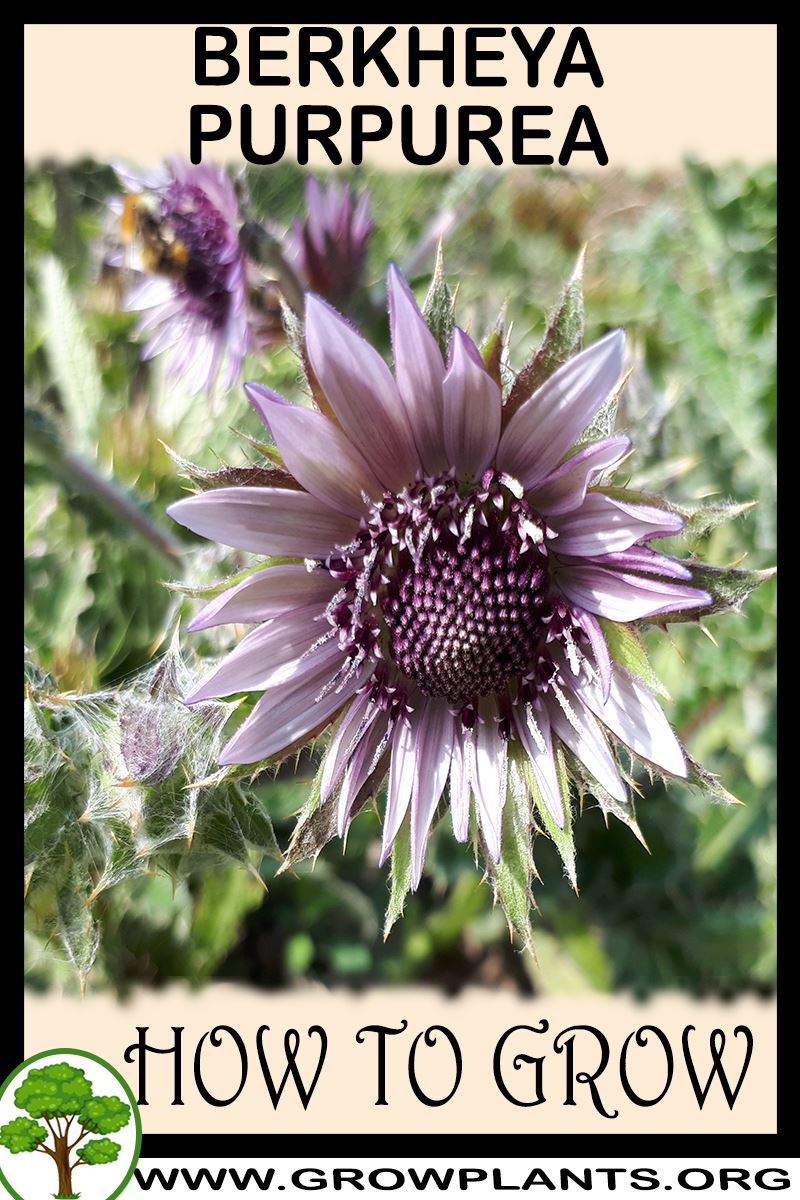
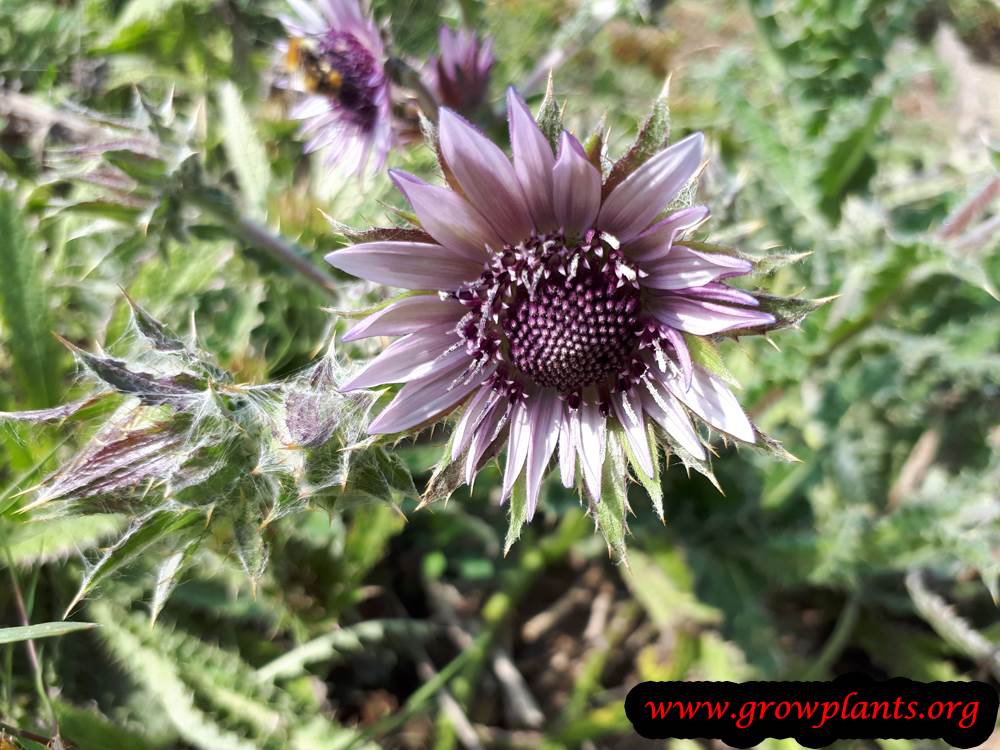
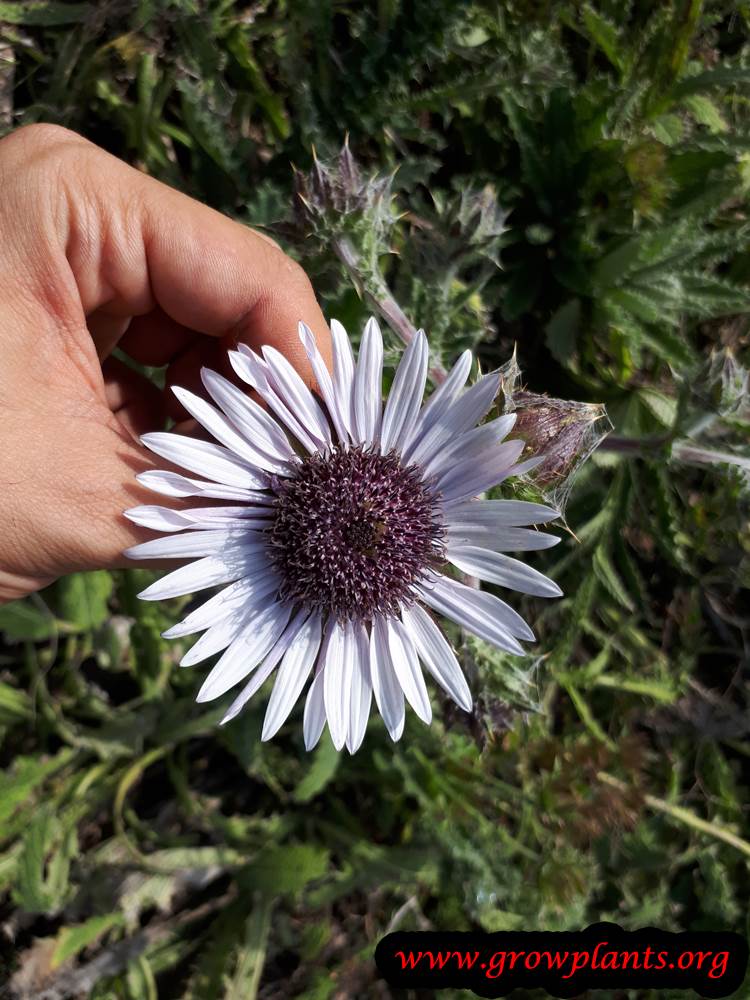
- Flower Characteristics: Light purple to white daisy flowers, single or in clusters on stems (full detail in the Bloom section).
Primary Uses & Landscape Value
- Functional & Ornamental Roles: Drought-tolerant ornamental for borders and gravel gardens; attractive to pollinators.
Care Guide: Planting, Soil & Watering
Overview: Berkheya purpurea (purple berkheya) is a drought-tolerant evergreen perennial for full sun to part shade that above all needs a well-drained soil. It has low to moderate water needs and can self-seed aggressively.
Quick Care Requirements
| Requirement | Ideal Condition |
|---|---|
| Planting Season | In spring and summer, during the warm growing season |
| Growth Rate | Moderate to fast |
| Soil Type | Well-draining |
| Water Need | Low to moderate; let the soil dry between waterings |
Planting & Establishment
- Best Planting Season: Plant in spring or summer during active growth.
- How to Plant:
- Hole Preparation: Dig a hole about twice the width of the root ball.
- Soil Amendments: Add grit or coarse material to sharpen drainage; it does not need rich soil.
- Planting Depth: Set the crown at soil level; do not bury it.
- Growth Speed & Expectations: Moderate to fast; forms a 20–50 cm (8–20 in) clump and can spread or self-seed, so site it where spread is welcome.
Soil, Watering & Drainage Care
- Soil Mix & Drainage Needs: Needs sharp drainage above all; avoid heavy, wet soils that rot the crown.
- Watering Schedule & Technique:
- Young / Newly Planted: Water moderately to establish the roots.
- Established: Drought-tolerant – water sparingly, letting the soil dry well between waterings.
- Seasonal Adjustments: A little more in prolonged summer heat; minimal in cool, wet weather.
Climate, Light & Hardiness
Berkheya purpurea is a drought-tolerant perennial suited to Mediterranean, desert, subtropical, and temperate climates with full sun to half shade; it is hardy to roughly zone 6, needing well-drained soil to cope with winter wet as well as cold.
Quick Climate Specifications
| Climate Zones | Subtropics, Mediterranean, desert, temperate |
|---|---|
| USDA Hardiness Zones | Approximately 6–10 |
| Light Conditions | Full sun; half shade |
Sunlight & Light Exposure
Optimal Light Setup
Full sun to half shade both work well for this species.
Temperature Extremes & Hardiness
USDA Hardiness & Regional Limits
Hardy to roughly zone 6. As a desert- and subtropics-adapted plant, it also handles heat well.
Wind, Humidity & Microclimate
Dry-Air Tolerance
Being drought tolerant and needing only a small to average amount of water, it copes well with dry air and low humidity.
Growing in Pots, Balconies & Indoors
Berkheya purpurea is a spiny, sun-loving perennial with lavender daisy flowers, around 20-50 cm tall. The grower confirms it grows in containers but is not a houseplant – it wants full outdoor sun and open air.
Quick Details
- Container Size: Roughly 15-30 L (4-8 gal), scaled to the plant’s height
- Indoor Suitability: Not an indoor plant – a sun-loving border plant, better outdoors
- Best Spot: Full sun to part shade, outdoors
- Soil & Drainage: Free-draining, not-too-rich mix – these thistles resent soggy soil
- Watering in Pots: Water moderately and let the top of the mix dry between waterings – these plants dislike constantly wet feet, and pots must drain freely
Indoors & On the Windowsill
- Not a houseplant: The grower marks it No – it needs full outdoor sun and does not adapt to a room.
- Windowsill note: A spiny, sun-loving border plant is not suited to a sill; enjoy it outdoors in a pot or bed.
On a Balcony or Patio
- Light, wind & heat: Give it the sunniest spot you have. Walls and paving reflect heat so pots dry quickly – check moisture often in warm weather. On an exposed balcony, stake tall stems and shelter from strong wind.
- Practicalities: A full pot is heavy once watered – make sure the balcony can take the load and that drainage runoff has somewhere to go.
Choosing the Pot, Soil & Long-Term Care
- Pot & drainage: Use a pot with strong drainage holes and skip a standing-water saucer to avoid root rot. Terracotta breathes and dries faster; glazed or plastic pots hold moisture longer.
- Potting mix: A well-aerated, organic-rich mix – potting mix or peat/coir blended with perlite or vermiculite for free drainage.
- Feeding: Potted plants need feeding more often than those in open ground, as nutrients leach out with each watering – feed regularly through the growing season.
- Long-term care: Every couple of years refresh the top of the mix or pot up; divide congested clumps and lightly trim roots to keep the plant vigorous.
Fertilizing & Feeding
A light feeder: this drought-tolerant ornamental performs best on lean, well-drained soil, needing only light feeding at establishment and minimal input once flowering.
Quick Fertilizing Specs
| Feeding Level | Light feeder |
|---|---|
| Main Nutrient Priority | Balanced feeding, used sparingly on this drought-tolerant perennial |
| Best Feeding Period | At planting and lightly during spring growth |
| Organic Options | Compost worked into the planting bed |
| Micronutrients | Rarely needed; correct specific issues only when diagnosed |
| Soil pH | Tolerates a wide range; performs best in well-drained soil |
Feeding by Growth Stage
Spring growth after planting
Build steady growth on this drought-tolerant perennial before its light purple to white flowers open.
| Nutrient direction | A light, balanced complete fertilizer, or none at all in already-decent soil. |
|---|---|
| Timing | Spring as new growth resumes. |
| Frequency | A light feeding at most as spring growth begins. |
| Fertilizer types | A balanced complete fertilizer at a light rate, Compost worked into the bed at planting |
| Precautions | This plant is adapted to lean, well-drained soil; avoid rich or heavy feeding. |
Flowering
Support the single or clustered light purple to white flowers carried on tall stems.
| Nutrient direction | Keep feeding light and balanced; established plants flower reliably with minimal fertilizer. |
|---|---|
| Timing | Spring into summer as flowers form and open. |
| Frequency | Little to no supplemental feeding is usually needed on established plants. |
| Fertilizer types | A balanced fertilizer used sparingly, if at all |
| Precautions | Overfeeding favors soft, floppy growth over the plant’s naturally upright, drought-tolerant habit. |
Autumn and winter rest
Let the plant rest through its slow season.
| Nutrient direction | None – withhold fertilizer while the plant is resting. |
|---|---|
| Timing | Autumn and winter, when growth naturally slows. |
| Frequency | No feeding at this stage. |
| Fertilizer types | No feeding at this stage; resume light feeding once spring growth resumes. |
| Precautions | Do not fertilize a resting plant. |
Nutrient Deficiency Signs & Corrections
Pale, yellow-green foliage overall with reduced vigor.
| Possible causes | Low soil nitrogen, Lean or heavily leached soil, Prolonged lack of any feeding |
|---|---|
| Appears first on | Overall foliage color. |
| What to check | Feeding history, Soil quality, Planting site |
| Possible correction | Apply a balanced, general-purpose fertilizer at a light rate. |
General decline, yellowing, or dieback despite the plant’s normal drought tolerance.
| Possible causes | Overwatering or poor drainage, Root rot from excess irrigation, Heavy or poorly draining planting soil |
|---|---|
| Appears first on | Whole-plant vigor and older leaves. |
| What to check | Irrigation frequency, Soil drainage, Root condition |
| Possible correction | Reduce irrigation to match this drought-tolerant plant’s low water needs and improve site drainage. |
Leaf margins browning or scorched despite adequate watering.
| Possible causes | Fertilizer salt buildup from overfeeding, Under-watering that concentrates salts, Poor drainage trapping salts near the roots |
|---|---|
| Appears first on | Leaf margins and tips. |
| What to check | Recent feeding amounts, Watering consistency, Soil drainage |
| Possible correction | Reduce the feeding rate, water thoroughly to flush salts, then return to a lighter routine. |
Pruning, Training & Seasonal Maintenance
Purple berkheya is a compact, spiny-leaved evergreen perennial grown for its Spring/Summer daisy-like blooms. Pruning is light, seasonal tidying rather than structural work, timed for autumn/winter once flowering has finished, matching the plant’s own pruning-season data.
Quick Pruning & Maintenance Specs
| Pruning Tolerance | Low–Moderate |
| Primary Pruning Window | Autumn/Winter, after flowering finishes (per the plant’s own data) |
| Typical Frequency | Once-yearly tidy plus spot dead-leaf removal |
| Main Objective | Sanitary tidiness; limiting self-seeding, given the plant’s own “Invasive” flag |
| Young Plant Priority | None – let the rosette/clump establish |
| Mature Plant Priority | Cut spent flower stems and dead leaves back into the rosette |
| Best Tool Type | Precision snips |
| Avoid Heavy Pruning During | Active Spring/Summer bloom |
Pruning by Plant Age & Size
Newly Established
No pruning—allow the low rosette to bulk up.
Young / Formative
Not applicable; this is a low, clump-forming habit with no structural framework to train.
Mature / Established
After the Spring/Summer bloom period ends, cut spent flower stems back into the basal rosette and clear dead leaves in autumn/winter, tidying the clump ahead of next season’s growth.
Seasonal Pruning Schedule
Post-Flowering (Autumn/Winter)
Objective: matches the plant’s own pruning-season fact directly. Remove: spent flower stems and any dead or tatty leaves. Do not remove: the evergreen basal rosette itself—only finished flower stalks and clearly dead material, keeping winter foliage intact for continued groundcover interest. Bloom impact: none—this follows, not precedes, the Spring/Summer bloom.
Special Growth to Remove
- Spent flower stems—also limits self-seeding, relevant given the plant’s own “Invasive” flag.
- Dead or damaged leaves.
Tools
- Precision snips for individual flower stems and leaves on this small perennial.
- Bypass secateurs as an option for tougher basal stems.
Tool Hygiene & Disease Risk
Routine—no disease is flagged; the plant’s own pest note (weevil) is not tool-transmitted.
Cut Placement & Technique
Cut spent flower stems down into the rosette just above a leaf cluster, not into bare crown tissue.
Heavy Pruning & Rejuvenation
Not documented or needed for this compact species—as a naturally tidy low evergreen perennial it does not require, or particularly tolerate, a hard rejuvenation cutback. Stick to the light annual tidy.
Post-Pruning Care
None special beyond its normal drought-tolerant watering. Watch for the weevil pest the plant’s own data flags, since fresh cuts can draw feeding activity.
Common Pruning Mistakes
- Deadheading too early, mid-bloom, removing flowers still forming in the cluster.
- Cutting into the evergreen rosette itself rather than just the spent stems.
When NOT to Prune
- Avoid cutting during the Spring/Summer bloom window.
- Hold off pruning during an active weevil infestation until it is treated.
Recommended Tools (by task)
- Task: Removing spent flower stems and dead leaves after bloom – small, soft stems → precision_snips – clean, low-impact cuts on a compact perennial with no woody growth.
Propagation Guide
Berkheya purpurea is most simply raised from seed, though established clumps can also be divided to produce new plants identical to the parent. Propagation is easy, and this plant can self-seed readily, consistent with the site’s note that it can behave invasively.
Quick Propagation Specs
| Best Propagation Method | Seed |
| Alternative Methods | Division of established clumps |
| Propagation Difficulty | Easy |
| Seed True-to-Type | Usually true-to-type |
| Vegetative True-to-Type | Yes |
| Best Propagation Season | Spring to summer, per the site’s planting season |
Growing from Seed
Sowing Season
Sow in spring or summer.
Germination Conditions
Sow in well-drained soil in full sun to half shade, matching this drought-tolerant plant’s preferred growing conditions; avoid overly wet, poorly drained media.
Seedling Care
Because the site notes this plant can self-seed and naturalize, remove spent flower heads before seed drop where spreading is unwanted.
Division, Offsets, Pups & Suckers
Established clumps can be lifted and divided into rooted sections, each with adequate roots and growth points, in spring; replant divisions promptly in well-drained soil and keep them consistently watered until re-established.
Bloom & Flower Guide
Quick Details
- Bloom Season: Spring into summer
- Time to First Bloom: Usually flowers in its first full season, strengthening in later years
- Flower Appearance: Large daisy-like heads in pale purple to white, borne singly or in clusters on spiny stems
- Edibility: Ornamental only – not eaten
Detailed Blooming Overview
Purple berkheya is a striking, architectural member of the daisy family, sending up spiny stems topped with large, soft-purple to white flower heads. Each head has the open, rayed look of a daisy but the bold structure of a thistle, and they may appear one to a stem or gathered into loose clusters. Tough and drought-tolerant, it is grown for that dramatic early-season display and the pollinators it draws.
Flower Characteristics
- Large daisy-form heads in light purple through to white.
- Held singly or in clusters on upright, spiny stems.
- Bold and sculptural, standing well above the foliage.
Bloom Care & Thinning
- Prolonging bloom: Deadhead spent heads to encourage further flowering and a tidier plant.
- Position: Full sun and sharp drainage suit it best; it is notably drought-tolerant once established.
- Pollination: The open heads attract bees and other pollinators.
Pests, Diseases & Troubleshooting
Overview: Berkheya purpurea is a spiny South African daisy (Asteraceae) that is generally robust and not well documented for pests. It behaves like other tough thistle-relatives: aphids on flower stems and new growth are the main insect, with occasional powdery mildew and rust in humid conditions, some weevil and leaf-beetle chewing, and a real risk of root rot in wet winters. The profile below is drawn at the family level; verify locally.
Quick Troubleshooting Overview
| Issue / Pest | Main Symptom | Primary Solution |
|---|---|---|
| Aphids | Honeydew and distorted new growth on stems | Water blast, insecticidal soap, predators |
| Powdery mildew | White coating on leaves in humid spells | Airflow, avoid overhead water, sulphur |
| Weevils / leaf beetles | Notched or chewed leaves | Handpick, keep plants vigorous |
| Root rot | Wilting and collapse in wet winter soil | Sharp drainage; avoid winter wet |
Common Pests & Management
- Aphids (Aphididae):
- Symptoms: Colonies on flower stalks, buds and soft new growth curl and distort tissue and leave sticky honeydew and sooty mould.
- Prevention & Control: Knock them off with water, spray insecticidal soap or neem, and encourage ladybirds, lacewings and hoverflies; avoid over-feeding.
- Weevils (Curculionidae):
- Symptoms: Adults notch and chew leaf margins; some larvae feed at the roots or in the crown, matching the source’s ‘weevil’ hint.
- Prevention & Control: Handpick adults at night, keep plants vigorous and well-drained, and use parasitic nematodes against root-feeding grubs.
- Leaf beetles / capsid bugs ((various)):
- Symptoms: Chewed or stippled and distorted leaves and buds from beetle or sap-sucking bug feeding.
- Prevention & Control: Handpick where practical, tolerate light damage on this tough plant, and spray only heavy outbreaks.
- Spider mites (Tetranychus urticae):
- Symptoms: Fine stippling and bronzing with webbing in hot, dry conditions.
- Prevention & Control: Hose foliage, reduce drought stress, and treat undersides with insecticidal soap or horticultural oil.
Diseases & Fungal Issues
- Powdery mildew (Golovinomyces / Erysiphe spp.):
- Symptoms: White powdery film on leaves in humid, crowded or shaded conditions, with yellowing beneath.
- Treatment & Management: Space for airflow, avoid overhead water, remove affected leaves, and spray sulphur or potassium bicarbonate.
- Rust (Puccinia spp.):
- Symptoms: Orange to brown powdery pustules on leaf undersides with yellow flecking above – common on Asteraceae.
- Treatment & Management: Remove infected leaves, avoid wetting foliage, improve airflow, and use sulphur to slow spread.
- Sclerotinia / root and crown rot (Sclerotinia / Phytophthora spp.):
- Symptoms: Wilting, stem-base or crown rot and collapse, especially in wet, cold soil.
- Treatment & Management: Ensure sharp drainage, avoid winter wet and crowding, remove affected plants, and do not replant into infested ground.
- Downy mildew (Peronospora / Plasmopara spp.):
- Symptoms: Yellow patches above with greyish mould beneath in prolonged damp.
- Treatment & Management: Improve airflow and drainage, water early, and remove affected foliage.
Growing Difficulties & Abiotic Problems
- Winter-wet root rot:
- Cause & Symptoms: Cold, waterlogged soil is the main killer of this drought-adapted plant, causing wilt and collapse.
- Correction Strategy: Give full sun and sharply drained soil, plant on a slope or raised bed, and keep it dry in winter.
- Flop:
- Cause & Symptoms: Rich soil or shade makes the tall flower stems flop.
- Correction Strategy: Grow lean and sunny; stake only if needed.
- Chlorosis:
- Cause & Symptoms: Poor or waterlogged soil yellows the foliage.
- Correction Strategy: Improve drainage and feed lightly.
What Helps – Products & Tools
For this thistle-relative keep insecticidal soap or neem for aphids and mites, a sulphur or potassium-bicarbonate fungicide for powdery mildew and rust, and parasitic nematodes for root-feeding weevil grubs. The single most protective measure is sharp drainage to prevent winter root rot.