Plant Profile & Key Characteristics
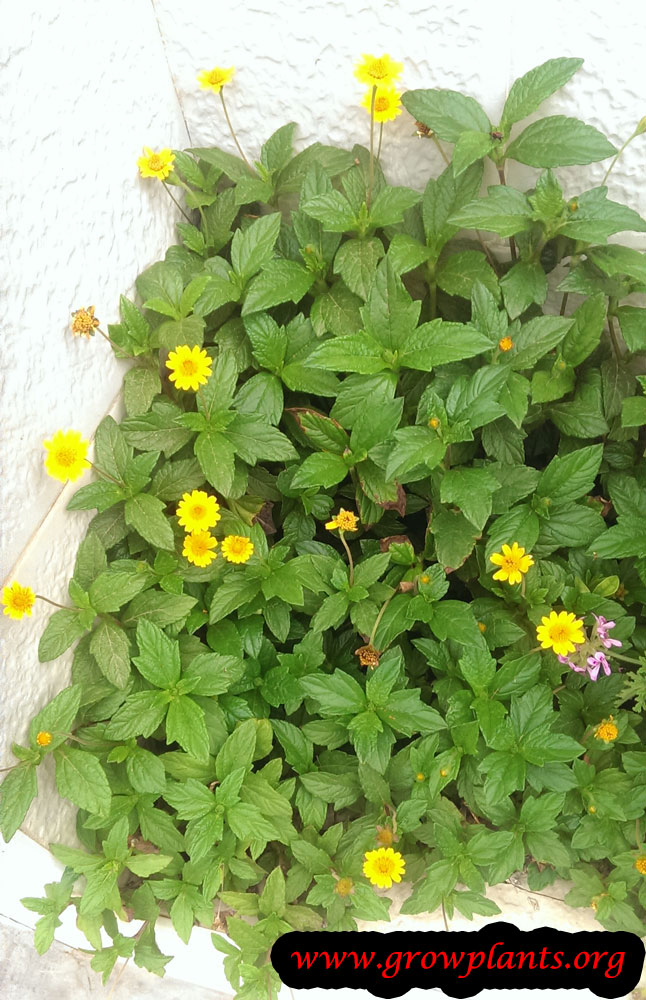
Overview: A low, fast-spreading evergreen sub-shrub and groundcover reaching only 10–30 cm (4–12 in) tall, grown as an ornamental mat of yellow daisy flowers.
Quick Specifications
| Specification | Attribute |
|---|---|
| Plant Type / Life Cycle | Herbaceous evergreen perennial (sub-shrub), sometimes grown as an annual |
| Foliage Type | Evergreen |
| Mature Size | 10–30 cm (4–12 in) tall, spreading indefinitely |
| Growth Rate | Fast to moderate |
| Root System | Creeping stems that root at the nodes (stoloniferous) |
| Hardiness | USDA zones 9+ (tropical, subtropical, Mediterranean and warm-temperate) |
Growth Form & Structure
- Height & Spread: Stays a low 10–30 cm (4–12 in) tall but spreads widely along the ground; also grown to trail from containers and hanging baskets.
- Growth Habit & Form: Vigorous creeping groundcover whose trailing stems root as they run to form a dense mat; can be aggressively invasive in warm climates.
- Lifespan & Maturity: A long-lived, self-renewing perennial that quickly knits together into permanent cover.
Anatomy & Physical Features
- Leaves & Foliage: Green, ovate to triangular leaves with lobed (usually three-lobed) margins.
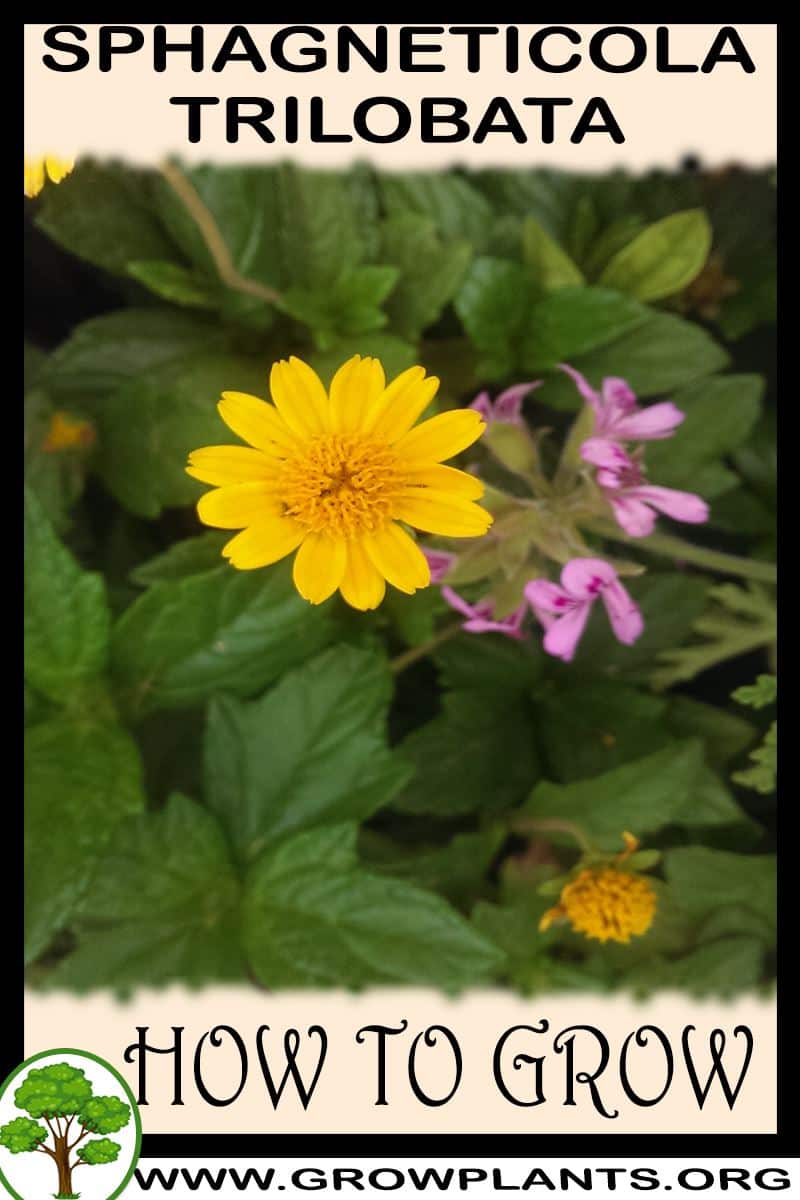
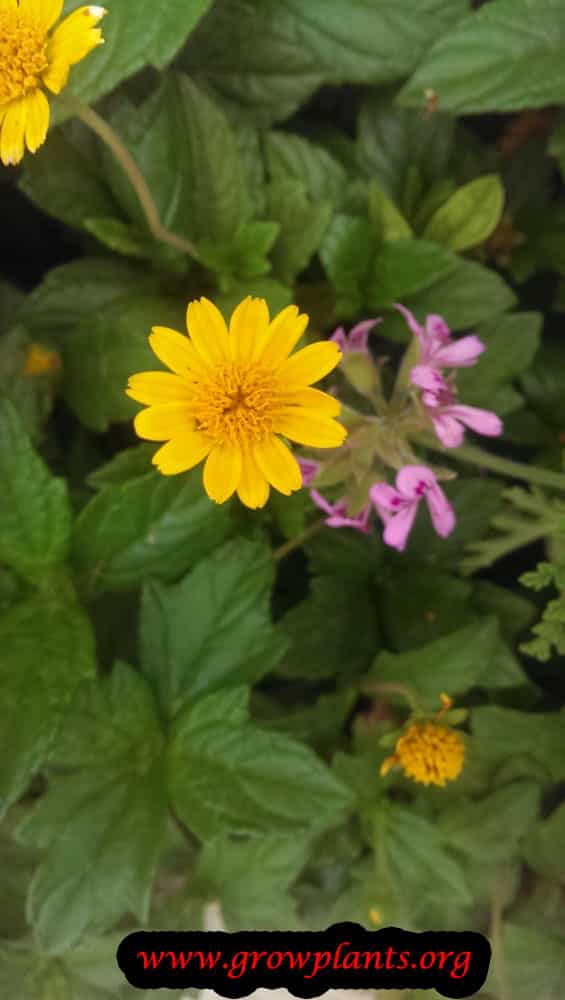
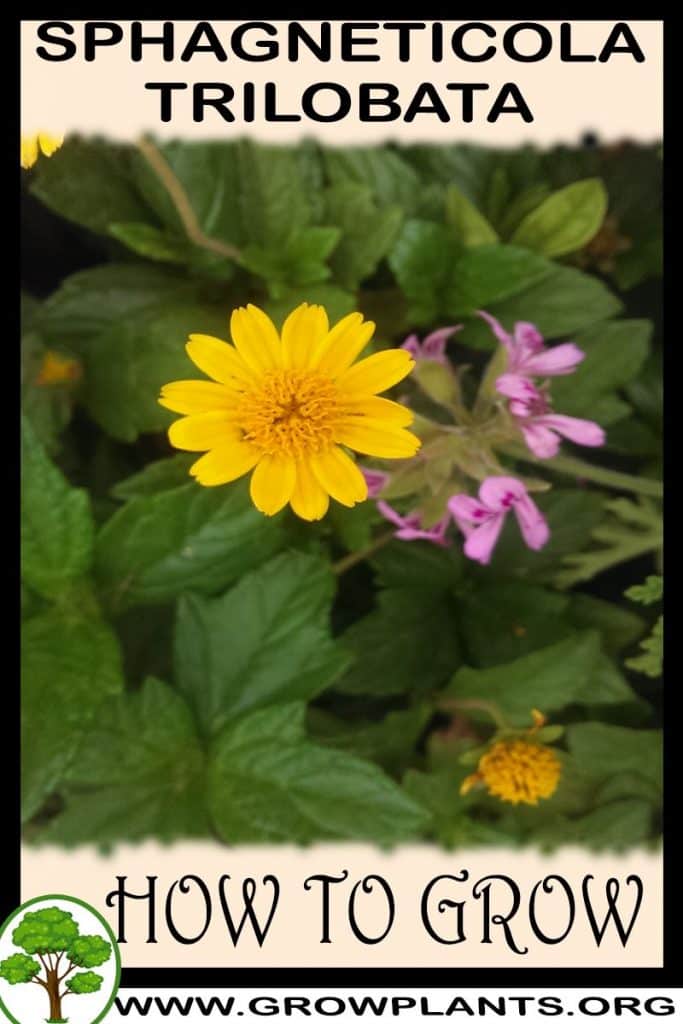
- Flower Characteristics: Small bright-yellow daisy flowers held above the foliage.
Primary Uses & Landscape Value
- Functional & Ornamental Roles: A fast, weed-suppressing groundcover for slopes and erosion control and a trailing plant for containers; note that it is a recognised invasive weed in many warm regions.
Care Guide: Planting, Soil & Watering
Overview: Trailing daisy is a fast-spreading evergreen ground cover for full sun to part shade, growing in well-draining soil kept slightly moist. It is easy-going but vigorous, so give it room and steady but modest moisture.
Quick Care Requirements
| Requirement | Ideal Condition |
|---|---|
| Planting Season | Year-round (avoid winter below zone 10a) |
| Growth Rate | Moderate to fast |
| Soil Type | Well-draining and slightly moist |
| Water Need | Moderate; well-drained soil kept lightly moist |
Planting & Establishment
- Best Planting Season: Plant almost any time of year in warm zones; avoid winter planting in cooler areas (below zone 10a).
- How to Plant:
- Hole Preparation: Loosen a hole a little wider than the root ball.
- Soil Amendments: Work in some organic matter; it is not fussy about soil.
- Planting Depth: Set the root ball level with the soil and firm gently; it roots along trailing stems to spread.
- Growth Speed & Expectations: A fast, spreading grower only about 10–30 cm tall; it is aggressive and invasive, so plant where you can contain it.
Soil, Watering & Drainage Care
- Soil Mix & Drainage Needs: Well-draining soil that stays slightly moist suits it; it tolerates a range of conditions.
- Watering Schedule & Technique:
- Young / Newly Planted: Keep the soil lightly moist while it establishes and knits together.
- Established: Water moderately; established plants are fairly tolerant of short dry spells.
- Seasonal Adjustments: More in summer heat, less in winter.
Climate, Light & Hardiness
Trailing daisy is a fast, mat-forming tropical/subtropical ground cover for tropical, Mediterranean, desert, subtropical, and temperate climates, doing best in full sun to half shade. It needs essentially frost-free conditions and is notably cold-sensitive in winter.
Quick Climate Specifications
| Climate Zones | Tropical, Mediterranean, desert, subtropics, temperate |
|---|---|
| USDA Hardiness Zones | Zone 9 and warmer |
| Cold Damage Begins | Approaching freezing |
| Frost Tolerance | Low |
| Light Conditions | Full sun / half shade |
Sunlight & Light Exposure
Optimal Light Setup
Full sun to half shade both work; full sun gives the densest ground-covering mat and most flowers.
Temperature Extremes & Hardiness
USDA Hardiness & Regional Limits
Needs a largely frost-free climate (zone 9 and warmer); at the cooler edge of its range (near zone 10a) winter planting is avoided since cold-season cold can set it back or kill it.
Cold Damage & Winter Protection
Frost damages or kills foliage and can kill the whole plant in a hard freeze; in marginal zones, avoid planting or exposing young plants during the coldest months.
Growing in Pots, Balconies & Indoors
Creeping-oxeye (Sphagneticola trilobata) is a low, fast, mat-forming groundcover with bright yellow daisies – a vigorous trailer for baskets and balcony pots rather than a houseplant, and one where a container usefully checks its notoriously invasive spread.
Quick Details
- Container Size: A pot or hanging basket, about 5-15 L (1.5-4 gal); the container also helps contain its running stems
- Indoor Suitability: Not a houseplant (the grower marks it “No”) – a sun-loving, spreading groundcover
- Best Spot: Full sun to half shade
- Soil & Drainage: Any mix; it tolerates a wide range, from free-draining to quite moist
- Watering in Pots: Moderate to high – it takes anything from moderate to plentiful water and stays lush
Indoors & On the Windowsill
- Houseplant limits: The grower marks it as not suitable indoors; it is a rampant outdoor groundcover, not a room plant.
- Containment: It roots wherever a stem touches soil and is a serious invasive in warm regions, so keeping it in a pot or basket, off the ground, is the responsible way to grow it.
On a Balcony or Patio
- Light & wind: A tough, quick-covering trailer for a sunny or lightly shaded balcony basket; it cascades densely and flowers freely.
- Practicalities: Stand pots off bare soil and trim back trailing stems before they root elsewhere, so it cannot escape and spread.
Choosing the Pot, Soil & Long-Term Care
- Pot & drainage: A 5-15 L pot or basket with drainage holes, stood off the ground; skip a standing water saucer to avoid root rot.
- Potting mix: Any general mix; it is thoroughly undemanding.
- Feeding: Feed lightly – it hardly needs it and grows vigorously regardless.
- Repotting: Refresh the mix each year and cut it back hard to keep it neat and contained.
Fertilizing & Feeding
A vigorous, fast-spreading ground cover that needs very little help: a light feeding at planting and only occasional, minimal feeding afterward are usually all it takes to keep it growing and flowering.
Quick Fertilizing Specs
| Feeding Level | Light feeder |
|---|---|
| Main Nutrient Priority | Balanced, minimal feeding – vigorous growth needs little encouragement |
| Best Feeding Period | At planting and through the main growing season |
| Organic Options | Compost or organic matter worked in at planting |
| Reduce/Stop Feeding | Hold off whenever growth clearly slows in cooler weather |
| Micronutrients | Rarely an issue in average garden soil; correct only if diagnosed |
| Soil pH | Tolerates a wide range of well-drained soils |
Feeding by Growth Stage
Establishment as a spreading ground cover
Help new plantings root in and begin spreading as a dense ground cover.
| Nutrient direction | A light, balanced feeding at planting supports rooting without encouraging this already vigorous, spreading plant to get away from you. |
|---|---|
| Timing | At planting and through the first part of the growing season. |
| Frequency | A light feeding at planting is usually enough to get it established. |
| Fertilizer types | A balanced complete fertilizer used lightly at planting, Compost or organic matter worked into the planting area |
| Precautions | Keep feeding light; this is an aggressive, fast-spreading ground cover that needs little encouragement. |
Ongoing growth and near-continuous bloom
Maintain steady spreading growth and the small yellow daisy flowers produced through most of the year in warm climates.
| Nutrient direction | Feed sparingly; a minimal, balanced feeding is usually enough to keep this vigorous ground cover blooming without pushing it out of bounds. |
|---|---|
| Timing | Through the main growing season, which can extend most of the year in frost-free climates. |
| Frequency | Minimal, occasional feeding is usually enough for this vigorous grower. |
| Fertilizer types | An occasional light, balanced fertilizer only if growth or bloom look weak |
| Precautions | Avoid regular heavy feeding; this species is already prone to spreading aggressively and can become invasive. |
Cooler-month slowdown
Let growth ease during any cooler or shorter-day stretches without pushing new growth.
| Nutrient direction | None – withhold fertilizer whenever growth clearly slows in cooler weather. |
|---|---|
| Timing | During any cooler-season slowdown. |
| Frequency | No feeding at this stage; resume once active growth picks back up. |
| Fertilizer types | No feeding at this stage; hold off fertilizing until active growth resumes. |
| Precautions | Do not fertilize while growth is clearly stalled; regular trimming to control spread matters more than feeding at this time. |
Nutrient Deficiency Signs & Corrections
Pale, thin foliage and noticeably slower spreading growth.
| Possible causes | low available soil nitrogen, nitrogen leaching from frequent watering in sandy soil, low soil organic matter |
|---|---|
| Appears first on | older leaves first |
| What to check | recent feeding history, soil organic matter, watering frequency and drainage |
| Possible correction | Apply a balanced fertilizer with nitrogen and work in organic matter, keeping the overall amount light. |
New leaves emerge pale yellow with the veins staying green.
| Possible causes | high soil pH limiting iron availability, waterlogged or compacted soil restricting root function, naturally iron-poor sandy or alkaline soil |
|---|---|
| Appears first on | newest leaves |
| What to check | soil pH, drainage and recent watering, root health |
| Possible correction | Address soil pH or drainage first, then apply a chelated iron product per its label if new growth stays pale. |
Browning or scorched leaf margins despite regular watering.
| Possible causes | fertilizer salt buildup from over-feeding this low-demand plant, under-watering that concentrates salts in the root zone, restricted drainage in containers or dense plantings |
|---|---|
| Appears first on | leaf margins and tips |
| What to check | recent fertilizer amounts, watering consistency, drainage, especially in containers |
| Possible correction | Ease off feeding, water thoroughly to flush accumulated salts, then return to lighter, less frequent feeding. |
Pruning, Training & Seasonal Maintenance
Trailing daisy is a spreading groundcover subshrub that roots wherever its trailing stems touch soil, so "pruning" here is mostly about containing spread and refreshing density rather than shaping for flowers. Because bloom is nearly continuous (most of the year), cutting back at any point does not sacrifice a seasonal flowering flush the way it would in a bloom-timed shrub, and the plant tolerates being cut hard year-round.
Quick Pruning & Maintenance Specs
| Pruning Tolerance | High – regrows quickly from any cut node |
| Primary Pruning Window | Ongoing, year-round (frost-free zone 9+) |
| Typical Frequency | Edge/containment trim every few weeks during active growth |
| Main Objective | Contain spread within the bed/container; refresh density in the mat’s interior |
| Young Plant Priority | Pinch stem tips after planting to encourage branching and faster fill-in |
| Mature Plant Priority | Routine edge containment + an occasional full cutback if the mat thins or mounds up |
| Best Tool Type | Hedge shears for mass edging; precision snips for spot runner removal |
| Avoid Heavy Pruning During | No strong seasonal restriction; avoid cutting back hard in prolonged waterlogged soil |
Pruning by Plant Age & Size
Newly Established
Pinch stem tips shortly after planting to force branching and speed up lateral fill-in of the bed.
Young / Formative
No structural training applies to a groundcover – formative care is just repeated tip pinching to bush the plant out before it’s left to run.
Mature / Established
Routine containment shearing at the bed or container edge, plus a periodic (roughly once or twice a year) hard cutback of the whole mat if it becomes thin, woody-centred, or overly mounded.
Seasonal Pruning Schedule
Ongoing / year-round: objective is keeping the mat inside its intended footprint and preventing it rooting into unwanted areas, consistent with this species being flagged aggressive/invasive in cultivation; what to remove is any runner that has crossed the bed edge plus tangled or dead stems in the interior; what NOT to remove is the actively rooting node zones still filling in bare ground; response is quick regrowth from any remaining node; impact on flowering is negligible, since bloom (most of the year) isn’t tied to a seasonal growth cycle.
Special Growth to Remove
Runners/stolons are the defining growth to manage here: any runner rooting outside the intended footprint should be cut and lifted promptly, since this species spreads aggressively. Spent flower heads are mostly cosmetic to remove – with near-continuous bloom, deadheading has little effect on the next flush.
Container & Small-Space Pruning
In a container this species needs more frequent trimming than it does in the ground: trailing stems should be cut back to the pot rim regularly, since the naturally sprawling habit will otherwise root into surrounding soil or spill over the container edge and establish where it isn’t wanted.
Tools
Hedge shears for edging a mass planting back to a bed line; precision snips for spot removal of individual rooting runners near desired neighbouring plants.
Tool Hygiene & Disease Risk
Routine – no disease is flagged for this species in the available data; ordinary clean-tool practice is sufficient.
Cut Placement & Technique
Cut runners back to just beyond a leaf node so the remaining stem doesn’t die back to a bare tip. When edging, cut at a consistent height rather than scalping the mat, since growing points run along the stem rather than sitting in a single crown.
Heavy Pruning & Rejuvenation
Tolerates being cut back hard, to just a few centimetres, at any time of year and regrows quickly from remaining nodes – useful if the mat has become thin, woody-centred, or weedy.
Post-Pruning Care
Water normally after a hard cutback to speed regrowth; no feeding is needed. Watch the cut edges over the following weeks, since regrowth here is vigorous and containment needs to be reapplied.
Common Pruning Mistakes
Under-pruning the bed edge and letting runners root into a lawn or neighbouring beds – containment lapses compound quickly on a species documented as invasive in some regions; shearing to one flat height repeatedly without ever thinning the interior, which leaves a thatchy mat with fewer flowers.
When NOT to Prune
No strong seasonal restriction is flagged for this species. The main caution is ecological rather than horticultural: near natural areas, favour deadheading and strict runner containment over letting cuttings or seed spread, given its documented invasiveness.
Recommended Tools (by task)
- Routine edging/containment of the mat: hedge_shears – efficient for shearing a spreading mat back to a bed line.
- Spot removal of individual rooting runners: precision_snips – precise cuts on soft trailing stems near plants you want to keep.
Propagation Guide
Sphagneticola trilobata is propagated almost entirely from stem or node cuttings, the same way the trailing stems naturally root wherever a node touches moist soil as the plant spreads; seed exists but is rarely used in cultivation. This is one of the easiest groundcovers to propagate, rooting readily with no special equipment.
Quick Propagation Specs
| Best Propagation Method | Stem or node cuttings |
| Alternative Methods | Rooted sections separated from naturally self-layering stems; seed (uncommon in cultivation) |
| Propagation Difficulty | Easy |
| Vegetative True-to-Type | Yes |
| Best Propagation Season | Warm months; year-round in frost-free climates |
| Cutting Rooting Time | Often within one to two weeks under warm, moist conditions |
Stem Cuttings
Cutting Type
Trailing stem sections with several nodes; the plant roots readily at each node.
Best Timing
Any time during active warm-season growth.
Cutting Preparation
Cut sections roughly 10–15 cm (4–6 inches) long with two or more nodes; strip leaves from the node(s) that will be buried or pressed into the soil surface.
Rooting Setup
Lay sections along moist, well-drained soil or potting mix so nodes stay in contact with the medium, or insert lower nodes directly into the mix; keep consistently moist.
Rooting Hormone
Not necessary – this species roots on its own without treatment.
Rooting Time
Roots typically form within one to two weeks in warm, humid conditions.
Runners & Stolons
As the trailing stems spread, nodes in contact with moist soil root on their own. Rooted sections can be cut free from the parent runner and transplanted once they have their own root system, without needing to wait for further establishment.
Seed is present in this species but stem propagation is so fast and reliable that seed is seldom used deliberately; where sown, treat it like other small daisy-family seed – sow shallowly in warm, moist conditions.
Bloom & Flower Guide
Quick Details
- Bloom Season: Much of the year in warm climates
- Flower Appearance: Small, flat, bright-yellow daisy flowers
- Edibility: Grown as an ornamental ground cover; not eaten
Detailed Blooming Overview
Trailing daisy is a fast, mat-forming ground cover studded almost year-round with small, flat, bright-yellow daisies. It is quick and generous – so much so that it is considered invasive in many warm regions and is best kept firmly contained.
Flower Characteristics
- Flat, bright-yellow daisy flowers held just above the foliage.
Bloom Care & Thinning
- Keep it in check: Its rooting stems spread fast; trim regularly and do not let it escape into wild areas.
- Pollinators: The open daisies draw bees and butterflies.
Pests, Diseases & Troubleshooting
Overview: Singapore daisy (Sphagneticola trilobata, syn. Wedelia trilobata) is an extremely tough, fast groundcover that is essentially pest- and disease-free – its vigour is the point of concern, as it is a serious invasive weed in many warm regions. Only minor sap-suckers and leaf fungi appear, usually on stressed plants, and its main ‘management’ is containing its spread rather than fighting pests.
Quick Troubleshooting Overview
| Issue / Pest | Main Symptom | Primary Solution |
|---|---|---|
| Aphids | Minor clusters on soft new growth | Rinse off; rarely needs action |
| Spider mites | Occasional stippling in hot dry spots | Rinse foliage, soap/oil if heavy |
| Whiteflies | White clouds on stressed plants | Yellow traps, soap/neem |
| Leaf miners / caterpillars | Minor tunnels or chewing | Tolerate; remove affected leaves |
| Leaf spots & rust | Spots on leaves in humid weather | Airflow, remove leaves; usually minor |
| Invasive spread | Roots at every node; smothers other plants | Barriers, containment, careful disposal |
Common Pests & Management
- Aphids (Aphis spp.):
- Symptoms: Small green/black colonies on the softest new shoots with a little honeydew; seldom significant on this vigorous plant.
- Prevention & Control: Rinse off with water or leave to predators; insecticidal soap only if an outbreak persists.
- Spider mites (Tetranychus urticae):
- Symptoms: Occasional fine stippling and webbing in very hot, dry, stressed situations.
- Prevention & Control: Rinse foliage and use insecticidal soap or horticultural oil in rare heavy cases.
- Whiteflies (Bemisia, Trialeurodes spp.):
- Symptoms: Small white insects rising in clouds on stressed or sheltered plants, with light honeydew.
- Prevention & Control: Yellow sticky traps and insecticidal soap or neem if numbers build.
- Leaf miners & caterpillars (Liriomyza spp., various Lepidoptera):
- Symptoms: Occasional pale tunnels or chewed notches in leaves; cosmetic on such a fast grower.
- Prevention & Control: Remove affected leaves and tolerate minor grazing – the plant regrows quickly.
Diseases & Fungal Issues
- Fungal leaf spots (Cercospora, Alternaria spp.):
- Symptoms: Brown or dark spots on leaves in warm, wet, crowded or shaded conditions; generally minor.
- Treatment & Management: Improve airflow and light, remove affected leaves, and avoid overhead watering; treatment is rarely needed.
- Rust (Puccinia / Coleosporium spp.):
- Symptoms: Occasional orange pustules on leaf undersides in humid weather.
- Treatment & Management: Remove affected foliage and improve airflow; fungicide is seldom warranted on this hardy plant.
- Root rot (Pythium, Phytophthora):
- Symptoms: Yellowing and rot only in genuinely waterlogged, stagnant soil – uncommon for this adaptable species.
- Treatment & Management: Ensure the site drains and avoid constant waterlogging.
Growing Difficulties & Abiotic Problems
- Invasive, smothering spread:
- Cause & Symptoms: Stems root at every node and regrow from fragments, letting it swamp beds, lawns and natural areas – its defining problem.
- Correction Strategy: Contain with deep edging or barriers, remove regularly, bag all clippings (do not compost or dump), and check local weed status before planting.
- Legginess & thin growth in shade:
- Cause & Symptoms: In too much shade it grows sparse, leggy and flowers poorly.
- Correction Strategy: Grow in full sun to light shade and trim to keep it dense.
- Leaf yellowing in poor/wet soil:
- Cause & Symptoms: Chlorosis appears in waterlogged or very poor soil despite its toughness.
- Correction Strategy: Improve drainage and give a light feed; it tolerates most soils otherwise.
What Helps – Products & Tools
For Singapore daisy almost no pest products are needed – a water rinse, insecticidal soap or horticultural oil covers the rare aphid, mite or whitefly, and leaf spots resolve with better airflow. The genuinely important ‘tools’ are physical barriers, edging and diligent removal to contain its invasive spread.