
Plant Profile & Key Characteristics
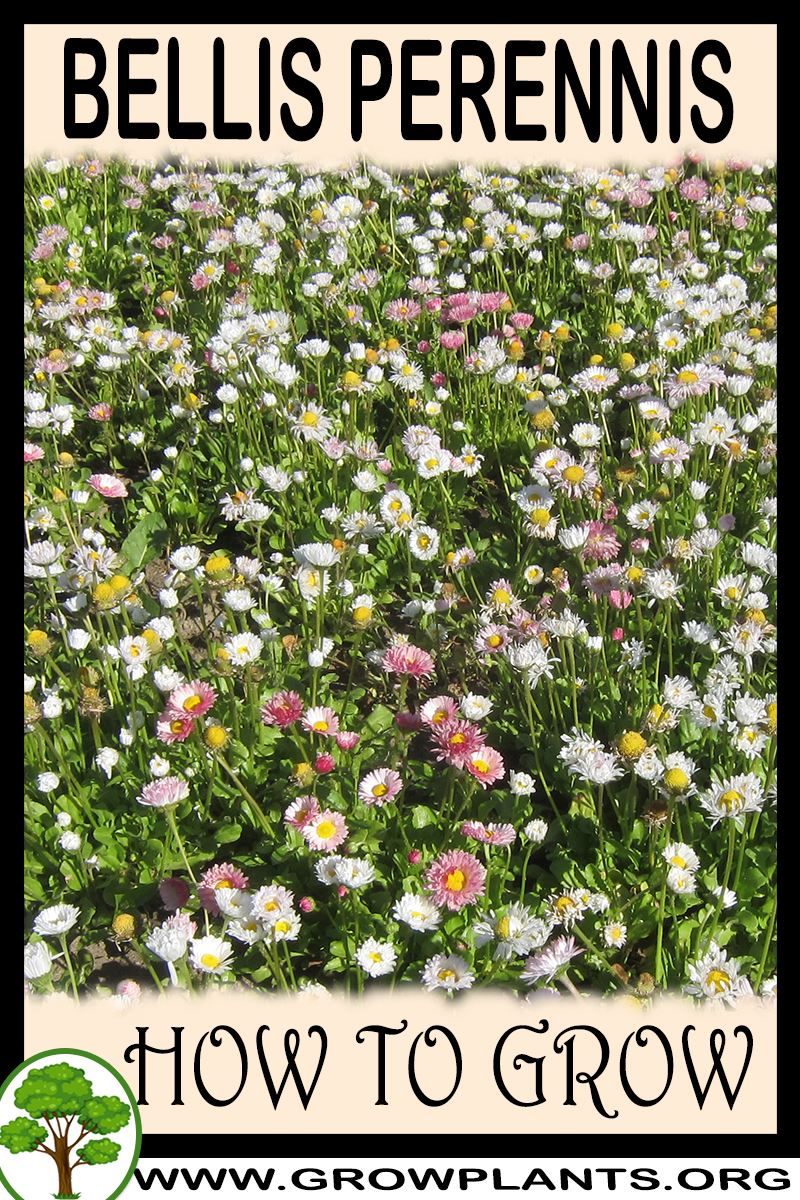
Overview: A low, tufted evergreen perennial about 10-20 cm (4-8 in) tall, usually grown as a short-lived perennial or an annual. It is prized as an ornamental for cool-season bedding, edging and containers, with white or pompon daisy flowers.
Quick Specifications
| Specification | Attribute |
|---|---|
| Plant Type / Life Cycle | Perennial (often grown as an annual) |
| Foliage Type | Evergreen |
| Mature Size | 10-20 cm (4-8 in) tall |
| Growth Rate | Moderate |
| Root System | Fibrous, shallow |
| Toxicity | Non-toxic (flowers and young leaves are edible) |
| Hardiness | USDA zone 4-8 as a perennial, zones 9-11 as an annual |
Growth Form & Structure
- Height & Spread: 10-20 cm (4-8 in) tall, forming a low rosette; well suited to containers and edging.
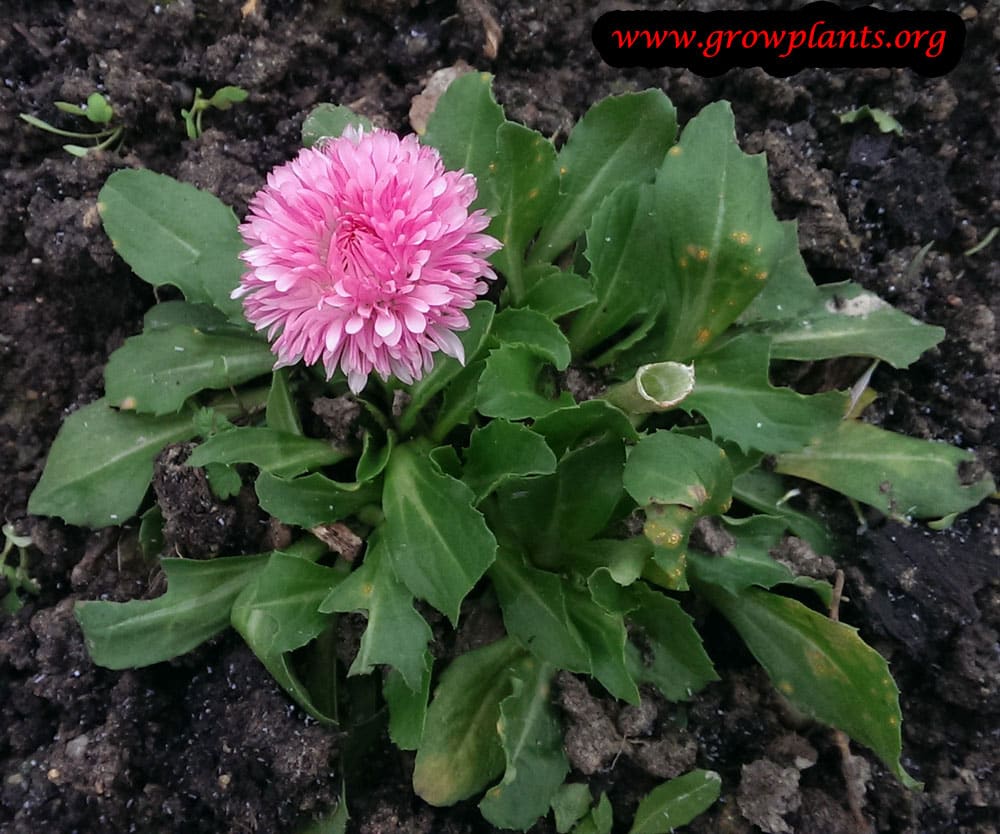
- Growth Habit & Form: Stemless basal rosette of leaves with flowers held on short, leafless stalks.
- Lifespan & Maturity: Fast to reach flowering size, often blooming in its first season; can be short-lived.
Anatomy & Physical Features
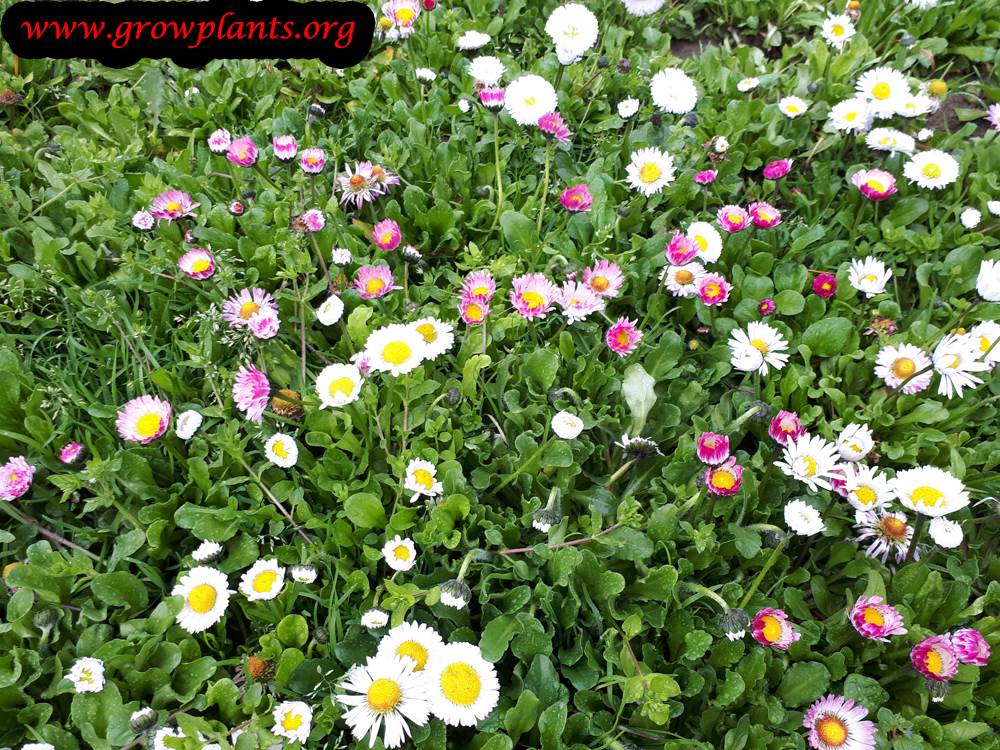
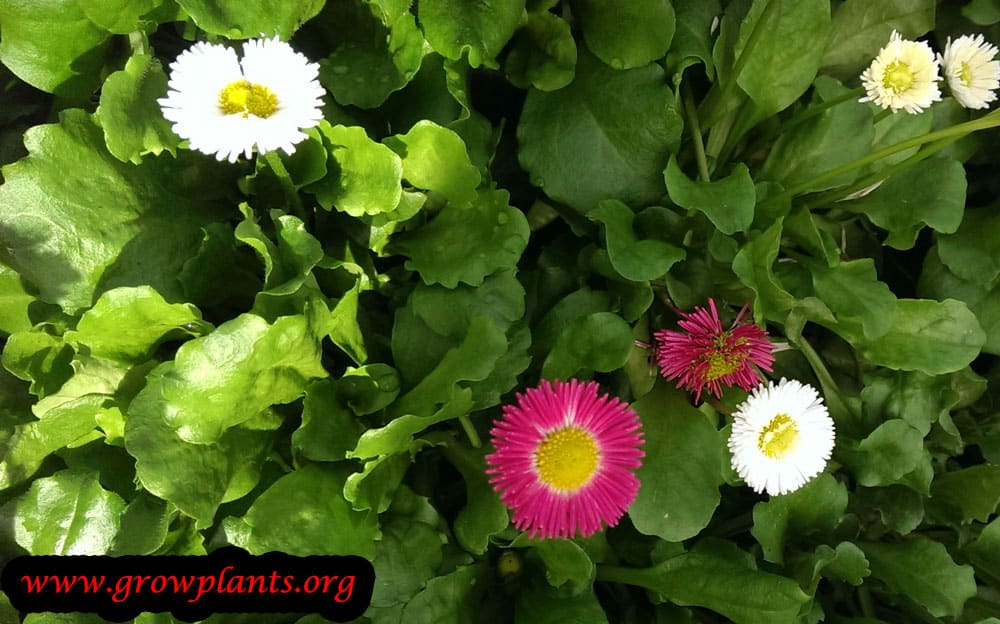
- Leaves & Foliage: Green, spoon-shaped (spatulate) leaves, broad at the tip and narrowing toward the base.
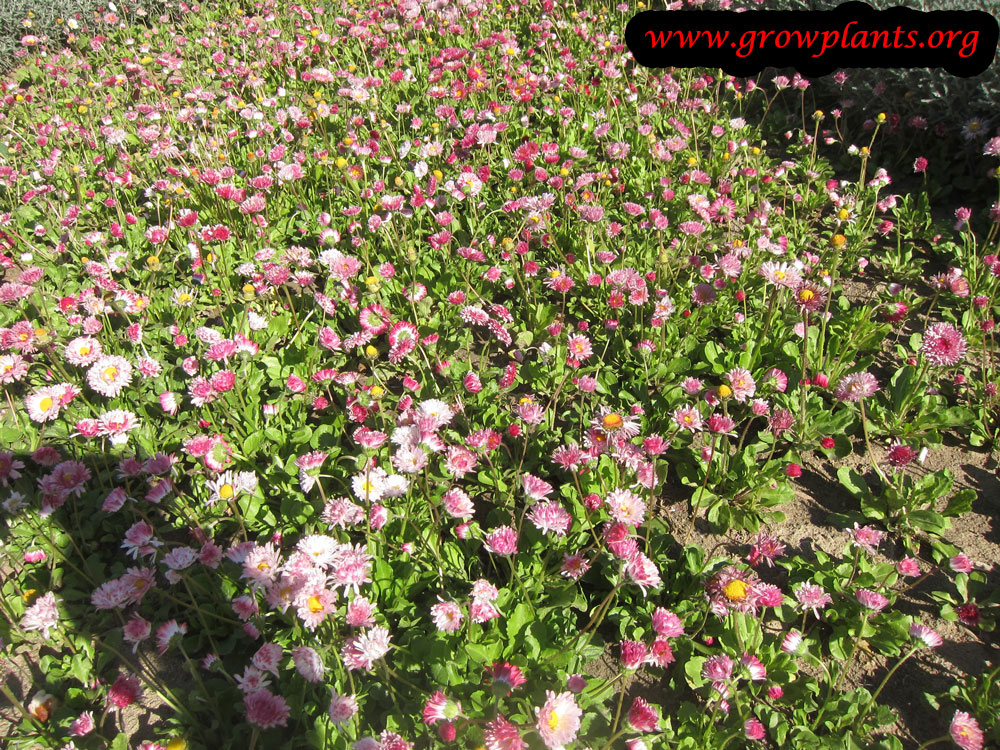
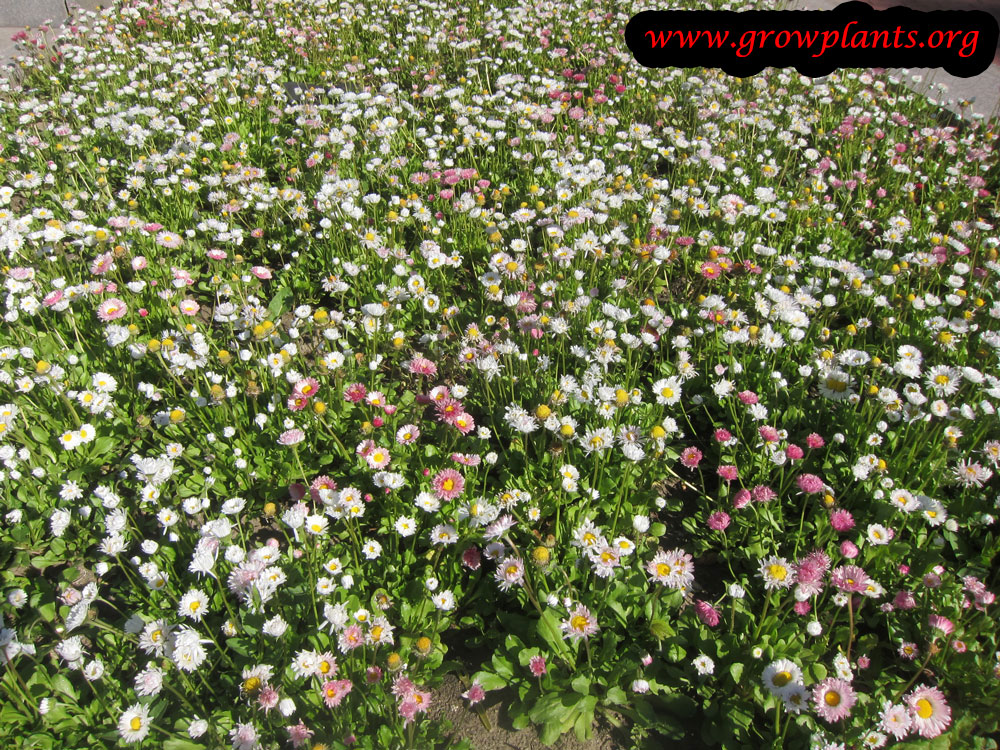
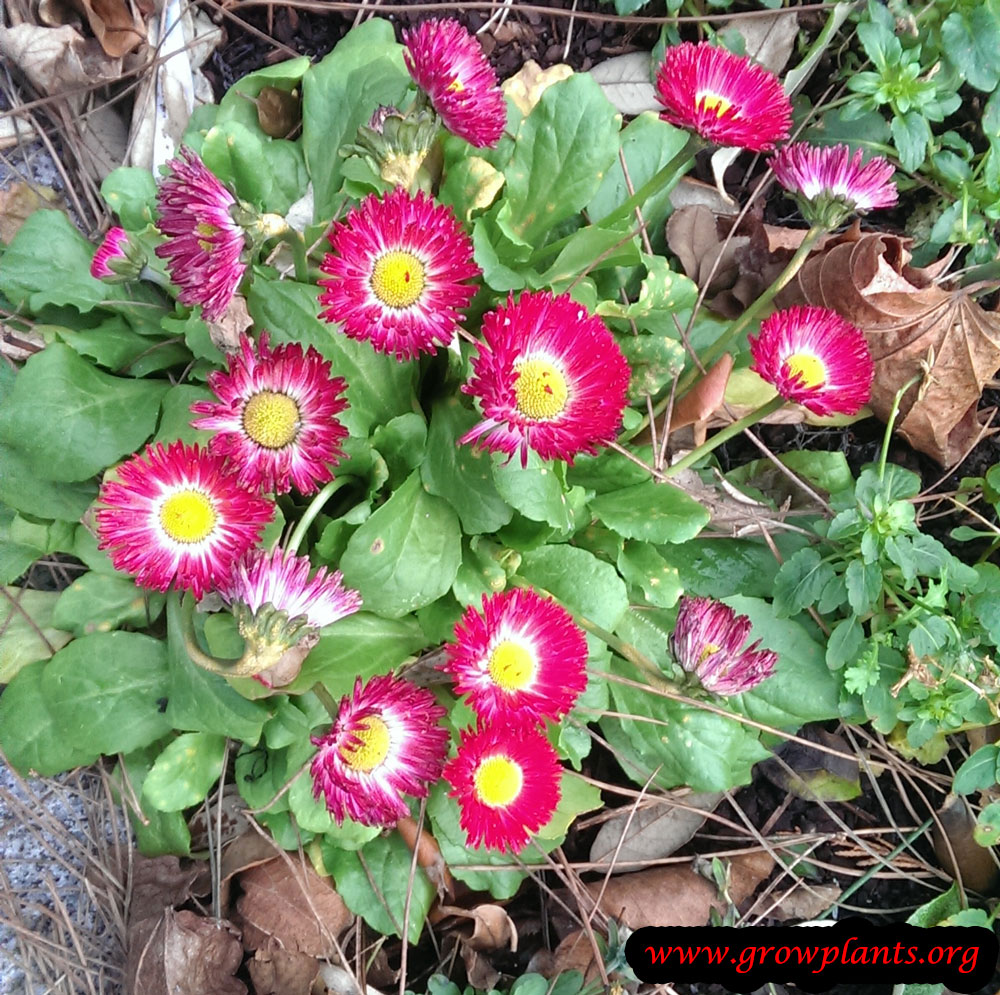
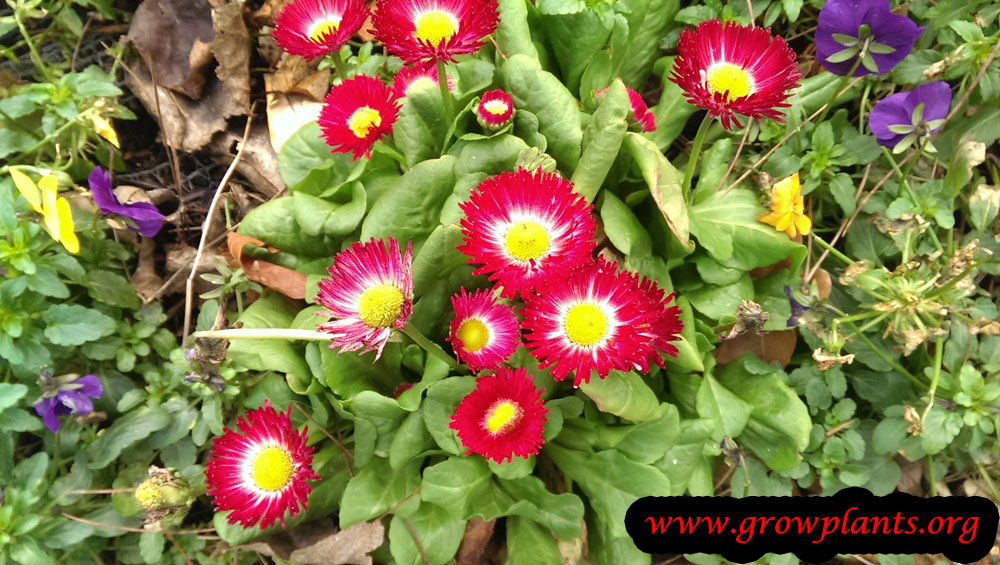
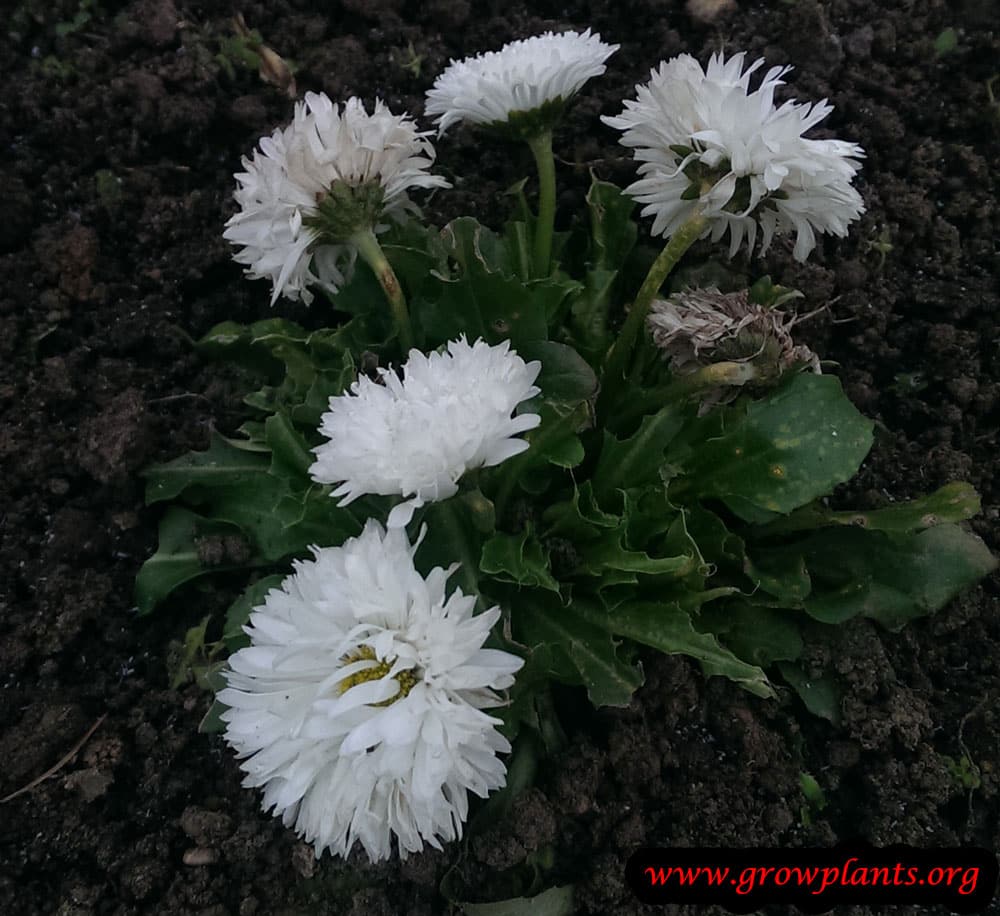
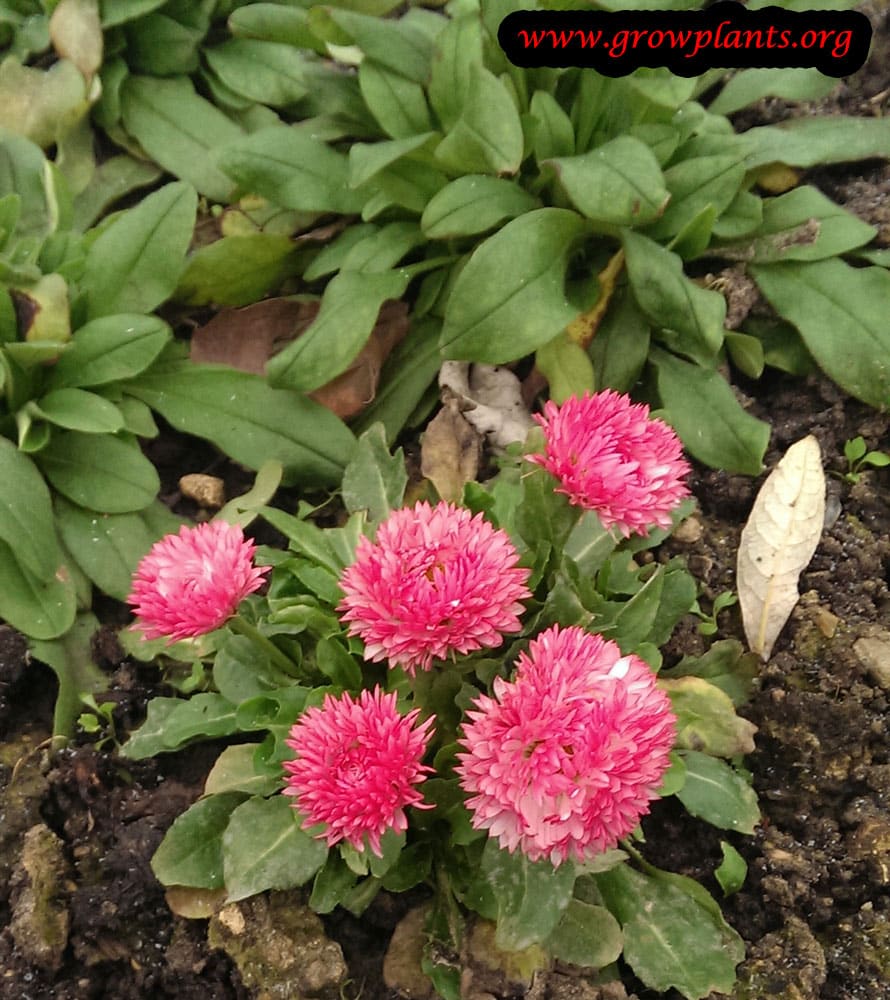
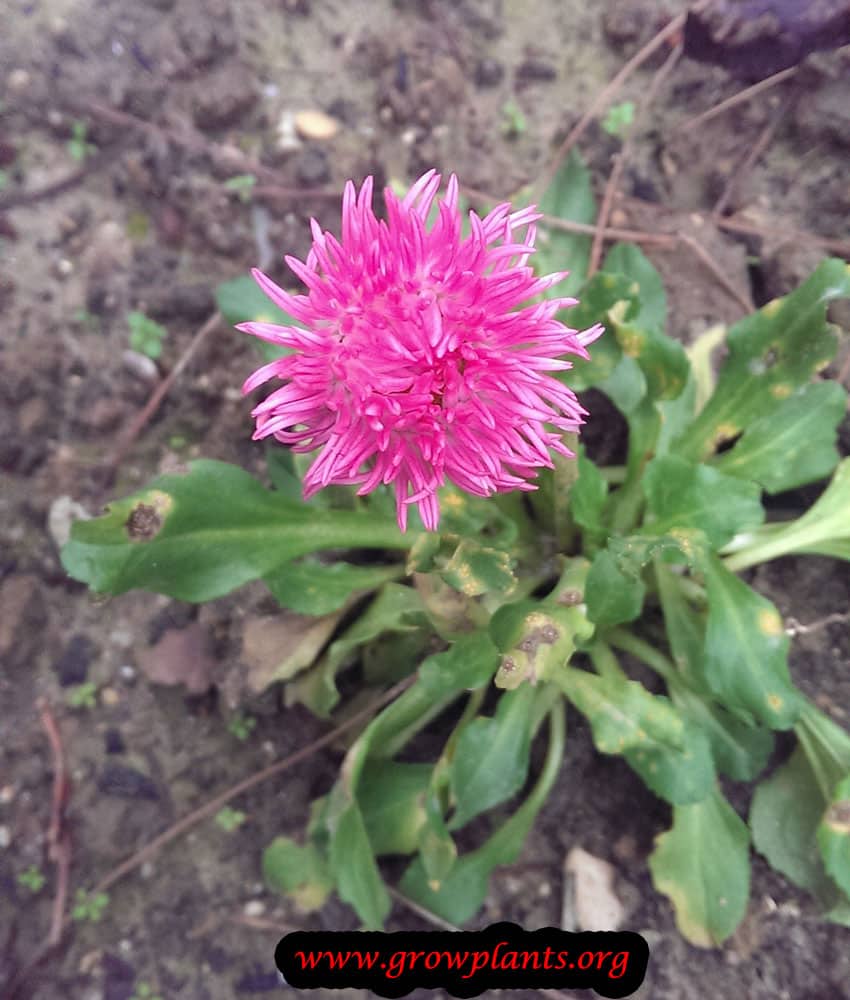
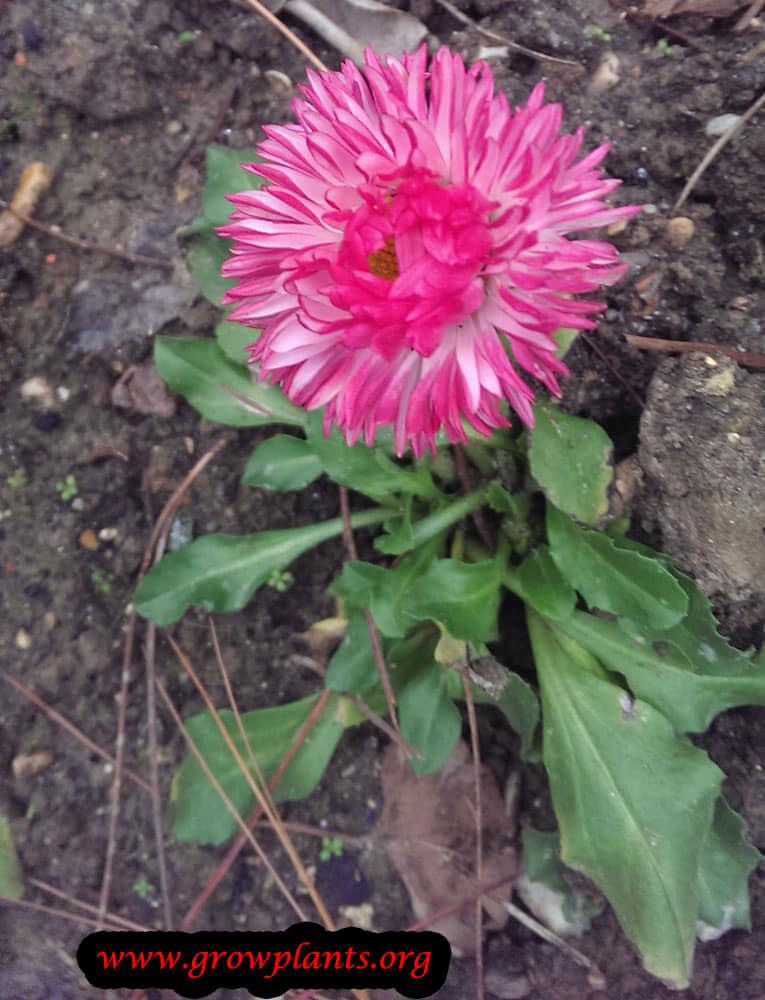
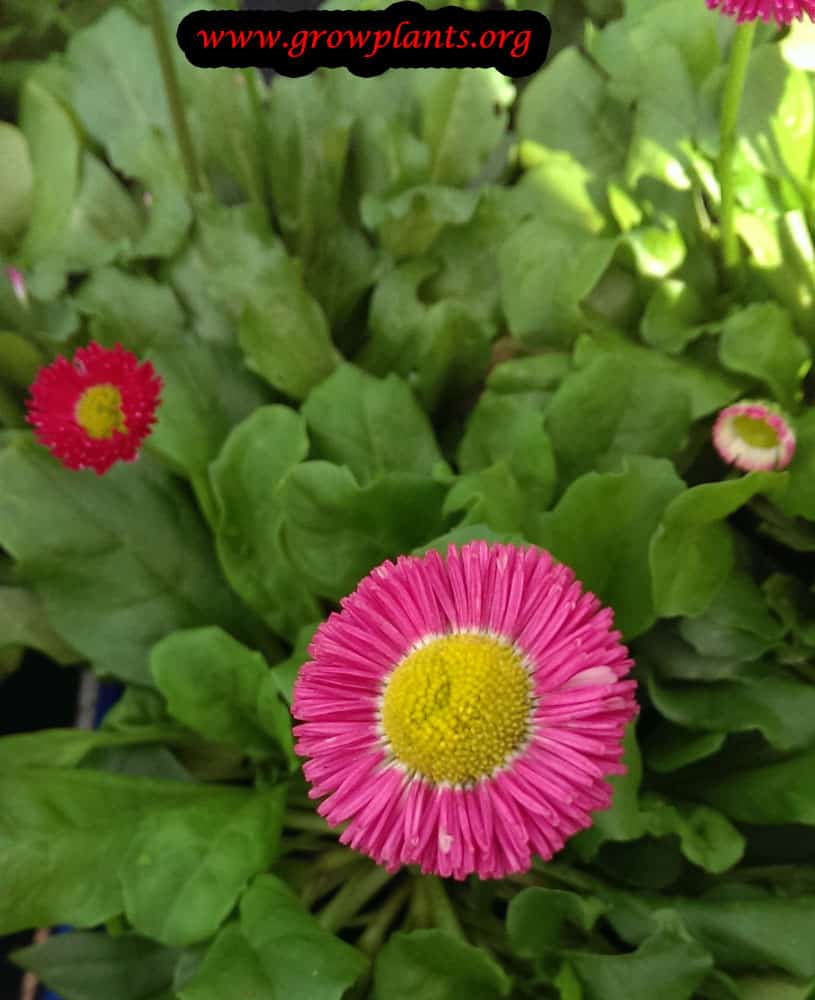
- Flower Characteristics: White single daisies or fuller pompon forms in red, white, pink or purple, sometimes bicoloured (full detail in the Bloom section).
Primary Uses & Landscape Value
- Edible Uses: Flowers and young leaves are edible, used raw in salads and as a garnish.
- Functional & Ornamental Roles: Cool-season bedding, edging, borders and containers.
Care Guide: Planting, Soil & Watering
Overview: English daisy is a cool-season perennial (often grown as an annual in warm zones) that prefers full sun to part shade and a moist, fertile, well-drained soil. It favours cool temperatures and steady moisture, performing best in spring and autumn rather than in summer heat.
Quick Care Requirements
| Requirement | Ideal Condition |
|---|---|
| Planting Season | In spring, or in autumn to early winter in mild-winter areas (it favours the cool season) |
| Growth Rate | Moderate |
| Soil Type | Moist, fertile and well-draining |
| Water Need | Moderate to high – keep the soil consistently moist |
Planting & Establishment
- Best Planting Season: Plant in spring, or in autumn to early winter where winters are mild; avoid establishing it in the heat of summer.
- How to Plant:
- Hole Preparation: Dig a hole about twice the width of the root ball and the same depth.
- Soil Amendments: Blend in compost or organic matter to enrich the soil and help it retain moisture while staying free-draining.
- Planting Depth: Set the crown level with the surrounding soil surface, without burying the leafy centre.
- Growth Speed & Expectations: Moderate; forms low 10–20 cm (4–8 in) rosettes and settles in within a season.
Soil, Watering & Drainage Care
- Soil Mix & Drainage Needs: Wants a moisture-retentive but well-drained soil; add grit or compost to heavy ground so water never pools around the crown.
- Watering Schedule & Technique:
- Young / Newly Planted: Water regularly to keep the soil evenly moist as plants root in.
- Established: Maintain steady moisture, especially in dry or warm weather, and never let it dry out completely.
- Seasonal Adjustments: Water more in warm, dry spells and less through the cool, wet winter months.
Climate, Light & Hardiness
English daisy is a classic cool-season plant for temperate, subtropical, and Mediterranean gardens, grown in full sun to half shade. It is genuinely cold-hardy as a perennial in cooler zones and is treated as a cool-season annual where winters are mild.
Quick Climate Specifications
| Climate Zones | Temperate, subtropical, Mediterranean |
|---|---|
| USDA Hardiness Zones | Perennial in zones 4–8; grown as an annual (typically an autumn/winter-into-spring bedding plant) in zones 9–11 |
| Frost Tolerance | High for the crown in its hardy range |
| Light Conditions | Full sun / half shade |
Sunlight & Light Exposure
Optimal Light Setup
Full sun to half shade both suit it; in warm-winter areas where it is grown through the cool season, some shade can extend flowering as temperatures rise.
Temperature Extremes & Hardiness
USDA Hardiness & Regional Limits
Cold-hardy as a perennial through zones 4–8; in warmer zones (9–11) it is instead grown as a cool-season annual planted in autumn/winter, since it does not appreciate prolonged heat.
Extreme Heat Tolerance
Sustained heat is more limiting than cold - flowering and vigor decline in hot summer conditions, which is why warm-climate gardeners grow it as a cool-season bedding plant rather than a summer perennial.
Growing in Pots, Balconies & Indoors
English daisy (Bellis perennis) is a small, cheerful cool-season daisy, perfect for pots, window boxes and edging – not a houseplant, but a neat plant that will flower on a bright, cool windowsill.
Quick Details
- Container Size: A small pot or window box, about 3-8 L (1-2 gal), for a plant of just 10-20 cm (4-8 in)
- Indoor Suitability: Not a warm-room houseplant (the grower marks it “No”); it can flower on a bright, cool, sunny sill
- Best Spot: Full sun to half shade; it prefers cool conditions and dislikes summer heat
- Soil & Drainage: Rich, moisture-retentive but free-draining mix
- Watering in Pots: Moderate to high – keep evenly moist; it dislikes drying out
Indoors & On the Windowsill
- Houseplant limits: The grower marks it as not suitable indoors; a warm, dry room makes it sulk – it is a cool-weather plant.
- Windowsill growing: A bright, cool sill (a chilly porch or an unheated room) suits it best; there it stays compact and flowers.
- Season: Often grown as a biennial or short-lived perennial; it flowers in the cool of spring and fades in summer heat, so it is easily refreshed.
On a Balcony or Patio
- Light & wind: A lovely little window-box and edge plant for a bright balcony; it prefers cooler spots and even moisture, so avoid a baking, sun-trap corner in high summer.
- Practicalities: Small pots dry fast – keep the mix moist and ensure it still drains freely.
Choosing the Pot, Soil & Long-Term Care
- Pot & drainage: A small 3-8 L pot or window box with strong drainage holes; skip a standing water saucer to avoid root rot.
- Potting mix: A rich, moisture-retentive organic mix that still drains.
- Feeding: Feed lightly and regularly while in growth, as small pots leach nutrients quickly.
- Repotting: Being short-lived, it is usually replanted each cool season; refresh the mix when you do.
Fertilizing & Feeding
English daisy is a compact, cool-season bedding plant that flowers over an unusually long window – it stays a light feeder throughout, since its small size and low, tidy habit do not call for heavy nutrition.
Quick Fertilizing Specs
| Feeding Level | Light |
|---|---|
| Main Nutrient Priority | Balanced feeding to support its long, near-continuous bloom display |
| Best Feeding Period | Through active growth in the cooler parts of the year when the plant is in bloom |
| Organic Options | Compost worked into the bed at planting |
| Soil pH | Adaptable to a range of well-drained soils |
Feeding by Growth Stage
Establishment after planting
Support root and rosette development after planting or dividing
| Nutrient direction | Balanced feeding at a light rate to support healthy establishment |
|---|---|
| Timing | From spring or autumn/winter planting through early growth |
| Frequency | Light, infrequent feeding while the plant establishes |
| Fertilizer types | Balanced complete fertilizer at a light rate, Compost worked into the bed at planting |
| Precautions | Keep feeding light for this small-statured plant; overfeeding can produce lush leaves at the expense of its compact, floriferous habit |
Extended bloom period
Sustain the plant’s unusually long flowering display across multiple seasons
| Nutrient direction | Balanced feeding kept light and steady to support continued flower production |
|---|---|
| Timing | Through the plant’s extended bloom period across the cooler growing months |
| Frequency | Feed sparingly and regularly while the plant continues to flower |
| Fertilizer types | Balanced complete fertilizer for flowering bedding plants, applied lightly |
| Routine trace nutrients | iron |
| Precautions | This species tends to need consistent moisture more than heavy feeding – prioritize even watering over pushing extra fertilizer |
Hot-weather rest
Let the plant rest through its least active, hottest stretch of the year
| Nutrient direction | None – withhold fertilizer during the plant’s warm-season slowdown |
|---|---|
| Timing | During the hottest part of summer |
| Frequency | No feeding at this stage |
| Fertilizer types | No feeding at this stage – resume once cooler weather brings renewed growth |
| Precautions | Do not fertilize during heat stress; resume feeding only once active growth returns in cooler weather |
Nutrient Deficiency Signs & Corrections
Pale, small leaves and reduced flowering for this normally free-blooming plant
| Possible causes | Nitrogen deficiency, Poor soil fertility, Root crowding in a densely planted bed |
|---|---|
| Appears first on | Older leaves in the rosette |
| What to check | Soil fertility and organic matter, Planting density, Recent feeding history |
| Possible correction | Amend soil with compost and resume light balanced feeding |
Yellowing between the veins of new leaves while veins stay green
| Possible causes | Iron deficiency, Alkaline soil limiting iron availability, Waterlogged soil |
|---|---|
| Appears first on | Newest leaves |
| What to check | Soil pH, Drainage in the bed, Whether new growth specifically is affected |
| Possible correction | Improve drainage, correct soil pH where testing confirms an issue, and apply a chelated iron product per its label if needed |
Wilting and reduced flowering during warm weather that persists despite feeding
| Possible causes | Heat stress typical of this cool-season plant, Inconsistent watering, Nutrient deficiency |
|---|---|
| Appears first on | Whole plant during warm spells |
| What to check | Recent temperatures and watering consistency before assuming a nutrient cause, Mulching to keep roots cool, Overall plant location and sun exposure |
| Possible correction | Improve watering consistency and shade or mulch during hot weather; feeding will not correct heat stress |
Pruning, Training & Seasonal Maintenance
Bellis perennis is a very low (10–20 cm), evergreen, mat-forming bedding plant that blooms across nearly the whole year – there is no woody structure or clear seasonal dormancy to plan around, so grooming is simply an ongoing task: pinch off old, browning leaves and spent flowers as they appear to keep the clump tidy and encourage continued flowering.
Quick Pruning & Maintenance Specs
| Pruning Tolerance | Low – grooming only |
| Primary Pruning Window | Year-round, as needed |
| Typical Frequency | Ongoing, roughly weekly during active bloom |
| Main Objective | Deadhead to prolong bloom and remove tired leaves |
| Young Plant Priority | None |
| Mature Plant Priority | Continuous deadheading and leaf tidy |
| Best Tool Type | Precision snips or fingers |
| Avoid Heavy Pruning During | No strong restriction – simply avoid stripping all foliage at once |
Pruning by Plant Age & Size
Newly Established
No pruning needed.
Young / Formative
No training applies – this is a low basal rosette with no framework to shape.
Mature / Established
Pinch or snip spent flowers continuously through its long bloom season; remove yellowing older leaves as they appear.
Seasonal Pruning Schedule
Ongoing Sanitary
Objective: keep the plant reflowering and tidy. Remove: spent flower heads and dead leaves at the base as they occur. Avoid removing: healthy green leaves. Response: continued flowering and an extended display, since removing spent flowers redirects energy away from seed production.
Special Growth to Remove
- Dead or old leaves
- Spent flower heads
Container & Small-Space Pruning
This species is very well suited to pots and bedding trays; the same ongoing deadhead-and-leaf-tidy routine applies, just with easier reach in a small container.
Tools
- Precision snips – for the fine, soft deadheading and leaf-tidy cuts this small plant needs; no heavier tool is ever appropriate
Tool Hygiene & Disease Risk
Routine – clean tools are sufficient; no specific disease risk is flagged.
Cut Placement & Technique
Pinch or snip the flower stem down near the foliage rosette rather than pulling, since pulling can uproot this shallow-rooted plant.
Heavy Pruning & Rejuvenation
Not applicable – the plant is too small and low for a rejuvenation cut. If a clump becomes tired or leggy, divide or replace it rather than attempting a hard prune.
Post-Pruning Care
Routine watering only; no feeding is required for deadheading.
Common Pruning Mistakes
- Leaving spent flowers on, which shortens the bloom display as the plant sets seed instead of new buds
- Pulling flower stems instead of snipping, risking uprooting the shallow plant
When NOT to Prune
No strong seasonal restriction given the near year-round bloom; simply avoid heavy handling during a hot, dry spell when this small plant is under drought stress.
Recommended Tools (by task)
- precision_snips – for ongoing deadheading and leaf tidy; nothing heavier is ever needed for this low bedding plant
Propagation Guide
Bellis perennis (English daisy) is usually raised from seed for ordinary plants, but division of the rosette clumps is preferred for named double or ‘pomponette’ forms to keep their exact flower form and color. Both methods are easy.
Quick Propagation Specs
| Best Propagation Method | Seed (species/mixed strains); division (named double forms) |
| Alternative Methods | Division |
| Propagation Difficulty | Easy |
| Seed True-to-Type | Variable for double/pomponette forms; mostly uniform for single-flowered strains |
| Vegetative True-to-Type | Yes |
| Best Propagation Season | Sow seed in early-to-mid summer for bloom the following spring; divide clumps after flowering or in autumn |
Growing from Seed
Sowing Season
In temperate gardens, English daisy is commonly seed-sown in early-to-mid summer and grown on for flowering the next spring, though it can also be raised as a quicker annual bedding plant from an earlier sowing.
Germination Conditions & Time
Germinates readily at normal outdoor temperatures within a couple of weeks under consistently moist conditions.
Division, Offsets, Pups & Suckers
Clump Division
Lift the low rosette clump and separate it into rooted sections, each with several leaves and its own roots. This is the reliable way to keep a specific double-flowered or color form true, and also helps rejuvenate older clumps.
Bloom & Edible Flower Guide
Quick Details
- Bloom Season: Spring through autumn, and into winter in mild areas
- Time to First Bloom: Often blooms the first year from an early sowing; as a short-lived perennial it flowers again each spring
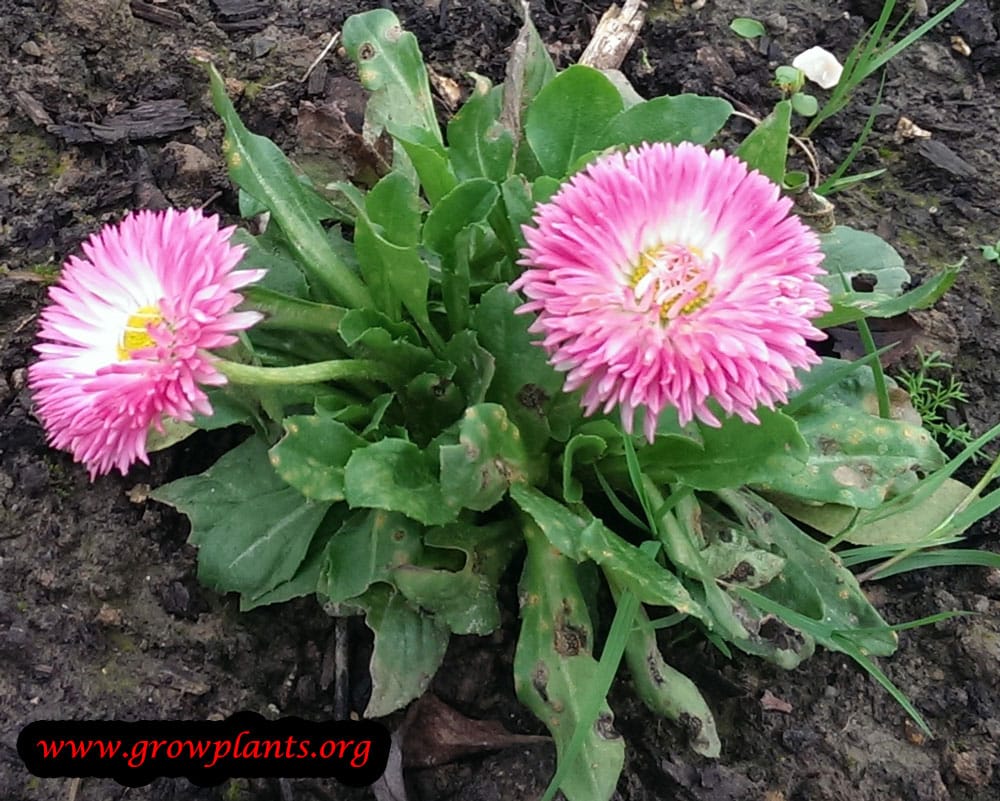
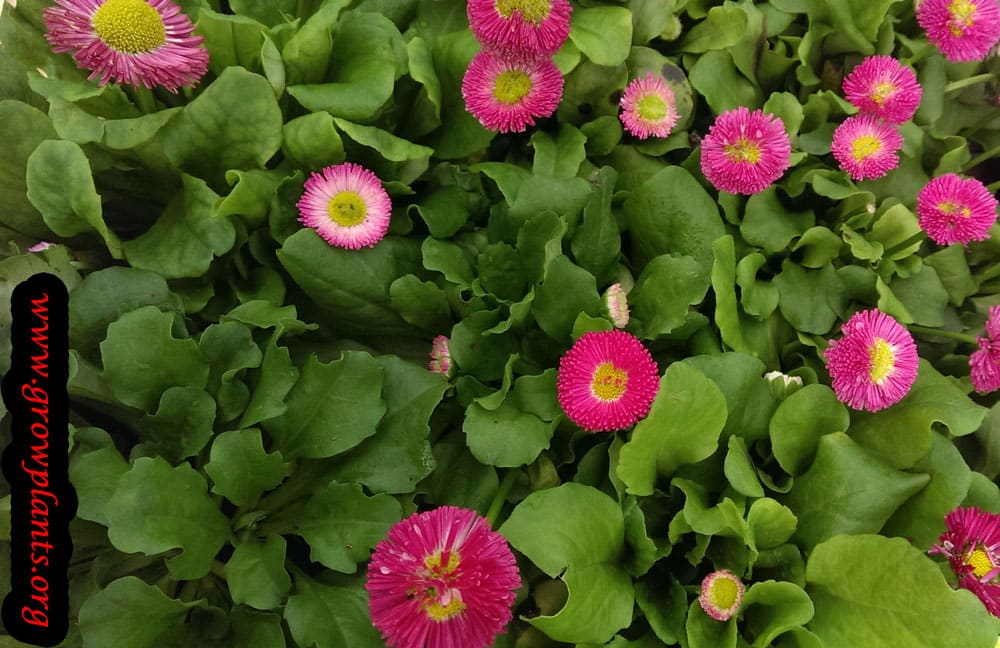
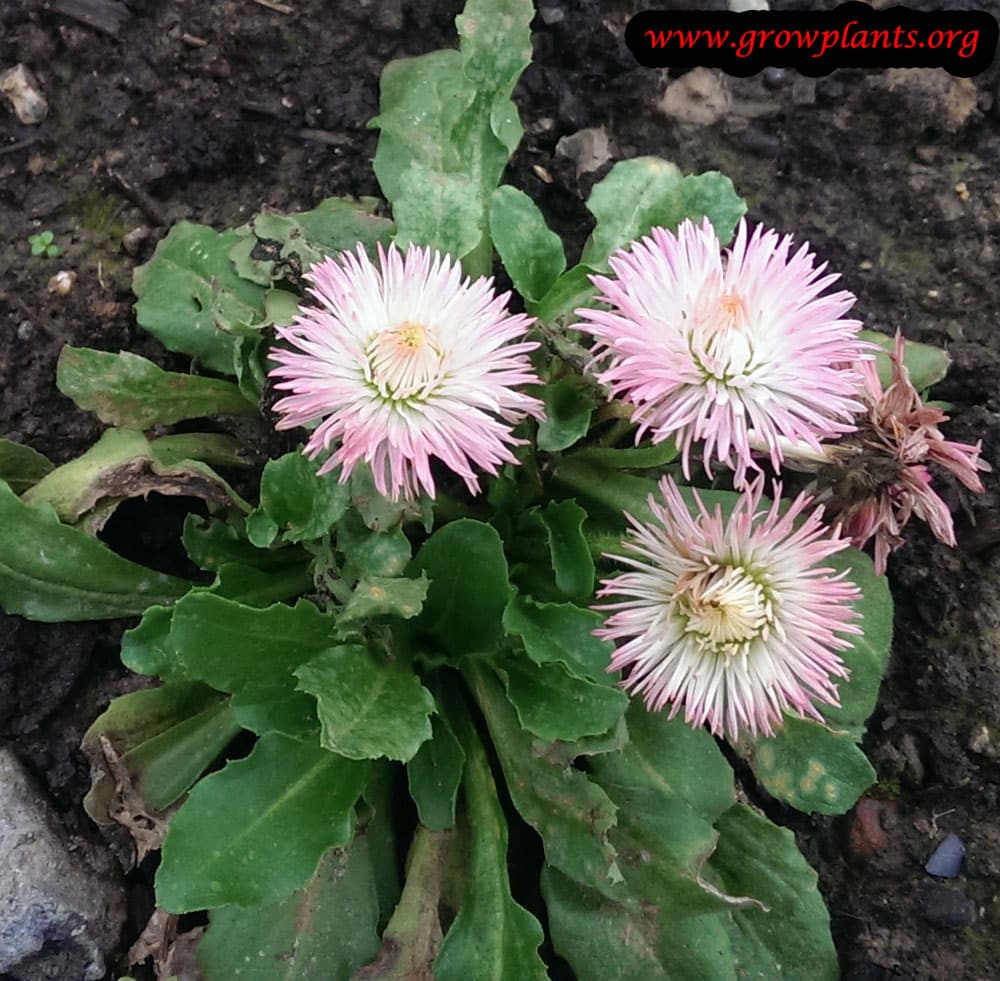
- Flower Appearance: Flat white single daisies, or the dense pompon “pomponette” forms in red, white, pink or purple, sometimes bicolored, all with many petals
- Edibility: The flowers are edible – the petals and young buds are used in salads and as a garnish, and traditionally in herbal remedies
Detailed Blooming Overview
The English daisy is the cheerful little daisy of cottage gardens and lawns. Low, tidy and remarkably long-flowering, it is one of the earliest nectar sources for bees and its blooms are as edible as they are pretty.
Flower Characteristics
- Flat single daisies or plush, fully double pompons in white and warm pinks and reds.
Bloom Care & Thinning
- Managing the bloom: Deadhead to prolong flowering and to limit self-seeding, and keep the soil evenly moist for the best display.
- Pollination: Pollinated by bees.
- Using the flowers: Add whole small flowers or loose petals to salads as a mild, decorative garnish.
Pests, Diseases & Troubleshooting
Overview: English daisy is a tough, low-growing perennial that is largely trouble-free. Its main nuisances are aphids on soft new growth and slugs and snails grazing the leaf rosette, with powdery mildew and leaf spots appearing in crowded, humid or overly wet plantings. Good spacing, airflow and restrained watering prevent most problems.
Quick Troubleshooting Overview
| Issue / Pest | Main Symptom | Primary Solution |
|---|---|---|
| Aphids | Curled, distorted new leaves and sticky honeydew | Blast with water, insecticidal soap, encourage ladybirds |
| Slugs & snails | Ragged holes and slime trails on leaves | Handpick at night, grit or copper barriers, iron-phosphate bait |
| Powdery mildew | White coating on leaves in humid crowding | Thin for airflow, avoid overhead water, sulphur spray |
| Leaf spot | Brown or purple spots on foliage | Remove affected leaves, water at the base, sanitation |
Common Pests & Management
- Aphids (Aphis / Macrosiphum spp.):
- Symptoms: Clusters of green or black soft-bodied insects on shoot tips and flower stalks, curling new leaves and leaving sticky honeydew and sooty mould.
- Prevention & Control: Knock them off with a water jet, spray insecticidal soap or neem on undersides, and encourage ladybirds, lacewings and hoverflies; avoid over-feeding with nitrogen.
- Slugs and snails (Deroceras reticulatum / Cornu aspersum):
- Symptoms: Irregular holes chewed in leaves and tender rosettes, with tell-tale silvery slime trails, worst in damp, shady, mulched sites.
- Prevention & Control: Handpick after dark, set beer traps, ring plants with grit or copper tape, keep mulch back from crowns, and use iron-phosphate pellets where needed.
- Leaf miners (Chromatomyia / Liriomyza spp.):
- Symptoms: Pale winding or blotchy mines within the leaf where larvae tunnel between the surfaces.
- Prevention & Control: Pick off and destroy mined leaves, use floating row cover on new plantings, and clear leaf litter that harbours pupae.
- Spider mites (Tetranychus urticae):
- Symptoms: Fine stippling and a dull look to leaves in hot, dry spells, sometimes with faint webbing.
- Prevention & Control: Hose foliage, raise humidity, and treat with insecticidal soap or horticultural oil if it persists.
Diseases & Fungal Issues
- Powdery mildew (Golovinomyces / Podosphaera spp.):
- Symptoms: A white powdery film on the upper leaf surface, usually late in the season or in still, humid, crowded plantings.
- Treatment & Management: Space and divide plants for airflow, avoid wetting foliage, remove infected leaves, and spray sulphur or potassium bicarbonate if needed.
- Leaf spot (Septoria / Ramularia spp.):
- Symptoms: Small brown to purplish spots that enlarge and merge, sometimes with pale centres, on older leaves.
- Treatment & Management: Remove and destroy spotted leaves, water at the base, improve airflow and sanitation; copper can help in wet seasons.
- Rust (Puccinia spp.):
- Symptoms: Orange to brown powdery pustules on leaf undersides with yellowing above.
- Treatment & Management: Remove affected foliage, avoid overhead watering, and increase spacing; sulphur reduces spread.
- Botrytis (grey mould) (Botrytis cinerea):
- Symptoms: Grey fuzzy mould on flowers and leaves in cool, wet, still conditions.
- Treatment & Management: Deadhead spent flowers, remove dead tissue, and improve ventilation and drainage.
Growing Difficulties & Abiotic Problems
- Crown rot in wet soil:
- Cause & Symptoms: Heavy, waterlogged soil rots the crown, causing yellowing, collapse and death.
- Correction Strategy: Plant in free-draining soil, avoid winter wet, and keep mulch off the crown.
- Short-lived / heat decline:
- Cause & Symptoms: Plants tire and thin out in hot summers, being cool-season perennials often grown as biennials.
- Correction Strategy: Divide regularly, mulch to keep roots cool, and allow gentle self-seeding to renew the patch.
- Chlorosis:
- Cause & Symptoms: Poor or waterlogged soil yellows the foliage.
- Correction Strategy: Improve soil, feed lightly with a balanced fertiliser and correct drainage.
What Helps – Products & Tools
Reach for insecticidal soap or neem for aphids and mites, iron-phosphate slug bait plus grit or copper barriers for molluscs, and a sulphur or potassium-bicarbonate fungicide for powdery mildew, rust and leaf spot. Cultural care – spacing, base watering and division – does most of the work.