


Plant Profile & Key Characteristics
Overview: A compact evergreen shrub 30-60 cm (1-2 ft) tall, grown as an aromatic, drought-tolerant ornamental with silvery foliage and button-like flowers. It is a favourite for low hedges and dry, sunny gardens.
Quick Specifications
| Specification | Attribute |
|---|---|
| Plant Type / Life Cycle | Evergreen perennial shrub |
| Foliage Type | Evergreen (aromatic, silvery) |
| Mature Size | 30-60 cm (1-2 ft) tall and wide |
| Growth Rate | Moderate to fast |
| Hardiness | USDA zones 6-11 |
Growth Form & Structure
- Height & Spread: In the ground a dense mound 30-60 cm (1-2 ft) tall and wide; also grows well in containers.
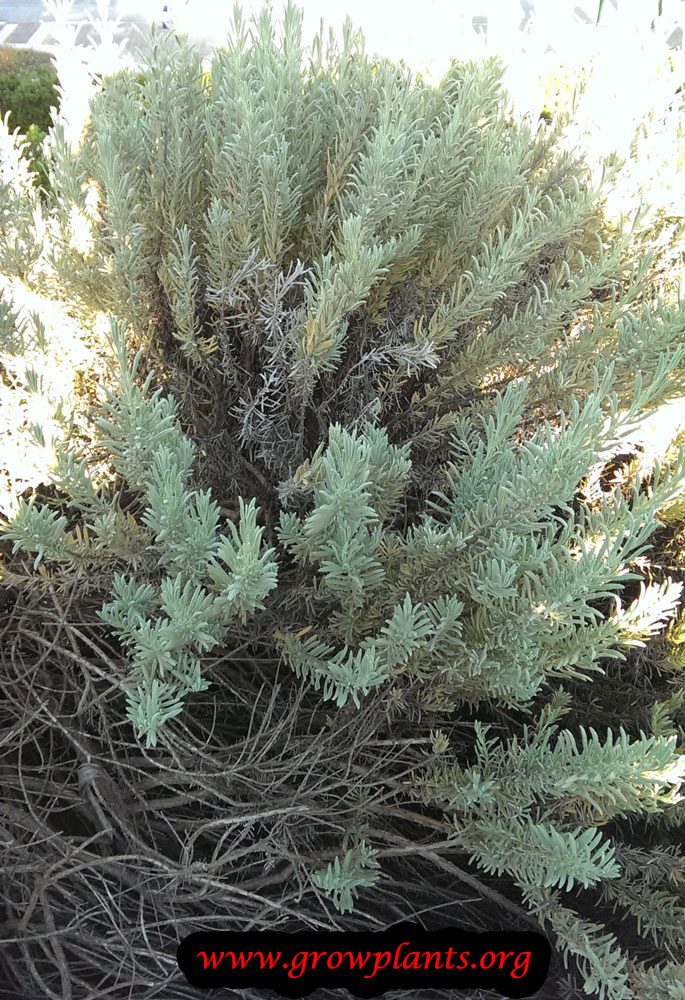
- Growth Habit & Form: Low, cushion-like evergreen shrub that clips neatly into mounds, edging or a low hedge.
- Lifespan & Maturity: An evergreen perennial that quickly forms a dense mound and is best kept youthful by regular trimming.
Anatomy & Physical Features
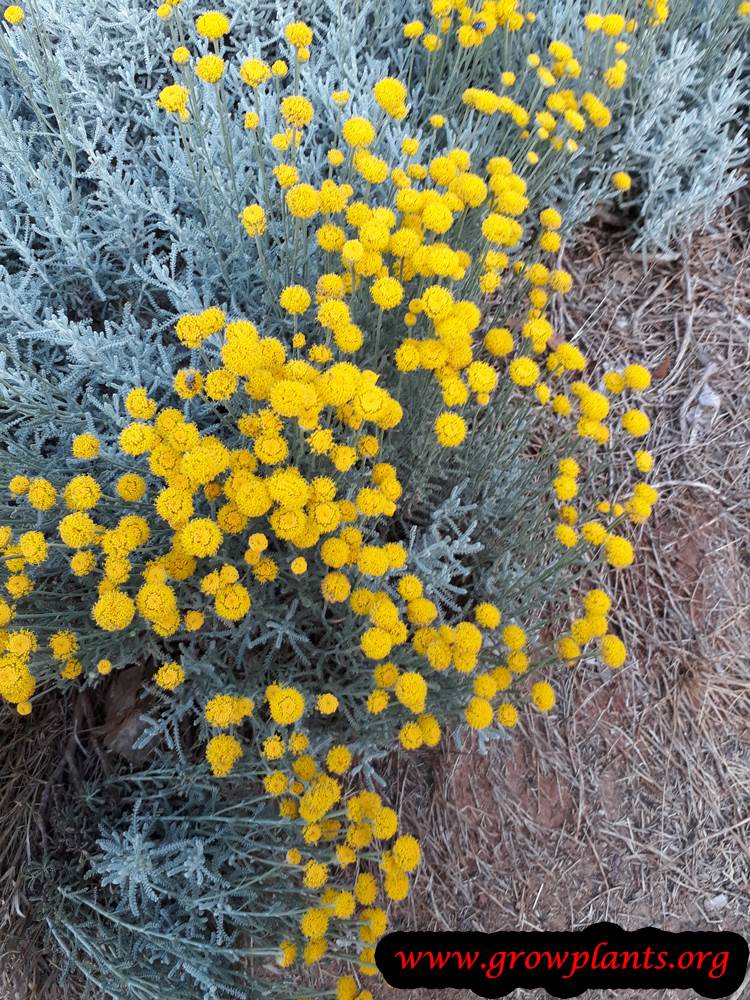
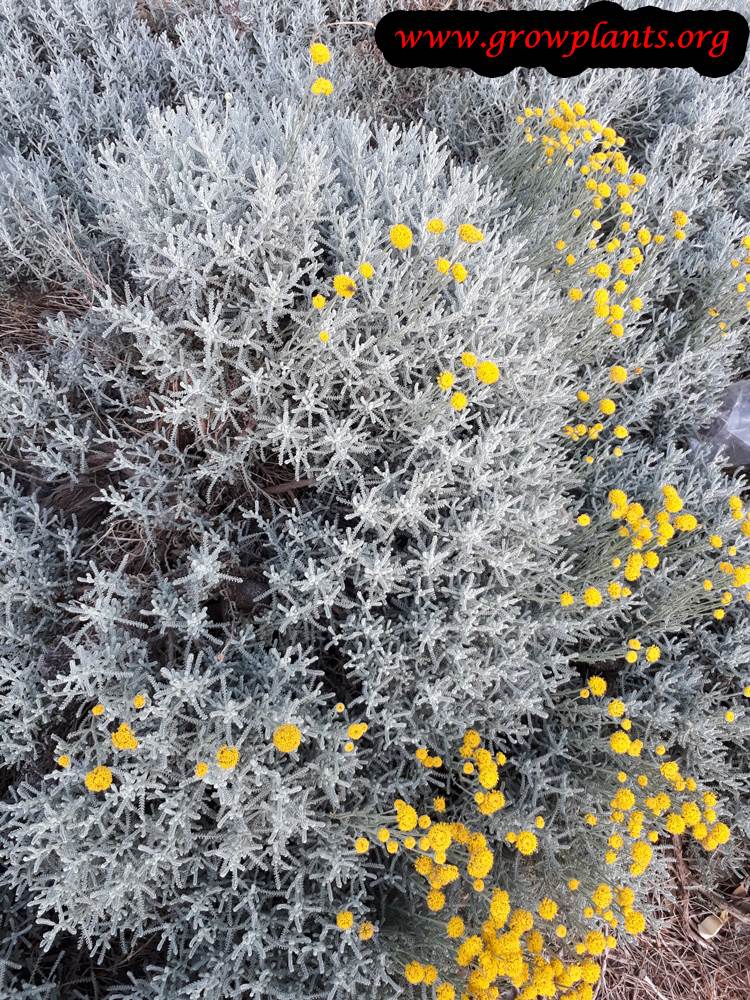
- Leaves & Foliage: Finely divided, aromatic green-to-grey foliage giving the plant a silvery, feathery texture.
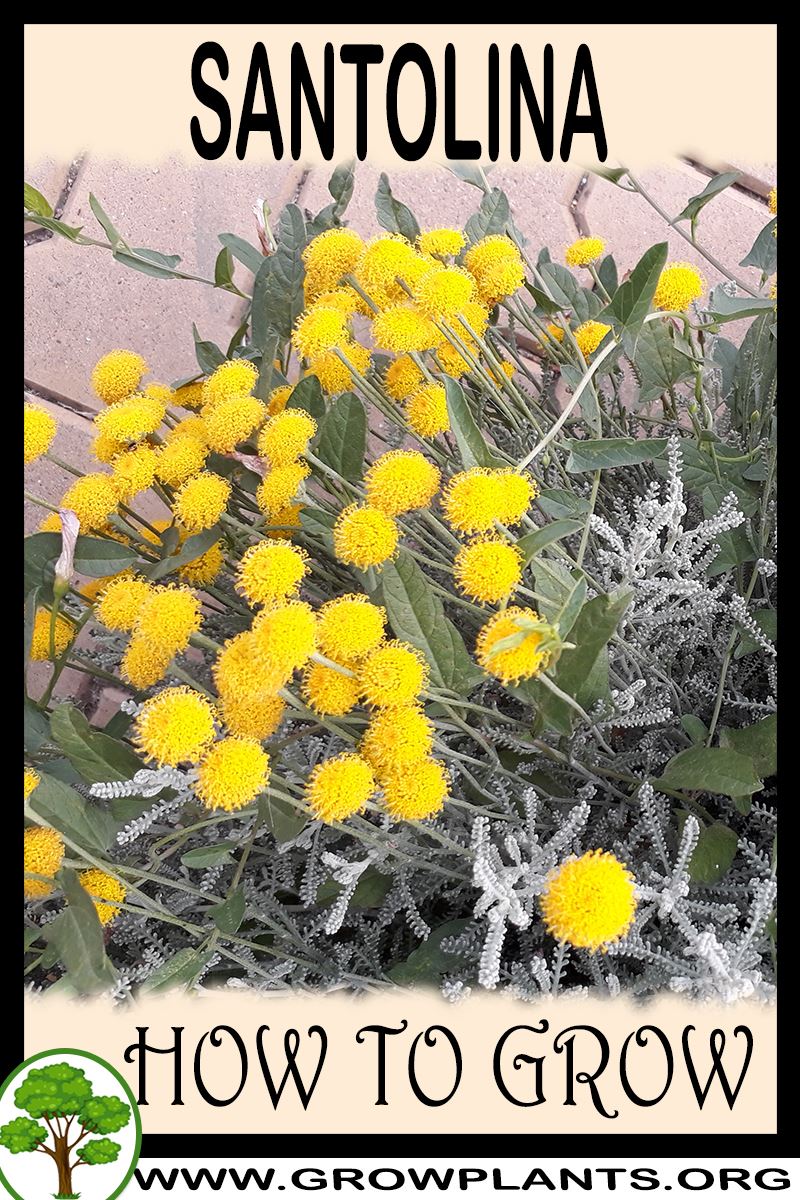
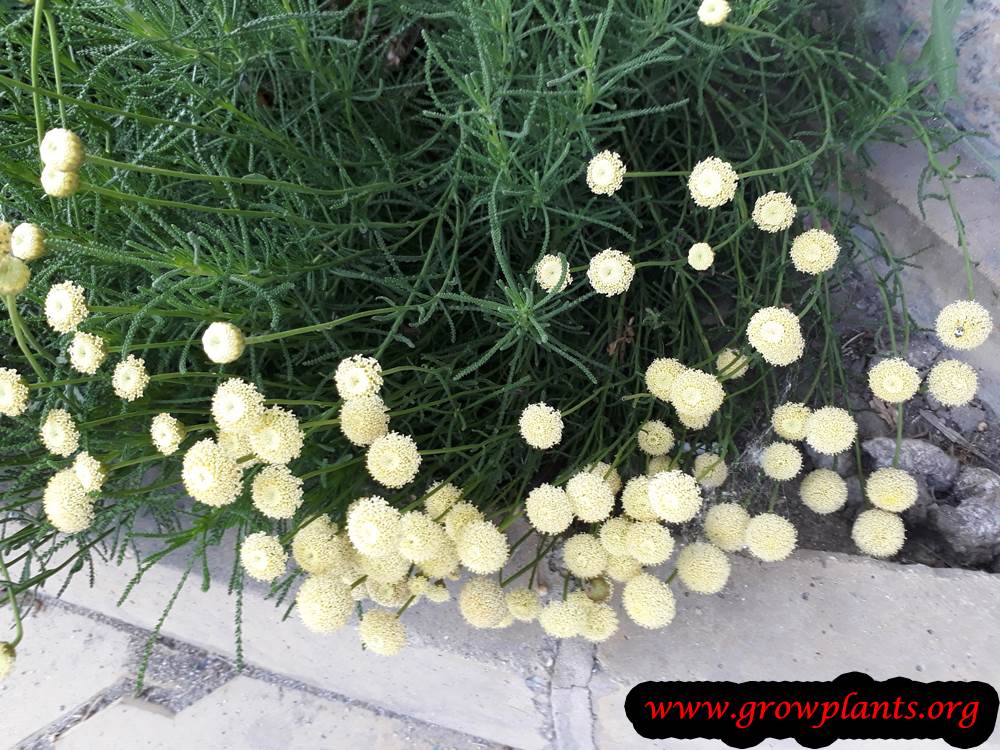
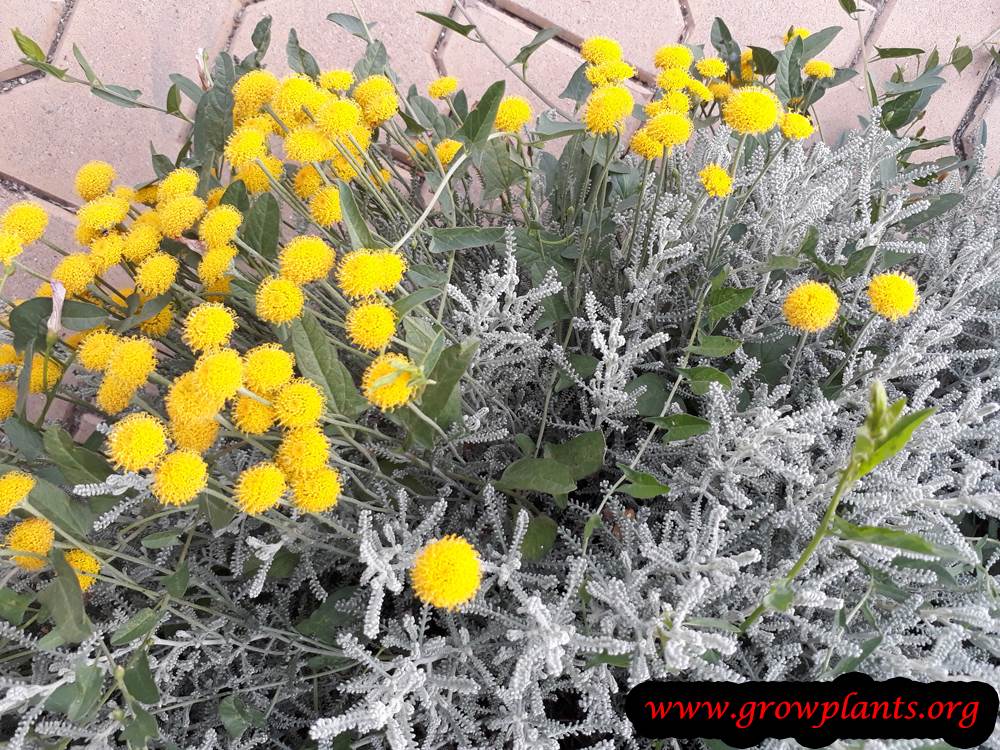
- Flower Characteristics: Fragrant, small, button-like yellow or white flower heads held on slender stems above the foliage.
Primary Uses & Landscape Value
- Functional & Ornamental Roles: Low hedge, edging, knot-garden and rock-garden ornamental for hot, dry sites; drought-tolerant and attracts pollinators.
Care Guide: Planting, Soil & Watering
Overview: Santolina (Santolina), lavender cotton, is a fragrant, drought-tolerant Mediterranean evergreen shrub grown for its aromatic grey-green foliage (hardiness zones 6-11). It thrives in full sun to light shade in poor, sharply draining soil and needs little water once established.
Quick Care Requirements
| Requirement | Ideal Condition |
|---|---|
| Planting Season | Spring, summer or autumn |
| Growth Rate | Moderate to Fast |
| Soil Type | Poor to average, sharply well-draining |
| Water Need | Low to moderate; let the soil dry between waterings |
Planting & Establishment
- Best Planting Season: Plant in spring, summer or autumn in a sunny, open position with light shade tolerated.
- How to Plant:
- Hole Preparation: Dig a hole a little wider than the root ball, loosening the soil and making sure the site drains freely.
- Soil Amendments: Add grit or sand to sharpen drainage; avoid rich, wet soils, which this dry-climate shrub dislikes.
- Planting Depth: Set the plant at the depth it grew in its pot, keeping the crown level with the surface.
- Growth Speed & Expectations: A moderate-to-fast grower reaching about 30-60 cm (1-2 feet), quickly forming a rounded mound that can spread.
Soil, Watering & Drainage Care
- Soil Mix & Drainage Needs: Give free-draining, gritty soil so the roots never stay wet. It also grows well in a container with open drainage holes.
- Watering Schedule & Technique:
- Young / Newly Planted: Water moderately while young plants root in and establish.
- Established: Once established it is highly drought-tolerant – water sparingly and let the soil dry out between waterings.
- Seasonal Adjustments: Give occasional deep watering in summer heat and almost none over winter.
Climate, Light & Hardiness
This Mediterranean-climate shrub is built for hot, dry, sun-drenched conditions and is markedly more heat- and drought-tolerant than it is cold-hardy. It wants full sun and sharp drainage, and its silvery-green aromatic foliage signals genuine drought adaptation rather than cold adaptation.
Quick Climate Specifications
| Climate Zones | Mediterranean, desert, subtropics, temperate |
|---|---|
| USDA Hardiness Zones | Zones 6–11 |
| Optimal Temp Range | Warm, dry summers; typical Mediterranean-climate range |
| Cold Damage Begins | Approaching freezing, especially with wet or heavy soil |
| Frost Tolerance | Moderate for an established plant in its hardy range; wet, cold soil is more damaging than cold air alone |
| Light Conditions | Full sun / half shade |
| Wind Tolerance | Moderate to high (low, wiry habit) |
| Salt / Coastal Tolerance | Moderate |
Sunlight & Light Exposure
Optimal Light Setup
Full sun gives the tightest, most floriferous, most aromatic growth; too much shade leads to loose, floppy stems.
Best Exposure / Orientation
A hot, open, south-facing bed with reflected heat suits it well.
Temperature Extremes & Hardiness
USDA Hardiness & Regional Limits
Reliable as a perennial through its stated hardiness range; below that, hard freezes kill the plant outright rather than just the top growth.
Cold Damage & Winter Protection
The main winter risk is cold, waterlogged soil rather than cold air - sharp drainage matters more than mulching for winter survival.
Wind, Humidity & Microclimate
Dry-Air Tolerance
Excellent; this is a genuinely drought- and dry-air-adapted plant.
Wind Tolerance
Low, dense, woody structure tolerates open, windy sites well.
Rainfall & Seasonal Moisture
Adapted to a dry-summer/wet(ter)-winter Mediterranean rainfall pattern; struggles in climates with humid, rainy summers.
Growing in Pots, Balconies & Indoors
Santolina (cotton lavender) is an aromatic, silver-leaved Mediterranean sub-shrub built for hot, dry, full-sun sites. It is not a houseplant, but it makes a superb drought-tolerant container plant for a sunny patio or balcony.
Quick Details
- Container Size: A small-to-medium pot, roughly 5-12 L (1.5-3 gal), sized to the plant
- Indoor Suitability: Not a houseplant – a sun-baked Mediterranean sub-shrub for outdoor pots
- Best Spot: Full sun (tolerates light shade but prefers full sun)
- Soil & Drainage: Very sharply drained, gritty mix – potting mix cut with plenty of coarse sand or grit; lean soil is ideal.
- Watering in Pots: Water sparingly and let the mix dry out well between waterings – overwatering is the main way to kill it in a pot.
Indoors & On the Windowsill
- Houseplant limits: It needs blazing sun and free air movement; in a room it grows soft, loose and prone to rot.
- Windowsill growing: A hot, very sunny sill might keep a small plant, but it is happiest outdoors in full sun and dry air.
On a Balcony or Patio
- Light & wind: Give it the hottest, sunniest, most open spot; it thrives on reflected wall heat and shrugs off wind and drought. Clip it after flowering to keep the silver mound tight.
- Practicalities: Water the pot in – allow for its weight on a balcony, and set it where drainage runoff won’t be a nuisance.
Choosing the Pot, Soil & Long-Term Care
- Pot & drainage: Choose a pot with strong drainage holes and skip a standing-water saucer, which invites root rot. Terracotta breathes and dries quickly, which suits these sun-lovers; glazed or plastic pots hold moisture longer if you can’t water often.
- Potting mix: Very sharply drained, gritty mix – potting mix cut with plenty of coarse sand or grit; lean soil is ideal.
- Feeding: Feed only lightly – cotton lavender flowers and stays compact on poor soil, so a single light feed in the growing season is plenty for a pot.
- Repotting: Refresh the mix or pot up about every couple of years to keep growth healthy.
Fertilizing & Feeding
A light feeder: this drought-tolerant, fragrant Mediterranean shrub thrives in lean, well-drained soil, and – much like lavender or rosemary – overfeeding makes it grow open and lanky and dulls its fragrance rather than improving it.
Quick Fertilizing Specs
| Feeding Level | Light feeder |
|---|---|
| Main Nutrient Priority | Light, balanced feeding, or often none at all in soil of reasonable fertility; this shrub performs best without rich inputs |
| Best Feeding Period | Spring as new growth resumes, before summer flowering |
| Organic Options | A light topdress of compost is usually enough; avoid rich, moisture-retentive amendments |
| Micronutrients | Rarely needed; a complete fertilizer supplies what little this plant uses |
| Soil pH | Prefers well-drained soil; tolerates a wide range of pH |
Feeding by Growth Stage
Spring flush of new growth
Support fresh silvery-green shoots as the shrub resumes active growth.
| Nutrient direction | A light, balanced fertilizer, or often none at all if the soil already has reasonable fertility. |
|---|---|
| Timing | Early spring as new growth begins. |
| Frequency | At most a light feeding at the start of the growing season; many established plants need none. |
| Fertilizer types | A light, balanced general-purpose fertilizer, used sparingly, A thin topdress of compost |
| Precautions | Avoid rich soil or generous feeding – this drought-tolerant shrub grows open and lanky, and loses fragrance, when overfed. |
Summer flowering
Support the small, fragrant button flowers that appear through summer.
| Nutrient direction | Most established plants need only very light supplemental feeding once well-rooted. |
|---|---|
| Timing | Summer as flower stems extend and buds open. |
| Frequency | Established plants typically need only minimal feeding through bloom. |
| Fertilizer types | Most established plants need only very light supplemental feeding once well-rooted; use a light balanced feed if growth looks weak or sparse |
| Precautions | Avoid heavy feeding during bloom – excess nitrogen produces soft growth that is prone to flopping and rot in humid weather. |
Winter rest
Let the shrub rest through the cooler winter months when growth slows.
| Nutrient direction | None – withhold fertilizer while growth is slow or stopped. |
|---|---|
| Timing | Late autumn through winter. |
| Frequency | No feeding at this stage. |
| Fertilizer types | No feeding at this stage; resume light feeding, if needed at all, when spring growth resumes. |
| Precautions | Do not fertilize during the winter rest period. |
Nutrient Deficiency Signs & Corrections
Open, floppy growth with lush leaves but sparse flowering.
| Possible causes | excess nitrogen from overfeeding, overly rich or moisture-retentive soil, too much shade encouraging soft, stretchy growth |
|---|---|
| Appears first on | overall shrub form and stem growth |
| What to check | recent feeding history, soil richness and organic matter level, sun exposure |
| Possible correction | Stop supplemental feeding, avoid rich soil amendments, and prune to restore a compact form. |
Yellowing between veins on new growth.
| Possible causes | high soil pH limiting micronutrient availability, poor drainage or waterlogging, naturally calcareous soil |
|---|---|
| Appears first on | newest growth |
| What to check | soil pH and drainage, recent watering pattern, soil type |
| Possible correction | Improve drainage, correct pH toward neutral, and, if confirmed, apply a chelated iron or manganese product per its label. |
Wilting, yellowing, and dieback despite normal feeding.
| Possible causes | waterlogged or poorly drained soil, root rot from excess moisture, damaged roots limiting nutrient uptake rather than true soil deficiency |
|---|---|
| Appears first on | whole-plant wilting and lower stem dieback |
| What to check | soil drainage and moisture, root health, recent watering frequency |
| Possible correction | Improve drainage before considering any fertilizer change; correct watering rather than adding nutrients. |
Pruning, Training & Seasonal Maintenance
Santolina (lavender cotton) is a small, mounding evergreen sub-shrub grown mainly for its aromatic grey-green foliage. Like related Mediterranean sub-shrubs, it becomes woody, sparse and prone to splitting open in the centre if left untrimmed, so regular shaping is essential – but it must never be cut back hard into leafless older wood, which often fails to resprout. Light tidying can happen through the year, but the one significant structural shear belongs in early-to-mid spring.
Quick Pruning & Maintenance Specs
| Pruning Tolerance | Moderate – shape freely in leafy growth; avoid cutting into bare wood |
| Primary Pruning Window | Early-to-mid spring, after the last hard frost |
| Secondary Maintenance Window | After each flower flush (spring/summer/autumn) – trim spent stems |
| Typical Frequency | One firm shape in spring + spot tidying through the growing season |
| Main Objective | Prevent legginess and centre-splitting; maintain a dense aromatic mound |
| Young Plant Priority | Pinch tips from the first season to build a many-branched framework |
| Mature Plant Priority | Annual spring shape-back into live growth; remove spent flower stems |
| Best Tool Type | Hand shears for the whole-mound shape; precision snips for deadheading |
| Avoid Heavy Pruning During | Hot mid-summer stress; never cut into completely leafless old wood |
Pruning by Plant Age & Size
Newly Established
Pinch stem tips in the first season to encourage low branching before the plant develops a woody base – this early habit-forming step is what keeps Santolina compact for years.
Young / Formative
No leader or central-stem training; build a rounded, multi-branched framework through repeated tip-pinching instead.
Mature / Established
An annual spring shape-back into live, leafy growth (never bare wood) counters the natural tendency to become woody and open in the middle; trim spent flower stems after each bloom.
Seasonal Pruning Schedule
| Pre-Growth/Early-Spring | Reset a dense, compact mound for the season | Last year’s growth, shaping back into leafy/semi-firm wood | Completely bare, leafless stems | Flush of new branching growth | May slightly reduce the earliest flowers but improves form and next season’s bloom |
| Post-Flowering | Tidy and encourage further branching | Spent fragrant flower stems | Young non-flowering shoots | Bushier growth, sometimes a light rebloom | None negative – keeps the mound tidy |
Flowering & Fruiting Wood
Santolina flowers on the current season’s growth, so the main spring shape-back should happen before flower buds form (or the first flush is simply accepted as reduced) rather than after – pruning later in spring removes developing buds outright.
Structural Pruning & Training
The concern is canopy density, not a vertical framework: regular shaping (not thinning) keeps the mound dense. Renewal pruning of a badly overgrown, hollow-centred plant is risky (see Heavy Pruning below) and often better replaced than hard-renewed.
Special Growth to Remove
- Spent flower stems, after each bloom flush
- Any dead or winter-damaged tips in spring, before the main shape-back
Container & Small-Space Pruning
The same shape-back principles apply, but lighter and slightly earlier, since container plants carry less root reserve. Well suited to pots for its compact mounding habit and drought tolerance – avoid overwatering after a hard shape-back given its preference for lean, well-drained conditions.
Tools
Hand shears or long-bladed snips for shaping the whole mound in one pass; precision snips for spot deadheading; no loppers or saw needed on this soft-wooded, thin-stemmed sub-shrub.
Tool Hygiene & Disease Risk
Routine: clean, sharp tools are sufficient. Aphids are the only pest noted; avoid shaping in prolonged wet weather, since dense sub-shrub mounds are prone to fungal issues if kept damp.
Cut Placement & Technique
Shape into live, leafy or semi-firm growth just above a set of leaves or a visible bud; never leave a cut in completely bare wood.
Heavy Pruning & Rejuvenation
Does NOT reliably tolerate hard rejuvenation into old, leafless wood – like lavender and rosemary, cutting back past the leafy growth often fails to resprout. Rejuvenate gradually over two seasons, or more reliably, replace an overgrown, hollow-centred plant; Santolina is fast-growing and inexpensive to re-establish, and is often best replaced every few years rather than repeatedly hard-pruned.
Post-Pruning Care
Water normally after the spring shape-back but avoid overwatering – this plant is drought-tolerant and rot-prone in wet soil. No extra feeding needed; watch fresh growth for aphid clusters.
Common Pruning Mistakes
- Cutting into bare, leafless wood expecting it to resprout
- Delaying the spring shape-back until stems have already hardened
- Letting the mound go untrimmed for years until the centre splits open
When NOT to Prune
Avoid hard shaping in summer heat or prolonged wet weather; never cut into bare wood at any time of year.
Recommended Tools (by task)
- precision_snips – tip-pinching young plants and deadheading spent flower stems
- hedge_shears – the annual whole-mound shape-back, since Santolina is genuinely grown and clipped as a low mounding edging
Propagation Guide
Santolina is most reliably propagated from semi-ripe stem cuttings, which root readily and are the standard way this shrub is increased in cultivation; seed is possible but slower and less predictable, so cuttings are preferred, especially to keep a specific grey- or green-leaved form true. Propagation by cuttings is easy.
Quick Propagation Specs
| Best Propagation Method | Semi-ripe stem cuttings |
| Alternative Methods | Seed |
| Propagation Difficulty | Easy (by cuttings) |
| Seed True-to-Type | Variable – seedlings can differ in leaf colour/form |
| Vegetative True-to-Type | Yes |
| Best Propagation Season | Spring through autumn for cuttings |
Growing from Seed
Seed can be sown in spring in well-drained soil in a sunny position, but germination tends to be slow and uneven, and resulting seedlings may vary somewhat in leaf colour and habit, so seed is used less often than cuttings for garden-worthy plants.
Stem Cuttings
Cutting Type
Semi-ripe cuttings from non-flowering side shoots root most reliably; softwood tip cuttings can also be used earlier in the season.
Best Timing
Spring through late summer/early autumn, during active growth.
Cutting Preparation
Take short cuttings just below a node and remove the lower leaves before inserting.
Rooting Setup
Insert into a free-draining, gritty or sandy propagation mix; this drought-tolerant shrub roots poorly in soggy conditions, so avoid overwatering.
Rooting Hormone
Optional – Santolina cuttings generally root without it, though a hormone can improve consistency.
Rooting Time
Typically several weeks to establish visible roots under warm conditions.
Bloom & Flower Guide
Quick Details
- Bloom Season: Mainly summer, spanning spring through autumn in mild areas
- Time to First Bloom: An evergreen shrub that usually flowers from the second year; established plants bloom each summer
- Flower Appearance: Fragrant, button-like rayless flower heads, bright yellow (white in some forms), held on slender stems above silvery foliage
- Edibility: Aromatic ornamental; not eaten, though it has a long history as an insect and moth repellent
Detailed Blooming Overview
Lavender cotton is grown above all for its neat mound of silvery, aromatic foliage. In summer it lifts a haze of little yellow buttons that bees enjoy and that dry well for arrangements and sachets.
Flower Characteristics
- Rounded, petal-less golden buttons on wiry stems, aromatic when brushed.
Bloom Care & Thinning
- Managing the bloom: Shear the whole plant after flowering to keep it compact; some growers trim the buds off entirely to preserve a tidy silver dome.
- Pollination: Pollinated by bees.
Pests, Diseases & Troubleshooting
Overview: Cotton lavender is a tough, aromatic Mediterranean subshrub that is genuinely close to pest-free – its silvery, resinous foliage deters most insects, and it is far more likely to be killed by kindness (wet, rich soil) than by any pest. The real problems are cultural: root rot in damp or heavy ground, and woody, sprawling legginess with age. Management is almost entirely about sharp drainage, full sun and sensible pruning.
Quick Troubleshooting Overview
| Issue / Pest | Main Symptom | Primary Solution |
|---|---|---|
| Root / crown rot | Blackened base, collapse in wet soil | Sharp drainage, lean soil, ease off water |
| Legginess / flopping | Bare woody centre, splayed stems | Hard prune after flowering; full sun |
| Aphids | Sticky, distorted soft tips (occasional) | Water jet, insecticidal soap |
| Spittlebug (froghopper) | Frothy ‘cuckoo spit’ on stems | Cosmetic – hose off |
| Foliar blight / dieback | Grey-brown dead patches in humidity | Improve airflow, remove affected growth |
Common Pests & Management
- Aphids (Aphis spp.):
- Symptoms: Occasional small green or black colonies on the softest new tips in spring; light honeydew and minor distortion – rarely serious on this aromatic plant.
- Prevention & Control: A strong jet of water and natural predators usually suffice; pinch out affected tips. Reach for insecticidal soap only in the rare heavy infestation, sparing pollinators visiting the yellow flowers.
- Spittlebugs (froghoppers) (Philaenus spumarius):
- Symptoms: Blobs of frothy white ‘cuckoo spit’ on stems in spring, sheltering a soft green nymph; essentially cosmetic.
- Prevention & Control: Simply hose the froth off; no treatment is needed.
- Whitefly (Trialeurodes vaporariorum):
- Symptoms: Small white flies rising from the foliage, mainly on soft, over-fed or greenhouse-grown plants; light honeydew.
- Prevention & Control: Improve airflow and avoid rich feeding; use yellow sticky traps and a light insecticidal soap spray if needed. Rare on lean, outdoor-grown plants.
Diseases & Fungal Issues
- Root and crown rot (Phytophthora / Rhizoctonia spp.):
- Symptoms: Wilting, browning and collapse of stems or the whole plant, with a blackened base and dark, rotten roots, in wet, heavy or poorly drained soil – the chief killer of cotton lavender.
- Treatment & Management: Prevention is everything: plant in sharply drained, lean, gritty soil in full sun, avoid overwatering and winter wet, and never mulch heavily over the crown. Remove and destroy collapsed plants and do not replant in the same damp spot.
- Foliar blight / dieback (Botrytis and others):
- Symptoms: Grey-brown dead patches and dieback within congested, humid growth, especially after wet weather or where the centre stays damp.
- Treatment & Management: Prune to open the plant up for airflow, remove dead growth, and avoid overhead watering; good drainage and light hard-pruning keep it healthy without fungicide.
- Downy mildew / leaf spot (minor):
- Symptoms: Occasional yellow blotching or leaf spotting on soft growth in prolonged damp – uncommon on well-sited plants.
- Treatment & Management: Improve airflow and drainage and remove affected leaves; rarely warrants treatment on a lean, sunny site.
Growing Difficulties & Abiotic Problems
- Root rot from wet / humid conditions – the main problem:
- Cause & Symptoms: Cotton lavender hates wet feet: cold, damp winter soil or high humidity rots the roots and crown, and plants collapse.
- Correction Strategy: Grow in poor, gritty, free-draining soil in full sun, keep it on the dry side, and improve drainage (raised beds, added grit) on heavy ground; container plants must never sit in water.
- Woody legginess with age:
- Cause & Symptoms: Plants become woody, open and bare in the centre with sprawling stems if left unpruned.
- Correction Strategy: Trim lightly after flowering and shear again in spring to keep a tight mound – but do not cut back hard into old, leafless wood, which resprouts poorly; replace very old plants from easy cuttings.
- Poor flowering / floppy growth in shade or rich soil:
- Cause & Symptoms: Soft, lax, sparse-flowering growth in shade or over-fertile ground.
- Correction Strategy: Site in full sun on lean soil and avoid feeding; the plant flowers and stays compact best when grown hard.
- Cold / wet winter damage:
- Cause & Symptoms: Foliage browns and plants may die in cold combined with wet – it is the wet, not the cold alone, that usually kills.
- Correction Strategy: Ensure excellent drainage going into winter and shelter from cold, wet ground; in very cold-wet climates grow in gritty pots that can be sheltered.
What Helps – Products & Tools
Cotton lavender needs virtually no chemicals: its health rests on sharp drainage, full sun and light pruning. For the rare pest, insecticidal soap handles occasional aphids or whitefly; a spittlebug just needs hosing off. There is no fungicide substitute for good drainage – most losses are wet-soil root rot. Keep a good pair of shears for the annual trim.