


Plant Profile & Key Characteristics
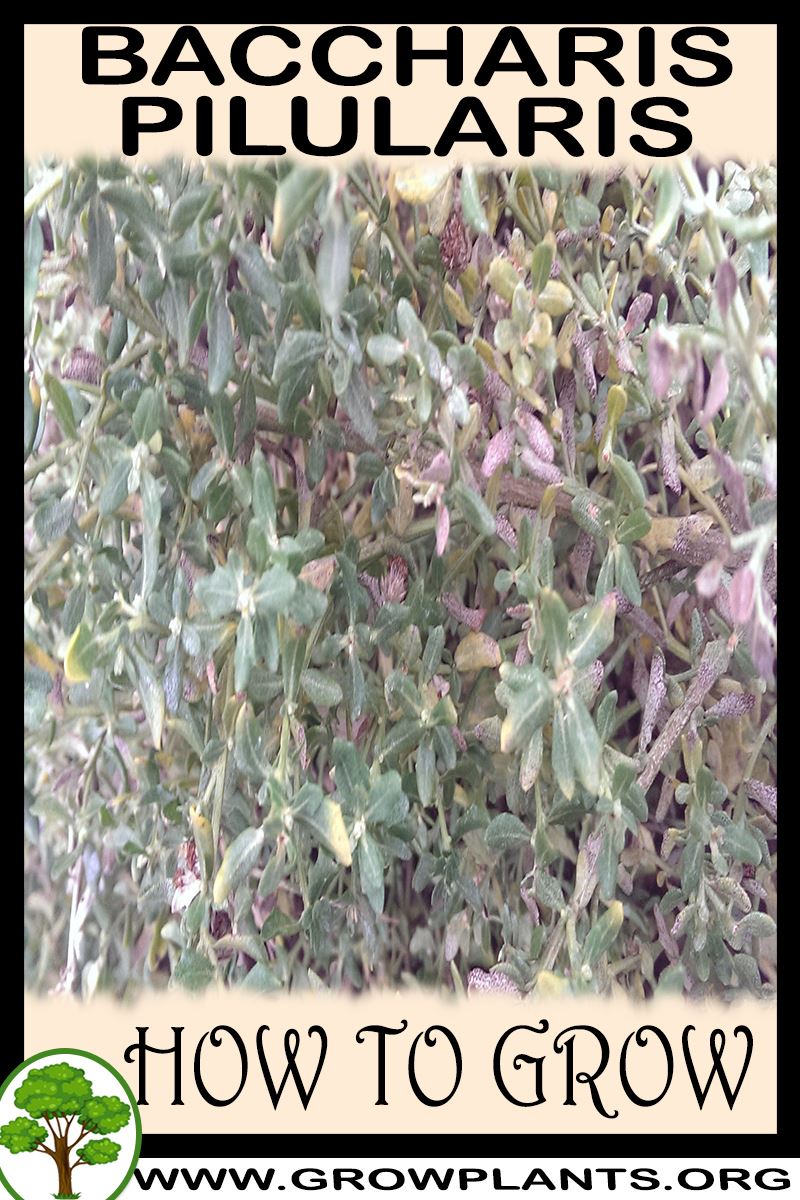
Overview: Baccharis pilularis (coyote brush) is a fast-growing evergreen shrub reaching 0.3-3 m (1-10 ft), with low, spreading forms widely planted as a durable groundcover. It is used as an ornamental hedge, groundcover and wildlife shrub.
Quick Specifications
| Specification | Attribute |
|---|---|
| Plant Type / Life Cycle | Perennial |
| Foliage Type | Evergreen |
| Mature Size | 0.3-3 m (1-10 ft) tall |
| Growth Rate | Fast |
| Hardiness | USDA zones 7-10 |
Growth Form & Structure
- Height & Spread: 0.3-3 m (1-10 ft) in the ground; prostrate forms stay low and spread wide; can also be grown in containers
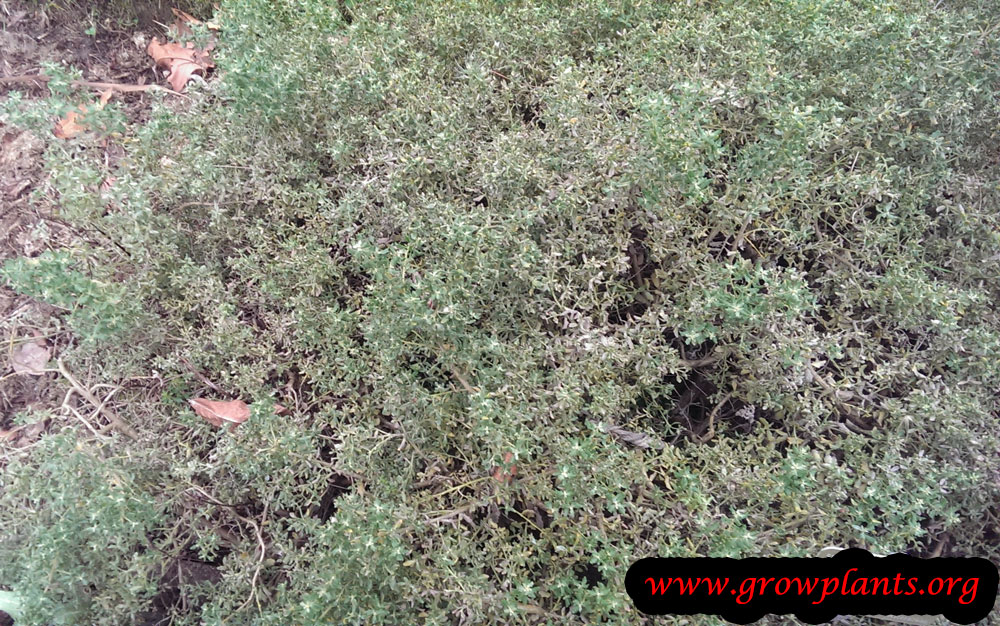
- Growth Habit & Form: Bushy evergreen shrub with low, spreading prostrate cultivars used as groundcover
- Lifespan & Maturity: Fast-growing and tough; long-lived
Anatomy & Physical Features
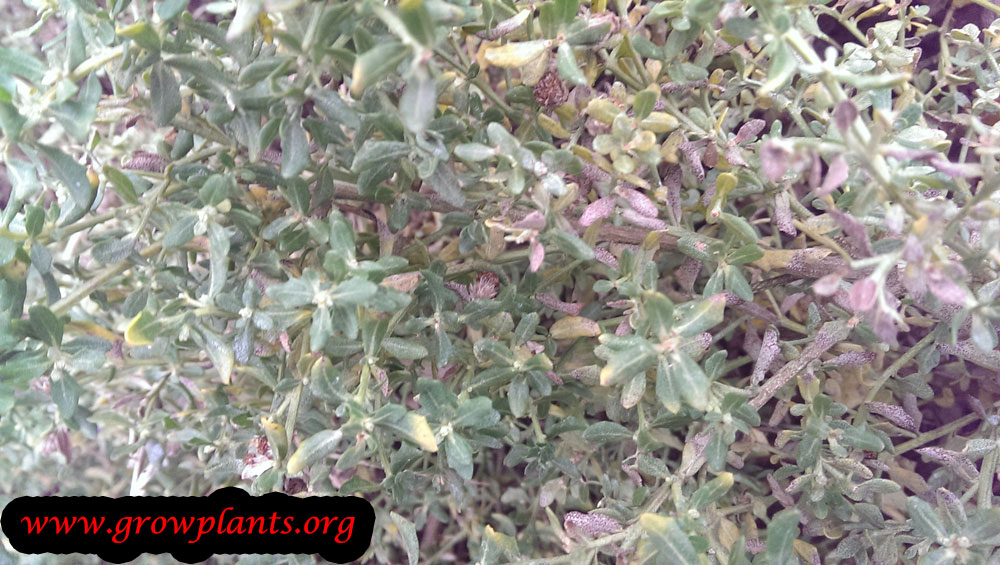
- Leaves & Foliage: Small, green, ovate leaves
- Flower Characteristics: Small yellow or white flowers in clusters; dioecious (male and female on separate plants) and attractive to pollinators (see the Bloom guide)
Primary Uses & Landscape Value
- Functional & Ornamental Roles: Groundcover, hedge, erosion-control and pollinator/wildlife shrub for dry gardens
Care Guide: Planting, Soil & Watering
Overview: Baccharis pilularis (Coyote brush) is a tough, fast-growing evergreen shrub that thrives in full sun and well-draining soil. It is highly drought-tolerant once established, needing only low to moderate water, and adapts to poor, dry ground where many shrubs struggle.
Quick Care Requirements
| Requirement | Ideal Condition |
|---|---|
| Planting Season | During the warm season, spring through autumn |
| Growth Rate | Fast |
| Soil Type | Well-draining soil; tolerates lean, dry conditions |
| Water Need | Low to Moderate – let the soil dry between waterings once established |
Planting & Establishment
- Best Planting Season: Plant during the warm season, from spring through autumn, in a sunny, open position.
- How to Plant:
- Hole Preparation: Dig a hole as deep as and about twice as wide as the root ball.
- Soil Amendments: Little enrichment is needed; if drainage is poor, work in grit or coarse material to open the soil.
- Planting Depth: Set the root collar level with the soil surface and avoid burying the stem base.
- Growth Speed & Expectations: Fast, quickly filling out as a spreading shrub from about 0.3 up to 3 m; note it can be invasive.
Soil, Watering & Drainage Care
- Soil Mix & Drainage Needs: Wants free-draining soil and tolerates poor, dry ground; avoid heavy, waterlogged sites that rot the roots.
- Watering Schedule & Technique:
- Young / Newly Planted: Water regularly to establish the root system through the first season.
- Established: Water sparingly and deeply, letting the soil dry well between waterings; it thrives on minimal irrigation.
- Seasonal Adjustments: A little more in prolonged heat; very little in cool, wet weather.
Climate, Light & Hardiness
Baccharis pilularis (coyote brush) is a tough, drought-tolerant evergreen shrub native to coastal and dryland scrub, thriving in full sun across subtropical, mediterranean, desert, and temperate climates. It is reliably hardy outdoors from about USDA zone 7–10 and warmer and is notably tolerant of wind and salt exposure.
Quick Climate Specifications
| Climate Zones | Subtropics, mediterranean, desert, temperate |
| USDA Hardiness Zones | 7–10 |
| Optimal Temp Range | Approximately 15–29°C (59–85°F) during active growth |
| Approx. Survival Minimum | Established plants may briefly tolerate winter minimums around −18°C to −12°C (0°F to 10°F), reflecting its zone 7 rating |
| Frost Tolerance | Moderate to High |
| Light Conditions | Full sun |
| Wind Tolerance | High |
| Salt / Coastal Tolerance | High |
Sunlight & Light Exposure
Optimal Light Setup
Full sun gives the densest, healthiest growth for hedging or ground cover use.
Direct Sun Requirement
Direct sun is well tolerated and preferred; it is not adapted to shaded sites.
Best Exposure / Orientation
An open, exposed position - including coastal bluffs and windswept slopes - suits this rugged shrub well.
Temperature Extremes & Hardiness
USDA Hardiness & Regional Limits
Reliably hardy outdoors from about zone 7–10 and warmer.
Cold Damage & Winter Protection
Foliage can be damaged by hard freezes at the cold edge of its range; established plants in their hardy zones need no winter protection.
Frost Sensitivity
Moderately frost-sensitive at the margins of its hardiness range; young plants are more vulnerable than mature, established shrubs.
Extreme Heat Tolerance
Very good heat tolerance in dry summer climates, consistent with its use as a tough hedge and ground cover plant.
Wind, Humidity & Microclimate
Humidity Preferences
Adapts to both humid coastal air and drier inland conditions.
Dry-Air Tolerance
Good dry-air tolerance once established, supporting its use in xeriscaping.
Wind Tolerance
Excellent wind tolerance - it naturally grows on exposed coastal bluffs and windswept dryland slopes.
Coastal / Salt Tolerance
High - Baccharis pilularis is a California coastal-scrub native widely used as a salt- and wind-tolerant coastal ground cover and hedge plant.
Rainfall & Seasonal Moisture
Well adapted to dry-summer climates with seasonal rainfall; established plants are notably drought tolerant.
Microclimate Recommendations
Performs well in open, exposed coastal or dryland positions where more tender plants would struggle; no special wind or salt shelter is needed.
Growing in Pots, Balconies & Indoors
Coyote brush (Baccharis pilularis) is a tough, evergreen Californian shrub, not a houseplant – it wants full sun and open air. The grower notes it grows well in containers, and the low, spreading dwarf forms in particular make handsome, drought-tolerant patio and balcony plants.
Quick Details
- Container Size: A large, sturdy tub for a shrub – dwarf, ground-cover forms adapt best to pots; upright forms outgrow containers in time
- Indoor Suitability: Not an indoor plant – an outdoor evergreen shrub for full sun
- Best Spot: Full sun, open and airy
- Soil & Drainage: Sharply drained, gritty mix; add perlite or coarse grit to a peat or coir base.
- Watering in Pots: Water when the top of the mix dries; it is drought-tolerant once rooted and dislikes staying wet.
Indoors & On the Windowsill
- Houseplant limits: This is a sun-loving outdoor shrub; indoors it will stretch and weaken for lack of light.
- Windowsill growing: A windowsill can’t give a woody shrub the light or room it needs – keep it outdoors on a bright patio instead.
On a Balcony or Patio
- Light & wind: Give it the sunniest, most open spot; it shrugs off wind and reflected heat once established, and a prostrate cultivar spills nicely over a large pot edge.
- Practicalities: Water the pot in – allow for its weight on a balcony, and set it where drainage runoff won’t be a nuisance.
Choosing the Pot, Soil & Long-Term Care
- Pot & drainage: Choose a pot with strong drainage holes and skip a standing-water saucer, which invites root rot. Terracotta breathes and dries quickly, which suits these sun-lovers; glazed or plastic pots hold moisture longer if you can’t water often.
- Potting mix: Sharply drained, gritty mix; add perlite or coarse grit to a peat or coir base.
- Feeding: Potted plants use up their food faster because watering leaches nutrients away, so feed a little more often through the growing season than you would in open ground.
- Repotting: Refresh the mix or pot up about every couple of years to keep growth healthy.
Fertilizing & Feeding
A moderate feeder: this fast-growing evergreen shrub responds well to balanced, nitrogen-forward feeding through its active growing season, tapering off as growth slows in cooler weather.
Quick Fertilizing Specs
| Feeding Level | Moderate feeder |
|---|---|
| Main Nutrient Priority | Balanced feeding with adequate nitrogen for dense hedge or ground-cover growth |
| Best Feeding Period | Spring through summer while actively growing |
| Organic Options | Compost and organic mulch worked into well-drained soil |
| Reduce/Stop Feeding | Hold off feeding during the cool-season rest |
| Micronutrients | Usually met by a complete fertilizer; correct only a diagnosed deficiency |
| Soil pH | Tolerates a wide range; thrives in well-drained soil |
Feeding by Growth Stage
Getting a newly planted shrub established
Help a newly planted coyote brush root in and settle before it is asked to fill in as a hedge or ground cover.
| Nutrient direction | A balanced, moderate feeding paired with organic matter worked into well-drained soil supports steady root establishment. |
|---|---|
| Timing | At planting and through the first growing season, in spring, summer, or autumn. |
| Frequency | A light feeding at planting, then modest follow-up feeding while roots establish. |
| Fertilizer types | A balanced complete fertilizer, Compost or well-rotted organic matter worked into the planting area |
| Precautions | Keep feeding modest; overfeeding a fast grower like this can push soft growth that outpaces root establishment and worsens its tendency to spread. |
Fast active growth through the warm season
Sustain the fast, dense growth this shrub needs to perform well as a hedge, ground cover, or erosion-control planting.
| Nutrient direction | Balanced feeding with adequate nitrogen supports the vigorous foliage growth this fast grower is known for. |
|---|---|
| Timing | Through spring and summer while the shrub is actively growing. |
| Frequency | Occasional feeding through the active growing season is usually enough. |
| Fertilizer types | A balanced, nitrogen-forward complete fertilizer, Organic mulch or compost as a top-dressing |
| Precautions | Avoid heavy or frequent feeding, since lush new growth is more attractive to the aphids, leafhoppers, spider mites, and thrips already noted on this species. |
Cool-season rest
Let growth slow naturally through cooler weather without pushing a tender new flush that a cold snap could damage.
| Nutrient direction | None – withhold fertilizer while growth is slow or the shrub is resting. |
|---|---|
| Timing | During the cooler part of the year when growth naturally slows. |
| Frequency | No feeding at this stage; resume only once active growth returns in spring. |
| Fertilizer types | No feeding at this stage; do not fertilize until active growth resumes. |
| Precautions | Withhold fertilizer now; feeding dormant or slow growth wastes nutrients and can encourage tender new growth that is vulnerable to cold. |
Nutrient Deficiency Signs & Corrections
Older leaves turn pale green to yellow and the hedge or ground cover thins out with slowed growth.
| Possible causes | low available soil nitrogen, nitrogen loss from leaching in fast-draining soil, root competition from dense surrounding plantings |
|---|---|
| Appears first on | older, lower leaves |
| What to check | recent feeding history, soil drainage and leaching, overall planting density |
| Possible correction | Apply a balanced, nitrogen-forward fertilizer and renew organic matter in the root zone. |
New leaves emerge yellow while the veins remain green.
| Possible causes | high soil pH limiting iron availability, poor drainage or waterlogging around the roots, root stress from recent transplanting |
|---|---|
| Appears first on | newest growth at branch tips |
| What to check | soil pH and drainage, planting depth and root health, irrigation practices |
| Possible correction | Correct any drainage or pH issue first, then apply a chelated iron product per its label. |
Leaf tips and margins brown or scorch even though this drought-tolerant planting is watered lightly.
| Possible causes | fertilizer salts concentrating in dry, fast-draining soil, infrequent watering that fails to flush accumulated salts, over-application of fertilizer |
|---|---|
| Appears first on | leaf margins and tips |
| What to check | recent fertilizer amounts, irrigation frequency, soil drainage |
| Possible correction | Cut back on feeding, water deeply to flush accumulated salts, then return to lighter, less frequent feeding. |
Pruning, Training & Seasonal Maintenance
Baccharis pilularis (coyote brush) is grown either as a large, loose evergreen shrub for screening/windbreak use, or – via its widely sold prostrate selections – as a mowed or sheared living groundcover. Maintenance differs sharply by form: the groundcover selections are routinely sheared or mowed low, roughly once a year, to keep them dense and prevent the woody, thatchy build-up they develop if left unclipped for several seasons, while shrub-form plants need only occasional thinning and heading to control size. It is dioecious – male and female flowers grow on separate plants – and since the tiny flowers form on current growth and the plant’s value is foliage and form rather than a floral display, pruning timing has little effect on flowering.
Quick Pruning & Maintenance Specs
| Pruning Tolerance | High – tolerates hard shearing or mowing, especially the groundcover selections |
| Primary Pruning Window | Late winter/early spring, before the spring growth flush |
| Secondary Maintenance Window | A light summer shear if a groundcover planting gets shaggy |
| Typical Frequency | Groundcover form: about once a year; shrub form: one to two shapings a year |
| Main Objective | Prevent woody/thatchy legginess (groundcover) or control size and density (shrub) |
| Young Plant Priority | Pinch/tip prostrate selections early to encourage lateral spread and full coverage |
| Mature Plant Priority | Annual rejuvenation shear (groundcover) or selective thinning to prevent a bare interior (shrub) |
| Best Tool Type | Hedge shears for the routine shear/mow, or a mower set high on large groundcover plantings |
| Avoid Heavy Pruning During | Peak summer heat/drought stress, and the autumn–winter bloom period if supporting pollinators is a goal |
Pruning by Plant Age & Size
Newly Established
Minimal – let groundcover selections spread and knit together; pinch leaders lightly on young shrub-form plants to encourage branching.
Young / Formative
Groundcover: shear or mow only lightly the first year or two to let full coverage establish before starting the routine annual shear. Shrub form: no formal leader system – tip-pinch/head for a bushy, informal habit.
Mature / Established
Groundcover: routine annual rejuvenation shear/mow to prevent thatch and bare, woody centers. Shrub: thin the oldest, densest interior growth and control height/spread by heading.
Seasonal Pruning Schedule
| Dormant/Winter–Pre-Growth | Main annual shear/mow (groundcover) or shaping cut (shrub), before spring flush | Avoid cutting into bare leafless old wood below the green growth | Dense new growth flush within weeks | Minimal, since floral display is not the main ornamental value |
| Ongoing Sanitary | Wind/storm-damaged brittle stems (this fast grower has somewhat weak wood) | Sound healthy growth | Clean regrowth from the damage point | None |
Flowering & Fruiting Wood
Tiny male or female flowers (plants are dioecious) form on current-season growth, so routine pruning timing doesn’t sacrifice a floral display. Female plants produce a cottony seed head after bloom that can be a litter or allergy nuisance; shearing spent flowers off before seed-set reduces this, and male clones are often chosen for landscape plantings specifically to avoid it.
Structural Pruning & Training
Shrub form: remove crossing/rubbing growth and control height/spread with heading cuts; thinning improves light and air penetration and avoids the bare, hollow-centered look this fast grower gets if left unthinned. Groundcover form: the structural concern is really thatch prevention through the annual shear.
Special Growth to Remove
- Spent flower/seed heads on female plants if litter or allergy is a concern
- Winter-storm-damaged brittle stems
Container & Small-Space Pruning
Not a typical container plant – this is a landscape-scale shrub or groundcover – but if grown in a large container, its fast growth rate means more frequent pruning is needed to keep it in bounds, and its naturally spreading roots will need more active management than most container shrubs.
Tools
Hedge shears are genuinely appropriate here (unlike most plants in this dataset) for the routine groundcover shear/mow and formal hedge maintenance; loppers for removing older woody stems when rejuvenating a mature shrub; bypass secateurs for selective thinning cuts.
Tool Hygiene & Disease Risk
Routine – no major documented disease-transmission risk.
Cut Placement & Technique
Shear groundcover plantings to a uniform height, staying within the green leafy zone – cutting into bare old wood below it may not resprout reliably. Thin shrub-form plants with cuts at the branch base.
Heavy Pruning & Rejuvenation
Tolerated well. An overgrown, thatchy groundcover planting can be sheared hard back in late winter to force dense new growth; a leggy shrub-form specimen can be cut back substantially and will resprout vigorously given its fast growth rate.
Post-Pruning Care
Water newly sheared plantings to support the regrowth flush; established plants are drought-adapted and don’t need extra water beyond that. Watch new growth for aphids, leafhoppers, spider mites, and thrips.
Common Pruning Mistakes
- Leaving a groundcover planting unclipped for years until it’s a tangle of bare woody stems with foliage only at the tips – much harder to rejuvenate than with routine annual shearing
- Shearing so late that it removes the autumn–winter bloom supporting early pollinators
- Cutting into bare, leafless old wood expecting it to resprout
When NOT to Prune
Avoid heavy shearing during summer heat/drought stress, and avoid disturbing the plant through its main autumn-to-spring bloom period if pollinator value matters.
Recommended Tools (by task)
- hedge_shears – primary tool for the routine groundcover shear/mow and formal hedge maintenance this genus is actually bred and sold for.
- loppers – for rejuvenating old woody stems on a mature shrub-form planting.
- bypass_secateurs – for selective thinning cuts on shrub-form plants.
Pruning Troubleshooting
| Bare, woody, thatchy interior | Groundcover left unclipped for years | Time since last shear; foliage present only at stem tips | Rejuvenate with a hard late-winter shear/mow, then resume the annual routine |
| Excess cottony seed litter | Female plant left unclipped through seed-set | Presence of fluffy seed heads after bloom | Shear off spent flowers before seed matures, or replant with male clones |
| Sparse, leggy shrub form | No thinning; crowded or shaded planting | Light exposure and stem density | Thin the interior and confirm full-sun exposure |
Propagation Guide
Baccharis pilularis (coyote brush) grows easily from seed, which this dioecious shrub produces prolifically and disperses by wind; semi-hardwood cuttings are used to propagate specific selected clones, including the low, mounding landscape cultivars that are kept true to their compact, low-seeding habit only through cuttings. Overall difficulty is easy from seed and moderate from cuttings.
Quick Propagation Specs
| Best Propagation Method | Seed (species); semi-hardwood cuttings (named cultivars) |
| Alternative Methods | Semi-hardwood stem cuttings |
| Propagation Difficulty | Easy (seed); Moderate (cuttings) |
| Seed True-to-Type | Usually true-to-type for the species; cultivar-dependent for named landscape selections |
| Vegetative True-to-Type | Yes |
| Best Propagation Season | Autumn to spring |
| Seed Germination Time | Several weeks; can be uneven |
| Cutting Rooting Time | Several weeks |
| Germination Temperature | Warm, around 18–24°C (64–75°F) |
| Seed Sowing Depth | Surface-sow or barely cover; fine seed benefits from light |
Growing from Seed
Seed Handling & Viability
Seed carries a fluffy pappus for wind dispersal; use fresh seed, as viability is short-lived.
Sowing Season
Autumn or spring.
Sowing Depth & Orientation
Surface-sow or barely cover.
Germination Conditions
Warm conditions in a free-draining mix.
Germination Time
Several weeks, and germination can be somewhat uneven.
Stem Cuttings
Cutting Type
Semi-hardwood tip cuttings.
Best Timing
During the growing season.
Cutting Preparation
Remove the lower leaves before inserting into a free-draining mix; take cuttings from the specific clone to be reproduced (many popular groundcover selections are low-seeding male clones, valued for staying compact and avoiding the conspicuous fluffy seed heads).
Rooting Setup
Bright, indirect light with moderate humidity and good drainage.
Rooting Hormone
Beneficial for improving rooting consistency.
Rooting Time
Typically several weeks.
Bloom & Flower Guide
Quick Details
- Bloom Season: Autumn through winter into spring
- Flower Appearance: Small yellowish-white flowers in clusters, with male and female flowers on separate plants
- Edibility: Grown as an ornamental pollinator and hedge plant; not eaten
Detailed Blooming Overview
Coyote brush is a tough evergreen that flowers when little else does – autumn through winter into spring – covering itself in small clustered flowers that hum with pollinators. Plants are either male or female; the females follow up with fluffy, seed-bearing tufts.
Flower Characteristics
- Small yellow-to-white flowers in clusters; male and female plants are separate.
- A valuable late- and off-season nectar source.
Bloom Care & Thinning
- Managing seed: Female plants produce wind-borne fluffy seed – choose male plants if you want to avoid seedlings.
- Pruning: Shear after flowering to keep a dense, low habit.
Pests, Diseases & Troubleshooting
Overview: Baccharis (coyote brush) is a tough, drought-adapted native shrub with a light pest load; its most characteristic problems are the Baccharis leaf beetle and the stem-gall midge, plus general sap-suckers, while its true weakness is root rot from summer overwatering in heavy soil. Grown lean, dry and in full sun on well-drained ground, it is close to trouble-free.
Quick Troubleshooting Overview
| Issue / Pest | Main Symptom | Primary Solution |
|---|---|---|
| Baccharis leaf beetle | Leaves chewed and skeletonised, defoliated patches | Tolerate light damage; hand-pick, Bt/spinosad if severe |
| Stem-gall midge | Round woody galls on stems and shoot tips | Prune out galls; usually cosmetic |
| Aphids | Sticky new growth, sooty mould | Hose off, encourage predators, soap if needed |
| Spider mites | Bronzed stippling in hot dry spells | Hose, oil/soap |
| Root rot (the killer) | Wilting, dieback in irrigated/clay soil | Stop summer water, improve drainage |
| Rust / mildew | Pustules or white bloom on leaves | Airflow, remove infected leaves |
Common Pests & Management
- Baccharis leaf beetle (Trirhabda flavolimbata):
- Symptoms: Metallic-striped adults and their larvae chew and skeletonise the foliage, sometimes defoliating whole plants in outbreak years; a specialist of coyote brush.
- Prevention & Control: Tolerate light feeding on this vigorous shrub. Hand-pick or knock beetles into soapy water, encourage birds and predatory insects, and for heavy outbreaks use Bacillus thuringiensis (for larvae) or spinosad in the evening. Vigorous plants re-foliate readily.
- Baccharis stem-gall midge (Rhopalomyia californica):
- Symptoms: Small round to lumpy woody galls clustered on the stems and shoot tips, each housing midge larvae; conspicuous but rarely harmful, and host to their own parasitoid wasps.
- Prevention & Control: Mostly cosmetic – prune out and destroy heavy gall clusters if you dislike the look. Leaving them supports parasitic wasps; no spraying is warranted.
- Aphids:
- Symptoms: Colonies on soft new shoots with honeydew and sooty mould, and sometimes attendant ants; mainly on lush, over-watered growth.
- Prevention & Control: Hose off, avoid over-feeding and over-watering that drive soft growth, and conserve ladybirds and lacewings. Insecticidal soap handles persistent colonies.
- Spider mites (Tetranychus urticae):
- Symptoms: Fine stippling and a dull bronzed look with light webbing during hot, dry, dusty spells.
- Prevention & Control: Hose down foliage to remove dust and mites, and treat outbreaks with insecticidal soap or horticultural oil; well-sited plants rarely need it.
- Scale and whitefly:
- Symptoms: Occasional bumps or clouds of whitefly with honeydew on sheltered or stressed plants.
- Prevention & Control: Prune out infested wood, encourage natural enemies, and use horticultural oil only where infestations build; usually a non-issue outdoors.
Diseases & Fungal Issues
- Root and crown rot (Phytophthora / Armillaria):
- Symptoms: Wilting, thinning, yellowing and branch dieback with dark decayed roots – almost always the result of summer irrigation or poor drainage on this dry-adapted shrub.
- Treatment & Management: Prevention is the cure: plant in well-drained soil, withhold summer water once established, and never overwater. Remove and destroy dead plants; do not replant susceptible species in infected ground.
- Rust (Puccinia spp.):
- Symptoms: Yellow-orange to brown powdery pustules on the leaves, with yellowing and early leaf drop in damp seasons.
- Treatment & Management: Improve airflow, remove infected leaves and litter, and avoid overhead watering. Rarely serious enough to need fungicide on an established shrub.
- Powdery mildew:
- Symptoms: White powdery film on leaves in humid, crowded, shaded conditions.
- Treatment & Management: Thin for airflow and light and remove affected growth; sulphur or potassium bicarbonate if it persists, though it is seldom needed outdoors.
Growing Difficulties & Abiotic Problems
- Summer overwatering / root rot (the main killer):
- Cause & Symptoms: This is a drought-adapted chaparral/coastal shrub that resents summer irrigation; wet warm soil rots the roots and kills established plants.
- Correction Strategy: Water only to establish, then wean off summer water entirely once rooted; ensure sharp drainage and avoid lawns and irrigated beds around it.
- Legginess / woodiness with age:
- Cause & Symptoms: Unpruned plants become open, woody and bare at the base over time.
- Correction Strategy: Cut back hard in the dormant/cool season to rejuvenate dense, leafy growth; it responds well to renewal pruning.
- Wind and salt exposure:
- Cause & Symptoms: Though tough and salt-tolerant, extreme coastal wind can brown and desiccate exposed foliage.
- Correction Strategy: Generally needs no protection – this is a premier coastal/dune plant – but very exposed new plantings establish faster with temporary shelter.
- Nutrient excess:
- Cause & Symptoms: Rich soil or feeding drives soft, floppy, pest-prone growth on a plant adapted to lean ground.
- Correction Strategy: Do not fertilise established plants; grow lean for dense, tough, resilient growth.
What Helps – Products & Tools
This is a low-maintenance native – manage it culturally with lean soil, no summer water, sharp drainage and renewal pruning. If intervention is needed, hand-picking and Bacillus thuringiensis or spinosad address leaf-beetle outbreaks, insecticidal soap and horticultural oil handle aphids, mites and scale, and pruning removes galls. Fungicides are seldom warranted. Spray oils in the evening to protect pollinators.