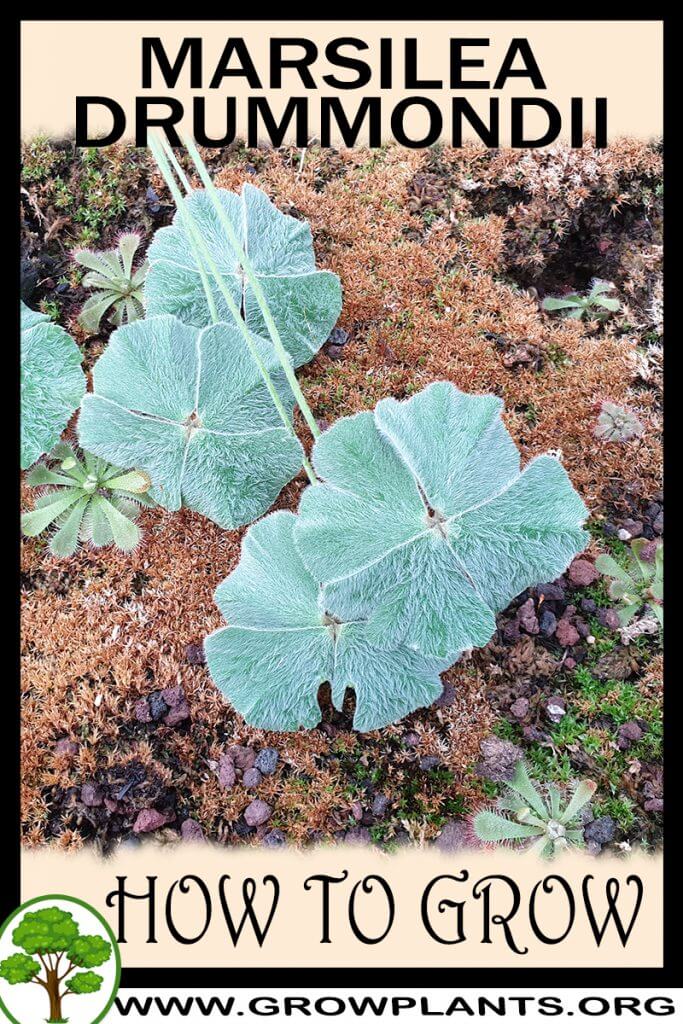
Plant Profile & Key Characteristics
Overview: Marsilea drummondii (nardoo) is an aquatic to semi-aquatic clover-leaved fern, 30-90 cm, that roots in wet soil or shallow water; grown as an ornamental pond and bog plant.
Quick Specifications
| Specification | Attribute |
|---|---|
| Plant Type / Life Cycle | Perennial (evergreen fern) |
| Foliage Type | Evergreen |
| Mature Size | 30-90 cm (1-3 ft) |
| Growth Rate | Fast to moderate |
| Root System | Creeping rhizome |
| Toxicity | Sporocarps contain thiaminase – toxic unless specially processed |
| Hardiness | USDA 8-12 |
Growth Form & Structure
- Height & Spread: 30-90 cm (1-3 ft) spreading; suits pond margins and containers, not indoor use.
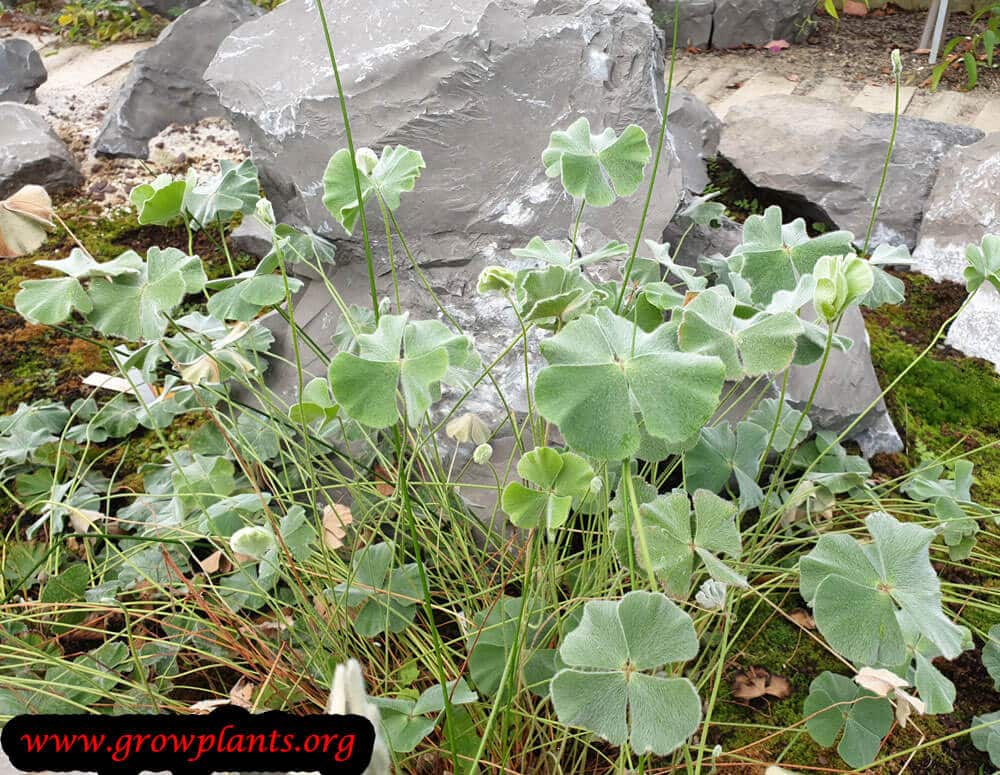
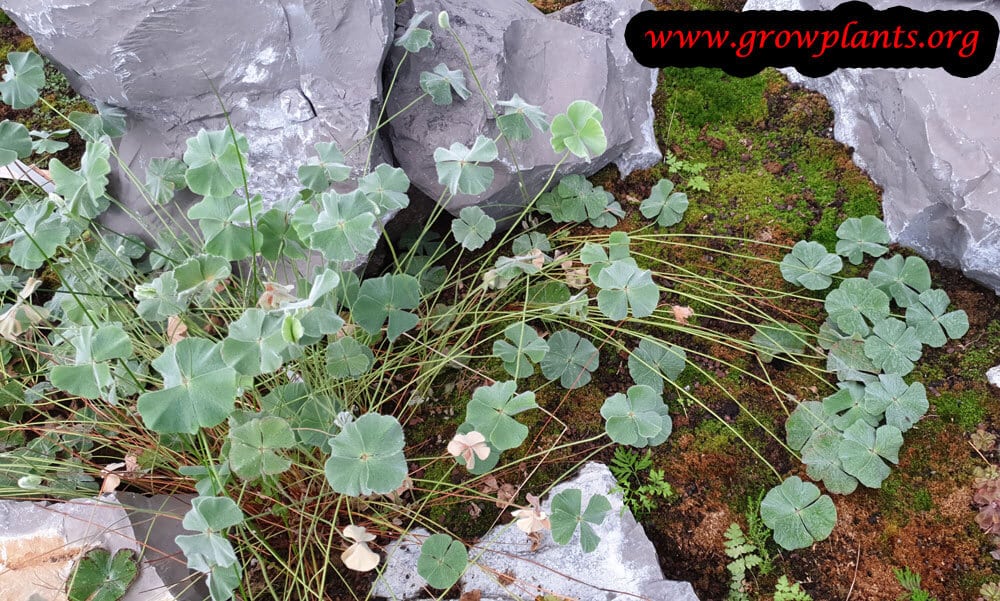
- Growth Habit & Form: Spreading aquatic fern with a creeping rhizome and long-stalked floating or emergent leaves.
- Lifespan & Maturity: Vigorous, spreading perennial.
Anatomy & Physical Features
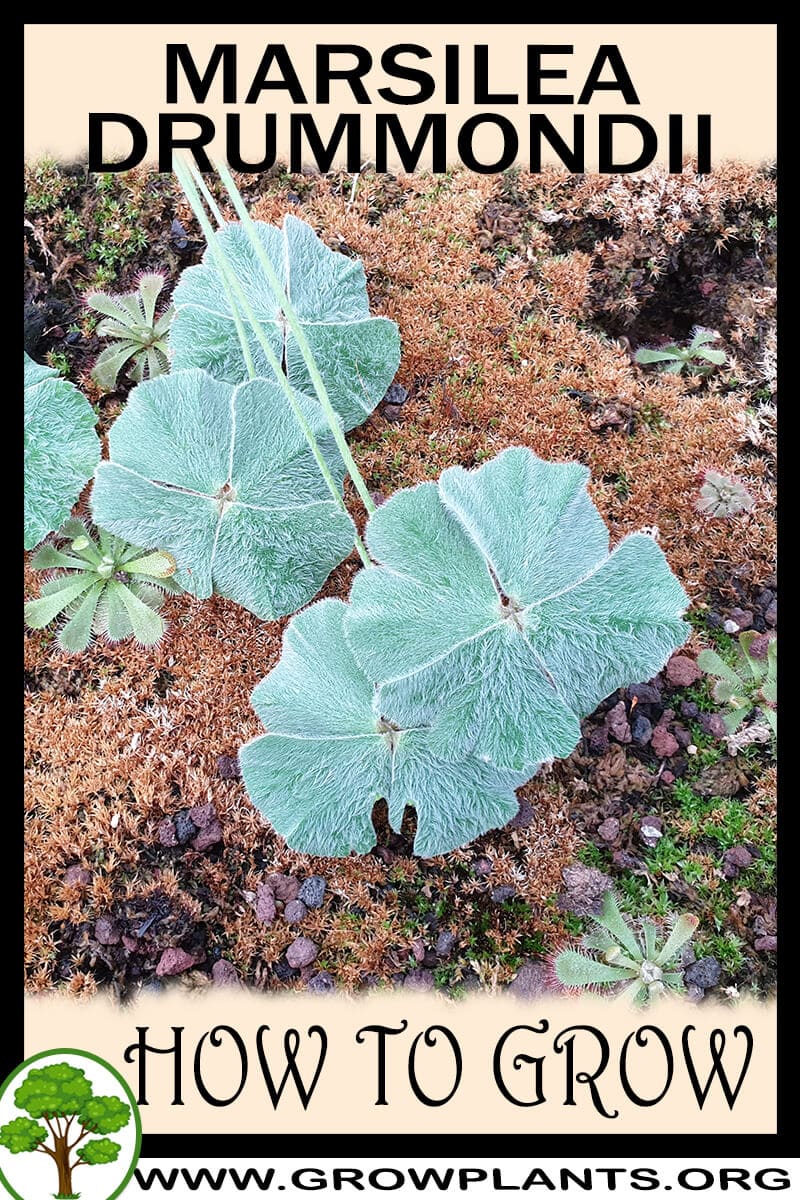
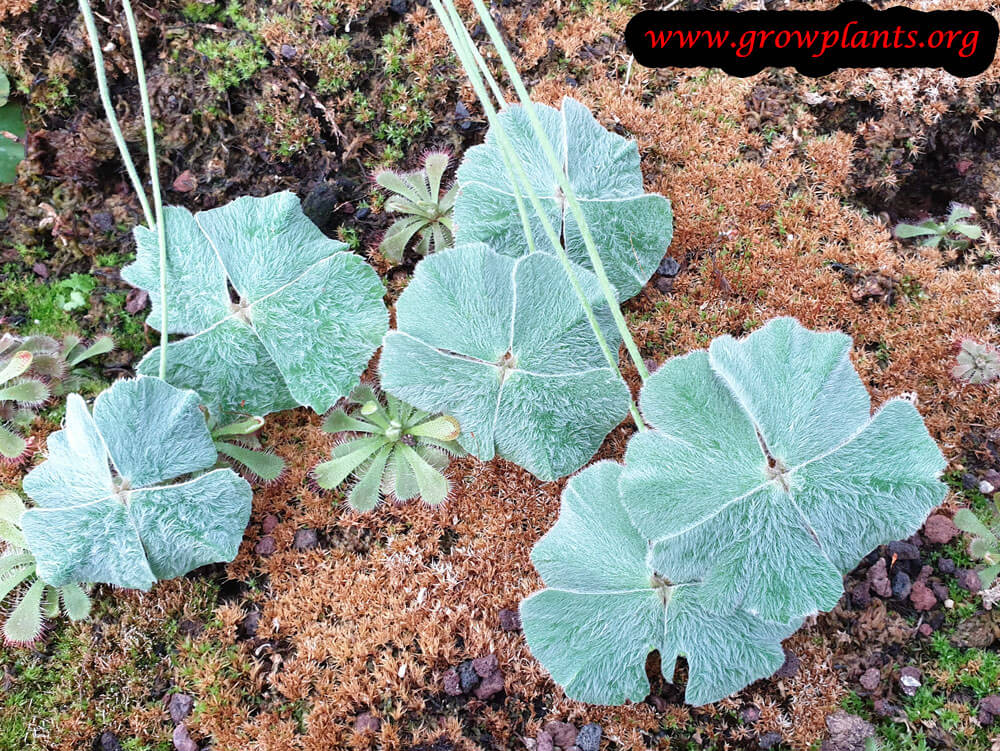
- Leaves & Foliage: Green, four-part clover-like (obcordate) leaves on long stalks; hairy. Reproduces by spores (no true flowers).
Primary Uses & Landscape Value
- Functional & Ornamental Roles: Ornamental aquatic/bog and pond-margin plant; groundcover in wet sites.
Care Guide: Planting, Soil & Watering
Overview: Nardoo (Marsilea drummondii) is a fast- to medium-growing aquatic/marginal fern (zones 8–12) that grows in full sun to part shade in wet soil or shallow water. It wants rich soil kept constantly wet and will not tolerate drying out.
Quick Care Requirements
| Requirement | Ideal Condition |
|---|---|
| Planting Season | Spring through autumn |
| Growth Rate | Fast to Moderate |
| Soil Type | Rich, constantly wet soil or an aquatic setting |
| Water Need | High — keep permanently wet or submerged |
Planting & Establishment
- Best Planting Season: Plant in spring, summer or autumn.
- How to Plant:
- Hole Preparation: Plant into rich, saturated soil at a pond margin, in shallow water, or in a pot standing in water.
- Soil Amendments: Use a rich, heavy soil that holds water rather than a free-draining mix.
- Planting Depth: Set the rhizome just into the wet soil so the leaves can float or stand above the water.
- Growth Speed & Expectations: Fast to medium — spreads to about 30–90 cm (1–3 ft) across as a groundcover-like mat.
Soil, Watering & Drainage Care
- Soil Mix & Drainage Needs: Unlike most plants this fern wants no drainage — grow it in rich, water-retentive soil that stays wet, or as a true aquatic; it also does well in a container standing in water.
- Watering Schedule & Technique:
- Young / Newly Planted: Keep the soil saturated from the start — never allow it to dry.
- Established: Water generously and constantly, or keep the roots standing in water.
- Seasonal Adjustments: Maintain wet conditions year-round; water even more in summer heat so it never dries out.
Climate, Light & Hardiness
Marsilea drummondii is an amphibious, semi-aquatic fern-ally native to seasonally wet Australian habitats, suited to subtropical, Mediterranean, desert, and temperate climates within USDA zones 8–12. It favors full sun to half shade and tolerates cycles of flooding and drying far better than sustained cold.
Quick Climate Specifications
| Climate Zones | Subtropical, Mediterranean, desert, temperate |
|---|---|
| USDA Hardiness Zones | 8–12 |
| Frost Tolerance | Low |
| Light Conditions | Full sun to half shade |
Sunlight & Light Exposure
Optimal Light Setup
Full sun to half shade; it grows well in open, sunny wetland-edge or pond conditions and also tolerates part-day shade.
Direct Sun Requirement
Full sun is well tolerated, especially when the roots sit in consistently wet or submerged soil.
Shade & Heat Management
In hotter, drier climates, part-day shade can reduce overheating of shallow water and soil and limit desiccation stress.
Best Exposure / Orientation
An open pond margin, bog garden, or container water garden in full sun suits it best; part shade is acceptable in hot-summer regions.
Temperature Extremes & Hardiness
USDA Hardiness & Regional Limits
Rated for USDA zones 8–12, a wide span covering temperate through desert and subtropical regions. This breadth reflects tolerance of heat and of dry, dormant periods more than deep winter cold hardiness.
Cold Damage & Winter Protection
Frost damages foliage, and hard freezes typically kill top growth. At the cooler edge of its range (zone 8), foliage is likely to die back over winter, with regrowth the following season from surviving rhizomes or spores possible but not guaranteed. In frost-free zones (10–12) it can remain in active growth, or intact but dormant, year-round.
Frost Sensitivity
Treat as frost-tender: exposed foliage is damaged or killed by freezing temperatures, even though the plant may regenerate from structures below water or soil level.
Extreme Heat Tolerance
Tolerates hot desert and subtropical summers well as long as its roots stay wet or submerged.
Wind, Humidity & Microclimate
Humidity Preferences
Naturally suited to consistently wet or humid wetland-margin conditions.
Dry-Air Tolerance
As a semi-aquatic species, prolonged dry air and drying soil check growth, though the plant is notably resilient to seasonal drying - a survival trait carried over from its native ephemeral-wetland habitat.
Rainfall & Seasonal Moisture
Adapted to climates with seasonal wet-dry cycles; performs best with a reliably wet root zone or shallow standing water, and can survive drying spells that would kill non-adapted aquatic plants.
Microclimate Recommendations
A pond edge, bog, or container water garden in full sun suits it well; in the cooler part of its zone range, deeper water or a protected placement can help rhizomes and fronds survive winter.
Growing in Pots, Balconies & Indoors
Nardoo is an aquatic, clover-leaved fern that grows in and beside water, spreading its four-lobed leaves across the surface (foliage stems to around 30-90 cm / 1-3 ft). The grower says it is not a houseplant, but it grows very well in a container – specifically a water-tight pot, tub or pond basket kept wet, in full sun to part shade.
Treat it as a pond or bog plant in a pot rather than an ordinary potted plant: it wants standing water and lots of light.
Quick Details
- Container Size: A watertight tub, bowl or pond basket that can hold standing water.
- Indoor Suitability: Not a houseplant – it is an aquatic plant needing full light and standing water.
- Best Spot: Full sun to half shade, outdoors as a container water/bog plant.
- Soil & Drainage: Heavy aquatic/loam soil in a sealed container – here you want water retention, not drainage.
- Watering in Pots: Keep it wet or submerged at the roots at all times – a big water need; do not let it dry out.
Indoors & On the Windowsill
- Not for indoors: The grower says no – it is a water plant that needs full outdoor light and constant standing water, which a normal room cannot provide.
On a Balcony or Patio
- As a container pond: It is ideal for a watertight bowl, half-barrel or mini-pond in a sunny spot; top up the water regularly, especially in heat.
- Light: Give it the brightest position you can – it colours and spreads best in full sun.
Choosing the Pot, Soil & Long-Term Care
- Container: Use a sealed, watertight tub or a pond basket standing in water; plant into heavy aquatic soil topped with gravel to stop it clouding the water.
- Water: Keep the container permanently topped up; the roots must never dry out. A drip irrigation kit with a timer can take over that watering check automatically.
- Upkeep: Divide and thin the spreading rhizomes every year or two when they fill the container.
Fertilizing & Feeding
A light to moderate feeder: most of its nutrition comes from a rich aquatic substrate rather than surface fertilizer, so feeding stays light and substrate-based.
Quick Fertilizing Specs
| Feeding Level | Light to moderate feeder, mostly through the substrate |
|---|---|
| Main Nutrient Priority | Balanced feeding via a rich substrate, with nitrogen supporting leaf growth |
| Best Feeding Period | Spring through the active growing season |
| Organic Options | Rich aquatic soil or substrate amended with organic matter |
| Reduce/Stop Feeding | Hold off feeding as growth slows or the water cools |
| Micronutrients | Usually supplied by a complete aquatic substrate; correct only diagnosed issues |
| Soil pH | Near neutral, tolerant of a range of aquatic soils |
Feeding by Growth Stage
Establishment in a new planting
Help new growth root into the substrate and settle into its aquatic or boggy setting.
| Nutrient direction | A rich, organic-matter aquatic substrate provides the base nutrition new roots need. |
|---|---|
| Timing | At planting, before active growth accelerates. |
| Frequency | A single substrate enrichment at planting is usually enough to start. |
| Fertilizer types | A rich aquatic planting substrate, Root tabs formulated for aquatic or bog plants |
| Precautions | Avoid loose surface fertilizer that clouds the water; keep nutrients worked into the substrate. |
Active spreading growth
Support steady leaf and runner production through the warm growing season.
| Nutrient direction | Root tabs or a substrate top-up placed near the root zone keep nutrients available without fouling the water. |
|---|---|
| Timing | Through the warm active growing season. |
| Frequency | An occasional root tab or substrate top-up as growth continues. |
| Fertilizer types | Root tabs placed near the root zone, Organic matter worked into the substrate |
| Precautions | Feed sparingly and keep fertilizer out of open water to avoid fouling water quality or feeding algae. |
Cool-season rest
Let growth slow naturally through cooler weather without pushing new leaves.
| Nutrient direction | None – withhold additional feeding while growth is slow or dormant. |
|---|---|
| Timing | During cooler weather or whenever growth visibly stalls. |
| Frequency | No feeding at this stage; resume once active growth returns. |
| Fertilizer types | No feeding at this stage; do not fertilize until active growth resumes. |
| Precautions | Withhold fertilizer now; feeding slow or dormant growth wastes nutrients and can foul the water. |
Nutrient Deficiency Signs & Corrections
Older leaves fade to pale green or yellow and new leaf production slows.
| Possible causes | low nutrient substrate, nutrients washed out by water changes or strong flow, thin, mineral-poor substrate |
|---|---|
| Appears first on | older leaves |
| What to check | substrate richness and age, frequency of water changes, overall growth rate |
| Possible correction | Enrich the substrate with a root tab or organic-rich aquatic soil. |
New leaves emerge pale or yellowish while older leaves remain green.
| Possible causes | low iron availability in the substrate or water, high water pH limiting iron uptake, insufficient substrate depth or richness |
|---|---|
| Appears first on | newest leaves |
| What to check | water pH, substrate depth and richness, recent substrate age |
| Possible correction | Apply a chelated iron aquatic root tab or supplement per its label and check water pH. |
Overall growth slows and leaves appear smaller or thinner than usual, with a general lack of vigor.
| Possible causes | substrate nutrients exhausted over time, insufficient light for the amount of growth, overcrowded roots limiting nutrient uptake |
|---|---|
| Appears first on | new leaf growth |
| What to check | substrate age and richness, light levels, root crowding in the planting |
| Possible correction | Refresh or enrich the substrate, thin crowded roots, and confirm the plant is getting adequate light. |
Pruning, Training & Seasonal Maintenance
Nardoo is a spreading aquatic/wet-soil fern with no woody tissue, so “pruning” here means periodic frond and runner clean-up rather than structural cutting. It tolerates only light maintenance, and the main objective is removing old or decaying fronds and thinning the spreading mat so it doesn’t choke itself or a shared pond/container. The safest period is autumn into winter, once growth has slowed, since cutting into a fast summer growth flush simply gets outpaced within weeks. Trimming has no bearing on flowering – this species reproduces via spores rather than showy flowers – but it does directly control the plant’s spread and density.
Quick Pruning & Maintenance Specs
| Pruning Tolerance | Low – foliage/runner tidying only, no woody framework |
| Primary Pruning Window | Autumn / Winter, once active growth slows |
| Secondary Maintenance Window | Any time, for spot removal of decaying fronds in water |
| Typical Frequency | Seasonal thinning, plus as-needed spot removal |
| Main Objective | Remove dead/decaying leaves and contain spread |
| Young Plant Priority | Leave fronds untouched while the plant establishes its mat |
| Mature Plant Priority | Thin the spreading mat and clear decaying leaves from the water |
| Best Tool Type | Precision snips |
| Avoid Heavy Pruning During | Peak summer growth flush |
Pruning by Plant Age & Size
Newly Established
No pruning – let the young plant build its four-leaflet foliage and root/rhizome system undisturbed.
Young / Formative
No structural training applies; this is a low, spreading fern rather than an upright or trained plant.
Mature / Established
Periodically thin the spreading rhizome mat and remove old, yellowing or decaying leaves to keep water or wet soil clean and prevent overcrowding.
Seasonal Pruning Schedule
| Stage | Autumn / Winter |
| Objective | Tidy the mat before the dormant/slow period |
| Remove | Decaying, blackened or mushy leaves; excess runners that have spread beyond the desired area |
| Do Not Remove | Healthy green leaflets, which continue photosynthesizing |
| Expected Response | Cleaner water/soil surface and controlled spread going into the slower season |
| Flowering / Fruiting Impact | None – this fern reproduces by spores, not flowers |
Special Growth to Remove
- Dead or decaying leaves, especially any submerged and breaking down in water
- Runners/rhizome sections spreading beyond the intended growing area – this species roots readily at nodes and can be aggressive in a shared pond or bog planting
Container & Small-Space Pruning
In a container, aquarium margin or small bog pot, trim the rhizome mat back to the pot’s footprint regularly, since Nardoo will otherwise creep over the container edge and root wherever it touches wet soil.
Tools
Precision snips or scissors sized for soft, thin leaf stalks – no loppers or saws are ever needed on this species.
Tool Hygiene & Disease Risk
Routine – clean tools are sufficient; no significant transmissible pathogen risk is documented for this species from pruning cuts.
Cut Placement & Technique
Snip individual leaf stalks near the base, and cut runners cleanly at a node when containing spread, rather than tearing them free.
Heavy Pruning & Rejuvenation
Not applicable in the woody sense – there is no framework to rejuvenate. If a mat becomes congested or tired-looking, dividing and replanting a healthy section is the appropriate renewal method rather than cutting the whole planting back hard.
Post-Pruning Care
Keep the growing medium consistently wet or the plant in shallow water as usual; no extra fertilizing is warranted purely because of trimming. Remove any cut debris left floating in water to prevent fouling.
Common Pruning Mistakes
- Letting runners spread unchecked in a shared pond until Nardoo overwhelms other aquatics
- Leaving cut or decaying fronds to rot in standing water
- Trimming hard during the summer growth flush, which the plant simply regrows within weeks
When NOT to Prune
Avoid heavy thinning during the fast summer growth period, since it is largely wasted effort, and avoid disturbing a newly planted division before it has rooted in.
Recommended Tools (by task)
- Any age, leaf/runner trimming (precision_snips): thin leaf stalks and runners need only a clean small-scale snip – no larger cutting tool applies to this low aquatic fern.
Propagation Guide
Marsilea drummondii is propagated almost exclusively by dividing and replanting sections of its creeping rhizome, which is fast, reliable, and true to type; the site’s own data notes that starting new plants from spores is comparatively hard, so spore propagation is best left to specialists. Vegetative division is easy and is the recommended method for most growers.
Quick Propagation Specs
| Best Propagation Method | Rhizome division |
| Alternative Methods | Spores (site notes this is the harder route) |
| Propagation Difficulty | Easy (division); Specialist/Difficult (spores) |
| Vegetative True-to-Type | Yes |
| Best Propagation Season | Spring to summer |
Rhizomes, Tubers, Bulbs & Corms
Cut or lift a section of the creeping rhizome that carries roots and at least one growing point or cluster of the four-part clover-like leaves, then replant it in wet, rich soil or shallow water/mud, matching this plant’s naturally aquatic to marginal habit. Keep new sections consistently wet or shallowly submerged while they establish. Given the site’s fast-to-medium growth rate, divisions spread and fill in quickly once rooted.
Spores
Per the site’s own data, raising Marsilea drummondii from spores is noticeably harder than propagating it vegetatively. Marsilea species produce their spores inside small, hard, bean-like sporocarps at the base of the plant rather than on the leaves, and these sporocarps have a tough coat that generally needs to be cracked, nicked, or soaked to trigger spore release and germination – which likely accounts for the extra difficulty the site flags. For most growers, rhizome division remains the practical, easier route.
Fruit & Uses
Safety caveat first: Nardoo’s hard, bean-like sporocarps are historically significant as an Aboriginal Australian food after extensive traditional processing, but they are not a casual raw food – improperly prepared nardoo can be dangerous. This is a historical/traditional food use, not a recommendation for home consumption without expert knowledge of the traditional preparation method.
Quick Edible Specs
| Edible Parts | Sporocarps (hard spore-cases produced at the leaf base, the closest functional equivalent to a “seed” in this fern) |
|---|---|
| Main Use(s) | Historical/traditional staple – ground into flour for flatbread (“nardoo cakes”); not a modern culinary crop |
| Eaten Raw or Cooked | Never eaten raw; traditionally roasted/parched and ground, then cooked |
| Preparation Required | Extensive processing required – traditional method involves roasting or parching the sporocarps, grinding them to remove the hard casing, and thorough leaching/soaking before cooking; this is specialist knowledge, not a simple home-kitchen step |
| Harvest Season | Not documented on site; sporocarps are gathered once mature, typically as pools the plant grows in begin to dry |
| Time to First Harvest | Not applicable/not documented – see Propagation for general establishment |
| Storage | Dried, unprocessed sporocarps reportedly store for extended periods, but this is not a home-storage recommendation |
| Safety/Toxicity Caveat | Contains a thiaminase enzyme that breaks down vitamin B1; eating raw or under-processed nardoo has caused severe vitamin B1 deficiency (beriberi) and documented deaths historically. Not recommended for consumption outside expert traditional preparation. |
Seeds, Pods & Nuts
What is eaten is not a true seed but a hard, nut-like sporocarp formed near the base of the leaf stalks, containing the fern’s spores. Traditionally these were gathered, then roasted or parched to help crack the tough casing, ground into a coarse flour, and thoroughly leached/soaked before being cooked into a paste or cake. Skipping or shortening this processing is the specific danger – it does not reliably deactivate the thiaminase enzyme.
Harvesting
Not documented in site data. Historically, sporocarps were gathered from the mud once floodwaters receded and the plant’s growing site began to dry out; exact timing was traditional/local knowledge rather than a fixed calendar date.
Preparation, Uses & Safety
Nardoo is a documented example of a historically important wild food that is genuinely hazardous without correct preparation: raw or under-processed sporocarps contain thiaminase, an enzyme that destroys vitamin B1, and reliance on improperly prepared nardoo has been linked to fatal thiamine deficiency historically. Traditional preparation by Aboriginal Australians (roasting/parching, grinding, and extensive leaching) reduced this risk as part of a broader varied diet, but replicating that safely requires expert, culturally-specific knowledge that cannot be reduced to a simple recipe here. This entry is included for historical/botanical accuracy, not as encouragement to forage and eat this plant.
Pests, Diseases & Troubleshooting
Overview: Nardoo (Marsilea drummondii) is a semi-aquatic Australian clover-fern grown in ponds, bog gardens and margins, so it has few classic insect pests; its issues centre on water quality, snails grazing the floating fronds, algae competition and, if grown too dry, spider mites. As a wetland fern with sparse pest documentation, management is mainly about clean water, adequate light and removing grazers by hand.
Quick Troubleshooting Overview
| Issue / Pest | Main Symptom | Primary Solution |
|---|---|---|
| Aphids | Clusters on emergent/floating fronds; honeydew | Rinse/wipe off; avoid oils on aquatic plants near fish |
| Snails & slugs | Grazed, holed floating leaves | Hand-remove; manage pond snail populations |
| Spider mites | Stippling on fronds grown too dry (emergent culture) | Keep suitably wet/humid; rinse foliage |
| Algae competition | Green film smothering fronds and water surface | Reduce nutrients/light excess, remove algae, add shade |
| Fungal leaf spot | Brown spots on fronds in stagnant, crowded water | Improve water movement, thin crowded growth |
| Rhizome rot | Blackening, mushy rhizomes and collapse | Refresh water/substrate, improve conditions |
Common Pests & Management
- Aphids (Aphididae):
- Symptoms: Small clusters can gather on emergent or floating fronds and stalks, sucking sap and leaving honeydew, though water largely limits them.
- Prevention & Control: Rinse or wipe them off, or submerge floating fronds briefly to dislodge and drown them; avoid oil and soap sprays on aquatic plantings where fish or pond life are present, relying on physical removal instead.
- Snails & slugs (Gastropoda):
- Symptoms: Pond and water snails and, on damp margins, slugs graze ragged holes in the tender floating and emergent leaves.
- Prevention & Control: Remove snails and slugs by hand and manage pond snail populations; encourage natural predators in an established pond and clear excess decaying matter that feeds them.
- Spider mites (Tetranychus urticae):
- Symptoms: Only a risk when nardoo is grown emergent or too dry, when fronds may show fine stippling and light webbing.
- Prevention & Control: Keep the plant suitably wet and humid as its aquatic nature demands; rinse the foliage. Correcting the moisture regime is usually enough.
- Fungus gnats (Bradysia spp.):
- Symptoms: In boggy container culture, small flies may breed in wet organic substrate, their larvae nibbling fine roots.
- Prevention & Control: Avoid excess undecomposed organic matter in the substrate and use sticky traps for adults; the aquatic setting limits the usual soil-drying remedy.
Diseases & Fungal Issues
- Fungal leaf spot (general aquatic fungi):
- Symptoms: Brown spots and blotches on fronds in stagnant, crowded, warm water with poor circulation.
- Treatment & Management: Improve water movement and light, thin overcrowded growth, and remove badly affected fronds; avoid stagnant conditions rather than treating chemically in water.
- Rhizome / crown rot (Pythium and related water moulds):
- Symptoms: Blackening, softening rhizomes and collapsing fronds in stagnant, oxygen-poor or fouled water.
- Treatment & Management: Refresh the water and substrate, ensure adequate oxygenation and light, and remove rotting material; divide and replant healthy rhizome sections.
- Algal smothering:
- Symptoms: Filamentous or surface algae bloom over the fronds and water in nutrient-rich, brightly lit water, smothering the fern.
- Treatment & Management: Reduce nutrient loading, remove algae manually, and add some shade or competition; balanced planting limits algal blooms.
Growing Difficulties & Abiotic Problems
- Grown too dry:
- Cause & Symptoms: Browning, shrivelling fronds when the aquatic/bog plant is allowed to dry out.
- Correction Strategy: Keep the roots and crown continuously wet to submerged as appropriate for the species; nardoo tolerates seasonal drying only as a dormant rhizome.
- Insufficient light:
- Cause & Symptoms: Sparse, weak, pale fronds and poor spread in deep shade.
- Correction Strategy: Grow in full sun to bright light, which nardoo needs for vigorous floating-leaf growth.
- Poor water quality:
- Cause & Symptoms: General decline, algae and rot in stagnant, over-fertile or fouled water.
- Correction Strategy: Maintain clean, reasonably oxygenated water with moderate nutrients and remove decaying debris.
- Toxicity note:
- Cause & Symptoms: Not a plant disease but important: raw or improperly prepared nardoo contains an enzyme (thiaminase) that destroys vitamin B1 and has poisoned people and stock.
- Correction Strategy: Never consume raw; this is a caution for growers, not a cultivation fault.
What Helps – Products & Tools
For an aquatic planting, favour physical and cultural methods over sprays — hand-removal of snails and aphids, clean oxygenated water, adequate light and prompt removal of rotting fronds. Chemical insecticides, oils and soaps are generally unsuitable around ponds with fish and wildlife, so use them only for isolated emergent containers well away from open water.