
Plant Profile & Key Characteristics
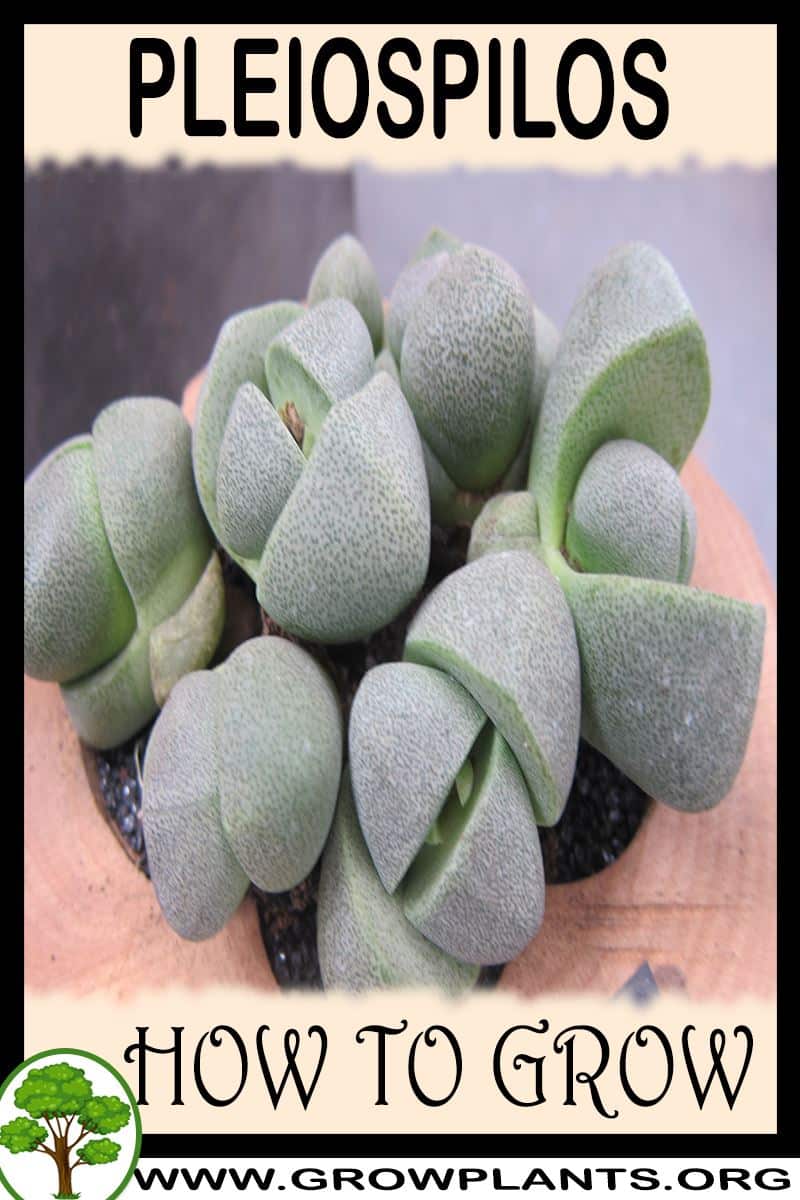
Overview: Pleiospilos, the split rock, is a tiny evergreen succulent only 3–7 cm (1–3 in) high whose fleshy, stone-like leaves mimic pebbles. It is grown as an ornamental novelty groundcover and houseplant for hot, dry, well-drained conditions.
Quick Specifications
| Specification | Attribute |
|---|---|
| Plant Type / Life Cycle | Perennial evergreen succulent |
| Foliage Type | Evergreen (succulent) |
| Mature Size | 3–7 cm (1–3 in) tall |
| Growth Rate | Slow |
| Root System | Fleshy taproot |
| Toxicity | Non-toxic |
| Hardiness | USDA zones 10–11 |
Growth Form & Structure
- Height & Spread: A very low, ground-hugging succulent of 3–7 cm (1–3 in); ideal for small pots, dish gardens and bright windowsills.
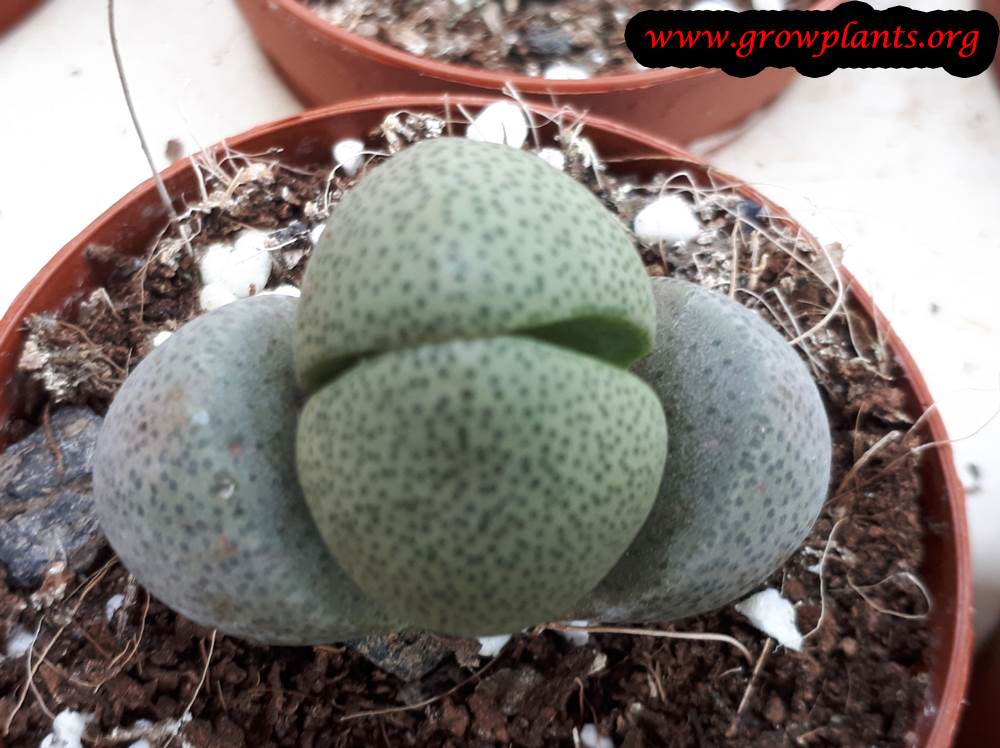
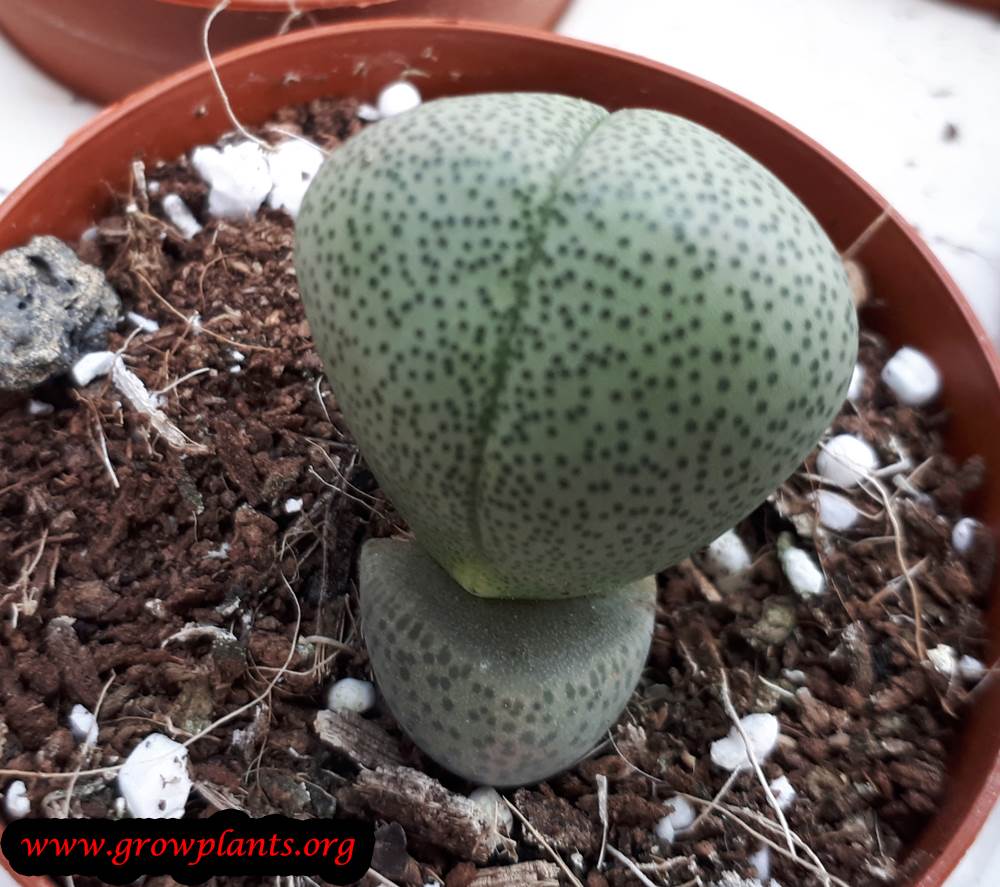
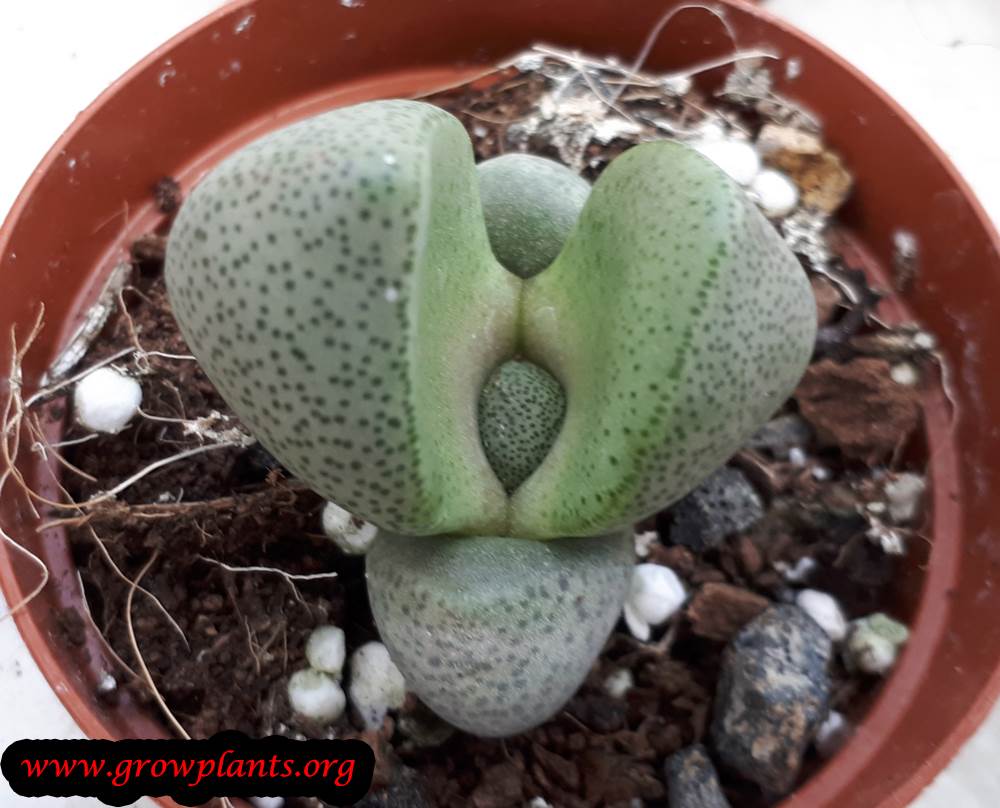
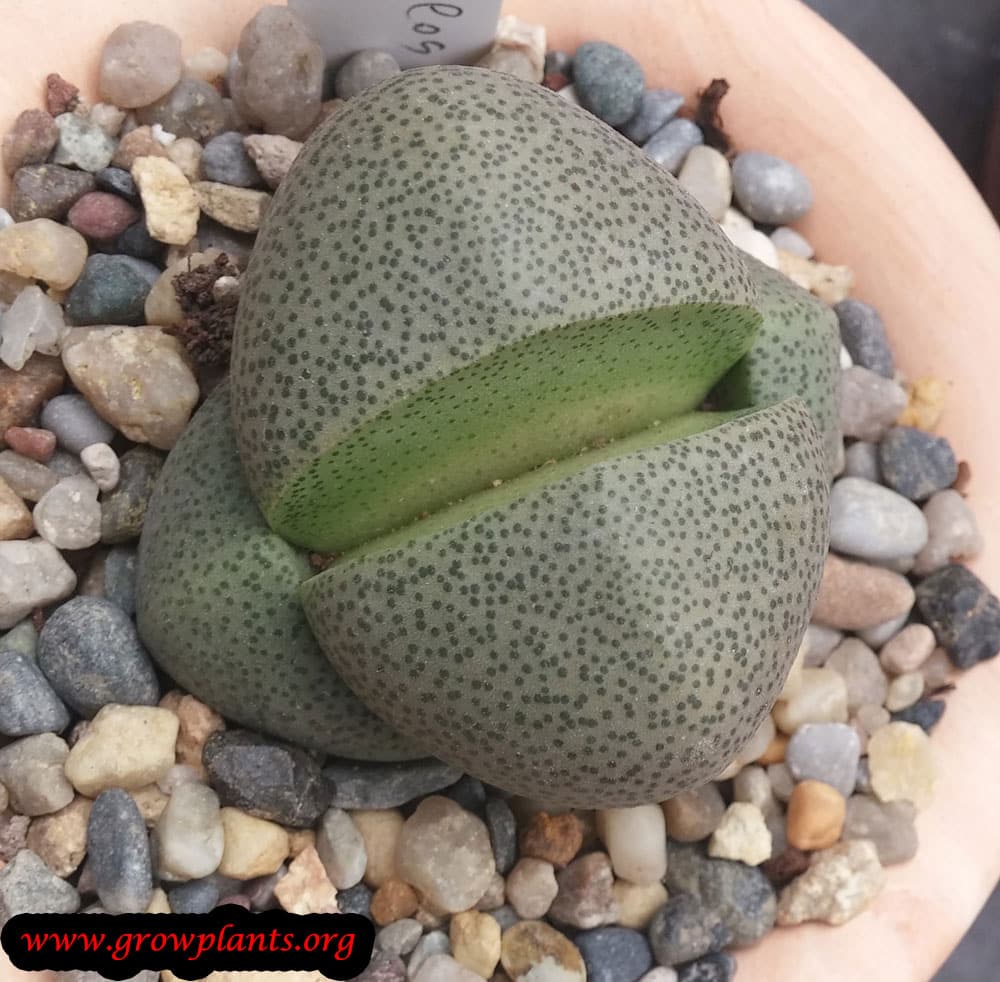
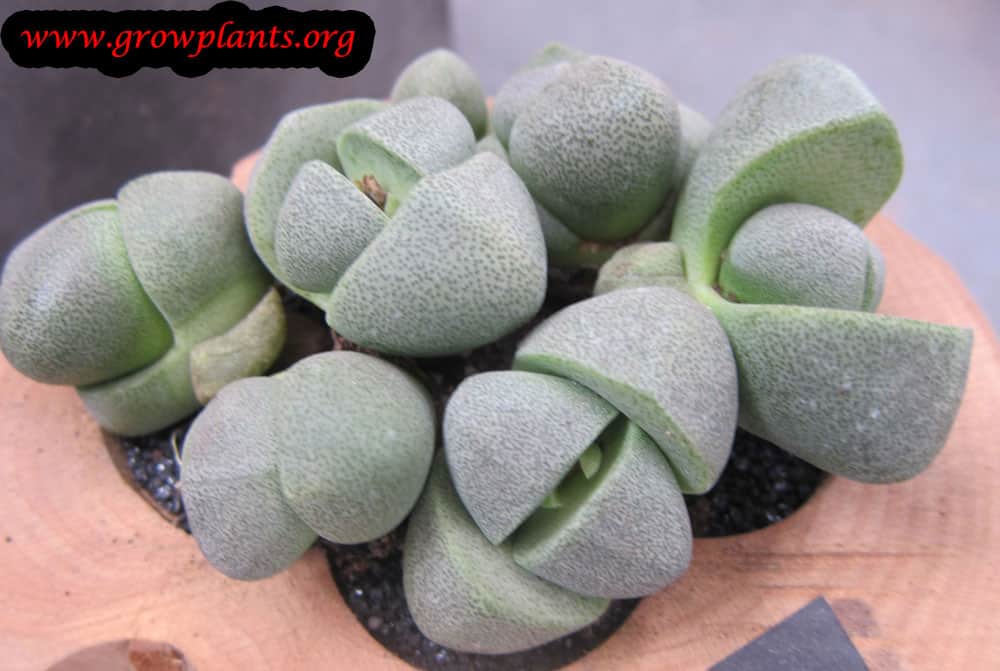
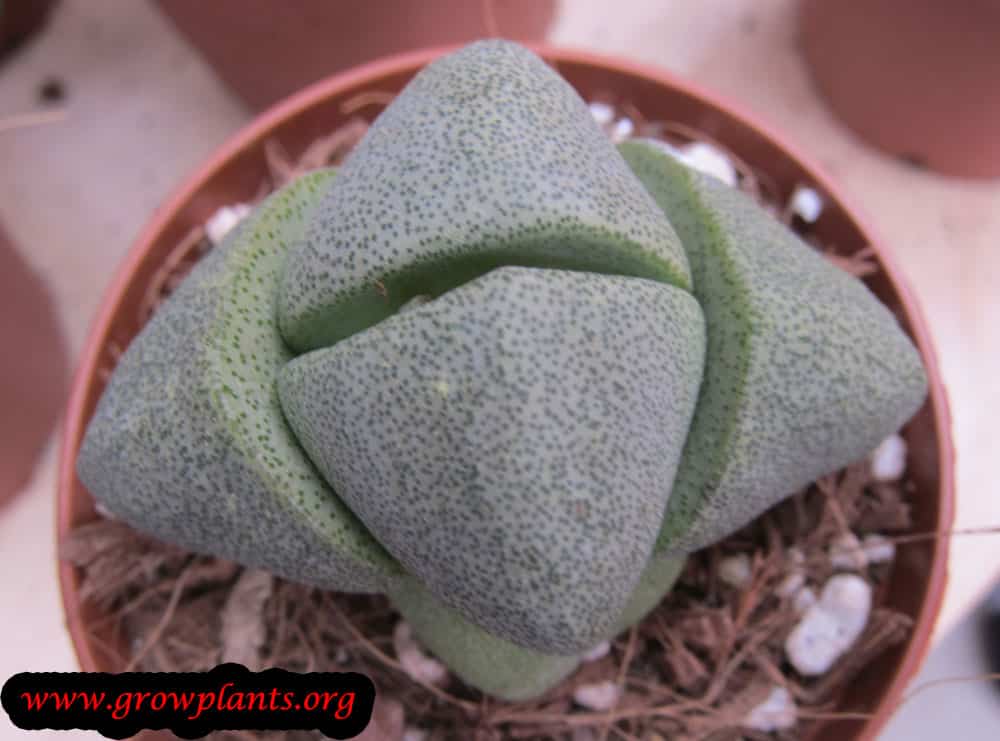
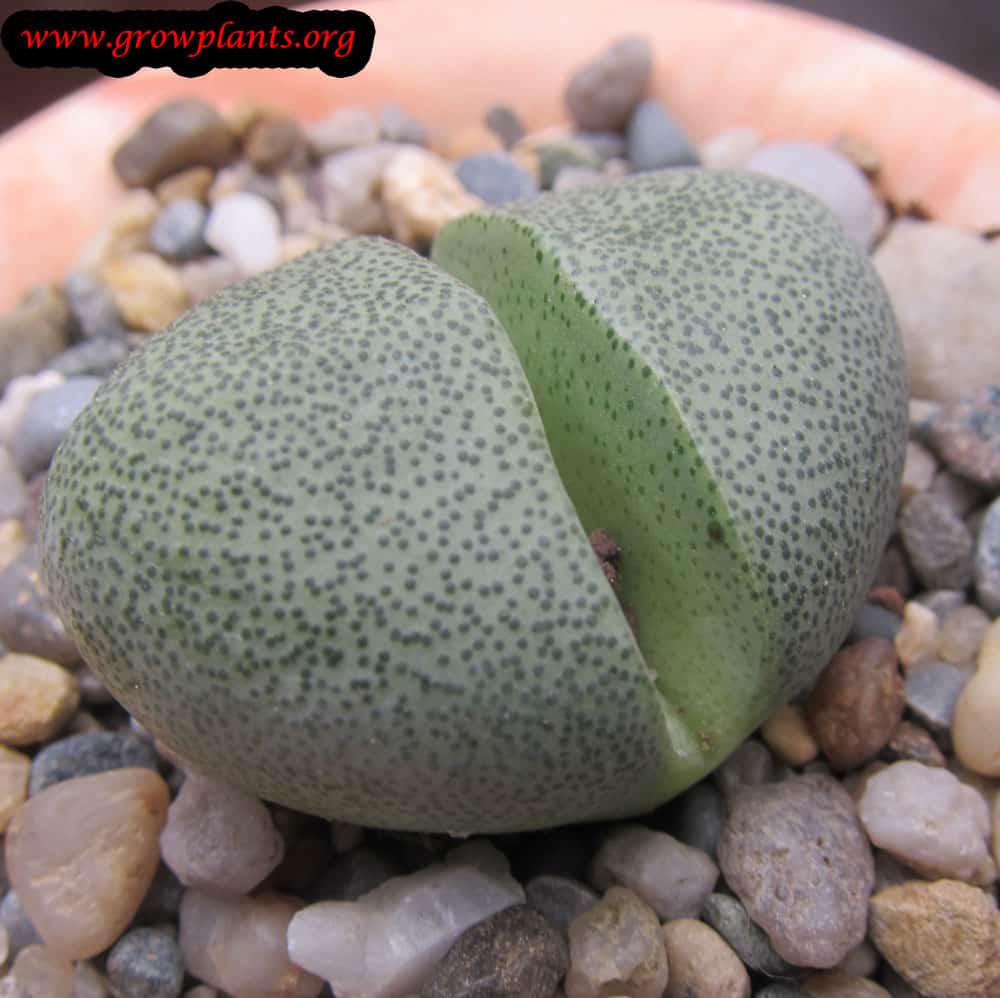
- Growth Habit & Form: A compact clump of paired, wedge-shaped fleshy leaves; each pair splits to reveal a new pair set at right angles, so the plant renews itself rather than spreading widely.
- Lifespan & Maturity: A slow-growing, long-lived perennial that adds roughly one leaf pair per year and demands sharp drainage and little water.
Anatomy & Physical Features
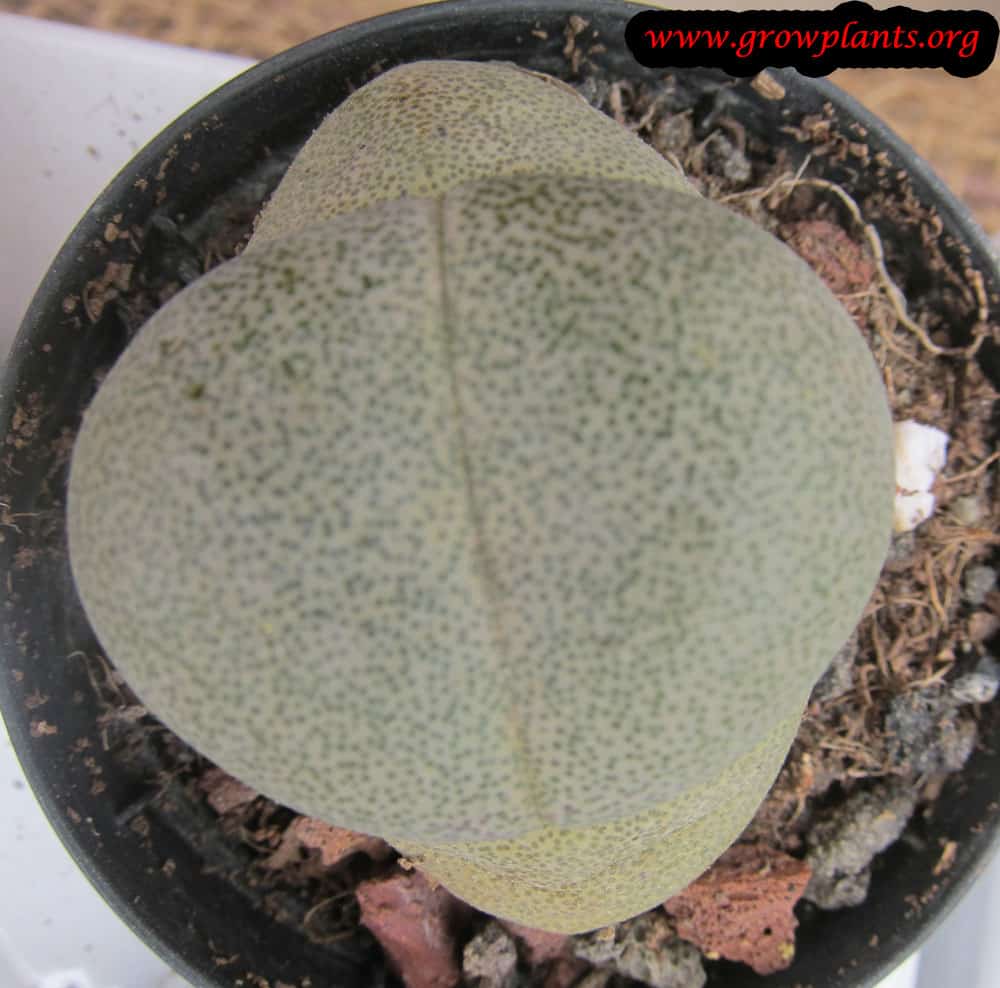
- Leaves & Foliage: Thick, stone-shaped fleshy leaves, plain or dotted, in green, grey, red, orange, brown, purple or pink, superbly camouflaged as pebbles.
- Flower Characteristics: Large, many-petalled daisy-like flowers in yellow, white, pink, orange or purple, opening from the centre of a leaf pair.
Primary Uses & Landscape Value
- Functional & Ornamental Roles: Ornamental novelty succulent for rock and gravel gardens, dish gardens and as a low-care windowsill houseplant.
Care Guide: Planting, Soil & Watering
Overview: Pleiospilos (Split rock) is a slow-growing, stone-mimicking succulent (hardiness zone 10-11) that stores water in its paired leaves and needs sharp drainage above all else. It grows best in a gritty, very free-draining mineral mix with hot summers and a cool, dry winter, and is extremely sensitive to overwatering.
Quick Care Requirements
| Requirement | Ideal Condition |
|---|---|
| Planting Season | All year |
| Growth Rate | Slow |
| Soil Type | Gritty, very free-draining mineral or cactus mix |
| Water Need | Low – water sparingly and let the soil dry completely between waterings |
Planting & Establishment
- Best Planting Season: Plant or repot at any time of year, ideally during active growth; avoid disturbing the roots while dormant.
- How to Plant:
- Hole Preparation: Plant into a gritty, fast-draining mineral mix in a pot or bed with excellent drainage, in a hole just large enough for the roots.
- Soil Amendments: Add plenty of coarse sand, grit, pumice or perlite; avoid rich, moisture-holding organic soil.
- Planting Depth: Set the plant so the base of the leaves sits at the soil surface (not buried), then top-dress with grit to keep the neck dry.
- Growth Speed & Expectations: Growth is very slow; the plant stays tiny, about 3-7 cm (1-3 in), producing a new pair of leaves each year.
Soil, Watering & Drainage Care
- Soil Mix & Drainage Needs: Extremely sharp drainage is critical – these succulents rot easily, so use a mineral-rich, gritty mix in a pot with drainage holes and never leave water standing in a saucer.
- Watering Schedule & Technique:
- Young / Newly Planted: Water lightly and only occasionally after planting, letting the mix dry fully between waterings.
- Established: Water sparingly during active growth, soaking then allowing the soil to dry out completely; when in doubt, do not water.
- Seasonal Adjustments: Keep the plant nearly dry through the hot summer rest and the cool winter; overwatering, especially while dormant, is the main cause of death.
Climate, Light & Hardiness
Pleiospilos (split rock) is a South African mesemb succulent suited to mediterranean, desert and subtropical climates, or growing indoors in bright light. It wants a hot, sunlit summer followed by a cool, dry winter, and has only low-to-moderate cold hardiness, doing best from about USDA zone 10 upward.
Quick Climate Specifications
| Climate Zones | Mediterranean, desert and subtropical climates; commonly grown as a houseplant in bright light |
| USDA Hardiness Zones | approximately 10–11 |
| Optimal Temp Range | approximately 18–28°C (64–82°F) during summer growth; cooler, roughly 10–16°C (50–61°F), through its dry winter rest |
| Cold Damage Begins | below approximately 5°C (41°F), especially if the soil is wet |
| Approx. Survival Minimum | a dry-kept, established plant may briefly tolerate light chill near 0°C (32°F), but wet cold is far more dangerous than dry cold |
| Frost Tolerance | Low |
| Light Conditions | Half shade to full shade outdoors (with plenty of ambient light); bright light indoors |
Sunlight & Light Exposure
Optimal Light Setup
Bright ambient light; grow in half shade to full shade outdoors, or a bright indoor spot.
Shade & Heat Management
As a mimicry ("living rock") succulent adapted to filtered light among stones in habitat, avoid intense unshaded midday sun in hot climates; too little light causes stretching and loss of its camouflage form.
Best Exposure / Orientation
An east-facing or lightly filtered exposure outdoors, or a bright windowsill indoors.
Temperature Extremes & Hardiness
USDA Hardiness & Regional Limits
Site data places this species at approximately zone 10–11 outdoors; colder climates should grow it as a container/houseplant.
Cold Damage & Winter Protection
Keep completely dry and cool (not warm) through winter dormancy – combined cold-and-wet is the main killer, not cold alone; protect from frost.
Frost Sensitivity
Low tolerance; avoid any frost exposure, particularly on damp soil.
Extreme Heat Tolerance
Good in summer provided the plant is not kept constantly wet; a hot, sunlit summer is part of its natural growth cycle.
Wind, Humidity & Microclimate
Humidity Preferences
Naturally adapted to dry, low-humidity climates.
Dry-Air Tolerance
High; thrives in arid conditions and dry indoor air.
Rainfall & Seasonal Moisture
Wants a hot, more actively growing summer and a distinctly dry, resting winter; avoid rainy-season waterlogging by improving drainage or growing under cover/raised in high-rainfall climates.
Microclimate Recommendations
Grow in gritty, fast-draining soil in a sheltered spot; indoors, a bright windowsill kept away from cold glass in winter suits it well.
Growing in Pots, Balconies & Indoors
Pleiospilos (Pleiospilos) is a small, pebble-like split-rock succulent, only about 3-7 cm (1-3 in) across, that grows well in a shallow pot. The grower notes it can be grown indoors as long as it gets enough light – meaning a bright, sunny windowsill – otherwise it stretches and is prone to rot.
Quick Details
- Container Size: A small, shallow pot with excellent drainage
- Indoor Suitability: Yes on a bright windowsill – it must have strong, direct light
- Best Spot: The sunniest windowsill or a bright, airy position
- Soil & Drainage: Very gritty, sharply draining mineral mix
- Watering in Pots: Very sparingly – overwatering is the main cause of loss
Indoors & On the Windowsill
- Windowsill houseplant: The grower’s answer is yes “with light” – that means strong, direct light. A sunny sill is essential; in a dim room it etiolates (stretches) and rots. It is not a plant for a shady corner.
- Respect its rest: Follow its dry dormancy – water little to none during the resting period, when the plant is renewing its leaves.
On a Balcony or Patio
- Light & shelter: Excellent for a hot, sunny, sheltered spot; protect it from prolonged rain and from frost, both of which it hates. Superb drainage is a must.
- Practicalities: A small terracotta pot breathes and dries fast, which suits it perfectly.
Choosing the Pot, Soil & Long-Term Care
- Pot & drainage: A small pot with generous drainage holes and no standing saucer of water; standing moisture quickly rots the roots.
- Potting mix: A mostly mineral mix – pumice, grit and coarse sand with only a little organic matter.
- Feeding: Feed rarely and weakly; these lean-growing succulents need very little.
- Repotting: Infrequently – only when it clearly outgrows the pot, into fresh gritty mix.
Growing this plant in a greenhouse
A greenhouse can give pleiospilos frost protection and cold protection.
Greenhouse at a glance
| Greenhouse suitability | Good - clearly useful |
|---|---|
| Main benefits | frost protection, cold protection |
| Outdoor protection advisable below | about 5°C |
| Maintain greenhouse minimum | around 5°C for active growth |
| Suitable types | unheated greenhouse, polycarbonate greenhouse |
| Heating | Heating is optional - useful mainly for winter growing in cold areas. |
Related greenhouse guides
- Greenhouses: How to Choose the Right Greenhouse
- Polycarbonate Greenhouses: What to Look for Before Buying
- Greenhouse Climate Control: Temperature, Ventilation and Humidity
Fertilizing & Feeding
A light feeder: it needs little fertilizer and grows best in a lean, well-drained mix with only occasional dilute feeding during active growth.
Quick Fertilizing Specs
| Feeding Level | Light feeder |
|---|---|
| Main Nutrient Priority | Lean, low-nitrogen feeding |
| Best Feeding Period | Active growing season only |
| Reduce/Stop Feeding | Stop feeding during cool, dark, or dormant rest periods |
| Organic Options | A little compost or worm castings worked into the gritty mix |
| Soil pH | Tolerates a wide range; slightly acidic to near neutral |
| Micronutrients | Rarely needed; correct only if a deficiency shows |
Feeding by Growth Stage
Active growth
Support steady, firm growth during the active growing season without forcing soft, weak tissue.
| Nutrient direction | Lean, low-nitrogen complete feeding; keep it dilute and light. |
|---|---|
| Timing | During the active growing season when new leaves are forming. |
| Frequency | Feed sparingly, with only occasional light feedings while the plant is actively growing. |
| Fertilizer types | A balanced or low-nitrogen complete fertilizer, well diluted, A specialized cactus and succulent fertilizer |
| Precautions | Avoid heavy or high-nitrogen feeding, which forces soft, stretched growth and makes roots prone to rot; always apply to moist soil rather than a bone-dry mix. |
Dormant rest
Let the plant rest; there is no active growth to support, so added nutrients are not needed.
| Nutrient direction | None – withhold fertilizer during the rest period. |
|---|---|
| Timing | During the cool, low-light, or dormant rest period. |
| Frequency | No feeding at this stage. |
| Fertilizer types | No feeding at this stage; do not fertilize until active growth resumes. |
| Precautions | Do not fertilize resting plants; feeding now pushes weak growth and lets salts build up in the mix. |
Nutrient Deficiency Signs & Corrections
Older leaves turn uniformly pale and growth slows over a long stretch.
| Possible causes | Low nitrogen availability in an old, depleted mix, Roots damaged or restricted by soggy, poorly drained soil, Very low light limiting overall growth |
|---|---|
| Appears first on | Oldest, lower leaves |
| What to check | Whether the mix is old and has never been refreshed, Drainage and whether roots are sitting wet, Light levels |
| Possible correction | Refresh into a fresh, gritty mix, correct drainage and light, then resume light feeding once the plant is actively growing. |
Brown, dry leaf tips or margins with a white crust on the soil surface.
| Possible causes | Fertilizer salts accumulating in the mix from overfeeding, Infrequent, incomplete watering that never flushes the pot |
|---|---|
| Appears first on | Leaf tips and margins |
| What to check | Whether feeding has been too strong or too frequent, Whether the pot ever drains freely when watered |
| Possible correction | Leach the pot thoroughly with clean water to flush accumulated salts, then ease back on feeding. |
Newest leaves yellow between still-green veins.
| Possible causes | High soil pH reducing iron and manganese availability, Cold, waterlogged soil impairing root uptake |
|---|---|
| Appears first on | Youngest leaves |
| What to check | Whether the soil is alkaline, Whether the soil stays cold and wet |
| Possible correction | Improve drainage and correct pH; if it persists, apply a chelated iron or manganese product per its label. |
Pruning, Training & Seasonal Maintenance
Pleiospilos is a stemless, paired-leaf mesemb (“living stone” relative) that carries no wood, no branching framework and only ever holds one active leaf pair at a time – there is essentially nothing to prune in the conventional sense. All maintenance is grooming: letting the old leaf pair fully dry down as the new pair inside it matures, then removing the papery remains, plus clipping the spent flower stem after the autumn bloom. Timing is governed by the plant’s own leaf-succession cycle rather than a fixed calendar window, and pruning has no effect on flowering or overall size – that is set by the plant’s own slow growth rate.
Quick Pruning & Maintenance Specs
| Pruning Tolerance | Low – grooming only, no structural or renewal cuts |
| Primary Pruning Window | Cued by leaf condition, not season – remove the old leaf pair only once it is fully shrivelled and papery (commonly late spring–summer) |
| Secondary Maintenance Window | After the autumn bloom, once the flower stem has dried |
| Typical Frequency | Once per annual leaf-succession cycle |
| Main Objective | Tidy appearance and preventing the spent leaf pair from trapping moisture against the new growth |
| Mature Plant Priority | Remove fully desiccated leaf pairs and spent flower stems; leave clustered offsets/daughter heads in place unless dividing for propagation |
| Best Tool Type | Small precision snips (often the old leaf simply peels away by hand once dry) |
| Avoid Heavy Pruning During | While the old leaf pair is still plump or greenish – it is still feeding the new pair |
Pruning by Plant Age & Size
Newly Established
Leave untouched through its first season; do not remove any leaf tissue while the plant is settling in, even if it looks slightly shrivelled from transplant stress.
Young / Formative
No structural training applies – Pleiospilos has no stem or branch structure to shape. The only “formative” task is deciding whether to let offsets cluster into a mat or separate them once large enough to handle.
Mature / Established
Annual removal of the fully dried outer leaf pair and the spent flower stem is the entire maintenance task; older clustering plants may also be divided at the base if a wider clump is not wanted.
Seasonal Pruning Schedule
Post-Flowering (After Autumn Bloom)
Objective: tidy the plant once flowering finishes. Remove: the flower stem once it has dried and browned at the base. Do not remove: any leaf tissue that is still firm or green. Expected response: none – this is cosmetic only. Flowering impact: none, flowering is already finished.
Ongoing Sanitary (Leaf-Succession Cleanup)
Objective: clear the fully spent outer leaf pair once it has finished transferring its stored moisture to the new pair. Remove: only leaf material that is papery-dry and detaches with no resistance. Do not remove: any leaf pair that is still plump, since it is actively feeding the emerging growth. Expected response: none. Flowering impact: none.
Special Growth to Remove
- Fully desiccated outer leaf pair (remove only once papery)
- Spent flower stem after bloom fades
- Offsets/daughter heads are not “unwanted” growth – leave them to form a cluster, or separate for propagation
Container & Small-Space Pruning
Almost always grown in shallow, well-drained containers given its 3–7cm mature size. No root pruning is needed – this is a slow grower that resents disturbance, so repot only when the pot is filled and use a fast-draining mix. Grooming (leaf/flower-stem removal) is identical in-ground or in a pot; the main container-specific risk is moisture sitting against the base after watering, which raises the chance of rot at the point where old tissue is removed.
Tools
- Precision snips – for cutting the dry flower stem cleanly at its base; the old leaf pair itself usually needs no tool and can be lifted away by hand once fully dry
Tool Hygiene & Disease Risk
Routine care is sufficient – wipe the blade clean between plants. The real risk with this genus is not pathogen transfer between cuts but rot from cutting into still-living tissue or from moisture sitting on a fresh wound, given how water-sensitive it is.
Cut Placement & Technique
Cut the flower stem at its base without nicking the leaf body beneath it. Never cut into the fissure between the new leaf pair and the old one – work from the outside in, and stop entirely if any resistance suggests the tissue is not yet fully dry.
Heavy Pruning & Rejuvenation
Not tolerated and not applicable. Pleiospilos has no dormant buds or side growth to regenerate from; cutting into a living leaf pair kills that tissue outright and cannot be recovered.
Post-Pruning Care
Hold off watering for a few days after removing old leaf material, especially if any cut was made near living tissue, to let the area dry and reduce rot risk. No feeding is needed – this is grooming, not a growth-stimulating cut.
Common Pruning Mistakes
- Peeling or cutting off the old leaf pair before it is fully desiccated, which cuts off the moisture/nutrient supply the new pair still needs
- Watering immediately after removing old tissue, encouraging rot at the wound
- Mistaking the annual leaf pair for dead/diseased growth and pulling at it while still attached to living tissue
When NOT to Prune
- While the old leaf pair is still plump, green, or only partly shrivelled
- Immediately after repotting or transplanting, while the plant is settling
- On wet or recently watered soil, since fresh cuts near moist compost raise rot risk
Recommended Tools (by task)
- Mature plant – spent flower stem removal: precision_snips – a clean, controlled cut at the stem base without disturbing the surrounding leaf pair.
Propagation Guide
Pleiospilos (“split rock”) mimicry succulents are most reliably grown from seed, since a single plant usually keeps to one pair of leaves for years and offers little material for cuttings; where an older plant has produced a second head, that head can sometimes be divided once it has its own roots. Seed-grown plants come true to the species, and overall propagation is Moderate in difficulty – germination itself is not hard, but the tiny seedlings are very easily lost to overwatering.
Quick Propagation Specs
| Best Propagation Method | Seed |
| Alternative Methods | Division of offsets (older, multi-headed plants only) |
| Propagation Difficulty | Moderate |
| Seed True-to-Type | Yes |
| Vegetative True-to-Type | Yes |
| Best Propagation Season | Spring |
| Seed Germination Time | A few weeks, often irregular |
| Germination Temperature | 20–25°C (68–77°F) |
| Seed Sowing Depth | Surface-sown, not covered |
Growing from Seed
Seed Handling & Viability
Seed germinates best when reasonably fresh; store any surplus seed cool and dry rather than damp.
Dormancy & Pre-Sowing Treatment
No scarification or stratification is needed – sow the seed untreated.
Sowing Season
Spring, once temperatures are reliably warm.
Sowing Depth & Orientation
The seed is dust-fine; scatter it on the surface of a very free-draining mineral mix and do not bury it.
Germination Conditions
Warm conditions (around 20–25°C / 68–77°F), bright but not scorching light, and a surface kept just barely moist – never wet – give the best results, consistent with the species’ well-drained-soil, do-not-overwater care profile.
Germination Time
Usually within a few weeks, though timing can be uneven.
Seedling Care
This is the highest-risk stage: seedlings damp off easily, so water sparingly (misting or bottom-watering) and rely on airflow rather than frequent watering; ease seedlings toward an adult, drought-tolerant regime gradually over the first year or two.
Division, Offsets, Pups & Suckers
Mature plants occasionally develop a second head; separate a head only once it has formed its own roots, let the cut surface callus for a couple of days, then pot it into gritty, well-drained mix and water lightly until new growth confirms it has re-rooted.
Bloom & Flower Guide
Quick Details
- Bloom Season: Autumn
- Flower Appearance: Many-petalled, daisy-like flowers in yellow, white, pink, orange or purple, one arising from between each pair of leaves
- Edibility: Ornamental only
Detailed Blooming Overview
Split rock is a living-stone succulent that mimics the pebbles around it – until autumn, when a surprisingly large, many-petalled flower unfurls from the split between its paired leaves. The blooms open in the afternoon and often carry a distinct coconut scent, a charming detail on such a stony little plant.
Flower Characteristics
- Daisy-like flowers with many narrow petals.
- Colours span yellow, white, pink, orange and purple.
- Often coconut-scented; tend to open in the afternoon.
Bloom Care & Thinning
- Watering rhythm: Careful, sparing water in the growing season supports flowering; keep it dry during dormancy.
- Light: Strong light is needed for the buds to form and open well.
Pests, Diseases & Troubleshooting
Overview: Pleiospilos (split rock or mimicry mesembs) are among the most rot-prone of succulents, so their defining problem is not a pest but water: overwatering causes the fleshy leaf pair to split, burst and rot. This genus-level entry covers the split-rock mesembs broadly. Their true pests are hidden root mealybugs and mealybugs, with scale and the occasional slug or aphid; kept lean, dry and bright on their natural wet/dry cycle, they are otherwise nearly pest-free. Watering discipline is the whole game.
Quick Troubleshooting Overview
| Issue / Pest | Main Symptom | Primary Solution |
|---|---|---|
| Root mealybugs | Slow decline; white waxy specks on roots | Unpot and inspect; wash roots; repot in fresh gritty mix |
| Mealybugs | White cottony tufts between leaves | Alcohol dab; systemic or neem for stubborn cases |
| Scale | Small bumps on the leaf bodies | Scrape off; spot-treat with alcohol or dilute oil |
| Slugs / snails | Gnawed patches on fleshy bodies | Hand-pick at night; grit barriers; iron-phosphate bait |
| Fungus gnats | Flies over damp soil; larvae signal it’s too wet | Let mix dry fully; the real message is reduce watering |
| Overwatering / rot | Bursting, mushy, translucent or collapsing body | Withhold water; unpot and dry; gritty mix, water on the growth cycle |
Common Pests & Management
- Root mealybugs (Rhizoecus spp.):
- Symptoms: The most damaging pest: white, waxy specks and mealy patches among the roots that sap the plant, causing unexplained slow decline and poor growth while nothing shows above the soil.
- Prevention & Control: Unpot suspect plants and inspect the roots; wash the roots clean, remove infested soil, and repot into fresh, gritty, free-draining mix. Isolate affected plants, check new acquisitions at repotting, and control ants; a soil drench can supplement bare-rooting for stubborn cases.
- Mealybugs (Pseudococcus, Planococcus spp.):
- Symptoms: White cottony tufts tucked between the fleshy leaf pair and at the base, with slow decline and occasional sooty mold on honeydew.
- Prevention & Control: Dab colonies with rubbing alcohol on a cotton bud, repeating until clear, and use neem or a suitable systemic for persistent infestations; keep plants isolated and inspect the tight leaf cleft where they hide.
- Scale (Diaspididae):
- Symptoms: Small immobile bumps on the leaf bodies, weakening the plant slowly.
- Prevention & Control: Scrape off individually and spot-treat with alcohol or a very dilute horticultural oil; physical removal is easiest on these small plants.
- Slugs and snails (Gastropoda):
- Symptoms: Gnawed, scarred patches on the fleshy leaf surfaces overnight, with slime trails — the basis for the source’s ‘slugs’ note, though they are only an occasional problem.
- Prevention & Control: Hand-pick after dark, ring pots with grit or copper, and use iron-phosphate bait if needed; keeping the surface dry and gritty discourages them.
Diseases & Fungal Issues
- Root and basal rot (Pythium, Fusarium, and water molds):
- Symptoms: The classic killer: the leaf body and roots turn soft, brown, translucent or mushy and collapse, almost always from overwatering, water sitting in the leaf cleft, or wet soil during dormancy.
- Treatment & Management: Water sparingly and only during active growth, use a very gritty, fast-draining mix in a breathable pot, and never water into the leaf cleft or during the summer/dormant rest. Remove rotted plants; there is essentially no cure once the body rots, so restraint is everything.
- Fungal leaf spot (various fungi):
- Symptoms: Occasional dark spots or blemishes on the leaf bodies in humid, stagnant, over-watered conditions.
- Treatment & Management: Improve airflow, keep foliage dry, and reduce watering and humidity; this is uncommon in properly grown, lean plants.
- Botrytis / grey mold (Botrytis cinerea):
- Symptoms: Grey mold on damaged or rotting tissue in cool, damp, still air.
- Treatment & Management: Remove affected tissue, improve ventilation, and cut watering; keep plants bright and airy.
Growing Difficulties & Abiotic Problems
- Overwatering, splitting and bursting:
- Cause & Symptoms: Too much water — especially while the plant should be forming its new leaf pair or resting — makes the bodies swell, split open and rot; this is the single defining problem of the genus.
- Correction Strategy: Follow the plant’s natural rhythm: water lightly in active growth and withhold water as the old leaf pair shrivels to feed the new one and during dormancy; let the fresh pair absorb the old one rather than watering to plump the plant.
- Etiolation and sunburn:
- Cause & Symptoms: Too little light makes the bodies stretch, pale and soften; but a sudden move to intense sun scorches and marks them.
- Correction Strategy: Grow in bright light with some direct sun for compact, colored bodies, and acclimatize gradually to stronger sun to avoid burn; turn pots for even exposure.
- Wrong potting mix / salt buildup:
- Cause & Symptoms: A water-retentive mix or accumulated fertilizer salts keep roots too wet and damage them.
- Correction Strategy: Use a gritty, mostly-mineral mix in a pot with drainage, feed only very lightly during growth, and flush occasionally; repot periodically into fresh mineral mix to renew drainage.
What Helps — Products & Tools
These plants need almost no products — the key ‘tools’ are a gritty mineral mix, a breathable pot, and the discipline to withhold water. For pests, use rubbing alcohol to spot-treat mealybugs, bare-root washing (and, if needed, a soil drench) for root mealybug, and iron-phosphate bait for the rare slug; avoid overwatering above all. Any oils should be used sparingly on the fleshy bodies.