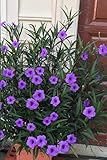


Plant Profile & Key Characteristics
Overview: An evergreen, clump-forming terrestrial orchid reaching 0.5-1.5 m (20-60 in), with tall reed-like canes carrying pleated foliage. It is grown purely as an ornamental, prized for its large, fragrant, though short-lived flowers and for cutting.
Quick Specifications
| Specification | Attribute |
|---|---|
| Plant Type / Life Cycle | Herbaceous perennial (terrestrial reed-stem orchid) |
| Foliage Type | Evergreen |
| Mature Size | 0.5–1.5 m (20–60 in) |
| Growth Rate | Slow to moderate |
| Hardiness | USDA zones 10b–12 (subtropical, frost-free) |
Growth Form & Structure
- Height & Spread: Reaches 0.5–1.5 m (20–60 in) in the ground and grows equally well in a container, where the clump stays more compact; it also adapts to indoor culture in a bright spot.
- Growth Habit & Form: Upright, clump-forming orchid; slender bamboo-like canes rise from the base and multiply into a dense tuft.
- Lifespan & Maturity: A long-lived perennial that expands its clump year on year once established; individual canes flower at their tips.
Anatomy & Physical Features
- Leaves & Foliage: Green, lance-shaped, pleated (plicate) leaves arranged alternately along the length of the cane-like stems.
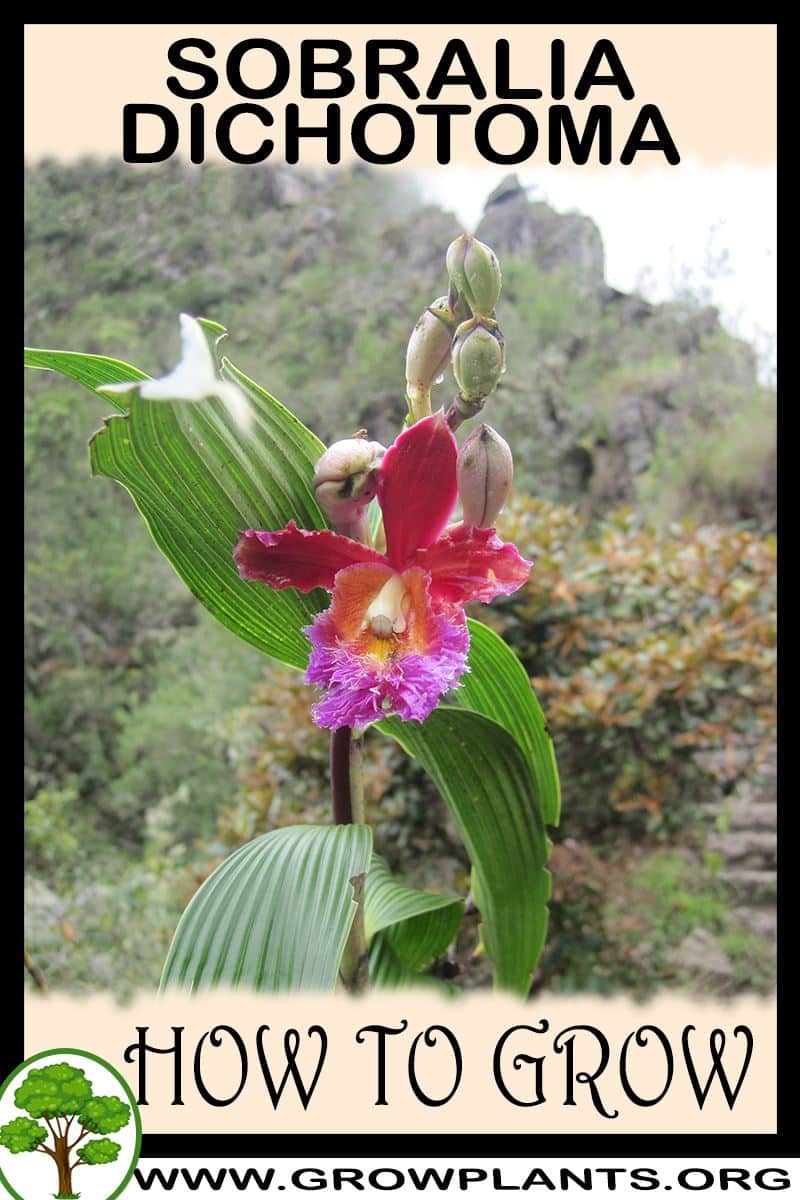
- Flower Characteristics: Fragrant purple to red blooms of five spreading petals around a yellow inner trumpet-shaped lip; each flower is short-lived.
Primary Uses & Landscape Value
- Functional & Ornamental Roles: A specimen and collector’s ornamental for warm, frost-free gardens, greenhouses and conservatories; suits large containers and indoor culture, and the fragrant blooms are used for cutting.
Care Guide: Planting, Soil & Watering
Overview: Sobralia dichotoma (Sob orchid) is a tropical orchid that grows best in bright, filtered light and warm, stable temperatures in a coarse, free-draining bark-based medium. It likes generous moisture and clean, soft water, but the open mix must drain fast so the roots get plenty of air.
Quick Care Requirements
| Requirement | Ideal Condition |
|---|---|
| Planting Season | In spring or summer during active growth |
| Growth Rate | Slow to moderate |
| Soil Type | Coarse orchid medium — bark, bark chips or cork; not ordinary soil |
| Water Need | High — keep evenly moist with clean, soft water while draining freely |
Planting & Establishment
- Best Planting Season: Repot or divide in spring or summer during active growth; it is suited to zones 10b–12 and warm, stable, subtropical conditions, and dislikes sudden temperature swings.
- How to Plant:
- Hole Preparation: Use a pot (ideally transparent) only just big enough for the roots, not oversized; a snug pot with an open medium suits it.
- Soil Amendments: Pot into a free-draining orchid medium of bark or bark chips with cork; adding some inert material such as Styrofoam pieces keeps air around the roots.
- Planting Depth: Settle the plant so the base of the growths sits at the surface of the medium, spreading the roots through the bark — do not bury the crown.
- Growth Speed & Expectations: Slow to moderate growth into a 50–150 cm cane orchid; refresh the medium before it breaks down and turns acidic, trimming any dead roots when you repot.
Soil, Watering & Drainage Care
- Soil Mix & Drainage Needs: Use an open, airy bark or cork medium in a pot that drains instantly; replace the medium once it starts to compost so the roots never sit in stale, acidic, soggy material.
- Watering Schedule & Technique:
- Young / Newly Planted: After potting, keep the medium evenly moist with clean, room-temperature water while new roots establish.
- Established: Water generously and regularly so the bark stays moist, always using clean, soft or rain water and letting it drain right through.
- Seasonal Adjustments: Water more in warm, active growth; ease back a little when temperatures cool, keeping conditions stable and avoiding cold, stagnant water at the roots.
Climate, Light & Hardiness
This terrestrial orchid is a subtropical plant that wants a consistently warm, frost-free environment rather than any real winter chill. It accepts light from full sun through to full shade, and is notably sensitive to sudden temperature swings rather than to any single extreme.
Quick Climate Specifications
| Climate Zones | Subtropical; also grown indoors as a houseplant in cooler climates |
|---|---|
| USDA Hardiness Zones | 10b–12 |
| Optimal Temp Range | Site data describes a broadly tolerated range of approximately 2–30°C (35–86°F), though steady, moderate warmth suits it far better than either extreme |
| Frost Tolerance | None to Very Low |
| Light Conditions | Full sun to full shade |
Sunlight & Light Exposure
Optimal Light Setup
Bright, filtered light suits it best; site data shows it tolerating anything from full sun to full shade, though very deep shade will slow flowering.
Shade & Heat Management
In hot subtropical summers, light shade helps prevent leaf and flower stress; the plant is described as fragrant and flower-focused, and blooms hold up better out of harsh midday sun.
Best Exposure / Orientation
A sheltered spot with stable warmth and protection from cold draughts or sudden temperature drops is more important than a specific compass orientation.
Temperature Extremes & Hardiness
USDA Hardiness & Regional Limits
Suited to USDA zones 10b–12, i.e. essentially frost-free, warm subtropical to tropical climates; outside this range it is best grown indoors or under protection.
Cold Damage & Winter Protection
Site data notes it is very sensitive to changing temperature, so gradual, stable conditions matter as much as staying above any single threshold; avoid cold draughts, sudden nighttime drops and exposure below roughly 2°C (35°F).
Frost Sensitivity
Not frost-hardy; treat any frost risk as damaging and grow in a container that can be moved under cover outside zone 10b–12.
Extreme Heat Tolerance
Tolerates warmth up to around 30°C (86°F) per site data, but again favors steady conditions over a rapid swing into high heat.
Wind, Humidity & Microclimate
Humidity Preferences
As an orchid grown in moist, bark-based media, it appreciates humid air alongside its moist root environment.
Wind Tolerance
Low – its broad, soft leaves and upright canes are not suited to strong, drying wind.
Microclimate Recommendations
A stable, humid, lightly shaded and wind-sheltered microclimate - such as a courtyard, greenhouse, or bright indoor spot - suits it far better than an exposed open position, given its sensitivity to fluctuating temperature.
Growing in Pots, Balconies & Indoors
This is a tall, reed-stemmed terrestrial orchid that the grower confirms grows both as a houseplant and in containers. In a pot by a bright window with steady moisture it makes a striking indoor plant, though at 50-150 cm (20-60 in) it wants headroom and does best in a bright, roomy spot.
Quick Details
- Container Size: A sturdy, roomy pot for the clumping stems – pot up as it multiplies
- Indoor Suitability: A good houseplant given bright light, warmth, and generous water; give it space for the tall canes
- Best Spot: Bright light – it tolerates full sun to shade, but bright, sheltered, filtered light suits pots best
- Soil & Drainage: A rich, moisture-retentive yet free-draining mix – loose potting mix with bark, perlite, and organic matter
- Watering in Pots: Water generously and keep evenly moist (the grower calls for a big amount of water); never waterlogged or bone dry
Indoors & On the Windowsill
- A real houseplant: The grower confirms indoor growing. Give it a bright window, warmth, and plenty of water, and it will send up its tall flowering canes.
- Windowsill growing: A bright sill or sunroom suits it; give the tall stems room and turn the pot for even growth.
- Warmth: Keep it warm and humid, away from cold draughts; it resents chilling.
On a Balcony or Patio
- Light & shelter: On a balcony or patio give bright, sheltered light and shelter the tall canes from strong wind. Pots dry fast in heat, so water often.
- Practicalities: A tall plant catches wind – stand the pot where it is stable, with free drainage runoff.
Choosing the Pot, Soil & Long-Term Care
- Pot & drainage: Use a pot with strong drainage holes and no standing-water saucer; the roots want moisture but not stagnation.
- Potting mix: A loose, rich but airy mix – potting mix with bark, perlite, and organic matter.
- Feeding: Potted plants exhaust their soil faster because nutrients leach out with each watering, so feed a little more often than plants in open ground – a balanced liquid feed through the growing season.
- Repotting: Divide and refresh the mix every couple of years as the clump of canes expands.
Fertilizing & Feeding
A light feeder – this orchid is typically grown in a fast-draining bark or cork medium and is sensitive to fertilizer salt buildup, so light, regular feeding works better than infrequent heavy feeding.
Quick Fertilizing Specs
| Feeding Level | Light feeder – feed lightly and regularly rather than heavily. |
|---|---|
| Main Nutrient Priority | Balanced feeding; avoid heavy nitrogen that produces soft, weak growth. |
| Best Feeding Period | Spring through summer, during active growth and bloom. |
| Reduce/Stop Feeding | Ease off once flowering finishes and growth slows. |
Feeding by Growth Stage
Active Growth
Support new stem and leaf growth in the fast-draining bark or cork potting medium, replenishing nutrients that wash through with each watering.
| Nutrient direction | Feed lightly and regularly rather than heavily and rarely, since nutrients wash through a fast-draining bark or cork medium quickly. |
|---|---|
| Timing | During active leaf and stem growth in the warmer months. |
| Frequency | Light, regular feeding through the active growing season works better than infrequent heavy feeding. |
| Fertilizer types | A balanced fertilizer diluted lightly for orchids or plants grown in bark or cork media, Clean, low-salt water such as rainwater to mix with fertilizer, since this orchid is sensitive to salt buildup |
| Precautions | Use only a light concentration – this orchid’s roots are easily burned by excess fertilizer salts in a fast-draining medium, and the plant is notably sensitive to changing conditions. |
Bud Set and Bloom
Support the fragrant spring-to-summer flower display without pushing soft new growth that competes with blooming.
| Nutrient direction | Continue light, balanced feeding; avoid nitrogen-heavy products so energy goes into flowering rather than foliage. |
|---|---|
| Timing | Ahead of and during the spring-to-summer bloom period. |
| Frequency | Maintain the same light, regular feeding rhythm through the bloom period. |
| Fertilizer types | A balanced or slightly potassium-leaning fertilizer diluted lightly for orchids |
| Precautions | Avoid strong fertilizer concentrations during bloom; this orchid is sensitive to both salt buildup and sudden changes in growing conditions. |
Post-Bloom Rest
Let the plant recover after flowering with a natural pause in feeding, since feeding while growth slows can let damaging salts build up in the potting medium.
| Nutrient direction | None – withhold fertilizer while growth slows after blooming. |
|---|---|
| Timing | After the bloom period ends, while growth is minimal. |
| Frequency | No feeding at this stage. |
| Fertilizer types | No feeding at this stage; resume light feeding once active new growth resumes. |
| Precautions | Do not fertilize during this rest period – excess salts are especially damaging to this salt-sensitive orchid’s root system. |
Nutrient Deficiency Signs & Corrections
Overall pale green or yellowish leaves with slowed new growth.
| Possible causes | Nutrients leaching quickly from the fast-draining bark or cork medium, Old, broken-down potting medium no longer holding nutrients, Root damage from salt buildup or inconsistent watering |
|---|---|
| Appears first on | Older leaves and overall plant vigor |
| What to check | Check the age and condition of the bark or cork potting medium, Review recent watering and feeding consistency, Inspect roots for salt damage or rot |
| Possible correction | Refresh the potting medium if it has broken down, and resume light, regular feeding once roots are healthy. |
Blackened or dried root tips and browning leaf tips.
| Possible causes | Fertilizer salt buildup from over-concentrated feeding, Use of hard or mineral-heavy water instead of clean water, Underlying root rot from excess moisture |
|---|---|
| Appears first on | Root tips and the newest leaf tips |
| What to check | Check the water source and mineral content, Review recent fertilizer strength and frequency, Inspect roots for rot versus salt damage |
| Possible correction | Flush the potting medium thoroughly with clean water to leach salts, and switch to lighter feeding with low-salt water going forward. |
Stalled growth and dropped buds despite regular feeding.
| Possible causes | Temperature swings interfering with root nutrient uptake, since this orchid is very sensitive to changing temperature, Insufficient light for the plant to use available nutrients, Root disturbance from a recent repotting |
|---|---|
| Appears first on | New buds and emerging growth |
| What to check | Review recent temperature fluctuations, Check light levels, Confirm how recently the plant was repotted |
| Possible correction | Stabilize growing conditions first – correcting temperature and light issues typically resolves the problem faster than adjusting fertilizer. |
Pruning, Training & Seasonal Maintenance
Sobralia dichotoma grows as a clump of reed-like canes, with leaves along the cane and flowers produced at (or near) the cane tips. Pruning tolerance is low and almost entirely sanitary: the plant does not need, and does not benefit from, structural cutting. The safest and most useful work – removing spent flowers and fully dried, played-out canes – can be done at any time of year, since each new bloom comes from a fresh basal cane rather than from regrowth on an old one.
Quick Pruning & Maintenance Specs
| Pruning Tolerance | Low (sanitary only) |
| Primary Pruning Window | Any time – spent flowers and dried canes as they occur |
| Typical Frequency | Ongoing, as needed |
| Main Objective | Remove spent flowers and fully dried canes; keep the clump clean |
| Young Plant Priority | Leave new canes undisturbed until they finish flowering |
| Mature Plant Priority | Clear out old dried canes at the base once replaced by new growths |
| Best Tool Type | Precision snips |
| Avoid Heavy Pruning During | Sudden temperature swings (plant is very sensitive to changing temperature) |
Pruning by Plant Age & Size
Newly Established
Do not cut back young canes – let each one reach full height and bloom; there is no benefit to heading a developing cane.
Young / Formative
No structural training applies. Sobralia is a clump-forming cane orchid with no leader, vase, or espalier framework to build.
Mature / Established
Remove fully spent, brown or dried canes at the base once new basal growths have taken over, and deadhead individual flowers as they fade along still-green canes.
Seasonal Pruning Schedule
Ongoing Sanitary
Objective: keep the clump tidy and reduce rot risk in the humid crown. Remove: spent/dead flowers, fully dried canes. Do not remove: green, leafy canes or canes still forming buds. Expected response: resources redirect to new basal canes. Flowering impact: none, provided only spent material is removed.
Special Growth to Remove
- Spent flowers – remove as they fade.
- Fully dried, brown canes – cut flush at the base once replaced by new growth.
Container & Small-Space Pruning
Sobralia dichotoma is commonly grown in containers on bark/cork media. When repotting, trim away any dead or rotted roots before returning the plant to fresh medium – this root cleanup, done alongside a repot rather than on a fixed schedule, matters more for this species than any top pruning.
Tools
- Precision snips – for deadheading spent flowers and trimming dried cane tissue; the plant has no woody growth that needs loppers or a saw.
Tool Hygiene & Disease Risk
Increased – orchids as a group are prone to spreading viruses via cutting tools between plants, so wipe or sanitize snips before moving to another orchid, even though the only pest noted for this species (weevil) is not itself tool-transmitted.
Cut Placement & Technique
Cut a spent flower just below the faded bloom. Remove a dried cane flush at its base, taking care not to damage the new basal growths growing beside it.
Heavy Pruning & Rejuvenation
Not applicable. This orchid does not respond to hard cutting-back – there is no dormant framework to renew by heavy pruning. Rejuvenation happens naturally through new basal canes, not by cutting old ones hard.
Post-Pruning Care
After removing a dried cane, let the cut surface dry briefly before the next watering to limit rot at the base. Keep temperature and humidity stable afterward, since the plant is noted as very sensitive to changing temperature.
Common Pruning Mistakes
- Cutting back a green, still-leafy cane expecting it to rebloom – it will not; the next flowers come from a new cane.
- Doing pruning work during a cold snap or sharp temperature swing.
- Leaving spent flowers to rot in the humid crown instead of removing them promptly.
When NOT to Prune
Avoid cutting any cane that is still actively growing or budding. Avoid pruning during sudden temperature swings, given this species’ marked sensitivity to temperature change.
Recommended Tools (by task)
- precision_snips – sized for this orchid’s soft cane tissue; used for deadheading spent flowers and removing dried cane tips.
- blade_disinfectant – orchids readily spread viruses tool-to-tool, so sanitize between plants even for routine sanitary cuts.
Propagation Guide
Sobralia dichotoma is best increased by dividing an established clump of canes, since site data confirms that raising it from seed is very hard. Division is a moderate but accessible task for home growers, while seed propagation sits at specialist/lab level.
Quick Propagation Specs
| Best Propagation Method | Clump division |
| Alternative Methods | Seed (specialist, in-vitro) |
| Propagation Difficulty | Moderate (division); Specialist (seed) |
| Vegetative True-to-Type | Yes |
| Best Propagation Season | Spring/summer, alongside the plant’s growing season |
Growing from Seed
Site data notes sowing is very hard for this orchid and gives no further protocol. As with most terrestrial/reed-stem orchids, the seed is dust-fine with no food reserves and generally needs sterile, in-vitro (flask) sowing with a suitable nutrient medium or symbiotic fungus to germinate at all – effectively impractical outside a specialist lab, which matches the site’s own caution.
Division, Offsets, Pups & Suckers
Lift and divide an established clump into sections, keeping several canes and a healthy portion of roots together in each division – single canes with few or no roots are unlikely to establish well. Division is best done during the plant’s spring/summer growing season so new growth can root in quickly. Pot divisions into a moist, free-draining mix and keep humidity up while they settle in.
Bloom & Flower Guide
Quick Details
- Bloom Season: Spring to summer
- Flower Appearance: Purple to red flowers with a yellow, trumpet-shaped throat
- Edibility: Ornamental — a fragrant cut flower; not eaten
Detailed Blooming Overview
Sobralia dichotoma is a tall, reed-stemmed orchid whose fragrant flowers are short-lived individually — a day or so each — but open in succession, and the species is known for flushing into bloom in showy bursts. The flowers are purple to red with a bright yellow throat.
Flower Characteristics
- Purple or red flowers with an inner yellow, trumpet-shaped throat.
- Fragrant and valued as a cut flower.
- Individual blooms are short-lived but produced in succession.
Bloom Care & Thinning
- Managing the bloom: Remove spent flowers and old canes to keep the clump vigorous.
- Position & climate: A humid, frost-free subtropical spot (hardiness zone 10b-12) favours flowering.
- Pollination: Pollinated by bees.
Pests, Diseases & Troubleshooting
Overview: Sobralia dichotoma is a reed-stemmed orchid that is far more prone to cultural rot and sap-sucking insects than to true infestations. Its greatest vulnerabilities are soft-bodied pests that hide in the leaf axils and new growth, plus fungal and bacterial rots when the crown or roots stay wet in poor air movement. Manage it culturally first – sharp drainage, bright airy conditions and clean tools – and reserve sprays for confirmed problems.
Quick Troubleshooting Overview
| Issue / Pest | Main Symptom | Primary Solution |
|---|---|---|
| Scale & mealybugs | White cottony fluff or brown limpets in leaf axils; sticky honeydew and sooty mould | Wipe off, isolate, treat with horticultural oil |
| Spider mites | Fine stippling and silvery webbing on undersides in dry air | Raise humidity, rinse foliage, apply oil/soap |
| Aphids & thrips | Distorted new growth; silvery streaks and deformed buds | Rinse, use blue sticky traps, spot-spray |
| Snails & slugs | Chewed new shoots, roots and flower spikes at night | Hand-pick, iron-phosphate bait, barriers |
| Black & crown rot | Blackened water-soaked base collapsing rapidly | Cut into clean tissue, dry out, improve airflow |
| Root rot | Mushy dark roots, yellow lower canes, stalled growth | Repot into open mix, reduce watering |
Common Pests & Management
- Scale insects (Coccidae / Diaspididae):
- Symptoms: Brown, tan or white limpet-like bumps clinging to canes, leaf sheaths and undersides; sticky honeydew and black sooty mould follow. Easily mistaken for natural leaf markings until scraped.
- Prevention & Control: Inspect new plants and quarantine them. Wipe individual scales off with a cloth or alcohol-dipped swab, then coat with horticultural or neem oil, repeating every 1–2 weeks to catch crawlers. Good airflow and avoiding over-feeding keep populations low.
- Mealybugs (Pseudococcus spp.):
- Symptoms: White cottony masses tucked into leaf axils, sheaths and among roots; honeydew and stunted, distorted new canes.
- Prevention & Control: Dab colonies with an alcohol swab, rinse the plant, and follow with insecticidal soap or oil. Check the root zone at repotting, as root mealybugs hide in the medium.
- Spider mites (Tetranychus urticae):
- Symptoms: Fine pale stippling on leaf uppersides, a dull bronzed cast, and fine webbing on undersides in hot, dry, still air.
- Prevention & Control: Raise humidity and improve airflow, rinse foliage undersides regularly, and treat persistent cases with insecticidal soap or horticultural oil. Predatory mites work well in a collection.
- Aphids (Aphidoidea):
- Symptoms: Clusters of soft green or black insects on emerging shoots and flower spikes, causing curl and honeydew; they also spread orchid viruses.
- Prevention & Control: Knock them off with a firm water spray, encourage ladybirds and lacewings, and spot-treat with insecticidal soap.
- Thrips (Thysanoptera):
- Symptoms: Silvery streaking and pale flecking on leaves and petals, deformed buds, and black specks of frass.
- Prevention & Control: Hang blue sticky traps to monitor, remove spent flowers promptly, and use insecticidal soap or spinosad-type sprays for confirmed outbreaks.
- Snails & slugs (Gastropoda):
- Symptoms: Ragged holes in soft new growth, grazed root tips and chewed flower spikes, with slime trails; damage appears overnight.
- Prevention & Control: Hunt at night, keep the growing area free of debris, use copper barriers around pots, and scatter iron-phosphate bait where needed.
Diseases & Fungal Issues
- Bacterial black rot (Erwinia / Pectobacterium spp.):
- Symptoms: Fast-spreading, water-soaked black patches on leaves and canes that turn slimy and foul-smelling, often destroying the crown within days.
- Treatment & Management: Cut well back into clean green tissue with a sterile blade, keep foliage dry, boost air movement, and reduce overhead watering. A copper-based bactericide can help protect neighbouring plants.
- Botrytis / grey mould (Botrytis cinerea):
- Symptoms: Small brown or black spots on petals in cool, damp, still air, sometimes with grey fuzz on decaying tissue.
- Treatment & Management: Remove affected flowers, improve ventilation, avoid wetting blooms, and reduce humidity at night.
- Fungal leaf spots & anthracnose (Colletotrichum, Cercospora):
- Symptoms: Yellow-ringed brown or black spots that may merge, often beginning at leaf tips.
- Treatment & Management: Trim off affected areas, keep leaves dry, space plants for airflow, and apply a copper or broad-spectrum fungicide if spread continues.
- Orchid viruses (Cymbidium mosaic & Odontoglossum ringspot):
- Symptoms: Mottling, chlorotic streaks, ringspots or colour breaks that never resolve; growth weakens over time.
- Treatment & Management: No cure – isolate and usually destroy confirmed plants, sterilise cutting tools between every plant, and control sap-sucking insects that spread virus.
Growing Difficulties & Abiotic Problems
- Root & crown rot from overwatering:
- Cause & Symptoms: A dense, stale or waterlogged medium suffocates roots – they turn brown and mushy, lower canes yellow, and growth stalls.
- Correction Strategy: Repot into a fresh, open, free-draining orchid mix, water only as the medium approaches dryness, and never let the crown sit wet.
- Leaf-tip browning & bud blast:
- Cause & Symptoms: Low humidity, salt build-up or sudden changes cause brown crispy tips and buds that shrivel before opening.
- Correction Strategy: Raise humidity, flush the medium periodically with clean water to leach salts, and keep conditions stable while in bud.
- Sunburn:
- Cause & Symptoms: Bleached white or brown scorched patches on leaves exposed to harsh direct sun.
- Correction Strategy: Provide bright but filtered light and acclimatise gradually to stronger conditions.
What Helps – Products & Tools
For Sobralia dichotoma the useful toolkit is gentle and cultural: horticultural/neem oil and insecticidal soap for scale, mealybugs, mites and aphids; isopropyl alcohol swabs for spot removal; blue sticky traps for thrips monitoring; iron-phosphate slug bait and copper barriers; a copper bactericide/fungicide for rots and leaf spots; plus sterile blades and a fast-draining orchid mix as the foundation of good health. This vigorous species follows the standard Sobralia care and pest profile.