

Plant Profile & Key Characteristics
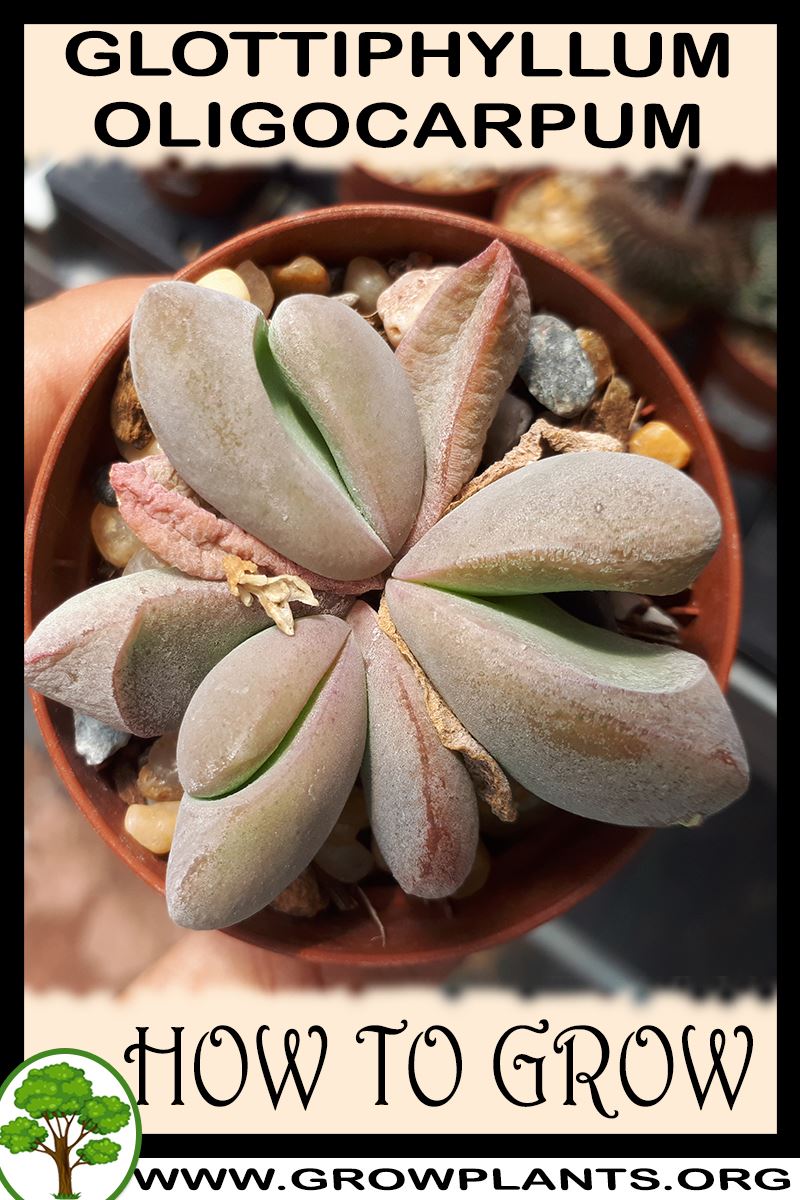
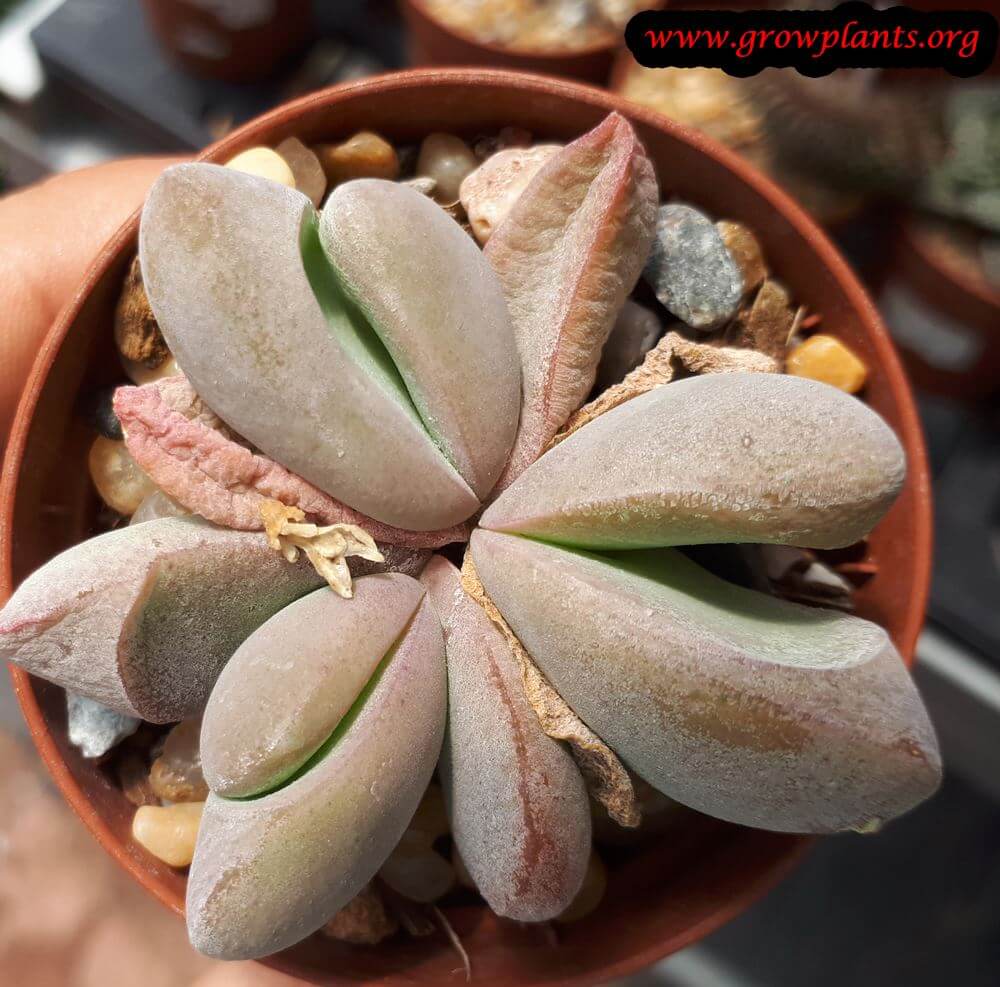
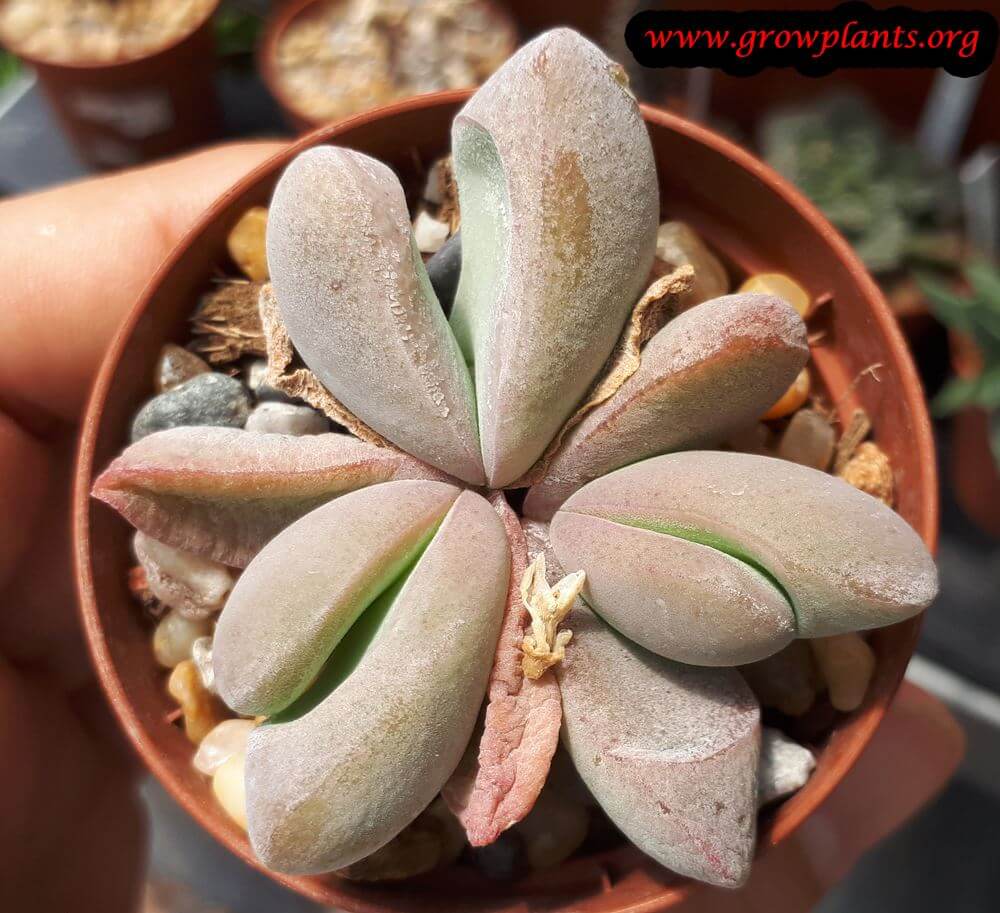
Overview: Glottiphyllum oligocarpum is a dwarf, mat-forming succulent subshrub 4-8 cm (1.8-3.6 in) tall, grown as an ornamental, drought-tolerant plant and houseplant. It has fleshy, tongue-like leaves and yellow daisy-like flowers.
Quick Specifications
| Specification | Attribute |
|---|---|
| Plant Type / Life Cycle | Evergreen perennial succulent (subshrub) |
| Foliage Type | Evergreen (succulent) |
| Mature Size | 4-8 cm (1.8-3.6 in) tall, spreading along the ground |
| Growth Rate | Slow |
| Root System | Shallow, fibrous roots |
| Hardiness | USDA zones 10-12 |
Growth Form & Structure
- Height & Spread: Very low, 4-8 cm (1.8-3.6 in) high, creeping across the soil; ideal for shallow pots and as a houseplant.
- Growth Habit & Form: Ground-hugging succulent forming spreading clumps of fleshy leaves.
- Lifespan & Maturity: A slow-growing, long-lived succulent.
Anatomy & Physical Features
- Leaves & Foliage: Green to grey, waxy, fleshy leaves, linear to wedge-shaped or shapeless.
- Flower Characteristics: Glossy yellow, many-petalled daisy-like flowers with narrow, needle-like petals.
Primary Uses & Landscape Value
- Functional & Ornamental Roles: A rockery, succulent-collection and container/houseplant ornamental for hot, dry positions.
Care Guide: Planting, Soil & Watering
Overview: Glottiphyllum (tongue plant) is a slow-growing, mat-forming succulent (hardiness zone 10–12, or a houseplant) for full sun to shade, thriving in gritty, sandy, sharply drained soil. It stores water in its fleshy leaves and needs only occasional watering.
Quick Care Requirements
| Requirement | Ideal Condition |
|---|---|
| Planting Season | Warm season — spring, summer or autumn |
| Growth Rate | Slow |
| Soil Type | Gritty, sandy, sharply drained (cactus/succulent) mix |
| Water Need | Low — let the soil dry out fully between waterings |
Planting & Establishment
- Best Planting Season: Plant in the warm months of spring through autumn in frost-free conditions.
- How to Plant:
- Hole Preparation: Dig a hole just large enough for the root ball and settle the plant gently.
- Soil Amendments: Mix in plenty of coarse sand or grit; this succulent wants lean, fast-draining soil, not rich ground.
- Planting Depth: Set the plant at the same level it grew, with the fleshy leaves resting on the soil surface, not buried.
- Growth Speed & Expectations: Slow — forms a low, creeping clump of fleshy, tongue-like leaves over time.
Soil, Watering & Drainage Care
- Soil Mix & Drainage Needs: Use a gritty cactus or succulent mix with excellent drainage; in containers a pot with drainage holes is essential to prevent rot.
- Watering Schedule & Technique:
- Young / Newly Planted: Water lightly after planting, then only once the soil has dried, while the roots establish.
- Established: Water sparingly on a soak-and-dry cycle, letting the soil dry out completely between waterings.
- Seasonal Adjustments: Water very little in winter and only occasionally in summer; overwatering rots the roots.
Climate, Light & Hardiness
Glottiphyllum oligocarpum is a low, ground-hugging succulent suited to subtropical, Mediterranean, and desert climates, or container culture as a houseplant. It tolerates everything from full sun to full shade with excellent drainage, but it is frost-tender and needs reliably frost-free conditions to survive outdoors year-round.
Quick Climate Specifications
| Climate Zones | Subtropics, Mediterranean, Desert (also grown as houseplant) |
|---|---|
| USDA Hardiness Zones | 10–12 |
| Frost Tolerance | None |
| Light Conditions | Full Sun to Full Shade |
Sunlight & Light Exposure
Optimal Light Setup
Thrives in full sun for the most compact, colorful growth, but readily tolerates half shade to full shade, making it a flexible choice for varied garden positions or a bright indoor spot.
Direct Sun Requirement
Full sun is not mandatory – the plant grows and flowers acceptably across the full range from sun to shade, so match exposure to the rest of the planting rather than forcing maximum sun.
Shade & Heat Management
Full shade is tolerated but may soften its compact, creeping habit; in very hot desert settings, light afternoon shade can reduce stress while still keeping growth tight.
Best Exposure/Orientation
An open, sun-facing rock garden or raised bed suits outdoor culture in mild climates; indoors, a bright windowsill works well.
Temperature Extremes & Hardiness
USDA Hardiness & Regional Limits
Rated for zones 10–12, meaning it can stay outdoors year-round only in essentially frost-free subtropical, Mediterranean, or desert climates; elsewhere it is best grown in a container that can be moved under cover before frost.
Cold Damage & Winter Protection
The site's own care notes specify frost-free conditions, so treat any approach of freezing weather as a signal to protect or move the plant well before frost actually arrives.
Frost Sensitivity
Frost tolerance is essentially none; even a light frost can damage or kill the fleshy leaves, so outdoor culture outside zone 10–12 is not advisable without winter protection.
Extreme Heat Tolerance
As a desert-climate succulent it handles high heat well provided drainage is sharp; very intense, prolonged desert sun can still benefit from light afternoon shade.
Wind, Humidity & Microclimate
Humidity Preferences
No high-humidity requirement is noted on site; like most succulents in this family it is more comfortable in drier air than in consistently humid conditions, which raise the risk of rot.
Dry-Air Tolerance
High – consistent with its desert and Mediterranean climate suitability.
Wind Tolerance
Its low, creeping growth habit is naturally sheltered from wind stress compared with taller plants, though no specific site data addresses this directly.
Rainfall & Seasonal Moisture
Suited to climates with a dry season; the site's "small amount of water" guidance and sandy, well-drained soil requirement both point to a preference for a distinctly dry-summer, dry-adapted moisture regime rather than steady rainfall.
Microclimate Recommendations
A raised, sharply draining rock garden or gritty container mix, placed against a warm wall in marginal zones, gives useful extra buffering through cooler nights.
Growing in Pots, Balconies & Indoors
This tiny mesemb succulent is grown by the grower as a houseplant and also thrives in a pot on a bright balcony. It is adaptable on light, from full sun to shade, and its small size makes it a perfect sill or shelf plant.
Quick Details
- Container Size: A small pot a step larger than the root ball; shallow suits its small roots
- Indoor Suitability: A good houseplant in bright light
- Best Spot: Full sun, half or full shade – bright light indoors
- Soil & Drainage: Gritty cactus/succulent mix; sharp drainage
- Watering in Pots: Small amounts – let it dry between waterings; overwatering rots it
Indoors & On the Windowsill
- A genuine houseplant: Grows well indoors in a bright spot; its compact form suits a windowsill, shelf or small dish.
- Windowsill growing: A bright sill is ideal; keep it dry and airy and turn it for even growth.
- Care: Water sparingly indoors and avoid cold, soggy conditions.
On a Balcony or Patio
- Light & wind: Very adaptable outdoors from full sun to shade; shelter the small pot from heavy rain and drying wind.
- Practicalities: Ideal for shallow dishes and small pots in a balcony succulent grouping.
Choosing the Pot, Soil & Long-Term Care
- Pot & drainage: A small pot with strong drainage holes and grit at the base; skip a standing-water saucer.
- Potting mix: Use a free-draining cactus/succulent mix with a layer of gravel, lava rock or pebbles at the base, and make plenty of drainage holes; the grower notes the mix loses its drainage over a few years, so replace it then.
- Feeding: Potted plants exhaust their mix faster than those in open ground – nutrients leach away with each watering – so feed lightly through the active growing season. Feed sparingly.
- Repotting: Repot into fresh gritty mix every few years or once roots fill the pot.
Fertilizing & Feeding
A light feeder like other creeping mesemb succulents: occasional low-nitrogen feeding during active growth is enough, and this frost-sensitive, ground-hugging plant is easy to overfeed relative to how little it actually uses.
Quick Fertilizing Specs
| Feeding Level | Light feeder |
|---|---|
| Main Nutrient Priority | Low-nitrogen feeding that keeps fleshy leaves firm rather than soft |
| Best Feeding Period | Spring through autumn while the plant is actively growing |
| Organic Options | Little to none needed; a sandy, well-drained mix supplies most of what this slow grower uses |
| Reduce/Stop Feeding | Hold off feeding through cool weather when growth stops |
| Micronutrients | Correct only diagnosed issues; no routine micronutrient product needed |
| Soil pH | Tolerates a wide range in a well-drained sandy mix |
Feeding by Growth Stage
Active creeping growth
Support slow, spreading growth of the fleshy, tongue-shaped leaves without pushing soft tissue.
| Nutrient direction | A dilute, low-nitrogen succulent fertilizer applied sparingly. |
|---|---|
| Timing | Spring through autumn while the plant is actively growing. |
| Frequency | An occasional light feeding through active growth is plenty for this slow, ground-hugging grower. |
| Fertilizer types | A dilute low-nitrogen cactus or succulent fertilizer, A well-drained, sandy potting mix that needs little added nutrition |
| Precautions | Keep feeding light; overfeeding pushes soft, stretched growth in this low creeping succulent and increases frost sensitivity in cooler weather. |
Cool-season dormancy
Let the plant rest through cool weather without pushing new growth it cannot support.
| Nutrient direction | None – withhold fertilizer during the dormant rest. |
|---|---|
| Timing | Cool months when growth stops, especially where frost is a risk. |
| Frequency | No feeding during this rest period; resume only once active growth returns in spring. |
| Fertilizer types | No feeding at this stage; hold off fertilizing until active growth resumes. |
| Precautions | Withhold fertilizer now; feeding a resting, frost-sensitive succulent risks salt buildup and soft, cold-tender tissue. |
Nutrient Deficiency Signs & Corrections
Overall pale, yellow-green leaf color and little to no new creeping growth over a full growing season.
| Possible causes | low available nitrogen in a very lean sandy mix, root stress from compacted or waterlogged soil, cool temperatures suppressing nutrient uptake |
|---|---|
| Appears first on | the whole plant, most visible in new leaves at the growing tips |
| What to check | feeding history and mix age, root health and drainage, temperature and light conditions |
| Possible correction | Apply a dilute low-nitrogen succulent fertilizer during active growth and refresh an old potting mix. |
The fleshy leaves and creeping stems look unusually soft or floppy rather than firm and upright.
| Possible causes | low soil potassium, inconsistent watering stressing the root system, salt or pH imbalance limiting uptake |
|---|---|
| Appears first on | the outer, oldest leaves and trailing stems |
| What to check | recent feeding balance, watering consistency, soil salt buildup |
| Possible correction | Use a balanced, low-nitrogen succulent fertilizer during active growth and ease back on watering frequency. |
Leaf tips develop corky, brown scarring despite otherwise healthy growth.
| Possible causes | fertilizer salt buildup from infrequent flushing, irregular watering that concentrates salts in the mix, overfeeding relative to this plant’s slow growth rate |
|---|---|
| Appears first on | the tips of the fleshy leaves |
| What to check | recent feeding amounts, watering and flushing routine, mix drainage |
| Possible correction | Ease off feeding, flush the mix thoroughly with water, then return to sparing low-nitrogen feeding. |
Pruning, Training & Seasonal Maintenance
Glottiphyllum oligocarpum is a tiny, slow-growing, ground-hugging succulent that spreads as a creeping mat, so it needs very little pruning beyond removing dead leaves as they occur. Source guidance places this in spring and summer, the plant’s active growth period, when cuts heal fastest and any resulting bare patch in the mat fills back in quickest.
Quick Pruning & Maintenance Specs
| Pruning Tolerance | Low – light grooming only |
| Primary Pruning Window | Spring to summer, during active growth |
| Main Objective | Remove dead leaves; keep the creeping mat within its space |
| Best Tool Type | Precision snips or fingers for the small, fleshy leaves |
Pruning by Plant Age & Size
Newly Established
Leave undisturbed while it establishes; remove only leaves damaged at planting.
Mature / Established
As the mat spreads, remove dead leaves as they appear and trim back any strands that have crept beyond the intended area, since this is a creeping groundcover-type succulent rather than an upright one.
Special Growth to Remove
- Dead leaves.
- Spent flower remains after the summer/autumn bloom.
- Trailing stems that have crept past the intended planting area or pot edge, if containment is wanted.
Container & Small-Space Pruning
Given its small size and creeping habit, this species is well suited to shallow pots; trimming is mainly about keeping the mat within the container rather than controlling height. Division of a spreading mat is a practical way to manage size and propagate at the same time, in place of routine pruning.
Tools
- Precision snips for removing dead leaves and trimming trailing stems.
Tool Hygiene & Disease Risk
Routine care is sufficient – a clean, sharp blade. No specific disease-transmission risk is noted for this species; slugs and snails are the main pest concern, not a cut-borne pathogen.
Cut Placement & Technique
Remove dead leaves at the point they meet the stem. Trim trailing stems back to just above a healthy leaf pair rather than mid-leaf.
Heavy Pruning & Rejuvenation
This species is not hard-pruned or rejuvenated by cutting back – it is small, slow-growing and spreads by creeping rather than building a framework that ages and needs renewal. If a mat becomes patchy, dividing and replanting healthy sections is more effective than cutting the existing plant back hard.
Post-Pruning Care
Resume the normal light watering schedule; no special aftercare is needed for routine dead-leaf removal.
Common Pruning Mistakes
- Trimming outside the spring/summer active period, when cuts heal more slowly.
- Removing healthy leaves along with dead ones – the fleshy leaves store the plant’s water reserves.
When NOT to Prune
Avoid trimming outside the spring–summer active growth window, and avoid cutting during any cold spell given this species needs frost-free conditions.
Recommended Tools (by task)
- precision_snips – light removal of dead leaves and trailing stem tips on this small-scale creeping succulent.
Propagation Guide
Glottiphyllum oligocarpum is most practically propagated by cutting or dividing rooted segments from its creeping, clumping growth, since seed of this species is genuinely rare to source even though it isn’t described as difficult to germinate. Where seed can be found it should stay true to the species, and overall propagation is Easy.
Quick Propagation Specs
| Best Propagation Method | Stem/segment cuttings or clump division |
| Alternative Methods | Seed (rare to find) |
| Propagation Difficulty | Easy |
| Seed True-to-Type | Usually true-to-type |
| Vegetative True-to-Type | Yes |
| Best Propagation Season | Spring, summer, autumn |
| Cutting Rooting Time | Typically a few weeks |
| Seed Sowing Depth | Fine seed typical of the mesemb family; surface-sow, don’t bury |
Growing from Seed
Seed Handling & Viability
Seed is genuinely rare to source for this species rather than difficult to germinate; sow what can be obtained promptly.
Sowing Season
Warm season, spring to summer, in line with the plant’s spring-summer-autumn planting window.
Sowing Depth & Orientation
Like other mesembs (Aizoaceae), seed is typically very fine; surface-sow and press in lightly rather than burying.
Germination Conditions
Bright, warm, and lightly moist in a sandy, well-drained mix, matching this plant’s own well-drained, sandy, frost-free soil preference.
Germination Time
Not well documented for this species; expect the process to take some weeks, as with related mesembs.
Seedling Care
Keep lightly moist while small and increase light gradually; protect seedlings from the slugs and snails already noted as pests of this plant.
Stem Cuttings
Cutting Type
Segments of the trailing, fleshy stems/leaf pairs.
Best Timing
Active growing season, spring through autumn.
Cutting Preparation
Cut cleanly and let the cut end callus/dry for a few days in a shaded spot before inserting, standard practice to reduce rot in fleshy-leaved succulents.
Rooting Setup
Insert into sandy, well-drained soil and water lightly once rooting begins.
Rooting Hormone
Optional; not usually necessary for this easy-rooting mesemb.
Rooting Time
Typically a few weeks.
Division, Offsets, Pups & Suckers
Because this species creeps and clumps, rooted sections along the spreading stems can simply be separated with their own roots attached and replanted directly; a viable division should include a rooted segment with a few leaf pairs.
Bloom & Flower Guide
Quick Details
- Bloom Season: Summer into autumn
- Flower Appearance: Flat, glossy yellow flowers with many narrow, needle-like petals, daisy-like in outline
- Edibility: Ornamental only – grown for its flowers, not for eating
Detailed Blooming Overview
Glottiphyllum oligocarpum is a low, tongue-leaved succulent of the ice-plant family. From summer into autumn it opens bright, waxy yellow flowers packed with many slender, needle-like petals, giving a daisy-like look. Like other mesembs, the flowers open in the warmth of afternoon sun and close again as the light drops.
Flower Characteristics
- Flat and glossy, in clear yellow.
- Many narrow, needle-like petals in a daisy-like arrangement.
- Open in bright afternoon sun and close by evening.
Bloom Care & Thinning
- Encouraging bloom: Full sun is essential – shaded plants stay leafy and flower poorly.
- Watering: A little water as the flowering season begins supports the buds; avoid keeping the roots wet.
Pests, Diseases & Troubleshooting
Overview: Glottiphyllum are soft, tongue-leaved mesemb succulents (Aizoaceae) from South Africa, and their overwhelming problem is not a pest but overwatering: too much water or feed makes them bloat, split, lose form and rot. Insect pests are the usual succulent set – mealybugs, scale and root mealybugs – plus slugs on soft leaves. Grow them hard and lean in gritty, sharply drained mix with minimal water, and most troubles disappear.
Quick Troubleshooting Overview
| Issue / Pest | Main Symptom | Primary Solution |
|---|---|---|
| Root & basal rot (abiotic) | Soft, mushy, translucent leaves and collapse from overwatering | Gritty sharp drainage, minimal water, never waterlog |
| Bloating & splitting (abiotic) | Swollen, cracked leaves and loss of form | Cut water and feed; grow lean and hard |
| Mealybugs | Cottony white masses in leaf joints and on roots | Wipe/alcohol dab, soap/oil; check roots at repotting |
| Scale insects | Small bumps on leaves; honeydew | Scrape off, horticultural oil |
| Slugs & snails | Grazed, holed soft leaves; slime trails | Grit barriers, hand-collect at night |
| Sunburn (abiotic) | Bleached, scorched patches after sudden full sun | Acclimatise gradually to strong light |
Common Pests & Management
- Mealybugs (Pseudococcus / Planococcus spp.):
- Symptoms: Cottony white tufts nestled in the leaf joints and crown, plus root mealybugs on the roots, with honeydew and slow decline; the main succulent pest.
- Prevention & Control: Wipe off with a cotton bud dipped in dilute alcohol, treat with insecticidal soap or horticultural oil, and inspect and wash roots when repotting into fresh gritty mix; discard heavily infested plants.
- Scale insects (Diaspididae / Coccidae):
- Symptoms: Small immobile brown or grey bumps on leaves and stems, with honeydew and sooty mould; foliage yellows.
- Prevention & Control: Scrape off gently, apply horticultural oil to smother scale, and repeat to catch crawlers; encourage natural predators outdoors.
- Slugs & snails (Deroceras / Cornu spp.):
- Symptoms: Ragged holes and grazing on the soft, fleshy leaves, with slime trails, especially in damp, sheltered conditions.
- Prevention & Control: Use grit or sharp gravel top-dressing, hand-collect at night, keep the plant dry and airy, and set iron-phosphate pellets if pressure is high.
- Aphids (Aphis / Myzus spp.):
- Symptoms: Soft-bodied colonies on flower buds and stalks, with distortion and honeydew; mostly a flowering-time nuisance.
- Prevention & Control: Hose off or wipe away, encourage predators, and use insecticidal soap only if persistent.
- Fungus gnats (Bradysia spp.):
- Symptoms: Small dark flies over constantly moist mix, with larvae in the top layer that can damage roots of overwatered plants.
- Prevention & Control: Let the mix dry out well between waterings (which the plant needs anyway), top-dress with grit, and use yellow sticky traps; drying out usually solves it.
Diseases & Fungal Issues
- Root & basal rot (Pythium / Fusarium / Phytophthora):
- Symptoms: Leaves turn soft, translucent, yellow or mushy and the plant collapses from the base, almost always following overwatering or wet, cold conditions; the number-one killer.
- Treatment & Management: Grow in a very gritty, free-draining succulent mix, water sparingly and only when dry, and never let the plant sit wet or cold. Remove rotted tissue, dry the plant out, and re-root a firm offset if the base is lost.
- Fungal leaf spot & Botrytis (Botrytis / various):
- Symptoms: Grey mould or dark soft spots on leaves in humid, still, cold conditions, especially on overwatered plants.
- Treatment & Management: Improve airflow, keep foliage dry, and reduce watering; remove affected leaves promptly. Rarely needs a fungicide if watering is corrected.
Growing Difficulties & Abiotic Problems
- Overwatering: bloating, splitting & rot:
- Cause & Symptoms: The defining problem: too much water or feed makes the fleshy leaves swell, crack and split, lose their compact form, and eventually rot.
- Correction Strategy: Grow lean and hard – gritty, sharply drained mix, minimal water (especially in the cool dormant period), and no rich feeding; let the plant firm up and keep its shape.
- Etiolation in low light:
- Cause & Symptoms: Pale, stretched, floppy leaves that lose their tight form in too little light.
- Correction Strategy: Give bright light to gentle direct sun; strong light keeps the leaves compact and coloured.
- Sunburn:
- Cause & Symptoms: Bleached or scorched patches after a sudden move into strong, direct sun.
- Correction Strategy: Acclimatise gradually to stronger light over a couple of weeks, and provide light shade in the fiercest midday heat.
- Cold/frost damage:
- Cause & Symptoms: Mushy, translucent, collapsed leaves after frost or prolonged cold-wet.
- Correction Strategy: Keep frost-free and dry in the cool season; these are tender succulents that rot in cold, wet conditions.
What Helps – Products & Tools
The key ‘tool’ is restraint: a gritty free-draining mix and a light hand with the watering can prevent almost everything. Keep insecticidal soap or horticultural oil for mealybugs and scale, dilute alcohol on a cotton bud for spot-treating, grit top-dressing against slugs and fungus gnats, and iron-phosphate pellets where slugs are relentless.