Plant Profile & Key Characteristics
Overview: A dwarf, clump-forming succulent subshrub grown for its plump, patterned leaves. This slow-growing, evergreen perennial reaches only about 5-14 cm (2-6 in) and makes a drought-tolerant ornamental for containers, windowsills and rockeries.
Quick Specifications
| Specification | Attribute |
|---|---|
| Plant Type / Life Cycle | Perennial (succulent subshrub) |
| Foliage Type | Evergreen |
| Mature Size | 5-14 cm (2-6 in) tall |
| Growth Rate | Slow |
| Hardiness | USDA zone 9-11 |
Growth Form & Structure
- Height & Spread: A miniature 5-14 cm (2-6 in) high; clusters widen slowly as offsets form. Suited to small pots about 20-30% larger than the root ball.
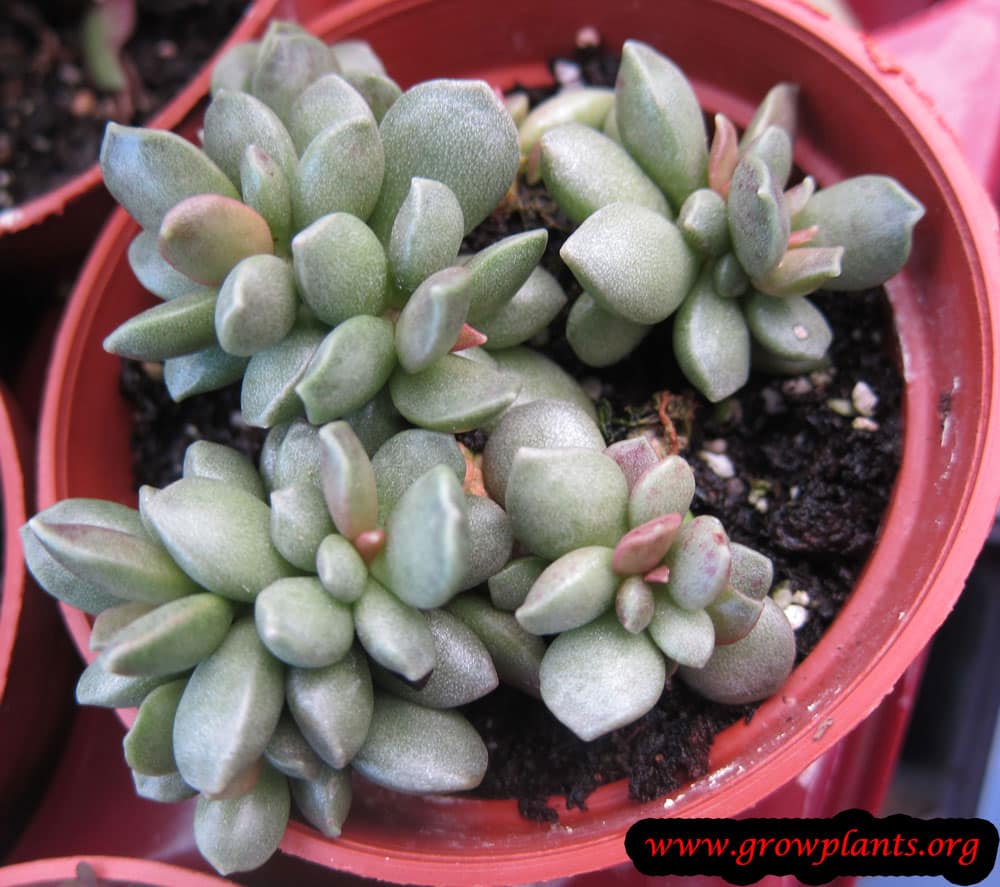
- Growth Habit & Form: Low, clustering succulent subshrub with short stems densely packed with thick, fleshy leaves.
- Lifespan & Maturity: Long-lived, slow-growing perennial that reaches its small mature size over several seasons.
Anatomy & Physical Features
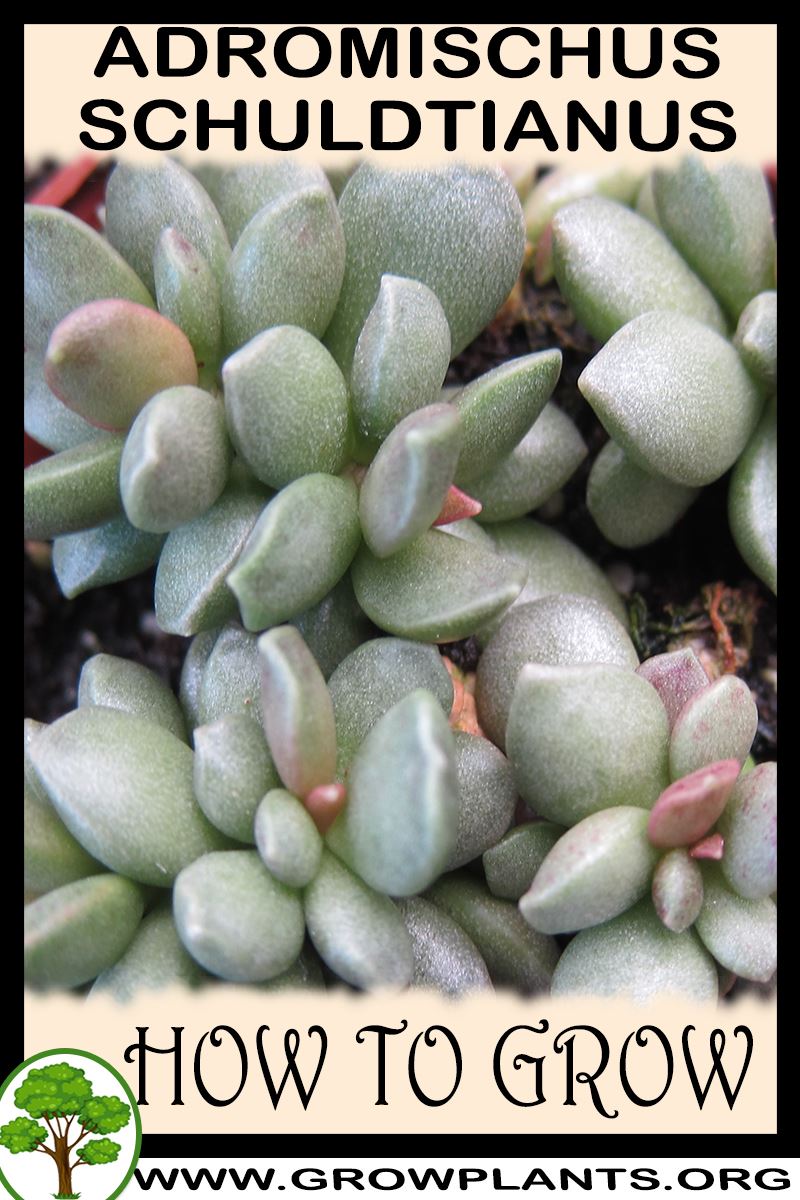
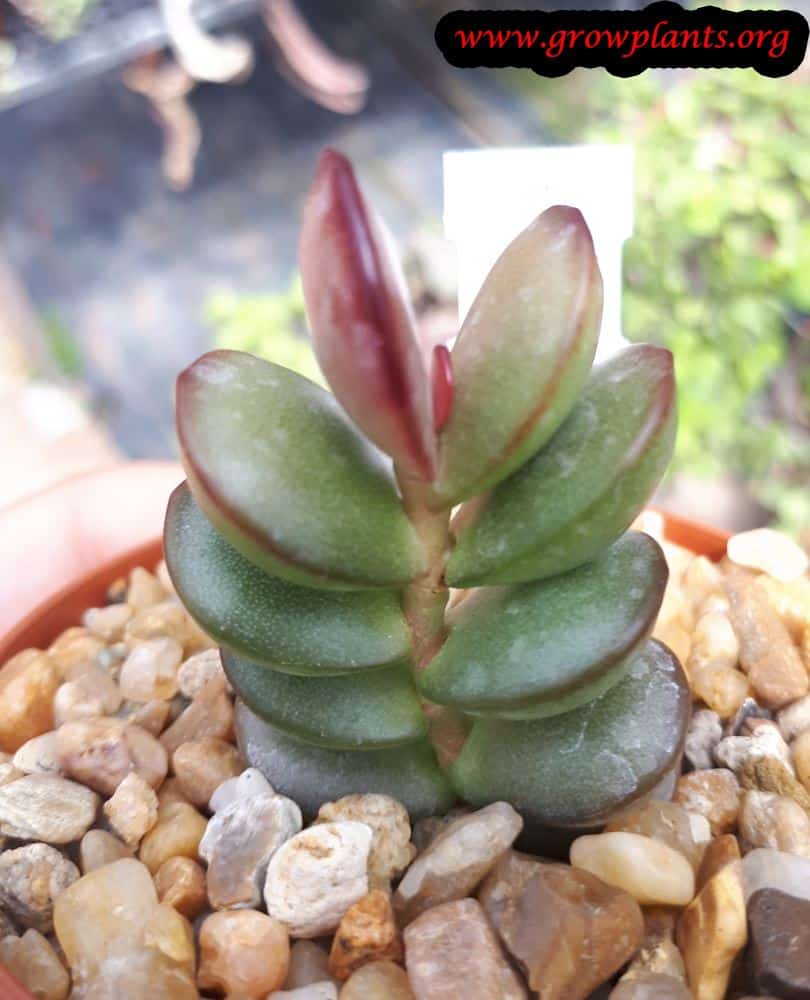
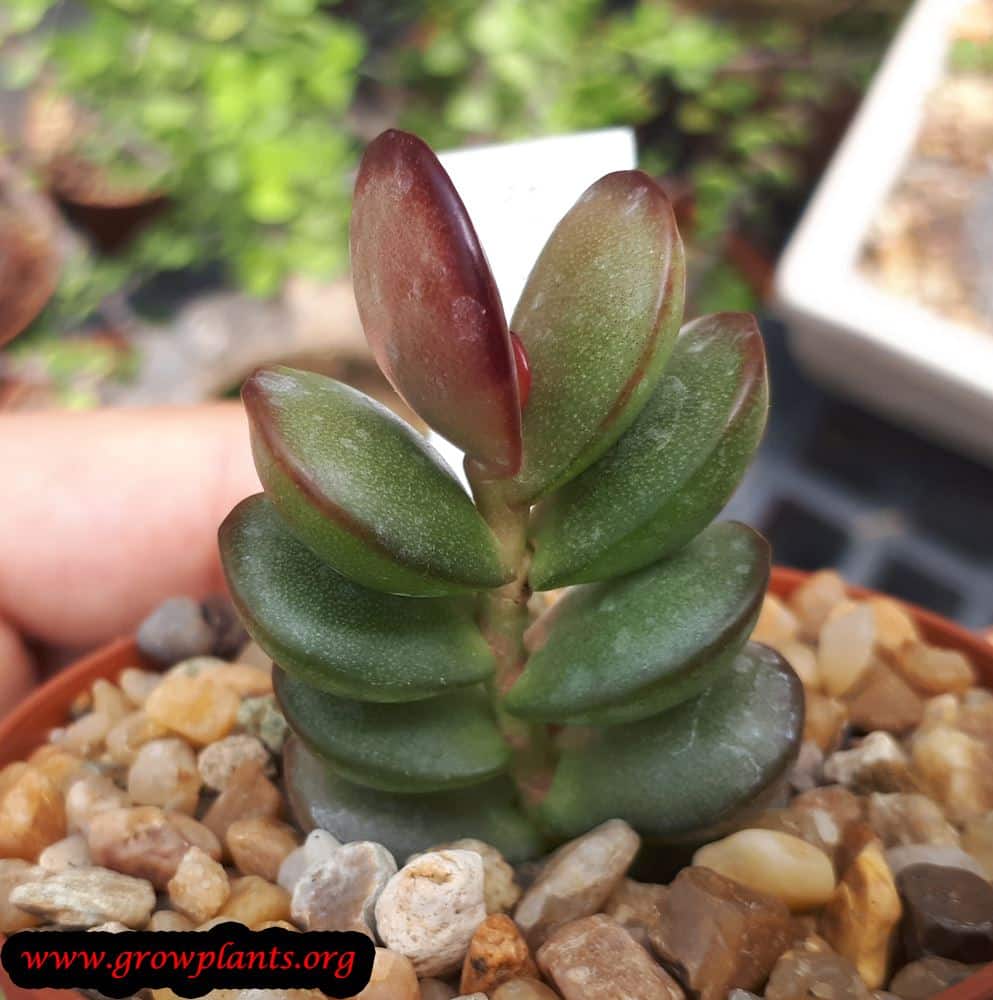
- Leaves & Foliage: Plump, ovate leaves with pointed tips, green to red or yellow and marked with silvery dots.
- Flower Characteristics: Tubular white-to-red flowers with a star-shaped mouth on an upright spike.
Primary Uses & Landscape Value
- Functional & Ornamental Roles: Ornamental container and windowsill succulent; a drought-tolerant choice for rockeries and dish gardens, and easily grown indoors as a houseplant.
Care Guide: Planting, Soil & Watering
Overview: Adromischus schuldtianus is a small, slow-growing, drought-tolerant succulent that wants bright light and sharply drained, sandy soil. Water sparingly and let the soil dry out fully between waterings — it stores water in its leaves and rots easily if kept too wet.
Quick Care Requirements
| Requirement | Ideal Condition |
|---|---|
| Planting Season | Spring to summer in zone 9; spring to autumn in zone 10; year-round in zone 11+ |
| Growth Rate | Slow |
| Soil Type | Sandy, gritty, sharply well-draining (cactus/succulent mix) |
| Water Need | Low — let the soil dry out between waterings, never overwater |
Planting & Establishment
- Best Planting Season: Plant during the warm growing season — spring to summer in zone 9, spring to autumn in zone 10, and year-round in frost-free zone 11+.
- How to Plant:
- Hole Preparation: Set into loose, gritty, free-draining soil; keep the planting hole shallow and never in a spot where water pools.
- Soil Amendments: Blend in coarse sand, grit or pumice to guarantee fast drainage.
- Planting Depth: Set the plant at soil level with the base of the rosette resting on the surface — do not bury the stem, which invites rot.
- Growth Speed & Expectations: Slow-growing, staying compact (about 5–14 cm) and forming a tidy cluster of plump leaves over time.
Soil, Watering & Drainage Care
- Soil Mix & Drainage Needs: Use a gritty, sandy succulent or cactus mix. In a pot, choose one only 20–30% larger than the root ball, use free-draining potting soil, and add an inert layer of lava grit or pumice at the base — sharp drainage is essential to prevent root rot.
- Watering Schedule & Technique:
- Young / Newly Planted: Water lightly to settle it in, keeping the soil barely moist without soaking it.
- Established: Water sparingly and deeply, then let the soil dry out completely before watering again.
- Seasonal Adjustments: Water a little more during active growth in warm weather; cut back sharply in winter and keep it nearly dry while it rests.
Climate, Light & Hardiness
Adromischus schuldtianus is a dwarf leaf succulent for warm, essentially frost-free arid, Mediterranean and subtropical climates. It prefers bright but filtered light - part shade with good ambient light rather than harsh direct sun - and is frost-tender, sitting in roughly USDA zone 9–11 but needing protection at the cold end.
Quick Climate Specifications
| Climate Zones | Warm, dry Mediterranean, desert-margin and subtropical climates (frost-free to near-frost-free) |
|---|---|
| USDA Hardiness Zones | Approximately zone 9–11 (site data); treat as frost-tender, with protection needed toward the cold (zone 9) end |
| Optimal Temp Range | Typically comfortable warm temperatures, roughly 18–27 °C (65–80 °F) |
| Cold Damage Begins | Near light frost; for safety keep it above about 5 °C (41 °F) |
| Approx. Survival Minimum | Established plants may briefly tolerate close to 0 °C (32 °F), but leaf damage is likely |
| Frost Tolerance | Very Low |
| Light Conditions | Bright, filtered light / part to full shade with good ambient light |
| Wind Tolerance | Low |
Sunlight & Light Exposure
Optimal Light Setup
Aim for bright light without harsh midday sun; the site guidance is part to full shade with plenty of ambient light. A bright windowsill out of scorching direct sun, or dappled outdoor shade, suits the small plump leaves.
Shade & Heat Management
Give more shade through the hot season and a little more light in the cooler months, as the site notes. Screen it from intense afternoon sun, which can scorch or over-redden the leaves; too little light, however, leads to loose, stretched growth.
Best Exposure / Orientation
An east-facing or brightly filtered exposure is ideal; avoid an unshaded hot south- or west-facing window in summer.
Temperature Extremes & Hardiness
USDA Hardiness & Regional Limits
Site data lists zone 9–11, but in practice it is frost-tender: at the zone-9 cold end it needs a sheltered, frost-free spot or to be brought indoors for winter.
Cold Damage & Winter Protection
Keep it above roughly 5 °C (41 °F) to be safe and move it under cover before frost. Small pots chill and freeze quickly, so container plants are more exposed than the zone figures suggest.
Frost Sensitivity
Frost tolerance is very low; freezing damages the soft leaves, and cold combined with wet soil is especially risky because it promotes rot.
Extreme Heat Tolerance
It takes warmth well provided it is shaded from the fiercest sun; give it good airflow during heat.
Wind, Humidity & Microclimate
Humidity Preferences
Average to slightly dry humidity suits it; steady airflow matters more than any added moisture.
Dry-Air Tolerance
As a succulent it tolerates dry air well.
Wind Tolerance
Low - grow it in a sheltered position. The plump leaves detach easily (they will even root where they fall), so knocks and wind readily dislodge them.
Rainfall & Seasonal Moisture
Adapted to low rainfall, it dislikes waterlogging, so a sharply drained, protected position matches its climate needs (a drainage and siting point, not a watering schedule).
Microclimate Recommendations
Give it a bright, sheltered, frost-free microclimate - a windowsill, patio nook or bright greenhouse bench - with free drainage.
Growing in Pots, Balconies & Indoors
Adromischus schuldtianus is a small, slow-growing succulent that makes an excellent houseplant – the grower confirms it can be grown indoors. Its tiny size (only 5-14 cm / 2-6 in) suits a bright windowsill, a shelf or a small feature pot.
Quick Details
- Container Size: A small pot only about 20-30% larger than the root ball (grower’s guidance)
- Indoor Suitability: A genuine houseplant – give it the brightest windowsill you have
- Best Spot: Bright light with some protection from the fiercest midday sun; it also takes light shade
- Soil & Drainage: Free-draining cactus/succulent mix over an inert drainage layer; sharp drainage is essential. A ready-made cactus and succulent soil mix provides that structure without mixing it yourself.
- Watering in Pots: Sparingly – let the mix dry out between waterings and never overwater
Indoors & On the Windowsill
- A real houseplant: The grower grows it indoors – it thrives on a bright windowsill with a few hours of gentle direct sun. Too little light makes it stretch and lose its compact shape.
- Care under glass: Give it good airflow, keep it off cold glass in winter, and water even more sparingly indoors, where the mix dries slowly in a cool room.
- Overwintering: As a frost-tender succulent it is ideally suited to a pot that comes indoors for winter in cold climates; keep it bright, cool and nearly dry until growth resumes.
On a Balcony or Patio
- Light & wind: It enjoys a bright, airy balcony in the warm season but wants shelter from scorching afternoon sun and from heavy rain that would waterlog it. Small pots dry and blow over easily, so tuck it into a sheltered spot.
- Practicalities: Bring it back indoors before the first frost, and make sure any excess water drains away instantly.
Choosing the Pot, Soil & Long-Term Care
- Pot & drainage: A pot only about 20-30% bigger than the root ball, with strong drainage holes and no standing-water saucer. Terracotta suits succulents well, breathing and drying fast.
- Potting mix: Cactus/succulent potting mix, with an inert layer such as lava grit or small stones in the base for drainage, as the grower advises.
- Feeding: Feed only lightly during active growth with a dilute succulent feed – these plants need very little.
- Refreshing the mix: After a few years the mix stops draining as well, so change it for fresh – the grower’s practice.
Grower’s Container Tip
- Small pot, inert base: Choose a pot only 20-30% larger than the root ball and put an inert layer – lava grit or small stones – in the bottom before the cactus mix; refresh the whole mix every few years as its drainage fades.
Growing this plant in a greenhouse
A greenhouse can give adromischus schuldtianus frost protection and cold protection.
Greenhouse at a glance
| Greenhouse suitability | Good - clearly useful |
|---|---|
| Main benefits | frost protection, cold protection |
| Outdoor protection advisable below | about 5°C |
| Maintain greenhouse minimum | around 5°C for active growth |
| Suitable types | unheated greenhouse, polycarbonate greenhouse |
| Heating | Heating is optional - useful mainly for winter growing in cold areas. |
Related greenhouse guides
- Greenhouses: How to Choose the Right Greenhouse
- Polycarbonate Greenhouses: What to Look for Before Buying
- Greenhouse Climate Control: Temperature, Ventilation and Humidity
Fertilizing & Feeding
Succulents are very light feeders. A little balanced feeding leaning low in nitrogen during the warm active season is plenty, and they get by without supplemental nutrients through their dormant rest.
Quick Fertilizing Specs
| Feeding Level | Light – succulents need very little fertilizer |
|---|---|
| Main Nutrient Priority | A balanced feed leaning low in nitrogen |
| Best Feeding Period | During the warm active growing season |
| Reduce/Stop Feeding | Stop feeding during dormancy in extreme heat or cold |
| Soil pH | Prefers a slightly acidic to near-neutral, fast-draining mix |
| Organic Options | A little worm castings or a dilute organic liquid feed, used sparingly |
Feeding by Growth Stage
Active growth
Support steady, compact rosette growth during the warm active season without forcing soft, weak growth.
| Nutrient direction | A dilute, balanced fertilizer leaning low in nitrogen; gentle and infrequent feeding suits a succulent. |
|---|---|
| Timing | During the warm active growing season, when the plant is putting out new leaves. |
| Frequency | Feed sparingly and infrequently while the plant is in active growth; err on the side of less. |
| Fertilizer types | A dilute balanced or cactus and succulent fertilizer, Diluted liquid feed applied to already-moist soil |
| Precautions | Over-feeding causes weak, stretched growth and can scorch roots; keep feeding light and apply only to moist soil on an actively growing plant. |
Dormant rest
Let the plant rest during dormancy in extreme heat or cold without pushing growth.
| Nutrient direction | None – withhold fertilizer while the plant is resting. |
|---|---|
| Timing | During dormancy, when growth naturally stalls in extreme heat or cold. |
| Frequency | No feeding at this stage. |
| Fertilizer types | No feeding at this stage – do not fertilize until active growth resumes. |
| Precautions | Do not fertilize a dormant or stressed succulent; withhold feeding until active growth returns. |
Nutrient Deficiency Signs & Corrections
Pale, elongated, stretched growth with widely spaced leaves.
| Possible causes | Too little light causing etiolation, Excess nitrogen from over-feeding pushing soft growth |
|---|---|
| Appears first on | New growth at the center of the rosette. |
| What to check | Light levels and exposure, Recent fertilizer use and strength |
| Possible correction | Move to brighter light and ease off feeding; keep any feeding dilute and infrequent. |
Brown, scorched leaf tips or margins.
| Possible causes | Fertilizer salt build-up in the soil, Under-watering or a very dry root zone |
|---|---|
| Appears first on | Older, outer leaves. |
| What to check | Soil for a salt crust, Watering pattern and drainage |
| Possible correction | Flush the pot with plain water to leach salts, improve drainage, and feed more lightly. |
Soft, translucent, yellowing leaves at the base.
| Possible causes | Over-watering and poor drainage causing root stress, Feeding while the plant is dormant or cold |
|---|---|
| Appears first on | Lower and inner leaves. |
| What to check | Soil moisture and drainage, Whether feeding continued into dormancy |
| Possible correction | Let the soil dry, improve drainage, and pause feeding until healthy active growth returns. |
Pruning, Training & Seasonal Maintenance
Like other Adromischus, A. schuldtianus is a small, slow, clumping leaf succulent that never develops a woody framework worth training or renewing. Maintenance amounts to tidying – taking off dead or damaged leaves and old bloom stems – and can be done whenever needed rather than on a fixed schedule. It does not tolerate hard or structural cutting back.
Quick Pruning & Maintenance Specs
| Pruning Tolerance | Low (tidying only, not structural) |
| Primary Pruning Window | All year, as needed |
| Main Objective | Remove dead or damaged leaves and spent flower stems |
| Young Plant Priority | Minimal handling while roots establish |
| Mature Plant Priority | Periodic clean-up of ageing lower leaves |
| Best Tool Type | Precision snips, or hand removal at the leaf base |
| Avoid Heavy Pruning During | Not applicable – no structural pruning is done on this species at any time |
Pruning by Plant Age & Size
Newly Established
Handle newly potted plants as little as possible; only remove leaves that are already dead, since any unnecessary wound is an entry point for rot on such small tissue.
Mature / Established
Clear away lower leaves as they naturally shrivel and any leaf that shows early rot, which also helps keep the clump less attractive to the slugs, snails and aphids noted as pests of this plant.
Special Growth to Remove
Shrivelled, dead or rotting leaves; the finished flower stem once bloom is over; any leaf with the first sign of rot, taken off promptly before it spreads to its neighbours in the clump.
Container & Small-Space Pruning
As a pot-grown houseplant, keep interventions to tidying alone. A crowded or stretched clump is better addressed by dividing offsets or taking leaf cuttings – this species propagates readily from a leaf detached at the base and allowed to callus – rather than by cutting the existing plant back.
Tools
Precision snips for a clean removal of a dead or infected leaf; for propagation-style leaf-base cuts, a grafting knife gives a sharp, sterile edge that suits this species’ small, soft tissue better than general secateurs.
Tool Hygiene & Disease Risk
Increased care when handling rotting tissue – clean the blade before touching healthy leaves, since rot spreads through succulent tissue via contaminated cuts. Simple dead-leaf removal only needs routine hygiene.
Cut Placement & Technique
Where a cut is needed rather than a hand-pull, take it at the leaf base and let the wound callus for about a day before it meets moist soil, matching the propagation method noted for this species.
Heavy Pruning & Rejuvenation
Not tolerated: there is no larger woody plant body to rejuvenate. An overgrown or leggy clump is best refreshed by starting new plants from leaf cuttings rather than by cutting the parent hard.
Post-Pruning Care
Keep fresh cuts dry until calloused before watering nearby; no extra feeding is needed for routine tidying.
Common Pruning Mistakes
Removing healthy leaves purely for appearance; reusing a blade straight from rotten tissue onto healthy leaves; watering onto a fresh, uncallused cut.
When NOT to Prune
Hold off on any unnecessary cutting during prolonged damp or humid conditions, when rot risk is already higher; no season calls for structural pruning on this species.
Recommended Tools (by task)
- Any age, dead-leaf/spent-bloom tidying → precision_snips – matched to this species’ small scale.
- Leaf-base cuts for propagation or rot removal → grafting_knife – a sharp, sterile edge limits rot spread on succulent tissue.
Propagation Guide
Like other Adromischus, this species is most easily propagated from leaf cuttings, the method the site describes in detail; growing it from seed is possible but slower, and detailed seed-starting specifics aren’t documented for this particular species page. Difficulty is easy from leaf cuttings.
Quick Propagation Specs
| Best Propagation Method | Leaf cuttings |
| Alternative Methods | Seed |
| Propagation Difficulty | Easy (leaf cuttings) |
| Seed True-to-Type | Yes |
| Vegetative True-to-Type | Yes |
| Best Propagation Season | Leaf cuttings can be started indoors depending on home temperature; seed generally sown during the warmer growing months |
Growing from Seed
Seed Handling & Viability
Detailed seed-starting information isn’t documented for this species. As with related Adromischus, seed germination is slower than leaf propagation and is best attempted in a sandy, well-drained mix with bright, indirect light and careful, moderate watering.
Leaf & Root Cuttings
Remove a leaf by hand at its base rather than with a blade where possible, and let the cut end callus for at least 24 hours. If the leaf is cut with a sharp tool, or cut anywhere other than at the base, allow several days to a few weeks for the wound to heal before planting. Set the callused leaf onto well-drained soil and water lightly every few days, letting it dry between waterings but never fully drying out; roots typically begin forming after a few weeks to a month, regenerating a new plantlet from the leaf base. Starting cuttings indoors in sterile soil is recommended to reduce pest problems.
Bloom & Flower Guide
Quick Details
- Bloom Season: Spring and summer
- Time to First Bloom: Only on established, mature plants
- Flower Appearance: Small white or red tubular flowers that flare into a five-pointed star at the mouth, carried up a slender spike above the leaves
- Edibility: Ornamental only; this succulent is grown for its foliage and form, not for eating
Detailed Blooming Overview
Adromischus is a small, easy-going succulent grown mainly for its plump, patterned leaves, but a mature plant sends up a slender flowering spike in the warm months. The individual blooms are little tubes that open to a neat five-pointed star. Unlike some of its rosette relatives, the plant carries on growing happily after flowering.
Flower Characteristics
- Small tubular flowers, white or red, flaring to a five-pointed star
- Held on an upright spike above the foliage
- Subtle rather than showy; the leaves remain the main attraction
Bloom Care & Thinning
- Encouraging bloom: Bright light, a snug pot and a dry winter rest set the plant up to send up its flower spike; keep water sparing, as it resents being overwatered.
- After flowering: Simply trim away the spent spike once the flowers fade.
Bloom Health & Protection
- Aphids & mealybugs: Can gather on the tender flower spike; wiping them off or dabbing with a little insecticidal soap keeps it clean.
- Slugs & snails: May nibble soft new growth and flower stalks; a simple barrier or trap protects them.
Pests, Diseases & Troubleshooting
Overview: A clumping, grey-green leaved species from arid South Africa, it wants sharp drainage and a dry winter rest, when overwatering rot is the chief danger. Adromischus schuldtianus is a tough little Crassulaceae leaf-succulent whose troubles are overwhelmingly cultural – rot from overwatering – rather than pests. When pests do appear they are the usual succulent sap-suckers, above all mealybugs and their root-dwelling cousins. Management is organic and cultural first: a gritty free-draining mix, careful watering, good airflow, and hand-removal or beneficials before any spray.
Quick Troubleshooting Overview
| Issue / Pest | Main Symptom | Primary Solution |
|---|---|---|
| Mealybugs (leaf & root) | Cottony white specks in axils / white film on roots | Cotton-bud alcohol dab; wash roots & repot in fresh grit |
| Aphids | Massed insects on flower stalk, sticky growth | Rinse or remove stalk; beneficials; control ants |
| Vine weevil | Notched leaves; roots eaten, sudden collapse | Check root ball; nematode drench; night-collect adults |
| Root / stem rot | Black mushy base, collapse | Gritty dry-side watering; cut to clean tissue & re-root |
| Overwatering / edema | Translucent soft yellow leaves, blisters | Water only when fully dry; sharp drainage |
| Etiolation | Stretched stem, faded pattern | Bright light with gradual sun; grow light in winter |
Common Pests & Management
- Mealybugs (Planococcus citri, Pseudococcus longispinus):
- Symptoms: Cottony white specks tucked between the plump leaves, in leaf axils and around the crown; leaves lose plumpness and colour, honeydew turns sticky and sooty. The primary and most persistent pest of these dwarf succulents.
- Prevention & Control: Inspect leaf bases and the crown routinely. Dab colonies with a cotton bud lightly moistened with dilute isopropyl alcohol, and remove badly infested leaves (they root easily as spares). Keep plants uncrowded with good airflow, quarantine new arrivals, and release ladybird or lacewing larvae in a greenhouse.
- Root mealybugs (Rhizoecus spp.):
- Symptoms: Hidden white waxy deposits and ‘mould-like’ film on the roots and inner pot wall, seen when unpotting; plants stall, shrivel or fail to root despite correct watering.
- Prevention & Control: Check the root ball at every repot. Wash roots clean, discard the old gritty mix, dip roots in dilute alcohol or a systemic-free horticultural drench, and repot into fresh sterile, gritty medium. Keep pots off shared capillary matting to limit spread.
- Aphids (Aphis, Myzus spp.):
- Symptoms: Green, black or grey soft-bodied insects massing on the flower stalk and tender new growth in the growing season, causing sticky, distorted inflorescences.
- Prevention & Control: Rinse off with a gentle spray or pinch out the affected flower stalk. Encourage ladybirds and hoverflies; a dilute insecticidal soap spot-spray handles heavy runs. Control ants, which farm and protect aphids.
- Vine weevil (Otiorhynchus sulcatus):
- Symptoms: Adults notch leaf margins at night; far worse, the white C-shaped larvae devour the roots and lower stem, causing sudden collapse of an otherwise healthy plant – a serious risk in outdoor or greenhouse pots.
- Prevention & Control: Inspect the root ball when repotting and crush any grubs. Drench with entomopathogenic nematodes (Steinernema/Heterorhabditis) in warm soil, remove leaf litter, and hand-collect adult weevils after dark.
- Spider mites (Tetranychus urticae):
- Symptoms: Fine pale stippling and a dusty, dull surface with faint webbing in hot, dry, still air; less common on succulents but possible under glass.
- Prevention & Control: Improve airflow, avoid heat stress, and rinse plants occasionally. Introduce predatory mites under cover; treat only stubborn cases with a light oil, keeping it out of the crown.
- Scale insects (Diaspididae & Coccidae spp.):
- Symptoms: Small fixed brown or tan discs on leaves and stems, with weakening and, for soft scale, honeydew and sooty mould.
- Prevention & Control: Scrape off by hand or with a cotton bud, prune out heavily infested tissue, and isolate the plant. Use light horticultural oil sparingly only if needed, keeping it off the leaf centres.
Diseases & Fungal Issues
- Root, stem & crown rot (Pythium, Phytophthora, Fusarium spp.):
- Symptoms: Blackening, softening and collapse at the base and roots, often with a foul smell – the leading killer, triggered by overwatering, a dense mix, or water sitting in the crown.
- Treatment & Management: Use a very gritty, fast-draining mineral mix, water sparingly and only when the medium is dry, and never let water pool in the rosette or the saucer. At the first sign of rot, cut back to firm clean tissue and re-root the healthy top or unblemished leaves. Correct watering and drainage, not fungicide, is the fix.
- Grey mould / Botrytis (Botrytis cinerea):
- Symptoms: Fuzzy grey mould and soft brown patches on leaves in cool, damp, stagnant conditions, often starting on dead or damaged tissue.
- Treatment & Management: Increase ventilation, keep foliage dry, remove dead leaves and debris, and space plants. Cut out affected parts promptly; correct the humid, still air that allows it.
- Fungal leaf spots (Colletotrichum & related fungi):
- Symptoms: Sunken brown or black spots on the leaves in persistently humid, wet conditions; may be confused with the plant’s natural leaf markings, which are symmetrical and pigmented rather than sunken and necrotic.
- Treatment & Management: Keep foliage dry, water at the base, improve airflow and remove spotted leaves. Sanitation and a drier atmosphere usually suffice; reserve fungicide for rare persistent outbreaks.
Growing Difficulties & Abiotic Problems
- Overwatering & edema:
- Cause & Symptoms: Excess water leaves cells bloated; leaves become translucent, soft, yellow and drop, or develop corky blister-like edema patches. The most frequent grower error with these tiny succulents.
- Correction Strategy: Water thoroughly but infrequently, only once the gritty mix is fully dry, and reduce further in cool or dormant periods. Ensure ample drainage and never leave the pot standing in water.
- Leaf drop from handling / stress:
- Cause & Symptoms: Adromischus leaves detach at the slightest knock, temperature swing or repotting shock – unnerving but natural, and the fallen leaves readily root into new plants.
- Correction Strategy: Handle gently, site the plant where it will not be brushed, and avoid sudden environmental changes. Lay detached leaves on gritty mix to propagate rather than discarding them.
- Etiolation (stretching) in low light:
- Cause & Symptoms: Insufficient light stretches the stem, widens leaf spacing and fades the compact, patterned form these succulents are grown for.
- Correction Strategy: Provide bright light with some direct sun; acclimatise gradually to stronger sun to avoid scorch. A grow light maintains form indoors in winter.
- Sunburn / scorch:
- Cause & Symptoms: Sudden exposure to intense sun after low light causes bleached white or brown scorched patches that do not recover.
- Correction Strategy: Move plants into brighter light in stages over a week or two, and provide light shade during the fiercest midday sun in hot climates.
- Cold & frost damage:
- Cause & Symptoms: These are tender succulents; frost bursts the cells, leaving translucent, mushy, blackening leaves.
- Correction Strategy: Keep above about 5°C / 40°F, move under cover before frost, and keep plants dry and cool rather than warm and wet in winter dormancy.
What Helps – Products & Tools
The key tools here are cultural: a gritty mineral succulent mix, pots with generous drainage, and restrained watering. For pests keep cotton buds and dilute isopropyl alcohol for mealybugs, insecticidal soap or neem oil for aphids and heavier infestations, beneficial nematodes for vine-weevil grubs, predatory mites or ladybirds under cover, and a light horticultural oil for scale. Group airflow matters as the clumping habit shelters mealybugs deep among the leaves.
Frequently Asked Questions
What is Adromischus schuldtianus?
It’s a compact, slow-growing succulent grown as an easy-care houseplant for its fleshy, silver-dotted leaves in green, red and yellow tones. It’s a dwarf, clump-forming succulent subshrub that stays tiny, reaching only about 5-14 cm (2-6 in) tall.
How do you care for Adromischus schuldtianus?
Give it bright light and sharply drained, sandy soil, and water sparingly, letting the soil dry out fully between waterings — it stores water in its leaves and rots easily if kept too wet. Plant during the warm growing season — spring to summer in zone 9, spring to autumn in zone 10, and year-round in frost-free zone 11+.
Why do Adromischus schuldtianus leaves fall off so easily?
Adromischus leaves detach at the slightest knock, temperature swing or repotting shock – unnerving but natural, and the fallen leaves readily root into new plants. Handle gently, site the plant where it will not be brushed, and avoid sudden environmental changes.
What’s the biggest risk to Adromischus schuldtianus, and how do you prevent it?
Root, stem and crown rot is the leading killer: blackening, softening and collapse at the base and roots, often with a foul smell, triggered by overwatering, a dense mix, or water sitting in the crown. Use a very gritty, fast-draining mineral mix, water sparingly and only when the medium is dry, and never let water pool in the rosette or the saucer.