

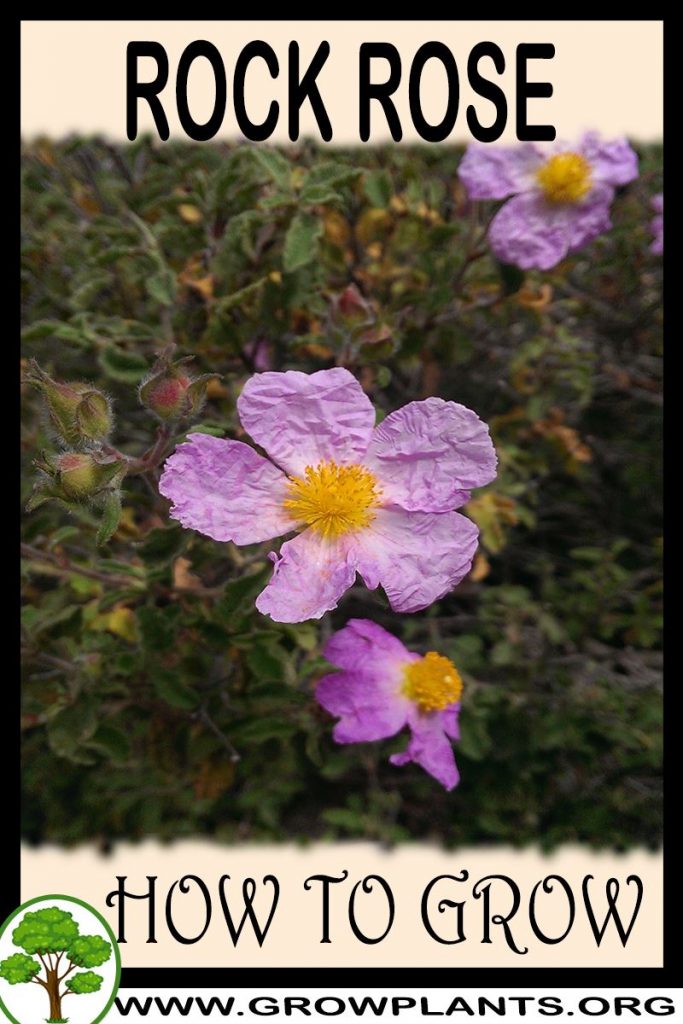
Plant Profile & Key Characteristics
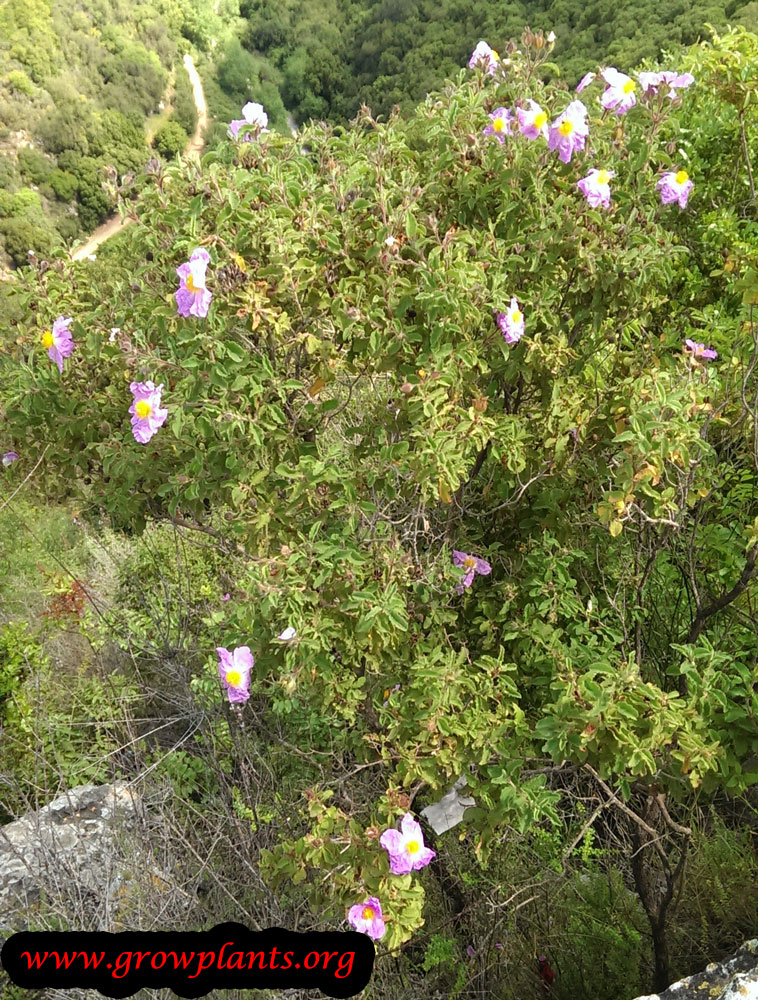
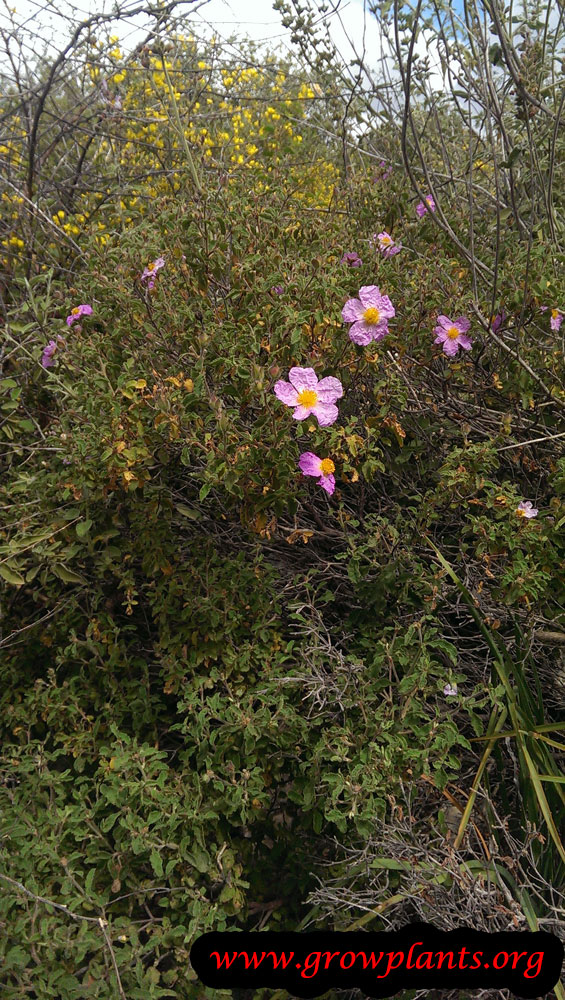
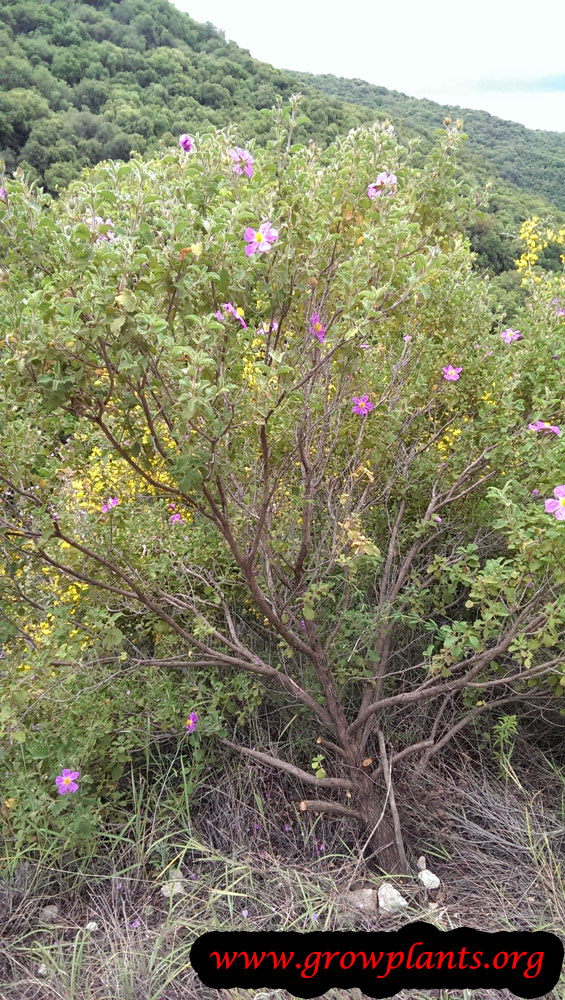
Overview: An evergreen Mediterranean shrub growing 50-100 cm (20-40 in) tall, prized as a drought-tolerant ornamental for its papery, rose-like flowers. Its aromatic, resinous foliage stays green year-round.
Quick Specifications
| Specification | Attribute |
|---|---|
| Plant Type / Life Cycle | Perennial (shrub) |
| Foliage Type | Evergreen |
| Mature Size | 50-100 cm (20-40 in) tall |
| Growth Rate | Moderate to slow |
| Toxicity | Non-toxic |
| Hardiness | USDA zones 8-11 |
Growth Form & Structure
- Height & Spread: 50-100 cm (20-40 in); suits borders and containers
- Growth Habit & Form: Bushy, mounded evergreen shrub
- Lifespan & Maturity: Moderate to slow growth; long-lived and highly drought-tolerant once established
Anatomy & Physical Features
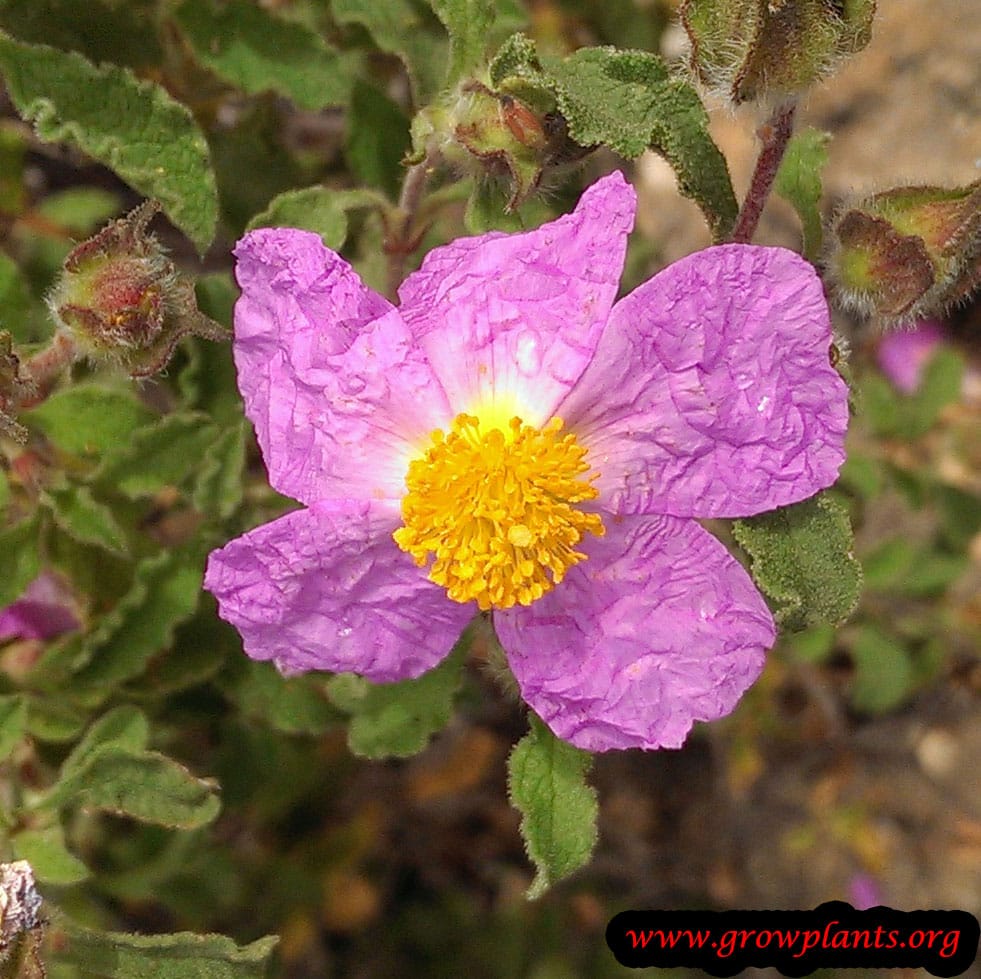
- Leaves & Foliage: Green, linear to oval leaves that are aromatic and resinous
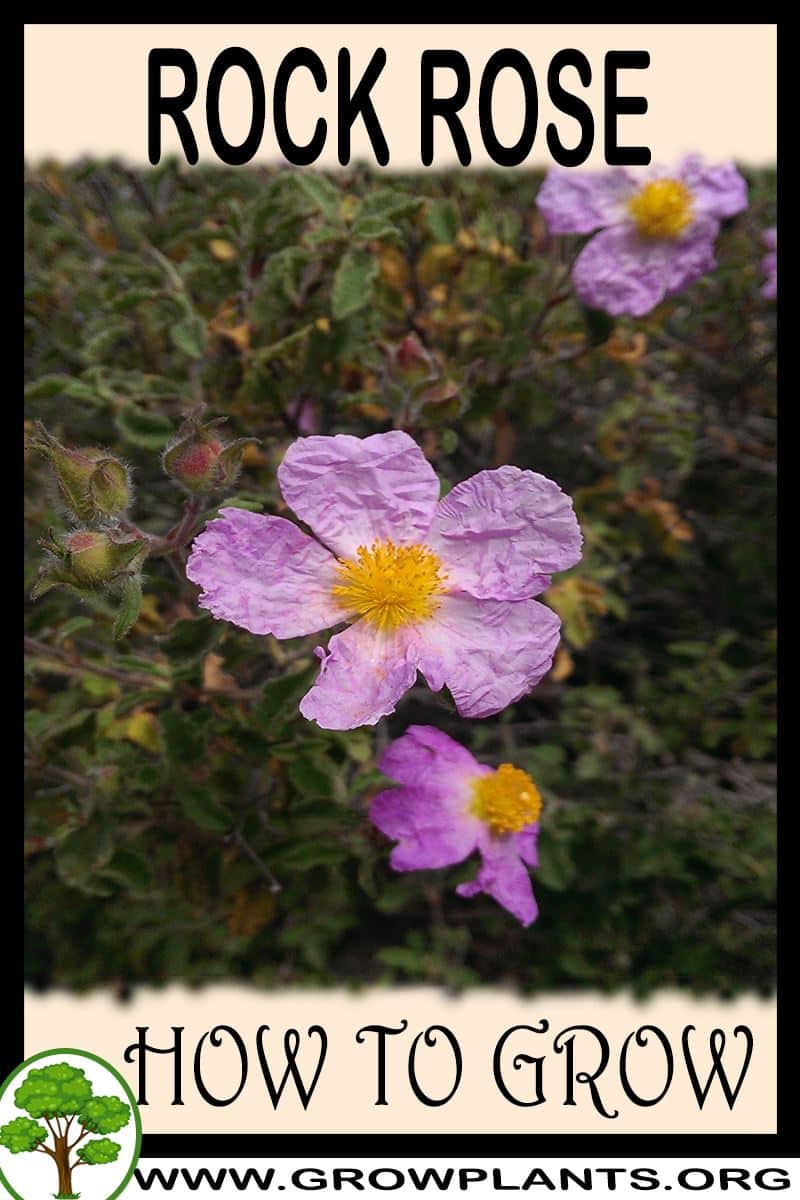
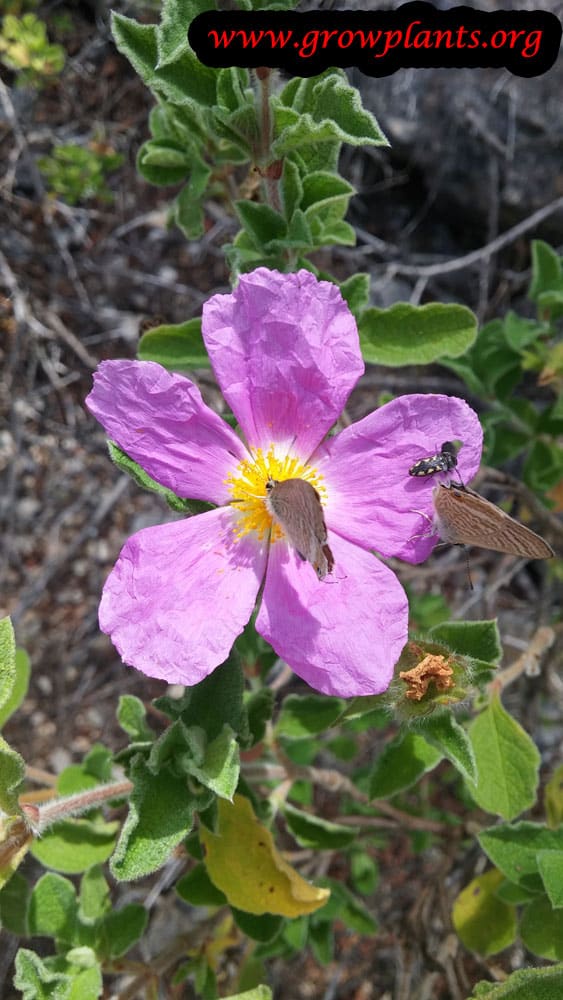
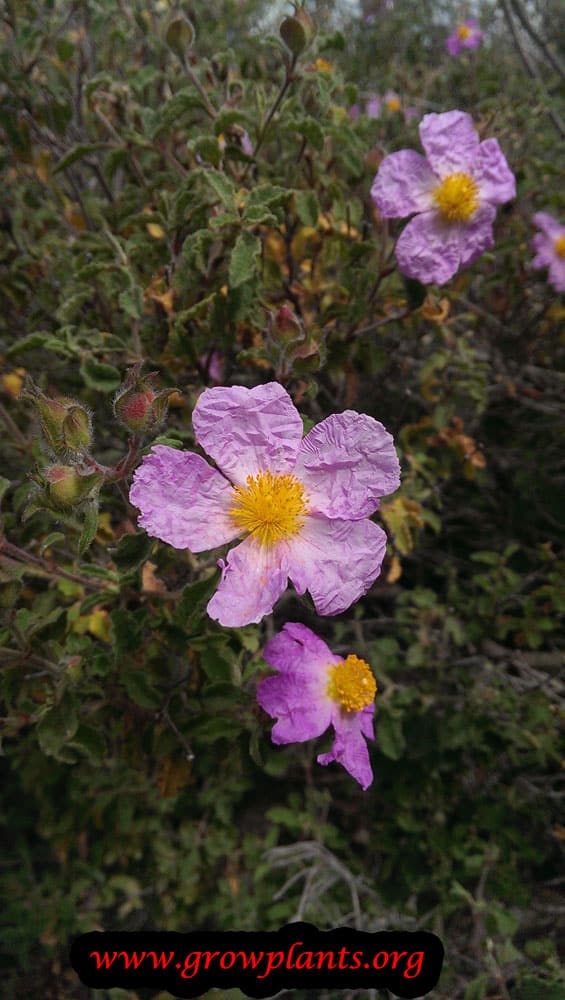
- Flower Characteristics: Five-petalled flowers in white, yellow, purple or pink, some with crinkled, crepe-like petals
Primary Uses & Landscape Value
- Functional & Ornamental Roles: Drought-tolerant ornamental shrub for Mediterranean and rock gardens, banks and containers; source of labdanum resin
Care Guide: Planting, Soil & Watering
Overview: Rock rose (Cistus) is a mediterranean evergreen shrub that loves full sun and sharply drained, lean, even rocky or sandy soil. It is very drought-tolerant and needs little water once established (zones 8–11).
Quick Care Requirements
| Requirement | Ideal Condition |
|---|---|
| Planting Season | Spring through autumn |
| Growth Rate | Slow to Moderate |
| Soil Type | Sharply drained, sandy or rocky, lean |
| Water Need | Low – drought-tolerant; let the soil dry well between waterings |
Planting & Establishment
- Best Planting Season: Plant in spring, summer or autumn; it suits mediterranean, subtropical and mild temperate zones (8–11).
- How to Plant:
- Hole Preparation: Dig a hole about twice as wide as the root ball and no deeper, in a sunny, sharply drained spot.
- Soil Amendments: Do not enrich heavily – it thrives in lean, gritty, even rocky ground; add grit or sand to improve drainage rather than compost.
- Planting Depth: Set the top of the root ball level with the soil surface, and keep mulch from piling against the stem.
- Growth Speed & Expectations: A slow-to-moderate grower forming a bushy shrub about 50–100 cm tall.
Soil, Watering & Drainage Care
- Soil Mix & Drainage Needs: Sharp drainage is critical – rock rose rots in wet, heavy soil. In containers use a gritty, free-draining mix with plenty of drainage holes.
- Watering Schedule & Technique:
- Young / Newly Planted: Water occasionally through the first season to establish, letting the soil dry between waterings.
- Established: Highly drought-tolerant – water little, and only in prolonged dry spells; overwatering is the main killer.
- Seasonal Adjustments: Minimal water in cool or wet weather; an occasional deep soak in extended summer drought.
Climate, Light & Hardiness
Cistus (rock rose) is a classic evergreen Mediterranean shrub for warm-temperate, Mediterranean and subtropical gardens, flowering best in full sun on hot, dry, well-drained sites. It is drought- and heat-tolerant and reasonably wind- and coastal-hardy, but only moderately frost-hardy, with cold tolerance varying considerably between species.
Quick Climate Specifications
| Climate Zones | Mediterranean, subtropical, warm temperate |
|---|---|
| USDA Hardiness Zones | Approximately 8–11 (varies by species) |
| Optimal Temp Range | Warm, Mediterranean conditions |
| Cold Damage Begins | Frost damage below its hardiness range; the threshold varies by species |
| Frost Tolerance | Low to Moderate |
| Light Conditions | Full sun |
| Wind Tolerance | Moderate to High |
| Salt / Coastal Tolerance | Moderate to High |
Sunlight & Light Exposure
Optimal Light Setup
Full sun gives dense growth and maximum flowering.
Direct Sun Requirement
Needs full, direct sun; it performs poorly in shade.
Best Exposure / Orientation
Hot, sunny, well-drained banks and slopes suit it best.
Temperature Extremes & Hardiness
USDA Hardiness & Regional Limits
Because this is a whole genus, cold tolerance differs by species - most sit around zones 8–11. Choose species and cultivars to match local winters, since some are markedly tenderer than others.
Cold Damage & Winter Protection
Frost and cold, wet soil damage the foliage and can kill the more tender species; sharp drainage improves cold survival.
Frost Sensitivity
Moderate, varying with species, cultivar and plant age.
Extreme Heat Tolerance
High; it thrives in Mediterranean summer heat.
Wind, Humidity & Microclimate
Dry-Air Tolerance
Excellent.
Wind Tolerance
Good; suited to exposed sites.
Coastal / Salt Tolerance
Tolerant of coastal exposure and salt spray (distinct from saline irrigation water).
Rainfall & Seasonal Moisture
Adapted to a winter-wet, summer-dry Mediterranean rainfall pattern.
Growing in Pots, Balconies & Indoors
Rock rose (Cistus) is a Mediterranean evergreen shrub of 50-100 cm that loves heat, full sun and sharp drainage. It grows well in a large, free-draining pot but is not a houseplant – it needs far more sun and air than a room provides, so keep it outdoors on a hot, sunny balcony, patio or terrace.
Quick Details
- Container Size: Large pot, 20-30 L, gritty and free-draining
- Indoor Suitability: Not indoors – a full-sun shrub that will not thrive in a room
- Best Spot: Full sun, outdoors
- Soil & Drainage: Lean, gritty, sharply draining mix – it hates rich, wet soil
- Watering in Pots: Water lightly once established; it is very drought-tolerant and dislikes soggy roots
Indoors & On the Windowsill
- Houseplant limits: The grower marks it as not an indoor plant, and it genuinely will not do indoors – even a sunny sill is too dim and still for a Mediterranean sun shrub.
- Windowsill growing: Not suitable as a sill plant; treat it strictly as an outdoor container shrub.
- Overwintering: Where it is borderline hardy, a potted plant can be moved to a bright, airy, frost-free spot for the coldest weeks, then straight back outside.
On a Balcony or Patio
- Light & wind: Give it the hottest, sunniest, airiest spot you have – it thrives on the fast-drying conditions of a sunny balcony. Reflected heat from walls and railings suits it, but check the pot in the peak of summer so it never bakes bone dry for long.
- Practicalities: Make sure the filled pot’s weight is safe for the balcony and that water drains away freely rather than sitting in the base.
Choosing the Pot, Soil & Long-Term Care
- Pot & drainage: A large 20-30 L pot with plenty of drainage holes; never leave it standing in a saucer of water – wet roots are the quickest way to kill it. Terracotta suits it well, breathing and drying faster than glazed or plastic.
- Potting mix: A sharp, free-draining mix – potting soil or peat/coir cut with extra perlite, grit or sand so water runs straight through.
- Feeding: Feed only lightly; this is a lean-soil plant, and too much food in a pot gives soft, floppy growth. A little through the growing season is plenty.
- Repotting: Refresh the mix or pot up about every couple of years, trimming the roots and shaping the top as you go.
Fertilizing & Feeding
Cistus is a tough, drought-tolerant Mediterranean shrub that thrives in poor, well-drained soil; it needs very little fertilizer and can decline if fed too richly.
Quick Fertilizing Specs
| Feeding Level | Light |
|---|---|
| Main Nutrient Priority | Minimal; a light balanced feed at most. |
| Best Feeding Period | A single light feed as spring growth begins, if needed. |
| Organic Options | A thin compost mulch if soil is very poor. |
| Micronutrients | Rarely needed; correct iron only if chlorosis appears on very limy soil. |
| Soil pH | Prefers lean, well-drained, sandy or rocky soil; tolerates alkaline ground. |
| Reduce/Stop Feeding | Feed sparingly, if at all; rich feeding weakens this drought-adapted shrub. |
Feeding by Growth Stage
Spring growth flush
Support fresh shoots and leaves as the plant wakes up in spring.
| Nutrient direction | A balanced complete feed with adequate nitrogen fuels healthy new growth. |
|---|---|
| Timing | As new growth begins in spring. |
| Frequency | Feed sparingly as growth begins; light feeding is usually enough. |
| Fertilizer types | A balanced complete fertilizer, Compost or well-rotted organic matter |
| Precautions | This is a lean, drought-adapted plant that rarely needs much feeding. Avoid heavy nitrogen, which drives leaves at the expense of flowers. |
Flowering
Sustain flowering without pushing excess foliage.
| Nutrient direction | A balanced feed supports steady bloom; adequate nitrogen, not high phosphorus, drives flowering. |
|---|---|
| Timing | Through the flowering season. |
| Frequency | Feed sparingly through the flowering period. |
| Fertilizer types | A balanced complete fertilizer |
| Precautions | High-phosphorus ‘bloom booster’ feeds are unnecessary; a balanced feed and full sun give better flowering. Avoid heavy nitrogen, which drives leaves at the expense of flowers. |
Dormancy or winter rest
Let the plant rest through cold or dormant months without forcing growth.
| Nutrient direction | None – withhold fertilizer while the plant is not actively growing |
|---|---|
| Timing | During dormancy or cool-season rest when growth has stopped |
| Frequency | No feeding at this stage |
| Fertilizer types | No feeding at this stage – resume only when active growth returns |
| Precautions | Do not fertilize until active growth resumes; feeding a resting plant risks salt buildup and root injury |
Nutrient Deficiency Signs & Corrections
Older, lower leaves fade to pale green or yellow overall and growth slows.
| Possible causes | Low soil nitrogen or thin organic matter, Nitrogen leached out by heavy watering or rain on light soils, Cold, waterlogged roots limiting uptake |
|---|---|
| Appears first on | older, lower leaves |
| What to check | soil organic matter and recent feeding, whether heavy rain or irrigation may have leached nutrients, overall plant vigor and colour |
| Possible correction | Topdress with compost or apply a balanced complete fertilizer at label strength; keep watering steady but not excessive so nutrients are not washed away. |
Youngest leaves yellow between the veins while the veins stay green.
| Possible causes | High or alkaline soil pH locking up iron, Cold or waterlogged soil slowing root uptake, Genuinely low available iron |
|---|---|
| Appears first on | newest leaves at the shoot tips |
| What to check | soil pH and drainage, whether the soil is cold or saturated, overall root health |
| Possible correction | Correct soil pH and improve drainage first; if the youngest growth stays chlorotic, apply a chelated iron product following its label. |
Lush leafy growth but few flowers.
| Possible causes | Too much nitrogen from over-feeding, Overly rich soil relative to light levels, Insufficient sunlight for the demand created by heavy feeding |
|---|---|
| Appears first on | new leafy shoots at the expense of buds |
| What to check | recent feeding rate and fertilizer type, light exposure, balance of leaf growth versus budding |
| Possible correction | Ease back on nitrogen and switch to a balanced feed; ensure full sun so the plant channels energy into flowering rather than foliage. |
Pruning, Training & Seasonal Maintenance
Cistus (rock rose) is a compact, drought-tolerant Mediterranean evergreen shrub (50–100 cm) grown for its crepe-like white, yellow, purple or pink flowers. It tolerates only light shaping, never hard cutting into old wood, since this genus does not reliably resprout from bare older stems the way many other flowering shrubs do. Its own care notes place pruning in summer, done “for design” – which lines up well with the plant’s winter–spring bloom season, since trimming after flowering shapes the plant without sacrificing next season’s display or risking a cut into unproductive old growth.
Quick Pruning & Maintenance Specs
| Pruning Tolerance | Low–Moderate – light shaping only, no hard renewal |
| Primary Pruning Window | Summer, after winter–spring flowering |
| Main Objective | Maintain a neat, rounded shape without cutting into bare old wood |
| Young Plant Priority | Light tip-pinching to encourage a bushy, well-branched shape early |
| Mature Plant Priority | Post-flowering shaping cuts kept within live, leafy growth |
| Best Tool Type | Bypass secateurs |
| Avoid Heavy Pruning During | Winter–spring flowering; and never into bare old wood at any time |
Pruning by Plant Age & Size
Newly Established
Pinch soft young growth lightly to encourage branching from the base; avoid any real cutting until the shrub is established.
Young / Formative
Light tip-pruning while the plant is young helps build a dense, multi-branched shape from the start – this matters more for Cistus than for shrubs that can be reshaped later, since it cannot be hard-pruned back into shape once mature.
Mature / Established
After the winter–spring bloom finishes, trim lightly for shape and size, cutting only into the current or previous season’s leafy growth – never back to bare stems.
Structural Pruning & Training
- Height & spread control: manage through light, regular post-bloom trims rather than one large cutback, since the shrub cannot recover from hard pruning into old wood.
- Renewal pruning: not applicable – a leggy or overgrown Cistus is generally better replaced than rejuvenated, as this genus is well known for failing to resprout from cuts into bare older wood.
Container & Small-Space Pruning
In a pot, keep to the same light, frequent post-bloom trims rather than attempting a hard cutback to control size, since the same old-wood limitation applies regardless of growing in ground or container.
Tools
- Bypass secateurs – for selective, shape-only cuts within live growth; this is a shrub for precise cuts, not shearing.
Tool Hygiene & Disease Risk
Routine hygiene; clean, sharp tools are sufficient, with no specific transmissible disease risk noted for this species.
Cut Placement & Technique
Cut back into green, leafy shoots only; stop well short of bare, older wood, which will not reliably regenerate from a cut.
Heavy Pruning & Rejuvenation
Not tolerated. Cistus does not reliably resprout from hard cuts into old wood, so heavy rejuvenation pruning is not a viable option here – an overgrown or badly leggy plant is better replaced than cut back hard.
Common Pruning Mistakes
- Cutting hard into old wood expecting regrowth, which typically leaves dead, bare stubs instead.
- Pruning during the winter–spring bloom period, sacrificing the flower display for shaping that could wait until after flowering.
- Delaying formative pinching when young, then trying to correct a leggy shape later with a hard cut the plant can’t recover from.
When NOT to Prune
- Avoid pruning during the winter–spring flowering period.
- Never cut into bare, leafless old wood at any time of year.
Recommended Tools (by task)
- bypass_secateurs – the one tool this shrub needs, for selective post-bloom shaping cuts kept within live growth.
Propagation Guide
Cistus is usually increased from semi-ripe cuttings, which are essential for the many garden hybrids and named forms, as these do not come true from seed. The species can be raised from its hard-coated seed, though germination is erratic; overall Moderate, and worth doing regularly because these shrubs are short-lived and resent being moved.
Quick Propagation Specs
| Best Propagation Method | Semi-ripe stem cuttings |
| Alternative Methods | Seed (true species only) |
| Propagation Difficulty | Moderate |
| Seed True-to-Type | Cultivar-dependent — species come mostly true, but the common garden hybrids do not; propagate those by cuttings |
| Vegetative True-to-Type | Yes — a cutting reproduces the parent |
| Best Propagation Season | Summer (semi-ripe cuttings) |
| Grafting Required | No |
Growing from Seed
Seed Handling & Dormancy
Cistus is a fire-adapted Mediterranean shrub with hard-coated seed; germination is uneven, and a brief hot-water soak or short heat treatment can help break the seed-coat dormancy. Only the true species come true from seed — hybrids will not.
Germination & Seedling Care
Sow into a sharply drained mix, keep warm and only lightly moist, and expect staggered germination. Pot on young, as Cistus dislikes root disturbance once established.
Stem Cuttings
Cutting Type & Timing
Take semi-ripe cuttings, ideally with a heel, from non-flowering shoots in summer.
Rooting Setup
Root in a gritty, free-draining medium kept just moist; over-wet conditions cause rot in these drought-adapted plants. Rooting hormone is optional. Because most cultivated rock roses are hybrids, cuttings are the only way to reproduce them true.
Bloom & Flower Guide
Quick Details
- Bloom Season: Winter into spring
- Flower Appearance: Five-petalled flowers in white, yellow, purple or pink, some cultivars with crinkled, crepe-paper petals
- Edibility: Grown as an ornamental; the flowers are not used for eating
Detailed Blooming Overview
Rock rose puts on a bright, cheerful show from winter into spring. Each individual flower is short-lived – often lasting just a single day, its delicate petals dropping by afternoon – but the shrub carries so many buds that fresh flowers keep opening in succession over many weeks. It is a tough, drought-tolerant plant that flowers well with very little fuss.
Flower Characteristics
- Open, five-petalled flowers in white, yellow, purple or pink.
- Some cultivars have softly crushed or crinkled petals, like crepe paper.
Bloom Care & Thinning
- Pollination: Bees and other insects visit the open flowers.
- Managing the bloom: No deadheading is needed – spent petals simply drop. A light trim after flowering keeps the shrub neat and encourages fresh growth.
Pests, Diseases & Troubleshooting
Overview: Rockrose is a tough, aromatic, drought-loving Mediterranean shrub that is genuinely near pest-free; its real risks come from wet, its enemies being root rot and fungal dieback in poorly drained or humid conditions rather than insects. The management philosophy is simple: sharp drainage, sun, airflow and minimal fuss – do not over-water or over-feed.
Quick Troubleshooting Overview
| Issue / Pest | Main Symptom | Primary Solution |
|---|---|---|
| Root & crown rot | Sudden wilt/browning in wet soil | Sharp drainage, dry-side watering, no wet feet |
| Botrytis / dieback | Grey mould, dead shoot tips in damp | Prune out, improve airflow, avoid wetting foliage |
| Aphids | Sticky curled new tips (minor) | Water jet, beneficials, soap if needed |
| Fungal leaf spot | Brown spots in prolonged wet | Remove leaves, improve airflow |
| Frost/cold damage | Blackened tips after hard cold | Shelter, sharp drainage, avoid soft growth |
| Sunburn/transplant shock | Scorch or collapse after moving | Establish young, water in, then wean off |
Common Pests & Management
- Aphids (Aphis spp., Myzus persicae):
- Symptoms: Occasional small colonies on the soft new spring growth, causing slight curling and honeydew; rarely more than a minor, temporary nuisance on this shrub.
- Prevention & Control: Usually needs no action – beneficials clear it quickly. Knock colonies off with water and, only if persistent, use insecticidal soap on the tips. Avoid feeding that pushes soft, aphid-prone growth.
- Cistus / flea beetles and weevils (Altica spp., Otiorhynchus sulcatus):
- Symptoms: Small shot-hole feeding on leaves from flea beetles; vine weevil adults notch leaf margins while their grubs chew roots of container plants, causing sudden wilting.
- Prevention & Control: Tolerate minor leaf notching. For container plants at risk of vine weevil, check the rootball, use beneficial nematodes against grubs, and remove adults at night. Keep plants vigorous and well-drained.
- Scale insects (Coccus spp., Saissetia oleae):
- Symptoms: Occasional brown or waxy bumps on stems and leaf undersides with honeydew and light sooty mould, mainly on stressed or sheltered plants.
- Prevention & Control: Prune out affected stems and wipe off light infestations; horticultural oil controls crawlers if needed. Good airflow and sun discourage build-up.
- Spider mites (Tetranychus urticae):
- Symptoms: Fine stippling and dull, bronzed leaves in very hot, dry, sheltered spots or under cover; light webbing in severe cases.
- Prevention & Control: Rarely a problem outdoors – hose foliage in heat and improve air movement. Spot-treat with horticultural oil only where infestation is real; avoid broad-spectrum insecticides.
Diseases & Fungal Issues
- Root and crown rot (Phytophthora spp., Pythium spp., Armillaria (honey fungus)):
- Symptoms: The main killer: plants suddenly wilt, brown and collapse, often after wet spells or in heavy soil, with dark, decayed roots and rotted collar; honey fungus produces white fans under the bark.
- Treatment & Management: Prevention is everything – plant in sharply drained, gritty soil in full sun, on a slope or raised bed if needed, and water on the dry side. Never over-water or mulch against the stem. Remove and destroy dead plants; do not replant rockrose in the same rotted spot.
- Botrytis grey mould & shoot dieback (Botrytis cinerea, dieback fungi):
- Symptoms: Grey fuzzy mould and blackened, dying shoot tips in cool, damp, still weather or on crowded plants; spotting flowers and soft growth.
- Treatment & Management: Improve airflow with light pruning and spacing, avoid overhead watering and wetting the foliage, and remove dead and mouldy growth promptly. Rockrose dislikes humidity – site it open and sunny.
- Fungal leaf spot (Various fungi (e.g. Septoria, Cercospora)):
- Symptoms: Brown or purplish leaf spots in prolonged wet or humid weather; usually cosmetic on this Mediterranean shrub.
- Treatment & Management: Remove affected leaves and improve air movement; treatment is seldom needed. Copper can be used only if spotting is severe and persistent.
- Honey fungus (Armillaria root rot) (Armillaria spp.):
- Symptoms: Sudden death or gradual decline, with white fungal sheets beneath the bark at the base and black ‘bootlace’ rhizomorphs in the soil.
- Treatment & Management: There is no cure – remove affected plants with as much root as possible, and avoid replanting susceptible woody plants in the area. Keep plants vigorous and well-drained to reduce risk.
Growing Difficulties & Abiotic Problems
- Wet feet / overwatering (the number-one problem):
- Cause & Symptoms: Rockrose is adapted to dry, poor soils and quickly declines, yellows and dies in soggy, rich or poorly drained ground.
- Correction Strategy: Plant in gritty, free-draining soil in full sun, water only to establish, then leave it dry; never over-water, over-feed or plant in a low, wet spot.
- Resents transplanting / short-lived:
- Cause & Symptoms: Cistus dislikes root disturbance and is naturally short-lived, often declining after a few years or after being moved.
- Correction Strategy: Plant young pot-grown specimens in their final position, avoid disturbing established roots, and simply replace older, woody, gappy plants rather than pruning hard into old wood.
- Cold and wind damage:
- Cause & Symptoms: Hard frost and cold, wet winters blacken tips and can kill less-hardy species, especially on rich or soft growth.
- Correction Strategy: Choose hardier species for cold gardens, give a sheltered sunny spot with sharp drainage, and avoid late feeding that produces frost-tender growth.
- Legginess and reluctance to reshoot:
- Cause & Symptoms: Old plants become bare and woody at the base and do not readily reshoot from old wood if cut back hard.
- Correction Strategy: Trim only lightly after flowering to keep them bushy, never cutting into bare old wood; take cuttings to replace ageing plants.
What Helps – Products & Tools
This shrub needs very little – get the site right and it looks after itself. Interventions are rarely required: insecticidal soap or horticultural oil handle the occasional aphid, scale or mite, beneficial nematodes tackle vine weevil grubs in containers, and copper is an option only for persistent leaf spot. The real ‘tool’ here is sharp drainage and a sunny, airy position. Spray any oils in the evening to protect pollinators.