


Plant Profile & Key Characteristics
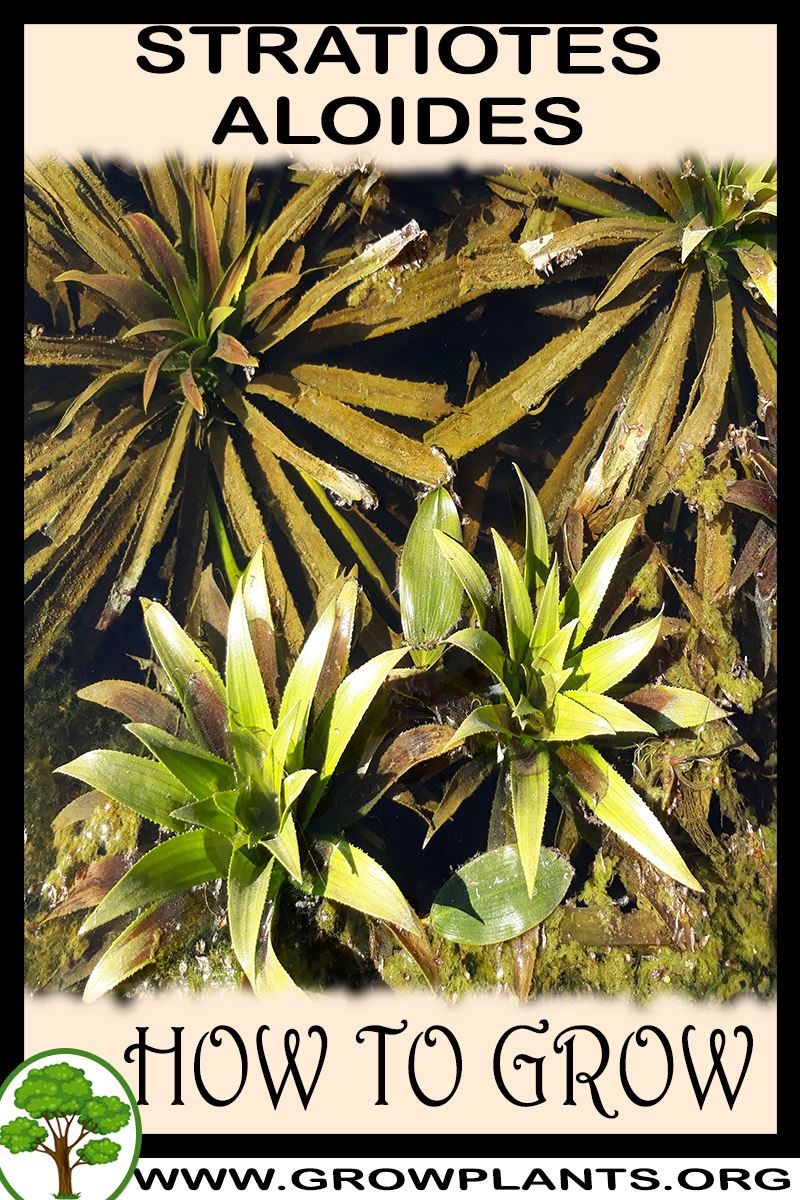
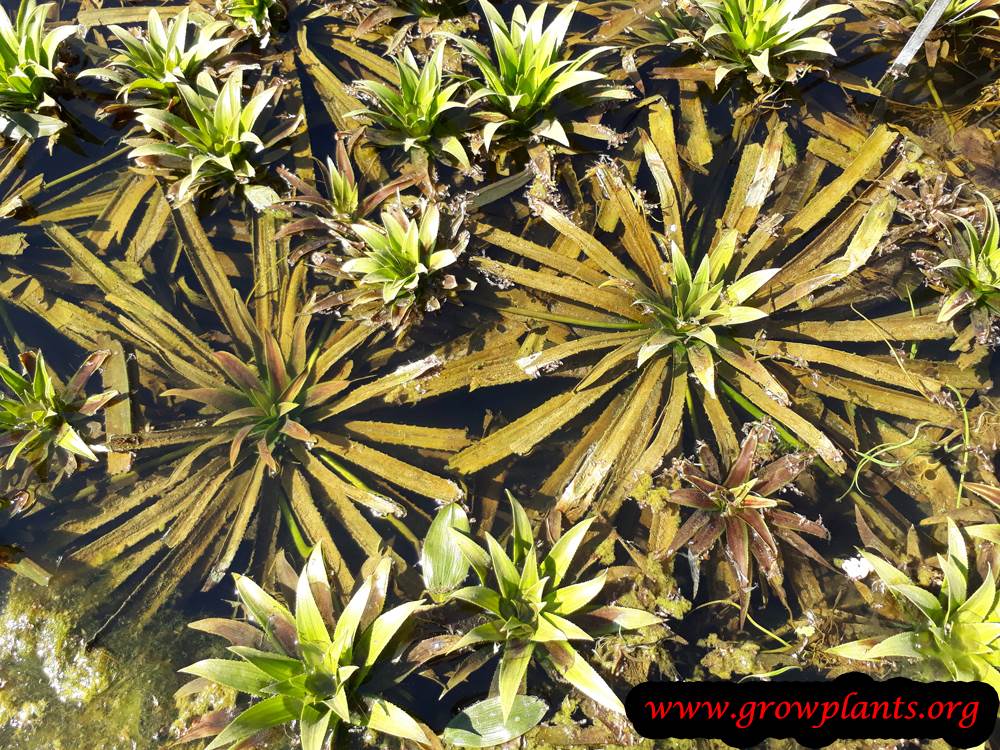
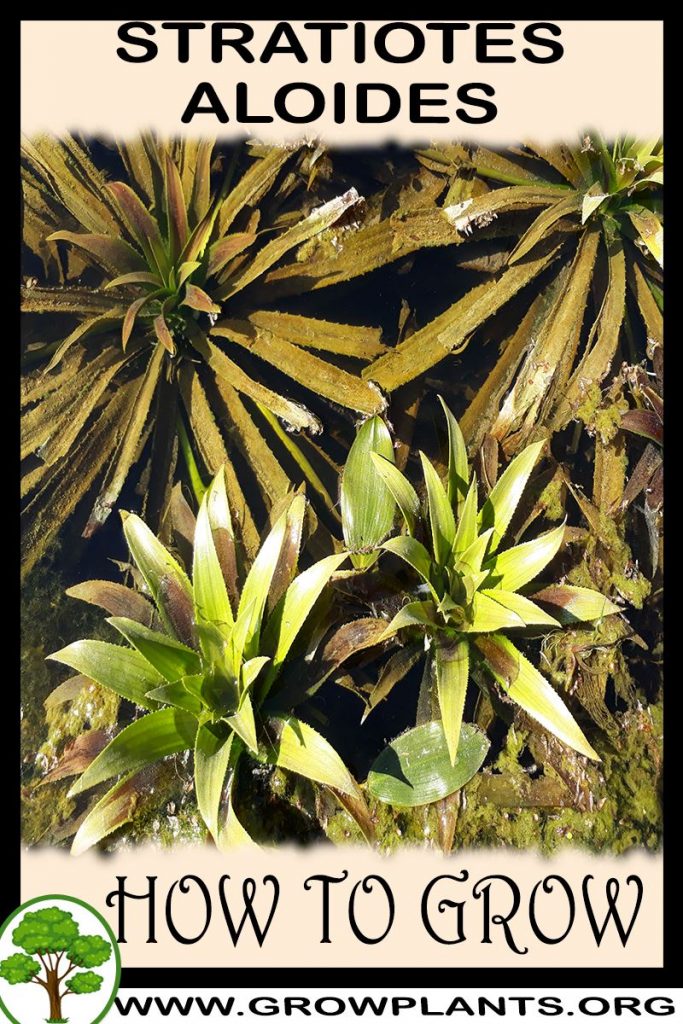
Overview: Water soldier (Stratiotes aloides) is an evergreen aquatic perennial 10-40 cm across, grown as an ornamental pond and aquarium plant. Its spiny rosettes rise to the surface to flower and sink again, and it can spread aggressively.
Quick Specifications
| Specification | Attribute |
|---|---|
| Plant Type / Life Cycle | Perennial (aquatic) |
| Foliage Type | Evergreen |
| Mature Size | 10-40 cm (4-16 in) |
| Growth Rate | Moderate to fast |
| Hardiness | USDA zones 4-10a |
Growth Form & Structure
- Height & Spread: 10-40 cm (4-16 in) rosette; grown floating in ponds or in an aquarium.
- Growth Habit & Form: Free-floating aquatic rosette that rises to the surface to flower and sinks in winter.
- Lifespan & Maturity: Perennial; spreads readily by offsets and can become invasive.
Anatomy & Physical Features
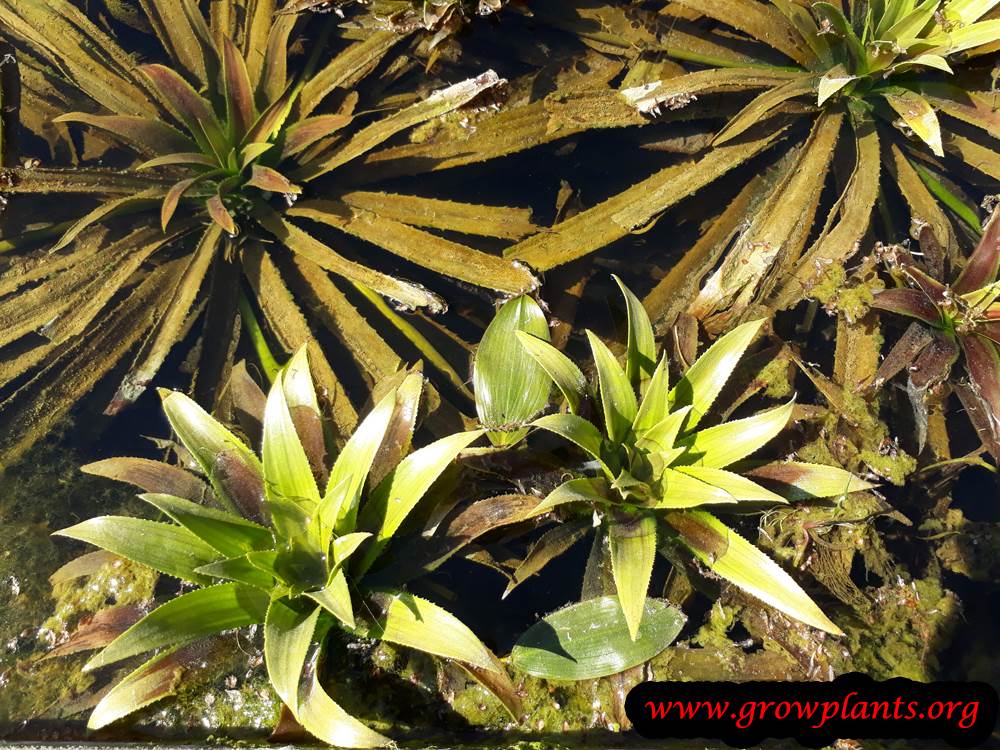
- Leaves & Foliage: Stiff green spear-shaped leaves with spiny margins arranged in a pineapple-like rosette.
- Flower Characteristics: White saucer-shaped flowers; dioecious, with male and female flowers on separate plants (full detail in the Bloom guide).
Primary Uses & Landscape Value
- Functional & Ornamental Roles: Ornamental oxygenating pond and aquarium plant that provides cover for fish and wildlife; note its invasive potential.
Care Guide: Planting, Soil & Watering
Overview: Water soldier is a floating aquatic perennial for still or slow-moving fresh water, growing as an aloe-like rosette that rises and sinks through the season. It needs no soil in the usual sense – just clean pond or aquarium water – and tolerates a wide range of light from full sun to shade.
Quick Care Requirements
| Requirement | Ideal Condition |
|---|---|
| Planting Season | Spring to autumn, in the warm part of the year |
| Growth Rate | Fast to moderate |
| Soil Type | None required – a free-floating aquatic; roots hang in the water or anchor in pond substrate |
| Water Need | High – an aquatic plant that lives permanently in fresh water |
Planting & Establishment
- Best Planting Season: Introduce plants in spring through autumn during warm weather; in cooler climates the rosettes sink and overwinter on the pond floor, rising again as the water warms.
- How to Plant:
- Hole Preparation: No planting hole is needed – simply place the rosette on the water surface of a pond or aquarium, where it floats and trails its roots.
- Planting Depth: Let the plant float freely; where a pond has a substrate, its roots may anchor in the mud, but it does not need to be buried.
- Growth Speed & Expectations: Growth is quick in warm, nutrient-rich water, with rosettes multiplying by offsets – thin regularly, as it can spread aggressively.
Soil, Watering & Drainage Care
- Soil Mix & Drainage Needs: Grow it in clean, still or gently moving fresh water; good water quality matters far more than any soil, and in an aquarium it needs bright light and open surface space.
- Watering Schedule & Technique:
- Young / Newly Planted: Keep newly introduced rosettes in calm water and remove any dead outer leaves as they settle in.
- Established: No watering is required – simply maintain the pond or aquarium water level and quality; top up as water evaporates.
- Seasonal Adjustments: In warm months plants float and grow actively; as temperatures fall they sink to overwinter, so keep the water body from freezing solid.
Climate, Light & Hardiness
This floating aquatic perennial suits outdoor ponds across temperate, subtropical, and mediterranean climates, or an indoor aquarium, and tolerates everything from full sun to full shade. In cold-winter regions it survives not as visible standing foliage but by sinking to the pond bottom to overwinter below the water surface.
Quick Climate Specifications
| Climate Zones | Temperate, Subtropical, Mediterranean, or indoors/aquarium |
|---|---|
| USDA Hardiness Zones | 4–10a (reflects the hardiness of the water body, not open-air exposure) |
| Frost Tolerance | Moderate–High as a submerged, sunk winter rosette; foliage above the waterline has little frost tolerance |
| Light Conditions | Full Sun to Full Shade |
Sunlight & Light Exposure
Optimal Light Setup
Adaptable from full sun to full shade, though the strongest growth and best flowering happen with more light.
Best Exposure / Orientation
In outdoor ponds, open water with some sun encourages the rosettes to multiply; in shadier ponds it still persists but grows more slowly.
Temperature Extremes & Hardiness
USDA Hardiness & Regional Limits
Winter-hardy as a pond plant across zone 4–10a because it escapes freezing air temperatures by sinking to the pond bottom for winter dormancy, resurfacing when the water warms in spring.
Cold Damage & Winter Protection
In colder ponds, the water itself insulates the sunk winter rosettes; the main risk is a pond freezing solid to the bottom, which the plant cannot survive.
Frost Sensitivity
Emergent leaves above the water surface are frost-tender; sufficient water depth protects the resting crowns from freezing.
Wind, Humidity & Microclimate
Rainfall & Seasonal Moisture
As an aquatic species it requires permanent standing water rather than a seasonal moisture pattern; the pond or container should never be allowed to dry out.
Microclimate Recommendations
In cold climates, deeper sections of the pond give the sunk winter buds better insulation against freezing.
Growing in Pots, Balconies & Indoors
Water soldier (Stratiotes aloides) is a floating aquatic plant, 10-40 cm, that looks like a spiky pineapple top. It is grown in water, not soil: the grower confirms it can be kept indoors and in a container – specifically an aquarium – as well as in a garden pond.
Quick Details
- Container Size: A large aquarium or a water-tight patio pond/tub – no drainage holes; it floats in water
- Indoor Suitability: Yes – it can be kept indoors in a bright aquarium
- Best Spot: Full sun to full shade; bright light indoors
- Soil & Drainage: None in the usual sense – it floats; a little aquatic substrate suits its roots
- Watering in Pots: It lives in standing water – keep the aquarium or pond topped up
Indoors & On the Windowsill
- An indoor option: The grower confirms ‘Yes’ – it can be grown indoors in a bright aquarium or water bowl.
- Light: Give it bright light; it tolerates sun to shade, but good light keeps the rosette compact.
- Overwintering: In the wild it sinks to the bottom for winter and rises again in spring; in a heated indoor tank it can stay near the surface year-round.
On a Balcony or Patio
- As a patio water feature: It thrives in a container pond, tub or half-barrel of water on a sunny balcony or patio, oxygenating the water and sheltering wildlife.
- Care: Keep the water topped up and thin the plant when it multiplies, as it spreads readily by offsets.
- Note: It is invasive in some regions – never release it into natural waterways; keep it contained.
Choosing the Pot, Soil & Long-Term Care
- Container: Use a water-tight vessel – an aquarium indoors, or a tub/pond outdoors – not a draining pot.
- Water & substrate: Fill with fresh water; a little aquatic soil or gravel anchors the loose roots, though it largely floats free.
- Feeding: In a balanced aquarium or pond it feeds on dissolved nutrients – no fertiliser needed, and excess feeding just fuels algae.
- Management: Remove surplus offsets regularly to stop it covering the whole surface.
Fertilizing & Feeding
A light feeder that draws most of what it needs from the surrounding water; supplemental fertilizer is rarely needed and should be used cautiously given the plant’s invasive tendencies in open water.
Quick Fertilizing Specs
| Feeding Level | Light feeder |
|---|---|
| Main Nutrient Priority | Whatever the water and substrate don’t already provide, applied minimally and only to the root zone |
| Best Feeding Period | The warm active growing season, and only if needed |
| Organic Options | A nutrient-rich aquatic planting substrate at the root zone rather than surface-applied organic matter |
| Micronutrients | Not routinely supplemented; address specific issues only if diagnosed |
| Soil pH | Tolerates a wide range of water chemistry |
| Reduce/Stop Feeding | Stop feeding as the plant enters dormancy and forms overwintering buds |
Feeding by Growth Stage
Establishment after planting
Help newly introduced plants anchor their roots and adjust to the water garden or aquarium before any supplemental feeding.
| Nutrient direction | None – most new plantings draw on the water and substrate they were introduced with; hold off on added fertilizer. |
|---|---|
| Timing | The first few weeks after introducing the plant to a pond, water garden, or aquarium. |
| Frequency | No feeding at this stage. |
| Fertilizer types | No feeding at this stage – let the plant establish in its new water environment first |
| Precautions | Avoid adding fertilizer while the plant is settling in; excess nutrients in new water can trigger algae blooms before the plant is established enough to use them. |
Active warm-season growth
Support steady leaf and root growth through the main growing season in nutrient-poor water.
| Nutrient direction | If the water or substrate is notably nutrient-poor, a root-zone aquatic plant fertilizer tab worked gently into the substrate. |
|---|---|
| Timing | During the warm months when the plant is actively growing and multiplying. |
| Frequency | Feed sparingly, and only if growth or leaf color suggests the water and substrate aren’t supplying enough on their own. |
| Fertilizer types | A root-zone tablet or tab formulated for aquatic plants, In most established ponds, the surrounding water already supplies enough nutrients without an added product |
| Precautions | Feed minimally and only into the root zone; this plant is considered invasive in some regions, and excess nutrients in open water encourage both overgrowth and algae. |
Cold-season dormancy
Let the plant rest as it forms overwintering buds (turions) that sink and settle at the bottom.
| Nutrient direction | None – withhold feeding through dormancy. |
|---|---|
| Timing | In cooler climates, from autumn as growth slows through winter dormancy. |
| Frequency | No feeding at this stage. |
| Fertilizer types | No feeding at this stage – the plant rests as dormant buds at the bottom of the water |
| Precautions | Do not fertilize during dormancy; the plant is not actively taking up nutrients and added fertilizer only feeds algae. |
Nutrient Deficiency Signs & Corrections
Leaves are pale or yellowish and growth is weak despite adequate light.
| Possible causes | nutrient-poor water or substrate, insufficient light reaching the plant, root damage from fish or other tank or pond inhabitants |
|---|---|
| Appears first on | overall leaf color and new growth |
| What to check | water nutrient levels, light exposure, condition of the roots |
| Possible correction | If confirmed nutrient-poor, add a root-zone tab formulated for aquatic plants; otherwise address light or root damage first. |
The plant floats loose or grows poorly with visibly thin, damaged, or missing roots.
| Possible causes | fish grazing on roots, physical disturbance in the water, insufficient substrate for anchoring |
|---|---|
| Appears first on | the root system |
| What to check | presence of root-grazing fish, substrate depth and stability, physical disturbance in the water body |
| Possible correction | Limit access by root-grazing fish where practical and ensure the plant has enough substrate or space to re-root; feeding will not correct root damage. |
Plant growth is weak or stalled while algae visibly increases in the same water.
| Possible causes | excess nutrients in the water favoring algae over the plant, insufficient light for the plant relative to the algae, overcrowded or unbalanced planting |
|---|---|
| Appears first on | the surrounding water and any exposed surfaces |
| What to check | recent fertilizer or nutrient additions, water clarity and light penetration, plant density |
| Possible correction | Reduce or pause any added fertilizer, improve the light balance, and physically remove excess algae rather than adding nutrients. |
Pruning, Training & Seasonal Maintenance
Water soldiers is a free-floating aquatic rosette with no wood or stem structure to prune. Maintenance is limited to removing dead or blackened leaves and thinning the abundant offset plantlets it produces – this species spreads vegetatively very fast and is regionally considered invasive, so density control is the real ‘pruning’ objective here, not shaping. This can be done through the active growing season; it has no effect on flowering, which happens briefly at the water’s surface in summer regardless.
Quick Pruning & Maintenance Specs
| Pruning Tolerance | Low (only dead-leaf removal and offset thinning apply) |
| Primary Maintenance Window | Through the growing season, as needed |
| Main Objective | Remove dying leaves; thin daughter offsets to prevent the pond/tank from being overrun |
| Best Tool Type | Fine snips (leaves have small marginal spines – handle with care) |
| Avoid Heavy Handling During | Autumn, when the plant is forming and sinking its overwintering turions (winter buds) |
Pruning by Plant Age & Size
Newly Established
Leave a newly introduced plant alone to root/establish in the water column; no removal needed yet.
Mature / Established
Routine removal of dead or blackening leaves, and regular thinning of the daughter rosettes it buds off, since left unchecked this species can quickly dominate a pond or aquarium.
Special Growth to Remove
- Dead or blackened leaves – the main routine task.
- Excess daughter offsets/plantlets – this species propagates rapidly by offsets; remove or relocate the surplus to keep water surface coverage and root mass in check (relevant to its invasive tendency).
- Handle leaf margins carefully – they carry small spines.
Container & Small-Space Pruning (Pond & Aquarium Scale)
In a small pond or aquarium, offset buildup is the main issue – this plant multiplies quickly in a confined water volume, so thin offsets more frequently than you would in an open pond to avoid it choking the space and out-competing other aquatic plants.
Tools
- Fine precision snips for trimming dead leaf tissue and detaching offset plantlets from the parent rosette.
Tool Hygiene & Disease Risk
Routine: rinse tools between different water bodies to avoid accidentally transferring plant fragments or hitchhiking organisms between ponds, which is a real risk given this species’ well-documented invasiveness – not a plant-disease concern, but an ecological one.
Cut Placement & Technique
Trim dead leaf tissue back to healthy green growth at the rosette base; detach offset plantlets where they join the parent by their short connecting stolon.
When NOT to Prune
Avoid disturbing the plant heavily in autumn as it forms turions (dense winter buds) that sink to the pond floor to overwinter – this is a natural part of its life cycle in temperate climates, not dieback to be cleaned up.
Recommended Tools (by task)
- precision_snips – the only tool needed, for dead-leaf trimming and offset removal on a plant with no woody structure.
Propagation Guide
Water soldiers is most easily propagated by separating the daughter rosettes it produces on short side-shoots, which needs no special treatment and establishes far faster than seed. Seed is possible but less reliable in practice, since the flowers are dioecious (male and female on separate plants), so consistent seed set needs both sexes present; vegetative propagation is easy, while propagation by seed is more of a specialist route.
Quick Propagation Specs
| Best Propagation Method | Division of daughter rosettes (offsets) |
| Alternative Methods | Seed, where both male and female plants are present |
| Propagation Difficulty | Easy (vegetative); Difficult (seed, due to dioecious flowering) |
| Seed True-to-Type | Usually true-to-type |
| Vegetative True-to-Type | Yes |
| Best Propagation Season | Spring through autumn in warmer climates, during active growth |
Growing from Seed
Because plants are dioecious, reliable seed only forms where both a male and a female plant are grown together; in many collections only one sex is present, so seed can be scarce or unavailable. Where seed is obtained, sow it fresh – like most aquatic plants, it generally does not tolerate drying out or long storage well.
Division, Offsets, Pups & Suckers
The rosette produces daughter plantlets on short lateral shoots during the growing season. Let each daughter rosette develop its own root system while still attached, then separate it from the parent. This plant also forms dense winter buds (turions) that sink in autumn and rise again to grow the following spring – a natural, no-effort form of vegetative renewal rather than a method a grower needs to actively manage.
Runners & Stolons
Daughter rosettes stay connected to the mother plant by short stolons until they are well rooted; only separate them once they have formed their own roots, so they don’t simply drift away before they can support themselves. Given how readily this species spreads vegetatively, and its noted invasiveness, propagate and release new plants into open or natural waters with caution.
Bloom & Flower Guide
Quick Details
- Bloom Season: Summer
- Flower Appearance: White, three-petalled flowers held just above the water surface
- Edibility: Ornamental pond plant, not eaten
Detailed Blooming Overview
Water soldier spends much of the year submerged, then rises toward the surface in summer to flower, lifting its white blooms just above the water among the spiky rosettes of leaves. It is a striking, architectural aquatic, and the simple white flowers are a clean contrast to the sword-shaped foliage.
Flower Characteristics
- White flowers with three petals, saucer-shaped and held above the water.
- Plants are dioecious – male and female flowers grow on separate plants.
Bloom Care & Thinning
- About the bloom: Because the sexes are on separate plants and colonies often spread by offsets, flowering – and seed set – can be sparse where only one sex is present.
- Managing it: Thin crowded rosettes and remove excess offsets to keep the planting open and healthy.
Pests, Diseases & Troubleshooting
Overview: Water soldier is a free-floating and submerged aquatic rosette that has very few conventional pests or diseases; its health is governed instead by water quality, light and competition. The sap-sucking water-lily aphid and aquatic china-mark caterpillars are the main creatures that damage the leaves, while fish may disturb the roots. Just as important, this plant is a vigorous, regulated invasive in many regions, so ‘management’ often means containing the plant itself.
Quick Troubleshooting Overview
| Issue / Pest | Main Symptom | Primary Solution |
|---|---|---|
| Water-lily aphid | Colonies on emergent leaf tips, sticky distortion | Hose into water for fish to eat; avoid pesticides in ponds |
| China-mark moth | Leaf pieces cut and mined by aquatic caterpillars | Remove affected leaves by hand; encourage fish |
| Fish disturbance | Uprooted or nibbled rosettes and roots | Use robust plants, protect while establishing |
| Algae competition | Blanketweed smothering rosettes, poor growth | Reduce nutrients, shade, remove algae manually |
| Rosette rot | Soft, browning central leaves in stagnant water | Improve water movement and quality, remove rotten rosettes |
| Invasive spread | Rapid colony expansion crowding the water body | Thin and remove offsets; dispose responsibly, never release |
Common Pests & Management
- Water-lily aphid (Rhopalosiphum nymphaeae):
- Symptoms: Colonies of small dark aphids on the emergent leaf tips and any parts held above water, causing sticky distortion and weakening the foliage; the main insect pest of pond plants.
- Prevention & Control: Spray or hose the aphids off into the water where fish quickly eat them, and rely on the pond’s natural predators (fish, ladybirds, lacewings). Do not use insecticides in or near a pond, as they harm fish and aquatic life; physical dislodging is the safe control.
- China-mark moths (Elophila / Parapoynx spp.):
- Symptoms: Aquatic caterpillars cut oval sections from the leaves and construct cases or mine the foliage, leaving ragged, holed and shredded leaves.
- Prevention & Control: Pick off and remove affected leaves and any visible cases by hand, and encourage fish that feed on the larvae. Chemical control is not appropriate in a pond, so manual removal and a healthy fish population are the tools.
- Fish disturbance (e.g. large goldfish, koi, grass carp):
- Symptoms: Rosettes uprooted, dislodged or roots nibbled, and turbid water from bottom-grubbing fish stunting the plants.
- Prevention & Control: Establish robust, well-grown rosettes, protect new plantings with mesh baskets or a barrier until anchored, and avoid heavy stocking of vigorous grubbing fish in small water bodies.
- Filamentous algae / blanketweed (competition, not a true pest):
- Symptoms: Mats of green filamentous algae smother the rosettes, block light and compete for nutrients, checking growth.
- Prevention & Control: Reduce nutrient loading (limit feeding and runoff), add shade and competing plants, and physically twist out and remove algae mats; barley-straw treatment can help suppress regrowth.
Diseases & Fungal Issues
- Rosette / crown rot (secondary bacterial and fungal):
- Symptoms: Soft, browning, disintegrating central leaves and collapse of the rosette in stagnant, oxygen-poor or over-warm water.
- Treatment & Management: Improve water movement, oxygenation and overall water quality, avoid nutrient overload, and net out and discard rotting rosettes before they foul the water; healthy well-lit plants rarely rot.
- Leaf browning / dieback (physiological, often mistaken for disease):
- Symptoms: Older outer leaves yellow, brown and die back naturally, or the whole plant browns in poor water or too little light.
- Treatment & Management: Distinguish natural seasonal dieback (the plant sinks to overwinter as buds) from stress; ensure clean, clear, well-lit water and remove dead leaves to keep the pond clean.
Growing Difficulties & Abiotic Problems
- Poor water quality / low light:
- Cause & Symptoms: Weak, pale, non-thriving rosettes in murky, over-nutrient or heavily shaded water.
- Correction Strategy: Provide clear, clean, moderately hard, sunlit water, avoid excess nutrients that fuel algae, and site the plant where it gets good light; it favours cool, calcareous water.
- Overwintering behaviour (not a fault):
- Cause & Symptoms: Plants sink and appear to ‘die back’ in autumn, resurfacing in spring – normal, but alarming to new pondkeepers.
- Correction Strategy: No action needed; the rosettes sink to the bottom to overwinter and rise again as the water warms. Do not remove them assuming they have died.
- Invasive vigour:
- Cause & Symptoms: The colony expands rapidly by offsets, crowding out other plants and clogging small water bodies.
- Correction Strategy: Thin regularly and remove excess offsets by hand. Critically, dispose of removed material on land (compost, not the bin or waterway) and never release it into natural waters – it is a regulated invasive in many regions.
What Helps – Products & Tools
A pond plant is managed without conventional pesticides: dislodge aphids by hosing into the water, remove china-mark-damaged leaves and blanketweed by hand, use barley-straw products to suppress algae, and maintain water quality and a balanced fish and predator population. The most important ‘tool’ is responsible containment and disposal, given its invasive status.