
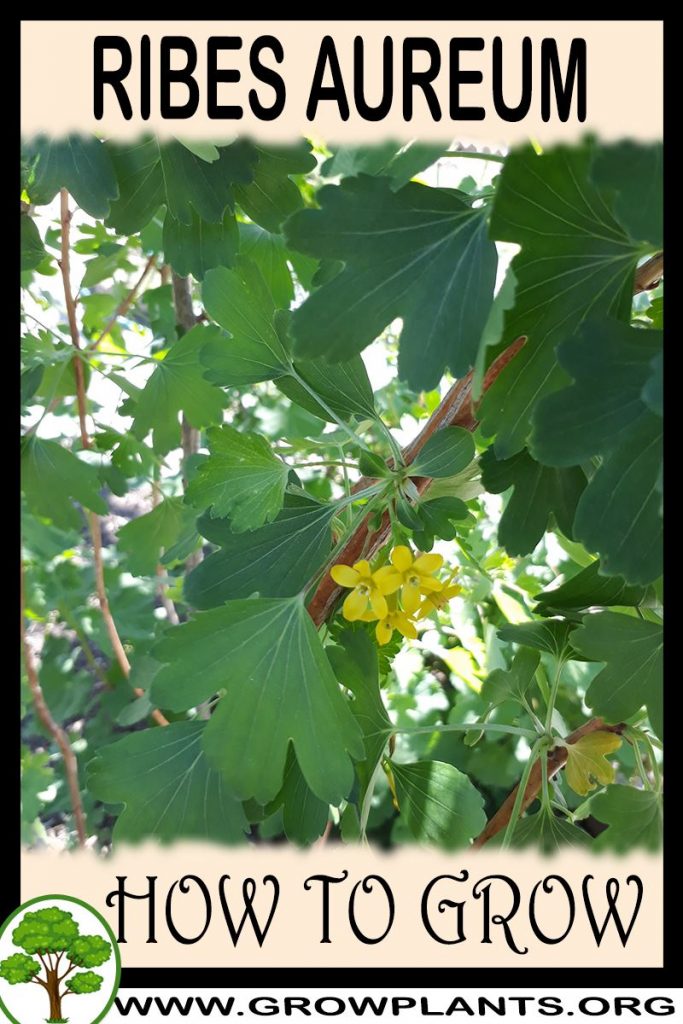
Plant Profile & Key Characteristics
Also known as: Golden currant, Clove currant, Pruterberry, Buffalo currant
Overview: A deciduous fruiting shrub 1-3 m (3-10 ft) tall grown for its edible berries and fragrant yellow spring flowers. Hardy and drought-tolerant.
Quick Specifications
| Specification | Attribute |
|---|---|
| Plant Type / Life Cycle | Perennial (deciduous fruiting shrub) |
| Foliage Type | Deciduous |
| Mature Size | 1-3 m (3-10 ft) |
| Growth Rate | Moderate |
| Root System | Fibrous, shallow (typical of Ribes) |
| Toxicity | Non-toxic / edible fruit |
| Hardiness | USDA zones 3-8 (to 9-10a with care) |
Growth Form & Structure
- Height & Spread: 1-3 m (3-10 ft) in the ground; kept smaller in a pot, potted up gradually as it grows.
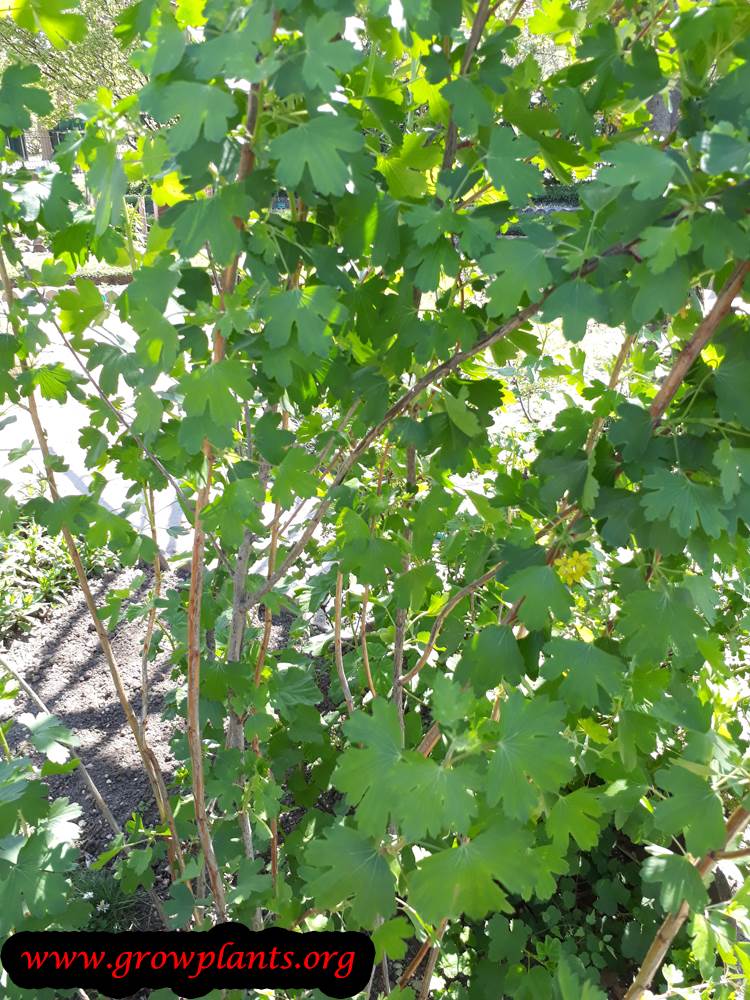
- Growth Habit & Form: Multi-stemmed deciduous shrub.
- Lifespan & Maturity: Long-lived fruiting shrub that comes into bearing about 1-2 years from planting.
Anatomy & Physical Features
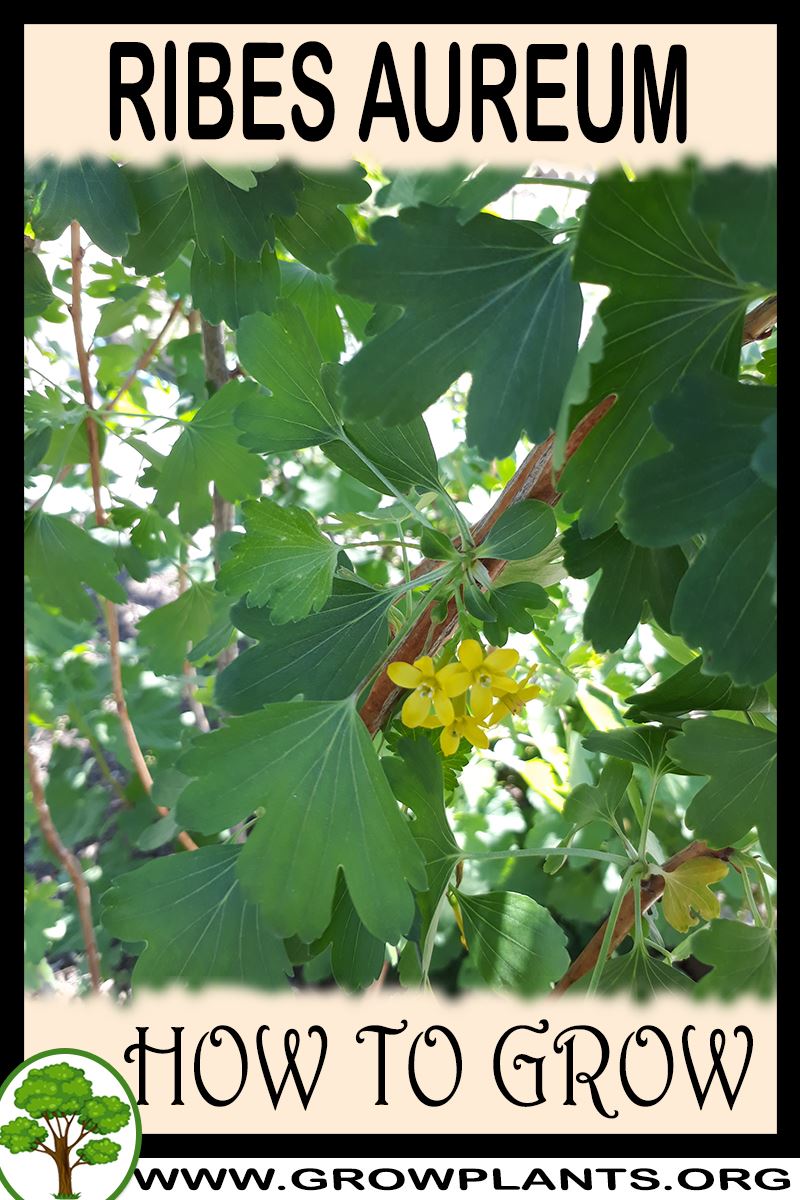
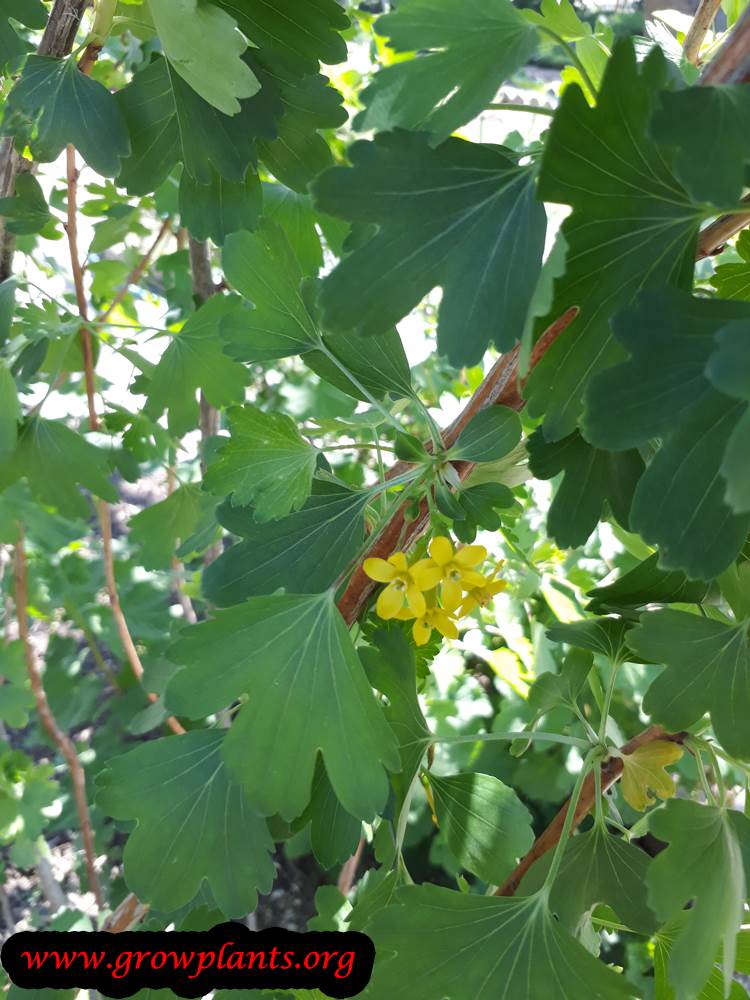
- Leaves & Foliage: Green leaves with 3-5 lobes and serrated edges.
- Flower Characteristics: Fragrant yellow flowers borne in clusters of 5-20 or more.
- Fruit Profile: Edible berry ripening yellow or red-purple, 0.5-1.5 cm across.
Primary Uses & Landscape Value
- Edible Uses: Berries eaten raw, juiced, and used in cakes and jam.
- Functional & Ornamental Roles: Ornamental and edible shrub, drought-tolerant, valued for fragrant spring bloom.
Care Guide: Planting, Soil & Watering
Overview: Ribes aureum (golden currant) is a hardy, deciduous currant/gooseberry-family shrub that grows in full sun to part shade in rich, well-drained, slightly acidic soil. It needs a cold winter with chilling hours to fruit well and, once established, is more drought tolerant than most currants.
Quick Care Requirements
| Requirement | Ideal Condition |
|---|---|
| Planting Season | Dormant season — bare-root plants in late winter to early spring |
| Growth Rate | Moderate |
| Soil Type | Rich, moist, well-draining, mulched |
| Soil pH | Slightly acidic to neutral (about 6.0–6.5) |
| Water Need | Low to Moderate — drought tolerant once established |
Planting & Establishment
- Best Planting Season: Plant while dormant — bare-root plants go in from late winter to early spring, and container-grown plants can be set out through the dormant season. Avoid planting into summer heat, which stresses new plants. It needs a cold winter (chilling hours) to crop well.
- How to Plant:
- Hole Preparation: Dig a hole wider than the roots and loosen the surrounding soil. For bare-root plants, trim any damaged or overlong roots before planting and spread them out in the hole.
- Soil Amendments: Mix organic matter, humus and dead leaves into the planting soil (kept slightly acidic); this rich, moisture-holding blend suits currants and gooseberries well.
- Planting Depth: Set the plant at the nursery soil line, or a couple of centimetres deeper to encourage new shoots from the base; firm gently and water in well.
- Growth Speed & Expectations: A moderate grower reaching about 1–3 m; it typically begins bearing fruit within one to two years of planting.
Soil, Watering & Drainage Care
- Soil Mix & Drainage Needs: It wants rich, moisture-retentive soil that still drains freely; mulch generously to keep the roots cool and moist and top up organic matter yearly. In pots, ensure sharp drainage — plenty of holes, some grit or lava rock at the base — and never let water sit in the tray for more than a day.
- Watering Schedule & Technique:
- Young / Newly Planted: Increase watering at planting time and keep the soil consistently moist while the plant establishes its roots.
- Established: Water regularly while establishing and as fruit swells; once established it tolerates some dryness better than most currants, but still does best with steady moisture. Mulch helps hold water between waterings.
- Seasonal Adjustments: Water more through the warm fruiting season; reduce in winter dormancy, when the leafless plant needs little.
Climate, Light & Hardiness
Golden currant is a cold-hardy, drought-tolerant deciduous fruiting shrub for temperate climates, growing in full sun to half shade. It is hardy through USDA zones 3–8, extending to zone 9–10a with good care.
Quick Climate Specifications
| Climate Zones | Temperate |
|---|---|
| USDA Hardiness Zones | 3–8 (to 9–10a with care) |
| Frost Tolerance | High |
| Light Conditions | Full Sun / Half Shade |
Sunlight & Light Exposure
Optimal Light Setup
Full sun to half shade both suit this shrub; full sun typically supports the heaviest fruit set.
Temperature Extremes & Hardiness
USDA Hardiness & Regional Limits
Hardy through USDA zones 3–8, and growable into zone 9–10a with attentive care - a genuinely cold-hardy shrub suited to harsh continental winters.
Chilling Requirement
Needs winter chilling hours to grow and fruit well, consistent with its cold-temperate origin; in the warmer part of its extended range, chill accumulation becomes more marginal.
Frost Sensitivity
Dormant wood is very cold-hardy; spring blossoms are the frost-vulnerable stage and a late freeze can reduce that year's fruit crop.
Wind, Humidity & Microclimate
Dry-Air Tolerance
Noted as drought-tolerant in the site's own data, this currant copes with drier conditions better than many fruiting shrubs once established.
Growing in Pots, Balconies & Indoors
Golden currant is a deciduous fruiting/flowering currant shrub. The grower rates it as an outdoor plant rather than a houseplant, but he gives a detailed method for keeping it in pots: kept small and potted on in stages, it makes a productive patio or balcony container plant.
Quick Details
- Container Size: Start with a pot 20-50% larger than the root ball (use the smaller figure for bigger plants); pot on as it fills each pot
- Indoor Suitability: Not a houseplant; it needs an outdoor winter chill
- Best Spot: Full sun to part shade
- Soil & Drainage: Peat-based, free-draining mix with a layer of lava grit in the base
- Watering in Pots: Average to small; good drainage is essential – if you use a saucer, let it dry out the same day
Indoors & On the Windowsill
- Houseplant limits: The grower does not rate it as an indoor plant; it needs an outdoor winter chill and cannot take a warm room.
- Keep it outside: Leave the pot outdoors year-round so it gets the dormancy it needs.
On a Balcony or Patio
- Light & wind: A sunny to part-shaded balcony suits it; keep the plant compact and the pot well drained. Pots against warm walls dry fast, so check moisture regularly.
Choosing the Pot, Soil & Long-Term Care
- Pot & drainage: Start in a pot 20-50% larger than the root ball and make drainage holes; put peat-based soil in with some lava grit at the bottom for drainage. If you stand it on a saucer, let the water fill it when you water but make sure it dries out the same day.
- Keep it small, pot on in stages: Keep the plant compact and move up a pot size each time it fills the current one, until it reaches the size you want.
- Soil refresh: When the plant is large, replace part of the soil to keep it fresh and productive.
- Feeding: Potted plants exhaust their soil faster than those in the ground – feed through the growing season, since nutrients leach out with every watering.
Grower’s Container Tip
- Pot up in stages, keep it small: The grower’s method is to start in a pot only 20-50% bigger than the root ball (smaller percentage for bigger plants) and move up a size only as roots fill each pot – this keeps the soil fresh and the plant a manageable size, refreshing part of the soil once it is large.
Fertilizing & Feeding
A moderate feeder: nitrogen-forward feeding supports establishment and cane growth, then a balanced, potassium-adequate feed carries the shrub through flowering and fruit development.
Quick Fertilizing Specs
| Feeding Level | Moderate feeder |
|---|---|
| Main Nutrient Priority | Nitrogen-forward during establishment and vegetative growth, shifting toward balanced with adequate potassium as flowers and fruit develop |
| Best Feeding Period | Active spring and summer growth |
| Organic Options | Compost or well-rotted organic matter worked into the root zone |
| Micronutrients | Usually supplied by a complete fruiting-shrub fertilizer; correct iron chlorosis only when diagnosed |
| Soil pH | Prefers slightly acid, rich, well-drained soil |
| Reduce/Stop Feeding | Ease off feeding as fruit ripens in summer and as growth slows heading into autumn |
Feeding by Growth Stage
Establishment after planting
Help a newly planted or young Golden currant establish a healthy root system and settle into rich, slightly acid soil.
| Nutrient direction | A balanced, gentle feeding to support root establishment without pushing excess soft growth. |
|---|---|
| Timing | The first growing season after planting, from spring into summer. |
| Frequency | Light, infrequent feeding while the shrub settles in; let root growth lead. |
| Fertilizer types | A balanced complete shrub or fruit fertilizer, Compost or well-rotted organic matter worked into the planting area |
| Precautions | Keep soil consistently moist but well drained; avoid heavy feeding on a stressed, newly planted root system. |
Vegetative growth and canopy development
Build strong cane and leaf growth on an establishing shrub before it settles into regular bearing.
| Nutrient direction | A nitrogen-forward feeding to drive healthy new cane and leaf growth. |
|---|---|
| Timing | Spring through early summer as new growth extends. |
| Frequency | Several light feedings spaced through the active growing season. |
| Fertilizer types | A nitrogen-forward complete fertilizer, Composted organic matter or mulch |
| Precautions | Avoid excess nitrogen late in the season, which can push soft growth at the expense of next year’s fruiting wood. |
Flowering and fruit development
Support flower cluster formation and development of the edible currants without overdriving leafy growth.
| Nutrient direction | Shift toward a balanced feeding with adequate potassium to support flowering and fruit fill. |
|---|---|
| Timing | Spring bloom through summer and autumn fruit development. |
| Frequency | Light, steady feeding tapering off as fruit ripens. |
| Fertilizer types | A balanced complete fruiting-shrub fertilizer, Organic matter such as compost or mulch worked around the root zone |
| Precautions | Ease back on heavy nitrogen once fruit begins to set, since excess nitrogen can delay ripening and reduce fruit quality. |
Nutrient Deficiency Signs & Corrections
New leaves turn yellow between dark green veins, most noticeable on the youngest growth.
| Possible causes | high soil pH limiting iron availability, poorly drained or overly wet soil, root stress from recent transplanting or root damage |
|---|---|
| Appears first on | the newest leaves at branch tips |
| What to check | soil pH and drainage, recent root disturbance or waterlogging, overall vigor of the shrub |
| Possible correction | Correct soil pH toward the slightly acid range this shrub prefers and apply a chelated iron product per its label if chlorosis persists. |
Overall pale, yellow-green foliage and slowed cane growth.
| Possible causes | low soil nitrogen, competition from grass or weeds around the root zone, poor soil organic matter |
|---|---|
| Appears first on | older, lower leaves first, then overall |
| What to check | recent feeding history, weed or turf competition near the root zone, soil organic matter level |
| Possible correction | Apply a nitrogen-forward complete fertilizer during active growth and improve soil organic matter. |
Leaf margins scorch or yellow and fruit clusters come smaller or fewer than expected.
| Possible causes | low soil potassium, sandy soil with nutrient leaching, an imbalanced, nitrogen-heavy feeding history |
|---|---|
| Appears first on | older leaf margins |
| What to check | soil texture and drainage, recent feeding balance, fruit size and cluster count |
| Possible correction | Shift toward a balanced, potassium-adequate fertilizer and improve soil organic matter. |
Pruning, Training & Seasonal Maintenance
Ribes aureum is a multi-caned, deciduous fruiting shrub that responds well to structured pruning and needs it annually to keep producing good fruit – unpruned, overcrowded plants set smaller fruit and are more prone to pests and disease. The main objective is renewal: removing old, weak and crossing canes so that younger wood carries the crop and light reaches the ripening fruit. The primary window is late autumn to early winter while the plant is dormant, though pruning can be shifted to right after harvest in a light-cropping year.
Quick Pruning & Maintenance Specs
| Pruning Tolerance | Moderate to High |
| Primary Pruning Window | Late autumn to early winter (dormant) |
| Secondary Maintenance Window | After harvest, if fruiting was light that year |
| Typical Frequency | Once a year |
| Main Objective | Renew fruiting wood; open the canopy for light and fruit quality |
| Young Plant Priority | Select and establish several strong young canes; remove weak, spindly growth |
| Mature Plant Priority | Remove canes older than about 4 years, crossing/weak wood, and thin bud count for larger fruit |
| Best Tool Type | Bypass secateurs; loppers for thicker old canes |
| Avoid Heavy Pruning During | Active bloom and fruit set; hot, drought-stressed summer weather |
Pruning by Plant Age & Size
Newly Established
Select and retain 3–5 of the strongest young canes as the framework, removing weak or spindly growth so the plant’s energy goes into building a productive structure.
Young / Formative
Manage as an open, multi-caned shrub rather than training to a single leader; keep the base uncrowded so replacement canes have room to develop.
Mature / Established
Every dormant season, remove canes older than roughly 4 years along with any weak, dead or crossing wood, and thin bud count on retained canes to favor fewer, larger fruit; keep the framework open enough that ripening fruit gets good light.
Seasonal Pruning Schedule
Dormant/Winter: the primary pruning season – remove old (4+ year) canes, weak or crossing wood, and thin buds for larger fruit. Do not remove all older canes at once on a very overgrown plant; spread heavy renewal over two seasons to protect continuous cropping.
Post-Harvest: if the crop was light, pruning can instead be shifted to right after fruit harvest rather than waiting for full dormancy.
Flowering & Fruiting Wood
Fruit quality directly tracks pruning: keeping canes younger than about 4 years and thinning bud count produces fewer but larger, better-quality fruit, while a crowded, unthinned plant sets smaller fruit and is more prone to pest and disease problems from poor light and airflow. Removing old unproductive wood each dormant season keeps the plant carrying its crop on vigorous younger canes.
Structural Pruning & Training
As a multi-caned shrub with no central leader, structure is maintained by removing crossing/rubbing canes and keeping the base open rather than by training to a fixed framework. Canopy thinning genuinely helps this plant – a crowded interior directly reduces fruit quality and increases disease per its documented pest pressure.
Special Growth to Remove
- Canes older than about 4 years.
- Weak, dead or crossing canes.
- Excess buds on retained canes, thinned to favor larger fruit.
- Basal suckers – can be left to renew the clump or selectively removed/transplanted for propagation, since this species is commonly propagated from suckers.
Container & Small-Space Pruning
Tolerates container culture with more attentive size control, since a restricted root system supports less top growth. Apply the same annual renewal logic at a reduced scale – fewer canes retained, proportionally more removed each year to keep the plant in balance with its pot.
Tools
Bypass secateurs for most annual cane work; loppers for thicker old canes (4+ years); a garden spade if dividing or transplanting rooted suckers for propagation.
Tool Hygiene & Disease Risk
Increased – this species is noted as sensitive to a number of pests including gall-forming organisms, aphids and spider mite. Prune out and dispose of any galled or clearly infested wood rather than leaving it in the canopy, and clean tools between plants if disease or gall symptoms are present.
Cut Placement & Technique
Cut old canes at or near the base to encourage vigorous new growth from the crown, typical of cane-forming shrubs; make clean cuts, since the thorny wood can tear if cut with a dull blade.
Heavy Pruning & Rejuvenation
Tolerates significant renewal pruning, resprouting vigorously from the base – but removing most of the old wood in a single season will noticeably reduce next year’s crop. On a very neglected, overgrown plant, spread hard renewal over two dormant seasons to keep some continuous fruiting while rebuilding the framework.
Post-Pruning Care
Fertilizing is a normal separate annual practice for this species rather than a direct response to pruning – don’t over-feed simply because the plant was just cut back. Watch regrowth for vigor and adjust watering for the season rather than force-feeding after a hard cut.
Common Pruning Mistakes
- Leaving too many canes older than 4 years, which reduces fruit size and vigor.
- Letting the canopy become crowded, which shades ripening fruit and encourages pest and disease pressure.
- Handling the thorny wood without gloves, or cutting it with dull tools that tear rather than cut cleanly.
When NOT to Prune
Avoid major pruning during bloom or fruit set, which sacrifices the current crop; avoid pruning during hot, drought-stressed summer weather; if using the post-harvest window instead of dormant timing, don’t leave it so late that fresh cuts face hard winter cold before hardening off.
Recommended Tools (by task)
- Bypass secateurs – for the bulk of annual renewal cuts on canes.
- Loppers – for thicker canes 4+ years old.
- Garden spade – for dividing or transplanting rooted suckers when propagating.
Pruning Troubleshooting
| Problem | Possible Cause | What to Check | Corrective Action |
| Small or reduced fruit | Too many old canes and buds left unthinned | Cane age and bud density on retained wood | Remove canes older than 4 years and thin buds on the rest |
| Galls, dieback or stunted shoots | Gall-forming pest/disease pressure | Inspect canes for gall growths or aphid colonies | Prune out and dispose of affected wood; clean tools afterward |
| Much lighter crop after a hard prune | Removed too much fruiting-age wood in one season | Proportion of old wood removed at once | Spread heavy renewal over two dormant seasons |
| Torn or ragged cane cuts | Dull tool or improper cut on thorny wood | Condition of blade; cut cleanliness | Use a sharp bypass tool and cut cleanly near the base |
Propagation Guide
Golden currant is most reliably propagated by taking stem cuttings, or by lifting and separating rooted suckers, both done in late winter to early spring; seed germination is comparatively difficult, so vegetative propagation is preferred and effectively necessary for reliable results. Difficulty is moderate: cuttings and suckers succeed well with warm, humid rooting conditions, while seed starting is slow and unreliable.
Quick Propagation Specs
| Best Propagation Method | Stem cuttings or division of rooted suckers |
| Alternative Methods | Seed (slower, less reliable) |
| Propagation Difficulty | Moderate |
| Seed True-to-Type | Usually true-to-type (open-pollinated species, not a named cultivar) |
| Vegetative True-to-Type | Yes |
| Best Propagation Season | Late winter to early spring outdoors; possible in other seasons under greenhouse conditions |
| Cutting Rooting Time | Typically several weeks under warm, humid conditions |
Growing from Seed
Seed Handling & Viability
The site notes that starting this species from seed is harder than propagating it vegetatively; expect uneven results.
Dormancy & Pre-Sowing Treatment
Like most Ribes species, golden currant seed generally carries dormancy that benefits from a period of cold, moist stratification before it germinates reliably – this is common practice for the genus, offered here as a cautious supplement since the site itself does not detail the seed method it references.
Germination Conditions
Germination tends to be slow and irregular; cool, consistently moist conditions after stratification are typical for the genus.
Seedling Care
Seedlings are slower to reach a plantable size than rooted cuttings; grow them on until well-rooted before transplanting.
Stem Cuttings
Cutting Type
Softwood or hardwood stem cuttings, taken from the current season’s growth.
Best Timing
Late winter to early spring; greenhouse propagation can extend this to other seasons.
Cutting Preparation
Take cuttings from healthy wood; the site recommends a peat-based rooting medium.
Rooting Setup
Root in moist soil with high humidity around the cuttings, as specifically called for by the site.
Rooting Hormone
Beneficial: the site recommends using a root growth hormone to improve rooting success.
Rooting Time
Typically several weeks under the warm, humid conditions described above.
Division, Offsets, Pups & Suckers
Golden currant readily produces root suckers, which the site identifies as one of the two preferred propagation methods alongside cuttings. Separate suckers from the parent plant in winter, keeping roots attached, and transplant promptly; as with cuttings, moist, humus-rich (peat-based, slightly acid) soil and consistent moisture help newly separated suckers establish.
Bloom & Flower Guide
Quick Details
- Bloom Season: Spring
- Flower Appearance: Clusters of small, golden-yellow, clove-scented tubular flowers
- Edibility: Grown for its fruit; the flowers are richly scented and nectar-rich for pollinators, but are not used here as an edible flower
Detailed Blooming Overview
Spring brings dangling clusters of bright yellow, spicy clove-scented flowers to golden currant — an early magnet for bees before the summer fruit follows.
Flower Characteristics
- Golden-yellow tubular flowers, five to twenty or more per cluster.
- Sweetly clove-scented and very attractive to early pollinators.
Bloom Care & Thinning
- Conditions: full sun gives the heaviest flowering and best fruit set.
- Pollination: mainly by bees and other insects.
Bloom Health & Protection
- Powdery mildew: can coat shoots and blossom trusses in humid, still weather — good spacing for airflow and a sulfur-based fungicide help keep it down.
Fruit & Uses
Golden currant is grown for its edible berries, which ripen from yellow through to a deep red-purple and can be eaten straight off the bush. The fruit is enjoyed raw as a fresh snack or cooked down into juice, jam and cakes once fully coloured and slightly soft.
Quick Edible Specs
| Edible Parts | Fruit (berries) |
|---|---|
| Main Use(s) | Culinary – fresh eating, juice, jam/preserves, baking |
| Eaten Raw or Cooked | Both |
| Preparation Required | None for fresh eating; cook for jam or juice |
| Harvest Season | Summer to autumn |
| Time to First Harvest | Bushes begin fruiting while still young (see Propagation/Planting for exact timing) |
| Storage | Best used fresh or processed promptly into jam or juice; ripe berries are soft and bruise easily |
| Safety/Toxicity Caveat | None noted for the ripe fruit |
Fruit
Berries are small, about 0.5–1.5cm, and change colour as they ripen from yellow to red-purple – either shade can be picked once the berry has softened slightly and pulls away easily. Birds are the main competition for the crop; in years of heavy bird pressure, netting the shrub is recommended to protect the harvest. Once picked, the berries are eaten fresh, pressed for juice, or cooked into jams and cakes.
Harvesting
Berries do not all ripen at once, so plan on picking over several sessions through summer into autumn as fruit colours and softens. Net the shrub ahead of the main ripening period if birds are a known problem in the area.
Preparation, Uses & Safety
Ripe berries can be eaten out of hand with no preparation, or cooked into juice, jam and baked goods for larger harvests. No detoxification or special processing is required for this fruit.
Pests, Diseases & Troubleshooting
Ribes (currants and gooseberries) are hardy but share a well-known suite of problems: sap-sucking aphids that blister the leaves, leaf-stripping sawflies, powdery mildew, and – importantly – they are the alternate host of white pine blister rust. A framework of good airflow, winter sanitation and prompt action on the first blistered leaves keeps bushes productive with minimal spraying.
Quick Troubleshooting Overview
| Issue / Pest | Main Symptom | Primary Solution |
|---|---|---|
| Currant blister aphid | Red or yellow blisters and puckering on leaves | Squash early colonies; oil in dormancy, soap in season |
| Gooseberry sawfly | Bushes stripped to bare stems from the centre out | Inspect leaf undersides; handpick larvae; Bt / pyrethrin if severe |
| Big bud mite | Swollen, rounded ‘big buds’ that fail to open | Remove and destroy big buds; replace virus-infected bushes |
| Powdery mildew | White felt on shoot tips and berries, later brown | Prune for airflow, avoid excess nitrogen, sulfur/bicarbonate |
| White pine blister rust | Yellow-orange leaf pustules; deadly to nearby pines | Grow resistant cultivars; remove Ribes near five-needle pines |
| Birds on fruit | Ripening berries stripped | Net bushes or use a fruit cage as fruit colours |
Common Pests & Management
- Currant blister aphid (Cryptomyzus ribis):
- Symptoms: Pale yellow-green aphids on the undersides of leaves cause raised red (on red/white currant) or yellow-green (on blackcurrant) blisters and puckering on the upper surface – the classic ‘gall’-like distortion often mislabelled in pest lists. Colonies also leave sticky honeydew and sooty mould.
- Prevention & Control: Squash the first colonies by hand and prune out badly puckered shoot tips. Encourage ladybirds, lacewings and hoverflies. A winter wash of plant-based dormant oil kills overwintering eggs; in the growing season use insecticidal soap or neem, targeting leaf undersides, in the evening to protect pollinators.
- Gooseberry / currant sawfly (Nematus ribesii):
- Symptoms: Pale green, black-spotted caterpillar-like larvae that begin low in the centre of the bush and can strip it to bare ribs within days, often in successive generations. Easily missed until defoliation is severe.
- Prevention & Control: Inspect the middle and base of the bush from early in the season and pick off larvae and the barrel-shaped eggs laid along leaf veins. Handpicking and encouraging birds usually suffice; for heavy attacks Bacillus thuringiensis, pyrethrin or a spinosad spray gives control.
- Blackcurrant big bud mite (Cecidophyopsis ribis):
- Symptoms: Microscopic mites swell dormant buds into rounded, loose ‘big buds’ that fail to open in spring; the mite also transmits reversion virus, which slowly destroys cropping. Mainly a blackcurrant problem.
- Prevention & Control: Pick off and burn enlarged big buds through winter. There is no reliable spray; the practical cure is to grow resistant cultivars and to grub out and replace bushes showing reversion (narrowed, few-lobed leaves and poor fruit set).
- Currant clearwing borer (Synanthedon tipuliformis):
- Symptoms: Larvae tunnel down the pith of the stems, causing scattered shoots to wilt, weaken and die back; cutting a suspect stem reveals a hollow, frass-filled centre.
- Prevention & Control: Prune out and burn affected stems in winter to remove larvae, keep bushes vigorous, and use pheromone traps to monitor and reduce the egg-laying moths. Renew old wood regularly.
- Spider mites (Tetranychus / Bryobia spp.):
- Symptoms: Fine pale stippling and bronzing of leaves with faint webbing on the undersides in hot, dry weather; heavy attacks cause early leaf drop.
- Prevention & Control: Hose down foliage and keep bushes watered and mulched to avoid drought stress. Conserve predatory mites by avoiding broad-spectrum sprays; treat hotspots with horticultural oil or insecticidal soap.
Diseases & Fungal Issues
- American gooseberry mildew (powdery mildew) (Podosphaera mors-uvae):
- Symptoms: A white, felty powdery growth on shoot tips, young leaves and berries that later turns brown and felted; distorts growth and spoils fruit. The signature disease of gooseberries and to a lesser extent currants.
- Treatment & Management: Prune to open the bush for airflow, cut out infected tips, avoid soft growth from excess nitrogen, and grow resistant cultivars. Sulfur, potassium bicarbonate or a light horticultural oil at the first sign, repeated, keeps it in check.
- White pine blister rust (Cronartium ribicola):
- Symptoms: Yellow-orange pustules on the undersides of leaves in summer; largely harmless to the Ribes itself but lethal to five-needle (white) pines, for which Ribes is the alternate host. A regulated disease in some regions.
- Treatment & Management: Grow rust-resistant/immune cultivars where blackcurrants are grown, and avoid planting Ribes near susceptible five-needle pines (or remove them where regulations require). Clear fallen leaves to reduce inoculum.
- Leaf spot / anthracnose (Drepanopeziza ribis):
- Symptoms: Numerous small dark-brown spots that merge and cause early yellowing and defoliation, weakening the bush and reducing next year’s crop; worst in wet summers.
- Treatment & Management: Rake up and destroy fallen leaves to break the cycle, prune for airflow, and avoid overhead watering. Copper or a suitable fungicide protects new growth in persistently wet seasons.
- Reversion disease (virus) (Blackcurrant reversion virus):
- Symptoms: Progressively narrowed, few-lobed leaves, flattened flower buds and collapsing yields; spread by the big bud mite. Mainly blackcurrant.
- Treatment & Management: There is no cure – remove and destroy affected bushes, control the big bud mite vector, and replant with certified virus-free, resistant stock.
- Botrytis / grey mould (Botrytis cinerea):
- Symptoms: Fuzzy grey rot on flowers and clustered fruit in damp, still weather, causing berries to shrivel and drop.
- Treatment & Management: Improve airflow by pruning, remove mummified and rotten fruit, and avoid overhead watering. Harvest promptly and keep the base of the bush clear.
Growing Difficulties & Abiotic Problems
- Birds stripping the fruit:
- Cause & Symptoms: Ripening currants and gooseberries are highly attractive to birds, which can clear a crop in a day.
- Correction Strategy: Net individual bushes or grow them in a fruit cage as the berries begin to colour; remove netting after harvest.
- Sunscald & scorch on berries:
- Cause & Symptoms: Exposed fruit in fierce sun and heat, especially on gooseberries, can scald and shrivel.
- Correction Strategy: Provide light dappled shade in hot regions, keep bushes well watered and mulched, and avoid over-thinning the canopy that shades the fruit.
- Leaf scorch & chlorosis:
- Cause & Symptoms: Drought, shallow dry soil or high-pH soil cause marginal leaf scorch and yellowing (iron/manganese chlorosis).
- Correction Strategy: Mulch and irrigate steadily, incorporate organic matter, and correct chlorosis on alkaline soils with chelated iron and by acidifying the root zone.
- Poor fruit set / drop:
- Cause & Symptoms: Frost at flowering, drought or reversion virus reduce set; irregular water causes fruit drop.
- Correction Strategy: Shelter early blossom from frost, water consistently through swelling and ripening, and replace virus-affected bushes.
What Helps – Products & Tools
The practical kit for Ribes: netting or a fruit cage against birds; plant-based dormant/winter oil and insecticidal soap for the currant blister aphid; Bacillus thuringiensis, pyrethrin or spinosad for gooseberry sawfly; sulfur or potassium bicarbonate for gooseberry mildew; copper fungicide for leaf spot in wet years; and chelated iron for chlorosis on limey soils. The best defences, though, are open pruning, winter leaf clearance and resistant cultivars.