Plant Profile & Key Characteristics
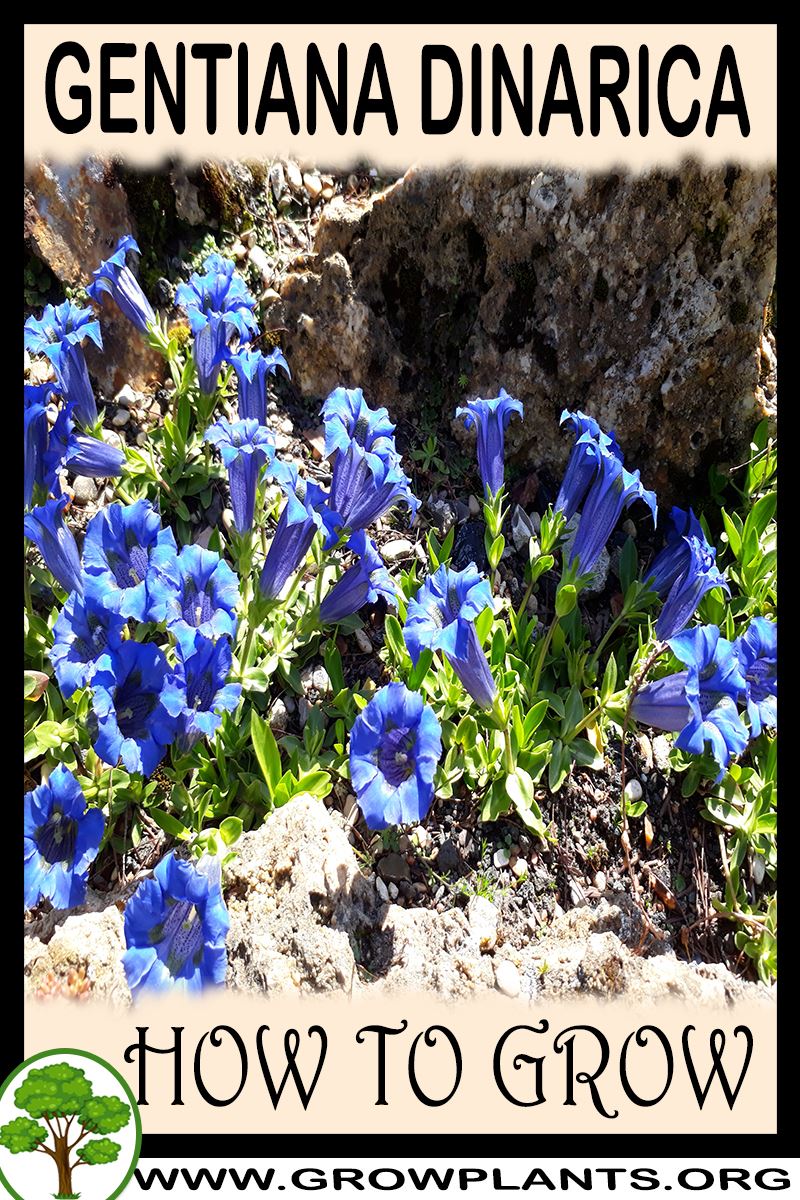
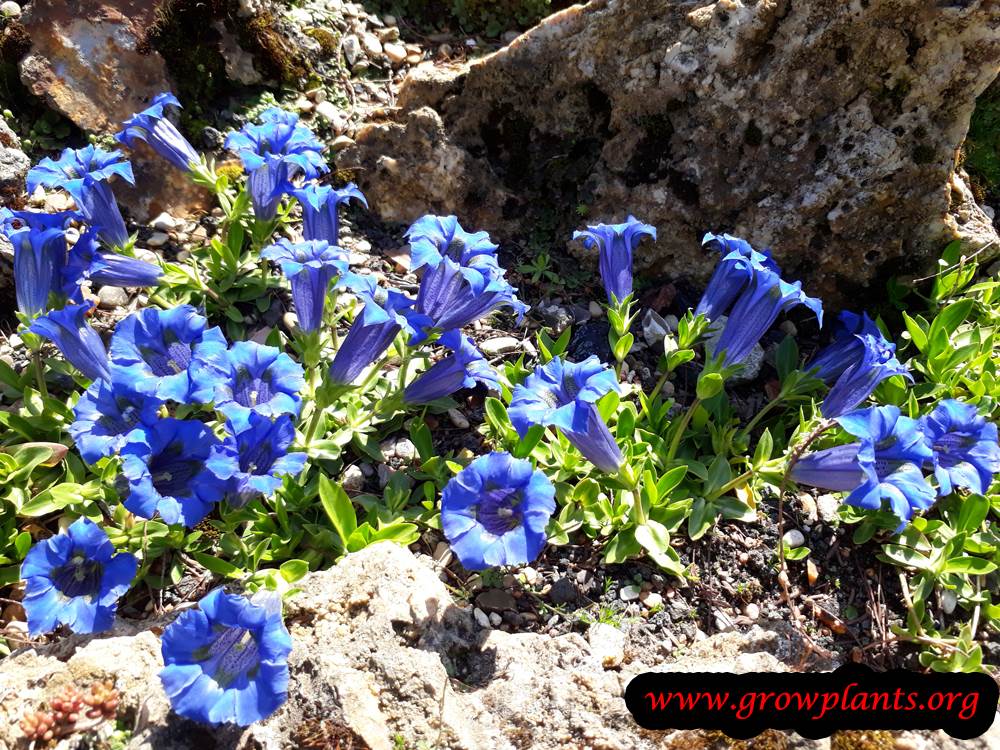
Overview: Gentiana dinarica (Dinaric gentian) is a low, evergreen alpine perennial forming a compact cushion just 2-7 cm (1-3 in) high. Grown as an ornamental rock-garden plant, it is prized for its intense blue, trumpet-shaped spring flowers.
Quick Specifications
| Specification | Attribute |
|---|---|
| Plant Type / Life Cycle | Perennial |
| Foliage Type | Evergreen |
| Mature Size | 2-7 cm (1-3 in) high |
| Growth Rate | Moderate to Fast |
| Hardiness | USDA zones 3-8 |
Growth Form & Structure
- Height & Spread: Very low cushion 2-7 cm (1-3 in) high; well-suited to troughs and alpine containers.
- Growth Habit & Form: Low, tufted, cushion-forming alpine perennial.
- Lifespan & Maturity: Long-lived alpine perennial; slow to build into cushions.
Anatomy & Physical Features
- Leaves & Foliage: Small green leaves in elliptic to linear shape forming a basal rosette/mat.
- Flower Characteristics: Solitary deep-blue trumpet-shaped flowers in spring (full detail in the Bloom guide).
Primary Uses & Landscape Value
- Functional & Ornamental Roles: Ornamental rock-garden, trough and alpine-bed plant.
Care Guide: Planting, Soil & Watering
Overview: Gentiana dinarica is a compact alpine perennial for cool temperate and rock gardens, growing in full sun to part shade. It wants a gritty, sharply drained soil that still holds steady moisture, mimicking its mountain home – good drainage combined with reliable water is the balance to strike.
Quick Care Requirements
| Requirement | Ideal Condition |
|---|---|
| Planting Season | Spring |
| Growth Rate | Moderate to fast |
| Soil Type | Gritty, well-draining, moisture-retentive |
| Water Need | Moderate to high – keep evenly moist but never waterlogged |
Planting & Establishment
- Best Planting Season: Plant in spring, as growth resumes, so it settles in over the cool growing season.
- How to Plant:
- Hole Preparation: Dig a small hole just wider than the root ball; this is a low, cushion-forming alpine that needs no deep planting.
- Soil Amendments: Work plenty of grit or coarse sand into the planting area for sharp drainage, mixed with some humus to hold moisture, giving a classic gritty alpine soil.
- Planting Depth: Set the crown at soil level, keeping the neck of the plant out of damp soil; a surface mulch of grit helps keep the collar dry.
- Growth Speed & Expectations: Growth is moderate to fast, but the plant stays very small – only a few centimetres high – forming a neat alpine tuft.
Soil, Watering & Drainage Care
- Soil Mix & Drainage Needs: Grow in a gritty, free-draining soil or alpine potting mix that stays evenly moist without becoming soggy. Sharp drainage at the crown combined with steady moisture below is the key, and a top-dressing of grit helps prevent rot.
- Watering Schedule & Technique:
- Young / Newly Planted: Keep newly planted gentians evenly moist while they establish, never letting them dry out.
- Established: Water regularly to keep the soil consistently moist through the growing season, but always in free-draining conditions so water never stagnates.
- Seasonal Adjustments: Water more in warm, dry spells and reduce in cool, wet weather; the plant needs far less water while dormant.
Climate, Light & Hardiness
Dinarica gentian is a very cold-hardy alpine perennial suited to temperate climates with cold winters. It grows best in full sun to half shade in well-drained soil, in keeping with its mountain origins.
Quick Climate Specifications
| Climate Zones | Temperate |
|---|---|
| USDA Hardiness Zones | 3–8 |
| Frost Tolerance | High |
| Light Conditions | Full Sun to Half Shade |
Sunlight & Light Exposure
Optimal Light Setup
Full sun suits it in cooler climates; half shade helps where summers are hotter.
Temperature Extremes & Hardiness
USDA Hardiness & Regional Limits
Hardy in USDA zones 3–8, tolerating severe winter cold typical of alpine and continental climates without protection.
Extreme Heat Tolerance
As an alpine species, it is better suited to cool summers than to prolonged heat.
Wind, Humidity & Microclimate
Microclimate Recommendations
A rock garden or scree-type setting that mimics its mountain habitat - cool roots, sharp drainage - suits it best.
Growing in Pots, Balconies & Indoors
Gentiana dinarica is a tiny alpine gentian, just a few centimetres high, prized for its intense blue trumpets. The grower confirms it is not a houseplant but grows well in containers, and it is a jewel for an alpine pan – as long as it is kept cool, bright and sharply drained.
Quick Details
- Container Size: A shallow alpine pan, 2-4 L, with a gritty collar – it is only 2-7 cm tall
- Indoor Suitability: Not a houseplant; an outdoor alpine for a cool, bright, gritty pot
- Best Spot: Full sun to half shade, bright and airy
- Soil & Drainage: A gritty, free-draining but moisture-retentive alpine mix
- Watering in Pots: Keep evenly moist in growth but never waterlogged; sharp drainage under a damp surface is the goal
Indoors & On the Windowsill
- Not a houseplant: The grower marks it as unsuitable indoors – alpine gentians demand cool air, strong light and gritty drainage that a warm, dim room cannot supply.
- Windowsill: A cold, very bright sill or alpine house is the nearest option; ordinary room warmth quickly kills it.
- Cool rest: It is fully hardy and needs a cold winter, so the pan stays outdoors in a bright, sheltered spot.
On a Balcony or Patio
- Light & wind: Give it a bright, airy, cool position; it likes moisture at the root but sharp drainage below, so grit is essential.
- Practicalities: A perfect subject for a raised alpine trough or scree pot where you can control the gritty, evenly-moist root run.
Choosing the Pot, Soil & Long-Term Care
- Pot & drainage: A pot with generous drainage holes and a layer of grit at the base; terracotta suits these plants because it dries quickly and the crown must never sit wet. Top-dress with grit to keep the neck dry.
- Potting mix: A gritty, free-draining alpine mix with added leaf-mould to hold a little moisture.
- Feeding: Feed sparingly – a weak balanced feed a few times in the growing season; these plants dislike rich conditions and lush, soft growth.
- Repotting: Repot every couple of years into fresh alpine mix and renew the grit collar around the neck.
Fertilizing & Feeding
A small alpine gentian grown for its blue trumpet flowers; this genus is sensitive to over-feeding, so keep nutrition light and balanced rather than pushing rich, heavy fertility.
Quick Fertilizing Specs
| Feeding Level | Light feeder |
|---|---|
| Main Nutrient Priority | Balanced feeding through spring growth and into bloom |
| Best Feeding Period | Spring growth through the flowering period |
| Organic Options | A little leaf mold or well-rotted compost worked lightly into humus-rich, well-drained soil |
| Micronutrients | Rarely an issue in humus-rich, well-drained soil; correct specific issues only when diagnosed |
| Soil pH | Prefers humus-rich, well-drained soil that stays evenly moist |
| Reduce/Stop Feeding | Stop feeding once flowering finishes and growth slows for the rest of the year |
Feeding by Growth Stage
Spring foliage growth
Support the small elliptic-to-linear leaves as this compact alpine plant breaks growth for the season.
| Nutrient direction | A light, balanced feeding to support gentle root and foliage development. |
|---|---|
| Timing | As new growth resumes in spring. |
| Frequency | A single light feeding is usually enough to start the season. |
| Fertilizer types | A balanced, light-strength complete fertilizer suited for alpine or rock-garden plants |
| Precautions | Avoid rich or salty fertilizers; this genus is notably sensitive to over-feeding and can decline in overly fertile soil. |
Spring flowering
Support the trumpet-shaped blue flowers through their spring display.
| Nutrient direction | Keep feeding light and balanced; this plant does not need extra phosphorus to flower well. |
|---|---|
| Timing | Through the spring bloom period. |
| Frequency | Feed sparingly, if at all, once buds and flowers are actively forming. |
| Fertilizer types | A balanced, light-strength complete fertilizer if growth looks thin |
| Precautions | Do not favor high-phosphorus products for bloom; keep feeding light and balanced instead. |
Rest after flowering
Let the plant settle back into a low-input rhythm once its spring bloom has finished.
| Nutrient direction | None – withhold fertilizer once flowering ends for the year. |
|---|---|
| Timing | From the end of spring bloom through summer, autumn, and winter. |
| Frequency | No feeding at this stage. |
| Fertilizer types | No feeding at this stage – resume light feeding when spring growth restarts |
| Precautions | Do not fertilize during this rest period; this alpine plant prefers consistently lean conditions outside its brief active growth and bloom window. |
Nutrient Deficiency Signs & Corrections
Foliage looks pale green to yellow and overall growth is noticeably sparse.
| Possible causes | low soil nitrogen, very lean, mineral rock-garden soil, root stress from poor drainage or compaction |
|---|---|
| Appears first on | older, lower leaves |
| What to check | soil organic matter, drainage around the crown, overall foliage density and color |
| Possible correction | Apply a light, balanced feeding and work a little leaf mold or compost into the surrounding soil. |
New leaves emerge pale yellow with the veins remaining green.
| Possible causes | high soil pH limiting iron availability, waterlogged or poorly drained soil, root damage limiting nutrient uptake |
|---|---|
| Appears first on | the newest leaves |
| What to check | soil pH, drainage quality, recent watering pattern |
| Possible correction | Correct pH toward a more favorable range or apply a chelated iron product per its label if a true deficiency is confirmed. |
The crown of the plant softens or blackens and foliage wilts despite normal or wet soil moisture.
| Possible causes | poorly drained, waterlogged soil, overwatering in heavier soils, overly rich or over-fed soil weakening this sensitive alpine plant |
|---|---|
| Appears first on | the crown and base of the plant |
| What to check | soil drainage, recent watering frequency, recent feeding history |
| Possible correction | Improve drainage, let soil dry slightly between watering, and avoid rich, over-fed soil going forward. |
Pruning, Training & Seasonal Maintenance
Gentiana dinarica is a tiny, cushion-forming alpine perennial only 2–7 cm tall, grown for its blue trumpet flowers. At this scale there is essentially no pruning to do – maintenance is limited to a light autumn/winter groom to remove spent flowers and any dead foliage, purely for neatness. No cutting affects flower production, since blooms arise fresh from the crown each spring.
Quick Pruning & Maintenance Specs
| Pruning Tolerance | Low (grooming only) |
| Primary Pruning Window | Autumn to winter, after flowering has finished |
| Typical Frequency | Once a year |
| Main Objective | Tidy the cushion; remove spent flowers and dead leaves |
| Best Tool Type | Precision snips |
Pruning by Plant Age & Size
Newly Established
Leave undisturbed; do not groom until the tiny cushion is well rooted.
Young / Formative
No training applies to a plant this size – it forms its own dense mat.
Mature / Established
An annual light groom in autumn/winter to remove spent flowers and any dead leaf material is all that is needed.
Special Growth to Remove
- Spent flower stems after bloom.
- Any dead or browned foliage within the cushion.
Tools
- Precision snips – the only practical tool at this scale; scissors-style snips avoid crushing the tiny cushion.
Tool Hygiene & Disease Risk
Routine: no notable disease risk noted for this species; clean tools are sufficient.
Cut Placement & Technique
Snip spent flower stalks individually at their base rather than shearing across the cushion, which can uproot or crush the shallow, tightly packed growth.
When NOT to Prune
Avoid any grooming during spring flowering, and avoid disturbing a newly planted or newly divided cushion until it is established.
Recommended Tools (by task)
- Established plants, removing spent flowers/dead leaf → precision_snips – the only cut this miniature alpine needs.
Propagation Guide
This alpine gentian is propagated from seed, as the site’s own facts indicate, since its fine, cushion-forming growth does not lend itself to reliable division. Seed germination in this genus is often slow and irregular, so overall difficulty is best described as moderate rather than easy, even though seed is the standard and only practical route.
Quick Propagation Specs
| Best Propagation Method | Seed |
| Propagation Difficulty | Moderate |
| Seed True-to-Type | Usually true-to-type |
| Best Propagation Season | Autumn sowing (for natural winter chilling), with young plants ready to set out in Spring |
| Seed Germination Time | Slow and can be erratic, sometimes not appearing until the following season |
| Germination Temperature | Cool, roughly 5–15°C (41–59°F) |
| Seed Sowing Depth | Surface-sown or barely covered — the seed is very fine |
Growing from Seed
Seed Handling & Viability
Seed is dust-fine and germinates more reliably when reasonably fresh, as viability can decline with prolonged storage.
Dormancy & Pre-Sowing Treatment
Many gentians have a cold-temperature dormancy requirement. Sowing in autumn and leaving the pots outdoors or in a cold frame over winter gives the seed a natural period of cold, moist stratification that commonly improves and evens out germination.
Sowing Season
Autumn is favoured for this natural chilling effect; seedlings raised this way are typically ready to plant out in spring, matching the site’s stated spring planting season.
Sowing Depth & Orientation
Sow on the surface or barely cover, since this fine seed germinates best with light exposure.
Germination Conditions
Cool and consistently moist, never waterlogged.
Germination Time
Can be slow and uneven, sometimes taking several months or spanning more than one growing season — do not discard pots too early.
Seedling Care
Seedlings are tiny and slow to start; keep evenly moist, shield from strong direct sun while very small, and pot on gently once true leaves develop.
Bloom & Flower Guide
Quick Details
- Bloom Season: Spring, sometimes into early summer
- Time to First Bloom: Established plants flower each spring
- Flower Appearance: Large, upward-facing trumpets in intense deep blue
- Edibility: Grown as an ornamental – the flowers are not eaten
Detailed Blooming Overview
Dinaric gentian is grown for one of the purest blues in the plant world. Solitary trumpet flowers open upward, large in proportion to the low tuft of leaves, and glow against the foliage in the spring rock garden. It needs gritty, well-drained soil to thrive.
Flower Characteristics
- Upward-facing, trumpet-shaped flowers in a vivid deep blue.
- Carried singly on short stems over a low rosette of narrow leaves.
Bloom Care & Thinning
- Encouraging bloom: Give it sun and sharp, gritty drainage; it resents sitting wet.
- Pollination: The deep trumpets are worked by bees.
Pests, Diseases & Troubleshooting
Overview: Gentiana dinarica is an alpine gentian, and like most rock-garden gentians its troubles are more about growing conditions than pests: sharp drainage and a cool, un-baked root run are everything, and crown or root rot from wet, stagnant soil is the usual cause of death. The main creatures to watch are slugs and snails on the soft cushions and aphids, plus vine weevil in pots; gentian rust is the notable disease. Get the drainage and aspect right and it is otherwise resilient.
Quick Troubleshooting Overview
| Issue / Pest | Main Symptom | Primary Solution |
|---|---|---|
| Slugs & snails | Rasped, shredded cushions and new shoots | Hand-pick at night; grit/copper barriers; bait |
| Aphids | Sticky, distorted shoot tips | Hose off, predators, insecticidal soap |
| Vine weevil | Notched leaves; grubs eat roots (in pots) | Nematodes; check rootball; barriers |
| Gentian rust | Orange-brown pustules on leaves | Remove affected leaves; airflow; avoid wet foliage |
| Crown/root rot | Collapse from wet, stagnant soil | Sharp drainage; gritty top-dressing; don’t overwater |
| Chlorosis | Yellowing leaves (soil-pH mismatch) | Match soil pH to species; verify lime tolerance |
Common Pests & Management
- Slugs & snails (Gastropoda):
- Symptoms: The main pest of alpine gentians: the low, soft cushions and emerging shoots are rasped, shredded and holed, with slime trails, especially in mild, damp weather and among rockwork crevices where they shelter.
- Prevention & Control: Hand-pick at night by torchlight and clear hiding places among stones and debris. Surround plants with sharp grit or a copper barrier, and use wool pellets or iron-phosphate bait, which is safe around wildlife. A gritty top-dressing both deters slugs and keeps the crown dry.
- Aphids (Aphididae):
- Symptoms: Soft green or black insects clustering on tender new shoots and flower stems, causing distortion, honeydew and weakening of the small plants.
- Prevention & Control: Hose off gently, encourage ladybirds, lacewings and hoverflies, and rub out small colonies by hand. Insecticidal soap or a dilute neem spray clears heavier infestations; use sparingly on delicate alpine foliage.
- Vine weevil (Otiorhynchus sulcatus):
- Symptoms: Chiefly a problem for pot-grown and trough alpines: adults notch leaf margins, while white C-shaped grubs eat the roots, causing sudden wilting and collapse of an apparently healthy plant.
- Prevention & Control: Check the rootball at potting, water in pathogenic nematodes into warm, moist compost to kill grubs, and remove leaf-litter hiding places. Trap or hand-collect adults at night; a gritty top-dressing and pot barriers help.
- Root aphids (Pemphigus / Trama spp.):
- Symptoms: Waxy, whitish aphids on the roots and at the crown of container and trough plants, causing unexplained loss of vigour, yellowing and poor growth.
- Prevention & Control: Inspect roots when repotting; wash off soil and drench with a soap solution or repot into fresh gritty compost. Keep plants vigorous and avoid reusing infested compost.
Diseases & Fungal Issues
- Crown & root rot (Pythium, Phytophthora, Rhizoctonia):
- Symptoms: The chief killer: the crown or roots turn soft, brown and mushy and the plant collapses, caused by wet, stagnant, poorly drained soil, water sitting in the crown, or a warm, humid, airless position.
- Treatment & Management: Prevention is everything – grow in very free-draining, gritty alpine soil, top-dress with grit or stone chippings to keep the collar dry, and give an open, airy site with cool roots. Water carefully and never let the crown stay wet. Remove rotted plants; there is no reliable cure once the crown collapses.
- Gentian rust (Puccinia gentianae):
- Symptoms: Orange to rusty-brown powdery pustules on leaves and stems, with yellowing above, in damp, humid conditions; heavy infection disfigures and weakens the plant.
- Treatment & Management: Remove and destroy infected leaves promptly, improve air circulation, and avoid overhead watering and crowding. Clear debris each season. Sulfur fungicide checks persistent rust; airy, well-drained sites rarely see it.
- Botrytis & leaf spot (Botrytis cinerea, fungal leaf spots):
- Symptoms: Grey fuzzy mould on damaged or crowded tissue in cool, damp, still air (Botrytis), or brown fungal leaf spots in wet spells, causing rot and dieback of the cushions.
- Treatment & Management: Improve airflow, remove affected tissue, keep foliage and crown dry, and avoid overcrowding. Good ventilation and a gritty, dry collar usually prevent it without chemicals.
Growing Difficulties & Abiotic Problems
- Crown rot from poor drainage & heat:
- Cause & Symptoms: Alpine gentians resent warm, wet, stagnant conditions at the root and crown; heavy soil, overwatering, or a hot, airless lowland position causes the crown to rot and the plant to melt away in summer.
- Correction Strategy: Provide gritty, sharply drained soil, a cool but sunny aspect, and a grit or stone-chip collar. Keep roots cool (a north slope, rock crevice or trough is ideal) and never waterlog. In hot climates give afternoon shade and excellent air movement.
- Soil-pH mismatch & chlorosis:
- Cause & Symptoms: Gentian species differ sharply in soil chemistry – some (like the autumn Asian gentians) demand acid soil and yellow badly on lime, while others (including several European alpines such as this) tolerate or prefer limestone. Getting it wrong causes chlorosis and decline.
- Correction Strategy: Match the soil to the species: verify this gentian’s lime tolerance (many silver/spring alpine gentians are calcicole/lime-tolerant, unlike the acid-loving G. sino-ornata group), and set the pH accordingly. Correct chlorosis with the appropriate feed once the pH is right.
- Establishment sulk & drought:
- Cause & Symptoms: Gentians resent root disturbance and can be slow to settle; they also need consistent cool moisture in growth and will brown and fail if baked dry.
- Correction Strategy: Plant young, pot-grown specimens, disturb roots minimally, and keep the root run cool and evenly (not excessively) moist through the growing season while maintaining sharp surface drainage.
What Helps – Products & Tools
Slug and snail control leads here – iron-phosphate bait, copper barriers, wool pellets and a sharp grit top-dressing. Keep insecticidal soap and neem for aphids, and pathogenic nematodes for vine-weevil grubs in pots. Sulfur fungicide addresses gentian rust, and good ventilation curbs Botrytis. The most important ‘tools’, though, are gritty free-draining soil, stone-chip mulch and correct soil pH for the species. Follow the label and spray oils in the evening to protect pollinators.