Plant Profile & Key Characteristics
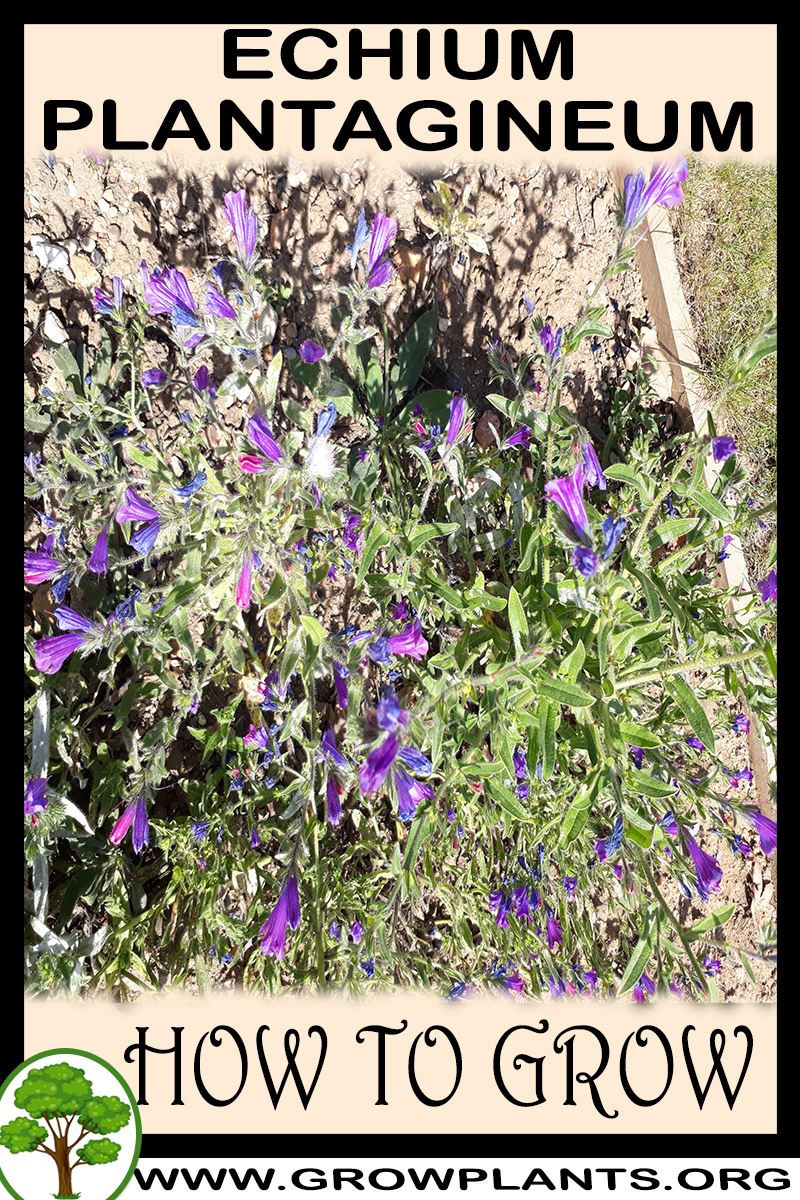
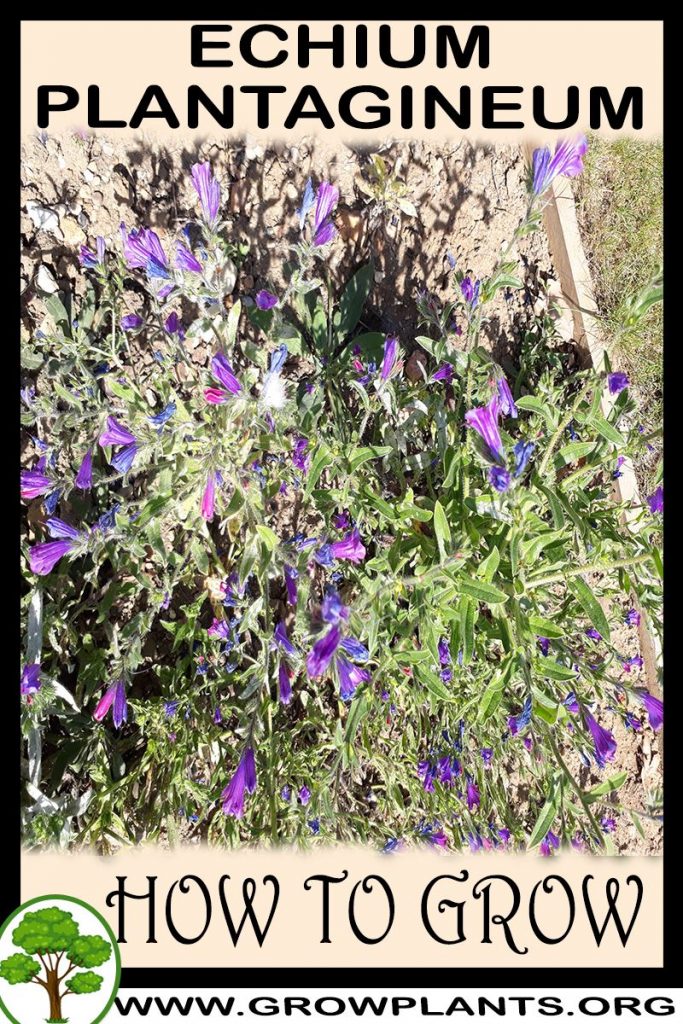
Overview: A low, hairy-leaved Echium (Purple viper’s-bugloss, also called Paterson’s curse) reaching about 20-50 cm, with spikes of purple to blue flowers. It is grown as an ornamental and pollinator plant, though it is a well-known toxic and invasive weed in many regions.
Quick Specifications
| Specification | Attribute |
|---|---|
| Plant Type / Life Cycle | Annual to biennial (commonly; the source lists it as perennial) |
| Foliage Type | Evergreen in mild climates |
| Mature Size | 20-50 cm tall (8-20 in) |
| Growth Rate | Moderate to fast |
| Toxicity | Contains pyrrolizidine alkaloids; poisonous to livestock and not for consumption |
| Hardiness | USDA 9-11a |
Growth Form & Structure
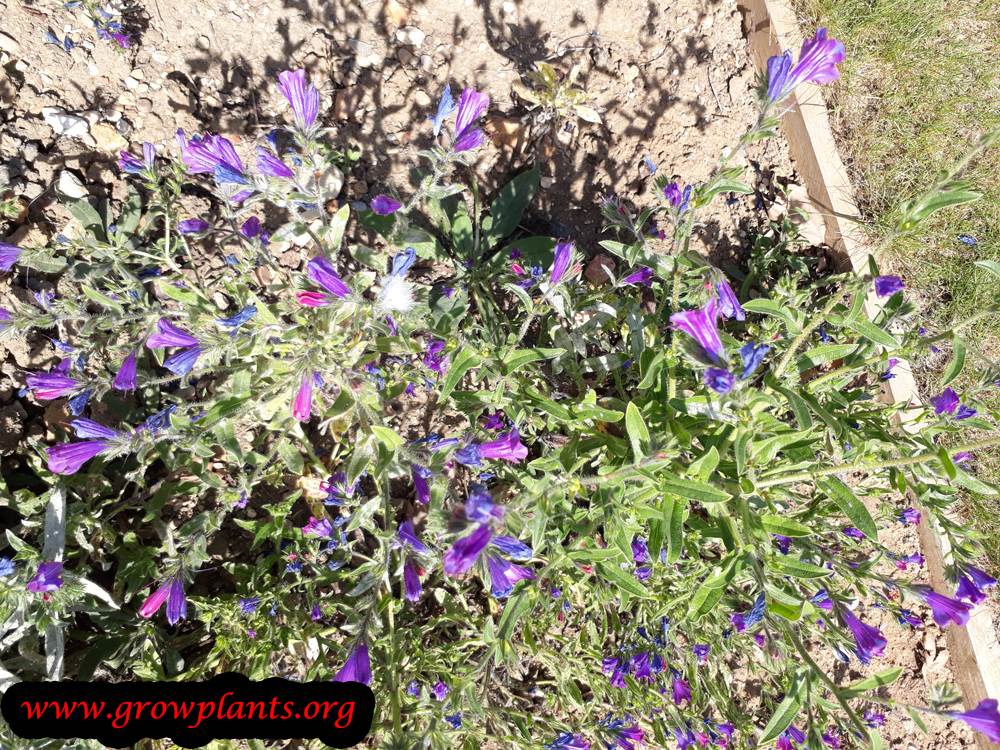
- Height & Spread: Low, spreading plant 20-50 cm (8-20 in) tall; also grown in containers.
- Growth Habit & Form: Low, bristly-hairy plant with branching stems bearing short flower spikes.
- Lifespan & Maturity: Fast to flower and typically short-lived (annual to biennial), self-seeding freely.
Anatomy & Physical Features
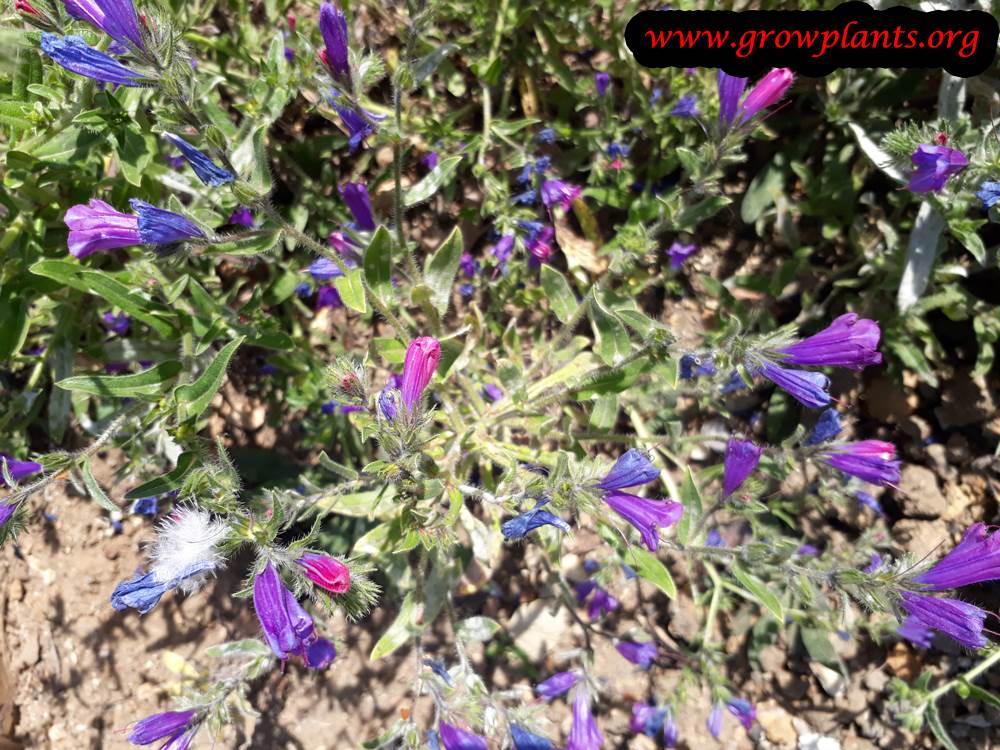
- Leaves & Foliage: Green, hairy, elliptic leaves in whorled, digitate rosettes.
- Flower Characteristics: Small purple to blue flowers on short spike-like inflorescences that attract pollinators.
Primary Uses & Landscape Value
- Functional & Ornamental Roles: Ornamental and pollinator plant; note it is an aggressive, toxic weed (Paterson’s curse) where naturalised, so it should be sited with care.
Care Guide: Planting, Soil & Watering
Overview: Echium plantagineum (purple viper’s-bugloss) is a fast-growing Mediterranean shrub that thrives in full sun and well-drained soil and needs a frost-free spot. Once established it is drought tolerant and needs only occasional watering.
Quick Care Requirements
| Requirement | Ideal Condition |
|---|---|
| Planting Season | In the warm season — spring through autumn |
| Growth Rate | Moderate to Fast |
| Soil Type | Well-draining; tolerates poor, dry soil |
| Water Need | Low to Moderate — drought tolerant once established |
Planting & Establishment
- Best Planting Season: Plant from spring through autumn, in a frost-free, sunny to lightly shaded position.
- How to Plant:
- Hole Preparation: Dig a hole a little wider than the root ball in a sunny, sheltered, free-draining spot.
- Soil Amendments: Improve heavy soil with grit for drainage; it doesn’t need rich soil and can become invasive in ideal conditions, so avoid over-feeding.
- Planting Depth: Set the crown level with the soil surface.
- Growth Speed & Expectations: Fast to moderate; it can quickly reach 20–50 cm.
Soil, Watering & Drainage Care
- Soil Mix & Drainage Needs: Wants sharply drained soil; good drainage plus a frost-free site are key. It also suits large containers with a free-draining mix.
- Watering Schedule & Technique:
- Young / Newly Planted: Water regularly while establishing.
- Established: Water sparingly — it tolerates drought and prefers to dry between waterings.
- Seasonal Adjustments: Little water in cool, wet weather; occasional deep watering in summer heat.
Climate, Light & Hardiness
This Mediterranean-basin wildflower/shrub thrives in full sun to half shade across mediterranean, desert, and subtropical climates, and needs essentially frost-free conditions per site data.
Quick Climate Specifications
| Climate Zones | Mediterranean, Desert, Subtropical |
|---|---|
| USDA Hardiness Zones | 9–11a |
| Frost Tolerance | Low |
| Light Conditions | Full Sun to Half Shade |
Sunlight & Light Exposure
Optimal Light Setup
Full sun to half shade; full sun gives the best flowering display and most compact growth.
Direct Sun Requirement
Benefits from good direct sun for reliable bloom.
Shade & Heat Management
Tolerates Mediterranean and desert-fringe summer heat well.
Best Exposure / Orientation
An open, sunny bank or hedgerow-type planting suits its self-seeding habit.
Temperature Extremes & Hardiness
USDA Hardiness & Regional Limits
Site data lists zones 9–11a and specifically notes it needs frost-free conditions.
Cold Damage & Winter Protection
Frost sensitive; not suited to regions with regular winter freezes.
Frost Sensitivity
Sensitive to frost; protect or treat as an annual/reseeding plant outside its warm-climate range.
Extreme Heat Tolerance
Good; well adapted to hot, dry Mediterranean and desert-fringe summers.
Wind, Humidity & Microclimate
Humidity Preferences
Prefers the drier air typical of Mediterranean and desert-fringe climates.
Dry-Air Tolerance
Good.
Rainfall & Seasonal Moisture
Tolerates seasonal dry spells once established, typical of a Mediterranean wet-winter/dry-summer rainfall pattern.
Growing in Pots, Balconies & Indoors
Echium plantagineum is a sun-loving annual/biennial. The grower confirms it is not a houseplant but grows well in containers, so treat it as a bright-sill or patio plant. Note it is toxic if eaten – keep it away from children and pets.
Quick Details
- Container Size: 5-10 L – it is a modest 20-50 cm plant
- Indoor Suitability: Not a houseplant; a compact plant can grow on a very bright, sunny windowsill
- Best Spot: Full sun with some shade tolerance – the sunniest spot you have
- Soil & Drainage: Free-draining, aerated potting mix; it prefers lean, dry conditions
- Watering in Pots: Water moderately and let the surface dry between waterings – it dislikes soggy roots
Indoors & On the Windowsill
- Not a houseplant: The grower marks it as unsuitable for growing indoors – away from a window it gets far too little light and grows weak and leggy.
- Windowsill: The sunniest sill you have, with direct sun, is the only realistic indoor spot; even then it wants all the light it can get.
- Safety: The plant is toxic if eaten, so keep pots out of reach of children and pets.
On a Balcony or Patio
- Light & wind: Give it the hottest, sunniest position; it enjoys heat and copes with lean, dry soil, but pots against warm walls dry quickly, so check moisture.
- Practicalities: An easy patio filler for pollinators; let runoff drain freely and avoid overwatering.
Choosing the Pot, Soil & Long-Term Care
- Pot & drainage: A pot with strong drainage holes; skip a standing-water saucer, which invites root rot. Terracotta breathes and dries faster (good for plants that hate wet feet); glazed or plastic pots hold moisture longer.
- Potting mix: Well-aerated potting mix – a peat-free or peat/coir blend opened up with perlite or vermiculite.
- Feeding: Feed sparingly – a weak balanced feed a few times in the growing season; these plants dislike rich conditions and lush, soft growth.
- Repotting: Refresh the top of the mix each year and pot on or divide every couple of years, lightly trimming roots and old growth to keep it vigorous.
Fertilizing & Feeding
Echium plantagineum is a lean, drought-tolerant mediterranean-climate plant that flowers well on light feeding alone and can become floppy or overly vigorous if overfed.
Quick Fertilizing Specs
| Feeding Level | Light – a drought-tolerant, self-seeding plant that thrives on lean soil. |
|---|---|
| Main Nutrient Priority | Balanced, light feeding rather than a high-phosphorus bloom product. |
| Best Feeding Period | Early in the growing season, tapering off once flower spikes begin to form. |
| Soil pH | Tolerant of a range of well-drained soils; no special pH adjustment is typically needed. |
| Reduce/Stop Feeding | Stop feeding once the flower spikes are cut back after bloom. |
Feeding by Growth Stage
Spring Growth
Support leafy growth as this mediterranean-climate plant breaks into active growth ahead of its flower spikes.
| Nutrient direction | Keep feeding light; this drought-tolerant plant grows vigorously on its own in lean, well-drained soil and does not need rich fertilizer. |
|---|---|
| Timing | Early in the growing season as new leaf rosettes and stems develop. |
| Frequency | A light feeding at most is usually enough, and many plantings in average garden soil need none. |
| Fertilizer types | A light, balanced fertilizer only if the soil is notably poor, Well-drained garden soil with modest organic matter is typically sufficient on its own |
| Precautions | Avoid rich or high-nitrogen feeding, which can produce lush, floppy growth in a plant naturally suited to lean soils and can worsen its tendency to self-seed aggressively. |
Flower Spike Bloom
Support the purple-blue flower spikes that attract pollinators through the bloom period.
| Nutrient direction | Balanced, light feeding is enough – skip high-phosphorus bloom booster products, which are not what actually drives flowering here. |
|---|---|
| Timing | During the spring-to-summer bloom period when flower spikes are forming and opening. |
| Frequency | Light, occasional feeding at most; overfeeding tends to produce foliage at the expense of the flower spikes pollinators seek out. |
| Fertilizer types | A light, balanced fertilizer if needed, Organic compost worked into the bed ahead of the bloom period |
| Precautions | Cutting spent flower spikes after bloom, or before seed set given this plant’s self-seeding tendency, matters more for tidy growth than additional fertilizer. |
Post-Bloom Rest
Let the plant rest after flower spikes are cut back, particularly through hot, dry summer conditions typical of its native climate.
| Nutrient direction | None – withhold fertilizer once flowering finishes and spikes are cut back. |
|---|---|
| Timing | After the flower spikes are cut back, through the hottest, driest part of the season and into winter. |
| Frequency | No feeding at this stage. |
| Fertilizer types | No feeding is appropriate once flowering finishes for the season. |
| Precautions | Do not fertilize during this rest period; resume light feeding only once new spring growth resumes. |
Nutrient Deficiency Signs & Corrections
Overall pale leaf color and slower-than-typical growth.
| Possible causes | Very low soil fertility with no organic matter, Excess irrigation reducing root efficiency in this drought-adapted plant, Root competition in a crowded bed |
|---|---|
| Appears first on | Older leaves first |
| What to check | Soil fertility and organic matter content, Watering frequency relative to this plant’s drought tolerance, Crowding from neighboring plants |
| Possible correction | Apply a light, balanced fertilizer only after ruling out overwatering as the likelier cause of pale growth in this drought-tolerant species. |
New leaves emerge yellowish while the veins stay green.
| Possible causes | Alkaline soil limiting iron availability, Waterlogged or compacted soil restricting root function, Recent transplant stress |
|---|---|
| Appears first on | Newest leaves first |
| What to check | Soil pH and drainage, Recent planting or transplant history, General root condition |
| Possible correction | Improve drainage and confirm soil is not excessively alkaline; apply a chelated iron product per its label only if true chlorosis is confirmed. |
Wilting, yellowing, or stem softening despite regular watering.
| Possible causes | Soil staying too wet for this drought-adapted plant’s roots, Poor drainage leading to root rot rather than a nutrient shortage, Overwatering in an attempt to correct unrelated stress symptoms |
|---|---|
| Appears first on | Base of the plant and lower stems |
| What to check | Watering frequency and site drainage, Root and crown firmness for signs of rot, Whether recent watering has increased in response to stress symptoms |
| Possible correction | Reduce watering and confirm the site drains well; this pattern is usually a water-management issue rather than a fertility one. |
Pruning, Training & Seasonal Maintenance
Echium plantagineum is a fast-growing, shrubby herbaceous perennial that tolerates moderate cutting. The main job is removing spent flower spikes after bloom – this tidies the plant, encourages a bushier habit, and, since this species is noted as invasive and self-seeds readily, prevents the huge quantities of seed a spent spike can drop. Cutting back does not sacrifice next year’s flowers, since new spikes are produced from fresh growth each season, but hard cuts into old bare stems should be avoided as this species regenerates poorly from leafless wood.
Quick Pruning & Maintenance Specs
| Pruning Tolerance | Moderate – cuts into green growth heal well; old bare wood does not reshoot reliably |
| Primary Pruning Window | After bloom, before seed shatters |
| Secondary Maintenance Window | Autumn/Winter light shaping and frost-damage cleanup |
| Typical Frequency | Deadhead through the Spring/Summer bloom; one light shape in Autumn/Winter |
| Main Objective | Prolong bloom, keep a compact mounded habit, and stop unwanted self-seeding |
| Young Plant Priority | Pinch tips to build a bushy base |
| Mature Plant Priority | Remove spent spikes at the base; light shape to prevent legginess |
| Best Tool Type | Bypass secateurs / precision snips |
| Avoid Heavy Pruning During | Hot, dry summer stress; do not cut into bare old wood expecting regrowth |
Pruning by Plant Age & Size
Newly Established
Minimal – remove only damaged growth while the plant establishes; pinching the growing tip once can encourage a bushier base.
Young / Formative
No formal training system; light tip-pinching on young plants encourages branching and a fuller, more floriferous shape rather than a single tall stem.
Mature / Established
Remove spent flower spikes at their base throughout the bloom season; in Autumn/Winter, lightly shape and remove any leggy or frost-damaged growth, cutting only into green stem tissue.
Seasonal Pruning Schedule
Post-Flowering
Objective: prevent seed drop from this invasive-prone species and encourage further flowering. Remove: spent flowering spikes, cut at their base above the basal foliage. Do not remove: healthy basal leaves. Expected response: repeat flowering and a tidier habit. Flowering impact: positive.
Dormant/Winter
Objective: light shaping and cleanup. Remove: frost-nipped or leggy green growth. Do not remove: cut into bare, leafless old wood – this species regenerates poorly from it. Expected response: fresh growth from remaining green stems in spring. Flowering impact: neutral if kept to green growth.
Flowering & Fruiting Wood
Flowers form in terminal spikes on the current season’s growth, so removing a spent spike does not remove next year’s bloom – a fresh spike simply forms on the next flush of growth. The concern is timing removal before seed matures and shatters, given this species’s noted invasiveness.
Special Growth to Remove
- Spent flower spikes/seed heads – removing these before seed shatters is the single most effective way to limit unwanted self-seeding of this invasive-prone species; dispose of cut spikes rather than leaving them on the ground.
- Frost-damaged or winter-nipped stem tips.
- Leggy, unproductive stems at the base of older plants.
Container & Small-Space Pruning
Grows well in a container. Deadhead diligently to prevent it setting seed into surrounding beds, and pinch/shape regularly to keep a compact, non-leggy form in the smaller root run.
Tools
Bypass secateurs or precision snips for spike and stem removal; where grown as an informal flowering hedge/border mass, a light overall trim with hedge shears can be used on the soft outer growth only – never sheared hard into old wood.
Tool Hygiene & Disease Risk
Routine. Its known problems (whitefly, aphids, spider mite) are not tool-transmitted; clean, sharp tools are sufficient.
Cut Placement & Technique
Cut spent spikes at their base, just above the basal rosette. When shaping, cut back into green stem tissue only – never into bare, leafless wood, which this species does not reliably resprout from.
Heavy Pruning & Rejuvenation
Not reliably tolerated. Hard cutback into old bare wood often fails to reshoot. If a plant becomes very leggy or woody at the base, it is generally more successful to propagate a replacement from seed or cuttings than to try to rejuvenate the old plant.
Post-Pruning Care
Water moderately as usual (this is a low-to-average water plant); after any cutting, watch for whitefly, aphids and spider mite, which this species is prone to, especially on stressed regrowth.
Common Pruning Mistakes
- Leaving spent flower spikes to set and shatter seed, worsening this species’s tendency to spread as a weed.
- Cutting hard into old bare wood expecting it to resprout.
- Shearing the whole plant hard in summer heat/drought stress.
When NOT to Prune
Avoid hard pruning during hot, dry summer stress, and avoid cutting into bare old wood at any time of year.
Recommended Tools (by task)
- bypass_secateurs – clean cuts through spent spikes and semi-woody stems.
- precision_snips – fine deadheading and tip-pinching on young growth.
Propagation Guide
Echium plantagineum grows most easily from seed, which it sets and self-sows so freely that the site itself flags this plant as invasive, so deadheading spent flower spikes before seed drops is worth doing where spread needs to be controlled. Short stem cuttings will also root and are a useful way to increase a particular selected plant true to type; propagation is easy by either method.
Quick Propagation Specs
| Best Propagation Method | Seed |
| Alternative Methods | Stem cuttings |
| Propagation Difficulty | Easy |
| Seed True-to-Type | Usually true-to-type |
| Vegetative True-to-Type | Yes |
| Best Propagation Season | Sow seed spring through autumn; take cuttings in spring or summer |
| Seed Germination Time | Typically within a couple of weeks under warm conditions |
| Cutting Rooting Time | Generally a few weeks under warm conditions |
| Germination Temperature | 18–22°C (64–72°F) |
| Seed Sowing Depth | Shallow, lightly covered |
Growing from Seed
Seed Handling & Viability
Seed forms freely after flowering; because this plant self-sows readily enough to be considered invasive, collect and sow only the seed you actually want, and deadhead the rest as the site’s own pruning notes recommend (cutting the spike after bloom, or after seed set, to control spread).
Sowing Season
Spring through autumn, matching the plant’s general planting window.
Sowing Depth & Orientation
Sow shallow, lightly covered.
Germination Conditions
A warm, sunny, free-draining position reflecting this plant’s mediterranean and desert origins; avoid waterlogged soil.
Germination Time
Typically germinates within a couple of weeks under warm conditions.
Seedling Care
Thin or space seedlings as this species grows quickly; once rooted, plants tolerate poor, dry soils well.
Stem Cuttings
Cutting Type
Short stem-tip cuttings from non-flowering shoots.
Best Timing
Spring to summer, during active growth.
Cutting Preparation
Take firm, young, non-flowering shoot tips; remove the lower leaves.
Rooting Setup
A free-draining propagation mix, matching this plant’s preference for well-drained, frost-free conditions.
Rooting Hormone
Optional; not essential for this fast-growing species.
Rooting Time
Cuttings generally root within a few weeks under warm conditions.
Bloom & Flower Guide
Quick Details
- Bloom Season: Spring to summer
- Flower Appearance: Small purple-to-blue funnel-shaped flowers along one-sided spikes, opening in succession; very attractive to bees
- Edibility: Toxic – not for eating; the plant contains pyrrolizidine alkaloids (liver toxins) and is a serious poison to grazing livestock
Detailed Blooming Overview
Purple viper’s-bugloss is a magnet for bees and a long, showy bloomer, its blue-to-purple flowers opening in succession along curving spikes. It is also known as “Paterson’s curse,” a reminder that it carries hepatotoxic alkaloids – so enjoy it in the garden, not on the plate.
Flower Characteristics
- Small blue-to-purple funnel flowers borne on one-sided spikes; excellent for pollinators.
Bloom Care & Thinning
- Managing spread: Deadhead or cut back before it seeds heavily – it self-sows aggressively and is a weed in some regions.
- Safety: Keep it away from grazing animals; do not consume any part.
Pests, Diseases & Troubleshooting
Echiums are tough, drought-loving, often short-lived borage relatives whose bristly, hairy foliage deters many grazers, so they are usually pest-resistant. Their real weakness is root and crown rot in wet or heavy soil, with a few sap-suckers appearing under stress or protected cultivation. Known as Paterson’s curse or salvation Jane, this annual/biennial is a vigorous self-seeder and an invasive weed in some regions; note that its foliage is toxic (pyrrolizidine alkaloids) to grazing livestock. Grow them lean, sunny, and sharply drained, handle with gloves, and they need little else.
Quick Troubleshooting Overview
| Issue / Pest | Main Symptom | Primary Solution |
|---|---|---|
| Root / crown rot | Wilting, blackened base in wet or heavy soil | Sharp drainage; avoid overwatering; do not mulch the crown |
| Aphids | Colonies on soft new shoots and flower spikes | Water jet; insecticidal soap; predators |
| Whitefly (under glass) | White flies rising from leaf undersides; honeydew | Sticky traps; soap/oil on undersides |
| Spider mites | Fine stippling in hot, dry or indoor air | Raise humidity; horticultural oil or soap |
| Powdery mildew | White dusty coating in humid, crowded air | Space and thin; sulfur or potassium bicarbonate |
| Bristly foliage irritation | Skin itch/rash from handling hairy leaves | Wear gloves and long sleeves when handling |
Common Pests & Management
- Aphids (Aphis, Macrosiphum spp.):
- Symptoms: The most likely insect, clustering on soft new growth and the developing flower spikes to suck sap, leaving honeydew and sooty mould and sometimes distorting shoots; ants attend them.
- Prevention & Control: Dislodge with a firm water jet and treat persistent colonies with insecticidal soap. Echiums are outstanding bee plants, so protect pollinators by relying on natural enemies and avoiding broad-spectrum insecticides; hoverflies and ladybirds usually keep aphids in check.
- Whitefly (Trialeurodes vaporariorum):
- Symptoms: Mainly a problem on plants grown under glass or as protected young stock: tiny white flies rise in a cloud when foliage is disturbed and their nymphs suck sap on leaf undersides, causing yellowing, honeydew, and sooty mould.
- Prevention & Control: Hang yellow sticky traps to monitor and reduce adults, spray insecticidal soap or horticultural oil onto the leaf undersides, and use the parasitic wasp Encarsia formosa in greenhouses. Good ventilation reduces pressure.
- Spider mites (Tetranychus urticae):
- Symptoms: In hot, dry, or indoor conditions the foliage develops a fine pale stippling and dull, bronzed look, with mites and fine webbing on the undersides.
- Prevention & Control: Raise humidity and airflow, rinse the plant, and spray insecticidal soap or a light horticultural oil to the undersides, repeating to break the cycle. Well-watered, unstressed plants resist mites better.
- Slugs & snails (Deroceras spp.):
- Symptoms: Chiefly a threat to seedlings and soft young plants, which they can shred overnight, leaving holes and slime; established bristly plants are largely left alone.
- Prevention & Control: Protect young plants with grit or diatomaceous-earth rings, hand-pick after dark, and use iron-phosphate bait where pressure is high. Older, hairy growth needs little protection.
Diseases & Fungal Issues
- Root & crown rot (Phytophthora, Pythium spp.):
- Symptoms: The chief killer. In wet, heavy, or poorly drained soil, or from overwatering, the roots and crown blacken and rot and the plant wilts and collapses, often after a wet winter; frost-damaged tissue rots too.
- Treatment & Management: Plant in sharply drained, even gritty, soil in full sun, avoid overwatering and winter wet, and never pile mulch against the crown. On heavy ground use raised beds or a slope; a rotted crown cannot be saved, so prevention through drainage is everything.
- Powdery mildew (Erysiphe spp.):
- Symptoms: In humid, still, crowded conditions a white powdery coating develops on the leaves, dulling and distorting them, particularly on soft or shaded growth.
- Treatment & Management: Improve spacing, sun, and airflow and avoid overhead watering late in the day. Sulfur or potassium-bicarbonate sprays control mild cases; remove badly affected leaves.
- Botrytis / grey mould (Botrytis cinerea):
- Symptoms: In cool, damp weather grey fuzzy mould rots spent flower spikes, damaged shoots, and soft growth, spreading into healthy tissue.
- Treatment & Management: Remove faded flower spikes and dead material promptly, improve airflow, and avoid overhead watering. Reduce humidity around protected plants; fungicide is rarely needed with good hygiene.
Growing Difficulties & Abiotic Problems
- Wet feet & frost tenderness:
- Cause & Symptoms: Echiums resent waterlogging and, in the tender species, are damaged or killed by frost, with cold-wet conditions being the classic path to fatal rot.
- Correction Strategy: Give free-draining soil and a warm, sunny, sheltered spot; protect tender types such as pride of Madeira from frost and keep them on the dry side in winter. Excellent drainage is the priority.
- Short-lived / monocarpic habit:
- Cause & Symptoms: Many echiums are short-lived or effectively monocarpic, growing vegetatively then flowering spectacularly and declining afterward, which can be mistaken for disease.
- Correction Strategy: Expect the natural cycle, let plants self-seed or collect seed to replace them, and do not over-nurse a plant that is simply completing its life cycle.
- Bristly-foliage skin irritation:
- Cause & Symptoms: The coarse, hairy (hispid) leaves and stems can irritate skin on contact, causing itching or a rash, a handling nuisance rather than a plant problem.
- Correction Strategy: Wear gloves and long sleeves when planting, pruning, or clearing echiums, and site large species away from paths where people brush against them.
What Helps — Products & Tools
Echiums are managed mostly by good drainage and siting rather than sprays. A firm water jet and insecticidal soap handle aphids while protecting the many bees they feed, yellow sticky traps and soap or horticultural oil deal with whitefly and mites under glass, and sulfur or potassium-bicarbonate spray checks powdery mildew. The most valuable “tools” are sharp-draining soil and a pair of gloves for the irritant, bristly foliage; no routine pesticide program is warranted.