Plant Profile & Key Characteristics
Overview: A low, creeping evergreen fern about 15-30 cm (6-12 in) tall, spreading by rhizome to form a groundcover. It is grown as a hardy shade ornamental and houseplant; being a fern, it bears no flowers or fruit.
Quick Specifications
| Specification | Attribute |
|---|---|
| Plant Type / Life Cycle | Perennial |
| Foliage Type | Evergreen |
| Mature Size | 15-30 cm (6-12 in) tall |
| Growth Rate | Moderate |
| Root System | Rhizomatous |
| Hardiness | USDA zone 5-9 |
Growth Form & Structure
- Height & Spread: 15-30 cm (6-12 in) tall, creeping by rhizome into a dense mat; suits containers and indoors.
- Growth Habit & Form: Low, spreading rhizomatous fern forming groundcover (no flowers or fruit).
- Lifespan & Maturity: Moderate-growing and hardier than most Blechnum; spreads to form colonies.
Anatomy & Physical Features
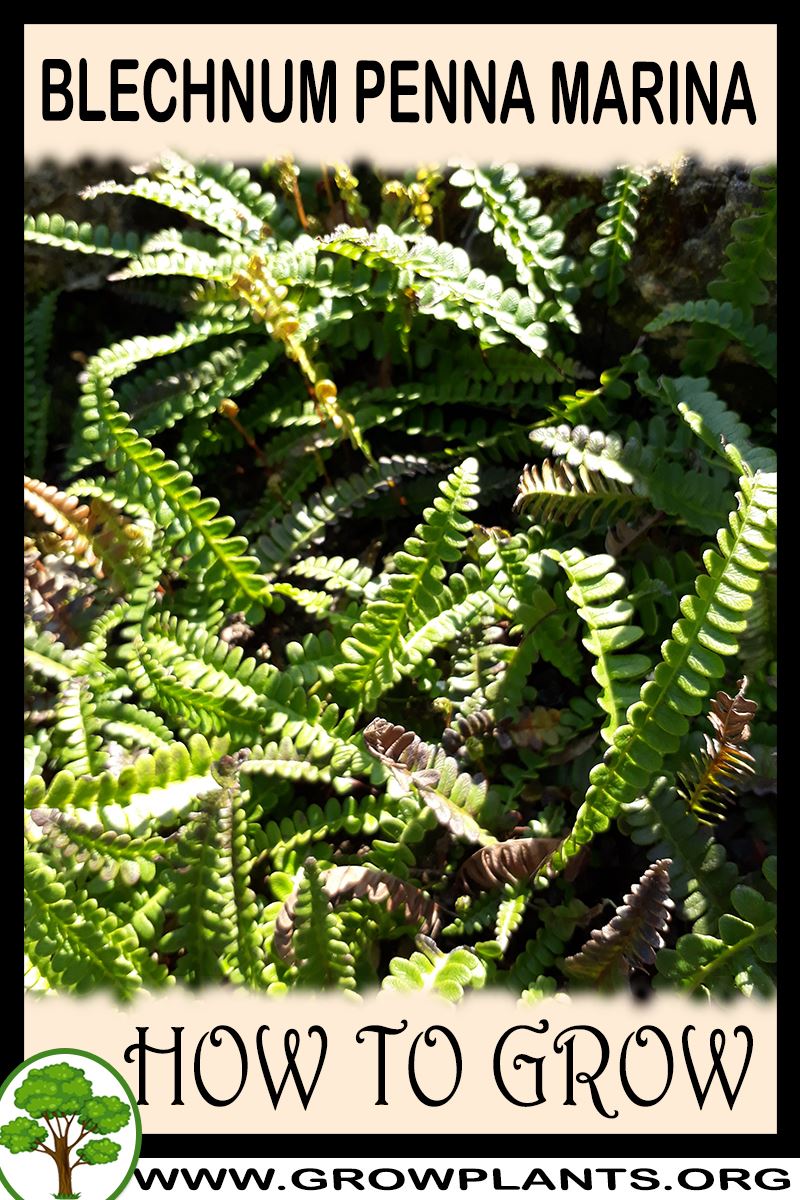
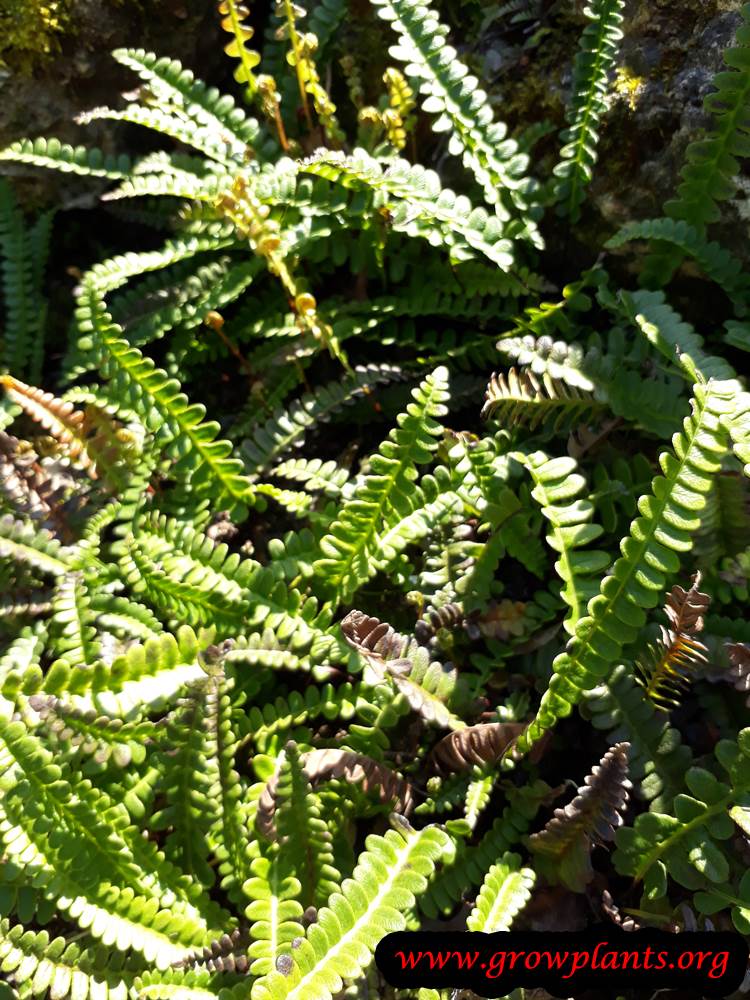
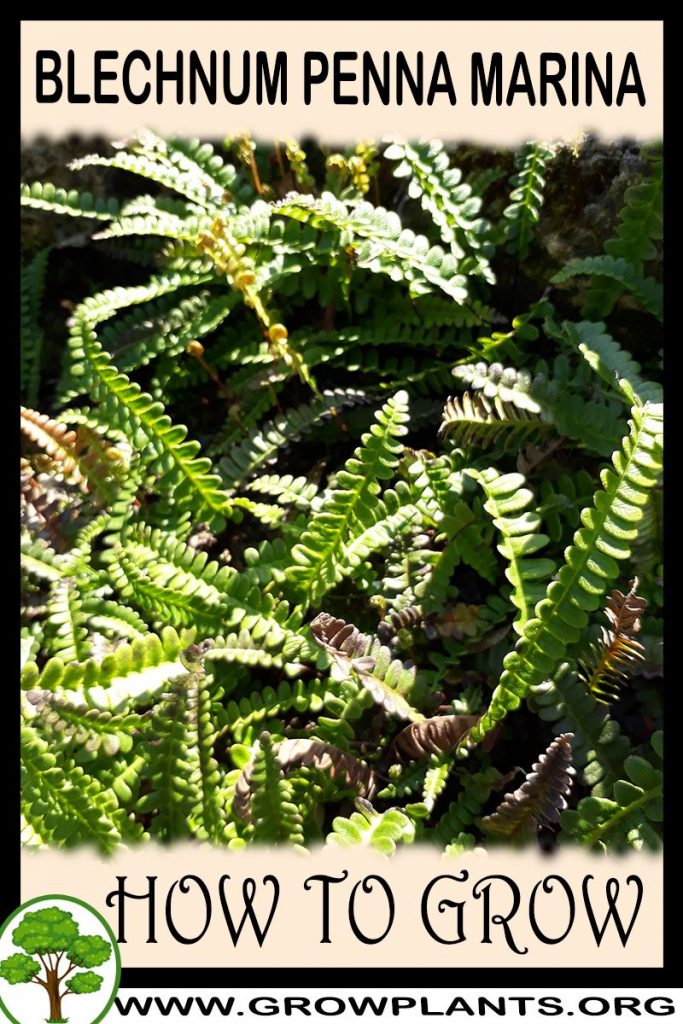
- Leaves & Foliage: Green pinnate fronds, sometimes flushed red or yellow, in low rosettes.
Primary Uses & Landscape Value
- Functional & Ornamental Roles: Hardy evergreen groundcover for shade, and an indoor foliage plant.
Care Guide: Planting, Soil & Watering
Overview: Blechnum penna marina is a hardy, creeping evergreen fern that makes a shade groundcover, thriving in high humidity and a rich, consistently moist but well-drained soil. It needs plenty of water and dislikes drying out; unlike its tender relatives it tolerates cold (zone 5–9).
Quick Care Requirements
| Requirement | Ideal Condition |
|---|---|
| Planting Season | Year-round in a shaded, moist spot (spring is safest in cold-winter areas) |
| Growth Rate | Moderate |
| Soil Type | Rich, humus-heavy, moisture-retentive yet well-draining |
| Water Need | High – keep the soil constantly moist |
Planting & Establishment
- Best Planting Season: Plant in a shaded, humid position; year-round in mild areas, or in spring where winters are cold.
- How to Plant:
- Hole Preparation: Dig a hole slightly wider than the root ball in humus-rich, shaded ground.
- Soil Amendments: Mix in leaf mould or organic matter for moisture retention and an open texture.
- Planting Depth: Set the crown at soil level; keep the growing point uncovered.
- Growth Speed & Expectations: Moderate; a low 15–30 cm (6–12 in) fern that creeps to form a groundcover mat.
Soil, Watering & Drainage Care
- Soil Mix & Drainage Needs: A moisture-retentive but well-aerated, humus-rich mix; good drainage still matters so the crown does not rot.
- Watering Schedule & Technique:
- Young / Newly Planted: Keep the soil constantly moist and humidity high while establishing.
- Established: Water frequently so the soil never dries out.
- Seasonal Adjustments: Slightly less in cool weather, but never let it dry; more in warm, dry air.
Climate, Light & Hardiness
This cool-temperate fern, also grown as a houseplant, is native to sub-Antarctic and alpine regions and needs full shade, consistently moist soil, and high humidity; it is genuinely cold hardy within its zone range but has essentially no tolerance for direct sun or heat.
Quick Climate Specifications
| Climate Zones | Temperate |
|---|---|
| USDA Hardiness Zones | 5–9 |
| Frost Tolerance | Moderate (fronds may die back in hard freezes, but the rootstock is cold hardy within its zone range) |
| Light Conditions | Full Shade |
Sunlight & Light Exposure
Optimal Light Setup
Needs full, deep shade; this fern comes from cool, sheltered forest-floor and alpine seep habitats and has no tolerance for direct sun.
Shade & Heat Management
Full shade and high humidity are essential; direct sun or dry heat quickly scorches the fronds.
Best Exposure / Orientation
A shaded, sheltered woodland-floor or north-facing position with constant moisture suits it best.
Temperature Extremes & Hardiness
USDA Hardiness & Regional Limits
Hardy in zones 5–9.
Cold Damage & Winter Protection
Reasonably cold hardy within its range; a winter mulch helps protect the crown in the coldest parts of zone 5.
Frost Sensitivity
Fronds can be damaged by hard frost, though the rootstock typically survives and resprouts.
Extreme Heat Tolerance
Poor; this fern comes from cool, moist climates and struggles in hot or dry conditions regardless of shade.
Wind, Humidity & Microclimate
Humidity Preferences
Needs consistently high humidity; site data specifically calls for high humidity and moist soil.
Dry-Air Tolerance
Poor; dry air quickly causes browning fronds, indoors or out.
Wind Tolerance
Low; wants a sheltered position out of drying wind.
Rainfall & Seasonal Moisture
Needs consistently moist, never dry, soil; not drought tolerant in any season.
Microclimate Recommendations
A cool, humid, sheltered microclimate - such as a shaded fernery, terrarium, or humid bathroom as a houseplant - best replicates its native conditions.
Growing in Pots, Balconies & Indoors
Alpine water fern is a low, creeping fern and, as the grower confirms, it makes a good houseplant as well as a container and ground-cover plant – it thrives in shade with steady moisture, ideal for a shaded pot or a terrarium.
Quick Details
- Container Size: A shallow, wide pot for a low, spreading fern (15-30 cm / 6-12 in)
- Indoor Suitability: Yes – a good houseplant in a shaded, humid spot
- Best Spot: Full shade to bright indirect light; keep out of direct sun
- Soil & Drainage: Moisture-retentive, humus-rich but not waterlogged mix
- Watering in Pots: Plentiful – keep the mix consistently moist; never let it dry out
Indoors & On the Windowsill
- Houseplant suitability: A genuine indoor fern: give it bright indirect light away from direct sun, keep the mix evenly moist, and raise humidity by grouping plants or standing the pot on a damp pebble tray.
- Windowsill growing: A north or east window or a bathroom suits it; avoid hot, dry, sunny sills.
- Terrarium: Its small, creeping form is ideal for a closed terrarium or bottle garden where humidity stays high.
On a Balcony or Patio
- Light & shade: Keep it in full or dappled shade on a balcony – direct sun and drying wind scorch the fronds. It makes good low, spreading cover in a shady corner.
- Practicalities: Because it must stay moist, check shady pots regularly and never let them dry through.
Choosing the Pot, Soil & Long-Term Care
- Pot & drainage: A shallow, wide pot with drainage holes; keep it moist but not standing in water.
- Potting mix: Humus-rich, moisture-retentive mix – coir or peat with leaf mould and a little perlite for aeration.
- Feeding: Feed lightly with a dilute balanced feed through the growing season; ferns are light feeders.
- Repotting: Divide and refresh the spreading clump every couple of years as it fills the pot.
Fertilizing & Feeding
A light feeder: this groundcover fern grown for its fronds needs only gentle, diluted feeding during active growth, and rarely needs feeding when grown in cool, shaded, or indoor conditions.
Quick Fertilizing Specs
| Feeding Level | Light |
|---|---|
| young_feeding | A light, balanced feeding once new fronds are actively unfurling |
| mature_feeding | Light, balanced feeding through the growing season |
| Main Nutrient Priority | Balanced nutrition at low strength; nitrogen supports frond color |
| Best Feeding Period | During active growth in the warmer months |
| Organic Options | A light top-dressing of compost or leaf mould |
| Micronutrients | Rarely needed where soil or potting mix is healthy |
| Reduce/Stop Feeding | Withhold after repotting and again as light and growth drop in low-light periods |
Feeding by Growth Stage
Establishment after planting or repotting
Let the fern’s fine roots settle into fresh soil or a new pot without the stress of added fertilizer salts.
| Nutrient direction | None – hold off on fertilizer until new fronds show active growth. |
|---|---|
| Timing | The first weeks after planting or repotting. |
| Frequency | No feeding at this stage. |
| Fertilizer types | No feeding at this stage; do not fertilize freshly planted or repotted ferns. |
| Precautions | Do not fertilize immediately after planting or repotting, as fine fern roots are easily burned by fertilizer salts. |
Active growth
Support fresh green fronds and steady groundcover spread through the growing season.
| Nutrient direction | A light, balanced fertilizer with adequate nitrogen keeps fronds a healthy green without overfeeding this light-feeding fern. |
|---|---|
| Timing | During the warmer months when new fronds are actively unfurling. |
| Frequency | Light, well-diluted feeding through active growth, easing off as growth slows. |
| Fertilizer types | Diluted balanced houseplant or foliage fertilizer, Light top-dressing of compost or leaf mould |
| Routine trace nutrients | iron, manganese |
| Precautions | Ferns are sensitive to over-fertilizing; keep feeding light and dilute rather than at full strength. |
Low-light or cool-season slowdown
Match care to the fern’s slower growth in shade, indoors, or during the cooler part of the year.
| Nutrient direction | None – withhold fertilizer while growth is minimal. |
|---|---|
| Timing | During the darker, cooler part of the year or in consistently low light. |
| Frequency | No feeding at this stage. |
| Fertilizer types | No feeding at this stage; do not fertilize while the fern is not actively growing. |
| Precautions | Do not fertilize a fern that is not actively producing new fronds; resume only once active growth returns. |
Nutrient Deficiency Signs & Corrections
Older fronds fade to pale green or yellow and new frond production slows.
| Possible causes | Low soil or potting-mix nitrogen, Infrequent feeding relative to active growth, Poor, compacted or waterlogged soil limiting root uptake |
|---|---|
| Appears first on | Older, lower fronds |
| What to check | Recent feeding history, Soil or potting mix condition and drainage |
| Possible correction | Apply a light, balanced fertilizer during active growth and refresh old potting mix. |
Frond tips and margins brown or blacken, especially after recent feeding.
| Possible causes | Fertilizer applied at too strong a dilution, Feeding a plant with dry soil or stressed roots, Salt buildup from repeated feeding without leaching |
|---|---|
| Appears first on | Frond tips and margins |
| What to check | Fertilizer strength and recent feeding frequency, Whether the plant was watered before feeding |
| Possible correction | Flush the soil with water to remove excess salts and dilute future feedings further. |
New fronds emerge pale or yellow between still-green veins.
| Possible causes | High soil or water pH limiting iron availability, Waterlogged or compacted potting mix, A genuine iron shortage |
|---|---|
| Appears first on | Newest, youngest fronds |
| What to check | Soil or potting mix pH, Drainage, Whether only new growth is affected |
| Possible correction | Correct pH where possible and apply a chelated iron product per its label. |
Pruning, Training & Seasonal Maintenance
Blechnum penna marina needs almost no pruning – as a low, evergreen, rosette-forming groundcover fern its only routine maintenance is removing dead or damaged fronds, which can be done at any time of year. There is no structural training, flowering or fruiting to manage; the goal is simply to keep the rosette tidy and free of spent fronds.
Quick Pruning & Maintenance Specs
| Pruning Tolerance | Low (sanitary only) |
| Primary Pruning Window | All year, as dead fronds appear |
| Typical Frequency | Light, ongoing spot-cleaning rather than seasonal sessions |
| Main Objective | Remove dead or damaged fronds; keep the rosette tidy |
| Young Plant Priority | Leave undisturbed to establish; no structural cuts |
| Mature Plant Priority | Ongoing removal of spent fronds only |
| Best Tool Type | Precision snips |
Pruning by Plant Age & Size
Newly Established
No pruning needed beyond removing any transplant-damaged fronds; let the rosette settle in.
Young / Formative
No structural training applies to this fern – it forms its low rosette on its own.
Mature / Established
Ongoing removal of dead, browned or damaged fronds as they occur, at the base near the crown.
Seasonal Pruning Schedule
Ongoing Sanitary
Objective: keep the rosette clean and photosynthetically active. Remove: individual dead or browned fronds. Do not remove: green, healthy fronds or any part of the central crown. Expected response: new fronds continue to emerge from the crown through the growing season; there is no flowering or fruiting impact since ferns reproduce by spores, not flowers.
Special Growth to Remove
Dead or damaged fronds only – cut them off individually at the base rather than shearing the whole plant.
Container & Small-Space Pruning
This fern is commonly grown indoors or in pots. In containers, dead-frond removal is the same light task as in-ground, but check the crown more often for crowding fronds in the confined space, and avoid letting spent fronds sit and rot against the moist potting mix this species prefers.
Tools
- Precision snips – the only tool needed, for clean single-frond cuts at the base
Tool Hygiene & Disease Risk
Routine: clean, sharp tools are sufficient. No transmissible disease risk is indicated in the source data for this species.
Cut Placement & Technique
Cut each dead frond individually near its base close to the crown, taking care not to nick neighboring healthy fronds or the central growing point.
Post-Pruning Care
No special aftercare beyond the plant’s normal high-humidity, moist-soil, shaded conditions; no feeding is needed after routine dead-frond removal.
Common Pruning Mistakes
- Shearing the whole rosette instead of removing individual dead fronds
- Cutting or damaging the central crown, which can set the whole plant back
- Removing green, still-functional fronds along with the dead ones
When NOT to Prune
Never cut into the central crown, and avoid removing green healthy fronds – only fully dead or damaged material should come off.
Recommended Tools (by task)
- Any age, dead-frond removal: precision_snips – the fine, single-frond cuts this fern needs call for a small precise blade, not loppers or shears.
Propagation Guide
Blechnum penna marina (Antarctic hard-fern), a low, spreading rosette fern that increases via creeping rhizomes, is propagated by dividing established clumps — the site confirms vegetative propagation is the necessary, practical route for this plant rather than growing from spores. Division is straightforward and the best method for home growers; raising new plants from spores is biologically possible for any fern but is a slower, more specialist technique better suited to starting fresh stock than to multiplying an existing plant.
Quick Propagation Specs
| Best Propagation Method | Division of rooted rhizome sections/clumps |
| Alternative Methods | Spores (specialist, slow) |
| Propagation Difficulty | Easy (division); Specialist (spores) |
| Vegetative True-to-Type | Yes |
| Best Propagation Season | Any time, matching this plant’s year-round planting season; best results during active growth |
| Time Until Division Establishes | Typically a few weeks under the high-humidity, consistently moist conditions this fern prefers |
Division, Offsets, Pups & Suckers
Lift the clump and separate sections of rhizome that each carry healthy roots and at least a few fronds attached — sections without their own roots are unlikely to establish. Division is best done during active growth rather than in the depths of winter. Keep newly divided pieces consistently moist and humid, matching this fern’s preference for high humidity and moist soil, while they re-establish.
Spores
Like all ferns, this species can in principle be raised from spores, collected once mature from the underside of fertile fronds, then sown onto a sterile, consistently moist medium and kept humid in indirect light. This route is slow and more specialist, and is rarely necessary for home gardeners when division is a reliable, easy alternative.
Pests, Diseases & Troubleshooting
Overview: Ferns like Blechnum are naturally pest-light, but they are sensitive plants: they dislike dryness and are easily burned by full-strength pesticides, so treatments must be gentle and spot-tested. The realistic problems are scale and mealybugs on the fronds and rachis, foliar nematode banding the leaflets, slugs on new fronds, and fungal leaf spot or rhizome rot in stagnant wet conditions. Steady humidity, shade and airflow prevent most trouble.
Quick Troubleshooting Overview
| Issue / Pest | Main Symptom | Primary Solution |
|---|---|---|
| Fern scale | White/brown bumps along the frond midrib | Prune infested fronds, dilute horticultural oil (spot-test) |
| Mealybugs | White cottony masses on fronds and crown | Wipe/alcohol, dilute insecticidal soap (spot-test) |
| Foliar nematode | Dark bands between the veins on fronds | Remove affected fronds, keep foliage dry, isolate |
| Leaf spot | Brown or black spots on fronds | Improve airflow, sanitation, avoid wetting foliage |
| Slugs & snails | Ragged new (crozier) fronds | Handpick, grit/copper barriers, iron-phosphate bait |
Common Pests & Management
- Fern scale (Pinnaspis aspidistrae):
- Symptoms: White (male) and brown (female) armoured scales encrust the frond undersides and midribs, sucking sap so the fronds yellow, weaken and drop; heavy infestations look dusted white.
- Prevention & Control: Prune out badly infested fronds, wipe or scrub lighter ones, and apply a dilute horticultural oil to smother crawlers – always spot-test first, as ferns are oil-sensitive; control ants and isolate new plants.
- Mealybugs (Pseudococcidae):
- Symptoms: White cottony tufts along the rachis, frond undersides and crown, with honeydew and sooty mould, stunting growth.
- Prevention & Control: Dab with an alcohol-dipped swab, rinse, and treat with a dilute insecticidal soap spot-tested on a frond first; repeat to catch protected crawlers.
- Foliar (leaf) nematode (Aphelenchoides spp.):
- Symptoms: Dark brown to black bands develop between the leaflet veins, spreading in humid conditions until fronds shrivel – a classic fern problem.
- Prevention & Control: Remove and destroy affected fronds, keep the foliage dry (avoid overhead misting late in the day), isolate infected plants, and discard heavily infested ferns, as there is no home cure.
- Slugs and snails (Deroceras / Cornu spp.):
- Symptoms: Ragged holes chewed in tender emerging croziers and soft new fronds, with slime trails, in the damp shade ferns favour.
- Prevention & Control: Handpick after dark, ring plants with grit or copper tape, keep decaying debris cleared, and use iron-phosphate pellets where needed.
Diseases & Fungal Issues
- Fungal leaf spot / blight (Cylindrocladium / Colletotrichum spp.):
- Symptoms: Brown to black spots and blotches on the fronds, sometimes with yellow halos, spreading in warm, wet, stagnant conditions.
- Treatment & Management: Improve airflow, avoid wetting the foliage and overhead watering, remove and destroy spotted fronds, and use copper sparingly only if it persists.
- Rhizome / root rot (Pythium / Phytophthora / Rhizoctonia spp.):
- Symptoms: Wilting, browning fronds and a soft, rotted rhizome and roots in waterlogged or overwatered mix.
- Treatment & Management: Use a free-draining, humus-rich mix, keep moist but never sodden, improve drainage and airflow, and remove rotted plants.
- Botrytis (grey mould) (Botrytis cinerea):
- Symptoms: Grey fuzzy mould on damaged or dying fronds in cool, damp, still air.
- Treatment & Management: Remove dead and damaged fronds, improve ventilation, and reduce humidity around the crown.
Growing Difficulties & Abiotic Problems
- Frond browning from dry air:
- Cause & Symptoms: Low humidity and dry soil brown and crisp the frond tips and margins – the commonest fern complaint.
- Correction Strategy: Keep the soil evenly moist, raise humidity (grouping, trays, shade), and shelter from drying wind and heat.
- Chemical / fertiliser burn:
- Cause & Symptoms: Ferns are sensitive to full-strength pesticides, oils and strong feeds, which scorch the fronds.
- Correction Strategy: Use half-strength dilute treatments, always spot-test first, feed weakly, and rinse foliage after treating.
- Sun scorch:
- Cause & Symptoms: Direct sun bleaches and browns the fronds of these shade plants.
- Correction Strategy: Grow in shade to dappled light; acclimatise gradually if moving to brighter spots.
What Helps – Products & Tools
For ferns use only gentle, spot-tested tools: dilute horticultural oil or insecticidal soap for scale and mealybugs, iron-phosphate bait with grit or copper barriers for slugs, and copper fungicide sparingly for leaf spot. The most protective measures are cultural – steady humidity, shade, airflow and dry foliage at night.