Plant Profile & Key Characteristics
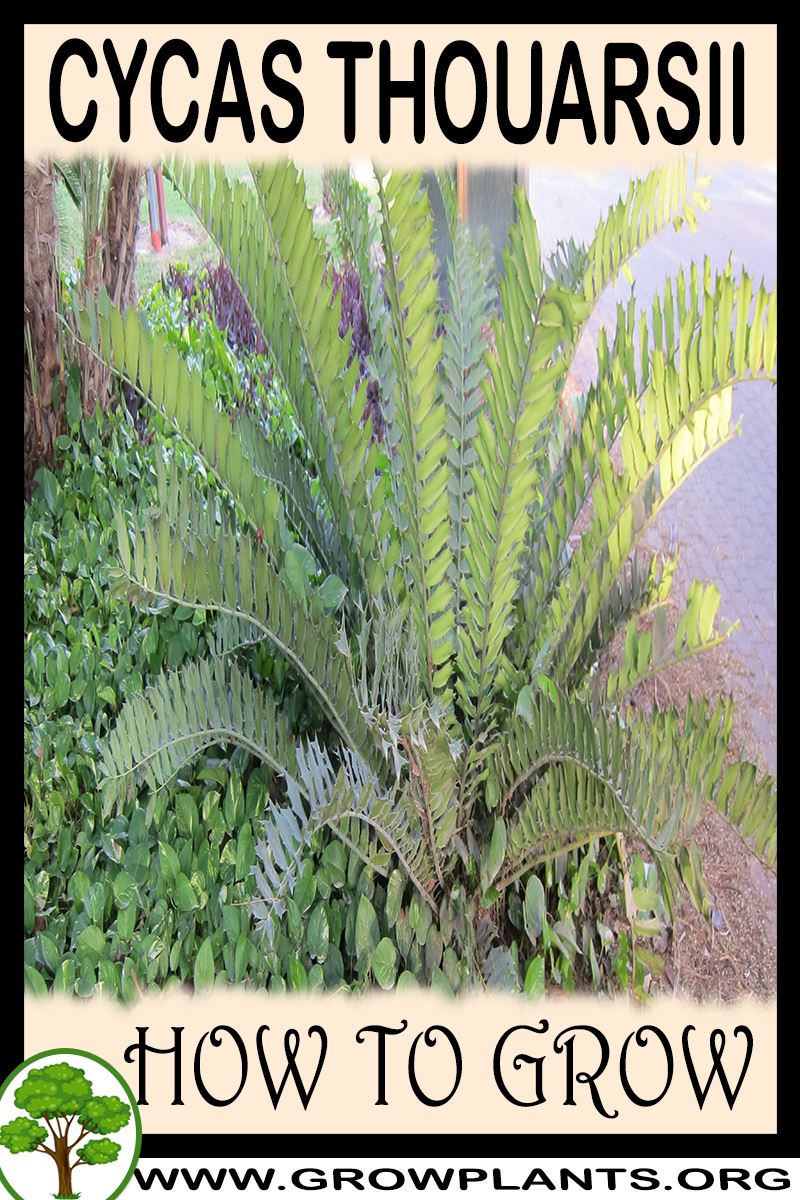
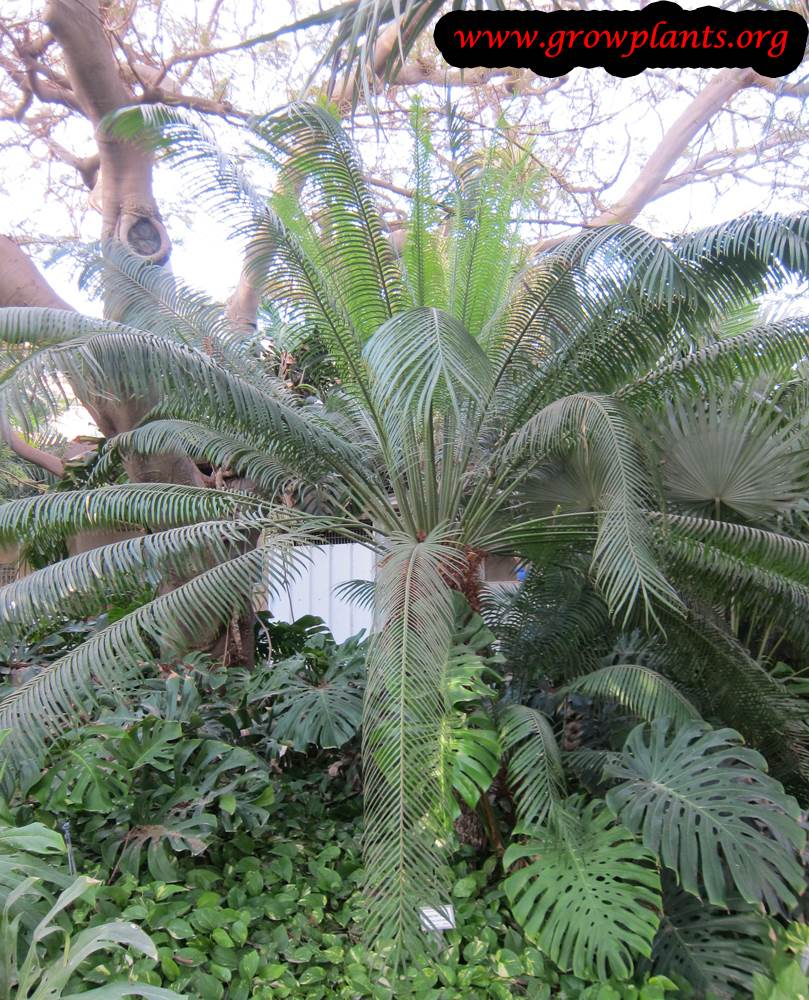
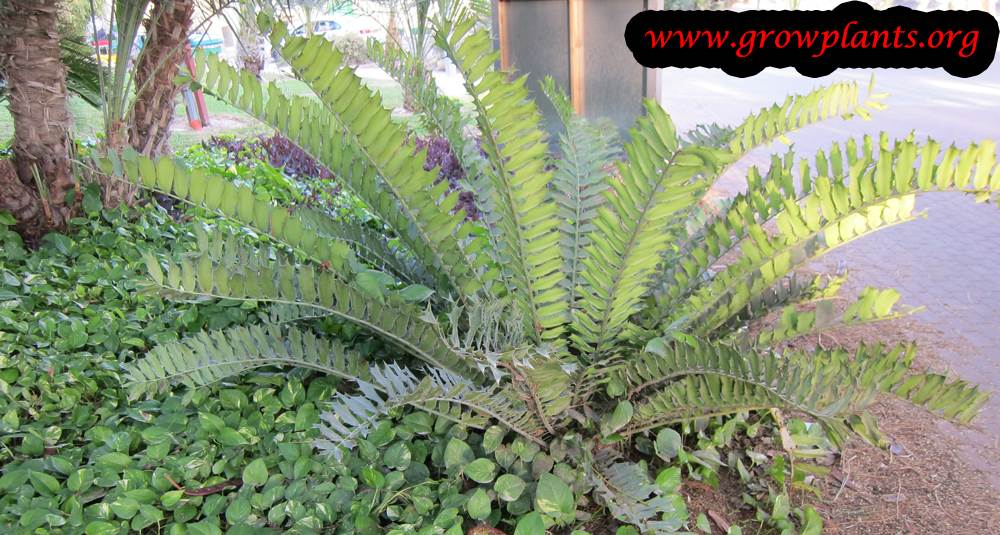
Overview: Cycas thouarsii (Queen sago) is a slow-growing evergreen cycad reaching about 1–3 m (3–10 ft), forming a stout trunk topped by a symmetrical crown of stiff, pinnate fronds. It is grown mainly as an ornamental specimen or houseplant, but every part is highly poisonous.
Quick Specifications
| Specification | Attribute |
|---|---|
| Plant Type / Life Cycle | Perennial (cycad) |
| Foliage Type | Evergreen |
| Mature Size | 1–3 m (3–10 ft) tall |
| Growth Rate | Slow |
| Root System | Stout taproot with specialised coralloid (nitrogen-fixing) roots |
| Toxicity | Highly toxic – all parts contain cycasin, the seeds most poisonous; dangerous to pets and people if eaten |
| Hardiness | USDA zone 9–12 |
Growth Form & Structure
- Height & Spread: In the ground it slowly reaches 1–3 m (3–10 ft); in a container it stays much smaller and can be kept as a houseplant.
- Growth Habit & Form: Palm-like cycad (not a true palm) with a thick, rugged trunk topped by a rosette of stiff, arching pinnate fronds.
- Lifespan & Maturity: Very long-lived and extremely slow, typically adding a single flush of new fronds each year and taking many years to build a trunk.
Anatomy & Physical Features
- Trunk & Bark: Stout, columnar trunk (caudex) clothed in persistent, armoured leaf-base scars.
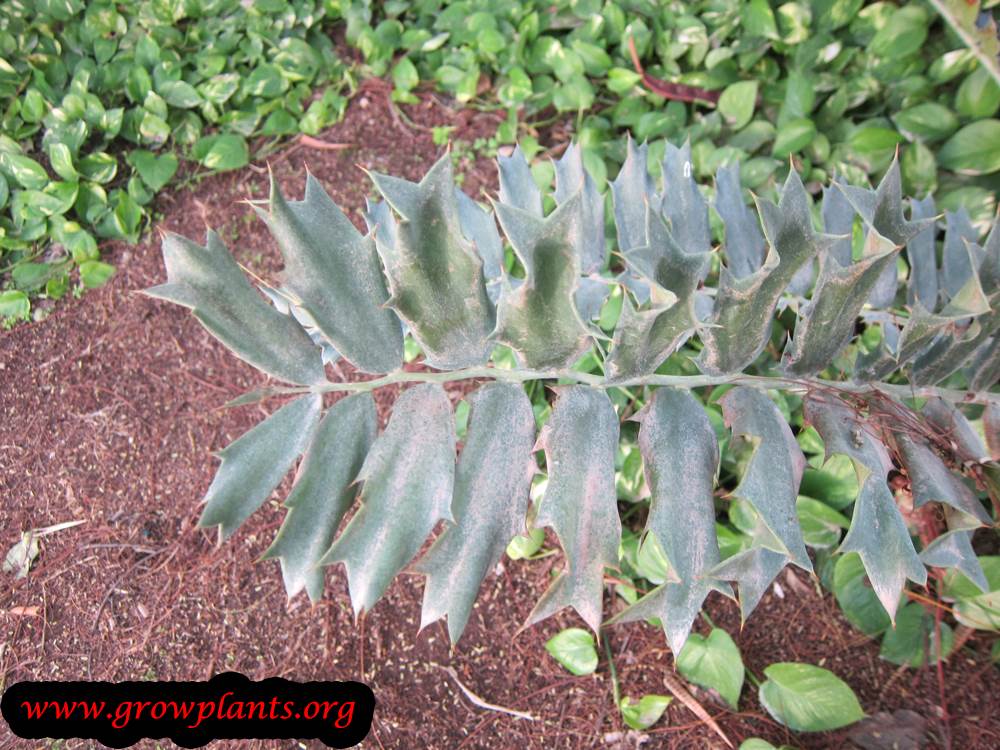
- Leaves & Foliage: Stiff, glossy dark-green pinnate fronds carrying many narrow, linear leaflets.
- Flower Characteristics: Non-flowering – a dioecious cycad reproducing by cones on separate male and female plants; males bear an upright yellow to brown cone and females a looser, feather-like structure.
Primary Uses & Landscape Value
- Functional & Ornamental Roles: Grown as an architectural ornamental specimen in gardens and containers and as a houseplant, valued for its bold, palm-like form; not edible.
Care Guide: Planting, Soil & Watering
Overview: Cycas thouarsii is a slow-growing, palm-like cycad that prizes warmth and sharp drainage, thriving in a gritty, free-draining soil in full sun through to shade. It is suited to frost-free gardens (roughly hardiness zone 9–12), and needs only moderate water – it is drought-tolerant once established and resents cold, wet, heavy ground.
Quick Care Requirements
| Requirement | Ideal Condition |
|---|---|
| Planting Season | Warm season (spring–autumn) |
| Growth Rate | Slow |
| Soil Type | Sandy, gritty, sharply draining |
| Water Need | Low to moderate – let the soil dry between waterings |
Planting & Establishment
- Best Planting Season: Plant through the warm season, from spring to autumn, once the risk of frost has passed and the soil has warmed.
- How to Plant:
- Hole Preparation: Dig a hole about twice the width of the root ball and no deeper than it, loosening the surrounding soil so the coarse roots can spread into open ground.
- Soil Amendments: Improve heavy ground with grit or coarse sand to guarantee free drainage; a little organic matter is welcome, but the mix must stay open and never boggy.
- Planting Depth: Set the plant at the level it grew before, keeping the top of the caudex (trunk base) at or just above the soil line – never bury the stem, which invites rot.
- Growth Speed & Expectations: Growth is slow, adding only a flush or two of new fronds a year; over many years it can reach roughly 1–3m (3–10 ft).
Soil, Watering & Drainage Care
- Soil Mix & Drainage Needs: Cycads insist on excellent drainage – standing water rots the base and roots. Use a sandy, gritty mix in the ground, or a free-draining palm or cactus-type mix in containers, always with generous drainage holes.
- Watering Schedule & Technique:
- Young / Newly Planted: Water regularly but lightly while the plant settles in, keeping the soil just moist and never saturated.
- Established: Water deeply but infrequently, letting the top several centimetres of soil dry out completely before watering again; established plants shrug off short dry spells.
- Seasonal Adjustments: Cut watering right back in the cool season when growth stalls, and water a little more often through hot, dry weather.
Climate, Light & Hardiness
Queen sago is a subtropical-to-warm-temperate cycad, adaptable to light from full sun through to full shade and also grown as a houseplant, but it is only reliably cold hardy in essentially frost-free climates.
Quick Climate Specifications
| Climate Zones | Subtropical, Temperate, Mediterranean, Desert |
|---|---|
| USDA Hardiness Zones | 9–12 |
| Frost Tolerance | Low |
| Light Conditions | Full Sun to Full Shade |
Sunlight & Light Exposure
Optimal Light Setup
Unusually adaptable for a cycad - grows in anything from full sun to full shade, and also succeeds as an indoor houseplant given bright light.
Direct Sun Requirement
Not essential; performs well with filtered or indirect light, which also suits it to indoor growing.
Shade & Heat Management
In hot, sunny climates, part shade helps keep fronds from bleaching; in cooler or lower-light situations, more sun helps compensate.
Best Exposure / Orientation
Versatile - suited to shaded courtyards as well as more open, sunnier planting sites.
Temperature Extremes & Hardiness
USDA Hardiness & Regional Limits
Hardy outdoors in zones 9–12; below that it should be grown as a container plant or houseplant and brought under cover for winter.
Cold Damage & Winter Protection
Frost can damage or kill foliage; in marginal zones, site in a sheltered spot and protect the crown from freezing.
Frost Sensitivity
Frost sensitive, especially the emerging new growth.
Extreme Heat Tolerance
Good; tolerates hot subtropical and desert-fringe summers, particularly with some shade and adequate moisture.
Wind, Humidity & Microclimate
Humidity Preferences
Adaptable to both humid subtropical conditions and the drier air of Mediterranean and desert-margin climates.
Dry-Air Tolerance
Reasonable, though richer growth occurs with more humidity.
Rainfall & Seasonal Moisture
Prefers well-drained soil with moderate, fairly consistent moisture; avoid waterlogging.
Growing in Pots, Balconies & Indoors
Cycas thouarsii is a handsome, palm-like cycad and, as the grower confirms, it makes a good houseplant as well as a container specimen – its glossy fronds and slow, tidy growth suit a bright room or a shaded patio equally.
Quick Details
- Container Size: A deep, sturdy pot for a 1-3 m (3-10 ft) plant
- Indoor Suitability: Yes – a genuine houseplant given good light
- Best Spot: Bright light; tolerates full sun through to full shade
- Soil & Drainage: Very free-draining, gritty mix
- Watering in Pots: Small to average – let the surface dry between waterings; never overwater
Indoors & On the Windowsill
- Houseplant suitability: A true indoor plant: place it in the brightest spot you can, water sparingly, and let it dry between drinks. Its slow, even growth makes it easy to keep for years in the same pot.
- Windowsill growing: A bright window suits a young plant; turn it occasionally for even fronds.
- Overwintering: In cold climates keep it indoors or under frost-free cover for winter – it is tender and cannot take frost.
On a Balcony or Patio
- Light & shelter: Happy on a bright or lightly shaded patio in the warm season; introduce it to stronger sun gradually and shelter the soft new fronds from strong wind.
- Practicalities: Heavy and slow, so pick a stable pot; move it back under cover before cold arrives.
Choosing the Pot, Soil & Long-Term Care
- Pot & drainage: A deep pot with strong drainage holes and no saucer; it stays in the same pot for years.
- Potting mix: A gritty, sharp-draining mix – cactus/succulent compost, or sandy soil with perlite and a layer of gravel or lava grit; never anything that stays soggy.
- Feeding: Feed sparingly – a diluted low-strength feed once or twice in the growing season is plenty; too much causes soft, weak growth.
- Repotting: Pot up only every few years – growth is slow and it resents root disturbance.
Safety: All parts of cycads are highly toxic if eaten (cycasin) and especially dangerous to pets – keep well away from children and animals.
Fertilizing & Feeding
A light feeder: this slow-growing, palm-like cycad needs only modest balanced feeding through its active season in well-drained soil, whether grown outdoors in the landscape or as a container houseplant, with lighter feeding still while growth slows.
Quick Fertilizing Specs
| Feeding Level | Light – a lean feeder given its naturally slow growth |
|---|---|
| Main Nutrient Priority | Balanced feeding to support steady, if slow, leaf production |
| Best Feeding Period | The active growing season |
| Organic Options | Well-drained soil with organic matter worked in supports this species well |
| Reduce/Stop Feeding | Reduce feeding when growth naturally slows, including for plants kept as houseplants in lower light |
| Micronutrients | Usually adequate from a complete fertilizer in well-drained soil; correct only a diagnosed deficiency |
| Soil pH | Tolerates a range of soil pH provided the soil drains well |
Feeding by Growth Stage
Establishment after planting
Support new root development as a young or newly planted cycad settles into well-drained soil, whether in the ground or in a container.
| Nutrient direction | A balanced fertilizer supports steady early root and leaf development without pushing growth beyond this naturally slow-growing plant’s pace. |
|---|---|
| Timing | The period after planting while the root system is developing. |
| Frequency | Light, occasional feeding through the growing season while roots establish. |
| Fertilizer types | A balanced complete fertilizer used at a light rate, Organic matter worked into well-drained soil |
| Precautions | This plant is poisonous if ingested, including the seeds produced on female plants; keep it away from pets and children, and handle new leaf growth carefully during establishment. |
Established ongoing growth
Sustain slow, steady leaf production on an established plant, whether grown in the landscape or as a container houseplant.
| Nutrient direction | Continue light, balanced feeding, matched to this species’ naturally slow growth rate rather than pushed for faster results. |
|---|---|
| Timing | Through the active growing season for an established plant. |
| Frequency | An occasional light feeding through the growing season is usually enough. |
| Fertilizer types | A balanced complete fertilizer used lightly, Container-grown or indoor plants may follow a container-specific feeding routine |
| Precautions | Avoid overfeeding; this species grows slowly by nature, and heavy feeding will not speed it up but can build up excess salts in the soil, especially in a container. |
Growth slowdown period
Let the plant coast through periods of minimal new leaf production, whether from cool weather outdoors or lower light indoors.
| Nutrient direction | None – withhold fertilizer while growth is minimal. |
|---|---|
| Timing | The cooler months outdoors, or any extended period of low light for plants kept indoors. |
| Frequency | No feeding during this slowdown period. |
| Fertilizer types | No feeding at this stage; resume light feeding once active new leaf growth returns. |
| Precautions | Feeding while growth has paused offers no benefit and risks salt buildup in the soil; wait for visible new leaf growth before resuming. |
Nutrient Deficiency Signs & Corrections
Overall pale green to yellow leaves and even slower than usual new leaf production.
| Possible causes | low soil nitrogen or thin, low-organic-matter soil, an extended period without any feeding, nitrogen leaching from heavy watering or rain |
|---|---|
| Appears first on | older leaves |
| What to check | recent feeding history, soil organic matter, overall leaf color compared to expectations |
| Possible correction | Apply a light, balanced fertilizer during the active growing season. |
New leaves emerge yellow while the veins stay green.
| Possible causes | high soil pH tying up available iron, poorly drained or waterlogged soil, root stress limiting nutrient uptake |
|---|---|
| Appears first on | newest leaves |
| What to check | soil pH and drainage, recent watering pattern, root health |
| Possible correction | Improve drainage and organic matter, and if chlorosis persists apply a chelated iron product per its label. |
Older leaves develop yellowing between the veins while the veins themselves stay green.
| Possible causes | low soil magnesium, more likely in sandy or heavily leached soil, an incomplete fertilizer used repeatedly without variation, root stress limiting nutrient uptake |
|---|---|
| Appears first on | older leaves first |
| What to check | soil type and leaching history, type of fertilizer used recently, overall root health |
| Possible correction | Switch to a complete fertilizer that includes magnesium, applied per its label. |
Pruning, Training & Seasonal Maintenance
Cycas thouarsii (“Queen sago”) is a compact, slow-growing cycad with a single crown, commonly grown as a houseplant as well as outdoors. Like other cycads, pruning is limited to removing fully dead, brown fronds – there is no structural training or size-reduction cutting, and because it depends on individual frond death rather than a season, it can be done year-round.
Quick Pruning & Maintenance Specs
| Pruning Tolerance | Very Low – dead-frond removal only |
| Primary Pruning Window | Any time, as individual fronds fully die |
| Typical Frequency | Infrequent, given this species’ slow growth |
| Main Objective | Remove fully dead fronds; never reduce the green crown |
| Best Tool Type | Precision snips or bypass secateurs |
Pruning by Plant Age & Size
Newly Established
Leave all fronds untouched while a young plant or new houseplant is settling in.
Young / Formative
No structural training applies to a cycad’s single crown of fronds.
Mature / Established
Remove only fully browned, dead fronds as they occur; because this species stays compact (to about 1–3 m), its frond bases stay light enough for hand tools even at full size.
Special Growth to Remove
- Fully dead, brown fronds – the only routine removal. As with other cycads, a frond that is only partly brown-tipped but still mostly green should be left rather than trimmed off cosmetically, since it is still contributing to the plant’s energy reserves for its next flush of growth.
Container & Small-Space Pruning
Cycas thouarsii’s compact ultimate size and slow growth make it well suited to long-term container or indoor growing. As a houseplant, the same dead-frond-only rule applies; in low indoor light, resist the urge to trim frond tips for cosmetic reasons, since each retained green frond matters more to a light-limited plant’s energy budget than it would outdoors in full sun.
Tools
- Precision snips or bypass secateurs – sufficient for this compact species’ frond bases at any age.
Tool Hygiene & Disease Risk
Routine: no specific transmissible pathogen is noted for this species, so ordinary clean, sharp tools are sufficient. The plant is noted as poisonous, so wear gloves when handling cut fronds and sap for the grower’s protection.
Cut Placement & Technique
Cut a dead frond at its base without disturbing the crown’s growing point or neighboring healthy fronds.
Heavy Pruning & Rejuvenation
Not tolerated. Removing green fronds weakens the single growing point, and this species does not respond to any form of rejuvenation cutting.
Post-Pruning Care
No special aftercare is needed beyond normal watering; there is no benefit to feeding specifically after removing a dead frond.
Common Pruning Mistakes
- Trimming brown-tipped but still partly green fronds cosmetically, the way one might with a typical foliage houseplant – this species relies on retaining as much green leaf tissue as possible.
- Handling cut fronds without gloves, given this species’ toxicity.
When NOT to Prune
Never remove a frond that is still partly green; wait until it has fully browned.
Recommended Tools (by task)
- precision_snips – for removing dead fronds cleanly at the base on this compact, often container-grown cycad.
Propagation Guide
Cycas thouarsii, like most cycads, is grown mainly from seed, which comes true to the species; this genus also offsets more readily than many other cycads, so removing and rooting basal pups is a workable secondary method for getting an exact clone of the parent. Difficulty is moderate to specialist – seed is best handled fresh and germinates slowly, in keeping with this plant’s slow growth.
Quick Propagation Specs
| Best Propagation Method | Seed |
| Alternative Methods | Basal offsets (pups) |
| Propagation Difficulty | Moderate–Specialist |
| Seed True-to-Type | Yes |
| Vegetative True-to-Type | Yes |
| Best Propagation Season | Sow fresh seed as it becomes available, generally in the warmer months, matching the site’s planting season |
| Seed Germination Time | Slow and often erratic, typically taking several months |
| Germination Temperature | Warm, roughly 24–29°C (75–85°F) |
| Seed Sowing Depth | Lay the seed on its side, mostly buried with the top near the surface |
Growing from Seed
Seed Handling & Viability
The fruit has a fleshy red-brown coat; as with other cycads, clean this fleshy covering off before sowing to reduce rot risk, and sow fresh rather than storing dry, since viability declines once cycad seed dries out. The fruit itself is not edible for people.
Dormancy & Pre-Sowing Treatment
No specific dormancy treatment is typically needed beyond removing the fleshy coating; a brief warm soak before sowing can help.
Sowing Season
Sow fresh, cleaned seed as it becomes available, generally in the warmer months, matching the site’s stated planting season.
Sowing Depth & Orientation
Lay the seed on its side, mostly buried with the top just at or near the surface, in a well-drained medium matching this plant’s stated soil preference.
Germination Conditions
Warm, evenly moist (not waterlogged), well-drained mix.
Germination Time
Slow, often taking several months; germination can be uneven.
Seedling Care
Grow seedlings anywhere from full sun to full shade (this species tolerates a wide light range) with small to average water; expect slow growth, matching the mature plant.
Division, Offsets, Pups & Suckers
Cycas species, including C. thouarsii, offset from the base more readily than many other cycad genera, so healthy basal pups can be removed once they have some roots of their own and grown on separately as an exact clone of the parent – useful since this species is dioecious and sex isn’t known until a plant matures and cones. Let the cut surface dry and callus briefly before potting the offset into a very well-drained mix, and keep humidity up while it finishes rooting.
Cone & Reproduction Guide
Quick Details
- Cone Season: Spring.
- Time to First Cone: Only mature plants cone, usually after many years.
- Cone Appearance: Yellow-to-brown reproductive cones – firm and columnar on male plants, looser and feather-like on female plants.
- Edibility: Toxic – do not eat any part; cycads contain cycasin and related toxins.
Detailed Overview
Cycas thouarsii, the queen sago, is a cycad and therefore cone-bearing, not flowering – so it never produces a true flower. It is dioecious, carrying male and female cones on separate plants. The male cone is firm and upright, while the female structure is more open and feathery.
Cone Characteristics
- Yellow to brown cones rather than petalled flowers.
- Male cones firm and columnar; female cones looser and feather-like.
- Formed at the top of the trunk among the fronds.
Care Notes
- Reproduction: Requires both a male and a female plant for pollination and viable seed.
- Safety: Every part, including the seeds, is poisonous to people and pets.
Pests, Diseases & Troubleshooting
Overview: Cycas thouarsii is a large East African / Madagascan cycad with long arching fronds, grown as a bold tropical specimen. As cycads (not true palms), Cycas are slow, tough and long-lived, but they face one truly serious pest — Asian cycad scale — which can kill an established plant, plus rots and a very characteristic manganese deficiency. Management is mostly about sharp drainage, early scale detection, and correct nutrition. Note also that all parts of the plant, especially the seeds, are highly toxic to people and pets.
Quick Troubleshooting Overview
| Issue / Pest | Main Symptom | Primary Solution |
|---|---|---|
| Asian cycad scale | Dense white crust smothering fronds & roots | Act fast: prune, wash off, horticultural oil, repeat |
| Mealybugs | White cottony fluff in crown and on new flush | Alcohol dab, isolate, insecticidal soap / oil |
| Cycad blue butterfly | New flush shredded by caterpillars | Protect emerging leaves, hand-pick, Bt if needed |
| Root / crown rot | Soft base, yellowing, collapse in wet soil | Improve drainage, reduce water, remove rot |
| Manganese deficiency (“frizzle top”) | New leaves frizzled, chlorotic, stunted | Apply manganese sulfate, correct pH |
Common Pests & Management
- Asian cycad scale (Aulacaspis yasumatsui):
- Symptoms: A rapidly spreading, snow-white encrustation that coats leaf undersides, then the whole frond, the trunk and even the roots; foliage yellows, browns and dies. This is the single most devastating cycad pest worldwide and can kill a mature plant if left unchecked. Distinguish from harmless leaf mottling by the thick, crusty white layer that builds up in weeks.
- Prevention & Control: Inspect frequently and act immediately. Cut off and bag heavily infested fronds, wash the plant down, and apply thorough coverage of horticultural or fine white oil (including trunk and soil surface), repeating every 7–14 days over several cycles because roots can harbour scale. Isolate new plants before adding them to a collection; consider systemic control for severe cases and encourage the introduced predator beetles used in biocontrol programmes.
- Mealybugs (Pseudococcus spp.):
- Symptoms: White cottony clusters nestled in the crown and among emerging leaves, with honeydew and sooty mould.
- Prevention & Control: Spot-treat with alcohol on a cotton bud, isolate affected plants, and use insecticidal soap or horticultural oil, focusing on the protected crown where they hide.
- Soft & armoured scale (Coccus, Chrysomphalus spp.):
- Symptoms: Brown or tan bumps along the frond midribs and leaflets, yellow spotting and sticky honeydew from soft scales.
- Prevention & Control: Rub off small numbers; treat with horticultural oil for good coverage, repeating to catch crawlers. Keep plants unstressed and well fed.
- Cycad blue butterfly (Chilades pandava) — where present:
- Symptoms: Small caterpillars swarm and shred the soft new flush as it emerges, leaving lacy, skeletonised or stubby new leaves; the tough mature fronds are ignored.
- Prevention & Control: The tender flush is the only vulnerable window — watch it closely. Hand-pick caterpillars, and if needed apply Bacillus thuringiensis (Bt) or a suitable product while the leaves are still soft.
- Spider mites (Tetranychus spp.) — mainly indoors:
- Symptoms: Fine stippling, dullness and faint webbing on fronds in hot, dry indoor air.
- Prevention & Control: Increase humidity and airflow, rinse the foliage, and treat persistent cases with horticultural oil.
Diseases & Fungal Issues
- Root & crown rot (Phytophthora / Pythium spp.):
- Symptoms: Overall yellowing, a soft or bleeding base of the trunk, and collapse — almost always the result of heavy, wet, poorly drained soil or planting too deep.
- Treatment & Management: Prevent by planting high in a gritty, free-draining mix and watering sparingly — cycads tolerate drought far better than wet feet. Remove rotten tissue, let the base dry, and improve drainage; severe trunk rot is often fatal.
- Fungal leaf spot (Colletotrichum / Pestalotiopsis spp.):
- Symptoms: Brown to black spots or blotches on leaflets, sometimes with yellow halos, worse in humid, crowded, wet-foliage conditions.
- Treatment & Management: Remove spotted fronds, improve airflow, and keep foliage dry. A copper-based fungicide helps only in persistent cases; good nutrition and light prevent most spotting.
Growing Difficulties & Abiotic Problems
- Manganese deficiency — “frizzle top”:
- Cause & Symptoms: The classic cycad disorder — new leaves emerge chlorotic (yellow), weak, frizzled, curled and stunted, and may die back, while older leaves look normal. Caused by manganese shortage, often locked up by cold, wet, or high-pH (alkaline) soils.
- Correction Strategy: Apply manganese sulfate to the soil (and/or as a foliar feed), correct overly alkaline pH, and improve drainage so roots can take up nutrients. Do not confuse with nitrogen deficiency (uniform paleness) or magnesium deficiency (yellowing older leaves).
- Overwatering & poor drainage:
- Cause & Symptoms: Yellowing fronds and a soft base from soil that stays wet — the leading cause of decline in cultivation.
- Correction Strategy: Water deeply but infrequently, let the mix dry well between waterings, and use a coarse, sharply draining medium.
- Cold damage:
- Cause & Symptoms: Browned or spotted fronds after frost or prolonged cold, especially on tender new growth.
- Correction Strategy: Protect in cold snaps; site in a warm, sheltered spot or bring container plants under cover.
- Transplant sulk & slow recovery:
- Cause & Symptoms: After repotting or moving, the plant may sit for a long time before flushing new leaves.
- Correction Strategy: Be patient, keep it warm and lightly watered, and avoid the temptation to overwater to “encourage” growth.
What Helps — Products & Tools
The essentials are horticultural / fine white oil and insecticidal soap for scale and mealybugs (with repeat applications and, for Asian cycad scale, possibly a systemic option), Bacillus thuringiensis (Bt) for cycad blue butterfly caterpillars, a copper-based fungicide for stubborn leaf spot, and — crucially — manganese sulfate to correct frizzle top. A gritty, free-draining mix is the best insurance against rot. Handle with care and keep seeds away from children and pets, as all parts are toxic.