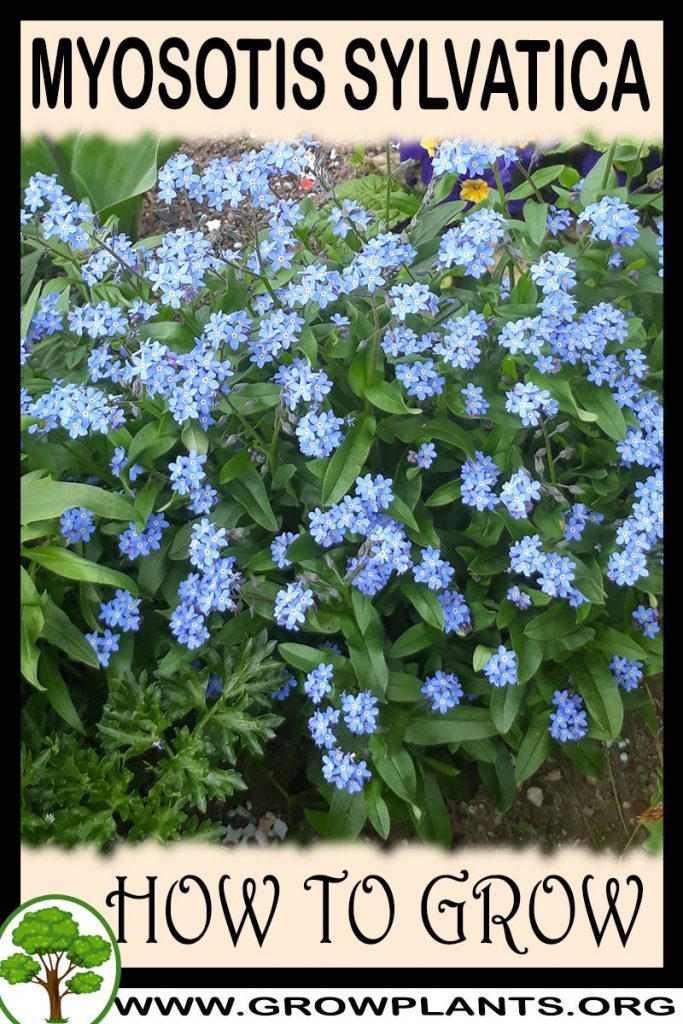
Plant Profile & Key Characteristics
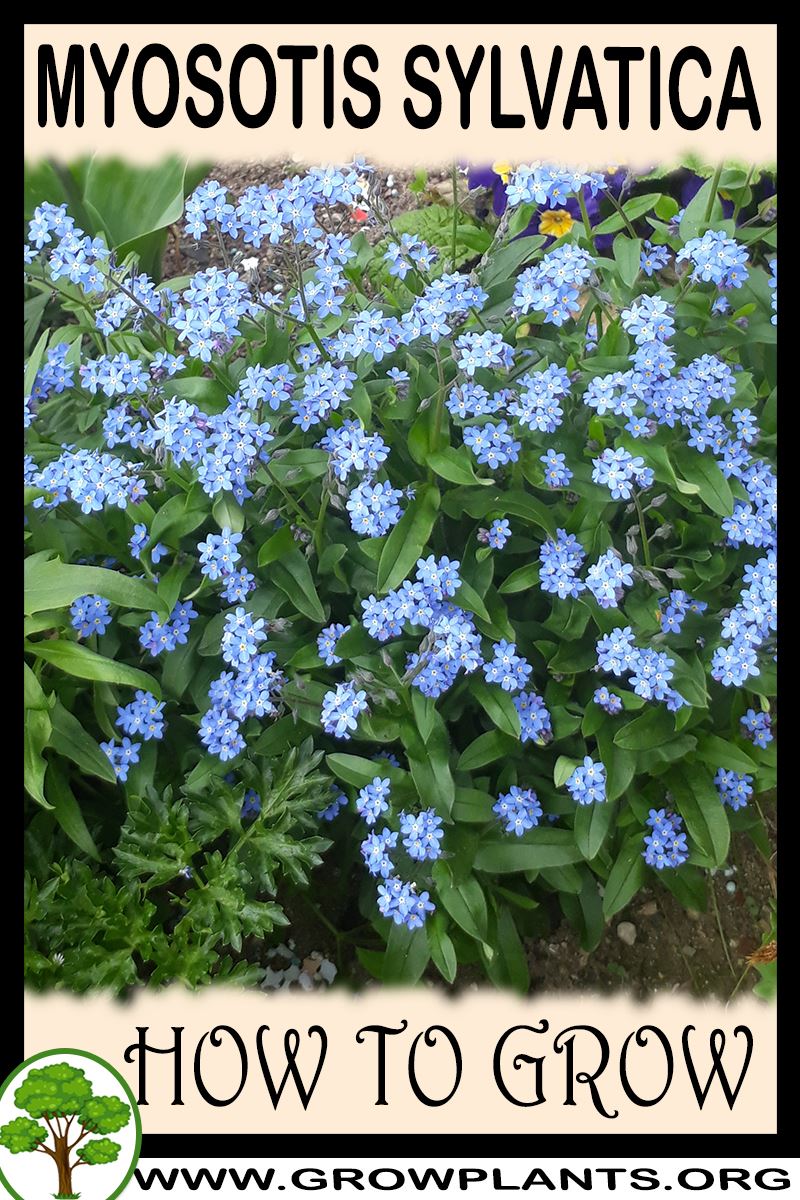
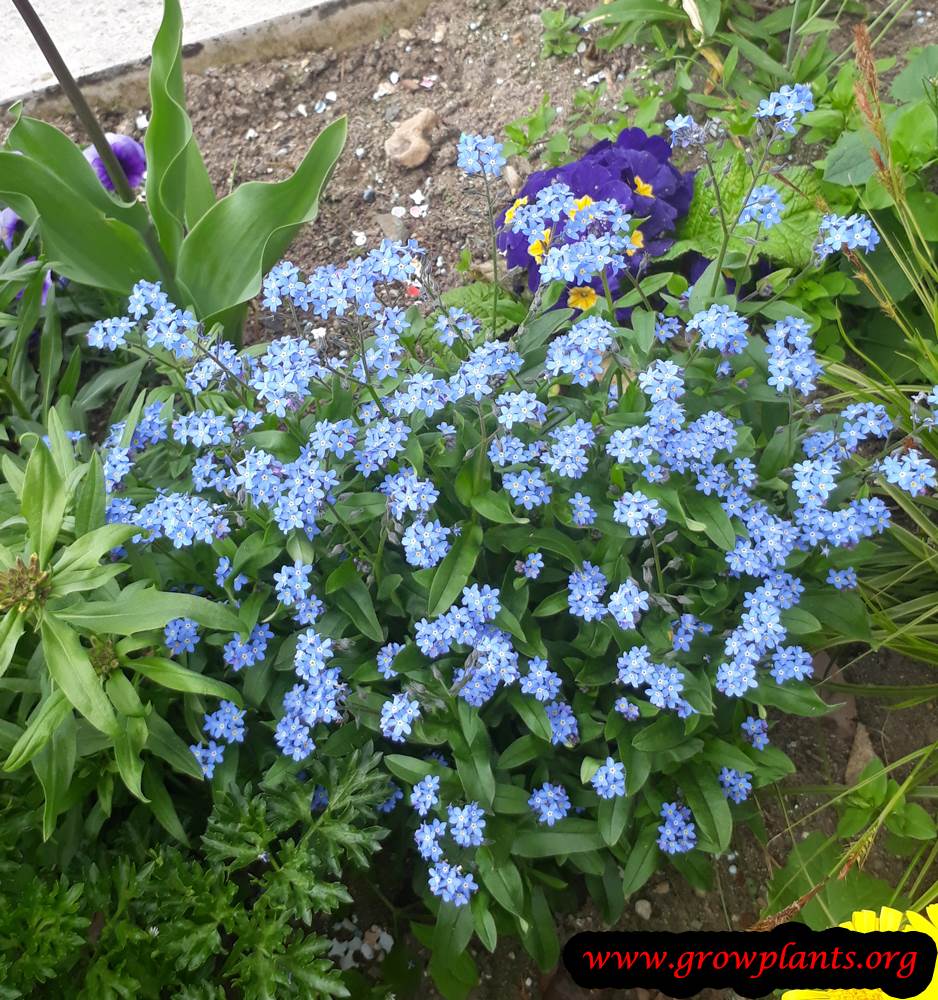
Overview: Wood forget-me-not (Myosotis sylvatica) is a low, spreading herbaceous plant of 15-30 cm (6-12 in), grown as an ornamental groundcover and spring bedding plant. It is valued for its airy sprays of small, flat blue (and white, pink or purple) flowers and self-seeds freely.
Quick Specifications
| Specification | Attribute |
|---|---|
| Plant Type / Life Cycle | Perennial (often short-lived and grown as a biennial) |
| Foliage Type | Semi-evergreen (evergreen to deciduous depending on climate) |
| Mature Size | 15-30 cm (6-12 in) |
| Growth Rate | Moderate to fast |
| Root System | Fibrous and shallow |
| Hardiness | USDA zones 3-9 |
Growth Form & Structure
- Height & Spread: Forms low mounds and drifts 15-30 cm (6-12 in) tall in the ground; also grown in pots and window boxes.
- Growth Habit & Form: Low, spreading herbaceous groundcover that self-seeds readily and can become invasive.
- Lifespan & Maturity: Individual plants are short-lived, but colonies persist and renew themselves from self-sown seed each year.
Anatomy & Physical Features
- Leaves & Foliage: Green, narrow, linear leaves.
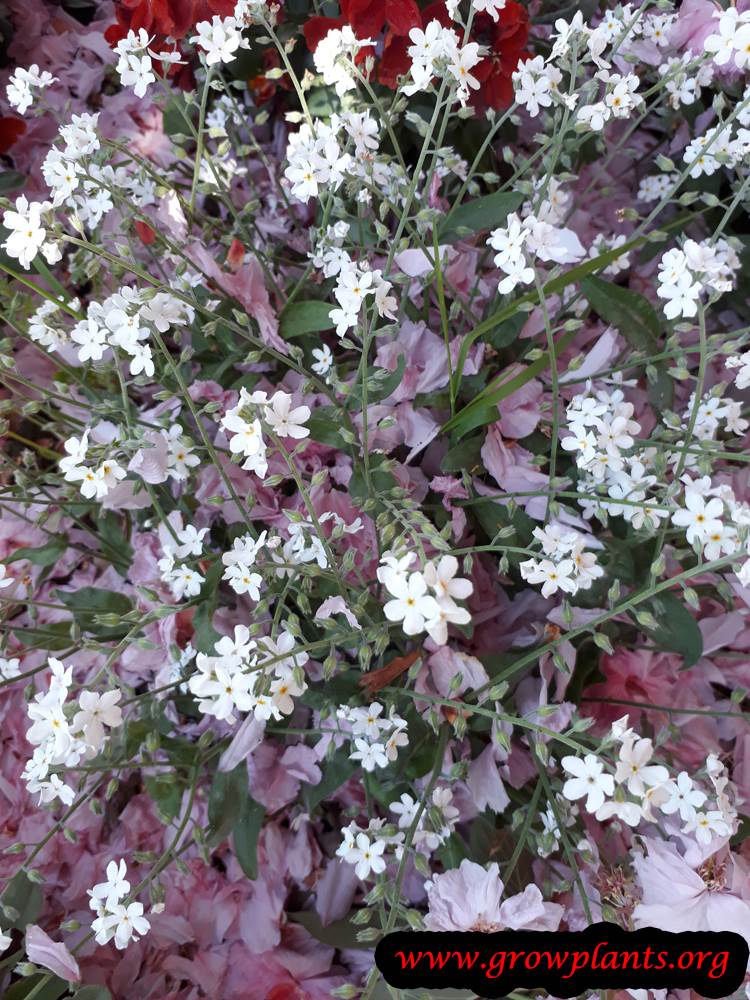
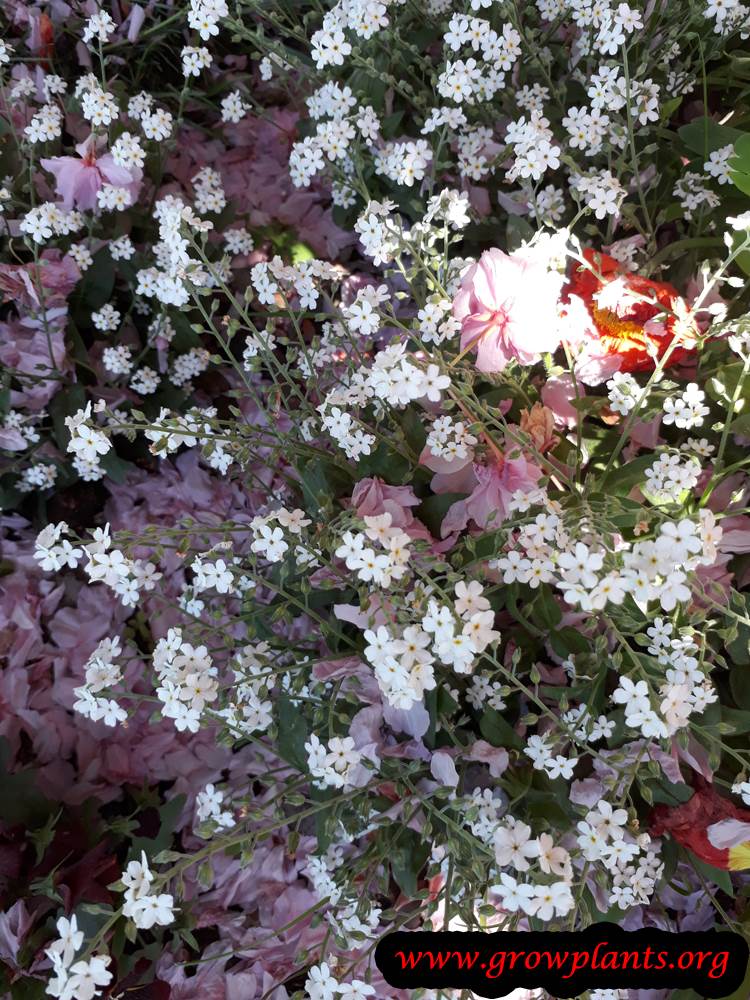
- Flower Characteristics: Small, flat, five-lobed flowers — white, purple, blue or pink — clustered at the tops of the stems in spring and summer.
Primary Uses & Landscape Value
- Functional & Ornamental Roles: Grown as an ornamental groundcover, spring bedding, edging and cottage- or woodland-garden filler, and in containers.
Care Guide: Planting, Soil & Watering
Overview: Wood forget-me-not is an easy-going groundcover plant for full sun to partial shade. It likes rich, reliably moist soil and thrives where the ground never dries out completely.
Quick Care Requirements
| Requirement | Ideal Condition |
|---|---|
| Planting Season | In spring, summer or the cooler months, avoiding hard frost |
| Growth Rate | Moderate to fast – self-seeds and spreads readily |
| Soil Type | Rich, moisture-retentive soil |
| Water Need | Moderate – keep the soil evenly moist |
Planting & Establishment
- Best Planting Season: Plant out in spring, summer or the milder cool season; they establish quickly wherever the soil stays moist and cool.
- How to Plant:
- Hole Preparation: Make a hole a little wider than the root ball and the same depth so roots knit into the surrounding soil.
- Soil Amendments: Fork in compost or well-rotted organic matter to enrich the soil and help it hold moisture.
- Planting Depth: Set the crown level with the soil surface; avoid burying the base of the stems.
- Growth Speed & Expectations: Growth is quick and the plants self-seed freely, forming spreading drifts – welcome, though it can become weedy.
Soil, Watering & Drainage Care
- Soil Mix & Drainage Needs: They want moisture-retentive soil that still drains – rich ground, or a good potting mix in containers, kept damp but not stagnant.
- Watering Schedule & Technique:
- Young / Newly Planted: Keep newly planted seedlings consistently moist while they establish.
- Established: Water whenever the top of the soil begins to dry; they dislike drying out fully.
- Seasonal Adjustments: Water more in warm, dry spells and less in cool, damp weather.
Climate, Light & Hardiness
Myosotis sylvatica, the wood forget-me-not, is a cold-hardy, cool-season plant for temperate, Mediterranean and subtropical gardens, growing in full sun to half shade on rich, moist soil. Site data rates it in zones 3–9; it withstands hard winters and is limited chiefly by summer heat, usually behaving as a self-seeding biennial.
Quick Climate Specifications
| Climate Zones | Temperate, Mediterranean and subtropical (woodland) |
|---|---|
| USDA Hardiness Zones | 3–9 (site data) |
| Approx. Survival Minimum | Established plants survive zone 3 winters (roughly −40 °C / −40 °F) |
| Frost Tolerance | High |
| Light Conditions | Full sun to half shade |
| Wind Tolerance | Moderate to high (low, mounding habit) |
Sunlight & Light Exposure
Optimal Light Setup
Full sun to half shade. It is a woodland-edge plant that flowers freely in cool spring light and appreciates dappled shade as temperatures rise.
Shade & Heat Management
Being cool-season, it declines in summer heat; part shade and steady moisture prolong the display in warm regions.
Best Exposure / Orientation
A cool, moist, lightly shaded aspect suits it best where summers are warm.
Temperature Extremes & Hardiness
USDA Hardiness & Regional Limits
Site data gives zones 3–9. It survives severe winter cold; the warm limit (about zone 9) is governed by summer heat, with self-sowing carrying colonies forward.
Cold Damage & Winter Protection
Very winter-hardy; overwintering rosettes tolerate frost and flower in spring without protection.
Frost Sensitivity
Very low - a cold-tolerant, cool-season plant that benefits from a cold winter.
Extreme Heat Tolerance
Low. Summer heat ends the display and the plants die back, relying on self-seeding to return.
Wind, Humidity & Microclimate
Wind Tolerance
Moderate to high; the low, soft mounds handle ordinary wind well.
Rainfall & Seasonal Moisture
Favours cool, reliably moist woodland conditions; it dislikes hot, dry ground.
Microclimate Recommendations
In warm regions give it a cool, damp, part-shaded position and allow it to self-seed to renew the planting.
Growing in Pots, Balconies & Indoors
Wood forget-me-not is a pretty groundcover for window boxes, patio pots and the front of mixed containers rather than a true houseplant – the grower does not class it as indoor, but a young plant grows well on a bright, cool sill. Its haze of blue flowers softens the edge of any planter.
Quick Details
- Container Size: Small – a 2-5 L (0.5-1.3 gal) pot or a shallow, wide box for a plant of 15-30 cm
- Indoor Suitability: Not a room houseplant; a bright, cool windowsill can grow it seasonally
- Best Spot: Full sun to half shade – part shade prolongs flowering in the heat
- Soil & Drainage: Rich, moisture-retentive but free-draining mix
- Watering in Pots: Keep evenly moist – small pots dry fast; never waterlogged
Indoors & On the Windowsill
- Not a houseplant: The grower marks it unsuitable for deep indoor rooms – it wants outdoor light and cool air.
- Windowsill growing: On a bright, cool sill a compact plant grows and flowers; give maximum light and avoid hot, stuffy rooms.
- Self-seeding: It seeds itself readily and is short-lived, so let pots re-sow or start fresh clumps each cycle.
On a Balcony or Patio
- Light & shelter: Thrives in a bright or lightly shaded spot; it prefers cool, steady conditions to baking, reflected heat.
- Watering: Railings and walls dry pots fast – check often and water before the mix dries out completely.
Choosing the Pot, Soil & Long-Term Care
- Pot & drainage: A small pot or trough with strong drainage holes; skip a standing water saucer to prevent root rot. Terracotta dries faster, glazed or plastic holds moisture longer.
- Potting mix: Rich, well-aerated and free-draining – potting compost or peat/coir with a little perlite.
- Feeding: A light feed during growth is enough; potted nutrients leach with watering, so feed little and often.
- Growing on: Short-lived and self-seeding – refresh the mix and replant rather than keeping old clumps long-term.
Fertilizing & Feeding
A light feeder: it flowers well with modest nutrition and is easily overfed. Give a little balanced fertilizer as growth begins and through bloom, then ease off as the season ends.
Quick Fertilizing Specs
| Feeding Level | Light |
|---|---|
| Main Nutrient Priority | Balanced nutrition; adequate nitrogen supports both foliage and bloom |
| Best Feeding Period | Active growth through the flowering season |
| Soil pH | Adaptable; slightly acidic to near-neutral |
| Reduce/Stop Feeding | Taper off as growth slows and stop feeding during dormancy. |
| Organic Options | Compost or a slow-release organic fertilizer worked into the soil |
| Micronutrients | Rarely limiting in reasonable garden soil |
Feeding by Growth Stage
Spring growth flush
Support new shoots and leaves as growth resumes in spring.
| Nutrient direction | A little balanced complete fertilizer with modest nitrogen to support new growth without forcing it. |
|---|---|
| Timing | As new growth begins in spring. |
| Frequency | Light feeding as growth starts is usually enough for the active growing season. |
| Fertilizer types | Balanced complete fertilizer, Slow-release granular fertilizer, Compost or well-rotted organic matter |
| Precautions | This is a light feeder that is easily overfed; go easy on fertilizer, especially nitrogen. |
Flowering period
Sustain flowering and overall vigor during bloom.
| Nutrient direction | Continue balanced nutrition; steady, adequate nitrogen and potassium support flowering better than high-phosphorus bloom products. |
|---|---|
| Timing | Through the flowering season. |
| Frequency | Light, steady feeding while the plant is actively flowering. |
| Fertilizer types | Balanced complete fertilizer, Slow-release granular fertilizer, Compost or well-rotted organic matter |
| Precautions | Do not rely on high-phosphorus bloom boosters; balanced feeding with enough nitrogen drives better flowering. |
Dormancy / winter rest
Let the plant rest through its dormant period; no nutrients are needed while growth has stopped.
| Nutrient direction | None – withhold fertilizer while the plant is dormant. |
|---|---|
| Timing | During the dormant or resting period, generally from late autumn through winter. |
| Frequency | No feeding at this stage. |
| Fertilizer types | No feeding at this stage – withhold fertilizer until active growth resumes in spring. |
| Precautions | Do not fertilize until active growth resumes in spring; feeding a dormant plant risks salt buildup and root injury. |
Nutrient Deficiency Signs & Corrections
Older, lower leaves turn uniformly pale green to yellow and growth is weak and slow.
| Possible causes | Low nitrogen availability in the soil, Cold or waterlogged soil limiting root uptake, Leaching of nitrogen from light, sandy soils |
|---|---|
| Appears first on | Older, lower leaves first. |
| What to check | Recent feeding history, Soil drainage and moisture, Whether older leaves are affected before the new growth |
| Possible correction | Apply a balanced complete fertilizer and correct any drainage or watering problems before adding more. |
The youngest leaves yellow between the veins while the veins themselves stay green.
| Possible causes | Alkaline soil pH reducing iron availability, Waterlogged or cold roots impairing uptake, A genuine shortage of available iron |
|---|---|
| Appears first on | New, young leaves at the shoot tips. |
| What to check | Soil pH, Drainage and root health, Whether only the new growth is affected |
| Possible correction | Correct soil pH toward the plant’s preferred range and, if the problem persists, apply a chelated iron product per its label. |
Brown, scorched leaf edges and tips, sometimes with wilting even when the soil is moist.
| Possible causes | Excess fertilizer or salt buildup in the soil, Under-watering that concentrates salts around the roots, Salt accumulation in containers |
|---|---|
| Appears first on | Leaf margins and tips across many leaves. |
| What to check | Recent fertilizer amounts, Salt buildup or the need to leach the soil, Watering consistency |
| Possible correction | Ease off feeding, leach the soil with plain water, and give only light feeding once the plant recovers. |
Pruning, Training & Seasonal Maintenance
Wood forget-me-not (Myosotis sylvatica) is a low, short-lived, commonly biennial self-seeding herbaceous groundcover, so pruning is mainly about tidying and controlling its prolific seeding rather than shaping. Shear off the spent flowering stems after bloom — do this before the seed ripens if you want to limit the carpet of seedlings, or leave some heads to let it re-sow. Old plants often decline and develop mildew after flowering and are best removed.
Quick Pruning & Maintenance Specs
| Pruning Tolerance | High – soft; shears freely, often removed after seeding |
| Primary Pruning Window | After the spring / early-summer flowering |
| Secondary Maintenance Window | End of life – removal once mildewed or spent |
| Typical Frequency | Usually a single shear or removal per generation |
| Main Objective | Tidy spent bloom, control self-seeding, remove declining plants |
| Young Plant Priority | Let seedlings and plants establish and cover |
| Mature Plant Priority | Shear spent flowers; decide on seed-set versus removal |
| Best Tool Type | Hand shears or snips |
| Avoid Heavy Pruning During | N/A structural – timing is about seed control |
Pruning by Plant Age & Size
Newly Established
Let self-sown seedlings or young plants grow on to flower; remove only damaged leaves.
Young / Formative
No training — a soft groundcover; let it knit and bloom.
Mature / Established
After bloom, shear the spent flowering growth; on a tired, mildewed, seed-set plant, pull it entirely — the next generation comes from self-sown seed.
Seasonal Pruning Schedule
Post-Flowering
Shear off the faded flower stems — timing decides the seeding: shear early to limit self-sowing, or leave some heads to ripen if you want it to return.
End of Life
Remove spent, often mildewed plants after seed set.
Ongoing Sanitary
Remove powdery-mildew-affected foliage promptly.
Structural Pruning & Training
None — management is really seed control and thinning of self-sown seedlings to the density you want.
Special Growth to Remove
Spent flower stems and declining whole plants. Self-sown seedlings are how it persists — thin them rather than blanket-removing if you want it back.
Container & Small-Space Pruning
Shear after bloom and remove when spent; expect (and thin) self-sown seedlings in nearby pots and beds.
Tools
Hand shears to cut the low mass, precision snips for spot work, and a hand-pull or fork for lifting spent plants. No woody-plant tools.
Tool Hygiene & Disease Risk
Routine, tipping to Increased late in the season — powdery mildew is common on finished plants, so remove and dispose of mildewed material rather than composting it in place. No cut-to-cut sterilising is needed.
Cut Placement & Technique
Shear the spent flower stems just above the basal foliage; to remove a plant, lift it whole once seed has set (or earlier, to limit seeding).
Heavy Pruning & Rejuvenation
Not applicable in the woody sense — you do not cut it back to regrow. You either shear spent bloom or remove the plant and rely on seedlings for renewal.
Post-Pruning Care
Little is needed; if shearing a still-vigorous plant, water to support any regrowth. Otherwise focus on managing the seedling flush.
Common Pruning Mistakes
- Letting it seed everywhere and become weedy or invasive.
- Leaving mildewed spent plants in place as a disease source.
- Expecting a short-lived plant to persist as a clump rather than through seedlings.
When NOT to Prune
There is nothing structural to avoid; simply do not shear off the seed heads if you actually want it to self-sow and return next season.
Recommended Tools (by task)
- hedge_shears — to shear the low flowering mass after bloom in one pass.
- precision_snips — for spot-removing spent stems or mildewed foliage.
Propagation Guide
Wood forget-me-not (Myosotis sylvatica) is grown chiefly from seed — it self-sows so freely that it largely propagates itself — while established clumps can also be divided; the site lists seed and vegetative propagation. Seed comes true for the species and the plants are easy, though the vigorous self-seeding can make it weedy.
Quick Propagation Specs
| Best Propagation Method | Seed (freely self-seeding) |
| Alternative Methods | Division of clumps |
| Propagation Difficulty | Easy |
| Seed True-to-Type | Species comes largely true; mixed colour strains vary |
| Vegetative True-to-Type | Yes |
| Best Propagation Season | Sow late spring to summer; division in spring or autumn |
Growing from Seed
Sowing Season
Sow in late spring or summer to flower the following season; plants also drop seed that comes up on its own, and these volunteers can be lifted and moved.
Sowing Depth & Germination
Sow the fine seed shallowly, barely covered, and keep the surface moist in a cool to moderate, lightly shaded spot. Because it seeds itself so readily it can spread further than intended, so deadhead if you want to limit it.
Division, Offsets, Pups & Suckers
An established clump can be lifted in spring or autumn and split into rooted pieces, each replanted with its roots and kept moist until it takes — useful for moving a particular plant rather than relying on seedlings.
Bloom & Flower Guide
Quick Details
- Bloom Season: Spring and summer
- Flower Appearance: Small, flat five-lobed flowers in white, purple, blue or pink, carried at the stem tips
- Edibility: Ornamental – grown for its flowers, not for eating
Detailed Blooming Overview
Wood forget-me-not is a low, spreading plant that clouds itself with tiny flat flowers through spring and into summer. The blooms gather at the tops of the stems in sky-blue along with white, purple and pink forms, each usually with a small contrasting eye, and it self-seeds freely across cool, moist ground.
Flower Characteristics
- Small, flat, five-lobed flowers with a contrasting central eye
- Colours include white, purple, blue and pink
- Carried in curling sprays at the tops of the stems
Bloom Care & Thinning
- Prolonging the show: shear plants over after the main flush to tidy them and limit excess self-seeding
- Self-seeding: leave some flowers to set seed if you want them to return and spread
- Siting: flowers best in cool, moist, partly shaded spots
Bloom Health & Protection
- Powdery mildew is very common on forget-me-nots as the display ages, whitening the leaves – better airflow and clearing spent plants help, and a sulfur-based or neem spray can slow it
Pests, Diseases & Troubleshooting
Overview: Forget-me-nots are cool-season, moisture-loving biennials/short-lived perennials whose signature problem is powdery mildew – they are famously prone to it in the warm, dry, crowded conditions of late season. Insect pests are modest (mainly aphids and slugs). The wood forget-me-not (M. sylvatica) is the most widely grown garden species and is especially mildew-prone. Lead with cultural control: space plants for airflow, water at the base, and remove mildewed growth rather than spraying first.
Quick Troubleshooting Overview
| Issue / Pest | Main Symptom | Primary Solution |
|---|---|---|
| Powdery mildew | White powdery coating on leaves; yellowing, decline | Airflow, avoid drought stress, remove leaves, sulphur |
| Aphids | Sticky, curled new growth; virus spread | Water jet, insecticidal soap |
| Slugs & snails | Ragged holes and slime on foliage/seedlings | Hand-pick, barriers, iron-phosphate bait |
| Flea beetles | Tiny shot-hole pits in leaves | Row cover on seedlings, tolerate on established plants |
| Downy mildew | Yellow blotches above, grey mould beneath | Airflow, avoid wet foliage, remove affected leaves |
| Damping-off | Seedlings collapse at soil line | Clean mix, sow thinly, avoid overwatering |
Common Pests & Management
- Aphids (Aphidoidea):
- Symptoms: Small green or black insects clustering on new shoots, flower stems and leaf undersides, causing sticky honeydew, curled growth and, importantly, spreading viruses between plants.
- Prevention & Control: Dislodge with a firm jet of water and support ladybirds, lacewings and hoverflies. Avoid lush over-feeding. Insecticidal soap clears heavy colonies; spray in the evening to spare pollinators visiting the flowers.
- Slugs & Snails (Gastropoda):
- Symptoms: Irregular holes and slime trails on soft foliage and, especially, on young seedlings and self-sown plants, worst in the damp, shady conditions forget-me-nots enjoy.
- Prevention & Control: Hand-pick after dark, set beer traps, and ring plants with grit or copper. Iron-phosphate bait is a wildlife-safe option where seedlings are being grazed to the ground.
- Flea Beetles (Chrysomelidae: Alticini):
- Symptoms: Tiny dark beetles that jump when disturbed and chew small round ‘shot-hole’ pits in the leaves, most damaging on tender seedlings.
- Prevention & Control: Protect seedlings with fine row cover until established, keep plants well-watered and vigorous, and tolerate the light cosmetic damage on mature plants, which usually outgrow it.
Diseases & Fungal Issues
- Powdery Mildew (Erysiphe / Golovinomyces spp.):
- Symptoms: The classic forget-me-not disease – a white, powdery coating spreading across leaves and stems, followed by yellowing, browning and collapse; worst in warm days, cool nights, poor airflow and drought stress late in the season.
- Treatment & Management: Space plants generously, water at the base to keep foliage dry, and avoid letting plants dry out and re-wet. Remove and destroy affected leaves. Where it recurs, sulphur or a potassium-bicarbonate spray gives good organic control; badly mildewed biennials are best pulled and composted after seeding.
- Downy Mildew (Peronospora spp.):
- Symptoms: Pale yellow blotches on upper leaf surfaces with a matching greyish, downy mould beneath, spreading in cool, wet, humid conditions and causing distortion and dieback.
- Treatment & Management: Improve airflow and drainage, avoid overhead watering, and remove affected foliage promptly. Clear plant debris at season’s end to reduce carry-over; copper can be used preventively in wet climates.
- Rust (Puccinia spp.):
- Symptoms: Small orange-brown pustules on leaf undersides with yellow flecking above, sapping vigour in humid weather.
- Treatment & Management: Remove infected leaves, space for airflow, and avoid wetting foliage; sulphur-based fungicide helps where rust is persistent.
- Gray Mould (Botrytis cinerea):
- Symptoms: Grey fuzzy rot on flowers and soft foliage in prolonged damp, spreading fast in congested plantings.
- Treatment & Management: Deadhead, thin crowded growth, and remove rotting material; keep foliage dry and airy. Fungicide is rarely needed if hygiene and spacing are good.
Growing Difficulties & Abiotic Problems
- Heat / Drought Decline:
- Symptoms: Cause & Symptoms: As cool-season plants, forget-me-nots wilt, scorch and fade quickly in hot, dry weather, which also triggers powdery mildew.
- Correction Strategy: Grow in part shade with consistently moist, humus-rich soil, mulch the roots, and treat them as spring/early-summer plants that naturally decline as heat arrives.
- Damping-off (seedlings):
- Symptoms: Cause & Symptoms: Seedlings collapse and rot at the soil line in cold, wet, overcrowded, poorly ventilated conditions.
- Correction Strategy: Sow thinly in clean, free-draining mix, avoid overwatering, and give good light and airflow; water from below where possible.
- Prolific Self-seeding:
- Symptoms: Cause & Symptoms: Forget-me-nots seed themselves everywhere, popping up as dense mats of volunteers the following year.
- Correction Strategy: Pull and compost plants after flowering but before seed drops if you want to limit spread, or let them naturalise where a carpet is welcome and thin the seedlings.
- Iron / Nutrient Chlorosis:
- Symptoms: Cause & Symptoms: Pale, yellowing leaves on poor or very alkaline soils.
- Correction Strategy: Enrich soil with organic matter, mulch, and feed lightly; correct severe chlorosis with chelated iron on alkaline ground.
What Helps – Products & Tools
Because mildew is the headline issue, keep an organic fungicide – sulphur or potassium bicarbonate – ready for the first white patches, and rely mostly on spacing and base-watering to prevent it. Insecticidal soap handles aphids, iron-phosphate bait deals with slugs on seedlings, and fine row cover protects young plants from flea beetles. A light chelated-iron feed corrects chlorosis on alkaline soil.