Plant Profile & Key Characteristics
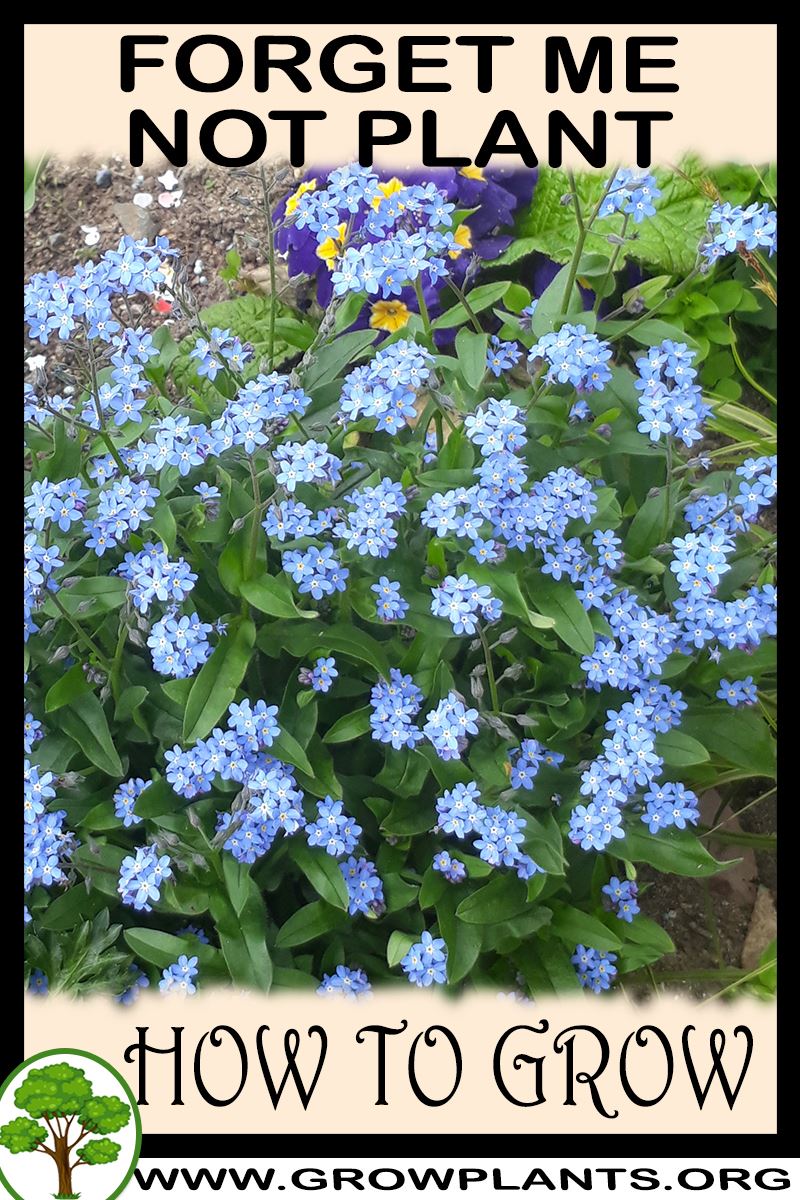
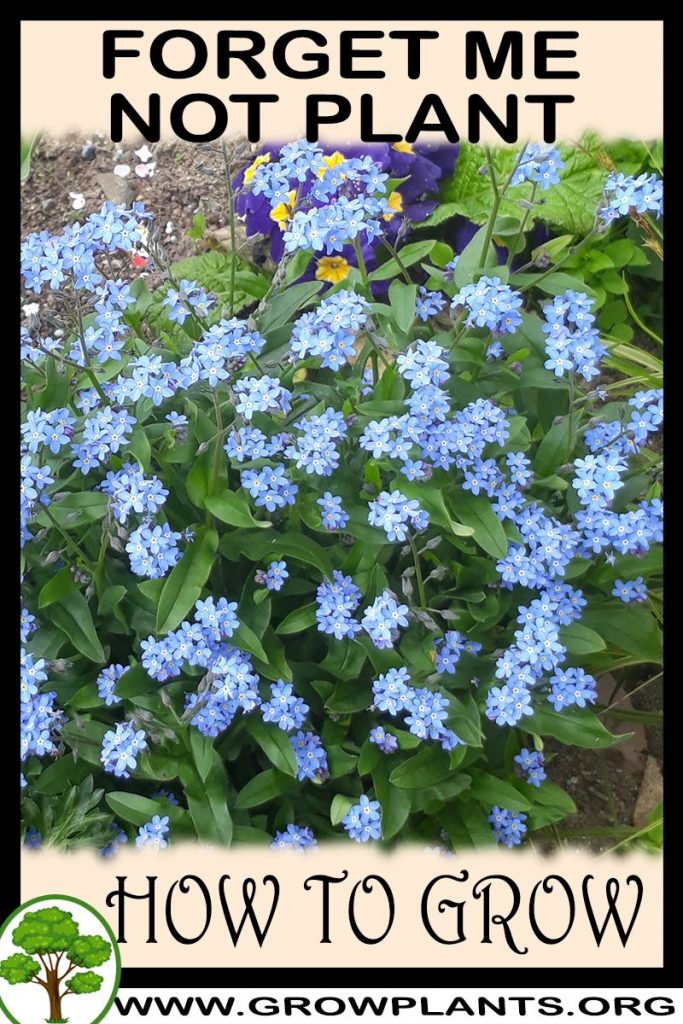
Overview: Forget-me-not (Myosotis) is a low, spreading herbaceous plant of 15-30 cm (6-12 in), grown as an ornamental groundcover and spring bedding plant. It is loved for its clouds of small, flat flowers, classically sky-blue, and it self-seeds freely.
Quick Specifications
| Specification | Attribute |
|---|---|
| Plant Type / Life Cycle | Perennial (often short-lived and grown as a biennial) |
| Foliage Type | Semi-evergreen (evergreen to deciduous depending on climate) |
| Mature Size | 15-30 cm (6-12 in) |
| Growth Rate | Moderate to fast |
| Root System | Fibrous and shallow |
| Hardiness | USDA zones 3-9 |
Growth Form & Structure
- Height & Spread: Forms low mounds and drifts 15-30 cm (6-12 in) tall in the ground; also grown in pots and window boxes.
- Growth Habit & Form: Low, spreading herbaceous groundcover that self-seeds readily and can become invasive.
- Lifespan & Maturity: Individual plants are short-lived, but colonies persist and renew themselves from self-sown seed each year.
Anatomy & Physical Features
- Leaves & Foliage: Green, narrow, linear leaves.
- Flower Characteristics: Small, flat, five-lobed flowers — white, purple, blue, pink or yellow — clustered at the tops of the stems in spring and summer.
Primary Uses & Landscape Value
- Functional & Ornamental Roles: Grown as an ornamental groundcover, spring bedding, edging and cottage- or woodland-garden filler, and in containers.
Care Guide: Planting, Soil & Watering
Overview: Forget-me-nots are easy-going groundcover plants for full sun to partial shade. They like rich, reliably moist soil and thrive where the ground never dries out completely.
Quick Care Requirements
| Requirement | Ideal Condition |
|---|---|
| Planting Season | In spring, summer or the cooler months, avoiding hard frost |
| Growth Rate | Moderate to fast – self-seeds and spreads readily |
| Soil Type | Rich, moisture-retentive soil |
| Water Need | Moderate – keep the soil evenly moist |
Planting & Establishment
- Best Planting Season: Plant out in spring, summer or the milder cool season; they establish quickly wherever the soil stays moist and cool.
- How to Plant:
- Hole Preparation: Make a hole a little wider than the root ball and the same depth so roots knit into the surrounding soil.
- Soil Amendments: Fork in compost or well-rotted organic matter to enrich the soil and help it hold moisture.
- Planting Depth: Set the crown level with the soil surface; avoid burying the base of the stems.
- Growth Speed & Expectations: Growth is quick and the plants self-seed freely, forming spreading drifts – welcome, though it can become weedy.
Soil, Watering & Drainage Care
- Soil Mix & Drainage Needs: They want moisture-retentive soil that still drains – rich ground, or a good potting mix in containers, kept damp but not stagnant.
- Watering Schedule & Technique:
- Young / Newly Planted: Keep newly planted seedlings consistently moist while they establish.
- Established: Water whenever the top of the soil begins to dry; they dislike drying out fully.
- Seasonal Adjustments: Water more in warm, dry spells and less in cool, damp weather.
Climate, Light & Hardiness
Forget-me-not is a cold-hardy, cool-season herbaceous plant for temperate, Mediterranean and subtropical gardens, growing best in full sun to half shade on rich, moist soil. Site data rates it in zones 3–9; it takes hard winters easily and is limited mainly by summer heat, often behaving as a self-seeding biennial.
Quick Climate Specifications
| Climate Zones | Temperate, Mediterranean and subtropical |
|---|---|
| USDA Hardiness Zones | 3–9 (site data) |
| Approx. Survival Minimum | Established plants survive zone 3 winters (roughly −40 °C / −40 °F) |
| Frost Tolerance | High |
| Light Conditions | Full sun to half shade |
| Wind Tolerance | Moderate to high (low, mounding habit) |
Sunlight & Light Exposure
Optimal Light Setup
Full sun to half shade. Cool spring light gives the best flowering; light shade helps prolong the display as the season warms.
Shade & Heat Management
As a cool-season plant it fades in summer heat; part shade and moist soil extend its performance in warmer regions.
Best Exposure / Orientation
A cool, moisture-retentive, lightly shaded aspect suits it best where summers are warm.
Temperature Extremes & Hardiness
USDA Hardiness & Regional Limits
Site data gives zones 3–9. Winter cold is no obstacle; the warm end (about zone 9) is set by summer heat, after which plants decline - but abundant self-sowing keeps colonies going.
Cold Damage & Winter Protection
Very winter-hardy; overwintering rosettes shrug off frost and burst into bloom in spring without protection.
Frost Sensitivity
Very low - a cold-tolerant, cool-season plant that welcomes a cold winter.
Extreme Heat Tolerance
Low. Heat is the limiting factor: plants tire and die back as summer arrives, relying on self-seeding to return.
Wind, Humidity & Microclimate
Wind Tolerance
Moderate to high; the low, soft mounds are not troubled by ordinary wind.
Rainfall & Seasonal Moisture
Favours cool, reliably moist conditions; it dislikes hot, dry ground and thrives with spring moisture.
Microclimate Recommendations
In warm regions give it a cool, damp, part-shaded spot and let it self-seed to renew the planting each year.
Growing in Pots, Balconies & Indoors
Forget-me-nots are charming, low groundcover plants for container edges, window boxes and patio pots rather than true houseplants – the grower does not class them as indoor plants, though a young clump can be raised on a bright, cool windowsill. Their soft blue flowers work beautifully spilling over the rim of a mixed planter.
Quick Details
- Container Size: Small – a 2-5 L (0.5-1.3 gal) pot or a shallow, wide window box suits a plant of 15-30 cm
- Indoor Suitability: Not a room houseplant; a bright, cool sill can grow it for the season
- Best Spot: Full sun to half shade – part shade keeps the flowers fresh in hot climates
- Soil & Drainage: Rich, moisture-retentive but free-draining mix
- Watering in Pots: Keep evenly moist – small pots dry fast, but never waterlogged
Indoors & On the Windowsill
- Not a houseplant: The grower marks it unsuitable for deep-room culture – it wants outdoor light and cool air.
- Windowsill growing: On a bright, cool sill a compact plant will grow and flower; give it as much light as possible and avoid hot, dry rooms.
- Self-seeding: It sets seed freely and is short-lived, so let a pot re-sow itself or start fresh plants each cycle.
On a Balcony or Patio
- Light & shelter: Happy in a bright or lightly shaded spot; it appreciates cooler positions and steady moisture over baking, reflected heat.
- Watering: Walls and railings dry pots quickly, so check moisture often and water before the mix dries right out.
Choosing the Pot, Soil & Long-Term Care
- Pot & drainage: Any small pot or trough with strong drainage holes; skip a standing water saucer so roots never sit wet. Terracotta breathes and dries faster, glazed or plastic holds moisture longer.
- Potting mix: A rich, well-aerated mix that still drains – potting compost or peat/coir with a little perlite.
- Feeding: A light feed through growth is plenty; potted nutrients leach with watering, so little and often beats a heavy dose.
- Growing on: As a short-lived, self-seeding plant there is little repotting – refresh the mix and replant when clumps tire.
Fertilizing & Feeding
A light feeder: it flowers well with modest nutrition and is easily overfed. Give a little balanced fertilizer as growth begins and through bloom, then ease off as the season ends.
Quick Fertilizing Specs
| Feeding Level | Light |
|---|---|
| Main Nutrient Priority | Balanced nutrition; adequate nitrogen supports both foliage and bloom |
| Best Feeding Period | Active growth through the flowering season |
| Soil pH | Adaptable; slightly acidic to near-neutral |
| Reduce/Stop Feeding | Taper off as growth slows and stop feeding during dormancy. |
| Organic Options | Compost or a slow-release organic fertilizer worked into the soil |
| Micronutrients | Rarely limiting in reasonable garden soil |
Feeding by Growth Stage
Spring growth flush
Support new shoots and leaves as growth resumes in spring.
| Nutrient direction | A little balanced complete fertilizer with modest nitrogen to support new growth without forcing it. |
|---|---|
| Timing | As new growth begins in spring. |
| Frequency | Light feeding as growth starts is usually enough for the active growing season. |
| Fertilizer types | Balanced complete fertilizer, Slow-release granular fertilizer, Compost or well-rotted organic matter |
| Precautions | This is a light feeder that is easily overfed; go easy on fertilizer, especially nitrogen. |
Flowering period
Sustain flowering and overall vigor during bloom.
| Nutrient direction | Continue balanced nutrition; steady, adequate nitrogen and potassium support flowering better than high-phosphorus bloom products. |
|---|---|
| Timing | Through the flowering season. |
| Frequency | Light, steady feeding while the plant is actively flowering. |
| Fertilizer types | Balanced complete fertilizer, Slow-release granular fertilizer, Compost or well-rotted organic matter |
| Precautions | Do not rely on high-phosphorus bloom boosters; balanced feeding with enough nitrogen drives better flowering. |
Dormancy / winter rest
Let the plant rest through its dormant period; no nutrients are needed while growth has stopped.
| Nutrient direction | None – withhold fertilizer while the plant is dormant. |
|---|---|
| Timing | During the dormant or resting period, generally from late autumn through winter. |
| Frequency | No feeding at this stage. |
| Fertilizer types | No feeding at this stage – withhold fertilizer until active growth resumes in spring. |
| Precautions | Do not fertilize until active growth resumes in spring; feeding a dormant plant risks salt buildup and root injury. |
Nutrient Deficiency Signs & Corrections
Older, lower leaves turn uniformly pale green to yellow and growth is weak and slow.
| Possible causes | Low nitrogen availability in the soil, Cold or waterlogged soil limiting root uptake, Leaching of nitrogen from light, sandy soils |
|---|---|
| Appears first on | Older, lower leaves first. |
| What to check | Recent feeding history, Soil drainage and moisture, Whether older leaves are affected before the new growth |
| Possible correction | Apply a balanced complete fertilizer and correct any drainage or watering problems before adding more. |
The youngest leaves yellow between the veins while the veins themselves stay green.
| Possible causes | Alkaline soil pH reducing iron availability, Waterlogged or cold roots impairing uptake, A genuine shortage of available iron |
|---|---|
| Appears first on | New, young leaves at the shoot tips. |
| What to check | Soil pH, Drainage and root health, Whether only the new growth is affected |
| Possible correction | Correct soil pH toward the plant’s preferred range and, if the problem persists, apply a chelated iron product per its label. |
Brown, scorched leaf edges and tips, sometimes with wilting even when the soil is moist.
| Possible causes | Excess fertilizer or salt buildup in the soil, Under-watering that concentrates salts around the roots, Salt accumulation in containers |
|---|---|
| Appears first on | Leaf margins and tips across many leaves. |
| What to check | Recent fertilizer amounts, Salt buildup or the need to leach the soil, Watering consistency |
| Possible correction | Ease off feeding, leach the soil with plain water, and give only light feeding once the plant recovers. |
Pruning, Training & Seasonal Maintenance
Forget-me-not (Myosotis) is a low, short-lived, perennial-to-biennial self-seeding herbaceous groundcover, so pruning is mainly about tidying and controlling its prolific seeding rather than shaping. Shear off the spent flowering stems after bloom — do this before the seed ripens if you want to limit the carpet of seedlings, or leave some heads to let it re-sow. Old plants often decline and develop mildew after flowering and are best removed.
Quick Pruning & Maintenance Specs
| Pruning Tolerance | High – soft; shears freely, often removed after seeding |
| Primary Pruning Window | After the spring / early-summer flowering |
| Secondary Maintenance Window | End of life – removal once mildewed or spent |
| Typical Frequency | Usually a single shear or removal per generation |
| Main Objective | Tidy spent bloom, control self-seeding, remove declining plants |
| Young Plant Priority | Let seedlings and plants establish and cover |
| Mature Plant Priority | Shear spent flowers; decide on seed-set versus removal |
| Best Tool Type | Hand shears or snips |
| Avoid Heavy Pruning During | N/A structural – timing is about seed control |
Pruning by Plant Age & Size
Newly Established
Let self-sown seedlings or young plants grow on to flower; remove only damaged leaves.
Young / Formative
No training — a soft groundcover; let it knit and bloom.
Mature / Established
After bloom, shear the spent flowering growth; on a tired, mildewed, seed-set plant, pull it entirely — the next generation comes from self-sown seed.
Seasonal Pruning Schedule
Post-Flowering
Shear off the faded flower stems — timing decides the seeding: shear early to limit self-sowing, or leave some heads to ripen if you want it to return.
End of Life
Remove spent, often mildewed plants after seed set.
Ongoing Sanitary
Remove powdery-mildew-affected foliage promptly.
Structural Pruning & Training
None — management is really seed control and thinning of self-sown seedlings to the density you want.
Special Growth to Remove
Spent flower stems and declining whole plants. Self-sown seedlings are how it persists — thin them rather than blanket-removing if you want it back.
Container & Small-Space Pruning
Shear after bloom and remove when spent; expect (and thin) self-sown seedlings in nearby pots and beds.
Tools
Hand shears to cut the low mass, precision snips for spot work, and a hand-pull or fork for lifting spent plants. No woody-plant tools.
Tool Hygiene & Disease Risk
Routine, tipping to Increased late in the season — powdery mildew is common on finished plants, so remove and dispose of mildewed material rather than composting it in place. No cut-to-cut sterilising is needed.
Cut Placement & Technique
Shear the spent flower stems just above the basal foliage; to remove a plant, lift it whole once seed has set (or earlier, to limit seeding).
Heavy Pruning & Rejuvenation
Not applicable in the woody sense — you do not cut it back to regrow. You either shear spent bloom or remove the plant and rely on seedlings for renewal.
Post-Pruning Care
Little is needed; if shearing a still-vigorous plant, water to support any regrowth. Otherwise focus on managing the seedling flush.
Common Pruning Mistakes
- Letting it seed everywhere and become weedy or invasive.
- Leaving mildewed spent plants in place as a disease source.
- Expecting a short-lived plant to persist as a clump rather than through seedlings.
When NOT to Prune
There is nothing structural to avoid; simply do not shear off the seed heads if you actually want it to self-sow and return next season.
Recommended Tools (by task)
- hedge_shears — to shear the low flowering mass after bloom in one pass.
- precision_snips — for spot-removing spent stems or mildewed foliage.
Propagation Guide
Forget-me-not (Myosotis) is grown chiefly from seed — it self-sows so freely that it largely propagates itself — while established clumps can also be divided; the site lists seed and vegetative propagation. Seed comes true for the species and the plants are easy, though the vigorous self-seeding can make it weedy.
Quick Propagation Specs
| Best Propagation Method | Seed (freely self-seeding) |
| Alternative Methods | Division of clumps |
| Propagation Difficulty | Easy |
| Seed True-to-Type | Species comes largely true; mixed colour strains vary |
| Vegetative True-to-Type | Yes |
| Best Propagation Season | Sow late spring to summer; division in spring or autumn |
Growing from Seed
Sowing Season
Sow in late spring or summer to flower the following season; plants also drop seed that comes up on its own, and these volunteers can be lifted and moved.
Sowing Depth & Germination
Sow the fine seed shallowly, barely covered, and keep the surface moist in a cool to moderate, lightly shaded spot. Because it seeds itself so readily it can spread further than intended, so deadhead if you want to limit it.
Division, Offsets, Pups & Suckers
An established clump can be lifted in spring or autumn and split into rooted pieces, each replanted with its roots and kept moist until it takes — useful for moving a particular plant rather than relying on seedlings.
Bloom & Flower Guide
Quick Details
- Bloom Season: Spring and summer
- Flower Appearance: Small, flat five-lobed flowers in white, purple, blue, pink or yellow, carried at the stem tips
- Edibility: Ornamental – grown for its flowers, not for eating
Detailed Blooming Overview
Forget-me-nots are low, spreading plants that foam with tiny flat flowers through spring and into summer. The blooms cluster at the tops of the stems in classic sky-blue as well as white, purple, pink and yellow forms, and they self-seed freely to carpet cool, moist ground.
Flower Characteristics
- Small, flat, five-lobed flowers, often with a contrasting eye
- Colours include white, purple, blue, pink and yellow
- Carried in curling sprays at the tops of the stems
Bloom Care & Thinning
- Prolonging the show: shear plants over after the main flush to tidy them and reduce excess self-seeding
- Self-seeding: leave some flowers to set seed if you want them to return and spread
- Siting: flowers best in cool, moist, partly shaded spots
Bloom Health & Protection
- Powdery mildew is very common on forget-me-nots as the display ages, coating leaves in white – better airflow and removing spent plants help, and a sulfur-based or neem spray can slow it
Pests, Diseases & Troubleshooting
Overview: Forget-me-nots are cool-season, moisture-loving biennials/short-lived perennials whose signature problem is powdery mildew – they are famously prone to it in the warm, dry, crowded conditions of late season. Insect pests are modest (mainly aphids and slugs). This entry covers the genus generally, whose members share the same profile. Lead with cultural control: space plants for airflow, water at the base, and remove mildewed growth rather than spraying first.
Quick Troubleshooting Overview
| Issue / Pest | Main Symptom | Primary Solution |
|---|---|---|
| Powdery mildew | White powdery coating on leaves; yellowing, decline | Airflow, avoid drought stress, remove leaves, sulphur |
| Aphids | Sticky, curled new growth; virus spread | Water jet, insecticidal soap |
| Slugs & snails | Ragged holes and slime on foliage/seedlings | Hand-pick, barriers, iron-phosphate bait |
| Flea beetles | Tiny shot-hole pits in leaves | Row cover on seedlings, tolerate on established plants |
| Downy mildew | Yellow blotches above, grey mould beneath | Airflow, avoid wet foliage, remove affected leaves |
| Damping-off | Seedlings collapse at soil line | Clean mix, sow thinly, avoid overwatering |
Common Pests & Management
- Aphids (Aphidoidea):
- Symptoms: Small green or black insects clustering on new shoots, flower stems and leaf undersides, causing sticky honeydew, curled growth and, importantly, spreading viruses between plants.
- Prevention & Control: Dislodge with a firm jet of water and support ladybirds, lacewings and hoverflies. Avoid lush over-feeding. Insecticidal soap clears heavy colonies; spray in the evening to spare pollinators visiting the flowers.
- Slugs & Snails (Gastropoda):
- Symptoms: Irregular holes and slime trails on soft foliage and, especially, on young seedlings and self-sown plants, worst in the damp, shady conditions forget-me-nots enjoy.
- Prevention & Control: Hand-pick after dark, set beer traps, and ring plants with grit or copper. Iron-phosphate bait is a wildlife-safe option where seedlings are being grazed to the ground.
- Flea Beetles (Chrysomelidae: Alticini):
- Symptoms: Tiny dark beetles that jump when disturbed and chew small round ‘shot-hole’ pits in the leaves, most damaging on tender seedlings.
- Prevention & Control: Protect seedlings with fine row cover until established, keep plants well-watered and vigorous, and tolerate the light cosmetic damage on mature plants, which usually outgrow it.
Diseases & Fungal Issues
- Powdery Mildew (Erysiphe / Golovinomyces spp.):
- Symptoms: The classic forget-me-not disease – a white, powdery coating spreading across leaves and stems, followed by yellowing, browning and collapse; worst in warm days, cool nights, poor airflow and drought stress late in the season.
- Treatment & Management: Space plants generously, water at the base to keep foliage dry, and avoid letting plants dry out and re-wet. Remove and destroy affected leaves. Where it recurs, sulphur or a potassium-bicarbonate spray gives good organic control; badly mildewed biennials are best pulled and composted after seeding.
- Downy Mildew (Peronospora spp.):
- Symptoms: Pale yellow blotches on upper leaf surfaces with a matching greyish, downy mould beneath, spreading in cool, wet, humid conditions and causing distortion and dieback.
- Treatment & Management: Improve airflow and drainage, avoid overhead watering, and remove affected foliage promptly. Clear plant debris at season’s end to reduce carry-over; copper can be used preventively in wet climates.
- Rust (Puccinia spp.):
- Symptoms: Small orange-brown pustules on leaf undersides with yellow flecking above, sapping vigour in humid weather.
- Treatment & Management: Remove infected leaves, space for airflow, and avoid wetting foliage; sulphur-based fungicide helps where rust is persistent.
- Gray Mould (Botrytis cinerea):
- Symptoms: Grey fuzzy rot on flowers and soft foliage in prolonged damp, spreading fast in congested plantings.
- Treatment & Management: Deadhead, thin crowded growth, and remove rotting material; keep foliage dry and airy. Fungicide is rarely needed if hygiene and spacing are good.
Growing Difficulties & Abiotic Problems
- Heat / Drought Decline:
- Symptoms: Cause & Symptoms: As cool-season plants, forget-me-nots wilt, scorch and fade quickly in hot, dry weather, which also triggers powdery mildew.
- Correction Strategy: Grow in part shade with consistently moist, humus-rich soil, mulch the roots, and treat them as spring/early-summer plants that naturally decline as heat arrives.
- Damping-off (seedlings):
- Symptoms: Cause & Symptoms: Seedlings collapse and rot at the soil line in cold, wet, overcrowded, poorly ventilated conditions.
- Correction Strategy: Sow thinly in clean, free-draining mix, avoid overwatering, and give good light and airflow; water from below where possible.
- Prolific Self-seeding:
- Symptoms: Cause & Symptoms: Forget-me-nots seed themselves everywhere, popping up as dense mats of volunteers the following year.
- Correction Strategy: Pull and compost plants after flowering but before seed drops if you want to limit spread, or let them naturalise where a carpet is welcome and thin the seedlings.
- Iron / Nutrient Chlorosis:
- Symptoms: Cause & Symptoms: Pale, yellowing leaves on poor or very alkaline soils.
- Correction Strategy: Enrich soil with organic matter, mulch, and feed lightly; correct severe chlorosis with chelated iron on alkaline ground.
What Helps – Products & Tools
Because mildew is the headline issue, keep an organic fungicide – sulphur or potassium bicarbonate – ready for the first white patches, and rely mostly on spacing and base-watering to prevent it. Insecticidal soap handles aphids, iron-phosphate bait deals with slugs on seedlings, and fine row cover protects young plants from flea beetles. A light chelated-iron feed corrects chlorosis on alkaline soil.