Plant Profile & Key Characteristics
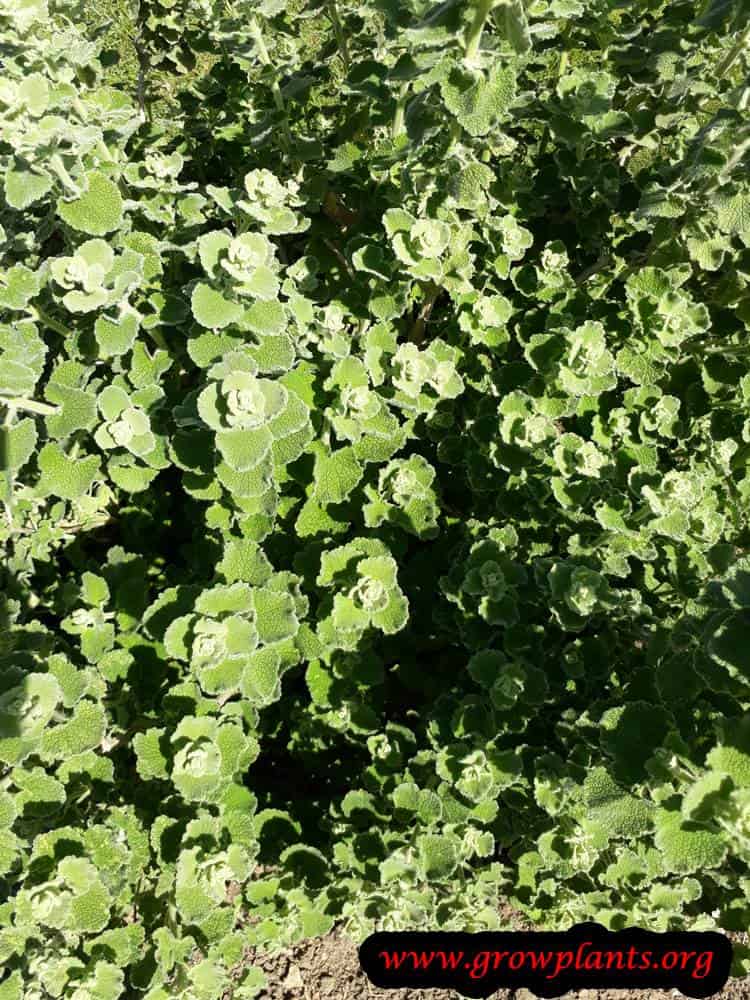
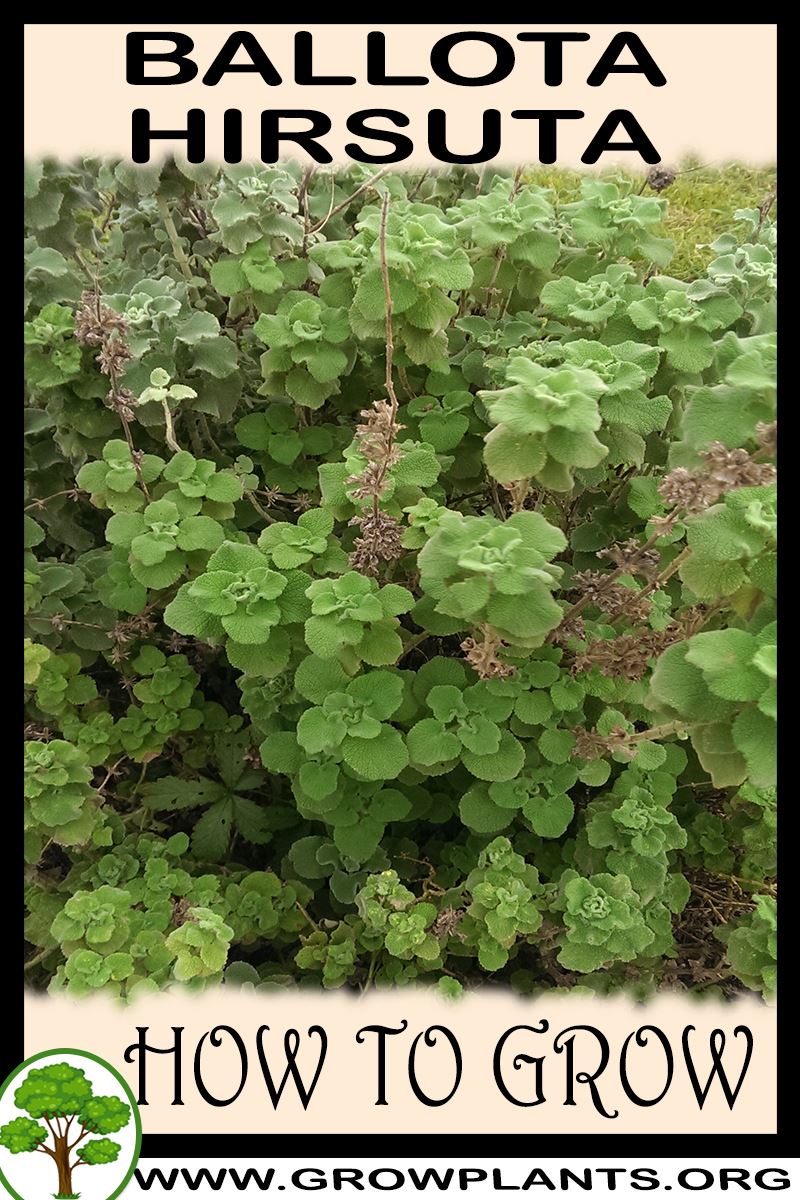
Overview: Ballota hirsuta (Greek horehound) is a moderate-growing evergreen shrub reaching 30-50 cm (12-20 in), with soft, hairy grey-green foliage. It is grown as a drought-tolerant ornamental.
Quick Specifications
| Specification | Attribute |
|---|---|
| Plant Type / Life Cycle | Perennial (can be grown as an annual) |
| Foliage Type | Evergreen |
| Mature Size | 30-50 cm (12-20 in) tall |
| Growth Rate | Moderate |
| Hardiness | USDA zones 7-10 as perennial; 5-7 as annual |
Growth Form & Structure
- Height & Spread: 30-50 cm (12-20 in) in the ground; also suited to containers
- Growth Habit & Form: Bushy, mounded evergreen shrub
- Lifespan & Maturity: Moderate rate to reach full size; can spread and become invasive
Anatomy & Physical Features
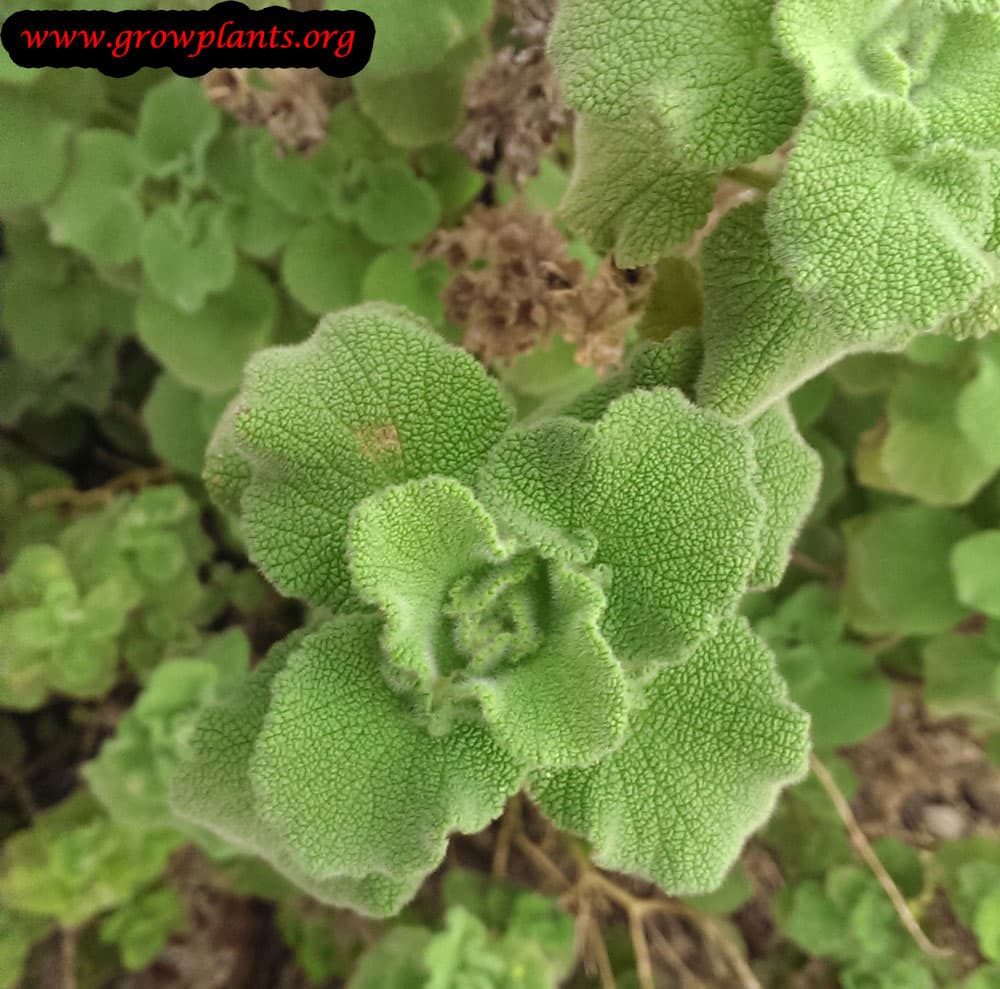
- Leaves & Foliage: Round to heart-shaped green leaves with wavy margins, softly hairy
- Flower Characteristics: Small purple two-lipped flowers borne along the stems (see the Bloom guide)
Primary Uses & Landscape Value
- Functional & Ornamental Roles: Drought-tolerant ornamental for dry, Mediterranean-style borders and containers
Care Guide: Planting, Soil & Watering
Overview: Ballota hirsuta (Greek horehound) is a Mediterranean, drought-tolerant shrub that grows best in full sun and sharply drained soil. Its hairy, gray foliage is adapted to heat and dry conditions, so it needs only low to moderate water and resents wet, heavy ground.
Quick Care Requirements
| Requirement | Ideal Condition |
|---|---|
| Planting Season | In spring or autumn, avoiding peak summer heat |
| Growth Rate | Moderate |
| Soil Type | Well-draining, lean soil; happiest in gritty, dry ground |
| Water Need | Low to Moderate – let the soil dry between waterings once established |
Planting & Establishment
- Best Planting Season: Plant in spring or autumn, avoiding the hottest part of summer, in a sunny, free-draining spot.
- How to Plant:
- Hole Preparation: Dig a hole as deep as and a little wider than the root ball.
- Soil Amendments: Work in grit or coarse sand if the soil is heavy; rich feeding is unnecessary and softens growth.
- Planting Depth: Set the root collar level with the soil surface and keep the stem base clear of mounded soil.
- Growth Speed & Expectations: Moderate, forming a rounded shrub of about 30–50 cm; note it can be invasive.
Soil, Watering & Drainage Care
- Soil Mix & Drainage Needs: Wants sharp drainage; use a gritty, free-draining soil in the ground or a well-draining, gritty potting mix in containers to prevent root rot.
- Watering Schedule & Technique:
- Young / Newly Planted: Water lightly and regularly until established.
- Established: Water sparingly and deeply, letting the soil dry out well between waterings.
- Seasonal Adjustments: A little more in extended heat; almost none in cool, wet weather.
Climate, Light & Hardiness
Ballota hirsuta is a hairy, drought-tolerant Mediterranean subshrub for hot, sunny sites and sharply drained soil. Site data rates it in zones 7–10 as a perennial (and it can be grown as an annual in colder zones 5–7); it thrives on full sun, heat and wind but dislikes cold, wet winters.
Quick Climate Specifications
| Climate Zones | Mediterranean, subtropical, semi-desert and warm temperate |
|---|---|
| USDA Hardiness Zones | 7–10 as a perennial; grown as an annual in zones 5–7 (site data) |
| Cold Damage Begins | Hard frost damages the soft, felted growth |
| Approx. Survival Minimum | Established plants survive zone 7 winters (roughly −18 °C / 0 °F), best with dry roots |
| Frost Tolerance | Low to moderate |
| Light Conditions | Full sun |
| Wind Tolerance | High |
| Salt / Coastal Tolerance | Moderate to high (typical of Mediterranean subshrubs) |
Sunlight & Light Exposure
Optimal Light Setup
Full sun all day keeps the felted foliage dense and the plant compact and healthy.
Direct Sun Requirement
Yes - a true sun-lover; in shade it grows lax and is prone to rot.
Best Exposure / Orientation
A hot, open, south- or west-facing spot with very fast drainage is ideal.
Temperature Extremes & Hardiness
USDA Hardiness & Regional Limits
Site data gives zones 7–10 as a perennial. In colder zones 5–7 it is commonly treated as an annual because winters fall below its cold limit; cold tolerance still varies with drainage, exposure and maturity.
Cold Damage & Winter Protection
Frost spoils the soft young growth, and cold wet soil is the main hazard. Sharp drainage and a dry, sheltered position give the best winter protection.
Frost Sensitivity
Low to moderate - light frost on dry soil is tolerated; prolonged hard frost is not.
Extreme Heat Tolerance
High - the hairy leaves are an adaptation to strong sun and heat.
Wind, Humidity & Microclimate
Dry-Air Tolerance
Excellent; it is fully at home in hot, dry air.
Wind Tolerance
High; the low, tough subshrub withstands exposed, windy sites.
Coastal / Salt Tolerance
Suited to exposed coastal gardens, taking salt-laden wind moderately to well.
Rainfall & Seasonal Moisture
Adapted to wet winters and dry summers; it strongly dislikes constant soil moisture, especially in the cold.
Microclimate Recommendations
Give it the hottest, sunniest, best-drained spot; where winters are marginal, a dry aspect against a warm wall aids survival.
Growing in Pots, Balconies & Indoors
Ballota hirsuta is a silvery, aromatic Mediterranean sub-shrub, and the grower does not list it as a houseplant – it wants full sun and dry, sharp conditions that a room cannot give. In a container on a hot, sunny patio, though, its felted grey foliage thrives with very little care.
Quick Details
- Container Size: A modest pot (about 5-10 L / 1.3-2.6 gal) with sharp drainage
- Indoor Suitability: Not a true houseplant; only a very sunny, airy windowsill could suit its need for strong light and dry air
- Best Spot: Full sun – the hotter and brighter, the better
- Soil & Drainage: Gritty, free-draining mix; it hates wet feet
- Watering in Pots: Sparing – let it dry well between waterings; it is drought-tolerant once established
Indoors & On the Windowsill
- Not a houseplant: The grower marks it unsuitable indoors. It needs full sun and dry, airy conditions, so a room’s low light and still air do not suit it.
- Sunniest sill only: If grown inside at all, only the brightest, sunniest windowsill with good airflow will do, kept on the dry side.
On a Balcony or Patio
- A sun-lover’s pot: A hot, reflective balcony is ideal – it revels in the heat that bakes other plants; give it the sunniest, most open spot.
- Keep it dry: Sharp drainage is everything; water sparingly and never leave it standing in runoff.
Choosing the Pot, Soil & Long-Term Care
- Pot & drainage: Terracotta is ideal – it breathes and dries fast; strong drainage holes and no saucer to keep roots dry.
- Potting mix: Gritty and free-draining – add plenty of grit or perlite to a lean potting mix.
- Feeding: Very little needed; a light annual feed is plenty – rich soil makes it soft and floppy.
- Repotting: Pot on only every few years, trimming to keep it compact when you refresh the mix.
Fertilizing & Feeding
A light feeder: this drought-tolerant plant needs only occasional light balanced feeding through the active growing season, and overfeeding makes it soft and floppy; ease off while growth is slow.
Quick Fertilizing Specs
| Feeding Level | Light feeder |
|---|---|
| Main Nutrient Priority | Balanced feeding with adequate nitrogen for foliage |
| Best Feeding Period | Spring through the warm active growing season |
| Organic Options | Compost, humus, and other organic matter |
| Reduce/Stop Feeding | Ease off through cool weather and winter dormancy |
| Micronutrients | Usually supplied by organic matter and a complete fertilizer; correct only diagnosed problems |
| Soil pH | Tolerates a wide range; near neutral is ideal |
Feeding by Growth Stage
Spring flush of growth
Support the flush of new growth as the plant wakes in spring.
| Nutrient direction | A balanced complete fertilizer with adequate nitrogen to fuel fresh foliage. |
|---|---|
| Timing | As growth resumes in spring. |
| Frequency | A light feeding as active growth begins. |
| Fertilizer types | A balanced complete fertilizer, Compost or other organic matter worked in |
| Precautions | Keep feeding light; rich soil and organic matter do much of the work. |
Active season growth
Maintain steady, healthy growth through the season.
| Nutrient direction | Occasional light balanced feeding keeps growth steady without forcing soft growth. |
|---|---|
| Timing | Through the warm active growing season. |
| Frequency | Occasional light feeding, with organic matter renewed as needed. |
| Fertilizer types | A balanced complete fertilizer, Compost or humus as a top-dressing |
| Precautions | Feed sparingly; this drought-tolerant plant flops and loses its form if overfed. |
Cool-season rest or dormancy
Let the plant rest through cool weather without pushing new growth.
| Nutrient direction | None – withhold fertilizer while the plant is not actively growing. |
|---|---|
| Timing | During cool weather, dormancy, or winter dieback. |
| Frequency | No feeding during this rest; resume only when active growth returns. |
| Fertilizer types | No feeding at this stage; hold off fertilizing until active growth resumes. |
| Precautions | Do not fertilize a resting plant; feeding now wastes nutrients and risks salt buildup. |
Nutrient Deficiency Signs & Corrections
Older, lower leaves fade to pale green or uniform yellow and overall growth slows.
| Possible causes | low available soil nitrogen, nitrogen leaching from heavy watering or rain, thin soil low in organic matter |
|---|---|
| Appears first on | older, lower leaves |
| What to check | recent feeding history, soil organic matter, watering and drainage |
| Possible correction | Apply a nitrogen-containing complete fertilizer and build soil organic matter, then water evenly. |
Youngest leaves yellow between the veins while the veins themselves stay green.
| Possible causes | high soil pH reducing iron and manganese availability, waterlogged or poorly drained roots, genuinely low micronutrient supply |
|---|---|
| Appears first on | new, young leaves |
| What to check | soil pH and drainage, watering habits, whether symptoms are on the newest growth |
| Possible correction | Correct soil pH if high, improve drainage, and apply a chelated iron or manganese product per its label. |
Leaf margins brown or scorch and growth stalls despite adequate watering.
| Possible causes | fertilizer salt buildup in the root zone, under-watering that concentrates salts, excessive or too-frequent feeding |
|---|---|
| Appears first on | leaf margins and tips |
| What to check | recent fertilizer amounts, watering consistency, drainage, especially in containers |
| Possible correction | Ease off feeding, water thoroughly to flush accumulated salts, then return to lighter feeding. |
Pruning, Training & Seasonal Maintenance
Ballota hirsuta (Greek horehound) is a small silvery Mediterranean subshrub that needs only light, regular pruning to stay compact. The critical rule — shared with lavender and santolina — is to trim into soft, leafy growth and never cut back into the bare old wood at the base, which rarely resprouts. Best done in early spring as new growth begins, with a lighter tidy after the purple whorled flowers fade.
Quick Pruning & Maintenance Specs
| Pruning Tolerance | Moderate – light shearing only; resents cuts into old wood |
| Primary Pruning Window | Early spring, as new growth starts |
| Secondary Maintenance Window | After flowering (shear or leave spent stems) |
| Typical Frequency | Once or twice a year |
| Main Objective | Keep compact and silver; prevent legginess and a bare base |
| Young Plant Priority | Pinch tips to build a bushy, well-clothed dome |
| Mature Plant Priority | Light all-over shear into leafy growth; never into bare wood |
| Best Tool Type | Bypass secateurs or hand shears |
| Avoid Heavy Pruning During | Any cut into leafless old wood, and cold wet spells |
Pruning by Plant Age & Size
Newly Established
Pinch the growing tips in the first season to encourage a dense, well-branched dome; remove only damaged shoots.
Young / Formative
No formal training system — build bushiness by tip-pinching. The aim is a compact mound clothed to the base while the wood is still young and able to break into new growth.
Mature / Established
A light annual shear of the soft outer growth to hold shape. Accept that an old plant with a bare woody base is best replaced (easily, from cuttings) rather than cut hard.
Seasonal Pruning Schedule
Pre-Growth / Early Spring
The main tidy — shear the previous year’s soft growth back by up to a third, staying above green leaves; this triggers fresh silver foliage.
Post-Flowering
After the small purple whorled flowers finish, shear off the spent flower stems if you dislike the look. The papery calyces are often left as winter interest, so this cut is optional.
Ongoing Sanitary
Remove frost- or wet-damaged shoots as they appear.
Flowering & Fruiting Wood
Flowers form on the current season’s shoots in spring and summer, so a light spring trim into leafy growth does not sacrifice the coming bloom. If you want to keep every flowering shoot, shear after flowering rather than hard before it. There is no old flowering wood to preserve.
Structural Pruning & Training
Keep it low and domed; cut any leggy or wind-rocked shoot back to a leafy junction. Do not attempt height or spread reduction by cutting into bare wood — there is no reliable regrowth from it.
Special Growth to Remove
Spent flower stems (optional) and any dead woolly shoots. There are no suckers or runners to manage — this is a self-contained subshrub.
Container & Small-Space Pruning
Excellent in a gritty pot, where the same rule applies: shear only soft growth to keep it tight. Container plants stay naturally more compact, so even lighter trimming is enough; sharp drainage matters more than pruning.
Tools
Bypass secateurs for individual leggy or damaged shoots; hand shears for a light all-over trim. No loppers or saw — the stems never reach that size, and big cuts into old wood are exactly what to avoid.
Tool Hygiene & Disease Risk
Routine — Ballota has few disease problems in the dry, sunny conditions it wants, so clean, sharp blades suffice. Its real threat is root rot in wet soil, not a transmissible pathogen spread on tools.
Cut Placement & Technique
Always cut to just above a leafy side-shoot or a pair of green leaves; never leave a bare stub of old wood in the hope it will break.
Heavy Pruning & Rejuvenation
Not tolerated — like lavender, Ballota will not reliably regenerate from hard cuts into leafless old wood. Renew a tired, bare plant from cuttings rather than cutting it back hard.
Post-Pruning Care
After a spring trim no feeding is needed; keep drainage sharp and avoid wet soil, the real danger, and site in full sun. Extra water or feed only produces soft, floppy growth that then needs more pruning.
Common Pruning Mistakes
- Cutting back into bare old wood — often fatal.
- Pruning in cold, wet weather.
- Over-feeding or over-watering, forcing soft growth that flops and needs more cutting.
- Leaving it unpruned until it is woody and gappy, then trying to renovate it.
When NOT to Prune
In cold, wet conditions; when the only available cut would be into leafless old wood; and on a stressed or waterlogged plant.
Recommended Tools (by task)
- bypass_secateurs — clean cuts on individual leggy or damaged shoots, back to leafy growth.
- hedge_shears — a light all-over trim of soft growth to keep the silver dome compact.
Pruning Troubleshooting
| Problem | Possible Cause | What to Check | Corrective Action |
| Bare, woody, gappy base | Age plus hard or late cuts into old wood; not tip-pruned when young | Whether green leaves remain on the lower stems | Do not cut into bare wood; take cuttings and replace; in future trim only soft growth |
| Floppy, open growth | Too much water or feed, or too much shade | Soil moisture and sun exposure | Reduce water and feed, move to full sun, lightly shear soft growth |
| No resprouting after a cut | The cut went into leafless old wood | Where the cut was made on the stem | Old wood rarely breaks; propagate replacements from cuttings |
Propagation Guide
Ballota hirsuta is most reliably raised from semi-ripe or softwood cuttings taken in the warm months, with seed as the other option; the site lists both seed and vegetative propagation. Cuttings are easy and give plants identical to the parent, while this Mediterranean sub-shrub also self-seeds. Overall easy to moderate.
Quick Propagation Specs
| Best Propagation Method | Semi-ripe / softwood stem cuttings |
| Alternative Methods | Seed |
| Propagation Difficulty | Easy–Moderate |
| Seed True-to-Type | The species comes largely true |
| Vegetative True-to-Type | Yes |
| Best Propagation Season | Cuttings in late spring to summer; sowing in spring or autumn |
Stem Cuttings
Cutting Type & Timing
Take softwood cuttings in late spring or semi-ripe cuttings from the current season’s growth in summer, choosing short non-flowering shoots.
Cutting Preparation & Rooting Setup
Trim each cutting below a node, remove the lower leaves, and insert into a gritty, free-draining cutting mix. Because the plant resents wet conditions, keep the medium only just moist and give good air movement rather than heavy enclosure. Rooting hormone is optional and not essential.
Growing from Seed
Sowing Season
Sow in spring, or in autumn in mild areas.
Germination Conditions
Sow into a well-drained mix and keep it warm and only lightly moist — this drought-tolerant plant dislikes soggy compost. Self-sown seedlings often appear around established plants and can be lifted on.
Bloom & Flower Guide
Quick Details
- Bloom Season: Spring into summer
- Flower Appearance: Small two-lipped (“mouth”) purple flowers carried in whorls along the upright stems
- Edibility: Ornamental – grown for its foliage and flowers, which are not eaten
Detailed Blooming Overview
Ballota hirsuta is a drought-tolerant, hairy-leaved shrublet in the mint family, grown chiefly for its soft grey-green foliage. From spring into summer it produces tiers of small two-lipped purple flowers in whorls up the stems, a modest but pretty display that bees enjoy.
Flower Characteristics
- Small two-lipped purple flowers.
- Borne in whorls (verticillasters) up the stems among hairy foliage.
Bloom Care & Thinning
- Site for best bloom: Full sun and sharp drainage; lean, dry conditions bring the best foliage and flowering.
- After flowering: A light trim once the whorls fade keeps the plant compact.
- Pollination: A good bee plant in flower.
Pests, Diseases & Troubleshooting
Overview: Ballota hirsuta is a woolly, aromatic Mediterranean subshrub of the mint family, and like most grey, aromatic Lamiaceae it is largely pest-free – its main enemy is root and crown rot from wet, heavy or over-watered soil, with occasional aphids, whitefly and spider mites, and powdery mildew or rust in damp, crowded conditions. Grown lean and dry in full sun on sharply drained soil, it rarely needs intervention.
Quick Troubleshooting Overview
| Issue / Pest | Main Symptom | Primary Solution |
|---|---|---|
| Root / crown rot (the killer) | Blackening base, wilting, collapse in wet soil | Sharp drainage, full sun, minimal water |
| Aphids | Sticky curled shoot tips | Hose off, insecticidal soap |
| Whitefly | White flies from foliage, honeydew | Sticky traps, soap/neem |
| Spider mites | Bronzed stippling in hot dry air | Hose, oil/soap |
| Powdery mildew | White film on leaves in humid crowding | Airflow, remove affected growth, sulphur |
| Legginess | Open, woody, floppy habit | Shear/prune to keep compact |
Common Pests & Management
- Aphids (Aphis / Myzus spp.):
- Symptoms: Small colonies on the soft new shoots and flower spikes, curling growth and leaving sticky honeydew; usually minor on this aromatic plant.
- Prevention & Control: Hose off, avoid over-feeding, and encourage ladybirds and lacewings. Insecticidal soap deals with any persistent colony.
- Whitefly:
- Symptoms: Tiny white flies rising from disturbed foliage with honeydew and sooty mould, mainly on sheltered or over-fed plants.
- Prevention & Control: Yellow sticky traps and Encarsia parasitoids; insecticidal soap or neem on the leaf undersides in the evening for persistent numbers.
- Spider mites (Tetranychus urticae):
- Symptoms: Fine pale stippling, a dull bronzed cast and faint webbing in hot, dry, airless positions.
- Prevention & Control: Hose the foliage, improve airflow, and treat with insecticidal soap or horticultural oil if it builds; well-sited plants rarely suffer.
- Leafhoppers and spittlebugs:
- Symptoms: Pale flecking from leafhopper feeding, or blobs of white froth (‘cuckoo spit’) sheltering spittlebug nymphs on the stems.
- Prevention & Control: Both are largely cosmetic; hose off froth and tolerate light feeding. No treatment normally needed.
Diseases & Fungal Issues
- Root and crown rot (Phytophthora / Rhizoctonia):
- Symptoms: Blackening, softening base and roots with wilting and sudden collapse, especially in heavy, wet or over-watered soil or over a wet winter.
- Treatment & Management: Prevention is the cure: sharp drainage, gritty soil, full sun and stingy watering. Remove and destroy rotted plants with surrounding soil; do not replant into the same wet spot.
- Powdery mildew (Erysiphe / Golovinomyces):
- Symptoms: White powdery patches on leaves and stems in humid, crowded, shaded conditions, most on soft over-fed growth.
- Treatment & Management: Improve airflow and light, avoid excess nitrogen and drought stress, and remove affected growth. Sulphur or potassium bicarbonate if it persists.
- Rust (Puccinia menthae (mint rust) & allies):
- Symptoms: Orange-brown powdery pustules on leaf undersides with yellow blotching above and premature leaf drop in damp seasons.
- Treatment & Management: Remove and destroy infected leaves, thin for airflow, and avoid overhead watering. Rarely serious enough for fungicide on a well-grown plant.
Growing Difficulties & Abiotic Problems
- Wet-soil root rot (the main killer):
- Cause & Symptoms: Adapted to dry, stony Mediterranean ground, it rots in heavy, poorly drained or over-watered soil.
- Correction Strategy: Plant in gritty, sharply drained soil in full sun, water sparingly once established, and never let it sit wet – especially in winter.
- Legginess and woodiness:
- Cause & Symptoms: Unpruned plants sprawl open and become bare and woody at the base.
- Correction Strategy: Shear or prune lightly after flowering (and tidy in spring) to maintain a compact, dense, silvery mound.
- Frost damage:
- Cause & Symptoms: Hard frost can scorch or kill the top growth of this tender-ish subshrub in cold areas.
- Correction Strategy: Grow in a warm, sheltered, well-drained spot; mulch the crown or overwinter cuttings in cold climates.
- Soft, floppy growth from over-feeding:
- Cause & Symptoms: Rich soil and fertiliser produce lush, weak, pest-prone growth and loss of the compact aromatic habit.
- Correction Strategy: Grow lean and unfed for tough, dense, resilient growth with the best foliage colour and scent.
What Helps – Products & Tools
This aromatic subshrub is best managed culturally – full sun, sharp drainage, lean soil and light pruning. The occasional pest is handled with insecticidal soap, neem or horticultural oil (aphids, whitefly, mites) and sulphur or potassium bicarbonate for mildew or rust. Fungicides are seldom necessary. Apply oils in the evening to protect pollinators, which love its flowers.