![Greenwood Nursery: Live Ground-Cover Plants - Mahogany Bugleweed + Ajuga Reptans - [Qty: 2X Pint Pots] - (Click for Other Available Plants/Quantities)](https://m.media-amazon.com/images/I/51QKbEC-P+L._SL160_.jpg)




Plant Profile & Key Characteristics
Overview: Ajuga black scallop (Bugleweed) is a low, spreading evergreen to semi-deciduous perennial groundcover 10-25 cm (4-10 in) tall, with colourful leaf rosettes. It spreads quickly by runners and sends up short spikes of purple flowers, thriving in temperate climates and shade.
Quick Specifications
| Specification | Attribute |
|---|---|
| Plant Type / Life Cycle | Perennial (herbaceous groundcover) |
| Foliage Type | Evergreen to semi-deciduous |
| Mature Size | Foliage 10-25 cm (4-10 in); flower spikes 30-40 cm (12-16 in) |
| Growth Rate | Fast |
| Root System | Shallow and stoloniferous (spreads by runners); can be invasive |
| Hardiness | USDA zones 3-9 |
Growth Form & Structure
- Height & Spread: Mat-forming foliage 10-25 cm (4-10 in) tall with flower stalks 30-40 cm (12-16 in); spreads horizontally by stolons and is also suited to containers.
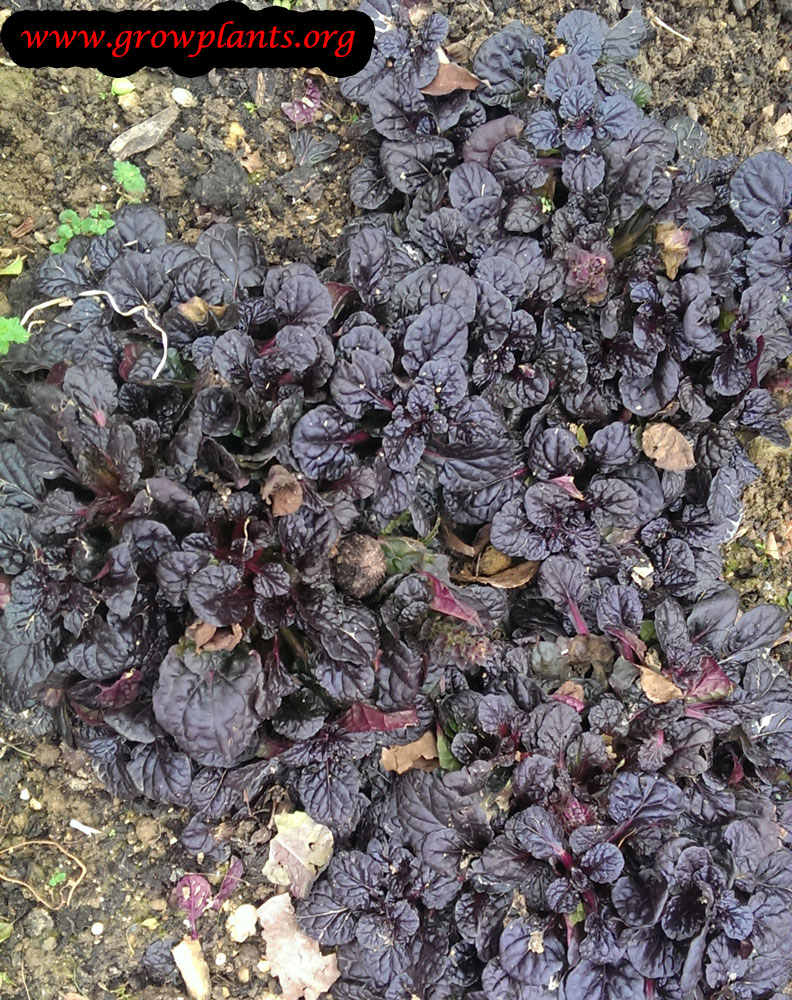
- Growth Habit & Form: Low, creeping groundcover forming dense mats of leaf rosettes.
- Lifespan & Maturity: Long-lived perennial that establishes and spreads quickly – trim to control its horizontal spread.
Anatomy & Physical Features
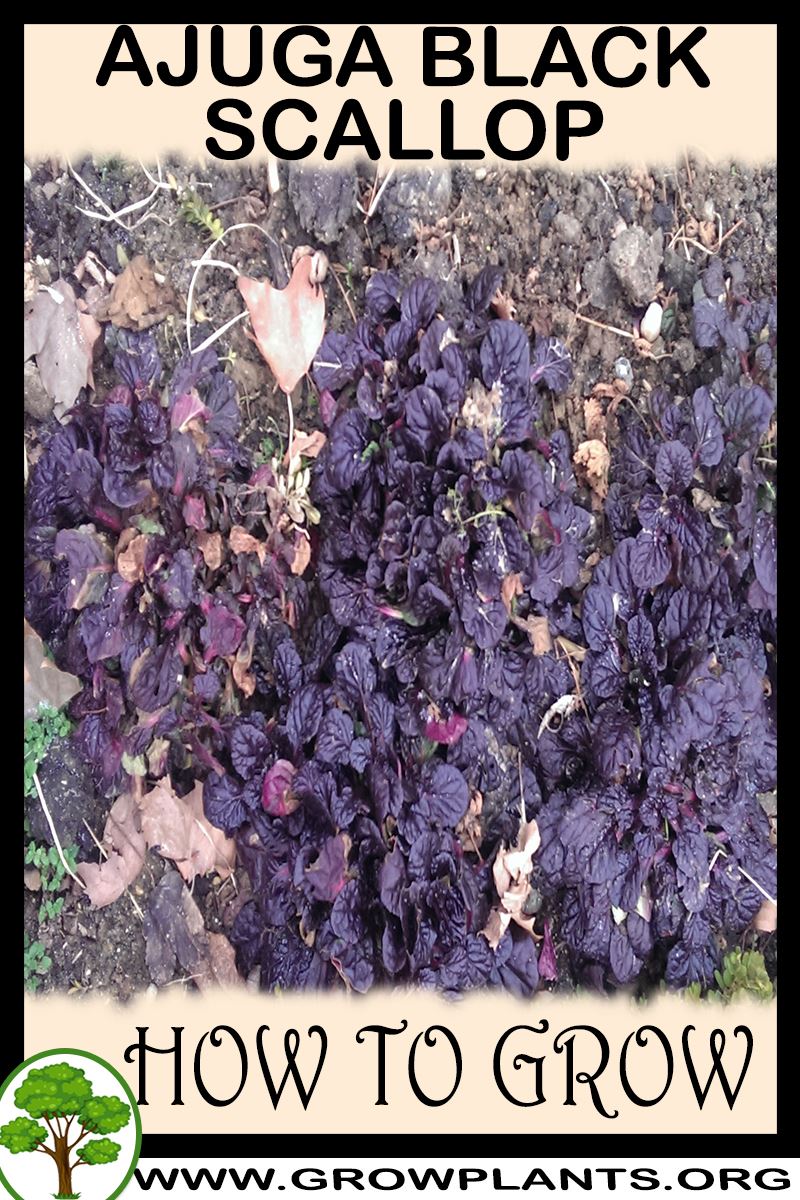
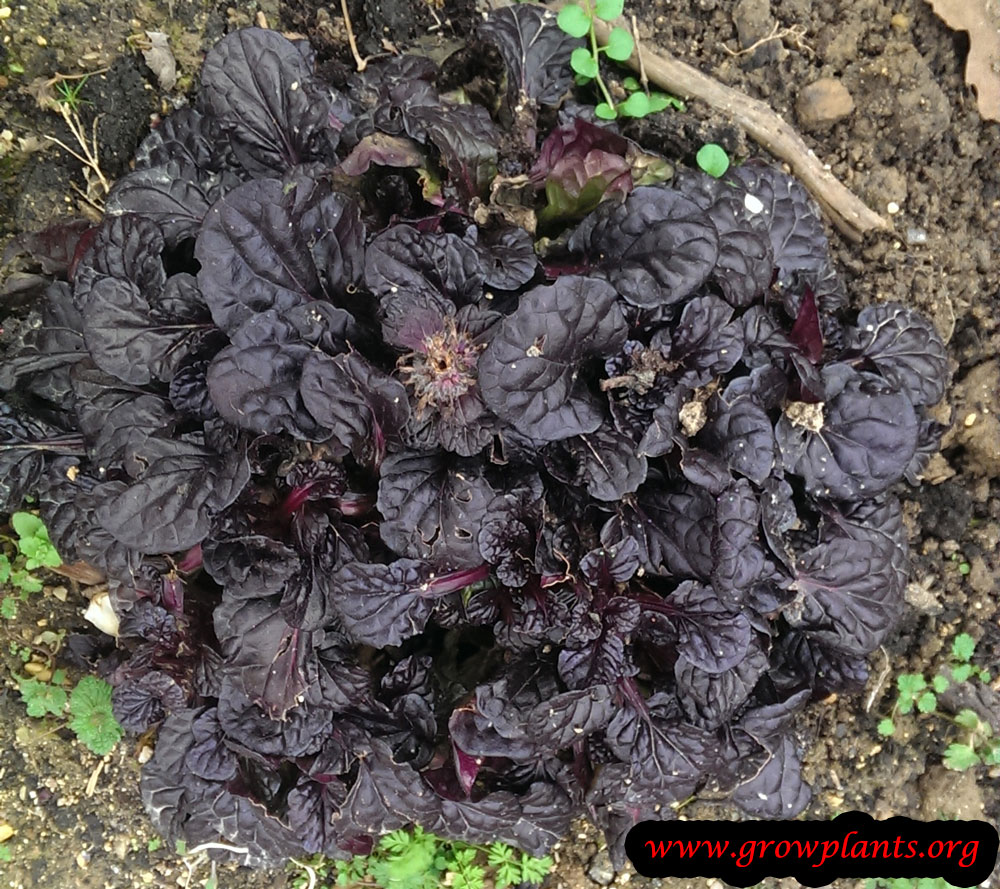
- Leaves & Foliage: Rosette leaves in near-black purple-brown to green, circular to heart-shaped with a wavy, bumpy surface.
- Flower Characteristics: Purple flowers in short, upright spikes (full detail in the Bloom accordion).
Primary Uses & Landscape Value
- Functional & Ornamental Roles: Groundcover, edging, shade and underplanting, erosion control, and container plant.
Care Guide: Planting, Soil & Watering
Overview: This fast-spreading evergreen groundcover suits cooler temperate gardens in full sun to full shade. It likes well-drained but moisture-retentive soil and struggles in hot climates.
Quick Care Requirements
| Requirement | Ideal Condition |
|---|---|
| Planting Season | Spring, summer or autumn |
| Growth Rate | Fast |
| Soil Type | Well-draining yet moisture-retentive |
| Water Need | Moderate — keep the soil evenly moist |
Planting & Establishment
- Best Planting Season: Plant in spring, summer or autumn while the soil is workable; avoid the peak of summer heat, which it dislikes.
- How to Plant:
- Hole Preparation: Dig holes just wider than each small root ball and space the plants so they knit into a carpet.
- Soil Amendments: Mix in compost to hold moisture while keeping the soil free-draining.
- Planting Depth: Set the crown level with the soil surface so the rosette is not buried.
- Growth Speed & Expectations: Fast — it spreads vigorously by stolons into dense groundcover, so allow room or trim it to contain the spread.
Soil, Watering & Drainage Care
- Soil Mix & Drainage Needs: Well-drained soil that still holds some moisture; in containers use a quality mix with drainage holes.
- Watering Schedule & Technique:
- Young / Newly Planted: Keep the soil consistently moist while plants establish and spread.
- Established: Average, even watering; do not let it bake dry, especially in sun.
- Seasonal Adjustments: Water more in summer heat (it resents drought and hot spells) and less in cool, damp weather.
Climate, Light & Hardiness
Ajuga 'Black Scallop' (a dark-leaved Ajuga reptans) is a very cold-hardy, mat-forming temperate groundcover, thriving in cool climates in anything from full sun to full shade. Per site data it is hardy in zones 3–9, and summer heat - not cold - is its limiting factor.
Quick Climate Specifications
| Climate Zones | Cool to warm temperate |
|---|---|
| USDA Hardiness Zones | 3–9 (site data) |
| Approx. Survival Minimum | Established plants survive zone 3 winters (roughly −40 °C / −40 °F) |
| Frost Tolerance | High |
| Light Conditions | Full sun to full shade (with some light) |
| Wind Tolerance | High (low, ground-hugging habit) |
Sunlight & Light Exposure
Optimal Light Setup
Extremely adaptable, from full sun to full shade. Deeper leaf colour develops in more light, while shade keeps it cooler and greener.
Shade & Heat Management
In hot-summer regions part to full shade is valuable: the site data notes this plant is not tolerant of hot climates, and shade with steady moisture reduces heat stress and scorch.
Best Exposure / Orientation
A cool, lightly shaded aspect with well-drained but moist soil suits it best where summers are warm.
Temperature Extremes & Hardiness
USDA Hardiness & Regional Limits
Site data gives zones 3–9. The low end reflects excellent winter-cold survival; the warm end (about zone 9) is set by summer heat, as the plant dislikes hot climates.
Cold Damage & Winter Protection
Reliably winter-hardy through its range and generally needing no protection; it may go semi-deciduous in the coldest winters and flush again in spring.
Frost Sensitivity
Very low - evergreen to semi-evergreen and untroubled by ordinary frost.
Extreme Heat Tolerance
Low. Hot, humid conditions stress the foliage and can lead to crown rot; this is the practical limit on where it grows well, so give it shade and airflow in warm climates.
Wind, Humidity & Microclimate
Humidity Preferences
Prefers moderate humidity with good air movement; stagnant, hot, humid air encourages rot.
Wind Tolerance
High - its low, ground-hugging mat is unaffected by wind.
Rainfall & Seasonal Moisture
Adapted to evenly moist temperate conditions on well-drained ground; it dislikes both drought and waterlogging.
Microclimate Recommendations
In warm regions plant it in a cooler, part-shaded spot with free-draining soil and good airflow to offset its poor heat tolerance.
Growing in Pots, Balconies & Indoors
Ajuga ‘Black Scallop’ is a low, spreading evergreen groundcover, and the grower confirms it grows both indoors and in containers. Its neat carpet of glossy, often colourful leaves and short spikes of blue flowers make it an easy, adaptable plant for pots, edges and even a bright indoor spot.
Quick Details
- Container Size: A shallow, wide pot (about 3-8 L / 1-2 gal) suits its spreading, shallow roots
- Indoor Suitability: Suitable indoors per the grower – give it a bright spot; it tolerates shade but keeps its colour best in good light
- Best Spot: Full sun to full shade (with light); leaf colour is richest in brighter positions
- Soil & Drainage: Ordinary, free-draining potting mix; it is not fussy
- Watering in Pots: Average – keep lightly moist; it dislikes both drought and waterlogging
Indoors & On the Windowsill
- An easy indoor groundcover: The grower marks it suitable indoors. Set it near a bright window; in a hanging pot or bowl it spills attractively over the edge.
- Light & colour: It survives in shade, but the coloured-leaf forms stay brightest with plenty of light.
- Watch its spread: It roots as it runs, so a contained pot keeps it tidy indoors.
On a Balcony or Patio
- A tough edging & filler: Great around the base of larger pots or as a spreading carpet in a trough; sun or shade both work.
- Even moisture: Its shallow roots dry out fast in a pot – keep the mix lightly and evenly moist, especially in sun.
Choosing the Pot, Soil & Long-Term Care
- Pot & drainage: Wide and shallow with good drainage holes; skip a standing saucer to avoid rot.
- Potting mix: Ordinary free-draining potting mix with some organic matter.
- Feeding: Light and occasional through the growing season – too much feed makes it leggy.
- Repotting & dividing: Every couple of years lift, divide and replant the spreading clumps into fresh mix.
Fertilizing & Feeding
A light feeder: a little balanced feeding through the active growing season plus organic matter is plenty, with feeding eased off while growth is slow.
Quick Fertilizing Specs
| Feeding Level | Light feeder |
|---|---|
| Main Nutrient Priority | Balanced feeding with adequate nitrogen for foliage |
| Best Feeding Period | Spring through the warm active growing season |
| Organic Options | Compost, humus, and other organic matter |
| Reduce/Stop Feeding | Ease off through cool weather and winter dormancy |
| Micronutrients | Usually supplied by organic matter and a complete fertilizer; correct only diagnosed problems |
| Soil pH | Slightly acidic to near neutral |
Feeding by Growth Stage
Spring flush of growth
Support the flush of new growth as the plant wakes in spring.
| Nutrient direction | A balanced complete fertilizer with adequate nitrogen to fuel fresh foliage. |
|---|---|
| Timing | As growth resumes in spring. |
| Frequency | A light feeding as active growth begins. |
| Fertilizer types | A balanced complete fertilizer, Compost or other organic matter worked in |
| Precautions | Keep feeding light; rich soil and organic matter do much of the work. |
Active season growth
Maintain steady, healthy growth through the season.
| Nutrient direction | Occasional light balanced feeding keeps growth steady without forcing soft growth. |
|---|---|
| Timing | Through the warm active growing season. |
| Frequency | Occasional light feeding, with organic matter renewed as needed. |
| Fertilizer types | A balanced complete fertilizer, Compost or humus as a top-dressing |
| Precautions | Avoid overfeeding, which produces lush growth prone to disease and flopping. |
Cool-season rest or dormancy
Let the plant rest through cool weather without pushing new growth.
| Nutrient direction | None – withhold fertilizer while the plant is not actively growing. |
|---|---|
| Timing | During cool weather, dormancy, or winter dieback. |
| Frequency | No feeding during this rest; resume only when active growth returns. |
| Fertilizer types | No feeding at this stage; hold off fertilizing until active growth resumes. |
| Precautions | Do not fertilize a resting plant; feeding now wastes nutrients and risks salt buildup. |
Nutrient Deficiency Signs & Corrections
Older, lower leaves fade to pale green or uniform yellow and overall growth slows.
| Possible causes | low available soil nitrogen, nitrogen leaching from heavy watering or rain, thin soil low in organic matter |
|---|---|
| Appears first on | older, lower leaves |
| What to check | recent feeding history, soil organic matter, watering and drainage |
| Possible correction | Apply a nitrogen-containing complete fertilizer and build soil organic matter, then water evenly. |
Youngest leaves yellow between the veins while the veins themselves stay green.
| Possible causes | high soil pH reducing iron and manganese availability, waterlogged or poorly drained roots, genuinely low micronutrient supply |
|---|---|
| Appears first on | new, young leaves |
| What to check | soil pH and drainage, watering habits, whether symptoms are on the newest growth |
| Possible correction | Correct soil pH if high, improve drainage, and apply a chelated iron or manganese product per its label. |
Leaf margins brown or scorch and growth stalls despite adequate watering.
| Possible causes | fertilizer salt buildup in the root zone, under-watering that concentrates salts, excessive or too-frequent feeding |
|---|---|
| Appears first on | leaf margins and tips |
| What to check | recent fertilizer amounts, watering consistency, drainage, especially in containers |
| Possible correction | Ease off feeding, water thoroughly to flush accumulated salts, then return to lighter feeding. |
Pruning, Training & Seasonal Maintenance
Ajuga ‘Black Scallop’ is a low, creeping, evergreen groundcover that tolerates hard shearing well, so pruning is not about building a framework but about containing its stolon spread, removing spent spring flower spikes, and thinning a congested mat to head off crown rot. The safest, most useful window is right after the purple spring bloom, with edge-trimming any time the mat strays. Because it is grown chiefly for its glossy near-black, scalloped foliage, pruning targets density and spread rather than flowering.
Quick Pruning & Maintenance Specs
| Pruning Tolerance | High – tolerates shearing and mowing-style renovation |
| Primary Pruning Window | Just after the spring flower flush |
| Secondary Maintenance Window | Early-spring tidy; edge-trimming through the season |
| Typical Frequency | 2–3 light passes a year, plus spot edging |
| Main Objective | Contain stolon spread, deadhead spent spikes, keep the mat open |
| Young Plant Priority | Let plugs root and knit together; remove only damaged leaves |
| Mature Plant Priority | Check runners, shear old flower stalks, thin congestion |
| Best Tool Type | Hedge or grass shears for the mat; snips for spot work |
| Avoid Heavy Pruning During | Peak summer heat and drought (not heat-tolerant) |
Pruning by Plant Age & Size
Newly Established
Minimal — pinch or remove damaged leaves and let the plug root and spread; do not shear a young plant.
Young / Formative
No structural training — Ajuga has no framework to build. Let the stolons run to fill gaps, and define the planting edge with a spade or shears so it does not creep into lawn or neighbours.
Mature / Established
Containment and renewal — shear spent flower spikes, thin an over-dense mat, and each spring lift and remove the surplus rooted runners.
Seasonal Pruning Schedule
Pre-Growth / Early Spring
Tidy any winter-tattered evergreen foliage so the fresh leaves show; remove nothing healthy.
Post-Flowering
Once the spring spikes fade, shear the finished flower stalks off at the base of the spike — the single most useful cut: it tidies the mat and stops seed scatter. Do not cut down into the leafy rosettes.
Ongoing Sanitary
Pull out any brown, collapsed rosettes promptly (a crown-rot or Southern-blight sign) and remove damaged leaves.
Structural Pruning & Training
Renewal is by thinning: a mat that grows too dense traps humidity and invites crown rot, so every year or two lift and divide congested patches and remove surplus rooted stolons to keep air moving. There is no branch framework to shape.
Special Growth to Remove
The runners (stolons) are the plant’s spread mechanism — sever and lift the excess to contain it, but keep enough to carpet the bed. Also remove spent flower stalks and winter-damaged leaves. Do not treat every runner as a weed; they are how it covers ground.
Container & Small-Space Pruning
In a pot or trough, shear trailing stems back to the rim to keep it neat, remove runners that root through the drainage holes, and refresh a tired mat by lifting, dividing and replanting the strongest rosettes rather than just cutting the top.
Tools
Grass or hedge shears to shear the mat and mass-deadhead; precision snips for individual leaves or spikes; a border spade or hand fork to sever and lift runners and to divide clumps. No saw or loppers are ever needed.
Tool Hygiene & Disease Risk
Routine for ordinary trimming — clean, sharp blades. Increased where crown rot or Southern blight is present: remove affected rosettes, do not compost them, and wipe blades before moving to a healthy patch. No cut-to-cut sterilising is warranted otherwise.
Cut Placement & Technique
Shear flower stalks just above the foliage, at the base of the bare spike; sever stolons cleanly at a node with snips or a spade rather than tearing, which damages the parent rosette.
Heavy Pruning & Rejuvenation
Tolerated well — a large, tired planting can be mown or sheared low in early spring to force fresh, dense regrowth from the rosettes; combine with lifting and dividing the overcrowded areas.
Post-Pruning Care
Water after shearing in warm weather, since the plant dislikes heat stress; keep the crown open and avoid overhead watering into a dense mat to limit rot. No feeding is needed to drive regrowth.
Common Pruning Mistakes
- Letting stolons invade lawn and borders unchecked.
- Shearing hard in summer heat, when the plant is already stressed.
- Leaving the mat so dense that crown rot sets in.
- Scalping down into bare crowns instead of shearing above the foliage.
When NOT to Prune
During summer heat or drought stress, and immediately after planting before the plant has rooted.
Recommended Tools (by task)
- hedge_shears — to shear the whole mat and mass-remove spent flower spikes in one pass.
- precision_snips — for spot-removing individual damaged leaves or stray stems.
- garden_spade — to sever and lift runners and to lift-and-divide congested clumps.
Propagation Guide
Ajuga reptans ‘Black Scallop’ must be propagated vegetatively — from the rooted plantlets on its creeping stolons (runners) or by dividing the mat — because seed will not reproduce the deep purple-black leaf colouring. Only the vegetative pieces keep the named selection true. It is easy: the stolons root themselves as they run.
Quick Propagation Specs
| Best Propagation Method | Rooted plantlets from stolons / division |
| Alternative Methods | None recommended for keeping the cultivar (seed does not come true) |
| Propagation Difficulty | Easy |
| Seed True-to-Type | No – this is a named cultivar; seedlings lose the leaf colour |
| Vegetative True-to-Type | Yes – required to keep the cultivar |
| Best Propagation Season | Spring to autumn |
Runners & Stolons
The plant spreads by above-ground stolons that root at the nodes into new rosettes. Lift a plantlet once it has rooted, cut the stolon linking it to the parent, and replant it; this carries the cultivar’s leaf colour exactly. It roots so freely that it can spread further than wanted, so move rooted plantlets rather than let them run.
Division, Offsets, Pups & Suckers
Alternatively lift an established clump in spring or autumn and pull or cut it into rooted rosettes, replanting each with its roots and keeping it moist until established.
Bloom & Flower Guide
Quick Details
- Bloom Season: Spring into early summer
- Flower Appearance: Short upright spikes of small purple flowers above the leaf mat
- Edibility: Ornamental groundcover – grown for its dark foliage and flowers, which are not treated as a culinary flower
Detailed Blooming Overview
“Black Scallop” is famous for its near-black, glossy, scalloped leaves, and in spring the deep purple flower spikes rise in tiers to striking effect against that dark carpet. As with other bugleweeds, the bloom is a strong draw for early pollinators.
Flower Characteristics
- Small purple flowers.
- Arranged in whorls up a short upright spike (inflorescence) above the foliage.
Bloom Care & Thinning
- Site for best bloom: Part shade to sun in moist soil; good light deepens the dark leaf colour and supports flowering.
- After flowering: Shear off the spent spikes to keep the mat neat.
- Pollination: An early nectar source busy with bees.
Pests, Diseases & Troubleshooting
Overview: Bugleweed is a tough, low-maintenance groundcover with few insect enemies; its Achilles heel is crown and root rot — above all Southern blight (Sclerotium rolfsii) — which can wipe out patches in warm, humid, poorly drained conditions. Good drainage, air movement through the mat, and avoiding overhead watering in heat prevent most losses. A carpeting bugleweed groundcover; culture and problems are those of Ajuga reptans.
Quick Troubleshooting Overview
| Issue / Pest | Main Symptom | Primary Solution |
|---|---|---|
| Crown rot / Southern blight | Sudden brown, collapsing patches; white threads and seed-like sclerotia at soil line | Improve drainage/airflow, remove infected clumps and soil |
| Root rot | Wilting, yellowing, blackened roots in soggy ground | Reduce watering, improve drainage, thin dense mats |
| Aphids | Sticky, distorted new leaves with soft insects | Hose off; insecticidal soap; encourage lady beetles |
| Spider mites | Fine stippling in hot, dry, stressed plantings | Raise humidity/irrigation, insecticidal soap |
| Powdery mildew / leaf spot | White film or brown spots on leaves in crowding/shade | Thin plants, improve airflow, remove affected leaves |
Common Pests & Management
- Aphids (Aphis / Myzus spp.):
- Symptoms: Small soft insects clustering on tender new leaves and flower spikes in spring, causing sticky honeydew, sooty mould and some leaf curl. Usually a minor, temporary problem.
- Prevention & Control: Dislodge with a jet of water and rely on lady beetles and lacewings, which control them quickly outdoors. Use insecticidal soap only for a heavy early flush.
- Two-spotted spider mite (Tetranychus urticae):
- Symptoms: Appears on drought-stressed plantings in hot, dry sites: leaves take on a fine pale stippling and dull bronze cast, with faint webbing when severe.
- Prevention & Control: Keep plants adequately watered and not heat-stressed; overhead rinsing helps. Insecticidal soap or horticultural oil for bad patches.
- Root-knot nematodes (Meloidogyne spp.):
- Symptoms: Patchy poor growth, stunting and heat-wilting in warm sandy soils, with small galls on the roots.
- Prevention & Control: Improve soil with organic matter, avoid moving infested soil, and replant clean divisions into fresh ground. No home cure for a galled clump.
- Slugs & snails (Gastropoda):
- Symptoms: Irregular ragged holes chewed in the leaves and silvery slime trails over the mat, worst in damp, shady conditions.
- Prevention & Control: Hand-pick at night, remove damp hiding places, and use iron-phosphate slug bait or copper barriers around prized plantings.
Diseases & Fungal Issues
- Southern blight / crown rot (Sclerotium rolfsii (Athelia rolfsii)):
- Symptoms: The signature killer of Ajuga. In warm, humid weather whole clumps suddenly wilt, yellow and collapse; at the soil line you find a white fan of fungal threads and tan, mustard-seed-sized sclerotia. It spreads outward through the dense mat.
- Treatment & Management: Act fast: dig out and destroy affected plants along with the surrounding infested soil, and don’t compost them. Improve drainage, thin the planting for airflow, and avoid burying the crowns or mulching heavily against them. Space divisions and avoid overhead watering in heat; there is no reliable home chemical cure once established.
- Root & crown rot (Phytophthora / Pythium / Rhizoctonia spp.):
- Symptoms: Wilting, yellowing and dieback of clumps in wet, heavy or poorly drained soil, with brown mushy roots and rotted crowns.
- Treatment & Management: A cultural problem: plant in well-drained soil, don’t overwater, and divide crowded mats to keep them open. Remove rotted clumps and replant healthy divisions in better-drained ground.
- Powdery mildew & fungal leaf spot (Erysiphales / Colletotrichum spp.):
- Symptoms: White powdery film or brown-purple leaf spots on crowded, shaded plants with poor air movement; mostly cosmetic.
- Treatment & Management: Thin and space the planting, improve airflow, and remove affected leaves. Rarely needs spraying; sulfur or potassium bicarbonate helps if mildew is persistent.
Growing Difficulties & Abiotic Problems
- Crown rot from poor drainage & humidity:
- Cause & Symptoms: The core weakness: dense mats in heavy, wet soil or high summer humidity keep the crowns damp and airless, inviting rot and Southern blight.
- Correction Strategy: Plant in well-drained soil, divide clumps every few years to keep them open, avoid heavy mulch over the crowns, and water at the base in the morning so foliage dries.
- Leaf scorch in hot sun:
- Cause & Symptoms: In hot climates full afternoon sun and dry soil brown and crisp the leaf edges, dulling the coloured foliage forms.
- Correction Strategy: Site in part shade in hot regions, keep soil evenly moist, and mulch lightly between plants to moderate soil temperature.
- Winter desiccation & heaving:
- Cause & Symptoms: In cold, exposed sites the semi-evergreen foliage browns from cold winds and shallow crowns can be heaved out by freeze-thaw.
- Correction Strategy: Apply a light winter mulch after the ground freezes, firm back any heaved crowns in spring, and trim damaged foliage as growth resumes.
- Overcrowding & dieback:
- Cause & Symptoms: Vigorous mats can grow so dense that the centres thin, brown and die out, and stagnant air fosters disease.
- Correction Strategy: Divide and replant every two to three years, thinning to restore airflow and vigor.
What Helps — Products & Tools
This groundcover needs little more than good culture: sharp drainage and periodic division to prevent crown and Southern blight rot, insecticidal soap for the occasional aphid or mite, iron-phosphate slug bait or copper barriers for slugs and snails, and (only if mildew persists) a sulfur or potassium-bicarbonate spray. Remove and destroy rot-affected clumps rather than treating chemically. Follow the label and protect beneficial insects.
Frequently Asked Questions
What is Ajuga Black Scallop?
Ajuga reptans ‘Black Scallop’ is a low evergreen groundcover grown for its glossy, near-black scalloped leaves and short spikes of purple spring flowers.
Does Ajuga Black Scallop make a good ground cover or carpet?
Yes. It is a low, spreading evergreen to semi-deciduous perennial groundcover that spreads quickly by runners into dense mats of leaf rosettes, and it is used for groundcover, edging, shade and underplanting, erosion control, and container planting.
What is the biggest disease risk for Ajuga Black Scallop?
Its main vulnerability is crown and root rot, especially Southern blight (Sclerotium rolfsii), which can wipe out patches in warm, humid, poorly drained conditions. Good drainage, air movement through the mat, and avoiding overhead watering in heat prevent most losses.
Can I grow Ajuga Black Scallop from seed?
No. Seed will not reproduce the deep purple-black leaf colouring, so it must be propagated vegetatively, from the rooted plantlets on its stolons or by dividing the mat, to keep the cultivar true.