Plant Profile & Key Characteristics
Overview: Alcea rosea (Common hollyhock) is a tall herbaceous plant reaching 1-2.5 m (3-9 ft) high, grown as a short-lived perennial, biennial or annual. It produces towering spikes of large, round single or double flowers in many colours, and has edible leaves and flowers.
Quick Specifications
| Specification | Attribute |
|---|---|
| Plant Type / Life Cycle | Perennial / Biennial / Annual (herbaceous) |
| Foliage Type | Herbaceous (deciduous); evergreen in mild climates |
| Mature Size | 1-2.5 m (3-9 ft) tall |
| Growth Rate | Moderate to fast |
| Root System | Deep taproot |
| Toxicity | Non-toxic / edible (leaves and flowers are edible) |
| Hardiness | USDA zones 3-11a |
Growth Form & Structure
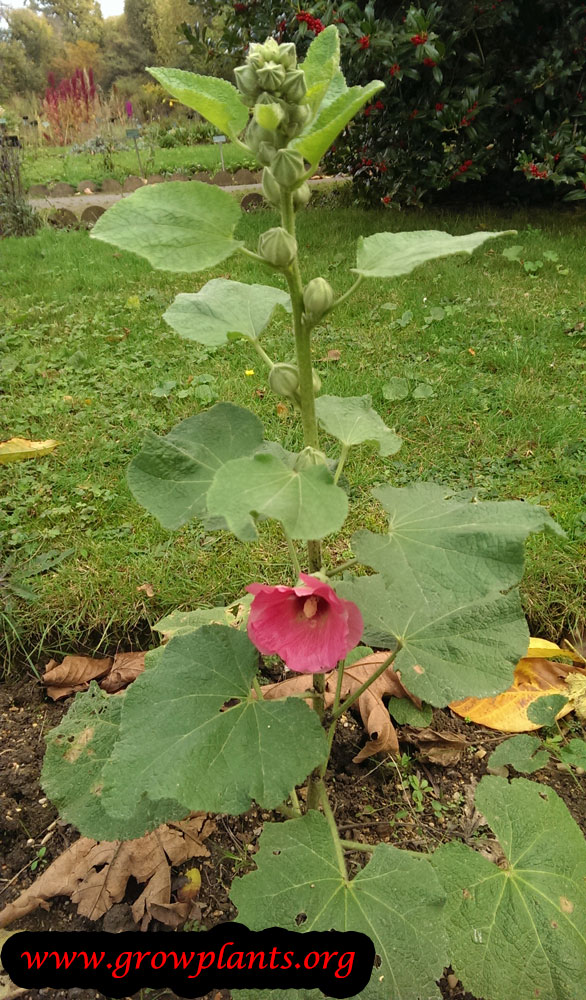
- Height & Spread: Tall, upright flower spikes 1-2.5 m (3-9 ft) high; ideal for the back of borders and along walls, and also grown in large containers.
- Growth Habit & Form: Upright, clumping herbaceous plant with tall, largely unbranched flower spikes.
- Lifespan & Maturity: Short-lived, often biennial – typically flowering strongly in its second year.
Anatomy & Physical Features
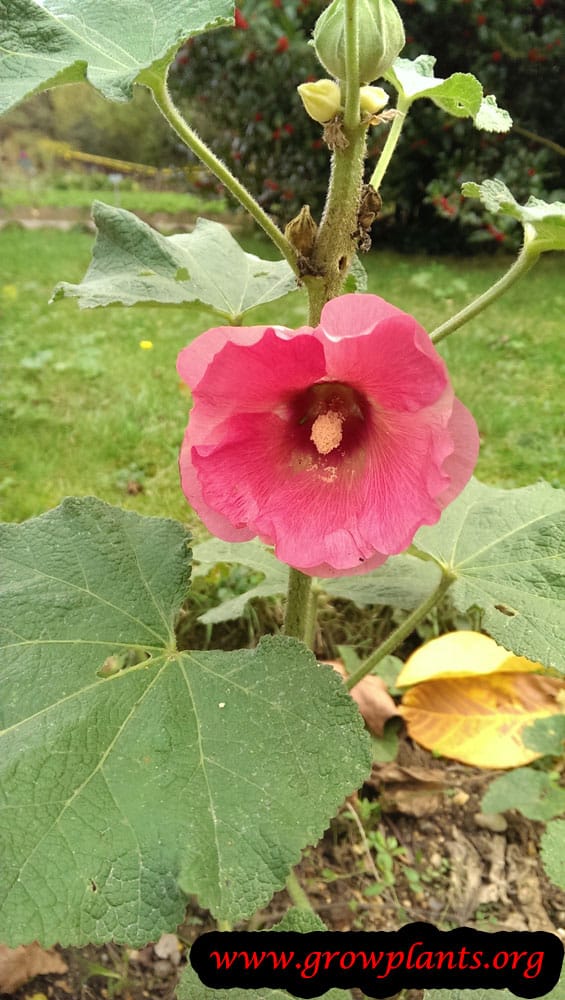
- Leaves & Foliage: Green, heart- to round-shaped leaves with lobed edges; edible.
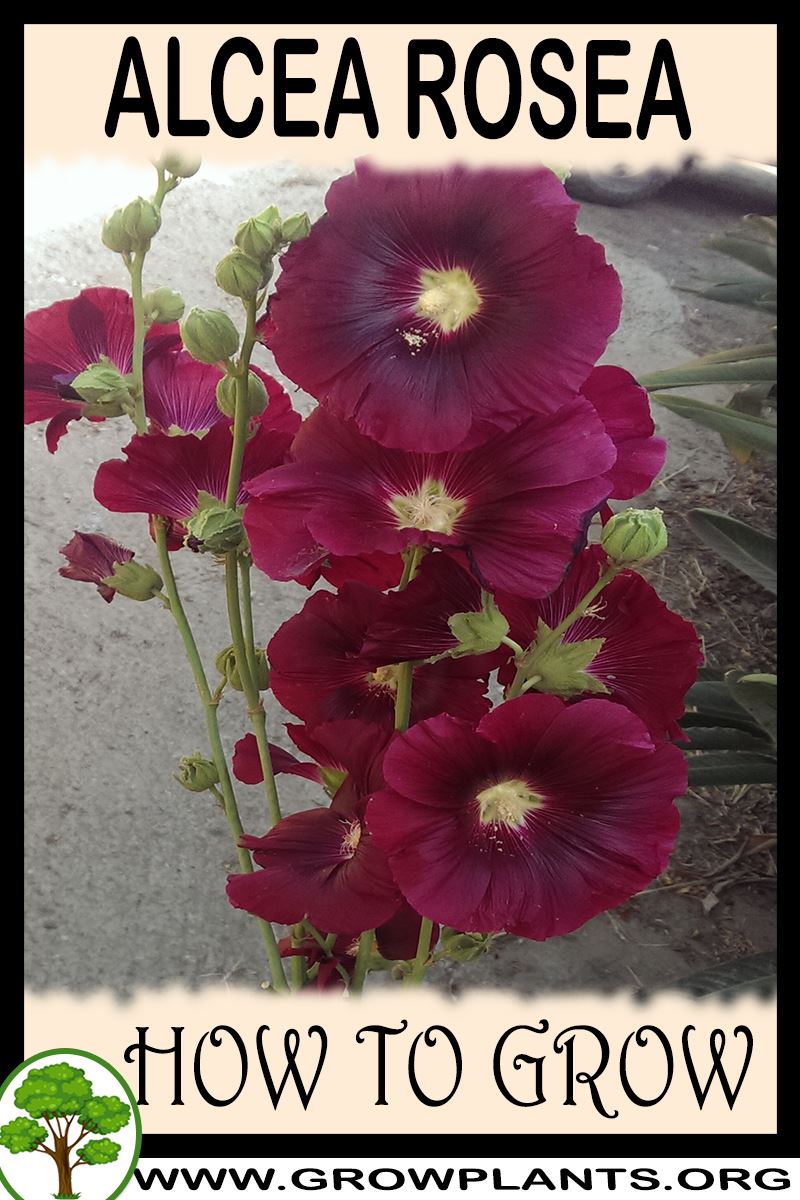
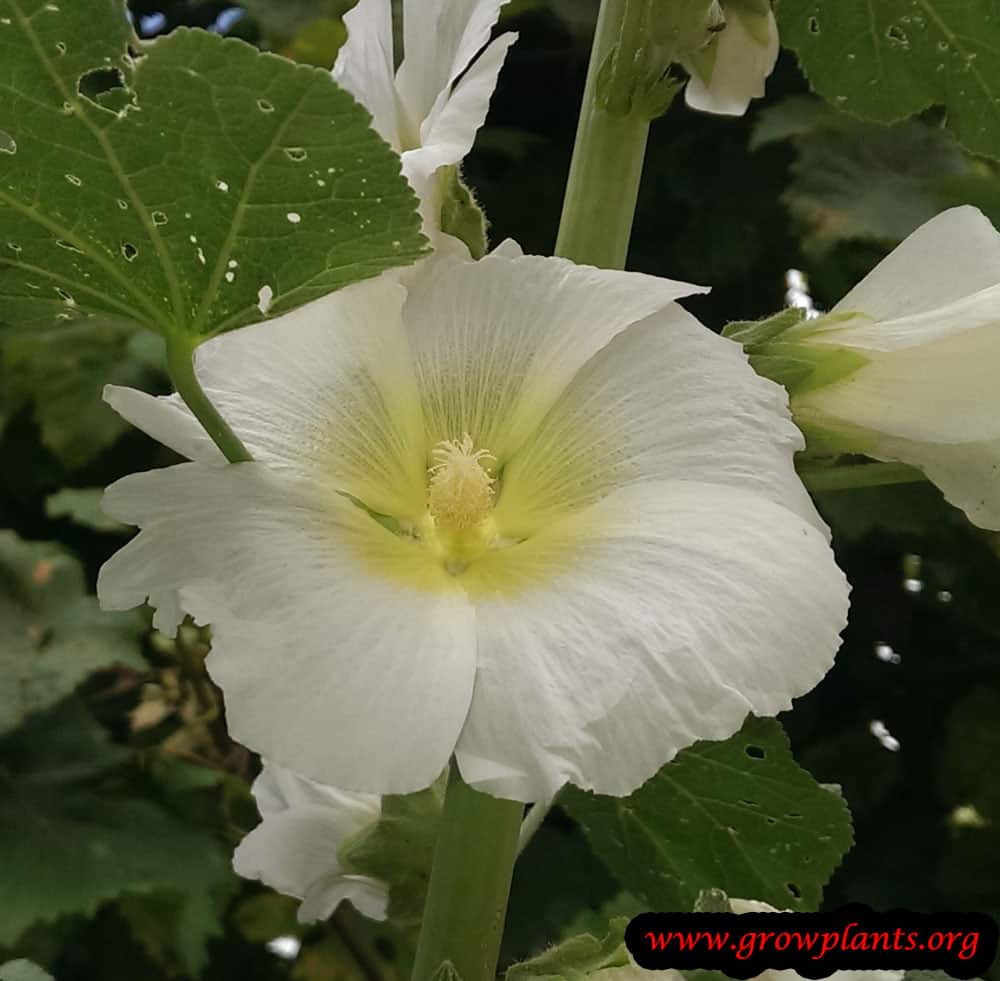
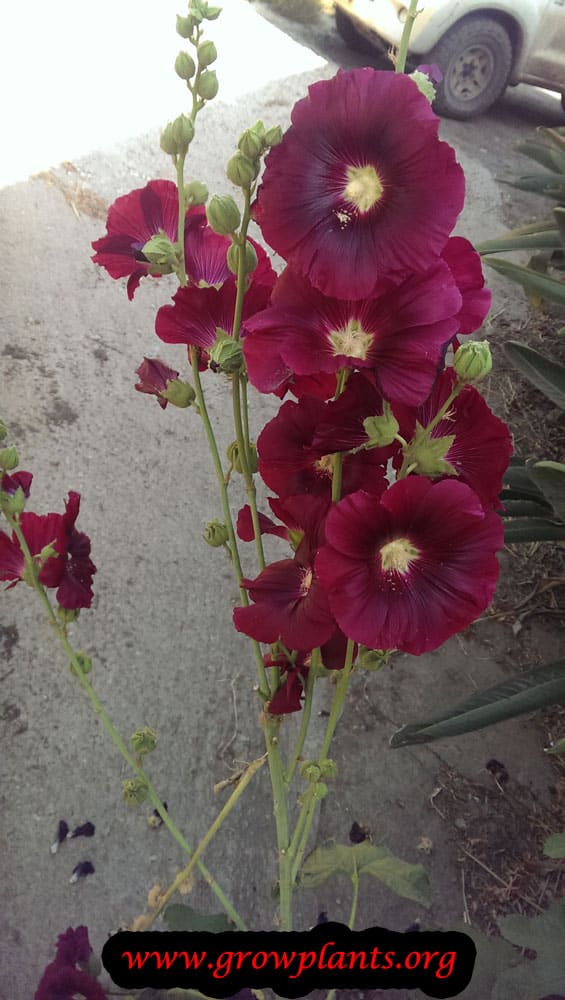
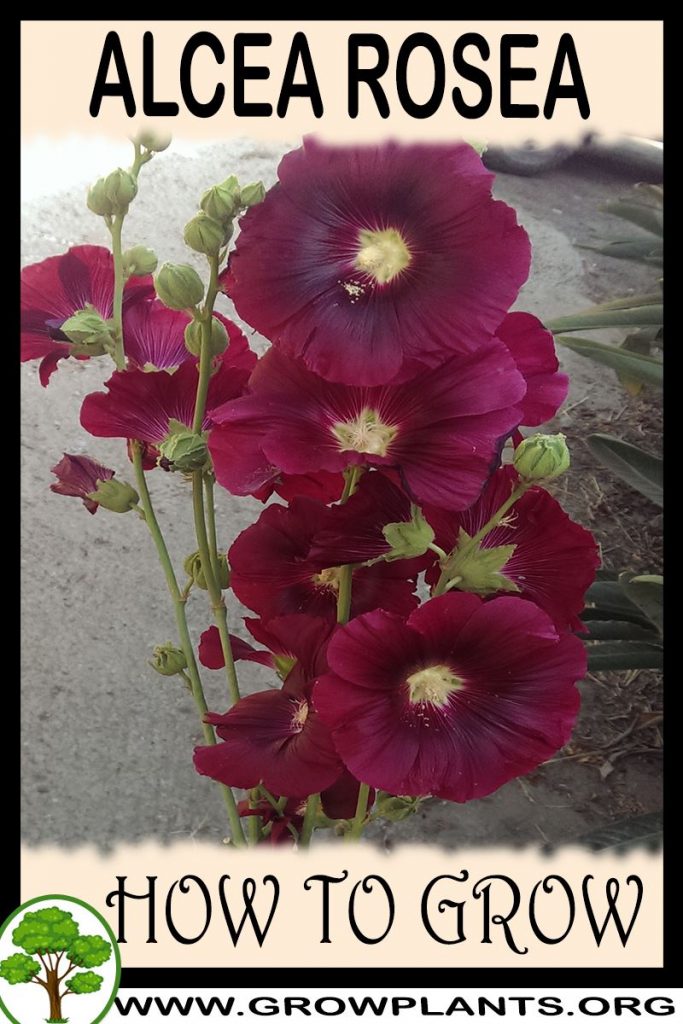
- Flower Characteristics: Large, round, five-petalled or double flowers in many colours – bordeaux, red, pink, black, orange, white and yellow; edible (full detail in the Bloom accordion).
Primary Uses & Landscape Value
- Edible Uses: Edible flowers (raw or cooked) and edible leaves (raw, cooked or stuffed).
- Functional & Ornamental Roles: Cottage-garden ornamental, cut flower, pollinator plant and traditional medicinal plant.
Care Guide: Planting, Soil & Watering
Overview: This tall, easy-going cottage-garden plant grows in Mediterranean to temperate climates in full sun to light shade. It thrives in rich, well-drained soil and needs little special care.
Quick Care Requirements
| Requirement | Ideal Condition |
|---|---|
| Planting Season | In spring or autumn (winter in hot climates) |
| Growth Rate | Moderate to Fast |
| Soil Type | Rich and well-draining |
| Water Need | Low to Moderate — water moderately, avoid soggy soil |
Planting & Establishment
- Best Planting Season: Plant in spring or autumn (or in winter in hot climates) so the roots establish before flowering.
- How to Plant:
- Hole Preparation: Dig a hole a little wider than the root ball in a sunny, sheltered spot; the tall flower spikes benefit from shelter from strong wind or a support.
- Soil Amendments: Enrich the bed with compost or well-rotted organic matter for strong, tall growth.
- Planting Depth: Set the crown at soil level, keeping it from being buried.
- Growth Speed & Expectations: Fast to moderate, sending up tall spikes; it can self-seed aggressively, so deadhead if you want to limit spread.
Soil, Watering & Drainage Care
- Soil Mix & Drainage Needs: Rich but free-draining soil; avoid waterlogging, which invites rust and rot.
- Watering Schedule & Technique:
- Young / Newly Planted: Keep the soil evenly moist while young plants root in.
- Established: Water moderately at the base — a small to average amount — letting the surface dry between waterings and keeping the foliage dry.
- Seasonal Adjustments: Water more in summer heat and drought, and less in cool, wet weather.
Climate, Light & Hardiness
The common hollyhock (Alcea rosea) is a tall cottage-garden plant for Mediterranean, subtropical and temperate climates, grown as a short-lived perennial, biennial or annual. It flowers in full sun to light shade and is very cold-hardy, rated by the site across a broad hardiness range of zones 3–11.
Quick Climate Specifications
| Climate Zones | Mediterranean, subtropical, temperate |
|---|---|
| USDA Hardiness Zones | 3–11 (per site data) |
| Optimal Temp Range | Mild, roughly 15–25 °C (59–77 °F) |
| Frost Tolerance | High |
| Light Conditions | Full sun to partial shade |
| Wind Tolerance | Low to Moderate (tall spikes) |
Sunlight & Light Exposure
Optimal Light Setup
Full sun gives the strongest, most upright flower spikes and the heaviest bloom.
Direct Sun Requirement
Direct sun is preferred, though the plant tolerates partial shade at the cost of somewhat weaker, leaning stems.
Shade & Heat Management
In hot, dry-summer regions a little light shade helps flowers last longer.
Best Exposure / Orientation
A sunny, open but sheltered spot with good air circulation is ideal - airflow helps limit the rust to which hollyhocks are prone.
Temperature Extremes & Hardiness
USDA Hardiness & Regional Limits
The wide zone 3–11 rating reflects genuine hardiness: the roots and low rosettes survive severe winters at the cold end, while the plant also copes with heat at the warm end. Its biennial-to-short-lived-perennial habit means it often overwinters as a rosette and flowers the following season.
Cold Damage & Winter Protection
Very cold-hardy: the overwintering rosette and roots tolerate hard freezes well within the rated range, needing little or no winter protection in most climates.
Frost Sensitivity
Low; the plant is frost-hardy, and frost simply cuts back the top growth of established plants without killing them.
Extreme Heat Tolerance
Moderate to high; it grows through warm summers, though hot, humid conditions increase rust pressure.
Wind, Humidity & Microclimate
Humidity Preferences
Prefers open, airy conditions; humid, stagnant air favours the rust disease that commonly affects the foliage.
Wind Tolerance
Low to moderate: the very tall flower spikes (well over a metre / several feet) catch the wind and can snap or topple, so a sheltered position or staking is advisable.
Microclimate Recommendations
A sunny, airy but wind-sheltered spot - often against a fence or wall that also provides support - suits these stately spikes best.
Growing in Pots, Balconies & Indoors
Alcea rosea (1-2.5 m / 3-9 ft) is a tall cottage-garden biennial – a fine container and balcony plant in a large, deep pot, but not a houseplant. Its height and hunger for sun rule out growing it indoors.
Quick Details
- Container Size: A large, deep, heavy pot – its tall spikes need root room and a stable anchor against wind
- Indoor Suitability: Not a houseplant – far too tall and sun-hungry
- Best Spot: Full sun to light shade, sheltered from strong wind
- Soil & Drainage: Free-draining but rich soil
- Watering in Pots: Keep moderately moist; do not let a tall plant in a pot dry out, but avoid waterlogging
Indoors & On the Windowsill
- Houseplant limits: It grows well over head height and needs full sun, so it cannot be grown indoors or on a sill.
On a Balcony or Patio
- Sun, wind & staking: Give it a sunny but sheltered spot. The tall flower spikes catch the wind, so use a heavy, stable pot and stake them. Walls reflect heat and pots dry fast, so water regularly in summer.
Choosing the Pot, Soil & Long-Term Care
- Pot & drainage: A deep pot with strong drainage holes and no standing saucer, to give the long roots room and avoid rot.
- Potting mix: A rich, organic, free-draining mix.
- Feeding: Feed through the growing season, as potted plants leach nutrients faster than those in the ground.
- As a biennial: it flowers then sets seed, so plan to replace or let it self-sow, refreshing the mix for the next plants.
Fertilizing & Feeding
Hollyhock is a moderate feeder: balanced feeding through spring and summer supports its tall spikes and long succession of flowers, while overly rich, wet soil encourages weak growth and rust.
Quick Fertilizing Specs
| Feeding Level | Moderate |
|---|---|
| Main Nutrient Priority | Balanced feeding for strong spikes and long bloom |
| Best Feeding Period | Spring through the summer bloom |
| Organic Options | Compost or well-rotted organic matter |
| Soil pH | Near neutral, fertile and well-drained |
| Reduce/Stop Feeding | Stop as top growth dies back for winter |
Feeding by Growth Stage
Spring growth
Fuel the leafy rosette and tall flower spikes as growth resumes.
| Nutrient direction | A balanced complete fertilizer with steady nitrogen for strong basal growth and stem development. |
|---|---|
| Timing | As new growth appears in spring. |
| Frequency | Light feeding as growth gets underway. |
| Fertilizer types | Balanced complete garden fertilizer, Compost or well-rotted organic matter |
| Precautions | Rich but well-drained soil suits hollyhock; avoid waterlogging, which invites rust and root problems. |
Bloom period
Support the tall flowering spikes through the bloom season.
| Nutrient direction | Keep feeding balanced to sustain sturdy spikes and a long succession of flowers. |
|---|---|
| Timing | Through the spring and summer bloom. |
| Frequency | A few light feedings across the flowering period. |
| Fertilizer types | Balanced complete fertilizer |
| Precautions | Avoid heavy late-season nitrogen, which produces soft, floppy growth. |
Winter dormancy
Let the plant die back and rest over winter after flowering and setting seed.
| Nutrient direction | None – withhold fertilizer while the plant is at rest. |
|---|---|
| Timing | After bloom, as top growth dies back into winter. |
| Frequency | No feeding at this stage. |
| Fertilizer types | No feeding at this stage – withhold fertilizer until active growth resumes. |
| Precautions | Do not fertilize a resting or dormant plant; wait for new growth in spring. |
Nutrient Deficiency Signs & Corrections
Lower, older leaves turn pale green then yellow.
| Possible causes | Nitrogen deficiency, Leaching after heavy rain or watering, Cold soils slowing uptake |
|---|---|
| Appears first on | Older, lower leaves |
| What to check | Feeding history, Soil fertility and organic matter, Soil temperature |
| Possible correction | Give a balanced feed during active growth and build soil organic matter. |
Newest leaves yellow between green veins.
| Possible causes | Iron or manganese unavailable at high soil pH, Wet, poorly aerated soil, Alkaline soil |
|---|---|
| Appears first on | Youngest leaves |
| What to check | Soil pH, Drainage, Recent lime exposure |
| Possible correction | Correct pH and drainage; apply a chelated micronutrient product per its label if it persists. |
Spindly stems and sparse flowering.
| Possible causes | Low overall soil fertility, Too much shade, Overcrowding and root competition |
|---|---|
| Appears first on | Whole plant |
| What to check | Soil fertility, Light exposure, Plant spacing |
| Possible correction | Feed lightly and balanced, give full sun, and thin crowded plantings. |
Pruning, Training & Seasonal Maintenance
Common hollyhock (Alcea rosea) is a tall (1–2.5 m), short-lived herbaceous plant grown as a biennial or brief perennial: a single erect flower spike rises from a ground-level rosette and blooms through spring and summer. There is no woody framework to build, so pruning is limited to deadheading, cutting the spent spike back once flowering ends, and hard sanitation against hollyhock rust — the one disease that dictates how these plants are cut. Because the facts flag it as aggressive and freely self-seeding, removing spikes before the seed pods ripen is as much about controlling spread as about tidiness.
Quick Pruning & Maintenance Specs
| Pruning Tolerance | Low structural – only deadheading and cutting spent spikes; no framework pruning |
| Primary Pruning Window | Right after each spike finishes flowering (summer) |
| Secondary Maintenance Window | Autumn / winter removal of dead stems and leaves |
| Typical Frequency | Deadhead through bloom; one cut-back after flowering; a winter clear-up |
| Main Objective | Prolong bloom, limit self-seeding, and clear rust-infected foliage |
| Young Plant Priority | Let the basal rosette build; stake tall spikes rather than prune them |
| Mature Plant Priority | Deadhead, cut the spent spike to the rosette, strip rusted leaves |
| Best Tool Type | Precision snips for florets; bypass secateurs for the thick hollow stalk |
| Avoid Heavy Pruning During | Before the overwintering rosette has re-formed |
Pruning by Plant Age & Size
Newly Established
In the first (rosette) year a biennial hollyhock makes only a clump of large lobed leaves and does not flower; remove nothing but damaged or rust-spotted leaves and let the rosette store energy for next season’s spike.
Young / Formative
No structural training applies — a hollyhock carries a single unbranched spike, not a branch system. The only ‘training’ is physical support: tall spikes in exposed sites are staked and loosely tied so wind does not snap the hollow stem, rather than being cut to control height.
Mature / Established
On a flowering plant the work is deadheading faded florets up the spike to extend bloom, then cutting the whole spent stalk down to the basal rosette once the top flowers finish — this redirects energy to the crown and, on a short-lived plant, improves the chance of a return the following year. Throughout, strip and bin any lower leaves showing rust pustules.
Seasonal Pruning Schedule
Spring–summer (bloom): deadhead spent florets and remove the earliest rust-infected lower leaves. Removing seed pods before they ripen both prolongs flowering and curbs the heavy self-sowing the plant is prone to.
Post-flowering (summer): cut the whole spent spike back to the basal rosette. Leave a few pods only if you deliberately want self-sown replacements, since the plant is short-lived.
Autumn / winter (sanitary): remove dead stems and old leaves as the facts advise, and clear all fallen rust-infected debris from around the crown so spores do not overwinter to re-infect spring growth.
Structural Pruning & Training
There is no canopy to shape. In a clump you may thin out weak or overcrowded spikes so the strongest few flower well, and stake tall stems, but height and spread are set by the plant, not by pruning cuts.
Special Growth to Remove
The material to remove is spent flower spikes (before seed set where you want to limit spread), rust-infected lower leaves through the season, and dead stems in autumn. Hollyhocks make no suckers, runners or watersprouts, so no such growth needs managing — the seed pods are the only ‘spreading’ part to keep in check.
Container & Small-Space Pruning
Hollyhocks can be grown in a large, deep, heavy pot but stay tall, so support matters more than in the ground: stake the spike early. Pruning is identical — deadhead, then cut the spent spike to the rosette. Do not root-prune; keep the crown alive over winter for a second year.
Tools
Precision snips handle deadheading individual florets and thin seed stems; bypass secateurs cut the thick, hollow flower stalk down at the base. Soft ties and a stake support tall spikes. No loppers, saw or hedge shears are needed on a soft herbaceous plant.
Tool Hygiene & Disease Risk
Increased to high-risk — because of hollyhock rust. Puccinia malvacearum is the defining hollyhock disease; when you cut or strip rust-infected leaves and stems, clean the blades before moving to healthy growth or another plant, and bin (never compost) the infected material. Aphids, the other listed pest, are treated directly and are not spread by tools.
Cut Placement & Technique
Deadhead just above a leaf or a lower side-bud on the spike; make a clean cut on the hollow stalk so it does not crush and hold water. Take the spent spike low, near the top of the basal rosette, leaving the green rosette leaves intact.
Heavy Pruning & Rejuvenation
There is no woody renovation with a hollyhock. The most severe cut is taking the whole flowered spike to the base after bloom, which the plant tolerates and which can rejuvenate the rosette for another season — but you cannot cut a hollyhock ‘back into old wood’ to reshape it, because it has none.
Post-Pruning Care
After cutting the spike to the rosette, keep the crown watered so it can push fresh basal leaves, and watch those new leaves for the first rust pustules. Feeding is not needed to force regrowth; good airflow and clean debris do more to keep the next flush healthy.
Common Pruning Mistakes
- Letting spikes ripen seed everywhere, so the aggressive self-sower colonises the bed.
- Leaving rust-infected leaves and fallen debris, which re-infects next year’s growth.
- Cutting away the green basal rosette in autumn, removing next year’s plant.
- Not staking tall spikes, so the hollow stems snap in wind.
When NOT to Prune
Do not remove the green basal rosette in autumn if you want the plant to overwinter, and do not strip healthy green leaves prematurely. In prolonged wet, rust-prone spells, remove infected leaves selectively rather than shearing the plant, which would only spread spores.
Recommended Tools (by task)
- precision_snips – deadheading faded florets and snipping thin seed stems along the spike.
- bypass_secateurs – cutting the thick hollow flower stalk down to the rosette after bloom.
- soft_ties_stakes – supporting tall spikes in wind so the hollow stems do not break.
Propagation Guide
Common hollyhock is easy and best raised from seed, usually as a biennial or short-lived perennial that self-sows freely. Double and named forms are better kept by basal cuttings, division or root cuttings, as they may not come true from seed; grafting is not used.
Quick Propagation Specs
| Best Propagation Method | Seed |
| Alternative Methods | Basal cuttings; division; root cuttings (for named/double forms) |
| Propagation Difficulty | Easy |
| Seed True-to-Type | Cultivar-dependent – species fairly true; doubles and named colours vary |
| Vegetative True-to-Type | Yes |
| Best Propagation Season | Sow spring, or autumn/winter in hot climates |
| Seed Germination Time | Typically about two weeks in warmth |
Growing from Seed
Seed Handling & Sowing
Collect ripe flat seed after flowering. Sow shallowly in spring, or in autumn to winter in hot-summer areas; seed germinates readily in warm, moist soil and can be direct-sown or started in cells. Deadhead to curb its prolific self-seeding if needed.
Seedling Care
Grow on in full sun to half shade; the first-year rosette generally flowers the next season.
Division, Offsets & Basal Cuttings
Basal Cuttings & Division
For perennial and double forms, take short basal shoots with a sliver of the crown in spring, or divide an established crown, to keep the plant true. Keep them shaded and moist until re-established.
Root Cuttings
Sections of thick root taken during dormancy and laid in a gritty medium will produce new shoots — a reliable way to multiply a chosen colour.
Bloom & Edible Flower Guide
Quick Details
- Bloom Season: Spring and summer
- Time to First Bloom: Often the second year – common hollyhock is typically biennial – then again in later years
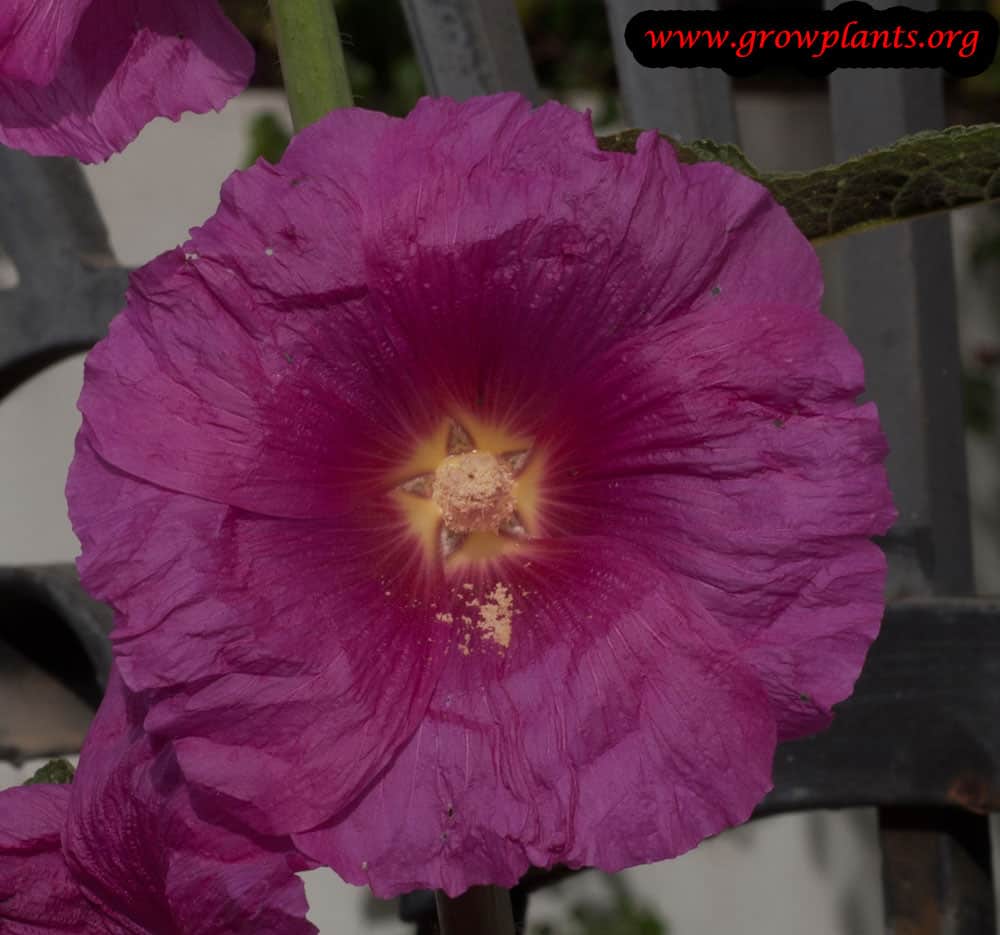
- Flower Appearance: Tall spikes of large, round, five-petalled (or fully double) flowers in bordeaux, red, pink, near-black, orange, white or yellow, sometimes with a darker centre
- Edibility: The flowers are edible – eaten raw or cooked; a mallow-family bloom used in salads, as a garnish and in teas
Detailed Blooming Overview
Alcea rosea, the common hollyhock, is the cottage-garden classic, sending up tall spikes of big round blooms through spring and summer. Flowers open from the base of the spike upward in a broad palette – bordeaux, red, pink, almost-black, orange, white and yellow – and range from simple five-petalled singles to full doubles, sometimes with a darker eye. As a biennial, it usually flowers in its second year from seed.
Flower Characteristics
- Large, round flowers, single (five petals) to fully double.
- Colours: bordeaux, red, pink, near-black, orange, white, yellow – sometimes with a darker centre.
- Carried up tall, dramatic spikes.
Bloom Care & Thinning
- Pollination: Pollinated by bees.
- Keeping it going: Deadhead spent spikes to tidy the plant, but leave a few to self-seed; stake tall spikes in exposed spots.
- Eating the flowers: The petals are edible raw or cooked and make a colourful, mild addition to salads and teas.
Bloom Health & Protection
- Hollyhock rust (Puccinia malvacearum): The signature hollyhock disease – orange-brown pustules on leaf undersides. Removing affected lower leaves, watering at the base, and a preventive fungicide (such as a sulfur-based product) all help keep the spikes healthy.
Fruit & Uses
Both the leaves and the flowers of common hollyhock are edible. The leaves are eaten raw, cooked or stuffed, and the flowers are used raw or cooked, mainly as a colourful edible garnish.
Quick Edible Specs
| Edible Parts | Leaves and flowers |
|---|---|
| Main Use(s) | Culinary: leaves raw, cooked or stuffed; flowers raw or cooked. Traditionally also used medicinally (mallow family) |
| Eaten Raw or Cooked | Both |
| Preparation Required | None essential — wash, and pick almost fully grown leaves |
| Harvest Season | Leaves through all seasons; flowers in spring and summer |
| Safety/Toxicity Caveat | Use only clean, unsprayed material; handling the plant can irritate sensitive skin |
Leaves & Greens
The green, heart- to round-shaped lobed leaves are the main edible green. Harvest them almost fully grown; they can be gathered in any season. Use them raw in salads, cooked like other leafy greens, or as a wrapper for stuffing. Like other mallows the leaves are slightly mucilaginous.
Flowers & Flower Buds
The large flowers — in shades of bordeaux, red, pink, orange, white or yellow — are edible raw or cooked and are used mainly as a decorative garnish. Pick them fully open in spring and summer. Taking flowers competes with harvesting leaves, so balance the two on each plant.
Preparation, Uses & Safety
Wash the leaves and flowers and use them fresh; no cooking is required, though leaves can also be cooked or stuffed. Common hollyhock is a traditional mallow-family plant that has been used medicinally, but no health claims are made here — use it as food only, and only from clean, unsprayed plants.
Pests, Diseases & Troubleshooting
Overview: For hollyhocks and their relatives, hollyhock rust (Puccinia malvacearum) is the defining, near-universal disease — orange-brown pustules that disfigure the foliage from the bottom up. Chewing pests (Japanese beetle, sawfly larvae, the hollyhock weevil) and sap-suckers (aphids, spider mites, capsid bugs) round out the picture. Management is rust-focused: airflow, bottom-up sanitation, and resistant strains first, with targeted treatment second. A classic cottage-garden hollyhock; rust is its constant companion and the focus of care.
Quick Troubleshooting Overview
| Issue / Pest | Main Symptom | Primary Solution |
|---|---|---|
| Hollyhock rust | Orange-brown pustules on leaf undersides, yellow spots above; leaves brown and die from base up | Remove infected leaves, improve airflow, resistant strains, sulfur/fungicide |
| Hollyhock weevil | Punctured buds and holed leaves; seeds destroyed | Hand-pick adults, remove old seed heads and debris |
| Japanese beetle | Skeletonised leaves and chewed flowers by day | Hand-pick into soapy water; row cover; avoid lure traps nearby |
| Sawfly / caterpillars | Holed and skeletonised leaves from larvae | Hand-pick; hose off; Bt for true caterpillars |
| Spider mites | Stippled, bronzed leaves in hot dry weather | Rinse foliage; insecticidal soap/miticide |
| Anthracnose / leaf spot | Brown blotches and spots on leaves and stems | Sanitation, airflow, avoid overhead water |
Common Pests & Management
- Hollyhock weevil (Rhopalapion longirostre):
- Symptoms: A small grey weevil with a very long snout, specific to hollyhocks. Adults chew small holes in leaves, buds and petals, and the females bore into developing buds to lay eggs in the seeds, which the larvae then destroy — reducing seed set and disfiguring flowers.
- Prevention & Control: Hand-pick or shake the adults into a jar of soapy water in the morning when they are sluggish. Remove and destroy old seed heads and clean up plant debris where they overwinter. Chemical control is rarely justified for an ornamental.
- Japanese beetle (Popillia japonica):
- Symptoms: Metallic green-and-copper beetles that feed in groups by day, skeletonising the leaves to lace and chewing ragged holes in the flowers. Hollyhocks are a favoured host where the beetle occurs.
- Prevention & Control: Hand-pick into soapy water in the cool of the morning — the most effective home method. Protect prized plants with fine row cover during the flight period. Avoid pheromone lure traps near the plants, as they draw in more beetles than they catch; treat lawns for grubs to reduce local populations.
- Sawfly larvae & caterpillars (Tenthredinidae / Lepidoptera):
- Symptoms: Caterpillar-like sawfly larvae and various caterpillars (including painted-lady/mallow-feeders) chew holes and skeletonise the leaves, sometimes rolling or webbing them.
- Prevention & Control: Hand-pick and knock larvae off with a water jet. Bacillus thuringiensis (Bt) controls true caterpillars but not sawflies; for sawflies, hand-picking or insecticidal soap on young larvae works. Encourage birds and parasitic wasps.
- Aphids (Aphis / Myzus spp.):
- Symptoms: Colonies of soft insects on the shoot tips, flower spikes and leaf undersides, causing sticky honeydew, sooty mould, curling and reduced vigor.
- Prevention & Control: Blast off with water and rely on lady beetles and lacewings. Insecticidal soap or a light horticultural oil for heavy infestations, coating the undersides.
- Two-spotted spider mite (Tetranychus urticae):
- Symptoms: In hot, dry weather leaves show fine pale stippling, dull and bronze, with fine webbing on the undersides when severe; often coincides with rust-weakened plants.
- Prevention & Control: Keep plants watered and rinse the foliage in heat. Insecticidal soap or horticultural oil for outbreaks; predatory mites help in enclosed settings.
- Capsid / plant bugs (Lygus / Miridae):
- Symptoms: Sap-sucking bugs that distort young leaves and buds, causing tattered, holed leaves as the damaged tissue expands, and blindness or malformation of flower buds.
- Prevention & Control: Tolerate light damage; keep the bed weed-free to reduce reservoirs. Insecticidal soap on nymphs where damage is significant.
Diseases & Fungal Issues
- Hollyhock rust (Puccinia malvacearum):
- Symptoms: The defining hollyhock disease. Bright orange-brown, raised pustules crowd the leaf undersides and stems, with matching yellow-orange spots on the upper surface; leaves then brown, curl and die progressively from the base of the plant upward, and badly affected plants become unsightly and weakened. It overwinters on debris and on the related weed common mallow.
- Treatment & Management: Prevention and sanitation are key: space plants for airflow, water at the base to keep foliage dry, and remove and destroy infected leaves promptly, working from the bottom up. Clear all debris in autumn and remove nearby mallow weeds. Grow rust-tolerant strains, and treat valued plants preventively with a sulfur or labelled fungicide, starting early and repeating through the season. Growing hollyhocks as biennials/short-lived and replacing them helps break the cycle.
- Anthracnose & leaf spot (Colletotrichum / Cercospora spp.):
- Symptoms: Brown to black blotches and spots on leaves and stems, sometimes with sunken lesions, in wet weather; can cause leaf drop.
- Treatment & Management: Improve airflow, avoid overhead watering, remove and destroy affected leaves, and clean up debris. A copper or general fungicide protects new growth in persistently wet spells.
- Powdery mildew (Erysiphe / Golovinomyces spp.):
- Symptoms: White powdery coating on leaves and stems in crowded, shaded, or humid conditions late in the season.
- Treatment & Management: Space and site for good airflow and light, remove affected leaves, and apply sulfur or potassium bicarbonate if needed.
- Southern blight / crown rot (Sclerotium rolfsii):
- Symptoms: Sudden wilting and collapse with white fungal threads and mustard-seed sclerotia at the stem base in warm, humid, wet soils.
- Treatment & Management: Improve drainage, avoid mulch piled against the crown, and remove affected plants with the surrounding soil. No reliable home cure once established.
Growing Difficulties & Abiotic Problems
- Leaf scorch & drought stress:
- Cause & Symptoms: Large soft leaves wilt and brown at the edges in hot, dry, windy conditions, and drought stress worsens both mite and rust damage.
- Correction Strategy: Water deeply and consistently at the base, mulch to conserve moisture, and shelter from strong wind.
- Lodging / top-heavy flopping:
- Cause & Symptoms: The tall flower spikes are top-heavy and snap or flop in wind and rain, especially when rust has weakened the lower stems.
- Correction Strategy: Stake the spikes early, site in a sheltered spot, and keep the plant vigorous and rust-free so the lower stem stays strong.
- Short-lived / biennial decline:
- Cause & Symptoms: Hollyhocks are naturally short-lived or biennial and decline after flowering, which can look like disease.
- Correction Strategy: Let plants self-seed or resow every year or two, and treat rust-cycle breaking as part of the routine by replacing old plants.
- Poor flowering & legginess:
- Cause & Symptoms: Sparse bloom and weak, leggy growth in too much shade or poor soil.
- Correction Strategy: Grow in full sun in rich, well-drained soil, and feed moderately for strong spikes.
What Helps — Products & Tools
The priority tool here is rust management: sulfur or a labelled fungicide for prevention, plus the real workhorses — airflow, base watering, and bottom-up leaf sanitation. For pests, hand-picking (weevil, Japanese beetle), soapy-water jars, fine row cover, Bacillus thuringiensis (Bt) for caterpillars, and insecticidal soap or horticultural oil for aphids, mites and bug nymphs. Stakes keep the tall spikes upright. Follow the label and protect pollinators.
Frequently Asked Questions
What is Alcea rosea (hollyhock)?
Alcea rosea, the common hollyhock, is a towering cottage-garden biennial grown for tall spires of large round flowers in many colors, with edible leaves and blooms.
How do you care for hollyhock (Alcea rosea)?
Hollyhock grows best in full sun to light shade and in rich, well-drained soil, needing little special care. Water moderately at the base — a small to average amount — letting the surface dry between waterings and keeping the foliage dry, and avoid waterlogging, which invites rust and rot.
How do you grow hollyhock (Alcea rosea) from seed?
Collect ripe flat seed after flowering, then sow shallowly in spring, or in autumn to winter in hot-summer areas. The seed germinates readily in warm, moist soil and can be direct-sown or started in cells, typically taking about two weeks in warmth to germinate.
Why do hollyhock leaves get orange spots and die back?
This is hollyhock rust (Puccinia malvacearum), the plant’s signature disease. Bright orange-brown, raised pustules crowd the leaf undersides and stems, with matching yellow-orange spots on the upper surface, and leaves then brown, curl and die progressively from the base of the plant upward. Manage it by spacing plants for airflow, watering at the base to keep foliage dry, and removing and destroying infected leaves promptly, working from the bottom up.
Are hollyhock leaves and flowers edible?
Both the leaves and the flowers of common hollyhock are edible. The leaves are eaten raw, cooked or stuffed, and the flowers are used raw or cooked, mainly as a colourful edible garnish.
Can hollyhock be grown in a pot or container?
Yes — hollyhock is a fine container and balcony plant in a large, deep pot, but it is not suited as a houseplant. The tall flower spikes catch the wind, so use a heavy, stable pot and stake them.