![Greenwood Nursery: Live Ground-Cover Plants - Vinca Minor + Lesser/Dwarf Periwinkle - [Qty: 50 Bare Roots] - (Click for Other Available Plants/Quantities)](https://m.media-amazon.com/images/I/61kEKTyxCPL._SL160_.jpg)




Plant Profile & Key Characteristics
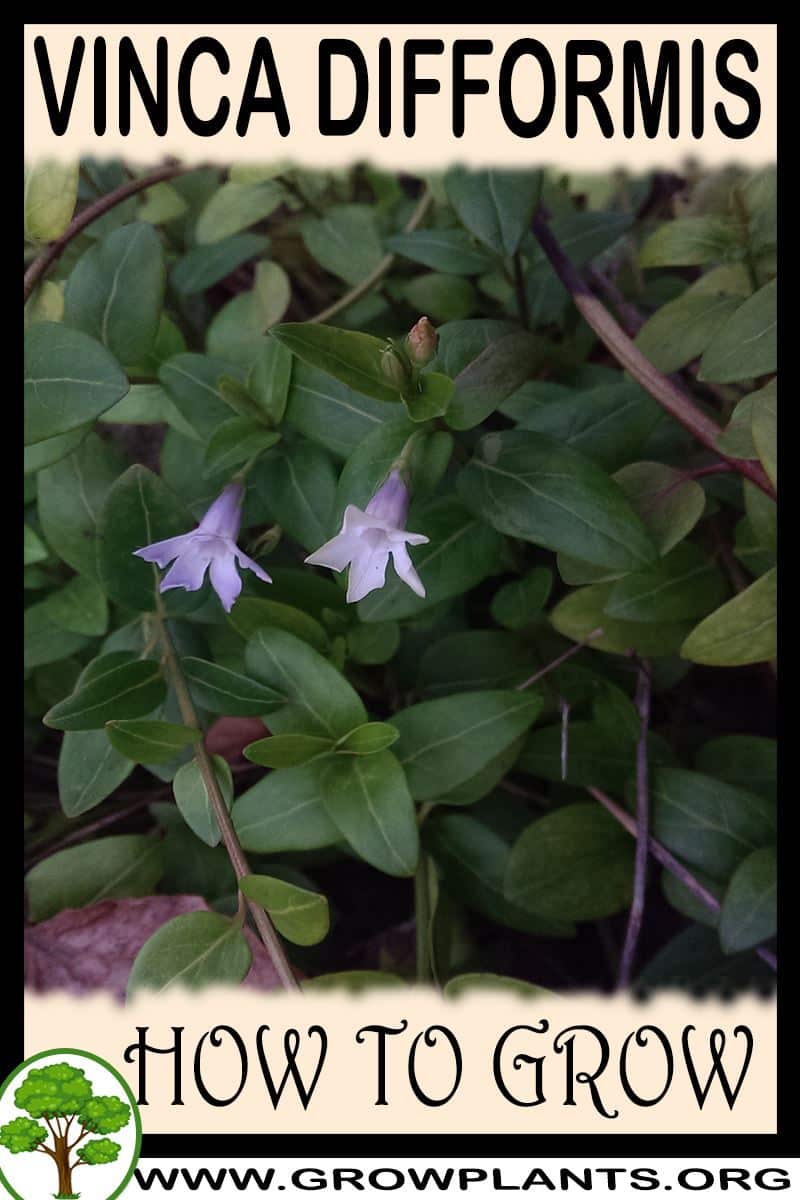
Overview: Intermediate periwinkle (Vinca difformis) is a fast-growing evergreen trailing subshrub used as an ornamental groundcover, reaching 5-30 cm and spreading widely by rooting stems. Hardy across USDA zones 9-11, it is valued for glossy foliage and pinwheel flowers but can be invasive.
Quick Specifications
| Specification | Attribute |
|---|---|
| Plant Type / Life Cycle | Perennial (evergreen; annual in cold climates) |
| Foliage Type | Evergreen |
| Mature Size | 5-30 cm tall, spreading groundcover |
| Growth Rate | Fast |
| Root System | Trailing stems root at the nodes, forming spreading mats |
| Toxicity | Toxic if ingested – contains vinca alkaloids |
| Hardiness | USDA zones 9-11 |
Growth Form & Structure
- Height & Spread: Low at 5-30 cm but spreading indefinitely by rooting runners; suits containers and hanging baskets.
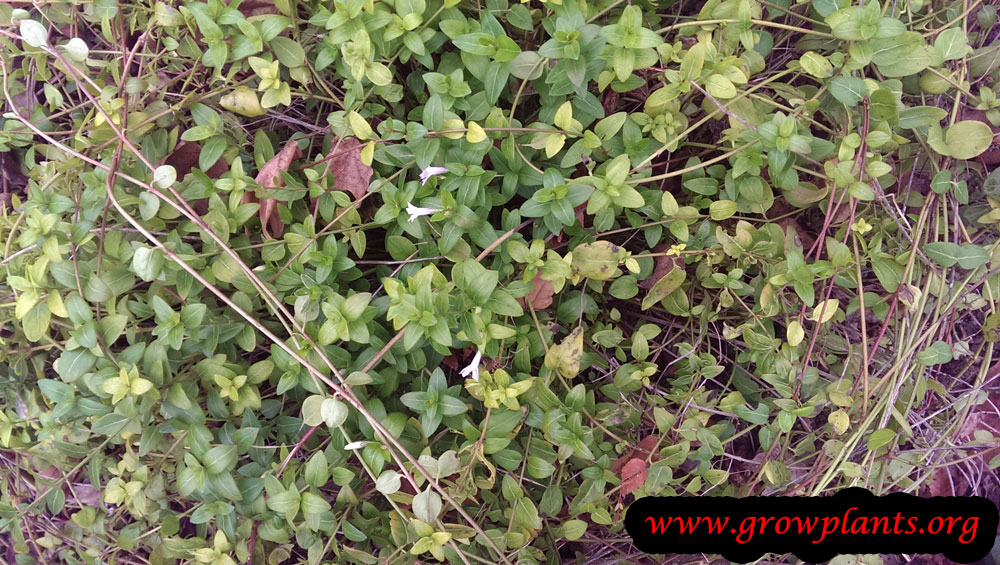
- Growth Habit & Form: Trailing, mat-forming evergreen groundcover.
- Lifespan & Maturity: Long-lived, vigorous perennial groundcover.
Anatomy & Physical Features
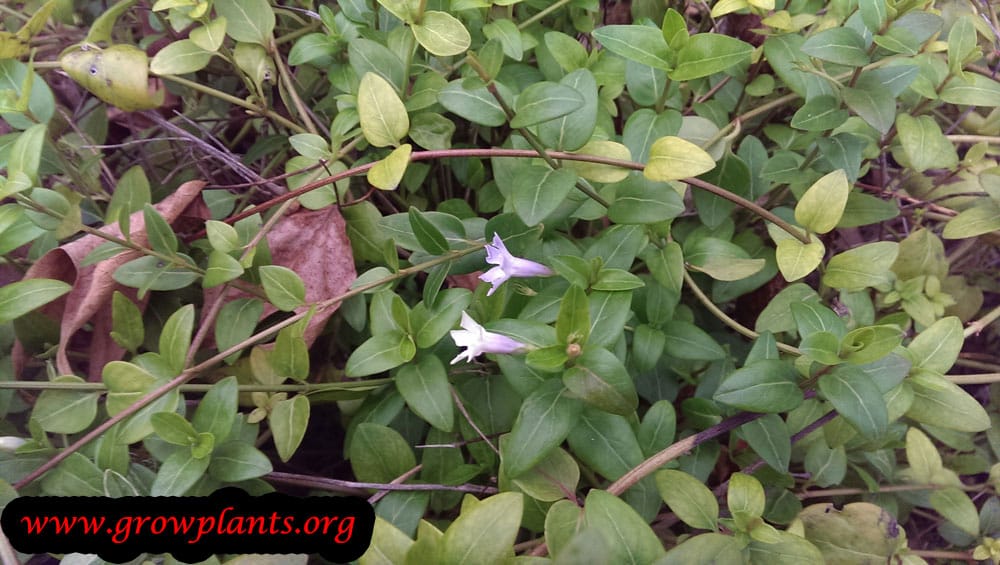
- Leaves & Foliage: Glossy oval, slightly waxy leaves (green, or green-and-white variegated in some forms).
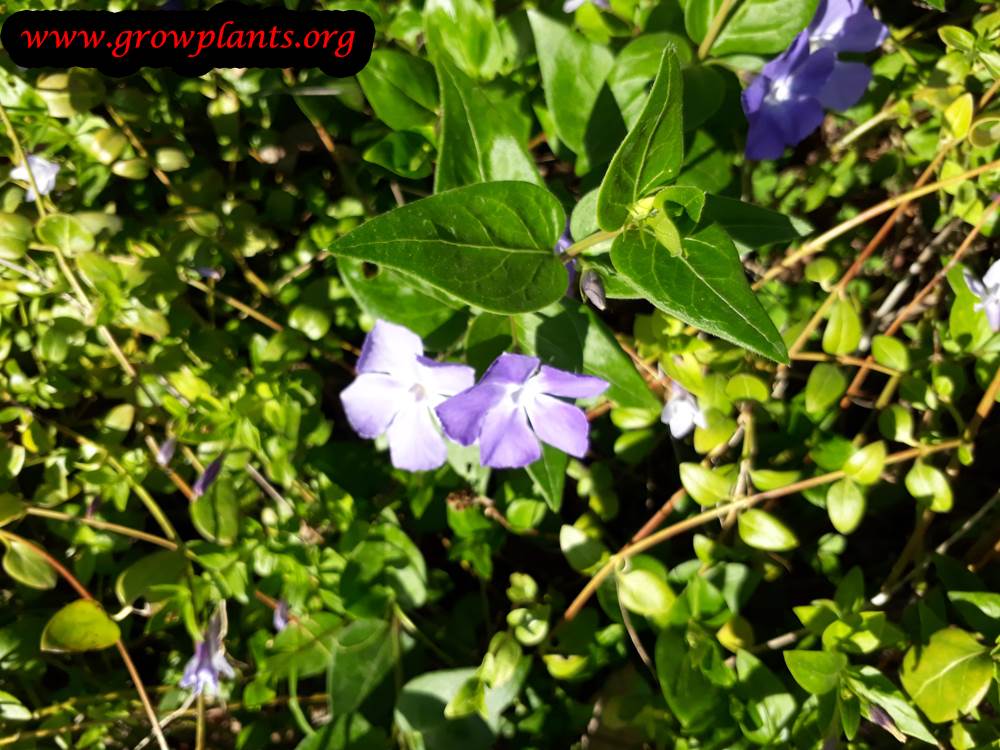
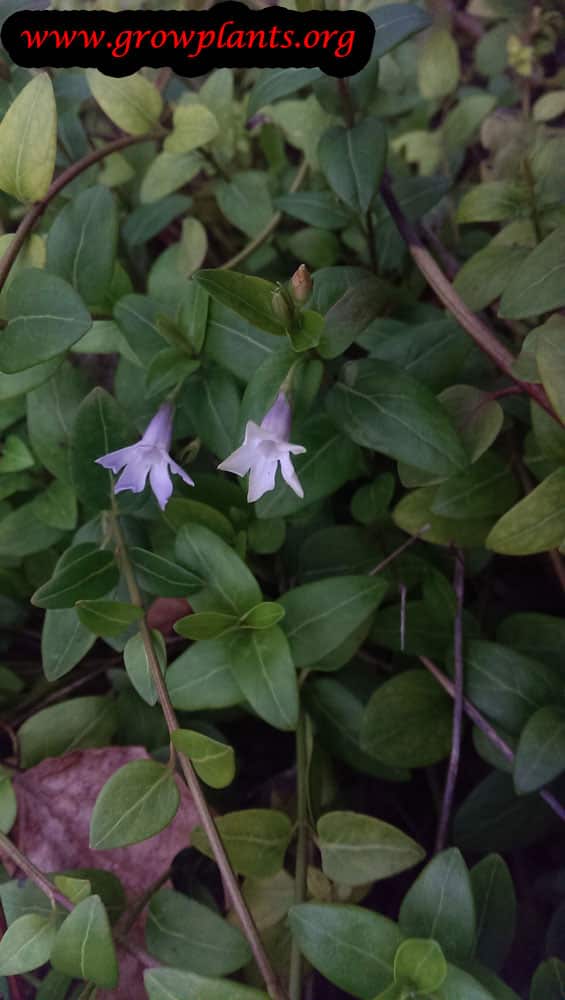
- Flower Characteristics: Five-petalled pinwheel flowers in white, pink, blue or purple, often with a contrasting eye.
Primary Uses & Landscape Value
- Functional & Ornamental Roles: Shade-tolerant evergreen groundcover for banks and beds (half to full shade); also used medicinally.
Care Guide: Planting, Soil & Watering
Overview: Vinca difformis (intermediate periwinkle) is a fast-spreading evergreen groundcover (zone 9-11) that does best in part to full shade and asks little once established. It needs well-drained soil and moderate, even moisture.
Quick Care Requirements
| Requirement | Ideal Condition |
|---|---|
| Planting Season | In spring and summer during active growth |
| Growth Rate | Fast |
| Soil Type | Well-draining |
| Water Need | Moderate |
Planting & Establishment
- Best Planting Season: Plant in spring or summer, ideally in part to full shade; it spreads widely, so give it room or edging.
- How to Plant:
- Hole Preparation: Dig a hole slightly wider than the root ball in loosened, free-draining soil.
- Soil Amendments: Mix in a little compost to get it going; it is otherwise undemanding.
- Planting Depth: Set the root ball level with the surface; trailing stems root as they spread.
- Growth Speed & Expectations: A fast groundcover, 5-30 cm high, spreading widely into a dense mat.
Soil, Watering & Drainage Care
- Soil Mix & Drainage Needs: Give well-drained soil; it tolerates a range of conditions but dislikes waterlogging.
- Watering Schedule & Technique:
- Young / Newly Planted: Keep evenly moist while it establishes and spreads.
- Established: Water moderately; it becomes fairly drought tolerant, so let the surface dry between waterings.
- Seasonal Adjustments: More in summer heat, less in winter.
Climate, Light & Hardiness
Vinca difformis (intermediate periwinkle) is an evergreen ground cover for Mediterranean, desert, subtropical and temperate climates, favouring partial to full shade. It is moderately cold-hardy, rated by the site across hardiness zones 9–11.
Quick Climate Specifications
| Climate Zones | Mediterranean, desert, subtropical, temperate |
|---|---|
| USDA Hardiness Zones | 9–11 |
| Frost Tolerance | Low to Moderate |
| Light Conditions | Partial shade to full shade |
| Wind Tolerance | Moderate |
Sunlight & Light Exposure
Optimal Light Setup
Grows best in partial to full shade, forming soft evergreen cover under trees and on shaded banks.
Shade & Heat Management
Well suited to shaded, cooler microclimates; in hot, bright positions the foliage is prone to stress, so shade and moisture are the practical safeguards.
Best Exposure / Orientation
North- and east-facing or tree-shaded aspects give the most reliable growth.
Temperature Extremes & Hardiness
USDA Hardiness & Regional Limits
The site places it in zones 9–11, a milder cold limit than the hardier Vinca major and minor. It is best where winters are mild rather than severely cold.
Cold Damage & Winter Protection
Established plants tolerate light to moderate frost within their zone range; harder freezes beyond it can damage foliage. Shelter and mulch help at the cold edge of its range.
Extreme Heat Tolerance
Moderate; it prefers cooler, shaded conditions and appreciates protection from intense sun and heat.
Wind, Humidity & Microclimate
Humidity Preferences
Adapts across humid and drier climates but favours the moist, sheltered feel of shaded ground.
Dry-Air Tolerance
Moderate; best kept out of hot, dry, exposed positions.
Wind Tolerance
Moderate; the low mat is naturally sheltered from wind.
Microclimate Recommendations
Cool, shaded, evenly moist pockets suit it best, especially in warm-summer regions.
Growing in Pots, Balconies & Indoors
The grower confirms intermediate periwinkle (Vinca difformis) grows both indoors and in containers. It is a tough, trailing evergreen ground cover that takes happily to pots, window boxes and hanging baskets, where its stems spill over the edge and it flowers over a long season in sun or shade.
Quick Details
- Container Size: A wide, shallow pot or basket for its low, wide-spreading stems (5-30 cm)
- Indoor Suitability: Can be grown indoors; give it bright light for best flowering
- Best Spot: Very adaptable – full sun through to full shade
- Soil & Drainage: Ordinary free-draining potting mix; undemanding
- Watering in Pots: Average water – keep lightly moist; it tolerates some dryness once established
Indoors & On the Windowsill
- Grows indoors: It will grow in a bright room and trail attractively from a pot or shelf; the more light it gets, the more it flowers.
- Windowsill and basket: A bright sill or a hanging basket by a window suits its trailing stems; it is far more forgiving of shade than most flowering plants.
- Vigour: It grows fast and can get straggly – pinch and trim to keep it neat indoors.
On a Balcony or Patio
- Light & wind: On a balcony it copes with sun or shade; let it trail over the rim of a raised pot, basket or railing planter. Pots dry faster than open ground, so keep an eye on moisture.
- Contain its spread: In the ground periwinkle can be invasive – a pot or basket is a tidy way to enjoy it without letting it run.
- Practicalities: A full pot of moist soil is heavy – check the balcony can take the weight, and stand pots so drainage water runs off cleanly instead of pooling.
Choosing the Pot, Soil & Long-Term Care
- Pot & drainage: A wide, shallow pot or hanging basket with drainage holes; skip a standing water saucer to avoid root rot; terracotta breathes and dries faster, while glazed or plastic holds moisture longer.
- Potting mix: A light, aerated mix – peat or coir blended with perlite or vermiculite so roots get both moisture and air.
- Feeding: A light regular feed in the growing season keeps it lush; potted plants leach nutrients faster.
- Upkeep: Trim back hard when straggly to refresh the growth and shape; refresh the mix or pot up every couple of years.
- Safety: Periwinkle is toxic if eaten (it contains vinca alkaloids) – keep it away from children and pets indoors and on the patio.
Fertilizing & Feeding
A moderate feeder that does best with light, steady feeding through the growing and flowering season rather than heavy doses.
Quick Fertilizing Specs
| Feeding Level | moderate |
|---|---|
| young_feeding | Light, regular balanced feeding as plants establish. |
| mature_feeding | Steady balanced feeding through the growing and blooming season. |
| Main Nutrient Priority | Balanced nutrition with enough nitrogen for growth; avoid over-emphasis on phosphorus. |
| Best Feeding Period | Through the active growing and flowering season. |
| Organic Options | Compost or well-rotted organic matter; balanced organic fertilizers. |
| Micronutrients | Usually supplied by a complete fertilizer; watch for iron chlorosis on alkaline soils. |
| Soil pH | Adaptable; generally does best in slightly acidic to near-neutral soil. |
| Reduce/Stop Feeding | Ease off feeding as growth slows into the cool season. |
Feeding by Growth Stage
Spring growth flush
Support the flush of new stems and leaves as active growth resumes in the warm season.
| Nutrient direction | A balanced complete fertilizer with steady nitrogen to build healthy foliage and stems. |
|---|---|
| Timing | As new growth begins and the plant leaves its cool-season slowdown. |
| Frequency | Begin light, regular feeding through the active growing season. |
| Fertilizer types | Balanced complete garden fertilizer, Slow-release granular feed, Compost or other organic matter worked into the soil |
| Precautions | Avoid heavy nitrogen, which pushes soft leafy growth at the expense of flowers. |
Bloom period
Fuel steady flowering without forcing excess leafy growth.
| Nutrient direction | Keep feeding balanced; adequate nitrogen with steady potassium supports repeated blooms. |
|---|---|
| Timing | Through the main flowering season. |
| Frequency | Continue light, regular feeding while the plant is in bloom. |
| Fertilizer types | Balanced complete flowering-plant fertilizer, Slow-release granular feed |
| Precautions | Do not rely on high-phosphorus ‘bloom booster’ products; balanced nutrition with enough nitrogen drives flowering. |
Cool-season rest
Let the plant rest during its low-growth cool season.
| Nutrient direction | None – withhold fertilizer while growth is minimal. |
|---|---|
| Timing | During the cool, low-light part of the year when growth slows. |
| Frequency | No feeding at this stage. |
| Fertilizer types | No feeding at this stage while the plant is resting. |
| Precautions | Do not fertilize until active growth resumes. |
Nutrient Deficiency Signs & Corrections
Older, lower leaves turn pale green to yellow and growth is weak.
| Possible causes | Low soil nitrogen, Leaching from frequent watering, especially in containers, Cold soil limiting nutrient uptake |
|---|---|
| Appears first on | Older, lower leaves |
| What to check | Recent feeding history, Whether the oldest leaves yellow first, Drainage and watering |
| Possible correction | Apply a balanced complete fertilizer and resume regular light feeding through the growing season. |
New leaves yellow between the veins while the veins stay green.
| Possible causes | High or alkaline soil pH locking up iron, Waterlogged or cold roots reducing uptake, Genuinely low micronutrient availability |
|---|---|
| Appears first on | Youngest leaves |
| What to check | Soil pH, Drainage, Whether yellowing is interveinal on new growth |
| Possible correction | Correct soil pH and, if needed, apply a chelated iron product following its label. |
Leaf edges and tips brown and scorch, especially in containers.
| Possible causes | Excess fertilizer salts building up in the soil, Underwatering that concentrates salts, Poor drainage |
|---|---|
| Appears first on | Leaf margins and tips |
| What to check | Recent fertilizer amounts, Whether pots drain freely, How thoroughly the plant is watered |
| Possible correction | Water thoroughly to rinse excess salts from the root zone and reduce feeding. |
Pruning, Training & Seasonal Maintenance
Vinca difformis (Intermediate Periwinkle) is a low, evergreen, mat-forming groundcover (Apocynaceae) that tolerates hard shearing and even mowing, so pruning here is about containment and renewal rather than any woody structure. Its real jobs are keeping this fast, mat-forming spreader inside its bed, refreshing tired matted growth, and cutting out winter-burnt stems. Because it flowers in winter–spring on short shoots carried over from the previous season, shear AFTER the main flush so you are not cutting the bloom off. It is the least cold-hardy of the common periwinkles (zone 9–11) and the most Mediterranean, so in marginal areas the post-frost tidy of cold-burnt stems is a bigger part of the job than in the hardier species.
Quick Pruning & Maintenance Specs
| Pruning Tolerance | High – takes shearing and mowing |
| Primary Pruning Window | Right after the winter–spring flowering flush |
| Secondary Maintenance Window | Light edge tidy any time in the growing season |
| Typical Frequency | 1–2 renovation shears per year plus ongoing edge control |
| Main Objective | Contain spread & renew a dense, even mat |
| Young Plant Priority | Pinch trailing tips to branch and knit cover fast |
| Mature Plant Priority | Shear/mow to renew the mat; sever escaping runners |
| Best Tool Type | Hedge shears or string trimmer for the mat; snips for spot work |
| Avoid Heavy Pruning During | Hard frost, and the weeks just before bloom |
Pruning by Plant Age & Size
Newly Established
Plant plugs at close spacing and simply pinch the trailing tips a few times — this forces side branching so the young mat knits together and covers ground instead of running in thin single strands. Remove only broken or frost-damaged stems.
Young / Formative
There is no structural training — this is a groundcover, not a shrub. Keep pinching wayward runners and let the plant fill by tip-rooting where you want cover; stop it where you do not.
Mature / Established
Once a planting congests or the centre thins, renovate by shearing or mowing the whole sweep back to a few centimetres above the crowns; Vinca difformis (Intermediate Periwinkle) regrows quickly into fresh, dense, free-flowering growth.
Seasonal Pruning Schedule
Post-Flowering (main renovation)
Objective: renew the mat and trigger dense regrowth. Shear the whole planting right after the winter–spring flush. Remove: matted, leggy and spent top growth. Do NOT do this just before or during peak bloom. Expected response: a flush of new stems and sporadic rebloom; little is lost because flowering is essentially over.
Ongoing Sanitary
Through the year pull or cut out frost-burnt and dead stems and, importantly, lift and sever the rooting runners creeping past the bed edge before they establish.
Flowering & Fruiting Wood
Bloom is carried on short shoots from the previous season’s stems, so the single rule that matters is timing: shear after the winter–spring flush, never before it, or you remove the flower-bearing shoots. Expect only light scattered rebloom afterwards — the display is the spring flush.
Structural Pruning & Training
None applies — there is no framework to build. “Structure” for a periwinkle is simply an even, renewed mat, achieved by shearing/mowing and by controlling where the stems root.
Special Growth to Remove
The stems root at their nodes (stoloniferous runners), and this is exactly how the plant escapes into lawns and borders. On this lower, more mounding form the runners are shorter than on V. major but still root readily — watch the shaded edges. Sever and lift any runners rooting beyond the intended area; there are no suckers or watersprouts to worry about.
Container & Small-Space Pruning
Grown to trail over a wall or pot, just trim the spillover to length and pinch the crown to keep it full; if the middle goes bare, shear the whole plant back and let it reflush rather than letting a woody, empty centre build up.
Tools
Hedge shears or a string trimmer are the right tools here — this is one of the few cases where shearing a whole sweep is correct, because it is a uniform groundcover. Keep a pair of precision snips for edging and for cutting out individual rooting runners. No loppers or saw are ever needed.
Tool Hygiene & Disease Risk
Routine — clean, sharp tools are enough; periwinkle carries no notable tool-borne disease. Note that cut stems bleed a milky latex that can irritate skin and is mildly toxic if eaten, so wear gloves, wash up, and keep clippings away from pets.
Cut Placement & Technique
Shear evenly across the mat; for a full renovation cut or mow to a few centimetres above the crowns. When spot-pruning, pinch or cut just above a leaf node so the stem breaks and bushes out.
Heavy Pruning & Rejuvenation
Fully tolerated: an old, congested planting can be sheared or mowed almost to the ground and will flush back into a fresh dense cover. Do it right after bloom and water it afterwards.
Post-Pruning Care
Water after a hard renovation to push the regrowth; no heavy feeding is needed — shearing itself drives the flush. Keep an eye out for cut runners re-rooting where you do not want them.
Common Pruning Mistakes
- Shearing just before bloom and cutting off the spring flowers.
- Letting runners root beyond the bed — the plant is listed as invasive and this is how it escapes.
- Cutting into a cold-damaged crown in the depths of winter rather than waiting for the flush to finish, on this less hardy species.
When NOT to Prune
Avoid shearing during peak bloom (you lose the display) and during hard frost, when cut stems and exposed crowns are most easily damaged.
Recommended Tools (by task)
- hedge_shears — to shear or renovate the whole groundcover mat evenly in one pass.
- precision_snips — to edge the planting and cut out individual rooting runners that are escaping.
Pruning Troubleshooting
| Problem | Possible Cause | What to Check | Corrective Action |
| Few or no flowers after shearing | Sheared before the spring flush | When you last cut relative to bloom | Shear only AFTER the winter–spring flowering |
| Bare, thin centre in an old planting | Congested, matted, exhausted crowns | Mat density and moisture at the centre | Renovate hard after bloom and water to reflush |
| Spreading into lawn or neighbouring beds | Runners tip-rooting past the edge | The bed margins for rooting stem tips | Sever and lift escaping runners; edge regularly |
Propagation Guide
Intermediate periwinkle is a shade-loving, spreading ground cover. Periwinkles are simplest to increase by division or by nodal stem cuttings, and their trailing stems root wherever they touch soil, so layering is almost automatic. Seed is seldom used, and variegated or named forms must be propagated vegetatively to stay true. An easy subject.
Quick Propagation Specs
| Best Propagation Method | Division |
| Alternative Methods | Nodal stem cuttings; layering of self-rooted stems |
| Propagation Difficulty | Easy |
| Seed True-to-Type | Cultivar-dependent — variegated and named forms do not come true and rarely set seed |
| Vegetative True-to-Type | Yes |
| Best Propagation Season | Cooler active growth — autumn or early spring |
| Cutting Rooting Time | A few weeks |
Division, Offsets, Pups & Suckers
Crown & Clump Division
Lift an established mat in autumn or early spring and separate rooted crowns or stem sections, each with its own roots; replant and keep moist until re-established. Divisions of this widely-spreading plant re-establish readily in shade.
Stem Cuttings
Nodal Cuttings
Short nodal cuttings root readily — roots form where a node sits against moist media — so rooting hormone is unnecessary.
Runners & Stolons
The trailing stems root at their nodes; simply sever an already-rooted length and pot it up. Rooted trailing stems can be lifted and moved; the plant’s ready spread means it can be invasive, so keep it in bounds.
Bloom & Flower Guide
Quick Details
- Bloom Season: Late winter into spring, often starting very early in mild areas
- Time to First Bloom: Fast; established plants flower freely each season
- Flower Appearance: Five-lobed, pinwheel-shaped flowers in pale blue to white (also pink or purple forms), with a small star at the centre
- Edibility: Not edible; periwinkle contains toxic alkaloids in all its parts and should never be eaten
Detailed Blooming Overview
Intermediate periwinkle is prized for flowering very early, often opening its first pale blue-to-white pinwheels in the depths of winter and continuing into spring. An evergreen, spreading ground cover, it carries the neat five-lobed blooms singly against glossy leaves, brightening shady corners when little else is in flower.
Flower Characteristics
- Five-lobed, pinwheel-shaped flowers in pale blue to white, sometimes pink or purple.
- Often with a darker or lighter centre and a small star at the throat.
- Held singly along trailing, spreading stems.
Bloom Care & Thinning
- Managing the bloom: A light trim after flowering tidies the mat and promotes fresh growth.
- Keeping it in bounds: Trim the spreading stems to keep the ground cover in check.
- Pollination: Insect-pollinated; no help needed for the display.
Bloom Health & Protection
- Handle with care: All parts are toxic if eaten, so keep it away from areas used by children and pets and wash hands after pruning.
Pests, Diseases & Troubleshooting
Overview: Intermediate periwinkle shares the genus pattern: it is largely insect-free, and its main risks are Phoma stem blight, leaf and stem spot, and root/stem rot in wet, crowded conditions, with only occasional aphids, scale and mites. Open, airy, well-drained plantings stay healthy.
Quick Troubleshooting Overview
| Issue / Pest | Main Symptom | Primary Solution |
|---|---|---|
| Phoma stem blight | Shoots wilt, blacken, die back | Prune out; thin for airflow; sanitation |
| Leaf/stem spot | Brown spots, tip dieback, bare patches | Thin; dry foliage; remove debris |
| Aphids & scale | Honeydew, sooty mould, curling | Beneficials; soap/oil |
| Spider mites | Stippled, dull leaves in dry heat | Humidity; oil/soap |
| Root/stem rot | Wilting, collapse in wet soil | Sharp drainage; avoid overwatering |
| Rust / downy mildew | Pustules or leaf blotches | Airflow; remove leaves; sulfur/copper |
Common Pests & Management
- Aphids (Aphidoidea):
- Symptoms: Clusters of small soft-bodied green, black or grey insects on new shoots, buds and leaf undersides; curled or distorted young growth, sticky honeydew and a black sooty mould film; ants farming the colonies. Look-alikes include whitefly nymphs (flat, static) and psyllids.
- Prevention & Control: Encourage and protect ladybirds, lacewings, hoverflies and parasitic wasps; knock colonies off with a strong jet of water and pinch out badly infested tips. Avoid excess nitrogen, which drives soft aphid-prone growth. If numbers stay high, treat with insecticidal soap or a horticultural/neem oil, spraying leaf undersides in the cool of the evening to protect pollinators.
- Scale insects (Coccoidea):
- Symptoms: Immobile brown, tan or waxy-white bumps along stems and leaf veins; yellowing, weak growth, honeydew and sooty mould with soft (unarmoured) scales. Hard scales sit tight and do not wipe off easily.
- Prevention & Control: Rub off light infestations by hand or with a soft brush; prune out heavily encrusted stems. Conserve parasitic wasps and predatory beetles that keep scale in check. For active crawlers, apply horticultural oil to smother them, repeating as new crawlers emerge; oils give the best organic control against the protective waxy shell.
- Spider mites (two-spotted mite) (Tetranychus urticae):
- Symptoms: Fine pale stippling or bronzing on upper leaf surfaces, later a dull sandblasted look; delicate webbing on undersides and shoot tips in hot dry spells. Confirm by tapping foliage over white paper and watching for moving specks.
- Prevention & Control: Mites thrive in hot, dusty, drought-stressed conditions, so keep plants well watered and raise humidity where practical; hose down foliage and remove badly affected leaves. Introduce predatory mites (Phytoseiulus) under cover. If needed, apply insecticidal soap or horticultural oil, ensuring thorough coverage of leaf undersides and repeating to catch newly hatched mites.
- Whitefly (Aleyrodidae):
- Symptoms: Clouds of tiny white moth-like insects rising when foliage is disturbed; pale mottling, honeydew and sooty mould, with scale-like nymphs on leaf undersides. A vector of several plant viruses.
- Prevention & Control: Use yellow sticky traps to catch adults and monitor build-up; encourage Encarsia parasitic wasps and predatory beetles, especially under cover. Remove heavily infested lower leaves. Insecticidal soap or horticultural oil sprayed to leaf undersides, repeated every few days, breaks the life cycle.
Diseases & Fungal Issues
- Phoma stem blight / canker (Phoma exigua var. exigua (Phomopsis)):
- Symptoms: The classic periwinkle killer: shoots suddenly wilt and blacken, with dark cankers girdling the stems at or near soil level, so whole runners and patches die back and brown off, especially in warm, wet, crowded plantings.
- Treatment & Management: Prune out and destroy blighted shoots well into healthy tissue, thin dense mats to improve airflow, and avoid overhead watering and overcrowding; do not work the bed when wet. Space or divide congested plantings, clear debris, and use a fungicide only as backup — airflow and sanitation are the real controls.
- Leaf and stem spot / dieback (Colletotrichum / Alternaria / Phomopsis):
- Symptoms: Brown to black spots and blotches on leaves and stems, often with dieback of shoot tips and bare patches in the mat; worst in humid, shaded, poorly ventilated sites.
- Treatment & Management: Improve airflow and light by thinning, avoid wetting the foliage, and remove and destroy affected leaves and stems and fallen debris; keep the planting open. Where persistent, a copper or general fungicide helps, but the key is drier, more open, less crowded growth.
- Root and stem rot (Phytophthora / Rhizoctonia / Pythium):
- Symptoms: Wilting despite moist soil, yellowing, and rotted roots and stem bases causing plants to collapse in patches; driven by waterlogging, heavy soil and overwatering.
- Treatment & Management: Plant in free-draining soil, avoid overwatering and heavy, wet ground, and do not plant too deep; remove affected plants and improve drainage. Vinca is drought-tolerant once established, so err on the drier side to keep roots healthy.
- Rust (Pucciniales):
- Symptoms: Powdery orange, brown or rust-coloured pustules on leaf undersides with corresponding yellow spots above; severe attacks cause yellowing and early leaf fall in humid conditions.
- Treatment & Management: Remove and destroy infected leaves, avoid wetting foliage, and improve spacing and airflow; clear fallen debris where spores overwinter. Choose resistant varieties where available. Sulfur or a suitable fungicide, applied early, slows progress on valued plants.
Growing Difficulties & Abiotic Problems
- Overwatering and poor drainage:
- Cause & Symptoms: Yellowing, wilting and rot in wet, heavy soil or over-irrigated beds; periwinkle is drought-tolerant and dislikes constantly wet roots.
- Correction Strategy: Grow in well-drained soil, water only in real drought once established, and avoid soggy sites; good drainage also prevents the stem blight and root rots that thrive in wet crowding.
- Overcrowding and dieback:
- Cause & Symptoms: Dense, congested mats that trap humidity, develop bare, dead centres and become disease-prone.
- Correction Strategy: Thin, shear or divide mats periodically to keep them open and airy, and space new plantings adequately; a well-ventilated planting is far less prone to blight and leaf spot.
- Chlorosis and scorch:
- Cause & Symptoms: Yellowing leaves on alkaline or poor soil, and leaf scorch in intense full sun in hot climates (Vinca prefers part shade).
- Correction Strategy: Grow in part shade to full sun (with some shade in hot regions) in reasonable soil with organic matter, and correct chlorosis with balanced feeding or an iron chelate; mulch to steady moisture.
What Helps — Products & Tools
Periwinkle is disease-led, not pest-led: manage the Phoma stem blight and leaf/stem spots with pruning, thinning for airflow and sanitation, backed by a copper or general fungicide only if needed. Keep insecticidal soap and horticultural/neem oil for occasional aphids, scale, whitefly and mites, and sulfur for rust. Sharp drainage prevents the root and stem rots.