

Plant Profile & Key Characteristics
Overview: Torenia fournieri (Wishbone flower) is a compact herbaceous annual reaching 15-30 cm (6-12 in), grown as a colourful ornamental for shady beds, containers and as a houseplant. It flowers freely through the warm season.
Quick Specifications
| Specification | Attribute |
|---|---|
| Plant Type / Life Cycle | Annual |
| Mature Size | 15-30 cm x mounded (6-12 in) |
| Growth Rate | Moderate to fast |
| Toxicity | Non-toxic |
| Hardiness | Grown as an annual in USDA zones 2-11 |
Growth Form & Structure
- Height & Spread: Stays a compact 15-30 cm (6-12 in) mound; excellent in pots, hanging baskets and as a houseplant as well as in the ground
- Growth Habit & Form: Low, bushy, mounded herbaceous annual
- Lifespan & Maturity: A single-season annual that reaches flowering size quickly and blooms until frost
Anatomy & Physical Features
- Leaves & Foliage: Green, oval to heart-shaped leaves with serrated margins
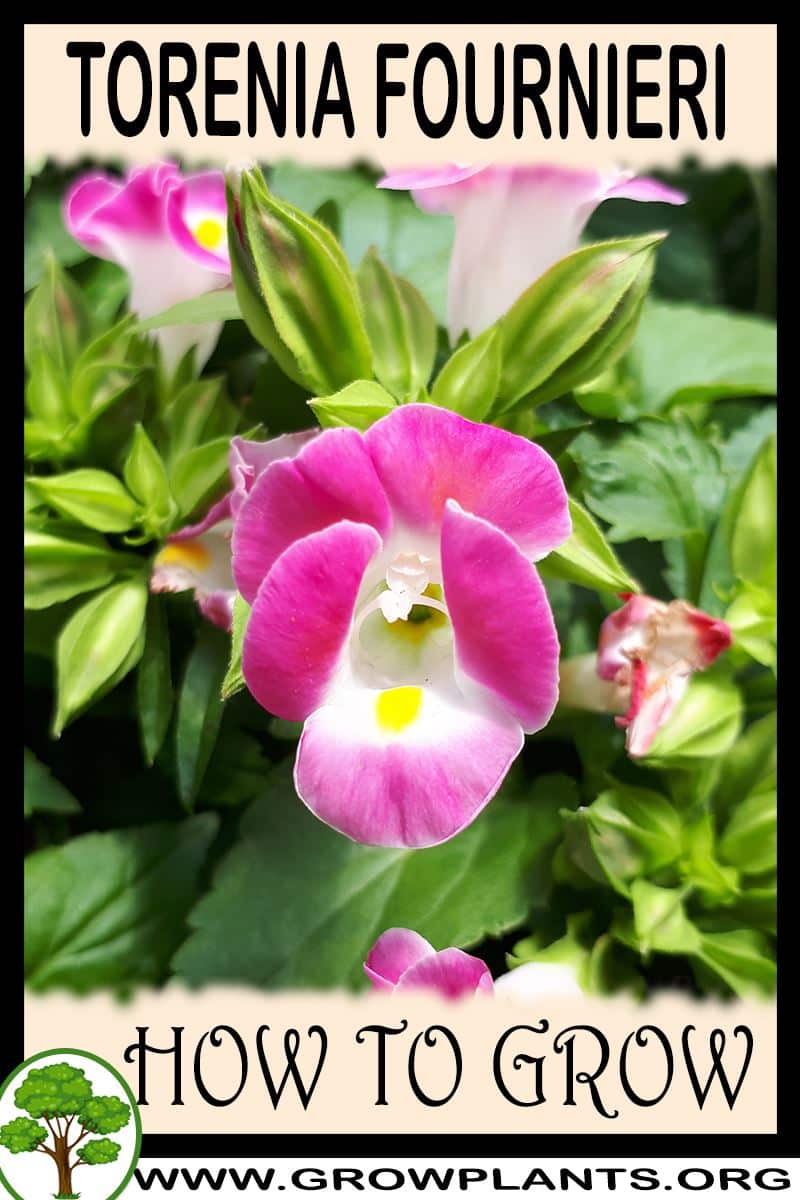
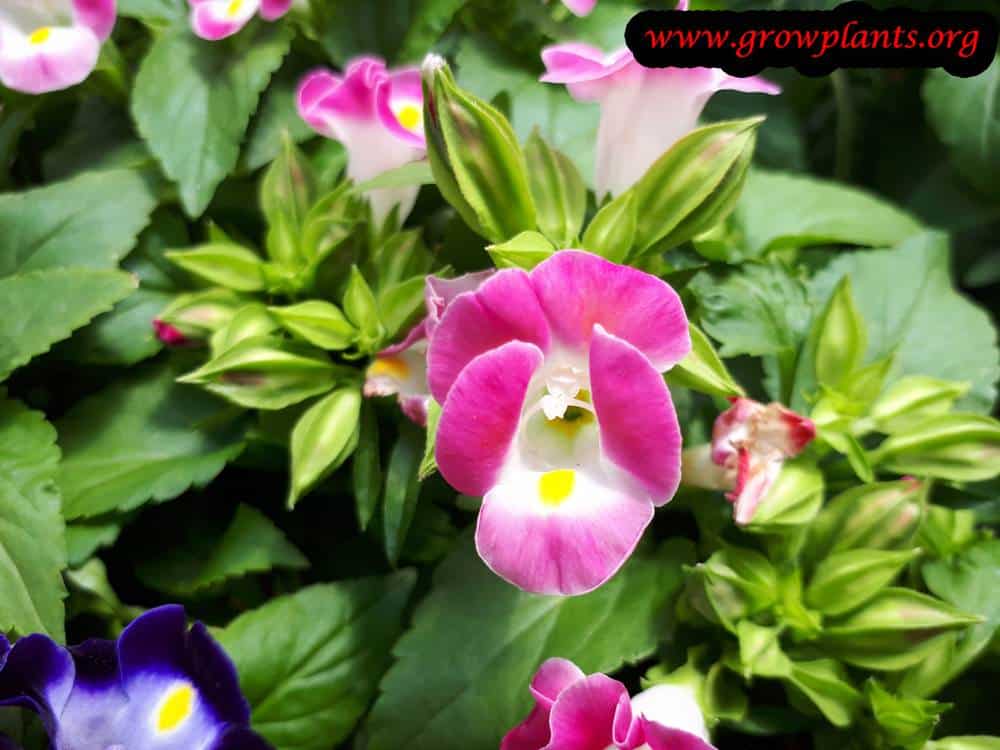
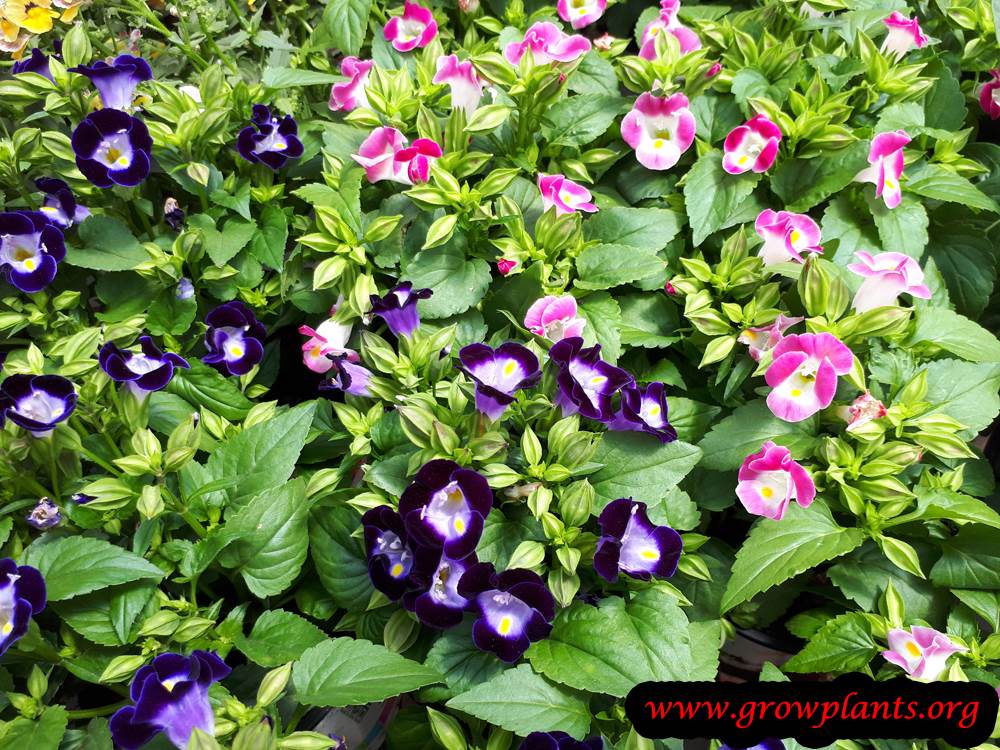
- Flower Characteristics: Two-toned tubular flowers in blue, pink or purple with a contrasting blue, purple or white throat (the paired stamens form the “wishbone”)
Primary Uses & Landscape Value
- Functional & Ornamental Roles: Shade-tolerant bedding annual, container and hanging-basket plant, and an easy flowering houseplant
Care Guide: Planting, Soil & Watering
Overview: Wishbone flower (Torenia fournieri) is a compact, shade-loving annual grown for its colourful mouth-shaped blooms. It likes rich, moist, well-drained soil and steady moisture, prefers part to full shade, and dislikes intense heat and dry soil.
Quick Care Requirements
| Requirement | Ideal Condition |
|---|---|
| Planting Season | In spring after the last frost, into early summer |
| Growth Rate | Moderate to fast |
| Soil Type | Rich, moist and well-drained |
| Water Need | Moderate; keep the soil consistently moist |
Planting & Establishment
- Best Planting Season: Plant out in spring once frost has passed; in cool climates it grows through spring and summer as an annual.
- How to Plant:
- Hole Preparation: Loosen a hole a little wider than the root ball in rich, moisture-retentive soil in a part- to full-shade spot.
- Soil Amendments: Work in compost or organic matter to enrich the soil and help it hold moisture.
- Planting Depth: Set the root ball level with the surface and firm gently.
- Growth Speed & Expectations: A quick grower forming tidy mounds about 15-30 cm tall that flower from spring into autumn.
Soil, Watering & Drainage Care
- Soil Mix & Drainage Needs: Wants a rich but free-draining soil or potting mix that stays evenly moist; add organic matter and mulch, and avoid both drought and waterlogging.
- Watering Schedule & Technique:
- Young / Newly Planted: Keep consistently moist while establishing.
- Established: Water regularly so the soil never dries out – dry spells and heat quickly stress the plant.
- Seasonal Adjustments: More water in summer heat (light shade helps), less in cool weather.
Climate, Light & Hardiness
Torenia fournieri (wishbone flower) is a shade-loving annual grown across Mediterranean, desert, subtropical, and temperate climates, or year-round as a houseplant. It prefers half to full shade and cool conditions, since it is notably sensitive to heat.
Quick Climate Specifications
| Climate Zones | Mediterranean, Desert, Subtropical, Temperate |
|---|---|
| USDA Hardiness Zones | 2–11 (grown as an annual, or as a houseplant) |
| Frost Tolerance | Low |
| Light Conditions | Half Shade to Full Shade |
Sunlight & Light Exposure
Optimal Light Setup
Grows best in half to full shade; unlike many bedding annuals it does not want strong direct sun.
Shade & Heat Management
This species is notably sensitive to heat, so a shaded, cooler position - especially protection from hot afternoon sun - is important for keeping it blooming through summer.
Temperature Extremes & Hardiness
USDA Hardiness & Regional Limits
Grown as an annual (or houseplant) across a very wide USDA range of zones 2–11, since it is planted fresh each warm season rather than overwintered outdoors.
Frost Sensitivity
Frost-tender; a freeze ends the growing season outdoors.
Extreme Heat Tolerance
Poor - prolonged heat stresses the plant and reduces flowering, making shade and consistent moisture especially important in hot climates.
Growing in Pots, Balconies & Indoors
Wishbone flower (Torenia fournieri) is a compact, shade-loving annual at just 15-30 cm (6-12 in), and the grower confirms it grows well both as a houseplant and in containers – one of the easier flowering plants to keep on a bright indoor spot or a shaded balcony.
Quick Details
- Container Size: Small – a 2-5 L (0.5-1 gal) pot, or a group in a trough or hanging basket
- Indoor Suitability: A genuine houseplant; tolerates half to full shade, so it suits bright indoor light
- Best Spot: Half to full shade – bright, indirect light indoors; avoid harsh direct sun
- Soil & Drainage: Moist, rich, free-draining potting mix
- Watering in Pots: Keep evenly moist – it dislikes drying out, but empty any saucer so roots never sit in water
Indoors & On the Windowsill
- As a houseplant: The grower rates it suitable indoors. Give it bright, indirect light, keep the mix lightly moist and it will flower happily in a room or by a window.
- Windowsill: An east- or north-facing sill is ideal – it prefers shade to scorching sun, and it stays naturally small.
- Heat: It resents high heat, so keep it away from radiators and hot glass.
On a Balcony or Patio
- Light & wind: Best on a sheltered, part-shaded balcony out of harsh midday sun and drying wind; walls and paving reflect heat, so pots dry fast – check moisture often.
- Practicalities: Account for the weight of a full pot and make sure drainage water can run away freely without staining the balcony.
Choosing the Pot, Soil & Long-Term Care
- Pot & drainage: Use a pot with strong drainage holes and skip a standing-water saucer to avoid root rot; terracotta breathes and dries faster, while glazed or plastic holds moisture longer.
- Potting mix: Well-aerated and organic-rich – a quality potting mix, or peat/coir with perlite or vermiculite.
- Feeding: Potted plants use up their soil faster as nutrients leach out with each watering – feed lightly through the growing season.
- Repotting: Usually grown as an annual, so fresh mix each season is enough; no long-term potting-on needed.
Fertilizing & Feeding
A light feeder: this shade-loving bedding annual grows in naturally rich, moist soil and only needs gentle, balanced feeding through its bloom season to keep flowering well.
Quick Fertilizing Specs
| Feeding Level | Light feeder |
|---|---|
| Main Nutrient Priority | Balanced feeding that favors steady flowering over rank leaf growth |
| Best Feeding Period | From planting through the summer bloom season |
| Organic Options | Compost or leaf mold worked into rich, moisture-retentive soil |
| Reduce/Stop Feeding | Ease off as the season winds down and the plant declines with cooler weather |
| Micronutrients | Usually met by rich, moist soil and a complete fertilizer |
| Soil pH | Slightly acidic to near neutral, in keeping with its preference for moist, rich soil |
Feeding by Growth Stage
Establishment after planting
Help young transplants settle into moist, rich soil and begin steady growth.
| Nutrient direction | A gentle, balanced feeding supports root establishment without overwhelming small transplants. |
|---|---|
| Timing | Shortly after planting out in spring or early summer. |
| Frequency | One light feeding is generally enough to start establishment. |
| Fertilizer types | A balanced, diluted complete fertilizer for young plants, Compost or leaf mold worked into the bed |
| Precautions | Keep feeding light on freshly set transplants, which are easily stressed by strong fertilizer near tender roots. |
Wishbone-flower bloom season
Keep the shade garden or container filled with blue, pink, or purple flowers through summer.
| Nutrient direction | Continued gentle, balanced feeding keeps flowering steady in shaded, cooler conditions this plant prefers. |
|---|---|
| Timing | Through the summer flowering period. |
| Frequency | Occasional light feedings through the season are usually enough, more often in containers than in garden beds. |
| Fertilizer types | A balanced complete fertilizer at a light rate, A diluted liquid feed where grown in containers or as a houseplant |
| Precautions | This plant is sensitive to heat; avoid feeding heavily during hot spells when it is already under stress. |
End-of-season decline
Let the planting finish out its natural annual cycle without pushing new growth it cannot sustain.
| Nutrient direction | None – withhold fertilizer as the annual planting fades toward the end of its cycle. |
|---|---|
| Timing | Late in the season as cooler weather or heat stress ends the display. |
| Frequency | No feeding at this stage. |
| Fertilizer types | No feeding at this stage; plants grown as annuals are nearing the end of their cycle and will not respond with useful new growth. |
| Precautions | Do not fertilize a declining annual planting; withhold feeding and let it finish naturally or remove it. |
Nutrient Deficiency Signs & Corrections
Older leaves turn pale green to yellow and the planting looks thin with fewer new flowers.
| Possible causes | low available soil nitrogen, nutrients washed out of rich, constantly moist soil, roots crowded or restricted in a small container |
|---|---|
| Appears first on | older, lower leaves |
| What to check | recent feeding history, container size and root crowding, how consistently the soil has been kept moist |
| Possible correction | Apply a balanced complete fertilizer at a light rate and check that the container or bed still drains well. |
Interveinal yellowing appears on older leaves while the veins themselves stay green.
| Possible causes | low soil magnesium, heavy leaching from constantly moist, rich soil, potassium-heavy feeding competing with magnesium uptake |
|---|---|
| Appears first on | older, lower leaves |
| What to check | soil magnesium status, how moist and free-draining the soil has been kept, recent fertilizer balance |
| Possible correction | Apply a labeled magnesium source such as Epsom salt and rebalance the feeding routine. |
Leaf edges brown or scorch and the plant wilts or stalls despite consistently moist soil.
| Possible causes | fertilizer salts accumulating in a container or bed that stays constantly moist, heat stress compounding salt sensitivity, feeding too often for such a light feeder |
|---|---|
| Appears first on | leaf margins and tips |
| What to check | recent fertilizer amount and frequency, whether feeding coincided with a heat spell, drainage, especially in containers |
| Possible correction | Ease off feeding, flush the soil with plain water, and resume only a light feeding routine once the plant recovers. |
Pruning, Training & Seasonal Maintenance
Torenia fournieri (Wishbone flower) is a small, soft-stemmed annual with no woody tissue, so it tolerates frequent light trimming but needs no structural pruning at all. The objective is purely cosmetic and functional: pinching keeps the low mound compact and bushy, and deadheading keeps the continuous spring–autumn bloom coming. Because the plant is heat-sensitive, the safest time for any harder cutback is during cooler, cloudy weather rather than a hot spell.
Quick Pruning & Maintenance Specs
| Pruning Tolerance | Moderate (soft tissue only, no old wood to protect) |
| Primary Pruning Window | Throughout the growing season (spring–autumn) |
| Typical Frequency | Light pinching/deadheading every 1–2 weeks while blooming |
| Main Objective | Compact habit and continued flowering, not size control |
| Young Plant Priority | Pinch tips to build branching before it flowers heavily |
| Mature Plant Priority | Deadhead and remove leggy stems to keep the mound tidy |
| Best Tool Type | Fingers or precision snips |
| Avoid Heavy Pruning During | Periods of high heat stress |
Pruning by Plant Age & Size
Newly Established
No pruning needed beyond removing any damaged seedling growth; let the young plant establish roots first.
Young / Formative
Pinch out the growing tips once the plant has 2–3 sets of leaves to encourage side branching — this is the only "training" this species needs, since it has no leader or framework to develop.
Mature / Established
Deadhead spent flowers regularly and snip back any stems that have stretched out of the mound’s shape.
Seasonal Pruning Schedule
Ongoing Sanitary
Objective: keep the plant blooming and looking full through its spring–summer–autumn flowering window. Remove: spent flowers, yellowed leaves, and any stems that have gone leggy or floppy. Do not remove: unopened buds or healthy new tip growth. Expected response: faster rebloom and a fuller mound. Flowering impact: deadheading directly extends the bloom period by preventing the plant from setting seed.
Special Growth to Remove
- Spent flower stems — snip to keep the plant reblooming instead of setting seed.
- Leggy or sprawling stems — pinch back to a lower leaf pair to restore a compact shape.
- Yellowed or heat-stressed leaves — remove for appearance and airflow.
Container & Small-Space Pruning
Torenia is very commonly grown in pots, hanging baskets, and as a houseplant. In containers it tends to stretch faster toward light, so pinch a little more frequently than in-ground plantings to hold a tight mound, and trim back by up to a third mid-season if it becomes sparse or leggy — it will refill quickly given its fast/medium growth rate.
Tools
- Precision snips or fingers — the only tool needed for pinching tips and deadheading soft stems.
Tool Hygiene & Disease Risk
Routine: this is a soft annual with no significant wood-borne disease risk noted; clean, sharp snips are sufficient.
Cut Placement & Technique
Pinch or snip just above a leaf node or pair of leaves; deadhead by removing the entire spent flower and its short stem back to the nearest node to avoid leaving bare stubs.
Heavy Pruning & Rejuvenation
If plants become stretched and sparse mid-season, a light cutback of the longest stems by about a third will prompt fresh branching and renewed flowering — but avoid doing this during a heat spell, since the plant is noted as heat-sensitive and needs cooler conditions to recover.
Post-Pruning Care
Water normally after pinching or deadheading; no extra feeding is needed since this is routine maintenance, not a hard structural cut. Keep an eye on soil moisture, as this species prefers evenly moist, rich soil and will wilt quickly if it dries out after trimming.
Common Pruning Mistakes
- Letting spent flowers linger, which slows the production of new blooms.
- Skipping the early pinch, resulting in a single sparse stem instead of a bushy mound.
- Hard-trimming during a heatwave, adding stress to an already heat-sensitive plant.
When NOT to Prune
Avoid heavy trimming during hot spells or drought stress, since Torenia is documented as sensitive to heat and needs mild conditions to bounce back after cutting.
Recommended Tools (by task)
- precision_snips — sized correctly for pinching soft tips and deadheading individual flowers on this small bedding annual.
Propagation Guide
Wishbone flower is grown mainly from seed, which is fine and dust-like and needs light to germinate well; softwood tip cuttings are a fast, easy alternative when a specific plant is worth keeping, including carrying one indoors as a houseplant through winter. Propagation is easy either way.
Quick Propagation Specs
| Best Propagation Method | Seed |
| Alternative Methods | Stem/tip cuttings |
| Propagation Difficulty | Easy |
| Seed True-to-Type | Usually true-to-type from open-pollinated seed; hybrid seed strains may vary |
| Vegetative True-to-Type | Yes |
| Best Propagation Season | Spring, ahead of the spring/summer planting season |
| Seed Germination Time | Usually within a couple of weeks in warm, moist conditions |
| Cutting Rooting Time | Often within one to two weeks |
| Germination Temperature | Warm, around 21–24°C (70–75°F) |
| Seed Sowing Depth | Surface-sow; press in but do not cover |
Growing from Seed
Seed Handling & Viability
Seed is tiny and dust-like; using reasonably fresh seed gives the most reliable results.
Sowing Season
Start indoors in late winter to early spring ahead of the spring/summer planting window, or sow once warmth is reliable.
Sowing Depth & Orientation
Surface-sow and press gently into the mix without burying – the fine seed germinates best with some light exposure.
Germination Conditions
Warm, evenly moist, and bright but not in harsh direct sun.
Germination Time
Typically within one to a few weeks.
Seedling Care
Keep evenly moist, pot on once true leaves appear, and pinch tips to encourage bushier growth.
Stem Cuttings
Cutting Type
Short, soft, non-flowering tip cuttings.
Best Timing
During active growth in warm months; cuttings taken in late summer can be carried on as a houseplant indoors over winter.
Cutting Preparation
Remove the lower leaves before inserting the cutting.
Rooting Setup
Moist potting mix or even plain water, kept warm and humid.
Rooting Hormone
Unnecessary – this species roots readily without it.
Rooting Time
Often within one to two weeks.
Bloom & Flower Guide
Quick Details
- Bloom Season: Spring, summer and autumn
- Time to First Bloom: In its first season, a couple of months from sowing
- Flower Appearance: Small two-lipped, mouth-shaped flowers in blue, pink or purple with a contrasting blue, purple or white throat
- Edibility: Ornamental / none
Detailed Blooming Overview
Wishbone flower is one of the best annuals for a shady spot, blooming freely from spring through autumn. Each little flower opens like a small mouth – a two-lipped tube in blue, pink or purple with a paler, often yellow-marked throat. The common name comes from the pair of stamens inside that meet in a wishbone shape. It keeps flowering in heat and part shade with little fuss.
Flower Characteristics
- Small, two-lipped, mouth-shaped flowers.
- Outer colour blue, pink or purple; the throat blue, purple or white, often with a yellow blotch.
- Paired, wishbone-shaped stamens tucked inside.
Bloom Care & Thinning
- Managing the bloom: Pinch young plants to bush out, and it is largely self-cleaning; a light tidy keeps it fresh.
- Best conditions: Part shade and steady moisture keep the flowers coming through summer.
Pests, Diseases & Troubleshooting
Overview: The wishbone flower is a soft-stemmed shade annual that is generally easy but resents high heat and drought; most of its troubles are moisture-related fungal diseases and the common sap-sucking greenhouse pests. Damping-off in seedlings and root rot in wet soil are the main killers, while powdery and downy mildew disfigure crowded plants. Even moisture, good airflow and partial shade keep it flowering.
Quick Troubleshooting Overview
| Issue / Pest | Main Symptom | Primary Solution |
|---|---|---|
| Aphids | Sticky, curled new growth, honeydew | Water blast; insecticidal soap; encourage beneficials |
| Whiteflies | Tiny white flies, yellowing sticky leaves | Sticky traps; soap to leaf undersides |
| Spider mites | Stippled bronzed leaves in heat/dry air | Raise humidity; rinse; insecticidal soap/oil |
| Damping-off / root rot | Seedlings collapse; base blackens; wilting | Sterile mix; don’t overwater; good drainage |
| Powdery / downy mildew | White coating or pale angular leaf patches | Airflow; avoid wet foliage; fungicide if needed |
| Heat stress | Wilting, fading, stalled bloom in high heat | Partial shade; steady moisture; mulch |
Common Pests & Management
- Aphids (Aphidoidea):
- Symptoms: Clusters of small soft green or black insects on tender new shoots and buds, with sticky honeydew, distorted growth and sooty mould.
- Prevention & Control: Blast off with water and pinch out infested tips. Encourage ladybirds and lacewings. Treat persistent colonies with insecticidal soap or light neem oil, sprayed in the evening to protect pollinators.
- Whiteflies (Trialeurodes vaporariorum):
- Symptoms: Tiny white moth-like flies that fly up when plants are disturbed, with yellowing, sticky leaves and sooty mould – common in warm, sheltered or greenhouse conditions.
- Prevention & Control: Use yellow sticky traps, encourage parasitic wasps, and spray insecticidal soap or horticultural oil to leaf undersides, repeating to catch new hatchlings.
- Spider Mites (Tetranychus urticae):
- Symptoms: Fine stippling, bronzing and dull foliage with faint webbing, worst on heat-stressed plants in dry air.
- Prevention & Control: Keep plants cool and evenly moist, raise humidity, and rinse foliage. Treat with insecticidal soap or horticultural oil for persistent infestations.
- Fungus Gnats (Sciaridae):
- Symptoms: Small dark flies over damp compost; larvae attack fine roots of seedlings and plants kept too wet.
- Prevention & Control: Let the surface dry between waterings, improve drainage, and use yellow sticky traps and a Bacillus thuringiensis israelensis drench if larvae are damaging roots.
- Slugs & Snails (Gastropoda):
- Symptoms: Ragged holes and shredded young plants with slime trails in the moist, shady sites Torenia favours.
- Prevention & Control: Hand-pick at night, use grit or diatomaceous-earth barriers around plants, remove hiding places, and apply iron-phosphate bait where pressure is high.
Diseases & Fungal Issues
- Damping-Off & Root Rot (Pythium / Rhizoctonia / Phytophthora spp.):
- Symptoms: Seedlings topple and rot at soil level, and established plants wilt, yellow and collapse with browning at the base – driven by wet, poorly drained soil and overwatering.
- Treatment & Management: Sow into sterile, free-draining seed compost, avoid overwatering, and provide good airflow and light. Do not sow too thickly. Remove collapsed plants; improve drainage before replanting.
- Powdery Mildew (Erysiphales):
- Symptoms: White powdery coating on leaves and stems in humid, crowded conditions with poor air movement.
- Treatment & Management: Space plants for ventilation, avoid overhead watering, and treat with a sulfur or potassium-bicarbonate fungicide if it develops.
- Downy Mildew (Peronosporaceae):
- Symptoms: Pale yellow angular patches on the upper leaf surface with grey-purple fuzzy growth beneath, in cool damp weather.
- Treatment & Management: Improve airflow, water at the base early in the day, and remove affected leaves; a suitable fungicide can be used in persistent outbreaks.
- Grey Mould & Leaf Spot (Botrytis cinerea / fungal leaf-spot spp.):
- Symptoms: Fuzzy grey mould on spent flowers and soft growth, and brown leaf spots, in damp, still conditions.
- Treatment & Management: Deadhead, improve ventilation, avoid wetting foliage, and remove affected material promptly.
Growing Difficulties & Abiotic Problems
- Heat Stress:
- Cause & Symptoms: Torenia is sensitive to high heat, responding with wilting, fading colour and stalled flowering during hot spells.
- Correction Strategy: Grow in partial shade with protection from harsh afternoon sun, keep the soil evenly moist, and mulch to cool the roots; plants revive as temperatures ease.
- Drought / Inconsistent Watering:
- Cause & Symptoms: As a moisture-loving annual it wilts quickly and drops buds if allowed to dry out.
- Correction Strategy: Water consistently to keep the soil evenly moist but not waterlogged, and mulch to conserve moisture; containers may need daily water in heat.
- Overwatering & Poor Drainage:
- Cause & Symptoms: Constantly saturated soil suffocates roots and invites rot, showing as yellowing and wilting despite wet soil.
- Correction Strategy: Ensure good drainage, let the surface dry slightly between waterings, and avoid waterlogged containers.
- Leggy Growth / Poor Bloom:
- Cause & Symptoms: In deep shade or without pinching, plants stretch and flower sparsely.
- Correction Strategy: Give bright, dappled light or morning sun, pinch young plants to encourage branching, and feed lightly through the season for continuous bloom.
What Helps – Products & Tools
Cultural care does most of the work for this annual. Organic tools – a water rinse, insecticidal soap and neem or horticultural oil – cover aphids, whitefly and mites, with yellow sticky traps and a Bt israelensis drench for fungus gnats and iron-phosphate bait for slugs. For its mildews and rots, rely on airflow and sterile compost, backed by sulfur/potassium-bicarbonate or copper fungicide as needed.