





Plant Profile & Key Characteristics
Also known as: Perocephalus
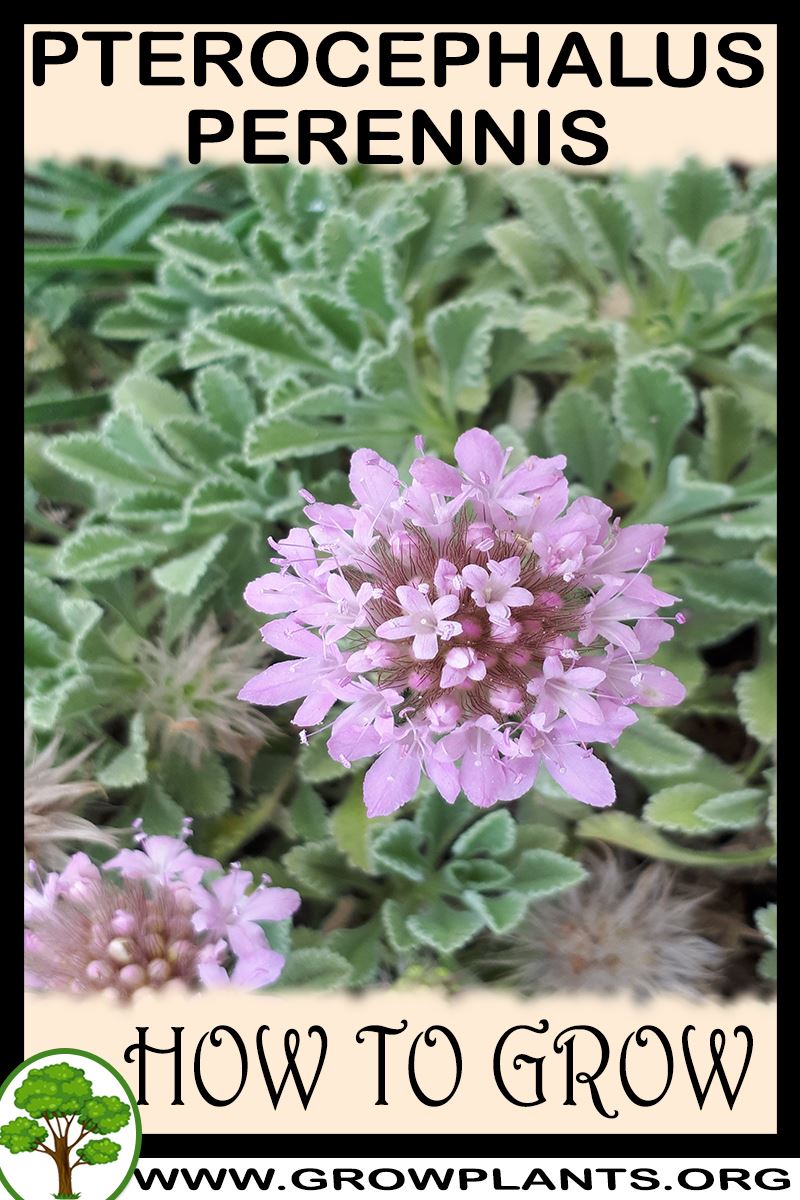
Overview: Pincushion flower (Pterocephalus perennis) is a low, mat-forming evergreen succulent-leaved perennial reaching 5-15 cm, grown as a groundcover topped with pink pincushion blooms. It is drought tolerant and draws pollinators.
Quick Specifications
| Specification | Attribute |
|---|---|
| Plant Type / Life Cycle | Perennial |
| Foliage Type | Evergreen (fleshy foliage) |
| Mature Size | 5-15 cm (2-6 in) tall, spreading |
| Growth Rate | Slow to Moderate |
| Root System | Mat-forming, spreading |
| Hardiness | USDA zones 7-10a |
Growth Form & Structure
- Height & Spread: Low, 5-15 cm (2-6 in) tall, spreading into a mat; also grown in containers.
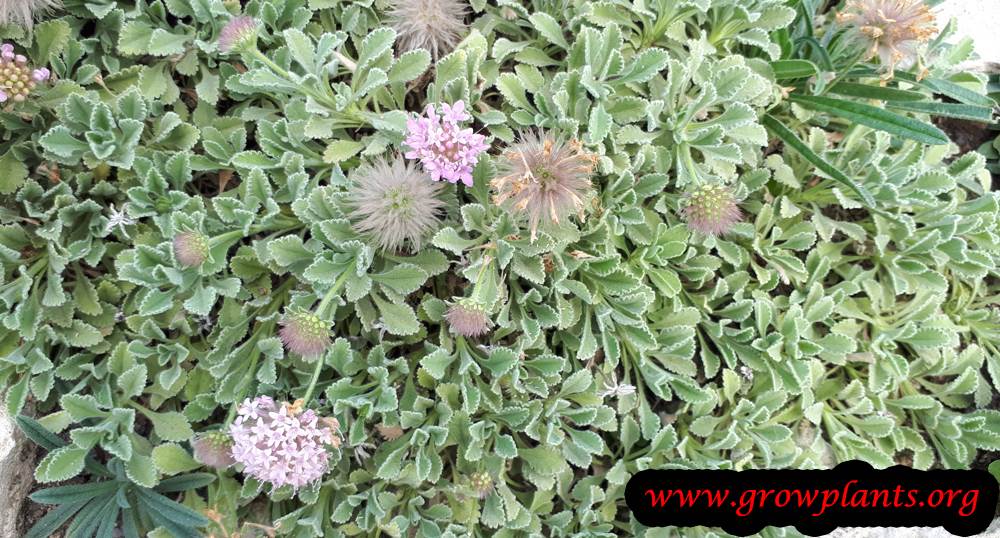
- Growth Habit & Form: Low cushion/mat-forming herbaceous perennial with fleshy foliage.
- Lifespan & Maturity: Perennial groundcover; blooms from late spring through summer into autumn.
Anatomy & Physical Features
- Leaves & Foliage: Green, fleshy, spoon-shaped leaves with toothed (dentate) margins.
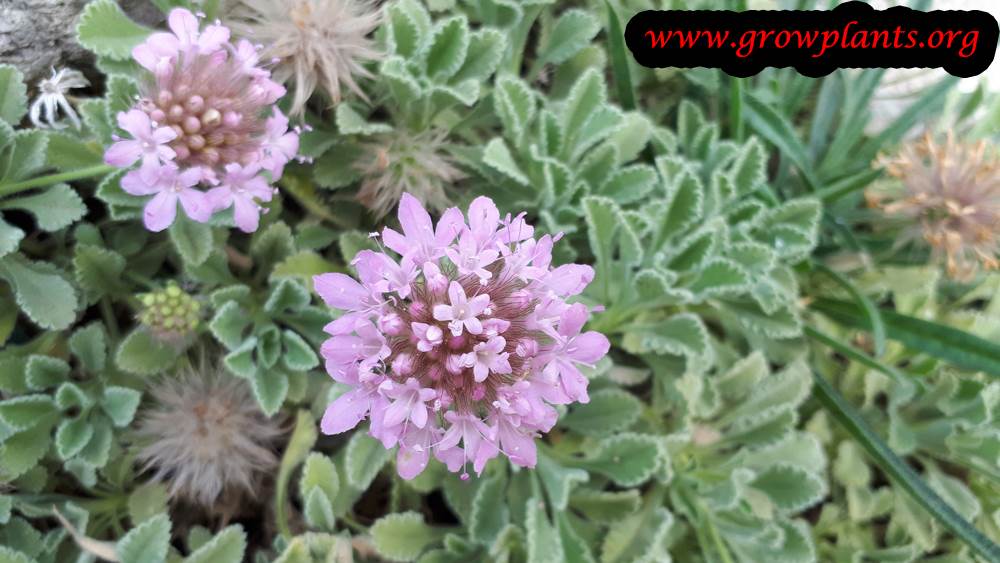
- Flower Characteristics: Small pink to purple bell flowers gathered into umbrella-shaped pincushion inflorescences.
Primary Uses & Landscape Value
- Functional & Ornamental Roles: Rockery and alpine plant, groundcover, edging, container and pollinator plant.
Care Guide: Planting, Soil & Watering
Overview: Pterocephalus is a low, mat-forming alpine perennial that grows best in full sun in gritty, sharply drained soil. Its fleshy foliage stores moisture, so it needs only moderate water and excellent drainage to avoid rot.
Quick Care Requirements
| Requirement | Ideal Condition |
|---|---|
| Planting Season | In spring, summer or autumn |
| Growth Rate | Slow to Moderate |
| Soil Type | Gritty, sharply drained soil |
| Water Need | Moderate — let the surface dry between waterings |
Planting & Establishment
- Best Planting Season: Plant in spring through autumn; in hot zone-10a climates autumn planting lets it settle in cooler weather.
- How to Plant:
- Hole Preparation: Dig a shallow hole to suit the low, spreading roots; a raised or gravelly rockery spot gives ideal drainage.
- Soil Amendments: Mix grit or perlite into the soil for drainage; a little compost or humus helps, but avoid heavy, wet mixes.
- Planting Depth: Set the crown level with the surface and top-dress with grit to keep the neck dry.
- Growth Speed & Expectations: Slow to moderate, forming a tight 5–15 cm cushion that spreads to a ground-covering mat.
Soil, Watering & Drainage Care
- Soil Mix & Drainage Needs: Sharp drainage is essential; the fleshy plant rots in wet soil but thrives in lean, gritty, free-draining ground. Chopped mulch helps steady moisture while letting water drain freely.
- Watering Schedule & Technique:
- Young / Newly Planted: Water lightly to settle the roots, keeping the soil just moist while establishing.
- Established: Water moderately, letting the top of the soil dry between waterings; established plants tolerate dry spells.
- Seasonal Adjustments: A little more in summer heat; keep drier in winter to prevent rot.
Climate, Light & Hardiness
Pterocephalus perennis (pincushion flower) is a drought-tolerant, mat-forming Mediterranean succulent perennial suited to mediterranean, subtropical, and temperate climates. It needs full sun and sharply drained soil, and is hardy from USDA zone 7.
Quick Climate Specifications
| Climate Zones | Mediterranean, subtropical, temperate |
|---|---|
| USDA Hardiness Zones | 7–10a |
| Light Conditions | Full sun |
| Frost Tolerance | Moderate within its hardiness range |
Sunlight & Light Exposure
Optimal Light Setup
Needs full sun for compact, healthy growth typical of Mediterranean rock-garden succulents.
Temperature Extremes & Hardiness
USDA Hardiness & Regional Limits
Hardy from zone 7 to 10a, tolerating the cool, wet winters typical of Mediterranean and mild temperate climates provided drainage is sharp.
Cold Damage & Winter Protection
As with many Mediterranean succulents, the greater risk in winter is cold combined with wet, poorly drained soil rather than cold alone, so sharp drainage is important for winter survival.
Wind, Humidity & Microclimate
Dry-Air Tolerance
Well suited to the dry summer air typical of Mediterranean climates, being a fleshy-leaved, drought-tolerant groundcover.
Microclimate Recommendations
A sunny, sharply drained site such as a rock garden or slope best replicates its native growing conditions and reduces winter rot risk.
Growing in Pots, Balconies & Indoors
This little Persian stone flower is a low alpine cushion, perfect for a trough, alpine pan or the front of a container but not a houseplant – it needs full sun and cool, airy outdoor conditions. The grower gives detailed pot advice; grown hard and lean it flowers freely.
Quick Details
- Container Size: Start in a pot 30-50% bigger than the plant; a wide, shallow alpine pan suits it
- Indoor Suitability: Not a houseplant – a sun-loving alpine for outdoors
- Best Spot: Full sun
- Soil & Drainage: Gritty, sharply drained potting mix with organic matter
- Watering in Pots: Average; let the surface dry and never let it sit wet
Indoors & On the Windowsill
- Houseplant limits: Not a houseplant – this alpine wants full sun, cool air and sharp drainage; indoors it stretches and rots. Grow it outside in a trough or pan.
- A cold frame or sill: If you shelter it at all, an unheated cold frame or a cold, very bright windowsill keeps it dry over a wet winter without coddling it.
On a Balcony or Patio
- Light & air: Give it the sunniest, most open, airy spot; it thrives in the lean, bright conditions of a balcony edge. Avoid a stagnant, humid corner.
- Practicalities: Light to move; group it with other alpines in a trough where drainage is guaranteed.
Choosing the Pot, Soil & Long-Term Care
- Pot & drainage: The grower’s method: start 30-50% bigger than the plant and step up when the roots fill the pot, ideally repotting in winter. Once at its final size, change the soil every few years – all of it in a small pot, cutting some roots and pruning the plant. Let a saucer fill on watering but dry the same day, and give it strong drainage holes; terracotta breathes and dries faster, while glazed or plastic holds moisture longer.
- Potting mix: Potting mix or peat with perlite, mixed with humus and organic matter, as the grower advises; a chopped mulch keeps the surface cool and moist.
- Renewal: The grower notes it is worth pulling out old plants once they have flowered and replacing them – alpine cushions are short-lived.
- Feeding: Feed only lightly – lean conditions give the best, tightest growth.
Fertilizing & Feeding
A light feeder well suited to lean, well-drained soil: minimal feeding through the growing season is usually enough to support its fleshy foliage and pollinator-friendly blooms without encouraging weak, sprawling growth.
Quick Fertilizing Specs
| Feeding Level | Light feeder |
|---|---|
| Main Nutrient Priority | Light, balanced feeding to support steady groundcover growth and flowering |
| Best Feeding Period | Spring through summer as growth and flowering are active |
| Organic Options | A light topdressing of compost worked into well-drained soil |
| Micronutrients | Usually supplied by lean, well-drained soil and an occasional balanced fertilizer; correct specific issues only when diagnosed |
| Soil pH | Tolerates a wide range; performs best in lean, well-drained soil |
Feeding by Growth Stage
Establishment as a young groundcover
Help a newly planted or seedling plant root in and begin spreading as groundcover.
| Nutrient direction | A light, balanced fertilizer to support initial root and leaf establishment. |
|---|---|
| Timing | The first growing season after planting. |
| Frequency | Light feeding as new growth appears, worked into well-drained soil. |
| Fertilizer types | A balanced complete garden fertilizer, A light topdressing of compost |
| Precautions | Keep soil well drained; avoid rich or heavily fed soil, which can produce weak, floppy growth in this lean-soil plant. |
Active growth and pollinator bloom
Support steady fleshy foliage and the small bell-shaped flowers that attract pollinators, from late spring through autumn.
| Nutrient direction | This plant rarely needs feeding once established; a light, balanced fertilizer is enough if growth looks sparse. |
|---|---|
| Timing | Late spring through summer and into autumn as flowering continues. |
| Frequency | Minimal feeding is usually enough; established plants often do fine on lean soil alone. |
| Fertilizer types | A balanced complete garden fertilizer, used sparingly |
| Precautions | Avoid overfeeding, which tends to produce lush, sprawling growth at the expense of flowering in this naturally lean-soil plant. |
Cool-season rest
Let growth slow naturally through the coldest part of the year, including the cool period this plant relies on before spring growth resumes.
| Nutrient direction | None – withhold fertilizer through the cool dormant period. |
|---|---|
| Timing | Autumn through winter. |
| Frequency | No feeding at this stage. |
| Fertilizer types | No feeding at this stage – resume light feeding once active spring growth returns |
| Precautions | Do not fertilize while growth is dormant or minimal; unused nutrients can accumulate as salts in lean soil. |
Nutrient Deficiency Signs & Corrections
Foliage looks pale or sparse and the plant spreads slowly as groundcover.
| Possible causes | very lean or nutrient-poor soil over an extended period, poor root establishment, heavy competition from surrounding plants |
|---|---|
| Appears first on | overall foliage color and density |
| What to check | recent feeding history, soil fertility and organic matter, competition from nearby plants |
| Possible correction | Apply a light, balanced fertilizer during active growth and reduce competition from surrounding vegetation. |
Wilting or collapsing growth despite adequate rainfall, with a soft, discolored base.
| Possible causes | poorly drained or heavy soil, overwatering, fungal root pathogens favored by soggy conditions |
|---|---|
| Appears first on | the base of the plant and root system |
| What to check | soil drainage, recent watering or rainfall, root color and firmness when checked |
| Possible correction | Improve drainage, avoid overwatering, and withhold feeding while the plant recovers. |
Healthy foliage but few of the small bell-shaped flowers form during the normal bloom period.
| Possible causes | overly rich soil or excess feeding favoring foliage over flowers, insufficient sunlight, overcrowding by neighboring plants |
|---|---|
| Appears first on | absence of flowers despite otherwise healthy foliage |
| What to check | recent feeding amount, sun exposure, spacing and crowding from neighboring plants |
| Possible correction | Reduce feeding to keep growth lean, and improve sun exposure or spacing where possible. |
Pruning, Training & Seasonal Maintenance
Pterocephalus perennis (pincushion flower) is a low, mat/cushion-forming evergreen perennial with fleshy leaves, not a woody shrub — pruning is light grooming to keep the mat tidy and flowering well, not structural training. It tolerates cutting back well since it regenerates from a spreading base, and this grooming has no effect on the plant’s overall structure, only on tidiness and continued flowering through its long late-spring-to-autumn bloom season.
Quick Pruning & Maintenance Specs
| Pruning Tolerance | Moderate (mat can be sheared/tidied; avoid cutting into bare old growth at the base) |
| Primary Pruning Window | Autumn/winter, once flowering has finished for the season |
| Secondary Maintenance Window | Light deadheading through the bloom season |
| Typical Frequency | Once-yearly tidy cutback, plus ongoing light deadheading |
| Main Objective | Remove spent flower stems and dead growth, keep the mat compact |
| Young Plant Priority | None – let young plants fill out undisturbed |
| Mature Plant Priority | Post-season tidy cutback; ongoing deadheading; renew tired clumps by division rather than hard pruning |
| Best Tool Type | Precision snips or hand shears |
Pruning by Plant Age & Size
Newly Established
Leave unpruned while the mat establishes.
Young / Formative
No structural training; the plant forms its low cushion habit on its own. Light pinching of overly long trailing stems can encourage a denser mat.
Mature / Established
Deadhead spent flower stems through the bloom season to keep flowering going; in autumn/winter cut back dead foliage and spent stems to tidy the mat for winter.
Seasonal Pruning Schedule
| Ongoing Sanitary (late spring through autumn, while flowering) | Objective: prolong bloom and tidiness. Remove: spent flower stalks, cut back into the foliage mat. Do not remove: actively flowering stems or buds. Response: continued flowering. |
| Dormant/Winter (autumn/winter) | Objective: clear the season’s dead growth. Remove: dead leaves and stems, any frost-damaged parts. Do not remove: live green rosette material. Response: clean regrowth in spring. |
Special Growth to Remove
- Spent flower stems — deadhead as they fade.
- Old, bare or semi-woody central growth on aging clumps — as flowering declines in the centre of an older mat, this is better replaced through division or fresh cuttings from vigorous outer growth than cut back hard, consistent with this plant’s own note that older plants are often best pulled and replaced after flowering.
Container & Small-Space Pruning
Where grown in a pot, this plant’s own guidance calls for switching to a larger container as the root ball fills it and refreshing the soil every few years; at that point it is also reasonable to trim a few of the oldest roots and cut back the most straggly top growth together, rather than pruning the top growth alone.
Tools
- precision_snips — for individual deadheading.
- hedge_shears (small hand shears) — only for tidying the whole mat at once at season’s end.
Tool Hygiene & Disease Risk
Routine — no specific disease risk is noted for this species; clean, sharp tools are sufficient.
Cut Placement & Technique
Deadhead by cutting the flower stalk down into the foliage mat rather than leaving bare stubs above the leaves; when cutting back for winter, follow the natural mound shape rather than shearing it flat.
Heavy Pruning & Rejuvenation
Not recommended: this plant does not respond well to hard cutting into old, bare basal growth once a clump has become woody and sparse in the centre. Renewal is better achieved by division or by rooting new cuttings from vigorous outer growth and removing the tired old plant.
Post-Pruning Care
Water normally after a seasonal cutback. Since this plant is noted as a potentially invasive spreader, keep an eye on regrowth spreading beyond its intended footprint after cutting back.
Common Pruning Mistakes
- Shearing hard into the bare woody centre of an old clump expecting it to resprout.
- Leaving spent flower stalks in place all season, shortening the length of the bloom display.
When Not to Prune
Avoid a hard cutback in the middle of the main flowering season (late spring to autumn); avoid dividing the plant during summer heat, which is better done as new growth resumes.
Recommended Tools (by task)
- precision_snips — for deadheading and light tidying of soft stems and foliage.
Propagation Guide
Pterocephalus perennis grows readily from seed, which the site notes is not strictly necessary to supplement with vegetative methods, though the site also describes a specific ground-layering technique and simple stem cuttings as reliable alternatives. Seed needs a period of cold before it will germinate well, so overall this is an easy plant to propagate once that chilling requirement is met.
Quick Propagation Specs
| Best Propagation Method | Seed |
| Alternative Methods | Ground layering; stem cuttings |
| Propagation Difficulty | Easy |
| Seed True-to-Type | Yes |
| Vegetative True-to-Type | Yes |
| Best Propagation Season | Seed: spring or autumn (autumn preferred so seed gets natural winter chilling); layering/cuttings: during the growing season |
| Seed Germination Time | Spring-sown: 4–8 weeks; autumn-sown seed usually germinates the following early spring |
| Germination Temperature | 16–21°C (60–70°F) |
| Seed Sowing Depth | 1–2cm (0.5–1 inch) |
Growing from Seed
Seed Handling & Viability
Save seed in the refrigerator, either mixed with peat soil or simply kept in a paper bag.
Dormancy & Pre-Sowing Treatment
Seed benefits from a cold period before germinating well. The site recommends sowing fresh in autumn so seed naturally experiences winter cold, and notes a chilling requirement of at least one month; in hot climates where seed can’t get natural winter cold, keep it in the coldest part of the refrigerator before sowing instead.
Sowing Season
Spring or autumn; autumn sowing is preferred so seed is exposed to winter cold, and in hotter climates (around hardiness zone 10a) autumn sowing is also favored.
Sowing Depth & Orientation
Sow 1–2cm (0.5–1 inch) deep; when sowing in rows or a nursery bed, space at roughly 20x20cm (8×8 inches).
Germination Conditions
Full sun, moist soil (don’t let it dry out), 16–21°C (60–70°F), watered with an average to generous amount.
Germination Time
Spring-sown seed germinates in about 4–8 weeks; seed sown in autumn typically germinates the following early spring.
Seedling Care
Keep soil moist and avoid excessive heat.
Stem Cuttings
Rooting Setup
Two options work: root a leafless stem tip in water (only the very top of the stem in the water), or root the stem directly in moist soil kept consistently humid and never allowed to dry out.
Air & Ground Layering
Bend a low branch over and cover a section of it with soil, keeping that section in soil contact until it roots. Once well rooted, sever the connection from the mother plant; leave the new plant undisturbed for about two weeks afterward and check that it has produced new leaves before separating it further or transplanting.
Bloom & Flower Guide
Quick Details
- Bloom Season: Late spring through summer into autumn
- Flower Appearance: Soft pink to purple pincushion flowerheads, each a rounded cluster of small bell-shaped florets, held over a low cushion of foliage
- Edibility: Grown as an ornamental
Detailed Blooming Overview
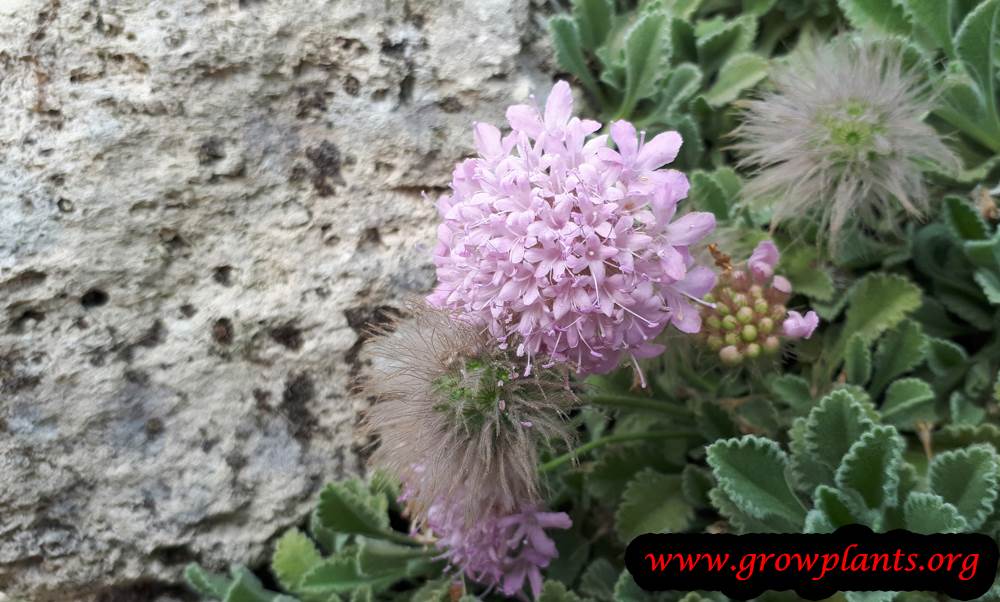
This alpine pincushion flowers over a remarkably long season, lifting its soft pink-lilac scabious-like heads on short stalks above a neat, fleshy cushion. Bees and butterflies work it constantly, and the fluffy seedheads that follow are attractive in their own right.
Flower Characteristics
- Small bell-shaped florets massed into rounded, umbrella-like pincushion heads, in pink or purple, as the grower notes.
- Followed by soft, decorative seedheads.
Bloom Care & Thinning
- Site: Full sun and sharp drainage give the freest, longest flowering.
- Deadheading: Trim for tidiness, but the seedheads are ornamental, so you can leave some standing.
- Upkeep: A light shear keeps the cushion compact and encourages repeat bloom.
Pests, Diseases & Troubleshooting
Overview: The Caucasian pincushion is a low alpine perennial that, given the sharp drainage it needs, is almost trouble-free; its single real danger is crown and root rot from winter wet or heavy soil, not any pest. Occasional aphids, slugs on young growth, and powdery mildew in stagnant, humid heat are the only minor issues. Grow it lean and gritty in full sun and it looks after itself.
Quick Troubleshooting Overview
| Issue / Pest | Main Symptom | Primary Solution |
|---|---|---|
| Crown/root rot | Plant blackens and collapses in wet, heavy soil | Sharp gritty drainage; full sun; gravel collar; avoid wet |
| Powdery mildew | White bloom in humid, stagnant, crowded conditions | Improve airflow; avoid overhead watering; sulphur if needed |
| Aphids | Occasional sticky clusters on new growth/buds | Rinse off; insecticidal soap (rarely needed) |
| Slugs & snails | Young shoots and leaves grazed in damp spells | Iron-phosphate bait; grit collar; usually minor |
| Spider mites | Fine speckling in hot, dry, stressed plants | Hose foliage; keep unstressed; light soap if severe |
| Legginess | Loose, floppy growth in rich soil or shade | Grow lean in full sun; shear after flowering |
Common Pests & Management
- Aphids (Aphidoidea):
- Symptoms: Occasionally small colonies of soft aphids gather on the tender new shoots and flower buds, with a little honeydew; damage is minor on this tough alpine.
- Prevention & Control: Rinse them off with water or leave them to natural predators; insecticidal soap is rarely needed but clears any heavier colony.
- Slugs & snails (Gastropoda):
- Symptoms: Young shoots and low leaves can be rasped and holed in damp weather, especially on fresh spring growth.
- Prevention & Control: Clear damp hiding places, ring plants with grit, and use iron-phosphate pellets only if fresh growth is being grazed; the gritty conditions it likes deter them anyway.
- Two-spotted spider mite (Tetranychus urticae):
- Symptoms: Fine pale stippling and a dull cast to the leaves only when plants are hot, dry and stressed; healthy plants are seldom affected.
- Prevention & Control: Hose down foliage in extreme heat and keep the plant unstressed; conserve predatory mites. Correcting stress usually solves it.
Diseases & Fungal Issues
- Crown & root rot (Phytophthora / Pythium / Sclerotinia):
- Symptoms: The main danger for this alpine: in heavy, wet, poorly drained soil – especially over a cold, wet winter – the crown and roots turn soft and rot, and the plant collapses.
- Treatment & Management: Prevention is everything: grow in lean, gritty, very free-draining soil or scree in full sun, add a collar of grit around the neck, and avoid overwatering and winter wet. Remove rotted plants; take cuttings as insurance in wet climates.
- Powdery mildew (Erysiphe / Golovinomyces spp.):
- Symptoms: A white powdery bloom can appear on the leaves in humid, stagnant, crowded conditions or when plants are stressed, causing some yellowing.
- Treatment & Management: Improve airflow, avoid overhead watering, and give the open, sunny position it prefers. Sulphur or bicarbonate is only occasionally needed.
- Rust (Puccinia spp.):
- Symptoms: Uncommonly, yellow spots with orange-brown pustules on the leaf undersides in damp conditions; rarely serious.
- Treatment & Management: Remove affected leaves and improve airflow; chemical control is seldom warranted.
Growing Difficulties & Abiotic Problems
- Winter wet & rot:
- Cause & Symptoms: Cold, wet, heavy soil in winter is far more likely to kill this plant than cold itself, rotting the crown and roots.
- Correction Strategy: Provide extremely sharp drainage (grit, scree, raised bed or trough), a gravel collar, and overhead protection for choice plants in very wet climates.
- Legginess in rich soil/shade:
- Cause & Symptoms: Rich soil or too much shade makes loose, floppy, leafy growth with poor flowering and form.
- Correction Strategy: Grow hard in lean, gritty soil in full sun for compact cushions, and shear lightly after flowering to keep it neat.
- Heat & humidity decline:
- Cause & Symptoms: Prolonged hot, humid weather can cause the cushion to thin and decline, as it prefers cool, airy, sunny conditions.
- Correction Strategy: Ensure excellent airflow and drainage, avoid overhead watering in heat, and site in an open position; propagate to renew plants if they tire.
What Helps – Products & Tools
This alpine needs almost nothing beyond the right conditions: an occasional rinse or insecticidal soap for aphids or mites, iron-phosphate bait for slugs on fresh growth, and sulphur only if mildew appears. The decisive ‘tool’ is sharp, gritty drainage in full sun – get that right and rot, its only real threat, never starts.