

Plant Profile & Key Characteristics
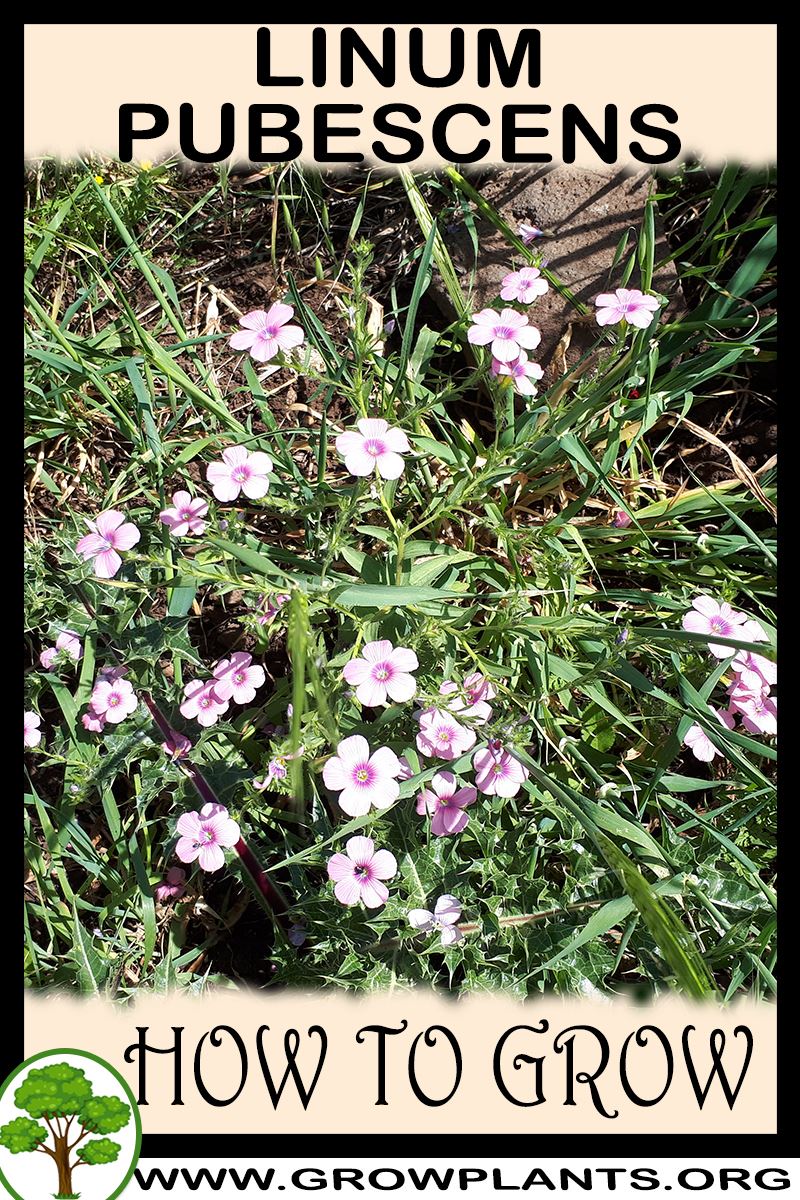
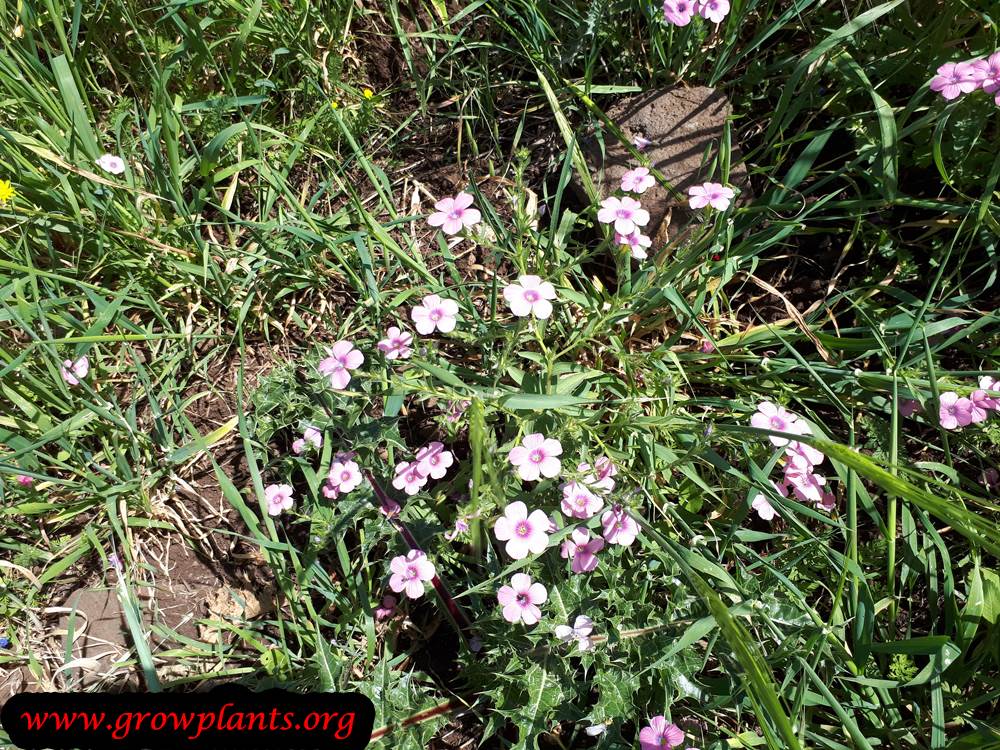
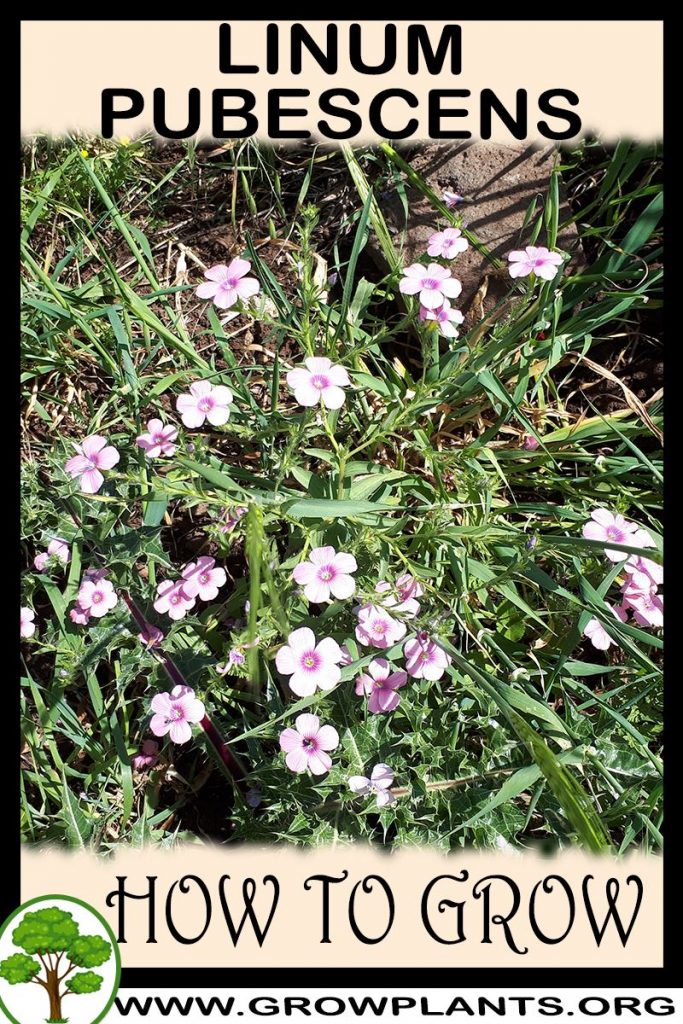
Overview: Linum pubescens (hairy pink flax) is a slender annual bearing saucer-shaped, five-petalled pink to purple flowers. It is grown as an ornamental and has a history of medicinal use.
Quick Specifications
| Specification | Attribute |
|---|---|
| Plant Type / Life Cycle | Annual |
| Foliage Type | Deciduous (soft annual foliage) |
| Mature Size | 10-20 cm+ tall (4-8 in) in the source data; forms a slim clump |
| Growth Rate | Fast |
| Hardiness | USDA zones 4-11 |
Growth Form & Structure
- Height & Spread: Slim, upright stems forming a light clump; suits pots and rock gardens.
- Growth Habit & Form: Fine-stemmed, upright herbaceous annual with hairy stems and foliage.
- Lifespan & Maturity: Completes its cycle in one season, flowering quickly from seed.
Anatomy & Physical Features
- Leaves & Foliage: Green, narrow (linear) leaves that are hairy with a serrated margin.
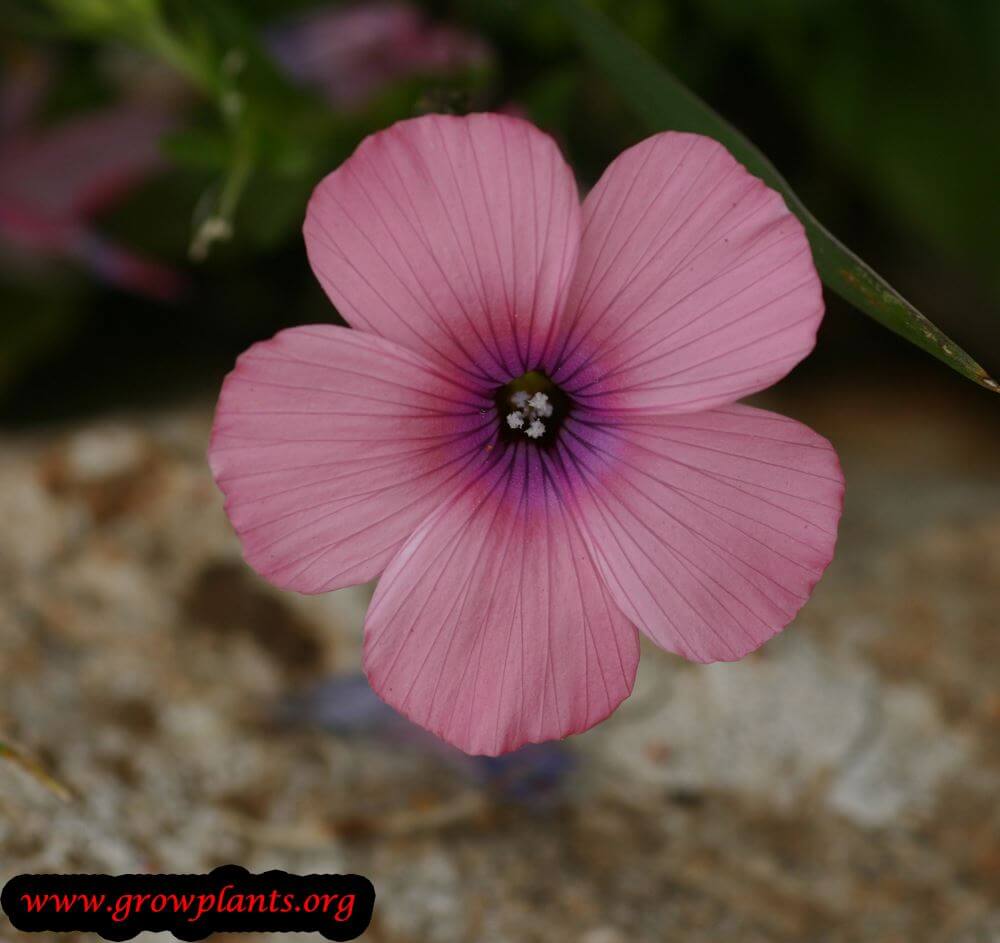
- Flower Characteristics: Saucer-shaped, five-petalled flowers in pink to purple.
Primary Uses & Landscape Value
- Functional & Ornamental Roles: Ornamental wildflower for beds, borders and rock gardens; traditional medicinal uses.
Care Guide: Planting, Soil & Watering
Overview: Hairy pink flax is a fast-growing annual for full sun to light shade that thrives in simple, well-drained soil. Low to moderate watering suits it well, and it resents waterlogged ground.
Quick Care Requirements
| Requirement | Ideal Condition |
|---|---|
| Planting Season | In the cooler seasons, from autumn through spring |
| Growth Rate | Fast |
| Soil Type | Well-draining soil |
| Water Need | Low to moderate — let the top of the soil dry between waterings; tolerates short dry spells |
Planting & Establishment
- Best Planting Season: Plant in the cooler seasons, from autumn through spring, so it flowers before high summer.
- How to Plant:
- Hole Preparation: Dig a hole a little larger than the root ball and loosen the surrounding soil so young roots can spread easily.
- Soil Amendments: Work in compost or well-rotted organic matter to enrich the bed and improve both fertility and drainage.
- Planting Depth: Set the plant at the same level it grew in its pot, with the root collar at the soil surface — do not bury the stem.
- Growth Speed & Expectations: Expect fast growth in optimal conditions, establishing and reaching full size quickly.
Soil, Watering & Drainage Care
- Soil Mix & Drainage Needs: Provide light, aerated, well-draining soil so water never pools around the roots; in containers use a quality free-draining potting mix and make sure the pot has drainage holes to prevent root rot.
- Watering Schedule & Technique:
- Young / Newly Planted: Keep the soil lightly moist while young plants establish, watering whenever the surface begins to dry.
- Established: Once established, water deeply but let the top few centimetres dry before watering again; the plant tolerates short dry spells.
- Seasonal Adjustments: Increase watering in hot, dry weather and reduce it in winter or during rainy spells.
Climate, Light & Hardiness
Linum pubescens (hairy pink flax) is a fast-growing annual suited to mediterranean, subtropical, desert, and temperate climates across USDA zones 4–11, grown in full sun to half shade. As a cool-season annual, its bloom timing shifts earlier in hotter climates and later in cooler ones.
Quick Climate Specifications
| Climate Zones | Mediterranean, subtropical, desert, temperate |
|---|---|
| USDA Hardiness Zones | 4–11 (annual crop grown within this broad range) |
| Frost Tolerance | Low to Moderate |
| Light Conditions | Full sun to half shade |
Sunlight & Light Exposure
Optimal Light Setup
Full sun to half shade.
Direct Sun Requirement
Grows well in direct sun.
Best Exposure / Orientation
Open beds; sown in autumn, winter, or spring depending on climate.
Temperature Extremes & Hardiness
USDA Hardiness & Regional Limits
The zone 4–11 range reflects where this annual can be grown within a season rather than year-round persistence; frost timing shapes the sowing and bloom window rather than limiting where it can be grown.
Cold Damage & Winter Protection
Sown in autumn, winter, or spring depending on climate; young plants can likely tolerate some cold given the autumn/winter sowing reflected in the source data, but hard freezes would damage growth.
Frost Sensitivity
Low to moderate; treated as a cool-season annual.
Extreme Heat Tolerance
Blooms earlier in hotter areas to avoid peak summer heat, suggesting limited tolerance once temperatures climb.
Wind, Humidity & Microclimate
Rainfall & Seasonal Moisture
Grown with a small to average amount of water; not documented as needing high humidity.
Microclimate Recommendations
Open sunny-to-part-shade beds; time sowing to the cooler part of the year in hot climates.
Growing in Pots, Balconies & Indoors
Linum pubescens (hairy flax) is a slender, sun-loving annual flax that grows nicely in a pot but, the grower confirms, is not a houseplant. Give it full sun and free drainage outdoors.
Quick Details
- Container Size: Small – a pot or trough sown fairly thickly for a fuller display.
- Indoor Suitability: No – not a houseplant; a very sunny sill at most.
- Best Spot: Full sun to part shade.
- Soil & Drainage: Light, free-draining mix.
- Watering in Pots: Small to moderate – keep lightly moist; avoid waterlogging.
Indoors & On the Windowsill
- Not a houseplant: The grower’s answer is no – indoors the light is too weak and the still, dry air does not suit it. It belongs outdoors in a container.
- A bright sill at most: If you want to try it inside, only a very bright, sunny windowsill comes close, and even then it is happier out on a balcony or patio.
On a Balcony or Patio
- Sun, wind and heat: Give it your sunniest, most open spot; walls and railings throw back heat and wind dries pots fast, so check moisture daily in hot weather and stake tall stems on an exposed balcony. A drip irrigation kit with a timer can take over that watering check automatically.
- Quick colour: Best sown straight into its pot as an annual; resow for a longer season of flowers.
Choosing the Pot, Soil & Long-Term Care
- Pot & drainage: Choose a pot with strong drainage holes and skip a standing-water saucer, which invites root rot; terracotta breathes and dries quickly, while glazed or plastic hold moisture longer.
- Potting mix: Fill with a well-aerated, organic-rich medium – a good potting mix, or peat/coir blended with perlite or vermiculite for drainage.
- Feeding: Container plants run through nutrients fast because watering washes them out, so feed a little more often through the growing season than you would in open ground.
- Repotting: Refresh the mix or pot up about every couple of years; for perennials, lightly trim the roots and top growth at the same time.
Fertilizing & Feeding
A light feeder: this small, hairy-leaved wild flax is adapted to lean, well-drained ground and completes its life cycle quickly, so minimal feeding at establishment is generally all it needs.
Quick Fertilizing Specs
| Feeding Level | Light feeder |
|---|---|
| Main Nutrient Priority | Balanced feeding, used sparingly, while seedlings establish |
| Best Feeding Period | Early in the growing season as seedlings establish |
| Organic Options | Well-drained soil with a modest amount of compost or organic matter worked in before sowing |
| Reduce/Stop Feeding | No feeding is needed once the plant is flowering and setting seed toward the end of its life cycle |
| Micronutrients | Usually met by ordinary well-drained garden soil; correct only diagnosed issues |
| Soil pH | Adaptable; tolerates lean, well-drained soils typical of arid and mediterranean climates |
Feeding by Growth Stage
Seedling establishment
Help this fine-textured wild flax root in and begin steady growth from seed.
| Nutrient direction | A light, balanced fertilizer with modest nitrogen supports early leafy growth without overfeeding a plant adapted to lean soil. |
|---|---|
| Timing | At sowing or shortly after seedlings emerge, in autumn, winter, or spring depending on climate. |
| Frequency | A single light feeding at or shortly after sowing is usually enough for this naturally lean-soil species. |
| Fertilizer types | A light, balanced complete fertilizer, A modest amount of compost worked into well-drained soil ahead of sowing |
| Precautions | Avoid rich soil or heavy feeding; this species is naturally adapted to lean, well-drained ground and overly fertile conditions can produce weak, floppy growth. |
Active growth and saucer-shaped flower bloom
Support wiry stem growth and the pink-to-purple saucer-shaped flowers through the bloom season.
| Nutrient direction | Minimal feeding is usually enough; this species performs reliably on residual soil fertility once established. |
|---|---|
| Timing | Through winter, spring, and into summer while the plant is actively growing and flowering. |
| Frequency | Feeding is rarely needed again once seedlings are established and growing well. |
| Fertilizer types | Additional fertilizer only if growth looks notably weak or pale |
| Precautions | Resist the urge to feed a plant that already looks healthy; this species is bred by nature for lean conditions and thin, arid soils. |
Seed set and end of life cycle
Let the plant finish setting seed and complete its natural annual life cycle.
| Nutrient direction | None – withhold fertilizer as the plant finishes flowering and sets seed. |
|---|---|
| Timing | Late in the bloom season as flowering fades and seed forms. |
| Frequency | No feeding at this stage. |
| Fertilizer types | No feeding at this stage; this annual is finishing its life cycle and will not benefit from further fertilizer. |
| Precautions | Do not fertilize a plant that is completing its annual life cycle; nutrients will not extend its bloom or lifespan. |
Nutrient Deficiency Signs & Corrections
Unusually pale, stunted seedlings well beyond this species’ normally modest, wiry habit.
| Possible causes | very depleted soil with little available nitrogen, seedlings competing heavily in an overcrowded stand, poor germination conditions unrelated to nutrition |
|---|---|
| Appears first on | young seedlings and overall stand vigor |
| What to check | soil fertility before sowing, sowing density, germination and establishment conditions |
| Possible correction | Apply a light, balanced complete fertilizer at or shortly after sowing if soil is genuinely depleted. |
Foliage grows normally but flowering is sparse for what is normally a free-blooming wildflower.
| Possible causes | overly rich soil or heavy feeding favoring leafy growth over bloom, insufficient light at the planting site, overcrowded sowing limiting individual plant vigor |
|---|---|
| Appears first on | overall bloom count rather than a specific leaf symptom |
| What to check | recent feeding rate, light exposure, sowing density and thinning |
| Possible correction | Reduce feeding to match this lean-soil species’ natural needs and improve light exposure or thin crowded areas. |
Seedling leaf tips brown or scorch shortly after fertilizing.
| Possible causes | fertilizer applied too heavily for a naturally lean-feeding species, salt buildup in fast-draining soil, under-watering after feeding |
|---|---|
| Appears first on | young seedling leaf tips and margins |
| What to check | recent fertilizer amount and strength, watering after feeding, soil drainage |
| Possible correction | Use a lighter feeding rate and water well after any feeding to move nutrients into the root zone. |
Pruning, Training & Seasonal Maintenance
Like its flowering-flax relatives, this hairy-leaved annual completes its whole life cycle in a single season and needs no structural pruning. The extent of pruning is snipping off spent flowers and tired foliage to keep it tidy and prolong its pink-to-purple flower display; there is no framework to build or renew, since the plant itself is not retained beyond one season.
Quick Pruning & Maintenance Specs
| Pruning Tolerance | Deadheading only – no structural pruning applies |
| Primary Pruning Window | Through its winter-spring-summer bloom window |
| Secondary Maintenance Window | Not applicable |
| Typical Frequency | Light, ongoing deadheading while flowering |
| Main Objective | Tidy fading flowers and foliage, extend bloom |
| Young Plant Priority | None – let seedlings establish undisturbed |
| Mature Plant Priority | Deadhead through bloom; remove the spent plant at season’s end |
| Best Tool Type | Precision snips or hand-pinching |
| Avoid Heavy Pruning During | Not applicable – no heavy pruning applies to this annual |
Pruning by Plant Age & Size
Newly Established
None – let seedlings establish undisturbed.
Young / Formative
No structural training – this short annual has no framework to build.
Mature / Established
Deadhead through the bloom season to keep flowering going.
Seasonal Pruning Schedule
Ongoing Sanitary (through the bloom period): remove spent flowers and fading hairy foliage without touching developing buds; deadheading extends the bloom display.
Special Growth to Remove
- Spent flowers and fading leaves, directly per the source’s own guidance
- The whole spent plant, removed at season’s end
Container & Small-Space Pruning
Fine in containers at its small 10-20cm size; deadhead the same way as in-ground plantings.
Tools
Precision snips only – the thin, soft, hairy annual stems need nothing heavier.
Tool Hygiene & Disease Risk
Routine – clean tools are sufficient.
Cut Placement & Technique
Snip faded flowers just below the bloom, above the next bud or leaf node.
Post-Pruning Care
Water normally; no feeding change is needed for simple deadheading.
Common Pruning Mistakes
- Letting flowers go to seed early and shortening the bloom display
- Unnecessary trimming of young seedlings
When NOT to Prune
No pruning is needed before establishment, and there is no benefit to cutting back a plant simply completing its annual cycle.
Recommended Tools (by task)
| precision_snips | Deadheading through the bloom season on this small annual flax |
Propagation Guide
Linum pubescens is grown from seed, sown where it is to flower; as a wild Mediterranean annual it self-sows and spreads readily, matching the site’s ‘Aggressive’ note. No vegetative propagation is needed for this species. Overall difficulty is easy.
Quick Propagation Specs
| Best Propagation Method | Seed, direct-sown |
| Propagation Difficulty | Easy |
| Seed True-to-Type | Usually true-to-type |
| Best Propagation Season | Autumn through spring, per the site’s planting window |
| Seed Germination Time | Typically 1–3 weeks |
| Germination Temperature | 15–21°C (59–70°F) |
| Seed Sowing Depth | Shallow, lightly covered |
Growing from Seed
Sowing Season
Autumn to spring, matching the site’s planting window; as a wild Mediterranean species it is naturally adapted to germinate with the arrival of autumn rains after summer dormancy, so autumn sowing in mild-winter climates suits it well.
Sowing Depth & Orientation
Shallow – scatter and lightly cover.
Germination Conditions
Cool to mild temperatures with consistent moisture.
Germination Time
Usually 1–3 weeks.
Seedling Care
Thin seedlings for spacing; this species self-seeds readily once established, so deadheading (also part of the site’s ongoing pruning routine) limits unwanted spread.
Bloom & Flower Guide
Quick Details
- Bloom Season: Winter through spring into summer — earlier in hotter areas
- Time to First Bloom: An annual that flowers in its first season from a spring sowing
- Flower Appearance: Saucer-shaped, five-petalled flowers in pink to purple, usually with fine darker veins
- Edibility: Grown as an ornamental — the flowers are not eaten
Detailed Blooming Overview
Hairy pink flax is a delicate Mediterranean annual that opens soft pink to lilac saucer flowers, prettily pencilled with darker veins, over fine hairy stems in the cooler half of the year. The flowers come in a long, gentle succession.
Flower Characteristics
- Five rounded petals forming an open saucer.
- Pink to purple, with fine dark veining.
- Set against slender, softly hairy stems and leaves.
Bloom Care & Thinning
- Site for best flowering: Full sun and sharp drainage; sow in place, as flax dislikes root disturbance.
- Managing the bloom: Deadhead to extend flowering, or allow some seed to set for self-sowing.
- Pollination: Worked by bees and other insects.
Fruit & Uses
Safety note first: this wild flax is grown ornamentally, and its seeds have only a minor traditional food/folk-remedy use, not a mainstream culinary one – like other Linum species, the seeds can contain cyanogenic glycosides, so they are used sparingly and prepared, not eaten raw in quantity. Where used, the small seeds are the edible part, traditionally taken in small prepared amounts rather than as a everyday food.
Quick Edible Specs
| Edible Parts | Seeds |
|---|---|
| Main Use(s) | Minor traditional food use; folk-remedy use (digestive complaints, cough) – medicinal-note only, no health claims made here |
| Eaten Raw or Cooked | Traditionally prepared (ground/parched), not eaten raw in any quantity |
| Preparation Required | Preparation before use (e.g. grinding/parching); avoid drinking water immediately with unprepared seeds per traditional caution |
| Harvest Season | Seeds ripen after the spring bloom, as the plant finishes flowering and seed pods dry |
| Storage | Dry, ripened seed can be stored dry, as with other small flax-type seed |
| Safety/Toxicity Caveat | Linum seeds and other plant parts can contain cyanogenic glycosides; use is traditionally noted as contraindicated in certain digestive conditions and cautioned against combining raw seed with water; use only small, prepared amounts, never as a staple food |
Seeds, Pods & Nuts
The small seeds form after the pink-to-purple flowers fade and the seed pods dry on the plant. In traditional use they are gathered once fully ripe and dry, then ground or otherwise prepared before use – they are not treated as a raw, ready-to-eat seed. Quantities used traditionally are small (folk-remedy scale), not a bulk food harvest.
Preparation, Uses & Safety
Because of the cyanogenic-glycoside caution shared with other Linum species, seeds should always be prepared (ground or parched) rather than eaten raw, and only in small amounts. Traditional use also lists these seeds for various folk remedies (digestive discomfort, cough, and others); this is recorded here only as a traditional-use note, with no medical or dosing claims. Anyone with digestive-tract conditions should avoid this use altogether, per the traditional contraindication. This module covers edible/seed use only – see Propagation for how this plant’s seed is used to grow new plants.
Pests, Diseases & Troubleshooting
Overview: Ornamental flax (Linum) is generally trouble-free and rather pest-resistant, but it can be affected by aphids, flax flea beetles and occasional thrips or cutworms, and by flax rust, Fusarium wilt, powdery mildew and seedling damping-off in cool wet soils. Linum pubescens (hairy pink flax) is a slender Mediterranean annual with the same easy, largely pest-free habit as its relatives. Grown lean in full sun with good drainage it needs little intervention.
Quick Troubleshooting Overview
| Issue / Pest | Main Symptom | Primary Solution |
|---|---|---|
| Aphids | Sticky, distorted shoot tips | Water jet, insecticidal soap |
| Flax flea beetle | Shot-hole feeding on seedlings | Mesh cover, keep seedlings vigorous |
| Flax rust | Orange pustules on leaves and stems | Remove debris, resistant strains, sulphur |
| Fusarium wilt | Wilting, browning, vascular staining | Well-drained soil, rotate, remove sick plants |
| Damping-off | Seedlings collapse at soil line | Sow thinly in clean mix, avoid wet cold |
Common Pests & Management
- Aphids (Aphis spp. & Myzus persicae):
- Symptoms: Small colonies on tender tips and flower buds with honeydew and curled growth.
- Prevention & Control: Rinse off with water, apply insecticidal soap or neem, and support ladybirds and lacewings; control ants.
- Flax flea beetle (Aphthona / Longitarsus spp.):
- Symptoms: Tiny beetles chew shot-hole punctures in seedling leaves and jump when disturbed; heavy feeding stunts young plants.
- Prevention & Control: Cover seedlings with fine mesh, keep them well watered and growing fast, and use a light neem spray only if damage is severe.
- Thrips (Thrips spp.):
- Symptoms: Silvery flecking on foliage and petals and slight bud distortion in hot dry spells.
- Prevention & Control: Monitor with sticky traps, reduce weed hosts, and treat outbreaks with insecticidal soap or spinosad.
- Cutworms (Agrotis spp.):
- Symptoms: Young stems severed at ground level overnight and seedlings toppled; grey-brown caterpillars curl up in the soil.
- Prevention & Control: Use collars around transplants, clear weeds, hand-collect at night, and apply Bt or beneficial nematodes where they recur.
Diseases & Fungal Issues
- Flax rust (Melampsora lini):
- Symptoms: Bright orange-brown powdery pustules on leaves and stems, later turning dark, causing yellowing and premature leaf drop.
- Treatment & Management: Grow resistant strains where available, remove and destroy infected debris, avoid wetting foliage, and use a sulphur fungicide if it spreads.
- Fusarium wilt (Fusarium oxysporum f. lini):
- Symptoms: Wilting, yellowing and browning of plants, often one side first, with brown discoloration in the stem base and roots.
- Treatment & Management: Plant in well-drained soil, rotate away from previous flax, remove and destroy affected plants, and avoid waterlogging that favours the fungus.
- Powdery mildew (Oidium lini):
- Symptoms: White powdery coating on leaves and stems in crowded, humid conditions.
- Treatment & Management: Space plants for airflow, give full sun, avoid excess nitrogen, and spray sulphur or potassium bicarbonate at first sign.
- Damping-off (Pythium / Rhizoctonia spp.):
- Symptoms: Seedlings collapse at a pinched, water-soaked soil line soon after germination.
- Treatment & Management: Sow thinly in clean, free-draining mix, avoid cold wet conditions and overwatering, and provide good ventilation.
Growing Difficulties & Abiotic Problems
- Root rot in wet soil:
- Cause & Symptoms: Flax dislikes wet feet; heavy, waterlogged soil rots the roots and causes wilting and yellowing.
- Correction Strategy: Plant in light, free-draining soil in full sun, water sparingly, and never let it stand wet.
- Flopping and short bloom:
- Cause & Symptoms: Rich soil, shade or crowding makes stems weak, and flowers (individually short-lived) are sparse when plants are stressed.
- Correction Strategy: Grow lean in full sun with airy spacing; sow in succession, since each plant is relatively short-lived and blooms best when young.
- Heat decline:
- Cause & Symptoms: Prolonged heat shortens the life of these cool-preferring plants, browning foliage and ending flowering.
- Correction Strategy: Provide even moisture in heat and treat as a short-season plant, resowing for fresh displays.
What Helps – Products & Tools
Flax seldom needs spraying: insecticidal soap or neem for aphids and flea beetles, Bt or nematodes for cutworms, and a sulphur fungicide for rust or powdery mildew. Clean sowing and good drainage prevent the wilt and damping-off that cause most losses. Spray in the evening to protect pollinators and follow the label.