Plant Profile & Key Characteristics
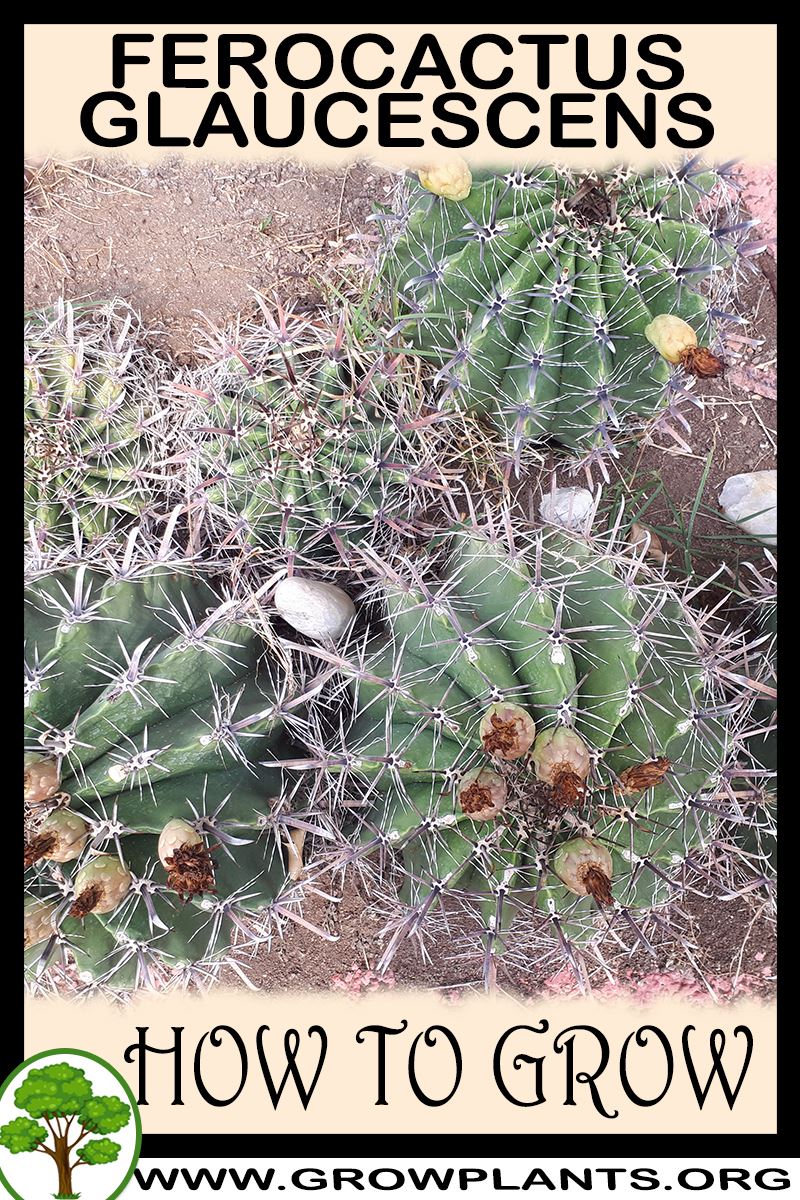
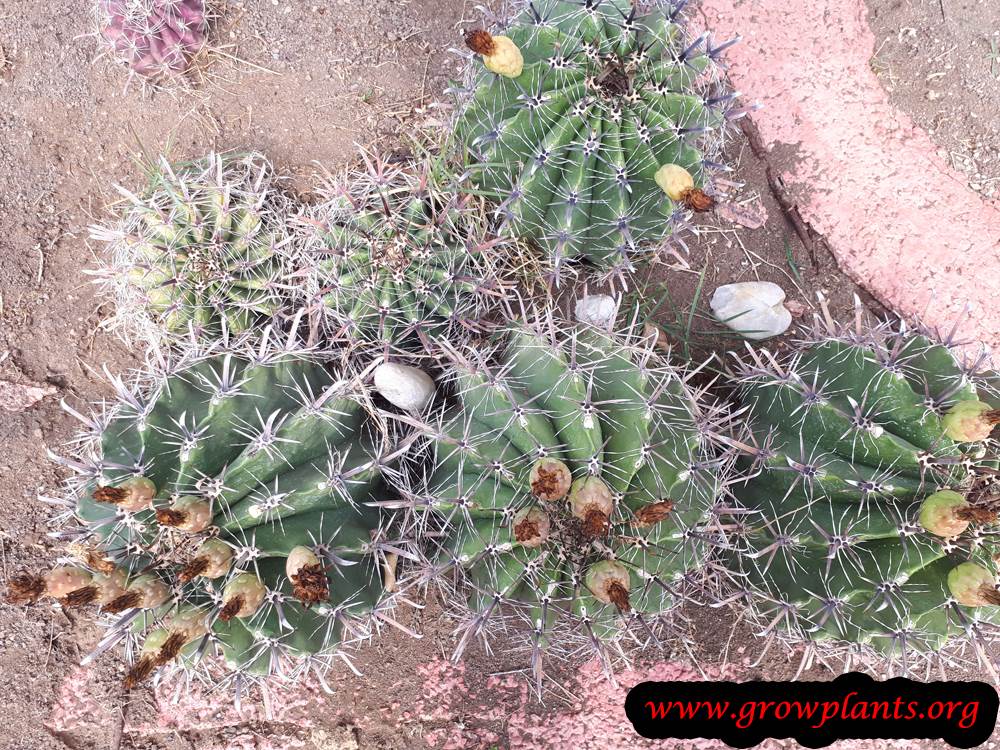
Overview: A solitary, round-to-oval barrel cactus 20-50 cm (8-20 in) tall with blue-green ribbed stems and yellow flowers. A slow-growing, very drought-tolerant ornamental.
Quick Specifications
| Specification | Attribute |
|---|---|
| Plant Type / Life Cycle | Perennial (evergreen cactus) |
| Foliage Type | Evergreen (leafless stem succulent) |
| Mature Size | 20-50 cm tall (8-20 in) |
| Growth Rate | Slow |
| Root System | Shallow, fibrous (typical of barrel cacti) |
| Toxicity | Non-toxic (but spiny) |
| Hardiness | USDA zones 10-12a |
Growth Form & Structure
- Height & Spread: 20-50 cm (8-20 in); its roots stay shallow, so wide, well-drained pots suit it.
- Growth Habit & Form: Solitary, round to barrel-shaped ribbed stem.
- Lifespan & Maturity: Long-lived but very slow-growing.
Anatomy & Physical Features
- Leaves & Foliage: Leafless; the blue-green stem carries spines along the ribs.
- Flower Characteristics: Yellow flowers borne on the crown of the stem (full detail in the Bloom guide).
Primary Uses & Landscape Value
- Functional & Ornamental Roles: Architectural succulent for rock gardens, xeriscapes and containers; full sun, drought tolerant, best outdoors.
Care Guide: Planting, Soil & Watering
Overview: Ferocactus glaucescens (glaucous barrel cactus) is a slow-growing, drought-tolerant cactus for desert, Mediterranean and subtropical climates (hardiness zone 10-12a) that needs full sun. It requires dry, sharply draining soil and very little water – it dislikes excess moisture and tolerates cold only to about -2 C.
Quick Care Requirements
| Requirement | Ideal Condition |
|---|---|
| Planting Season | Year-round in warm, frost-free areas |
| Growth Rate | Slow |
| Soil Type | Dry, sharply draining (gritty cactus mix) |
| Water Need | Low – let the soil dry fully between waterings |
Planting & Establishment
- Best Planting Season: In its warm, frost-free range it can be planted year-round.
- How to Plant:
- Hole Preparation: Plant in a hole no deeper than the root ball on very freely draining ground.
- Soil Amendments: Blend in coarse sand, grit or gravel so the soil dries fast; rich, moisture-holding soil will rot the roots.
- Planting Depth: Set the cactus at the depth it grew before, keeping the base at or just above soil level.
- Growth Speed & Expectations: A slow grower forming a round barrel about 20-50 cm (8-20 in).
Soil, Watering & Drainage Care
- Soil Mix & Drainage Needs: Use a gritty cactus mix; in pots add a gravel or lava-rock layer at the base and plenty of drainage holes, since the plant dislikes too much water.
- Watering Schedule & Technique:
- Young / Newly Planted: Water lightly and occasionally while the roots establish, always letting the soil dry first.
- Established: Water sparingly – a light soak only when the soil is completely dry; overwatering is the main danger.
- Seasonal Adjustments: Give a little water in the summer growing period and keep it nearly dry through the cool season.
Climate, Light & Hardiness
Ferocactus glaucescens (glaucous barrel cactus) is a slow-growing, drought-loving cactus for desert, mediterranean, and subtropical climates, demanding full sun and very dry soil. It tolerates light cold better than wet cold, with a site-noted survival minimum only slightly below freezing.
Quick Climate Specifications
| Climate Zones | Desert, mediterranean, subtropics |
|---|---|
| USDA Hardiness Zones | 10–12a |
| Approx. Survival Minimum | Approximately −2°C (28°F) for a brief period, per the site data, and only in dry conditions |
| Frost Tolerance | Low |
| Light Conditions | Full Sun |
Sunlight & Light Exposure
Optimal Light Setup
Full sun is required for healthy, compact growth and flowering typical of barrel cacti.
Direct Sun Requirement
Needs strong, direct sun essentially all day.
Best Exposure / Orientation
An open, unshaded site with excellent drainage suits it best.
Temperature Extremes & Hardiness
USDA Hardiness & Regional Limits
Hardy outdoors in USDA zone 10–12a; light, brief cold is tolerated far better if the soil is kept dry, since wet-cold combinations are much more damaging to cacti than dry cold alone.
Cold Damage & Winter Protection
The site notes the plant tolerates cold down to roughly −2°C (28°F); protect from prolonged freezing and, critically, keep soil dry during any cold snap.
Frost Sensitivity
Tolerates brief light frost when dry, but sustained hard freezing is likely damaging or fatal.
Extreme Heat Tolerance
Excellent – well adapted to intense desert heat, needing only a small amount of water.
Wind, Humidity & Microclimate
Dry-Air Tolerance
Excellent – as a desert-adapted cactus it thrives in dry air; this is a separate strength from its more limited frost tolerance.
Rainfall & Seasonal Moisture
Adapted to low, infrequent rainfall; the plant explicitly dislikes too much water at any time of year.
Microclimate Recommendations
A dry, sunny, well-drained site is essential; in marginal zone 10 locations, keeping the root zone dry through winter is the key practice for surviving occasional cold snaps.
Growing in Pots, Balconies & Indoors
The blue barrel cactus (Ferocactus glaucescens) is a compact, sun-loving cactus of 20-50 cm (8-20 in). The grower does not list it as an indoor houseplant, but like most cacti it does well in a pot on the sunniest windowsill or a hot balcony.
Quick Details
- Container Size: A snug pot only a little wider than the plant, with excellent drainage
- Indoor Suitability: Best on a very bright, sunny windowsill rather than deep indoors
- Best Spot: Full sun
- Soil & Drainage: Gritty cactus mix with drainage material in the base and plenty of holes. A ready-made cactus and succulent soil mix provides that structure without mixing it yourself.
- Watering in Pots: Little water – let it dry out fully between waterings
Indoors & On the Windowsill
- Windowsill growing: The grower does not classify it as a houseplant, but on the brightest, sunniest sill it thrives; give it maximum direct sun or it grows soft and loses colour.
- Care: Water sparingly and only when bone dry, and keep it in the warmest, lightest window – it is spiny, so keep it out of reach of children and pets.
On a Balcony or Patio
- Light & heat: A hot, sunny balcony is ideal – it loves reflected heat from walls and paving. Protect it from prolonged wet and from frost.
Choosing the Pot, Soil & Long-Term Care
- Pot & drainage: Use a well-draining pot with a base layer of gravel or lava rock; never leave it standing in water.
- Potting mix: A gritty, free-draining cactus mix.
- Feeding: A dilute cactus feed occasionally in the growing season is plenty.
Fertilizing & Feeding
A minimal feeder: a sparing, low-nitrogen feeding during the warm growing season is plenty for this slow-growing barrel cactus, with no feeding at all while it rests through cooler weather.
Quick Fertilizing Specs
| Feeding Level | Light feeder |
|---|---|
| Main Nutrient Priority | Low-nitrogen feeding that favors sturdy, compact growth over soft tissue |
| Best Feeding Period | Warm, dry active growing season |
| Organic Options | Not a priority; this cactus prefers lean, mineral, fast-draining soil over rich organic matter |
| Reduce/Stop Feeding | No feeding through the cool, dry rest period |
| Micronutrients | Rarely an issue in fast-draining cactus mixes; correct only a diagnosed problem |
| Soil pH | Prefers sharply drained, mineral soil; tolerant of a range as long as drainage is excellent |
Feeding by Growth Stage
Warm-season active growth
Support slow, sturdy stem growth and eventual flowering without forcing soft tissue that is prone to rot or splitting.
| Nutrient direction | A light, low-nitrogen fertilizer formulated for cacti and succulents keeps growth compact and well-formed. |
|---|---|
| Timing | During the warm season when the plant is actively growing and soil dries readily between waterings. |
| Frequency | A sparing feeding at the start of active growth, repeated only occasionally through the season. |
| Fertilizer types | A diluted, low-nitrogen cactus and succulent fertilizer |
| Precautions | Feed only into soil that is already drying well between waterings; this plant reacts poorly to rich, moist, or overfed conditions and does not need or want a regular feeding routine. |
Cool, dry dormant rest
Let the plant rest through cooler weather without pushing new growth that cold, low-light conditions cannot properly support.
| Nutrient direction | None – withhold fertilizer entirely while the plant is dormant or semi-dormant in cool weather. |
|---|---|
| Timing | During cooler months when growth naturally slows or stops. |
| Frequency | No feeding during this rest period. |
| Fertilizer types | No feeding at this stage; do not fertilize until active growth resumes with warmer weather. |
| Precautions | Feeding a dormant cactus wastes nutrients and, combined with any extra moisture, raises the risk of root and stem rot. |
Nutrient Deficiency Signs & Corrections
Dull, pale green to yellowish stem color and unusually slow growth even in the active season.
| Possible causes | very lean soil with little available nitrogen, an extended period without any feeding, poor root function limiting nutrient uptake |
|---|---|
| Appears first on | overall stem color, most visible near the growing point |
| What to check | how long since the last feeding, root health and soil condition, whether growth has genuinely stalled or is simply naturally slow |
| Possible correction | Apply a light, low-nitrogen cactus fertilizer during the active growing season. |
New growth near the crown appears pale yellow while older stem tissue stays green.
| Possible causes | alkaline or waterlogged soil tying up available iron, root stress from overwatering or compacted soil, recent repotting disturbing the root system |
|---|---|
| Appears first on | newest growth near the crown |
| What to check | soil drainage and pH, root condition, recent watering or repotting history |
| Possible correction | Improve drainage first, then apply a chelated iron product per its label if pale new growth persists. |
Soft, discolored, or sunken tissue near the base, sometimes with a bad odor.
| Possible causes | overwatering combined with feeding in poorly drained soil, fertilizer salt buildup irritating the root zone, root rot from consistently damp soil |
|---|---|
| Appears first on | the base of the stem and the root zone |
| What to check | how quickly the soil dries after watering, recent feeding and watering frequency, any softening, discoloration, or odor at the base |
| Possible correction | Stop feeding immediately, let the soil dry fully, improve drainage, and remove any soft or rotten tissue. |
Pruning, Training & Seasonal Maintenance
Ferocactus glaucescens is a slow-growing, single-growing-point barrel cactus, so it tolerates essentially no structural pruning – there is no framework, canopy or wood to train. The only genuine pruning tasks are removing damaged or rotten tissue, managing offsets (pups) if the specimen clusters with age, and occasionally trimming old, dried or broken spines for handling safety. Because the plant flowers from areoles at the crown, damaging or removing the apical growing point permanently halts both further growth and future flowering, so any cutting must stay well clear of the top of the stem.
Quick Pruning & Maintenance Specs
| Pruning Tolerance | Very Low (structural) – sanitary cuts only |
| Primary Pruning Window | Warm, actively-growing months for fastest wound healing |
| Typical Frequency | Only as needed – not routine |
| Main Objective | Remove damaged/rotten tissue; manage offsets; groom old spines |
| Best Tool Type | Sterile grafting/utility knife |
| Avoid Heavy Pruning During | Cool, wet dormant winter period (slow callusing, rot risk) |
Pruning by Plant Age & Size
Newly Established
Do not cut at all beyond removing any tissue that arrived damaged or rotten.
Young / Formative
No structural training applies to a single-crown barrel cactus; leave the growing point completely untouched.
Mature / Established
If the specimen produces offsets (pups) at the base, decide whether to remove them for a single specimen or leave them for a clustering habit; otherwise limit attention to damage removal.
Special Growth to Remove
- Rotten or damaged stem tissue – excise promptly and cleanly, this species is noted as sensitive to over-watering and prone to rot if kept too wet
- Offsets (pups) at the base, if a single-stem specimen is preferred
- Old, dried or broken spines, purely for tidier appearance and safer handling – this is cosmetic, not a growth-managing cut
Container & Small-Space Pruning
Commonly grown in containers; the only pruning-adjacent task is occasional root trimming at repotting, never canopy pruning, since there is no canopy to speak of.
Tools
- A sterile, sharp grafting/utility knife for any tissue excision or offset removal
- Small precision snips only for cosmetic spine trimming
Tool Hygiene & Disease Risk
High-risk – succulent tissue is very prone to bacterial and fungal rot entering through fresh wounds, especially given this species’ known dislike of excess moisture. Disinfect the blade before cutting and let all cuts dry and callus in open air before any watering.
Cut Placement & Technique
Remove offsets with a single clean cut flush at their base; never cut into or near the apical growing point at the crown, where the flowers and all future growth originate. Let wounds callus fully – typically several days to a couple of weeks depending on size – before the cut area contacts moist soil.
Heavy Pruning & Rejuvenation
Not tolerated. This is a single-growing-point cactus with no capacity for structural rejuvenation cuts; if the apex is damaged or removed, upward growth and flowering stop permanently for that stem.
Post-Pruning Care
Withhold water entirely while any cut callouses over, keep the plant dry and in its normal full-sun position, and monitor the wound site for any sign of soft, discoloured or rotten tissue.
Common Pruning Mistakes
- Nicking or removing the apical growing point, which stops the plant’s growth and flowering for good
- Watering immediately after a cut, encouraging rot in a species already noted to dislike excess moisture
- Using an unsterilised blade, introducing rot pathogens into succulent tissue
When NOT to Prune
Avoid cutting during the cool, wet dormant winter period, when wounds callus slowly and rot risk is highest. Never remove the growing tip at the crown under any circumstances.
Recommended Tools (by task)
- grafting_knife – the only appropriate tool for excising rot/damage or removing offsets with a single sterile cut
- blade_disinfectant – essential given this species’ documented rot-sensitivity from excess moisture
Propagation Guide
Ferocactus glaucescens is most practically raised from seed, since vegetative propagation is not required for this plant and it stays largely solitary rather than reliably producing offsets to divide; where a mature clump does form basal offsets, these can be removed and rooted as an alternative. Propagation is a moderate undertaking — the seed and seedlings are not difficult in principle, but like the mature plant they are sensitive to overwatering and rot.
Quick Propagation Specs
| Best Propagation Method | Seed |
| Alternative Methods | Division of basal offsets, when a mature plant produces them |
| Propagation Difficulty | Moderate |
| Best Propagation Season | Warm months; the plant itself can be planted out year-round in frost-free conditions |
| Seed Germination Time | Variable, often several weeks |
| Germination Temperature | Around 21–29°C (70–85°F) |
| Seed Sowing Depth | Surface-sown or barely covered |
Growing from Seed
Sowing Depth & Orientation
Cactus seed is very fine; sow on the surface of a gritty, free-draining cactus mix and press in lightly rather than burying it.
Germination Conditions
Keep the sowing medium lightly and evenly moist (not saturated), in bright, indirect light or light shade, with warm temperatures around 21–29°C (70–85°F); this species is sensitive to excess water, so avoid a constantly soggy mix even at the seedling stage.
Germination Time
Germination timing varies and can be irregular; allow several weeks for sprouting to complete.
Seedling Care
Keep young seedlings on the dry side between waterings and give them time to establish before increasing water — overwatering is the main risk for this species at every growth stage.
Division, Offsets, Pups & Suckers
Ferocactus glaucescens grows mostly as a solitary stem, but an older, well-established plant can occasionally produce basal offsets. Where present, offsets can be removed with a clean cut, left to callus/dry for several days in a dry, shaded spot before potting into a dry, gritty cactus mix, and watered only once new roots begin to form.
Bloom & Flower Guide
Quick Details
- Bloom Season: Spring
- Time to First Bloom: Only once mature — plants often need several years to reach flowering size
- Flower Appearance: Glossy lemon-yellow, funnel-shaped flowers in a ring on top of the stem
- Edibility: Grown as an ornamental
Detailed Blooming Overview
Ferocactus glaucescens is a barrel cactus, and like most of its kind it flowers from the woolly crown at the very top of the stem. Bright yellow, funnel-form blooms emerge in spring, often forming a neat ring around the apex once the plant has reached maturity.
Flower Characteristics
- Clear lemon-yellow, funnel-shaped flowers.
- Borne at the crown, on top of the stem.
- Open by day in bright sun.
Bloom Care & Thinning
- Encouraging bloom: Give full sun, sharp drainage and a cool, dry winter rest — that seasonal contrast helps trigger spring flowering in mature plants.
- Patience: Young plants will not flower until they bulk up; there is no shortcut but good light and steady growth.
Pests, Diseases & Troubleshooting
Overview: The blue barrel cactus is a tough, slow-growing desert succulent whose problems are dominated by rot from overwatering and cold rather than by pests; the realistic insect threats are mealybug (including root mealybug), cactus and cochineal scale, and spider mites. Grow it hard in a gritty, free-draining mix with sparse watering and bright light, and most trouble simply never appears.
Quick Troubleshooting Overview
| Issue / Pest | Main Symptom | Primary Solution |
|---|---|---|
| Mealybugs | White cottony tufts in ribs / on roots | Alcohol swab, water spray, oil as needed |
| Cactus / cochineal scale | White waxy or brown crusts on ribs; red dye | Scrape/brush off, horticultural oil |
| Spider mites | Rusty-bronze stippling near apex, fine webbing | Rinse, raise humidity, predatory mites, oil |
| Basal / root rot | Soft, brown, mushy base; collapse | Withhold water; improve drainage; cut to firm tissue |
| Bacterial soft rot | Wet, foul-smelling collapse | Cut out rot, dry, dust; keep dry & warm |
| Sunburn / corking | Bleached scar / brown corky base | Acclimatise to sun; basal corking is normal |
Common Pests & Management
- Mealybugs (Pseudococcus / Planococcus spp.):
- Symptoms: White cottony tufts tucked between the ribs, around the woolly crown and along the spine cushions, with honeydew and sooty mould; root mealybugs (white waxy specks and ‘mould’ on the roots) are common in pots and sap vigour unseen.
- Prevention & Control: Inspect regularly (including the roots at repotting) and dab colonies with a cotton swab dipped in dilute alcohol, then rinse with a firm spray. For root mealybug, bare-root, rinse and repot into fresh gritty mix. Encourage Cryptolaemus and lacewings; use horticultural oil or insecticidal soap for stubborn infestations, avoiding overspray onto a hot, sun-stressed plant.
- Cactus & cochineal scale (Diaspis echinocacti / Dactylopius spp.):
- Symptoms: Cactus scale forms small white to greyish waxy crusts over the ribs; cochineal scale appears as white cottony masses that yield a deep red stain when crushed. Both suck sap, causing yellowing, pitting and weakened, scarred growth.
- Prevention & Control: Brush or wash off with a firm water jet and a soft brush, dab with dilute alcohol, and prune out or scrape heavy crusts. Apply horticultural oil for thorough coverage of the ribs, repeating to catch crawlers; support natural predators and keep new plants quarantined.
- Spider mites (Tetranychus / Brevipalpus spp.):
- Symptoms: Fine rusty-bronze stippling and scarring, especially around the tender apex and upper ribs, with fine webbing in hot, dry, still air; the bronzed scarring is permanent on the slow-growing body.
- Prevention & Control: Raise humidity and airflow and periodically rinse the plant to break the cycle; release predatory mites (Phytoseiulus, Amblyseius). Spot-treat with horticultural oil or insecticidal soap, repeating every 5–7 days, and avoid broad-spectrum insecticides that flare mites.
- Longhorn / cactus borers & sciarid larvae (Cerambycidae / Bradysia spp.):
- Symptoms: Boreholes, frass and internal tunnelling (borers) or fungus-gnat larvae feeding on roots in overly wet mix; both open wounds that invite rot.
- Prevention & Control: Keep plants unwounded and the mix on the dry side, remove and destroy borer-infested tissue, and use yellow sticky traps plus a drier regime (or BTI) for sciarid larvae. Good gritty drainage is the main preventive.
Diseases & Fungal Issues
- Basal & root rot (Phytophthora / Pythium / Fusarium spp.):
- Symptoms: The base or roots soften, brown and blacken and the barrel collapses or topples; often a sour smell and mushy interior. Almost always caused by overwatering, a cold wet spell, or a water-retentive mix – the number-one killer of barrel cacti.
- Treatment & Management: Prevention is decisive: a very free-draining mineral/gritty mix, an unglazed pot with generous drainage, water thoroughly only when the mix is fully dry, and keep nearly dry and frost-free through the cool-season rest. If rot appears, cut back to clean firm green tissue, dust the wound, dry it off and re-root the healthy top; discard rotted roots and refresh the mix.
- Bacterial soft rot (Pectobacterium (Erwinia) spp.):
- Symptoms: A rapidly spreading wet, slimy, foul-smelling rot, often starting from a wound, frost injury or pest damage, that liquefies tissue and can destroy the plant in days.
- Treatment & Management: Cut out all affected tissue back to clean firm flesh with a sanitised blade, dust the wound and let it callus in dry, airy warmth, and keep the plant dry. Avoid wounding, control sap-sucking pests, and never let cacti sit cold and wet.
- Fungal spots & dry rot (Colletotrichum / Botryosphaeria / Phyllosticta spp.):
- Symptoms: Sunken tan, brown or black spots, scabs or dry corky lesions on the body, sometimes with concentric rings, in humid or splashed conditions; disfiguring and permanent on the slow-growing surface.
- Treatment & Management: Keep the body dry, improve airflow and light, and avoid overhead watering and dust. Cut out or scrape isolated lesions; a copper fungicide can check spread on valued specimens, alongside correcting the humidity/watering that allowed it.
Growing Difficulties & Abiotic Problems
- Overwatering & rot:
- Cause & Symptoms: Soft, discoloured, collapsing base and mushy roots from too-frequent watering, a heavy mix, or a cold wet rest – the classic and usually fatal barrel-cactus mistake.
- Correction Strategy: Use a gritty mineral mix and a drained pot, water heavily but only when the mix is bone-dry, and keep the plant nearly dry and frost-free during winter rest; when in doubt, don’t water.
- Sunburn & scorch:
- Cause & Symptoms: Bleached white or tan scarred patches, permanent on the slow-growing body, when a shaded or newly bought plant is moved abruptly into fierce direct sun.
- Correction Strategy: Acclimatise to strong sun gradually over several weeks, provide light shade from the fiercest mid-day sun in very hot climates, and never move a soft, shaded plant straight into full desert sun.
- Corking & etiolation:
- Cause & Symptoms: Brown, corky, bark-like texture on the oldest lower body (normal ageing) versus pale, soft, elongated, weak growth with widely spaced ribs and thin spines in too little light.
- Correction Strategy: Accept basal corking as natural maturity; give full, bright light year-round to keep the body firm, squat and well-spined, and reduce feeding/water if growth becomes soft.
- Cold damage & oedema:
- Cause & Symptoms: Soft, glassy, blackened or scarred patches after frost or prolonged cold-wet conditions, and corky scabby patches (oedema) from water uptake outpacing transpiration in cool, damp, low-light spells.
- Correction Strategy: Keep barrel cacti dry and frost-free in cold weather (many tolerate light frost only if bone-dry), improve light and airflow, and water less in cool, dull conditions to prevent oedema.
What Helps – Products & Tools
Barrel cacti need very few products: horticultural (neem) oil and insecticidal soap for mealybug, scale and mites; isopropyl alcohol on swabs for spot-treating mealybug and scale; yellow sticky traps and a drier regime (or BTI) for fungus-gnat larvae; and a copper fungicide for fungal spotting on valued plants. The real ‘products’ are a gritty mineral mix, a drained pot and disciplined, sparse watering – most losses are rot, not pests. Spray oils in the cool of the day, never on a sun-stressed plant.