
Plant Profile & Key Characteristics
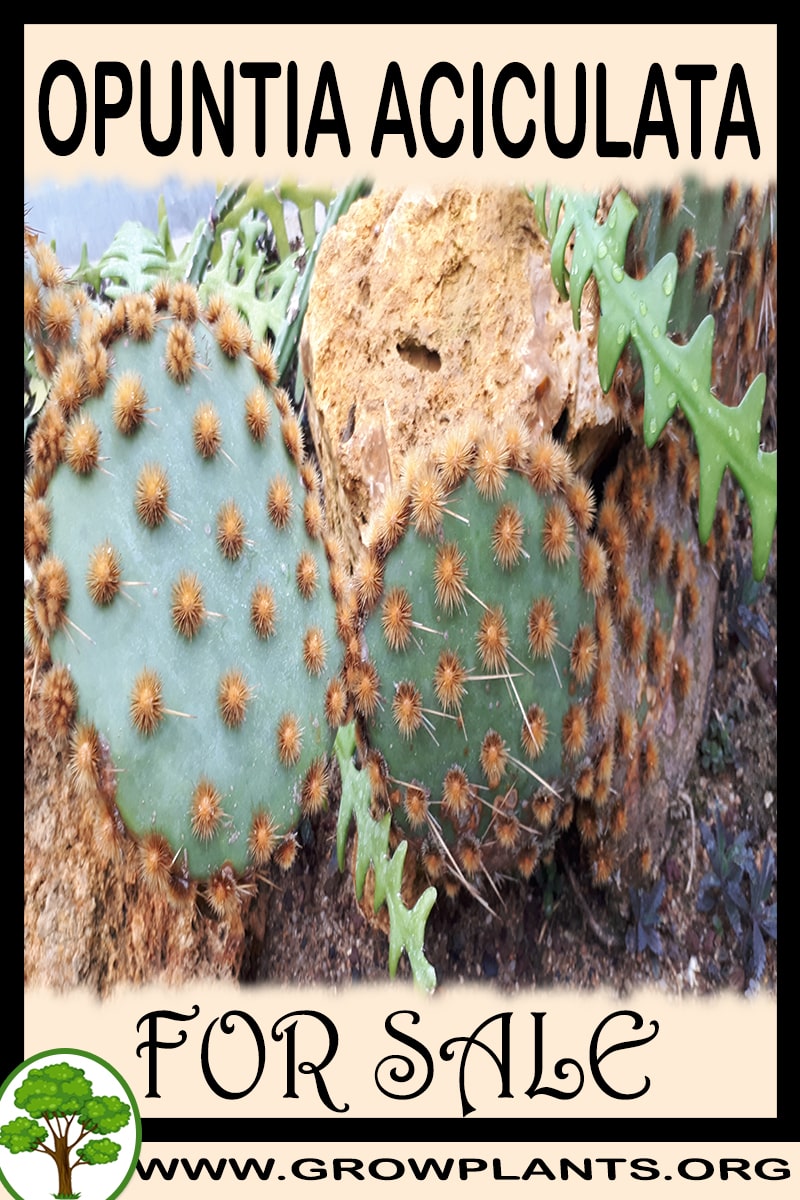
Overview: Opuntia aciculata (chenille prickly pear) is a pad-forming cactus reaching about 50-80 cm, valued for pads tinted red-purple with tufts of golden glochids. It is an evergreen perennial succulent for warm, frost-free gardens and pots.
Quick Specifications
| Specification | Attribute |
|---|---|
| Plant Type / Life Cycle | Perennial (succulent) |
| Foliage Type | Evergreen (leafless; flat pads) |
| Mature Size | 50-80 cm (20-32 in) |
| Growth Rate | Slow to moderate |
| Root System | Shallow, fibrous, spreading |
| Toxicity | Non-toxic; fine glochids cause skin and eye irritation |
| Hardiness | USDA zone 9+ |
Growth Form & Structure
- Height & Spread: 50-80 cm (20-32 in); well suited to containers.
- Growth Habit & Form: Low shrubby cactus of flat pads (cladodes) forming clumps.
- Lifespan & Maturity: Long-lived succulent; slow to moderate to reach full size.
Anatomy & Physical Features
- Leaves & Foliage: No true leaves; green pads often flushed red or purple, with yellow-to-orange glochids.
- Flower Characteristics: Orange to red flowers in spring (full detail in the Bloom guide).
- Fruit Profile: Red oval fruit with glochids; edibility not established.
Primary Uses & Landscape Value
- Functional & Ornamental Roles: Ornamental container and desert-garden cactus.
Care Guide: Planting, Soil & Watering
Overview: Opuntia aciculata (Chenille pricklypear) is a sun-loving desert cactus that thrives in heat and sharp drainage, growing best in gritty, fast-draining soil. It needs very little water and resents wet feet, so let the soil dry out completely between soakings.
Quick Care Requirements
| Requirement | Ideal Condition |
|---|---|
| Planting Season | Warm season – spring through autumn (frost-free, hardiness zone 9+) |
| Growth Rate | Slow to Moderate |
| Soil Type | Sandy, gritty, sharply well-draining (cactus mix) |
| Water Need | Low – let the soil dry out fully between waterings |
Planting & Establishment
- Best Planting Season: Plant in the warm season, from spring once frost danger has passed through to autumn while the soil is still warm; in frost-free climates it can go in almost any time.
- How to Plant:
- Hole Preparation: Dig a shallow hole just a little wider than the root ball or pad – the roots are shallow and spreading, so depth is less important than good sideways drainage.
- Soil Amendments: Skip rich compost; instead mix in coarse sand, grit or perlite to keep the soil lean and fast-draining, which is what a cactus wants.
- Planting Depth: Set the plant at the same depth it was growing – never bury the stem or pad base, as buried tissue rots quickly in this species.
- Growth Speed & Expectations: Expect slow to moderate growth even in ideal heat and sun; patience pays off and there is no need to push it with feeding or extra water.
Soil, Watering & Drainage Care
- Soil Mix & Drainage Needs: Use a gritty, free-draining medium; in containers a dedicated cactus/succulent mix with extra perlite is ideal. Sharp drainage is the single most important factor for preventing root and stem rot.
- Watering Schedule & Technique:
- Young / Newly Planted: After planting, wait a week or two before the first watering to let any root nicks callus, then water sparingly.
- Established: Water deeply but infrequently, always letting the soil dry out completely before the next soak.
- Seasonal Adjustments: Keep it nearly dry through the cool winter dormancy, and give only a little extra during the hottest, driest stretch of summer.
Climate, Light & Hardiness
Opuntia aciculata (chenille pricklypear) is a full-sun, drought-tolerant cactus suited to desert, subtropical, tropical, mediterranean, and temperate climates. Cold hardiness is limited, with established plants tolerating brief dips to only around −2°C (28°F).
Quick Climate Specifications
| Climate Zones | Desert, subtropical, tropical, mediterranean, temperate |
|---|---|
| USDA Hardiness Zones | 9+ |
| Approx. Survival Minimum | Approximately −2°C (28°F) |
| Frost Tolerance | Low |
| Light Conditions | Full Sun |
Sunlight & Light Exposure
Optimal Light Setup
Full, unfiltered sun keeps stems (cladodes) compact and spine color well developed.
Direct Sun Requirement
Thrives in all-day direct sun; shaded plants stretch and flower poorly.
Temperature Extremes & Hardiness
USDA Hardiness & Regional Limits
Suitable for permanent outdoor planting from about zone 9 upward; in colder zones it needs winter protection or container culture.
Cold Damage & Winter Protection
An established plant's approximate cold limit is around −2°C (28°F) for brief periods; harder or longer freezes risk damaging the stems.
Frost Sensitivity
Low frost tolerance; avoid low-lying planting sites where cold air collects.
Wind, Humidity & Microclimate
Dry-Air Tolerance
Tolerates dry air well, in keeping with its arid native range.
Microclimate Recommendations
Prefers a hot, dry, well-drained microclimate; avoid damp winter pockets.
Growing in Pots, Balconies & Indoors
A compact prickly pear (about 50-80 cm) that needs full sun – not a deep-room houseplant, but it can sit on the brightest, sunniest windowsill and does very well in a pot on a hot patio.
Quick Details
- Container Size: A snug, gritty pot – cacti flower better slightly pot-bound
- Indoor Suitability: Not a deep-indoor plant, but happy on a very sunny windowsill
- Best Spot: Full sun
- Soil & Drainage: Sharply drained cactus/gritty mix
- Watering in Pots: Sparingly; let it dry out between waterings
Indoors & On the Windowsill
- Windowsill, not deep indoors: It needs strong, direct sun, so a bright, sunny sill suits it while a shady room does not.
- Safety: Keep away from children and pets – the fine barbed glochids and spines catch skin easily.
On a Balcony or Patio
- Full sun: Give it the hottest, sunniest spot; it thrives on reflected heat from walls and paving.
- Watering: Let the pot dry out well between waterings.
Choosing the Pot, Soil & Long-Term Care
- Pot & drainage: A gritty pot with strong drainage; never leave it standing in water.
- Potting mix: Free-draining cactus/gritty mix with extra grit or perlite.
- Feeding: Feed sparingly with a low-nitrogen cactus feed in the growing season.
- Potting on: Pot on slowly; it flowers better slightly pot-bound.
Fertilizing & Feeding
Opuntia aciculata is a lean desert feeder – its colorful spined pads hold up best on minimal, well-timed nutrition rather than a regular feeding routine.
Quick Fertilizing Specs
| Feeding Level | Light feeder; tolerates poor soil and needs little supplemental nutrition |
|---|---|
| Main Nutrient Priority | Low-nitrogen feeding that favors potassium over nitrogen |
| Best Feeding Period | Warm months during active pad growth |
| Organic Options | A thin topdressing of well-aged compost worked lightly around the base |
| Reduce/Stop Feeding | Stop entirely once growth slows for the cooler, resting part of the year |
Feeding by Growth Stage
Active Growth
Support new pad formation during the warm season without encouraging soft, weak tissue.
| Nutrient direction | A dilute, low-nitrogen cactus-formulated feed that favors potassium over nitrogen. |
|---|---|
| Timing | Warm spring-through-summer months when the plant is actively producing new pads. |
| Frequency | A few light feedings spread across the active growing season. |
| Fertilizer types | A cactus/succulent-specific fertilizer diluted well below general houseplant strength, or a light topdressing of well-aged compost. |
| Precautions | Keep feeding light – soft, over-fed growth is more prone to rot and less cold-hardy than lean, well-adapted pads. |
Dormant Rest
Support the plant’s natural slowdown by withholding fertilizer entirely.
| Nutrient direction | None – withhold fertilizer during the dormant or resting period. |
|---|---|
| Timing | Cooler months when growth stops and the plant is resting. |
| Frequency | No feeding at this stage. |
| Fertilizer types | No feeding at this stage; resume only once new pad growth restarts in warm weather. |
| Precautions | Do not fertilize during dormancy; feeding a resting cactus can cause weak, stretched growth or root stress. |
Nutrient Deficiency Signs & Corrections
Pads (cladodes) turn pale or develop soft, discolored patches near the base.
| Possible causes | Overwatering or poorly drained soil causing root stress, Nitrogen excess producing soft, chlorotic tissue, Insufficient light for the season |
|---|---|
| Appears first on | Newest pads and pad bases |
| What to check | Soil drainage and recent watering frequency, Fertilizer strength and frequency used, Amount of direct sun the plant receives |
| Possible correction | Improve drainage, let soil dry between waterings, and reduce fertilizer strength or frequency. |
New pads grow thin, elongated, or pale with underdeveloped spines rather than firm and well-colored.
| Possible causes | Insufficient light causing the plant to stretch, Over-fertilizing, especially with a nitrogen-heavy product, Feeding attempted during the dormant season |
|---|---|
| Appears first on | Newest pad growth |
| What to check | Light exposure relative to the plant’s needs, Timing and strength of recent feedings, Season and current growth activity |
| Possible correction | Increase light exposure and hold off on fertilizer until strong, well-lit active growth resumes. |
Pads show a pale, mottled yellowing pattern rather than an even green.
| Possible causes | Iron deficiency linked to alkaline or waterlogged soil, Root stress from compacted or poorly drained potting mix, Cold soil temperatures limiting nutrient uptake |
|---|---|
| Appears first on | Newer pads |
| What to check | Soil pH and drainage, Root condition when checking the pot, Recent temperature extremes |
| Possible correction | Improve drainage, correct pH if alkaline, and apply a chelated iron product per its label if the pattern persists. |
Pruning, Training & Seasonal Maintenance
Opuntia aciculata is a small, low, clump-forming prickly pear (usually 50–80cm) whose common name “chenille pricklypear” comes from its fine, soft-looking spine clusters – these are actually dense glochids that penetrate skin (and ordinary garden gloves) easily and are harder to spot and remove than the coarse spines of larger Opuntia species. Pruning is light and infrequent: pad removal for shape, size, or to thin an aging clump, not a routine seasonal task. Because it stays low and clumping rather than developing a woody trunk, size control here is about managing clump spread at ground level rather than height.
Quick Pruning & Maintenance Specs
| Pruning Tolerance | Low–Moderate |
| Primary Pruning Window | Dry, mild weather, as-needed (not tied to a fixed calendar season) |
| Typical Frequency | Occasional |
| Main Objective | Thin an aging clump and remove damaged pads; keep spread in bounds |
| Young Plant Priority | Minimal – let the clump establish |
| Mature Plant Priority | Remove old, shriveled, or overcrowded pads at the base to keep the clump open and airy |
| Best Tool Type | Sterile grafting/paring knife; no saw is ever needed at this size |
| Avoid Heavy Pruning During | Humid or rainy weather (rot risk) and cold snaps |
Pruning by Plant Age & Size
Newly Established
None – let the young clump root in before removing any pads.
Young / Formative
No structural training applies; remove only a visibly damaged or diseased pad.
Mature / Established
As the low clump thickens over years, thin out the oldest, most shriveled, or most crowded pads at ground level to improve airflow through the clump and reduce rot risk in the congested center.
Seasonal Pruning Schedule
Ongoing Sanitary
Objective: prevent rot spreading through a dense, ground-hugging clump. Remove any pad with soft or water-soaked spots as soon as noticed, in dry weather, cutting back to a clean joint.
Structural Pruning & Training
Thinning, not height control, is the relevant task here – remove a portion of the oldest basal pads every few years so the low clump does not become a dense, poorly ventilated mat prone to rot in its center.
Special Growth to Remove
- Shriveled, rotten, or pest-damaged pads – remove at the joint.
- Excess basal offset pads if the clump is spreading beyond its allotted space; these can equally be left to fill in a groundcover planting.
Container & Small-Space Pruning
Well suited to containers given its small size; in a pot, thin congested basal pads a little more proactively than an in-ground planting, since airflow through the clump is more restricted and rot risk in a crowded pot is higher.
Tools
A sterile grafting/paring knife for pad separation is the only tool this small species needs.
Tool Hygiene & Disease Risk
Increased risk: cut faces are prone to rot in damp conditions, so wipe the blade clean between cuts and always cut a rotten pad separately from a healthy one.
Cut Placement & Technique
Separate pads cleanly at their natural joint. Handle every cut pad with thick leather gloves and long tongs rather than bare hands or thin gloves – the fine glochid clusters on this species penetrate ordinary garden gloves.
Heavy Pruning & Rejuvenation
Not appropriate or needed – this is a small, slow-to-medium growing clumping species; an overcrowded clump is managed by removing a few old basal pads at a time over successive dry spells, not by one hard cutback.
Post-Pruning Care
Let cut faces callus in dry air before they contact moist soil; avoid heavy watering directly on a fresh cut for the first several days.
Common Pruning Mistakes
- Underestimating the glochids because the spine clusters look soft (“chenille”) – they cause more skin irritation than they appear to.
- Cutting in wet weather, inviting rot at the fresh wound.
- Letting an old clump go unthinned for years, leading to a dense, poorly ventilated, rot-prone center.
When NOT to Prune
Avoid cutting during humid or rainy weather and during a cold snap; avoid disturbing a young, still-establishing clump.
Recommended Tools (by task)
- grafting_knife – the routine tool for clean pad separation at a joint.
- blade_disinfectant – keeps rot organisms from moving between cuts.
Propagation Guide
Opuntia aciculata (Chenille pricklypear) is propagated almost entirely from pad (cladode) cuttings; this plant’s own data marks vegetative reproduction as necessary for reliable results, and seed is a slow, less practical alternative. Pad cuttings are easy and root readily compared with growing from seed.
Quick Propagation Specs
| Best Propagation Method | Pad (cladode) cuttings |
| Alternative Methods | Seed |
| Propagation Difficulty | Easy |
| Seed True-to-Type | Variable – Opuntia species cross-pollinate readily, so seedlings may not match the parent |
| Vegetative True-to-Type | Yes |
| Best Propagation Season | Spring, summer, or autumn |
Stem Cuttings
Cutting Type
A single healthy, mature pad (cladode), cut cleanly with a sharp, clean tool. Handle carefully, as this species’ glochids (fine barbed spines) can irritate skin.
Best Timing
Spring through autumn, avoiding cold, wet winter conditions when cut pads are more prone to rot.
Cutting Preparation
Let the cut base callus over in a shaded, airy spot for several days to about a week before planting, which is standard practice for cactus cuttings and helps prevent rot.
Rooting Setup
Plant the callused end in a well-draining, gritty cactus mix; water sparingly at first, increasing once roots are established.
Rooting Hormone
Not necessary for this easy-rooting cactus.
Rooting Time
New roots generally form within a few weeks to a couple of months, depending on warmth and moisture.
Bloom & Flower Guide
Quick Details
- Bloom Season: Spring
- Time to First Bloom: Young plants need several seasons of growth to reach flowering size before they bloom
- Flower Appearance: Showy orange to red cup-shaped flowers, borne along the edges of the pads
- Edibility: Grown as an ornamental; the flowers are not eaten
Detailed Blooming Overview
Opuntia aciculata, the chenille pricklypear, produces large, silky flowers in spring that open along the top edges of mature pads. Each bloom lasts only a day or two, but a healthy plant opens them in succession over a few weeks. The flowers are followed later by fruit, but in the bloom season the plant is all about those brilliant, waxy petals.
Flower Characteristics
- Bowl- or cup-shaped flowers in warm orange-to-red tones, echoing the colour of the later fruit.
- Flowers open in bright sun and hold a boss of many stamens at the centre.
- Rich in pollen, they are visited by bees, butterflies and hummingbirds.
Bloom Care & Thinning
- Light and warmth: Full sun and a dry, gritty root run give the best flowering.
- Pollination: Bees, butterflies and hummingbirds carry the pollen; no hand-work is needed for a garden display.
- Handle with care: This species is armed with fine, barbed glochids that lodge in skin easily — use thick gloves or tongs when working around the blooms.
Pests, Diseases & Troubleshooting
Overview: Prickly pears are tough, drought-adapted cacti whose main enemies are sap-sucking insects that colonise the areoles and pad joints, plus rots that set in when the soil stays wet. The dense reddish glochids of this species make hand-treatment awkward; use tongs and eye protection. Management is overwhelmingly cultural: fast-draining mineral soil, restrained watering, full sun and good airflow prevent the great majority of problems, so reach for sprays only when an infestation is established.
Quick Troubleshooting Overview
| Issue / Pest | Main Symptom | Primary Solution |
|---|---|---|
| Cochineal scale | White cottony tufts in areoles; crimson stain when crushed | Wash off, spot-treat with horticultural oil |
| Mealybugs | Cottony masses at pad joints and roots; sticky honeydew | Alcohol swab / insecticidal soap; inspect roots |
| Cactus moth | Hollowed, translucent pads with frass and oozing | Cut out and destroy infested pads |
| Snails & slugs | Chewed young pads and seedlings at soil level | Night hand-picking, grit/copper barriers, traps |
| Root & stem rot | Soft, blackened, mushy base; pad collapse | Withhold water; cut to firm tissue; improve drainage |
| Corky scab / edema | Rusty corky patches on pads | Increase light, reduce humidity and watering |
Common Pests & Management
- Cochineal scale (Dactylopius spp.):
- Symptoms: Small white, waxy, cottony tufts nestled in the areoles and along pad edges; the insect beneath crushes to a deep crimson (the historic dye). Heavy colonies yellow and weaken pads and leave a felted crust. Do not confuse the natural fuzz of glochids with the wetter, mobile cottony scale.
- Prevention & Control: Blast colonies off with a firm jet of water, repeating every few days. Scrub stubborn patches with a soft brush. For persistent infestations wipe or spot-spray with horticultural or neem oil, coating the waxy tufts thoroughly; treat in the cool of evening to protect the pads from oil-plus-sun scorch. Isolate new plants and inspect areoles before introducing them.
- Cactus mealybug (Pseudococcus / Planococcus spp.):
- Symptoms: White cottony masses tucked into pad joints, areoles and around the root crown, with sticky honeydew and sooty mould following. Root mealybugs show as white powder on the root ball at repotting.
- Prevention & Control: Dab visible clusters with a cotton bud dipped in dilute alcohol, or rinse and treat with insecticidal soap or neem oil. At repotting, bare-root and inspect; drench the root zone if root mealybugs are found. Keep plants slightly lean on nitrogen, as soft lush growth attracts them.
- Cactus moth (Cactoblastis cactorum):
- Symptoms: Caterpillars bore inside the pads, which become translucent, hollow and mushy; you will see clustered orange-pink larvae, dark frass and oozing at entry holes. A serious invasive pest of Opuntia in many regions.
- Prevention & Control: Cut out and bag infested pads at the first sign, destroying larvae rather than composting them. Inspect regularly and remove egg-sticks (chains of eggs resembling a spine). Report suspected infestations where this pest is under quarantine; there is no casual chemical fix for internal borers.
- Prickly-pear bug (Chelinidea vittiger):
- Symptoms: Flat brown sucking bugs and their nymphs feed in groups on pads, producing pale chlorotic spots and circular yellow lesions that can merge and dull the pad surface.
- Prevention & Control: Hand-pick the conspicuous adults and nymphs, and hose off young clusters. Encourage predatory insects and birds. Only heavy, repeated infestations on ornamental plants warrant an insecticidal soap or oil spray.
- Snails & slugs (Helix / Deroceras spp.):
- Symptoms: Irregular chewed notches and slime trails on tender new pads, fruit and especially seedlings, with feeding concentrated near the soil at night.
- Prevention & Control: Hand-pick after dark, remove hiding places (boards, debris), and ring plants with sharp grit, crushed shell or copper tape. Shallow beer traps and iron-phosphate baits give further control while sparing pets and wildlife.
Diseases & Fungal Issues
- Phytophthora & Pythium root/stem rot (Phytophthora / Pythium spp.):
- Symptoms: A soft, water-soaked, blackening rot that begins at the base or roots in cold, wet, poorly drained soil and spreads upward, collapsing pads into a foul mush.
- Treatment & Management: Prevention is everything: gritty free-draining mix, pots with ample drainage, and a dry, cool winter rest with little or no water. If caught early, unpot, cut back to firm green tissue with a clean blade, dust the wound, let it callus, and re-root in fresh dry mix.
- Bacterial soft rot (Pectobacterium (Erwinia) spp.):
- Symptoms: Sunken, slimy, foul-smelling wet patches spreading from wounds or feeding damage, often after cold injury; tissue liquefies.
- Treatment & Management: Excise affected tissue well into healthy pad, keep the plant dry and airy, and avoid overhead watering. Sanitise tools between cuts. Copper sprays give some protective help but sanitation and dry culture are the real cure.
- Cactus virus X / mosaic (Cactus virus X):
- Symptoms: Faint mottling, ring-spots or pale streaking on pads; usually mild and mostly cosmetic, spread by sap on contaminated tools and by sucking insects.
- Treatment & Management: There is no cure; rogue out severely affected plants, disinfect blades between plants, and control sap-sucking pests that spread it.
Growing Difficulties & Abiotic Problems
- Corky scab / edema:
- Cause & Symptoms: Rusty-brown corky or scabby patches on pads caused by excess moisture and low light forcing cells to burst, especially in cool humid conditions.
- Correction Strategy: Increase light, improve ventilation, and cut back watering; the existing scarring is permanent but new growth will be clean.
- Sunscald and etiolation:
- Cause & Symptoms: Bleached or scorched patches appear when a shade-grown plant is moved abruptly into fierce sun; conversely, pale, thin, stretched pads signal too little light.
- Correction Strategy: Acclimatise gradually to full sun over a couple of weeks; site permanently in bright light to keep pads thick and firm.
- Frost and cold damage:
- Cause & Symptoms: Water-soaked, translucent, later brown-black areas after freezing, sometimes triggering secondary rot.
- Correction Strategy: Protect from hard frost or grow in containers that can be moved; keep plants dry going into cold, as dry tissue tolerates cold far better than turgid tissue.
- Shrivel from drought stress:
- Cause & Symptoms: Pads wrinkle, soften and lean when roots have been dry too long or, confusingly, when roots have rotted and can no longer take up water.
- Correction Strategy: Check the roots: if firm, water thoroughly and pads will re-plump; if roots are brown and rotten, treat as stem rot and re-root a healthy pad.
What Helps – Products & Tools
For this cactus the useful kit is simple: a strong water spray and a soft brush for scale and mealybugs, horticultural or neem oil and insecticidal soap for stubborn sap-suckers, a copper product as a protective aid against rots and bacterial soft rot, iron-phosphate slug bait or copper barriers for molluscs, and above all a gritty free-draining mineral mix to keep rot away. Apply oils in the evening to avoid scorch and always follow the label.