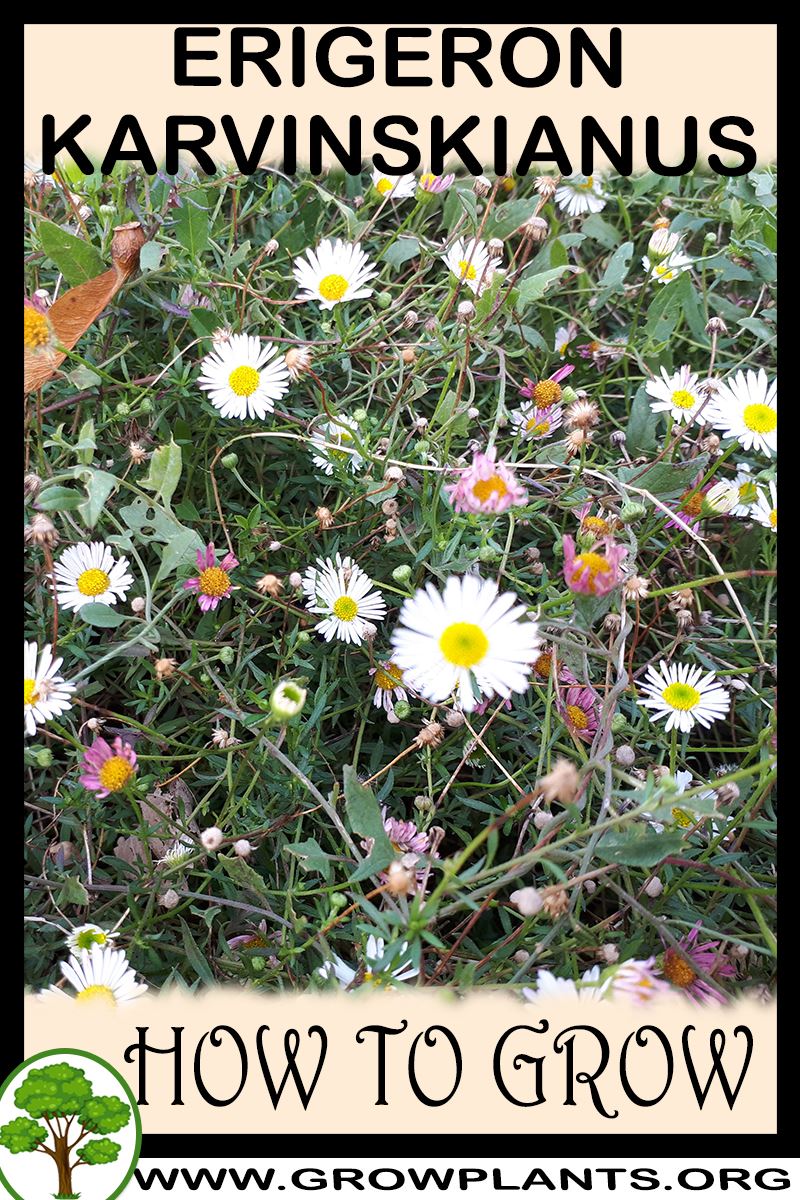
Plant Profile & Key Characteristics
Overview: Santa Barbara daisy (Erigeron karvinskianus) is a low, spreading evergreen perennial reaching 30-60 cm, covered in small daisies over a long season. It self-seeds freely and is ideal for walls, edges and containers.
Quick Specifications
| Specification | Attribute |
|---|---|
| Plant Type / Life Cycle | Perennial |
| Foliage Type | Evergreen |
| Mature Size | 30-60 cm (12-24 in) tall, spreading |
| Growth Rate | Fast to Moderate |
| Root System | Fibrous; self-seeding and spreading |
| Toxicity | Non-toxic |
| Hardiness | USDA zones 4-9 |
Growth Form & Structure
- Height & Spread: 30-60 cm (12-24 in) tall, mounding and trailing to spill over walls and container edges.
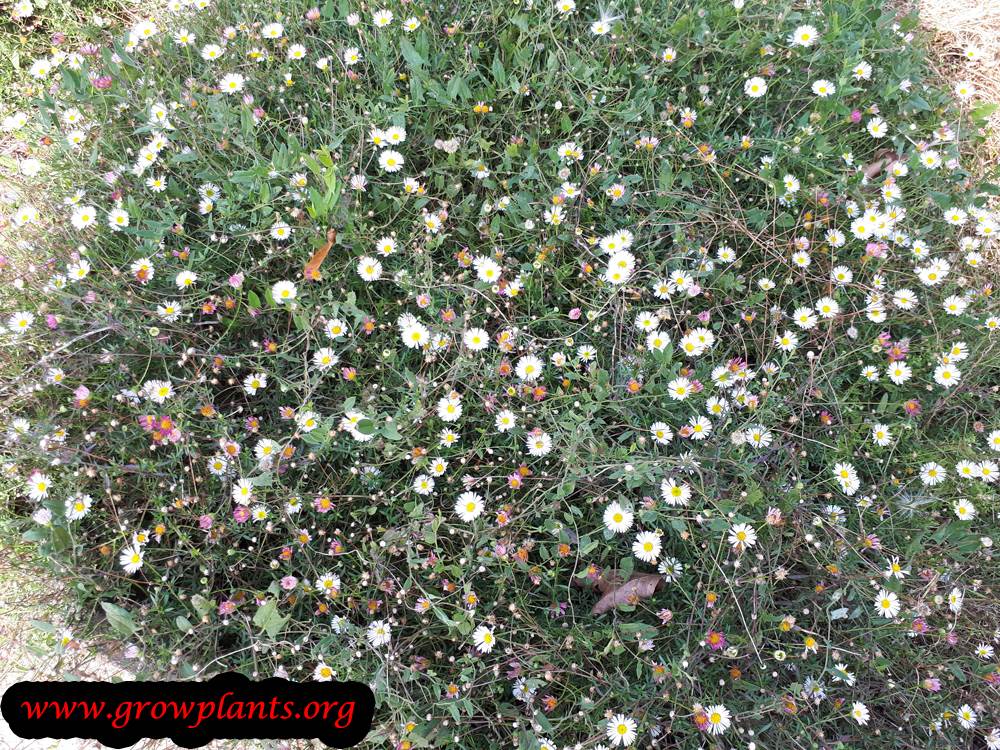
- Growth Habit & Form: Low, spreading mounded perennial with wiry stems and a haze of small daisies.
- Lifespan & Maturity: Perennial with a long bloom season from spring into early summer (often longer in mild climates).
Anatomy & Physical Features
- Leaves & Foliage: Small, green, spoon-shaped leaves.
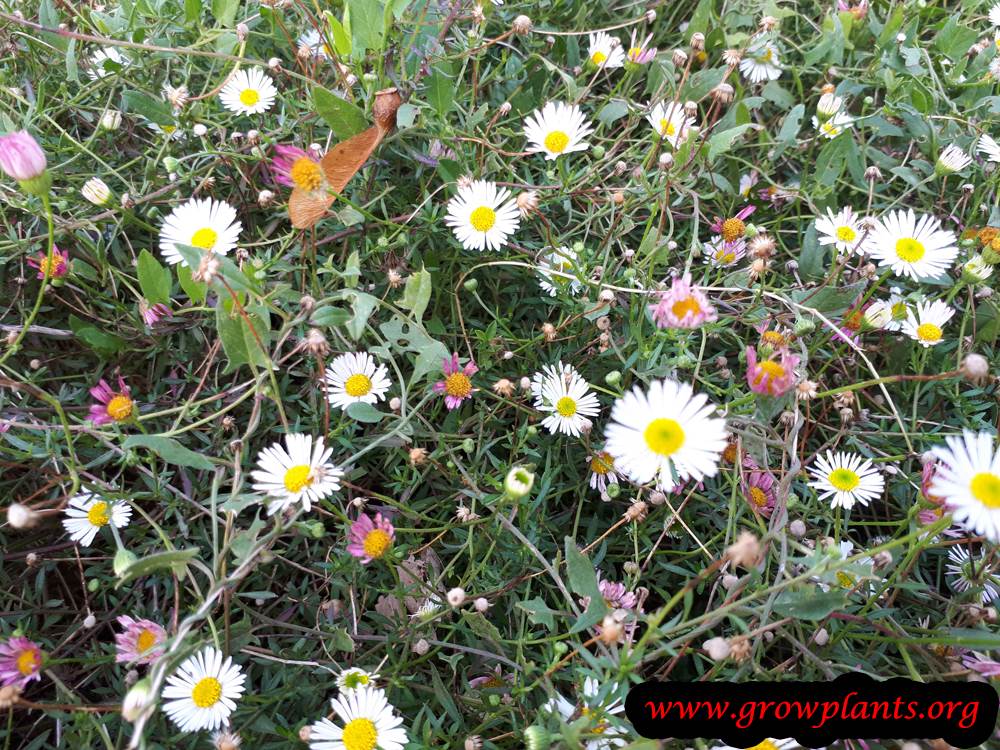
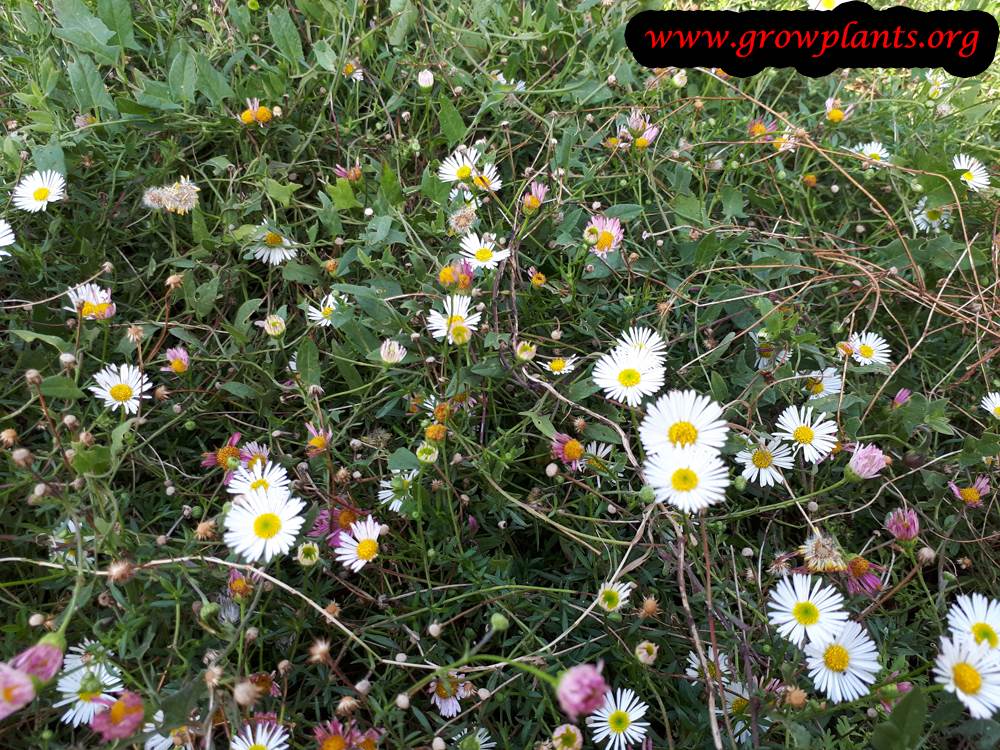
- Flower Characteristics: Small daisies opening white and ageing to pink and purple, each with a yellow centre.
Primary Uses & Landscape Value
- Functional & Ornamental Roles: Groundcover, wall and crevice plant, container and hanging-basket filler, cottage border and pollinator plant.
Care Guide: Planting, Soil & Watering
Overview: Santa Barbara daisy is a wiry, free-flowering perennial that thrives in full sun to part shade in light, well-drained soil. It is drought-tolerant once established and self-seeds enthusiastically, so give it a sunny, sharply drained spot and only moderate water.
Quick Care Requirements
| Requirement | Ideal Condition |
|---|---|
| Planting Season | In spring and summer, after the last frost |
| Growth Rate | Moderate to Fast |
| Soil Type | Light, well-drained soil; tolerates poor and gravelly ground |
| Water Need | Low to Moderate — drought-tolerant once established |
Planting & Establishment
- Best Planting Season: Plant in spring or summer once frost has passed and the soil is warming.
- How to Plant:
- Hole Preparation: Dig a hole about twice the width of the root ball; it thrives even in walls and gravel, so drainage matters more than richness.
- Soil Amendments: Little is needed — a touch of compost in poor soil helps, but avoid over-rich, water-holding mixes.
- Planting Depth: Set the crown level with the surface, firm gently and water in.
- Growth Speed & Expectations: Moderate to fast, quickly forming a mounding, self-seeding carpet 30–60 cm across.
Soil, Watering & Drainage Care
- Soil Mix & Drainage Needs: Sharp drainage is essential; this plant rots in heavy, wet soil but flourishes in lean, gritty, free-draining ground.
- Watering Schedule & Technique:
- Young / Newly Planted: Water regularly until established, keeping the soil lightly moist.
- Established: Water sparingly — let the soil dry well between waterings; established plants shrug off dry spells.
- Seasonal Adjustments: A little extra water in extreme heat; keep it dry in winter to prevent rot.
Climate, Light & Hardiness
Erigeron karvinskianus (Santa Barbara daisy) is a reliably cold-hardy, evergreen perennial suited to temperate and subtropical climates, thriving in full sun to half shade. It withstands winter freezes well across its stated zone range while also tolerating considerable heat.
Quick Climate Specifications
| Climate Zones | Temperate and subtropical climates |
|---|---|
| USDA Hardiness Zones | Approximately zone 4–9 |
| Optimal Temp Range | Mild to warm growing-season conditions |
| Cold Damage Begins | Top growth can die back with hard freezes at the colder end of its range |
| Approx. Survival Minimum | Established plants tolerate the winter cold typical of zone 4 |
| Frost Tolerance | Moderate to High |
| Light Conditions | Full Sun to Half Shade |
Sunlight & Light Exposure
Optimal Light Setup
Full sun to half shade suits this daisy well, with the fullest bloom in sunnier spots.
Direct Sun Requirement
Several hours of direct sun daily encourage the heaviest flowering.
Best Exposure / Orientation
Walls, rockeries, and open sunny beds with good drainage suit this spreading plant well.
Temperature Extremes & Hardiness
USDA Hardiness & Regional Limits
Site data places this plant at zone 4–9, indicating good winter cold hardiness for a Mexican-daisy type plant; it may die back to the crown in the coldest parts of its range and regrow in spring.
Cold Damage & Winter Protection
In colder zones, expect some dieback of top growth over winter, with regrowth from the base in spring; mulch can help protect the crown.
Frost Sensitivity
Moderately frost tolerant; foliage may be damaged by hard freezes, but the plant generally recovers from the roots.
Extreme Heat Tolerance
Handles summer heat well, consistent with its subtropical range.
Wind, Humidity & Microclimate
Microclimate Recommendations
Well-drained soil and an open, airy position help this vigorous, self-seeding plant handle both winter cold and summer heat.
Growing in Pots, Balconies & Indoors
Erigeron karvinskianus (Mexican fleabane) is a free-flowering, sun-loving perennial (30-60 cm / 12-24 in), not a houseplant – the grower confirms it is unsuited to indoor growing. It is superb in containers, wall pots, and hanging baskets on a sunny balcony or patio, where it spills and self-sows into a long-lasting haze of daisy flowers.
Quick Details
- Container Size: Moderate – it trails and spreads, so a wide pot or basket shows it off
- Indoor Suitability: Not a houseplant; grow outdoors
- Best Spot: Full sun to light shade
- Soil & Drainage: Ordinary free-draining potting mix
- Watering in Pots: Low to average – drought-tolerant once established; let it dry a little between waterings
Indoors & On the Windowsill
- Not for indoors: The grower marks it as unsuitable indoors; it needs real outdoor sun to flower well and stay compact.
- Overwintering: Hardy in mild climates – leave the pot outside and it re-sprouts; trim back old growth at the end of the season.
On a Balcony or Patio
- Light & habit: Give it a sunny spot and let it trail over the pot edge or basket rim; it is tough and wind-tolerant. Pots dry fast in sun, so check moisture in hot spells.
Choosing the Pot, Soil & Long-Term Care
- Pot & drainage: Choose a pot a size or two larger than the root ball, with strong drainage holes; skip a standing water saucer to avoid root rot. Terracotta breathes and dries faster, while glazed or plastic pots hold moisture longer.
- Potting mix: A well-aerated, organic-rich mix – a quality potting mix, or peat/coir blended with perlite or vermiculite.
- Feeding: Potted plants need feeding more often than those in open ground, as frequent watering leaches nutrients away – feed lightly through the growing season.
- Repotting: Refresh the mix or pot up about every two years; for perennials, lightly trim the root ball and top growth at the same time.
Fertilizing & Feeding
A light feeder – this fast-spreading, free-flowering daisy performs well in average soil, and heavy feeding mainly encourages more vigorous, floppy growth rather than better bloom.
Quick Fertilizing Specs
| Feeding Level | Light feeder |
|---|---|
| young_feeding | A light feed at planting helps new plantings fill in, though it is often unnecessary in decent soil |
| mature_feeding | Minimal feeding for established plantings, which spread and bloom readily on their own |
| Main Nutrient Priority | Balanced nutrition; extra phosphorus is not needed to drive bloom |
| Best Feeding Period | Spring into early-summer bloom |
| Organic Options | A light compost top-dressing can substitute for synthetic feeding |
| Reduce/Stop Feeding | Stop feeding during the cool-season slowdown |
Feeding by Growth Stage
Spring Growth
Support fresh basal and trailing growth as this fast-spreading daisy breaks into active growth
| Nutrient direction | A light, balanced feed is enough – this vigorous grower rarely needs rich feeding to fill in |
|---|---|
| Timing | Spring as new growth resumes |
| Frequency | Light, infrequent feeding suits this fast-growing, self-seeding daisy |
| Fertilizer types | A light balanced feed if the soil is poor, otherwise often unnecessary |
| Precautions | Avoid heavy feeding, which can push this already vigorous, spreading plant to become even more aggressive |
Bloom
Sustain the long daisy bloom period from spring into early summer
| Nutrient direction | Continue light, balanced feeding only – this free-bloomer doesn’t need extra phosphorus to flower well |
|---|---|
| Timing | Spring into early summer bloom |
| Frequency | Minimal feeding is usually enough for an established planting in bloom |
| Fertilizer types | A light balanced feed, or none on soil that already supports vigorous growth |
| Precautions | Do not over-fertilize; lush over-fed growth can flop and shade out its own flowers |
Cool-Season Slowdown
Let the plant rest through its slower cool-season period
| Nutrient direction | None – withhold fertilizer during the cool-season slowdown |
|---|---|
| Timing | Autumn into winter |
| Frequency | No feeding at this stage |
| Fertilizer types | No feeding at this stage – resume light feeding once spring growth restarts |
| Precautions | Do not fertilize during the slow season; cut back spent growth instead of feeding |
Nutrient Deficiency Signs & Corrections
Foliage looks pale and thin rather than the usual dense green mat
| Possible causes | nitrogen deficiency in very poor soil, crowding or root competition from spreading growth, poor drainage limiting root function |
|---|---|
| Appears first on | overall foliage across the mat |
| What to check | soil fertility, planting density and self-seeding buildup, drainage |
| Possible correction | A light balanced feed can help in genuinely poor soil; otherwise thin out crowded growth first |
Plant produces lots of leafy trailing growth but comparatively few daisies
| Possible causes | excess nitrogen from over-feeding or rich soil, too much shade for this sun-loving daisy, overwatering favoring leaf growth over bloom |
|---|---|
| Appears first on | new trailing growth relative to flower count |
| What to check | feeding and soil richness history, sun exposure, watering frequency |
| Possible correction | Cut back on feeding, confirm full sun, and shear back old growth to encourage fresh bloom |
Leaves yellow and growth looks unhealthy despite normal feeding
| Possible causes | waterlogged, poorly drained soil stressing the roots, root rot from consistently wet conditions, a nutrient deficiency unrelated to drainage |
|---|---|
| Appears first on | lower leaves and overall vigor |
| What to check | drainage and recent watering, root condition, planting location |
| Possible correction | Improve drainage before adding more fertilizer, since this species prefers well-drained soil |
Pruning, Training & Seasonal Maintenance
Erigeron karvinskianus is a low, spreading herbaceous perennial that blooms almost continuously from spring into autumn, and its pruning is really about managing that long bloom cycle: regular deadheading keeps flowers coming and limits the aggressive self-seeding this species is known for, while a harder cutback in autumn–winter removes tired, straggly growth and resets the plant for the next season. It has no woody structure to protect, so it tolerates being cut back hard without any risk to a permanent framework.
Quick Pruning & Maintenance Specs
| Pruning Tolerance | High (fully herbaceous; regrows readily after a hard cutback) |
| Primary Pruning Window | Autumn–winter for the main cutback |
| Secondary Maintenance Window | Ongoing deadheading through spring–autumn while in bloom |
| Typical Frequency | Deadhead every few weeks in bloom; one hard cutback per year |
| Main Objective | Prolong bloom, limit self-seeding, and rejuvenate straggly growth |
| Young Plant Priority | Leave to establish and spread; no pruning needed |
| Mature Plant Priority | Regular deadheading in season; full cutback once flowering tails off |
| Best Tool Type | Precision snips for deadheading; light shears for cutting back a whole established clump |
| Avoid Heavy Pruning During | Peak spring–summer bloom flush |
Pruning by Plant Age & Size
Newly Established
Allow young plants to establish and spread without cutting back, aside from removing any obviously dead material; the species roots readily into walls and crevices and needs time to fill in.
Young / Formative
No structural training applies to this low, sprawling daisy; it needs no staking or shaping, only later maintenance once it is flowering.
Mature / Established
On established clumps, ongoing deadheading through the bloom season keeps flowers coming and reduces the volume of seed shed, while an annual hard cutback once flowering fades removes the season’s leggy, semi-woody stem growth.
Seasonal Pruning Schedule
| Ongoing Sanitary / In-Season | Objective: extend bloom and reduce self-seeding. Remove: dead leaves and individual spent bloom stems as flowers fade. Do not remove: actively flowering stems. Expected response: continued flower production through the season. Flowering impact: positive – deadheading is what sustains the long bloom period. |
| Dormant / Autumn–Winter | Objective: rejuvenate the clump and clear tired growth before winter. Remove: the season’s straggly stem growth, cutting the clump back close to its base. Do not remove: the living crown. Expected response: fresh, compact new growth the following spring. Flowering impact: none negative – next season’s flowers come from the new growth. |
Special Growth to Remove
- Spent bloom stems, removed continually through the flowering season to encourage more flowers and reduce seed drop.
- Dead or tatty leaves, cleared as part of the same deadheading pass.
Container & Small-Space Pruning
In containers or wall crevices – a common setting for this species – keep deadheading a little more diligent than in open ground, since self-sown seedlings in a shared container or nearby paving can quickly become unwanted given the plant’s aggressive self-seeding habit.
Tools
- Precision snips for deadheading individual spent flower stems through the season.
- Light hand shears for the once-a-year cutback of an established clump, since the growth is fine-stemmed and easiest to trim en masse rather than stem by stem.
Tool Hygiene & Disease Risk
Routine – clean tools are adequate; no significant transmissible disease is associated with pruning this species, though checking for aphids before cutting avoids spreading them between clumps.
Cut Placement & Technique
Deadhead by snipping the individual flower stem back to the nearest leaf or side-shoot; for the annual cutback, shear the whole clump down to a few centimeters of compact basal growth rather than leaving long bare stem stubs.
Heavy Pruning & Rejuvenation
A full cutback close to the crown is well tolerated once a year and is the plant’s main rejuvenation method, quickly replacing tired, semi-woody stems with fresh compact growth; there is no woody framework at risk from cutting hard.
Post-Pruning Care
Water normally after the cutback; no special aftercare is needed beyond that, and this species is not noted for major pest or disease issues.
Common Pruning Mistakes
- Skipping deadheading and letting the plant set heavy seed, worsening its already aggressive self-seeding.
- Never doing the annual hard cutback, leaving an increasingly woody, sparse-centered mat over time.
When NOT to Prune
Avoid a hard cutback during the height of the spring–summer bloom flush, since this sacrifices the current flower display for no rejuvenation benefit at that point in the cycle.
Recommended Tools (by task)
- precision_snips – for ongoing deadheading of individual spent flower stems through the bloom season.
- hedge_shears – for the once-a-year whole-clump cutback, since this species is maintained as a spreading mat rather than by selective stem cuts.
Propagation Guide
Erigeron karvinskianus self-sows so readily that seed is effectively the default propagation method (the site notes it can be aggressive), while division of the spreading mat or short tip cuttings are easy alternatives for filling gaps quickly or keeping a particular form. Propagation is easy.
Quick Propagation Specs
| Best Propagation Method | Seed (often by self-sowing) |
| Alternative Methods | Division of the spreading mat; tip cuttings |
| Propagation Difficulty | Easy |
| Seed True-to-Type | Usually true-to-type |
| Vegetative True-to-Type | Yes |
| Best Propagation Season | Spring |
| Cutting Rooting Time | Typically within a few weeks |
Growing from Seed
Seed Handling & Viability
Produces abundant fine, daisy-family seed that self-sows freely – consistent with the site’s note that this plant can be aggressive in the garden.
Sowing Season
Spring.
Sowing Depth & Orientation
Sow on the surface or barely cover – small composite-family seed like this generally germinates better with some light exposure.
Germination Conditions
Ordinary warm spring conditions with light, even moisture; germination is generally quick and easy given how readily this species self-sows in the garden.
Seedling Care
Thin or transplant while small; self-sown seedlings often need to be controlled given the plant’s spreading tendency.
Stem Cuttings
Cutting Type
Short, non-flowering tip cuttings.
Best Timing
Spring to early summer.
Rooting Setup
A free-draining, gritty mix kept lightly moist.
Rooting Hormone
Not necessary – this species roots easily.
Rooting Time
Typically within a few weeks.
Division, Offsets, Pups & Suckers
The spreading, mat-forming growth habit means established plants can simply be lifted and pulled apart into rooted sections in spring; replant divisions with roots intact and water them in.
Bloom & Flower Guide
Quick Details
- Bloom Season: Spring to early summer (often on and off until autumn in mild areas)
- Flower Appearance: Small daisy flowers in white, pink and purple with a yellow centre
- Edibility: Not eaten – grown as an ornamental and cut flower
Detailed Blooming Overview
Erigeron karvinskianus (Santa Barbara or Spanish daisy) is a long-flowering perennial that carpets itself in tiny daisies. Each bloom opens white with a yellow eye and ages through pink to purple, so a single plant carries several shades at once. It flowers over a very long season and self-seeds freely, tucking itself into walls and paving cracks.
Flower Characteristics
- Small daisy-form flowers with a yellow centre
- White, pink and purple – often all at once as the flowers age
- Carried in profusion over a long season
Bloom Care & Thinning
- Managing the bloom: A light shear midseason refreshes the display and clears spent flowers.
- Self-seeding: It seeds around readily; pull seedlings where you do not want them.
- Pollination: The open daisies are easy landing pads for bees and other pollinators.
Pests, Diseases & Troubleshooting
Overview: Mexican fleabane is a wiry, drought-tolerant, almost pest-free daisy that thrives in poor, sharply drained soil and self-seeds into walls and cracks. Its few troubles are cultural – legginess without shearing, and root or crown rot in heavy wet soil – plus the occasional aphid, mite or powdery mildew in stressed or crowded plants; overall it needs little more than a hard cut-back and good drainage.
Quick Troubleshooting Overview
| Issue / Pest | Main Symptom | Primary Solution |
|---|---|---|
| Aphids | Occasional sticky clusters on soft new growth | Rinse off; insecticidal soap (rarely needed) |
| Spider mites | Fine speckling in hot, dry, stressed plants | Hose foliage; keep unstressed; light soap if severe |
| Powdery mildew | White bloom on crowded or drought-stressed plants | Shear back; improve airflow; sulphur if needed |
| Root/crown rot | Plants blacken and collapse in wet heavy soil | Sharp drainage; lean soil; avoid overwatering |
| Legginess | Sprawling, bare, tired growth by late season | Shear over after main flush; grows back fresh |
| Over-seeding | Seedlings pop up in cracks and beds everywhere | Deadhead/shear; pull unwanted seedlings |
Common Pests & Management
- Aphids (Aphidoidea):
- Symptoms: Occasionally small colonies of soft green aphids gather on the softest new shoots and flower buds, with a little honeydew; damage is minor on this resilient plant.
- Prevention & Control: Rinse them off with water or leave them to natural predators, which quickly clear light colonies. Insecticidal soap is rarely needed but handles any heavier outbreak.
- Leafhoppers (Cicadellidae):
- Symptoms: Small wedge-shaped hoppers cause light pale stippling of the leaves and can, like on other daisies, act as vectors of aster yellows.
- Prevention & Control: Tolerate light numbers and conserve their natural enemies; manage weeds that host both hopper and disease, and remove any yellows-affected plants promptly.
- Two-spotted spider mite (Tetranychus urticae):
- Symptoms: Fine pale stippling and a dull cast to the leaves only when plants are hot, dry and stressed; healthy plants are seldom affected.
- Prevention & Control: Keep plants reasonably watered in extreme heat and hose down foliage; conserve predatory mites. Correcting stress usually solves it without spraying.
- Leaf miner (Agromyzid larvae):
- Symptoms: Pale winding tunnels within the leaves where larvae feed between the surfaces; damage is cosmetic and uncommon.
- Prevention & Control: Pick off mined leaves and conserve parasitic wasps; no other action is normally needed.
Diseases & Fungal Issues
- Powdery mildew (Erysiphe / Golovinomyces spp.):
- Symptoms: A white powdery bloom can appear on the leaves of crowded or drought-stressed plants late in the season, causing some yellowing.
- Treatment & Management: Shear the plant back to encourage fresh, clean growth, improve airflow, and keep it from severe drought stress. Sulphur is only occasionally needed on this generally resistant plant.
- Rust (Puccinia / Coleosporium spp.):
- Symptoms: Yellow spots above with orange-brown pustules on the leaf undersides in damp conditions; uncommon and rarely serious.
- Treatment & Management: Remove affected leaves and improve airflow; the plant readily regrows clean, and fungicide is seldom warranted.
- Root & crown rot (Phytophthora / Pythium):
- Symptoms: In heavy, wet, poorly drained soil the roots and crown rot, causing patches to yellow, wilt and die – the main way this otherwise tough plant is lost.
- Treatment & Management: Grow in lean, gritty, sharply drained soil in full sun, avoid overwatering, and improve drainage on heavy ground. Remove rotted plants; seedlings readily refill gaps.
- Aster yellows (Aster yellows phytoplasma):
- Symptoms: Uncommonly, leafhopper-spread phytoplasma causes yellowing, stunting and deformed greenish flowers that do not recover.
- Treatment & Management: There is no cure – remove and destroy affected plants, control leafhoppers and manage host weeds.
Growing Difficulties & Abiotic Problems
- Legginess & late-season sprawl:
- Cause & Symptoms: After the main flush the plant becomes sprawling, bare and tired-looking, especially in richer soil.
- Correction Strategy: Shear the whole plant back hard after the first big flush; it quickly regrows fresh and reblooms. Grow hard in lean soil for compact growth.
- Winter wet decline:
- Cause & Symptoms: In cold, wet, heavy soils the plant sulks or rots over winter, though it is drought- and heat-tolerant.
- Correction Strategy: Provide sharp drainage and a sunny, gritty position; it is far more likely to be killed by wet than by cold or drought.
- Aggressive self-seeding:
- Cause & Symptoms: It seeds freely into paving, walls and beds, which is charming in the right place but weedy in the wrong one.
- Correction Strategy: Shear off spent flowers before heavy seed-set to limit spread, and simply pull unwanted seedlings, which come out easily.
What Helps – Products & Tools
Mexican fleabane needs almost nothing – the occasional rinse or insecticidal soap for aphids or mites, and sulphur only if powdery mildew appears on stressed plants. Its ‘management’ is a pair of shears (to cut it back) and sharp drainage; it is one of the most self-sufficient garden plants.