


Plant Profile & Key Characteristics
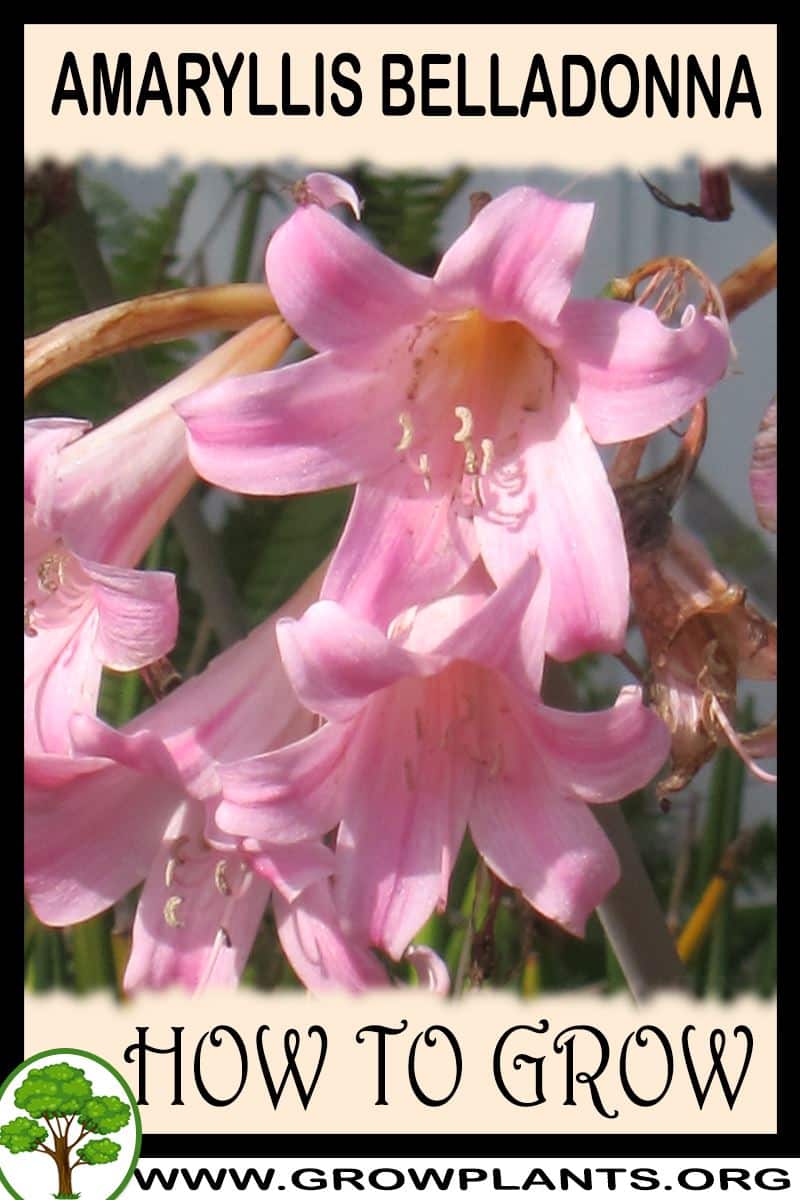
Overview: Amaryllis belladonna (belladonna lily / Jersey lily) is a deciduous perennial bulb reaching 20-60 cm (8-24 in). It is grown as an ornamental and fragrant cut flower, with pink trumpet-shaped blooms appearing on bare stems.
Quick Specifications
| Specification | Attribute |
|---|---|
| Plant Type / Life Cycle | Perennial (bulbous geophyte) |
| Foliage Type | Deciduous |
| Mature Size | 20-60 cm (8-24 in) tall |
| Growth Rate | Moderate to slow (especially when young) |
| Root System | Bulb (geophyte) |
| Toxicity | Toxic – all parts, especially the bulb, contain lycorine alkaloids |
| Hardiness | USDA zone 7-11a (11b with care) |
Growth Form & Structure
- Height & Spread: 20-60 cm (8-24 in) tall in the ground; one bulb grows well in a 1-2.5 litre (0.2-0.5 gal) pot
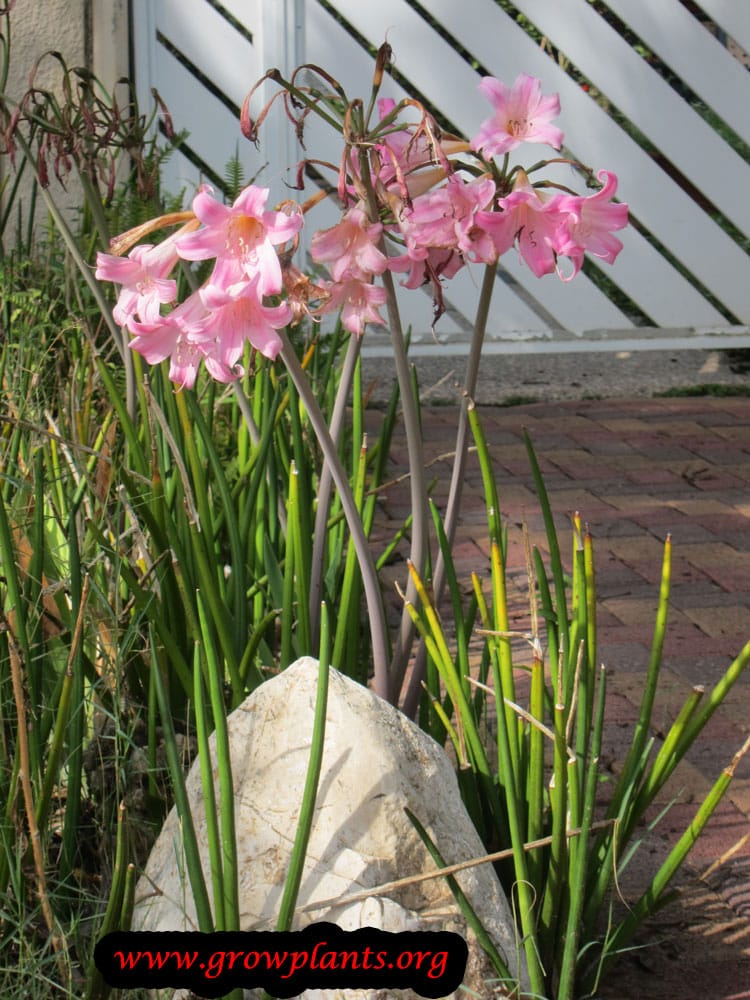
- Growth Habit & Form: Clumping bulb that sends up leafless flower stems, with strap-like leaves appearing separately
- Lifespan & Maturity: Long-lived bulb; seed-grown plants take several years to reach flowering size
Anatomy & Physical Features
- Leaves & Foliage: Green, linear, strap-like leaves growing in a connected group, appearing after flowering
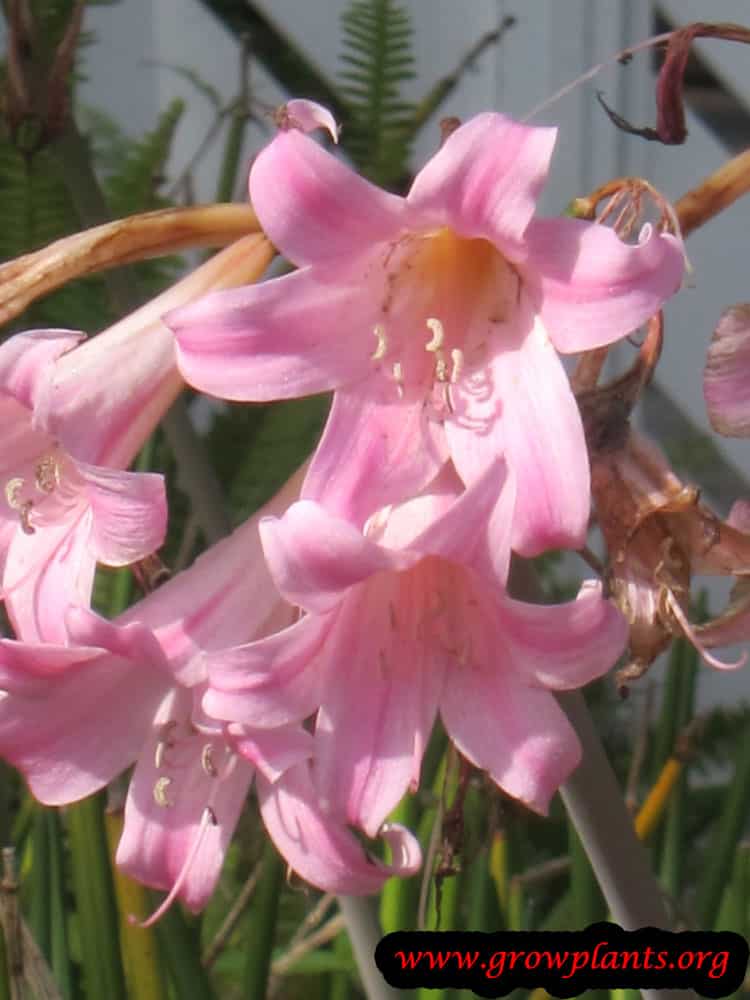
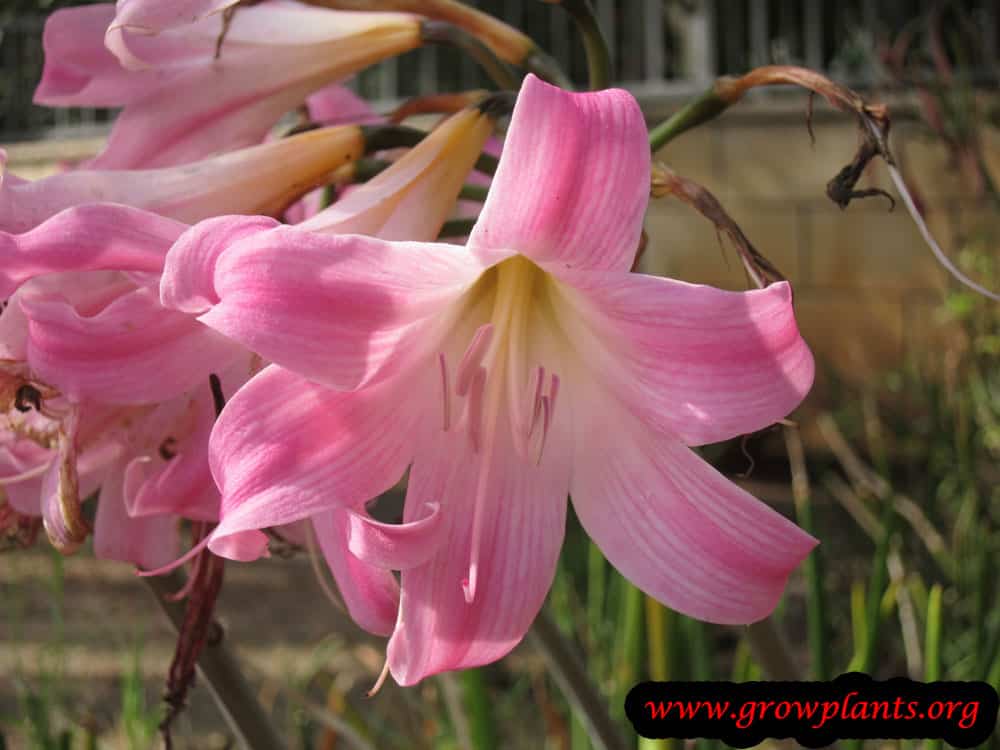
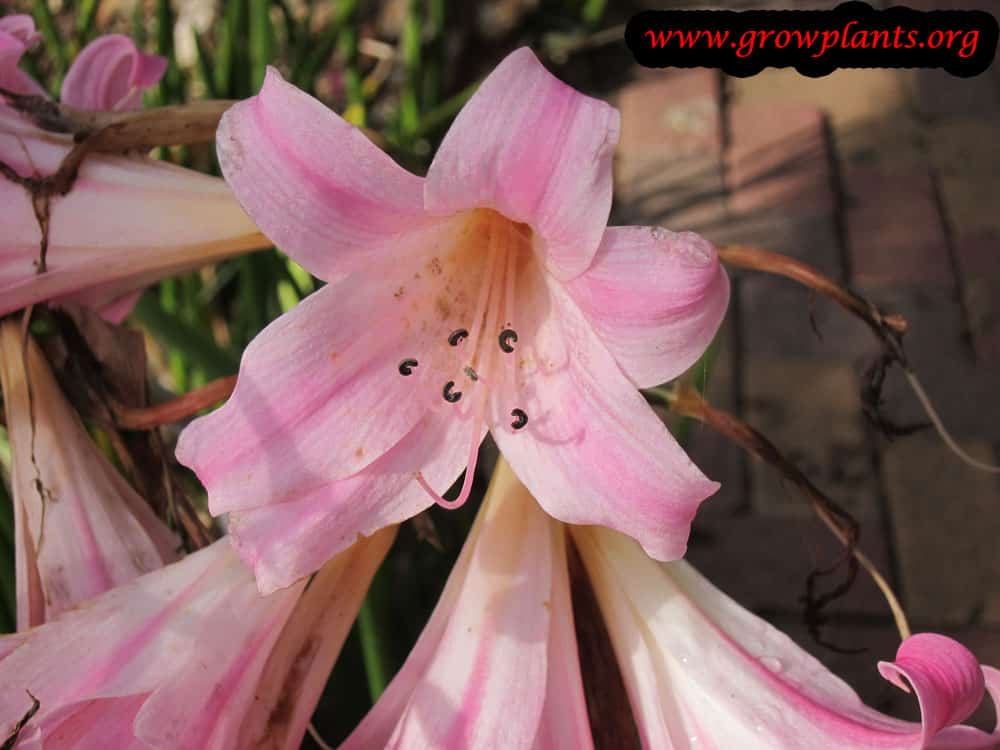
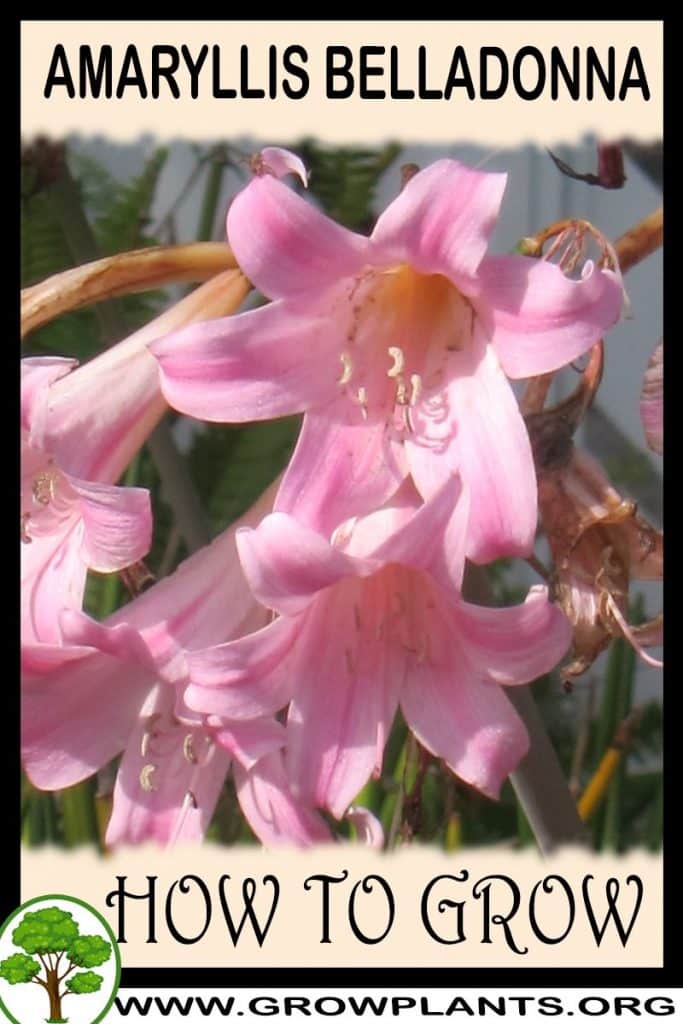
- Flower Characteristics: Fragrant, trumpet-shaped blooms in pink and white, some darker or lighter (see the Bloom guide)
Primary Uses & Landscape Value
- Functional & Ornamental Roles: Ornamental flowering bulb for borders and containers, and a fragrant cut flower
Care Guide: Planting, Soil & Watering
Overview: Amaryllis belladonna (belladonna lily) is a summer-dormant bulb that grows in full sun to light shade in mild, largely frost-free climates (hardiness zone 7-11a). It needs free-draining soil enriched with organic matter, generous moisture while in active growth and bloom, and a dry rest once the foliage dies back.
Quick Care Requirements
| Requirement | Ideal Condition |
|---|---|
| Planting Season | In late summer to autumn, as the bulb comes into its growth cycle |
| Growth Rate | Slow to Moderate, especially while young |
| Soil Type | Well-draining soil enriched with humus and organic matter |
| Water Need | Moderate to High during growth and flowering, then dry during summer dormancy |
Planting & Establishment
- Best Planting Season: Plant bulbs at the start of their season, in late summer to autumn (timing follows the local bloom period).
- How to Plant:
- Hole Preparation: Dig a hole several times wider than the bulb so roots have loose soil to spread into.
- Soil Amendments: Mix humus and organic matter through the planting soil, and top with a little mulch to hold moisture.
- Planting Depth: Set the bulb shallowly, with its top only about 2 cm below the surface (in mild areas the neck can sit at soil level).
- Growth Speed & Expectations: A slow-to-moderate grower, particularly in its early years; clumps build up over time to give flushes of fragrant, trumpet-shaped flowers.
Soil, Watering & Drainage Care
- Soil Mix & Drainage Needs: Sharp drainage matters, as the bulb rots in cold, wet soil. In containers use a free-draining potting mix; a single bulb is happy in a snug 1-2.5 L pot.
- Watering Schedule & Technique:
- Young / Newly Planted: Water to keep the soil lightly moist as roots and leaves develop.
- Established: Water generously while the plant is in leaf and flower, letting the surface dry a little between waterings.
- Seasonal Adjustments: Withhold water during summer dormancy once the leaves die back, resuming as new growth appears.
Climate, Light & Hardiness
Amaryllis belladonna (Belladonna Lily) is a Mediterranean-climate bulb suited to subtropical, Mediterranean, or temperate gardens with full sun to half shade, and it depends on a natural seasonal rhythm of dry summer dormancy followed by cool, moist autumn/winter growth rather than year-round warmth. At USDA hardiness zone 7–11a (11b achievable with careful siting), it is hardier than many bulbs sold as “amaryllis” and is generally better left outdoors through winter rather than kept warm indoors, since exposure to the natural cold season supports its bloom cycle.
Quick Climate Specifications
| Climate Zones | Subtropical, Mediterranean, or temperate |
|---|---|
| USDA Hardiness Zones | 7–11a (11b with favorable siting) |
| Optimal Temp Range | approximately 15–25°C (60–77°F) during active growth and flowering |
| Cold Damage Begins | Foliage (produced after flowering) can be damaged by hard freezes, roughly below −2 to 0°C (28–32°F); the flower stalk itself is more cold-tender than the dormant bulb. |
| Approx. Survival Minimum | The bulb, planted with its neck at or slightly below soil level, generally survives through the stated zone range; colder than that, it needs a very sheltered site, a deep mulch, or container culture with winter protection. |
| Frost Tolerance | Moderate |
| Light Conditions | Full Sun / Half Shade |
| Wind Tolerance | Moderate |
| Salt / Coastal Tolerance | Moderate |
Sunlight & Light Exposure
Optimal Light Setup
Full sun gives the strongest flowering, though the bulb also tolerates half shade, especially in hot climates.
Direct Sun Requirement
Beneficial rather than strictly essential - full sun before and during the bloom period produces the most flower stalks; site data notes that when grown in a container, exposing it to sun before flowering is important even if it is later moved into shade.
Shade & Heat Management
In hot-summer climates, afternoon shade during the dry dormant season can reduce bulb stress, though it is not required.
Best Exposure / Orientation
A south- or west-facing bed with sharp drainage suits this Mediterranean-climate bulb well.
Temperature Extremes & Hardiness
USDA Hardiness & Regional Limits
Reliable outdoors year-round within zone 7–11a, extending to 11b with a favorable microclimate; it is not a true tropical houseplant subject, and site data specifically advises keeping the bulb outdoors through cold winter weather rather than bringing it into constant warmth.
Cold Damage & Winter Protection
A dry mulch layer over the dormant bulb protects it through the coldest part of its range; wet, cold, poorly drained soil is more damaging to the bulb than cold air temperature alone.
Frost Sensitivity
The bare flower stalks that emerge in late summer/autumn are more frost-sensitive than the dormant bulb or the strap-like leaves that follow later.
Extreme Heat Tolerance
Good; this bulb is adapted to hot, dry Mediterranean-type summers as part of its natural dormancy period.
Wind, Humidity & Microclimate
Humidity Preferences
Average; it does not require the elevated humidity that tropical or fern-type plants need.
Dry-Air Tolerance
Good; a dry atmosphere during summer dormancy is part of its natural climate adaptation.
Wind Tolerance
Moderate; established clumps in open ground tolerate typical garden wind reasonably well.
Coastal / Salt Tolerance
Moderate; it is commonly grown in Mediterranean and mild coastal gardens, though direct salt spray on foliage should still be avoided.
Rainfall & Seasonal Moisture
Needs a distinct dry summer rest and a cooler, moister autumn-to-winter growth period - a climate with reversed or blurred seasonal rainfall (wet summers) is less suitable and increases the risk of bulb rot.
Microclimate Recommendations
A warm, sunny, sharply drained bed that stays dry in summer and only moderately moist in winter reproduces its native Mediterranean-climate rhythm most closely.
Growing in Pots, Balconies & Indoors
The grower is clear that Amaryllis belladonna is not a classic houseplant: it needs real sun to build its flowers. His method is seasonal – give the bulb full sun on a bright sill before bloom, bring it indoors while it flowers, then withhold water as it goes dormant. It is otherwise a fine container and balcony bulb.
Quick Details
- Container Size: About 1 L (0.2 gal) per bulb, and better 2.5 L (0.5 gal) (grower)
- Indoor Suitability: Not a full-time houseplant – only indoors briefly to enjoy the flowers, after sun on a windowsill
- Best Spot: Full sun to half shade; a bright, sunny windowsill before flowering
- Soil & Drainage: Well-drained mix – a potting mix or similar (grower)
- Watering in Pots: Average to generous while growing; keep dry through dormancy
Indoors & On the Windowsill
- Not a classic houseplant: The grower notes it will not build flowers in a shady room. Grow it in strong light and only move it inside for display.
- Windowsill method (grower): Expose the bulb to sun on the sill before bloom; once it is flowering you can bring it indoors, then stop watering as it enters dormancy.
- Safety: The bulbs are poisonous if eaten – keep them and any offsets away from children and pets.
On a Balcony or Patio
- Light & warmth: A sunny, sheltered balcony or patio is ideal; the bulbs love a warm, bright spot to flower well.
- Moisture: Water freely in growth but let pots dry as the leaves fade – waterlogged dormant bulbs rot.
Choosing the Pot, Soil & Long-Term Care
- Pot & drainage: The grower fits one bulb to roughly 1 L, better 2.5 L. Use a pot with strong drainage holes and skip a standing-water saucer to avoid root rot. Terracotta breathes and dries out faster, while glazed or plastic holds moisture longer.
- Potting mix: A free-draining potting mix or similar, as the grower advises.
- Keeping it flowering for years: Every few years the grower checks the mix is still healthy – washing off old soil and renewing it if needed – and makes sure the bulbs have not completely filled the pot; if crowded, thin the bulbs or move up to a larger container, or flowering suffers.
- Feeding: Potted plants need feeding a little more often than those in open ground, as regular watering leaches nutrients from the mix.
Fertilizing & Feeding
A moderate feeder in its own cycle: a balanced feeding as flower stems emerge, followed by a nitrogen-leaning feeding while the strap-like leaves grow afterward, rebuilds the bulb for next year’s bloom.
Quick Fertilizing Specs
| Feeding Level | Moderate feeder, tied to its bloom-then-leaf cycle |
|---|---|
| Main Nutrient Priority | Balanced feeding at bloom, then nitrogen-leaning feeding while leaves grow to rebuild the bulb |
| Best Feeding Period | As flower stems emerge, then again through the leaf-growth period that follows bloom |
| Organic Options | Chopped mulch and organic matter worked into well-drained soil |
| Reduce/Stop Feeding | Stop feeding once the bulb goes dormant |
| Micronutrients | Usually met by a complete fertilizer and organic matter; correct only diagnosed deficiencies |
| Soil pH | Tolerates a wide range in well-drained soil |
Feeding by Growth Stage
Flower-stem emergence and bloom
Support the leafless flower stems (‘naked lady’ bloom habit) as they emerge and open.
| Nutrient direction | A balanced complete fertilizer supports strong flower stems and blooms. |
|---|---|
| Timing | As the bare flower stems emerge from the bulb, ahead of the leaves. |
| Frequency | A light feeding as the bloom stems emerge is enough. |
| Fertilizer types | A balanced complete fertilizer, Chopped mulch worked lightly into the soil surface |
| Precautions | Avoid heavy feeding directly on the bulb neck; work fertilizer into the surrounding soil instead. |
Post-bloom leaf growth
Fuel the strap-like leaves that follow flowering so the bulb rebuilds its reserves for next year’s bloom.
| Nutrient direction | A nitrogen-leaning complete fertilizer supports the leaf growth that recharges the bulb. |
|---|---|
| Timing | After flowering, once the strap-like leaves begin to grow. |
| Frequency | A few light feedings through the leaf-growth period are usually enough. |
| Fertilizer types | A nitrogen-leaning complete fertilizer, Humus and organic matter worked into the soil |
| Precautions | Keep feeding moderate; overfeeding can encourage soft leaf growth prone to disease. |
Dormant rest
Let the bulb rest undisturbed once the leaves die back, storing energy for the next bloom cycle.
| Nutrient direction | None – withhold fertilizer while the bulb is dormant. |
|---|---|
| Timing | Once the leaves yellow and die back and the bulb enters its resting period. |
| Frequency | No feeding during dormancy. |
| Fertilizer types | No feeding at this stage; do not fertilize a dormant bulb. |
| Precautions | Do not fertilize while the bulb is dormant and dry; resume only as new growth resumes the cycle. |
Nutrient Deficiency Signs & Corrections
Post-bloom leaves emerge pale green or yellowish and grow weakly.
| Possible causes | low available soil nitrogen during the leaf-growth period, nitrogen leaching from watering, an undersized or exhausted bulb from a previous poor season |
|---|---|
| Appears first on | the newly emerging strap-like leaves |
| What to check | recent feeding history after bloom, bulb size and vigor, soil organic matter |
| Possible correction | Feed with a nitrogen-leaning complete fertilizer through the post-bloom leaf-growth period and work in organic matter. |
New leaves emerge pale yellow while the veins stay green.
| Possible causes | high soil pH limiting iron availability, waterlogged or poorly drained soil restricting root uptake, naturally low soil iron |
|---|---|
| Appears first on | newest leaves |
| What to check | soil pH, drainage around the bulb, recent watering pattern |
| Possible correction | Correct soil pH, improve drainage around the bulb, and apply a chelated iron product per its label if chlorosis persists. |
Leaf tips brown or scorch, and flower stems can weaken, despite adequate watering.
| Possible causes | fertilizer salt buildup around the bulb, especially in containers, underwatering that concentrates salts, feeding too heavily or too often for a bulb of this size |
|---|---|
| Appears first on | leaf tips and margins |
| What to check | recent feeding amounts, watering consistency, container or bed drainage |
| Possible correction | Ease off feeding and flush the soil thoroughly with plain water, then return to lighter feeding. |
Pruning, Training & Seasonal Maintenance
Amaryllis belladonna is a bulb that sends up a bare flower stalk before its strap-shaped leaves appear, so its ‘pruning’ is really about two separate cuts: removing the spent flower stalk after bloom, and cutting the foliage only once it has fully died back at the end of its growing cycle, which the source places in summer. Cutting green leaves early is the main risk to avoid, since those leaves are what recharge the bulb for next season’s bloom. Pruning does not shape structure – there is none on a bulb – but its timing directly affects whether the bulb reflowers well.
Quick Pruning & Maintenance Specs
| Pruning Tolerance | Low – two targeted cuts per cycle, not ongoing grooming |
| Primary Pruning Window | Summer, once foliage has fully yellowed/died back |
| Secondary Maintenance Window | After flowering fades, to remove the spent flower stalk |
| Typical Frequency | Twice per annual cycle |
| Main Objective | Remove spent flower stalks and fully dead foliage only |
| Young Plant Priority | Do not prune newly planted bulbs; let the first foliage cycle complete undisturbed |
| Mature Plant Priority | Remove the spent flower stalk after bloom; cut foliage only once fully dead |
| Best Tool Type | Precision snips |
| Avoid Heavy Pruning During | While leaves are green and actively growing |
Pruning by Plant Age & Size
Newly Established
Leave the newly planted bulb’s first flush of foliage completely untouched – it is building the bulb’s reserves and cutting it back early weakens future flowering.
Young / Formative
No structural training applies to a bulb; there is no framework to shape, only the annual bloom-then-leaf cycle to manage.
Mature / Established
Once flowering is established, remove the spent flower stalk near its base after the blooms fade, and cut the strap leaves only once they have yellowed and died back naturally, which this species does by summer.
Seasonal Pruning Schedule
Post-Flowering
Objective: tidy the plant after its leafless bloom stalk fades. What to remove: the spent flower stalk, cut near ground level once flowering is fully finished. What not to remove: any foliage – the strap leaves typically follow the flowers and are only just emerging or yet to emerge at this point. Flowering impact: none, since the stalk is already spent; removing it simply prevents the plant putting energy into seed production.
Dormant/Summer Die-Back
Objective: clear the bulb for its dormant summer rest, matching the source’s ‘Summer’ pruning season. What to remove: foliage only after it has fully yellowed and died back on its own. What not to remove: green or partially green leaves – cutting them early reduces the energy stored for next season’s flower stalk. Expected response: bulb enters dormancy cleanly; flowering impact is significant if leaves are cut too early, since next year’s bloom depends on this foliage completing its cycle.
Special Growth to Remove
- Spent flowering stems, cut near the base once blooms have fully faded.
- Fully dead, yellowed-through leaves at the end of the foliage cycle – never green leaves.
Container & Small-Space Pruning
Grown in a pot (roughly 1–2.5 L per bulb per the source), the same two-cut approach applies; the main container-specific check is watching the root system so it is not left to completely fill and overcrowd the pot for too many years, which affects flowering more than pruning does.
Tools
- precision_snips – for both the flower-stalk cut and the end-of-season leaf cut; all cuts are through soft, non-woody tissue.
Tool Hygiene & Disease Risk
Routine – clean, sharp snips are sufficient; the species’ noted pest risks (bulb mites, bulb flies, nematodes, borers) are soil/bulb-based, not spread by pruning cuts.
Cut Placement & Technique
Cut the flower stalk close to its base once blooms have fully faded; cut dead leaves at soil level only after they have fully yellowed, rather than pulling them, which can disturb the bulb.
Heavy Pruning & Rejuvenation
Not applicable: as a bulb, this plant has no woody growth to cut back hard. Its vigor for next season comes from letting foliage complete its natural die-back, not from any pruning technique.
Post-Pruning Care
After removing the spent flower stalk, no extra care is needed. After the end-of-season leaf removal, reduce watering to match the bulb’s dormant summer rest rather than continuing to water as during active growth; do not fertilize at this point since the plant is entering dormancy, not regrowth.
Common Pruning Mistakes
- Cutting the strap leaves back while still green to ‘tidy up’ after flowering, which reduces the bulb’s reserves and next year’s bloom.
- Removing the flower stalk before blooms have fully finished.
When NOT to Prune
Never cut foliage while it is still green and actively photosynthesizing, and avoid disturbing the bulb or its leaves during the leafless flowering period in late summer to autumn.
Recommended Tools (by task)
- precision_snips – for both the post-bloom flower-stalk cut and the end-of-season foliage cut on this soft-tissue bulb.
Propagation Guide
Amaryllis belladonna is a true bulbous plant.
Quick Propagation Specs
| Preferred Method | Bulb offsets / bulb division; seed possible |
| Relevant Structure | Bulb offsets |
Divide while the plant is dormant, separating only bulbs older than one year.
Vegetative Propagation
Use only healthy plant material that naturally carries the appropriate propagation structure for this plant. Separate or prepare propagules carefully and establish them in a clean, free-draining growing medium.
Growing from Seed
Where seed is an appropriate secondary method, use mature viable seed.
Aftercare
Protect newly propagated plants from severe drought and waterlogging until roots and shoots are established.
Bloom & Flower Guide
Quick Details
- Bloom Season: Late summer into autumn (spring to summer in some climates)
- Time to First Bloom: Bulbs often take a season or two to settle before flowering well; established clumps bloom best when left undisturbed
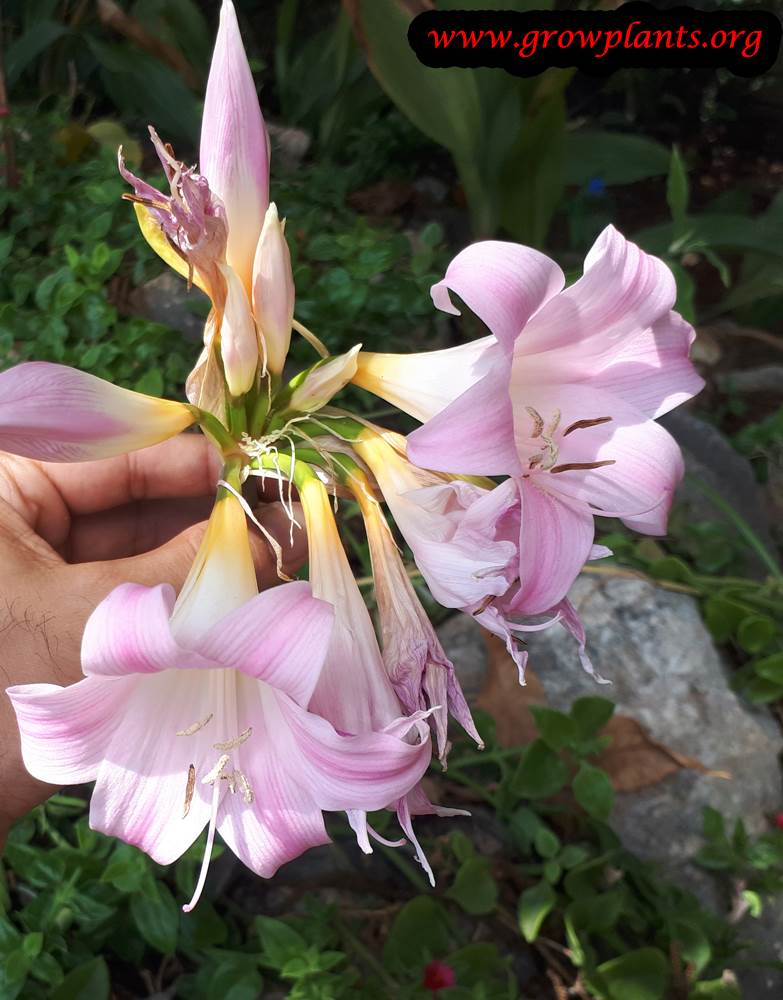
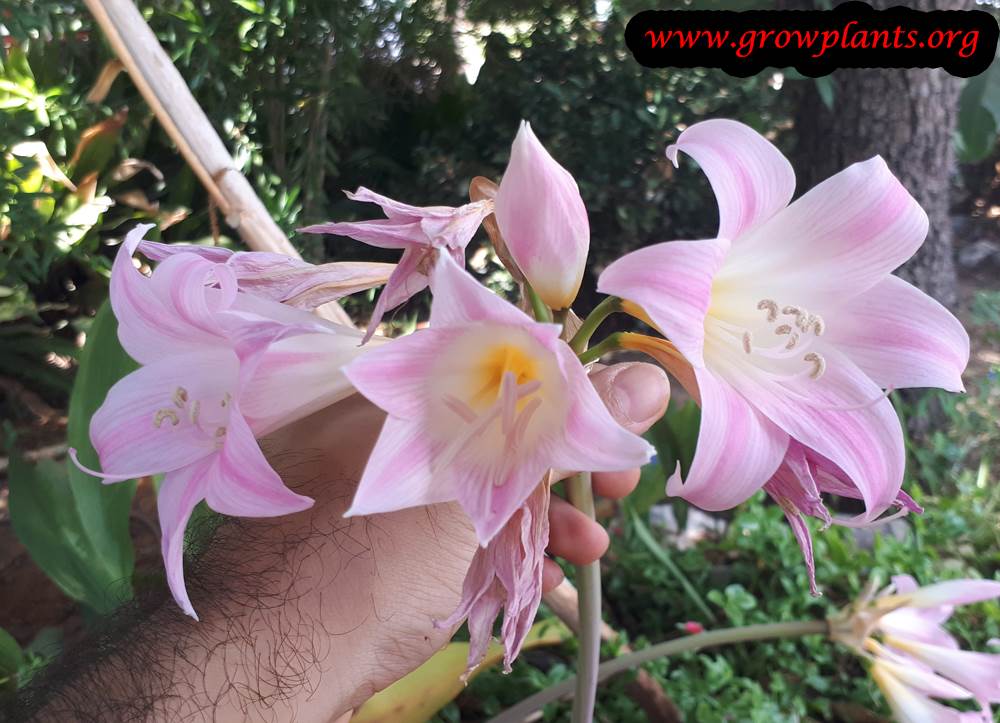
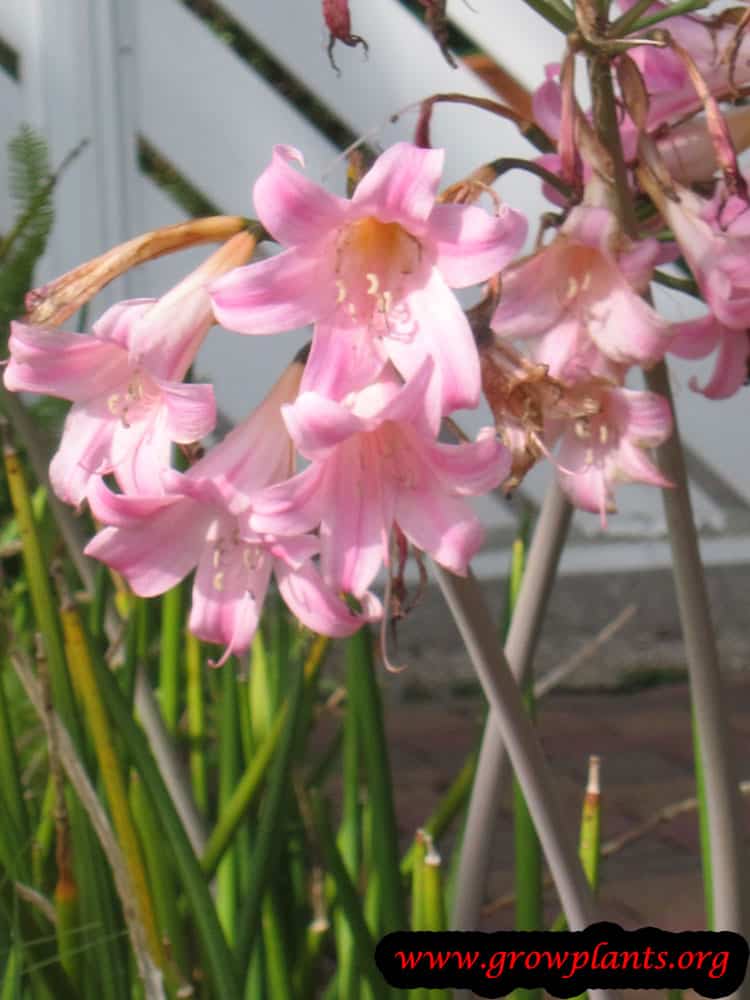
- Flower Appearance: Fragrant, trumpet-shaped flowers in pink and white, several to a bare stem
- Edibility: Not edible – the bulb and all parts are toxic (lycorine alkaloids); grown as a fragrant ornamental only
Detailed Blooming Overview
The belladonna lily has a charming habit: after the leaves have died back for summer, it sends up bare stalks topped with clusters of fragrant, trumpet-shaped pink-and-white flowers – earning it the nickname “naked lady.” Some bloom darker, some paler, in a lovely blend of tones. It flowers best when the bulbs are left undisturbed to form clumps. All parts are toxic if eaten, so enjoy the scent but keep it away from children and pets.
Flower Characteristics
- Fragrant, trumpet-shaped flowers in pink and white, some darker or paler.
- Several flowers per bare stem, appearing before or without the leaves.
- Excellent as a cut flower for their scent and form.
Bloom Care & Thinning
- Encouraging bloom: Leave the bulbs undisturbed and let the foliage die back naturally to fuel next year’s flowers.
- Deadheading: Remove spent flowers, but leave the stalk until it yellows.
- Safety: The bulbs are especially toxic; handle after planting with clean hands and keep out of reach.
Pests, Diseases & Troubleshooting
Overview: Amaryllis belladonna (the true belladonna lily) is a bulbous Amaryllidaceae grown for its late-summer pink trumpets on bare stems. Its main enemies are bulb-borne pests – narcissus bulb fly, bulb mites, mealybugs and thrips – and, above all, the disfiguring fungal disease red blotch (leaf scorch), plus Botrytis and bulb rots in wet ground. Healthy, well-drained planting and clean bulb selection are the foundation of control.
Quick Troubleshooting Overview
| Issue / Pest | Main Symptom | Primary Solution |
|---|---|---|
| Narcissus bulb fly | Soft, hollowed bulbs; failure to sprout | Inspect/discard soft bulbs, disrupt egg-laying |
| Bulb mites | Rotting bulb scales, poor growth | Plant sound bulbs, dry storage, discard infested |
| Mealybugs | White tufts on bulb neck and leaf bases | Alcohol swab, horticultural oil, clean storage |
| Thrips / red spider mite | Silvery streaking; stippling on leaves | Sticky traps, predators, insecticidal soap/oil |
| Red blotch (leaf scorch) | Red scorch marks on leaves, stalks, bulb | Remove infected tissue, dry conditions, fungicide |
| Bulb rot | Soft, foul bulbs in wet soil | Improve drainage, cure bulbs, avoid overwatering |
Common Pests & Management
- Narcissus bulb fly (Merodon equestris):
- Symptoms: A bee-like fly whose single fat maggot burrows into the bulb, hollowing and rotting it; bulbs fail to sprout or produce weak, distorted, grassy foliage.
- Prevention & Control: Inspect bulbs and discard any that are soft or light; firm soil around necks and cover foliage as it dies down to deter egg-laying, and remove and destroy infested bulbs.
- Bulb mites (Rhizoglyphus spp.):
- Symptoms: Tiny pearly mites that infest already-damaged or rotting bulb scales, spreading decay and weakening growth.
- Prevention & Control: Plant only firm, sound bulbs, store cool and dry, avoid wounding at lifting, and discard soft or infested bulbs rather than replanting them.
- Mealybugs (Pseudococcus spp.):
- Symptoms: White cottony waxy masses at the bulb neck, leaf bases and among stored bulbs, with honeydew and weakened growth.
- Prevention & Control: Dab with an alcohol swab, clean bulbs before storage, keep storage dry and airy, and treat with horticultural oil where accessible.
- Thrips (Thrips / Frankliniella spp.):
- Symptoms: Silvery streaking and pale flecking on leaves and flowers with distorted buds; slender insects that hide in leaf sheaths.
- Prevention & Control: Monitor with blue sticky traps, remove weeds, introduce predatory mites, and use insecticidal soap or spinosad in the evening for heavy pressure.
- Red spider mite (Tetranychus urticae):
- Symptoms: Fine stippling and bronzing of leaves with faint webbing in hot, dry conditions.
- Prevention & Control: Raise humidity, hose foliage, release predatory mites, and apply horticultural oil or insecticidal soap.
- Slugs & snails (Deroceras / Helix spp.):
- Symptoms: Ragged holes in leaves and flower stalks with slime trails, worst in damp, shaded sites.
- Prevention & Control: Hand-pick at night, clear hiding places, and use iron-phosphate bait and copper barriers.
Diseases & Fungal Issues
- Red blotch / leaf scorch (Stagonospora curtisii):
- Symptoms: Bright red spots, streaks and scorch-like blotches on emerging leaves, flower stalks and outer bulb scales; badly affected leaves bend and distort – the signature disease of Amaryllis and Hippeastrum.
- Treatment & Management: Start with clean, unblemished bulbs, cut away red-marked tissue, keep foliage dry with base watering and good airflow, and treat persistent cases with a labelled fungicide; remove and destroy heavily infected leaves.
- Grey mould (Botrytis) (Botrytis cinerea):
- Symptoms: Fuzzy grey rot and water-soaked collapse of flowers and leaves in cool, damp, still conditions.
- Treatment & Management: Improve airflow, remove spent flowers and dead leaves, avoid wetting foliage, and use a fungicide only under heavy pressure.
- Bulb rot (Fusarium / Sclerotinia / Pythium spp.):
- Symptoms: Soft, discoloured, foul-smelling bulbs that fail to grow, in waterlogged or poorly drained soil.
- Treatment & Management: Plant in free-draining soil with the neck at or above the surface, avoid overwatering, cure and inspect bulbs, and discard any that are soft.
- Mosaic virus (Hippeastrum mosaic virus / others):
- Symptoms: Yellow streaking and mottling of leaves, reduced vigour and poor flowering; spread by aphids and not curable.
- Treatment & Management: Buy virus-free stock, control aphids, disinfect tools, and rogue out and destroy infected plants.
Growing Difficulties & Abiotic Problems
- Failure to flower:
- Cause & Symptoms: Deep shade, overcrowding, premature foliage removal or too-frequent lifting stop the bulb building flower buds.
- Correction Strategy: Grow in full sun to light shade, leave foliage to die down naturally to recharge the bulb, plant with the neck high, and divide only when congested.
- Bulb rot from overwatering:
- Cause & Symptoms: Wet, heavy soil during the summer dormancy rots the bulb.
- Correction Strategy: Provide a warm, dry rest after flowering, plant in sharp-draining soil or raised beds, and keep water off dormant bulbs.
- Frost damage:
- Cause & Symptoms: Foliage and exposed bulb necks are damaged by hard frost.
- Correction Strategy: Mulch in cold areas, plant against a warm wall, and grow in containers to move under cover where winters are severe.
- Leaf scorch / sunburn:
- Cause & Symptoms: Sudden strong sun on soft new leaves after shade causes pale scorched patches (distinct from fungal red blotch).
- Correction Strategy: Acclimatise plants gradually to full sun and keep them evenly watered during establishment.
What Helps – Products & Tools
Rely first on clean bulbs, good drainage and sanitation. Useful products are insecticidal soap and horticultural/neem oil for mealybugs, thrips and mites; blue sticky traps for thrips; iron-phosphate bait for slugs; and, for red blotch or Botrytis, a labelled fungicide alongside strict removal of infected tissue. There is no cure for virus, so prevention and roguing are key. Spray oils in the evening to protect pollinators and follow the label.
Frequently Asked Questions
How and when should I plant Amaryllis belladonna bulbs?
Plant Amaryllis belladonna bulbs in late summer to autumn, timed to the start of their growth cycle. Dig a hole several times wider than the bulb, work humus and organic matter into the soil, and set the bulb shallowly with its top only about 2 cm below the surface (in mild climates the neck can sit right at soil level).
How do I care for Amaryllis belladonna?
Give it full sun to light shade in a mild, largely frost-free spot (USDA zone 7-11a) with free-draining soil enriched with organic matter. Water generously while it is in active growth and flower, then withhold water once the leaves die back so the bulb can rest through its dry summer dormancy.
Why isn’t my Amaryllis belladonna flowering?
Poor flowering is usually caused by deep shade, overcrowding, premature removal of foliage, or lifting the bulbs too often, all of which stop the bulb from building flower buds. Grow it in full sun to light shade, let the foliage die back naturally, plant with the neck high, and only divide clumps once they’re congested.
Is Amaryllis belladonna toxic to pets or children?
Yes – all parts of the plant, especially the bulb, contain lycorine alkaloids and are toxic if eaten. Enjoy its fragrance, but keep the bulbs and plant away from children and pets.
When and how should I prune Amaryllis belladonna?
Pruning is really just two cuts a year: remove the spent flower stalk near its base once blooms have fully faded, and cut back the strap-like foliage only after it has fully yellowed and died down in summer. Never cut green leaves early, since they recharge the bulb for next year’s bloom.