


Plant Profile & Key Characteristics
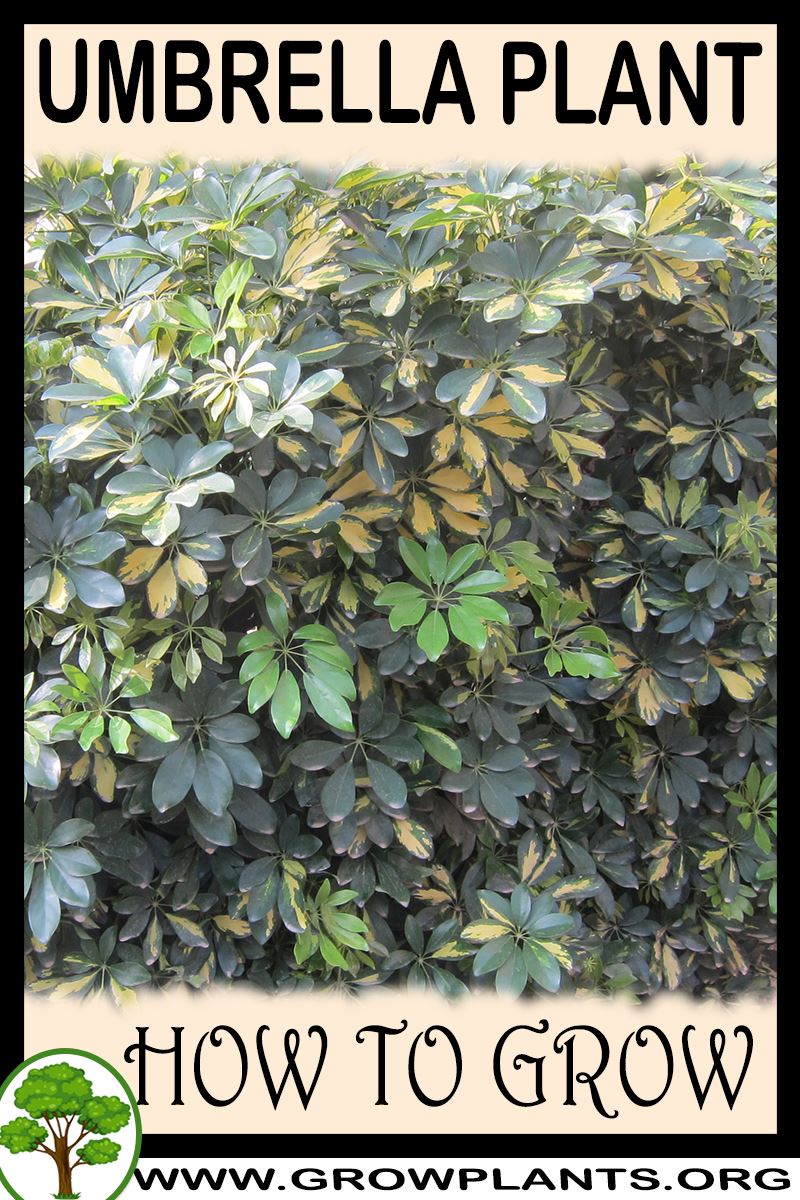
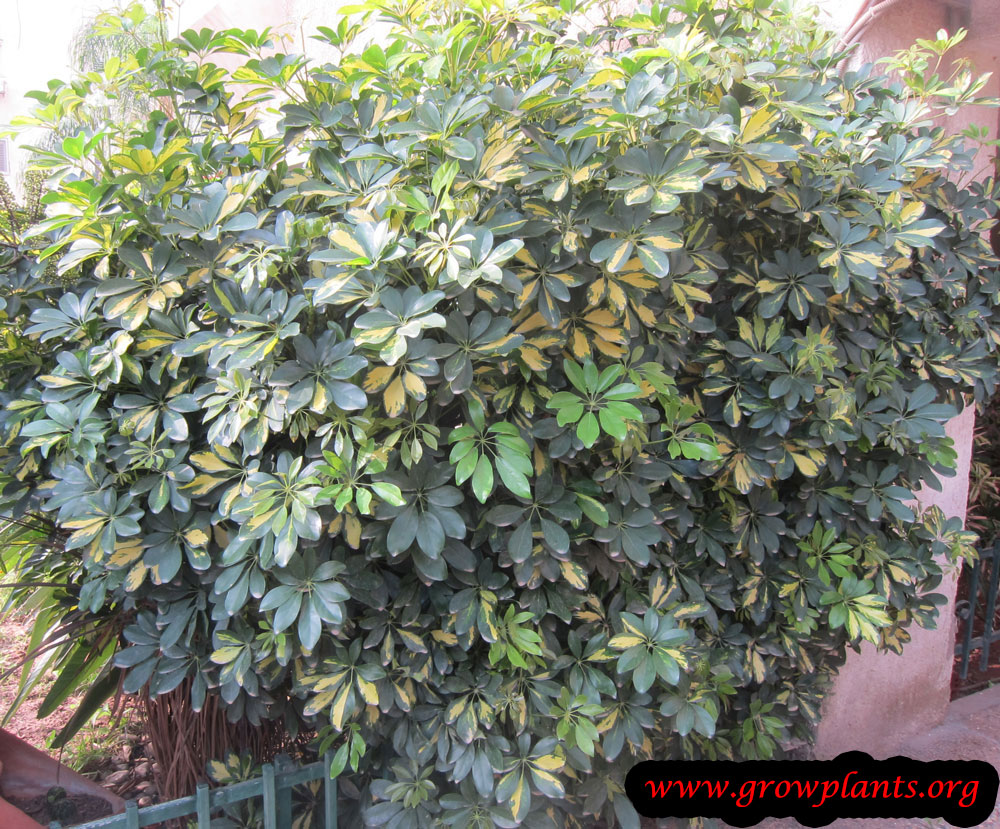
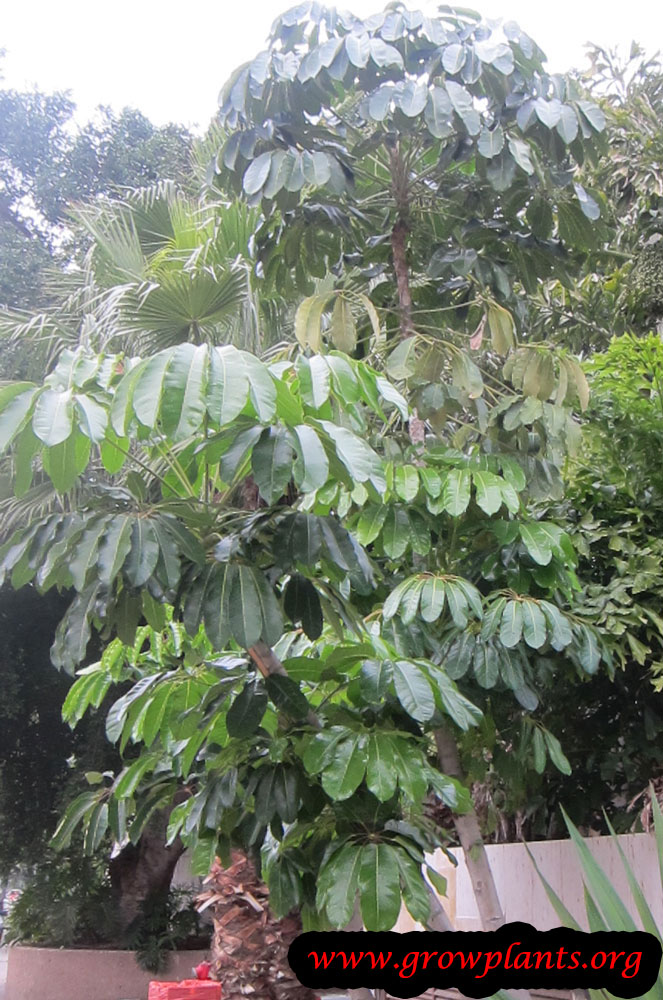
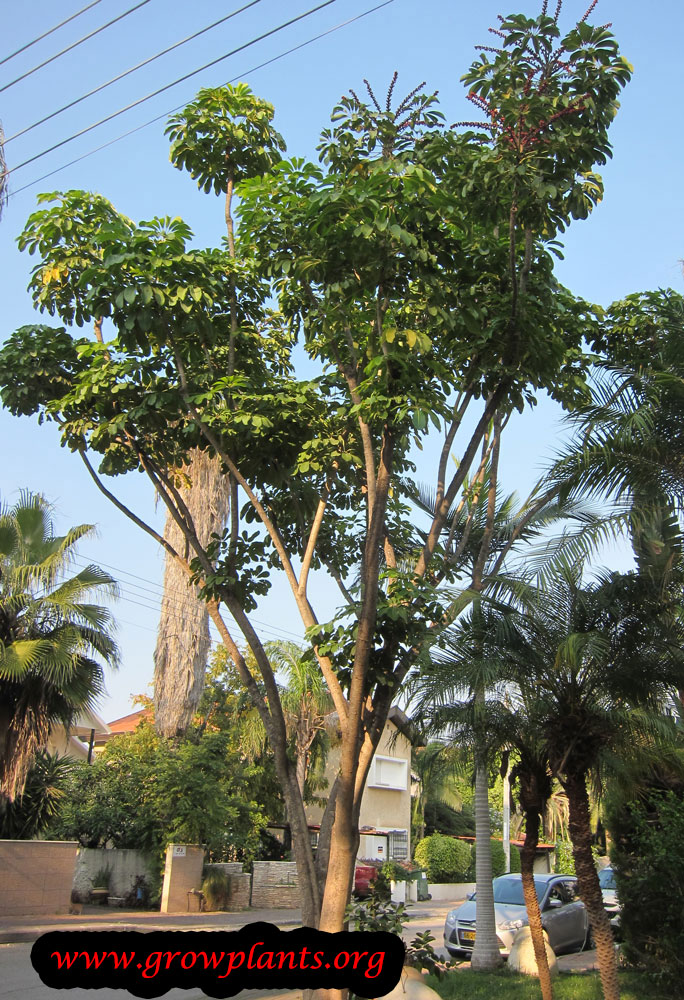
Overview: The umbrella plant (Schefflera actinophylla) is an evergreen shrub to large tree, 1-20 m (3-60 ft), with glossy leaflets radiating like the ribs of an umbrella. Fast- to moderate-growing, it serves as an ornamental hedge or specimen outdoors in warm climates and as a houseplant elsewhere (hardiness zone 9+).
Quick Specifications
| Specification | Attribute |
|---|---|
| Plant Type / Life Cycle | Perennial (evergreen shrub to tree) |
| Foliage Type | Evergreen |
| Mature Size | 1-20 m tall (3-60 ft) outdoors; kept small as a houseplant |
| Growth Rate | Fast to moderate |
| Toxicity | Toxic to pets if ingested (calcium oxalate crystals, family Araliaceae) |
| Hardiness | USDA zone 9+ |
Growth Form & Structure
- Height & Spread: Reaches 1-20 m (3-60 ft) in the ground; kept much smaller in a container and grown indoors as a houseplant.
- Growth Habit & Form: Fast, upright shrub to large tree with palmate leaves of roughly 8-16 leaflets forming an umbrella-like whorl; can be invasive and aggressive-rooted in frost-free regions.
Anatomy & Physical Features
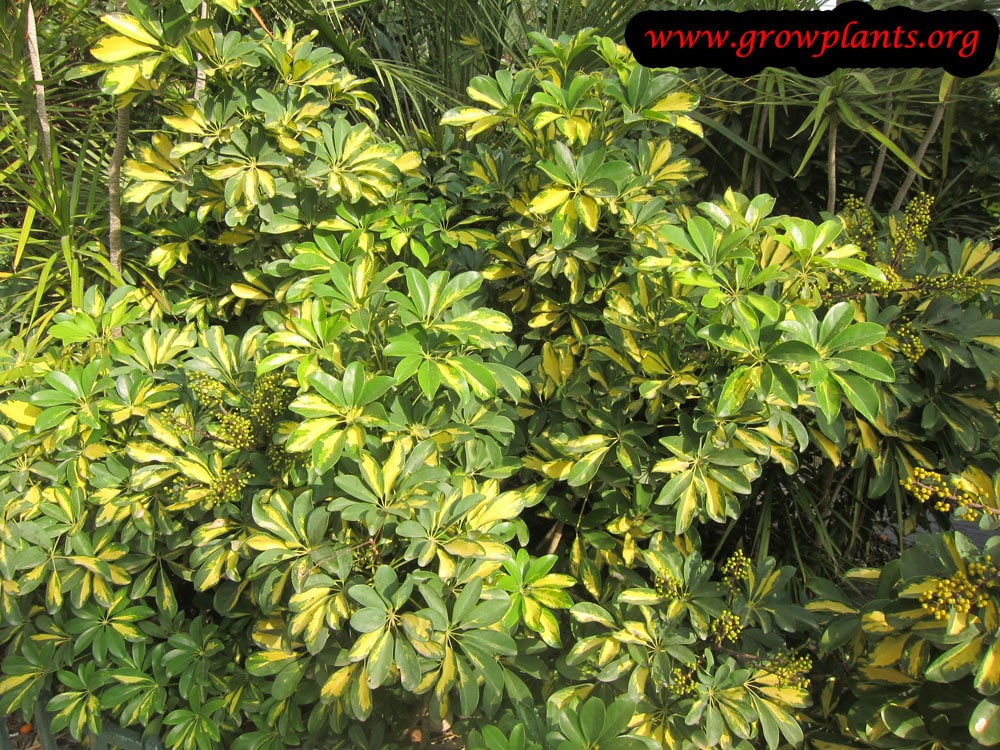
- Leaves & Foliage: Glossy green (some cultivars variegated green and yellow) oval leaflets joined at the base into an umbrella-shaped whorl.
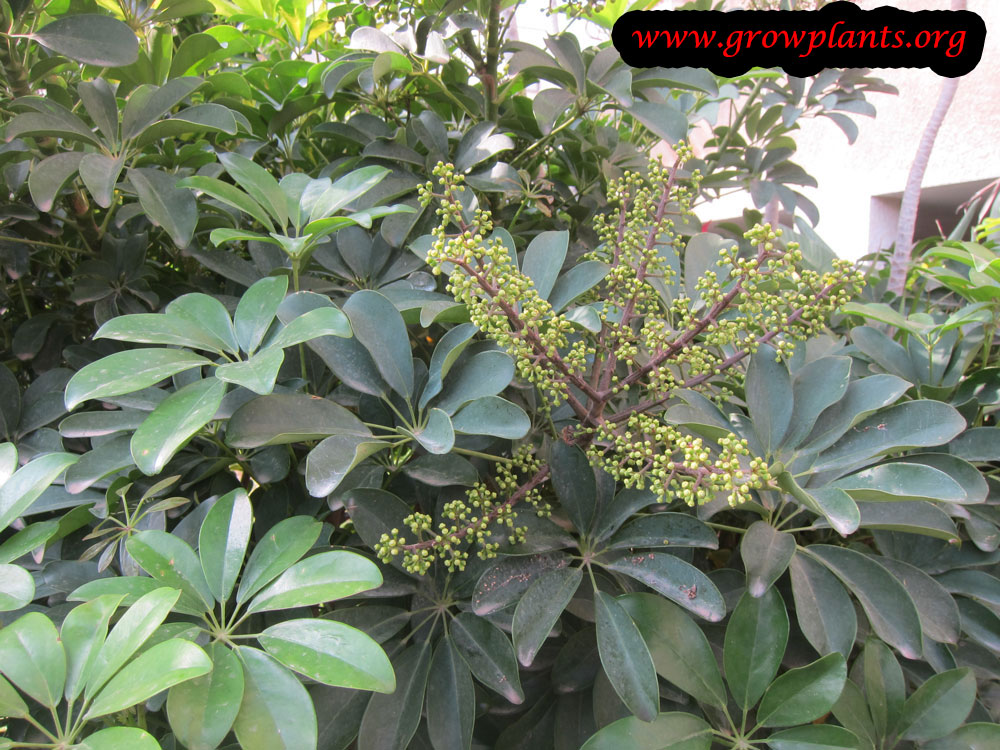
- Flower Characteristics: Showy flowers, most often red (also white, orange, purple or yellow), on tentacle-like spikes at the crown, forming an ‘octopus’ inflorescence.
Primary Uses & Landscape Value
- Functional & Ornamental Roles: Ornamental hedge and screen, container and indoor houseplant, and a tropical shade specimen; note its invasive, aggressive tendency in warm climates.
Care Guide: Planting, Soil & Watering
Overview: Umbrella plant (Schefflera actinophylla) is a vigorous evergreen shrub or tree grown as an ornamental or hedge, and a popular houseplant, in tropical, subtropical and Mediterranean climates (hardiness zone 9 and up). It thrives in well-draining soil across a wide range of light and is drought-tolerant once established.
Quick Care Requirements
| Requirement | Ideal Condition |
|---|---|
| Planting Season | Spring, summer or autumn |
| Growth Rate | Moderate to Fast |
| Soil Type | Well-draining |
| Water Need | Low to moderate; let the top dry between waterings |
Planting & Establishment
- Best Planting Season: Plant in spring, summer or autumn. It adapts from full sun to full shade, but plan for its vigorous, potentially invasive growth and keep it contained.
- How to Plant:
- Hole Preparation: Dig a hole a little wider than the root ball and loosen the surrounding soil so the roots spread.
- Soil Amendments: Add some compost or organic matter while keeping the soil free-draining.
- Planting Depth: Set the plant at the depth it grew previously, keeping the crown level with the soil surface.
- Growth Speed & Expectations: A moderate-to-fast grower that can range from 1 m to a towering 20 m (3-60 feet) in the ground; it is aggressive and invasive in warm climates, so control it – as a houseplant it stays compact.
Soil, Watering & Drainage Care
- Soil Mix & Drainage Needs: Give well-draining soil (or potting mix in a well-drained pot) so the roots never sit wet.
- Watering Schedule & Technique:
- Young / Newly Planted: Keep the soil evenly moist while young plants establish.
- Established: Once established it is fairly drought-tolerant – water moderately and let the top of the soil dry before watering again.
- Seasonal Adjustments: Water a little more in summer heat and reduce over the cooler winter months.
Climate, Light & Hardiness
The umbrella tree is a tropical and subtropical evergreen grown outdoors in warm, frost-free climates (about USDA zone 9+) and widely as a houseplant elsewhere, adapting to anything from full sun to shade. It is frost-tender, so cold is the main limit on outdoor culture, and indoors it prefers warm, bright, draught-free conditions.
Quick Climate Specifications
| Climate Zones | Tropical, Mediterranean, subtropical (a houseplant elsewhere) |
|---|---|
| USDA Hardiness Zones | About 9+ |
| Optimal Temp Range | Approximately 18–27 °C (64–81 °F) |
| Cold Damage Begins | Below about 10–13 °C (50–55 °F); frost damages foliage |
| Approx. Survival Minimum | Established plants near zone 9 may take brief light frost, but frost generally damages or kills it |
| Frost Tolerance | None to Very Low |
| Light Conditions | Full sun to full shade (bright indirect indoors) |
Sunlight & Light Exposure
Optimal Light Setup
Very adaptable - full sun to shade outdoors, and bright, indirect light indoors.
Direct Sun Requirement
Not required; it tolerates full sun but also grows well in shade.
Shade & Heat Management
Acclimatise plants gradually to strong sun to avoid leaf scorch, especially after a spell indoors.
Temperature Extremes & Hardiness
USDA Hardiness & Regional Limits
Grown outdoors in frost-free or nearly frost-free climates (about zone 9+), and as a container or house plant where winters freeze; cold tolerance improves with plant age and size.
Cold Damage & Winter Protection
Frost damages the soft foliage; move containers under cover before frost arrives.
Frost Sensitivity
High, though established plants near its limit take brief light frost better than young ones.
Extreme Heat Tolerance
Good in warm, humid climates.
Wind, Humidity & Microclimate
Humidity Preferences
Moderate to high, though it tolerates average indoor humidity.
Wind Tolerance
The large, soft leaves tatter in strong wind, so give it shelter.
Microclimate Recommendations
Warm, sheltered, bright positions suit it; note that it can become invasive in warm, frost-free regions.
Growing in Pots, Balconies & Indoors
The umbrella plant is one of the classic indoor foliage plants – the grower confirms it grows well both indoors and in containers. It is very adaptable to light, from full sun to shade, which is why it thrives in a living room. In the ground in warm climates it becomes a large, even invasive tree, so a pot both keeps it room-sized and helps stop it spreading.
Quick Details
- Container Size: Start around 5-10 L (1.3-2.6 gal) and pot on as it grows; a large tub holds a mature indoor specimen
- Indoor Suitability: A true houseplant – very tolerant of light levels, from bright to fairly shady
- Best Spot: Bright, indirect light indoors gives the best form; it copes with sun or shade too
- Soil & Drainage: Well-ventilated, free-draining mix – potting mix with perlite or vermiculite
- Watering in Pots: Small to average – let the top of the soil dry between waterings; it dislikes constant wet
Indoors & On the Windowsill
- A true houseplant: The grower confirms it grows well indoors, and it is famously easy – happy in full sun, half shade or full shade, so almost any room suits it. Bright, indirect light gives the fullest, glossiest growth.
- Care indoors: Water only when the top of the mix dries, keep it warm and draught-free, and wipe the leaves clean of dust. Too little light makes it leggy; simply move it brighter and prune to reshape.
- Size indoors: It can tower outdoors, but in a pot with occasional pruning it stays a manageable indoor tree for many years.
On a Balcony or Patio
- Light & shelter: It enjoys a bright balcony in sun or part shade in warm weather, but it is frost-tender – bring it indoors before cold arrives.
- Water & wind: Pots dry faster outdoors, so check moisture regularly, and shelter a tall plant from strong wind, staking it if needed.
Choosing the Pot, Soil & Long-Term Care
- Pot & drainage: A pot with strong drainage holes; skip a standing water saucer to avoid root rot. Terracotta breathes and dries faster, while glazed or plastic pots hold moisture longer.
- Potting mix: Well-ventilated and organic-rich – potting mix with perlite or vermiculite for free drainage.
- Feeding: Potted plants leach nutrients with watering, so feed regularly through the growing season with a balanced houseplant feed, easing off in winter.
- Repotting: Pot on every year or two as it fills its container, refreshing the mix; prune to control height and keep it bushy.
- Safety: Schefflera is toxic if chewed and can irritate skin – since it is kept indoors, place it out of reach of children and pets.
Growing this plant in a greenhouse
A greenhouse can give umbrella plant frost protection and cold protection. In the right climate it may also be kept growing through winter, depending on how much warmth and light are provided.
Greenhouse at a glance
| Greenhouse suitability | Good - clearly useful |
|---|---|
| Main benefits | frost protection, cold protection |
| Season extension | earlier spring & later autumn |
| Outdoor protection advisable below | about 13°C |
| Maintain greenhouse minimum | around 15°C for active growth |
| Suitable types | heated greenhouse, polycarbonate greenhouse, lean-to |
| Heating | Heating is recommended in cold climates for continuous growth. |
Related greenhouse guides
- Greenhouses: How to Choose the Right Greenhouse
- Best Greenhouse Heaters
- Greenhouse Climate Control: Temperature, Ventilation and Humidity
- Best Lean-To Greenhouses
Fertilizing & Feeding
Umbrella plant is a light-feeding foliage plant; feed lightly with a balanced fertilizer only while it is actively growing, and hold off after repotting and in low light to avoid salt buildup.
Quick Fertilizing Specs
| Feeding Level | Light |
|---|---|
| Best Feeding Period | During the brighter, warmer months of active growth. |
| Main Nutrient Priority | A balanced complete fertilizer with adequate nitrogen for foliage. |
| Soil pH | Slightly acidic to near neutral. |
| Organic Options | A quality potting mix with some compost or worm castings. |
| Micronutrients | A complete fertilizer usually supplies iron and manganese for green foliage. |
| Reduce/Stop Feeding | Ease off in low light and after repotting. |
Feeding by Growth Stage
Settling in after repotting
Let freshly repotted roots settle before feeding begins.
| Nutrient direction | None – withhold fertilizer while the plant is resting. |
|---|---|
| Timing | For the first stretch after repotting into fresh mix. |
| Frequency | No feeding at this stage. |
| Fertilizer types | No feeding at this stage – a resting plant is not taking up nutrients. |
| Precautions | Do not fertilize until active growth resumes. |
Active growth
Support steady leaf and stem growth during the active season.
| Nutrient direction | A balanced fertilizer with adequate nitrogen for foliage growth. |
|---|---|
| Timing | During the brighter, warmer months when new leaves appear. |
| Frequency | Light, regular feeding while the plant is actively growing. |
| Fertilizer types | Balanced houseplant fertilizer, Diluted complete liquid fertilizer |
| Routine trace nutrients | iron, manganese |
| Precautions | Fresh potting mix already holds nutrients, so keep feeding light to avoid salt buildup. |
Low-light slowdown
Let the plant rest when short, dim days slow its growth.
| Nutrient direction | None – withhold fertilizer while the plant is resting. |
|---|---|
| Timing | During the low-light, cooler months when growth slows. |
| Frequency | No feeding at this stage. |
| Fertilizer types | No feeding at this stage – a resting plant is not taking up nutrients. |
| Precautions | Do not fertilize until active growth resumes. |
Nutrient Deficiency Signs & Corrections
Older, lower leaves turn uniformly pale green to yellow and overall growth slows.
| Possible causes | Low available nitrogen in the soil, Cold or waterlogged soil limiting root uptake, Nitrogen leached away after heavy watering or rain |
|---|---|
| Appears first on | Older, lower leaves. |
| What to check | Whether paling starts on old lower leaves, Recent feeding history, Soil moisture and drainage |
| Possible correction | Apply a balanced complete fertilizer at a light rate and improve drainage; nitrogen-hungry plants green up as growth resumes. |
Youngest leaves show yellowing between green veins (interveinal chlorosis).
| Possible causes | High or alkaline soil pH locking up iron, Waterlogged or poorly aerated soil, Genuinely low available iron |
|---|---|
| Appears first on | Newest, youngest leaves. |
| What to check | Whether yellowing is on new versus old growth, Soil pH, Soil drainage and watering habits |
| Possible correction | Confirm soil pH and correct it if it is too high, improve drainage, and apply a chelated iron product following its label directions. |
Leaf tips and margins turn brown and scorched, often with a white crust on the soil surface or pot rim.
| Possible causes | Accumulated fertilizer salts from frequent feeding, Infrequent watering that never flushes the soil, Low humidity worsening tip burn |
|---|---|
| Appears first on | Leaf tips and margins. |
| What to check | Soil surface and pot rim for a salt crust, Feeding frequency, Whether pots drain freely when watered |
| Possible correction | Leach the pot by watering thoroughly until it drains freely to flush salts, and feed more sparingly afterward. |
Pruning, Training & Seasonal Maintenance
Umbrella plant tolerates frequent pruning at any time of year and is grown in two very different scales — as a compact houseplant or young specimen, and as a large, fast-growing landscape tree (up to 20 m/60 ft) that behaves aggressively/invasively in warm climates. Pruning here is mainly about design and control rather than protecting a bloom cycle: its umbrella-like inflorescence is ornamental but not the reason people grow or shape it, so cuts can be timed around the plant’s growth and containment needs rather than around flowering.
Quick Pruning & Maintenance Specs
| Pruning Tolerance | Moderate to High |
| Primary Pruning Window | All year (no defined dormant season in its tropical/subtropical/mediterranean range) |
| Typical Frequency | As needed for shape and containment; more often where it is used as a clipped hedge |
| Main Objective | Design/shape control and, given its aggressive growth habit, size and spread containment |
| Young Plant Priority | Decide and train toward single-trunk tree form or multi-stem shrub/hedge form early |
| Mature Plant Priority | Ongoing size reduction, crossing-branch removal, and hedge-line maintenance where grown as a hedge |
| Best Tool Type | Bypass secateurs/loppers for selective cuts on specimen plants; hedge shears only where formally grown and clipped as a hedge |
| Avoid Heavy Pruning During | Immediately after transplanting, while the plant is re-establishing |
Pruning by Plant Age & Size
Newly Established
Remove only dead or damaged growth while the plant settles in after planting.
Young / Formative
This is where the two growing styles diverge: for a single clean trunk, remove competing basal shoots and low side branches early; for a multi-stem shrub or hedge, instead retain several strong basal stems and pinch tips to thicken growth low down.
Mature / Established
As a large tree, priorities are canopy size control, removing crossing or rubbing branches, and thinning where density becomes a wind-load or structural concern. As a maintained hedge, priorities are regular shearing to a defined line plus periodic thinning cuts inside the hedge to prevent a hollow, foliage-only-at-the-surface shell.
Structural Pruning & Training
Crossing or rubbing branches should be removed on tree-form specimens to avoid bark damage as the trunk and limbs thicken. Height and spread control matters most where this species is grown outside its confined-landscape comfort zone, given its documented invasive/aggressive habit in warm climates — regular size-limiting cuts keep a specimen in bounds rather than letting it reach its full 20 m potential.
Special Growth to Remove
- Basal shoots: remove them to maintain a single clean trunk on tree-form specimens, or select and retain the strongest few to build a multi-stem/hedge form — the choice depends on the desired form, not a fixed rule.
- Dead or damaged leaves and stems: remove at any time of year.
Container & Small-Space Pruning
Grown as a houseplant or in a container, expect to prune much more assertively than an in-ground landscape tree would ever need, since the goal is keeping a species capable of 20 m growth compact indefinitely: pinch tips regularly and cut back any stem that outgrows the space, rather than waiting for an annual structural session.
Tools
- Bypass secateurs for soft new growth and thin stems on young or container specimens.
- Loppers and a pruning saw for thicker branches on established outdoor tree-form specimens.
- Hedge shears only where the plant is deliberately maintained as a clipped hedge, not on specimen/tree-form plants that need selective cuts.
Tool Hygiene & Disease Risk
Routine: the plant’s known problems are moth larvae and aphids rather than a transmissible pathogen, so clean, sharp tools are sufficient.
Cut Placement & Technique
Use thinning cuts (removing a branch back to its point of origin) rather than heading cuts when reducing a tree-form specimen, to avoid triggering a thicket of weak regrowth at the cut. On hedge specimens, shear to a consistent line but periodically reach inside with hand pruners to thin out congested growth.
Heavy Pruning & Rejuvenation
Given its fast growth and year-round vigor, an overgrown specimen tolerates a substantial size-reduction cutback and typically resprouts strongly; spreading a very large reduction over more than one session avoids removing too much canopy at once on a mature tree-form plant.
Post-Pruning Care
Water normally after cutting back; no extra feeding is needed since this species already regrows vigorously on its own. After opening up a dense canopy or hedge, watch newly exposed interior stems for sunburn/scorch if light conditions change sharply.
Common Pruning Mistakes
- Shearing a specimen plant like a hedge, producing a dense outer shell of foliage with a bare, twiggy interior.
- Letting an outdoor specimen grow unchecked toward its full 20 m size in a confined landscape, given its documented aggressive/invasive habit.
- Removing all basal shoots on a plant intended to be multi-stemmed, accidentally forcing it into a single-trunk form.
Recommended Tools (by task)
- bypass_secateurs – shaping cuts and thin growth on young, container or houseplant specimens.
- loppers – mid-size branch removal on established outdoor tree-form specimens.
- pruning_saw – larger structural limbs on mature trees.
- hedge_shears – only where the plant is deliberately maintained as a formal clipped hedge.
Pruning Troubleshooting
| Problem | Possible Cause | What to Check | Corrective Action |
| Hollow, bare-centered hedge | Repeated shearing at the same outer line without interior thinning | Whether shears alone have been used season after season | Hand-thin some interior growth to let light back into the hedge’s core |
| Rapid regrowth past the desired size | Species’ inherently fast, aggressive growth habit | Time since last size-control pruning | Increase pruning frequency rather than pruning harder less often |
| Split or torn bark after limb removal | Heading/flush cut on a heavy branch instead of a proper thinning cut | How large limbs were removed and whether the branch collar was respected | Use a stepped (three-cut) technique on heavy limbs and cut just outside the branch collar |
Propagation Guide
The umbrella plant roots very easily from stem or tip cuttings and by air layering, and the green species self-seeds so freely that it is considered invasive. Any variegated form must be grown from cuttings, since its yellow variegation is not passed on through seed; overall it is one of the easier woody plants to propagate.
Quick Propagation Specs
| Best Propagation Method | Stem cuttings |
| Alternative Methods | Air layering; seed |
| Propagation Difficulty | Easy |
| Seed True-to-Type | Green species mostly uniform; variegated forms do not come true |
| Vegetative True-to-Type | Yes |
| Best Propagation Season | Warm season, spring to summer |
| Germination Temperature | Warm, roughly 24–29°C (75–85°F) |
Growing from Seed
Seed Handling & Viability
Seed cleaned from the fleshy red fruit germinates readily; the species seeds prolifically, which underlies its weedy, invasive tendency where it is warm.
Germination Conditions
Sow into a warm, moist medium; emergence follows within a few weeks under steady warmth.
Stem Cuttings
Cutting Type
Stem-tip or stem-section cuttings both work; even thick, near-leafless trunk sections will strike.
Best Timing
Spring to summer.
Rooting Setup
Insert in a moist, free-draining mix in warm, humid conditions.
Rooting Hormone
Optional — the cuttings root easily without it.
Rooting Time
Roots generally form within a few weeks in warmth.
Air & Ground Layering
Air layering is an excellent way to reduce a tall, leggy specimen to a compact rooted plant: girdle the stem, wrap with moist moss and plastic, and sever below the new roots once they develop.
Bloom & Flower Guide
Quick Details
- Bloom Season: Winter into spring
- Flower Appearance: Small flowers on long radiating spikes at the top of the plant, like a red “octopus”; colours can be red, orange, purple, yellow or white
- Edibility: Not edible – the plant is toxic (calcium oxalate)
Detailed Blooming Overview
Where it grows large enough outdoors, the umbrella tree produces one of the most striking flower displays of any foliage plant: long arms of small flowers radiate from the crown like the tentacles of an octopus. The spikes are rich in nectar and, in its native range, are a magnet for birds. Indoor plants rarely reach flowering size.
Flower Characteristics
- Many small flowers held along long, radiating spikes at the very top of the plant.
- Colours range through red, orange, purple, yellow and white; the whole head reads as bold red from a distance.
Bloom Care & Thinning
- Managing the bloom: Flowering only happens on large, mature plants in warm conditions with plenty of light; there is little to do but let it come.
- Pollination: The nectar-rich spikes draw birds and bees.
Bloom Health & Protection
- Safety: All parts contain calcium oxalate and are toxic and irritant to people and pets – grow it as an ornamental and keep it out of reach of children and animals.
Pests, Diseases & Troubleshooting
Overview: The umbrella tree is a vigorous, glossy-leaved schefflera grown as a large houseplant and, in frost-free climates, an outdoor tree where it can become weedy. Like all scheffleras it is chiefly troubled by sap-sucking pests-especially spider mites, scale and mealybugs-that flourish in warm, dry indoor air, and by leaf drop and root rot brought on by inconsistent watering or cold drafts. Keep it in bright indirect light with steady moisture and good airflow, inspect regularly, and treat problems early and organically.
Quick Troubleshooting Overview
| Issue / Pest | Main Symptom | Primary Solution |
|---|---|---|
| Spider mites | Fine stippling, dull bronzed leaves and webbing in dry indoor air | Rinse, raise humidity, insecticidal soap or neem |
| Scale insects | Brown bumps on stems and leaf undersides, honeydew and sooty mould | Scrape off, horticultural oil, repeat for crawlers |
| Mealybugs | White cottony tufts in leaf axils and on stems, sticky residue | Alcohol swab, insecticidal soap or neem |
| Leaf drop | Sudden shedding of leaflets after a move, draft or watering swing | Stabilise light, temperature and watering |
| Root rot | Yellowing, wilting and mushy stem base in soggy soil | Reduce water, improve drainage, repot if needed |
Common Pests & Management
- Spider mites (Tetranychus urticae):
- Symptoms: The most persistent pest of indoor scheffleras: fine pale speckling gives the leaves a dull, dusty, bronzed look, and in bad cases fine webbing coats the undersides and tips. They thrive in hot, dry, still air.
- Prevention & Control: Raise humidity and airflow to discourage them, and shower the plant to knock populations down. Spray insecticidal soap or neem oil to the leaf undersides every five to seven days until clear; predatory mites work well in a conservatory.
- Scale insects (Coccus hesperidum, Saissetia coffeae):
- Symptoms: Small immobile brown or tan bumps stuck along stems, petioles and leaf veins; they drain sap, weaken growth and coat the plant and floor below in sticky honeydew and sooty mould.
- Prevention & Control: Scrape off what you can and prune heavily infested stems. Smother the rest with horticultural or neem oil, coating stems and vein-lines, and repeat every couple of weeks to catch the mobile crawlers.
- Mealybugs (Planococcus citri):
- Symptoms: White, cottony, waxy insects clustering in leaf axils, at stem joints and along the undersides; heavy infestations stunt the plant, and root mealybugs may also hide in the pot.
- Prevention & Control: Dab colonies with an alcohol-dipped cotton bud, then spray insecticidal soap or neem, wetting the crevices. Isolate infested plants and, for a stubborn potted case, wash the roots and repot in fresh mix.
- Thrips (Heliothrips haemorrhoidalis, Frankliniella spp.):
- Symptoms: Fine silvery scarring and stippling on the glossy leaves with tiny black faecal specks; slender insects hide along the veins and can distort new growth.
- Prevention & Control: Remove badly affected leaves, use blue sticky traps to monitor, and spray insecticidal soap or neem to the undersides; predatory mites and lacewings help under cover.
Diseases & Fungal Issues
- Alternaria leaf spot (Alternaria panax):
- Symptoms: Large brown to black concentric spots, sometimes with a yellow halo, mainly on lower and inner leaves in warm humid conditions; spots enlarge and merge, causing leaves to drop.
- Treatment & Management: Remove affected leaves, avoid wetting the foliage, and improve air movement and spacing. A copper fungicide helps only if humidity around the plant is also reduced.
- Bacterial leaf spot (Pseudomonas cichorii, Xanthomonas spp.):
- Symptoms: Small, water-soaked, greasy-looking spots that turn brown to black, often angular and confined by veins, spreading fast on wet foliage.
- Treatment & Management: There is no cure once infected: remove affected leaves, keep foliage dry, improve airflow and avoid overhead watering. Copper sprays give some protection to healthy growth.
- Root & crown rot (Pythium, Phytophthora, Rhizoctonia spp.):
- Symptoms: Yellowing, wilting and a soft, blackened, foul stem base with brown mushy roots-the result of overwatering or poorly drained soil.
- Treatment & Management: Prevent with a free-draining mix and by letting the top of the soil dry between waterings. Cut away rotted roots, repot into fresh open mix, and water conservatively until recovered.
Growing Difficulties & Abiotic Problems
- Leaf drop:
- Cause & Symptoms: Scheffleras shed leaflets readily as a stress response-to sudden changes in light or temperature, cold drafts, over- or under-watering, or being moved. A rapid loss of many leaves signals a swing in conditions.
- Correction Strategy: Give it a stable home in bright indirect light away from drafts and heat sources, and keep watering even-moist but never soggy. Once settled it re-leafs from the stems.
- Cold damage & leaf drop:
- Cause & Symptoms: A tropical plant, it is damaged by cold and drafts-chilled plants blacken, wilt and shed leaves, and even indoors a cold window or air-conditioning draft triggers heavy leaf drop.
- Correction Strategy: Keep it above about 13°C, away from drafts and cold glass, and bring outdoor container plants in before any chill; steady warmth and light restore healthy foliage.
- Overwatering & oedema:
- Cause & Symptoms: Kept too wet the plant develops yellow lower leaves and, sometimes, corky brown bumps or blisters on the leaf undersides (oedema) when roots take up more water than the leaves can transpire.
- Correction Strategy: Water only when the top of the soil dries, ensure the pot drains freely, and give brighter light and airflow so the plant uses water faster; reduce watering in low light and cool weather.
- Legginess & leaning in low light:
- Cause & Symptoms: In too little light the stems stretch, leaflets space out and the plant grows sparse and leans toward the window.
- Correction Strategy: Move it to brighter indirect light, turn it regularly for even growth, and prune leggy stems to encourage bushier branching.
What Helps – Products & Tools
For scheffleras keep insecticidal soap, neem oil and horticultural oil on hand for mites, scale and mealybugs, isopropyl alcohol for spot-treating mealybugs, and yellow sticky traps for monitoring. A copper fungicide covers the leaf-spot diseases, but the best tools are cultural: a free-draining potting mix, a humidity tray or occasional shower to deter mites, and steady watering to prevent both leaf drop and root rot.