Plant Profile & Key Characteristics
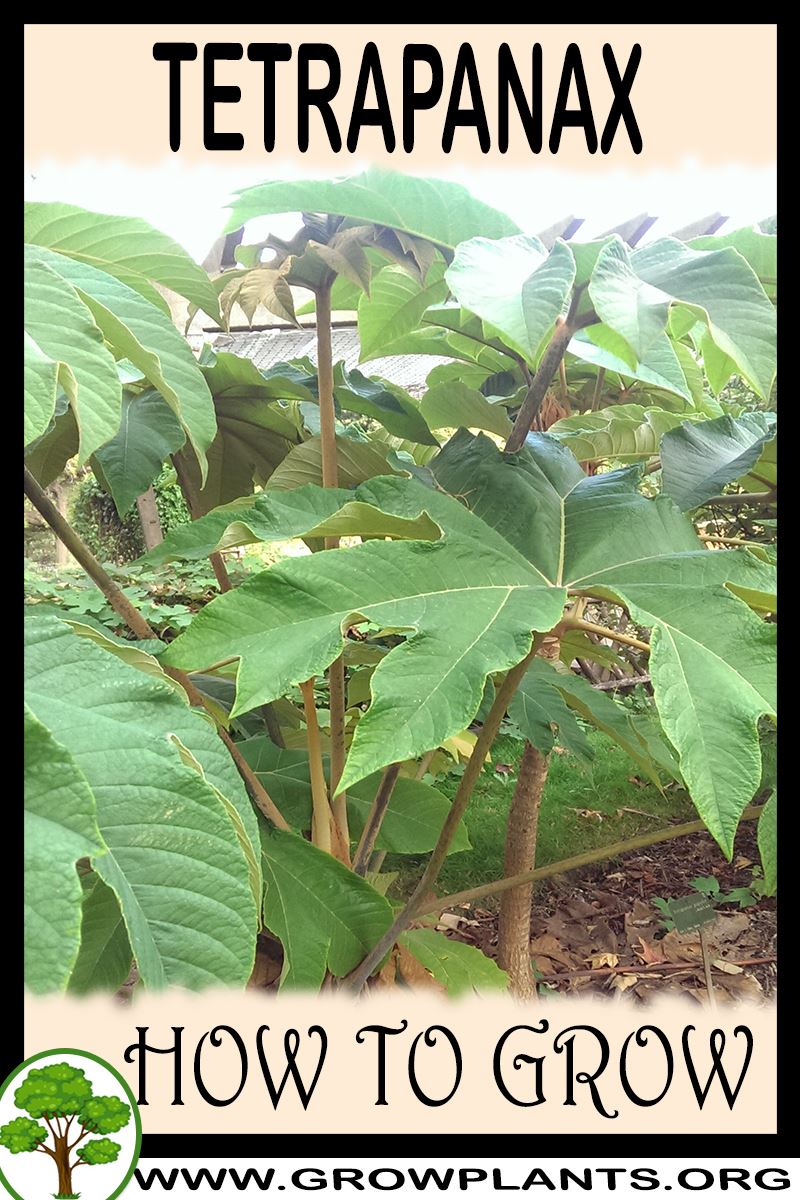
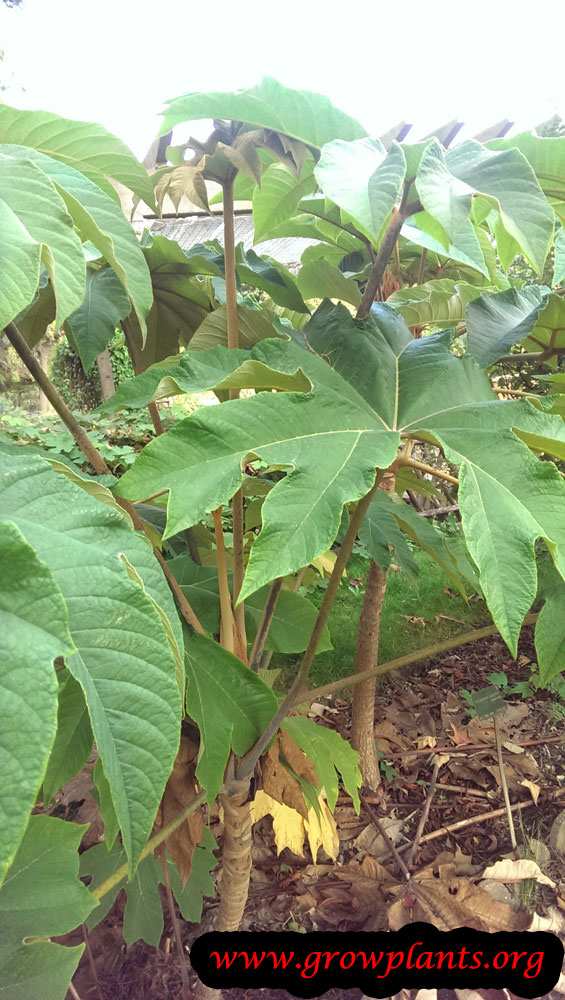
Overview: A fast-growing evergreen shrub reaching 1-3 m (3-10 ft), grown chiefly for its huge, boldly lobed, tropical-looking leaves. It is an architectural ornamental that also attracts pollinators, but the plant is toxic and its fine hairs can irritate skin.
Quick Specifications
| Specification | Attribute |
|---|---|
| Plant Type / Life Cycle | Woody perennial (shrub) |
| Foliage Type | Evergreen |
| Mature Size | 1-3 m (3-10 ft) tall |
| Growth Rate | Fast to moderate |
| Root System | Spreads aggressively by underground root suckers, often popping up well away from the parent |
| Toxicity | Toxic — the plant is poisonous and its fine leaf and stem hairs can irritate skin, eyes and airways |
| Hardiness | USDA zones 6 and warmer |
Growth Form & Structure
- Height and Spread: In the ground 1-3 m (3-10 ft) tall and spreading by suckers into a colony; also grown in containers, which curbs its wandering.
- Growth Habit and Form: Upright, sparsely branched shrub topped with an umbrella of very large leaves on long stalks.
- Lifespan and Maturity: A fast, vigorous perennial that quickly forms a bold clump and spreads freely by root suckers.
Anatomy & Physical Features
- Leaves and Foliage: Very large, rounded, deeply lobed green leaves that give a dramatic tropical effect.
- Flower Characteristics: Small white flowers massed in large branched sprays above the foliage.
Primary Uses & Landscape Value
- Functional and Ornamental Roles: Architectural foliage specimen for bold, tropical-style plantings and a pollinator plant; also used medicinally. Site with care because of its irritant hairs and suckering spread.
Care Guide: Planting, Soil & Watering
Overview: Tetrapanax (rice-paper plant) is a fast-growing evergreen shrub for full sun to part shade and adaptable, well-drained soil across temperate, subtropical, Mediterranean and tropical climates (hardiness zone 6 and up). It takes moderate, regular watering and has no special soil demands.
Quick Care Requirements
| Requirement | Ideal Condition |
|---|---|
| Planting Season | Spring or summer |
| Growth Rate | Fast to moderate |
| Soil Type | Adaptable, well-drained soil |
| Water Need | Moderate |
Planting & Establishment
- Best Planting Season: Plant in spring or summer during the warm growing season so it establishes before cold weather; hardy to zone 6.
- How to Plant:
- Hole Preparation: Dig a hole about twice the width of the root ball, loosening the surrounding soil.
- Soil Amendments: Work some compost or organic matter into the backfill; the plant is not fussy but appreciates decent, free-draining soil.
- Planting Depth: Set the root ball level with the surrounding soil, keeping the stem base unburied.
- Growth Speed & Expectations: Grows fast and spreads by suckers, so allow room or be ready to remove offsets to control its spread.
Soil, Watering & Drainage Care
- Soil Mix & Drainage Needs: Ordinary, well-drained soil suits it; in containers use a free-draining potting mix. Good drainage prevents root problems.
- Watering Schedule & Technique:
- Young / Newly Planted: Water regularly after planting to establish, keeping the soil moist but not waterlogged.
- Established: Water moderately, letting the top of the soil dry between waterings.
- Seasonal Adjustments: More water in summer heat and less in cool or wet weather.
Climate, Light & Hardiness
Tetrapanax papyrifer thrives in temperate, Mediterranean, subtropical and tropical climates, growing in full sun to partial shade. It is reasonably cold-hardy at the root (roughly USDA zone 6 and warmer), but its large, soft, lobed leaves are its most frost- and wind-sensitive part.
Quick Climate Specifications
| Climate Zones | Temperate, Mediterranean, subtropical, tropical |
|---|---|
| USDA Hardiness Zones | Approximately zone 6 and warmer |
| Optimal Temp Range | Warm growing conditions, roughly 18–30°C (64–86°F) |
| Cold Damage Begins | Large leaves scorched and blackened by hard frost |
| Approx. Survival Minimum | Top growth cut back by severe frost; the established crown and roots often resprout from below |
| Frost Tolerance | Low (foliage) / Moderate (root-hardy) |
| Light Conditions | Full sun to partial shade |
| Wind Tolerance | Low |
Sunlight & Light Exposure
Optimal Light Setup
Grows well in full sun where summers are mild, and in partial or dappled shade in hotter regions. Good light keeps the huge leaves and overall habit sturdy.
Shade & Heat Management
In hot, bright climates give afternoon shade to reduce leaf scorch and moisture stress on the oversized foliage.
Best Exposure / Orientation
A sheltered spot with bright light but protection from harsh midday sun and strong wind suits it best.
Temperature Extremes & Hardiness
USDA Hardiness & Regional Limits
The site data places it in hardiness zone 6 and warmer. In the colder part of that range the top growth is often killed back over winter while the established crown and running roots survive and resprout in spring.
Cold Damage & Winter Protection
The broad leaves are damaged by frost well before the roots are threatened. A deep mulch over the crown helps carry it through a cold winter.
Frost Sensitivity
Foliage is frost-tender; a mature, established plant is considerably hardier at the root than its tender leaves suggest.
Extreme Heat Tolerance
Tolerates summer heat when soil moisture is adequate, but the leaves can scorch and wilt in prolonged dry heat.
Wind, Humidity & Microclimate
Humidity Preferences
Prefers moderate to high humidity; the large leaves can crisp at the edges in very dry air.
Wind Tolerance
Wind tolerance is low - the big, soft leaves tear and tatter in exposed positions, so plant where it is sheltered from strong wind.
Microclimate Recommendations
A warm, sheltered corner, such as beside a wall, gives the best foliage and improves winter survival at the cold edge of its range.
Growing in Pots, Balconies & Indoors
The rice paper plant is a bold, fast-growing architectural shrub with huge leaves – the grower marks it as unsuitable indoors but suited to containers. Growing it in a large pot both keeps its dramatic foliage in scale for a patio or balcony and helps curb its habit of suckering and spreading in open ground.
Quick Details
- Container Size: A large tub, roughly 20-40 L (5-10 gal), for its 1-3 m (3-10 ft) size; bigger pots support bigger leaves
- Indoor Suitability: Not a houseplant – its size, vigour and irritant hairs make it an outdoor container plant
- Best Spot: Full sun to half shade, sheltered from strong wind
- Soil & Drainage: Rich, free-draining, organic mix – potting mix with perlite or vermiculite
- Watering in Pots: Average – keep the large-leaved plant evenly moist and let surplus drain away
Indoors & On the Windowsill
- Not an indoor plant: The grower marks it as unsuitable indoors. It grows large and fast, and its fine leaf and stem hairs shed and irritate skin, eyes and airways – not something to have in a room.
- Outdoor container plant: Keep it as a bold patio or balcony specimen rather than a houseplant; in cold climates its top may die back and resprout from the base.
- Overwintering: In a container it is more frost-exposed than in the ground – in cold areas protect the pot, or move it to a sheltered, frost-free spot and cut it back.
On a Balcony or Patio
- Light & shelter: It enjoys sun to part shade but its big leaves tear in wind, so give it a sheltered corner. It makes a striking, tropical-looking container plant.
- Water & weight: Large leaves lose water fast, so a pot in sun and reflected heat needs frequent checking; a big, filled tub is heavy, so make sure the balcony can take it.
Choosing the Pot, Soil & Long-Term Care
- Pot & drainage: A large pot with strong drainage holes; skip a standing water saucer to avoid root rot. A heavier glazed pot also gives stability to a tall, leafy plant.
- Potting mix: Rich, well-ventilated and free-draining – potting mix with perlite or vermiculite.
- Feeding: A big-leaved plant in a pot is hungry and leaches nutrients with watering, so feed regularly through the growing season for lush foliage.
- Repotting & suckers: Pot on or refresh the mix every year or two; a container also limits the suckers it throws in open ground – remove any that appear.
- Safety: The grower records it as poisonous, and the fine hairs are irritant – wear gloves and long sleeves when handling or pruning, and keep it away from children and pets.
Fertilizing & Feeding
Tetrapanax is a vigorous woody plant but a light feeder in the landscape; a balanced complete fertilizer is only needed when growth or leaf color shows a shortfall, and mulch plus decent soil usually carry it.
Quick Fertilizing Specs
| Feeding Level | Light |
|---|---|
| Best Feeding Period | In spring, only if growth or color indicates a need. |
| Main Nutrient Priority | A balanced complete fertilizer, used sparingly. |
| Soil pH | Tolerates a wide range. |
| Organic Options | Compost and mulch over the root zone. |
| Micronutrients | Iron may need attention on alkaline soils. |
| Reduce/Stop Feeding | Do not feed dormant or well-established plants that grow well. |
Feeding by Growth Stage
Establishment
Help the newly planted tree or shrub settle its roots.
| Nutrient direction | A light application of a balanced complete fertilizer, if soil is poor, plus organic matter. |
|---|---|
| Timing | In the first seasons after planting, as growth begins in spring. |
| Frequency | A light feeding is usually enough while roots establish. |
| Fertilizer types | Balanced complete fertilizer used sparingly, Compost or organic matter and mulch over the root zone |
| Precautions | Woody landscape plants need little fertilizer; feed sparingly and rely on good soil and mulch. |
Spring growth flush
Support the spring flush of new shoots and leaves.
| Nutrient direction | A balanced complete fertilizer, only if growth or leaf color calls for it. |
|---|---|
| Timing | As new growth pushes in spring. |
| Frequency | At most a light feeding in spring; established plants often need none. |
| Fertilizer types | Balanced complete fertilizer applied lightly |
| Precautions | Avoid heavy feeding near water, which wastes nutrients and can run off; established plants rarely need it. |
Cool-season slowdown
Let the plant rest without pushing tender growth.
| Nutrient direction | None – withhold fertilizer while the plant is resting. |
|---|---|
| Timing | Through the cool season when growth slows. |
| Frequency | No feeding at this stage. |
| Fertilizer types | No feeding at this stage – a resting plant is not taking up nutrients. |
| Precautions | Do not fertilize until active growth resumes. |
Nutrient Deficiency Signs & Corrections
Older, lower leaves turn uniformly pale green to yellow and overall growth slows.
| Possible causes | Low available nitrogen in the soil, Cold or waterlogged soil limiting root uptake, Nitrogen leached away after heavy watering or rain |
|---|---|
| Appears first on | Older, lower leaves. |
| What to check | Whether paling starts on old lower leaves, Recent feeding history, Soil moisture and drainage |
| Possible correction | Apply a balanced complete fertilizer at a light rate and improve drainage; nitrogen-hungry plants green up as growth resumes. |
Youngest leaves show yellowing between green veins (interveinal chlorosis).
| Possible causes | High or alkaline soil pH locking up iron, Waterlogged or poorly aerated soil, Genuinely low available iron |
|---|---|
| Appears first on | Newest, youngest leaves. |
| What to check | Whether yellowing is on new versus old growth, Soil pH, Soil drainage and watering habits |
| Possible correction | Confirm soil pH and correct it if it is too high, improve drainage, and apply a chelated iron product following its label directions. |
Lower leaves yellow and drop while the soil stays persistently wet.
| Possible causes | Waterlogged, poorly drained soil starving roots of air, Root damage or rot, Nutrients leached from constantly saturated soil |
|---|---|
| Appears first on | Lower, older leaves. |
| What to check | How long the soil stays wet after watering, Root health and drainage, Container drainage if potted |
| Possible correction | Improve drainage and let the soil dry appropriately between waterings; feed lightly once the roots recover. |
Pruning, Training & Seasonal Maintenance
Tetrapanax (rice paper plant) tolerates pruning at any time of year and, unusually for an evergreen shrub, tolerates being cut hard to the ground — a technique regularly used on purpose, not just as damage control. The main objectives are removing spent/damaged leaves and stems for design, and deciding whether to let it develop into a taller multi-caned shrub (1–3 m) or to “stool” it back annually, which trades height for the much larger, more dramatic juvenile leaves this species is prized for.
Quick Pruning & Maintenance Specs
| Pruning Tolerance | High (including hard annual cutback if a stooled, large-leaf form is wanted) |
| Primary Pruning Window | All year for routine tidying; late winter/early spring is the most effective time for a hard rejuvenation cutback, just before the new growth flush |
| Typical Frequency | Ongoing removal of dead leaves/canes; annual hard cutback if grown for large juvenile foliage |
| Main Objective | Manage its vigorous, suckering growth habit and choose between a caned shrub form or an annually stooled large-leaf form |
| Young Plant Priority | Establish a few strong canes if a shrub form is wanted; otherwise no training needed if it will be stooled annually |
| Mature Plant Priority | Control root suckers, remove old/damaged canes, and manage overall spread |
| Best Tool Type | Loppers or a pruning saw for thick canes; gloves recommended given fine irritant hairs on young growth |
| Avoid Heavy Pruning During | Deep winter cold snaps near the edge of its hardiness (zone 6), when fresh wounds and forced regrowth add stress |
Pruning by Plant Age & Size
Newly Established
Remove only dead or damaged leaves while the plant establishes; avoid a hard cutback until it has built some root reserves.
Young / Formative
No formal leader/vase training applies to this suckering, cane-forming shrub. Either let several canes develop for a taller multi-stemmed form, or commit early to annual stooling (cutting to the base each year) if maximum leaf size and a lower, more compact silhouette are the priority.
Mature / Established
Ongoing priorities are removing old, woody or leggy canes, controlling the spread of root suckers into surrounding beds, and clearing dead leaves for appearance.
Structural Pruning & Training
Renewal pruning is central to how this shrub is managed: because it suckers and canes freely from the base, older canes can simply be removed at ground level as they age or lean, letting younger canes take over, rather than trying to shape a fixed permanent framework.
Special Growth to Remove
- Root suckers: Tetrapanax spreads by suckering roots and can send up new canes some distance from the original plant — remove unwanted suckers promptly if containment is the goal, or thin them if a larger colony is intended.
- Dead or damaged leaves: the large leaves are prone to wind tatter and cold damage; remove them for appearance at any time of year.
Container & Small-Space Pruning
Growing in a container is one of the most effective ways to curb this plant’s aggressive suckering habit, since the roots are physically contained; even so, expect to divide or root-prune a container specimen periodically as the rhizomes fill the pot, and remove any suckers that emerge at the pot’s edge.
Tools
- Bypass secateurs for young canes and dead leaf removal.
- Loppers for thicker, semi-woody canes.
- Pruning saw for a full hard cutback of older, thick basal canes.
Tool Hygiene & Disease Risk
Routine: no major transmissible pathogen is documented for this species; the main precaution is personal, not tool-related — wear gloves, since fine hairs on young stems and leaf undersides can irritate skin.
Cut Placement & Technique
Cut spent or unwanted canes at or near ground level rather than partway up, since this species regenerates from the base rather than branching usefully from a mid-cane heading cut.
Heavy Pruning & Rejuvenation
Tolerated well: cutting the whole plant back to near ground level in late winter/early spring is a deliberate, commonly used technique that forces a flush of fresh canes bearing noticeably larger leaves than on unpruned growth — effectively trading height and multi-year cane structure for maximum foliage impact each season.
Post-Pruning Care
Water normally after a hard cutback to support the vigorous regrowth this species is known for; no extra feeding is required to force resprouting, since it responds readily on its own. Newly exposed base growth can be more exposed to wind after a hard cutback, so some shelter or staking of the first flush of large leaves can help until they toughen.
Common Pruning Mistakes
- Ignoring root suckers until a single shrub has become a spreading thicket that is hard to contain.
- Handling canes and leaves without gloves, risking skin irritation from the fine hairs on young growth.
- Assuming a hard cutback will kill the plant, when in fact it is a standard, well-tolerated technique for this species.
When NOT to Prune
Avoid a hard rejuvenation cutback during a hard winter cold snap near the plant’s zone-6 hardiness limit; let it come through cold weather intact and prune as new growth begins instead.
Recommended Tools (by task)
- bypass_secateurs – removing dead leaves and thin young canes on any age of plant.
- loppers – cutting semi-woody canes during routine thinning or renewal.
- pruning_saw – a full hard cutback of thick, older basal canes when stooling the plant for maximum leaf size.
Propagation Guide
Rice paper plant is easiest and most usually increased by detaching the root suckers it throws up around and at a distance from the parent, or by root cuttings; it can also be grown from seed. Division of established suckers is the quickest, most reliable route. It is easy to propagate, but wear gloves and eye protection — the felted hairs on stems and leaves are a skin and respiratory irritant.
Quick Propagation Specs
| Best Propagation Method | Suckers / division |
| Alternative Methods | Root cuttings; seed |
| Propagation Difficulty | Easy |
| Seed True-to-Type | Mostly uniform (species) |
| Vegetative True-to-Type | Yes |
| Best Propagation Season | Spring to summer |
| Time Until Division Establishes | Establishes within a season |
Division, Offsets, Pups & Suckers
The plant runs underground and sends up suckers, often well away from the main clump. In spring, lift a rooted sucker with a portion of root attached and pot it on, or move it directly. Because the whole plant is an irritant, wear gloves, long sleeves and eye protection when digging and handling suckers.
Leaf & Root Cuttings
Sections of the thick roots laid in a gritty, free-draining mix will produce adventitious shoots — a dependable way to bulk up stock without relying on the parent throwing suckers where you want them.
Growing from Seed
Germination Conditions
Sow fresh seed into a warm, moist medium; germination follows over several weeks.
Seedling Care
Grow seedlings on in good light; expect some variation in vigour between individuals.
Bloom & Flower Guide
Quick Details
- Bloom Season: Summer into autumn
- Flower Appearance: Many small creamy-white flowers in large, branched plumes above the foliage
- Edibility: Grown as an ornamental; not eaten
Detailed Blooming Overview
Rice-paper plant is grown mainly for its huge, deeply lobed leaves, but on established plants it finishes the season with an impressive display: tall, branched plumes of small white flowers held well above the foliage. The blooms are rich in nectar and buzz with pollinators.
Flower Characteristics
- Small creamy-white flowers packed into large, airy, branched inflorescences.
- Held above the foliage on tall stems in late summer and autumn.
Bloom Care & Thinning
- Managing the bloom: Let mature plants flower for the pollinators; cut the spent plumes back afterwards to keep things tidy.
- Handling note: The fine, felted hairs on new growth and flower stems can irritate skin, eyes and airways – wear gloves and avoid breathing the dust when cutting.
- Pollination: Carried out by bees and other insects.
Pests, Diseases & Troubleshooting
Overview: Rice paper plant is a fast, architectural, suckering shrub that is largely pest-free outdoors; under glass or in dry heat it can pick up spider mites, aphids, scale and mealybugs, and it resents wet, cold, badly drained soil. Note its fine leaf and stem hairs are a skin and airway irritant, so wear gloves and a mask when pruning.
Quick Troubleshooting Overview
| Issue / Pest | Main Symptom | Primary Solution |
|---|---|---|
| Spider mites | Stippled leaves under glass/dry heat | Raise humidity, hose, oil |
| Aphids | Sticky new shoots | Water jet, insecticidal soap |
| Scale / mealybug | Bumps or white fluff | Horticultural oil |
| Root rot | Collapse in wet, cold soil | Improve drainage |
| Irritant hairs | Skin/eye/airway irritation | Wear gloves and mask |
Common Pests & Management
- Spider Mites (Tetranychus urticae):
- Symptoms: Fine pale stippling or bronzing of leaves, with delicate silken webbing on undersides and between stems; worst in hot, dry, dusty conditions. Heavily fed leaves dry, curl and drop.
- Prevention & Control: Raise humidity and hose foliage regularly to break the dry microclimate mites favour. Remove and destroy the worst leaves, and conserve predatory mites and other natural enemies. Treat with insecticidal soap or horticultural/neem oil, thoroughly wetting leaf undersides and repeating every 5-7 days to catch new hatchlings.
- Aphids (Aphidoidea):
- Symptoms: Clusters of tiny soft-bodied green, black or grey insects on new shoots, flower buds and leaf undersides. Feeding causes puckered, curled or yellowing young growth, and a sticky honeydew that fosters sooty mould and attracts ants.
- Prevention & Control: Knock colonies off with a firm jet of water and pinch out badly infested tips. Encourage ladybirds, lacewings and hoverflies, and avoid excess nitrogen that pushes soft sappy growth. For persistent outbreaks apply insecticidal soap or a light horticultural/neem oil, coating leaf undersides and spraying in the cool of evening to protect pollinators.
- Scale Insects (Coccoidea):
- Symptoms: Small immobile brown, tan or waxy white bumps clamped to stems, twigs and leaf undersides. They exude honeydew that blackens with sooty mould; heavy infestations cause yellowing, dieback and reduced vigour.
- Prevention & Control: Scrub off light infestations with a soft brush or a cotton bud dipped in dilute alcohol, and prune out badly encrusted twigs. Conserve predatory ladybirds and parasitic wasps. Smother the vulnerable crawler stage with horticultural oil, timing repeat sprays for when young scales are active.
- Mealybugs (Pseudococcidae):
- Symptoms: White cottony masses tucked in leaf axils, growing points and along veins; feeding weakens the plant and leaves sticky honeydew followed by sooty mould. Some species also attack roots.
- Prevention & Control: Dab visible colonies with a cotton bud dipped in dilute alcohol and isolate affected plants. Avoid over-feeding with nitrogen. Encourage predators such as the mealybug destroyer ladybird, and treat with insecticidal soap or horticultural/neem oil, repeating until clear.
Diseases & Fungal Issues
- Root & Crown Rot (Phytophthora / Pythium spp.):
- Symptoms: Wilting despite moist soil, yellowing lower leaves, and dark, soft, decayed roots or a rotted stem base; a slow decline or sudden collapse in heavy, wet ground follows.
- Treatment & Management: Prevention is decisive: plant in free-draining soil (or raised beds), never let the crown sit wet, and water only when the topsoil dries. Remove and destroy badly affected plants and improve drainage before replanting; biological drenches (Trichoderma) can help protect healthy roots.
- Fungal Leaf Spot (Cercospora / Colletotrichum spp.):
- Symptoms: Brown, tan or black spots, often with a yellow halo or concentric rings, that enlarge and merge in warm humid weather; severe spotting causes leaves to yellow and fall.
- Treatment & Management: Remove and destroy spotted leaves and fallen litter to reduce spores, and avoid overhead watering. Improve spacing and airflow. Copper-based fungicides can protect new growth if the problem recurs each season.
- Powdery Mildew (Erysiphales):
- Symptoms: A white to greyish powdery coating on leaves and shoots, usually starting on the upper surface; affected leaves may yellow, distort and drop. Worst in crowded plantings with warm days, cool nights and poor airflow.
- Treatment & Management: Space and prune for good air movement and sun, and avoid wetting foliage late in the day. Remove affected leaves and clear fallen debris. Where needed, apply a sulphur or potassium-bicarbonate fungicide, or a horticultural oil, at first signs and repeat per label.
Growing Difficulties & Abiotic Problems
- Overwatering & Root Rot:
- Cause & Symptoms: Yellowing lower leaves, wilting despite wet soil, and a soft, foul-smelling root ball or stem base result from waterlogged, airless soil that suffocates and rots the roots.
- Correction Strategy: Let the soil dry appropriately between waterings, plant in free-draining media, and ensure pots have working drainage holes. Ease off water in cool or dormant periods and never leave the plant standing in a saucer of water.
- Winter Burn & Cold Injury:
- Cause & Symptoms: Foliage or needles turning brown or bronze on the windward, sun-exposed side during cold, dry, windy weather, when frozen roots cannot replace water lost from the leaves.
- Correction Strategy: Shelter plants from cold drying wind, keep them well watered going into the cold season, and mulch the root zone. Anti-desiccant sprays or temporary windbreaks protect vulnerable young or exposed plants; much scorched growth re-flushes once conditions ease.
- Sunscald / Leaf Scorch:
- Cause & Symptoms: Bleached, tan or brown dead patches on the most exposed leaves or bark, appearing after a sudden move into strong sun, intense heat, or reflected heat, especially on soft or previously shaded growth.
- Correction Strategy: Acclimatise plants gradually to stronger light, provide light shade during fierce afternoon heat, and keep roots evenly moist so the plant can transpire. Site sensitive plants where they escape the harshest midday and reflected sun.
What Helps – Products & Tools
Little is usually needed; insecticidal soap and horticultural/neem oil handle the occasional mite or scale outbreak, mostly on indoor or stressed plants. The bigger management points are drainage, wind shelter for the big soft leaves, and protective gloves and a mask when cutting the irritant-haired stems.