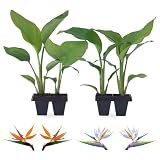


Plant Profile & Key Characteristics
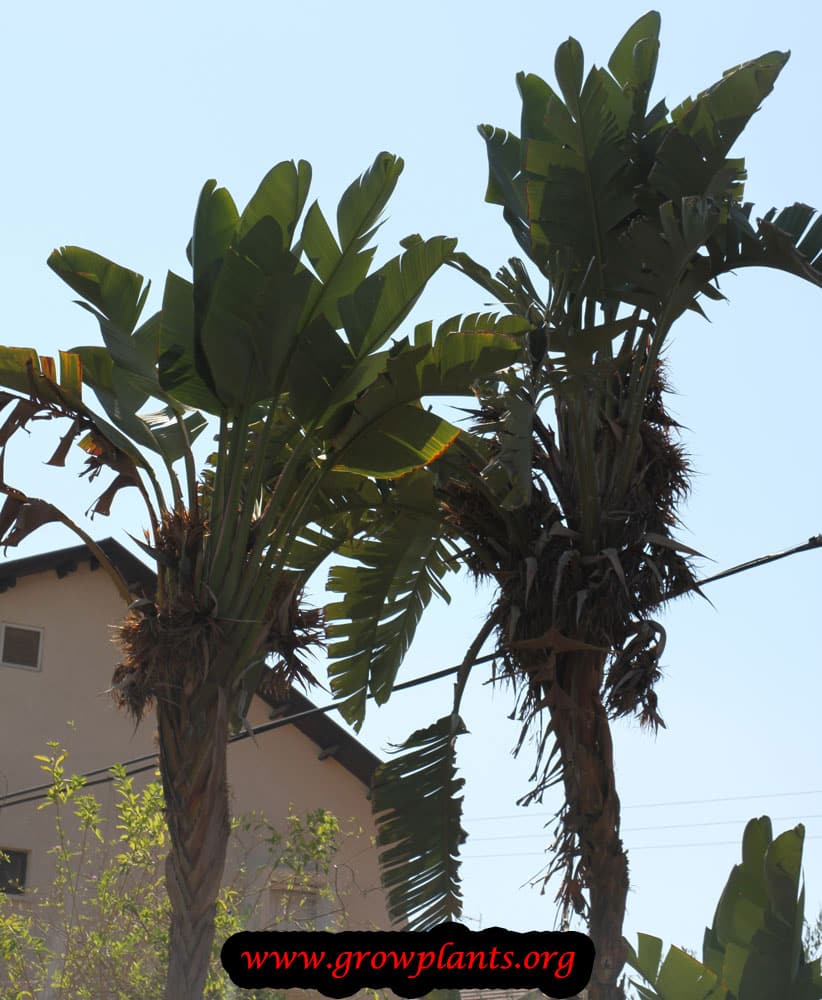
Overview: Giant white bird of paradise is a large evergreen clumping perennial reaching 5-10 m, with palm-like trunks and banana-like leaves. It is grown as a bold architectural ornamental for warm climates.
Quick Specifications
| Specification | Attribute |
|---|---|
| Plant Type / Life Cycle | Perennial |
| Foliage Type | Evergreen |
| Mature Size | 5-10 m tall (about 16-33 ft) |
| Growth Rate | Fast |
| Root System | Rhizomatous, clump-forming (roots can be invasive) |
| Toxicity | Mildly toxic (seeds and foliage) to people and pets if ingested |
| Hardiness | USDA zones 9+ |
Growth Form & Structure
- Height & Spread: 5-10 m (about 16-33 ft) tall; not suited to long-term container or indoor growing.
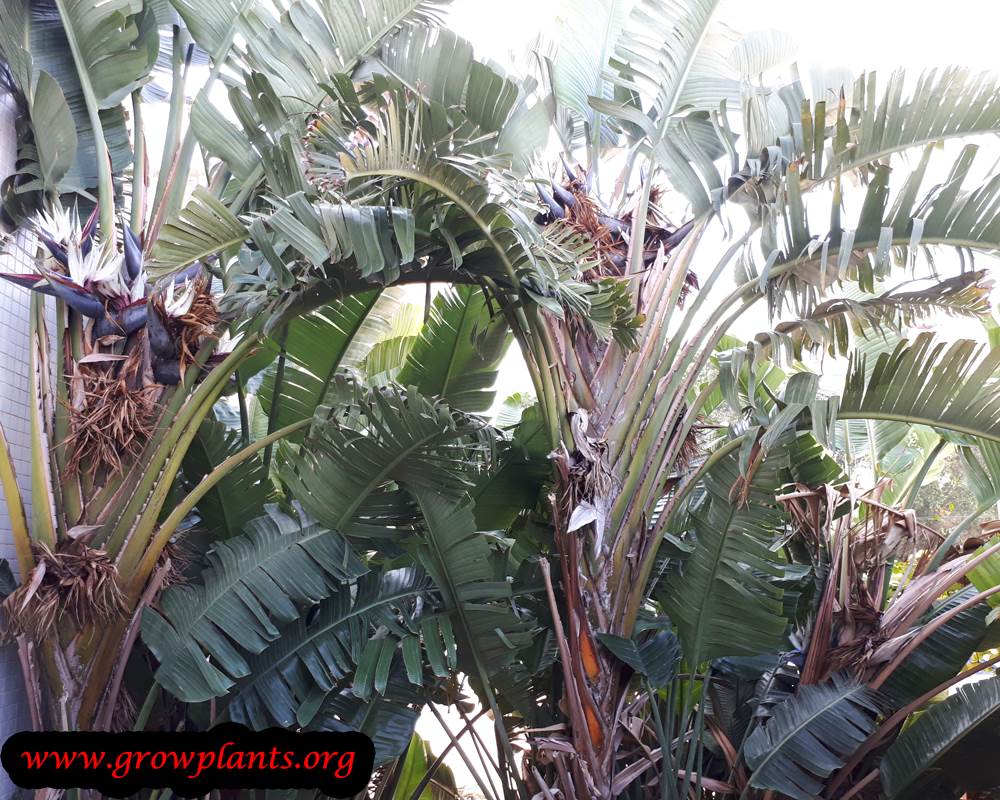
- Growth Habit & Form: Clump-forming and multi-stemmed, with a fan of large leaves atop woody trunks; can be invasive and aggressive.
- Lifespan & Maturity: Long-lived perennial; fast growing.
Anatomy & Physical Features
- Leaves & Foliage: Large green elliptic (banana-like) leaves on long stalks that merge into a trunk.
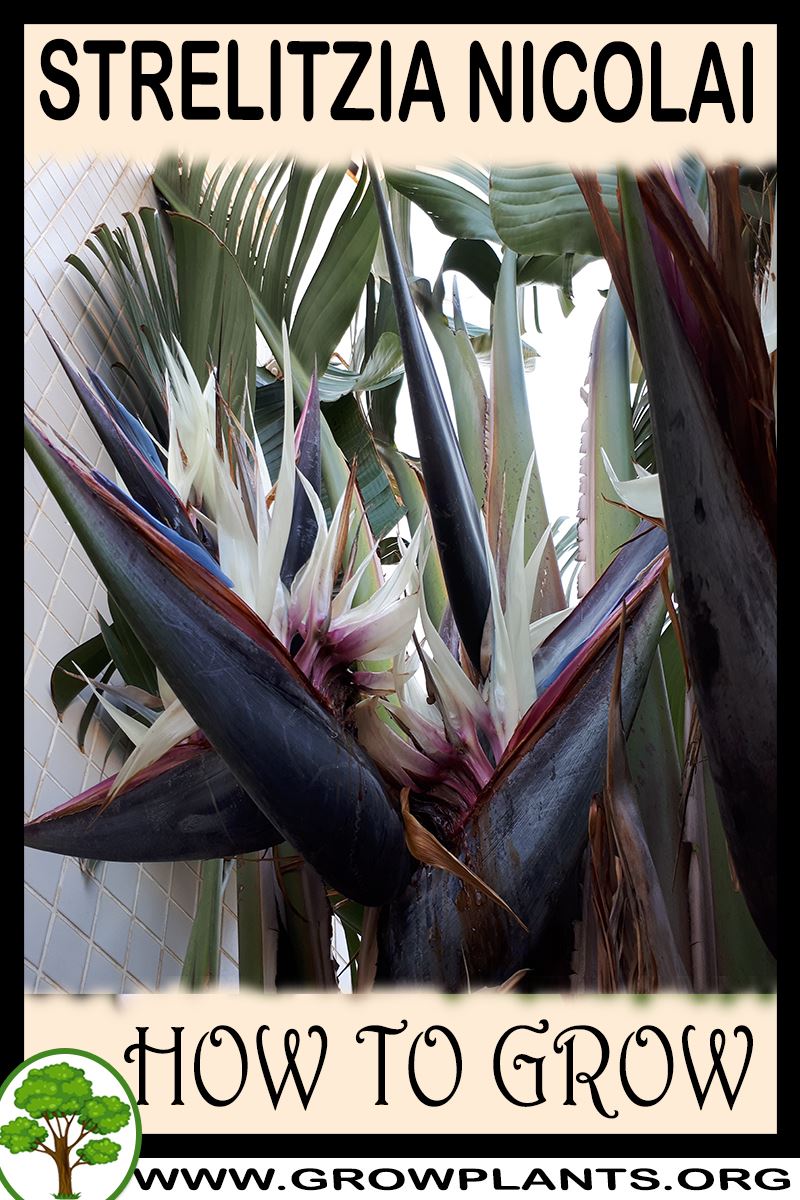
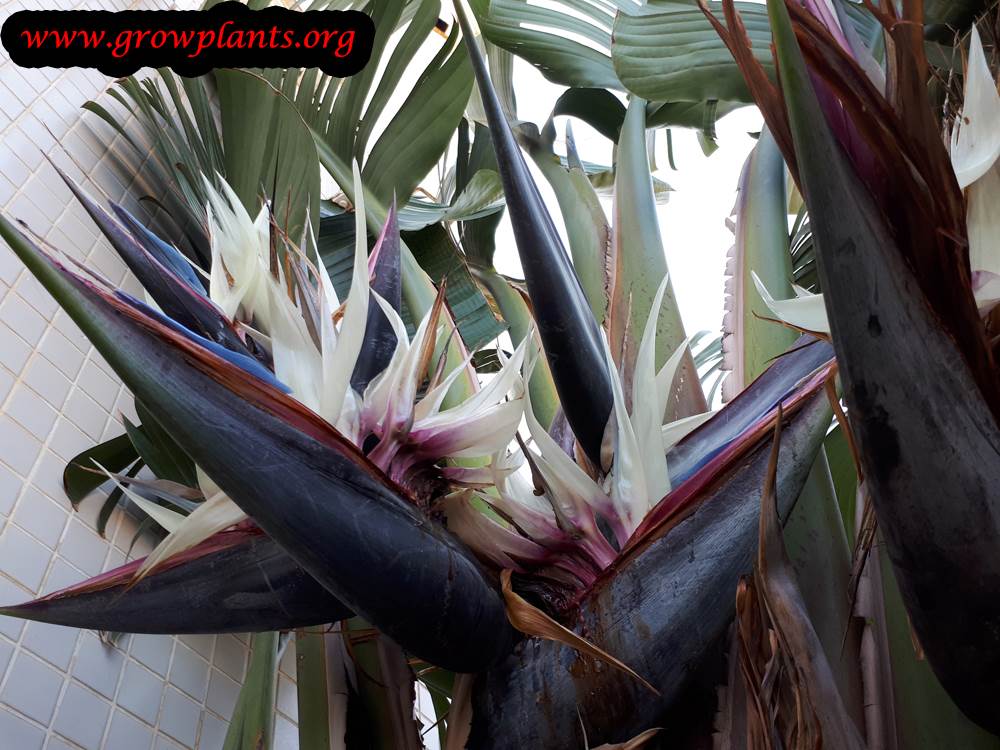
- Flower Characteristics: White-and-black bird-shaped flowers resembling a bird’s head; blooms much of the year.
Primary Uses & Landscape Value
- Functional & Ornamental Roles: Dramatic specimen and screen plant for tropical and subtropical gardens.
Care Guide: Planting, Soil & Watering
Overview: The giant white bird of paradise is a fast-growing, evergreen tropical that thrives in full sun to half shade in frost-free, warm climates (hardiness zone 9+). It takes average to generous water and well-drained soil, and it can be vigorous to the point of invasive.
Quick Care Requirements
| Requirement | Ideal Condition |
|---|---|
| Planting Season | Year-round in warm zones; in cooler areas plant in spring |
| Growth Rate | Fast |
| Soil Type | Fertile and well-draining |
| Water Need | Moderate to high; water regularly through the warm season |
Planting & Establishment
- Best Planting Season: In frost-free areas it can be planted year-round; in cooler climates wait for spring so it establishes in warmth. It tolerates only light cold, down to around -2C.
- How to Plant:
- Hole Preparation: Dig a generous hole wider than the large root ball, giving this big plant room to spread.
- Soil Amendments: Improve the soil with compost and organic matter to feed strong, fast growth while keeping drainage sharp.
- Planting Depth: Set the clump at the same depth it grew previously and firm the soil around the roots.
- Growth Speed & Expectations: A fast, vigorous grower that can reach 5-10 m and spread aggressively by suckers – give it space and be ready to contain it.
Soil, Watering & Drainage Care
- Soil Mix & Drainage Needs: Needs rich but free-draining soil so the roots never sit wet; it is not suited to small pots long term as it grows large.
- Watering Schedule & Technique:
- Young / Newly Planted: Water regularly while establishing to build the strong root system that supports its size.
- Established: Water deeply and regularly in the warm season, letting the surface dry slightly between soakings.
- Seasonal Adjustments: Water more in summer heat and much less in winter, when growth slows.
Climate, Light & Hardiness
Strelitzia nicolai, the giant white bird of paradise, is a large tropical-to-subtropical evergreen for warm, frost-free and lightly frosted climates, grown in full sun to half shade. It is a warmth-loving plant with limited cold tolerance - the site sets its lower limit at about −2 °C (28 °F) - so it is suited to tropical, subtropical and mild Mediterranean gardens.
Quick Climate Specifications
| Climate Zones | Tropical, subtropical and mild Mediterranean |
| USDA Hardiness Zones | Approx. 9 and above |
| Optimal Temp Range | approximately 18–30 °C (64–86 °F) |
| Cold Damage Begins | foliage damaged near 0 to 2 °C (32 to 36 °F) |
| Approx. Survival Minimum | site limit about −2 °C (28 °F); established plants brief only, young plants more tender |
| Frost Tolerance | Very Low |
| Light Conditions | Full Sun / Half Shade |
| Wind Tolerance | Low to Moderate (leaves shred in strong wind) |
| Salt / Coastal Tolerance | Moderate |
Sunlight & Light Exposure
Optimal Light Setup
Full sun gives the strongest, most upright growth and best flowering; the facts also allow half shade, which it takes well, though heavy shade draws it up and reduces bloom.
Direct Sun Requirement
It genuinely wants strong light in warm climates; some direct sun is needed for sturdy stems and flowers, with a little midday shade acceptable in the hottest sites.
Best Exposure & Orientation
A warm, bright, sheltered aspect that stays out of frost pockets and hard wind suits this big-leaved plant best.
Temperature Extremes & Hardiness
USDA Hardiness & Regional Limits
The site places it in USDA 9 and above, with a stated cold limit of about −2 °C (28 °F). That matches a tropical-subtropical plant grown outdoors only where hard frost is rare; in colder regions it is confined to the mildest, most sheltered microclimates.
Cold Damage & Winter Protection
Foliage is marked and browned by cold near 0 to 2 °C (32 to 36 °F), and the site sets the survival limit at about −2 °C (28 °F) - a threshold established plants may touch only briefly, with leaf and stem damage, while young plants are noticeably more cold-sensitive. Prolonged or harder frost kills top growth.
Frost Sensitivity
Very frost-sensitive: even a light frost damages the large leaves, and anything beyond a brief touch near the stated limit is harmful.
Extreme Heat Tolerance
As a tropical species it takes considerable heat well, provided moisture is adequate; very intense, dry heat can scorch leaf margins but heat is far less limiting than cold.
Wind, Humidity & Microclimate
Humidity Preferences
It enjoys warm, humid conditions typical of its tropical origins and grows lushly where the air is moist.
Wind Tolerance
The huge paddle leaves tear along the veins in strong wind - a natural habit, but a sheltered site keeps the foliage looking its best.
Coastal / Salt Tolerance
It has moderate tolerance of coastal conditions and some salt spray, making it usable in milder seaside gardens; this salt-spray tolerance is separate from tolerance of saline irrigation water.
Microclimate Recommendations
A warm, bright, sheltered, frost-free pocket - against a warm wall or among other planting - both protects the big leaves from wind and lifts it above its cold limit in marginal areas.
Growing in Pots, Balconies & Indoors
Strelitzia nicolai (giant white bird of paradise) is a very large, vigorous plant, and the grower does not recommend it as a houseplant or for long-term pots – it simply gets too big. While young, though, it can be kept in a large container on a bright, sheltered patio and moved under cover where winters are cold.
Quick Details
- Container Size: Large and heavy, and only practical while the plant is young – it will outgrow any pot.
- Indoor Suitability: Not recommended by the grower; too large for the long term, though a young plant tolerates a very bright indoor spot for a while.
- Best Spot: Full sun to half shade, warm and sheltered from strong wind.
- Soil & Drainage: Rich, organic and free-draining.
- Watering in Pots: Average to plenty of water in growth; pots dry fast, so check often, but never leave the roots waterlogged.
Indoors & On the Windowsill
- The grower’s verdict: Not a houseplant – it grows too tall and wide for indoor life. A young plant can sit in the brightest spot you have, but it will need moving outside or potting on as it grows.
- Overwintering: It is tender (roughly zone 9+), so in cold climates a young potted plant can be sheltered indoors or under cover over winter and returned to a bright position in the warm season.
- Safety: Bird of paradise is toxic if eaten – keep any young indoor plant away from children and pets.
On a Balcony or Patio
- Light, wind & weight: Give it the sunniest, most sheltered corner – wind shreds the big leaves – and remember that a mature plant in a pot is very heavy. Strong reflected heat from walls dries containers quickly, so check moisture often.
Choosing the Pot, Soil & Long-Term Care
- Pot & drainage: The largest sturdy pot you can manage, with strong drainage holes and no standing saucer of water.
- Potting mix: Rich, organic and free-draining.
- Feeding: Feed through the growing season, as potted plants use up and leach nutrients faster.
- Repotting: Pot on while young; once it is too big to move, it belongs in open ground where the climate allows.
Growing this plant in a greenhouse
A greenhouse can give strelitzia nicolai frost protection and cold protection.
Greenhouse at a glance
| Greenhouse suitability | Conditional - depends on your climate |
|---|---|
| Main benefits | frost protection, cold protection |
| Season extension | earlier spring & later autumn |
| Outdoor protection advisable below | about 5°C |
| Maintain greenhouse minimum | around 5°C for active growth |
| Suitable types | unheated greenhouse, polycarbonate greenhouse |
| Heating | Heating is optional - useful mainly for winter growing in cold areas. |
Related greenhouse guides
- Greenhouses: How to Choose the Right Greenhouse
- Polycarbonate Greenhouses: What to Look for Before Buying
Fertilizing & Feeding
A moderate feeder: steady balanced feeding through the growing season supports both foliage and flowers, with feeding tapering off as the plant slows for its rest period.
Quick Fertilizing Specs
| Feeding Level | Moderate |
|---|---|
| Main Nutrient Priority | Balanced nutrition with adequate nitrogen; no high-phosphorus bloom boosters |
| Best Feeding Period | Through the active growing and blooming season |
| Organic Options | Compost, well-rotted manure, or a balanced organic fertilizer |
| Soil pH | Slightly acidic to near neutral |
| Reduce/Stop Feeding | Reduce and stop feeding as growth slows into dormancy |
Feeding by Growth Stage
Spring growth flush
Support strong new leaves and stems as the plant breaks into active growth.
| Nutrient direction | A balanced complete fertilizer with adequate nitrogen to fuel foliage and stems. |
|---|---|
| Timing | As new growth begins in spring. |
| Frequency | Feed steadily through the active growth period, easing back as blooming approaches. |
| Fertilizer types | Balanced complete garden fertilizer, Slow-release granular fertilizer, Compost or other organic matter worked into the soil |
| Precautions | Avoid heavy nitrogen, which can push soft leafy growth at the expense of flowers. |
Blooming period
Sustain flowering with steady, balanced nutrition without forcing excess foliage.
| Nutrient direction | A balanced complete fertilizer; adequate nitrogen alongside potassium supports continued bloom, and high-phosphorus bloom boosters are not needed. |
|---|---|
| Timing | Through the flowering season. |
| Frequency | Keep feeding light and steady while the plant is in bloom. |
| Fertilizer types | Balanced complete fertilizer, Liquid feed for garden and container plants |
| Precautions | Skip high-phosphorus bloom formulas; they do not increase flowering and can build up in the soil. |
Repeat and extended bloom
Keep a long- or repeat-blooming plant fed steadily so flowering continues over an extended season.
| Nutrient direction | Light, steady balanced feeding to replace nutrients drawn down by continuous flowering. |
|---|---|
| Timing | Across the extended blooming period. |
| Frequency | Feed lightly and consistently while flowering continues. |
| Fertilizer types | Balanced liquid fertilizer, Slow-release granular fertilizer |
| Precautions | Avoid overfeeding; excess nitrogen favors leaves over flowers. |
Dormancy and winter rest
Let the plant rest through dormancy without pushing new growth.
| Nutrient direction | None – withhold fertilizer during dormancy. |
|---|---|
| Timing | Autumn into winter as growth stops. |
| Frequency | No feeding at this stage. |
| Fertilizer types | No feeding at this stage; do not fertilize while the plant is dormant. |
| Precautions | Do not fertilize until active growth resumes in spring. |
Nutrient Deficiency Signs & Corrections
Older, lower leaves turn pale green to yellow and overall growth slows.
| Possible causes | Low soil nitrogen or infrequent feeding, Nitrogen leached out by heavy watering or from sandy soil, Cold soil early in the season limiting uptake |
|---|---|
| Appears first on | Older, lower leaves |
| What to check | Recent feeding history, Soil drainage and watering habits, Soil temperature in early spring |
| Possible correction | Apply a balanced complete fertilizer at its labeled rate and make sure the soil is warm and evenly moist. |
New leaves yellow between the veins while the veins themselves stay green.
| Possible causes | High soil pH reducing iron availability, Poor drainage or waterlogged roots, Genuinely low iron in the soil |
|---|---|
| Appears first on | Youngest leaves |
| What to check | Soil pH, Drainage and root health, Signs of overwatering |
| Possible correction | Correct soil pH and improve drainage; apply a chelated iron product per its label if the problem persists. |
Leaf edges and tips brown and scorch, sometimes with a whitish crust on the soil surface.
| Possible causes | Over-application of fertilizer and salt buildup, Insufficient leaching, especially in containers, Underwatering that concentrates salts in the root zone |
|---|---|
| Appears first on | Leaf tips and margins |
| What to check | Recent fertilizer amounts, Salt crust on the soil or pot rim, Whether watering wets the whole root zone |
| Possible correction | Cut back on feeding and leach the root zone thoroughly with plain water to flush out the excess salts. |
The plant makes lush leafy growth but produces few flowers.
| Possible causes | Excess nitrogen from over-feeding, Too much shade or insufficient light, An immature or heavily pruned plant |
|---|---|
| Appears first on | Whole plant, where vegetative growth dominates |
| What to check | Nitrogen inputs and fertilizer type, Light exposure, Plant maturity and recent pruning |
| Possible correction | Ease off nitrogen, switch to a balanced fertilizer, and make sure the plant gets enough light. |
Pruning, Training & Seasonal Maintenance
Strelitzia nicolai (giant white bird of paradise) is a large, clump-forming evergreen monocot reaching 5–10 m, not a woody tree — each aerial stem is topped by a single growing point, so a stem cannot be ‘topped’ or headed to make it bush out. Its maintenance note is simply ‘dead leaves and flowers,’ and that is the heart of it: remove tattered old leaves and spent flower stalks, thin whole stems at the base to control the clump’s height and spread, and manage the suckers it uses to expand. It has an aggressive, invasive root system, so limiting the clump is as much about containment as appearance.
Quick Pruning & Maintenance Specs
| Pruning Tolerance | Removal only — whole leaves, spent flowers and whole stems; will NOT rebranch from a cut stem |
| Primary Maintenance | Removing dead/tattered leaves and spent flower stalks |
| Secondary Maintenance | Thinning whole stems at the base; managing suckers to control clump size |
| Typical Frequency | Ongoing tidy-up year-round; main tidy in spring in cooler climates |
| Main Objective | Control height and spread and keep the clump clean — not to shape a canopy |
| Young Plant Priority | Remove only damaged leaves; let the fan and clump establish |
| Mature Plant Priority | Thin whole stems, remove spent flowers and dead leaves, limit suckers |
| Best Tool Type | Snips/secateurs for leaves; loppers or a pruning saw for thick stems; a spade for suckers |
Pruning by Plant Age & Size
Newly Established
Remove only damaged or dead leaves. A young plant is building its first fan of leaves and its clump; there is nothing to shape and no benefit in cutting healthy foliage from a plant that is still establishing.
Young / Formative
No structural training is possible — you cannot create branches on a monocot. ‘Formative’ work is really deciding how many stems to allow: remove excess suckers early if you want a tidier, less crowded, more upright clump, or let them run if you want a broad multi-stem screen.
Mature / Established
On a mature clump, remove spent flower stalks and dead or wind-shredded lower leaves for appearance, and thin entire stems at ground level to reduce height and congestion. Because a cut stem will not resprout from the cut, all height and spread control is done by removing whole stems, not by shortening them.
Seasonal Pruning Schedule
Ongoing (Year-Round) Cleanup
In frost-free conditions the plant grows year-round; remove dead and tattered leaves and spent flower stalks whenever they occur. In cooler climates, save the main tidy for spring so old leaves give a little frost protection to the crown through winter.
Clump / Sucker Management
As the clump expands by suckers, decide each season which new shoots to keep and which to cut or dig out, both to control size and to check the invasive roots. This is the plant’s main ‘structural’ intervention.
Structural Pruning & Training
Height and spread are controlled by removing whole stems at the base, never by heading them — a Strelitzia stem has one apical growing point and does not rebranch, so cutting the top off simply leaves a dead stub while the plant pushes new growth from the base. To lower or narrow a clump, take out the tallest or outermost complete stems and thin suckers. Leaf removal is cosmetic and does not shape the plant.
Special Growth to Remove
- Dead, brown and wind-shredded leaves — cut the leaf stalk near the trunk for a clean look.
- Spent flower stalks — remove after the bird-shaped bloom fades.
- Suckers/offsets — remove selectively to control clump size and spread; keep a few to renew the clump.
- Whole over-tall or crowded stems — cut at the base to manage height and density.
Note that cutting a mature stem also removes that stem’s flowering — blooms form on established stems, so heavy stem removal trades size control for a temporary loss of flowers.
Container & Small-Space Pruning
In a container the restricted roots naturally limit its size, which is the main reason to grow this large plant in a pot. Keep it to a few stems by removing offsets, and remove dead leaves for looks; do not attempt to keep it small by cutting stem tops — that only disfigures it. A pot also helps contain the invasive roots.
Tools
Precision snips or secateurs for leaf stalks and spent flowers; loppers or a pruning saw for cutting thick, fibrous stems at the base; a sharp spade for severing and lifting suckers. Hedge shears have no place here — every cut is a selective removal of a whole leaf or stem.
Tool Hygiene & Disease Risk
Routine — Strelitzia has few serious tool-borne diseases. Clean, sharp tools give tidy cuts on the tough leaf stalks and stems; a pruning saw is often needed because mature stems are thick and fibrous. Disinfection between plants is not normally warranted.
Cut Placement & Technique
Cut dead leaves and spent flower stalks back to the trunk, not leaving long stubs. Remove whole stems with a low cut at ground level. Do not head or top a green stem — there is no bud below the cut to take over, so the stem dies back rather than rebranching. Sever suckers cleanly with a spade where they join the clump.
Heavy Pruning & Rejuvenation
A whole clump can be cut to the ground to renovate a tired or frost-damaged plant, and it will resprout from the base — but this sacrifices years of height and all flowering while it rebuilds, so it is a last-resort renovation, not routine pruning. Individual stems, by contrast, do not tolerate topping and will not regrow from a cut — height is only ever reduced by removing entire stems.
Post-Pruning Care
After removing stems or many leaves, keep the plant watered while it recovers and watch that newly exposed inner growth is not scorched if the clump was suddenly opened up in strong sun. Feeding is not needed to force regrowth; the clump reshoots from the base on its own. Watch for the invasive roots re-emerging beyond where you want them.
When NOT to Prune
Do not cut before or during cold weather in marginal climates — this plant is damaged below about −2°C, and old foliage helps protect the crown, so leave the tidy-up until spring. Do not strip large numbers of green, healthy leaves at once; they are the plant’s energy source and will not be quickly replaced.
Recommended Tools (by task)
- bypass_secateurs — cutting leaf stalks and spent flower stems back to the trunk.
- pruning_saw — severing thick, fibrous mature stems at the base for height and clump control.
- garden_spade — cutting out and lifting suckers to limit the clump and its invasive roots.
Pruning Troubleshooting
| Problem | Possible Cause | What to Check | Corrective Action |
| Cut stem died back / did not bush out | Stem was topped/headed — a monocot with one growing point cannot rebranch | Whether tops were cut instead of whole stems | Remove the dead stub at the base; control height only by taking out whole stems |
| Tall, crowded clump with few flowers | Too many stems/suckers; congestion, or plant still immature | Stem density and clump age | Thin whole stems and excess suckers; allow strong stems to mature to flowering size |
| Leaves constantly ragged/shredded | Wind exposure — largely normal for the big paddle leaves | Site exposure | Remove the worst leaves for looks; provide shelter; accept some tearing as normal |
| Plant spreading / roots lifting paving | Aggressive, invasive root and sucker system | Suckers and roots beyond the intended area | Remove outlying suckers, contain with a barrier or grow in a large container |
Propagation Guide
Giant white bird of paradise is easiest from division of its suckering clumps, which gives large flowering-size plants quickly and reproduces the parent exactly. Seed also works but germinates slowly and erratically, so division is the practical choice — overall a Moderate plant to propagate.
Quick Propagation Specs
| Best Propagation Method | Division of clumps / suckers |
| Alternative Methods | Seed |
| Propagation Difficulty | Moderate |
| Seed True-to-Type | Mostly uniform for the species; division is exact |
| Vegetative True-to-Type | Yes — divisions reproduce the parent |
| Best Propagation Season | Warm part of the year; spring in cooler climates |
| Seed Germination Time | Slow and erratic, often over many weeks |
Growing from Seed
Seed Handling & Pre-Sowing
Each seed carries a tuft of bright orange woolly aril; remove it and soak the seed before sowing to help water penetrate the hard coat.
Germination Conditions & Time
Sow into a warm, moist mix and keep it warm; germination is slow and uneven, often spread over many weeks to months, so be patient rather than assuming failure.
Division, Offsets, Pups & Suckers
Division is the reliable method for this clumping plant.
- Separate rooted suckers or side crowns from the clump, keeping a good share of roots on each division.
- Divide in warm weather (spring where winters are cool), and cut back some of the large leaves to reduce water loss while the division re-roots.
Bloom & Flower Guide
Quick Details
- Bloom Season: Can flower year-round in warm climates; mainly spring and summer where it is cooler
- Time to First Bloom: Slow – usually several years, only once the plant is large and well established
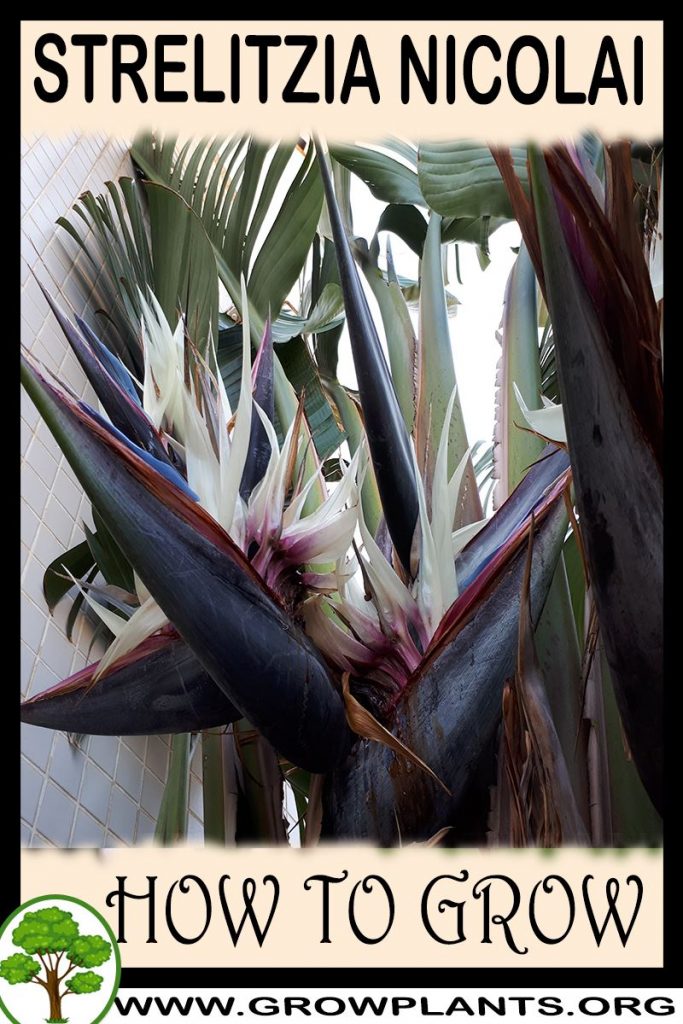
- Flower Appearance: Large bird-shaped bloom, white sepals with a dark bluish-black tongue, emerging from a boat-shaped bract
- Edibility: Not edible – ornamental only; parts of the plant (especially the seeds) are considered toxic if eaten
Detailed Blooming Overview
The giant white bird of paradise carries dramatic, bird-like flowers that push out of a hard, boat-shaped bract high among the banana-like leaves. The white sepals stand up like a crest while a dark blue-black “tongue” forms the beak, giving the bloom its striking resemblance to a bird’s head.
Flower Characteristics
- Bird-shaped flower: white sepals with a bluish-black central tongue.
- Each bloom emerges from a stiff, dark, boat-shaped bract (spathe).
- In the wild the flowers are bird-pollinated – sunbirds perch on the bract to reach the nectar.
Bloom Care & Thinning
- Encouraging flowers: Blooms only on mature plants in full sun; snug roots and steady warmth help trigger flowering.
- Tidying: Remove spent bracts and old flower stalks once they brown to keep the plant looking clean.
Bloom Health & Protection
- Safety: This is a toxic ornamental – the seeds and other parts can cause stomach upset if eaten, so keep flowers and pods away from children and pets.
- Scale and mealybugs: These can hide in the bracts; a wipe with horticultural oil helps clear them.
Pests, Diseases & Troubleshooting
The giant bird-of-paradise is a tough, architectural plant with few serious enemies; outdoors it is largely pest-free, while indoors and under glass it mainly picks up sap-suckers – scale, mealybugs, spider mites and whitefly – that thrive in still, dry air. Its real vulnerability is not living pests but overwatering and cold, which cause root rot and leaf damage. Keep it clean, ventilated and never waterlogged.
Quick Troubleshooting Overview
| Issue / Pest | Main Symptom | Primary Solution |
|---|---|---|
| Scale / mealybug | Brown bumps or white fluff, sticky honeydew | Wipe off, dab with alcohol, horticultural oil |
| Spider mite | Dusty stippling and webbing in dry heat | Raise humidity, wipe leaves, insecticidal soap |
| Whitefly | White clouds under leaves, sooty mould | Sticky traps, oil/soap on undersides |
| Root rot | Yellowing, soft base, collapse | Ease off water, improve drainage, repot fresh |
| Leaf tearing / browning | Split or brown-edged leaves | Shelter from wind, avoid salts, steady moisture |
Common Pests & Management
- Scale insects (Coccus / Saissetia spp.):
- Symptoms: Fixed brown or blister-like bumps along leaf stalks, midribs and undersides, sucking sap and excreting honeydew that turns black with sooty mould; growth weakens and yellows.
- Prevention & Control: Wipe or scrape scale off with a soft cloth, dab stubborn ones with a cotton bud dipped in surgical spirit, and smother the rest with horticultural oil, repeating to catch crawlers. Keep the plant vigorous and remove badly infested leaves.
- Mealybugs (Pseudococcus / Planococcus spp.):
- Symptoms: White cottony tufts in leaf axils and along veins, with honeydew and sooty mould; colonies sap vigour and can spread to the roots in pots.
- Prevention & Control: Dab colonies with alcohol on a cotton bud, wash the plant, and treat with insecticidal soap or horticultural oil; isolate infested plants and check the roots when repotting.
- Two-spotted spider mite (Tetranychus urticae):
- Symptoms: Fine pale stippling that bronzes whole leaves, with delicate webbing on the undersides and growing tips in hot, dry, dusty spells; heavily fed leaves dry and drop. Look for the moving specks with a hand lens.
- Prevention & Control: Raise humidity and hose foliage down regularly, and never let plants suffer dust or drought stress. Introduce predatory mites (Phytoseiulus persimilis) under cover. Treat hot-spots with insecticidal soap or horticultural oil, repeating at 5-7 day intervals to catch newly hatched mites.
- Glasshouse whitefly (Trialeurodes vaporariorum):
- Symptoms: Tiny white moth-like insects that rise in a cloud when foliage is disturbed; scale-like nymphs on leaf undersides suck sap and excrete honeydew, leading to sooty mould and weak, yellowing growth.
- Prevention & Control: Hang yellow sticky traps to monitor and thin the adults; encourage the parasitic wasp Encarsia formosa under cover and keep plants unstressed. Spray insecticidal soap or horticultural oil onto leaf undersides, repeating every few days to break the life cycle.
- Aphids (Aphis / Myzus / Macrosiphum spp.):
- Symptoms: Small soft-bodied insects (green, black or grey) clustering on soft new growth and emerging leaves, mainly on young or indoor plants; they suck sap, causing curled, distorted and yellowing growth plus a sticky honeydew that blackens with sooty mould and draws ants. Winged forms spread them plant to plant and can carry viruses.
- Prevention & Control: Blast colonies off with a firm jet of water and pinch out badly infested tips; encourage and protect ladybirds, lacewings and hoverflies, and grow flowering companions to feed them. For persistent outbreaks use insecticidal soap or a light horticultural/neem oil, wetting leaf undersides in the cool of the evening to spare pollinators.
Diseases & Fungal Issues
- Root & crown rot (Phytophthora / Pythium spp.):
- Symptoms: Yellowing, wilting despite wet soil, a soft or blackened base and, eventually, collapse – the commonest way these plants are killed, from soggy, airless soil.
- Treatment & Management: Grow in free-draining mix, let the top of the soil dry between waterings, and never leave the pot standing in water. Cut away rotted roots, repot into fresh gritty mix, and ease off watering to let it recover.
- Leaf spot (Cercospora / Colletotrichum spp.):
- Symptoms: Brown or grey spots, sometimes ringed, on older leaves in warm, humid, crowded conditions; mostly cosmetic on a healthy plant.
- Treatment & Management: Improve airflow, avoid wetting the foliage in the evening, and remove badly spotted leaves; a copper spray is rarely needed but helps under persistent damp.
Growing Difficulties & Abiotic Problems
- Root rot from overwatering:
- Cause & Symptoms: Constantly wet, heavy soil suffocates the roots and invites rot – this plant tolerates drought far better than waterlogging.
- Correction Strategy: Use a gritty, free-draining medium, water thoroughly then wait until the surface dries, and make sure pots and beds drain freely.
- Leaf shredding & brown edges:
- Cause & Symptoms: The huge paddle leaves naturally split in wind (a survival adaptation), while brown, crispy margins come from cold, dry air, salt build-up or erratic watering.
- Correction Strategy: Shelter from strong wind if intact leaves matter, keep watering even, flush pots occasionally to wash out salts, and protect from cold – it is damaged by frost.
- Invasive suckering:
- Cause & Symptoms: It clumps and suckers vigorously and can heave paving and crowd neighbours over time (the ‘invasive, aggressive’ trait noted).
- Correction Strategy: Site it with room to spread, remove unwanted suckers, and contain the clump by dividing it periodically.
What Helps – Products & Tools
Horticultural or neem oil and insecticidal soap cover scale, mealybug, mite and whitefly; a cotton bud of surgical spirit spot-treats stubborn scale and mealybug; yellow sticky traps monitor whitefly. For health, the key ‘tools’ are a free-draining mix and restraint with the watering can rather than any fungicide.