

Plant Profile & Key Characteristics
Overview: Bird of paradise (Strelitzia reginae) is an evergreen, clump-forming perennial grown for its iconic orange-and-blue bird-shaped flowers and bold paddle leaves. It is a landscape and cut-flower plant for tropical to Mediterranean climates.
Quick Specifications
| Specification | Attribute |
|---|---|
| Plant Type / Life Cycle | Perennial (evergreen, clump-forming) |
| Foliage Type | Evergreen |
| Mature Size | 1-2 m (3-6 ft) |
| Growth Rate | Moderate to fast |
| Toxicity | Mildly toxic if ingested (seeds and foliage) |
| Hardiness | USDA zone 10+ |
Growth Form & Structure
- Height & Spread: 1-2 m (3-6 ft) clump; best in the ground rather than as a houseplant.
- Growth Habit & Form: Clumping evergreen perennial with leathery paddle leaves on long stalks that merge into a trunk-like base.
- Lifespan & Maturity: Fast to establish and long-lived; clumps can spread vigorously.
Anatomy & Physical Features
- Leaves & Foliage: Large green elliptic paddle-shaped leaves on long petioles.
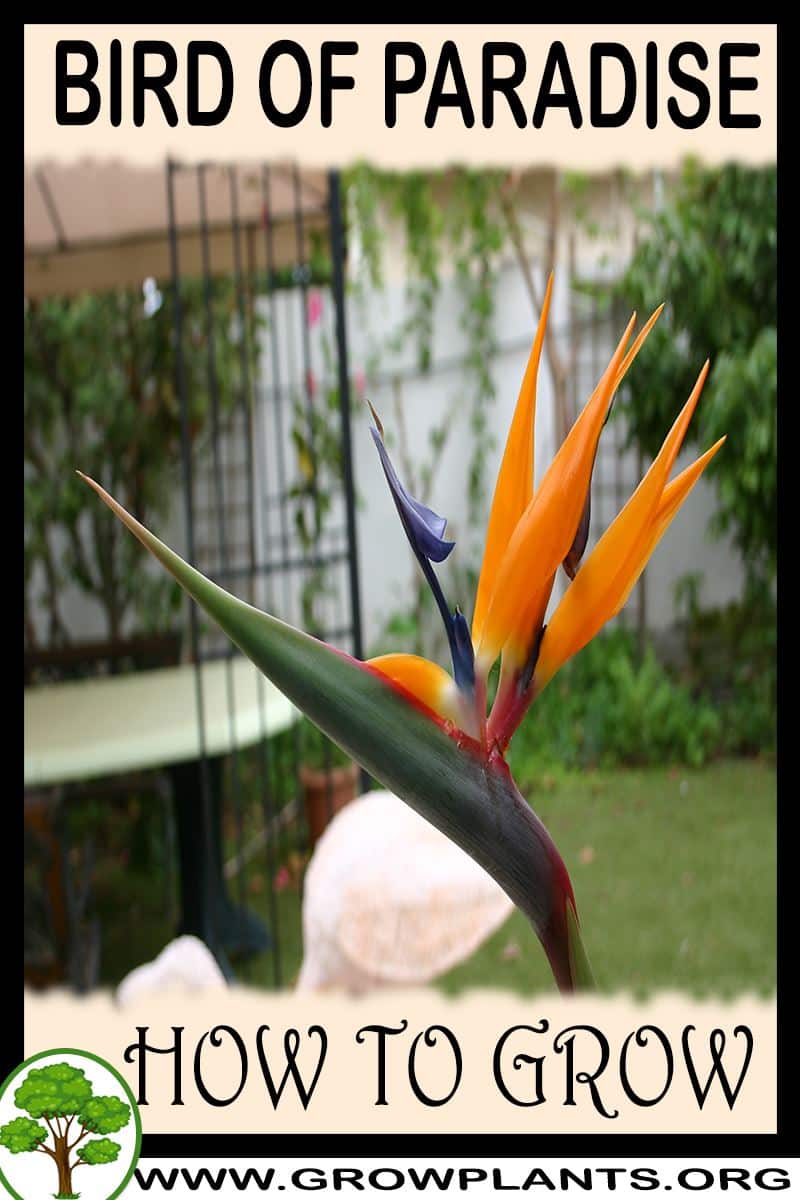
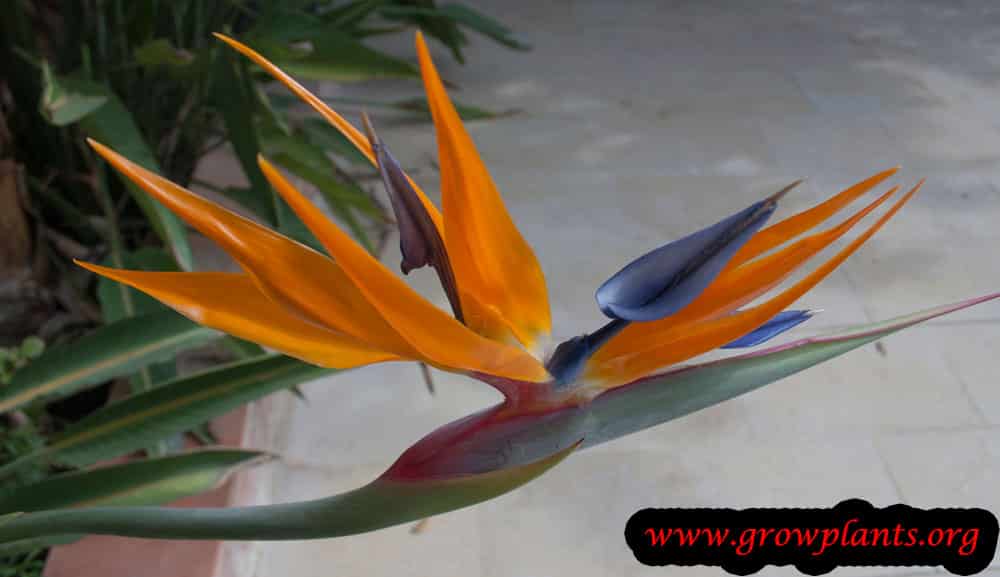
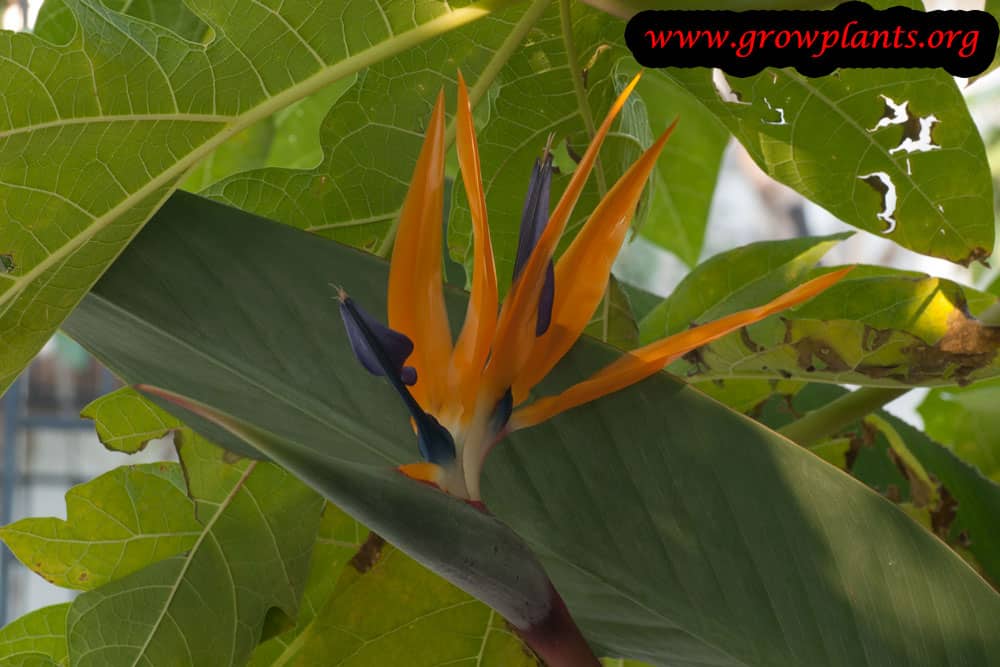
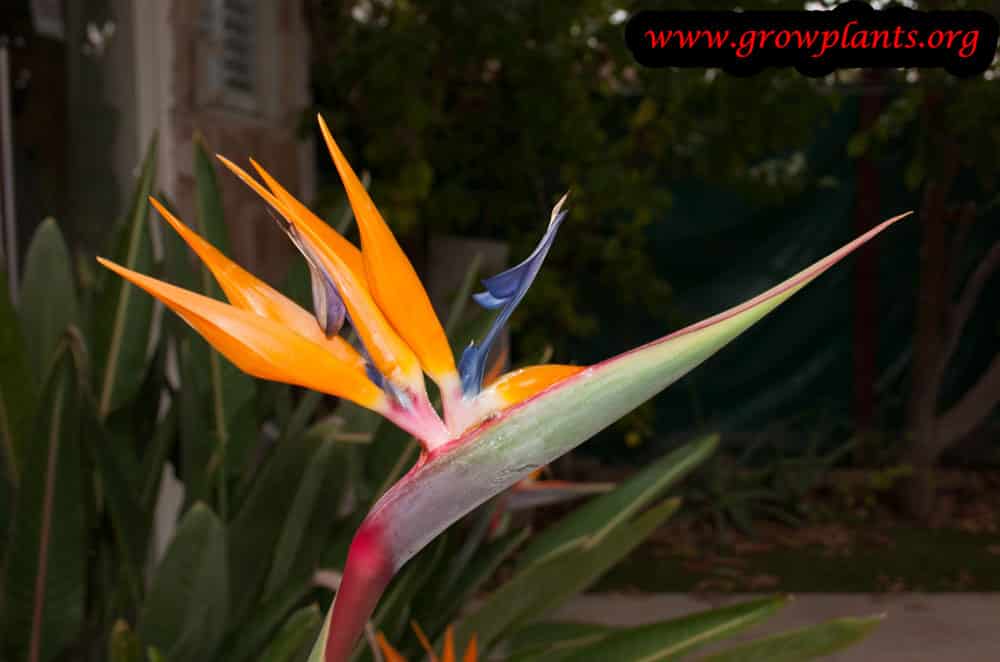
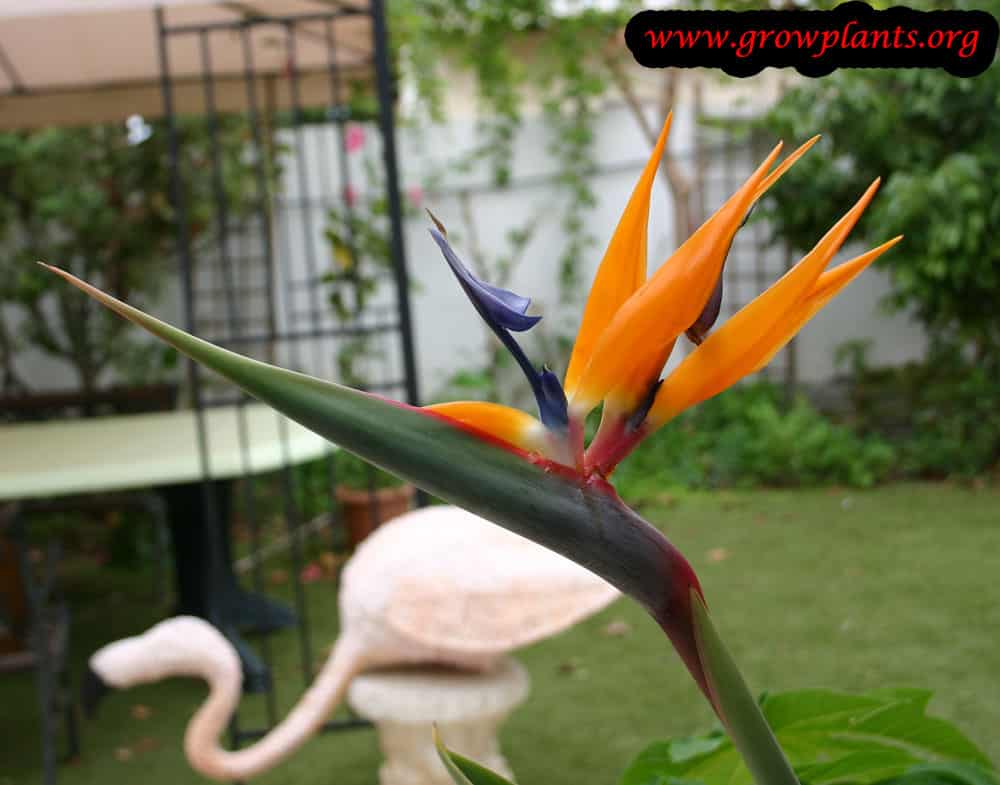
- Flower Characteristics: Iconic bird-shaped bloom – orange sepals and blue petals emerging from a green boat-shaped bract (full detail in the Bloom guide).
Primary Uses & Landscape Value
- Functional & Ornamental Roles: Ornamental focal and landscape plant; long-lasting cut flower.
Care Guide: Planting, Soil & Watering
Overview: Bird of paradise is a bold, fast-growing evergreen that thrives in full sun to light shade with rich, well-draining soil. It enjoys generous, regular watering through the warm season but needs free drainage, as its fleshy roots rot in waterlogged ground.
Quick Care Requirements
| Requirement | Ideal Condition |
|---|---|
| Planting Season | Year-round in warm, frost-free areas; in spring where winters are cool |
| Growth Rate | Fast |
| Soil Type | Rich, fertile, well-draining loam |
| Water Need | Moderate to high – water generously in growth, letting the surface dry between waterings |
Planting & Establishment
- Best Planting Season: In frost-free climates (zone 10+) it can be planted at any time of year; where winters are cool, plant in spring so it establishes through the warm months.
- How to Plant:
- Hole Preparation: Dig a hole roughly twice the width of the root ball and the same depth, loosening the sides to help the thick roots spread.
- Soil Amendments: Work plenty of compost or well-rotted organic matter into the backfill to enrich the soil and improve both moisture-holding and drainage.
- Planting Depth: Set the plant at the same depth it grew in its pot, with the crown at soil level; do not bury the base of the stems.
- Growth Speed & Expectations: Expect fast growth into a large clump under warm, sunny conditions, with plants taking a few years to reach flowering maturity.
Soil, Watering & Drainage Care
- Soil Mix & Drainage Needs: Provide deep, fertile, well-draining soil that holds some moisture without staying wet; ensure excess water escapes freely to protect the roots from rot.
- Watering Schedule & Technique:
- Young / Newly Planted: Water regularly after planting to keep the root zone evenly moist while a strong root system develops.
- Established: Water deeply and generously in warm weather, allowing the top few centimetres to dry before watering again.
- Seasonal Adjustments: Increase watering through hot, dry spells and reduce it markedly in cool weather, keeping the plant on the drier side over winter.
Climate, Light & Hardiness
Bird of paradise (Strelitzia reginae) is a subtropical-to-tropical evergreen perennial for warm, essentially frost-free climates, grown in full sun to half shade for its striking orange-and-blue flowers. It is warmth-loving with little frost tolerance - the site sets its lower limit at about −2 °C (28 °F) - suiting tropical, subtropical and mild Mediterranean gardens.
Quick Climate Specifications
| Climate Zones | Tropical, subtropical and mild Mediterranean |
| USDA Hardiness Zones | Approx. 10 and above |
| Optimal Temp Range | approximately 18–30 °C (64–86 °F) |
| Cold Damage Begins | foliage and flowers damaged near 0 to 2 °C (32 to 36 °F) |
| Approx. Survival Minimum | site limit about −2 °C (28 °F); established plants brief only, young plants more tender |
| Frost Tolerance | Very Low to Low |
| Light Conditions | Full Sun / Half Shade |
| Wind Tolerance | Moderate |
| Salt / Coastal Tolerance | Moderate |
Sunlight & Light Exposure
Optimal Light Setup
Full sun gives the most abundant flowering and sturdiest clumps; the facts also allow half shade, which it tolerates, though bloom is reduced in deeper shade.
Direct Sun Requirement
Good direct light drives flowering - too much shade produces leaves at the expense of blooms - while a little relief from the fiercest afternoon sun is fine in very hot sites.
Best Exposure & Orientation
A warm, bright, sheltered aspect out of frost pockets gives the best flower display.
Temperature Extremes & Hardiness
USDA Hardiness & Regional Limits
The site places it in USDA 10 and above, with a stated cold limit of about −2 °C (28 °F) - slightly more cold-cautious than its larger relative S. nicolai. It is an outdoor plant for essentially frost-free climates, and in cooler regions it is kept to the mildest, most sheltered spots.
Cold Damage & Winter Protection
Leaves and flower stems are damaged by cold near 0 to 2 °C (32 to 36 °F), and the site sets the survival limit at about −2 °C (28 °F) - a threshold an established clump may touch only briefly, with foliage burn, while young plants are more cold-sensitive. Harder or prolonged frost cuts the plant back.
Frost Sensitivity
Frost-sensitive: light frost burns the foliage and spoils flowers, and only a brief touch near the stated limit is survivable.
Extreme Heat Tolerance
It takes subtropical heat well with adequate moisture; very intense, dry heat may scorch leaf edges, but heat is much less limiting than cold.
Wind, Humidity & Microclimate
Humidity Preferences
It grows well in warm, moderately humid conditions and tolerates ordinary garden humidity without trouble.
Wind Tolerance
The tough, leathery leaves are more wind-firm than the giant S. nicolai, though strong wind can still tatter foliage and knock over the flower stems.
Coastal / Salt Tolerance
It has moderate tolerance of coastal exposure and salt spray, and is a popular seaside-garden plant in mild climates; this salt-spray tolerance is separate from tolerance of saline irrigation water.
Microclimate Recommendations
A warm, bright, sheltered, frost-free pocket - such as against a sunny wall - both encourages flowering and lifts the plant above its cold limit in marginal areas.
Growing in Pots, Balconies & Indoors
Bird of paradise (Strelitzia reginae) is a bold, clump-forming plant. The grower does not list it as a houseplant or a pot plant, but in practice it is the most container-friendly bird of paradise – young plants are widely grown in large pots on a bright patio and kept in a very bright room over winter in cold climates. Over time a happy clump grows large and heavy, which is why he steers it toward open ground.
Quick Details
- Container Size: A large, heavy pot; workable while the clump is young, but it fills a container fast and eventually wants more room.
- Indoor Suitability: Not listed by the grower, but a young plant does well in a large pot in a very bright, sunny room; it needs strong light to flower and grows big over time.
- Best Spot: Full sun to half shade, warm and sheltered.
- Soil & Drainage: Rich, organic and free-draining.
- Watering in Pots: Average to plenty of water in growth; pots dry fast, but never leave the roots waterlogged.
Indoors & On the Windowsill
- Bright rooms only: Though the grower does not recommend it, a young plant is a fine large indoor specimen in a very bright, sunny position – it will not flower in dim light and needs the brightest window you have.
- Overwintering: It is tender (roughly zone 10+), so in cold climates bring a potted plant into a bright, frost-free spot over winter and return it outdoors when it warms.
- Safety: Bird of paradise is toxic if eaten – keep indoor plants away from children and pets.
On a Balcony or Patio
- Light, wind & weight: Give it the sunniest, most sheltered spot; wind tatters the leaves and a large potted clump is heavy. Reflected heat from walls dries pots quickly, so check moisture often in warm weather.
Choosing the Pot, Soil & Long-Term Care
- Pot & drainage: A large, sturdy pot with strong drainage holes and no standing saucer of water.
- Potting mix: Rich, organic and free-draining.
- Feeding: Feed through the growing season, as potted plants leach nutrients faster.
- Repotting: Pot on as the clump fills its container; it flowers well slightly pot-bound, but very old, crowded clumps are best divided or moved to open ground.
Growing this plant in a greenhouse
A greenhouse can give bird of paradise flower frost protection and cold protection.
Greenhouse at a glance
| Greenhouse suitability | Conditional - depends on your climate |
|---|---|
| Main benefits | frost protection, cold protection |
| Season extension | earlier spring & later autumn |
| Outdoor protection advisable below | about 5°C |
| Maintain greenhouse minimum | around 5°C for active growth |
| Suitable types | unheated greenhouse, polycarbonate greenhouse |
| Heating | Heating is optional - useful mainly for winter growing in cold areas. |
Related greenhouse guides
- Greenhouses: How to Choose the Right Greenhouse
- Polycarbonate Greenhouses: What to Look for Before Buying
Fertilizing & Feeding
A moderate feeder: steady balanced feeding through the growing season supports both foliage and flowers, with feeding tapering off as the plant slows for its rest period.
Quick Fertilizing Specs
| Feeding Level | Moderate |
|---|---|
| Main Nutrient Priority | Balanced nutrition with adequate nitrogen; no high-phosphorus bloom boosters |
| Best Feeding Period | Through the active growing and blooming season |
| Organic Options | Compost, well-rotted manure, or a balanced organic fertilizer |
| Soil pH | Slightly acidic to near neutral |
| Reduce/Stop Feeding | Reduce and stop feeding as growth slows into dormancy |
Feeding by Growth Stage
Spring growth flush
Support strong new leaves and stems as the plant breaks into active growth.
| Nutrient direction | A balanced complete fertilizer with adequate nitrogen to fuel foliage and stems. |
|---|---|
| Timing | As new growth begins in spring. |
| Frequency | Feed steadily through the active growth period, easing back as blooming approaches. |
| Fertilizer types | Balanced complete garden fertilizer, Slow-release granular fertilizer, Compost or other organic matter worked into the soil |
| Precautions | Avoid heavy nitrogen, which can push soft leafy growth at the expense of flowers. |
Blooming period
Sustain flowering with steady, balanced nutrition without forcing excess foliage.
| Nutrient direction | A balanced complete fertilizer; adequate nitrogen alongside potassium supports continued bloom, and high-phosphorus bloom boosters are not needed. |
|---|---|
| Timing | Through the flowering season. |
| Frequency | Keep feeding light and steady while the plant is in bloom. |
| Fertilizer types | Balanced complete fertilizer, Liquid feed for garden and container plants |
| Precautions | Skip high-phosphorus bloom formulas; they do not increase flowering and can build up in the soil. |
Repeat and extended bloom
Keep a long- or repeat-blooming plant fed steadily so flowering continues over an extended season.
| Nutrient direction | Light, steady balanced feeding to replace nutrients drawn down by continuous flowering. |
|---|---|
| Timing | Across the extended blooming period. |
| Frequency | Feed lightly and consistently while flowering continues. |
| Fertilizer types | Balanced liquid fertilizer, Slow-release granular fertilizer |
| Precautions | Avoid overfeeding; excess nitrogen favors leaves over flowers. |
Dormancy and winter rest
Let the plant rest through dormancy without pushing new growth.
| Nutrient direction | None – withhold fertilizer during dormancy. |
|---|---|
| Timing | Autumn into winter as growth stops. |
| Frequency | No feeding at this stage. |
| Fertilizer types | No feeding at this stage; do not fertilize while the plant is dormant. |
| Precautions | Do not fertilize until active growth resumes in spring. |
Nutrient Deficiency Signs & Corrections
Older, lower leaves turn pale green to yellow and overall growth slows.
| Possible causes | Low soil nitrogen or infrequent feeding, Nitrogen leached out by heavy watering or from sandy soil, Cold soil early in the season limiting uptake |
|---|---|
| Appears first on | Older, lower leaves |
| What to check | Recent feeding history, Soil drainage and watering habits, Soil temperature in early spring |
| Possible correction | Apply a balanced complete fertilizer at its labeled rate and make sure the soil is warm and evenly moist. |
New leaves yellow between the veins while the veins themselves stay green.
| Possible causes | High soil pH reducing iron availability, Poor drainage or waterlogged roots, Genuinely low iron in the soil |
|---|---|
| Appears first on | Youngest leaves |
| What to check | Soil pH, Drainage and root health, Signs of overwatering |
| Possible correction | Correct soil pH and improve drainage; apply a chelated iron product per its label if the problem persists. |
Leaf edges and tips brown and scorch, sometimes with a whitish crust on the soil surface.
| Possible causes | Over-application of fertilizer and salt buildup, Insufficient leaching, especially in containers, Underwatering that concentrates salts in the root zone |
|---|---|
| Appears first on | Leaf tips and margins |
| What to check | Recent fertilizer amounts, Salt crust on the soil or pot rim, Whether watering wets the whole root zone |
| Possible correction | Cut back on feeding and leach the root zone thoroughly with plain water to flush out the excess salts. |
The plant makes lush leafy growth but produces few flowers.
| Possible causes | Excess nitrogen from over-feeding, Too much shade or insufficient light, An immature or heavily pruned plant |
|---|---|
| Appears first on | Whole plant, where vegetative growth dominates |
| What to check | Nitrogen inputs and fertilizer type, Light exposure, Plant maturity and recent pruning |
| Possible correction | Ease off nitrogen, switch to a balanced fertilizer, and make sure the plant gets enough light. |
Pruning, Training & Seasonal Maintenance
Bird of paradise (Strelitzia reginae) is a clump-forming evergreen perennial that grows from a crown of long-stalked leaf fans rather than woody branches, so it has almost no true pruning — maintenance is limited to removing spent flower stalks and old, collapsed leaves at the base. There is no framework to build and no wood to renew: cutting healthy green foliage never makes the plant flower better and only removes the food factory that fuels the next bloom. The plant flowers from stalks that rise directly out of the crown, so shy flowering is corrected by light, feeding and clump age, not by pruning.
Quick Pruning & Maintenance Specs
| Pruning Tolerance | Low — sanitary tidy-up only |
| Primary Maintenance Window | Any time a leaf or flower stalk is spent (year-round in frost-free conditions) |
| Typical Frequency | Occasional — a few cuts through the year |
| Main Objective | Remove dead leaves and finished flower stalks; keep the clump open and clean |
| Young Plant Priority | Leave all healthy foliage — the plant needs several years of leaf mass to reach flowering size |
| Mature Plant Priority | Deadhead, strip old outer leaves, divide overcrowded clumps |
| Best Tool Type | Bypass secateurs for stalks; a spade for division |
| Avoid Cutting | Healthy green leaves and undamaged crowns |
Pruning by Plant Age & Size
Newly Established
Remove only leaves damaged in transplanting. A young Strelitzia is building the leaf count it needs to flower (often three to five years from a division or seedling), so every healthy fan should be kept.
Young / Formative
No structural training applies — there is no leader, no scaffold and no habit to shape. The clump simply widens as new fans emerge from the rhizome. Keep it upright and let it bulk up.
Mature / Established
Cut each flower stalk back to the base once the bloom collapses, and pull or cut the oldest outer leaves as they yellow so light reaches the centre of the clump. When the clump becomes congested and flowering thins, lift and divide it rather than prune it.
Seasonal Pruning Schedule
Ongoing Sanitary
Objective: keep the clump clean and disease-free. Remove: browned or frost-nipped leaves (this plant is damaged below about –2°C) and finished flower stalks. Do NOT remove: firm green leaves or emerging flower spikes. Response: none dramatic — the plant simply looks tidier and pushes light to the crown.
After Flowering
Objective: tidy and redirect energy to the rhizome. Remove: the spent stalk down at the base. Impact: removing a finished stalk does not affect future flowering, which comes from new stalks off the crown.
Structural Pruning & Training
None. Strelitzia has no branches to select, thin or head back. Size is managed by division, not by cutting the top; height and spread are inherent to the clump and to how many fans it carries.
Special Growth to Remove
The clump spreads steadily by rhizome (the source notes an aggressive habit), so the main “special growth” decision is whether to lift and split offset fans to control width and rejuvenate flowering. Remove: fully spent flower stalks and dead outer leaves. Retain: healthy outer fans — they are not suckers to be cut away but the plant’s active foliage. Flower stalks arise from the crown each season, so cutting foliage never substitutes for the light and maturity that actually drive blooming.
Cut Placement & Technique
Cut flower stalks and old leaf stalks low, close to the base of the clump, without gouging the crown. Use a clean slicing cut through the fleshy stalk; do not tear leaves off, which can wound the crown. Wear gloves — the sap can stain and the leaf stalks are tough.
Heavy Pruning & Rejuvenation
Strelitzia does not respond to hard cutting-back the way a shrub does — there is no dormant framework to renew and no latent buds along a stem to force. A tired, overcrowded clump is renewed by division, not by shearing: lift it, split the rhizome into fans each with roots, and replant. Expect divided pieces to sulk and skip flowering for a season or two while they rebuild leaf mass.
Post-Pruning Care
After deadheading or leaf removal, no special aftercare is needed — keep the usual generous watering and full sun to light shade. After a division, water in well, hold back on heavy feeding until new growth appears, and accept a pause in flowering while the clump re-establishes.
Common Pruning Mistakes
- Cutting healthy green leaves to “tidy” the plant — this removes the energy the crown needs and delays flowering.
- Expecting pruning to trigger blooms; poor flowering on this plant comes from immaturity, too much shade or heavy division, not from a lack of cutting.
- Tearing old leaves off and wounding the crown instead of cutting them cleanly at the base.
- Dividing too often or too small — each split sets flowering back for a year or more.
When NOT to Prune
Do not remove foliage going into cold weather — the leaves help protect the crown, which is damaged below roughly –2°C. Do not cut back a young plant that has not yet reached flowering size, and do not divide or hard-tidy a plant you want to bloom in the coming season.
Recommended Tools (by task)
- bypass_secateurs — clean, low cuts through fleshy flower stalks and old leaf stalks without crushing the crown.
- garden_spade — lifting and splitting the rhizome when an overcrowded clump needs division to restore vigour and bloom.
Pruning Troubleshooting
| Problem | Possible Cause | What to Check | Corrective Action |
| Few or no flowers on an established clump | Too much shade, immaturity, or over-frequent division — not a pruning fault | Light levels, plant age, how recently it was split | Move to full sun to light shade, feed, and leave the clump undivided for several seasons to build flowering fans |
| Centre of the clump bare and congested | Old fans shading out the crown; clump overdue for renewal | Density of fans and how long since last division | Strip spent outer leaves and lift and divide the rhizome to reinvigorate it |
Propagation Guide
Bird of paradise is most practically increased by dividing established clumps, which come into flower sooner than seedlings and reproduce the parent exactly. Seed is viable but slow and erratic to germinate, so division is preferred — overall a Moderate plant to propagate.
Quick Propagation Specs
| Best Propagation Method | Division of clumps |
| Alternative Methods | Seed |
| Propagation Difficulty | Moderate |
| Seed True-to-Type | Mostly uniform for the species; division is exact |
| Vegetative True-to-Type | Yes — divisions reproduce the parent |
| Best Propagation Season | Warm part of the year; spring in cooler climates |
| Seed Germination Time | Slow and erratic, often over one to several months |
Growing from Seed
Seed Handling & Pre-Sowing
Pull off the tuft of bright orange fluff (the aril) from each seed and soak the seed before sowing to help moisture reach the hard coat.
Germination Conditions & Time
Keep the sown mix warm and moist; germination is slow and uneven, commonly spread over a month or more, so do not clear the pot too soon.
Division, Offsets, Pups & Suckers
Division is the dependable method.
- Lift an established clump and split it into fans, each with several leaves and its own roots.
- Divide in warm weather or spring; divisions often pause before flowering again while they settle, so keep them warm and only moderately watered until re-established.
Bloom & Flower Guide
Quick Details
- Bloom Season: Can flower year-round in warm climates; mainly spring and summer where it is cooler
- Time to First Bloom: Slow – typically a few years, only once the clump is mature
- Flower Appearance: The classic bird-of-paradise: orange sepals and a blue tongue rising from a green, boat-shaped bract
- Edibility: Not edible – ornamental only; the plant is considered toxic if eaten
Detailed Blooming Overview
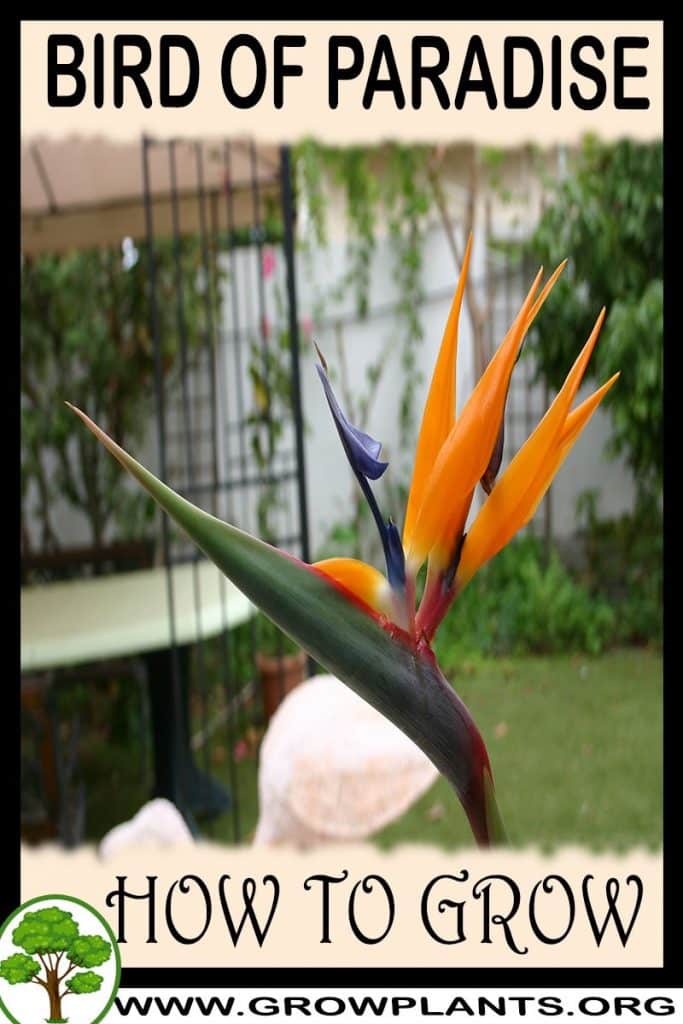
The true bird of paradise is prized for its vivid, bird-like flower. Bright orange sepals fan up like plumage while a fused blue petal forms the pointed “beak”, the whole bloom emerging from a horizontal green bract that resembles a bird’s body. Blooms are long-lasting and excellent as cut flowers.
Flower Characteristics
- Orange sepals with a blue tongue and a green base, arranged like a bird’s head.
- Petals look like the feathers of a bird of paradise; the green bract forms the body.
- In habitat the flowers are bird-pollinated – sunbirds land on the blue spathe to feed.
Bloom Care & Thinning
- Encouraging flowers: Needs a mature clump, full sun and slightly pot-bound roots to flower freely.
- Tidying: Cut spent blooms back to the base to keep the plant neat and channel energy into new flowers.
Bloom Health & Protection
- Safety: A toxic ornamental – the flowers, seeds and pods can cause stomach upset in people and pets, so keep them out of reach.
- Scale and mealybugs: Watch for these around the flower stalks and bracts; horticultural oil helps control them.
Pests, Diseases & Troubleshooting
Overview: Bird of paradise is a bold, leathery-leaved perennial that is fairly pest-resistant, its chief insect problems being scale and mealybugs that lodge along the tough leaves and stems, plus mites in dry indoor air. Its most common frustration, though, is refusing to bloom. Management is largely cultural: right light, patience, careful watering and simple hygiene.
Quick Troubleshooting Overview
| Issue / Pest | Main Symptom | Primary Solution |
|---|---|---|
| Scale insects | Brown bumps along midribs and stems, honeydew | Wipe/scrape off, horticultural oil, prune badly hit leaves |
| Mealybugs | White cottony fluff in leaf bases and crown | Alcohol swab, horticultural oil, check roots |
| Spider mites | Fine stippling and webbing in dry indoor air | Rinse foliage, raise humidity, miticidal oil |
| Root rot | Yellowing, wilting, soft base in soggy soil | Free-draining mix, water less, remove rotted roots |
| No flowers | Healthy leaves but no blooms for years | Bright light, don’t over-pot, be patient, feed for bloom |
| Leaf splitting | Leaves tear along the veins | Mostly natural/wind; shelter and steady humidity |
Common Pests & Management
- Scale insects (soft & armoured scale):
- Symptoms: Small immobile brown, tan or waxy bumps clustered along the leaf midribs, undersides and stems; soft scales secrete honeydew that blackens with sooty mould, and heavy colonies yellow and weaken the foliage.
- Prevention & Control: Wipe or scrape off scales with a soft cloth or fingernail, prune out badly encrusted leaves, and apply horticultural oil to smother crawlers and settled scale, covering midribs and undersides; repeat to catch successive generations and conserve natural parasitic wasps.
- Mealybugs (Pseudococcus / Planococcus spp.):
- Symptoms: White cottony, waxy masses tucked into the crown, leaf bases and along stems, with sticky honeydew and sooty mould; root mealybugs can infest the root ball.
- Prevention & Control: Swab colonies with a cotton bud dipped in rubbing alcohol and rinse, isolate affected plants, and treat with horticultural or neem oil. Check the roots when repotting and control ants that tend the colonies.
- Spider mites (Tetranychus urticae):
- Symptoms: Fine pale stippling giving a dull, dusty look and fine webbing on leaf undersides in warm, dry indoor air; leaves lose vigour.
- Prevention & Control: Rinse or sponge the large leaves regularly, raise humidity and improve airflow, and treat active mites with a miticidal soap or light horticultural oil on the undersides.
- Aphids (Aphis / Myzus spp.):
- Symptoms: Soft green or black insects on tender new growth and emerging flower stalks, causing sticky, distorted growth.
- Prevention & Control: Rinse off with water, conserve natural enemies, and spray insecticidal soap on the new growth; keep spray off the developing flower to avoid marking it.
- Grasshoppers, snails and slugs:
- Symptoms: Chewed notches and holes in leaves and grazed young growth, with slime trails from molluscs.
- Prevention & Control: Handpick grasshoppers, use iron-phosphate bait and grit against snails and slugs, and keep the base clear of debris; damage is usually cosmetic on established plants.
Diseases & Fungal Issues
- Root and crown rot (Pythium / Phytophthora):
- Symptoms: Yellowing, wilting and a soft, darkened base and roots in soggy, poorly drained soil or overwatered pots; the plant declines despite watering.
- Treatment & Management: Grow in a rich, free-draining mix, water thoroughly then let the top dry, and never leave the pot standing in water. Remove rotted roots, repot into fresh medium, and reduce watering in cool weather; sharp drainage is the key prevention.
- Bacterial wilt / soft rot (Erwinia-type):
- Symptoms: Water-soaked, foul-smelling soft rot of the crown or leaf bases, sometimes with sudden collapse in warm wet conditions.
- Treatment & Management: Remove and destroy affected tissue and improve drainage and airflow, avoid overhead watering and crown wetting, and disinfect tools between plants; there is no cure once systemic, so prevention through hygiene is essential.
- Grey mould & leaf spot (Botrytis, fungal/bacterial spots):
- Symptoms: Fuzzy grey mould on flowers and soft tissue in cool damp air, or brown leaf spots with yellow halos in wet, crowded conditions.
- Treatment & Management: Improve ventilation, remove spent flowers and affected leaves, and avoid wetting foliage in the evening; spacing and sanitation control both, with fungicide only for persistent cases.
- Fusarium wilt (Fusarium oxysporum):
- Symptoms: Progressive yellowing, wilting and browning of vascular tissue leading to decline, mainly in stressed or waterlogged plants.
- Treatment & Management: No cure – remove severely affected plants, avoid stress and waterlogging, keep plants vigorous, and do not reuse contaminated soil.
Growing Difficulties & Abiotic Problems
- Failure to flower:
- Cause & Symptoms: A healthy plant produces only leaves for years – the most common complaint – caused by immaturity, too little light, over-potting, transplant disturbance, or too much nitrogen.
- Correction Strategy: Give bright light with some direct sun, be patient (plants often need several years and a certain size to bloom), keep them somewhat root-bound rather than over-potting, disturb the roots as little as possible, and feed with a bloom-supporting (higher phosphorus, moderate nitrogen) fertiliser.
- Leaf splitting / tearing:
- Cause & Symptoms: Leaves tear along the veins into a ragged, feathered look.
- Correction Strategy: This is largely natural and wind-related and does not harm the plant; shelter from strong wind and keep humidity and watering steady to reduce it. It is not a disease.
- Leaf-tip and margin browning:
- Cause & Symptoms: Brown, crispy leaf tips and edges from low humidity, salt or fluoride buildup, underwatering, or hard water.
- Correction Strategy: Raise humidity, water thoroughly and flush the pot periodically to leach salts, use rainwater or filtered water if tips brown persistently, and keep away from hot dry drafts.
- Cold damage:
- Cause & Symptoms: Blackened, collapsed foliage after frost or prolonged cold; the plant is subtropical.
- Correction Strategy: Protect from frost, site in a warm sheltered spot or bring container plants indoors in cold spells, and cut back damaged growth in spring once regrowth begins.
- Chlorosis / nutrient shortage:
- Cause & Symptoms: Pale or yellowing leaves from nutrient deficiency or alkaline soil locking up iron.
- Correction Strategy: Feed regularly through the growing season, mulch to build soil, and correct iron chlorosis with a chelated iron foliar feed.
What Helps – Products & Tools
Bird of paradise is managed simply: rubbing alcohol and horticultural or neem oil for scale and mealybugs, miticidal soap for spider mites, insecticidal soap for aphids, and iron-phosphate bait for snails. For its real issue (shy flowering) the tools are bright light, patience, a snug pot and a bloom fertiliser rather than any pesticide; chelated iron corrects chlorosis.