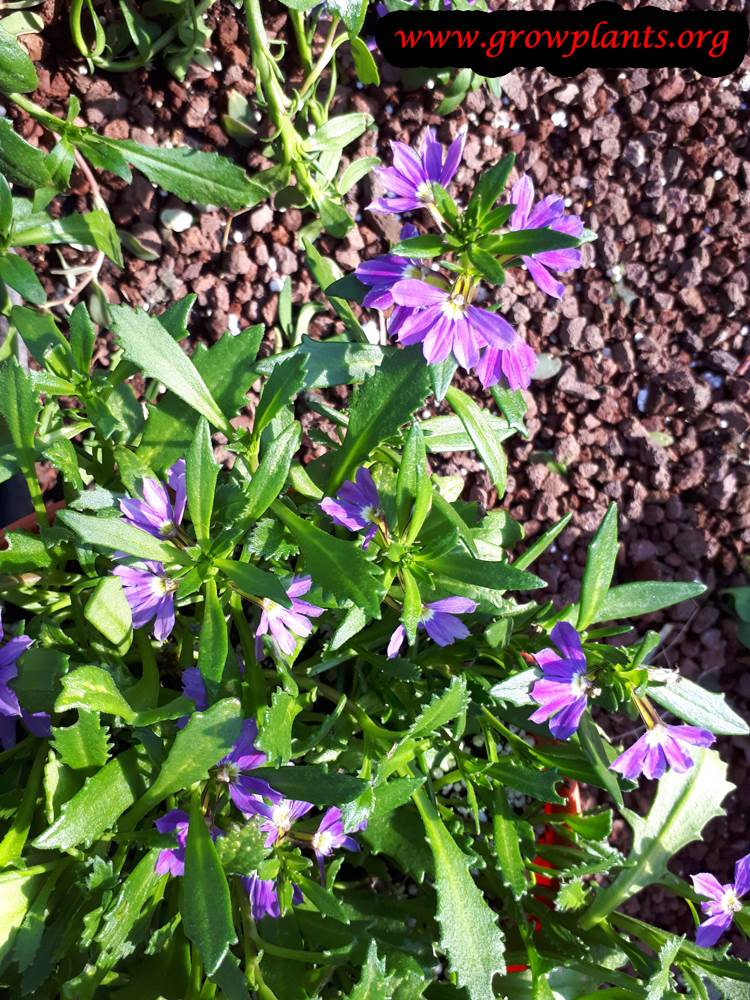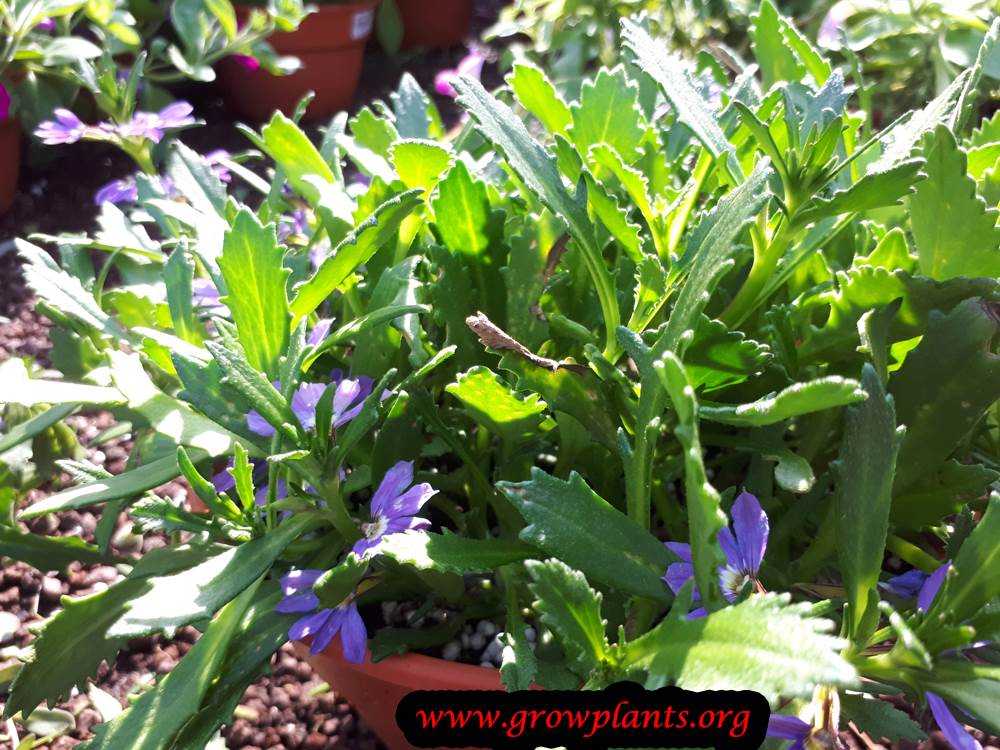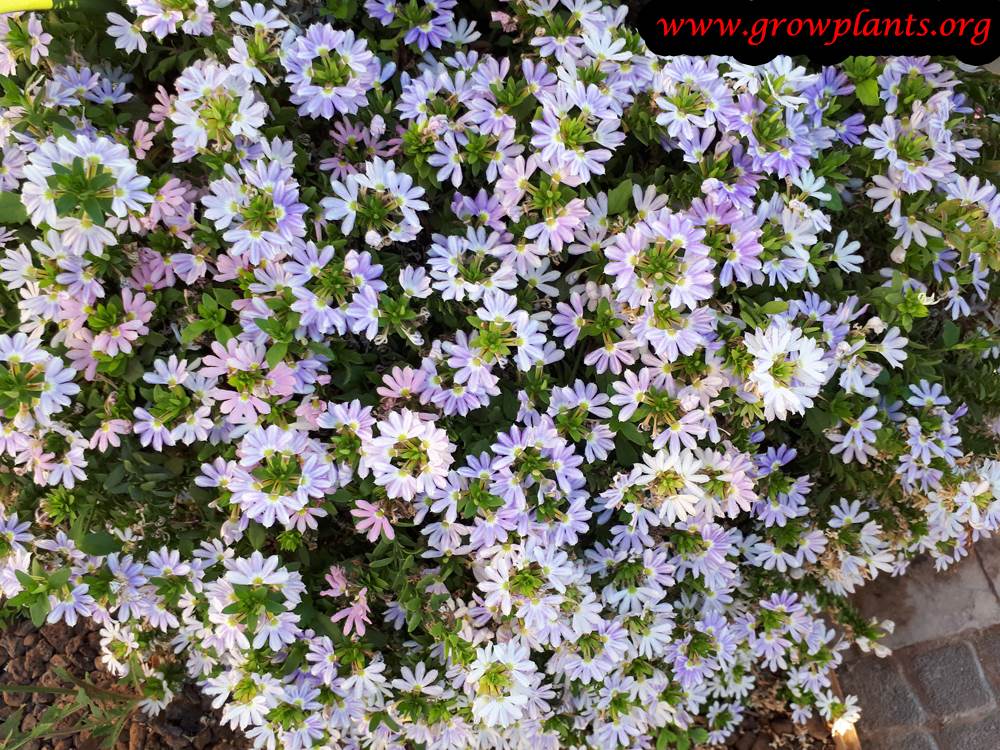


Plant Profile & Key Characteristics
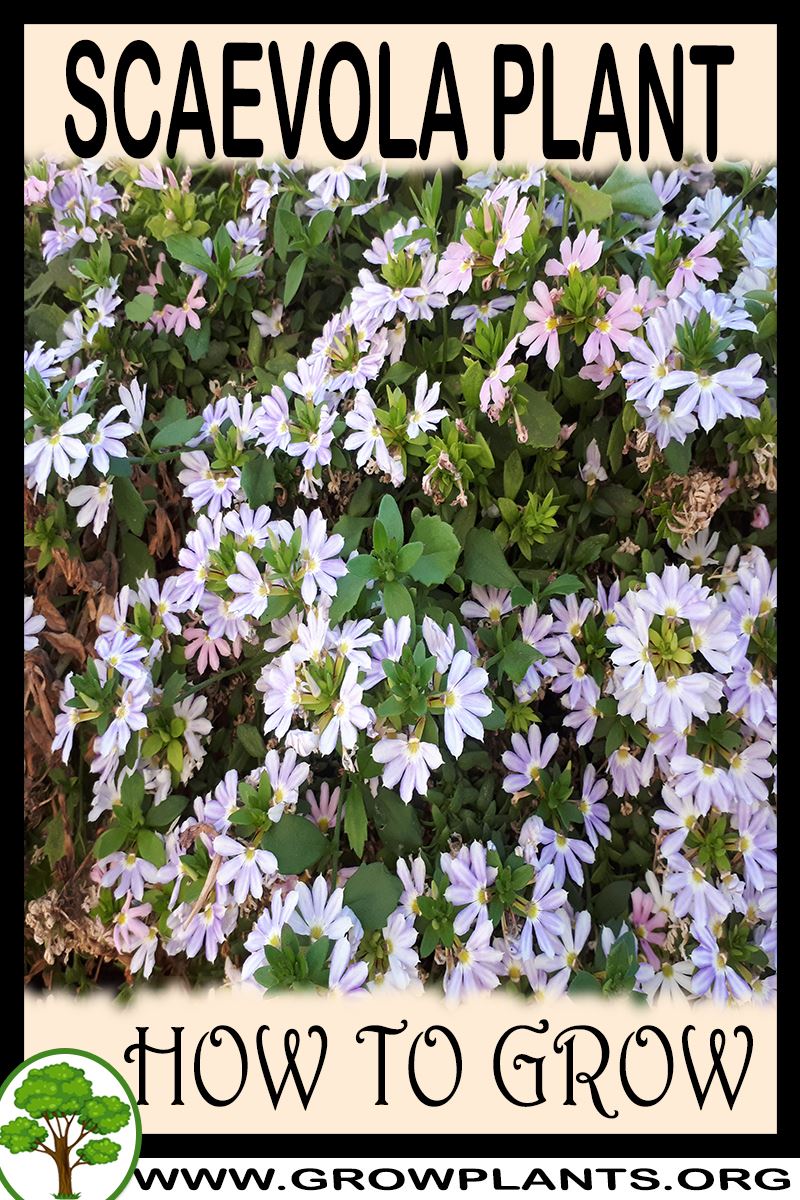
Overview: Fan flower (Scaevola) is a low, spreading evergreen shrub or groundcover 30-60 cm, grown as an ornamental for its distinctive fan-shaped flowers. It thrives in full sun and is excellent in containers and baskets.
Quick Specifications
| Specification | Attribute |
|---|---|
| Plant Type / Life Cycle | Perennial (or annual in cold climates) |
| Foliage Type | Evergreen |
| Mature Size | 30-60 cm (1-2 ft), spreading |
| Growth Rate | Fast to moderate |
| Hardiness | USDA zones 10+ (perennial), 6-10 (as annual) |
Growth Form & Structure
- Height & Spread: 30-60 cm tall and spreading; excellent in containers and hanging baskets.
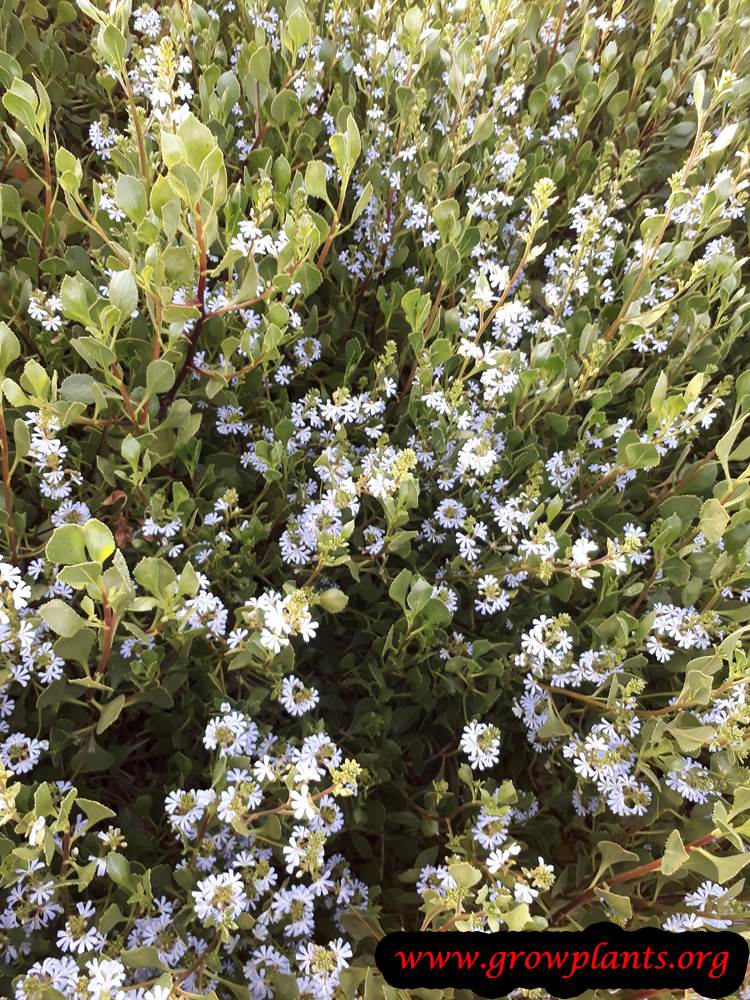
- Growth Habit & Form: Low mounding to trailing groundcover; can be invasive.
- Lifespan & Maturity: Perennial in warm zones, grown as an annual in cold climates.
Anatomy & Physical Features
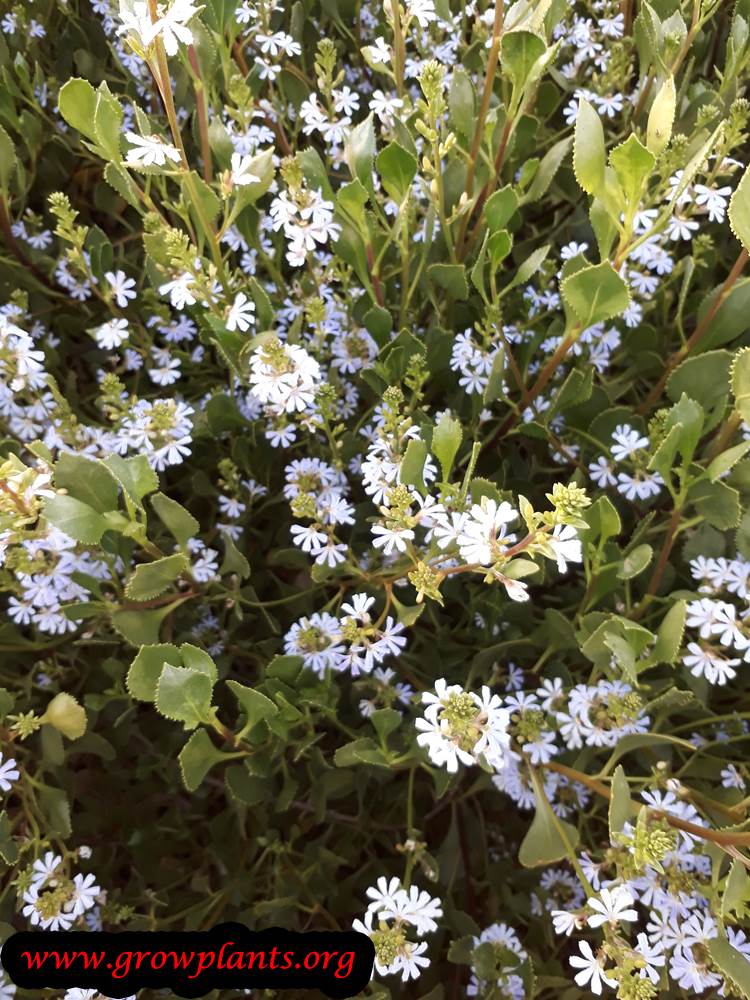
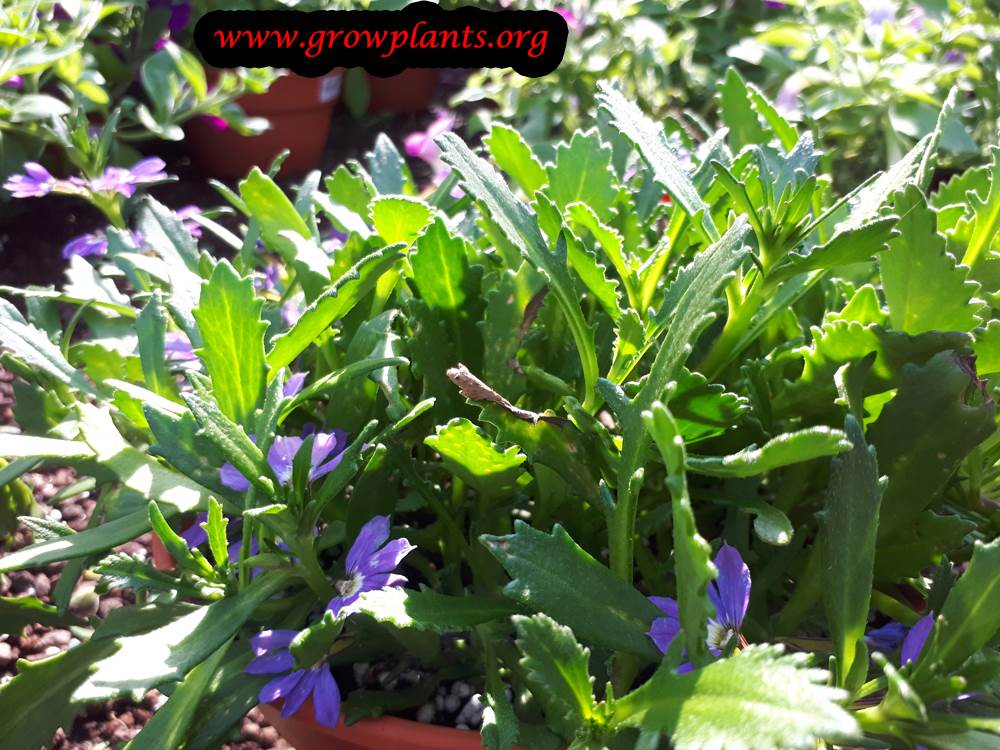
- Leaves & Foliage: Green oval leaves.
- Flower Characteristics: Fan-shaped (‘hand fan’) flowers in blue, pink, yellow, purple or white, borne in clusters.
Primary Uses & Landscape Value
- Functional & Ornamental Roles: Groundcover, edging, containers and hanging baskets; pollinator plant.
Care Guide: Planting, Soil & Watering
Overview: Scaevola is a fast, spreading ground-cover that flowers non-stop in full sun and warm conditions, grown as a perennial in frost-free zones (10+) or an annual elsewhere. It is fairly drought-tolerant and needs only well-drained soil.
Quick Care Requirements
| Requirement | Ideal Condition |
|---|---|
| Planting Season | Spring, summer or autumn |
| Growth Rate | Moderate to fast |
| Soil Type | Well-draining |
| Water Need | Low to moderate; let the surface dry between waterings |
Planting & Establishment
- Best Planting Season: Plant in spring, summer or autumn; where it is grown as an annual, set it out after the last frost for a long season of bloom.
- How to Plant:
- Hole Preparation: Dig a hole slightly wider than the root ball in free-draining soil.
- Soil Amendments: A little compost helps it settle in, but it flowers well even in lean soil as long as drainage is good.
- Planting Depth: Plant at the same level it grew in the pot and firm gently.
- Growth Speed & Expectations: A quick grower that spreads to about 30-60 cm as a mounding ground cover, ideal for baskets and edges.
Soil, Watering & Drainage Care
- Soil Mix & Drainage Needs: Needs sharp drainage to avoid root rot; excellent in containers and hanging baskets with a free-draining mix.
- Watering Schedule & Technique:
- Young / Newly Planted: Water regularly while it roots in and starts to spread.
- Established: Drought-tolerant once established – water moderately and let the top of the soil dry out between waterings.
- Seasonal Adjustments: More frequent water in summer heat and in baskets, much less in cool weather.
Climate, Light & Hardiness
Scaevola (fan flower) is a warm-climate ornamental that thrives in tropical, subtropical and Mediterranean conditions, loving full sun and heat. It is frost-sensitive: perennial only in frost-free zones and grown as a warm-season annual where winters freeze.
Quick Climate Specifications
| Climate Zones | Tropical, subtropical, Mediterranean |
|---|---|
| USDA Hardiness Zones | 10+ (perennial); grown as an annual in zones 6–10 |
| Frost Tolerance | Low to None |
| Light Conditions | Full sun |
| Wind Tolerance | Moderate |
Sunlight & Light Exposure
Optimal Light Setup
Full sun brings the best flowering, dense ground-cover habit and strongest colour. It flowers poorly and grows leggy in shade.
Direct Sun Requirement
Direct sun is essential; a wall- or path-side spot in all-day light suits it, and it tolerates the reflected heat of paving and containers.
Best Exposure / Orientation
A warm, open, south- or west-facing position gives the long bloom season this plant is grown for.
Temperature Extremes & Hardiness
USDA Hardiness & Regional Limits
The site records Scaevola as perennial in zone 10 and above and grown as an annual in zones 6–10. Hardiness and lifecycle are separate: it is commonly grown as an annual where winters freeze, yet capable of longer-term perennial growth in frost-free climates. Cold is what forces the annual treatment.
Cold Damage & Winter Protection
Growth and flowering slow markedly as temperatures fall, and frost typically kills or badly damages the plant. In borderline areas it is best overwintered under cover or replaced each spring; container plants chill and freeze faster than ground plantings.
Frost Sensitivity
Frost-sensitive - expect damage at and below freezing.
Extreme Heat Tolerance
Good. It withstands hot summers well when roots are not left to dry out completely, which is why it is popular for sunny beds and hanging baskets.
Wind, Humidity & Microclimate
Humidity Preferences
Adaptable across humid tropical and drier Mediterranean air; it is not fussy about humidity.
Dry-Air Tolerance
Good tolerance of dry air and heat once established.
Wind Tolerance
Moderate; the low, spreading habit copes with exposure, though strong wind can shred flowers.
Coastal / Salt Tolerance
Several members of this genus are coastal plants with useful salt-spray tolerance, making Scaevola a common choice for seaside gardens.
Microclimate Recommendations
A hot, sunny, free-draining spot - including reflected-heat sites and containers - produces the longest display.
Growing in Pots, Balconies & Indoors
The grower notes the fan flower (scaevola) is not a houseplant, but it is a superb sun-loving container and hanging-basket plant. Its trailing, ground-cover habit makes it made-to-measure for spilling over the edge of a balcony pot or basket in full sun.
Quick Details
- Container Size: A 5-15 L pot, window box or hanging basket suits its trailing habit
- Indoor Suitability: Not a room houseplant – it wants full sun; at best a very sunny sill
- Best Spot: Full sun on a balcony, patio or window box
- Soil & Drainage: Light, free-draining mix
- Watering in Pots: Water when the surface dries; fairly drought-tolerant but flowers best kept lightly moist
Indoors & On the Windowsill
- Not a deep-room plant: It needs strong sun to flower, so a shaded room won’t do; only a very sunny, bright sill could keep it going, and even then it prefers to be outside.
- Overwintering: Often grown as an annual – in mild areas keep the pot in a bright, frost-free spot over winter; in cold areas take cuttings or start fresh.
On a Balcony or Patio
- Light & wind: Give it the sunniest, warmest spot; in a basket or balcony pot it dries fast against reflected heat, so check daily in summer. A drip irrigation kit with a timer can take over that watering check automatically.
- Trailing display: Let the stems cascade over the rim of a raised pot, basket or railing planter for the best effect.
- Practicalities: A full pot of moist soil is heavy – check the balcony can take the weight, and stand pots so drainage water runs off cleanly instead of pooling.
Choosing the Pot, Soil & Long-Term Care
- Pot & drainage: A 5-15 L pot or basket with strong drainage holes; skip a standing water saucer to avoid root rot; terracotta breathes and dries faster, while glazed or plastic holds moisture longer.
- Potting mix: A light, aerated mix – peat or coir blended with perlite or vermiculite so roots get both moisture and air.
- Feeding: A steady, light feed through the season keeps a long-flowering container plant blooming, as nutrients leach from pots.
- Upkeep: Trim back leggy stems to keep it bushy and flowering; refresh or replant baskets each season.
Fertilizing & Feeding
A moderate feeder: a balanced complete fertilizer through the growing season supports strong growth and flowering, while overfeeding pushes leafy growth at the expense of blooms.
Quick Fertilizing Specs
| Feeding Level | Moderate |
|---|---|
| Main Nutrient Priority | Balanced complete feeding with adequate nitrogen and potassium |
| Best Feeding Period | Spring through the flowering season |
| Organic Options | Compost and other organic matter around the root zone |
| Soil pH | Prefers a slightly acidic to near-neutral soil |
| Reduce/Stop Feeding | Reduce feeding as growth slows and stop during dormancy |
| Micronutrients | Usually supplied by a complete fertilizer; iron may need correction in alkaline soils |
Feeding by Growth Stage
Spring growth
Support new shoots and leafy growth as the plant breaks from winter rest.
| Nutrient direction | A balanced complete fertilizer with steady nitrogen to build healthy foliage. |
|---|---|
| Timing | As growth resumes in spring. |
| Frequency | A few light feedings through the early growing season. |
| Fertilizer types | A balanced complete garden fertilizer, Compost or other organic matter worked in around the root zone |
| Precautions | Avoid heavy nitrogen late in the season, which pushes soft growth at the expense of flowers. |
Flowering
Sustain flowering without forcing excess leafy growth.
| Nutrient direction | Continue a balanced feed; adequate nitrogen and potassium support bloom better than high-phosphorus products. |
|---|---|
| Timing | Through the main flowering period. |
| Frequency | Keep feeding light and steady. |
| Fertilizer types | A balanced complete fertilizer |
| Precautions | Skip high-phosphorus bloom-booster products; balanced feeding drives flowering. |
Repeat bloom
Keep repeat-flowering plants blooming through the warm season.
| Nutrient direction | Light balanced feeding to replace nutrients used during continuous bloom. |
|---|---|
| Timing | Between flushes through summer into autumn. |
| Frequency | Light, steady feeding. |
| Fertilizer types | A balanced complete fertilizer |
| Precautions | Avoid overfeeding; excess nitrogen favors foliage over flowers. |
Dormancy / rest
Let the plant rest as growth slows in the cool season.
| Nutrient direction | None – withhold fertilizer while the plant is dormant. |
|---|---|
| Timing | Late autumn through winter dormancy. |
| Frequency | No feeding at this stage. |
| Fertilizer types | No feeding during dormancy – withhold fertilizer until growth resumes in spring. |
| Precautions | Do not fertilize dormant plants; resume only when new growth appears. |
Nutrient Deficiency Signs & Corrections
Pale, yellowing older leaves with weak, slow growth.
| Possible causes | Low soil nitrogen, Nitrogen leaching from frequent watering or sandy soil, Compacted or poor soil limiting root uptake |
|---|---|
| Appears first on | Older, lower leaves. |
| What to check | Recent feeding history, Soil condition and drainage, Watering frequency |
| Possible correction | Apply a balanced complete fertilizer and improve organic matter in the root zone. |
Interveinal yellowing on new leaves while veins stay green.
| Possible causes | High soil pH reducing iron availability, Waterlogged or cold roots limiting uptake, Not necessarily a lack of iron in the soil |
|---|---|
| Appears first on | New, young leaves at the shoot tips. |
| What to check | Soil pH, Drainage and root health |
| Possible correction | Correct soil pH and drainage, and apply a chelated iron product per its label. |
Scorched leaf edges and tips with dull foliage.
| Possible causes | Excess fertilizer salts in the root zone, Underwatering that concentrates salts, Poor drainage |
|---|---|
| Appears first on | Leaf margins and tips. |
| What to check | Feeding rate, Drainage, Salt buildup in soil |
| Possible correction | Reduce feeding and leach the root zone with thorough watering. |
Pruning, Training & Seasonal Maintenance
Fan flower is a low, spreading, trailing subshrub grown as a bedding or hanging-basket plant for its long run of one-sided, fan-shaped flowers, which it produces almost non-stop on new growth from spring to autumn. Because it blooms continuously on fresh shoots and is largely self-cleaning — it drops its spent flowers and rarely needs deadheading — its pruning is simple and all about keeping it bushy and full: pinch young plants to make them branch, and give the trailing stems a light shear or cut-back mid-season if they run long and thin in the middle, which triggers a fresh flush of growth and flower. It has no persistent woody framework, and in cold climates it is grown as a frost-tender annual, so there is no dormant-season or structural pruning to consider.
Quick Pruning & Maintenance Specs
| Pruning Tolerance | High for pinching and shearing — soft-stemmed, no structure |
| Primary Maintenance Window | Through the growing season (spring–autumn) while in growth |
| Typical Frequency | Pinch early; one or two light cut-backs mid-season if it goes leggy |
| Main Objective | A dense, well-branched, free-flowering mound or trailing curtain |
| Young Plant Priority | Pinch the tips to force branching from the start |
| Mature Plant Priority | Light shear to rejuvenate leggy trailers and drive a fresh flush |
| Best Tool Type | Precision snips; light shears or bypass secateurs for a whole-plant trim |
| Avoid Heavy Pruning During | Cold snaps and any frost — the plant is frost-tender |
Pruning by Plant Age & Size
Newly Established
A young plant or plug needs only the removal of any damaged shoot as it settles. Then start pinching — early tip-pinching is what turns a single trailing stem into a full, branching plant.
Young / Formative
No structural training applies; formative care is pinching. Nip out the growing tips a couple of times while the plant is young to force side-shoots, so it fills a basket or bed with a dense curtain of growth rather than a few long runners.
Mature / Established
An established plant that has flowered hard for weeks can go leggy and open in the centre. When it does, shear or cut the trailing stems back by roughly a third to force fresh, well-branched growth and a renewed flush of flower — the plant responds quickly, and this mid-season haircut is the main maintenance it ever needs.
Structural Pruning & Training
There is no woody frame to shape — the whole task is keeping the soft, trailing stems dense and full. Pinching for branching and an occasional cut-back to renew leggy growth is all the shaping required; the plant naturally spreads and trails, which is exactly what is wanted in a basket or as ground cover.
Special Growth to Remove
Little needs removing. Because fan flower is self-cleaning, spent flowers drop on their own and routine deadheading is unnecessary. Simply cut back leggy or bare trailing stems when they appear, and remove any dead or frost-damaged growth. There are no suckers or runners to manage beyond the trailing stems themselves.
Container & Small-Space Pruning
Fan flower is above all a basket and container plant, and container care is the whole story: pinch early for a full, cascading plant, and shear the trailers back by a third mid-season if the display thins or the centre goes bare, then feed and water to drive the reflush. This one cut-back, repeated once or twice a season, keeps a basket looking full from spring to autumn.
Tools
Precision snips or fingertips do the pinching, and light shears or bypass secateurs make quick work of a whole-plant cut-back on a dense basket. The stems are soft, so nothing heavier is ever needed; here a light shearing of the trailing mass is legitimate because you are renewing soft growth, not shaping woody structure.
Tool Hygiene & Disease Risk
Hygiene is Routine: clean, sharp snips or shears are enough, as aphids are the main pest and there is no notable blade-borne disease. Clean tools before moving from an infested plant to a healthy one, but there is no need to disinfect between cuts.
Cut Placement & Technique
Pinch or cut just above a leaf node so the stem breaks into new side-shoots; when giving a whole-plant haircut, shear the trailers back evenly by about a third, leaving plenty of leafy growth to power the reflush. Avoid cutting into old, bare, leafless stem, which is slower to break.
Heavy Pruning & Rejuvenation
Fan flower takes a hard mid-season cut-back well: a tired, straggly plant sheared back by a third or so will quickly rebranch and flower again, especially if fed and watered afterwards. This soft-tissue renewal is the plant’s whole rejuvenation strategy — there is no woody rejuvenation, and in cold areas a worn-out annual is simply replaced.
Post-Pruning Care
Unlike a hard structural prune, a shear-back of this heavy-feeding continuous bloomer is a good moment to feed: after cutting back, water well and give a balanced liquid feed to fuel the fresh flush of growth and flower. Keep the plant in full sun and steadily moist (but not waterlogged) as it recovers.
Common Pruning Mistakes
- Never pinching young plants, so they trail long and sparse instead of filling out.
- Fussing over deadheading a plant that is self-cleaning, instead of giving it the cut-back it actually needs.
- Cutting back into bare, leafless old stem, which regrows slowly.
- Shearing hard and then failing to feed and water, so the reflush is weak.
When NOT to Prune
Do not cut back during a cold snap or when frost threatens — the plant is frost-tender and soft regrowth would be damaged. Avoid hard cutting a plant that is dry-stressed; water it first, then shear.
Recommended Tools (by task)
- precision_snips — for pinching tips and cutting soft stems to a node.
- bypass_secateurs — for a quick, even cut-back of the trailing mass in a basket or bed.
Propagation Guide
Garden fan flowers are grown almost entirely from soft tip cuttings, because the popular kinds are hybrids and selected cultivars — often sterile or poor seed-setters — that only stay true when propagated vegetatively. Wild-type species can be raised from seed, so the plant is easy to moderate overall.
Quick Propagation Specs
| Best Propagation Method | Softwood tip cuttings |
| Alternative Methods | Seed (species only) |
| Propagation Difficulty | Easy to Moderate |
| Seed True-to-Type | Cultivar-dependent — hybrids do not come true and many cultivars set little viable seed |
| Vegetative True-to-Type | Yes |
| Best Propagation Season | Warm months, spring through early autumn |
| Cutting Rooting Time | Usually a few weeks under warm, humid conditions |
| Germination Temperature | Warm, roughly 20–24°C (68–75°F) |
Stem Cuttings
Cutting Type & Timing
Soft to semi-firm, non-flowering tip cuttings taken during active growth from spring to early autumn.
Cutting Preparation & Rooting Setup
Use short tips with the lower leaves stripped and any flower buds pinched off; insert into a light, free-draining mix kept warm and humid but not wet — fan flowers resent soggy media.
Rooting Hormone & Time
Hormone is optional as soft tips strike readily; roots usually form within a few weeks.
Growing from Seed
Viable seed comes mainly from wild-type species rather than named hybrids. Sow in warmth; germination can be slow and uneven. Note that Scaevola can be invasive where conditions suit it, so keep self-sown seedlings in check.
Bloom & Flower Guide
Quick Details
- Bloom Season: Spring through autumn, over a very long season in warm weather
- Time to First Bloom: Fast; plants flower within their first season and keep going
- Flower Appearance: Distinctive one-sided, hand-fan-shaped flowers in blue, pink, yellow, purple or white, borne in clusters
- Edibility: Ornamental only
Detailed Blooming Overview
Fan flower is grown for its unmistakable blooms, in which all the petals splay to one side like a little open hand fan. It is a tireless performer, flowering from spring through autumn on trailing, spreading stems that make it a favourite for ground cover, baskets and containers. Being heat- and drought-tolerant, it keeps blooming through spells that stall other plants.
Flower Characteristics
- One-sided, fan-shaped flowers in blue, pink, yellow, purple or white.
- Carried in clusters along trailing, spreading stems.
- Self-cleaning and free-flowering over a long season.
Bloom Care & Thinning
- Managing the bloom: It is largely self-cleaning, but a light shear mid-season revives a tired plant and brings a fresh flush.
- Feeding for bloom: Steady light feeding and full sun keep the flowers coming.
- Pollination: Insect-pollinated; no help needed for the display.
Pests, Diseases & Troubleshooting
Fan flower is a tough, sun-loving trailer that is largely pest-free but can pick up aphids, whitefly, spider mites and thrips, especially under cover or when stressed. It has few true diseases beyond rots in soggy soil; its real weakness is abiotic – a strong tendency to iron chlorosis (yellow leaves) in alkaline or overwatered conditions, and legginess without pinching.
Quick Troubleshooting Overview
| Issue / Pest | Main Symptom | Primary Solution |
|---|---|---|
| Aphids | Colonies and honeydew on soft tips | Water-jet, beneficials, insecticidal soap |
| Whitefly | White clouds under leaves | Sticky traps, oil/soap on undersides |
| Spider mite | Stippling and webbing in dry heat | Hose foliage, insecticidal soap |
| Iron chlorosis | Yellow leaves, green veins | Ease watering, acidify, iron chelate |
| Root/crown rot | Wilting, blackening base in wet soil | Improve drainage, dry out, fresh mix |
Common Pests & Management
- Aphids (Aphis / Myzus / Macrosiphum spp.):
- Symptoms: Small soft-bodied insects (green, black or grey) clustering on soft trailing tips and flower buds; they suck sap, causing curled, distorted and yellowing growth plus a sticky honeydew that blackens with sooty mould and draws ants. Winged forms spread them plant to plant and can carry viruses.
- Prevention & Control: Blast colonies off with a firm jet of water and pinch out badly infested tips; encourage and protect ladybirds, lacewings and hoverflies, and grow flowering companions to feed them. For persistent outbreaks use insecticidal soap or a light horticultural/neem oil, wetting leaf undersides in the cool of the evening to spare pollinators.
- Glasshouse whitefly (Trialeurodes vaporariorum):
- Symptoms: Tiny white moth-like insects that rise in a cloud when foliage is disturbed; scale-like nymphs on leaf undersides suck sap and excrete honeydew, leading to sooty mould and weak, yellowing growth.
- Prevention & Control: Hang yellow sticky traps to monitor and thin the adults; encourage the parasitic wasp Encarsia formosa under cover and keep plants unstressed. Spray insecticidal soap or horticultural oil onto leaf undersides, repeating every few days to break the life cycle.
- Two-spotted spider mite (Tetranychus urticae):
- Symptoms: Fine pale stippling that bronzes whole leaves, with delicate webbing on the undersides and growing tips in hot, dry, dusty spells; heavily fed leaves dry and drop. Look for the moving specks with a hand lens.
- Prevention & Control: Raise humidity and hose foliage down regularly, and never let plants suffer dust or drought stress. Introduce predatory mites (Phytoseiulus persimilis) under cover. Treat hot-spots with insecticidal soap or horticultural oil, repeating at 5-7 day intervals to catch newly hatched mites.
- Thrips (Frankliniella / Thrips spp.):
- Symptoms: Slender pale insects that rasp the surface, leaving silvery-flecked, distorted leaves and petals speckled with tiny black droppings; buds may fail to open cleanly.
- Prevention & Control: Keep plants unstressed and remove spent flowers and weeds that harbour them; blue sticky traps help monitor. Encourage predatory mites and lacewings, and treat with insecticidal soap or spinosad, repeating to reach the sheltered nymphs.
- Mealybugs (Planococcus / Pseudococcus spp.):
- Symptoms: White cottony clusters in leaf axils and among dense trailing stems, with honeydew and sooty mould; common on container plants.
- Prevention & Control: Dab with alcohol or wash off, then treat with insecticidal soap or horticultural oil; keep plantings open and avoid overfeeding lush soft growth.
Diseases & Fungal Issues
- Root & crown rot (Pythium / Phytophthora spp.):
- Symptoms: Wilting, yellowing and a blackened, soft crown or stem base in wet, airless soil or overwatered containers – the commonest killer of this plant.
- Treatment & Management: Grow in free-draining mix, let the surface dry between waterings, and never leave pots standing in water; remove rotted growth and repot into fresh gritty medium.
- Botrytis (grey mould) (Botrytis cinerea):
- Symptoms: Fuzzy grey mould on faded flowers and crowded foliage in cool, humid, still conditions.
- Treatment & Management: Deadhead and thin congested growth for airflow, avoid wetting the foliage, and remove affected parts promptly.
Growing Difficulties & Abiotic Problems
- Iron chlorosis:
- Cause & Symptoms: Scaevola is prone to yellowing leaves with green veins when grown too wet or in alkaline, high-pH soil or water that locks up iron.
- Correction Strategy: Use an ericaceous or free-draining acidic mix, avoid overwatering, feed with a fertiliser that includes micronutrients, and apply chelated iron for a quick correction.
- Legginess / sparse flowering:
- Cause & Symptoms: Left untrimmed the stems grow long and bare with flowers only at the tips, and shade or over-rich feeding reduces bloom.
- Correction Strategy: Pinch young plants and shear lightly through the season to keep them bushy and blooming, grow in full sun, and feed moderately.
What Helps – Products & Tools
Insecticidal soap and neem or horticultural oil handle the occasional aphids, whitefly, mites and mealybug, with sticky traps to monitor. The most useful ‘tool’ for this plant, though, is a chelated-iron feed and a free-draining acidic mix to prevent the chlorosis it is prone to.