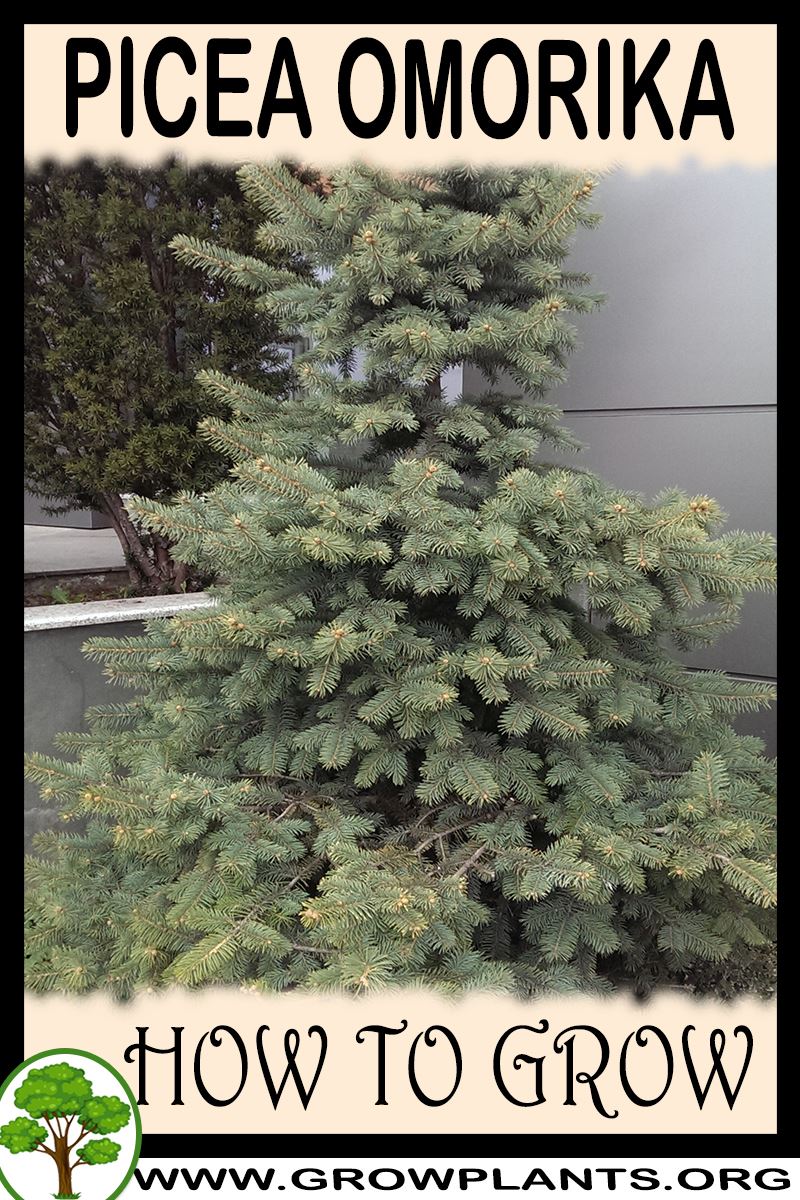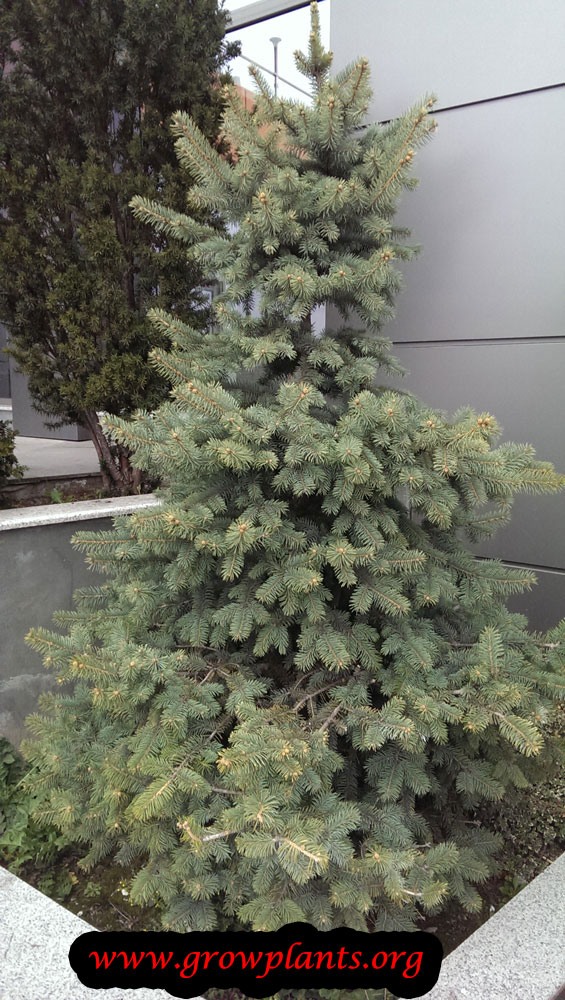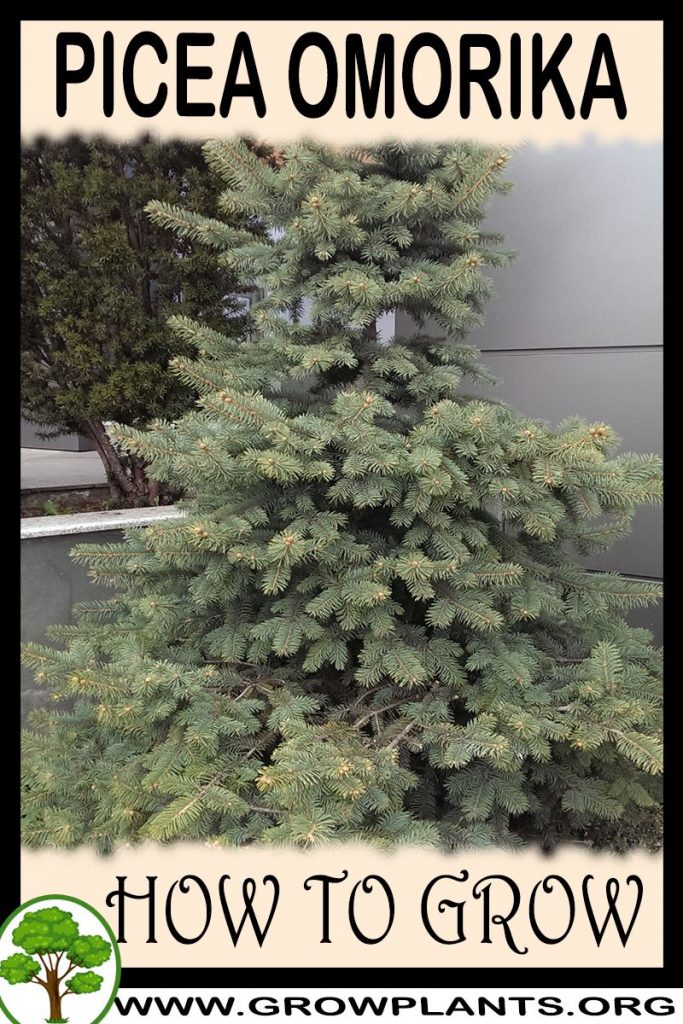
Plant Profile & Key Characteristics
Overview: Serbian spruce (Picea omorika) is an evergreen conifer of 10–30 m (30–100 ft) noted for an exceptionally narrow, spire-like crown. It is grown as an ornamental and shade tree and is also used for bonsai.
Quick Specifications
| Specification | Attribute |
|---|---|
| Plant Type / Life Cycle | Perennial evergreen conifer (tree or shrub) |
| Foliage Type | Evergreen (needle-leaved) |
| Mature Size | 10–30 m (30–100 ft) tall, with a very narrow spread |
| Growth Rate | Moderate |
| Root System | Shallow, spreading root system |
| Toxicity | Non-toxic — spruce tips are edible |
| Hardiness | USDA zones 2–8 |
Growth Form & Structure
- Height & Spread: Tall but slender, 10–30 m (30–100 ft) high on a narrow footprint, making it one of the better spruces for tight spaces; not a pot or indoor plant, though young plants are trained as bonsai.
- Growth Habit & Form: Upright conifer with a distinctive slim, columnar-conical crown and gracefully arching branches.
- Lifespan & Maturity: Long-lived, reaching full height over many decades with moderate growth.
Anatomy & Physical Features
- Leaves & Foliage: Green to bluish-grey needles, silvery-banded beneath, joined at a raised base along the shoot.
- Flower Characteristics: Small yellow-brown wind-pollinated cones, male and female borne separately.
Primary Uses & Landscape Value
- Functional & Ornamental Roles: Ornamental specimen and narrow screening or shade tree ideal for smaller gardens; the slim silhouette and brown cones give strong year-round form. Also grown as bonsai.
Care Guide: Planting, Soil & Watering
Overview: Spruce is a cool-climate conifer that grows best in full sun to part shade in moist, well-drained soil with some humidity. It prefers cooler temperatures and steady moisture, and dislikes both drought and waterlogged ground.
Quick Care Requirements
| Requirement | Ideal Condition |
|---|---|
| Planting Season | Spring to summer |
| Growth Rate | Moderate |
| Soil Type | Moist, well-drained |
| Soil pH | Slightly acidic (spruce favour acidic soils) |
| Water Need | Moderate — keep evenly moist, never waterlogged or bone-dry |
Planting & Establishment
- Best Planting Season: Plant in spring or summer during the growing season.
- How to Plant:
- Hole Preparation: Dig a hole as deep as and about twice as wide as the root ball to loosen soil for the spreading roots.
- Soil Amendments: Improve the backfill with organic matter such as compost or leaf mould, and mulch to keep the roots cool and moist.
- Planting Depth: Set the root collar at soil level with the root ball top flush to the surface; do not bury the trunk, which harms conifers.
- Growth Speed & Expectations: Expect steady, moderate growth over many years to a large tree 10–30 m tall.
Soil, Watering & Drainage Care
- Soil Mix & Drainage Needs: Moist but well-drained soil is ideal; it resents both drought and standing water. It is a forest tree and not suited to long-term container growing.
- Watering Schedule & Technique:
- Young / Newly Planted: Water young trees regularly to keep the root zone evenly moist while they establish, and mulch to conserve moisture.
- Established: Water deeply during dry spells to keep the soil from drying out; established trees still dislike prolonged drought.
- Seasonal Adjustments: Water more in summer heat and dry weather; reduce it in cool, wet conditions.
Climate, Light & Hardiness
Serbian spruce is a cold-climate conifer suited to temperate regions with cool summers and cold winters. It grows in full sun to half shade and is exceptionally cold hardy, tolerating severe winter conditions that would damage most ornamental trees.
Quick Climate Specifications
| Climate Zones | Temperate, cool-continental |
|---|---|
| USDA Hardiness Zones | 2–8 |
| Frost Tolerance | High |
| Light Conditions | Full Sun / Half Shade |
| Wind Tolerance | High |
Sunlight & Light Exposure
Optimal Light Setup
Grows well in full sun to half shade; young trees often tolerate more shade than mature specimens, which generally perform best with good light exposure.
Shade & Heat Management
Prefers cool growing conditions and can struggle with sustained heat or humidity outside its cooler native range; it is not well suited to hot subtropical or tropical climates.
Best Exposure / Orientation
An open, unobstructed site suits its narrow, spire-like form and allows even growth on all sides.
Temperature Extremes & Hardiness
USDA Hardiness & Regional Limits
Hardy from zone 2 through zone 8, making it one of the more cold-tolerant ornamental conifers; it is best suited to regions with genuinely cold winters and moist, cool growing seasons.
Cold Damage & Winter Protection
Established trees require no winter protection within their hardiness range and tolerate deep freezes without dieback.
Frost Sensitivity
Very tolerant of frost at all growth stages once established; spring frosts on new growth are rarely a significant problem for this species.
Extreme Heat Tolerance
Heat tolerance is limited compared with its cold tolerance; performance and vigor typically decline in prolonged hot or humid summer conditions, especially toward the warmer edge of its range.
Wind, Humidity & Microclimate
Humidity Preferences
Appreciates consistently moist soil and atmospheric humidity typical of its native mountain habitat.
Wind Tolerance
Its narrow, columnar growth habit and strong branch structure give it good resistance to wind, making it a suitable specimen or windbreak tree in exposed sites within its climate range.
Growing in Pots, Balconies & Indoors
The grower does not treat Serbian spruce (Picea omorika) as a houseplant, and it is not suited to long-term pots – it is a tall, slender spruce at maturity. A young plant will sit happily in a large tub on a patio for a few years, but it eventually needs the open ground.
Quick Details
- Container Size: Large tub while young only – not a long-term pot plant
- Indoor Suitability: Not an indoor plant – it needs full outdoor light and grows too large
- Best Spot: Full sun to half shade, outdoors
- Soil & Drainage: Well-aerated, free-draining mix
- Watering in Pots: Average to generous – keep evenly moist
Indoors & On the Windowsill
- Houseplant reality: Not a houseplant – it wants full outdoor light and open air, and simply grows too big.
- Windowsill: A young plant or dwarf form belongs outdoors in its pot; indoors it stretches and weakens for lack of light.
- Overwintering: Hardy where it is grown outdoors; a potted young specimen only needs winter shelter in climates colder than it tolerates.
On a Balcony or Patio
- Light & wind: Give it the sunniest, airiest spot. Pots on a balcony or patio dry fast – walls, railings and paving reflect heat – so check moisture often and water more in warm, windy spells. Remember a full pot is heavy and sheds run-off when watered.
- While young only: A large tub works for the first few years; move it into the ground before it becomes root-bound and top-heavy.
Choosing the Pot, Soil & Long-Term Care
- Pot & drainage: A large, stable, deep container. Use a pot with strong drainage holes and skip a standing-water saucer so the roots never sit wet – that is the fastest route to root rot. Terracotta breathes and dries faster, while glazed or plastic pots hold moisture longer.
- Potting mix: Fill with a well-aerated, organic mix – a quality potting mix, or peat/coir loosened with perlite or vermiculite.
- Watering in pots: Average to generous – keep evenly moist; pots dry faster than open ground.
- Feeding: Potted plants need feeding a little more often than those in the ground, as regular watering steadily leaches nutrients away – feed lightly through the growing season.
- Repotting: Refresh the mix and pot up about every couple of years, lightly trimming roots and top growth to keep it in balance.
Fertilizing & Feeding
A large, slow-to-medium growing landscape conifer that needs deliberate feeding while young to establish, but rarely needs routine fertilizer once mature in reasonable garden soil.
Quick Fertilizing Specs
| Feeding Level | Light |
|---|---|
| Main Nutrient Priority | Balanced feeding focused on the establishment years; mature trees generally rely on natural soil fertility |
| Best Feeding Period | Spring, while the tree is young and actively establishing |
| Soil pH | Prefers cool, consistently moist soil; tolerates a range of well-drained conditions |
| Micronutrients | Watch for iron chlorosis on alkaline soils, correcting only if symptoms appear rather than as routine feeding |
| Organic Options | A layer of organic mulch over the root zone (kept off the trunk) supports soil fertility and moisture retention as it breaks down |
| Reduce/Stop Feeding | Reduce and eventually stop routine feeding as the tree matures and canopy growth naturally slows |
Feeding by Growth Stage
Newly Planted Establishment
Support root establishment and canopy development in the first years after planting
| Nutrient direction | Balanced feeding with adequate nitrogen to support steady establishment growth |
|---|---|
| Timing | Spring, in the years immediately after planting |
| Frequency | Light, occasional feeding through the establishment period, tapering off as the tree settles in |
| Fertilizer types | A balanced, slow-release fertilizer formulated for trees and shrubs, An organic mulch layer over the root zone, kept away from the trunk |
| Precautions | Keep any fertilizer and mulch away from direct contact with the trunk, and avoid over-fertilizing, which can push soft growth that is more vulnerable to pests like pine sawfly |
Young Tree Development
Support continued canopy fill-out as the young tree grows toward its mature form
| Nutrient direction | Balanced feeding with a modest nitrogen emphasis to encourage healthy needle color and steady branch development |
|---|---|
| Timing | Spring, through the years the tree is actively filling out |
| Frequency | Light feeding on an occasional basis; healthy growth in decent soil rarely needs more |
| Fertilizer types | A balanced, slow-release tree-and-shrub fertilizer applied over the root zone |
| Precautions | Consistent soil moisture matters more than heavy feeding for this species – prioritize watering during dry spells over additional fertilizer |
Mature, Established Tree
Maintain a large, established landscape conifer without unnecessary intervention
| Nutrient direction | None – established trees in reasonable garden soil generally do not need routine supplemental fertilizer |
|---|---|
| Timing | Once the tree reaches maturity and canopy growth has slowed |
| Frequency | No feeding at this stage under normal conditions |
| Fertilizer types | No feeding at this stage – rely on organic mulch and natural leaf litter breakdown for ongoing soil fertility |
| Precautions | Do not fertilize routinely once the tree is mature; only intervene with targeted feeding if a soil test or clear deficiency symptoms warrant it |
Nutrient Deficiency Signs & Corrections
Sparse, pale-green to yellowish needles and reduced annual shoot growth
| Possible causes | Nitrogen deficiency in poor or compacted soil, Root competition from nearby trees or turf, Waterlogged soil limiting root function |
|---|---|
| Appears first on | Older interior needles and the lower canopy first |
| What to check | Soil compaction and drainage around the root zone, Competing vegetation close to the trunk, Recent construction or grade changes near the roots |
| Possible correction | Improve soil conditions and mulch the root zone; apply a balanced, nitrogen-forward feeding only if a soil test confirms a real deficiency |
Yellowing of new needle growth while older needles stay green
| Possible causes | High soil pH limiting iron availability, Poor drainage or compacted soil reducing root function, Root damage from recent construction or grade changes |
|---|---|
| Appears first on | Newest needle growth at the branch tips |
| What to check | Soil pH near the root zone, Drainage and compaction, Any recent disturbance to the root area |
| Possible correction | Correct pH toward the cooler, moist conditions this species prefers, and apply a chelated iron product per its label if chlorosis persists |
Yellowing on older, interior needles while newer growth remains green
| Possible causes | Magnesium deficiency in sandy or leached soils, Heavy rainfall or irrigation leaching nutrients from the root zone, Imbalanced feeding weighted heavily toward potassium |
|---|---|
| Appears first on | Older needles in the lower and interior canopy |
| What to check | Soil texture and drainage, Recent heavy rainfall or irrigation patterns, Whether feeding has been one-sided |
| Possible correction | Favor a balanced, complete fertilizer over single-nutrient products, and address drainage if the site stays consistently wet |
Pruning, Training & Seasonal Maintenance
Serbian spruce is a large, single-leader conifer (10–30m at maturity) that needs very little formal pruning beyond removing dead, damaged or competing growth and, while young, keeping one dominant leader. Structural cuts are safest in the dormant season (late winter/early spring, before new growth starts), while shaping of the current year’s soft new growth (‘candles’) can be lightly pinched in late spring; unlike many broadleaf shrubs, spruce will not reliably resprout from cuts made into bare, needle-less interior wood, so pruning should stay within the actively growing outer shell of the tree.
Quick Pruning & Maintenance Specs
| Pruning Tolerance | Low to Moderate (light maintenance only; no rejuvenation from bare wood) |
| Primary Pruning Window | Dormant season (late winter, before bud break) |
| Secondary Maintenance Window | Late spring – pinching soft new candle growth for compactness |
| Typical Frequency | Low – mainly as needed for dead/damaged wood and leader correction while young |
| Main Objective | Maintain a single dominant leader, remove dead/damaged wood, manage size in landscape settings |
| Young Plant Priority | Reduce any competing leaders to a single central leader |
| Mature Plant Priority | Remove only dead, damaged, or crossing branches; avoid cutting into the bare interior |
| Best Tool Type | Bypass secateurs for small growth; pruning saw for larger limbs; pole pruner for upper branches on tall specimens |
| Avoid Heavy Pruning During | Late summer/early autumn (stimulates tender growth that won’t harden before frost) and any cut into leafless interior wood |
Pruning by Plant Age & Size
Newly Established
Remove only dead or storm-damaged growth; avoid any structural cutting while the young tree is establishing its root system.
Young / Formative
Central-leader training – if two or more competing leaders develop at the top, select the strongest and remove the rest back to their point of origin so the tree keeps its natural single-spire form; this is most important in the first several years.
Mature / Established
Limit pruning to removing dead, storm-damaged, or crossing/rubbing branches; large specimens grown as a shade or specimen tree otherwise need little intervention.
Seasonal Pruning Schedule
| Stage | Objective | Remove | Do NOT remove | Expected response |
| Dormant / Late Winter | Structural correction, sanitation | Dead, damaged, or competing leader growth | Any live wood carrying needles further back on the branch | Clean regrowth from the retained leader/branches with minimal stress to the tree |
| Pre-Growth / Early-to-Late Spring | Light size/density control while shoots are still soft | Part of the soft new ‘candle’ growth | Hardened older needled wood | Slightly denser, more compact growth without exposing bare wood |
Structural Pruning & Training
- Maintain a single central leader on young trees; remove competing leaders early before they establish co-dominant stems.
- Remove crossing or rubbing branches to prevent bark wounds that can become entry points for pests such as the pine sawfly noted for this species.
- Height/spread control is limited – because it won’t resprout from bare wood, this species cannot be reduced in height the way a hedge or shrub can; size must be managed by site selection or accepted as a long-term large tree.
Container & Small-Space Pruning
The source notes this species is not suited to container growing, but it is sometimes trained as bonsai; in that context, candle-pinching in late spring and selective branch/leader wiring on young growth are the main tools, since bonsai culture still relies on live, needled wood and cannot rejuvenate from bare interior branches any more than a landscape specimen can.
Tools
- Bypass secateurs for small twigs and candle-pinching.
- Pruning saw for removing larger dead or competing limbs.
- Pole pruner for reaching upper branches once the tree is well established and tall.
Tool Hygiene & Disease Risk
Increased – clean cuts and reasonably clean tools reduce entry points for pests such as pine sawfly, which is specifically noted as a problem for this species; disinfecting between cuts is not generally required unless removing visibly diseased wood.
Cut Placement & Technique
Cut branches back to the branch collar or to a healthy lateral, never flush against the trunk and never leaving a long stub; when removing a competing leader, cut it back to its point of origin on the retained leader.
Heavy Pruning & Rejuvenation
Not tolerated – like most conifers other than yew, Serbian spruce cannot be rejuvenated by cutting back into old, needle-less wood; a badly overgrown or storm-damaged specimen with large sections of bare interior generally cannot be restored by pruning and is better replaced.
Post-Pruning Care
Water normally after any significant cut; watch cut surfaces and nearby foliage for pine sawfly activity, the species’ noted pest issue, particularly after wounding.
Common Pruning Mistakes
- Cutting into bare, leafless interior wood expecting it to resprout – it generally will not.
- Leaving two or more competing leaders uncorrected while the tree is young, resulting in a weak, split top later on.
- Heavy pruning in late summer/early autumn, pushing tender new growth that won’t harden off before frost.
When NOT to Prune
Avoid major pruning in late summer/early autumn in this species’ cold hardiness range (zone 2–8), which risks frost damage to late-forced growth; avoid any pruning that removes all the needled wood from a branch, since it will not regenerate.
Recommended Tools (by task)
- bypass_secateurs – candle-pinching and small twig removal.
- pruning_saw – removing larger dead, damaged, or competing-leader limbs.
- pole_pruner – reaching upper branches on this large tree (mature height 10–30m) without a ladder.
Pruning Troubleshooting
| Problem | Possible Cause | What to Check | Corrective Action |
| Split or double top (two leaders) | Competing leaders never corrected while young | Whether two or more vertical stems are competing at the top | Select the strongest leader and remove the other(s) at their base; best done while the tree is still young |
| Bare gap after removing a branch, no regrowth | Cut made into leafless interior wood | Whether the cut branch still had live needled growth | Accept the gap – avoid future cuts past the needled zone; consider it a permanent feature rather than something to re-prune |
| Dieback or needle drop after pruning | Pine sawfly or another pest entering through fresh wounds | Signs of larvae, frass, or defoliation near cut sites | Treat the pest issue directly; keep future cuts clean and avoid pruning during peak sawfly activity if known locally |
Propagation Guide
Serbian spruce (Picea omorika) is propagated from seed — the site data confirms grafting or vegetative propagation is not needed for the species. Seed germinates but growth is slow at first, making this a moderate-difficulty propagation overall, mainly due to the patience required rather than the technique.
Quick Propagation Specs
| Best Propagation Method | Seed |
| Alternative Methods | None recorded for the species; named weeping or dwarf cultivars are typically grafted or rooted from cuttings by nurseries to preserve their form, but this is not needed for the ordinary species |
| Propagation Difficulty | Moderate |
| Seed True-to-Type | Usually true-to-type (species) |
| Best Propagation Season | Spring or summer |
| Seed Germination Time | Not specified by source data; conifer seed of this kind often germinates over several weeks and can be uneven |
Growing from Seed
Dormancy & Pre-Sowing Treatment
Not specified by source data. As is typical practice for spruce seed, a period of cold, moist stratification (chilling the seed before sowing) is commonly used to improve and even out germination; sowing outdoors in autumn so seed naturally overwinters in cold, moist conditions is an alternative to artificial stratification.
Sowing Season
Plant in spring or summer, per the site’s recommended planting season for this species.
Germination Conditions
Not specified by source data; cool, consistently moist, well-ventilated conditions are generally suited to spruce seed.
Seedling Care
Young seedlings are slow to establish; give light shade protection while small and keep the soil consistently moist without waterlogging.
Bloom & Flower Guide
Quick Details
- Bloom Season: Late spring to early summer
- Time to First Bloom: Usually only on mature trees, often after several years of growth
- Flower Appearance: Small yellow-brown cone-like structures; separate male (pollen) and female (seed) cones on the same tree
- Edibility: Ornamental only, grown as a shade and specimen conifer
Detailed Blooming Overview
As a spruce, Picea omorika does not bear true flowers. In late spring it produces small cone-like reproductive structures in shades of yellow-brown, with pollen (male) and seed (female) cones carried separately on the tree. Pollen is spread on the wind rather than by insects, so there is no showy floral display, just a light dusting when the pollen cones ripen.
Flower Characteristics
- Small yellow-brown cones rather than petalled flowers, as this is a gymnosperm
- Male (pollen) and female (seed) cones are borne separately on the tree
- The pollen cones release fine, wind-carried pollen
Bloom Care & Thinning
- Managing the bloom: No deadheading or thinning is needed; coning is a natural part of the tree’s cycle.
- Pollination: By wind, so no insect pollinators are required.
Pests, Diseases & Troubleshooting
Overview: Spruces are troubled mainly by a predictable set of conifer pests — spruce spider mite, gall adelgids, sawflies, aphids and, on the leader, white pine weevil — together with needle-cast and canker fungi that take hold on stressed, crowded or poorly sited trees. Serbian spruce is comparatively resistant to Rhizosphaera needle cast and tolerant of heat and urban conditions, making it one of the more trouble-free spruces — but it still needs the same stress-avoidance care. The single best defense is keeping the tree unstressed: good spacing, airflow, and steady moisture, with targeted controls only where a specific pest or disease is confirmed.
Quick Troubleshooting Overview
| Issue / Pest | Main Symptom | Primary Solution |
|---|---|---|
| Spruce spider mite | Needles stippled, bronzed and shed; fine webbing | Rinse foliage; horticultural oil; preserve predatory mites (cool-season pest) |
| Spruce gall adelgids | Pineapple- or cone-shaped galls at shoot tips | Prune out galls; dormant horticultural oil before bud-break |
| Yellowheaded spruce sawfly | New needles chewed, shoots defoliated | Hand-pick or knock off larvae; Bt is ineffective (not a caterpillar) |
| White pine weevil | Leader wilts into a ‘shepherd’s crook’ and dies | Cut and destroy infested leaders below damage; train a new leader |
| Rhizosphaera needle cast | Inner/older needles brown and drop, tiny black dots in rows | Improve airflow; copper fungicide on new growth over two seasons |
| Cytospora canker | Lower branches die, resin bleeding on bark | Prune dead wood in dry weather; reduce stress — no cure once cankered |
Common Pests & Management
- Spruce spider mite (Oligonychus ununguis):
- Symptoms: A cool-season mite that finely stipples and bronzes needles, especially on inner and lower branches, with delicate webbing; heavy attack causes needle drop. Confirm by tapping a branch over white paper.
- Prevention & Control: Reduce drought and dust stress and rinse foliage with water. This mite peaks in cool weather, so time any horticultural-oil or insecticidal-soap sprays to spring and autumn, and protect the predatory mites that usually keep it in check — avoid broad insecticides that flare mite numbers.
- Spruce gall adelgids (Adelges abietis, Adelges cooleyi):
- Symptoms: Small aphid-like insects whose feeding forms pineapple- or cone-shaped galls at the base of new shoots (Cooley adelgid alternates onto Douglas-fir); galled tips brown and die.
- Prevention & Control: Prune out and destroy green galls before they open and release adelgids. A dormant-season horticultural oil, and a second application just before bud-break, smother overwintering stages; damage is mostly cosmetic on established trees.
- Sawflies (Neodiprion / Pikonema spp.):
- Symptoms: Green, caterpillar-like larvae in groups that strip new needles; the yellowheaded spruce sawfly can defoliate young trees. (The source name ‘pine sawfly’ is a mistranslation of the true spruce sawflies.)
- Prevention & Control: Knock larvae off with a strong water jet or hand-pick while colonies are small. Bacillus thuringiensis does NOT work on sawflies (they are not caterpillars); spinosad or insecticidal soap is effective if numbers are high, ideally sparing bees by spraying in the evening.
- Spruce aphids / Cinara aphids (Elatobium abietinum, Cinara spp.):
- Symptoms: Green spruce aphid causes older needles to yellow-mottle and drop in cool weather; large brown Cinara aphids cluster on twigs with heavy honeydew and sooty mold.
- Prevention & Control: Tolerate ant-tended colonies where possible and encourage ladybirds and lacewings. Wash off honeydew, and use insecticidal soap or horticultural oil for damaging cool-season green-aphid outbreaks before major needle loss occurs.
- White pine weevil (Pissodes strobi):
- Symptoms: The topmost leader wilts and curves into a ‘shepherd’s crook’ and dies back a season’s growth as larvae tunnel inside; repeated attacks deform the crown.
- Prevention & Control: Cut out and burn the infested leader well below the damage in early summer before adults emerge, then train a single new side-shoot as a replacement leader. Avoid open, sunny sites that favor egg-laying.
- Bark beetles (Ips, Dendroctonus spp.):
- Symptoms: Fading, reddening foliage, pitch tubes and fine boring dust on the trunk of drought- or wind-stressed trees; galleries under the bark.
- Prevention & Control: Keep trees vigorous and well watered, promptly remove dead or dying trees and fresh slash that breed beetles, and avoid wounding bark. Preventive trunk sprays are a last resort for high-value trees under active local attack.
Diseases & Fungal Issues
- Rhizosphaera needle cast (Rhizosphaera kalkhoffii):
- Symptoms: Older, inner needles turn purple-brown and drop from the inside out, leaving bare inner branches; look for tiny black fruiting bodies emerging in neat rows from the stomata (visible with a hand lens).
- Treatment & Management: Space and prune for airflow, avoid overhead irrigation, and keep the tree unstressed. Where established, protect emerging new needles with a copper- or chlorothalonil-type fungicide, repeated per label, over two consecutive seasons.
- Cytospora / Leucostoma canker (Leucostoma kunzei):
- Symptoms: Lower branches brown and die one at a time, often with bluish-white resin bleeding on the bark; common on older, stressed Colorado and Norway spruce.
- Treatment & Management: There is no fungicide cure. Prune dead branches back to healthy wood in dry weather, sanitizing tools between cuts, and focus on relieving drought and root stress; more resistant species (such as Serbian spruce) are a better long-term choice on tough sites.
- Needle rusts (Chrysomyxa spp.):
- Symptoms: Current-year needles yellow and bear orange, powdery pustules, then drop; often alternates onto Labrador tea or other hosts.
- Treatment & Management: Usually minor and self-limiting — rake and remove fallen needles and reduce nearby alternate hosts. Fungicides are rarely warranted except on high-value nursery stock.
- Root and butt rot (Armillaria, Heterobasidion, Phytophthora spp.):
- Symptoms: General decline, thinning crown and windthrow; mushrooms or white fungal fans at the base, or dark rotted roots in wet soils.
- Treatment & Management: Plant on well-drained sites, avoid soil compaction and waterlogging, and remove infected stumps. There is no practical cure once major roots are rotted, so drainage and siting are everything.
Growing Difficulties & Abiotic Problems
- Winter desiccation / needle browning:
- Cause & Symptoms: Frozen ground plus wind and sun dry out evergreen needles faster than roots can replace water, browning them on the exposed side.
- Correction Strategy: Water deeply before the ground freezes, mulch the root zone, and shelter young trees from harsh winter wind and reflected sun; damaged needles are shed and replaced in spring.
- Drought and heat stress:
- Cause & Symptoms: Poorly watered spruce thin, brown from the interior, and become far more prone to mites, borers and canker.
- Correction Strategy: Provide deep, infrequent watering in dry spells, mulch to keep roots cool and moist, and avoid hot, reflected-heat sites — spruce prefer cool, evenly moist conditions.
- Salt and site injury:
- Cause & Symptoms: De-icing salt spray or salty runoff scorches needles brown; compacted or alkaline soils cause yellowing (chlorosis).
- Correction Strategy: Site away from salted roads and driveways, flush salty soils with water, and correct alkalinity/iron chlorosis with soil amendment; choose salt-tolerant species where exposure is unavoidable.
What Helps — Products & Tools
Practical tools for spruce are horticultural oil and insecticidal soap for mites and adelgids, spinosad or soap for sawflies, a copper- or chlorothalonil-type fungicide for needle cast, sharp sanitized pruners for weevil leaders and cankers, and steady mulching and watering to prevent stress. Spray oils in the cool of the evening to protect pollinators.