

Plant Profile & Key Characteristics
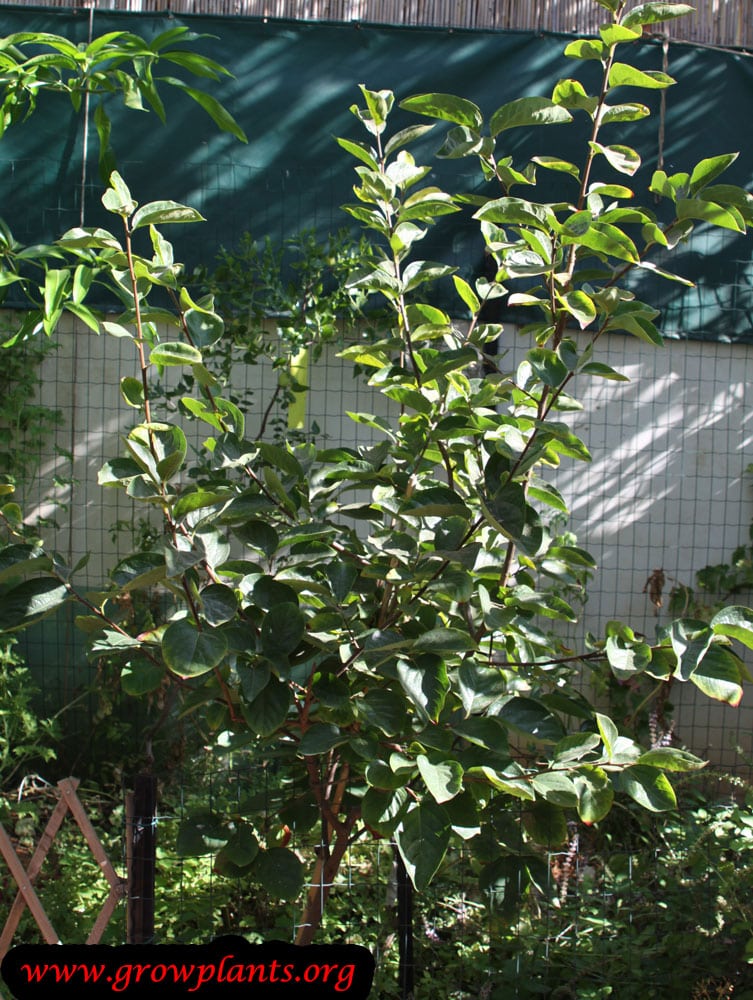
Overview: Deciduous fruit tree 4-10 m tall, often colouring orange-red in autumn. Grown for its sweet orange edible fruit and valued as an ornamental for its autumn foliage and fruit display.
Quick Specifications
| Specification | Attribute |
|---|---|
| Plant Type / Life Cycle | Perennial (deciduous tree) |
| Foliage Type | Deciduous (orange-red autumn colour in some cultivars) |
| Mature Size | 4-10 m tall (12-30 ft) |
| Growth Rate | Moderate |
| Toxicity | Non-toxic / edible |
| Hardiness | USDA zones 7-10 |
Growth Form & Structure
- Height & Spread: 4-10 m (12-30 ft) tall; can be grown in a large container but with reduced yield.
- Growth Habit & Form: Deciduous tree with a spreading, rounded crown.
- Lifespan & Maturity: Long-lived; grafted trees bear in about 3-4 years and need a cool winter to fruit well.
Anatomy & Physical Features
- Leaves & Foliage: Broad green leaves, turning orange-red in autumn in some cultivars.
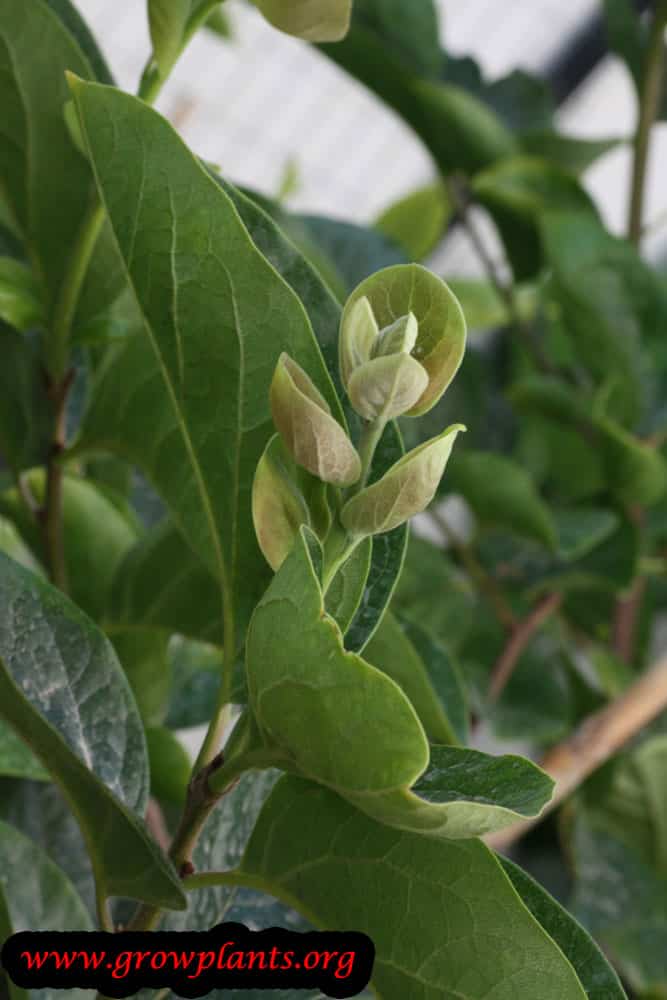
- Flower Characteristics: Cream-white flowers with a waxy, wavy calyx that cups the developing fruit; bee-pollinated.
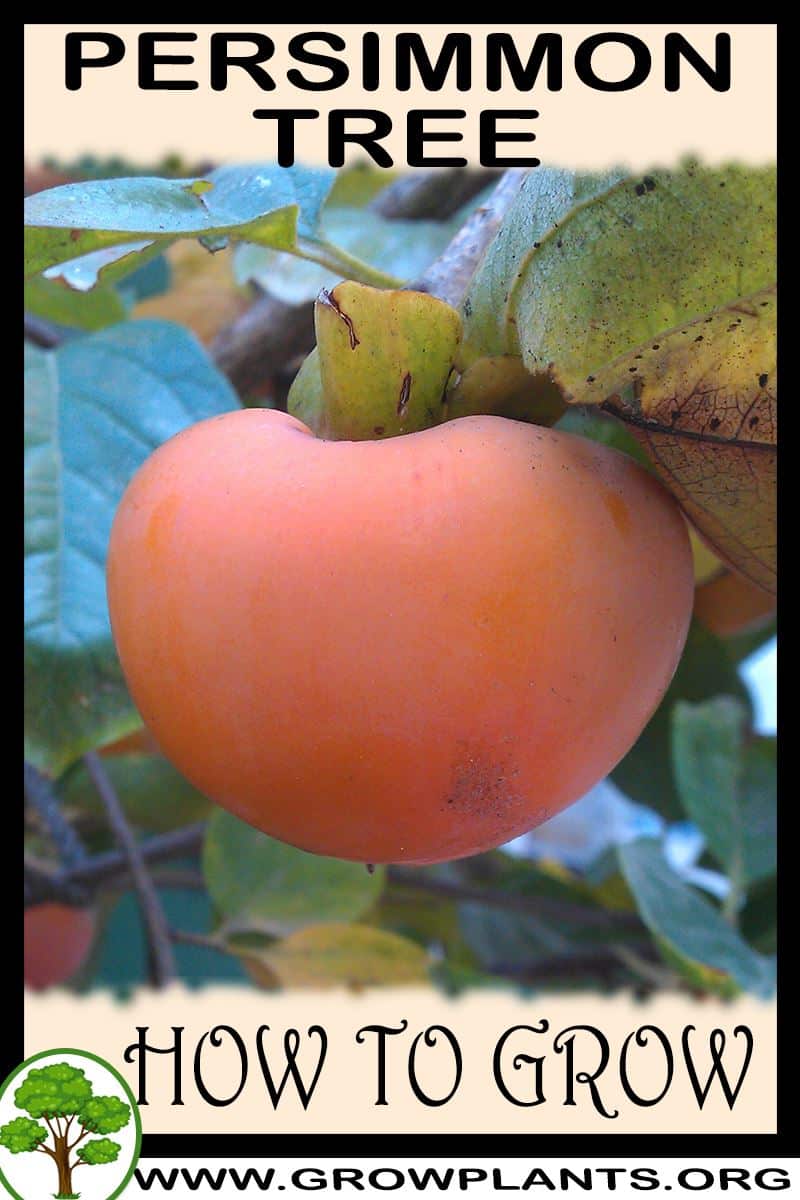
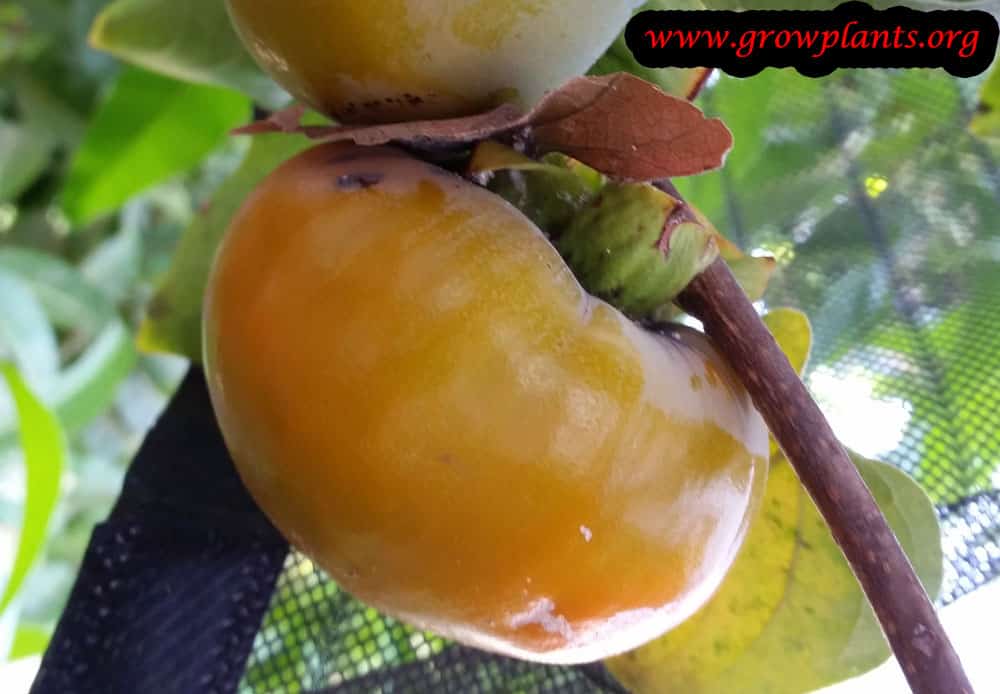
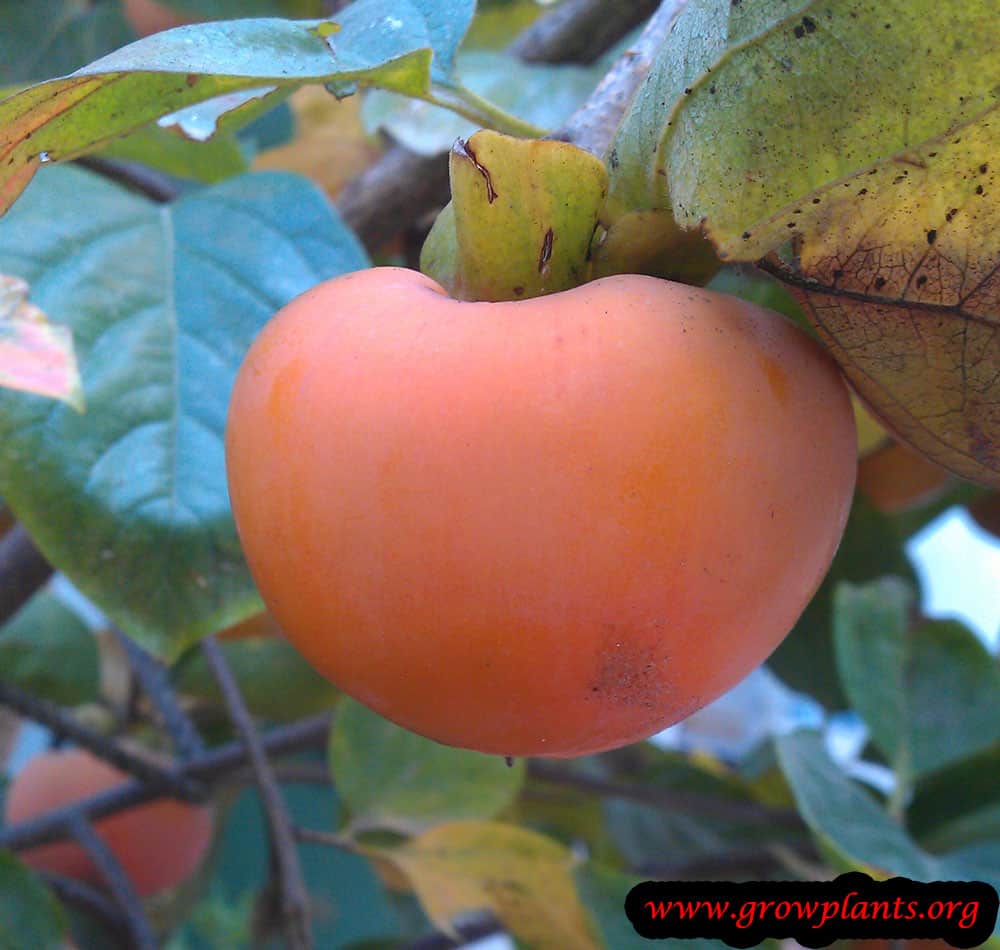
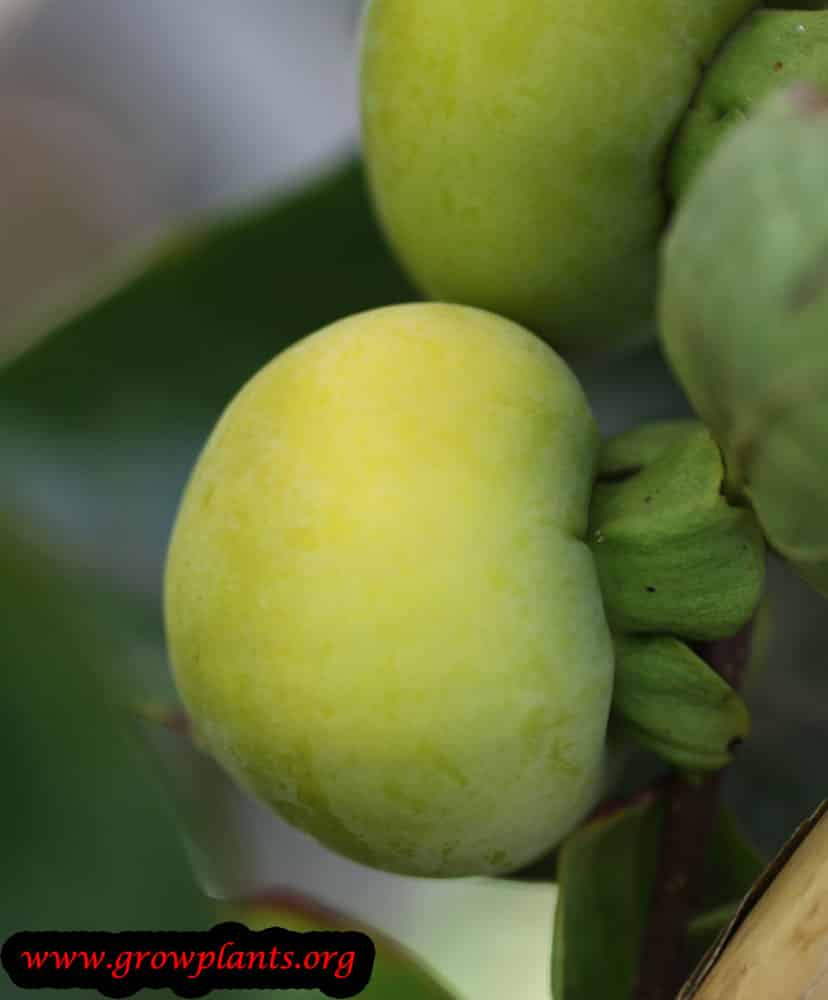
- Fruit Profile: Round orange (sometimes red) fruit 4-10 cm; sweet, though some cultivars are astringent until soft-ripe.
Primary Uses & Landscape Value
- Edible Uses: Eaten fresh or dried, or made into jam and juice.
- Functional & Ornamental Roles: Fruit tree; ornamental autumn-colour and fruiting specimen; container (light crops).
Care Guide: Planting, Soil & Watering
Overview: Persimmon (Diospyros kaki) is a deciduous fruit tree that grows best in full sun to partial shade in deep, fertile, well-draining soil, and needs a cool winter to fruit well. It takes steady, moderate moisture through the growing season.
Quick Care Requirements
| Requirement | Ideal Condition |
|---|---|
| Planting Season | While dormant in winter or in spring; container-grown plants can also go in during summer |
| Growth Rate | Moderate |
| Soil Type | Deep, fertile, well-draining soil |
| Water Need | Moderate — keep evenly moist, without waterlogging |
Planting & Establishment
- Best Planting Season: Plant bare-root trees while dormant in winter or in spring; container-grown plants can also be set out through summer. The tree needs a cool winter period to crop well.
- How to Plant:
- Hole Preparation: Dig a hole wider than the root ball so the roots spread into loosened soil, sitting the tree at the same depth it grew before.
- Soil Amendments: Enrich the planting area with compost or well-rotted organic matter to build fertile, moisture-retentive soil.
- Planting Depth: Set the tree with the root collar level with the surrounding soil, keeping the graft union clear of the soil line — do not bury the trunk.
- Growth Speed & Expectations: Grows at a moderate pace, typically beginning to bear fruit a few years after planting.
Soil, Watering & Drainage Care
- Soil Mix & Drainage Needs: Provide deep, fertile, free-draining soil; it can be grown in a large container but will bear only a light crop, so give it ample root room and good drainage.
- Watering Schedule & Technique:
- Young / Newly Planted: Water regularly to keep the soil evenly moist while the young tree establishes.
- Established: Water the established tree deeply and steadily through the growing season, letting the surface dry a little between waterings.
- Seasonal Adjustments: Increase watering in summer heat, especially as fruit develops, and reduce it once the leaves drop and through winter dormancy.
Climate, Light & Hardiness
Persimmon is a deciduous temperate-to-subtropical fruit tree that needs a genuinely cool winter to grow and fruit well. It grows in full sun to half shade and is hardy across a moderate cold range.
Quick Climate Specifications
| Climate Zones | Temperate, Mediterranean, subtropical |
|---|---|
| USDA Hardiness Zones | 7–10 |
| Frost Tolerance | Moderate–High |
| Light Conditions | Full Sun to Half Shade |
Sunlight & Light Exposure
Optimal Light Setup
Full sun to half shade; full sun favors the best fruit production.
Temperature Extremes & Hardiness
USDA Hardiness & Regional Limits
Hardy in USDA zones 7–10; as a deciduous tree it tolerates winter cold well within that range.
Chilling Requirement
Site data notes this species needs a cool winter to grow properly - consistent with a genuine winter chilling requirement typical of deciduous temperate fruit trees; inadequate winter chill in mild-winter zones can reduce dormancy break and fruiting.
Growing in Pots, Balconies & Indoors
Persimmon is a deciduous fruit tree of 4-10 m (12-30 ft). The grower says it is not a houseplant but can be grown in a container – though it will bear fewer fruits potted than in the ground. It makes a good patio or balcony tree, especially a dwarf cultivar.
Quick Details
- Container Size: A large, deep container; a dwarf cultivar suits pots best
- Indoor Suitability: Not a houseplant; a patio container tree (fewer fruits than in the ground)
- Best Spot: Full sun to light shade
- Soil & Drainage: Aerated, organic-rich mix that drains freely
- Watering in Pots: Keep the mix lightly moist – pots dry faster than open ground; water once the surface starts to dry.
Indoors & On the Windowsill
- Houseplant limits: Not a houseplant – it needs strong sun and a winter chill, and it drops its leaves in the cool season.
- Windowsill growing: Too large for a sill; grow it in a pot outdoors.
- Overwintering: Being deciduous and hardy it is happy to stand out through a cold winter; it actually needs the chill to fruit well.
On a Balcony or Patio
- Light & wind: Give it the sunniest spot on the balcony or patio. Walls and paving reflect heat and pots dry quickly, so check moisture often; shelter and stake exposed plants against wind.
Choosing the Pot, Soil & Long-Term Care
- Pot & drainage: A deep pot with strong drainage holes; skip a standing-water saucer to avoid root rot. Terracotta breathes and dries faster, while glazed or plastic hold moisture longer.
- Potting mix: Well-aerated, organic-rich mix – peat or coir with perlite and a little organic matter; it must drain freely.
- Feeding: Potted plants use up their food faster because nutrients leach out with each watering, so feed a little more often than plants in open ground.
- Repotting: Refresh part of the mix and pot up every couple of years; for established plants, lightly prune the root ball and top growth when you repot.
- Fewer fruits potted: Expect a lighter crop in a pot than in open ground, as the grower notes; a bigger container helps.
Fertilizing & Feeding
Persimmon tree is a deciduous fruit tree that benefits from balanced feeding while young and establishing its framework, tapering to lighter, potassium-leaning feeding once mature and bearing fruit.
Quick Fertilizing Specs
| Feeding Level | Moderate |
|---|---|
| young_feeding | Steady, balanced feeding through each growing season while the framework develops. |
| mature_feeding | Lighter feeding, leaning to potassium as fruit develops. |
| Main Nutrient Priority | Balanced nutrition while young; potassium emphasis as the tree matures and fruits. |
| Best Feeding Period | From spring leaf-out through the main growing season. |
| Organic Options | Compost, aged manure and mulch worked around the root zone. |
| Reduce/Stop Feeding | Stop feeding as leaves color and drop in autumn, ahead of winter dormancy. |
Feeding by Growth Stage
Newly planted
Help a newly planted Persimmon tree establish roots after planting, ideally during its dormant season.
| Nutrient direction | Go easy at planting; rely on organic matter and a light balanced feed once new growth begins in spring. |
|---|---|
| Timing | At planting and in the following spring as growth begins. |
| Frequency | Minimal feeding at first; let the roots establish before feeding more. |
| Fertilizer types | Organic matter or compost mixed into the planting area, A light balanced complete fertilizer once spring growth begins |
| Precautions | Avoid strong fertilizer against fresh roots, which can scorch them. |
Young, pre-bearing tree
Build a strong trunk and branch framework on the young grafted tree.
| Nutrient direction | Balanced feeding with a nitrogen lean to support steady leafy growth while the framework develops. |
|---|---|
| Timing | Through each growing season from spring leaf-out to the point growth naturally slows in autumn. |
| Frequency | Light, regular feeding across the growing season. |
| Fertilizer types | A balanced fruit-tree fertilizer with a nitrogen lean, Compost or other organic matter |
| Precautions | Avoid feeding late in the season, since soft new growth pushed too late can be damaged by early cold. |
Established tree approaching bearing
Keep the maturing tree in steady health as it approaches fruit production.
| Nutrient direction | A balanced complete fruit-tree fertilizer with the minor nutrients such a blend usually supplies. |
|---|---|
| Timing | During each growing season, from spring leaf-out onward. |
| Frequency | Steady, moderate feeding through the growing season. |
| Fertilizer types | A balanced complete fruit-tree fertilizer, Compost or other organic matter |
| Routine trace nutrients | iron, manganese, zinc |
| Precautions | Watch for pale new leaves, which can signal a micronutrient shortage such as iron. |
Mature, fruit-bearing tree
Support flowering and fruit development on the mature, bearing tree.
| Nutrient direction | A balanced fertilizer leaning toward potassium as fruit develops; a settled mature tree needs only light feeding. |
|---|---|
| Timing | From spring leaf-out and flowering through fruit development in summer and autumn. |
| Frequency | Light, well-timed feeding in spring, easing off as the growing season winds down. |
| Fertilizer types | A balanced complete fertilizer with adequate potassium, Compost or other organic matter |
| Routine trace nutrients | iron, manganese, zinc |
| Precautions | Stop feeding as leaves color and drop in autumn, ahead of the tree’s winter dormancy. |
Nutrient Deficiency Signs & Corrections
New leaves are pale or yellow between green veins while the veins themselves stay green.
| Possible causes | High (alkaline) soil pH locking up iron, Waterlogged or cold soil reducing root uptake, A genuine iron shortage in the soil |
|---|---|
| Appears first on | Youngest leaves at the shoot tips. |
| What to check | Soil pH and whether the soil is alkaline or chalky, How well the soil drains and whether symptoms follow wet spells, Whether only new growth is affected |
| Possible correction | Correct soil pH where possible, improve drainage, and apply a chelated iron product per its label. |
Developing fruit drops from the tree before ripening.
| Possible causes | Inconsistent watering causing stress, Excess nitrogen fueling vegetative growth over fruit retention, A heavy natural fruit set the tree cannot support to maturity |
|---|---|
| Appears first on | Fruit throughout the canopy, often the smallest or latest-set fruit first. |
| What to check | Watering consistency, Recent nitrogen-heavy feeding, Overall crop load relative to tree size |
| Possible correction | Even out watering, ease back on nitrogen, and consider thinning a heavy fruit set to what the tree can support. |
Growth stays thin and weak well into the growing season.
| Possible causes | General nutrient shortage in poor soil, Waterlogged or compacted roots limiting uptake, Insufficient sun |
|---|---|
| Appears first on | New shoots across the tree. |
| What to check | Feeding history, Soil drainage, Sun exposure |
| Possible correction | Improve drainage and sun exposure, then apply a balanced fruit-tree fertilizer at a moderate rate. |
Pruning, Training & Seasonal Maintenance
Persimmon is a moderate-vigor deciduous fruit tree that tolerates a light-to-moderate annual dormant prune. Removing weak and dead wood and any crossing branches is the main routine cut, and the safest window is autumn–winter after leaf drop, when the framework is visible and the tree is fully dormant – pruning here supports the coming season’s new growth, which carries the flowers and fruit, without needless wood loss.
Quick Pruning & Maintenance Specs
| Pruning Tolerance | Moderate |
| Primary Pruning Window | Autumn–winter, after leaf drop |
| Typical Frequency | Annual, light-to-moderate |
| Main Objective | Remove weak and dead wood, maintain an open, well-spaced framework |
| Young Plant Priority | Build a strong, open scaffold since the graft needs to carry a heavy crop later; avoid overloading young trees with fruit |
| Mature Plant Priority | Renew fruiting wood by removing weak/crowded growth, keep the canopy open for light and fruit colour |
| Best Tool Type | Bypass secateurs and loppers; pruning saw for larger limbs on older trees |
| Avoid Heavy Pruning During | Active spring bloom and young fruit set |
Pruning by Plant Age & Size
Newly Established
Minimal – remove only damage and let the graft union and root system settle.
Young / Formative
Build a strong, open, modified-leader-style framework of well-spaced scaffold branches, since the tree needs to support a heavy fruit crop once bearing starts. Thinning the flowers/young fruit in the first bearing years, as needed, protects this young structure until it is strong enough to carry a full crop.
Mature / Established
Annual removal of weak, dead and crossing branches to renew fruiting wood and keep the canopy open.
Seasonal Pruning Schedule
| Stage | Objective | Remove | Do Not Remove | Expected Response | Flowering/Fruiting Impact |
| Dormant/Winter (after leaf drop) | Structural clean-up | Weak and dead branches; crossing growth | Good one-year shoots that will carry next season’s blossom | Fresh flush of new shoots in spring | None – done while fully dormant |
Flowering & Fruiting Wood
Persimmon flowers and fruits on new shoots that emerge from one-year-old wood in spring, so the dormant prune – removing weak or excess wood but leaving good one-year shoots – sets up next season’s crop. Grafted young trees can also overset fruit in their first bearing years; thinning that flower/fruit load protects limb structure, though the fruit-load thinning itself belongs to the separate edible-fruit module rather than this general pruning guide.
Structural Pruning & Training
Maintain an open, well-spaced scaffold so fruit gets light and the drooping, fruit-laden branches do not crowd each other; remove crossing or rubbing branches. Height and spread control matters mainly in a smaller garden setting.
Special Growth to Remove
- Rootstock suckers below the graft union, since the tree is grafted.
- Watersprouts arising from any hard structural cut.
Container & Small-Space Pruning
Container growing is possible but the tree will bear little fruit in a pot – treat it as an ornamental, compact specimen and keep pruning light to maintain a balanced framework rather than trying to force heavy production.
Tools
Bypass secateurs for twiggy dead or weak wood, loppers for medium branches, a pruning saw for larger structural limbs on an older 4–10 m tree.
Tool Hygiene & Disease Risk
Routine – only aphids are flagged, with no canker or blight noted; clean, sharp tools between cuts are sufficient.
Cut Placement & Technique
Thinning cuts to remove whole weak or dead branches back to their point of origin, cut outside the branch collar; avoid flush cuts and long stubs.
Heavy Pruning & Rejuvenation
Moderate rejuvenation is tolerated on an older, overgrown tree, but avoid removing too much one-year wood at once since that wood carries the next crop – spread any significant size reduction across multiple dormant seasons.
Post-Pruning Care
No special feeding is needed beyond normal care after the winter clean-up; watch the spring flush for aphids.
Common Pruning Mistakes
- Skipping the dormant clean-up and letting weak, crowded wood accumulate.
- Over-pruning one-year wood and reducing the next crop.
- Missing rootstock suckers on grafted trees.
When NOT to Prune
Avoid pruning during active spring bloom and fruit set, and avoid pruning while the tree still holds its leaves in autumn – wait until after leaf drop.
Recommended Tools (by task)
- bypass_secateurs – weak/dead twig removal.
- loppers – medium branch cuts.
- pruning_saw – larger structural limbs on an older tree.
Pruning Troubleshooting
| Problem | Possible Cause | What to Check | Corrective Action |
| Poor fruit set | Over-pruning removed too much one-year fruiting wood, or a young tree overloaded before thinning | Severity of last dormant prune; crop load in early years | Keep dormant cuts to weak, dead and crossing wood only; thin young trees’ first crops |
| Dense, shaded interior | Crossing growth never thinned | Canopy light penetration | Remove crossing/rubbing branches in the dormant window |
| Watersprouts after a hard cut | Overly severe pruning | Base of major cuts | Thin to a few well-placed shoots |
Propagation Guide
Named persimmon varieties must be grafted or budded onto a seedling rootstock to reproduce the parent tree’s fruit; seed is used only to raise rootstock, since seedling trees are variable and unpredictable. Because reliable results depend on grafting skill and suitable rootstock, overall propagation is Moderate to Specialist.
Quick Propagation Specs
| Best Propagation Method | Grafting or budding onto seedling rootstock |
| Alternative Methods | Seed (for rootstock production only) |
| Propagation Difficulty | Moderate to Specialist |
| Seed True-to-Type | No – seedling trees vary and are not true to the parent cultivar |
| Vegetative True-to-Type | Yes |
| Best Propagation Season | Dormant season, late winter to early spring for grafting; late summer for budding – consistent with this tree’s autumn/winter dormant pruning window |
Growing from Seed
Seed Handling & Viability
No site-specific storage data; persimmon seed is generally best kept cool until sowing.
Dormancy & Pre-Sowing Treatment
Persimmon seed commonly shows dormancy that is broken by a period of cold, moist stratification (often cited as roughly 2–3 months of chilling); this is general extension guidance rather than a site-specific figure.
Sowing Season
After stratification, in early spring.
Germination Time
Several weeks to a couple of months, and can be uneven.
Seedling Care
Seedlings raised for rootstock are typically grown on for a year or more before they are large enough to graft or bud.
Grafting & Budding
Why Grafting Is Used
The site marks grafting as necessary: named persimmon cultivars must be grafted or budded to keep their exact fruit type and quality, since seedling trees are unpredictable and slow to prove out.
Preferred Grafting Methods
Whip-and-tongue or cleft grafting during dormancy, or chip/T-budding in late summer, are commonly used techniques for this species.
Rootstock
Commonly grafted onto seedling Diospyros kaki, or in some regions onto related species such as D. lotus or D. virginiana chosen for cold-hardiness or soil adaptability; the best choice varies by region.
Scion Selection
Use dormant, healthy one-year-old wood taken from a known, true-to-name cultivar tree.
Best Grafting Season
Late winter to early spring while the tree is dormant for bench or bare-root grafting; late summer for budding.
Graft Aftercare
Protect the graft union from drying out, remove rootstock suckers that appear below the union, and support new growth until the union has fully healed.
Bloom & Flower Guide
Quick Details
- Bloom Season: Spring to summer
- Flower Appearance: Creamy white, crown- or bell-shaped flowers tucked among the leaves
- Edibility: The flowers are inconspicuous and not eaten
Detailed Blooming Overview
The persimmon flowers quietly in spring to early summer, its creamy blooms nestled close to the twigs among fresh green leaves. They are easy to miss, but they are the start of the season’s fruit, so a healthy bloom is worth watching for.
Flower Characteristics
- White to cream, with a wavy, crown-like form set close against the foliage.
Bloom Care & Thinning
- Thinning the bloom: In the first year, thin the flowers until the tree is big and strong enough to carry fruit.
- Pollination: Bees visit the flowers, though many persimmon cultivars are self-fruitful and can set fruit without pollination.
- Light: Full sun to half shade suits flowering.
Fruit & Uses
Persimmon is grown for its orange (sometimes reddish) fruit, eaten fresh out of hand once ripe, or used in jams and juice. Depending on the cultivar, the fruit is either sweet and ready to eat while still firm, or an astringent type that must fully soften before it loses its puckering, tannic bite.
Quick Edible Specs
| Edible Parts | Fruit |
| Main Use(s) | Culinary – eaten raw, jam, juice |
| Eaten Raw or Cooked | Raw (also cooked into jam or pressed for juice) |
| Preparation Required | None for non-astringent cultivars once coloured; astringent cultivars must be left to fully soften/ripen before eating |
| Harvest Season | Summer / Autumn |
| Storage | Fruit is typically netted on the tree to protect it from birds until picked; ripening can continue after harvest |
| Safety/Toxicity Caveat | Not toxic, but under-ripe astringent cultivars are unpleasantly puckering/tannic rather than dangerous – let those fully soften first |
Fruit
Fruits are orange, sometimes red-tinted, 4–10 cm across, ripening from summer into autumn; the site notes birds as the main pest, so netting the tree is the usual protective measure while fruit ripens. Ripeness cues and eating readiness vary by cultivar: some can be eaten while still firm, while others (“astringent” types) need to fully ripen and soften before their tannins mellow enough to eat – the site specifically notes that some cultivars require this extra ripening step before they are palatable. Once ready, the fruit is eaten raw out of hand, or used to make jam or juice.
Preparation, Uses & Safety
Ripe persimmons are eaten fresh, or processed into jam or juice. For astringent cultivars, patience is the main “preparation” – eating the fruit before it has fully softened produces a strongly puckering, unpalatable mouthfeel rather than any real toxicity, so simply wait until the fruit is soft and fully coloured. No other processing or safety step is indicated by the site.
Pests, Diseases & Troubleshooting
Overview: Diospyros kaki (Japanese or oriental persimmon) is a deciduous fruit tree whose main pests are fruit fly, mealybugs and scale, trunk borers and thrips, while its key diseases are persimmon anthracnose, the damaging circular leaf spot, crown gall and Botryosphaeria dieback. It is fairly easy in a warm-temperate climate with deep, well-drained soil; most trouble comes from fruit fly, wet-weather leaf and fruit diseases, and physiological fruit drop. Note: it is cold-hardy when dormant but the flowers, young fruit and new growth are damaged by late frosts, and hard freezes can injure young trees.
Quick Troubleshooting Overview
| Issue / Pest | Main Symptom | Primary Solution |
|---|---|---|
| Fruit fly | Stung, maggot-ridden, prematurely dropping fruit | Bait traps, bag fruit, sanitation of fallen fruit |
| Mealybugs / scale | Honeydew, sooty mould, encrusted twigs and fruit calyx | Prune, horticultural oil; control ants; conserve predators |
| Trunk / branch borers | Frass, gum and holes in trunk and limbs; dieback | Keep trees vigorous, protect bark; remove and destroy prunings |
| Anthracnose | Dark spots on leaves, shoots and fruit; fruit rot | Airflow, sanitation; copper fungicide in wet weather |
| Circular leaf spot | Round dark spots then heavy early leaf and fruit drop | Rake and destroy fallen leaves; timed protectant spray |
| Fruit drop | Young fruit yellow and drop; poor set | Even water and feeding; ensure pollination where needed |
Common Pests & Management
- Fruit fly (Bactrocera / Ceratitis spp.):
- Symptoms: Adult flies sting the ripening fruit to lay eggs, and the maggots tunnel the flesh, causing soft, discoloured, prematurely dropping and rotting fruit with tiny puncture marks; a major pest of persimmon and its relatives in warm climates.
- Prevention & Control: Practise strict sanitation by collecting and destroying all fallen and infested fruit, hang protein-bait or lure traps to monitor and mass-trap, and bag developing fruit where practical. Time any approved bait sprays to the flies’ activity and protect pollinators.
- Mealybugs and scale (Planococcus / Pseudaulacaspis pentagona / Coccus spp.):
- Symptoms: White cottony mealybugs and brown, white or waxy scale (including white peach scale) on twigs, leaf undersides and around the fruit calyx, with honeydew and black sooty mould, often tended by ants.
- Prevention & Control: Prune to open the canopy, wash and prune out colonies, and band trunks and control ants that farm and spread them. Horticultural or neem oil smothers scale and mealybug, and dormant oil helps; conserve ladybirds, lacewings and parasitic wasps.
- Trunk and branch borers (cerambycid / buprestid beetles):
- Symptoms: Larvae that tunnel under the bark and into the trunk and branches, leaving entry holes, frass and gumming, weakening and killing limbs and, in bad cases, whole trees, especially where the bark is stressed or wounded.
- Prevention & Control: Keep trees vigorous and well-watered to resist attack, avoid trunk wounds and sunburn that invite egg-laying, and paint or protect exposed bark. Cut out and destroy infested wood, probe or wire out grubs from holes, and remove badly affected limbs.
- Thrips (Frankliniella / Scirtothrips spp.):
- Symptoms: Silvery scarring, russeting and flecking on young leaves and on the fruit skin around the calyx, with distorted new growth, downgrading the appearance of the fruit though rarely threatening the tree.
- Prevention & Control: Monitor with sticky traps, keep the orchard floor weed-free, and tolerate light cosmetic damage. Spinosad or a suitable product controls heavy pressure at the susceptible fruit stage, applied to protect pollinators.
- Aphids (Aphis / Myzus spp.):
- Symptoms: Colonies on the soft new flush and shoot tips, causing curling, distortion and sticky honeydew that leads to sooty mould, mainly a problem on young trees and vigorous new growth.
- Prevention & Control: Hose off and conserve the many natural predators, which usually keep aphids in check on established trees. Insecticidal soap or neem clears heavy colonies on young trees; avoid broad-spectrum sprays that flare up scale and mites.
Diseases & Fungal Issues
- Persimmon anthracnose (Colletotrichum gloeosporioides / C. horii):
- Symptoms: Dark brown to black sunken spots and blights on leaves, shoots and fruit, with shoot-tip dieback and sunken, rotting lesions on the fruit that spread in storage; worst in warm, wet, humid weather.
- Treatment & Management: Prune for airflow, remove and destroy infected shoots, leaves and mummified fruit, and avoid overhead irrigation. Protect new growth and developing fruit with a copper or suitable fungicide in wet seasons, and handle fruit carefully to limit post-harvest rots.
- Circular leaf spot (Mycosphaerella nawae / Cercospora kaki):
- Symptoms: Round, dark, sharply defined spots on the leaves that develop from midseason, causing yellowing, early and heavy leaf drop, and in turn premature fruit drop and poor fruit maturity; a distinctive and damaging persimmon disease.
- Treatment & Management: Rake up and destroy fallen leaves, which carry the fungus over to the next season, and prune for airflow. Apply a protectant fungicide at the susceptible period timed to local guidance, and remove nearby unmanaged host trees that act as sources.
- Crown gall (Agrobacterium tumefaciens):
- Symptoms: Rough, woody, tumour-like galls at the crown, on the roots and sometimes on the lower trunk, entering through wounds and, when severe, girdling and weakening young trees so they grow poorly.
- Treatment & Management: Avoid wounding the crown and roots, plant clean, gall-free nursery stock, and disinfect pruning and grafting tools. Remove and destroy badly galled young trees; there is no cure, so prevention through clean stock and careful handling is essential.
- Cercospora leaf spot and Botryosphaeria dieback (Cercospora / Botryosphaeria spp.):
- Symptoms: Angular or rounded leaf spots and premature leaf drop (Cercospora), and branch cankers, dieback and wood staining (Botryosphaeria), the latter entering through wounds and sunburnt or stressed bark.
- Treatment & Management: Maintain tree vigour and even watering, prune out and destroy cankered and dead wood in dry weather, and protect the bark from sunburn. Rake up fallen leaves and, under heavy pressure, apply a protectant fungicide to the foliage; seal or avoid large wounds.
Growing Difficulties & Abiotic Problems
- Physiological fruit drop and poor set:
- Cause & Symptoms: Young fruit that yellows and drops in waves, and poor set, from heat and drought stress, over-cropping, erratic water or nutrition, and, in some cultivars, from pollination requirements not being met.
- Correction Strategy: Keep soil moisture and feeding even, especially through fruit set and sizing, mulch to buffer swings, and avoid excess nitrogen that favours a heavy drop. Where the cultivar needs a pollinator, ensure one is present; thin very heavy sets to steady cropping.
- Alternate (biennial) bearing:
- Cause & Symptoms: A heavy crop one year followed by a light or missed crop the next, an inherent persimmon tendency worsened by over-cropping, stress and poor nutrition in the ‘on’ year.
- Correction Strategy: Thin fruit in heavy years to reduce the load, feed and water consistently, and prune to maintain steady new growth. Evening out the crop from year to year keeps the tree in reliable bearing.
- Sunburn on fruit and bark:
- Cause & Symptoms: Bleached, scalded patches on exposed fruit and on the trunk and main limbs, especially after summer pruning or defoliation opens the canopy, and the damaged bark then invites borers and canker fungi.
- Correction Strategy: Maintain enough canopy to shade the fruit and limbs, avoid heavy summer pruning that suddenly exposes bark, and paint exposed trunks with white tree paint or wrap them in intense-sun climates. Keep trees well-watered to reduce heat stress.
- Frost and cold damage:
- Cause & Symptoms: it is cold-hardy when dormant but the flowers, young fruit and new growth are damaged by late frosts, and hard freezes can injure young trees.
- Correction Strategy: Match the site to the tree’s cold tolerance, use frost protection for young trees, and plant in a warm, sheltered spot out of cold hollows; remove frost-damaged wood only after the danger has passed.
What Helps — Products & Tools
For persimmon and its relatives the useful kit is protein-bait and lure fruit-fly traps plus fruit bagging and sanitation, horticultural and dormant oil (with ant control) for scale and mealybug, and spinosad for heavy thrips. On the disease side, canopy airflow, leaf-litter sanitation and a copper or protectant fungicide manage anthracnose and circular leaf spot, clean stock and careful handling prevent crown gall, and vigorous, sun-protected bark resists borers and Botryosphaeria dieback. Even water and feeding curb fruit drop. The source pest names are unreliable and were not used.