Plant Profile & Key Characteristics
Overview: An annual herb of the genus Papaver (corn or common poppy) growing 30-60 cm tall, with lobed foliage and bowl-shaped, crepe-textured flowers. It is grown as an ornamental and cut flower, and yields edible seeds.
Quick Specifications
| Specification | Attribute |
|---|---|
| Plant Type / Life Cycle | Annual |
| Mature Size | 30-60 cm (12-24 in) tall |
| Growth Rate | Fast to moderate |
| Toxicity | Foliage and sap are toxic, but the ripe seeds are edible |
| Hardiness | USDA zones 4-9 |
Growth Form & Structure
- Height & Spread: 30-60 cm (12-24 in); self-seeds freely in borders and meadows.
- Growth Habit & Form: Slender, branching annual with wiry flower stems.
- Lifespan & Maturity: Completes its life cycle in a single season.
Anatomy & Physical Features
- Leaves & Foliage: Green, deeply lobed leaves.
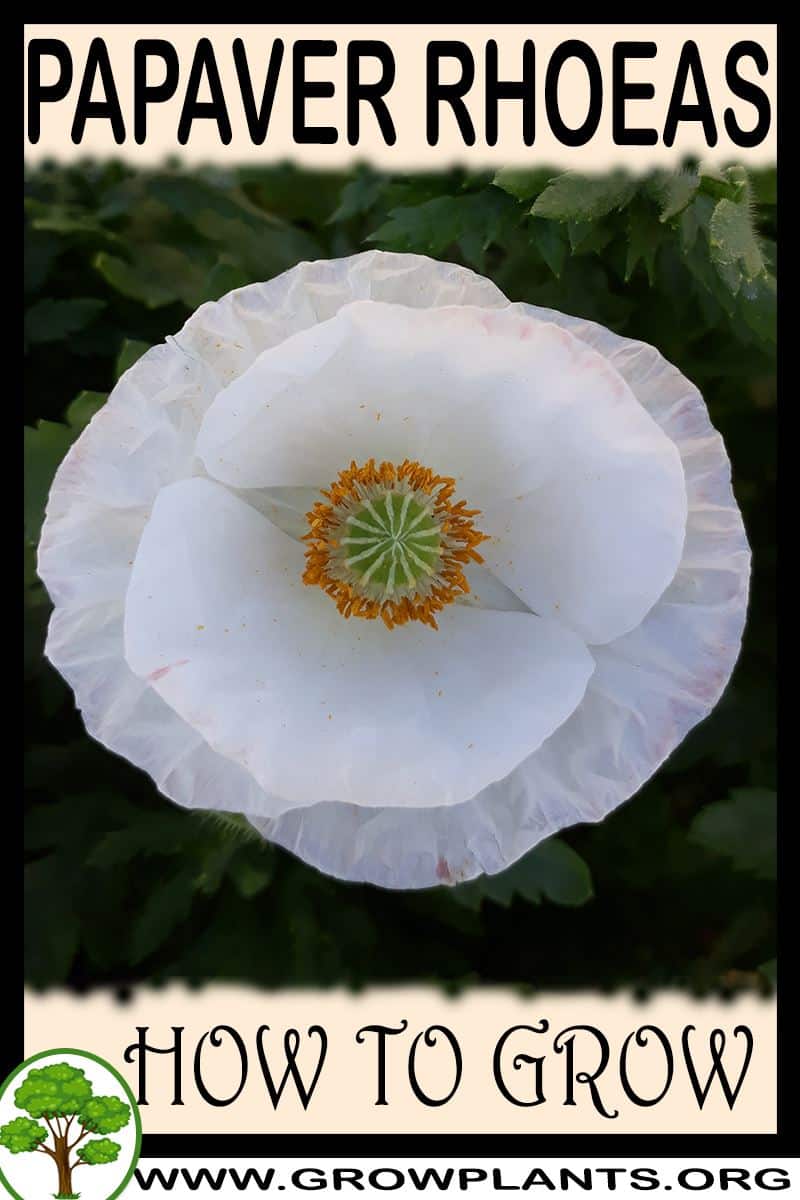
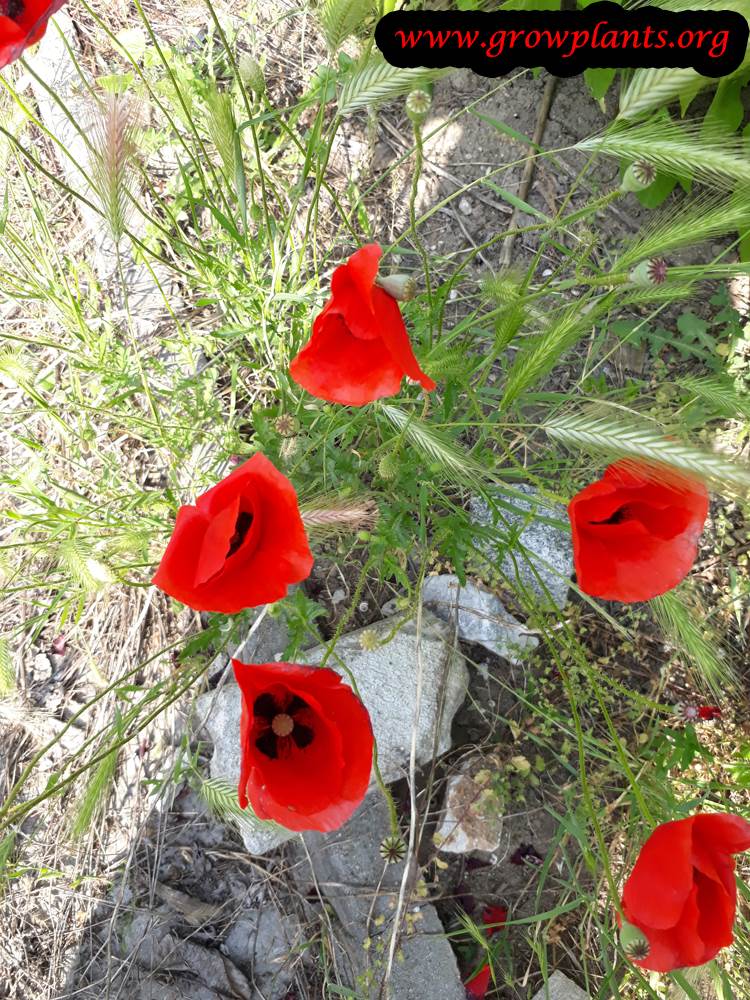
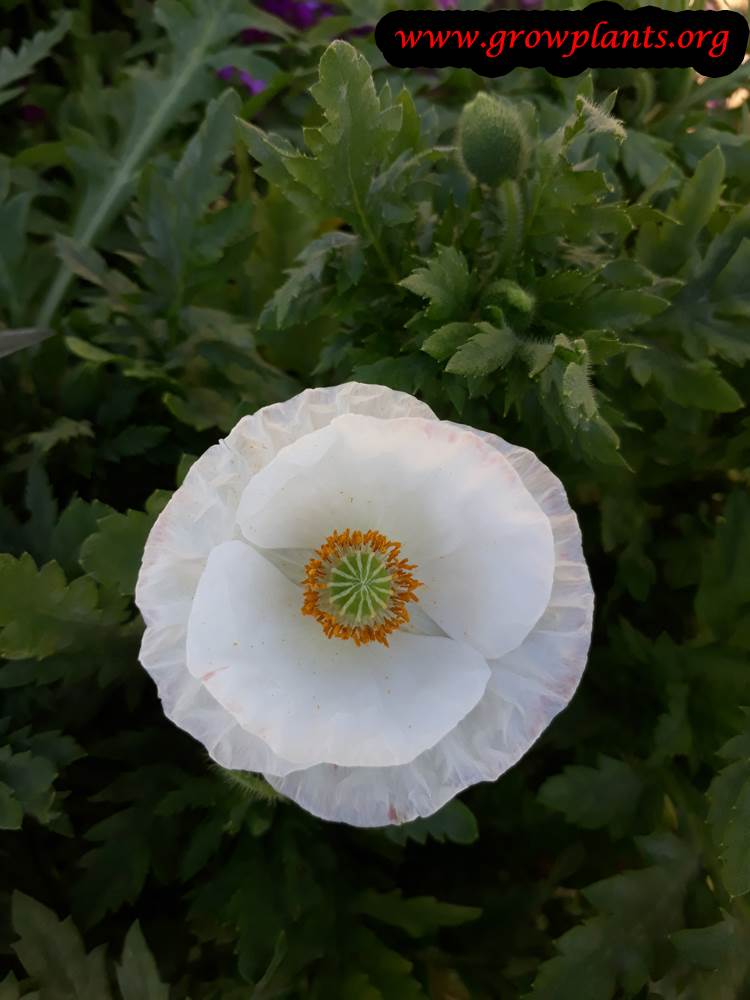
- Flower Characteristics: Bowl-shaped flowers with crepe-like petals in red, orange, white, pink or mixes, with a yellow or black centre.
Primary Uses & Landscape Value
- Edible Uses: Small black seeds are edible – used for oil or in baking.
- Functional & Ornamental Roles: Ornamental and cut flower for meadow and cottage plantings.
Care Guide: Planting, Soil & Watering
Overview: The corn poppy is a fast-growing annual that thrives in full sun and cool weather, flowering freely in light, well-draining soil. It likes moderate, steady moisture and often self-sows where happy.
Quick Care Requirements
| Requirement | Ideal Condition |
|---|---|
| Planting Season | In cool weather, autumn or early spring |
| Growth Rate | Fast |
| Soil Type | Light, well-draining |
| Water Need | Moderate; keep evenly moist |
Planting & Establishment
- Best Planting Season: Sow directly in cool weather, autumn or early spring, as this annual resents root disturbance and flowers before high summer.
- How to Plant:
- Hole Preparation: Best sown in place rather than transplanted; rake light soil to a fine tilth.
- Soil Amendments: Little enrichment is needed; simply ensure the soil drains freely.
- Planting Depth: Sow the seed shallowly, barely covered, and thin the seedlings rather than transplanting them.
- Growth Speed & Expectations: A fast annual to about 30-60 cm, flowering the same season and often self-seeding.
Soil, Watering & Drainage Care
- Soil Mix & Drainage Needs: Needs light, free-draining soil; not well suited to long-term pots but tolerates a free-draining container mix.
- Watering Schedule & Technique:
- Young / Newly Planted: Keep the soil evenly moist while the seedlings establish.
- Established: Water moderately to keep the soil from drying out during growth and flowering.
- Seasonal Adjustments: More in spring; plants naturally die off after setting seed in summer.
Climate, Light & Hardiness
Papaver rhoeas (corn poppy) is a hardy, cool-weather-preferring annual of temperate, Mediterranean and subtropical climates that needs full sun and well-drained soil. Its USDA zone 4–9 rating reflects where its seeds and seedlings can overwinter and self-sow outdoors, even though the mature plant completes its life cycle within a single growing season.
Quick Climate Specifications
| Climate Zones | Temperate, Mediterranean, Subtropical |
|---|---|
| USDA Hardiness Zones | 4–9 |
| Frost Tolerance | Moderate–High (as seed/seedling) |
| Light Conditions | Full Sun |
Sunlight & Light Exposure
Optimal Light Setup
Needs full sun - no shade tolerance is noted for this species.
Direct Sun Requirement
Yes, essential for healthy growth and flowering.
Best Exposure / Orientation
An open, unshaded meadow-style bed or border suits this self-seeding annual well.
Temperature Extremes & Hardiness
USDA Hardiness & Regional Limits
Commonly grown as an annual across USDA zones 4–9; frost ends each individual plant's growth, but the wide zone range shows that self-sown seed and young seedlings tolerate the winter cold typical of that range, allowing it to return the following season.
Cold Damage & Winter Protection
The mature flowering plant is not frost-hardy long-term, but the site's own care guidance calling for cool weather points to a plant that actually prefers a cool growing season over heat - no winter protection is needed since it completes its cycle and self-sows.
Frost Sensitivity
Young seedlings and overwintering seed tolerate real winter cold within zones 4–9; the flowering plant itself is more tender to hard frost.
Extreme Heat Tolerance
Prefers cool conditions per the site's care overview; sustained high heat tends to shorten its bloom period.
Wind, Humidity & Microclimate
Microclimate Recommendations
An open, sunny site with a genuine cool season for germination and early growth gives the best flowering and self-seeding results.
Growing in Pots, Balconies & Indoors
Common (corn) poppy is a full-sun annual the grower does not consider a houseplant, but it grows fine in pots for a sunny balcony or patio. Indoors it needs a very bright sill. It is toxic, so keep it away from children and pets.
Quick Details
- Container Size: A medium pot; sow or plant a small group for a natural look
- Indoor Suitability: Not a houseplant; sunny windowsill only
- Best Spot: Full sun
- Soil & Drainage: Free-draining mix
- Watering in Pots: Average to generous while growing; avoid waterlogging
Indoors & On the Windowsill
- Houseplant limits: The grower marks it as unsuitable indoors – it demands full sun.
- Windowsill growing: A bright, direct-sun sill is the only indoor option, and it dislikes root disturbance, so sow where it will grow.
- Safety: The plant is toxic – keep it out of reach of children and pets.
On a Balcony or Patio
- Light & exposure: Full sun; slender stems appreciate shelter from strong wind.
- Practicalities: Reflected wall heat dries pots fast – keep evenly moist during growth and flowering.
Choosing the Pot, Soil & Long-Term Care
- Pot & drainage: A medium, free-draining pot – use a container with strong drainage holes; skip a standing-water saucer to avoid root rot.
- Pot material: Terracotta breathes and dries fast (good where you tend to overwater); glazed or plastic pots hold moisture longer.
- Potting mix: a light, aerated potting mix – peat or coir blended with perlite or vermiculite, plus some organic matter/compost.
- Feeding: Potted plants exhaust their feed faster because water washes nutrients out, so feed a little more often than plants in open ground during active growth.
- Repotting: Refresh the top of the mix each growing season and pot up or divide roughly every couple of years, trimming crowded roots.
Fertilizing & Feeding
A light feeder: minimal feeding beyond organic matter at sowing is usually enough to sustain bloom and seed set through the growing season.
Quick Fertilizing Specs
| Feeding Level | Light feeder |
|---|---|
| Main Nutrient Priority | Balanced, light feeding supports steady growth and bloom without excess lush foliage |
| Best Feeding Period | From seedling establishment through the bloom and seed-set period |
| Organic Options | Compost or organic matter worked into the soil before sowing |
| Reduce/Stop Feeding | Feeding is not needed as the plant finishes flowering and sets seed |
| Micronutrients | Usually met by organic matter and a complete fertilizer |
| Soil pH | Near neutral, well-drained |
Feeding by Growth Stage
Seedling establishment
Help young seedlings root in and grow steadily after sowing.
| Nutrient direction | Light, balanced feeding supports steady seedling growth without forcing soft, weak stems. |
|---|---|
| Timing | From sowing through early seedling growth. |
| Frequency | Feeding is rarely needed at this stage beyond organic matter worked in before sowing. |
| Fertilizer types | Compost or organic matter worked into the soil before sowing, A diluted balanced fertilizer only if growth is weak |
| Precautions | Avoid rich, heavily fertilized soil, which can produce floppy plants that flower poorly. |
Bloom and seed set
Sustain flowering and seed development through the growing season.
| Nutrient direction | A light, balanced feeding is usually enough to sustain bloom and seed set for this easy-growing wildflower. |
|---|---|
| Timing | Through the spring-to-autumn bloom and seed-set period. |
| Frequency | Minimal feeding is usually enough through this stage. |
| Fertilizer types | A balanced complete fertilizer, used sparingly, Compost as a light top-dressing |
| Precautions | Avoid heavy nitrogen feeding, which favors foliage over flowering and can cause stems to flop. |
Nutrient Deficiency Signs & Corrections
Leaves are pale green and plants stay small with few flowers.
| Possible causes | low soil nitrogen availability, thin, low-organic-matter soil, competition from weeds or crowding |
|---|---|
| Appears first on | older, lower leaves |
| What to check | soil organic matter, seedling spacing and weed competition, recent feeding history |
| Possible correction | Work compost or a diluted balanced fertilizer into the soil at sowing or as seedlings establish. |
Leaf margins yellow or scorch and flower stems are weak.
| Possible causes | low soil potassium, sandy soil with poor nutrient retention, leaching from heavy watering or rain |
|---|---|
| Appears first on | older leaf margins |
| What to check | soil texture and nutrient retention, watering pattern, overall plant vigor |
| Possible correction | Apply a balanced fertilizer with adequate potassium and improve soil organic matter. |
Stems grow soft and floppy and lodge (fall over) despite normal watering.
| Possible causes | excess nitrogen from overfeeding, fertilizer salt buildup, overly rich, heavily amended soil |
|---|---|
| Appears first on | stems and overall plant form |
| What to check | recent fertilizer amounts, soil richness, plant spacing and support |
| Possible correction | Ease off feeding; this wildflower typically performs best in lean to average soil. |
Pruning, Training & Seasonal Maintenance
Papaver rhoeas is a true annual grown for cut flowers; it needs no structural pruning at all, since its whole lifecycle runs from seed to bloom to seed within one season. The only tasks are removing dead leaves, which the source says can be done all year, and deadheading spent flowers to prolong the bloom period – though deadheading only delays, not prevents, the plant’s natural end-of-season decline. Seeds are edible and used for oil and in baking; that use is covered in this plant’s fruit/uses guide, not here.
Quick Pruning & Maintenance Specs
| Pruning Tolerance | Low, cosmetic/sanitary only, and meaningful only within its single growing season |
| Primary Pruning Window | Year-round while the plant is in growth (per the source) |
| Secondary Maintenance Window | Through bloom, deadheading spent flowers |
| Typical Frequency | Ongoing light grooming for the length of the season |
| Main Objective | Remove dead leaves; prolong bloom via deadheading – no rejuvenation is possible on an annual |
| Young Plant Priority | None – let seedlings establish untouched |
| Mature Plant Priority | Ongoing dead-leaf removal and deadheading through its one season |
| Best Tool Type | Precision snips |
| Avoid Heavy Pruning During | Not applicable – there is no framework or future season to protect on a true annual |
Pruning by Plant Age & Size
Newly Established
No cutting on a young seedling.
Young / Formative
No structural training applies – a single-season annual with no framework to shape.
Mature / Established (in flower)
Ongoing dead-leaf and spent-bloom removal; there is no later ‘mature framework’ stage, since the plant completes its whole lifecycle in one season.
Seasonal Pruning Schedule
Ongoing Sanitary (through its single growing season, per the source)
Objective: keep the plant tidy and flowering as long as possible. What to remove: dead or yellowed leaves, and spent flower stems. What not to remove: healthy leaves, unopened buds, and, if self-seeding or seed collection is wanted, some spent flowers left to form pods – the one real decision point for an annual poppy grower, since it will not return from its own roots next year.
Special Growth to Remove
- Dead or yellowed leaves, removed as they appear.
- Spent flower stems, deadheaded selectively – leave a few to set seed if perpetuating the planting is wanted.
Container & Small-Space Pruning
Papaver rhoeas grows well in pots per the source. The same light year-round grooming applies; since it is a true annual, container plants are simply replaced or reseeded each year rather than maintained long-term.
Tools
- precision_snips – all cuts are through soft foliage and thin flower stems.
Tool Hygiene & Disease Risk
Routine – the source’s only pest note (aphids) is not tool-transmitted.
Cut Placement & Technique
Cut dead leaves at the base; deadhead spent flowers down to their base rather than partway.
Heavy Pruning & Rejuvenation
Not applicable – and, uniquely for this true annual, there is no such thing as rejuvenation: once its natural lifecycle ends the plant dies regardless of any pruning.
Post-Pruning Care
Handle cuts with care, ideally gloved, since the source flags this species as toxic. No special watering change is needed from routine grooming.
Common Pruning Mistakes
- Expecting deadheading to make the plant perennial or extend it past its natural annual lifecycle.
- Deadheading every single flower and then being surprised there is no volunteer self-seeding the following year.
When NOT to Prune
No strong seasonal restriction (source allows pruning all year); avoid handling sap bare-handed given the plant’s toxicity.
Recommended Tools (by task)
- precision_snips – the only tool this soft-stemmed annual needs, for dead-leaf removal and deadheading.
Propagation Guide
Corn poppy is propagated from seed – its only practical method, since once established the plant forms a fine taproot that makes cuttings or division impractical. The species comes true from seed when kept away from other Papaver types, and germination and establishment are generally easy, making this an Easy plant to propagate overall provided seed is sown directly where it is to grow.
Quick Propagation Specs
| Best Propagation Method | Seed (direct sow) |
| Propagation Difficulty | Easy |
| Seed True-to-Type | Usually true-to-type (species form; may cross with other Papaver species or cultivars grown nearby) |
| Best Propagation Season | Spring, summer or autumn |
| Seed Germination Time | Typically 1–3 weeks under cool conditions |
| Germination Temperature | Cool, roughly 10–18°C (50–65°F) |
| Seed Sowing Depth | Surface sow or barely cover – the fine, dust-like seed benefits from light |
Growing from Seed
Seed Handling & Viability
Seeds are tiny, black and produced in abundance (the site notes they are edible and used for oil or in baking); use seed that has not been stored too long for best germination.
Sowing Season
Spring, summer or autumn, depending on climate; cool-season sowing generally gives the most reliable results.
Sowing Depth & Orientation
Sow on the soil surface or barely cover, since the dust-like seed germinates best with light exposure. Sow directly in place – corn poppy forms a taproot early and resents being transplanted.
Germination Conditions
Cool weather and well-drained soil suit germination best; keep the seedbed lightly moist without waterlogging.
Germination Time
Cautiously estimated at 1–3 weeks; germination can be somewhat uneven.
Seedling Care
Thin crowded seedlings in place rather than transplanting bare-root, as the taproot is easily damaged by disturbance.
Bloom & Flower Guide
Quick Details
- Bloom Season: Spring through autumn
- Time to First Bloom: As an annual it flowers in its first season from seed
- Flower Appearance: Bowl-shaped flowers with crepe-like petals in red, orange, white, pink or mixed shades, with a yellow or black centre
- Edibility: Grown as an ornamental and cut flower – the flower is not a culinary crop
Detailed Blooming Overview
The corn poppy is the iconic red field poppy, an easy annual that flowers from spring into autumn and self-sows freely. Papery buds nod, then straighten and open into shallow, silky bowls that seem to glow when backlit by the sun.
Flower Characteristics
- Bowl-shaped with crepe-like petals joined at the base, in red, orange, white, pink or mixed colours.
- Centre is yellow or black; borne singly on slender, hairy stems.
Bloom Care & Thinning
- Deadheading: Remove faded flowers to prolong bloom, or leave a few to self-seed for next year.
- Cut flowers: Short-lived in the vase – pick in bud and sear the stem ends to help them hold.
Bloom Health & Protection
- Aphids: Gather on buds and soft stems – a firm spray of water or a neem oil treatment helps.
- Downy mildew: Shows up in cool, wet weather; better spacing and airflow reduce it.
Fruit & Uses
The edible part of Papaver rhoeas (corn poppy) is its small black seeds, used whole for oil or scattered into baked goods such as bread and pastries. The rest of the plant is not a food source – the site itself flags this plant as toxic, so only the mature, dried seeds should be used.
Quick Edible Specs
| Edible Parts | Seeds only |
|---|---|
| Main Use(s) | Culinary – seed oil, baking/pastry ingredient |
| Eaten Raw or Cooked | Seeds can be used raw (sprinkled) or baked into pastries/bread |
| Preparation Required | None beyond drying/threshing the ripe seed pods; do not eat any other part of the plant |
| Harvest Season | After flowering, once seed pods have dried on the plant (bloom season spans spring/summer/autumn) |
| Time to First Harvest | Seeds are only available from mature, flowered plants – see Blooming for season |
| Storage | Store dried seeds in a dry, sealed container |
| Safety/Toxicity Caveat | Site lists this plant as toxic; sap, foliage and unripe green pods are not food and should not be eaten – only the fully dried, mature seeds are the edible part |
Seeds, Pods & Nuts
The tiny black seeds form inside the pepper-pot-shaped seed capsule after the flower drops its petals. Let the pods dry and mature on the plant before collecting, then thresh or shake the seeds free. The dried seeds are used whole – either pressed for oil or sprinkled onto or baked into pastries and bread.
Harvesting
Collect seed pods once they have dried and turned brown on the plant, after the flowering season; shake or crush the dried capsules to release the seeds. This is a one-time harvest per pod rather than a repeat harvest.
Preparation, Uses & Safety
Only the fully dried, mature seeds are eaten – as an oil or a pastry/bread ingredient. The site records this plant generally as toxic, and poppy sap/latex and green unripe material are not edible and should be avoided; treat only the dried seed as food and do not consume foliage, buds or unripe pods.
Pests, Diseases & Troubleshooting
Overview: Poppies (corn / field poppy) are easy annuals/short-lived perennials, but their soft foliage draws aphids (notably the black bean aphid) and thrips, and their fine seedlings are grazed by slugs. Their real Achilles heel is fungal: downy mildew and powdery mildew, plus Botrytis and damping-off in wet, crowded conditions. The corn poppy is a fast annual that self-sows freely; sow in place, as it strongly resents transplanting. They resent transplanting, so sow in place and keep them airy.
Quick Troubleshooting Overview
| Issue / Pest | Main Symptom | Primary Solution |
|---|---|---|
| Aphids | Sticky, curled shoots; clusters on stems/buds | Blast off; insecticidal soap; encourage predators |
| Downy mildew | Yellow blotches above, grey-purple mould beneath; distorted growth | Remove infected leaves; airflow; copper |
| Powdery mildew | White powdery film on leaves | Improve airflow; sulfur/potassium bicarbonate |
| Thrips | Silvery flecking, distorted buds/flowers | Sticky traps; spinosad if severe |
| Slugs on seedlings | Seedlings grazed to the ground | Barriers; iron-phosphate bait; handpick |
| Transplant collapse / rot | Wilting after moving or in wet soil | Sow in place; free-draining soil; don’t overwater |
Common Pests & Management
- Aphids (Aphis fabae / Myzus persicae):
- Symptoms: Dense colonies of black or green soft insects on the flower stalks, buds, and leaf undersides – the black bean aphid is especially fond of poppies – leaving sticky honeydew, sooty mould, and curled, stunted growth; they also spread viruses.
- Prevention & Control: Blast off with a jet of water and squash survivors; encourage ladybirds, lacewings, and hoverflies, which quickly clear them. Insecticidal soap or neem clears heavier colonies, and controlling ants that farm the aphids helps.
- Thrips (Frankliniella / Thrips spp.):
- Symptoms: Tiny slender insects that rasp buds, petals, and young leaves, causing silvery flecking, browned edges, and distorted or failed flowers, with black frass specks.
- Prevention & Control: Remove infested buds and spent flowers, encourage predatory mites and pirate bugs, and use blue sticky traps to monitor. Spinosad or insecticidal soap can be used if flowers are being spoiled, applied to protect pollinators.
- Slugs and snails (Gastropoda):
- Symptoms: Ragged holes and slime trails on leaves, and – most damagingly – poppy seedlings grazed off at ground level overnight in damp weather.
- Prevention & Control: Protect emerging seedlings with grit, copper barriers, or iron-phosphate bait, handpick after dark, and keep the surface open and dry. Sowing a little thicker allows for some losses at the vulnerable seedling stage.
- Root-knot nematodes (Meloidogyne spp.):
- Symptoms: Galled roots with above-ground stunting, wilting, and poor vigour in warm soils, especially in beds cropped repeatedly.
- Prevention & Control: Rotate planting positions, keep soil rich in organic matter and beneficial life, and avoid moving infested soil. There is no rescue for badly galled plants, so prevention and clean soil are the approach.
Diseases & Fungal Issues
- Downy mildew (Peronospora arborescens):
- Symptoms: The poppy’s characteristic disease: pale yellow to brown blotches on the upper leaf surface with a greyish-purple downy mould beneath, causing thickened, distorted, stunted leaves and systemically infected, deformed plants in cool, wet weather.
- Treatment & Management: Remove and destroy infected plants and leaves promptly, space plants and thin for airflow, and avoid overhead watering. Sow in well-drained soil and rotate; a copper-based fungicide gives protection in wet springs, but sanitation and airflow are primary.
- Powdery mildew (Erysiphe cruciferarum / Podosphaera spp.):
- Symptoms: A white to greyish powdery film on leaves and stems in warm days with humid nights, disfiguring foliage and weakening the plant late in the season.
- Treatment & Management: Improve air movement, avoid crowding and overhead watering, and remove the worst leaves. Treat with sulfur, potassium bicarbonate, or a milk spray at first sign.
- Botrytis / grey mould (Botrytis cinerea):
- Symptoms: Fuzzy grey-brown mould rotting flowers, buds, seed pods, and soft foliage in cool, damp, crowded conditions.
- Treatment & Management: Deadhead spent flowers, clear debris, and increase spacing and ventilation; avoid wetting foliage. Remove affected parts promptly – good sanitation and airflow usually make fungicide unnecessary.
- Damping-off & seedling rot (Pythium / Rhizoctonia):
- Symptoms: Seedlings collapse at soil level with a pinched, blackened stem, or fail to emerge, in cold, wet, over-sown seedbeds.
- Treatment & Management: Sow thinly in free-draining soil or clean seed compost, avoid overwatering, and provide warmth and airflow. Do not sow into cold, waterlogged ground; treated or fresh compost reduces losses.
Growing Difficulties & Abiotic Problems
- Transplant shock (poppies hate being moved)
- Cause & Symptoms: Wilting, sulking, or death after transplanting, because poppies form a taproot that resents root disturbance.
- Correction Strategy: Sow seed directly where it is to flower, or raise in biodegradable pots and plant out very young without disturbing the roots. Thin rather than transplant seedlings for the best results.
- Wet-soil rot & flopping
- Cause & Symptoms: Root rot, blackening, and collapse in heavy, waterlogged soil, and tall stems flopping in rich soil or after rain.
- Correction Strategy: Grow in free-draining soil in full sun, avoid overwatering and excess nitrogen, and give light support to tall types. Lean soil and good drainage produce sturdier, healthier plants.
- Toxicity (handling & safety)
- Cause & Symptoms: All parts contain alkaloids and are toxic if eaten (the source notes toxicity); the sap can also irritate skin.
- Correction Strategy: Keep plants and self-sown seedlings away from where children or pets graze, and wash off any sap contact. This is a safety note rather than a disease and needs no treatment.
- Short life & self-seeding
- Cause & Symptoms: Plants are annual or short-lived and die after flowering and setting seed, which growers may mistake for disease; they also self-sow prolifically.
- Correction Strategy: Recognise the natural cycle: let some pods ripen for self-sown succession, or deadhead to prolong flowering and limit spread. Re-sow annually for a reliable display.
What Helps – Products & Tools
For insects, lean on a water jet, insecticidal soap, and neem for aphids, spinosad or blue sticky traps for thrips, and iron-phosphate bait for slugs on seedlings. Against the poppy’s real threat – fungal disease – use a copper fungicide for downy mildew and sulfur / potassium bicarbonate for powdery mildew, backed by spacing and airflow. Sow in place in free-draining soil to dodge transplant collapse and damping-off.